Results by title
22279 books match the query 'Social Science' and 455 start with o

Old World
Fabienne Kanor
Seagull Books, 2024
Born in Cameroon and raised in the suburbs of Paris, Nathan feels unmoored, as if he does not belong in France. His mother tells him about his great-grandfather who left Cameroon for New Orleans to seek his fortune shortly after World War II. Nathan travels there to search for the vestiges of his ancestor’s passage in America. To him, New Orleans is the promised land for the Black man.
However, renting a room in a shotgun house in the Tremé district, he discovers a different reality. This storied neighborhood testifies to the strength of a people who have survived slavery, segregation, and the struggle for civil rights with a strong sense of community. But the relentless inequities, capped by Hurricane Katrina and its aftermath, have taken a toll. As Nathan comes to understand this fraught history, he also plumbs his own past, including his sense of abandonment by his father in Cameroon. In this coming-of-age novel, Nathan is coming to be.
The evocative, poetic language of Fabienne Kanor’s novel confers a brutal beauty in incidents of violence and moments of joy, holding the reader in a constant state of tension. Peopled by flawed human beings trying to find their way and grow a life under the constant threat of violence, Old World chronicles the deep trauma and long-term effects of systemic racism in the United States and people’s efforts to rise above it.

Old and New New Englanders
Immigration and Regional Identity in the Gilded AgeBluford Adams
University of Michigan Press, 2014
In Old and New New Englanders, Bluford Adams provides a reenvisioning of New England’s history and regional identity by exploring the ways the arrival of waves of immigrants from Europe and Canada transformed what it meant to be a New Englander during the Gilded Age. Adams’s intervention challenges a number of long-standing conceptions of New England, offering a detailed and complex portrayal of the relations between New England’s Yankees and immigrants that goes beyond nativism and assimilation. In focusing on immigration in this period, Adams provides a fresh view on New England’s regional identity, moving forward from Pilgrims, Puritans, and their descendants and emphasizing the role immigrants played in shaping the region’s various meanings. Furthermore, many researchers have overlooked the newcomers’ relationship to the regional identities they found here. Adams argues immigrants took their ties to New England seriously. Although they often disagreed about the nature of those ties, many immigrant leaders believed identification with New England would benefit their peoples in their struggles both in the United States and back in their ancestral lands.
Drawing on and contributing to work in immigration history, as well as American, gender, ethnic, and New England studies, this book is broadly concerned with the history of identity construction in the United States while its primary focus is the relationship between regional categories of identity and those based on race and ethnicity. With its interdisciplinary methodology, original research, and diverse chapter topics, the book targets both specialist and nonspecialist readers.

Olfactory Rhetoric
Sniffing Out Environmental ProblemsLisa L. Phillips
The Ohio State University Press, 2025
Human senses have the potential to play a significant role in inspiring action to combat climate change. When we smell pollutants in the air, for example, or feel the blast of a polar vortex, we are more likely to act in response to these changes in environmental conditions. However, the sensorium—and particularly our sense of smell—is often downplayed when we consider the rhetorics of environmental crises. In Olfactory Rhetoric, Lisa L. Phillips argues that how we sense the world around us should be a crucial piece of rhetorical evidence when evaluating environmental injustices. Specifically, Phillips elevates olfaction (what we smell) and olfactory rhetoric (how we talk about and experience what we smell) when discussing three contemporary environmental crises set in historically marginalized communities: the Sriracha sauce factory controversy, the Salton Sea scent events, and the Blue Ridge Landfill emissions problem. On a broader scale, Phillips develops an intersectional ecofeminist sensory-rhetorical approach for evaluating how olfactory and sensory persuasions work and how they can be used to advocate for environmental justice and a more breathable future.
Olfactory Worldmaking
Hsuan L. Hsu
University of Minnesota Press, 2026
Exploring the power of smell to build connections and transform our world
Smell is a vital, if underappreciated, medium through which we inhabit and imagine the world. In Olfactory Worldmaking, Hsuan L. Hsu traces how olfactory experience communicates across visceral, material, and affective registers to offer new ways of relating, which challenge the extractive logics of racial and colonial capitalism. Blending environmental humanities, sensory studies, and critical ethnic studies, the book highlights how scent animates suppressed histories and marginalized memories.
Hsu theorizes olfaction as a speculative, reparative practice. Examining projects from historical novels, memoirs, and speculative fiction to conceptual art and experimental perfumes, he reveals how these works mobilize scent to imagine alternative ways of sensing, relating, and creating more equitably livable worlds.
Retail e-book files for this title are screen-reader friendly with images accompanied by short alt text and/or extended descriptions.
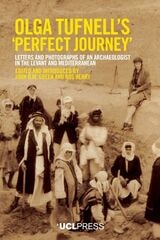
Olga Tufnell's “Perfect Journey”
Letters and Photographs of an Archaeologist in the Levant and MediterraneanEdited by John D.M. Green and Henry Ros
University College London, 2021
Olga Tufnell was a British archaeologist working in Egypt, Cyprus, and Palestine in the 1920s and 1930s—a period often described as a golden age of archaeological discovery. For the first time, this book presents Tufnell’s account of her experiences in her own words. Based largely on letters, the text is accompanied by dozens of photographs that shed light on her personal experiences of travel and dig life at this extraordinary time. Introductory material by John D.M. Green and Ros Henry provides the social, historical, biographical, and archaeological context, as the letters offer new insights into the social and professional networks and history of archaeological research in Palestine under the British Mandate. They provide insights into the role of foreign archaeologists, relationships with local workers and inhabitants, and the colonial framework within which they operated during turbulent times. This book will be an important resource for those studying the history of archaeology in the Eastern Mediterranean, particularly for the sites of Qau el-Kebir, Tell Fara, Tell el-‘Ajjul and Tell ed-Duweir (ancient Lachish). Moreover, Tufnell’s lively style makes this a fascinating personal account of archaeology and travel in the interwar era.
Oligarchy in America
Power, Justice, and the Rule of the FewLuke Winslow
University of Alabama Press, 2024
Roderick P. Hart Outstanding Book Award for the National Communication Association's Political Communication Division
A fascinating survey of the history of political and economic ideas in the US that have led to an increasingly entrenched ultra-rich class of oligarchs.
To an American, oligarchy is something that happens somewhere else. In Oligarchy in America, Luke Winslow reveals oligarchy’s deep intellectual roots and alarming growth in America. The book provides conceptual tools the lack of which have prevented Americans from recognizing oligarchy at home.
Winslow argues that generic labels like “billionaires” for a class of ultra-rich masks the pervasive structures that entrench their power. He introduces instead the concept of democratic oligarchy—an institutional arrangement in which the ultra-rich form a class consciously creating and leveraging state power to accumulate wealth.
Like a master class in political ideas, Winslow traces the intellectual lineage of oligarchy in the US. His lively and compulsively readable survey examines key rhetorical sources such as Herbert Spencer, Andrew Carnegie, Friedrich Hayek, Lewis Powell, Milton Friedman, Charles Koch, Donald Trump, Tucker Carlson, and others.
Oligarchy in America maps the connective web of oligarchic ideas uniting these disparate figures. By offering a lucid framework through which to view oligarchic ideas ambient in American culture, Winslow makes a vital contribution to readers and scholars of communication and rhetorical studies, public address, economics, and political science.
Olimpismo
The Olympic Movement in the Making of Latin America and the CaribbeanAntonio Sotomayor
University of Arkansas Press, 2020
Olmec Lithic Economy at San Lorenzo
Kenneth Hirth
University Press of Colorado, 2020
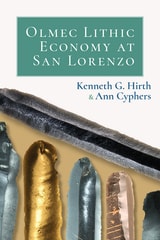
The obsidian blade was the cutting tool of choice across Mesoamerica and used in a wide range of activities, from domestic food preparation to institutional ritual activities. Hirth and Cyphers conducted a three-decade investigation of obsidian artifacts recovered at Puerto Malpica, the earliest known workshop, and seventy-six other sites on San Lorenzo Island, where these tools were manufactured for local and regional distribution. Evidence recovered from these excavations provides some of the first information on how early craft specialists operated and how the specialized technology used to manufacture obsidian blades spread across Mesoamerica. The authors use geochemical analyses to identify thirteen different sources for obsidian during San Lorenzo’s occupation. This volcanic glass, not locally available, was transported over great distances, arriving in nodular and finished blade form.
Olmec Lithic Economy at San Lorenzo offers a new way to analyze the Preclassic lithic economy—the procurement, production, distribution, and consumption of flaked stone tools—and shows how the study of lithics aids in developing a comprehensive picture of the internal structure and operation of Olmec economy. The book will be significant for Mesoamericanists as well as students and scholars interested in economy, lithic technology, and early complex societies.
Olmec to Aztec
Settlement Patterns in the Ancient Gulf LowlandsBarbara L. Stark
University of Arizona Press, 1997
Omens of Adversity
Tragedy, Time, Memory, JusticeDavid Scott
Duke University Press, 2014
On Addiction
Insights from History, Ethnography, and Critical TheoryDarin Weinberg
Duke University Press, 2024
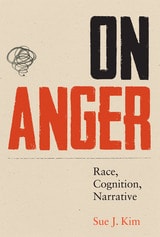
On Anger
Race, Cognition, NarrativeBy Sue Kim
University of Texas Press, 2013
Anger is an emotion that affects everyone regardless of culture, class, race, or gender—but at the same time, being angry always results from the circumstances in which people find themselves. In On Anger, Sue J. Kim opens a stimulating dialogue between cognitive studies and cultural studies to argue that anger is always socially and historically constructed and complexly ideological, and that the predominant individualistic conceptions of anger are insufficient to explain its collective, structural, and historical nature.
On Anger examines the dynamics of racial anger in global late capitalism, bringing into conversation work on political anger in ethnic, postcolonial, and cultural studies with recent studies on emotion in cognitive studies. Kim uses a variety of literary and media texts to show how narratives serve as a means of reflecting on experiences of anger and also how we think about anger—its triggers, its deeper causes, its wrongness or rightness. The narratives she studies include the film Crash, Maxine Hong Kingston’s The Woman Warrior, Tsitsi Dangarembga’s Nervous Conditions and The Book of Not, Ngugi wa Thiong’o’s Devil on the Cross and Wizard of the Crow, and the HBO series The Wire. Kim concludes by distinguishing frustration and outrage from anger through a consideration of Stéphane Hessel’s call to arms, Indignez-vous! One of the few works that focuses on both anger and race, On Anger demonstrates that race—including whiteness—is central to our conceptions and experiences of anger.

On Becoming Filipino
Selected Writings of Carlos BulosanE. San Juan
Temple University Press, 1995
On Being Human
Folklore of Mormon MissionariesWilliam A. Wilson
Utah State University Press, 1981
On Being Included
Racism and Diversity in Institutional LifeSara Ahmed
Duke University Press, 2012
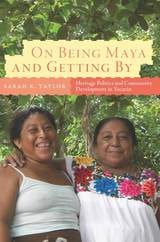
On Being Maya and Getting By
Heritage Politics and Community Development in YucatánSarah R. Taylor
University Press of Colorado, 2018
The book explores how Ek’Balam villagers negotiate and maneuver through a web of social programs, tourists, volunteers, and expectations while living their daily lives. Focusing on the active processes in which residents choose to participate, author Sarah R. Taylor provides insights into how the ideological conflicts surrounding economic development play out in the negotiations between internal community politics and external social actors. The conflicts implicit to conceptions of “community” as a target for development are made explicit through the systematic questioning of what exactly it means to be a member of a local, indigenous, or sustainable community in the process of being developed.
On Being Maya and Getting By is a rich description of how one community is actively negotiating with tourism and development and also a call for a more complex analysis of how rural villages are connected to greater urban, national, and global forces.

On Black Breath
Kimberly Bain
Duke University Press, 2027
On Black Sisters Street
A NovelChika Unigwe
Ohio University Press, 2012

On Border Time
Temporal Violence in Migrant PolicingCristina Jo Pérez
University of Texas Press, 0
An examination of how time is used as a policing tactic in border and migrant policy.
Time is seldom on the migrant’s side. Migrants crossing the US southern border are “immediate threats,” according to the government agencies and politicians hell-bent on their capture and deportation, and those caught in the US are forced to endure grueling months in detention centers and in queues for judicial hearings.
On Border Time examines temporal dimensions of violence and associated ideological conditioning in an increasingly privatized and militarized immigration system. Visiting the National Border Patrol Museum in El Paso, Texas, Cristina Jo Pérez shows how state-supported histories of national “progress” and migrant “backwardness” manufacture political subjects. Meanwhile, the media and political narratives of imminent threat criminalize Brown men and boys, justifying Border Patrol shootings as preemptive national defense. Dramatically widening her lens, Pérez further considers how the anti-immigrant agenda bleeds into the future, through aggressive state intervention into migrants’ reproductive lives. From a heat-of-the-moment police encounter to a Houston gynecologist’s waiting room, On Border Time is a profound meditation on policies and discourses that put migrants out of sync and, by extension, out of the nation.
On Boredom
Essays in Art and WritingEdited by Rye Dag Holmboe and Susan Morris
University College London, 2021
What do we mean when we say that we are bored? Contributors to this volume, which include artists, art historians, psychoanalysts, and a novelist, examine boredom in its manifold and uncertain reality. Each part of the book takes up a crucial moment in the history of boredom and presents it in a new light, taking the reader from the trials of the consulting room to the experience of hysteria in the nineteenth century. The book pays particular attention to boredom’s relationship with the sudden and rapid advances in technology that have occurred in recent decades, specifically technologies of communication, surveillance, and automation. On Boredom is idiosyncratic for its combination of image and text, and the artworks included in its pages—featuring Mathew Hale, Martin Creed, and Susan Morris—help turn this volume into a material expression of boredom itself. It will appeal to readers in the fields of art history, literature, cultural studies, and visual culture.
On Chantal Akerman
Patricia White, special issue editor
Duke University Press, 0
Contributors. Claire Atherton, Janet Bergstrom, Kelley Conway, Sandy Flitterman-Lewis, Ute Holl, Heike Klippel, Eva Kuhn, Matias Lavin, Alisa Lebow, Brenda Longfellow, Babette Mangolte, Ivone Margulies, Michael Mazière, Eva Meyer, Sandra Percival, Jane Stein, Cécile Tourneur, Maureen Turim, Sonia Wieder-Atherton, Patricia White
On Charisma and Institution Building
Selected WritingsMax Weber
University of Chicago Press, 1968
Max Weber on Charisma and Institution Building is a volume in "The Heritage of Sociology," a series edited by Morris Janowitz. Other volumes deal with the writings of George Herbert Mead, William F. Ogburn, Louis Wirth, W. I. Thomas, Robert E. Park, and the Scottish Moralists—Adam Smith, David Hume, Adam Ferguson, and others.
On Christopher Street
Life, Sex, and Death after StonewallMichael Denneny
University of Chicago Press, 2023
The Stonewall Riots of 1969 and the AIDS crisis of the 1980s have been captured in minute detail, and rightly memorialized in books, on tv, and in film as pivotal and powerful moments in queer history. Yet what about the moments in between—the tumultuous decade post-Stonewall when the queer community’s vitality and creativity exploded across the country, even as the AIDS crisis emerged?
Michael Denneny was there for it all. As a founder and editor of the wildly influential magazine Christopher Street and later as the first openly gay editor at a major publishing house, Denneny critically shaped publishing around gay subjects in the 1970s and beyond. At St. Martin’s Press, he acquired a slew of landmark titles by gay authors—many for his groundbreaking Stonewall Inn Editions—propelling queer voices into the mainstream cultural conversation. On Christopher Street is Denneny’s time machine, going back to that heady period to lay out the unfolding geographies and storylines of gay lives and capturing the raw immediacy of his and his contemporaries’ daily lives as gay people in America. Through forty-one micro-chapters, he uses his journal writings, articles, interviews, and more from the 1970s and ‘80s to illuminate the twists and turns of a period of incomparable cultural ferment.
One of the few surviving voices of his generation, Denneny transports us back in time to share those vibrant in-between moments in gay lives—the joy, sorrow, ecstasy, and energy—across three decades of queer history.
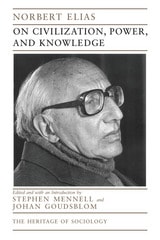
On Civilization, Power, and Knowledge
Selected WritingsNorbert Elias
University of Chicago Press, 1997
This volume is a carefully chosen collection of Elias's most important writings and includes many of his most brilliant ideas. The development of Elias's thinking during the course of his long career is traced along with a discussion of how his work relates to other major sociologists and how the various selections are interconnected. The result is a consistent and stimulating look at one of sociology's founding thinkers.
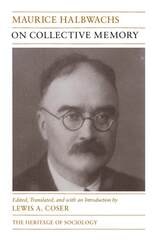
On Collective Memory
Maurice Halbwachs
University of Chicago Press, 1992
How do we use our mental images of the present to reconstruct our past? Maurice Halbwachs (1877-1945) addressed this question for the first time in his work on collective memory, which established him as a major figure in the history of sociology. This volume, the first comprehensive English-language translation of Halbwach's writings on the social construction of memory, fills a major gap in the literature on the sociology of knowledge.
Halbwachs' primary thesis is that human memory can only function within a collective context. Collective memory, Halbwachs asserts, is always selective; various groups of people have different collective memories, which in turn give rise to different modes of behavior. Halbwachs shows, for example, how pilgrims to the Holy Land over the centuries evoked very different images of the events of Jesus' life; how wealthy old families in France have a memory of the past that diverges sharply from that of the nouveaux riches; and how working class construction of reality differ from those of their middle-class counterparts.
With a detailed introduction by Lewis A. Coser, this translation will be an indispensable source for new research in historical sociology and cultural memory.
Lewis A. Coser is Distinguished Professor of Sociology Emeritus at the State University of New York and Adjunct Professor of Sociology at Boston College.
On Collective Memory
Maurice Halbwachs
University of Chicago Press, 1992
This is an auto-narrated audiobook version of this book.
How do we use our mental images of the present to reconstruct our past? Maurice Halbwachs (1877-1945) addressed this question for the first time in his work on collective memory, which established him as a major figure in the history of sociology. This volume, the first comprehensive English-language translation of Halbwach's writings on the social construction of memory, fills a major gap in the literature on the sociology of knowledge.
Halbwachs' primary thesis is that human memory can only function within a collective context. Collective memory, Halbwachs asserts, is always selective; various groups of people have different collective memories, which in turn give rise to different modes of behavior. Halbwachs shows, for example, how pilgrims to the Holy Land over the centuries evoked very different images of the events of Jesus' life; how wealthy old families in France have a memory of the past that diverges sharply from that of the nouveaux riches; and how working class construction of reality differ from those of their middle-class counterparts.
With a detailed introduction by Lewis A. Coser, this translation will be an indispensable source for new research in historical sociology and cultural memory.
Lewis A. Coser is Distinguished Professor of Sociology Emeritus at the State University of New York and Adjunct Professor of Sociology at Boston College.

On Cultural Freedom
An Exploration of Public Life in Poland and AmericaJeffrey C. Goldfarb
University of Chicago Press, 1983
Goldfarb—who examines conditions in the Soviet Union, the United States, and their respective European allies—focuses most closely upon Poland and the United States. He investigates a wide range of concrete cases, including the Polish opposition movement and Solidarity, the migration of artists, the American television and magazine industries, American philanthropy, and communist cultural conveyor belts.
From these cases, Goldfarb derives a definitive set of sociological conditions for cultural freedom: critical creativity which resists systematic constraints, continuity of cultural tradition, and a relatively autonomous public realm for the reception of culture. Cultural freedom, Goldfarb shows, is not a static state but a process of achievement. Its parameters and content are determined by social practice in cultural institutions and by their relations with other components and the totality of social structure.
So defined, cultural freedom is transformed from an ideological concept into one with real critical and analytical power. Through it we can appreciate the invisible nature of constraint in the West and the unapparent but acting supports of cultural freedom existing in socialist countries. Most importantly, Goldfarb's conclusions provide a framework for understanding more clearly than before the circumstance of cultural freedom in both East and West so that citizens may utilize their full creative abilities as they address the problems of the present day.
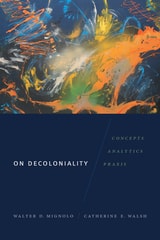
On Decoloniality
Concepts, Analytics, PraxisWalter D. Mignolo and Catherine E. Walsh
Duke University Press, 2018
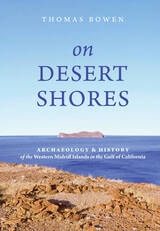
On Desert Shores
Archaeology and History of the Western Midriff Islands in the Gulf of CaliforniaThomas Bowen
University of Utah Press, 2022
Bowen draws on a wide range of sources, including the first archaeological field work ever conducted on the islands, written accounts dating back to the sixteenth century, oral histories of native people, contemporary interviews, and his own firsthand experiences. Among those cast in the islands’ historical drama are the Seri (Comcaac) people of Sonora, the extinct Cochimís of Baja California, Spanish explorers, Jesuit missionaries, pearl fishers, egg collectors, guano miners, hydrographers, cartographers, small-scale Mexican fishermen, recreational anglers, writers, photographers, ecotourists, shipwreck victims, and, most importantly, scientists. The final chapter documents the impact of this human activity on the islands’ ecosystems and examines conservation efforts now underway. Compelling and richly illustrated, this broadly based work provides a unique picture of these extraordinary islands.

On Drugs
David Lenson
University of Minnesota Press, 1995
A critical exploration of the user’s perspective on drug consciousness-now in paperback!
Engaging, articulate, and brilliantly argued, On Drugs is destined to become a revolutionary classic that redefines what it means to be “high.” Calling for the acceptance of a “diversity of consciousness,” Lenson delivers a searing critique of the War on Drugs as an effort based, like all attempts to eradicate “getting high,” on an incomplete understanding of human nature.
In lucid prose, Lenson ventures outside the conventional genres of drug writing and offers a new look at the drug debate from a lost, and often forbidden, point of view: the user’s. Walking a fine line between the antidrug hysteria of the 1980s and an uncritical advocacy of drug use, he describes in provocative detail the experiences and dynamics of drugs of pleasure and desire-from nicotine to marijuana, alcohol to LSD, and caffeine to cocaine.From lotus-eaters to hippies to crackheads, history has shown the state’s inability to legislate the bloodstreams of its citizens. After considering several specific issues associated with drug use-including sex, violence, and money-On Drugs asks what drugs really do and challenges society’s accepted notions of sobriety and addiction. Lenson concludes with his vision of the end of the War on Drugs by questioning the sense in condemning millions of Americans to lives of concealment and deceit.
On Duty
Power, Politics, and the History of Nursing in New JerseyWard, Frances
Rutgers University Press, 2009
On Following
Straight Lines and Infrastructural SensibilitiesIna Blom
University of Chicago Press, 2027
A cross-disciplinary examination of the relation between straight lines and sensory capacities in modern art, architecture, and music.
The human hand cannot draw a straight line, claimed nineteenth-century polymath John Ruskin. Straight lines are typically seen as incompatible with human bodies, and this is one of the reasons why their proliferation in modern art and architecture has been associated with the rational, universalist perspectives of a new industrial culture. With On Following, art historian Ina Blom traces a different genealogy of straight lines through modern and contemporary art, offering a perspective on straight-line works that addresses the close connections between the sensory capacities and experiences of human bodies and new media infrastructures. She considers what happens to aesthetic expression when bodies are surrounded by technologies that are themselves sensing systems.
Taking an expansive look at visual art, architecture, film, and music from the late nineteenth century to the present day, Blom considers practitioners including Walter De Maria, Marcel Duchamp, August Endell, Liam Gillick, Raoul Hausmann, Florian Hecker, Jenny Holzer, Ryoji Ikeda, Piero Manzoni, László Moholy-Nagy, Krzysztof Penderecki, Superstudio, Mies van der Rohe, and La Monte Young.

On Gangs
Scott H. Decker, David C. Pyrooz, and James A. Densley
Temple University Press, 2022
Gangs are multifaceted and varied, so any attempt to understand them cannot be restricted to a singular approach. On Gangs provides a diverse and comprehensive survey of the available theories for understanding this social issue as well as the broad range of responses to it. The authors look at the many influences on gangs’ operation, growth, prevention, and enforcement.
The authors provide different criminological, psychological, and sociological approaches to gang studies, including interviews with past and current gang members. On Gangs presents the core issues for understanding gangs, including emerging topics like prison gangs, gender and gangs, and international gangs. There is also a focus on policing, legislation, and punishment. Weaving together research and policy findings to address the causes, contexts, and consequences of gangs, the authors address topics including joining, resisting, and leaving gangs, and how gangs operate in communities and institutions.
An authoritative and sweeping tour of gang scholarship, On Gangs showcases the critical evidence-based solutions in prevention, enforcement, legislation, and intervention. The authors seek to answer the question: How do we effectively deal with gangs and gang membership?
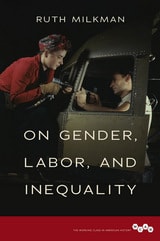
On Gender, Labor, and Inequality
Ruth Milkman
University of Illinois Press, 2016
Milkman's introduction frames a career-spanning scholarly project: her interrogation of historical and contemporary intersections of class and gender inequalities in the workplace, and the efforts to challenge those inequalities. Early chapters focus on her pioneering work on women's labor during the Great Depression and the World War II years. In the book's second half, Milkman turns to the past fifty years, a period that saw a dramatic decline in gender inequality even as growing class imbalances created greater-than-ever class disparity among women. She concludes with a previously unpublished essay comparing the impact of the Great Depression and the Great Recession on women workers.
A first-of-its-kind collection, On Gender, Labor, and Inequality is an indispensable text by one of the world's top scholars of gender, equality, and work.
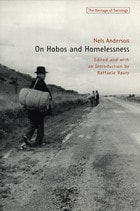
On Hobos and Homelessness
Nels Anderson
University of Chicago Press, 1998
On Hobos and Homelessness includes Anderson's rich and vibrant ethnographic work of a world of homeless men. He conducted his study on Madison street in Chicago, and we come to intimately know this portion of the 1920s hobo underworld—the harshness of vagrant life and the adventures of young hobos who come to the big city. This selection also includes Anderson's later work on the juvenile and the tramp, the unattached migrant, and the family. Like John Steinbeck's Depression-era observations, Anderson's writings express the memory of those who do not seem entitled to have memory, whose lives were expressed in temporary labor.
On Humanism, Volume 14
Elizabeth Weed and Ellen Rooney, eds.
Duke University Press, 0
Contributors. Athena Athanasiou, Etienne Balibar, Mara de Gennaro, Carolyn J. Dean, Brady Thomas Heiner, Lynne Joyrich, Jacques Lezra
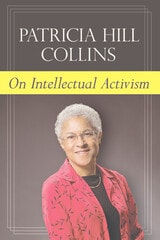
On Intellectual Activism
Patricia Hill Collins
Temple University Press, 2012
Sociologist Patricia Hill Collins has been called in Contemporary Sociology “one of the defining voices of contemporary feminist and race scholarship.” Well known for her contributions to sociology, social theory, and cultural studies, her numerous publications indicate why she has been a tireless voice for social justice causes such as the dynamics of race, social class, gender, and sexual equality, and also black feminist politics.
In On Intellectual Activism, Collins asks scholars and public intellectuals to assess the meaning of their work. She challenges readers to rethink the potential of speaking truth to power, and examines both the role of the intellectual in public life and how well questions of contemporary social issues are communicated to the public at large.
The contents of this volume—public lectures, previously published pieces, interviews, and new essays—illustrate the important conceptual anchors of Collins’ work and reflect on the major themes of her illustrious career. These timely and thought-provoking essays include topics ranging from black feminist thought, critical education, public sociology, and resisting racism to new visions for activist intellectuals.
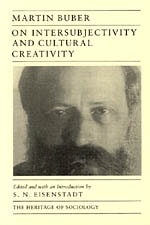
On Intersubjectivity and Cultural Creativity
Martin Buber
University of Chicago Press, 1992
Buber's central focus in his sociological work is the relation between social interaction, or intersubjectivity, and the process of human creativity. Specifically, Buber seeks to define the nature and conditions of creativity, the conditions of authentic intersubjective social relations that nurture creativity in society and culture. He attempts to identify situations favorable to creativity that he believes exist to some extent in all cultures, though their fullest development occurs only rarely.
Buber considers the combination of open dialogue between human and human and a dialogue between man and God to be necessary for the crystallization of the common discourse that is essential for holding a free, just, and open society together.
Important for an understanding of Buber's thought, these writings—touching on education, religion, the state, and charismatic leadership—will be of profound value to students of sociology, philosophy, and religion.
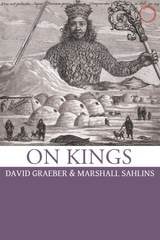
On Kings
David Graeber and Marshall Sahlins
HAU, 2017
Reflecting on issues such as temporality, alterity, and utopia—not to mention the divine, the strange, the numinous, and the bestial—Graeber and Sahlins explore the role of kings as they have existed around the world, from the BaKongo to the Aztec to the Shilluk and beyond. Richly delivered with the wit and sharp analysis characteristic of Graeber and Sahlins, this book opens up new avenues for the anthropological study of this fascinating and ubiquitous political figure.
On Knowing--The Social Sciences
Richard P. McKeon
University of Chicago Press, 2017
This volume—the second in a series—leaves behind natural science themes to embrace freedom, power, and history, which, McKeon argues, lay out the whole field of human action. The authors McKeon considers—Hobbes, Machiavelli, Spinoza, Kant, and J. S. Mill—show brilliantly how philosophic methods work in action, via analyses that do not merely reduce or deconstruct meaning, but enhance those texts by reconnecting them to the active history of philosophy and to problems of ethics, politics, and history. The waves of modernism and post-modernism are receding. Philosophic pluralism is now available, fully formulated, in McKeon’s work, spreading from the humanities to the social sciences.
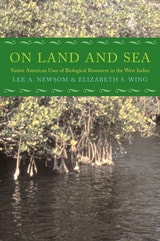
On Land and Sea
Native American Uses of Biological Resources in the West IndiesLee A. Newsom and Elizabeth S. Wing
University of Alabama Press, 2003
During the vast stretches of early geologic time, the islands of the Caribbean archipelago separated from continental land masses, rose and sank many times, merged with and broke from other land masses, and then by the mid-Cenozoic period settled into the current pattern known today. By the time Native Americans arrived, the islands had developed complex, stable ecosystems. The actions these first colonists took on the landscape—timber clearing, cultivation, animal hunting and domestication, fishing and exploitation of reef species—affected fragile land and sea biotic communities in both beneficial and harmful ways.
On Land and Sea examines the condition of biosystems on Caribbean islands at the time of colonization, human interactions with those systems through time, and the current state of biological resources in the West Indies. Drawing on a massive data set collected from long-term archaeological research, the study reconstructs past lifeways on these small tropical islands. The work presents a wide range of information, including types of fuel and construction timber used by inhabitants, cooking techniques for various shellfish, availability and use of medicinal and ritual plants, the effects on native plants and animals of cultivation and domestication, and diet and nutrition of native populations.
The islands of the Caribbean basin continue to be actively excavated and studied in the quest to understand the earliest human inhabitants of the New World. This comprehensive work will ground current and future studies and will be valuable to archaeologists, anthropologists, botanists, ecologists, Caribbeanists, Latin American historians, and anyone studying similar island environments.
On Learning to Heal
or, What Medicine Doesn't KnowEd Cohen
Duke University Press, 2023
On Longing
Narratives of the Miniature, the Gigantic, the Souvenir, the CollectionSusan Stewart
Duke University Press, 1993

On Monique Wittig
Theoretical, Political, and Literary EssaysEdited by Namascar Shaktini
University of Illinois Press, 2004
On Monique Wittig contains twelve essays, representing French, Francophone, and U.S. critics, including three previously unpublished pieces by Wittig herself. Among the essays is Diane Griffin Crowder's discussion of the U.S. feminist movement, Linda Zerilli's consideration of gender and will, and Teresa de Lauretis's examination of the development of lesbian theory. Together, these essays situate Wittig's work in terms of the cultural contexts of its production and reception. This volume also contains the first authenticated chronology of Wittig's life and features the first translation of "For a Movement of Women's Liberation," which Wittig published with other "militantes" in May 1970.
As the first book to appear on Wittig following her death, On Monique Wittig is an indispensable tool for feminist scholars.
On Music Theory, and Making Music More Welcoming for Everyone
Philip Ewell
University of Michigan Press, 2023
Winner of the 2024 Association of American Publishers PROSE Award for Music and Performing Arts
Since its inception in the mid-twentieth century, American music theory has been framed and taught almost exclusively by white men. As a result, whiteness and maleness are woven into the fabric of the field, and BIPOC music theorists face enormous hurdles due to their racial identities. In On Music Theory, Philip Ewell brings together autobiography, music theory and history, and theory and history of race in the United States to offer a black perspective on the state of music theory and to confront the field’s white supremacist roots. Over the course of the book, Ewell undertakes a textbook analysis to unpack the mythologies of whiteness and western-ness with respect to music theory, and gives, for the first time, his perspective on the controversy surrounding the publication of volume 12 of the Journal of Schenkerian Studies. He speaks directly about the antiblackness of music theory and the antisemitism of classical music writ large and concludes by offering suggestions about how we move forward. Taking an explicitly antiracist approach to music theory, with this book Ewell begins to create a space in which those who have been marginalized in music theory can thrive.
On My Honor
Boy Scouts and the Making of American YouthJay Mechling
University of Chicago Press, 2001
The themes of honor and character alternate in this new study as we witness troop leaders offering examples in structure, discipline, and guidance, and teaching scouts the difficult balance between freedom and self-control. What results is a probing look into the inner lives of boys in our culture and their rocky transition into manhood. On My Honor provides a provocative, sometimes shocking glimpse into the sexual awakening and moral development of young men coming to grips with their nascent desires, their innate aggressions, their inclination toward peer pressure and violence, and their social acculturation.
On My Honor ultimately shows how the Boy Scouts of America continues to edify and mentor young men against the backdrop of controversies over freedom of religious expression, homosexuality, and the proposed inclusion of female members. While the organization's bureaucracy has taken an unyielding stance against gay men and atheists, real live Scouts are often more open to plurality than we might assume. In their embrace of tolerance, acceptance, and understanding, troop leaders at the local level have the power to shape boys into emotionally mature men.
On My Own
Korean Businesses and Race Relations in AmericaIn-Jin Yoon
University of Chicago Press, 1997
In On My Own, In-Jin Yoon combines an intimate fieldwork account of Korean-black relations in Chicago and Los Angeles with extensive quantitative analysis at the national level. Yoon argues that a complete understanding of the contemporary Korean-American community requires systematic analyses of patterns of Korean immigration, entrepreneurship, and race relations with other minority groups. He explains how small business has become the major economic activity of Korean immigrants and how Korean businesses in minority neighborhoods have intensified racial tensions between Koreans and minorities like blacks and Latinos.
“A groundbreaking study of Korean-black relations. Yoon’s insights on immigration, entrepreneurship, and race relations significantly enhance our understanding of urban racial tensions.”—William Julius Wilson, Harvard University

On Not Dying
Secular Immortality in the Age of TechnoscienceAbou Farman
University of Minnesota Press, 2020
An ethnographic exploration of technoscientific immortality
Immortality has long been considered the domain of religion. But immortality projects have gained increasing legitimacy and power in the world of science and technology. With recent rapid advances in biology, nanotechnology, and artificial intelligence, secular immortalists hope for and work toward a future without death.
On Not Dying is an anthropological, historical, and philosophical exploration of immortality as a secular and scientific category. Based on an ethnography of immortalist communities—those who believe humans can extend their personal existence indefinitely through technological means—and an examination of other institutions involved at the end of life, Abou Farman argues that secular immortalism is an important site to explore the tensions inherent in secularism: how to accept death but extend life; knowing the future is open but your future is finite; that life has meaning but the universe is meaningless. As secularism denies a soul, an afterlife, and a cosmic purpose, conflicts arise around the relationship of mind and body, individual finitude and the infinity of time and the cosmos, and the purpose of life. Immortalism today, Farman argues, is shaped by these historical and culturally situated tensions. Immortalist projects go beyond extending life, confronting dualism and cosmic alienation by imagining (and producing) informatic selves separate from the biological body but connected to a cosmic unfolding.
On Not Dying interrogates the social implications of technoscientific immortalism and raises important political questions. Whose life will be extended? Will these technologies be available to all, or will they reproduce racial and geopolitical hierarchies? As human life on earth is threatened in the Anthropocene, why should life be extended, and what will that prolonged existence look like?
On Our Own Ground
The Complete Writings of William Apess, a PequotWilliam Apess
University of Massachusetts Press, 1992
William Apess was the first Native American to fully, and publicly, speak out regarding the racism and unfair treatment that he and others endured. The author's writing is eloquently delivered, instilling the reader with a realistic framework of a political, historical, and personal mindset.
On Racial Icons
Blackness and the Public ImaginationFleetwood, Nicole R
Rutgers University Press, 2015
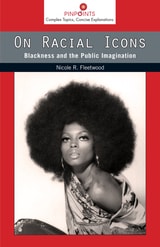
Nicole R. Fleetwood’s answers to these questions will change the way you think about the next photograph that you see depicting a racial event, black celebrity, or public figure. In On Racial Icons, Fleetwood focuses a sustained look on photography in documenting black public life, exploring the ways in which iconic images function as celebrations of national and racial progress at times or as a gauge of collective racial wounds in moments of crisis.
Offering an overview of photography’s ability to capture shifting race relations, Fleetwood spotlights in each chapter a different set of iconic images in key sectors of public life. She considers flash points of racialized violence in photographs of Trayvon Martin and Emmett Till; the political, aesthetic, and cultural shifts marked by the rise of pop stars such as Diana Ross; and the power and precarity of such black sports icons as Serena Williams and LeBron James; and she does not miss Barack Obama and his family along the way. On Racial Icons is an eye-opener in every sense of the phrase.