Results by title
8113 books match the query 'Literary Criticism' and 189 start with o
Other Things
Bill Brown
University of Chicago Press, 2015
The book ranges across the literary, visual, and plastic arts to depict the curious lives of things. Beginning with Achilles’s Shield, then tracking the object/thing distinction as it appears in the work of Martin Heidegger and Jacques Lacan, Bill Brown ultimately focuses on the thingness disclosed by specific literary and artistic works. Combining history and literature, criticism and theory, Other Things provides a new way of understanding the inanimate object world and the place of the human within it, encouraging us to think anew about what we mean by materiality itself.
Other Worlds Here
Honoring Native Women’s Writing in Contemporary Anarchist MovementsTheresa Warburton
Northwestern University Press, 2021
All is not lost, however. Rather than centering a critical indictment of contemporary anarchist politics, Other Worlds Here maintains that a defining characteristic of New Anarchism is its ability to adapt and transform. Through close readings of texts by Native women authors, Warburton argues that anarchists must shift the paradigm that another world is possible to one that recognizes other worlds already here: stories, networks, and histories that lay out methods of building reciprocal relationships with the land and its people. Analyzing memoirs, poetry, and novels by writers including Deborah Miranda, Elissa Washuta, Heid E. Erdrich, Janet Rogers, and Leslie Marmon Silko, Other Worlds Here extends the study of Native women’s literatures beyond ethnographic analysis of Native experience to advance a widely applicable, contemporary political critique.
Othermindedness
The Emergence of Network CultureMichael Joyce
University of Michigan Press, 2001
Michael Joyce's new collection continues to examine the connections between the poles of art and instruction, writing and teaching in the form of what Joyce has called theoretical narratives, pieces that are both narratives of theory and texts in which theory often takes the form of narrative. His concerns include hypertext and interactive fiction, the geography of cyberspace, and interactive film, and Joyce here searches out the emergence of network culture in spaces ranging from the shifting nature of the library to MOOs and other virtual spaces to life along a river.
While in this collection Joyce continues to be one of our most lyrical, wide-ranging, and informed cultural critics and theorists of new media, his essays exhibit an evolving distrust of unconsidered claims for newness in the midst of what Joyce calls "the blizzard of the next," as well as a recurrent insistence upon grounding our experience of the emergence of network culture in the body.
Michael Joyce is Associate Professor of English, Vassar College. He is author of a number of hypertext fictions on the web and on disk, most notably Afternoon: A Story.
His previous books are Of Two Minds: Hypertext Pedagogy and Poetics and Moral Tale and Meditations: Technological Parables and Refractions.

Ottoman Eurasia in Early Modern German Literature
Cultural Translations (Francisci, Happel, Speer)Gerhild Scholz Williams
University of Michigan Press, 2021
Even a casual perusal of seventeenth-century European print production makes clear that the Turk was on everyone’s mind. Europe’s confrontation of and interaction with the Ottoman Empire in the face of what appeared to be a relentless Ottoman expansion spurred news delivery and literary production in multiple genres, from novels and sermons to calendars and artistic representations. The trans-European conversation stimulated by these media, most importantly the regularly delivered news reports, not only kept the public informed but provided the basis for literary conversations among many seventeenth-century writers, three of whom form the center of this inquiry: Daniel Speer (1636-1707), Eberhard Werner Happel (1647-1690), and Erasmus Francisci (1626-1694). The expansion of the Ottoman Empire during the sixteenth and seventeenth centuries offers the opportunity to view these writers' texts in the context of Europe and from a more narrowly defined Ottoman Eurasian perspective.
Ottoman Eurasia in Early Modern German Literature: Cultural Translations (Francisci, Happel, Speer) explores the variety of cultural and commercial conversations between Europe and Ottoman Eurasia as they negotiated their competing economic and hegemonic interests. Brought about by travel, trade, diplomacy, and wars, these conversations were, by definition, “cross-cultural” and diverse. They eroded the antagonism of “us and them,” the notion of the European center and the Ottoman periphery that has historically shaped the view of European-Ottoman interactions.
Ouida
Cosmopolitan Ethics, Aesthetics, and LegaciesFrankie Dytor and Helena Esser
Ohio University Press, 0
Outspoken, extravagant, and internationally celebrated in her lifetime, Ouida (Marie Louise de la Ramée, 1839–1908) was one of the nineteenth century’s most successful and controversial writers. Her fiction, essays, and cultural criticism captivated readers across Europe and beyond, yet her polemical politics, cosmopolitan outlook, and opulent style left her at odds with the modernist critical traditions that shaped later literary scholarship. As a result, despite her considerable influence, Ouida has remained on the margins of Victorian literary history. Ouida: Cosmopolitan Ethics, Aesthetics, and Legacies offers the first sustained examination of the ethical and aesthetic commitments that underpin Ouida’s work and its effect on nineteenth-century culture. Bringing together an international group of established and emerging scholars, the collection explores her writing through frameworks including psychogeography, ecocriticism, decadence studies, celebrity studies, and adaptation studies. Contributors reveal how Ouida challenged conventional boundaries of nation, gender, class, and species while shaping contemporary debates about art, politics, and society. Opening with a conversation between Victorian literary scholars Pamela K. Gilbert and Talia Schaffer, the volume traces Ouida’s influence across literary networks, media forms, and historical periods, from her impact on fellow authors and feminist modernists to her afterlives in adaptation, fandom, and participatory culture. Positioning Ouida as a profoundly cosmopolitan thinker and writer, the collection reconsiders the boundaries of Victorian studies itself, demonstrating how nineteenth-century literature can be understood through dynamic exchanges across genres, borders, media, and time. In doing so, it restores Ouida to a central place in literary history while highlighting the enduring relevance of her global legacy. Contributors Katja Anderson Natasha Anderson Joseph Bristow Lorraine Dubuisson Frankie Dytor Jesse R. Erickson Helena Esser Pamela K. Gilbert Andrew King Jane Jordan Crescent Rainwater Talia Schaffer Margaret D. Stetz Joanna Turner
Our Ancient Wars
Rethinking War through the ClassicsVictor Caston and Silke-Maria Weineck, editors
University of Michigan Press, 2016
Our Ancient Wars features essays by top scholars from across academic disciplines—classicists and historians, philosophers and political theorists, literary scholars, some with firsthand experience of war and some without—engaging with classical texts to understand how differently they were read in other times and places. Contributors articulate difficult but necessary questions about contemporary conceptions of war and conflict.
Our Best Friend in America
The Soviet Afterlife of Mark TwainCassio de Oliveira
University of Wisconsin Press, 2027
In 1960, the popular Soviet magazine Krokodil dubbed Mark Twain the USSR’s “American Friend No. 1.” This surprised neither the Kremlin nor the magazine’s readers: Twain and especially his Mississippi novels, The Adventures of Tom Sawyer and The Adventures of Huckleberry Finn, were favorites throughout the Soviet period, with the first translations dating to before the Bolshevik Revolution and film adaptations continuing to appear into the 1980s. Cassio de Oliveira explores why and how such a decidedly American writer came to occupy pride of place in a nation so emphatically opposed to American culture. How exactly did Twain become the Soviet Union’s “best friend in America”? How did that friendship change, and what did it signify, throughout the long and fickle decades of Soviet cultural policy and the Cold War?
What emerges from this complex history is not just the story of a single author’s foreign fortunes but also the history of Soviet literature as well as Soviet–American cultural interactions, which are revealed to have been more multifaceted and variable than might be assumed. Twain’s reception in the USSR also speaks to the largely hidden history of world literature in translation, even during decades of fraught geopolitical confrontation.
Our Caribbean
A Gathering of Lesbian and Gay Writing from the AntillesThomas Glave, ed.
Duke University Press, 2008
The thirty-seven authors hail from the Bahamas, Barbados, Cuba, the Dominican Republic, Grenada, Guyana, Haiti, Jamaica, Panama, Puerto Rico, St. Vincent, St. Kitts, Suriname, and Trinidad. Many have lived outside the Caribbean, and their writing depicts histories of voluntary migration as well as exile from repressive governments, communities, and families. Many pieces have a political urgency that reflects their authors’ work as activists, teachers, community organizers, and performers. Desire commingles with ostracism and alienation throughout: in the evocative portrayals of same-sex love and longing, and in the selections addressing religion, family, race, and class. From the poem “Saturday Night in San Juan with the Right Sailors” to the poignant narrative “We Came All the Way from Cuba So You Could Dress Like This?” to an eloquent call for the embrace of difference that appeared in the Nassau Daily Tribune on the eve of an anti-gay protest, Our Caribbean is a brave and necessary book.
Contributors: José Alcántara Almánzar, Aldo Alvarez, Reinaldo Arenas, Rane Arroyo, Jesús J. Barquet, Marilyn Bobes, Dionne Brand, Timothy S. Chin, Michelle Cliff, Wesley E. A. Crichlow,
Mabel Rodríguez Cuesta, Ochy Curiel, Faizal Deen, Pedro de Jesús, R. Erica Doyle, Thomas Glave,
Rosamond S. King, Helen Klonaris, Lawrence La Fountain-Stokes, Audre Lorde, Shani Mootoo,
Anton Nimblett, Achy Obejas, Leonardo Padura Fuentes, Virgilio Piñera, Patricia Powell, Kevin Everod Quashie, Juanita Ramos, Colin Robinson, Assotto Saint, Andrew Salkey, Lawrence Scott,
Makeda Silvera, H. Nigel Thomas, Rinaldo Walcott, Gloria Wekker, Lawson Williams
Our Deep Gossip
Conversations with Gay Writers on Poetry and DesireChristopher Hennessy; Foreword by Christopher Bram
University of Wisconsin Press, 2013
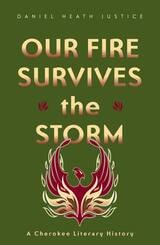
Our Fire Survives the Storm
A Cherokee Literary HistoryDaniel Heath Justice
University of Minnesota Press, 2006
Through cycles of war and peace, resistance and assimilation, trauma and regeneration, Cherokees have long debated what it means to be Cherokee through protest writings, memoirs, fiction, and retellings of traditional stories. Justice employs the Chickamauga consciousness of resistance and Beloved Path of engagement—theoretical approaches that have emerged out of Cherokee social history—to interpret diverse texts composed in English, a language embraced by many as a tool of both access and defiance.
Justice’s analysis ultimately locates the Cherokees as a people of many perspectives, many bloods, mingled into a collective sense of nationhood. Just as the oral traditions of the Cherokee people reflect the living realities and concerns of those who share them, Justice concludes, so too is their literary tradition a textual testament to Cherokee endurance and vitality.
Daniel Heath Justice is assistant professor of aboriginal literatures at the University of Toronto.
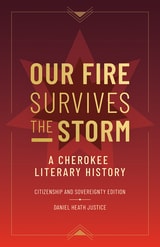
Our Fire Survives the Storm
A Cherokee Literary History, Citizenship and Sovereignty EditionDaniel Heath Justice
University of Minnesota Press, 2026
The twentieth-anniversary edition of the path-clearing study of Cherokee writing in English, with an emphatic refocus on voices from the three Cherokee tribal nations
This Citizenship and Sovereignty Edition of Our Fire Survives the Storm is a thoroughly updated, nationhood-focused, twentieth-anniversary revision of Daniel Heath Justice’s influential study of Cherokee writing in English. Through politically astute and historically grounded readings of diverse texts by citizens of the Cherokee Nation, United Keetoowah Band of Cherokee Indians, and Eastern Band of Cherokee Indians, Justice connects Cherokee literature to Indigenous sovereignty, nationhood, and collective futurity.
Guided by a reparative vision that directly contends with the outdated literary legacies of the book’s first edition, this revision confronts the ongoing harms of unsubstantiated and false Cherokee heritage claims on literary studies, replacing readings of primary texts by unverified claimants with those of Cherokee citizen writers. As Justice addresses issues of accountability, he engages with the past two decades of Indigenous scholarship, fully updating terminology, concepts, and scholarly resources. He expands and deepens the intellectual and historical context for Cherokee literary production introduced in the first edition, and he discusses Cherokee writing and community in the mid-twentieth century, the Cherokee Freedmen’s long struggle for justice, and the future of Cherokee nationhood.
Highlighting the work of authors who illustrate the transformative collective discourses of what it means to be Cherokee, Justice examines the richness of Cherokee literary expression through motifs of roots, removal, and nationhood in traditional stories, speeches, legal and governance documents, memoirs, short stories, novels, and plays. An invitation to reflective criticism, this new edition of Our Fire Survives the Storm is grounded in the belief that Indigenous nationhood is a necessary ethical response to the violence of the settler imaginary.
Retail e-book files for this title are screen-reader friendly with images accompanied by short alt text and/or extended descriptions.
Our Joyce
From Outcast to IconBy Joseph Kelly
University of Texas Press, 1997
James Joyce began his literary career as an Irishman writing to protest the deplorable conditions of his native country. Today, he is an icon in a field known as "Joyce studies." Our Joyce explores this amazing transformation of a literary reputation, offering a frank look into how and for whose benefit literary reputations are constructed.
Joseph Kelly looks at five defining moments in Joyce's reputation. Before 1914, when Joyce was most in control of his own reputation, he considered himself an Irish writer speaking to the Dublin middle classes. When T. S. Eliot and Ezra Pound began promoting Joyce in 1914, however, they initiated a cult of genius that transformed Joyce into a prototype of the "egoist," a writer talking only to other writers.
This view served the purposes of Morris Ernst in the 1930s, when he defended Ulysses against obscenity charges by arguing that geniuses were incapable of obscenity and that they wrote only for elite readers. That view of Joyce solidified in Richard Ellmann's award-winning 1950s biography, which portrayed Joyce as a self-centered genius who cared little for his readers and less for the world at war around him. The biography, in turn, led to Joyce's canonization by the academy, where a "Joyce industry" now flourishes within English departments.
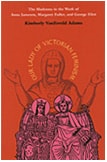
Our Lady Of Victorian Feminism
The Madonna in the Work of Anna Jameson, Margaret Fuller, and George EliotKimberly VanEsveld Adams
Ohio University Press, 2000
Our Lady of Victorian Feminism is about three nineteenth-century women, Protestants by background and feminists by conviction, who are curiously and crucially linked by their extensive use of the Madonna in arguments designed to empower women.
In the field of Victorian studies, few scholars have looked beyond the customary identification of the Christian Madonna with the Victorian feminine ideal—the domestic Madonna or the Angel in the House. Kimberly VanEsveld Adams shows, however, that these three Victorian writers made extensive use of the Madonna in feminist arguments. They were able to see this figure in new ways, freely appropriating the images of independent, powerful, and wise Virgin Mothers.
In addition to contributions in the fields of literary criticism, art history, and religious studies, Our Lady of Victorian Feminism places a needed emphasis on the connections between the intellectuals and the activists of the nineteenth-century women's movement. It also draws attention to an often neglected strain of feminist thought, essentialist feminism, which proclaimed sexual equality as well as difference, enabling the three writers to make one of their most radical arguments, that women and men are made in the image of the Virgin Mother and the Son, the two faces of the divine.
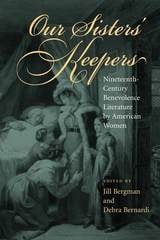
Our Sisters' Keepers
Nineteenth-Century Benevolence Literature by American WomenEdited by Jill Bergman and Debra Bernardi
University of Alabama Press, 2005
American culture has long had a conflicted relationship with assistance to the poor. Cotton Mather and John Winthrop were staunch proponents of Christian charity as fundamental to colonial American society, while transcendentalists harbored deep skepticism towards benevolence in favor of Emersonian self-reliance and Thoreau’s insistence on an ascetic life. Women in the 19th century, as these essays show, approached issues of benevolence far differently than their male counterparts, consistently promoting assistance to the impoverished, in both their acts and their writings.
Our Vampires, Ourselves
Nina Auerbach
University of Chicago Press, 1995
"[Auerbach] has seen more Hammer movies than I (or the monsters) have had steaming hot diners, encountered more bloodsuckers than you could shake a stick at, even a pair of crossed sticks, such as might deter a very sophisticated ogre, a hick from the Moldavian boonies....Auerbach has dissected and deconstructed them with the tender ruthlessness of a hungry chef, with cogency and wit."—Eric Korn, Times Literary Supplement
"This seductive work offers profound insights into many of the urgent concerns of our time and forces us to confront the serious meanings that we invest, and seek, in even the shadiest manifestations of the eroticism of death."—Wendy Doniger, The Nation
"A vigorous, witty look at the undead as cultural icons."—Kirkus Review
"In case anyone should think this book is merely a boring lit-crit exposition...Auerbach sets matters straight in her very first paragraph. 'What vampires are in any given generation,' she writes, 'is a part of what I am and what my times have become. This book is a history of Anglo-American culture through its mutating vampires.'...Her book really takes off."—Maureen Duffy, New York Times Book Review
Our Vampires, Ourselves
Nina Auerbach
University of Chicago Press, 1995
Nina Auerbach shows how every age embraces the vampire it needs, and gets the vampire it deserves. Working with a wide range of texts, as well as movies and television, Auerbach locates vampires at the heart of our national experience and uses them as a lens for viewing the last two hundred years of Anglo-American cultural history.
"[Auerbach] has seen more Hammer movies than I (or the monsters) have had steaming hot diners, encountered more bloodsuckers than you could shake a stick at, even a pair of crossed sticks, such as might deter a very sophisticated ogre, a hick from the Moldavian boonies....Auerbach has dissected and deconstructed them with the tender ruthlessness of a hungry chef, with cogency and wit."—Eric Korn, Times Literary Supplement
"This seductive work offers profound insights into many of the urgent concerns of our time and forces us to confront the serious meanings that we invest, and seek, in even the shadiest manifestations of the eroticism of death."—Wendy Doniger, The Nation
"A vigorous, witty look at the undead as cultural icons."—Kirkus Review
"In case anyone should think this book is merely a boring lit-crit exposition...Auerbach sets matters straight in her very first paragraph. 'What vampires are in any given generation,' she writes, 'is a part of what I am and what my times have become. This book is a history of Anglo-American culture through its mutating vampires.'...Her book really takes off."—Maureen Duffy, New York Times Book Review
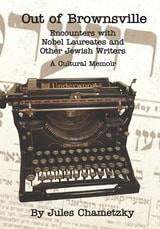
Out of Brownsville
Encounters with Nobel Laureates and Other Jewish Writers: A Cultural MemoirJules Chametzky
University of Massachusetts Press, 2012
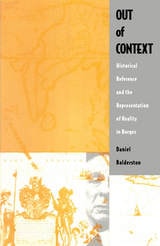
Out of Context
Historical Reference and the Representation of Reality in BorgesDaniel Balderston
Duke University Press, 1993
Through a detailed examination of seven stories, Daniel Balderston shows how Borges's historical and political references, so often misread as part of a literary game, actually open up a much more complex reality than the one made explicit to the reader. Working in tension with the fantastic aspects of Borges' work, these precise references to realities outside the text illuminate relations between literature and history as well as the author's particular understanding of both. In Borges's perspective as it is revealed here, history emerges as an "other" only partially recoverable in narrative form. From what can be recovered, Balderston is able to clarify Borges's position on historical episodes and trends such as colonialism, the Peronist movement, "Western culture," militarism, and the Spanish invasion of the Americas.
Informed by a wide reading of history, a sympathetic use of critical theory, and a deep understanding of Borges's work, this iconoclastic study provides a radical new approach to one of the most celebrated and—until now—hermetic authors of our time.
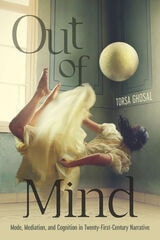
Out of Mind
Mode, Mediation, and Cognition in Twenty-First-Century NarrativeTorsa Ghosal
The Ohio State University Press, 2021
Out of Mind makes a compelling case for understanding narrative forms and cognitive-scientific frameworks as co-emergent and cross-pollinating. To this end, Ghosal harnesses narrative theory, multimodality studies, cognitive sciences, and disability studies to track competing perspectives on remembering, reading, and sense of place and self. Through new readings of the works of Kamila Shamsie, Aleksandar Hemon, Mark Haddon, Lance Olsen, Steve Tomasula, Jonathan Safran Foer, and others, Out of Mind generates unique insights into literary imagination’s influence on how we think and perceive amid twenty-first-century social, technological, and environmental changes.
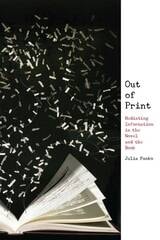
Out of Print
Mediating Information in the Novel and the BookJulia Panko
University of Massachusetts Press, 2020
This innovative study chronicles how the print book has fared as both novelists and the burgeoning profession of information science have grappled with unprecedented quantities of data across the twentieth and twenty-first centuries. As the novel's archival project took a critical turn from realism to an investigation of the structures, possibilities, and ideologies of information media, novelists have considered ideas about how data can best be collected and stored. Julia Panko pairs case studies from information history with close readings of modernist works such as James Joyce's Ulysses and Virginia Woolf's Orlando and contemporary novels from Jonathan Safran Foer, Stephen King, and Mark Z. Danielewski that emphasize their own informational qualities and experiment with the aesthetic potential of the print book.
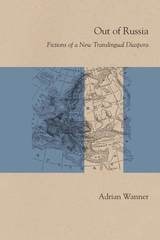
Out of Russia
Fictions of a New Translingual DiasporaAdrian Wanner
Northwestern University Press, 2011
Out of This World
Afro-German AfrofuturismPriscilla Dionne Layne
Northwestern University Press, 2025
Examining Afro-German artists’ use of Afrofuturist tropes to critique German racial history
The term Afrofuturism was first coined in the 1990s to describe African diasporic artists’ use of science fiction, speculative fiction, and fantasy to reimagine the diaspora’s pasts and to counter not only Eurocentric prejudices but also pessimistic narratives. Out of This World: Afro-German Afrofuturism focuses on contemporary Black German Afrofuturist literature and performance that critiques Eurocentrism and, specifically, German racism and colonial history. This young generation has, Priscilla Layne argues, engaged with Afrofuturism to disrupt linear time and imagine alternative worlds, to introduce non-Western technologies into the German cultural milieu, and to consider the possibilities of posthumanism. Their experiments in futurist and speculative narratives offer new tools for breaking with the binary thinking about race, culture, and gender identity that have been enforced by repressive ideological and state apparatuses, such as educational, cultural, and police institutions. Rather than providing escapism or purely imaginary alternatives, however, they have created a space—outer and artistic—in which their lives matter.
Out of This World
Speculative Fiction in Translation from the Cold War to the New MillenniumRachel S. Cordasco
University of Illinois Press, 2021
An informative and one-of-a-kind guide, Out of This World offers readers and scholars alike a tour of speculative fiction's new globalized era.
Out of the Gutters
Obscenity, Censorship, and Transgression in American ComicsEdited by Jorge J. Santos Jr. and Patrick S. Lawrence
University of Texas Press, 2025
Comics have long been a subject of moral panics, no doubt thanks to their in-your-face illustrations and their association with young readers. Indeed, the politicians and parents behind today’s book-banning campaigns reserve special ire for graphic novels. What makes today’s controversies different is the content of the alleged obscenity. Instead of targeting sex as such, censors now focus on affirmations of nonheteronormative identity, as in Maia Kobabe’s Gender Queer. And while violence is a constant in comics, stories that acknowledge nationalist oppression and violence, such as Art Spiegelman’s Maus, are also being blacklisted.
Out of the Gutters assembles scholars from diverse disciplines to examine US comics, graphic novels, and cartooning that have been challenged as obscene or transgressive. Covering well-known underground figures like Robert Crumb and Charles Burns, newcomers such as C. Spike Trotman and Emil Ferris, and mainstream creators including Chris Claremont and Archie Goodwin, the collection explores the market economics of transgression, historical representations of graphic violence, the ever-changing meaning of pornography, sex-positive comics by BIPOC authors, and queerness in pop-culture mega-properties like X-Men and The Walking Dead.
Out of the Mouths of Babes
Infant Voices in Medieval French LiteratureJulie Singer
University of Chicago Press, 2025
Medieval literature is full of strange moments when infants (even fetuses) speak. In Out of the Mouths of Babes, Julie Singer explores the unsettling questions raised by these events, including What is a person? Is speech fundamental to our humanity? And what does it mean, or what does it matter, to speak truth to power?
Singer contends that descriptions of baby talk in medieval French literature are far from trivial. Through treatises, manuals, poetry, and devotional texts, Singer charts how writers imagined infants to speak with an authority untainted by human experience. What their children say, then, offers unique insight into medieval hopes for universal answers to life’s deepest wonderings.
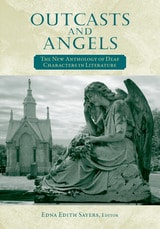
Outcasts and Angels
The New Anthology of Deaf Characters in LiteratureEdna Edith Sayers
Gallaudet University Press, 2012
In 1976, Trent Batson and Eugene Bergman released their classic Angels and Outcasts: An Anthology of Deaf Characters in Literature. In it, they featured works from the 19th and 20th centuries by well-known authors such as Charles Dickens and Eudora Welty. They also presented less-well-known deaf authors, and they prefaced each excerpt with remarks on context, societal perceptions, and the dignity due to deaf people. Since then, much has transpired, turning around the literary criticism regarding portrayals of deaf people in print. Edna Edith Sayers reflects these changes in her new collection Outcasts and Angels: The New Anthology of Deaf Characters in Literature.
Sayers mines the same literary vein as the first volume with rich new results. Her anthology also introduces rare works by early masters such as Daniel Defoe. She includes three new deaf authors, Charlotte Elizabeth, Howard T. Hofsteater, and Douglas Bullard, who offer compelling evidence of the attitudes toward deaf people current in their eras. In search of commonalities and comparisons, Sayers reveals that the defining elements of deaf literary characters are fluid and subtly different beyond the predominant dueling stereotypes of preternaturally spiritual beings and thuggish troglodytes.
Outcasts and Angels demonstrates these subtle variations in writings by Ambrose Bierce, Isak Dinesen, Nadine Gordimer, and Flannery O’Connor. Stories by Juozas Grušas, Julian Barnes, and many other international authors broaden the scope of this updated inquiry into the deaf literary character. Sayer’s preface and closing essay bring any disparate parts together, completing Outcasts and Angels as a fitting, contemporary companion to the original classic collection.
Outside Literary Studies
Black Criticism and the UniversityAndy Hines
University of Chicago Press, 2022
This striking contribution to Black literary studies examines the practices of Black writers in the mid-twentieth century to revise our understanding of the institutionalization of literary studies in America. Andy Hines uncovers a vibrant history of interpretive resistance to university-based New Criticism by Black writers of the American left. These include well-known figures such as Langston Hughes and Lorraine Hansberry as well as still underappreciated writers like Melvin B. Tolson and Doxey Wilkerson. In their critical practice, these and other Black writers levied their critique from “outside” venues: behind the closed doors of the Senate Permanent Subcommittee on Investigations, in the classroom at a communist labor school under FBI surveillance, and in a host of journals. From these vantages, Black writers not only called out the racist assumptions of the New Criticism, but also defined Black literary and interpretive practices to support communist and other radical world-making efforts in the mid-twentieth century. Hines’s book thus offers a number of urgent contributions to literary studies: it spotlights a canon of Black literary texts that belong to an important era of anti-racist struggle, and it fills in the pre-history of the rise of Black studies and of ongoing Black dissent against the neoliberal university.
Outside Literary Studies
Black Criticism and the UniversityAndy Hines
University of Chicago Press, 2022
This is an auto-narrated audiobook edition of this book.
A timely reconsideration of the history of the profession, Outside Literary Studies investigates how midcentury Black writers built a critical practice tuned to the struggle against racism and colonialism.
This striking contribution to Black literary studies examines the practices of Black writers in the mid-twentieth century to revise our understanding of the institutionalization of literary studies in America. Andy Hines uncovers a vibrant history of interpretive resistance to university-based New Criticism by Black writers of the American left. These include well-known figures such as Langston Hughes and Lorraine Hansberry as well as still underappreciated writers like Melvin B. Tolson and Doxey Wilkerson. In their critical practice, these and other Black writers levied their critique from “outside” venues: behind the closed doors of the Senate Permanent Subcommittee on Investigations, in the classroom at a communist labor school under FBI surveillance, and in a host of journals. From these vantages, Black writers not only called out the racist assumptions of the New Criticism, but also defined Black literary and interpretive practices to support communist and other radical world-making efforts in the mid-twentieth century. Hines’s book thus offers a number of urgent contributions to literary studies: it spotlights a canon of Black literary texts that belong to an important era of anti-racist struggle, and it fills in the pre-history of the rise of Black studies and of ongoing Black dissent against the neoliberal university.
Outside Theater
Alliances That Shape MexicoStuart A. Day
University of Arizona Press, 2017
Taking a cue from influential French philosopher Jacques Rancière, who in The Emancipated Spectator rejects the idea of the passive, ignorant, duped spectators in need of instruction to become active, Stuart A. Day’s goal in Outside Theater is to highlight written words and performances that exemplify effective strategies, past and present, to reveal and promote civic engagement, to provoke disruptions, or to highlight fissures—and opportunities—in oppressive social structures.
Through the study of one or two primary models per chapter, as well as multiple examples in the introduction and conclusion, Day presents Mexican plays from 1905 to 2015, including the 2010 Mexico City performance of Zoot Suit by Chicano playwright Luis Valdez. Using these plays, Day explores the concept of “outside theater,” where people or groups translate the tools of the theatrical trade to a different stage, outside the walls of the theater, and play the part of fictional or real life Celestinas—matchmakers who unite seemingly disparate entities to promote social awareness and social action by working the borders between life and art.
Each work in this innovative analysis reveals productive social connections that, with the help of crucial artistic alliances, contradict the perception that art is somehow secondary to or disconnected from the public sphere of influence and the struggles of everyday life. With this book, Day shows that Mexican theater can and does bolster civil society and thus the country’s fragile democracy.
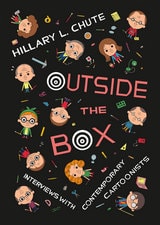
Outside the Box
Interviews with Contemporary CartoonistsHillary L. Chute
University of Chicago Press, 2014
For nearly a decade Hillary L. Chute has been sitting down for extensive interviews with the leading figures in comics, and with Outside the Box she offers fans a chance to share her ringside seat. Chute’s in-depth discussions with twelve of the most prominent and accomplished artists and writers in comics today reveal a creative community that is richly interconnected yet fiercely independent, its members sharing many interests and approaches while working with wildly different styles and themes. Chute’s subjects run the gamut of contemporary comics practice, from underground pioneers like Art Spiegelman and Lynda Barry, to the analytic work of Scott McCloud, the journalism of Joe Sacco, and the extended narratives of Alison Bechdel, Charles Burns, and more. They reflect on their experience and innovations, the influence of peers and mentors, the reception of their art and the growth of critical attention, and the crucial place of print amid the encroachment of the digital age.
Beautifully illustrated in full-color, and featuring three never-before-published interviews—including the first published conversation between Art Spiegelman and Chris Ware—Outside the Box will be a landmark volume, a close-up account of the rise of graphic storytelling and a testament to its vibrant creativity.
Outside the Lines
Talking with Contemporary Gay PoetsChristopher Hennessy, Editor
University of Michigan Press, 2005
---Bernard Cooper, author of Maps to Anywhere
Editor Christopher Hennessy gathers interviews with some of the most significant figures in contemporary American poetry. While each poet is gay, these encompassing, craft-centered interviews reflect the diversity of their respective arts and serve as a testament to the impact gay poets have had and will continue to have on contemporary poetics.
The book includes twelve frank, intense interviews with some of America's best-known and loved poets, who have not only enjoyed wide critical acclaim but who have had lasting impact on both the gay tradition and the contemporary canon writ large, for example, Frank Bidart, the late Thom Gunn, and J. D. McClatchy. Some of the most honored and respected poets, still in the middle of their careers, are also included, for example, Mark Doty, Carl Phillips, and Reginald Shepherd. Each interview explores the poet's complete work to date, often illuminating the poet's technical evolution and emotional growth, probing shifts in theme, and even investigating links between verse and sexuality.
In addition to a selected bibliography of works by established poets, the book also includes a list of works by newer and emerging poets who are well on their way to becoming important voices of the new millennium.
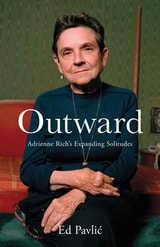
Outward
Adrienne Rich’s Expanding SolitudesEd Pavlic
University of Minnesota Press, 2021
The first scholarly study of Adrienne Rich’s full career examines the poet through her developing approach to the transformative potential of relationships
Adrienne Rich is best known as a feminist poet and activist. This iconic status owes especially to her work during the 1970s, while the distinctive political and social visions she achieved during the second half of her career remain inadequately understood. In Outward, poet, scholar, and novelist Ed Pavlić considers Rich’s entire oeuvre to argue that her most profound contribution in poems is her emphasis on not only what goes on “within us” but also what goes on “between us.” Guided by this insight, Pavlić shows how Rich’s most radical work depicts our lives—from the public to the intimate—in shared space rather than in owned privacy.
Informed by Pavlić’s friendship and correspondence with Rich, Outward explores how her poems position visionary possibilities to contend with cruelty and violence in our world. Employing an innovative framework, Pavlić examines five kinds of solitude reflected in Rich’s poems: relational solitude, social solitude, fugitive solitude, dissident solitude, and radical solitude. He traces the importance of relationships to her early writing before turning to Rich’s explicitly antiracist and anticapitalist work in the 1980s, which culminates with her most extensive sequence, “An Atlas of the Difficult World.” Pavlić concludes by examining the poet’s twenty-first century work and its depiction of relationships that defy historical divisions based on region, race, class, gender, and sexuality.
A deftly written engagement in which one poet works within the poems of another, Outward reveals the development of a major feminist thinker in successive phases as Rich furthers her intimate and erotic, social and political reach. Pavlić illuminates Rich’s belief that social divisions and the power of capital inform but must never fully script our identities or our relationships to each other.
Over the Rainbow
Queer Children's and Young Adult LiteratureEdited by Michelle Ann Abate and Kenneth Kidd
University of Michigan Press, 2011
"Over the Rainbow is lively, engaging, and thoughtful. More to the point, the field of children's literature needs such a collection."
---Katherine Capshaw Smith, University of Connecticut
In spite of the growing critical interest concerning gender and sexual nonnormativity in and around narratives written for young readers, no book-length volume on the subject has yet appeared. Over the Rainbow: Queer Children's and Young Adult Literature is the first collection of essays dedicated to LGBTQ issues in children's literature. Bringing together significant essays and introducing new work, Over the Rainbow is intended to serve both as a scholarly reference and as a textbook for students of children's studies; gender/queer studies; and related disciplines such as English, history, sociology, and education. Editors Michelle Ann Abate and Kenneth Kidd showcase important essays on the subject of LGBTQ children's and young adult literature ---including Harriet the Spy, Rainbow Boys, Little Women, the Harry Potter series, and A Separate Peace---while providing a provisional history of both the literature and the scholarship and examining the field's origins, current status, and possible future orientations.
Over the Rainbow collects essays by Jes Battis, Robin Bernstein, Thomas Crisp, June Cummins, Elizabeth A. Ford, Sherrie A. Inness, Christine A. Jenkins, Vanessa Wayne Lee, Biddy Martin, Robert McRuer, Claudia Nelson, Jody Norton, Tison Pugh, Catherine Tosenberger, Eric L. Tribunella, Roberta Seelinger Trites, and Andrea Wood. These pieces will be of interest to scholars and students in the fields of children's literature, American Studies, LGBTQ and queer studies, cultural studies, and literary criticism.
Cover art: Original title page of The Wonderful Wizard of Oz, by Frank L. Baum, illustrated by W. W. Denslow. New York: George M. Hill, 1900.
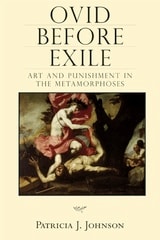
Ovid before Exile
Art and Punishment in the MetamorphosesPatricia J. Johnson
University of Wisconsin Press, 2007
Patricia J. Johnson demonstrates how the production of art—specifically poetry—changed dramatically during the reign of Augustus. By Ovid’s final decade in Rome, the atmosphere for artistic work had transformed, leading to a drop in poetic production of quality. Johnson shows how Ovid, in the episodes of artistic creation that anchor his Metamorphoses, responded to his audience and commented on artistic circumstances in Rome.
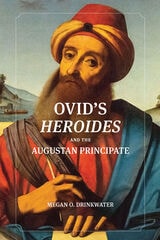
Ovid's "Heroides" and the Augustan Principate
Megan O. Drinkwater
University of Wisconsin Press, 2023
It was in this era of turmoil and transformation that Ovid, the Roman poet best known for Metamorphoses, was born. The Heroides, one of his earliest and most elusive works, is not written from the first-person perspective that so often characterizes the elegiac poetry of that time but from the personae of tragic heroines of classical mythology.
Megan O. Drinkwater illustrates how Ovid used innovations of literary form to articulate an expression of the crisis of civic identity in Rome at a time of extreme and permanent political change. The letters are not divorced from the context of their composition but instead elucidate that context for their readers and expose how Ovid engaged in politics throughout his entire career. Their importance is as much historical as literary. Drinkwater makes a compelling case for understanding the Heroides as a testament from one of Rome’s most eloquent writers to the impact that the dramatic shift from republic to empire had on its intellectual elites.
Ovid's Causes
Cosmogony and Aetiology in the MetamorphosesK. Sara Myers
University of Michigan Press, 1994
The first and final chapters of this book examine the scientific and cosmological framework of the poem. Ovid’s juxtaposition of scientific and mythological explanations is an aspect of his sophisticated manipulation of truth and fiction, and of the claims of philosophical poetry and mythological poetry.
This illuminating study presents much useful material for students of Roman poetry or of Greek literary influences that profoundly influenced its development. Students and scholars of ancient poetical traditions will likewise find much of interest.
Ovid's Literary Loves
Influence and Innovation in the AmoresBarbara Weiden Boyd
University of Michigan Press, 1997
Boyd's thoughtful approach to imitation in Latin poetry brings into prominence the formative role played by Virgil in shaping Ovid's "poetic memory," even in the Amores. The detailed examination of Ovidian extended similes shows how the poet exploits the literary past precisely in order to free himself from generic restraint and to expand the narrow horizons of elegy. Boyd argues that this paradox is the essence of Ovidian poetics.
Ovid's Literary Loves is an imaginative approach to imitation in Latin poetry and makes a significant contribution to current discussions of the subject. This is one of the first contemporary scholarly monographs on the Amores, and it will find a large and welcoming audience of Latinists at all levels of study.
Barbara Weiden Boyd is Associate Professor of Classics, Bowdoin College, Brunswick, Maine.
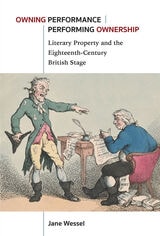
Owning Performance | Performing Ownership
Literary Property and the Eighteenth-Century British StageJane Wessel
University of Michigan Press, 2022
Owning Performance follows the careers of some of the 18th century’s most influential playwrights, actors, and theater managers as they vied for control over the period’s most popular shows. Without protection for dramatic literary property, these figures developed creative extra-legal strategies for controlling the performance of drama—quite literally performing their ownership. Their various strategies resulted in a culture of ephemerality, with many of the period’s most popular works existing only in performance and manuscript copies. Author Jane Wessel explores how playwrights and actors developed strategies for owning their works and how, in turn, theater managers appropriated these strategies, putting constant pressure on artists to innovate. Owning Performance reveals the wide-reaching effects of property law on theatrical culture, tracing a turn away from print that affected the circulation, preservation, and legacy of 18th century drama.
Oyvind Fahlstrom
The Art of WritingSergio Bessa
Northwestern University Press, 2008
Fahlstrom (1928-76) created a body of work as profoundly political as it is aesthetic, spanning two tumultuous decades in the avant-garde and comprising concrete poetry, manifestos, plays, performance, filmmaking, paintings, multiple prints, sculpture, and installations. Bessa focuses on how Fahlstrom's early experiments with concrete poetry influenced his later works in the visual arts and offers close readings of his seminal work Bord, his painting series Ade-Ledic-Nander, his interactive painting The Planetarium, and his radio play Birds in Sweden.