Results by title
28164 books match the query 'History' and 581 start with o
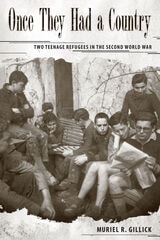
Once They Had a Country
Two Teenage Refugees in the Second World WarMuriel R. Gillick
University of Alabama Press, 2010
A powerful true story of survival, displacement, and hope in a world at war.
Muriel Gillick draws from a remarkable set of primary source materials, including letters, telegrams, and police records to relate the story of two teenage refugees during World War II. Once They Had a Country conveys well what it was like to establish a new life in a foreign country—over and over again and in constant fear for one’s life. The work tells of the extraordinary experiences of the author’s parents in Europe and demonstrates how citizens and the governments of Belgium, France, Switzerland, Brazil, America, China, and postwar Germany treated refugees. This story also reveals the origins of the Convention Relating to the Status of Refugees, the basis of contemporary international law affecting refugees in many countries today.
In addition to the dramatic human story it tells, this work brings the plight of refugees home to the reader—and with over 8 million refugees worldwide today, the subject of how individuals and nation states respond to these individuals is indeed timely.
Once Upon a Time in Texas
A Liberal in the Lone Star StateBy David Richards
University of Texas Press, 2002
Once upon a time in Texas...there were liberal activists of various stripes who sought to make the state more tolerant and more tolerable. David Richards was one of them. In this fast-paced, often humorous memoir, he remembers the players, the strategy sessions, the legal and political battles, and the wins and losses that brought significant gains in civil rights, voter rights, labor law, and civil liberties to the people of Texas from the 1950s to the 1990s.
In his work as a lawyer, Richards was involved in cases covering voters' rights, school finance reform, and a myriad of civil liberties and free speech cases. In telling these stories, he vividly evokes the "glory days" of Austin liberalism, when a who's who of Texas activists plotted strategy at watering holes such as Scholz Garden and the Armadillo World Headquarters. Likewise, he offers vivid portraits of liberal politicians from Ralph Yarborough to Ann Richards (his former wife), progressive journalists such as Molly Ivins and the Texas Observer staff, and the hippies, hellraisers, and musicians who all challenged Texas's conservative status quo.
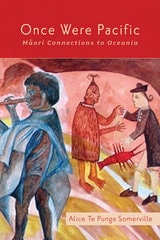
Once Were Pacific
Maori Connections to OceaniaAlice Te Punga Somerville
University of Minnesota Press, 2012
Native identity is usually associated with a particular place. But what if that place is the ocean? Once Were Pacific explores this question as it considers how Māori and other Pacific peoples frame their connection to the ocean, to New Zealand, and to each other through various creative works. Māori scholar Alice Te Punga Somerville shows how and when Māori and other Pacific peoples articulate their ancestral history as migratory seafarers, drawing their identity not only from land but also from water.
Although Māori are ethnically Polynesian, and Aotearoa New Zealand is clearly a part of the Pacific region, in New Zealand the terms “Māori” and “Pacific” are colloquially applied to two distinct communities: Māori are Indigenous, and “Pacific” refers to migrant communities from elsewhere in the region. Asking how this distinction might blur historical and contemporary connections, Te Punga Somerville interrogates the relationship between indigeneity, migration, and diaspora, focusing on texts: poetry, fiction, theater, film, and music, viewed alongside historical instances of performance, journalism, and scholarship.
In this sustained treatment of the Māori diaspora, Te Punga Somerville provides the first critical analysis of relationships between Indigenous and migrant communities in New Zealand.
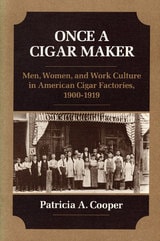
Once a Cigar Maker
Men, Women, and Work Culture in American Cigar Factories, 1900-1919Patricia A. Cooper
University of Illinois Press, 1987
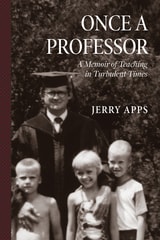
Once a Professor
A Memoir of Teaching in Turbulent TimesJerry Apps
Wisconsin Historical Society Press, 2018
“I never wanted to be a professor,” writes Jerry Apps in the introduction to Once a Professor. Yet a series of unexpected events and unplanned experiences put him on an unlikely path—and led to a thirty-eight-year career at the University of Wisconsin.
In this continuation of the Apps life story begun in his childhood memoir Limping through Life, Wisconsin’s celebrated rural storyteller shares stories from his years at the University of Wisconsin–Madison from 1957 to 1995, when he left the university to lecture and write fulltime. During those years Apps experienced the turmoil of protests and riots at the UW in the 1960s, the struggles of the tenure process and faculty governance, and the ever-present pressure to secure funding for academic research and programs.
Through it all, the award-winning writer honed a personal philosophy of education—one that values critical thinking, nontraditional teaching approaches, and hands-on experiences outside of the classroom. Colorful characters, personal photos, and journal entries from the era enrich this account of an unexpected campus career.
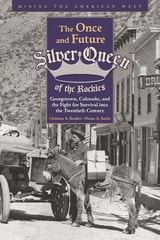
Once and Future Silver Queen of the Rockies
Georgetown, Colorado, and the Fight for Survival into the Twentieth CenturyChristine Bradley
University Press of Colorado, 2018
There are many studies of local communities during their heydays, but the life of a community in decline is rarely studied. The Once and Future Silver Queen of the Rockies delves into the life of Georgetown, Colorado, after the turn of the twentieth century as mining in Clear Creek County steadily declined and ultimately collapsed.
One of the earliest mining communities in the state, Georgetown began to struggle for survival as the nineteenth century drew to a close. The price of silver dropped precipitously while other mining camps were still opening around the region. The new, bright future once envisioned for the “Silver Queen of the Rockies” began to fade. Yet the community managed to survive and re-create itself in the new world of the twentieth century. Tourism, skiing, and historic preservation replaced mineral extraction as the basis of the regional economy. Today, Georgetown maintains the aesthetic feel of a nineteenth-century mining town and stands as an example of community-supported historic preservation.
This richly illustrated sequel to The Rise of the Silver Queen tells the compelling story of Georgetown’s survival, and ultimate flourishing, after the loss of its principal industry. It is an interesting and engaging addition to the history of Colorado and the West.
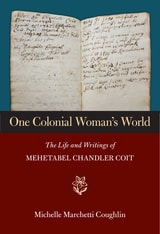
One Colonial Woman's World
The Life and Writings of Mehetabel Chandler CoitMichelle Marchetti Coughlin
University of Massachusetts Press, 2012
Michelle Marchetti Coughlin combs through these writings to create a vivid portrait of a colonial American woman and the world she inhabited. Coughlin documents the activities of daily life as well as dramas occasioned by war, epidemics, and political upheaval. Though Coit's opportunities were circumscribed by gender norms of the day, she led a rich and varied life, not only running a household and raising a family, but reading, writing, traveling, transacting business, and maintaining a widespread network of social and commercial connections. She also took a lively interest in the world around her and played an active role in her community.
Coit's long life covered an eventful period in American history, and this book explores the numerous—and sometimes surprising—ways in which her personal history was linked to broader social and political developments. It also provides insight into the lives of countless other colonial American women whose history remains largely untold.
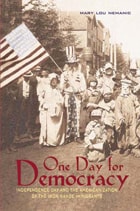
One Day for Democracy
Independence Day and the Americanization of Iron Range ImmigrantsMary Lou Nemanic
Ohio University Press, 2007

One Discipline, Four Ways
British, German, French, and American AnthropologyFredrik Barth, Robert Parkin, Andre Gingrich, and Sydel Silverman
University of Chicago Press, 2005
Moving from E. B. Taylor all the way through the development of modern fieldwork, Barth reveals the repressive tendencies that prevented Britain from developing a variety of anthropological practices until the late 1960s. Gingrich, meanwhile, articulates the development of German anthropology, paying particular attention to the Nazi period, of which surprisingly little analysis has been offered until now. Parkin then assesses the French tradition and, in particular, its separation of theory and ethnographic practice. Finally, Silverman traces the formative influence of Franz Boas, the expansion of the discipline after World War II, and the "fault lines" and promises of contemporary anthropology in the United States.

One Last Read
The Collected Works of the World's Slowest SportswriterRay Didinger
Temple University Press, 2023
Of the thousands of articles, columns, and profiles he has penned over the years, Didinger has selected his finest work to be included in this book. One Last Read contains entire chapters for each of the professional Philadelphia teams -- the Phillies, the Flyers, the Sixers and of course, the Eagles. But that is only half of the story. Included here is his coverage of college sports and the Olympics as well as the ful text of the speech he delivered in Canton, Ohio when he presented his boyhood idol, Tommy McDonald, for induction into the Pro Football Hall of Fame.
There are also some strongly-worded opinion pieces -- about former Eagles owner (and legendary high-roller) Leonard Tose, the career of Woody Hayes, and much, much more.
Didinger's introduction -- engaging, warm, whitty, and insightful -- is among his finest writing. For longtime readers, this essential collection of Didinger's work was worth the wait.
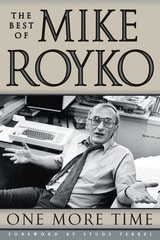
One More Time
The Best of Mike RoykoMike Royko
University of Chicago Press, 1999
"A treasure trove lies between these covers. Royko was in a class by himself. He was a true original."—Ann Landers
"The joy of One More Time is Royko in his own words."—Mary Eileen O'Connell, New York Times Book Review
"Reading a collection of Royko's columns is even more of a pleasure than encountering them one by one, and that is a large remark for he rarely wrote a piece that failed to wake you up with his hard-earned moral wit. Three cheers for Royko!"—Norman Mailer
"Powerful, punchy, amazingly contemporary."—Neil A. Grauer, Cleveland Plain Dealer
"This crackling collection of his own favorite columns as well as those beloved by his fans reminds us just how much we miss the gruff, compassionate voice of Mike Royko."—Jane Sumner, Dallas Morning News
"A marvelous road map through four decades of America."—Elizabeth Taylor, Chicago Tribune Books
"Royko was an expert at finding universal truths in parochial situations, as well as in the larger issues—war and peace, justice and injustice, wealth and poverty—he examined. Think of One More Time as one man's pungent commentary on life in these United States over the last few decades."—Booklist
"Royko was one of the most respected and admired people in the business, by readers and colleagues alike. . . . Savor [his sketches] while you can."—Jonathan Yardley, Washington Post Book World
"Book collections of columns aren't presumed to be worth reading. This one is, whether or not you care about newspapering or Chicago."—Neil Morgan, San Diego Union-Tribune
"A treasure house for journalism students, for would-be writers, for students of writing styles, for people who just like to laugh at the absurdity of the human condition or, as Studs Terkel said, for those who will later seek to learn what it was really like in the 20th century."—Georgie Anne Geyer, Washington Times
"Full of astonishments, and the greatest of these is Royko's technical mastery as a writer."—Hendrik Hertzberg, New Yorker
"A great tribute to an American original, a contrarian blessed with a sense of irony and a way with words."—Bob Minzesheimer, USA Today
"In this posthumous collection of his columns, journalist Royko displays the breezy wit that made him so beloved in the Windy City."—People
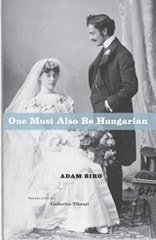
One Must Also Be Hungarian
Adam Biro
University of Chicago Press, 2006
The only country in the world with a line in its national anthem as desperate as “this people has already suffered for its past and its future,” Hungary is a nation defined by poverty, despair, and conflict. Its history, of course, took an even darker and more tragic turn during the Holocaust. But the story of the Jews in Hungary is also one of survival, heroism, and even humor—and that is the one acclaimed author Adam Biro sets out to recover in One Must Also Be Hungarian, an inspiring and altogether poignant look back at the lives of his family members over the past two hundred years.
A Hungarian refugee and celebrated novelist working in Paris, Biro recognizes the enormous sacrifices that his ancestors made to pave the way for his successes and the envious position he occupies as a writer in postwar Europe. Inspired, therefore, to share the story of his family members with his grandson, Biro draws some moving pictures of them here: witty and whimsical vignettes that convey not only their courageous sides, but also their inner fears, angers, jealousies, and weaknesses—traits that lend an indelible humanity to their portraiture. Spanning the turn of the nineteenth century, two destructive world wars, the dramatic rise of communism, and its equally astonishing fall, the stories here convey a particularly Jewish sense of humor and irony throughout—one that made possible their survival amid such enormous adversity possible.
Already published to much acclaim in France, One Must Also Be Hungarian is a wry and compulsively readable book that rescues from oblivion the stories of a long-suffering but likewise remarkable and deservedly proud people.
One Nation Divisible
What America Was and What It Is BecomingMichael B. Katz
Russell Sage Foundation, 2006

One Nation, One Blood
Interracial Marriage in American Fiction, Scandal, and Law, 1820-1870Karen Woods Weierman
University of Massachusetts Press, 2005
The proscription against interracial marriage was for many years a flashpoint in American culture. In One Nation, One Blood, Karen Woods Weierman explores this taboo by investigating the traditional link between marriage and property. Her research reveals that the opposition to intermarriage originated in large measure in the nineteenth-century desire for Indian land and African labor. Yet despite the white majority's overwhelming rejection of nonwhite peoples as marriage partners, citizens, and social equals, nineteenth-century reformers challenged the rule against intermarriage. Dismissing the new “race science” that purported to prove white superiority, reformers held fast to the religious notion of a common humanity and the republican rhetoric of freedom and equality, arguing that God made all people “of one blood.”
The years from 1820 to 1870 marked a crucial period in the history of this prejudice. Tales of interracial marriage recounted in fiction, real-life scandals, and legal statutes figured prominently in public discussion of both slavery and the fate of Native Americans. In Part One of this book, Weierman focuses on Indian-white marriages during the 1820s, when Indian removal became a rallying cry for New England intellectuals.
In Part Two she shifts her attention to black-white marriages from the antebellum period through the early years of Reconstruction. In both cases she finds that the combination of a highly publicized intermarriage scandal, new legislation prohibiting interracial marriage, and fictional portrayals of the ills associated with such unions served to reinforce popular prejudice, justifying the displacement of Indians from their lands and upholding the system of slavery. Even after the demise of slavery, restrictions against intermarriage remained in place in many parts of the country long into the twentieth century. Not until the 1967 Loving v. Virginia decision did the Supreme Court finally rule that such laws were unconstitutional.
Finishing on a contemporary note, Weierman suggests that the stories Americans tell about intermarriage today—stories defining family, racial identity, and citizenship—still reflect a struggle for resources and power.
One Night on TV Is Worth Weeks at the Paramount
Popular Music on Early TelevisionMurray Forman
Duke University Press, 2012

One People, One Blood
Ethiopian-Israelis and the Return to JudaismSeeman, Don
Rutgers University Press, 2010
But today, along with those Ethiopians who have been recognized as Jews by the State of Israel, many who are called "Feres Mura," the descendants of Ethiopian Jews whose families converted to Christianity but have now reasserted their Jewish identity, still await full acceptance in Israel. Since the 1990s, they have sought homecoming through Israel's "Law of Return," but have been met with reticence and suspicion on a variety of fronts. One People, One Blood expertly documents this tenuous relationship and the challenges facing the Feres Mura.
Distilling more than ten years of ethnographic research, Don Seeman depicts the rich culture of the group, as well as their social and cultural vulnerability, and addresses the problems that arise when immigration officials, religious leaders, or academic scholars try to determine the legitimacy of Jewish identity or Jewish religious experience.
One Room Schools
Stories from the Days of 1 Room, 1 Teacher, 8 GradesSusan Apps-Bodilly
Wisconsin Historical Society Press, 2013
Have you ever wondered what it was like to attend a one-room school, to be in the same classroom as your older brother or younger sister, or to have your teacher live with your family for part of the school year?
In One Room Schools, Susan Apps-Bodilly chronicles life in Wisconsin’s early country schools, detailing the experiences of the students, the role of the teacher, and examples of the curriculum, including the importance of Wisconsin School of the Air radio programs. She describes the duties children had at school besides their schoolwork, from cleaning the erasers and sweeping cobwebs out of the outhouse to carrying in wood for the stove. She also tells what led to the closing of the one room schools, which were more than just centers of learning: they also served as the gathering place for the community.
Susan Apps-Bodilly drew from the research compiled by her father Jerry Apps for his book, One-Room Country Schools: History and Recollections. Apps-Bodilly has geared her book toward young readers who will learn what students and their teacher did on cold mornings before the wood stove warmed them up. They also will find out how to play recess games like Fox and Geese and Anti-I-Over and will learn the locations of 10 former one room schools that can be toured. Apps-Bodilly also encourages readers to ask themselves what lessons can be learned from these early schools that have application for today’s schools?
One Room Schools will transport young readers back in time and make their grandparents and others of that generation nostalgic—perhaps even prompting them to share memories of their school days.
One Shaker Life
Isaac Newton Youngs, 1793-1865Glendyne R. Wergland
University of Massachusetts Press, 2006
A member of the United Society of Believers, better known as the Shakers, Isaac Newton Youngs spent most of his life in New Lebanon, New York, home of the society's central Ministry. As both a private diarist and the official village scribe, he kept meticulous records throughout those years of both his own experience and that of the community. All told, more than four thousand pages of Brother Isaac's journals have survived, documenting the history of the Shakers during the period of their greatest success and providing a revealing view of the daily life of a rank-and-file Believer.
In this deeply researched biography, Glendyne R. Wergland draws on Youngs's writings to tell his story and to explore “the tension between desire and discipline” at the center of his life. She follows Youngs from childhood and adolescence to maturity, through years of demanding responsibility into his fatal decline. In each of these stages, he remained a talented and committed yet independent Shaker, one who chose to stay with the community but often struggled to abide by its stringent rules, including the vow of celibacy. Perhaps above all, he was a man who spent most of his waking hours working diligently at a succession of tasks, making clocks, sewing clothes, fixing roofs, writing poetry, chronicling his daily acts and thoughts.
In his journals, Brother Isaac writes at length of his efforts to control his lust as a young man, and he complains repeatedly about overwork as he grows older. He defines the rules of his community and identifies transgressors, while enciphering his critical entries (and those chronicling his own sexual desires) to avoid detection and uphold the demand for conformity. At times he admits doubt, but without ever relinquishing the belief that he is on the straight and narrow path to salvation. What emerges in the end is the complex portrait of an ordinary man striving to live up to the imperatives of his faith.
One Shot for Gold
Developing a Modern Mine in Northern CaliforniaEleanor Herz Swent
University of Nevada Press, 2021
An account of the creation of a modern, environmentally sensitive mine as told by the people who developed and worked it.
In 1978, a geologist working for the Homestake Mining Company discovered gold in a remote corner of California’s Napa County. This discovery led to the establishment of California’s most productive gold mine in the twentieth century. Named the McLaughlin Mine, it produced about 3.4 million ounces of gold between 1985 and 2002. The mine was also one of the first attempts at creating a new full-scale mine in California after the advent of environmental regulations and the first to use autoclaves to extract gold from ore.
One Shot for Gold traces the history of the McLaughlin Mine and how it transformed a community and an industry. This lively and detailed account is based largely on oral history interviews with a wide range of people associated with the mine, including Homestake executives, geologists, and engineers as well as local neighbors of the mine, officials from county governments, townspeople, and environmental activists. Their narratives— supported by thorough research into mining company documents, public records, newspaper accounts, and other materials—chronicle the mine from its very beginning to its eventual end and transformation into a designated nature reserve as part of the University of California Natural Reserve System.
A mine created at the end of the twentieth century was vastly different from the mines of the Gold Rush. New regulations and concerns about the environmental, economic, and social impacts of a large mine in this remote and largely rural region of the state-required decisions at many levels. One Shot for Gold offers an engaging and accessible account of a modern gold mine and how it managed to exist in balance with the environment and the human community around it.
One Side By Himself
Ronald Barney
Utah State University Press, 2002
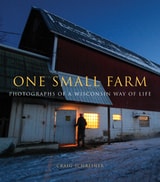
One Small Farm
Photographs of a Wisconsin Way of LifeCraig Schreiner
Wisconsin Historical Society Press, 2013
“People’s lives are written on the fields of old farms. The rows of the fields are like lines on a page, blank and white in winter, filled in with each year’s story of happiness, disappointment, drought, rain, sun, scarcity, plenty. The chapters accumulate, and people enter and leave the narrative. Only the farm goes on.”—From the Introduction
In One Small Farm, Craig Schreiner’s evocative color photographs capture one family as they maintain the rhythms and routines of small farm life near Pine Bluff, Wisconsin. “Milk in the morning and milk at night. Feed the cows and calves. Plant crops. Grind feed. Chop and bale hay. Cut wood. Clean the barn. Spread manure on the fields. Plow snow and split wood in winter. In spring, pick rocks from the fields. Cultivate corn. Pick corn. Harvest oats and barley. Help calves be born. Milk in the morning and milk at night.”
There’s much more to life on the farm than just chores, of course, and Schreiner captures the rhythms and richness of everyday life on the farm in all seasons, evoking both the challenges and the joys and providing viewers a window into a world that is quickly fading. In documenting the Lamberty family’s daily work and life, these thoughtful photos explore larger questions concerning the future of small farm agriculture, Wisconsin cultural traditions, and the rural way of life.
One State Under God
A History of Religion in TexasJoseph L. Locke
University of Texas Press, 2026
A broad and accessible history of religion in Texas, from prehistory to the present.
From sprawling megachurches to religious billboards and towering steel crosses, religion quite literally looms over Texas. Christian nationalism determines the state’s politics and, every school day, more than five million Texas children pledge allegiance to “one state under God.” But it wasn’t always this way.
In this wide-ranging chronicle, Joseph Locke uncovers the breadth of Texas’s religious history, from Indigenous painters of cosmological cave art and Spanish invaders who constructed missions to irreligious Anglo colonists, freethinking frontiersmen, Tejano folk saints, evangelical culture warriors, and Muslim immigrants. Locke traces the state’s religious transformations across the centuries, bringing them to life through his depiction of compelling figures, like enslaved preacher Anderson Edwards, fighting fundamentalist J. Frank Norris, and celebrated humanitarian Sister Norma Pimentel, and gripping moments, such as the murder of atheist newspaperman William Cowper Brann and the siege of the Branch Davidian compound in Waco. Comprehensive, fast-paced, and highly readable, One State Under God reveals how the Lone Star State’s spiritual path was blazed.
One Step Ahead
A Jewish Fugitive in Hitler's EuropeAlfred Feldman. Foreword by Susan Zuccotti
Southern Illinois University Press, 2001
Through compelling personal accounts and family correspondence, One Step Ahead documents Alfred Feldman’s harrowing flight into exile as he and his family fled the pogroms that flooded across Nazi-occupied Europe. It is a memoir of horror and hope recounted by a man who survived the organized terror of Hitler’s "Final Solution" as it destroyed entire generations of European Jewish life within ten catastrophic years in the mid-twentieth century. Feldman’s memoir conveys the searing pain that has never left him, while demonstrating the triumphant humanity of a survivor.
Feldman vividly describes the impact of the escalating anti-Semitic hatred and violence in Germany during the 1930s, the impact of the notorious Nuremberg Laws in 1935, and the terrifying Kristallnacht pogrom in 1938. By age sixteen, Feldman was living with his parents and three younger sisters in Antwerp, Belgium, during the 1939 German invasions of Poland, marking the start of World War II. In the face of increasing persecution, Feldman’s extended family scattered over the globe in a desperate attempt to remain one step ahead of their Nazi pursuers.
Recalling his life on the run, Feldman describes what few survivors have chosen to write about: the Vichy raids of August 26, 1942; the French labor brigades; the Comité Dubouchage; and life in super-vised residence in France under the Italians. While in the south of France, Feldman endured food shortages and Nazi anti-Semitic measures, beginning with work camps and culminating in the deportation and ultimate death of his mother and sisters at Auschwitz.
To evade the Germans, Feldman and his father fled into the Italian Alps in September of 1943, hiding between the Allies and the Germans. Aided by local villagers, the Feldmans survived precariously for over a year and a half, along with other Jewish refugees, until that region was liberated. Only then, and only gradually, did Feldman manage to piece together the fate of his surviving family and learn at last of the death of his mother and sisters.
Now, as an adult, Alfred Feldman has retraced his escape and exile, taking his wife and children to his hometown in Germany, the mountains in Italy, and Montagnac, where a plaque commemorates his mother and sisters.

One Sunny Day
A Child's Memories of HiroshimaHideko Tamura Snider
Oregon State University Press, 2023
Hideko was ten years old when the atomic bomb devastated her home in Hiroshima. In this eloquent and moving narrative, Hideko recalls her life before the bomb, the explosion itself, and the influence of that trauma upon her subsequent life in Japan and the United States. Her years in America have given her unusual insights into the relationship between Japanese and American cultures and the impact of Hiroshima on our lives.
This new edition includes two expanded chapters and revisions throughout. A new epilogue brings the story up to date. This poignant story of courage and resilience remains deeply relevant today, offering a profoundly personal testament against the ongoing threat of nuclear warfare.

One Third of a Nation
Lorena Hickok Reports on the Great DepressionLorena Hickok
University of Illinois Press, 1981

One Version of the Facts
My Life in the Ivory TowerHenry E. Duckworth
University of Manitoba Press, 2000
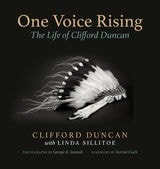
One Voice Rising
The Life of Clifford DuncanClifford Duncan with Linda Sillitoe, Photographs by George R. Janecek
University of Utah Press, 2019
“Everything was Indian then, when I was a boy. They had to explain to us about the white man's side. Now everything is in the white man's world and we teach Indian ways.”
—Clifford Duncan (from the book)
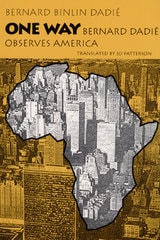
One Way
BERNARD DADIE OBSERVES AMERICABernard Binlin Dadié
University of Illinois Press, 1994
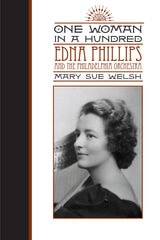
One Woman in a Hundred
Edna Phillips and the Philadelphia OrchestraMary Sue Welsh
University of Illinois Press, 2013
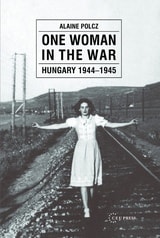
One Woman in the War
Hungary 1944-1945Alaine Polcz
Central European University Press, 2002
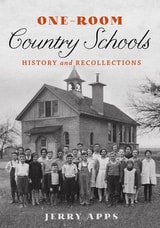
One-Room Country Schools
History and RecollectionsJerry Apps
Wisconsin Historical Society Press, 2015
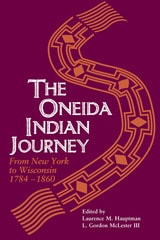
Oneida Indian Journey
From New York to Wisconsin, 1784–1860Edited by Laurence M. Hauptman and L. Gordon McLester III
University of Wisconsin Press, 1999
For the first time, the traumatic removal of the Oneida Indians from New York to Wisconsin is examined in a groundbreaking collection of essays, The Oneida Indian Journey from New York to Wisconsin, 1784–1860. To shed light on this vital period of Oneida history, editors Laurence Hauptman and L. Gordon McLester, III, present a unique collaboration between an American Indian nation and the academic community. Two professional historians, a geographer, anthropologist, archivist and attorney join in with eighteen voices from the Oneida community—local historians, folklorists, genealogists, linguists, and tribal elders—discuss tribal dispossession and community; Oneida community perspectives of Oneida history; and the means of studying Oneida history.
Contributors include: Debra Anderson, Eileen Antone, Jim Antone, Abrahms Archiquette, Oscar Archiquette, Jack Campisi, Richard Chrisjohn, Amelia Cornelius, Judy Cornelius, Katie Cornelius, Melissa Cornelius, Jonas Elm, James Folts, Reginald Horsman, Elizabeth Huff, Francis Jennings, Arlinda Locklear, Jo Margaret Mano, Loretta Metoxen, Liz Obomsawin, Jessie Peters, Sarah Summers, and Rachel Swamp
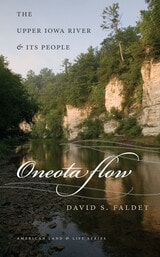
Oneota Flow
The Upper Iowa River and Its PeopleDavid S. Faldet
University of Iowa Press, 2009
Whether profiling the chief of the last hunter-gatherers on the river, an early settler witnessing her first prairie fire and a modern wildlife biologist using fire to manage prairies, the manager of the Granger Farmer’s Co-op Creamery, or a landowner whose bottomlands are continually eaten away by floods, Faldet steadily develops the central idea that people are walking tributaries of the river basin in which they make their homes.
Faldet moves through the history of life along the now-polluted Upper Iowa, always focusing on the ways people depend on the river, the environment, and the resources of the region. He blends contemporary conversations, readings from the historical record, environmental research, and personal experience to show us that the health of the river is best guaranteed by maintaining the biological communities that nurture it. In return, taking care of the Upper Iowa is the best way to take care of our future.
Only Among Women
Philosophies of Community in the Russian and Soviet Imagination, 1860–1940Anne Eakin Moss
Northwestern University Press, 2020

Only Efficient Instrument
American Women Writers And Periodical, 1837-1916Aleta Feinsod Cane
University of Iowa Press, 2001
Many farsighted women writers in nineteenth-century America made thoughtful and sustained use of newspapers and magazines to effect social and political change. “The Only Efficient Instrument”: American Women Writers and the Periodical, 1837-1916 examines these pioneering efforts and demonstrates that American women had a vital presence in the political and intellectual communities of their day.
Women writers and editors of diverse social backgrounds and ethnicities realized very early that the periodical was a powerful tool for education and social reform—it was the only efficient instrument to make themselves and their ideas better known. This collection of critical essays explores American women's engagement with the periodical press and shows their threefold use of the periodical: for social and political advocacy; for the critique of gender roles and social expectations; and for refashioning the periodical as a more inclusive genre that both articulated and obscured such distinctions as class, race, and gender.
Including essays on familiar figures such as Margaret Fuller, Harriet Beecher Stowe, Kate Chopin, and Charlotte Perkins Gilman, “The Only Efficient Instrument” also focuses on writings from lesser-known authors, including Native American Zitkala-Sä, Mexican American María Cristina Mena, African American Frances Ellen Watkins Harper, and the Lowell factory workers. Covering nearly eighty years of publishing history, from the press censure of the outspoken Angelina Grimké in 1837 to the last issue of Gilman's Forerunner in 1916, this fascinating collection breaks new ground in the study of the women's rights movement in America.
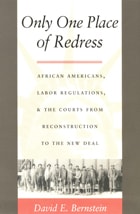
Only One Place of Redress
African Americans, Labor Regulations, and the Courts from Reconstruction to the New DealDavid E. Bernstein
Duke University Press, 2001
A pioneer in applying the insights of public choice theory to legal history, Bernstein contends that the much-maligned jurisprudence of the Lochner era—with its emphasis on freedom of contract and private market ordering—actually discouraged discrimination and assisted groups with little political clout. To support this thesis he examines the motivation behind and practical impact of laws restricting interstate labor recruitment, occupational licensing laws, railroad labor laws, minimum wage statutes, the Davis-Bacon Act, and New Deal collective bargaining. He concludes that the ultimate failure of Lochnerism—and the triumph of the regulatory state—not only strengthened racially exclusive labor unions but contributed to a massive loss of employment opportunities for African Americans, the effects of which continue to this day.
Scholars and students interested in race relations, labor law, and legal or constitutional history will be fascinated by Bernstein’s daring—and controversial—argument.

Ontology Of Work Of Art
Musical Work, Picture, Arch., FilmRoman Ingarden
Ohio University Press, 1989
Ingarden elaborates upon the conception of concretization which he present in The Literary Work of Art and applies it to music and visual art. He also employs the concept of aspect to clarify the ontic structure of these art works and the distinction between the concretization of the work and the work itself. The distinction between the work’s concretization — effectuated in the mental experiences of the listener or viewer — and the work itself serves to help Ingarden confirm and account for the work’s intersubjective identity.
The problem of aesthetic value, Ingarden maintains, can be fruitfully treated only after the ontic structure of art work has been clarified. His primary concern in Ontology of the Work of Art is to ascertain and describe that structure and the mode of existence of works of art. In addition, he offers several discussions of aesthetic value, showing in the m the connections between questions of aesthetic value and the structure of the work of art.
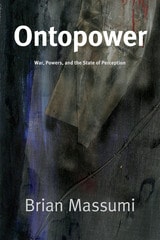
Ontopower
War, Powers, and the State of PerceptionBrian Massumi
Duke University Press, 2015
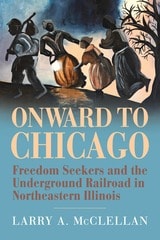
Onward to Chicago
Freedom Seekers and the Underground Railroad in Northeastern IllinoisLarry A. McClellan
Southern Illinois University Press, 2023
Uncovering stories of the freedom network in northeastern Illinois
Decades before the Civil War, Illinois’s status as a free state beckoned enslaved people, particularly those in Kentucky and Missouri, to cross porous river borders and travel toward new lives. While traditional histories of the Underground Railroad in Illinois start in 1839, and focus largely on the romanticized tales of white men, Larry A. McClellan reframes the story, not only introducing readers to earlier freedom seekers, but also illustrating that those who bravely aided them were Black and white, men and women. McClellan features dozens of individuals who made dangerous journeys to reach freedom as well as residents in Chicago and across northeastern Illinois who made a deliberate choice to break the law to help.
Onward to Chicago charts the evolution of the northeastern Illinois freedom network and shows how, despite its small Black community, Chicago emerged as a point of refuge. The 1848 completion of the I & M Canal and later the Chicago to Detroit train system created more opportunities for Black men, women, and children to escape slavery. From eluding authorities to confronting kidnapping bands working out of St. Louis and southern Illinois, these stories of valor are inherently personal. Through deep research into local sources, McClellan presents the engrossing, entwined journeys of freedom seekers and the activists in Chicagoland who supported them.
McClellan includes specific freedom seeker journey stories and introduces Black and white activists who provided aid in a range of communities along particular routes. This narrative highlights how significant biracial collaboration led to friendships as Black and white abolitionists worked together to provide support for freedom seekers traveling through the area and ultimately to combat slavery in the United States.
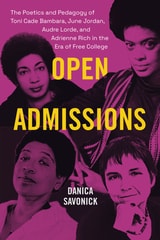
Open Admissions
The Poetics and Pedagogy of Toni Cade Bambara, June Jordan, Audre Lorde, and Adrienne Rich in the Era of Free CollegeDanica Savonick
Duke University Press, 2024

Open Data in Ancient and Byzantine Studies
Edited by Valeria Vitale and Gabriel Bodard
University of London Press, 2026
Exploring the impact of open-access and openly licensed data and code in classical and Byzantine studies.
Open Data in Ancient and Byzantine Studies shows how openness supports transparency, collaboration, the identification of biases, and new interpretive and data‑driven approaches to ancient sources. Through practical case studies, the book demonstrates how methods such as epigraphic transcription, textual criticism, and archaeological modeling have advanced open data standards and practices.
This book highlights the potential of interoperability, documentation, and open workflows for broader approaches to the ancient world. Bringing together work from classics, Byzantine studies, archaeology, linguistics, and digital humanities, it presents open scholarship as a transformative model for academic knowledge production.

Open Marxism 1
Dialectics and HistoryWerner Bonefeld
Pluto Press, 1992
In this study, distinguished international contributors project an ‘open’ Marxism - a rejection of the determinism and positivism which characterise so much of contemporary left-wing thought. Topics covered in the two volumes include Marxism and political economy, historical materialism, dialectics, state theory, class, fetishism and the periodisation of capitalist development.
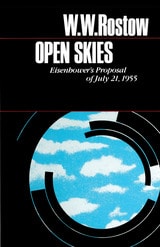
Open Skies
Eisenhower's Proposal of July 21, 1955By W.W. Rostow
University of Texas Press, 1982
In 1955 the United States and the Soviet Union were matching steps in a race to develop missiles tipped with thermonuclear weapons. American officials were frustrated and alarmed by their inability to learn the scale and progress of the Soviet program, which directly threatened the security of the United States, and they were convinced that serious arms control measures required reliable means for mutual inspection. The result: President Dwight D. Eisenhower's dramatic Open Skies proposal, advanced—and rejected—at the Geneva summit of 1955.
Vetoed by Nikita Khrushchev, Eisenhower's proposal to allow mutual aerial inspection between the United States and the U.S.S.R. was accepted as policy only after satellite photography became feasible. But at the time of the 1955 summit, it was a stunning, if transient, psychological and political victory for the United States and its president.
W. W. Rostow was an active participant in this important episode in American history, and his is the first authoritative account of how Eisenhower's Open Skies proposal came to be. His insider's knowledge, combined with data from hitherto unexploited documentary sources, vividly brings to life the discussions and events that preceded the president's proposal.
Rostow explores the diplomatic forces that led to Eisenhower's reluctant acceptance of a summit with the Soviets. He tracks the origins of the Open Skies concept to an obscure meeting organized at Quantico Marine Corps Base by presidential adviser Nelson Rockefeller. He describes the tensions between Rockefeller and Secretary of State John Foster Dulles that complicated Eisenhower's task in mounting the initiative for Open Skies and explains the differences between Eisenhower himself and Rockefeller over postsummit policy that provoked the latter's resignation. He examines Soviet motives and objectives at Geneva. Finally, Rostow reflects on the meaning of this fascinating episode in American history, in particular its importance to later arms control negotiations.
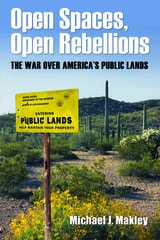
Open Spaces, Open Rebellions
The War over America’s Public LandsMichael J. Makley
University of Massachusetts Press, 2017
In Open Spaces, Open Rebellions, Michael J. Makley offers a succinct and compelling history of the federal government's management of public lands. As Makley reveals, beginning in the nineteenth century and continuing to the present day, debates over how best to balance the use of these lands by the general public, fee-paying ranchers, and resource developers have always been complex and contentious. Indeed, these debates have often been met with demands for privatization or state control, best exemplified by the Sagebrush Rebellion of the 1980s and the 2016 occupation of Oregon's Malheur National Wildlife Refuge.
Open Wound
The Long View of Race in AmericaWilliam McKee Evans
University of Illinois Press, 2009
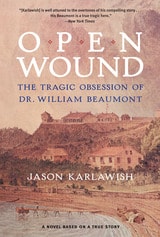
Open Wound
The Tragic Obsession of Dr. William BeaumontJason Karlawish
University of Michigan Press, 2013
A shotgun misfires inside the American Fur Company store in Northern Michigan, and Alexis St. Martin's death appears imminent. It's 1822, and, as the leaders of Mackinac Island examine St. Martin's shot-riddled torso, they decide not to incur a single expense on behalf of the indentured fur trapper. They even go so far as to dismiss the attention of U.S. Army Assistant Surgeon William Beaumont, the frontier fort's only doctor.
Beaumont ignores the orders and saves the young man's life. What neither the doctor nor his patient understands—yet—is that even as Beaumont's care of St. Martin continues for decades, the motives and merits of his attention are far from clear. In fact, for what he does to his patient, Beaumont will eventually stand trial and be judged.
Rooted deeply in historic fact, Open Wound artfully fictionalizes the complex, lifelong relationship between Beaumont and his illiterate French Canadian patient. The young trapper's injury never completely heals, leaving a hole into his stomach that the curious doctor uses as a window to understand the mysteries of digestion. Eager to rise up from his humble origins and self-conscious that his medical training occurred as an apprentice to a rural physician rather than at an elite university, Beaumont seizes the opportunity to experiment upon his patient's stomach in order to write a book that he hopes will establish his legitimacy and secure his prosperity. As Jason Karlawish portrays him, Beaumont, always growing hungrier for more wealth and more prestige, personifies the best and worst aspects of American ambition and power.
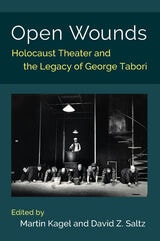
Open Wounds
Holocaust Theater and the Legacy of George TaboriEdited by Martin Kagel and David Z. Saltz
University of Michigan Press, 2022
This volume collects original essays on Hungarian-German playwright and screenwriter George Tabori (1914–2007) and his remarkable contributions to the stage. Tabori, a Jewish refugee and a truly transnational author, was best known for his work in New York theater that irreverently explored the Jewish experience, particularly the Holocaust. Although his illustrious career spanned a century, two continents, several languages, and a variety of literary genres, Tabori’s work has received scant attention in American letters, in spite of its significance for U.S. theater and Holocaust studies.
Until Tabori, most dramas about the Holocaust were either rooted in American domestic realism, striving to create a strong empathetic connection between the audience and Holocaust victims, or featured an unembellished documentary style. Tabori staked out a third position, beyond realism and documentation. The volume brings together the voices of international scholars to provide a comprehensive introduction to Tabori’s theater as well as in-depth analyses of his work, discussing all of his major plays. Individual essays address Tabori’s postdramatic theater in relation to sacrificial ritual, performance studies, and post-humanist approaches to the contemporary stage, as well as performance aspects of his productions, questions of ethics and aesthetics raised by his theater, and his plays’ relation to Holocaust representation in popular culture.
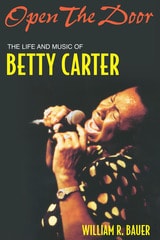
Open the Door
The Life and Music of Betty CarterWilliam R. Bauer
University of Michigan Press, 2003
This book looks at Betty Carter's contribution to the music world and delves behind the scenes to show Carter's growth as a businesswoman who took charge of her career.
Drawing upon revealing interviews with Carter, the author shows how ever-changing shifts in the music industry affected the singer's life and influenced her music. Bauer shows through his analysis of her musical examples how Carter absorbed various musical influences, from Sarah Vaughan and Billie Holiday to Miles Davis, and made them her own. From her apprenticeship with Gladys Hampton, Carter grew to become a shrewd dealer who learned to do her own contracting, A&R, and marketing and distribution. By chronicling one of jazz's great singers and composers, the book sheds light on how early jazz musicians got their work to the public and how this process has changed during the past fifty years.
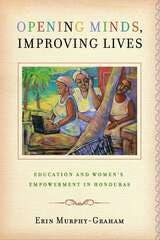
Opening Minds, Improving Lives
Education and Women's Empowerment in HondurasErin Murphy-Graham
Vanderbilt University Press, 2012
Empowering women through education has become a top priority of international development efforts. Erin MurphyGraham draws on more than a decade of qualitative research to examine the experiences of Juanita and eighteen other women who participated in the SAT program. Their narratives suggest the simple yet subtle ways education can spark the empowerment process, as well as the role of men and boys in promoting gender equality.
Drawing on indepth interviews and classroom observation in Honduras and Uganda, MurphyGraham shows the potential of the SAT program to empower women through expanded access and improved quality of secondary education in Latin America and Africa. An appendix provides samples of the classroom lessons.
Opening Scripture
Bible Reading and Interpretive Authority in Puritan New EnglandLisa M. Gordis
University of Chicago Press, 2003
What role did the Bible really play in Puritan New England? Many have treated it as a blunt instrument used to cudgel dissenters into submission, but Lisa M. Gordis reveals instead that Puritan readings of the Bible showed great complexity and literary sophistication—so much complexity, in fact, that controversies over biblical interpretation threatened to tear Puritan society apart.
Drawing on Puritan preaching manuals and sermons as well as the texts of early religious controversies, Gordis argues that Puritan ministers did not expect to impose their views on their congregations. Instead they believed that interpretive consensus would emerge from the process of reading the Bible, with the Holy Spirit assisting readers to understand God's will. Treating the conflict over Roger Williams, the Antinomian Controversy, and the reluctant compromises of the Halfway Covenant as symptoms of a crisis that was as much literary as it was social or spiritual, Opening Scripture explores the profound consequences of Puritan negotiations over biblical interpretation for New England's literature and history.