Results by title
22279 books match the query 'Social Science' and 455 start with o
Our Caribbean
A Gathering of Lesbian and Gay Writing from the AntillesThomas Glave, ed.
Duke University Press, 2008
The thirty-seven authors hail from the Bahamas, Barbados, Cuba, the Dominican Republic, Grenada, Guyana, Haiti, Jamaica, Panama, Puerto Rico, St. Vincent, St. Kitts, Suriname, and Trinidad. Many have lived outside the Caribbean, and their writing depicts histories of voluntary migration as well as exile from repressive governments, communities, and families. Many pieces have a political urgency that reflects their authors’ work as activists, teachers, community organizers, and performers. Desire commingles with ostracism and alienation throughout: in the evocative portrayals of same-sex love and longing, and in the selections addressing religion, family, race, and class. From the poem “Saturday Night in San Juan with the Right Sailors” to the poignant narrative “We Came All the Way from Cuba So You Could Dress Like This?” to an eloquent call for the embrace of difference that appeared in the Nassau Daily Tribune on the eve of an anti-gay protest, Our Caribbean is a brave and necessary book.
Contributors: José Alcántara Almánzar, Aldo Alvarez, Reinaldo Arenas, Rane Arroyo, Jesús J. Barquet, Marilyn Bobes, Dionne Brand, Timothy S. Chin, Michelle Cliff, Wesley E. A. Crichlow,
Mabel Rodríguez Cuesta, Ochy Curiel, Faizal Deen, Pedro de Jesús, R. Erica Doyle, Thomas Glave,
Rosamond S. King, Helen Klonaris, Lawrence La Fountain-Stokes, Audre Lorde, Shani Mootoo,
Anton Nimblett, Achy Obejas, Leonardo Padura Fuentes, Virgilio Piñera, Patricia Powell, Kevin Everod Quashie, Juanita Ramos, Colin Robinson, Assotto Saint, Andrew Salkey, Lawrence Scott,
Makeda Silvera, H. Nigel Thomas, Rinaldo Walcott, Gloria Wekker, Lawson Williams

Our Children, Their Children
Confronting Racial and Ethnic Differences in American Juvenile JusticeEdited by Darnell F. Hawkins and Kimberly Kempf-Leonard
University of Chicago Press, 2005
Our Children, Their Children provides a state-of-the-science examination of racial and ethnic disparities in the American juvenile justice system. Here, contributors document the precise magnitude of these disparities, seek to determine their causes, and propose potential solutions. In addition to race and ethnicity, contributors also look at the effects on juvenile justice of suburban sprawl, the impact of family and neighborhood, bias in postarrest decisions, and mental health issues. Assessing the implications of these differences for public policy initiatives and legal reforms, this volume is the first critical summary of what is known and unknown in this important area of social research.
Our Common Life
Folksong from the Front Porch to the Concert HallStephen Wade
University of Illinois Press, 2026
Stephen Wade recounts creators and conservators like Doc Hopkins, many of them born in the closing years of the nineteenth century and the first decades of the twentieth. The figures include Sid Harkreader, Kirk McGee, Ola Belle Reed, Jewel Fagan Haynes, Cordell and Olean Kemp, Bill Monroe, Helen Marie Rowe, Virgil and Mabel Anderson, Joe and Odell Thompson, John Jackson, Huddie Ledbetter, Uncle Dave Macon, Dorris Macon, Raeburn Flerlage, David “Honeyboy” Edwards, Jim Schwall, Archie Green, Lloyd Lewis, Thaddeus Willingham, Jack Conroy, and Fleming Brown. As Will Keys, another of the musicians featured here, once told the author about his way of playing, it’s “AWYC, Any Way You Can.” These individuals and their stories demonstrate how folklore offers a way of understanding the world.
Thoughtfully written, filled with original research, and abundantly illustrated with both color and black and white photography, Our Common Life illuminates the truth that creative freedom within informal tradition, fundamental to the artists and their processes, speaks to a resourcefulness inscribed in the nation’s founding charter and expressed in its common life.
Our Culture of Pandering
Paul Simon
Southern Illinois University Press, 2006
As we broaden our views, embrace our differences, foster advancements in science and technology, and collaboratively strengthen the political, social, and educational underpinnings from which we build informed and productive lives, we have much to be proud of as a nation and as a people.
But we are tempted—particularly during times of political unrest and unbridled patriotism—to ignore the far-reaching repercussions of a society that caters to money and power. In Our Culture of Pandering, former U.S. Senator Paul Simon interrogates the arenas of politics, media, religion, and education to decry the disturbing practices that confuse public service with profit-making ventures or popularity contests, that compromise the best interests of the broader population to appease a powerful few. Boldly and eloquently contributing to a cumulative understanding of how we can build a sturdier, more ethical foundation for the future, Simon suggests proactive, long-term solutions to the problems that threaten our country’s moral, financial, and intellectual well-being—problems that are increasingly exacerbated by our culture of pandering.
Lest we grow complacent and our nation static, Simon urges us to demand more from the political candidates who chase dollar signs and cater to polls, to raise our expectations of local and national media outlets that recycle gossip and peddle scandals while foreign policy and international news receive back-page treatment or no treatment at all. He asks us to consider the implications of churches that spend more money remodeling their buildings than helping those in need within their own communities and throughout the world, and he presses us to acknowledge the staggering, long-term consequences of schools that drop their academic standards to sustain their reputations and maintain funding.
Our Culture of Pandering is a stalwart and earnest call to action from a steadfast and trusted advocate of progressive public policy. Leavened with altruism and rich with compassion for citizens of America and beyond, present and future, this important and cautioning treatise advocates genuine leadership in the realms of politics, media, religion, and education. In his trademark lucid and synoptic style, Simon supplements up-to-date examples of pandering in our society from a breadth of sources with commentary and interpretive wisdom garnered from a lifetime of public service.
Our Deep Gossip
Conversations with Gay Writers on Poetry and DesireChristopher Hennessy; Foreword by Christopher Bram
University of Wisconsin Press, 2013
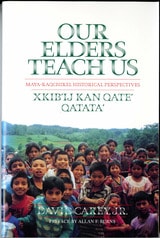
Our Elders Teach Us
Maya-Kaqchikel Historical PerspectivesDavid Anthony Carey, Jr. with a preface by Allan Burns
University of Alabama Press, 2001
Where Maya voices reclaim their history and reshape our understanding of the past.
Combining the methodologies of anthropology and history, Carey uses both oral interviews and meticulous archival research to construct a history of the last 130 years in Guatemala from the perspective of present-day Mayan people. His research took place over five years, including intensive language study, four summers of fieldwork, and a year-long residence in Comalapa, during which he conducted most of the 414 interviews. By casting a wide net for his interviews—from tiny hamlets to bustling Guatemala City—Carey gained insight into more than a single community or a single group of Maya.
The Maya-Kaqchikel record their history through oral tradition; thus, few written accounts exist. Comparing the Kaqchikel point of view to that of the western scholars and Ladinos who have written most of the history texts, Carey reveals the people and events important to the Maya, which have been virtually written out of the national history.
A motto of the Guatemalan organization Maya Decinio para el Pueblo Indigena (Maya Decade for the Indigenous People) is that people who do not know their past cannot build a future. By elucidating what the Kaqchikel think of their own past, Carey also illuminates the value of non-Western theoretical and methodological approaches that can be applied to the history of other peoples. Valuable to historians, anthropologists, archaeologists, or anyone interested in Mayan and Latin American studies, this book will inform as well as enchant.
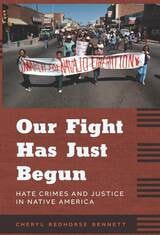
Our Fight Has Just Begun
Hate Crimes and Justice in Native AmericaCheryl Redhorse Bennett
University of Arizona Press, 2022
Illuminating largely untold stories of hate crimes committed against Native Americans in the Four Corners region of the United States, this work places these stories within a larger history, connecting historical violence in the United States to present-day hate crimes. Bennett contends that hate crimes committed against Native Americans have persisted as an extension of an “Indian hating” ideology that has existed since colonization, exposing how the justice system has failed Native American victims and families.
While this book looks deeply at multiple generations of unnecessary and ongoing pain and violence, it also recognizes that this is a time of uncertainty and hope. The movement to abolish racial injustice and racially motivated violence has gained fierce momentum. Our Fight Has Just Begun shows that racism, hate speech, and hate crimes are ever present and offers recommendations for racial justice.
Our Fire Survives the Storm
A Cherokee Literary HistoryDaniel Heath Justice
University of Minnesota Press, 2006
Through cycles of war and peace, resistance and assimilation, trauma and regeneration, Cherokees have long debated what it means to be Cherokee through protest writings, memoirs, fiction, and retellings of traditional stories. Justice employs the Chickamauga consciousness of resistance and Beloved Path of engagement—theoretical approaches that have emerged out of Cherokee social history—to interpret diverse texts composed in English, a language embraced by many as a tool of both access and defiance.
Justice’s analysis ultimately locates the Cherokees as a people of many perspectives, many bloods, mingled into a collective sense of nationhood. Just as the oral traditions of the Cherokee people reflect the living realities and concerns of those who share them, Justice concludes, so too is their literary tradition a textual testament to Cherokee endurance and vitality.
Daniel Heath Justice is assistant professor of aboriginal literatures at the University of Toronto.
Our Fire Survives the Storm
A Cherokee Literary History, Citizenship and Sovereignty EditionDaniel Heath Justice
University of Minnesota Press, 2026
The twentieth-anniversary edition of the path-clearing study of Cherokee writing in English, with an emphatic refocus on voices from the three Cherokee tribal nations
This Citizenship and Sovereignty Edition of Our Fire Survives the Storm is a thoroughly updated, nationhood-focused, twentieth-anniversary revision of Daniel Heath Justice’s influential study of Cherokee writing in English. Through politically astute and historically grounded readings of diverse texts by citizens of the Cherokee Nation, United Keetoowah Band of Cherokee Indians, and Eastern Band of Cherokee Indians, Justice connects Cherokee literature to Indigenous sovereignty, nationhood, and collective futurity.
Guided by a reparative vision that directly contends with the outdated literary legacies of the book’s first edition, this revision confronts the ongoing harms of unsubstantiated and false Cherokee heritage claims on literary studies, replacing readings of primary texts by unverified claimants with those of Cherokee citizen writers. As Justice addresses issues of accountability, he engages with the past two decades of Indigenous scholarship, fully updating terminology, concepts, and scholarly resources. He expands and deepens the intellectual and historical context for Cherokee literary production introduced in the first edition, and he discusses Cherokee writing and community in the mid-twentieth century, the Cherokee Freedmen’s long struggle for justice, and the future of Cherokee nationhood.
Highlighting the work of authors who illustrate the transformative collective discourses of what it means to be Cherokee, Justice examines the richness of Cherokee literary expression through motifs of roots, removal, and nationhood in traditional stories, speeches, legal and governance documents, memoirs, short stories, novels, and plays. An invitation to reflective criticism, this new edition of Our Fire Survives the Storm is grounded in the belief that Indigenous nationhood is a necessary ethical response to the violence of the settler imaginary.
Retail e-book files for this title are screen-reader friendly with images accompanied by short alt text and/or extended descriptions.
Our Gang
A Racial History of The Little RascalsJulia Lee
University of Minnesota Press, 2015
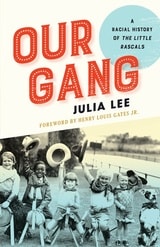
It was the age of Jim Crow, riddled with racial violence and unrest. But in the world of Our Gang, black and white children happily played and made mischief together. They even had their own black and white version of the KKK, the Cluck Cluck Klams—and the public loved it.
The story of race and Our Gang, or The Little Rascals, is rife with the contradictions and aspirations of the sharply conflicted, changing American society that was its theater. Exposing these connections for the first time, Julia Lee shows us how much this series, from the first silent shorts in 1922 to its television revival in the 1950s, reveals about black and white American culture—on either side of the silver screen. Behind the scenes, we find unconventional men like Hal Roach and his gag writers, whose Rascals tapped into powerful American myths about race and childhood. We meet the four black stars of the series—Ernie “Sunshine Sammy” Morrison, Allen “Farina” Hoskins, Matthew “Stymie” Beard, and Billie “Buckwheat” Thomas—the gang within the Gang, whose personal histories Lee pursues through the passing years and shifting political landscape.
In their checkered lives, and in the tumultuous life of the series, we discover an unexplored story of America, the messy, multiracial nation that found in Our Gang a comic avatar, a slapstick version of democracy itself.
Our Grateful Dead
Stories of Those Left BehindVinciane Despret
University of Minnesota Press, 2021
An award-winning exploration of the presence of the dead in the lives of the living
A common remedy after suffering the loss of a loved one is to progress through the “stages of grief,” with “acceptance” as the final stage in the process. But is it necessary to leave death behind, to stop dwelling on the dead, to get over the pain? Vinciane Despret thinks not. In her fascinating, elegantly translated book, this influential thinker argues that, in practice, people in all cultures continue to enjoy a lively, inventive, positive relationship with their dead.
Through her unique storytelling woven from ethnographic sources and her own family history, Despret assembles accounts of those who have found ways to live their daily lives with their dead. She rejects the idea that one must either subscribe to “complete mourning” (in a sense, to get rid of the dead) or else fall into fantasy and superstition. She explores instead how the dead still play an active, tangible role through those who are living, who might assume their place in a family or in society; continue their labor or art; or thrive from a shared inheritance or an organ donation. This is supported by dreams and voices, novels, television and popular culture, the work of clairvoyants, and the everyday stories and activities of the living. For decades now, in the West, the dead have been discreet and invisible. Today, especially as a result of the Covid-19 pandemic, Despret suggests that perhaps we will be willing to engage with the dead in ways that bring us happiness despite our loss.
Despret’s unique method of inquiry makes her book both entertaining and instructive. Our Grateful Dead offers a new, pragmatic approach to social and cultural research and may indeed provide compassionate therapy for those of us coping with death.
Our Grief Is Not a Cry for War
The Movement to Stop the War on TerrorJeremy Varon
University of Chicago Press, 2025
Just after 9/11, President George W. Bush climbed the rubble where the World Trade Center had stood. Surrounded by shouts of anger, he said, “The people who knocked these buildings down will hear all of us soon!” With these words, Bush ushered in the War on Terror. Quickly, a global protest movement mobilized against it, reshaping the political, moral, and media landscape.
Jeremy Varon’s Our Grief Is Not a Cry for War is the definitive history of that movement. Millions of Americans participated in thousands of acts of protest, from demonstrations to civil disobedience to peace encampments in Iraq. On February 15, 2003, up to 30 million people worldwide took to the streets in the largest protest in human history. But this enormous outcry was not enough to stop the US invasion of Iraq. Varon explores the limits to the movement’s power but also shows how it worked to make opposition to the Iraq War a part of public debate, hastening its end and limiting the broader War on Terror. In the book, you’ll meet the families of the 9/11 victims, Iraq War veterans, and Gold Star families who spoke out against war.
Written with a lively and revelatory voice, Our Grief Is Not a Cry for War illuminates the passion of the peace movement, the mark it made, and the enduring legacies of the War on Terror.
Our Hidden Landscapes
Indigenous Stone Ceremonial Sites in Eastern North AmericaLucianne Lavin
University of Arizona Press, 2023
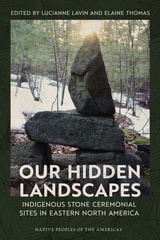
This volume introduces readers to eastern North America’s Indigenous ceremonial stone landscapes (CSLs)—sacred sites whose principal identifying characteristics are built stone structures that cluster within specific physical landscapes. Our Hidden Landscapes presents these often unrecognized sites as significant cultural landscapes in need of protection and preservation.
In this book, Native American authors provide perspectives on the cultural meaning and significance of CSLs and their characteristics, while professional archaeologists and anthropologists provide a variety of approaches for better understanding, protecting, and preserving them. The chapters present overwhelming evidence in the form of oral tradition, historic documentation, ethnographies, and archaeological research that these important sites created and used by Indigenous peoples are deserving of protection.
This work enables archaeologists, historians, conservationists, foresters, and members of the general public to recognize these important ritual sites.
Contributors
Nohham Rolf Cachat-Schilling
Robert DeFosses
James Gage
Mary Gage
Doug Harris
Julia A. King
Lucianne Lavin
Johannes (Jannie) H. N. Loubser
Frederick W. Martin
Norman Muller
Charity Moore Norton
Paul A. Robinson
Laurie W. Rush
Scott M. Strickland
Elaine Thomas
Kathleen Patricia Thrane
Matthew Victor Weiss
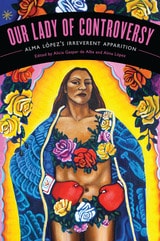
Our Lady of Controversy
Alma López's “Irreverent Apparition”Edited by Alicia Gaspar de Alba and Alma López
University of Texas Press, 2011
Months before Alma López's digital collage Our Lady was shown at the Museum of International Folk Art in 2001, the museum began receiving angry phone calls from community activists and Catholic leaders who demanded that the image not be displayed. Protest rallies, prayer vigils, and death threats ensued, but the provocative image of la Virgen de Guadalupe (hands on hips, clad only in roses, and exalted by a bare-breasted butterfly angel) remained on exhibition.
Highlighting many of the pivotal questions that have haunted the art world since the NEA debacle of 1988, the contributors to Our Lady of Controversy present diverse perspectives, ranging from definitions of art to the artist's intention, feminism, queer theory, colonialism, and Chicano nationalism. Contributors include the exhibition curator, Tey Marianna Nunn; award-winning novelist and Chicana historian Emma Pérez; and Deena González (recognized as one of the fifty most important living women historians in America).
Accompanied by a bonus DVD of Alma López's I Love Lupe video that looks at the Chicana artistic tradition of reimagining la Virgen de Guadalupe, featuring a historic conversation between Yolanda López, Ester Hernández, and Alma López, Our Lady of Controversy promises to ignite important new dialogues.
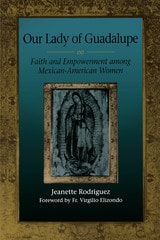
Our Lady of Guadalupe
Faith and Empowerment among Mexican-American WomenBy Jeanette Rodriguez
University of Texas Press, 1994
Our Lady of Guadalupe is the most important religious symbol of Mexico and one of the most powerful female icons of Mexican culture. In this study, based on research done among second-generation Mexican-American women, Rodriguez examines the role the symbol of Guadalupe has played in the development of these women. She goes beyond the thematic and religious implications of the symbol to delve into its relevance to their daily lives.
Rodriguez's study offers an important reinterpretation of one of the New World's most potent symbols. Her conclusions dispute the common perception that Guadalupe is a model of servility and suffering. Rather, she reinterprets the symbol of Guadalupe as a liberating and empowering catalyst for Mexican-American women.
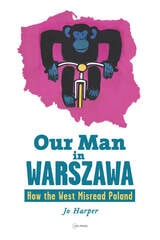
Our Man in Warszawa
How the West Misread PolandJo Harper
Central European University Press, 2021
Written by a Brit who has lived in Poland for more than twenty years, this book challenges some accepted thinking in the West about Poland and about the rise of Law and Justice (PiS) as the ruling party in 2015. It is a remarkable account of the Polish post-1989 transition and contemporary politics, combining personal views and experience with careful fact and material collections. The result is a vivid description of the events and scrupulous explanations of the political processes, and all this with an interesting twist – a perspective of a foreigner and insider at the same time. Settled in the position of participant observer, Jo Harper combines the methods of macro and micro analysis with CDA, critical discourse analysis. He presents and interprets the constituent elements and issues of contemporary Poland: the main political forces, the Church, the media, issues of gender, the Russian connection, the much-disputed judicial reform and many others.
A special feature of the book is the detailed examination of the coverage of the Poland’s latest two elections, one in 2019 (parliamentary) and the other in 2020 (presidential) in the British media, an insightful and witty specimen of comparative cultural and political analysis.
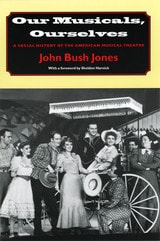
Our Musicals, Ourselves
A Social History of the American Musical TheatreJohn Bush Jones
Brandeis University Press, 2004
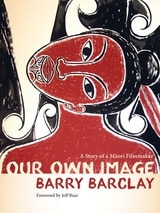
Our Own Image
A Story of a Maori FilmmakerBarry Barclay
University of Minnesota Press, 2015
Acclaimed Maori filmmaker Barry Barclay’s Our Own Image relates the experiences of making his documentaries and his critically acclaimed feature-length film Ngati (1987), widely credited as the first fiction feature by a member of an indigenous community. Barclay details his views on the process of filmmaking within his own Maori community and discusses how his work differed from popular cinema, advocating for indigenous control, participation, and perspectives in media.
Our Own Image gives an in-depth depiction of the changes Barclay’s approach contributed to the field of documentaries, as well as displaying the respect for community Barclay brought to his filming technique. His insistence on letting people speak for themselves demonstrated authenticity to audiences, creating awareness of indigenous cinema in New Zealand and worldwide.
Our Own Way in This Part of the World
Biography of an African Community, Culture, and NationKwasi Konadu
Duke University Press, 2019
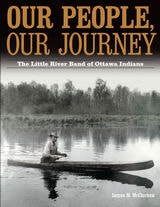
Our People, Our Journey
The Little River Band of Ottawa IndiansJames M. McClurken
Michigan State University Press, 2009
Our People, Our Journey is a landmark history of the Little River Band of Ottawa Indians, a Michigan tribe that has survived to the present day despite the expansionist and assimilationist policies that nearly robbed it of an identity in the late nineteenth century.
In his thoroughly researched chronicle, McClurken documents in words and images every major lineage and family of the Little River Ottawas. He describes the Band's struggles to find land to call its own over several centuries, including the hardships that began with European exploration of what is now the upper Midwest. Although the Little River Ottawas were successful at integrating their economic and cultural practices with those of Europeans, they were forced to cede land in the face of American settlements.
McClurken explains how the Little River Band was forced, in 1858, onto a reservation on the Pere Marquette and Manistee Rivers where they settled with a number of other Ottawa bands. However, the very treaty intended to provide the Grand River Ottawas with a permanent reservation "homeland" eventually allowed non-Indians to acquire title to nearly two-thirds of the land within the reservation by 1880.

Our Precious Corn
YukwanénsteRebecca M. Webster
Michigan State University Press, 2023
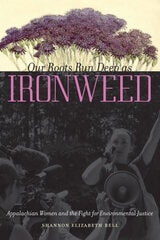
Our Roots Run Deep as Ironweed
Appalachian Women and the Fight for Environmental JusticeShannon Elizabeth Bell
University of Illinois Press, 2013
Motivated by a deeply rooted sense of place and community, Appalachian women have long fought against the damaging effects of industrialization. In this collection of interviews, sociologist Shannon Elizabeth Bell presents the voices of twelve Central Appalachian women, environmental justice activists fighting against mountaintop removal mining and its devastating effects on public health, regional ecology, and community well-being.
Each woman narrates her own personal story of injustice and tells how that experience led her to activism. The interviews--many of them illustrated by the women's "photostories"--describe obstacles, losses, and tragedies. But they also tell of new communities and personal transformations catalyzed through activism. Bell supplements each narrative with careful notes that aid the reader while amplifying the power and flow of the activists' stories. Bell's analysis outlines the relationship between Appalachian women's activism and the gendered responsibilities they feel within their families and communities. Ultimately, Bell argues that these women draw upon a broader "protector identity" that both encompasses and extends the identity of motherhood that has often been associated with grassroots women's activism. As protectors, the women challenge dominant Appalachian gender expectations and guard not only their families but also their homeplaces, their communities, their heritage, and the endangered mountains that surround them.
30% of the proceeds from the sale of this book will be donated to organizations fighting for environmental justice in Central Appalachia.
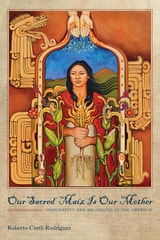
Our Sacred Maíz Is Our Mother
Indigeneity and Belonging in the AmericasRoberto Cintli Rodríguez
University of Arizona Press, 2014
Follow it he did, and his book Our Sacred Maíz Is Our Mother changes the way we look at Mexican Americans. Not so much peoples created as a result of war or invasion, they are people of the corn, connected through a seven-thousand-year old maíz culture to other Indigenous inhabitants of the continent. Using corn as the framework for discussing broader issues of knowledge production and history of belonging, the author looks at how corn was included in codices and Mayan texts, how it was discussed by elders, and how it is represented in theater and stories as a way of illustrating that Mexicans and Mexican Americans share a common culture.
Rodriguez brings together scholarly and traditional (elder) knowledge about the long history of maíz/corn cultivation and culture, its roots in Mesoamerica, and its living relationship to Indigenous peoples throughout the continent, including Mexicans and Central Americans now living in the United States. The author argues that, given the restrictive immigration policies and popular resentment toward migrants, a continued connection to maíz culture challenges the social exclusion and discrimination that frames migrants as outsiders and gives them a sense of belonging not encapsulated in the idea of citizenship. The “hidden transcripts” of corn in everyday culture—art, song, stories, dance, and cuisine (maíz-based foods like the tortilla)—have nurtured, even across centuries of colonialism, the living maíz culture of ancient knowledge.

Our Science, Ourselves
How Gender, Race, and Social Movements Shaped the Study of ScienceChrista Kuljian
University of Massachusetts Press, 2024
When Christa Kuljian arrived on the Harvard College campus as a first-year student in the fall of 1980 with copies of Our Bodies, Ourselves and Ms. magazine, she was concerned that the women’s movement had peaked in the previous decade. She soon learned, however, that there was a long way to go in terms of achieving equality for women and that social movements would continue to be a critical force in society. She began researching the history of science and gender biases in science, and how they intersect with race, class, and sexuality.
In Our Science, Ourselves, Kuljian tells the origin story of feminist science studies by focusing on the life histories of six key figures—Ruth Hubbard, Rita Arditti, Evelyn Fox Keller, Evelynn Hammonds, Anne Fausto-Sterling, and Banu Subramaniam. These women were part of a trailblazing network of female scientists in the 1970s, 80s, and 90s who were drawn to the Boston area—to Harvard, MIT, and other universities—to study science, to network with other scientists, or to take a job. Inspired by the social and political activism of the women’s movement and organizations such as Science for the People, the Genes and Gender Collective, and the Combahee River Collective, they began to write and teach about women in science, gender and science, and sexist and racist bias and exclusion. They would lead the critiques of E. O. Wilson’s sociobiology in 1975 and Larry Summers’ comments about women in science thirty years later. The book also explores how these contributions differed from those of Nancy Hopkins’, author of the 1999 MIT report on women in science, and a “reluctant feminist.”
Drawing on a rich array of sources that combines published journal articles and books with archival materials and interviews with major luminaries of feminist science studies, Kuljian chronicles and celebrates the contributions that these women have made to our collective scientific knowledge and view of the world.
Our Sisters' Keepers
Nineteenth-Century Benevolence Literature by American WomenEdited by Jill Bergman and Debra Bernardi
University of Alabama Press, 2005
American culture has long had a conflicted relationship with assistance to the poor. Cotton Mather and John Winthrop were staunch proponents of Christian charity as fundamental to colonial American society, while transcendentalists harbored deep skepticism towards benevolence in favor of Emersonian self-reliance and Thoreau’s insistence on an ascetic life. Women in the 19th century, as these essays show, approached issues of benevolence far differently than their male counterparts, consistently promoting assistance to the impoverished, in both their acts and their writings.

Our Sisters' Promised Land
Women, Politics, and Israeli-Palestinian CoexistenceAyala Emmett
University of Michigan Press, 2003

Our Southern Accents
Asian American Voices in the U.S. SouthThao Le-Thanh Ha
Rutgers University Press, 2027
This powerful anthology centers Asian American, Native Hawaiian, and Pacific Islander communities in the U.S. South, tracing their histories, struggles, and cultural impact. From early settlements to present day challenges, it reimagines the South through stories of resilience, identity, and belonging that have long been overlooked.
Our Southern Zion
A History of Calvinism in the South Carolina Low Country, 1690-1990Erskine Clarke
University of Alabama Press, 1996
Three centuries of faith, intellect, and resilience—Calvinism’s quiet power in the Southern low country.
The South Carolina low country has long been regarded—not only in popular imagination and paperback novels but also by respected scholars—as a region dominated by what earlier historians called “a cavalier spirit” and by what later historians have simply described as “a wholehearted devotion to amusement and the neglect of religion and intellectual pursuits.” Such images of the low country have been powerful interpreters of the region because they have had some foundation in social and cultural realities. It is a thesis of this study, however, that there has been a strong Calvinist community in the Carolina low country since its establishment as a British colony and that this community (including in its membership both whites and after the 1740s significant numbers of African Americans) contradicts many of the images of the "received version" of the region. Rather than a devotion to amusement and a neglect of religion and intellectual interests, this community has been marked throughout most of its history by its disciplined religious life, its intellectual pursuits, and its work ethic.

Our Vampires, Ourselves
Nina Auerbach
University of Chicago Press, 1995
"[Auerbach] has seen more Hammer movies than I (or the monsters) have had steaming hot diners, encountered more bloodsuckers than you could shake a stick at, even a pair of crossed sticks, such as might deter a very sophisticated ogre, a hick from the Moldavian boonies....Auerbach has dissected and deconstructed them with the tender ruthlessness of a hungry chef, with cogency and wit."—Eric Korn, Times Literary Supplement
"This seductive work offers profound insights into many of the urgent concerns of our time and forces us to confront the serious meanings that we invest, and seek, in even the shadiest manifestations of the eroticism of death."—Wendy Doniger, The Nation
"A vigorous, witty look at the undead as cultural icons."—Kirkus Review
"In case anyone should think this book is merely a boring lit-crit exposition...Auerbach sets matters straight in her very first paragraph. 'What vampires are in any given generation,' she writes, 'is a part of what I am and what my times have become. This book is a history of Anglo-American culture through its mutating vampires.'...Her book really takes off."—Maureen Duffy, New York Times Book Review

Our Vampires, Ourselves
Nina Auerbach
University of Chicago Press, 1995
Nina Auerbach shows how every age embraces the vampire it needs, and gets the vampire it deserves. Working with a wide range of texts, as well as movies and television, Auerbach locates vampires at the heart of our national experience and uses them as a lens for viewing the last two hundred years of Anglo-American cultural history.
"[Auerbach] has seen more Hammer movies than I (or the monsters) have had steaming hot diners, encountered more bloodsuckers than you could shake a stick at, even a pair of crossed sticks, such as might deter a very sophisticated ogre, a hick from the Moldavian boonies....Auerbach has dissected and deconstructed them with the tender ruthlessness of a hungry chef, with cogency and wit."—Eric Korn, Times Literary Supplement
"This seductive work offers profound insights into many of the urgent concerns of our time and forces us to confront the serious meanings that we invest, and seek, in even the shadiest manifestations of the eroticism of death."—Wendy Doniger, The Nation
"A vigorous, witty look at the undead as cultural icons."—Kirkus Review
"In case anyone should think this book is merely a boring lit-crit exposition...Auerbach sets matters straight in her very first paragraph. 'What vampires are in any given generation,' she writes, 'is a part of what I am and what my times have become. This book is a history of Anglo-American culture through its mutating vampires.'...Her book really takes off."—Maureen Duffy, New York Times Book Review

Our Veterans
Winners, Losers, Friends, and Enemies on the New Terrain of Veterans AffairsSuzane Gordon, Steve Early, and Jasper Craven
Duke University Press, 2022

Our Way to Fight
Peace-Work Under Siege in Israel-PalestineMichael Riordon
Pluto Press, 2011
Michael Riordon takes us to thousand year-old olive groves, besieged villages, refugee camps, checkpoints and barracks. In the face of deepening conflict, Our Way to Fight offers courageous grassroots action on both sides of the wall, and points the way to a liveable future.
Our Women Are Free
Gender and Ethnicity in the HindukushWynne Maggi
University of Michigan Press, 2001
Yet despite their obvious religious differences with nearby communities, when asked what makes the Kalasha unique, both men and women often reply, "Our women are free" (homa istrizia azat asan). The concept that Kalasha women are "free" (azat), that they have "choice" (chit), is a topic of spirited conversation among the Kalasha. It touches at the heart of both individual women's identities and the collective identity of the community.
Our Women are Free introduces the historical and cultural landscape of the Kalasha and describes the role that "women's freedom" plays as an ethnic marker for the entire community. Throughout the narrative, Wynne Maggi stays close to conversations and events that illustrate the daily life of the community, focusing particularly on the Kalasha people's sense of humor; on the pleasure they take in work, children, ritual, and relationships; as well as on the complexity and seriousness of their social lives.
Accessible and thought-provoking, Our Women are Free will be of interest to professional anthropologists, area scholars, and other social scientists.
Wynne Maggi teaches anthropology and women's studies at the University of Colorado.

OurSpace
Resisting the Corporate Control of CultureChristine Harold
University of Minnesota Press, 2009
Culture jamming is so twentieth century! What’s next?
When reporters asked about the Bush administration’s timing in making their case for the Iraq war, then Chief of Staff Andrew Card responded that “from a marketing point of view, you don’t introduce new products in August.” While surprising only in its candor, this statement signified the extent to which consumer culture has pervaded every aspect of life. For those troubled by the long reach of the marketplace, resistance can seem futile. However, a new generation of progressive activists has begun to combat the media supremacy of multinational corporations by using the very tools and techniques employed by their adversaries.
In OurSpace, Christine Harold examines the deployment and limitations of “culture jamming” by activists. These techniques defy repressive corporate culture through parodies, hoaxes, and pranks. Among the examples of sabotage she analyzes are the magazine Adbusters’s spoofs of familiar ads and the Yes Men’s impersonations of company spokespersons.While these strategies are appealing, Harold argues that they are severely limited in their ability to challenge capitalism. Indeed, many of these tactics have already been appropriated by corporate marketers to create an aura of authenticity and to sell even more products. For Harold, it is a different type of opposition that offers a genuine alternative to corporate consumerism. Exploring the revolutionary Creative Commons movement, copyleft, and open source technology, she advocates a more inclusive approach to intellectual property that invites innovation and wider participation in the creative process.From switching the digital voice boxes of Barbie dolls and G.I. Joe action figures to inserting the silhouetted image of Abu Ghraib’s iconic hooded and wired victim into Apple’s iPod ads, high-profile instances of anticorporate activism over the past decade have challenged, but not toppled, corporate media domination. OurSpace makes the case for a provocative new approach by co-opting the logic of capitalism itself.
Ours to Lose
When Squatters Became Homeowners in New York CityAmy Starecheski
University of Chicago Press, 2016
Those decades of strife, however, also gave the Lower East Side something unusual: a radical movement that blended urban homesteading and European-style squatting in a way never before seen in the United States. Ours to Lose tells the oral history of that movement through a close look at a diverse group of Lower East Side squatters who occupied abandoned city-owned buildings in the 1980s, fought to keep them for decades, and eventually began a long, complicated process to turn their illegal occupancy into legal cooperative ownership. Amy Starecheski here not only tells a little-known New York story, she also shows how property shapes our sense of ourselves as social beings and explores the ethics of homeownership and debt in post-recession America.
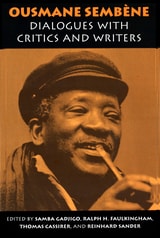
Ousmane Sembene
Dialogues with Critics and WritersThomas Cassirer
University of Massachusetts Press, 1993
This volume celebrates the work of Ousmane Sembène, the brilliant African filmmaker and writer. Since the 1950s, working in his native Senegal, Sembène has produced a series of films and novels that incisively depict the realities of contemporary African experience, particularly that of urban and industrial Africa. The book begins with critical essays on Sembène’s oeuvre by Frederick Ivor Case, Françoise Pfaff, Mbye Cham, and Claire Andrade-Warkins. There follows a series of presentations by distinguished black writers who discuss their craft and the ways in which language can function as a political act of cultural legitimation. These writers include Toni Cade Bambara, Earl Lovelace, Ngũgĩ wa Thiong’o, John Edgar Wideman, and Sembène.
The next section reproduces Sembène’s remarks on his film Camp de Thiaroye and an extended interview he recorded in Toronto in 1992. His comments are presented in both French and English. The volume concludes with annotated bibliographies of Sembène’s novels and of the films he has written and directed.
Out Doing Science
LGBTQ STEM Professionals and Inclusion in Neoliberal TimesTom Waidzunas, Ethan Czuy Levine, and Brandon Fairchild
University of Massachusetts Press, 2025
Winner of the American Sociological Association’s Section on the Sociology of Sexualities Distinguished Book Award
Over the past 50 years, lesbian, gay, bisexual, transgender, and queer professionals have organized to achieve greater inclusion into the fields of science, technology, engineering, and mathematics (STEM). This inclusion, however, has come at a cost. In the 1970s, these professionals sought to radically transform STEM fields by confronting the homophobia and sexism embedded within them. Instead, these fields became more corporatized and privatized, and STEM institutions and workspaces—particularly in the spheres of government and business—became dominated by a focus on individualism, self-improvement/advancement, and meritocracy, which are hallmarks of neoliberalism. For many LGBTQ STEM professionals, inclusion now required becoming more apolitical, pro-capital, and focused on professional development.
In Out Doing Science, Tom Waidzunas, Ethan Czuy Levine, and Brandon Fairchild explore this transformation of LGBTQ STEM professionals from oppositional outsiders to assimilationist insiders. Drawing on historical archives, oral interviews, and participant observation of professional societies and workspaces, the authors interrogate the meanings of “inclusion” and why some LGBTQ STEM professionals have benefited from it more than others. They also advocate for a “queer STEM” that challenges and transforms the racism, classism, sexism, cisheterosexism, and imperialism of these fields, institutions, and workspaces. Written in an accessible and engaging style, Out Doing Science will appeal to readers interested in LGBTQ studies, and science and technology studies, as well as anyone who wants to create a more diverse and inclusive work environment.

Out Front
Lesbians, Gays, and the Struggle for Workplace Rights, Volume 17Patrick McCreery and Kitty Krupat, eds.
Duke University Press, 0
In their examinations of worker and gay rights, the scholars, artists, and activists who speak in this volume argue that neither the labor movement nor the gay rights movement will make substantial progress without a deeper understanding of the connections between identity politics and class. Included is a major policy statement by AFL-CIO president John J. Sweeney. Four other labor leaders—Bill Fletcher Jr., Yvette Hererra, Gloria Johnson, and Van Allen Sheets—discuss homophobia as “labor’s new frontier.” Nikhil Pal Singh’s conversation with lesbian activist Amber Hollibaugh and a virtuoso piece by filmmaker Tami Gold offer incisive personal histories and commentaries, which Cathy J. Cohen takes the mainstream gay and lesbian movement to task for not adequately or consistently focusing on issues of class.
Contributors. Cathy J. Cohen, Bill Fletcher Jr., Tami Gold, Yvette Herrera, Amber Hollibaugh, Gloria Johnson, Kitty Krupat, Patrick McCreery, Van Allen Sheets, Nikhal Pal Singh, John J. Sweeney
Out In The South
edited by Carlos L. Dews and Carolyn Leste Law
Temple University Press, 2001
In this book gays and lesbians from the Deep South to East Texas and Appalachia speak from vivid personal experience and turn an analytical eye on the South and its culture. Some contributors examine the power of traditional Southern attitudes toward race and religion, and consider the "don't ask, don't tell" attitude about homosexuality in some communities (the "public secret"). Other contributors show how gay culture is thriving in the form of women's festivals, gay bars, and unusual networks like that of Asian and Pacific Islanders in Atlanta.
Out in the South is organized into sections that focus on a central metaphor of space and location. This grounds the book in the sense of the South as a special region and in the inside/outside dilemma faced by many gay and lesbian Southerners as they negotiate their place in an often-inhospitable homeland.
Out Of The Ordinary
Folklore and the SupernaturalBarbara Walker
Utah State University Press, 1995
Out of the Ordinary explores the functions of belief and supernatural experience within an array of cultures, as well as the stance of academe toward the study of belief and the supernatural. The essays in this volume call into question the idea that supernatural experience is extraordinary.
Among the contributors are Shelley Adler, David Hufford, Barre Toelken, and Gillian Bennett.

Out Takes
Essays on Queer Theory and FilmEllis Hanson, ed.
Duke University Press, 1999
The essays examine a wide array of films, including Calamity Jane, Rear Window, The Hunger, Heavenly Creatures, and Bound , and discuss such figures as Doris Day, Elizabeth Taylor, and Alfred Hitchcock. Divided into three sections, the first part reconsiders the construction of masculinity and male homoerotic desire—especially with respect to the role of women—in classic cinema of the 1940s and 1950s. The second section offers a deconstructive consideration of lesbian film spectatorship and lesbian representation. Part three looks at the historical trajectory of independent queer cinema, including works by H.D., Kenneth Anger, and Derek Jarman.
By exploring new approaches to the study of sexuality in film, Out Takes will be useful to scholars in gay and lesbian studies, queer theory, and cinema studies.
Contributors. Bonnie Burns, Steven Cohan, Alexander Doty, Lee Edelman, Michelle Elleray, Jim Ellis, Ellis Hanson, D. A. Miller, Eric Savoy, Matthew Tinkcom, Amy Villarejo, Jean Walton
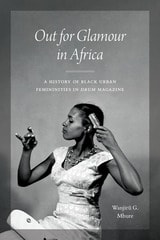
Out for Glamour in Africa
A History of Black Urban Femininities in Drum MagazineWanjiru G. Mbure
University of Michigan Press, 2026
Out for Glamour in Africa critically reflects on how Black women utilized Drum magazine, a leading publication in Africa during the era of independence, for political empowerment and constructing notions of Black femininity. Wanjirũ G. Mbure terms the concept of femme urbAfricana, a model of Black femininity depicted as urban, political, fashionable, paradoxically Afrocentric, heteronormative, and transnational. Foregrounding stories of the women who embodied these traits and the social, political, and economic forces that shaped their presence in Drum, Mbure argues that these representations of Black women from Africa, the Caribbean, Europe, and the United States produced a novel form of Black urban femininity. Utilizing a breadth of archival materials from cover girl photographs, advertisements, and columns, to readers’ comments, Mbure reveals the complex relationship between the Black urban woman and the era’s contested ideals within a transnational matrix.
Out in Africa
LGBT Organizing in Namibia and South AfricaAshley Currier
University of Minnesota Press, 2012
Visibility matters to activists—to their social and political relevance, their credibility, their influence. But invisibility matters, too, in times of political hostility or internal crisis. Out in Africa is the first to present an intimate look at how Namibian and South African lesbian, gay, bisexual, and transgender (LGBT) organizations have cultivated visibility and invisibility as strategies over time. As such, it reveals the complexities of the LGBT movements in both countries as these organizations make use of Western terminology and notions of identity to gain funding even as they work to counter the perception that they are “un-African.”
Different sociopolitical conditions in Namibia and South Africa affected how activists in each country campaigned for LGBT rights between 1995 and 2006. Focusing on this period, Ashley Currier shows how, in Namibia, LGBT activists struggled against ruling party leaders’ homophobic rhetoric and how, at the same time, black LGBT citizens of South Africa, though enjoying constitutional protections, greater visibility, and heightened activism, nonetheless confronted homophobic violence because of their gender and sexual nonconformity.
As it tells the story of the evolving political landscape in postapartheid Namibia and South Africa, Out in Africa situates these countries’ movements in relation to developments in pan-African LGBT organizing and offers broader insights into visibility as a social movement strategy rather than simply as a static accomplishment or outcome of political organizing.
Out in Culture
Gay, Lesbian and Queer Essays on Popular CultureCorey K. Creekmur and Alexander Doty, eds.
Duke University Press, 1995
Uniquely accessible, Out in Culture presents such popular writers as B. Ruby Rich, Essex Hemphill, and Michael Musto as well as influential critics such as Richard Dyer, Chris Straayer, and Julia Lesage, on topics ranging from the queer careers of Agnes Moorehead and Pee Wee Herman to the cultural politics of gay drag, lesbian style, the visualization of AIDS, and the black snap! queen experience. Of particular interest are two "dossiers," the first linking essays on the queer content of Alfred Hitchcock’s films, and the second on the production and reception of popular music within gay and lesbian communities. The volume concludes with an extensive bibliography—the most comprehensive currently available—of sources in gay, lesbian, and queer media criticism.
Out in Culture explores the distinctive and original ways in which gays, lesbians, and queers have experienced, appropriated, and resisted the images and artifacts of popular culture. This eclectic anthology will be of interest to a broad audience of general readers and scholars interested in gay and lesbian issues; students of film, media, gender, and cultural studies; and those interested in the emerging field of queer theory.
Contributors. Sabrina Barton, Edith Becker, Rhona J. Berenstein, Nayland Blake, Michelle Citron, Danae Clark, Corey K. Creekmur, Alexander Doty, Richard Dyer, Heather Findlay, Jan Zita Grover, Essex Hemphill, John Hepworth, Jeffrey Hilbert, Lucretia Knapp, Bruce La Bruce, Al LaValley, Julia Lesage, Michael Moon, Michael Musto, B. Ruby Rich, Marlon Riggs, Arlene Stein, Chris Straayer, Anthony Thomas, Mark Thompson, Valerie Traub, Thomas Waugh, Patricia White, Robin Wood

Out in Force
Sexual Orientation and the MilitaryEdited by Gregory M. Herek, Jared B. Jobe, and Ralph M. Carney
University of Chicago Press, 1996
Both sides base their views on assumptions about the consequences of integration. Even defenders of the ban grudgingly acknowledge that homosexuals are fully capable of serving with distinction. Few question gay service members' abilities or patriotism; justifications for the ban are now predicated on heterosexuals' negative reactions.
Out in Force refutes the notions that homosexuality is incompatible with military service and that gay personnel would undermine order and discipline. Leading social science scholars of sexual orientation and the military offer reasoned and comprehensive discussions about military organizations, human sexuality, and attitudes toward individuals and groups. They demonstrate forcefully that the debate is really about the military as an institution, and how that institution will adapt to larger social changes. The contributors show that the ban could be successfully eliminated, and set forth a program for implementation. In sorting opinion from fact, myth from reality, Out in Force stands as an invaluable guide for the military, lawmakers, and the courts as they continue to grapple with this question of institutional and societal change.
Out in Theory
The Emergence of Lesbian and Gay AnthropologyEdited by Ellen Lewin and William L. Leap
University of Illinois Press, 2002
This compelling collection of essays details the scholarly and personal factors that affected the emergence of lesbian and gay anthropology and speculates on the directions it will take as it continues to grow and diversify. Seeking to legitimize the field's scholarship and address issues in terminology, the essays also define the lesbian and gay anthropology's scope and subject matter and locate factors that separate it from the wider concerns of the profession.
Specific essays track the emergence of lesbian and gay studies in social and cultural anthropology, linguistics, archaeology, and in various areas of anthropological activism. They also consider how feminist anthropology helped define the field and how transgendered experience, queer theory, and race and class studies are promoting new directions of inquiry within lesbian and gay anthropology.

Out in the Field
Reflections of Lesbian and Gay AnthropologistsEdited by Ellen Lewin and William L. Leap
University of Illinois Press, 1996
manage issues of identity and sexuality in field research and professional
life. In an era when the field worker's positionality is critical to research
and ethnographic writing, this insightful book has much to say to gay
and straight researchers alike." -- Louise Lamphere, University of
New Mexico
"Addresses sensitive, controversial, and tabooed subjects. . . .
Out in the Field will be read by a variety of audiences, within
and outside of anthropology." -- Jean Jackson, Massachusetts Institute
of Technology
Lesbian and gay anthropologists write candidly in Out in the Field
about their research and personal experiences in conducting fieldwork,
about the ethical and intellectual dilemmas they face in writing about
lesbian or gay populations, and about the impact on their careers of doing
lesbian/gay research.
The first volume in which lesbian and gay anthropologists discuss personal
experiences, Out in the Field offers compelling illustrations of
professional lives both closeted and out to colleagues and fieldwork informants.
It also concerns aligning career goals with personal sexual preferences
and speaks directly to issues of representation and authority currently
being explored throughout the social sciences.
CONTRIBUTORS: Geoffrey Burkhart, Liz Goodman, Delores M. Walters, Walter
L. Williams, Sabine Lang, Ellen Lewin, William L. Leap, Ralph Bolton,
Elizabeth Lapovsky Kennedy, Madeline Davis, Will Roscoe, Esther Newton,
Stephen O. Murray, James Wafer, Kath Weston, Sue-Ellen Jacobs

Out in the Union
A Labor History of Queer AmericaMiriam Frank
Temple University Press, 2015
Out in the Union tells the continuous story of queer American workers from the mid-1960s through 2013. Miriam Frank shrewdly chronicles the evolution of labor politics with queer activism and identity formation, showing how unions began affirming the rights of lesbian, gay, bisexual, and transgender workers in the 1970s and 1980s. She documents coming out on the job and in the union as well as issues of discrimination and harassment, and the creation of alliances between unions and LGBT communities.
Featuring in-depth interviews with LGBT and labor activists, Frank provides an inclusive history of the convergence of labor and LGBT interests. She carefully details how queer caucuses in local unions introduced domestic partner benefits and union-based AIDS education for health care workers-innovations that have been influential across the U.S. workforce. Out in the Union also examines organizing drives at queer workplaces, campaigns for marriage equality, and other gay civil rights issues to show the enduring power of LGBT workers.
Out of Line and Offline
Queer Mobilizations in '90s Eastern IndiaPawan Dhall
Seagull Books, 2020
Out of Line
Reading and Writing Protest in West Germany, 1968Peter Schweppe
University of Michigan Press, 2026
By analyzing how protest fused the politics of reading and writing in 1968 West Germany, author Peter Schweppe uncovers the vibrant history of an alternative literary form during a watershed moment of social upheaval. Out of Line interlinks the politics of reading and writing with the verve of Global Sixties’ protest, where fringe books, underground newspapers, incendiary flyers, and furtive graffiti galvanized readers and writers alike. The phrase “out of line” scrutinizes the emerging performative relationship between visual and textual media in the late 1960s as it metamorphosed modes of West German literary production, channeled the agenda of the protest movement, and, in doing so, shaped new kinds of textual meaning. Through its engagement with theories of materiality and “things,” Out of Line interrogates the dynamic ways that protest readers and writers pushed and broke conventional boundaries. Schweppe’s exploration of form discloses how reading and writing out of line implicates a textual and material history of protest and the lessons it offers protest histories to come.