Results by title
22279 books match the query 'Social Science' and 455 start with o
Out of Many, One People
The Historical Archaeology of Colonial JamaicaEdited by James A. Delle, Mark W. Hauser, and Douglas W. Armstrong
University of Alabama Press, 2011
Normal0falsefalsefalseEN-USX-NONEX-NONEMicrosoftInternetExplorer4

Out of Nature
Why Drugs from Plants Matter to the Future of HumanityKara Rogers
University of Arizona Press, 2012
About half of all species under threat of extinction in the world today are plants. The loss of plant biodiversity is disturbing for many reasons, but especially because it is a reflection of the growing disconnect between humans and nature. Plants have been used for millennia in traditional systems of healing and have held a significant place in drug development for Western medicine as well. Despite the recent dominance of synthetic drug production, natural product discovery remains the backbone of drug development. As the diversity of life on Earth is depleted and increasing numbers of species become lost to extinction, we continue to lose opportunities to achieve advances in medicine.
Through stories of drug revelation in nature and forays into botany, human behavior, and conservation, Kara Rogers sheds light on the multiple ways in which humans, medicine, and plants are interconnected. With accessible and engaging writing, she explores the relationships between humans and plants, relating the stories of plant hunters of centuries past and examining the impact of human activities on the environment and the world's biodiversity. Rogers also highlights the role that plant-based products can play in encouraging conservation and protecting the heritage and knowledge of indigenous peoples.
Out of Nature provides a fresh perspective on modern drug innovation and its relationship with nature. The book delves into the complexity of biophilia—the innate human attraction to life in the natural world—and suggests that the reawakening of this drive is fundamental to expanding conservation efforts and improving medicine. Rogers's examination of plants, humans, and drug discovery also conveys a passionate optimism for the future of biodiversity and medicine. Including a collection of hand-drawn maps and plant illustrations created by the author, this well-researched narrative will inspire as well as inform.
Out of Sync & Out of Work
History and the Obsolescence of Labor in Contemporary CultureBurges, Joel
Rutgers University Press, 2018
Out of Sync
Ventriloquism in Popular Media from Vinyl to TikTokSarah Rebecca Kessler
Duke University Press, 2026
Out of This World
Afro-German AfrofuturismPriscilla Dionne Layne
Northwestern University Press, 2025
Examining Afro-German artists’ use of Afrofuturist tropes to critique German racial history
The term Afrofuturism was first coined in the 1990s to describe African diasporic artists’ use of science fiction, speculative fiction, and fantasy to reimagine the diaspora’s pasts and to counter not only Eurocentric prejudices but also pessimistic narratives. Out of This World: Afro-German Afrofuturism focuses on contemporary Black German Afrofuturist literature and performance that critiques Eurocentrism and, specifically, German racism and colonial history. This young generation has, Priscilla Layne argues, engaged with Afrofuturism to disrupt linear time and imagine alternative worlds, to introduce non-Western technologies into the German cultural milieu, and to consider the possibilities of posthumanism. Their experiments in futurist and speculative narratives offer new tools for breaking with the binary thinking about race, culture, and gender identity that have been enforced by repressive ideological and state apparatuses, such as educational, cultural, and police institutions. Rather than providing escapism or purely imaginary alternatives, however, they have created a space—outer and artistic—in which their lives matter.
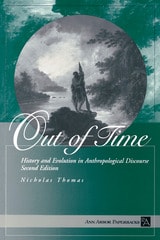
Out of Time
History and Evolution in Anthropological DiscourseNicholas Thomas
University of Michigan Press, 1996
Despite the enormous amount of work that has attempted to combine historical and anthropological approaches in recent years, few books have outlined the underlying premises that make integration of the two fields difficult. In Out of Time, Nicholas Thomas argues that a "historical perspective" cannot simply be added to conventional anthropology, which systematically takes ethnography "out of time." Drawing examples from the Polynesian anthropological literature, he points to discredited social evolutionary ideas that have persisted even after apparently dramatic theoretical shifts and to the need to take seriously sources that anthropologists have previously dismissed. When it was first published in 1989, Out of Time generated much-needed discussion on the appropriate models for historical anthropology. Thomas considered that both the historical structuralism of Marshall Sahlins and neo-Marxist regional systems theory had failed to transcend crucial limitations of conventional anthropology. Yet they provided elements of a more stimulating and critical perspective, which would also take account of contemporary political developments in the Pacific region. For this second edition, Thomas has added an afterword that reflects on the book's initial reception and brings its critique up to date. He suggests a need to historicize the professionalization of anthropology as a discipline to understand shifts in practice and the need to acknowledge the historical specificity and limits of all forms of cultural knowledge, whether "Western" or indigenous. Out of Time will be a useful text for graduate courses in anthropology, history, and cultural studies. "This book displays rare integrity: Thomas' intellectual stance toward the theoretical approaches of others is fully consistent with his own discursive practices." --Contemporary Pacific.
Out of Wedlock
Causes and Consequences of Nonmarital FertilityLarry Wu
Russell Sage Foundation, 2001
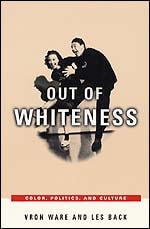
Out of Whiteness
Color, Politics, and CultureVron Ware and Les Back
University of Chicago Press, 2002
Vron Ware and Les Back look at key points in recent American and British culture where the "color line" has been blurred. Through probing accounts of racial masquerades in popular literature, the growth of the white power music scene on the Internet, the meteoric rise of big band jazz during the Second World War, and the pivotal role of white session players in crafting rhythm and blues classics by black artists, Ware and Back upset the idea of race as a symbol of inherent human attributes. Their book gives us a timely reckoning of the forces that continue to make people "white," and reveals to us the polyglot potential of identities and cultures.

Out of the Ash
Historical Ecology of Mesoamerica in the Late Antique Little Ice Age (536–660 CE)Joel D. Gunn
University of Utah Press, 2027

Out of the Attic
Inventing Antiques in Twentieth-Century New EnglandBriann G. Greenfield
University of Massachusetts Press, 2009
In this era of Antiques Roadshow and eBay, it is hard to imagine a time when Americans did not treasure the home furnishings of elite early American families. But as this book demonstrates, antiquing—particularly the practice of valuing old things for their aesthetic qualities—is a relatively recent invention whose origins can be found in the early years of the twentieth century. Although nineteenth-century Americans did appreciate heirlooms, they saw them as memory markers, tangible representations of honored ancestors or local history.
In Out of the Attic, Briann G. Greenfield traces the transformation of antiques from family keepsakes to valuable artistic objects, examining the role of collectors, dealers, and museum makers in the construction of a new tradition based on the aesthetic qualities of early American furnishings. While recognizing the significance of antiques as symbols of an enduring American culture, Greenfield also delves behind popular rhetoric to examine the development of a retail structure specifically designed to facilitate the buying and selling of old wares. With antique shops proliferating all over New England, pickers going door-to-door in search of “finds,” and forgers taking illicit advantage of growing demand, antique owners and collectors found themselves trying to navigate a retail market characterized by escalating prices and high stakes purchases. In this sense, antiques functioned as more than remnants of a treasured past; they became modern consumer goods.
The book is divided into a series of case studies, each intended to illuminate some aspect of “the dynamic of consumer history.” One chapter examines the role of Jewish dealers in promoting American antiques; another profiles Jessie Baker Gardner, a small-time collector and would-be museum maker from Providence, Rhode Island. Greenfield also looks at the institutionalization of antiques, with chapters focusing on Henry Flynt of Deerfield, Massachusetts, who embraced the “aestheticization of antiques” in the 1940s and 1950s, and on Smithsonian curator C. Malcolm Watkins, who challenged the decorative art market during the 1950s and 1960s by purchasing old tools and crude furniture for the nation's museum.
Out of the Cloister
A Study of Organizational DilemmasBy Helen Rose Fuchs Ebaugh
University of Texas Press, 1977
Since Vatican Council II, convent walls have crumbled. and the structures that once separated nuns from the world are gone. Out of the Cloister is an organizational analysis of the structural and ideological changes that took place in Catholic religious orders of women in the United States. Many nuns today dress in street clothes, choose their own jobs, have a degree of financial independence from the larger order, and may not be recognized by their coworkers as nuns. What might once have been defined as a "total institution" has become, within the span of a few years, a type of voluntary organization where members join together loosely to achieve a common purpose.
Helen Rose Fuchs Ebaugh approaches religious orders as utopian communities and examines how contact with the larger society has affected the distinctiveness and solidarity that hold such groups together. She analyzes the patterns occurring within orders with particular focus on the relationship between organizational change and membership loss. Since changes have been introduced into religious orders at different rates, and since orders vary in such characteristics as size and educational level of members, it is possible to analyze relationships between exit rates and other organizational variables. The complex interplay of education and membership loss is one of the organizational dilemmas the author examines.
Although she is no longer a part of organized religious life, Ebaugh spent ten years as a nun and during that time collected much of the data presented in this book. As a nun she also helped conduct a number of self-studies and evaluations involved with the post-Vatican II reform and renewal efforts. She is therefore in the unique position of a researcher who collected data as an insider and analyzed it as an outsider.
This book is one of the first systematic, empirical studies of religious orders in the United States and one of the few sociological investigations of convents and the changes occurring within them.

Out of the Closets and into the Courts
Legal Opportunity Structure and Gay Rights LitigationEllen Ann Andersen
University of Michigan Press, 2004
Out of the Closets and into the Courts explores both the promise and the limits of using legal mobilization to effect social change. Crossing disciplinary boundaries, Ellen Andersen draws on the accumulated knowledge of political science, law, and sociology to explain the origins and outcomes of gay rights litigation. The resulting book is essential reading for anyone interested in gay rights, legal change, and social movements.
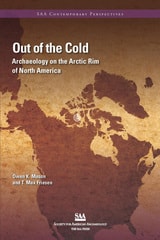
Out of the Cold
Archaeology on the Arctic Rim of North AmericaOwen K. Mason
University Press of Colorado, 2018
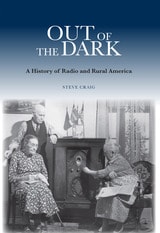
Out of the Dark
A History of Radio and Rural AmericaSteve Craig
University of Alabama Press, 2009
From the Grand Ole Opry to the National Barn Dance, how radio changed life in rural America
Out of the Dark: A History of Radio and Rural America shows how radio—especially clear channel network stations—brought news, markets, weather, religion, and entertainment into isolated farm homes between the 1920s and 1950s, narrowing rural–urban divides while also sustaining distinctly rural tastes (e.g., barn dance music). Craig argues that battery “farm radios,” high power stations, and national networking transformed daily life, work rhythms, consumer habits, and political participation, making radio the central domestic technology of the Depression era and beyond.
Craig blends regulatory and industry milestones, such as the Radio Act of 1927, with sociological studies, USDA extension records, FCC surveys, census tables, and rich case studies including WLS Chicago’s “National Barn Dance,” WSM Nashville’s “Grand Ole Opry,” and others. He mines audience research, diaries, program schedules, and tables that track the spread of radio. The book’s distinctive contributions include detailed charts (ownership by region; clear channel assignments) and vivid narratives of stations, formats, and personalities that connected farm families to national culture while preserving local identity.
The book is ideal for scholars and students of US social, rural, and media history; communication policy and political communication; country and bluegrass music history; agricultural extension; and American studies. It will also engage librarians, curators, and public historians seeking context for rural collections; journalists and podcasters tracing the roots of today’s information ecosystems; and general readers interested in how radio re made community life long before the internet.

Out of the Frame
The Struggle for Academic Freedom in IsraelIlan Pappe
Pluto Press, 2010
Even before he wrote his bestselling book The Ethnic Cleansing of Palestine, historian Ilan Pappe was a controversial figure in Israel. In Out of the Frame, he gives a full account of his break with mainstream Israeli scholarship and its consequences.
Here he traces his journey of discovery from the whispers of Palestinian classmates to his realisation that the 'enemy's' narrative of the events of 1948 was correct. After completing his thesis at Oxford University in the early 1980s, he returned to Palestine determined to protect the memory of the Nakbah. For the first time he gives the details of the formidable opposition he faced in Israel, including death threats fed by the media, denunciations by the Knesset and calls for him to be sacked from his post at Haifa university.
This revealing work, written with dignity and humour, highlights Israel's difficulty in facing up to its past and forging a peaceful, inclusive future in Palestine.

Out of the Pits
Traders and Technology from Chicago to LondonCaitlin Zaloom
University of Chicago Press, 2006
From New York to Singapore, from Chicago to London, the trading floors of the world’s financial markets are icons of global capitalism. Images of them are used on the news all the time—traders burying their heads in their hands when the market is down, their arms flailing in a frenzy when fortunes are rising—to convey the current state of the economy. But these marketplaces, and the cultural life that sustains them, are dissolving into the ether of the digital age: powerful financial institutions are shutting down the trading pits, replacing face-to-face exchanges with an electronic network where traders sit, face to screen, finger to mouse, and compete in a global arena made up of digits and charts.
Out of the Pits considers the implications of this sea change for everyone involved, from the traders and brokers to the market as a whole. Caitlin Zaloom takes us down to the floor at the Chicago Board of Trade and into a digital dealing room in the City of London. Drawing on her own firsthand experiences as a clerk and a trader and on her unusual access to these key sites of global finance, she explainshow changes at the world’s leading financial exchanges have transformed economic cultures and the craft of speculation; how people and places are responding to the digital transition; how traders are remaking themselves to compete in the contemporary marketplace; and how brokers, business managers, and software designers are collaborating to build new financial markets.
A penetrating and richly detailed account of how cities, culture, and technology shape everyday life in the new global economy, Out of the Pits will be must reading for business buffs or anyone who has ever wondered how financial markets work.
Out of the Red
My Life of Gangs, Prison, and RedemptionChristian L. Bolden
Rutgers University Press, 2020
Faculty Senate Award for Research from Loyola University New Orleans
Out of the Red is one man’s pathbreaking story of how social forces and personal choices combined to deliver an unfortunate fate. After a childhood of poverty, institutional discrimination, violence, and being thrown away by the public education system, Bolden's life took him through the treacherous landscape of street gangs at the age of fourteen. The Bloods offered a sense of family, protection, excitement, and power. Incarcerated during the Texas prison boom, the teenage former gangster was thrust into a fight for survival as he navigated the perils of adult prison. As mass incarceration and prison gangs swallowed up youth like him, survival meant finding hope in a hopeless situation and carving a path to his own rehabilitation. Despite all odds, he forged a new path through education, ultimately achieving the seemingly impossible for a formerly incarcerated ex-gangbanger.

Out of the Shadows
A Biographical History of African American AthletesDavid K. Wiggins
University of Arkansas Press, 2008

Out of the Vinyl Deeps
Ellen Willis on Rock MusicNona Willis Aronowitz
University of Minnesota Press, 2010
Because Willis stopped writing about music in the early 1980s—when, she felt, rock ’n’ roll had lost its political edge—her significant contribution to the history and reception of rock music has been overshadowed by contemporary music critics like Robert Christgau, Lester Bangs, and Dave Marsh. Out of the Vinyl Deeps collects for the first time Willis’s Rock, Etc. columns and her other writings about popular music from this period (includingliner notes for works by Lou Reed and Janis Joplin) and reasserts her rightful place in rock music criticism.
More than simply setting the record straight, Out of the Vinyl Deeps reintroduces Willis’s singular approach and style—her use of music to comment on broader social and political issues, critical acuity, vivid prose, against-the-grain opinions, and distinctly female (and feminist) perspective—to a new generation of readers. Featuring essays by the New Yorker’s current popular music critic, Sasha Frere-Jones, and cultural critics Daphne Carr and Evie Nagy, this volume also provides a lively and still relevant account of rock music during, arguably, its most innovative period.

Out of the Woods
Seeing Nature in the EverydayJulia Corbett
University of Nevada Press, 2018
Have you ever wondered about society’s desire to cultivate the perfect lawn, why we view some animals as “good” and some as “bad,” or even thought about the bits of nature inside everyday items–toothbrushes, cell phones, and coffee mugs? In this fresh and introspective collection of essays, Julia Corbett examines nature in our lives with all of its ironies and contradictions by seamlessly integrating personal narratives with morsels of highly digestible science and research. Each story delves into an overlooked aspect of our relationship with nature—insects, garbage, backyards, noise, open doors, animals, and language—and how we cover our tracks.
With a keen sense of irony and humor and an awareness of the miraculous in the mundane, Julia recognizes the contradictions of contemporary life. She confronts the owner of a high-end market who insists on keeping his doors open in all temperatures. Takes us on a trip to a new mall with a replica of a trout stream that once flowed nearby. The phrase “out of the woods” guides us through layers of meaning to a contemplation of grief, remembrance, and resilience.
Out of the Woods leads to surprising insights into the products, practices, and phrases we take for granted in our everyday encounters with nature and encourages us all to consider how we might re-value or reimagine our relationships with nature in our everyday lives.
OutWrite
The Speeches That Shaped LGBTQ Literary CultureJulie R. Enszer
Rutgers University Press, 2022
This collection gives readers a taste of this fabulous moment in LGBTQ literary history with twenty-seven of the most memorable speeches from the OutWrite conference, including both keynote addresses and panel presentations. These talks are drawn from a diverse array of contributors, including Allen Ginsberg, Judy Grahn, Essex Hemphill, Patrick Califia, Dorothy Allison, Allan Gurganus, Chrystos, John Preston, Linda Villarosa, Edmund White, and many more.
OutWrite offers readers a front-row seat to the passionate debates, nascent identity politics, and provocative ideas that helped animate queer intellectual and literary culture in the 1990s. Covering everything from racial representation to sexual politics, the still-relevant topics in these talks are sure to strike a chord with today’s readers.
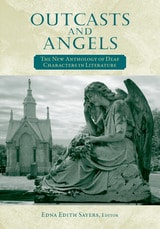
Outcasts and Angels
The New Anthology of Deaf Characters in LiteratureEdna Edith Sayers
Gallaudet University Press, 2012
In 1976, Trent Batson and Eugene Bergman released their classic Angels and Outcasts: An Anthology of Deaf Characters in Literature. In it, they featured works from the 19th and 20th centuries by well-known authors such as Charles Dickens and Eudora Welty. They also presented less-well-known deaf authors, and they prefaced each excerpt with remarks on context, societal perceptions, and the dignity due to deaf people. Since then, much has transpired, turning around the literary criticism regarding portrayals of deaf people in print. Edna Edith Sayers reflects these changes in her new collection Outcasts and Angels: The New Anthology of Deaf Characters in Literature.
Sayers mines the same literary vein as the first volume with rich new results. Her anthology also introduces rare works by early masters such as Daniel Defoe. She includes three new deaf authors, Charlotte Elizabeth, Howard T. Hofsteater, and Douglas Bullard, who offer compelling evidence of the attitudes toward deaf people current in their eras. In search of commonalities and comparisons, Sayers reveals that the defining elements of deaf literary characters are fluid and subtly different beyond the predominant dueling stereotypes of preternaturally spiritual beings and thuggish troglodytes.
Outcasts and Angels demonstrates these subtle variations in writings by Ambrose Bierce, Isak Dinesen, Nadine Gordimer, and Flannery O’Connor. Stories by Juozas Grušas, Julian Barnes, and many other international authors broaden the scope of this updated inquiry into the deaf literary character. Sayer’s preface and closing essay bring any disparate parts together, completing Outcasts and Angels as a fitting, contemporary companion to the original classic collection.
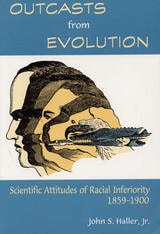
Outcasts from Evolution
Scientific Attitudes of Racial Inferiority, 1859 - 1900John S. Haller, Jr.
Southern Illinois University Press, 1996
In the only book to date to explore the period between the 1859 publication of Darwin’s Origin of Species and the discovery in 1900 of Gregor Mendel’s experiments in genetics, John S. Haller, Jr., shows the relationship between scientific "conviction" and public policy. He focuses on the numerous liberally educated American scientists who were caught up in the triumph of evolutionary ideas and who sought to apply those ideas to comparative morality, health, and the physiognomy of nonwhite races.
During this period, the natural and social scientists of the day not only accepted without question the genetic and cultural superiority of the Caucasian; they also asserted that the Caucasian race held a monopoly on evolutionary progress, arguing that "inferior races" were no more than evolutionary survivors doomed by their genetic legacy to remain outcasts from evolution.
Hereditarians and evolutionists believed that "less fit" human races were perishing from the rigors of civilization’s struggle and competition. Indeed, racial inferiority lay at the very foundation of the evolutionary framework and, remaining there, rose to the pinnacle of "truth" with the myth of scientific certainty.

Outlaw Music in Russia
The Rise of an Unlikely GenreAnastasia Gordienko
University of Wisconsin Press, 2023
The Russian shanson can be heard across the country today, on radio and television shows, at mass events like political rallies, and even at the Kremlin. Yet despite its ubiquity, it has attracted almost no scholarly attention. Anastasia Gordienko provides the first full history of the shanson, from its tenuous ties to early modern criminals’ and robbers’ folk songs, through its immediate generic predecessors in the Soviet Union, to its current incarnation as the soundtrack for daily life in Russia. It is difficult to firmly define the shanson or its family of song genres, but they all have some connection, whether explicit or implicit, to the criminal underworld or to groups or activities otherwise considered subversive. Traditionally produced by and popular among criminals and other marginalized groups, and often marked by characters and themes valorizing illegal activities, the songs have undergone censorship since the early nineteenth century. Technically legal only since the collapse of the Soviet Union, the shanson is today not only broadly popular but also legitimized by Vladimir Putin’s open endorsement of the genre.
With careful research and incisive analysis, Gordienko deftly details the shanson’s history, development, and social meanings. Attempts by imperial rulers, and later by Soviet leaders, to repress the songs and the lifestyles they romanticized not only did little to discourage their popularity but occasionally helped the genre flourish. Criminals and liberal intelligentsia mingled in the Gulag system, for instance, and this contact introduced censored songs to an educated, disaffected populace that inscribed its own interpretations and became a major point of wider dissemination after the Gulag camps were closed. Gordienko also investigates the shanson as it exists in popular culture today: not divorced from its criminal undertones (or overtones) but celebrated for them. She argues that the shanson expresses fundamental themes of Russian culture, allowing for the articulation of anxieties, hopes, and dissatisfactions that are discouraged or explicitly forbidden otherwise.

Outlawed
Between Security and Rights in a Bolivian CityDaniel M. Goldstein
Duke University Press, 2012
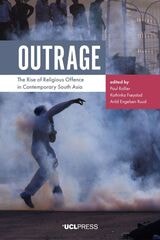
Outrage
The Rise of Religious Offence in Contemporary South AsiaEdited by Paul Rollier, Kathinka Frøystad, and Arild Engelsen Ruud
University College London, 2019
An interdisciplinary study of this trend, Outrage brings together researchers in anthropology, religious studies, and South Asian studies with rich experience in the varied ways religion and politics intersect in this region. Each chapter focuses on a recent case of alleged blasphemy or desecration in India, Pakistan, Bangladesh and Myanmar, unpacking the religious sensitivities and political concerns. Collectively, the chapters explore common denominators across national and religious differences, such as the introduction of social media and smartphones, the possible political gains of initiating blasphemy accusations, and the growing self-assertion of marginal communities.

Outside Agitator
Jon Daniels and the Civil Rights Movement in AlabamaCharles Eagles
University of Alabama Press, 2000
WINNER OF THE LILLIAN SMITH BOOK AWARD
The story of faith, sacrifice, and moral courage in Alabama's fight for civil rights.
Outside Agitator tells the powerful, largely forgotten story of Jonathan Daniels—a white Episcopal seminarian from New England who answered the call of the civil rights movement and paid for that commitment with his life. In 1965, Daniels left the safety of Harvard and Cambridge for Selma and Alabama’s Black Belt, where he worked alongside Black activists to challenge segregation, register voters, and confront the moral failures of church and state. His murder by a white segregationist shocked the nation and exposed the deadly cost of racial injustice—and of moral courage.
More than a biography, this book asks urgent questions that still resonate: What does it mean to act on conscience in a society structured by inequality? What responsibilities do faith, citizenship, and privilege impose? Historian Charles W. Eagles places Daniels’s life within the turbulent final phase of the southern civil rights movement, revealing the everyday fears, ethical dilemmas, and racial tensions behind the iconic events of Selma and Lowndes County.
Outside Agitator will appeal to readers interested in civil rights history, religious activism, Southern history, and the moral dimensions of political struggle. It is essential reading for students, scholars, clergy, and general readers seeking to understand how individual lives can illuminate—and challenge—the ongoing fight for justice and equality.

Outside the Gates of Eden
The Dream of America from Hiroshima to NowPeter Bacon Hales
University of Chicago Press, 2014
Born under the shadow of the bomb, with little security but the cold comfort of duck-and-cover, the postwar generations lived through—and led—some of the most momentous changes in all of American history. Hales explores those decades through perceptive accounts of a succession of resonant moments, spaces, and artifacts of everyday life—drawing unexpected connections and tracing the intertwined undercurrents of promise and peril. From sharp analyses of newsreels of the first atomic bomb tests and the invention of a new ideal American life in Levittown; from the music emerging from the Brill Building and the Beach Boys, and a brilliant account of Bob Dylan’s transformations; from the painful failures of communes and the breathtaking utopian potential of the early days of the digital age, Hales reveals a nation, and a dream, in transition, as a new generation began to make its mark on the world it was inheriting.
Full of richly drawn set-pieces and countless stories of unforgettable moments, Outside the Gates of Eden is the most comprehensive account yet of the baby boomers, their parents, and their children, as seen through the places they built, the music and movies and shows they loved, and the battles they fought to define their nation, their culture, and their place in what remains a fragile and dangerous world.

Outside the Hacienda Walls
The Archaeology of Plantation Peonage in Nineteenth-Century YucatánAllan Meyers
University of Arizona Press, 2012
Drawing on a dozen years of archaeological and historical investigation, Allan Meyers breaks new ground in the study of Yucatán haciendas. He explores a plantation village called San Juan Bautista Tabi, which once stood at the heart of a vast sugar estate. Occupied for only a few generations, the village was abandoned during the revolutionary upheaval. Its ruins now lie within a state-owned ecological reserve.
Through oral histories, archival records, and physical remains, Meyers examines various facets of the plantation landscape. He presents original data and fresh interpretations on settlement organization, social stratification, and spatial relationships. His systematic approach to "things underfoot," small everyday objects that are now buried in the tropical forest, offers views of the hacienda experience that are often missing in official written sources. In this way, he raises the voices of rural, mostly illiterate Maya speakers who toiled as laborers. What emerges is a portrait of hacienda social life that transcends depictions gleaned from historical methods alone.
Students, researchers, and travelers to Mexico will all find something of interest in Meyers's lively presentation. Readers will see the old haciendas—once forsaken but now experiencing a rebirth as tourist destinations—in a new light. These heritage sites not only testify to social conditions that prevailed before the Mexican Revolution, but also remind us that the human geography of modern Yucatán is as much a product of plantation times as it is of more ancient periods.

Outside the Magic Circle
The Autobiography of Virginia Foster DurrHollinger F. Barnard
University of Alabama Press, 1990
Winner of the Alabama Library Author Award
Outside the Magic Circle tells the remarkable story of Virginia Foster Durr, a southern white woman born into privilige who (along with her husband Clifford Durr, a lawyer best known for defending Rosa Parks), nonetheless devoted her life to Civil Rights activism.
Outside the Magic Circle is the powerful and deeply personal autobiography of Virginia Foster Durr, a Southern woman who defied the expectations of her privileged upbringing to become one of the most courageous voices for civil rights and social justice in 20th-century America. Born into a wealthy, white Alabama family, Durr was raised in a world steeped in segregation and conservative values. Yet through a journey marked by moral reckoning, intellectual awakening, and political activism, she stepped outside the “magic circle” of Southern gentility to confront the injustices that shaped her world.
With a foreword by renowned oral historian Studs Terkel, this memoir captures Durr’s transformation from reluctant conformist to outspoken advocate. Her story spans decades of American history—from the Great Depression and New Deal politics to the McCarthy era and the Civil Rights Movement. Alongside her husband, attorney Clifford Durr, Virginia became a key figure in progressive circles, working to abolish the poll tax, defend civil liberties, and support Black activists in the segregated South.
Told in Durr’s own voice, the narrative is rich with anecdotes, reflections, and encounters with historical figures such as Eleanor Roosevelt, Rosa Parks, and Martin Luther King Jr. It is both a personal reckoning and a political document, offering rare insight into the inner conflicts of white Southern liberals and the cost of dissent in a deeply divided society.
Outside the Magic Circle is more than a memoir—it is a testament to the power of conscience, the courage of transformation, and the enduring fight for justice. It remains a vital resource for readers interested in civil rights history, feminist thought, and the complexities of Southern identity.
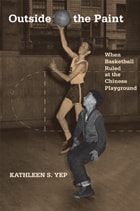
Outside the Paint
When Basketball Ruled at the Chinese PlaygroundKathleen S. Yep
Temple University Press, 2009
Outside the Paint takes readers back to the Chinese Playground of San Francisco in the 1930s and 1940s, the only public outdoor space in Chinatown. It was a place where young Chinese American men and women developed a new approach to the game of basketbal—with fast breaks, intricate passing and aggressive defense—that was ahead of its time.
Drawing on interviews with players and coaches, Kathleen Yep recounts some surprising stories. From the success of the Hong Wah Kues, a professional barnstorming men's basketball team and the Mei Wahs, a championship women’s amateur team, to Woo Wong, the first Chinese athlete to play in Madison Square Garden, and his extraordinarily talented sister Helen Wong, who is compared to Babe Didrikson.
Outside the Paint chronicles the efforts of these highly accomplished athletes who developed a unique playing style that capitalized on their physical attributes, challenged the prevailing racial hierarchy, and enabled them, for a time, to leave the confines of their segregated world. As they learned to dribble, shoot, and steal, they made basketball a source of individual achievement and Chinese American community pride.
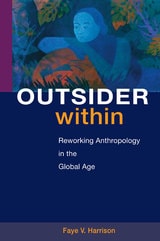
Outsider Within
Reworking Anthropology in the Global AgeFaye Harrison
University of Illinois Press, 2007
Outsider Within presents an approach to critically reconstructing the anthropology discipline to better encompass issues of gender and race. Among the nine key changes to the field that Faye V. Harrison advocates are researching in an ethically and politically responsible manner, promoting greater diversity in the discipline, rethinking theory, and committing to a genuine multicultural dialogue. In drawing from materials developed during her distinguished twenty-five year career in Caribbean and African American studies, Harrison analyzes anthropology’s limits and possibilities from an African American woman’s perspective, while also recognizing similarities between peoples, despite social, cultural, and political differences. In seeking to productively engage anthropologists of diverse geographical, cultural, and national origins, Harrison challenges them to work together to transcend stark gender, racial, and national hierarchies.
Outsiders Within
Writing on Transracial AdoptionJane Jeong Trenka
University of Minnesota Press, 2020
Confronting trauma behind the transnational adoption system—now back in print
Many adoptees are required to become people that they were never meant to be. While transracial adoption tends to be considered benevolent, it often exacts a heavy emotional, cultural, and economic toll on those who directly experience it. Outsiders Within is a landmark publication that carefully explores this most intimate aspect of globalization through essays, fiction, poetry, and art. Moving beyond personal narrative, transracially adopted writers from around the world tackle difficult questions about how to survive the racist and ethnocentric worlds they inhabit, what connects the countries relinquishing their children to the countries importing them, why poor families of color have their children removed rather than supported—about who, ultimately, they are. In their inquiry, the contributors unseat conventional understandings of adoption politics, reframing the controversy as a debate that encompasses human rights, peace, and reproductive justice.
Contributors: Heidi Lynn Adelsman; Ellen M. Barry; Laura Briggs, U of Massachusetts, Amherst; Catherine Ceniza Choy, U of California, Berkeley; Gregory Paul Choy, U of California, Berkeley; Rachel Quy Collier; J. A. Dare; Kim Diehl; Kimberly R. Fardy; Laura Gannarelli; Shannon Gibney; Mark Hagland; Perlita Harris; Tobias Hübinette, Stockholm U; Jae Ran Kim; Anh Đào Kolbe; Mihee-Nathalie Lemoine; Beth Kyong Lo; Ron M.; Patrick McDermott, Salem State College, Massachusetts; Tracey Moffatt; Ami Inja Nafzger (aka Jin Inja); Kim Park Nelson; John Raible; Dorothy Roberts, Northwestern U; Raquel Evita Saraswati; Kirsten Hoo-Mi Sloth; Soo Na; Shandra Spears; Heidi Kiiwetinepinesiik Stark; Kekek Jason Todd Stark; Sunny Jo; Sandra White Hawk; Indigo Williams Willing; Bryan Thao Worra; Jeni C. Wright.
Outsiders in 19th-Century Press History
Multicultural PerspectivesFrankie Hutton
University of Wisconsin Press, 1995
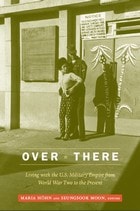
Over There
Living with the U.S. Military Empire from World War Two to the PresentMaria Höhn and Seungsook Moon, eds.
Duke University Press, 2010
Contributors
Donna Alvah
Chris Ames
Jeff Bennett
Maria Höhn
Seungsook Moon
Christopher Nelson
Robin Riley
Michiko Takeuchi
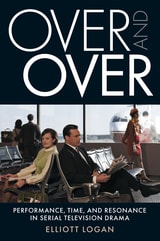
Over and Over
Performance, Time, and Resonance in Serial Television DramaElliott Logan
Rutgers University Press, 2026
How does serial drama earn, keep, and reward our attention for so long—over episodes, seasons, months, and years? While we know that characters are the focus of story and viewer interest in television fiction, scholars have for decades overlooked the way those characters are performed on-screen and the lure of performance as a key formal and thematic aspect of long-form television storytelling. In Over and Over, Elliott Logan offers close readings of performance in some of the most celebrated television dramas of the century, casting new light on the attractions and significance of the medium’s seriality. The book shows how the patterning and expressive resonance of performers on-screen binds together otherwise unconnected episodes of shows like The Sopranos and Mad Men. In doing so, it highlights the provisionality of identity and meaning as crucial to their interest in the sustenance of human relationships over long periods of time. In accounting for the resonance of performance over time in serial drama, this book shows, we find the terms of our own attachment to its compelling depictions of human life

Over the Edge
The Growth of Homelessness in the 1980sMartha M. Burt
Russell Sage Foundation, 1992
Over the Wire and on TV
CBS and UPI in Campaign '80Michael J. Robinson
Russell Sage Foundation, 1983

Overcoming Apartheid
Can Truth Reconcile a Divided Nation?James L. Gibson
Russell Sage Foundation, 2004

Overcoming the Odds
The Benefits of Completing College for Unlikely GraduatesJennie E. Brand
Russell Sage Foundation, 2023
Drawing on two cohorts of nationally representative data from the Bureau of Labor Statistics National Longitudinal Surveys program, Brand uses matching and machine learning methods to estimate the effects of college completion across students with varying likelihoods of completing four-year degrees. To illustrate her findings, Brand describes outcomes using matched vignettes of college and non-college graduates. Brand shows that four-year college completion enables graduates to increase wages and household income, while also circumventing unemployment, low-wage work, job instability, poverty, and social assistance. Completing college also increases civic engagement. Most of these benefits are larger for disadvantaged than for more advantaged students, rendering arguments that college has limited benefits for unlikely graduates as flawed. Brand concludes that greater long-term earnings, and less job instability and unemployment, and thus more tax revenue, less reliance on public assistance, and high levels of volunteering indicate that public investment in higher education for students from disadvantaged backgrounds yields far-reaching collective benefits. She asserts that it is better for our society when more people complete college.
Overcoming the Odds is an innovative and enlightening exploration of how college can transform lives.
Overcrowded World?
Global Population and International MigrationRainer Münz
Haus Publishing, 2009

Overheating
An Anthropology of Accelerated ChangeThomas Hylland Eriksen
Pluto Press, 2016
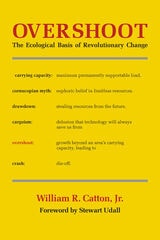
Overshoot
The Ecological Basis of Revolutionary ChangeWilliam R. Catton, Jr.
University of Illinois Press, 1980
A calm but unflinching realist, Catton suggests that we cannot stop this wave - for we have already overshot the Earth's capacity to support so huge a load. He contradicts those scientists, engineers, and technocrats who continue to write optimistically about energy alternatives. Catton asserts that the technological panaceas proposed by those who would harvest from the seas, harness the winds, and farm the deserts are ignoring the fundamental premise that "the principals of ecology apply to all living things." These principles tell us that, within a finite system, economic expansion is not irreversible and population growth cannot continue indefinitely. If we disregard these facts, our sagging American Dream will soon shatter completely.

Ovid's "Heroides" and the Augustan Principate
Megan O. Drinkwater
University of Wisconsin Press, 2023
It was in this era of turmoil and transformation that Ovid, the Roman poet best known for Metamorphoses, was born. The Heroides, one of his earliest and most elusive works, is not written from the first-person perspective that so often characterizes the elegiac poetry of that time but from the personae of tragic heroines of classical mythology.
Megan O. Drinkwater illustrates how Ovid used innovations of literary form to articulate an expression of the crisis of civic identity in Rome at a time of extreme and permanent political change. The letters are not divorced from the context of their composition but instead elucidate that context for their readers and expose how Ovid engaged in politics throughout his entire career. Their importance is as much historical as literary. Drinkwater makes a compelling case for understanding the Heroides as a testament from one of Rome’s most eloquent writers to the impact that the dramatic shift from republic to empire had on its intellectual elites.
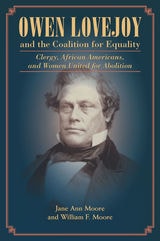
Owen Lovejoy and the Coalition for Equality
Clergy, African Americans, and Women United for AbolitionJane Ann Moore and William F. Moore
University of Illinois Press, 2019
Owen Lovejoy and the Coalition for Equality examines how these three distinct groups merged their agendas into a single antislavery, religious, political campaign for equality with Lovejoy at the helm. Combining scholarly biography, historiography, and primary source material, Jane Ann Moore and William F. Moore demonstrate Lovejoy's crucial role in nineteenth-century politics, the rise of antislavery sentiment in religious spaces, and the emerging congressional commitment to end slavery. Their compelling account explores how the immorality of slavery became a touchstone of political and religious action in the United States through the efforts of a synergetic coalition led by an essential abolitionist figure.

Owners of the Sidewalk
Security and Survival in the Informal CityDaniel M. Goldstein
Duke University Press, 2016
Owning the Olympics
Narratives of the New ChinaMonroe E. Price and Daniel Dayan, Editors
University of Michigan Press, 2008
"A major contribution to the study of global events in times of global media. Owning the Olympics tests the possibilities and limits of the concept of 'media events' by analyzing the mega-event of the information age: the Beijing Olympics. . . . A good read from cover to cover."
—Guobin Yang, Associate Professor, Asian/Middle Eastern Cultures & Sociology, Barnard College, Columbia University
From the moment they were announced, the Beijing Games were a major media event and the focus of intense scrutiny and speculation. In contrast to earlier such events, however, the Beijing Games are also unfolding in a newly volatile global media environment that is no longer monopolized by broadcast media. The dramatic expansion of media outlets and the growth of mobile communications technology have changed the nature of media events, making it significantly more difficult to regulate them or control their meaning. This volatility is reflected in the multiple, well-publicized controversies characterizing the run-up to Beijing 2008. According to many Western commentators, the People's Republic of China seized the Olympics as an opportunity to reinvent itself as the "New China"---a global leader in economics, technology, and environmental issues, with an improving human-rights record. But China's maneuverings have also been hotly contested by diverse global voices, including prominent human-rights advocates, all seeking to displace the official story of the Games.
Bringing together a distinguished group of scholars from Chinese studies, human rights, media studies, law, and other fields, Owning the Olympics reveals how multiple entities---including the Chinese Communist Party itself---seek to influence and control the narratives through which the Beijing Games will be understood.
digitalculturebooks is an imprint of the University of Michigan Press and the Scholarly Publishing Office of the University of Michigan Library dedicated to publishing innovative and accessible work exploring new media and their impact on society, culture, and scholarly communication. Visit the website at www.digitalculture.org.
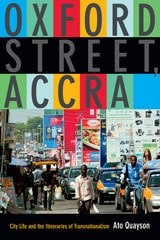
Oxford Street, Accra
City Life and the Itineraries of TransnationalismAto Quayson
Duke University Press, 2014

Oye Como Va!
Hybridity and Identity in Latino Popular MusicDeborah Pacini Hernandez
Temple University Press, 2009
Listen Up! When the New York-born Tito Puente composed "Oye Como Va!" in the 1960s, his popular song was called "Latin" even though it was a fusion of Afro-Cuban and New York Latino musical influences. A decade later, Carlos Santana, a Mexican immigrant, blended Puente’s tune with rock and roll, which brought it to the attention of national audiences. Like Puente and Santana, Latino/a musicians have always blended musics from their homelands with other sounds in our multicultural society, challenging ideas of what "Latin" music is or ought to be. Waves of immigrants further complicate the picture as they continue to bring their distinctive musical styles to the U.S.—from merengue and bachata to cumbia and reggaeton.
In Oye Como Va!, Deborah Pacini Hernandez traces the trajectories of various U.S. Latino musical forms in a globalizing world, examining how the blending of Latin music reflects Latino/a American lives connecting across nations. Exploring the simultaneously powerful, vexing, and stimulating relationship between hybridity, music, and identity, Oye Como Va! asserts that this potent combination is a signature of the U.S. Latino/a experience.

Oye Loca
From the Mariel Boatlift to Gay Cuban MiamiSusana Peña
University of Minnesota Press, 2013
During only a few months in 1980, 125,000 Cubans entered the United States as part of a massive migration known as the Mariel boatlift. The images of boats of all sizes, in various conditions, filled with Cubans of all colors and ages, triggered a media storm. Fleeing Cuba’s repressive government, many homosexual men and women arrived in the United States only to face further obstacles. Deemed “undesirables” by the U.S. media, the Cuban state, and Cuban Americans already living in Miami, these new entrants marked a turning point in Miami’s Cuban American and gay histories.
In Oye Loca, Susana Peña investigates a moment of cultural collision. Drawing from first-person stories of Cuban Americans as well as government documents and cultural texts from both the United States and Cuba, Peña reveals how these discussions both sensationalized and silenced the gay presence, giving way to a Cuban American gay culture. Through an examination of the diverse lives of Cuban and Cuban American gay men, we learn that Miami’s gay culture was far from homogeneous. By way of in-depth interviews, participant observation, and archival analysis, Peña shows that the men who crowded into small apartments together, bleached their hair with peroxide, wore housedresses in the street, and endured ruthless insults challenged what it meant to be Cuban in Miami.
Making a critical incision through the study of heteronormativity, homosexualities, and racialization, ultimately Oye Loca illustrates how a single historical event helped shape the formation of an entire ethnic and sexual landscape.