Results by title
1218 books match the query 'African Americans' and 47 start with p

Pardon My Heart
PoemsMarcus Jackson
Northwestern University Press, 2018
Pardon My Heart is an exploration of love in the contemporary African American ethos. In this lyrically complex collection, the speakers and subjects—the adult descendants of the Great Migration—reckon with past experiences and revelatory, hard-earned ideas about race and class.
With a compelling blend of narrative, musicality, and imagery, Jackson’s poems span a multitude of scenes, landscapes, and sensations. Pardon My Heart examines intimacy, memory, grief, and festivity while seeking out new, reflective sectors within emotion and culture. By means of concise portraiture and sonic vibrancy, Jackson’s poems ultimately express the urgency and pliability of the human soul.

Paris in America
A Deaf Nanticoke Shoemaker and His DaughterClara Jean Mosley Hall
Gallaudet University Press, 2018
Hall was abandoned by her Deaf African American mother at a young age and forged a close bond with her father, James Paris Mosley, who communicated with her in American Sign Language. Although his family was Native American, they—like many other Nanticoke Native Americans of that region—had assimilated over time into Dover’s Black community. Hall vividly recounts the social and cultural elements that shaped her, from Jim Crow to the forced integration of public schools, to JFK and Motown. As a Coda (child of deaf adults) in a time when no accessibility or interpreting services were available, she was her father’s sole means of communication with the hearing world, a heavy responsibility for a child. After her turbulent teenage years, and with the encouragement of her future husband, she attended college and discovered that her skills as a fluent ASL user were a valuable asset in the field of education.
Hall went on to become a college professor, mentor, philanthropist, and advocate for Deaf students from diverse backgrounds. Her memoir is a celebration of her family, her faith, her journey, and her heritage.
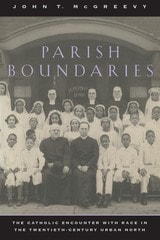
Parish Boundaries
The Catholic Encounter with Race in the Twentieth-Century Urban NorthJohn T. McGreevy
University of Chicago Press, 1996
"Parish Boundaries can take its place in the front ranks of the literature of urban race relations."—Jonathan Dorfman, Washington Post Book Review
"A prodigiously researched, gracefully written book distinguished especially by its seamless treatment of social and intellectual history."—Robert Orsi, American Historical Review
"Parish Boundaries will fascinate historians and anyone interested in the historic connection between parish and race."—Ed Marciniak, Chicago Tribune
"The history that remains to be written will rest on the firm foundation of Mr. McGreevy's remarkable book."—Richard Wightman Fox, New York Times Book Review
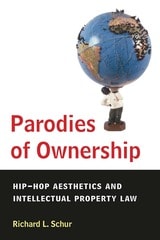
Parodies of Ownership
Hip-Hop Aesthetics and Intellectual Property LawRichard L. Schur
University of Michigan Press, 2009
"Richard Schur offers a provocative view of contemporary African American cultural politics and the relationship between African American cultural production and intellectual property law."
---Mark Anthony Neal, Duke University
"Whites used to own blacks. Now, they accomplish much the same thing by insisting that they 'own' ownership. Blacks shouldn't let them. A culture that makes all artists play by its rules will end up controlling new ideas and stifling change. Richard Schur's fine book explains why."
---Richard Delgado, Seattle University
What is the relationship between hip-hop and African American culture in the post--Civil Rights era? Does hip-hop share a criticism of American culture or stand as an isolated and unique phenomenon? How have African American texts responded to the increasing role intellectual property law plays in regulating images, sounds, words, and logos? Parodies of Ownership examines how contemporary African American writers, artists, and musicians have developed an artistic form that Schur terms "hip-hop aesthetics." This book offers an in-depth examination of a wide range of contemporary African American painters and writers, including Anna Deavere Smith, Toni Morrison, Adrian Piper, Colson Whitehead, Michael Ray Charles, Alice Randall, and Fred Wilson. Their absence from conversations about African American culture has caused a misunderstanding about the nature of contemporary cultural issues and resulted in neglect of their innovative responses to the post--Civil Rights era. By considering their work as a cross-disciplinary and specifically African American cultural movement, Schur shows how a new paradigm for artistic creation has developed.
Parodies of Ownership offers a broad analysis of post--Civil Rights era culture and provides the necessary context for understanding contemporary debates within American studies, African American studies, intellectual property law, African American literature, art history, and hip-hop studies. Weaving together law, literature, art, and music, Schur deftly clarifies the conceptual issues that unify contemporary African American culture, empowering this generation of artists, writers, and musicians to criticize how racism continues to affect our country.
Richard L. Schur is Director, Interdisciplinary Studies Center, and Associate Professor of Interdisciplinary Studies at Drury University. Visit the author's website: http://www2.drury.edu/rschur/index.htm.
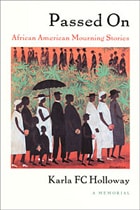
Passed On
African American Mourning Stories, A MemorialKarla FC Holloway
Duke University Press, 2002
With a focus on the “death-care” industry—black funeral homes and morticians, the history of the profession and its practices—Holloway examines all facets of the burial business, from physicians, hospital chaplains, and hospice administrators, to embalming- chemical salesmen, casket makers, and funeral directors, to grieving relatives. She uses narrative, photographs, and images to summon a painful history of lynchings, white rage and riot, medical malpractice and neglect, executions, and neighborhood violence. Specialized caskets sold to African Americans, formal burial photos of infants, and deathbed stories, unveil a glimpse of the graveyards and burial sites of African America, along with burial rituals and funeral ceremonies.
Revealing both unexpected humor and anticipated tragedy, Holloway tells a story of the experiences of black folk in the funeral profession and its clientele. She also reluctantly shares the story of her son and the way his death moved her research from page to person.
In the conclusion, which follows a sermon delivered by Maurice O. Wallace at the funeral for the author’s son, Bem, Holloway strives to commemorate—through observation, ceremony, and the calling of others to remembrance and celebration.
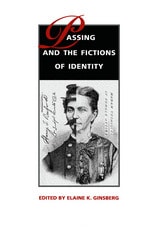
Passing and the Fictions of Identity
Elaine K. Ginsberg
Duke University Press, 1996
These essays consider a wide range of texts and moments from colonial times to the present that raise significant questions about the political motivations inherent in the origins and maintenance of identity categories and boundaries. Through discussions of such literary works as Running a Thousand Miles for Freedom, The Autobiography of an Ex–Coloured Man, Uncle Tom’s Cabin, The Hidden Hand, Black Like Me, and Giovanni’s Room, the authors examine issues of power and privilege and ways in which passing might challenge the often rigid structures of identity politics. Their interrogation of the semiotics of behavior, dress, language, and the body itself contributes significantly to an understanding of national, racial, gender, and sexual identity in American literature and culture.
Contextualizing and building on the theoretical work of such scholars as Judith Butler, Diana Fuss, Marjorie Garber, and Henry Louis Gates Jr., Passing and the Fictions of Identity will be of value to students and scholars working in the areas of race, gender, and identity theory, as well as U.S. history and literature.
Contributors. Martha Cutter, Katharine Nicholson Ings, Samira Kawash, Adrian Piper, Valerie Rohy, Marion Rust, Julia Stern, Gayle Wald, Ellen M. Weinauer, Elizabeth Young
Passing and the Rise of the African American Novel
M. Giulia Fabi
University of Illinois Press, 2001
Focusing on the trope of passing--black characters lightskinned enough to pass for white--M. Giulia Fabi shows how early African American authors such as William Wells Brown, Frank J. Webb, Charles W. Chesnutt, Sutton E. Griggs, Frances E. W. Harper, Edward A. Johnson, and James Weldon Johnson transformed traditional representations of blackness and moved beyond the tragic mulatto motif. Challenging the myths of racial purity and the color line, these authors used passing to celebrate a distinctive, African American history, culture, and worldview.
Fabi examines how early black writers adapted existing literary forms, including the sentimental romance, the domestic novel, and the utopian novel, to express their convictions and concerns about slavery, segregation, and racism. Chesnutt used passing as both a structural and a thematic element, while James Weldon Johnson innovated by parodying the earlier novels of passing and presenting the decision to pass as the result, rather than the cause, of cultural alienation. Fabi also gives a historical overview of the canon-making enterprises of African American critics from the 1850s to the 1990s and considers how their concerns about promoting the canonization of African American literature affected their perceptions of nineteenth-century black fiction.
Patchwork Apartheid
Private Restriction, Racial Segregation, and Urban InequalityColin Gordon
Russell Sage Foundation, 2023
Gordon also explores the role of other policies and practices in sustaining segregation. Enforcement of private racial restrictions was held unconstitutional in 1948, and such agreements were prohibited outright in 1968. But their premises and assumptions, and the segregation they had accomplished, were accommodated by local zoning and federal housing policies. Explicit racial restrictions were replaced by the deceptive business practices of real estate agents and developers, who characterized certain neighborhoods as white and desirable and others as black and undesirable, thereby hiding segregation behind the promotion of sound property investments, safe neighborhoods, and good schools. These practices were in turn replaced by local zoning, which systematically protected white neighborhoods while targeting “blighted” black neighborhoods for commercial and industrial redevelopment, and by a tangle of federal policies that reliably deferred to local and private interests with deep investments in local segregation. Private race restriction was thus a key element in the original segregation of American cities and a source of durable inequalities in housing wealth, housing opportunity, and economic mobility.
Patchwork Apartheid exhaustively documents the history of private restriction in urban settings and demonstrates its crucial role in the ideas and assumptions that have sustained racial segregation in the United States into the twenty-first century.
Pembroke
A Rural, Black Community on the Illinois DunesDave Baron
Southern Illinois University Press, 2016
With a population of about two thousand, Pembroke Township, one of the largest rural, black communities north of the Mason-Dixon Line, sits in an isolated corner of Kankakee County, Illinois, sixty-five miles south of Chicago. It is also one of the poorest places in the nation. Many black farmers from the South came to this area during the Great Migration; finding Chicago to be overcrowded and inhospitable, they were able to buy land in the township at low prices. The poor soil made it nearly impossible to establish profitable farms, however, and economic prosperity has eluded the region ever since. Pembroke: A Rural, Black Community on the Illinois Dunes chronicles the history of this inimitable township and shows the author’s personal transformation through his experiences with Pembroke and its people. A native of nearby Kankakee, author Dave Baron first traveled to Pembroke on a church service trip at age fifteen and saw real poverty firsthand, but he also discovered a community possessing grace and purpose.
Baron begins each chapter with a personal narrative from his initial trip to Pembroke. He covers the early history of the area, explaining how the unique black oak savanna ecosystem was created and describing early residents, including Potawatomi tribes and white fur traders. He introduces readers to Pap and Mary Tetter, Pembroke’s first black residents, who—according to local lore—assisted fugitives on the Underground Railroad; details the town’s wild years, when taverns offered liquor, drugs, and prostitution; discusses the many churches of Pembroke and the nearby high school where, in spite of sometimes strained relations, Pembroke’s black students have learned alongside white students of a neighboring community since well before Brown v. Board of Education; outlines efforts by conservation groups to preserve Pembroke’s rare black oak savannas; and analyzes obstacles to and failed attempts at economic development in Pembroke, as well as recent efforts, including organic farms and a sustainable living movement, which may yet bring some prosperity.
Based on research, interviews with residents, and the author’s own experiences during many return trips to Pembroke, this book—part social, cultural, legal, environmental, and political history and part memoir—profiles a number of the colorful, longtime residents and considers what has enabled Pembroke to survive despite a lack of economic opportunities. Although Pembroke has a reputation for violence and vice, Baron reveals a township with a rich and varied history and a vibrant culture.
Performing The Word
African American Poetry As Vernacular CultureBrown, Fahamisha Patricia
Rutgers University Press, 1999
Fahamista Patricia Brown examines elements of African American expressive culture- its language practices, both fold and popular. Her book is an excellent introduction to a diverse group of poets and the common basis of their work in language practices and performativity, in the expressive culture of a people. Performing the Word is an important contribution to the understanding of African American culture and American poetry as a whole.

Perspectives of Black Popular Culture
Harry B. Shaw
University of Wisconsin Press, 1990
Phenomenal Blackness
Black Power, Philosophy, and TheoryMark Christian Thompson
University of Chicago Press, 2022
Phenomenal Blackness examines the changing interdisciplinary investments of key mid-century Black writers and thinkers, including the growing interest in German philosophy and critical theory. Mark Christian Thompson analyzes this shift in intellectual focus across the post-war decades, placing Black Power thought in a philosophical context.
Prior to the 1960s, sociologically oriented thinkers such as W. E. B. Du Bois had understood Blackness as a singular set of socio-historical characteristics. In contrast, writers such as Amiri Baraka, James Baldwin, Angela Y. Davis, Eldridge Cleaver, and Malcolm X were drawn to notions of an African essence, an ontology of Black being. With these perspectives, literary language came to be seen as the primary social expression of Blackness. For this new way of thinking, the works of philosophers such as Adorno, Habermas, and Marcuse were a vital resource, allowing for continued cultural-materialist analysis while accommodating the hermeneutical aspects of Black religious thought. Thompson argues that these efforts to reimagine Black singularity led to a phenomenological understanding of Blackness—a “Black aesthetic dimension” wherein aspirational models for Black liberation might emerge.
Philadelphia Freedoms
Black American Trauma, Memory, and Culture after KingMichael Awkward
Temple University Press, 2013
Phonographies
Grooves in Sonic Afro-ModernityAlexander G. Weheliye
Duke University Press, 2005
Weheliye surveys literature, film, and music to focus on engagements with recorded sound. He offers substantial new readings of canonical texts by W. E. B. Du Bois and Ralph Ellison, establishing dialogues between these writers and popular music and film ranging from Louis Armstrong’s voice to DJ mixing techniques to Darnell Martin’s 1994 movie I Like It Like That. Looking at how questions of diasporic belonging are articulated in contemporary black musical practices, Weheliye analyzes three contemporary Afro-diasporic musical acts: the Haitian and African American rap group the Fugees, the Afro- and Italian-German rap collective Advanced Chemistry, and black British artist Tricky and his partner Martina. Phonographies imagines the African diaspora as a virtual sounding space, one that is marked, in the twentieth century and twenty-first, by the circulation of culture via technological reproductions—records and tapes, dubbing and mixing, and more.
Photography on the Color Line
W. E. B. Du Bois, Race, and Visual CultureShawn Michelle Smith
Duke University Press, 2004
Smith reads Du Bois’s photographs in relation to other turn-of-the-century images such as scientific typologies, criminal mugshots, racist caricatures, and lynching photographs. By juxtaposing these images with reproductions from Du Bois’s exhibition archive, Smith shows how Du Bois deliberately challenged racist representations of African Americans. Emphasizing the importance of comparing multiple visual archives, Photography on the Color Line reinvigorates understandings of the stakes of representation and the fundamental connections between race and visual culture in the United States.
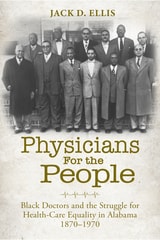
Physicians for the People
Black Doctors and the Struggle for Health-Care Equality in Alabama, 1870–1970Jack D. Ellis with a foreword by Alan I Marcus
University of Alabama Press, 2025
WINNER OF THE JAMES F. SULZBY AWARD
Healing against the odds—Black doctors, bold resistance, and the fight for medical justice in Alabama.
Physicians for the People chronicles the remarkable stories of 241 Black doctors who practiced medicine in Alabama during the Jim Crow era. Historian Jack D. Ellis reveals the ingenuity and resilience of these trailblazing doctors who defied segregation by establishing hospitals and clinics and providing vital healthcare to underserved Black communities.
This meticulously researched work draws on archival sources, oral histories, and an unparalleled database to dismantle the myth of a monolithic medical system in the Jim Crow South. Jack D. Ellis argues that the post–Civil War lives of Black physicians, dentists, pharmacists, nurses, and midwives hold special significance, illuminating both the causes of health care disparities among African Americans and the reasons for their continued underrepresentation in the medical professions.
Offering much of interest to students and scholars of Black history, medical history, and the civil rights movement, Physicians for the People exposes the deliberate exclusion faced by Black doctors within the white medical establishment and their ongoing fight for racial equality in medicine.
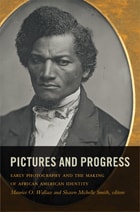
Pictures and Progress
Early Photography and the Making of African American IdentityMaurice O. Wallace and Shawn Michelle Smith, eds.
Duke University Press, 2012
Contributors. Michael A. Chaney, Cheryl Finley, P. Gabrielle Foreman, Ginger Hill, Leigh Raiford, Augusta Rohrbach, Ray Sapirstein, Suzanne N. Schneider, Shawn Michelle Smith, Laura Wexler, Maurice O. Wallace
Places of Their Own
African American Suburbanization in the Twentieth CenturyAndrew Wiese
University of Chicago Press, 2005
For most people, this cozy image of suburbia does not immediately evoke images of African Americans. But as this pioneering work demonstrates, the suburbs have provided a home to black residents in increasing numbers for the past hundred years—in the last two decades alone, the numbers have nearly doubled to just under twelve million. Places of Their Own begins a hundred years ago, painting an austere portrait of the conditions that early black residents found in isolated, poor suburbs. Andrew Wiese insists, however, that they moved there by choice, withstanding racism and poverty through efforts to shape the landscape to their own needs. Turning then to the 1950s, Wiese illuminates key differences between black suburbanization in the North and South. He considers how African Americans in the South bargained for separate areas where they could develop their own neighborhoods, while many of their northern counterparts transgressed racial boundaries, settling in historically white communities. Ultimately, Wiese explores how the civil rights movement emboldened black families to purchase homes in the suburbs with increased vigor, and how the passage of civil rights legislation helped pave the way for today's black middle class.
Tracing the precise contours of black migration to the suburbs over the course of the whole last century and across the entire United States, Places of Their Own will be a foundational book for anyone interested in the African American experience or the role of race and class in the making of America's suburbs.
Winner of the 2005 John G. Cawelti Book Award from the American Culture
Association.
Winner of the 2005 Award for Best Book in North American Urban
History from the Urban History Association.
Planning White Supremacy
Civil Rights and City Planning in Montgomery, Alabama, 1920–1970Rebecca Coleen Retzlaff
University of Alabama Press, 2026
An unflinching account of how city planning was deployed to enforce white supremacy in Montgomery, Alabama—the birthplace of the Civil Rights Movement—and how Black activists fought back, block by neighborhood block.
At the heart of the Civil Rights Movement was a city meticulously designed to enforce inequality. In Planning White Supremacy: Civil Rights and City Planning in Montgomery, Alabama, 1920–1970, Rebecca Coleen Retzlaff traces how city officials used the tools of modern planning—zoning, infrastructure, housing codes, public investment, and highway construction—to suppress political power, economic opportunity, and spatial freedom for Black citizens.
As the birthplace of the Civil Rights Movement, Montgomery became a battleground where urban planning and direct-action protest collided, shaping the city’s culture in ways that still resonate today. Retzlaff’s analysis exposes the calculated use of municipal power to control land use, displace Black communities, keep schools and neighborhoods segregated, and preserve white political dominance. By placing urban planning at the center of Montgomery’s story, this groundbreaking work reframes the movement not only as a fight for voting rights and legal equality, but as a struggle for space, housing, mobility, education, and the right to live with dignity. Retzlaff also highlights the resilience and joy of the close-knit Black neighborhoods that nurtured the civil rights activists who changed history.
Retzlaff reveals how urban planning decisions systematically targeted Black neighborhoods, reinforcing racial inequality under the guise of modernization. With historical depth and critical insight, Planning White Supremacy situates Montgomery within the broader context of American urban history—offering a vital perspective on the intersection of race, space, and power. Essential for scholars of urban planning, history, and racial justice, this book also provides urgent insight into how these legacies continue to shape cities and Black socioeconomic opportunities today.

Played Out
The Race Man in Twenty-First-Century SatireBrandon J. Manning
Rutgers University Press, 2022
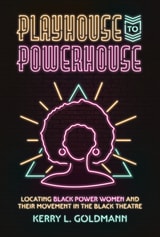
Playhouse to Powerhouse
Locating Black Power Women and their Movement in the Black TheatreKerry Goldmann
University of Arkansas Press, 2025
In Playhouse to Powerhouse, Kerry L. Goldmann explores the Black theatre movement through the lens of three significant women-led theatres that are still in operation today: Nora Vaughn’s Black Repertory Group in Berkeley, Barbara Ann Teer’s National Black Theatre in Harlem, and George Hawkins and Eileen Morris’s Ensemble Theatre in Houston. Goldmann concludes with a discussion of the current moment, examining contemporary obstacles such as gentrification, the co-opting of Black theatres, and the impact of COVID-19.
This remarkable work sheds light on the foundational role that Vaughn, Teer, and Morris played in the Black cultural revolution of the mid- to late twentieth century, securing theatre houses that thrived in multiple capacities as sites for revolution organizing, revenue generation for communal uplift, and unapologetic Black cultural representation.
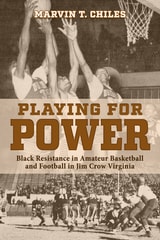
Playing for Power
Black Resistance in Amateur Basketball and Football in Jim Crow VirginiaMarvin T. Chiles
University of Alabama Press, 2025
Reveals the role of amateur Black football and basketball in Virginia before integration as a form of resistance to white supremacy
In Playing for Power, Marvin T. Chiles offers a fascinating account of amateur sports in Jim Crow Virginia, revealing how, in addition to churches, workspaces, and civil rights organizations, sports were also a key arena for Black resistance to white supremacy. Drawing from a rich trove of primary sources, Chiles recounts the development of Black football and basketball culture at the high school and college levels in Virginia from the 1890s to the early 1970s. Looking beyond their role as leisure pastimes, Chiles demonstrates how amateur sports strengthened education, neutralized class divisions, shaped Black masculinity, mentored Black male leadership, cultivated race pride, and reflected Black desires for urban modernity.
Illuminating the ways Black athletes created a world that pushed for racial progress through objective, meritocratic achievement anchored by masculine leadership and institutional success, Playing for Power traces how amateur sports coalesced into a key cultural institution that fostered Black Virginians’ collective sense of community, achievement, and purpose during segregation, cornerstones of later advances in the Civil Rights Movement. Playing for Power also contributes to a larger understanding of sports history and how amateur sports became favorite American spectacles and markers of Southern identity. Chiles’s groundbreaking work will interest historians, scholars, and individuals interested in the intersection of sports and civil rights and the history of Black sports during the Jim Crow era.

Playing in the Shadows
Fictions of Race and Blackness in Postwar Japanese LiteratureWilliam Bridges
University of Michigan Press, 2020

Political Economy of the Urban Ghetto
Daniel R. Fusfeld and Timothy Bates
Southern Illinois University Press, 1984
The income of blacks in most northern industrial states today is lower relative to the income of whites than in 1949.Fusfeld and Bates examine the forces that have led to this state of affairs and find that these economic relationships are the product of a complex pattern of historical development and change in which black-white economic relationships play a major part, along with patterns of industrial, agricultural, and technological change and urban development. They argue that today’s urban racial ghettos are the result of the same forces that created modern America and that one of the by-products of American affluence is a ghettoized racial underclass.
These two themes, they state, are essential for an understanding of the problem and for the formulation of policy. Poverty is not simply the result of poor education, skills, and work habits but one outcome of the structure and functioning of the economy. Solutions require more than policies that seek to change people: they await a recognition that basic economic relationships must be changed.
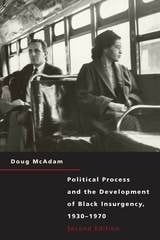
Political Process and the Development of Black Insurgency, 1930-1970
Doug McAdam
University of Chicago Press, 1999
"[A] first-rate analytical demonstration that the civil rights movement was the culmination of a long process of building institutions in the black community."—Raymond Wolters, Journal of American History
"A fresh, rich, and dynamic model to explain the rise and decline of the black insurgency movement in the United States."—James W. Lamare, Annals of the American Academy of Political and Social Science
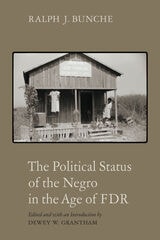
Political Status of the Negro in the Age of FDR
A Carnegie-Myrdal Report Emphasizing the American SouthRalph J. Bunche
University of Chicago Press, 1973
This volume presents the essence of a massive report prepared in 1940 by a team headed by political scientist and civil rights leader Ralph J. Bunche for the Carnegie Corporation’s Survey of the Negro in America. The report was used by Swedish social economist Gunnar Myrdal in writing his monumental An American Dilemma, and it shaped Myrdal’s treatment of the Black political experience. As a valuable historical document, it provides a backdrop against which we can measure change in the Black American’s political status and interpret the origins and consequences of the second Reconstruction.
The Political Status of the Negro introduces essential information about political practices in the Southern states. It offers insight into the historical, economic, sociological, and psychological factors that accounted for these practices, as well as some understanding of the myths, stereotypes, and symbols that contemporaries often used to explain and justify them. The study’s most enduring value lies in its wealth of personal interviews which were conducted in the South in the late 1930s and in its first-hand impressions of the African Americans and Southern politics.
The book is divided into two parts: The first contains Bunche’s explanations, comments, and analytical writings on the subject; the second includes almost all of the interviews and field reports. To this text historian Dewey W. Grantham added a comprehensive introduction that discusses Bunche and his work, the preparation of the research manuscript, and the book’s role in Gunnar Myrdal’s later work.
Politics in the Pews
The Political Mobilization of Black ChurchesEric L. McDaniel
University of Michigan Press, 2008
"Politics in the Pews probes the internal dynamics of political decision making within the Black church."
---William E. Nelson, Jr., Research Professor, Department of African American and African Studies, Ohio State University
As Eric McDaniel demonstrates in his study of Black congregations in the U.S., a church's activism results from complex negotiations between the pastor and the congregation. The church's traditions, its institutional organization, and its cultural traditions influence the choice to make politics part of the church's mission. The needs of the local community and opportunities to vote, lobby, campaign, or protest are also significant factors.
By probing the dynamics of churches as social groups, McDaniel opens new perspectives on civil rights history and the evangelical politics of the twenty-first century. Politics in the Pews contributes to a clearer understanding of the forces that motivate any organization, religious or otherwise, to engage in politics.
Eric L. McDaniel is Assistant Professor in the Department of Government at the University of Texas at Austin.
Popular Fronts
Chicago and African-American Cultural Politics, 1935-46Bill V. Mullen
University of Illinois Press, 2015
With a new preface Bill V. Mullen updates his dynamic reappraisal of a critical moment in American cultural history. Mullen's study includes reassessments of the politics of Richard Wright's critical reputation and a provocative reading of class struggle in Gwendolyn Brooks' A Street in Bronzeville. He also takes an in-depth look at the institutions that comprised Chicago's black popular front: the Chicago Defender, the period's leading black newspaper; Negro Story, the first magazine devoted to publishing short stories by and about African Americans; and the WPA-sponsored South Side Community Art Center.
Portraits of the New Negro Woman
Visual and Literary Culture in the Harlem RenaissanceCherene M. Sherrard-Johnson
Rutgers University Press, 2007
Of all the images to arise from the Harlem Renaissance, the most thought-provoking were those of the mulatta. For some writers, artists, and filmmakers, these images provided an alternative to the stereotypes of black womanhood and a challenge to the color line. For others, they represented key aspects of modernity and race coding central to the New Negro Movement. Due to the mulatta’s frequent ability to pass for white, she represented a variety of contradictory meanings that often transcended racial, class, and gender boundaries.
In this engaging narrative, Cherene Sherrard-Johnson uses the writings of Nella Larsen and Jessie Fauset as well as the work of artists like Archibald Motley and William H. Johnson to illuminate the centrality of the mulatta by examining a variety of competing arguments about race in the Harlem Renaissance and beyond.

Power and Possibility
Essays, Reviews, and InterviewsElizabeth Alexander
University of Michigan Press, 2007
A volume in the Poets on Poetry series, which collects critical works by contemporary poets, gathering together the articles, interviews, and book reviews by which they have articulated the poetics of a new generation.
Elizabeth Alexander is considered one of the country's most gifted contemporary poets, and the publication of her essays in The Black Interior in 2004 established her as an astute critic and cultural commentator as well. Arnold Rampersad has called Alexander "one of the brightest stars in our literary sky . . . a superb, invaluable commentator on the American scene." In this new collection of her essays, reviews, and interviews, Alexander again focuses on African American artistic production, particularly poetry, and the cultural contexts in which it is created and experienced.
The book's first section, "Black Arts 101," takes up the poetry of Paul Laurence Dunbar, Sterling Brown, Lucille Clifton, Gwendolyn Brooks, and Rita Dove (among others); artist Romare Bearden; dancer Bill T. Jones; and dramatist August Wilson. A second section, "Black Feminist Thinking," provides engaging meditations ranging from "My Grandmother's Hair" and "A Very Short History of Black Women and Food" to essays on the legacies of Toni Cade, Audre Lorde, and June Jordan. The collection's final section, "Talking," includes interviews, a commencement address---"Black Graduation"---and the essay "Africa and the World."
Elizabeth Alexander received a B.A. from Yale University, an M.A. from Boston University, and a Ph.D. in English from the University of Pennsylvania. She has published four books of poems: The Venus Hottentot (1990); Body of Life (1996); Antebellum Dream Book (2001); and, most recently, American Sublime (2005), which was one of three finalists for the Pulitzer Prize. Her play, Diva Studies, was produced at the Yale School of Drama. She is presently Professor of American and African American Studies at Yale University.
Power, Protest, and the Public Schools
Jewish and African American Struggles in New York CityMelissa F. Weiner
Rutgers University Press, 2012
Practical Audacity
Black Women and International Human RightsStanlie James
University of Wisconsin Press, 2022
Stanlie M. James weaves narratives by and about these women throughout the history of the field, illustrating how they conceptualize, develop, and implement human rights. By centering the courage and innovative interventions of capable and visionary Black women, she places them rightfully alongside such figures as Thurgood Marshall and Charles Hamilton Houston. This volume fundamentally shifts the frame through which human rights struggles are understood, illuminating how those who witness and experience oppression have made some of the biggest contributions to building a better world.
Prayers for the People
Homicide and Humanity in the Crescent CityRebecca Louise Carter
University of Chicago Press, 2019
Inspired by ministers and guided by grieving mothers who hold birthday parties for their deceased sons, Prayers for the People traces the emergence of a powerful new African American religious ideal at the intersection of urban life, death, and social and spiritual change. Carter frames this sensitive ethnography within the complex history of structural violence in America—from the legacies of slavery to free but unequal citizenship, from mass incarceration and overpolicing to social abandonment and the unequal distribution of goods and services. And yet Carter offers a vision of restorative kinship by which communities of faith work against the denial of Black personhood as well as the violent severing of social and familial bonds. A timely directive for human relations during a contentious time in America’s history, Prayers for the People is also a hopeful vision of what an inclusive, nonviolent, and just urban society could be.
Preventing Child Maltreatment in the U.S.
The Black Community PerspectiveMelissa Phillips
Rutgers University Press, 2022
Primary Lessons
Sarah Bracey White
CavanKerry Press, 2013

Prisons, Race, and Masculinity in Twentieth-Century U.S. Literature and Film
Peter Caster
The Ohio State University Press, 2008
In Prisons, Race, and Masculinity, Peter Caster demonstrates the centrality of imprisonment in American culture, illustrating how incarceration, an institution inseparable from race, has shaped and continues to shape U.S. history and literature in the starkest expression of what W. E. B. DuBois famously termed “the problem of the color line.”
A prison official in 1888 declared that it was the freeing of slaves that actually created prisons: “we had to establish means for their control. Hence came the penitentiary.” Such rampant racism co ntributed to the criminalization of black masculinity in the cultural imagination, shaping not only the identity of prisoners (collectively and individually) but also America’s national character. Caster analyzes the representations of imprisonment in books, films, and performances, alternating between history and fiction to describe how racism influenced imprisonment during the decline of lynching in the 1930s, the political radicalism in the late 1960s, and the unprecedented prison expansion through the 1980s and 1990s. Offering new interpretations of familiar works by William Faulkner, Eldridge Cleaver, and Norman Mailer, Caster also engages recent films such as American History X, The Hurricane, and The Farm: Life Inside Angola Prison alongside prison history chronicled in the transcripts of the American Correctional Association. This book offers a compelling account of how imprisonment has functioned as racial containment, a matter critical to U.S. history and literary study.
Private Bodies, Public Texts
Race, Gender, and a Cultural BioethicsKarla FC Holloway
Duke University Press, 2011
Private Lives, Proper Relations
Regulating Black IntimacyCandice M. Jenkins
University of Minnesota Press, 2007
Private Lives, Proper Relations begins with the question of why contemporary African American literature—particularly that produced by black women—is continually concerned with issues of respectability and propriety. Candice M. Jenkins argues that this preoccupation has its origins in recurrent ideologies about African American sexuality, and that it expresses a fundamental aspect of the racial self—an often unarticulated link between the intimate and the political in black culture.
In a counterpoint to her paradigmatic reading of Nella Larsen’s Passing, Jenkins’s analysis of black women’s narratives—including Ann Petry’s The Street, Toni Morrison’s Sula and Paradise, Alice Walker’s The Color Purple, and Gayl Jones’s Eva’s Man—offers a theory of black subjectivity. Here Jenkins describes middle-class attempts to rescue the black community from accusations of sexual and domestic deviance by embracing bourgeois respectability, and asserts that behind those efforts there is the “doubled vulnerability” of the black intimate subject. Rather than reflecting a DuBoisian tension between race and nation, to Jenkins this vulnerability signifies for the African American an opposition between two poles of potential exposure: racial scrutiny and the proximity of human intimacy.
Scholars of African American culture acknowledge that intimacy and sexuality are taboo subjects among African Americans precisely because black intimate character has been pathologized. Private Lives, Proper Relations is a powerful contribution to the crucial effort to end the distortion still surrounding black intimacy in the United States.
Candice M. Jenkins is associate professor of English at Hunter College, City University o
Problem of the Century
Racial Stratification in the United StatesElijah Anderson
Russell Sage Foundation, 2001
Producing American Races
Henry James, William Faulkner, Toni MorrisonPatricia McKee
Duke University Press, 1999
McKee provides close readings of six novels—James’s The Wings of the Dove and The Golden Bowl, Faulkner’s The Sound and the Fury and Light in August, and Morrison’s Sula and Jazz—interspersed with excursions into Lacanian and Freudian theory, critical race theory, epistemology, and theories of visuality. In James and Faulkner, she finds, race is represented visually through media that highlight ways of seeing and being seen. Written in the early twentieth century, the novels of James and Faulkner reveal how whiteness depended on visual culture even before film and television became its predominant media. In Morrison, the culture is aural and oral—and often about the absence of the visual. Because Morrison’s African American communities produce identity in nonvisual, even anti-visual terms, McKee argues, they refute not just white representations of black persons as objects but also visual orders of representation that have constructed whites as subjects and blacks as objects.
With a theoretical approach that both complements and transcends current scholarship about race—and especially whiteness—Producing American Races will engage scholars in American literature, critical race theory, African American studies, and cultural studies. It will also be of value to those interested in the novel as a political and aesthetic form.
Progressive Dystopia
Abolition, Antiblackness, and Schooling in San FranciscoSavannah Shange
Duke University Press, 2019
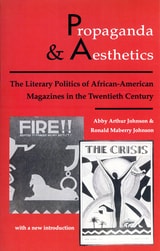
Propaganda and Aesthetics
The Literary Politics of Afro-American Magazines in the Twentieth CenturyAbby Arthur Johnson
University of Massachusetts Press, 1979
Little work has been done on individual Afro-American periodicals and nothing, up to this point, has been published on twentieth-century black journals as a group. Studies of magazines in general are relatively rare, with only The Little Magazine, by Frederick Hoffman, Charles Allen, and Carolyn P. Ulrich, attempting a survey of small journals in this century. This book fills a considerable gap in literary history by detailing the development of Afro-American magazines in this century.
Prosperity For All?
The Economic Boom and African AmericansRobert Cherry
Russell Sage Foundation, 2000
Protest and Propaganda
W. E. B. Du Bois, the CRISIS, and American HistoryEdited by Amy Helene Kirschke and Phillip Luke Sinitiere
University of Missouri Press, 2013
In looking back on his editorship of Crisis magazine, W. E. B. Du Bois said, “We condensed more news about Negroes and their problems in a month than most colored papers before this had published in a year.” Since its founding by Du Bois in 1910, Crisis has been the primary published voice of the NAACP. Born in an age of Jim Crow racism, often strapped for funds, the magazine struggled and endured, all the while providing a forum for people of color to document their inherent dignity and proclaim their definitive worth as human beings.
As the magazine’s editor from 1910 until 1934, Du Bois guided the content and the aim of Crisis with a decisive hand. He ensured that each issue argued for civil rights, economic justice, and social equality, always framing America’s intractable color line in an international perspective. Du Bois benefited from a deep pool of black literary and artistic genius, whether by commissioning the visual creativity of Harlem Renaissance artists for Crisis covers or by publishing poems and short stories from New Negro writers. From North to South, from East to West, and even reaching across the globe, Crisis circulated its ideas and marshaled its impact far and wide.
Building on the solid foundation Du Bois laid, subsequent editors and contributors covered issues vital to communities of color, such as access to resources during the New Deal era, educational opportunities related to the historic Brown decision, the realization of basic civil rights at midcentury, American aid to Africa and Caribbean nations, and the persistent economic inequalities of today’s global era.
Despite its importance, little has been written about the historical and cultural significance of this seminal magazine. By exploring how Crisis responded to critical issues, the essays in Protest and Propaganda provide the first well-rounded, in-depth look at the magazine's role and influence. The authors show how the essays, columns, and visuals published in Crisis changed conversations, perceptions, and even laws in the United States, thereby calling a fractured nation to more fully live up to its democratic creed. They explain how the magazine survived tremendous odds, document how the voices of justice rose above the clamor of injustice, and demonstrate how relevant such literary, journalistic, and artistic postures remain in a twenty-first-century world still in crisis.
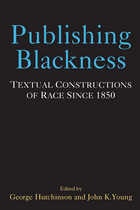
Publishing Blackness
Textual Constructions of Race Since 1850George Hutchinson and John K. Young, Editors
University of Michigan Press, 2013
From the white editorial authentication of slave narratives, to the cultural hybridity of the Harlem Renaissance, to the overtly independent publications of the Black Arts Movement, to the commercial power of Oprah's Book Club, African American textuality has been uniquely shaped by the contests for cultural power inherent in literary production and distribution. Always haunted by the commodification of blackness, African American literary production interfaces with the processes of publication and distribution in particularly charged ways. An energetic exploration of the struggles and complexities of African American print culture, this collection ranges across the history of African American literature, and the authors have much to contribute on such issues as editorial and archival preservation, canonization, and the "packaging" and repackaging of black-authored texts. Publishing Blackness aims to project African Americanist scholarship into the discourse of textual scholarship, provoking further work in a vital area of literary study.
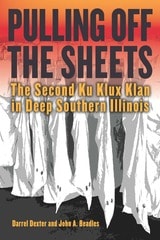
Pulling off the Sheets
The Second Ku Klux Klan in Deep Southern IllinoisDarrel Dexter and John A. Beadles
Southern Illinois University Press, 2024
WINNER, Certificate of Excellence in “Scholarly Publications” from the Illinois State Historical Society’s 2025 Best of Illinois History Awards!
Unmasking old-time racism in southern Illinois
Pulling off the Sheets tells the previously obscured history of the Second Ku Klux Klan which formed in deep southern Illinois in the early 1920s. Through meticulous research into both public and private records, Darrel Dexter and John A. Beadles recount the Klan’s mythical origins, reemergence, and swift disappearance. This important historical account sets out to expose the lasting impact of the Klan on race relations today.
The ideation of the Klan as a savior of the white race and protector of white womanhood was perpetuated by books, plays, and local news sources of the time. The very real but misplaced fear of Black violence on whites created an environment in which the Second Klan thrived, and recruitment ran rampant in communities such as the Protestant church. Events like the murder of Daisy Wilson intensified the climate of racial segregation and white supremacy in the region, and despite attempts at bringing justice to the perpetrators, most failed. The Second Klan’s presence may have been short-lived, but the violence and fear it inflicted continues to linger.
This disturbing historical account challenges readers to “pull back the sheet” and confront the darkest corners of their past. Dexter and Beadles emphasize the importance of acknowledging the damage that white supremacy and racism cause and how we can move toward healing.
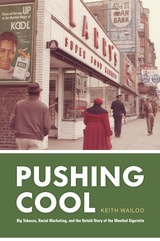
Pushing Cool
Big Tobacco, Racial Marketing, and the Untold Story of the Menthol CigaretteKeith Wailoo
University of Chicago Press, 2021
Police put Eric Garner in a fatal chokehold for selling cigarettes on a New York City street corner. George Floyd was killed by police outside a store in Minneapolis known as “the best place to buy menthols.” Black smokers overwhelmingly prefer menthol brands such as Kool, Salem, and Newport. All of this is no coincidence. The disproportionate Black deaths and cries of “I can’t breathe” that ring out in our era—because of police violence, COVID-19, or menthol smoking—are intimately connected to a post-1960s history of race and exploitation.
In Pushing Cool, Keith Wailoo tells the intricate and poignant story of menthol cigarettes for the first time. He pulls back the curtain to reveal the hidden persuaders who shaped menthol buying habits and racial markets across America: the world of tobacco marketers, consultants, psychologists, and social scientists, as well as Black lawmakers and civic groups including the NAACP. Today most Black smokers buy menthols, and calls to prohibit their circulation hinge on a history of the industry’s targeted racial marketing. In 2009, when Congress banned flavored cigarettes as criminal enticements to encourage youth smoking, menthol cigarettes were also slated to be banned. Through a detailed study of internal tobacco industry documents, Wailoo exposes why they weren’t and how they remain so popular with Black smokers.