Results by title
3576 books match the query 'American' and 162 start with p
PLEASURE
Angelo Nikolopoulos
Four Way Books, 2022
PLEASURE is a book-length poem which muses on the phenomenology of solitude in a pastoral landscape, written in a diaristic, lyric mode, where the queer “I” alternately savors the decadence of isolation and stands at the precipice of despair. A travelogue in verse, PLEASURE takes place in Syros, the Greek island to which author Angelo Nikolopolous travels a few weeks after the discovery of his mother’s brain tumor. These intertextual, elliptical explorations of solitude and sensuality interweave images of seaside roaming, secluded town life, and ephemeral sexual encounters with the ubiquitous implication of death—the waning summer, the ill, perhaps dying, mother. Staring down true disconnection—both physical and psychic orphanhood —Nikolopoulos writes about the thrill and sadness of turning your back against the world and those in it only to rediscover that which tethers all to human experience: the quotidian, singular pleasures of having a body.
PORTAL
Tracy Fuad
University of Chicago Press, 2024
Tracy Fuad’s second collection of poems, PORTAL, probes the fraught experience of bringing a new life into a world that is both lush and filled with gloom. A baby is born in a brutalist building; the planet shrinks under the new logic of contagion; roses washed up from a shipwreck centuries ago are blooming up and down the cape. PORTAL documents a life that is mediated, even at its most intimate moments, by flattening interfaces of technology and in which language—and even intelligence—is no longer produced only by humans. The voices here are stalked by eco-grief and loneliness, but they also brim with song and ecstasy, reveling in the strangeness of contemporary life while grieving losses that cannot be restored. Through Fuad’s frank, honest poetry, PORTAL vibrates with pleasure and dread.
Peeling back the surfaces of words to reveal their etymologies, Fuad embraces playfulness through her formal range, engaging styles from the tersely lineated to the essayistic as she intertwines topics of replication, reproduction, technology, language, history, and biology.
PRESCRIPTION FOR ADVERSITY
THE MORAL ART OF AMBROSE BIERCELAWRENCE BERKOVE
The Ohio State University Press, 2002
A Prescription for Adversity makes the revolutionary case that Ambrose Bierce, far from being a bitter misanthrope, was instead both a compassionate and moral author. Berkove, focusing on Bierce's short fiction, establishes the necessity of recognizing the pattern of his intellectual and literary development over the course of his career. The author shows that Bierce, probably the American author with the most extensive experience of the Civil War, turned to classical Stoicism and English and French Enlightenment literature in his postwar search for meaning. Bierce's fiction arose from his ultimately unsatisfying encounters with the philosophies those sources offered, but the moral commitment as well as the literary techniques of heir authors, particularly Jonathan Swift, inspired him. Dating Bierce's fiction, and introducing uncollected journalism, correspondence, and important new literary history and biographical information, Berkove brings new insights to a number of stories, including "A Son of the Gods" and "A Horseman in the Sky," but especially "An Occurrence at Owl Creek Bridge," and presents compelling readings of the Parenticide Club tales and "Moxon's Master." A Prescription for Adversity substantiates how Bierce at his best is one of the few American authors who rises to the level of Mark Twain, and the only one who touches Jonathan Swift.
A work of both biography and literary criticism, this book rescues Ambrose Bierce and his literature from the neglect to which it has been assigned by "ill-founded, obtuse and unproductive approaches based on skewed notions of his personality and forced or facile readings of individual stories."
Pacific Tremors
Richard Stern
Northwestern University Press, 2001
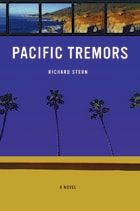
Pacific Tremors
Richard Stern
Northwestern University Press, 2007
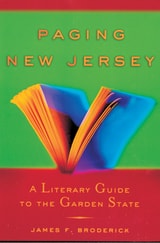
Paging New Jersey
A Literary Guide to the Garden StateBroderick, James F
Rutgers University Press, 2003
For 300 years, New Jersey writers, books, and historical events have helped shape the cultural landscape of the nation, and yet the state is rarely credited for its numerous contributions to American letters and folklore. Paging New Jersey is just the book for those interested in uncovering a treasure trove of information about the Garden State’s key role in the creation of U.S. literary and popular culture. New Jersey writers from Stephen Crane to Toni Morrison are included as well as longtime Camden resident Walt Whitman and Newark native Philip Roth.
James F. Broderick’s unique look at the state’s literary and cultural history answers intriguing Jersey-related questions such as: how author Peter Benchley got the idea for Jaws; where Aaron Burr shot Alexander Hamilton; why the Hindenberg exploded over Lakehurst in 1937; and where to find help in locating Captain Kidd’s buried treasure along the Jersey Shore. Most people know that television’s fictional Tony Soprano lives in New Jersey, but what about the state’s other mobsters— The real “goombahs?” Who are they and what have these particular Jersey devils written?
Full of commentary, biographical information, and history—along with suggested reading lists— Paging New Jersey is a crash course in Jerseyana. For those who live in the state, expatriots, and yes, even those who think all New Jersey has to offer is the Turnpike, Broderick’s engaging yet learned book provides an entertaining look at the Garden State’s rich cultural heritage.
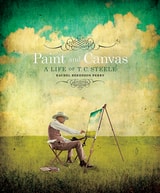
Paint and Canvas
A Life of T. C. SteeleRachel Berenson Perry
Indiana Historical Society Press, 2011
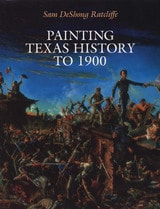
Painting Texas History to 1900
By Sam D. Ratcliffe
University of Texas Press, 1992
Certificate of Commendation, American Association for State and Local History, 1994
T. R. Fehrenbach Book Award, Texas Historical Commission, 1992
San Antonio Conservation Society Citation, 1993
Dramatic historical events have frequently provided subject matter for artists, particularly in pre-twentieth-century Texas, where works portraying historical, often legendary, events and individuals predominated. Until now, however, these paintings of Texas history have never received the kind of study given to historical, fictional, and film versions of the same events. Painting Texas History to 1900 fills this gap with an interdisciplinary approach that explores these paintings both as works of art and as historical documents.
The author examines the works of more than forty artists, including Henry McArdle, Theodore Gentilz, Robert Onderdonk, William Huddle, Frederic Remington, Friedrich Richard Petri, Arthur T. Lee, Seth Eastman, Sarah Hardinge, Frank Reaugh, W. G. M. Samuel, Carl G. von Iwonski, and Julius Stockfleth. He places each work within its historical and cultural context to show why such subject matter was chosen, why it was depicted in a particular way, and why such a depiction gained popular acceptance. For example, paintings of heroic events of the Texas Revolution were especially popular in the years following the Civil War, when, in Ratcliffe's view, Texans needed such images to assuage the loss of the war and the humiliation of Reconstruction.
Though the paintings cut across traditional art history categories—from the pictographs of early historic Indians to European-inspired oil paintings—they are bound together by their artists' intent for them to function as historically evocative documents. With their visual narratives of events that characterized all of America's westward expansion—Indian encounters, military battles, farming, ranching, surveying, and the closing of the frontier—these works add an important chapter to the story of the American West.
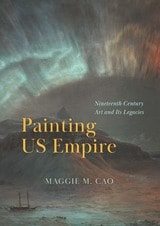
Painting US Empire
Nineteenth-Century Art and Its LegaciesMaggie M. Cao
University of Chicago Press, 2024
Painting US Empire is the first book to offer a synthetic account of art and US imperialism around the globe in the nineteenth century. In this work, art historian Maggie M. Cao crafts a nuanced portrait of nineteenth-century US painters’ complicity with and resistance to ascendant US imperialism, offering eye-opening readings of canonical works, landscapes of polar expeditions and tropical tourism, still lifes of imported goods, genre paintings, and ethnographic portraiture. Revealing how the US empire was “hidden in plain sight” in the art of this period, Cao examines artists including Frederic Edwin Church and Winslow Homer who championed and expressed ambivalence toward the colonial project. She also tackles the legacy of US imperialism, examining Euro-American painters of the past alongside global artists of the present. Pairing each chapter with reflections on works by contemporary anticolonial artists including Tavares Strachan, Nicholas Galanin, and Yuki Kihara, Cao addresses important contemporary questions around representation, colonialism, and indigeneity. This book foregrounds an underacknowledged topic in the study of nineteenth-century US art and illuminates the ongoing ecological and economic effects of the US empire.
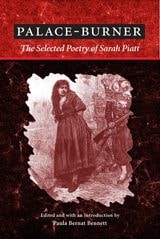
Palace-Burner
The Selected Poetry of Sarah PiattEdited and with an Introduction by Paula Bernat Bennett
University of Illinois Press, 2001
The unique and powerful voice of an extraordinary nineteenth-century woman poet
Sarah Morgan Bryan Piatt (1836-1919) now ranks as the strongest American woman poet of the nineteenth century after Emily Dickinson. Published heavily in all the period's most prestigious journals, Piatt was widely celebrated by her peers as a gifted stylist in the genteel tradition. This selected edition reveals Piatt's other side, a side that contemporary critics found more problematic: ironic, experimental, pushing the limits of Victorian language and the sentimental female persona.
Spanning more than half a century, this collection reveals the "borderland temper" of Piatt's mind and art. As an expatriate southerner, Piatt voices guilt at her own past as the daughter of slave-holders and raw anguish at the waste of war; as an eleven-year "exile" in Ireland, she expresses her dismay at the indifference of the wealthy to the daily suffering of the poor. Her poetry, whether speaking of children, motherhood, marriage, or illicit love affairs, uses conventional language and forms but in ways that greatly broadened the range of what women's poetry could say. Going beyond and even contradicting the genteel aesthetic, Piatt's poetry moves toward an innovative kind of dramatic realism built on dialogue, an approach more familiar to modern readers, acquainted with Faulknerian polyvocal texts, than to her contemporaries, who were as ill at ease with complexity as they were with irony.
This astutely edited selection of Piatt's mature work--much of it never before collected--explains why her "deviant poetics" caused her peers such discomfort and why they offer such fertile ground for study today. Illustrated with engravings from Harper's Weekly and Harper's Bazaar, both periodicals in which Piatt's work appeared, Palace-Burner marks the reemergence of one of the most interesting writers in American literary history.
Palma Cathedral
Michael White
University Press of Colorado, 1998
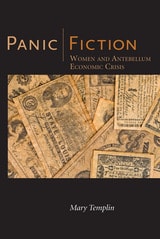
Panic Fiction
Women and Antebellum Economic CrisisMary Templin
University of Alabama Press, 2014
Between the mid-1830s and the late 1850s, authors such as Hannah Lee, Catharine Sedgwick, Eliza Follen, Maria McIntosh, and Maria Cummins wrote dozens of novels and stories depicting the effects of financial panic on the home and proposing solutions to economic instability. This unique body of antebellum American women’s writing, which integrated economic discourse with the language and conventions of domestic fiction, is what critic Mary Templin terms “panic fiction.”
In Panic Fiction: Antebellum Women Writers and Economic Crisis, Templin draws in part from the methods of New Historicism and cultural studies, situating these authors and their texts within the historical and cultural contexts of their time. She explores events surrounding the panics of 1837 and 1857, prevalent attitudes toward speculation and failure as seen in newspapers and other contemporaneous texts, women’s relationships to the marketplace, and the connections between domestic ideology and middle-class formation.
Although largely unknown today, the phenomena of “panic fiction” was extremely popular in its time and had an enormous influence on nineteenth-century popular conceptions of speculation, failure, and the need for marketplace reform, providing a distinct counterpoint to the analysis of panic found in newspapers, public speeches, and male-authored literary texts of the time.

Panzer Herz
A Live DissectionKyle Dargan
Northwestern University Press, 2023
The keen and jagged blade that is Kyle Dargan’s eye is drawn in Panzer Herz: A Live Dissection, the final poetic compilation of a lived and inherited masculinity.
Dargan targets the armored heart, or “panzer herz”—a site where desire, violence, family, politics, blackness, and capitalism all intertwine with gender. Pierced with the question—What if the heart, in the aforementioned capacity, was not a constricting vessel, struggling to withstand internal and external pressures, but instead was a space of release?—the collection opens a cishet masculinity to the inquiries and explorations that the traditional conscription of gender discourages and often vilifies.
I long to abandon this violent / vagrancy, but the roads . . . teem with other men who know / no training, who see upon me / my teachers’ marks and ache / for the elicitation of drawn steel.
The denser blades of compassion and accountability are Dargan’s arms of choice to carry, and not conceal, the weapons he uses to probe his own heart and the hearts of the men and women who shaped him into a man that has been . . . and is unbecoming. The poetic paring of layered lines, the nicking of the process, these poems crimson the page—and not for scarlet spectacle. These versed incisions and sutures are the oeuvre dedicated to the outgrowing of the writer and the “man” that began it.
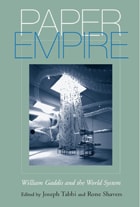
Paper Empire
William Gaddis and the World SystemEdited by Joseph Tabbi and Rone Shavers
University of Alabama Press, 2007
In 2002, following the posthumous publication of William Gaddis’s collected nonfiction and his final novel and Jonathan Franzen’s lengthy attack on him in The New Yorker, a number of partisan articles appeared in support of Gaddis’s legacy. In a review in The London Review of Books, critic Hal Foster suggested a reason for disparate responses to Gaddis’s reputation: Gaddis’s unique hybridity, his ability to “write in the gap between two dispensations—between science and literature, theory and narrative, and—different orders of linguistic imagination.
Gaddis (1922-1998) is often cited as the link between literary modernism and postmodernism in the United States. His novels—The Recognitions, JR, Carpenter’s Gothic, and A Frolic of His Own—are notable in the ways that they often restrict themselves to the language and communication systems of the worlds he portrays. Issues of corporate finance, the American legal system, economics, simulation and authenticity, bureaucracy, transportation, and mass communication permeate his narratives in subject, setting, and method. The essays address subjects as diverse as cybernetics theory, the law, media theory, race and class, music, and the perils and benefits of globalization. The collection also contains a memoir by Gaddis’s son, an unpublished interview with Gaddis from just after the publication of JR, and an essay on the Gaddis archive, newly opened at Washington University in St. Louis.
The editors acknowledge that we live in an age of heightened global awareness. But as these essays testify, few American writers have illuminated as poignantly or incisively just how much the systemic forces of capitalism and mass communication have impacted individual lives and identity—imparting global dimensions to private pursuits and desires—than William Gaddis.
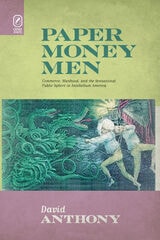
Paper Money Men
Commerce, Manhood, and the Sensational Public Sphere in Antebellum AmericaDavid Anthony
The Ohio State University Press, 2009
Paradigms of Paranoia
The Culture of Conspiracy in Contemporary American FictionSamuel Chase Coale
University of Alabama Press, 2005
Tracing paranoia as a defining pattern of modern American literature.
The recent popularity of The DaVinci Code and The Matrix trilogy exemplifies the fascination Americans have with conspiracy-driven subjects. Though scholars have suggested that in modern times the JFK assassination initiated an industry of conspiracy (i.e., Vietnam and the Pentagon Papers, Area 51, Iran-Contra Affair), Samuel Chase Coale reminds us in this book that conspiracy is foundational in American culture—from the apocalyptic Biblical narratives in early Calvinist households to the fear of Mormon, Catholic, Jewish, and immigrant populations in the 19th century.
Coale argues that contemporary culture—a landscape characterized by doubt, ambiguity, fragmentation, information overload, and mistrust—has fostered a radical skepticism so pervasive that the tendency to envision or construct conspiracies often provides the best explanation for the chaos that surrounds us.
Conspiracy as embodied in narrative form provides a fertile field for explorations of the anxiety lying at the heart of the postmodern experience. Thomas Pynchon's The Crying of Lot 49, Don DeLillo's Underworld, Toni Morrison's Jazz and Paradise, Joan Didion's Democracy, Tim O'Brien's In the Lake of the Woods, and Paul Auster's New York City Trilogy are some of the texts Coale examines for their representations of isolated individuals at the center of massive, anonymous master plots that lay beyond their control. These narratives remind us that our historical sense of national identity has often been based on the demonizing of others and that American fiction arose and still flourishes with apocalyptic visions.
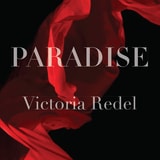
Paradise
Victoria Redel
Four Way Books, 2022
Rewriting Eden, Victoria Redel interrogates the idea of paradise within the historical context of borders, exile, and diaspora that brought us to the present global migration crisis. Drawing from a long family history of flight and refuge, the poems in Paradise interweave religion and myth, personal lore and nation-building, borders actual and imagined. They ask: What if what we fell from was never, actually, grace? What is a boundary, really? Redel navigates geopolitical perimeters while also questioning the border between the living and the dead and delineating the migrations aging women make in their bodies and lives. With stark lyricism and unflinching attention, Paradise considers how a legacy of trauma shapes imagination and asks readers to see the threads that tie contemporary catastrophes to the exigencies and flight paths that made us.
Paradise
Victoria Redel
Four Way Books, 2022
Rewriting Eden, Victoria Redel interrogates the idea of paradise within the historical context of borders, exile, and diaspora that brought us to the present global migration crisis. Drawing from a long family history of flight and refuge, the poems in Paradise interweave religion and myth, personal lore and nation-building, borders actual and imagined. They ask: What if what we fell from was never, actually, grace? What is a boundary, really? Redel navigates geopolitical perimeters while also questioning the border between the living and the dead and delineating the migrations aging women make in their bodies and lives. With stark lyricism and unflinching attention, Paradise considers how a legacy of trauma shapes imagination and asks readers to see the threads that tie contemporary catastrophes to the exigencies and flight paths that made us.
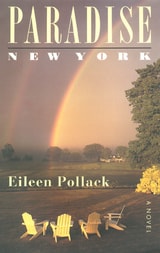
Paradise, New York
A NovelEileen Pollack
Temple University Press, 2000
In the course of that season, Lucy comes to realize her love for the hotel's black handyman, Mr. Jefferson -- and the difficulties she faces in overcoming the barriers between them. She battles her grandmother's not-so-subtle attempts to sabotage her success, her parents' superstitious fear of anything that attracts attention to the Jews, and her brother's contention that what Lucy is doing is more a matter of ego than authentic religious feeling.
On top of all this, Lucy must contend with the Hasid who buys the chicken farm next door, a cell of ancient Jewish Communist who foment a strike among Eden's overworked young staff, and a gay chef and a gay baker who want to prove to the world that kosher cuisine can satisfy the most sophisticated gourmet.
Among the novel's characters are Shirley and Nat Feidel, who barely survived the Holocaust but refuse to allow bitterness to rule their lives; Mami Goshgarian, the Eden's tumeler; and Jimmy Kilcoin, and Irish Catholic insurance adjustor who has earned a reputation as "the Don Juan of the Catskills" and is determined to seduce Lucy before summer's end.
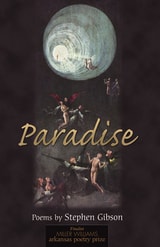
Paradise
PoemsStephen Gibson
University of Arkansas Press, 2011
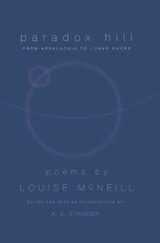
Paradox Hill
From Appalachia to Lunar Shore, Revised EditionPoems by Louise McNeill, Edited and with an Introduction by A. E. Stringer
West Virginia University Press, 2009
—a classic work from a West Virginia Poet Laureate!
With a new introduction by A.E. Stringer, this reprint of Louise McNeill's classic work remains as vivid as when it was first published. Containing poems from several decades of her career, Paradox Hill: From Appalachia to Lunar Shore is a must-have collection of a beloved poet's heartfelt exploration of her physical and cultural surroundings.
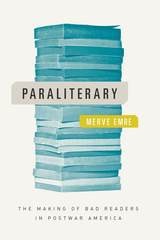
Paraliterary
The Making of Bad Readers in Postwar AmericaMerve Emre
University of Chicago Press, 2017
We should, Emre argues, think of such readers not as non-literary but as paraliterary—thriving outside the institutions we take as central to the literary world. She traces this phenomenon to the postwar period, when literature played a key role in the rise of American power. At the same time as American universities were producing good readers by the hundreds, many more thousands of bad readers were learning elsewhere to be disciplined public communicators, whether in diplomatic and ambassadorial missions, private and public cultural exchange programs, multinational corporations, or global activist groups. As we grapple with literature’s diminished role in the public sphere, Paraliterary suggests a new way to think about literature, its audience, and its potential, one that looks at the civic institutions that have long engaged readers ignored by the academy.
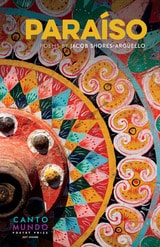
Paraíso
Poems byJacob Shores-Argüello
University of Arkansas Press, 2017
Paraíso, the first book in the new CantoMundo Poetry Series, which celebrates the work of Latino/a poets writing in English, is a pilgrimage against sorrow. Erupting from a mother’s death, the poems follow the speaker as he tries to survive his grief. Catholicism, family, good rum . . . these help, but the real medicine happens when the speaker pushes into the cloud forest alone.
In a Costa Rica far away from touristy beaches, we encounter bus trips over the cold mountains of the dead, drug dealers with beautiful dogs, and witches with cell phones. Science fuses with religion, witchcraft is joined with technology, and eventually grief transforms into belief.
Throughout, Paraíso defies categorization, mixing its beautiful sonnets with playful games and magic cures for the reader. In the process, moments of pure life mingle with the aftermath of a death.
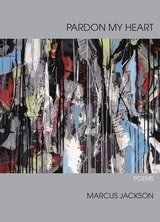
Pardon My Heart
PoemsMarcus Jackson
Northwestern University Press, 2018
Pardon My Heart is an exploration of love in the contemporary African American ethos. In this lyrically complex collection, the speakers and subjects—the adult descendants of the Great Migration—reckon with past experiences and revelatory, hard-earned ideas about race and class.
With a compelling blend of narrative, musicality, and imagery, Jackson’s poems span a multitude of scenes, landscapes, and sensations. Pardon My Heart examines intimacy, memory, grief, and festivity while seeking out new, reflective sectors within emotion and culture. By means of concise portraiture and sonic vibrancy, Jackson’s poems ultimately express the urgency and pliability of the human soul.
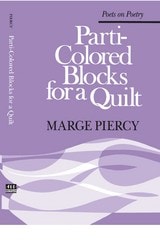
Parti-Colored Blocks for a Quilt
Marge Piercy
University of Michigan Press, 1983
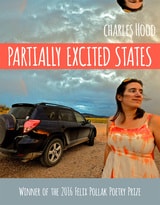
Partially Excited States
Charles Hood
University of Wisconsin Press, 2017
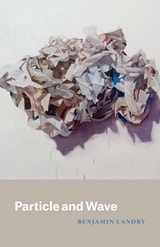
Particle and Wave
Benjamin Landry
University of Chicago Press, 2014
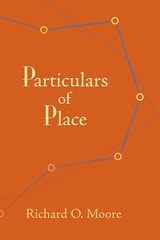
Particulars of Place
Richard O. Moore
Omnidawn, 2015
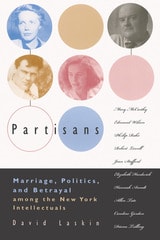
Partisans
Marriage, Politics, and Betrayal Among the New York IntellectualsDavid Laskin
University of Chicago Press, 2001
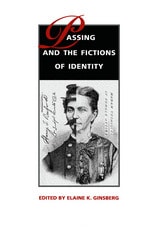
Passing and the Fictions of Identity
Elaine K. Ginsberg
Duke University Press, 1996
These essays consider a wide range of texts and moments from colonial times to the present that raise significant questions about the political motivations inherent in the origins and maintenance of identity categories and boundaries. Through discussions of such literary works as Running a Thousand Miles for Freedom, The Autobiography of an Ex–Coloured Man, Uncle Tom’s Cabin, The Hidden Hand, Black Like Me, and Giovanni’s Room, the authors examine issues of power and privilege and ways in which passing might challenge the often rigid structures of identity politics. Their interrogation of the semiotics of behavior, dress, language, and the body itself contributes significantly to an understanding of national, racial, gender, and sexual identity in American literature and culture.
Contextualizing and building on the theoretical work of such scholars as Judith Butler, Diana Fuss, Marjorie Garber, and Henry Louis Gates Jr., Passing and the Fictions of Identity will be of value to students and scholars working in the areas of race, gender, and identity theory, as well as U.S. history and literature.
Contributors. Martha Cutter, Katharine Nicholson Ings, Samira Kawash, Adrian Piper, Valerie Rohy, Marion Rust, Julia Stern, Gayle Wald, Ellen M. Weinauer, Elizabeth Young

Passion and Craft
CONVERSATIONS WITH NOTABLE WRITERSEdited by Bonnie Lyons and Bill Oliver
University of Illinois Press, 1998
Craft go beyond the merely autobiographical, revealing that, despite
their differences, they share passionate devotion and discipline for their
craft.
Included are Richard Ford, winner in 1995 of both the Pulitzer Prize
and the PEN/Faulkner Award; Gina Berriault, 1997 winner of the National
Book Critics Circle Award; Bobbie Ann Mason; T. Coraghessan Boyle; Rick
Bass; Leonard Michaels; Christopher Tilghman; Thom Jones; Julia Alvarez;
Andre Dubus; Jayne Anne Phillips; and Tobias Wolff.
Their comments will interest readers devoted to their novels and stories,
other writers, and aspiring writers.
Passionate Doubts
Interpretation In FictionPatrick O'Donnell
University of Iowa Press, 1986
In an introductory dialogue and a closing chapter on the reader in contemporary fiction, O'Donnell shows that the formation of the reader's self, like character, plot, or any other element in fiction, is also part of the experience of the text, requiring a distinctive conception of interpretation. Calling upon a wide assemblage of modern theorists including Foucault, Derrida, Serres, Binswanger, Geertz, and Gadamer, O'Donnell elicits a broad range of interpretive possibilities—philosophical, psychological, archaeological, and linguistic—which speak to each novel's central concern with the act of reading as a form of signification.
While Passionate Doubts is broadly a hermeneutic study of contemporary fiction, the heart of this intriguing work resides in the close scrutiny of six modern novels which so richly evoke the very elements from which theories derive: language, form, and impulse. It is this specific application of theory that sets Passionate Doubts apart from other works in the field, yielding a series of important insights on the subject of language, sign, and the self in modern literature.
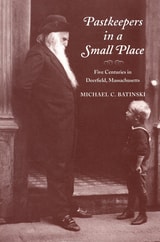
Pastkeepers in A Small Place
Five Centuries in Deerfield, MassachusettsMichael C. Batinski
University of Massachusetts Press, 2004
Like many small places in the American landscape, Batinski points out, Deerfield does not fit into the history we learn in textbooks. With the exception of the famous French and Indian raid on the town in 1704, nothing of national significance has happened there. Yet that has not diminished the interest of local inhabitants in establishing and maintaining a vital connection to the past.
Different groups, from Native Pocumtuck to Puritan settlers to the grandchildren of Polish immigrants, have told the Deerfield story in varied and sometimes conflicting ways, each drawing on the past to shape its own sense of collective identity. Together their efforts at pastkeeping reveal how people organize and explain the motion of time, why they feel it important to pass on family stories, and why they keep family heirlooms. In doing so, Batinski argues, they illustrate why the preservation of the past remains a civic concern to us all.
Patmos
Bruce Bond
University of Massachusetts Press, 2021
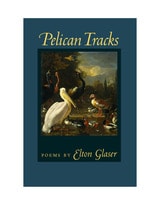
Pelican Tracks
Elton Glaser
Southern Illinois University Press, 2003
Pelican Tracks is a book of poems with a homing instinct. Elton Glaser travels a restless circuit between his native Louisiana and his adopted home of Ohio, from the “spice and license of the lowlands” to the “streets of Akron cobbled in ice.” These reflections, leavened with a fierce wit and moving bravura of language, are extracted from the origins and ends of the poet’s life—his birth in the final spasms of the second World War, the fears and excitements of youth, the death of parents, and the unexpected losses of adulthood. Marking his tracks between the Pelican State and the Buckeye State, Glaser records the damaged beauty of “everything sinking, everything rising again in the mind.”
Penultimate Suitor
Mary Leader
University of Iowa Press, 2001
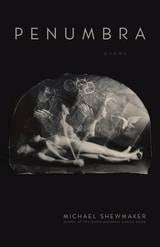
Penumbra
PoemsMichael Shewmaker
Ohio University Press, 2017
Penumbra—Michael Shewmaker’s debut collection—explores the half-shadows of a world torn between faith and doubt. From intricate descriptions of the rooms in a dollhouse, to the stark depiction of a chapel made of bones, from pre-elegies for a ghostly father, to his compelling treatment of his obsessed, human characters (a pastor, a tattoo artist, a sleepwalker, to name only a few), these are poems that wrestle with what it means to believe in something beyond one’s own mortality. Learned and formally adept, these poems consist of equal parts praise and despair. They announce Shewmaker as an important new voice in American poetry.
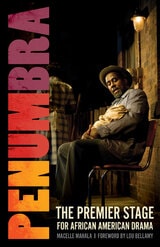
Penumbra
The Premier Stage for African American DramaMacelle Mahala
University of Minnesota Press, 2013
Penumbra Theatre Company was founded in 1976 by Lou Bellamy as a venue for African American voices within the Twin Cities theatre scene and has stood for more than thirty-five years at the intersection of art, culture, politics, and local community engagement. It has helped launch the careers of many internationally respected theatre artists and has been repeatedly recognized for its artistic excellence as the nation’s foremost African American theatre.
Penumbra is the first-ever history of this barrier-breaking institution. Based on extensive interviews with actors, directors, playwrights, producers, funders, and critics, Macelle Mahala’s book offers a multifaceted view of the theatre and its evolution. Penumbra follows the company’s emergence from the influential Black Arts and settlement house movements; the pivotal role Penumbra played in the development of August Wilson’s career and, in turn, how Wilson became an avid supporter and advocate throughout his life; the annual production of Black Nativity as a community-building performance; and the difficult economics of African American theatre production and how Penumbra has faced these challenges for nearly four decades.
Penumbra is a testament to how a theatre can respond to and thrive within changing political and cultural realities while contributing on a national scale to the African American presence on the American stage. It is a celebration of theatre as a means of social and cultural involvement—both local and national—and ultimately, of Penumbra’s continuing legacy of theatre that is vibrant, diverse, and vital.
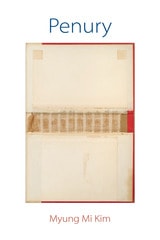
Penury
Myung Mi Kim
Omnidawn, 2009
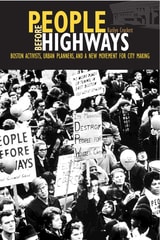
People before Highways
Boston Activists, Urban Planners, and a New Movement for City MakingKarilyn Crockett
University of Massachusetts Press, 2018
In 1948, inspired by changes to federal law, Massachusetts government officials started hatching a plan to build multiple highways circling and cutting through the heart of Boston, making steady progress through the 1950s. But when officials began to hold public hearings in 1960, as it became clear what this plan would entail—including a disproportionate impact on poor communities of color—the people pushed back. Activists, many with experience in the civil rights and antiwar protests, began to organize.
Linking archival research, ethnographic fieldwork, and oral history, Karilyn Crockett in People before Highways offers ground-level analysis of the social, political, and environmental significance of a local anti-highway protest and its lasting national implications. The story of how an unlikely multiracial coalition of urban and suburban residents, planners, and activists emerged to stop an interstate highway is one full of suspenseful twists and surprises, including for the actors themselves. And yet, the victory and its aftermath are undeniable: federally funded mass transit expansion, a linear central city park, and a highway-less urban corridor that serves as a daily reminder of the power and efficacy of citizen-led city making.
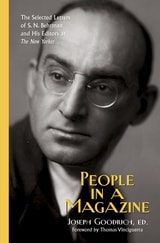
People in a Magazine
The Selected Letters of S. N. Behrman and His Editors at "The New Yorker"Joseph Goodrich
University of Massachusetts Press, 2018
Playwright, biographer, screenwriter, and critic S. N. Behrman (1893–1973) characterized the years he spent writing for The New Yorker as a time defined by “feverish contact with great theatre stars, rich people and social people at posh hotels, at parties, in mansions and great estates.” While he hobnobbed with the likes of Mary McCarthy, Elia Kazan, and Greta Garbo and was one of Broadway's leading luminaries, Behrman would later admit that the friendships he built with the magazine's legendary editors Harold Ross, William Shawn, and Katharine S. White were the “one unalloyed felicity” of his life.
People in a Magazine collects Behrman's correspondence with his editors along with telegrams, interoffice memos, and editorial notes drawn from the magazine's archives—offering an unparalleled view of mid-twentieth-century literary life and the formative years of The New Yorker, from the time of Behrman's first contributions to the magazine in 1929 until his death.
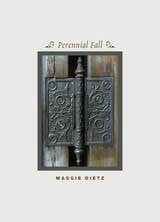
Perennial Fall
Maggie Dietz
University of Chicago Press, 2006
Dietz creates a world alive with detail and populated with the everyday and strange: amusement-park horses named Virgil and Sisyphus, squirrels hanging over tree branches “like fish.” By turns humorous and pained, direct and mysterious, elegiac and elegant, the poems trace for us the journey and persistence of the spirit toward and through its “perennial fall”—both the season and the human condition. Cumulatively, the work moves toward a fragile transcendence, surrendering to difficulty, splendor, and strangeness.
“In Perennial Fall, distinct, hard-edged images create a haunting counter-play of distortion, troubled insight or menace. The simultaneous clarity and shadow has the quality of a dream that can be neither forgotten nor settled. This is a spectacular debut and more than that—a wonderful book.”—Robert Pinsky
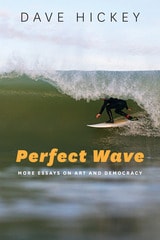
Perfect Wave
More Essays on Art and DemocracyDave Hickey
University of Chicago Press, 2017
When Dave Hickey was twelve, he rode the surfer’s dream: the perfect wave. And, like so many things in life we long for, it didn’t quite turn out—he shot the pier and dashed himself against the rocks of Sunset Cliffs in Ocean Beach, which nearly killed him.
Hickey went on to develop a career as one of America’s foremost critical iconoclasts, a trusted no-nonsense voice commenting on the worlds of art and culture. Perfect Wave brings together essays on a wide range of subjects from throughout Hickey’s career, displaying his breadth of interest and powerful insight into what makes art work, or not, and why we care. With Hickey as our guide, we travel to Disneyland and Vegas, London and Venice. We discover the genius of Karen Carpenter and Waylon Jennings, learn why Robert Mitchum matters more than Jimmy Stewart, and see how the stillness of Antonioni speaks to us today. Never slow to judge—or to surprise us in doing so—Hickey relates his wincing disappointment in the later career of his early hero Susan Sontag and shows us the appeal to our commonality that we’ve been missing in Norman Rockwell.
Bookended by previously unpublished personal essays that offer a new glimpse into Hickey’s own life—including the aforementioned conclusion to his surfing career—Perfect Wave is a welcome addition to the Hickey canon.
Performing Loss
Rebuilding Community through Theater and WritingJodi Kanter
Southern Illinois University Press, 2007
In Performing Loss: Rebuilding Community through Theater and Writing, author Jodi Kanter explores opportunities for creativity and growth within our collective responses to grief. Performing Loss provides teachers, students, and others interested in performance with strategies for reading, writing, and performing loss as communities—in the classroom, the theater, and the wider public sphere.
From an adaptation of Jose Saramago’s novel Blindness to a reading of Suzan-Lori Parks’s The America Play, from Kanter’s own experience creating theater with terminally ill patients and federal prisoners to a visual artist’s response to September 11th, Kanter shows in practical, replicable detail how performing loss with community members can transform experiences of isolation and paralysis into experiences of solidarity and action.
Drawing on academic work in performance, cultural studies, literature, sociology, and anthropology, Kanter considers a range of responses to grief in historical context and goes on to imagine newer, more collaborative, and more civically engaged responses. Performing Loss describes Kanter’s pedagogical and artistic processes in lively and vivid detail, enabling the reader to use her projects as models or to adapt the techniques to new communities, venues, and purposes. Kanter demonstrates through each example the ways in which writing and performing can create new possibilities for mourning and living together.
Permissible Narratives
The Promise of Latino/a LiteratureChristopher González
The Ohio State University Press, 2017
Bringing together cultural critique, memory, narratology, cognition, and comprehension, González examines Latina/o authors—such as Oscar “Zeta” Acosta, Gloria Anzaldúa, Piri Thomas, Giannina Braschi, Gilbert Hernandez, Sandra Cisneros, and Junot Díaz—investigating how they successfully, and sometimes unsuccessfully, use the expansive canvas of narrative form to capture the imaginations of an open-minded readership. Permissible Narratives highlights both the inequitable accessibility of narrative devices and, crucially, the daring of Latina/o authors to nurture a readership to afford the same literary deference to them that is so often afforded to white, male, straight authors.
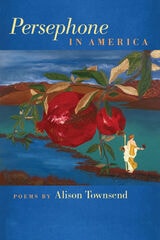
Persephone in America
Alison Townsend
Southern Illinois University Press, 2009
In Persephone in America, Alison Townsend deftly weaves autobiography with myth in this reinvention of the tale of Demeter and Persephone as seen from the modern woman’s perspective. Fraught with emotional honesty, this captivating collection of lyrical and narrative poems chronicles the struggles of the figurative Persephone in three parts—the abduction, descent to the underworld, and return. Townsend turns a shrewd eye to her own experiences, as well as to the lives of other women, to offer an unflinching yet deeply compassionate exploration of such themes as girlhood and the vulnerability of the motherless; the demons of depression, addiction, and abuse; as well as passion, aging, and celebration of the natural world.
Although the poems traverse dark emotional territory at times, the picture that emerges ultimately is one of revelation and wisdom. Persephone in America is above all a journey of the soul, following the narrator as she explores what it means to be a woman in America, at times descending into darkness, only to emerge into redemption and realize “time’s sweet and invincible secret—that everything repeats—and we watch it.” Townsend’s candid portrait of female loss and discovery seeks to illuminate the truths inherent in myth, and the awakenings that hide in our darkest moments.
Persephone, Pretending(Madison, Wisconsin)
When the news says that the girl
who had been missing almost four days,
only to be found in a marshy area
at the edge of our medium-sized city,
was faking it all along, I wondered
what made her do it. I'd seen
her face—bright smile, dark eyes—
on a flier masking-taped to a pillar
at the airport the week before,
felt the involuntary frisson
of the curious, then only fear
at the thought of a girl abducted
in this place once voted
"America's most livable city."
She must have wanted
something she couldn't name,
that good girl with good grades
who looks like so many girls
in my own classes, but who keeps
changing her story. It happened
here; no, it happened there; no,
I really just wanted to be alone.
Then she turns her face away,
tired of telling her tale,
not sure what to make up next
or where invention will take her.
“Fictitious victimization disorder,”
Time magazine claims, but I wonder
what else, imagining her in the marsh,
cold, unrepentant, powerless, her mind
gone muddy with lack of sleep,
no way out of this lie she almost
believes, or the lies ahead,
nothing but memory of the rope,
duct tape, cough medicine,
and knife she bought at the PDQ
with her own cash, wanting
to be taken by someone so badly,
she takes us, she does it to herself.
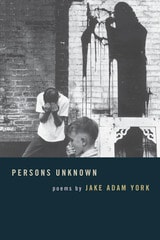
Persons Unknown
Jake Adam York
Southern Illinois University Press, 2010
A Natural History of Mississippi
A blade of rust from the ocean
and from the air a rumor
that corrodes the earth in tongues,
lichen, moss, magnolia,
until each gossip’s true.
Things go this way,
each green repeating its fact
of sun and wind and rain,
its dialect, its blade,
while beneath each leaf
a quiet cuts between the veins.
Laced, pale wings open
to learn the particular weather,
the place or part of speech
that will darken
and give them a name.
So each sugar furls
to burn and bitter
against whatever mouths
might swallow,
each skin becomes
the history of its harbor,
another word for here.
This hatch of bark and shade
hangs like a photograph
of all it covers, so perfect,
so still, its edges
blur, then disappear.
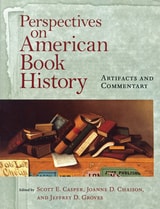
Perspectives on American Book History
Artifacts and CommentaryScott E. Casper
University of Massachusetts Press, 2002
A collection of primary source materials and original essays, Perspectives on American Book History is the first text designed for the growing number of courses in American print culture, as well as a unique supplement for courses in American literature and history. It seeks to fill the void that has developed as the expanding history of the book has moved out of the archive and scholarly journal and into the classroom. The volume includes an introductory essay by Robert A. Gross, chair of the program in the history of the book at the American Antiquarian Society, fourteen chapters composed of primary artifacts and original essays by rising scholars in the field, and an annotated bibliography of research sources.
Chapters trace topics in American print culture from Puritan New England to the future of newspapers in a digital age. The artifacts and documents, most of which have never before been anthologized, include excerpts from readers' diaries, accounts of the printing and publishing trades, materials from the alternative press, commentaries on authorship and reading, and visual images. The essays place these primary source materials in their historical, literary, and political contexts and model the ways students might approach them.
In addition to the editors and Robert A. Gross, the contributors are Nancy Cook, Patricia Crain, Ann Fabian, Alice Fahs, Ellen Gruber Garvey, Jen A. Huntley-Smith, Charles Johanningsmeier, Jill Lepore, Russell L. Martin, Trysh Travis, Glenn Wallach, and Susan S. Williams.
Persuasions Of Fall
Ann Lauinger
University of Utah Press, 2004
The Agha Shahid Ali Prize in Poetry was inaugurated in 2003 to honor the late poet, a nationally recognized author of numerous collections of poetry and a former professor at the University of Utah, and is sponsored by the University of Utah Press and the University of Utah Department of English. In Persuasion of Fall, the first prizewinning volume of the annual competition, Ann Lauinger celebrates the quotidian in ways that are wise, uncompromising, and sometimes sly in their playfulness.
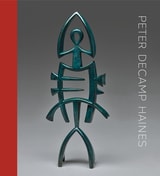
Peter DeCamp Haines
Sculpture, 1975–2024Peter DeCamp Haines
The Artist Book Foundation, 2025
The first major monograph on Peter DeCamp Haines, this title explores how the sculptor's interest in psychology and anthropology deeply informed his art.
This book is the first major monograph on the work of Peter DeCamp Haines (March 27, 1942–October 25, 2024), which builds on the evolution of Modernism as much as it harkens back to the Bronze Age. The clearest expression of this is a series of 1,000 elemental bronze “artifacts” he created over the course of nearly fifty years, to which he contributed yearly, ranging from palm-size pieces to colossal outdoor works. He called this output “a personal archaeology,” or “an archaeology of the subconscious,” referencing ancient tools, animal and human shapes, and the synchronicity of antique forms with the purely abstract.
Haines’s interest in psychology and anthropology deeply informed his art. Working in a Modernist tradition, his career pursued a continuing exploration of the formal attributes of sculpture: form, scale, negative space, and composition. As Haines saw it, one of the satisfactions of sculpture is that ideas such as wholeness, beauty, and timelessness can be expressed without words and one of the critical elements of this wordless communication is negative space. Thus, the doorways, windows, and silhouettes of his sculptures can suggest an area larger than the sculpture itself.