Results by title
5159 books match the query 'Biography' and 172 start with p

POINTS OF RESISTANCE
Lauren Rabinovitz
University of Illinois Press, 2003
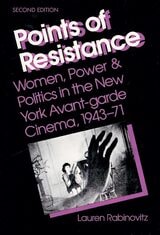
POINTS OF RESISTANCE
Lauren Rabinovitz
University of Illinois Press, 2003
At a time when there were few women directors in commercial films, the postwar avant-garde movement offered an opportunity. Rabinovitz argues that avant-garde cinema, open to women because of its marginal status in the art world, included women as filmmakers, organizers, and critics.
Focusing on Maya Deren, Shirley Clarke, and Joyce Wieland, Rabinovitz illustrates how women used bold physical images to enhance their work and how each provided entrée to her subversive art while remaining culturally acceptable. She combines archival materials with her own interviews to show how the women’s labor and films, even their identities as women filmmakers, were produced, disseminated, and understood. With a new preface and an updated bibliography, Points of Resistance simultaneously demonstrates the avant-garde’s importance as an organizational network for women filmmakers and the processes by which women remained marginal figures within that network.
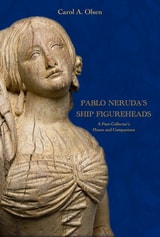
Pablo Neruda's Ship Figureheads
A Poet-Collector's Muses and CompanionsCarol A. Olsen, Foreword by Fernando Sáez Garcia
University of Alabama Press, 2025
Unlock the stories of Pablo Neruda’s rare nineteenth-century carved-wood ship figurehead collection in Chile, why they mattered in his tumultuous life, and how we benefit from them now.
Poet Pablo Neruda’s nineteenth-century ship figurehead collection in Chile is one of the most significant in the world. Containing carved wood images of dramatically postured men and women, these figures are now better understood due to years of research, a willingness to challenge Neruda’s ever-changing stories about them, and a realization that the names Neruda chose for his figureheads perhaps had more to do with his life than theirs. The rhythm and beauty of Neruda’s worn wood figures is counterpoint to his own tumultuous life as an author, politician, and communist dissident.
Collecting ship figureheads was central to Neruda’s passion for owning things made of wood, a material he said was his best friend, and for standing out among others as he gradually built the public persona that helped move him toward winning the Nobel Prize in Literature. With his choir of immobilized figureheads stationed upright in his living room and facing the Pacific Ocean, Neruda was surrounded by dramatic images from the sea that ignited his most powerful feelings.
The nineteenth century saw figureheads on the bows of ships of sail and steam, yet when a figurehead was lost or removed, its history soon disappeared. The significant ship figureheads that Neruda avidly collected preserve that history and reveal new dimensions concerning his life and work. Each year, his collection is viewed by thousands of visitors to the Pablo Neruda Foundation’s house museum at Isla Negra.

Pacific Northwest Women, 1815-1925
Lives, Memories, and WritingsJean M. Ward
Oregon State University Press, 1995
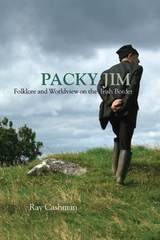
Packy Jim
Folklore and Worldview on the Irish BorderRay Cashman
University of Wisconsin Press, 2017
Ray Cashman, who has been interviewing McGrath for more than fifteen years, demonstrates how Packy Jim embellishes daily conversation with stories of ghosts and fairies, heroic outlaws and hateful landlords. Such folklore is a boundless resource that he uses to come to grips with the past and present, this world and the next. His stories reveal an intricate worldview that is both idiosyncratic and shared—a testament to individual intelligence and talent, and a window into Irish vernacular culture.
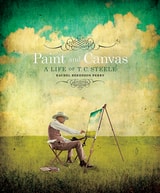
Paint and Canvas
A Life of T. C. SteeleRachel Berenson Perry
Indiana Historical Society Press, 2011
Pan Chao
Foremost Woman Scholar of ChinaNancy Lee Swann
University of Michigan Press, 2001
Pandemonium Logs
Sioux Falls, South Dakota, 2020–2022Ben Miller
Rutgers University Press, 2025
Balcones Prize Winner in Nonfiction
In 2015, Ben Miller and the poet Anne Pierson Wiese moved from New York City to Sioux Falls, South Dakota, to explore their midwestern roots and to focus on their writing careers. Working a day job in a hospital, Miller had a front-row seat to the COVID-19 pandemic as it moved from the coasts to the urban Midwest. Pandemonium Logs casts an unflinching eye on the state of the worker in the US health-care system during a global pandemic, giving voice to the doctors, nurses, support staff, patients, and families caught in the complex swirl of daily dilemmas and crucial choices.
In unsparing yet sympathetic prose, Ben Miller creates an intimate portrait of the impact of COVID on the diverse people of South Dakota. Through a wide range of characters—from understandably confused patients to quietly competent nurses—he explores the human complexities of the crisis: a doctor based in Mumbai who treats critically ill patients in the Dakotas via a tenuous hodgepodge of telehealth apparatus, a Hydra of six workplace trainers who together cannot train one employee to do one job, a vice president of corporate hospitality who lives to rip down safety signs as fast as nurses post them, a ninety-year-old hospital volunteer who pushes wheelchairs containing patients half his age.
In Pandemonium Logs, Miller provides precise and moving observations of ordinary people doing extraordinary things.
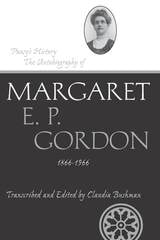
Pansy's History
The Autobiography of Margaret E. P. Gordon, 1866-1966Claudia L. Bushman
Utah State University Press, 2011
Margaret "Pansy" Gordon's life covered a remarkable span of years and territory. She lived one century, and the years took her from England to residences in British Columbia, Salt Lake City, and an Ojibway village on Georgian Bay; back to Utah and then Canada to homes at the shore of Bear Lake, on an Alberta farm, and in a prairie town; and to Los Angeles for the last decades of her life. She had gone to British Columbia as the daughter of an Anglican missionary to the Tsimshian Indians. She lived in Los Angeles as a Mormon missionary assigned to work as a genealogist. Her personal journey through repeated frontier adventures, religious service, and economic challenges is as worth noting as where she went, but it would be far less engaging if she did not write about it so well. Her memory for detail and her felicity in putting it to paper will reward those who delve into her "Family History," as she titled her memoir. Claudia L. Bushman, descendant of Pansy Gordon, author of numerous books, taught American studies at Columbia University for many years and taught Mormon studies at Claremont Graduate University from 2008 to 2011. She has included letters and other documents that complement this memoir.
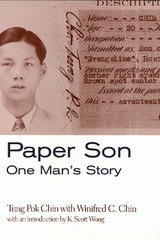
Paper Son
One Man's StoryTung Chin
Temple University Press, 2000
Chin's story begins in the early 1930s, when he followed the example of his father and countless other Chinese who bought documents that falsely identified them as children of Chinese Americans. Arriving in Boston and later moving to New York City, he worked and lived in laundries. Chin was determined to fit into American life and dedicated himself to learning English. But he also became an active member of key organizations -- a church, the Chinese Hand Laundrymen's Alliance, and the Chinese Consolidated Benevolent Association -- that anchored him in the community. A self-reflective and expressive man, Chin wrote poetry commenting on life in China and the hardships of being an immigrant in the United States. His work was regularly published in the China Daily News and brought him to the attention of the FBI, then intent on ferreting out communists and illegal immigrants. His vigorous narrative speaks to the day-to-day anxieties of living as a Paper Son as well as the more universal immigrant experiences of raising a family in modest circumstances and bridging cultures.
Historian K. Scott Wong introduces Chin's memoir, discussing the limitations on immigration from China and what is known about Exclusion-era Chinese American communities. Set in historical context, Tung Pok Chin's unique story offers and engaging account of a twentieth-century Paper Son.
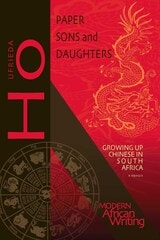
Paper Sons and Daughters
Growing up Chinese in South AfricaUfrieda Ho
Ohio University Press, 2011
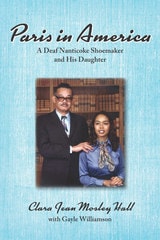
Paris in America
A Deaf Nanticoke Shoemaker and His DaughterClara Jean Mosley Hall
Gallaudet University Press, 2018
Hall was abandoned by her Deaf African American mother at a young age and forged a close bond with her father, James Paris Mosley, who communicated with her in American Sign Language. Although his family was Native American, they—like many other Nanticoke Native Americans of that region—had assimilated over time into Dover’s Black community. Hall vividly recounts the social and cultural elements that shaped her, from Jim Crow to the forced integration of public schools, to JFK and Motown. As a Coda (child of deaf adults) in a time when no accessibility or interpreting services were available, she was her father’s sole means of communication with the hearing world, a heavy responsibility for a child. After her turbulent teenage years, and with the encouragement of her future husband, she attended college and discovered that her skills as a fluent ASL user were a valuable asset in the field of education.
Hall went on to become a college professor, mentor, philanthropist, and advocate for Deaf students from diverse backgrounds. Her memoir is a celebration of her family, her faith, her journey, and her heritage.
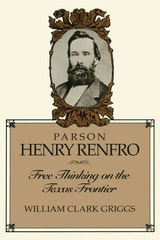
Parson Henry Renfro
Free Thinking on the Texas FrontierBy William C. Griggs
University of Texas Press, 1994
The years following the Texas Revolution held even more turbulent events as diverse droves of pioneers crossed the Sabine and Red Rivers to start new lives in Texas. Early Texas society contended with religious issues, family life in a rugged environment, and the Civil War. This cultural history was clearly reflected in the life of frontier preacher Henry C. Renfro.
Migrating to Texas in 1851, Renfro enrolled in the fledgling Baylor University and became a Baptist preacher. Eventually disillusioned with Baptist orthodoxy, Renfro was disenfranchised on charges of infidelity as he embraced the ideals of the Free Thought Movement, inspired by the writings of men such as Thomas Paine, Spinoza, and Robert Ingersoll.
Renfro's Civil War experience was no less unusual. Serving as both soldier and chaplain, Renfro left a valuable legacy of insight into the conflict, captured in a wealth of correspondence that is in itself significant.
Drawing on a vast body of letters, speeches, sermons, and oral histories that had never before been available, this chronological narrative of "The Parson's" life describes significant changes in Texas from 1850 to 1900, especially the volatile formation and growth of Baptist churches in North Central Texas. William Griggs' study yields numerous new details about the Free Thought Movement and depicts public reaction to sectarian leaders in nineteenth-century Texas.
The author also describes the developing Central Texas region known as the Cross Timbers, including the personal dynamics between a frontier family and its patriarch and encompassing such issues as property conflicts, divorce, and family reconciliation. This work unlocks an enlightening, engaging scene from Texas history.
Parties and Elections in Greece
The Search for LegitimacyRichard Clogg
Duke University Press, 1987
Pasic & Trumbic
The Kingdom of Serbs, Croats and SlovenesDejan Djokic
Haus Publishing, 2010
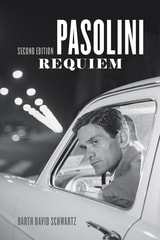
Pasolini Requiem
Second EditionBarth David Schwartz
University of Chicago Press, 2017
Based on extensive interviews with those who knew Pasolini, both friends and enemies, admirers and detractors, Pasolini Requiem chronicles his growth from poet in the provinces to Italy’s leading “civil poet”; his flight to Rome in 1950; the scandalous success of his two novels and political writing; and his transition to film, where he started as a contributor to the golden age of Italian cinema and ended with the shocking Salò, or the 120 Days of Sodom. Pasolini’s tragic and still unsolved murder has remained a subject of contentious debate for four decades. The enduring fascination with who committed the crime—and why—reflects his vital stature in Italy’s political and social history.
Updated throughout and with a new afterword covering the efforts to reopen the investigation—and the legal maelstrom surrounding Pasolini’s demise—this edition of Pasolini Requiem is a riveting account of one of the twentieth century’s most controversial, ever-present iconoclasts.
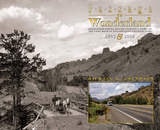
Passage to Wonderland
Rephotographing Joseph Stimson's Views of the Cody Road to Yellowstone National Park, 1903 and 2008Michael A. Amundson
University Press of Colorado, 2012
Amundson examines the physical changes along "the most scenic fifty miles in America" and explores the cultural and natural history behind them. This careful analysis of the paired images make Passage to Wonderland more than a "then and now" photography book--it is a unique exploration of the interconnectedness between the Old West and the New West. It will be a wonderful companion for those touring the Cody Road as well as those armchair tourists who can follow the road on Google Earth using the provided GPS coordinates.
The University Press of Colorado gratefully acknowledges the generous support of the Charles Redd Center for Western Studies at Brigham Young University toward the publication of this book.
Passing Performances
Queer Readings of Leading Players in American Theater HistoryRobert A. Schanke and Kim Marra, Editors
University of Michigan Press, 1998
The actors, directors, producers, and agents examined here include Edwin Forrest, Charlotte Cushman, and Adah Isaacs Menken, whose personal lives and careers traded on the same-sex erotics of "true love" in the antebellum period; Elisabeth Marbury, Elsie de Wolfe, Elsie Janis, Nance O'Neil, and Alla Nazimova, whose intimate female liaisons were variously interpreted around the turn of the century; the "lavender marriages" of Alfred Lunt to Lynne Fontanne and Guthrie McClintic to Katharine Cornell; the lesbian collaborations of Margaret Webster and Cheryl Crawford; the comic antics of Monty Woolley, which negotiated codified constructions of homosexual perversion in the post-Freudian interwar years; and the on- and offstage performances of Mary Martin and Joe Cino, which resisted the paranoid enforcements of heterosexual normality in the McCarthy era. Central to these investigations are the complex connections of performances of sexuality and gender and their different implications for men and women practitioners working under pervasive sexism and homophobia.
The volume also includes striking archival photographs of the performers and their performances, and an index to facilitate the cross-referencing of subjects' intersecting careers. Passing Performances will engage both general and academic readers interested in theater, gay and lesbian history, American studies, and biography.
Robert A. Schanke is Professor of Theatre and Chair of the Division of Fine Arts, Central College, Iowa. Kim Marra is Associate Professor of Theatre Arts, University of Iowa.
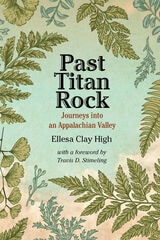
Past Titan Rock
Journeys into an Appalachian ValleyEllesa Clay High
West Virginia University Press, 2021
Past Titan Rock, a winner of the Appalachian Award for Literature, is available in a new edition as part of the series Sounding Appalachia, with an introduction by series editor Travis D. Stimeling.
In 1977 Ellesa Clay High thought she would spend an afternoon interviewing Lily May Ledford, best known as the lead performer of an all-female string band that began playing on the radio in the 1930s. That meeting began an unexpected journey leading into the mountains of eastern Kentucky and a hundred years into the past. Set in Red River Gorge, an area of steep ridges and box canyons, Past Titan Rock is a multigenre, multivocal re-creation of life in that region. With Ledford’s guidance, High traveled and lived in the gorge, visiting with people who could remember life there before the Works Progress Administration built roads across the ridges and into the valleys during the New Deal. What emerges through a unique combination of personal essay, oral history, and short fiction is a portrait of a mountain culture rich in custom, oral tradition, and song. Past Titan Rock demonstrates the depth of community ties in the Red River Gorge and raises important questions about how to resist destructive forces today.
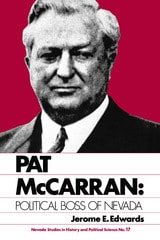
Pat McCarran
Political Boss Of NevadaJerome E. Edwards
University of Nevada Press, 1982
Within his native state of Nevada, McCarran constructed a machine designed to dominate the state’s political and economic life. This domination, which extended to both political parties, was built on personal favors for constituents, shrewd use of patronage, rewards for friends, and inevitable punishment for those suspected of being enemies. Ironically, the Senator employed the same tactics that others had once used against him to stymie his own early political efforts.
This work discusses the Senator’s background, his rise to power, and his methods of establishing political domination. Personal correspondence, excerpts from speeches, newspaper editorials, and interviews all help bring to life a colorful account of a controversial, driven man who held the levers of political control in Nevada during the early twentieth century.

Pathfinder
Blazing a New Wilderness Trail in Modern AmericaRon Strickland
Oregon State University Press, 2011
Ron Strickland has spent a good deal of time walking. He hiked the 1200 miles of the Pacific Northwest Trail in 1983. In 2004, he completed the Pacific Crest Trail, with a 1500-mile hike from the Mojave Desert to the Columbia River. In 2009, he hiked the length of the New England Trail.
He has also held a longtime dream of showcasing the best hiking of the Rockies, Purcells, Okanogan, Cascades, Olympics, and Wilderness Coast. He spent years raising funds, recruiting volunteers, cutting brush, digging dirt, and lobbying landowners, officials, and politicians—and in 2009, the Pacific Northwest Trail, which runs from the Continental Divide to the Pacific Ocean, traversing three National Parks and seven National Forests, was finally declared a National Scenic Trail.
In this adventurous and moving memoir, Strickland—known in the backcountry as “Pathfinder”—shares his insider view of the joys and adventures of long-distance hiking. He intersperses colorful portraits of memorable trail characters and lush descriptions of hikes he knows firsthand. He also describes the experience of conceiving and establishing the Pacific Northwest Trail, detailing the setbacks and triumphs along the way.
Pathfinder offers the rich insights and experiences of a longtime hiker, inspiring readers to the wonder of hiking and the outdoors.
Paths to Power
Elite Mobility in Contemporary ChinaBy David M. Lampton with the assistance of Yeung Sai-cheung
University of Michigan Press, 2000
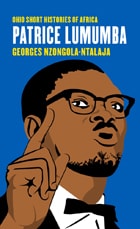
Patrice Lumumba
Georges Nzongola-Ntalaja
Ohio University Press, 2014
Patrice Lumumba was a leader of the independence struggle in what is today the Democratic Republic of the Congo, as well as the country’s first democratically elected prime minister. After a meteoric rise in the colonial civil service and the African political elite, he became a major figure in the decolonization movement of the 1950s. Lumumba’s short tenure as prime minister (1960–1961) was marked by an uncompromising defense of Congolese national interests against pressure from international mining companies and the Western governments that orchestrated his eventual demise.
Cold war geopolitical maneuvering and well-coordinated efforts by Lumumba’s domestic adversaries culminated in his assassination at the age of thirty-five, with the support or at least the tacit complicity of the U.S. and Belgian governments, the CIA, and the UN Secretariat. Even decades after Lumumba’s death, his personal integrity and unyielding dedication to the ideals of self-determination, self-reliance, and pan-African solidarity assure him a prominent place among the heroes of the twentieth-century African independence movement and the worldwide African diaspora.
Georges Nzongola-Ntalaja’s short and concise book provides a contemporary analysis of Lumumba’s life and work, examining both his strengths and his weaknesses as a political leader. It also surveys the national, continental, and international contexts of Lumumba’s political ascent and his swift elimination by the interests threatened by his ideas and practical reforms.
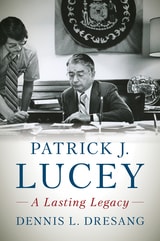
Patrick J. Lucey
A Lasting LegacyDennis L. Dresang
Wisconsin Historical Society Press, 2020
Preceding his service as governor, Lucey played a key role in rebuilding the Democratic Party in Wisconsin, returning a state that had been dominated by Republicans to a more moderate two-party system. As party chairman, he built coalitions between World War II veterans, remnants of the defunct Progressive Party, urban socialists, and activists in rural communities throughout the state.
Through exclusive interviews and unprecedented access to archival materials, Dennis L. Dresang shares the story of this pivotal figure in Wisconsin history, from his small-town rural roots to his wide-ranging influence.
Patterson for Alabama
The Life and Career of John PattersonGene Howard
University of Alabama Press, 2013
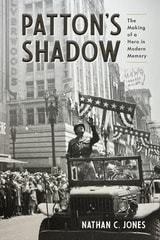
Patton's Shadow
The Making of a Hero in Modern MemoryNathan C. Jones
University of Alabama Press, 2024
An engrossing account of the myth and legend of George S. Patton and what his reputation illuminates about American culture and hero worship
Patton’s Shadow by Nathan C. Jones, a leading authority on George S. Patton, offers a definitive account of the creation of the Patton legend and what it illuminates about American culture and the worship of heroes. Jones traces how the persona of Patton, a brash and brilliant general in the European theater of World War II, transcended the individual man and became a cultural icon and byword for triumphal American might.
Patton was a hero lionized and celebrated in his own time. Patton as well as the US Army cultivated his persona during and after the war. His image was used to promote patriotism, commercial goods, and military recruitment. The 1970 Academy Award–winning film starring George C. Scott cemented his iconic image for millions of Americans, further embellishing Patton’s persona and introducing him to entirely new generations of young Americans.
Patton’s Shadow is an intellectually omnivorous tour de force that draws on ideas about heroes from sources as timeless as ancient mythology and as contemporary as Abraham Maslow, Max Weber, and Carl Jung. Jones artfully locates the honored altar that heroes occupy in the human heart and then answers insightful questions about what America’s embrace of Patton in particular as a military hero illuminates about the United States, about Patton’s generation, and about our own.
Jones’s engrossing work will fascinate readers interested in American history, military history, and the psychology of heroism.
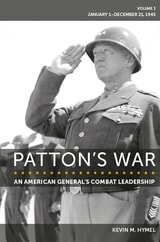
Patton's War
An American General's Combat Leadership Volume 3: January 1-December 21, 1945Kevin M. Hymel
University of Missouri Press, 2026
As with his previous volume, Hymel relies on Patton’s original diaries (not the transcribed, embellished versions historians have relied on for many years) and personal letters to tell the general’s story. Hymel also mined various archives to explain Patton’s encounters with soldiers, government officials, civilians, and reporters to expand on his narrative.
Throughout this three-volume work, Patton emerges not as a larger-than-life myth, but as a human being, one held back by the personal prejudices and antisemitism that ultimately proved to be his demise. Despite these personal failings, Patton was, above all, as Hymel reveals, a commander bent on winning, or, as the general himself might have put it, getting the enemy to dance to his tune.
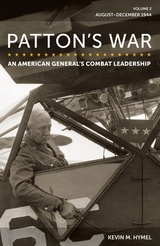
Patton's War
An American General's Combat Leadership, Volume 2: August–December 1944Kevin M. Hymel
University of Missouri Press, 2023
Finalist for the 2023 Gilder Lehrman Military History Prize
This second of three volumes of Patton’s War picks up where the first one left off, examining General George S. Patton’s leadership of the U.S. Third Army. The book follows Patton’s contributions to both the Normandy and Brittany campaigns—the closing of the Falaise Pocket in Normandy, and racing to the port cities in Brittany. It ends with Patton and his corps rescuing the besieged town of Bastogne in the Battle of the Bulge.
As he did in the preceding volume, Hymel relies not only on Patton’s diaries and letters, but countless veteran interviews, surveys, and memoirs. He also provides a unique insight missed by previous Patton scholars. Instead of using Patton’s transcribed diaries, which were heavily edited and embellished, he consults Patton’s original, hand-written diaries to uncover previously unknown information about the general.
This second volume of Hymel’s groundbreaking work shows Patton at the height of his generalship, successfully leading his army without the mistakes and caustic behavior that almost got him sent home earlier—even if we also see a Patton still guided at times by racism and antisemitism.
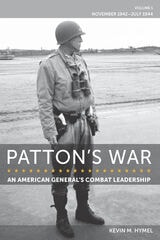
Patton's War
An American General's Combat Leadership, Volume I: November 1942–July 1944Kevin M. Hymel
University of Missouri Press, 2021
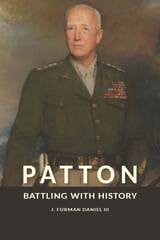
Patton
Battling with HistoryJ. Furman Daniel
University of Missouri Press, 2025
Patton deliberately cultivated the image of himself as a warrior from ages past; the more interesting truth is that he was an exceptionally dedicated student of history. He was a hard worker and voracious reader who gave a great deal of thought to how military history might inform his endeavors. Most scholars have overlooked this element of Patton’s character, which Daniel argues is essential to understanding the man’s genius.
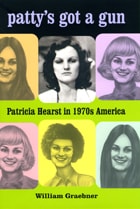
Patty's Got a Gun
Patricia Hearst in 1970s AmericaWilliam Graebner
University of Chicago Press, 2008
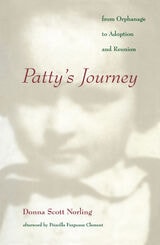
Patty’s Journey
From Orphanage To Adoption And ReunionDonna Scott Norling
University of Minnesota Press, 1998
The award-winning memoir of one woman’s struggles and triumphs to reclaim an identity she had lost.
This inspirational story of one girl’s search for a home is an engaging first-person narrative of life during the Great Depression and World War II. Readers and critics alike offer lavish praise for Norling’s graceful, simple prose and the heartbreaking, ultimately redemptive tale she shares.
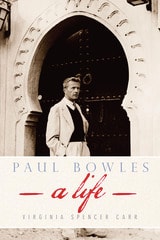
Paul Bowles
A LifeVirginia Spencer Carr
Northwestern University Press, 2008
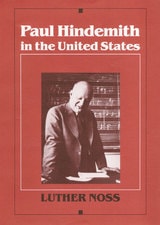
Paul Hindemith in the United States
Luther Noss
University of Illinois Press, 1989
Concentrating upon the composer's first three US concert tours and his thirteen years at Yale, Luther Noss brings to life a observant, energetic, stubborn, and wry personality. Hindemith's journals offer detailed commentary on his experiences at Tanglewood while Noss draws on archives to describe the composer's groundbreaking Collegium concerts, classes, controversial plans to reorganize the School of Music, and other activities. Noss also delves into professional activity that included a huge number of commissions, writing four theory textbooks, an expansion of his Charles Eliot Norton Lectures, and numerous world premieres and other events.
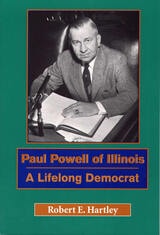
Paul Powell of Illinois
A Lifelong DemocratRobert E. Hartley
Southern Illinois University Press, 1999
Paul Powell emerged from the hill country of southern Illinois to serve in state government from 1935 until his death in 1970. His political tenure included three terms as Speaker of the Illinois House, four terms as minority leader, and two terms as secretary of state. The sponsor of hundreds of bills, he worked tirelessly for his constituents in southern Illinois. He also worked tirelessly to promote his own interests.
In this first political biography of Powell, Robert E. Hartley follows the money. He tells how this man of humble origins and meager means amassed a world-class political and financial base. Part of that story is the disclosure of a personal fortune that boggled minds, including the unbelievable yarn of the $800,000 cash found in the hotel room following Powell's death.
Powell never earned a state salary of more than $30,000 per year, yet in the last year of his life, his federal income tax return showed an income of more than $200,000. At his death his estate totaled $3.2 million, and, when settled in 1978, was worth $4.6 million, including nearly $1 million in racetrack stock.
Following Powell's story, Hartley takes us deep into the Illinois political world of the 1940s, 1950s, and 1960s, a time when politicians were on an "honor system" regarding their financial holdings. This was before disclosure of political contributions, before computer records, and before public meetings laws.
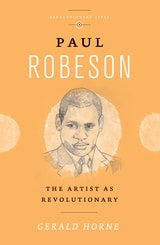
Paul Robeson
The Artist as RevolutionaryGerald Horne
Pluto Press, 2015
“A fine, taut analysis of the great African American athlete, singer, actor, and political activist.”
—Choice, Highly Recommended
Paul Robeson should be remembered today as the forerunner of Malcolm X, Dr. Martin Luther King, Jr. and Muhammad Ali. He sacrificed his fame and fortune a performer and athlete in order to fight for the rights of African Americans during the time of Jim Crow and U.S. Apartheid.
A world-famous singer and actor, a trained lawyer, an early star of American professional football and a polyglot who spoke over a dozen languages: these could be the crowning achievements of a life well-lived. Yet for Paul Robeson the higher calling of social justice led him to abandon both the NFL and Hollywood and become one of the most important political activists of his generation, a crusader for freedom and equality who battled both Jim Crow and US Senator Joseph McCarthy during the communist witch hunt of the 1950s.
In Paul Robeson: The Artist as Revolutionary, Gerald Horne discovers within Robeson's remarkable and revolutionary life the story of the twentieth century's great political struggles: against racism, against colonialism, against poverty—and for international socialism. Chapters include:
*”The Best Known American in the World"
*Rising Revolutionary
*From Moscow to Madrid
*"Black Stalin"?
*Robeson: Primary Victim of the "Blacklist"
*Triumph—and Tragedy
*Death of a Revolutionary
In the Introduction, Horne writes: “Paul Robeson—activist, artist, athlete—experienced a dramatic rise and fall, perhaps unparalleled in U.S. history. From mingling with the elite of London society and Hollywood in the 1930s, by the time he died in 1976, he was a virtual recluse in a plain abode in a working-class neighborhood of Philadelphia. What helps to explicate this tragic art of his life is a fateful decision he made when fascism was rising: he threw in his lot with those battling for socialism and decide to sacrifice his thriving artistic career on behalf of the struggle against Jim Crow—or U.S. apartheid.”
This critical and searching biography provides an opportunity for readers to comprehend the triumphs and tragedies of the revolutionary progressive movement of which Paul Robeson was not just a part, but perhaps its most resonant symbol.
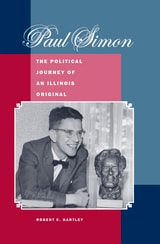
Paul Simon
The Political Journey of an Illinois OriginalRobert E. Hartley
Southern Illinois University Press, 2009
With Paul Simon: The Political Journey of an Illinois Original, author Robert E. Hartley presents the first thorough, objective volume on the journalistic and political career of one of Illinois’s most respected public figures. Hartley’s detailed account offers a fully rounded portrait of a man whose ideals and tenacity not only spurred reform on both state and national levels during his celebrated forty-year career but also established the lasting legacy of a political legend.
Simon first became a public figure at the age of nineteen, when he assumed the post of editor and publisher of a weekly newspaper in Troy, Illinois. From there, he used his paper to launch a fierce crusade against the crime and corruption plaguing Madison County. This battle sparked his entry into politics, helping to land him a seat in the state legislature in 1954. While serving, he campaigned tirelessly according to his principles, earning him the mass voter approval that would usher him into the seat of lieutenant governor in 1968—the first person elected to that position who did not share party affiliation with the governor.
As lieutenant governor, Simon initiated many changes to the position, remaking it to better serve the citizens of the state of Illinois. The cornerstone of his reform plan was an ombudsman program designed to allow the people of the state to voice problems they had with government and state agencies. The program, extremely popular with the public and the press, solved problems and helped to make Simon a household name throughout Illinois. Although he faced challenges along the way, including racial upheaval in Cairo and the student and police riots on the Carbondale campus of Southern Illinois University, Simon’s outspoken honesty and strong support of his constituents earned him the utmost esteem and popularity.
While his 1972 bid for governor of Illinois ultimately failed, this did not deter Simon from his dedication to social progress. In 1974 he began his remarkable twenty-two-year career in the U.S. House of Representatives and Senate, where he earned the admiration of the country for his political integrity. Despite the praise and support Simon had earned during his time in Washington, he was unable to win the Democratic presidential nomination in 1988 and returned to the Senate, winning a second term in 1990. Simon committed time and energy to the myriad issues of interest to him, especially in the field of education, with one of his biggest successes coming with the passage of the National Literacy Act, which he sponsored. He continued to foster his ties to journalism throughout his lengthy political career, authoring numerous books, articles, and columns, all of which he used to relentlessly promote open government and social programs.
This vivid account of the public life of Paul Simon reveals a man whose personal honor and dedication were unshakeable throughout nearly half a century in the political arena. Robert E. Hartley provides a candid perspective on Simon’s accomplishments and victories, as well as his mistakes and losses, revealing new insights into the life of this dynamic and widely respected public figure.
Paul Thomas Anderson
George Toles
University of Illinois Press, 2016
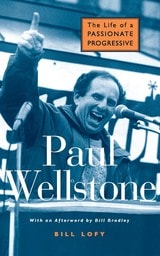
Paul Wellstone
The Life of a Passionate ProgressiveBill Lofy
University of Michigan Press, 2005
---Arianna Huffington, columnist and editor of HuffingtonPost.com
"This book captures the vibrant spirit of my friend Paul Wellstone---the fierce commitment to justice that defined his life, and that shapes his enduring legacy."
---U.S. Senator Russ Feingold
"Paul Wellstone was a great leader because he fused progressive idealism with a stubbornly pragmatic politics. Bill Lofy's book captures that dual commitment in his story of Wellstone's life, and also shows us the extraordinary human appeal that Wellstone emanated in his relationships with people in all walks of life. This book is an engaging read that also tells us a lot about the political practice to which we should aspire."
---Frances Fox Piven, author of The War at Home
"This vividly written book captures the life and personal qualities of the late Senator Paul Wellstone. In so doing it provides an illuminating gloss on Max Weber's seminal exposition of the political vocation. It is a jewel of a book."
-Fred Greenstein, Princeton University
Bill Lofy's fast-paced and readable biography tells the inspirational story of one of the most compelling figures in the history of American politics---Senator Paul Wellstone.
Yet Lofy's book is more than just the chronicle of Wellstone's life and political career; it's also an indispensable guide to what ails political life today. Readers politically inclined or not will find in its pages a handbook to the uncertain and often treacherous business of politics and a stirring example for living a courageous and honest life---whether as public servant or private individual.
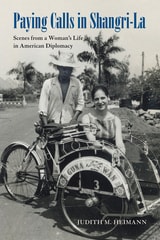
Paying Calls in Shangri-La
Scenes from a Woman’s Life in American DiplomacyJudith M. Heimann
Ohio University Press, 2016
Judith M. Heimann entered the diplomatic life in 1958 to join her husband, John, in Jakarta, Indonesia, at his American Embassy post. This, her first time out of the United States, would set her on a path across the continents as she mastered the fine points of diplomatic culture. She did so first as a spouse, then as a diplomat herself, thus becoming part of one of the Foreign Service’s first tandem couples.
Heimann’s lively recollections of her life in Africa, Asia, and Europe show us that when it comes to reconciling our government’s requirements with the other government’s wants, shuttle diplomacy, Skype, and email cannot match on-the-ground interaction. The ability to gauge and finesse gesture, tone of voice, and unspoken assumptions became her stock-in-trade as she navigated, time and again, remarkably delicate situations.
This insightful and witty memoir gives us a behind-the-scenes look at a rarely explored experience: that of one of the very first married female diplomats, who played an unsung but significant role in some of the important international events of the past fifty years. To those who know something of today’s world of diplomacy, Paying Calls in Shangri-La will be an enlightening tour through the way it used to be—and for aspiring Foreign Service officers and students, it will be an inspiration.
Published in association with ADST-DACOR Diplomats and Diplomacy Series
Payne Hollow
Life on the Fringe of SocietyHarlan Hubbard
Ohio University Press, 1997
Originally published in 1974, this second edition was published by Gnomon Press in 1997.Payne Hollow is a reflective and poetic memoir that details the simple, self-sufficient life Harlan Hubbard and his wife, Anna, led along the banks of the Ohio River in the 1950s–80s. After living on a shantyboat for eight years, the Hubbards crafted a custom home and studio at Payne Hollow, in Trimble County, Kentucky, where they lived off the land and embraced a lifestyle focused on nature, art, and solitude. The book, illustrated with Harlan’s own ink drawings, captures the couple’s philosophy of living in harmony with the natural world, free from the distractions and demands of modern society. Hubbard eloquently describes in words and images their daily routines, the changing seasons, and the deep satisfaction he and Anna found in their way of life. Through his writing, Hubbard rejoices in the return to simplicity and creates an appreciation for the living world, making Payne Hollow not just a memoir, but a model for building a deliberate, mindful life in tune with nature.
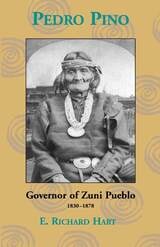
Pedro Pino
Governor of Zuni Pueblo, 1830-1878E. Richard Hart
Utah State University Press, 2003
Pedro Pino, or Lai-iu-ah-tsai-lu (his Zuni name) was for many years the most important Zuni political leader. He served during a period of tremendous change and challenges for his people. Born in 1788, captured by Navajos in his teens, he was sold into a New Mexican household, where he obtained his Spanish name. When he returned to Zuni, he spoke three languages and brought with him a wealth of knowledge regarding the world outside the pueblo. For decades he ably conducted Zuni foreign relations, defending the pueblo's sovereignty and lands, establishing trade relationships, interacting with foreigners-from prominent military and scientific expeditions to common emigrants-and documenting all in a remarkable archive. Steeped in Zuni traditions, he was known among other things for his diplomatic savvy, as a great warrior, for his oratory, and for his honesty and hospitality.
More than a biography, Richard Hart's work provides a history of Zuni during an especially significant period. Also the author of Zuni and the Courts: A Struggle for Sovereign
Land Rights and the co-author of A Zuni Atlas, Hart originally wrote the manuscript in 1979 after a decade of historical work for Zuni Pueblo. He then set it aside but continued to pursue research about and for Zuni. Its publication, at last, inscribes an important contribution to Pueblo history and biography and a testimonial to a remarkable Native American leader. In an afterword written for this publication, Hart discusses his original intentions in writing about Pedro Pino and Zuni and situates the biography in relation to current scholarship.
Peerless
Rouben Mamoulian, Hollywood, and BroadwayKurt Jensen
University of Wisconsin Press, 2024
Kurt Jensen’s magisterial volume, extensively researched and filled with trenchant observations, brings to life this charming, flawed, and fascinating man—and demonstrates how the wellspring of his art contained the seeds of his own destruction. Drawing upon Mamoulian’s unfinished memoir and voluminous diaries, as well as interviews with the director’s surviving collaborators, Jensen delivers fresh and informative insider stories from seminal productions. Meanwhile, he explores Mamoulian’s aesthetic principles and strategies as manifested in lighting, choreography, and sound design. A tour de force, Peerless offers readers a multifaceted, in-depth look at an idiosyncratic genius.
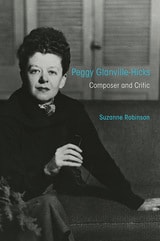
Peggy Glanville-Hicks
Composer and CriticSuzanne Robinson
University of Illinois Press, 2019
Drawing on interviews, archival research, and fifty-four years of extraordinary pocket diaries, Suzanne Robinson places Glanville-Hicks within the history of American music and composers. "P.G.H." forged alliances with power brokers and artists that gained her entrance to core American cultural entities such as the League of Composers, New York Herald Tribune, and the Harkness Ballet. Yet her impeccably cultivated public image concealed a private life marked by unhappy love affairs, stubborn poverty, and the painstaking creation of her artistic works.
Evocative and intricate, Peggy Glanville-Hicks clears away decades of myth and storytelling to provide a portrait of a remarkable figure and her times.

Peggy Seeger
A Life of Music, Love, and PoliticsJean R. Freedman
University of Illinois Press, 2020
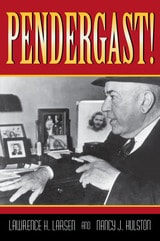
Pendergast!
Lawrence H. Larsen and Nancy J. Hulston
University of Missouri Press, 1997
Born in St. Joseph, Missouri, in 1872, Tom Pendergast moved to Kansas City around 1890 to work for his brother James, founder of the Pendergast "Goat" faction in Kansas City Democratic politics. In 1911, Pendergast became head of the Goats, and over the next fifteen years he created a powerful political machine that used illegal voting and criminal enforcers to gain power. Following a change in the city charter in 1925, Pendergast took control of Kansas City and ran it as his own personal business. In the 1930s, he received over $30 million annually from gambling, prostitution, and narcotics, putting him in the big leagues of American civic corruption. He also wielded great power in the National Democratic Party and started Harry S. Truman on the road to the presidency.
In this well-balanced biography, the authors examine Pendergast's rise to power, his successes as a political leader, his compassion for the destitute, and his reputation for keeping his word. They also examine Pendergast's character development and how his methods became more and more ruthless. Pendergast had no use for ideology in his "invisible government"—only votes counted.
In 1937 and 1938 the federal government broke the back of Pendergast's machine, convicting 259 of his campaign aides for vote fraud. In 1939 Pendergast, who was believed to be the largest bettor on horse racing in the United States, was jailed for income tax evasion, and he died in disgrace in 1945.
An insightful and comprehensive biography, Pendergast! will surely serve for years to come as the most thorough investigation of the life and infamous career of Tom Pendergast.
Pennsylvania Stories--Well Told
William Ecenbarger
Temple University Press, 2017
A former journalist for the Philadelphia Inquirer Magazine, and author of the bestseller Kids for Cash, Ecenbarger has collected a dozen of his fascinating articles showcasing the Keystone State in Pennsylvania Stories—Well Told. He provides a history of the pencil, and considers why the first day of Pennsylvania’s deer hunting season—the world’s largest participatory sporting event—is an unofficial state holiday, closing schools and state offices. Ecenbarger also profiles George “Boom Boom” Zambelli, the internationally renowned pyrotechnic king, and goes driving with Pennsylvania native John Updike in rural Berks County, PA.
Other fascinating tales unfold in Pennsylvania Stories, from an inspiring tale of Governor Bob Casey’s double organ transplant, to darker essays on the electric chair and the Ku Klux Klan, to a mile-by-mile appreciation of the Pennsylvania Turnpike.
In these weird and wonderful stories, Ecenbarger highlights just what makes Pennsylvania both eccentric and great. His book is a delightfully intriguing read for natives and curious outsiders alike.
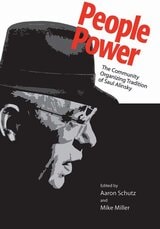
People Power
The Community Organizing Tradition of Saul AlinskyAaron Schutz
Vanderbilt University Press, 2015
--Fred Ross, Cesar Chavez, Dolores Huerta, and the Community Service Organization and National Farm Workers Association
--Nicholas von Hoffman and the Woodlawn Organization
--Tom Gaudette and the Northwest Community Organization
--Ed Chambers, Richard Harmon, and the Industrial Areas Foundation
--Shel Trapp, Gale Cincotta, and National People's Action
--Heather Booth, Midwest Academy, and Citizen Action
--Wade Rathke and ACORN
Weaving classic texts with interviews and their own context-setting commentaries, the editors of People Power provide the first comprehensive history of Alinsky-based organizing in the tumultuous period from 1955 to 1980, when the key organizing groups in the United States took form. Many of these selections--previously available only on untranscribed audiotapes or in difficult-to-read mimeograph or Xerox formats--appear in print here for the first time.
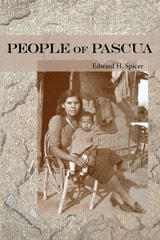
People of Pascua
Edward H. Spicer; Edited by Kathleen M. Sands and Rosamond B. Spicer
University of Arizona Press, 1988
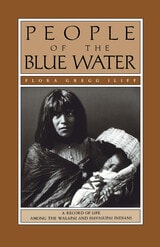
People of the Blue Water
A Record of Life Among the Walapai and Havasupai IndiansFlora Gregg Iliff
University of Arizona Press, 1985
"Gives a vivid picture, not only of tribal peoples in transition, but of the motives and methods of a dedicated, compassionate teacher in an era of forced Indian assimilation."—Books of the Southwest
"Delightful reading about an exotic life in a stupendous natural setting."—New York Times