Results by title
3071 books match the query 'Business & Economics' and 143 start with p

PMP Certification
A Beginner's Guide, Fourth EditionGeorge G. Angel
University Press of Colorado, 2023
This beginner’s guide will teach you real-world project management skills for any project and will help prepare you to become a certified Project Management Professional (PMP) or Certified Associate Project Manager (CAPM).
This fourth edition provides up-to-date information on how to effectively manage projects, programs, and portfolios to achieve organizational success. It includes tips and sample questions at the end of each chapter as well as a mock exam to help prepare you for the Project Management Institute (PMI) certification exams.
This text follows the three PMI domains: People, Business Environment, and Processes. A case study with detailed real-world examples, sample templates, and actual project documents guides you through your own projects, from charter to close, using all five project groups (initiating, planning, executing, monitoring and controlling, and closing projects).
This edition takes the standard processes and framework for traditional projects introduced in PMI’s sixth edition Project Management Body of Knowledge (PMBOK) and adds the new focus on Agile (adaptive) project management methods, tools, and techniques in PMBOK’s seventh edition to enhance your knowledge and ability to handle a wide range of projects.
PMP Certification
A Beginner's Guide, Third EditionGeorge G. Angel
University Press of Colorado, 2017
This accessible guide bridges the gap between being a project manager and becoming a globally recognized Project Management Professional (PMP). Aligned with A Guide to the Project Management Body of Knowledge (PMBOK® Guide), Sixth Edition, this book explains the Project Management Institute’s worldwide standard methods, five process groups, ten knowledge areas, and forty-nine processes and includes many tips to help prepare for the latest PMP exam.
Angel includes proven strategies for improving project efficiency and effectiveness, balancing constraints, communicating timely and accurate project status, and successfully bringing a project to completion. Real-world case studies followed throughout the book provide examples, checklists, and proven project results. Designed for easy learning, the book contains chapter-opening lists of specific skills covered in the chapter, Q&A sections filled with bonus information and helpful tips, real-world experiences that show how to apply particular skills, and reminders to help in preparation for the PMP exam.

PMP Certification
A Beginner's Guide, Third EditionGeorge G. Angel
University Press of Colorado, 2017
This accessible guide bridges the gap between being a project manager and becoming a globally recognized Project Management Professional (PMP). Aligned with A Guide to the Project Management Body of Knowledge (PMBOK® Guide), Sixth Edition, this book explains the Project Management Institute’s worldwide standard methods, five process groups, ten knowledge areas, and forty-nine processes and includes many tips to help prepare for the latest PMP exam.
Angel includes proven strategies for improving project efficiency and effectiveness, balancing constraints, communicating timely and accurate project status, and successfully bringing a project to completion. Real-world case studies followed throughout the book provide examples, checklists, and proven project results. Designed for easy learning, the book contains chapter-opening lists of specific skills covered in the chapter, Q&A sections filled with bonus information and helpful tips, real-world experiences that show how to apply particular skills, and reminders to help in preparation for the PMP exam.
Packaged Pleasures
How Technology and Marketing Revolutionized DesireGary S. Cross and Robert N. Proctor
University of Chicago Press, 2014
In Packaged Pleasures, Gary S. Cross and Robert N. Proctor delve into an uncharted chapter of American history, shedding new light on the origins of modern consumer culture and how technologies have transformed human sensory experience. In the space of only a few decades, junk foods, cigarettes, movies, recorded sound, and thrill rides brought about a revolution in what it means to taste, smell, see, hear, and touch. New techniques of boxing, labeling, and tubing gave consumers virtually unlimited access to pleasures they could simply unwrap and enjoy. Manufacturers generated a seemingly endless stream of sugar-filled, high-fat foods that were delicious but detrimental to health. Mechanically rolled cigarettes entered the market and quickly addicted millions. And many other packaged pleasures dulled or displaced natural and social delights. Yet many of these same new technologies also offered convenient and effective medicines, unprecedented opportunities to enjoy music and the visual arts, and more hygienic, varied, and nutritious food and drink. For better or for worse, sensation became mechanized, commercialized, and, to a large extent, democratized by being made cheap and accessible. Cross and Proctor have delivered an ingeniously constructed history of consumerism and consumer technology that will make us all rethink some of our favorite things.

Panic in Paradise
Florida's Banking Crash of 1926Raymond B. Vickers
University of Alabama Press, 1994
Panic in Paradise is a comprehensive study of bank loan failures during the Florida land boom of the mid-1920s, during the years preceding the stock market crash of 1929. Florida and Georgia experienced a banking panic in 1926 when, in a ten-day period in July, after uncontrollable depositor runs, 117 banks closed in the two states. Uninsured depositors lost millions, and several suicides followed the financial havoc. This volume makes use of banking records that were legally sealed for almost 70 years and provides a shocking story of professional corruption and conspiracy.
"An extraordinary and unusual book that makes an important contribution to our understanding of banking history and the general economic history oof the 1920s. The banking collapse in the Southeast is virtually unknown, even to specialists in banking and financial history. No one who is interested in the banking history of the United States will want to miss this book." -- Eugene N. White, Rutgers University
"An exhaustively researched pioneering study; brilliant investigative reporting." -- Jack Blicksilver, Georgia State University
Para Power
How Paraprofessional Labor Changed EducationNick Juravich
University of Illinois Press, 2024
Understanding paras as key players in Black and Latino struggles for jobs and freedom, Nick Juravich details how the first generation of paras in New York City transformed work in public schools and the relationships between schools and the communities they served. Paraprofessional programs created hundreds of thousands of jobs in working-class Black and Latino neighborhoods. These programs became an important pipeline for the training of Black and Latino teachers in the1970s and early 1980s while paras’ organizing helped drive the expansion and integration of public sector unions.
An engaging portrait of an invisible profession, Para Power examines the lives and practices of the first generation of paraprofessional educators against the backdrop of struggles for justice, equality, and self-determination.
Paradigms and Conventions
Uncertainty, Decision Making, and EntrepreneurshipYoung Back Choi
University of Michigan Press, 1993
Parental Priorities and Economic Inequality
Casey B. Mulligan
University of Chicago Press, 1997
In Mulligan's model, parents determine the degree of their altruistic concern for their children and spend time with and resources on them accordingly—just as they might make choices about how they spend money. Mulligan tests his model against both old and new evidence on the intergenerational transmission of consumption, earnings, and wealth, including models that emphasize "financial constraints." One major prediction of Mulligan's model confirmed by the evidence is that children of wealthy parents typically spend more than they earn.
Mulligan's innovative approach can also help explain other important behavior, such as charitable giving and "corporate loyalty," and will appeal to a wide range of quantitatively oriented social scientists and sociobiologists.
Parenting While PhDing
Surviving and Improving the Working Conditions of Graduate Student ParentsJackie Hoermann-Elliott
Rutgers University Press, 2025
Featuring contributions from more than forty current and former graduate students raising children, Parenting While PhDing offers valuable advice for students and administrators. Parents will get practical recommendations on both child care and self-care, learning how to form supportive personal and professional networks while establishing a healthy work/life balance. The collection also offers thoughtful suggestions on how to make graduate programs less toxic and more inclusive.
Recognizing that not all graduate students have similar backgrounds or needs, Parenting While PhDing features a diverse range of viewpoints, including queer, trans, disabled, BIPOC, immigrant, and first-generation college students. The authors represent a variety of disciplines, from the natural and social sciences to the humanities and health care professions. Together, they share fresh perspectives on the experiences of graduate students with children and offer strategies they can use to navigate the dual pressures of the academy and parenting.
Passing the Torch
Does Higher Education for the Disadvantaged Pay Off Across the Generations?Paul Attewell
Russell Sage Foundation, 2007
The steady expansion of college enrollment rates over the last generation has been heralded as a major step toward reducing chronic economic disparities. But many of the policies that broadened access to higher education—including affirmative action, open admissions, and need-based financial aid—have come under attack in recent years by critics alleging that schools are admitting unqualified students who are unlikely to benefit from a college education. In Passing the Torch, Paul Attewell, David Lavin, Thurston Domina, and Tania Levey follow students admitted under the City University of New York’s “open admissions” policy, tracking its effects on them and their children, to find out whether widening college access can accelerate social mobility across generations.
Unlike previous research into the benefits of higher education, Passing the Torch follows the educational achievements of three generations over thirty years. The book focuses on a cohort of women who entered CUNY between 1970 and 1972, when the university began accepting all graduates of New York City high schools and increasing its representation of poor and minority students. The authors survey these women in order to identify how the opportunity to pursue higher education affected not only their long-term educational attainments and family well-being, but also how it affected their children’s educational achievements. Comparing the record of the CUNY alumnae to peers nationwide, the authors find that when women from underprivileged backgrounds go to college, their children are more likely to succeed in school and earn college degrees themselves. Mothers with a college degree are more likely to expect their children to go to college, to have extensive discussions with their children, and to be involved in their children’s schools. All of these parenting behaviors appear to foster higher test scores and college enrollment rates among their children. In addition, college-educated women are more likely to raise their children in stable two-parent households and to earn higher incomes; both factors have been demonstrated to increase children’s educational success.
The evidence marshaled in this important book reaffirms the American ideal of upward mobility through education. As the first study to indicate that increasing access to college among today’s disadvantaged students can reduce educational gaps in the next generation, Passing the Torch makes a powerful argument in favor of college for all.
Passing the Torch
Planning for the Next Generation of Leaders in Public ServiceKarl Besel
University of Arkansas Press, 2016
Public-service executives, both elected and appointed within the public and nonprofit sectors, are retiring at record levels, and the number of Americans reaching age sixty-five annually will continue to rise over the next decade and is expected to surpass four million in 2020. Finding qualified, motivated leaders to fill vital public-service positions will challenge the public and nonprofit sectors.
Unfortunately, recent studies show that few proactive steps are being taken by public-service organizations to plan for the next generation. Passing the Torch: Planning for the Next Generation of Public-Service Leaders provides an outline for those who will be facing and managing these looming changes.
In this valuable guide, the factors that influence selection of a career in public service are explored through the authors’ years of experience as leaders in public-service organizations and through interviews with other public-service professionals. Passing the Torch will be essential for leaders of nonprofit organizations, university faculty, researchers in the field of nonprofit management, and students in nonprofit management courses.
Paternalistic Capitalism
Andreas G. Papandreou
University of Minnesota Press, 1972
Paternalistic Capitalism was first published in 1972. Minnesota Archive Editions uses digital technology to make long-unavailable books once again accessible, and are published unaltered from the original University of Minnesota Press editions.
The distinguished economist and Greek political leader presents here a powerful critique of American capitalism and its relationship to government and foreign policy. Dr. Papandreou first examines the orthodox view of the contemporary capitalist economy and the "myth of market capitalism" which it has engendered. He then considers the Neo-Marxist view that the economy can best be understood as monopoly capitalism, and the technocratic interpretation of society proposed by J. K. Galbraith. Dr. Papandreou accepts and rejects various aspects of these two interpretations, and moves to define the salient features of what he calls paternalistic capitalism, wherein privatized decentralized planning increasingly is carried out by the corporate managerial elite, in the interest not of the consumer, but of the "system." The paternalism is that of the autocratic big brother.
The author then explores the relationship between the managerial elite and the instrumentalities of the State, and claims that next to the managerial elite stand the national security managers—not by accident, for paternalistic capitalism is aggressively expansionist, as is reflected in the foreign policy of the capitalist metropolis, the United States. The global aspect of paternalistic capitalism is further delineated in Dr. Papandreou's discussion of the "new mercantilism" and of the institutional device of the multinational corporation. Finally, he considers briefly two alternatives—the Soviet experiment, which he rejects as paternalistic socialism, and a vision of a regionally decentralized society, in which man will control rather than be at the mercy of his social environment.
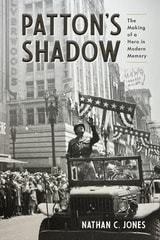
Patton's Shadow
The Making of a Hero in Modern MemoryNathan C. Jones
University of Alabama Press, 2024
An engrossing account of the myth and legend of George S. Patton and what his reputation illuminates about American culture and hero worship
Patton’s Shadow by Nathan C. Jones, a leading authority on George S. Patton, offers a definitive account of the creation of the Patton legend and what it illuminates about American culture and the worship of heroes. Jones traces how the persona of Patton, a brash and brilliant general in the European theater of World War II, transcended the individual man and became a cultural icon and byword for triumphal American might.
Patton was a hero lionized and celebrated in his own time. Patton as well as the US Army cultivated his persona during and after the war. His image was used to promote patriotism, commercial goods, and military recruitment. The 1970 Academy Award–winning film starring George C. Scott cemented his iconic image for millions of Americans, further embellishing Patton’s persona and introducing him to entirely new generations of young Americans.
Patton’s Shadow is an intellectually omnivorous tour de force that draws on ideas about heroes from sources as timeless as ancient mythology and as contemporary as Abraham Maslow, Max Weber, and Carl Jung. Jones artfully locates the honored altar that heroes occupy in the human heart and then answers insightful questions about what America’s embrace of Patton in particular as a military hero illuminates about the United States, about Patton’s generation, and about our own.
Jones’s engrossing work will fascinate readers interested in American history, military history, and the psychology of heroism.
Paying for the Party
How Fundraising Demands Lead to Less Productive and Less Representative LegislaturesMichael R. Kistner
University of Chicago Press, 2026
A revealing, data-rich exploration of how American legislators transformed from active policymakers into party fundraisers.
Lawmakers in Congress and state legislatures across the United States spend enormous amounts of time and effort fundraising, not just for their own seats but for the party. Whether dialing for dollars or hosting high-priced fundraising events, the pursuit of campaign funds is now a massive part of the American legislator’s job description. What explains this transformation, and what are the consequences for public policy?
In Paying for the Party, Michael Kistner uses new theory and new data to answer these questions. He shows that state legislative party organizations—Democratic and Republican caucuses in capitols across the country—are responsible for turning their members into single-minded seekers of money. Parties reward legislators who contribute the most with powerful leadership and committee positions. Consequently, the members who now hold these agenda-setting positions are increasingly neither the most productive nor knowledgeable lawmakers, but rather those who can raise the most money. And when legislators are asked to raise more money, they skip committee hearings for fundraising events, enacting fewer substantive policies as a result. Paying for the Party shows that parties in contemporary American legislatures have hollowed out the policymaking capacity of their institutions and empowered a decidedly non-representative set of legislators.
Paying the Piper
Productivity, Incentives, and Financing in U.S. Higher EducationMichael S. McPherson, Morton Owen Schapiro, and Gordon C. Winston, Editors
University of Michigan Press, 1994
Paying the Price
College Costs, Financial Aid, and the Betrayal of the American DreamSara Goldrick-Rab
University of Chicago Press, 2016
Not necessarily, says Sara Goldrick-Rab, and with Paying the Price, she shows in damning detail exactly why. Quite simply, college is far too expensive for many people today, and the confusing mix of federal, state, institutional, and private financial aid leaves countless students without the resources they need to pay for it.
Drawing on an unprecedented study of 3,000 young adults who entered public colleges and universities in Wisconsin in 2008 with the support of federal aid and Pell Grants, Goldrick-Rab reveals the devastating effect of these shortfalls. Half the students in the study left college without a degree, while less than 20 percent finished within five years. The cause of their problems, time and again, was lack of money. Unable to afford tuition, books, and living expenses, they worked too many hours at outside jobs, dropped classes, took time off to save money, and even went without adequate food or housing. In many heartbreaking cases, they simply left school—not with a degree, but with crippling debt. Goldrick-Rab combines that shocking data with devastating stories of six individual students, whose struggles make clear the horrifying human and financial costs of our convoluted financial aid policies.
America can fix this problem. In the final section of the book, Goldrick-Rab offers a range of possible solutions, from technical improvements to the financial aid application process, to a bold, public sector–focused “first degree free” program. What’s not an option, this powerful book shows, is doing nothing, and continuing to crush the college dreams of a generation of young people.
Pedal To The Metal
The Work Life of TruckersLawrence J. Ouellet
Temple University Press, 1994

Peer to Peer
The Commons ManifestoMichel Bauwens, Vasilis Kostakis and Alex Pazaitis
University of Westminster Press, 2019
Not since Marx identified the manufacturing plants of Manchester as the blueprint for the new capitalist society has there been a more profound transformation of the fundamentals of our social life. As capitalism faces a series of structural crises, a new social, political and economic dynamic is emerging: peer to peer.
What is peer to peer? Why is it essential for building a commons-centric future? How could this happen? These are the questions this book tries to answer. Peer to peer is a type of social relations in human networks, as well as a technological infrastructure that makes the generalization and scaling up of such relations possible. Thus, peer to peer enables a new mode of production and creates the potential for a transition to a commons-oriented economy.
Pennsylvania Politics and Policy, Volume 2
A Commonwealth ReaderEdited by Michelle J. Atherton and J. Wesley Leckrone
Temple University Press, 2019
Designed to showcase current issues of interest, Pennsylvania Politics and Policy, Volume 2 isthe second reader consisting of updated chapters from recent issues of Commonwealth: A Journal of Pennsylvania Politics and Policy. The editors and contributors to this volume focus on government institutions, election laws, the judiciary, government finance and budgeting, the opioid crisis, childcare, property taxes, environmental policy, demographics, and more. Each chapter is supplemented by discussion questions, suggestions for further reading, and forums with arguments in support of or opposed to contested elements of state policy.
In addition, Pennsylvania Politics and Policy, Volume 2 includes a detailed guide to researching state government and policy online, as well as a comprehensive chapter on the structure of Pennsylvania government. It is designed as a text or supplement for college or advanced high school classes in American government, state and local politics, public policy, and public administration.
Contributors include: John Arway, Jenna Becker Kane, Jeffrey Carroll, Bob Dick, Ashley Harden, Stefanie I. Kasparek, Vera Krekanova, Maureen W. McClure, John F. McDonald, Josh Shapiro, Marc Stier, Jennie Sweet-Cushman, James Vike, and the editors.
Pennsylvania Politics and Policy
A Commonwealth ReaderJ. Wesley Leckrone
Temple University Press, 2018
The activities of state governments have always been important in the American federal system. However, recent partisan gridlock in Washington, DC has placed states at the forefront of policymaking as the national government maintains the status quo. Pennsylvania Politics and Policy, Volume 1 is designed to showcase current issues of interest to Pennsylvanians. This reader contains updated chapters from recent issues of Commonwealth: A Journal of Pennsylvania Politics and Policy on education, health care, public finance, tax policy, environmental policy, alcohol policy and more. Each chapter is supplemented by forums with arguments in support of or opposed to contested elements of state policy, discussion questions, and suggestions for further reading.
In addition, Pennsylvania Politics and Policy, Volume 1 includes a comprehensive guide to researching state government and policy online. It is designed as a text or supplement for college or advanced high school classes in American government, state and local politics, public policy, and public administration.
Contributors include: David G. Argall, Tom Baldino, Michele Deegan, Michael Dimino, George Hale, Rachel L. Hampton , Paula Duda Holoviak Jon Hopcraft, Vera Krekanova, Maureen W. McClure, Barry G. Rabe, Marguerite Roza, Lanethea Mathews Shultz, Jennie Sweet-Cushman, Amanda Warco, and the editors.

Pension Plans and Employee Performance
Evidence, Analysis, and PolicyRichard A. Ippolito
University of Chicago Press, 1997
Challenging the accepted view of defined contribution plans, such as the 401k, as merely convenient tax-deferred savings plans, Ippolito argues that these plans can help firms select and pay their best workers without expending monitoring resources. Building on his proposals for managing private pension plans, Ippolito concludes with a blueprint for fixing the social security system that would promote incentives to work and save while at the same time improving the system's financial condition.
Pension Puzzles
Social Security and the Great DebateMelissa Hardy
Russell Sage Foundation, 2007
Pensions in the American Economy
Laurence J. Kotlikoff and Daniel E. Smith
University of Chicago Press, 1984
The picture that emerges of the "typical" plan and its significant variations is crucial to all those with a financial stake in pensions. The reader can compare pension vesting, retirement, and benefit provisions by plan type, plan size, industry, union status, and many more characteristics. With this information, workers can evaluate just how generous their employer is; job applicants can compare fringe benefits of prospective employers; personnel directors can judge their competitive edge.
The financial community will find especially interesting the analysis of the unfunded liabilities of private, state, and local pension funds. The investment decisions of private and public pension funds and their return performances are described as well.
Government officials and social scientists will find the analysis of pension coverage, the receipt of pension income by the elderly, cost-of-living adjustments, and disability insurance of special importance in evaluating the proper degree of public intervention in the area of old age income support.
Pensions in the American Economy is comprehensive and easy to use. Every reader, from small-business owners and civil servants to pension fund specialists, will find in it essential information about this increasingly important part of labor compensation and retirement finances.
Pensions in the U.S. Economy
Edited by Zvi Bodie, John B. Shoven, and David A. Wise
University of Chicago Press, 1988
Steven F. Venti and David A. Wise offer a careful analysis of who contributes to IRAs and why. Benjamin M. Friedman and Mark Warshawsky look at the reasons more retirement saving is not used to purchase annuities. Personal saving through pension contribution is discussed by B. Douglas Bernheim and John B. Shoven in the context of recent government and corporate pension funding changes. Michael J. Boskin and John B. Shoven analyze indicators of the economic well-being of the elderly, addressing the problem of why a large fraction of the elderly remain poor despite a general improvement in the economic status of the group as a whole. The relative merits of defined contribution versus defined benefit plans, with emphasis on the risk aspects of the two types of plans for the individual, are examined by Zvi Bodie, Alan J. Marcus, and Robert C. Merton. In the final paper, pension plans and worker turnover are the focus of the discussion by Edward P. Lazear and Robert L. Moore, who propose pension option value rather than the commonly used accrued pension wealth as a measure of pension value.
Pensions, Labor, and Individual Choice
David A. Wise
University of Chicago Press, 1985
Previous books on private pensions have largely neglected behavioral implications of the features of pension plans. The papers in this volume, developed from material presented at a recent National Bureau of Economic Research conference, address two aspects of the relation between varieties of labor coverage and participation in the labor force. First, age at retirement may be correlated with kind of pension coverage. The papers, in fact, provide strong evidence that individual decisions about when to retire are directly influenced by pension options. Second, pension plans usually impose a high cost on workers who change jobs, which suggests that pension coverage reduces instances of job change. Pensions, Labor, and Individual Choice quantifies these correlations and proposes a conceptual framework within which to view them.

Perceptions of Technological Risks and Benefits
Leroy C. Gould
Russell Sage Foundation, 1988
Perspectives on Trade and Development
Anne O. Krueger
University of Chicago Press, 1990
Providing an important and original perspective for understanding both the development process and policies aimed at raising the standard of living in poorer nations, Perspectives on Trade and Development gathers sixteen of Anne O. Krueger's most important essays on international trade and development economics. Her essays discuss the relationships between trade strategies and development; the links between factor endowments, developing countries' policies, and trade strategies in terms of their growth; the role of economic policy in development; and the international economic environment in which development efforts are taking place. Her analyses are extended to trade and development policies generally, and account for a substantial part of the residue unexplained by past theories. This insightful contribution by an influential scholar will be essential reading for all scholars of trade and development.
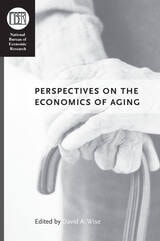
Perspectives on the Economics of Aging
Edited by David A. Wise
University of Chicago Press, 2004
Examining the changes in savings behavior and investment priorities in the United States over the past few decades, contributors to the volume point to a dramatic shift from employer-managed, defined benefit pensions to employee-controlled retirement savings plans. Further, the legislative reforms of the 1980s and the booming stock market of the 1990s did their share to influence individual wealth accumulation patterns of Americans.
These studies also explore the relationship between health status and economic status. Considering issues like pension income and health, mortality, and medical care, contributors present evidence from the United States, Britain, South Africa, and Russia. The volume culminates with wide-ranging discussions on a number of key topics in the field including the innovations that have contributed to a decline in mortality rates; the various medical advances that have benefited populations over time; and the determinants of expenditures on health. The findings with regard to cross-sectional differences in health outcomes and health care utilization also pose troubling questions for policymakers seeking to democratize health care across regions and races.

Peruvian Street Lives
Culture, Power, and Economy among Market Women of CuzcoLinda J. Seligmann
University of Illinois Press, 2004
In Peruvian Street Lives, Seligmann argues that the sometimes invisible and informal economic, social, and political networks market women establish may appear disorderly and chaotic, but in fact often keep dysfunctional economies and corrupt bureaucracies from utterly destroying the ability of citizens to survive from day to day. Seligmann asks why the constructive efforts of market women to make a living provoke such negative social perceptions from some members of Peruvian society, who see them as symbols and actual catalysts of social disorder. At the same time, Seligmann shows how market women eke out a living, combat discrimination, and transgress racial and gender ideologies within the rich and expressive cultural traditions they have developed.

Peruvians in Paterson
Building Businesses and CommunityGianncarlo Muschi
Rutgers University Press, 2027
Peruvians were among the first Latinos to arrive in Paterson and other cities in New Jersey during the post-WW II period. Over successive generations, they established a prosperous ethnic enclave that contributed to Paterson’s socioeconomic renewal. Yet their migration experience has remained relatively unexamined by scholars. This book examines the role of entrepreneurship and informality in the emergence and evolution of the Peruvian community of Paterson. It highlights the historical significance of the establishment of small businesses and social organizations as important cultural elements that validated their physical presence in the area. By uncovering the diverse strategies that Peruvians utilized for building a community, Muschi contends that their culture of informality and resourcefulness paved the way for their economic advancement and the consolidation of the Peruvian community. This book also shows that the informal economic practices introduced by Peruvians altered the social and economic landscape of Paterson and contributed to the revitalization of the local economy. Through the examination of oral histories, archival material from local newspapers, and memoirs declassified by the Peruvian consulate, the author challenges the oversimplified portrayal of Latinos as blue- collar workers with few opportunities for socioeconomic advancement. Peruvians in Paterson demonstrates that Latino migrants achieve wealth and ethnic empowerment in the process of adjustment and community building, suggesting new lines for future research.
Pervasive Prejudice?
Unconventional Evidence of Race and Gender DiscriminationIan Ayres
University of Chicago Press, 2001
In Pervasive Prejudice? Ian Ayres confronts these questions and more. In a series of important studies he finds overwhelming evidence that in a variety of markets—retail car sales, bail bonding, kidney transplantation, and FCC licensing—blacks and females are consistently at a disadvantage. For example, when Ayres sent out agents of different races and genders posing as potential buyers to more than 200 car dealerships in Chicago, he found that dealers regularly charged blacks and women more than they charged white men. Other tests revealed that it is commonly more difficult for blacks than whites to receive a kidney transplant because of federal regulations. Moreover, Ayres found that minority male defendants are frequently required to post higher bail bonds than their Caucasian counterparts.
Traditional economic theory predicts that free markets should drive out discrimination, but Ayres's startling findings challenge that position. Along with empirical research, Ayres offers game—theoretic and other economic methodologies to show how prejudice can enter the bargaining process even when participants are supposedly acting as rational economic agents. He also responds to critics of his previously published studies included here. These studies suggest that race and gender discrimination is neither a thing of the past nor merely limited to the handful of markets that have been the traditional focus of civil rights laws.

Petrochemical Fantasies
The Art and Energy of American ComicsDaniel Worden
The Ohio State University Press, 2024
Finalist, Comics Studies Society Charles Hatfield Book Prize 2025
Nominee, Eisner Award for Best Academic/Scholarly Work 2025
In Petrochemical Fantasies, Daniel Worden reveals the entwined history of comics and fossil fuels in the United States. From the 1840s to the present, comics have depicted the power, pollution, and rapid expansion of energy systems—especially the explosive growth of coal and oil. In the 1930s, some of the first comic books were the gas station giveaways Gulf Funny Weekly and Standard Oil Comics. And in recent years, comics have become one of the major sites for visualizing life after oil, a striking reversal of the medium’s early boosterism.
Surveying the work of acclaimed artists such as Nell Brinkley, George Herriman, Jack Kirby, Winsor McCay, and R. F. Outcault and recovering little-known works, Worden advances a new history of American comics in the Anthropocene. From late nineteenth- and early twentieth-century editorial cartoons and superhero comics that visualize our modern energy culture to contemporary comics grappling with climate crises, Petrochemical Fantasies places comics, environmental humanities, and energy studies in conversation with each other to unearth the crucial but overlooked history of comics’ place in US energy culture.

Philanthropic Foundations in Latin America
Ann Stromberg
Russell Sage Foundation, 1956
Philanthropic Giving
Frank Emerson Andrews
Russell Sage Foundation, 1950

Philanthropy and the Business Corporation
Marion R. Fremont-Smith
Russell Sage Foundation, 1972
Philanthropy in Democratic Societies
History, Institutions, ValuesEdited by Rob Reich, Chiara Cordelli, and Lucy Bernholz
University of Chicago Press, 2016
The contributors balance empirical and normative approaches, exploring both the roles philanthropy has actually played in societies and the roles it should play. They ask a multitude of questions: When is philanthropy good or bad for democracy? How does, and should, philanthropic power interact with expectations of equal citizenship and democratic political voice? What makes the exercise of philanthropic power legitimate? What forms of private activity in the public interest should democracy promote, and what forms should it resist? Examining these and many other topics, the contributors offer a vital assessment of philanthropy at a time when its power to affect public outcomes has never been greater.

Phonographic Modernity
The Gramophone Industry and Music Genres in East and Southeast AsiaEdited by Fumitaka Yamauchi and Ying-fen Wang
University of Illinois Press, 2024
A roster of experts on countries from Japan to Indonesia explores the complicated relationship between the gramophone industry and music genres in East and Southeast Asia. Extending the boundaries of their research across multiple disciplines, the contributors connect the gramophone industry to theories surrounding phonography and modernity. Their focus on phonography combines an interest in discs with an interest in the sounds contributing to the recent sonic-auditory turn in sound studies.
Ambitious and expansive, Phonographic Modernity examines the bloc of East and Southeast Asia within the larger global history of sound recording.

Pikachu's Global Adventure
The Rise and Fall of PokemonJoseph Tobin, ed.
Duke University Press, 2004
In analyzing the popularity of Pokémon, this innovative volume addresses core debates about the globalization of popular culture and about children’s consumption of mass-produced culture. Topics explored include the origins of Pokémon in Japan’s valorization of cuteness and traditions of insect collecting and anime; the efforts of Japanese producers and American marketers to localize it for foreign markets by muting its sex, violence, moral ambiguity, and general feeling of Japaneseness; debates about children’s vulnerability versus agency as consumers; and the contentious question of Pokémon’s educational value and place in school. The contributors include teachers as well as scholars from the fields of anthropology, media studies, sociology, and education. Tracking the reception of Pokémon in Japan, the United States, Great Britain, France, and Israel, they emphasize its significance as the first Japanese cultural product to enjoy substantial worldwide success and challenge western dominance in the global production and circulation of cultural goods.
Contributors. Anne Allison, Linda-Renée Bloch, Helen Bromley, Gilles Brougere, David Buckingham, Koichi Iwabuchi, Hirofumi Katsuno, Dafna Lemish, Jeffrey Maret, Julian Sefton-Green, Joseph Tobin, Samuel Tobin, Rebekah Willet, Christine Yano

Pioneering Minds Worldwide
On the Entrepreneurial Principles of the Cultural and Creative IndustriesEdited by Giep Hagoort, Aukje Thomassen, and Rene Kooyman
Eburon Academic Publishers, 2012
Pioneers for Profit
Foreign Entrepreneurship and Russian Industrialization, 1885-1913John P. McKay
University of Chicago Press, 1970

Pious Property
Islamic Mortgages in the United StatesBill Maurer
Russell Sage Foundation, 2006
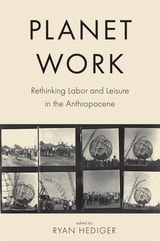
Planet Work
Rethinking Labor and Leisure in the AnthropoceneRyan Hediger
Bucknell University Press, 2023

Planning the Oregon Way
A 20-Year EvaluationCarl Abbott
Oregon State University Press, 1994
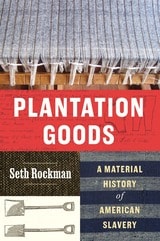
Plantation Goods
A Material History of American SlaverySeth Rockman
University of Chicago Press, 2024
The industrializing North and the agricultural South—that’s how we have been taught to think about the United States in the early nineteenth century. But in doing so, we overlook the economic ties that held the nation together before the Civil War. We miss slavery’s long reach into small New England communities, just as we fail to see the role of Northern manufacturing in shaping the terrain of human bondage in the South. Using plantation goods—the shirts, hats, hoes, shovels, shoes, axes, and whips made in the North for use in the South—historian Seth Rockman locates the biggest stories in American history in the everyday objects that stitched together the lives and livelihoods of Americans—white and Black, male and female, enslaved and free—across an expanding nation.
By following the stories of material objects, such as shoes made by Massachusetts farm women that found their way to the feet of a Mississippi slave, Rockman reveals a national economy organized by slavery—a slavery that outsourced the production of its supplies to the North, and a North that outsourced its slavery to the South. Melding business and labor history through powerful storytelling, Plantation Goods brings northern industrialists, southern slaveholders, enslaved field hands, and paid factory laborers into the same picture. In one part of the country, entrepreneurs envisioned fortunes to be made from “planter’s hoes” and rural women spent their days weaving “negro cloth” and assembling “slave brogans.” In another, enslaved people actively consumed textiles and tools imported from the North to contest their bondage. In between, merchants, marketers, storekeepers, and debt collectors laid claim to the profits of a thriving interregional trade.
Examining producers and consumers linked in economic and moral relationships across great geographic and political distances, Plantation Goods explores how people in the nineteenth century thought about complicity with slavery while showing how slavery structured life nationwide and established a modern world of entrepreneurship and exploitation. Rockman brings together lines of American history that have for too long been told separately, as slavery and capitalism converge in something as deceptively ordinary as a humble pair of shoes.
Plantation Goods
A Material History of American SlaverySeth Rockman
University of Chicago Press, 2024
A Pulitzer Prize finalist in History, this eye-opening rethinking of nineteenth-century American history reveals the interdependence of the Northern industrial economy and Southern slave labor.
The industrializing North and the agricultural South—that’s how we have been taught to think about the United States in the early nineteenth century. But in doing so, we overlook the economic ties that held the nation together before the Civil War. We miss slavery’s long reach into small New England communities, just as we fail to see the role of Northern manufacturing in shaping the terrain of human bondage in the South. Using plantation goods—the shirts, hats, hoes, shovels, shoes, axes, and whips made in the North for use in the South—historian Seth Rockman locates the biggest stories in American history in the everyday objects that stitched together the lives and livelihoods of Americans—white and Black, male and female, enslaved and free—across an expanding nation.
By following the stories of material objects, such as shoes made by Massachusetts farm women that found their way to the feet of a Mississippi slave, Rockman reveals a national economy organized by slavery—a slavery that outsourced the production of its supplies to the North, and a North that outsourced its slavery to the South. Melding business and labor history through powerful storytelling, Plantation Goods brings northern industrialists, southern slaveholders, enslaved field hands, and paid factory laborers into the same picture. In one part of the country, entrepreneurs envisioned fortunes to be made from “planter’s hoes” and rural women spent their days weaving “negro cloth” and assembling “slave brogans.” In another, enslaved people actively consumed textiles and tools imported from the North to contest their bondage. In between, merchants, marketers, storekeepers, and debt collectors laid claim to the profits of a thriving interregional trade.
Examining producers and consumers linked in economic and moral relationships across great geographic and political distances, Plantation Goods explores how people in the nineteenth century thought about complicity with slavery while showing how slavery structured life nationwide and established a modern world of entrepreneurship and exploitation. Rockman brings together lines of American history that have for too long been told separately, as slavery and capitalism converge in something as deceptively ordinary as a humble pair of shoes.
Platform Socialism
How to Reclaim our Digital Future from Big TechJames Muldoon
Pluto Press, 2022
Powerful tech companies now own the digital infrastructure of twenty-first century social life. Masquerading as global community builders, these companies have developed sophisticated new techniques for extracting wealth from their users.
James Muldoon shows how grassroots communities and transnational social movements can take back control from Big Tech. He reframes the technology debate and proposes a host of new ideas, from the local to the international, for how we can reclaim the emancipatory possibilities of digital platforms. Drawing on sources from forgotten histories to contemporary prototypes, he proposes an alternative system and charts a roadmap for how we can get there.

Play to Submission
Gaming Capitalism in a Tech FirmTongyu Wu
Temple University Press, 2024
Play to Submission shows how Behemoth’s games undermined and manipulated workers. They lost their work-life balance and the constant competition made labor organizing difficult. Nonetheless, many workers embraced management’s games as a chance to show off their “gamer” identities and create a workplace culture with privileged insiders and exiled outsiders, with female and migrant workers usually in the latter group. Moreover, Wu indicates this may be the future of work for high- and low-skilled and, creative workers in an environment where capitalists have heightened demands for technology and creativity.
Drawing from 13 months of ethnographic work, Wu presents a persistent reality in which the company reaps the reward of surplus productivity, leaving employees themselves in a highly competitive and sometimes precarious work position.
Playing the Percentages
How Film Distribution Made the Hollywood Studio SystemDerek Long
University of Texas Press, 2024
A history of film distribution in the United States from the 1910s to the 1930s, concentrating on booking, circuiting, and packaging marketing practices.
Told not as a “golden age” narrative of films, stars, or individual studios but as an economic history of the industry’s film distribution practices, Playing the Percentages is the story of how Hollywood’s vertically integrated studio system came to be. Studying the history of distribution during the growth of Hollywood, Derek Long makes a case for the domination of the studio system as the result of struggles over distribution practices.
Through a combination of archival research, critical surveys of the film industry trade press, and economic analysis, Long uncovers a complex and ever-shifting system of wrangling between distributors and exhibitors. Challenging the overemphasis within scholarship on “block booking” as a monolithic distribution mode, and attending to distribution practices beyond simple circulation, Long highlights the crucial changes in film distribution brought about by live theater, the rise of features, and the transition to sound. Playing the Percentages is a comprehensive history of film distribution in the United States during the silent era that illustrates the importance of power struggles between distributors and exhibitors over booking, pricing, and playing time.

Playing with History
American Identities and Children’s Consumer CultureMolly Rosner
Rutgers University Press, 2021

Point of Sale
Analyzing Media RetailDaniel Herbert
Rutgers University Press, 2020