Results by title
1038 books match the query 'Economic conditions' and 49 start with p

Pacific Crossing
California Gold, Chinese Migration, and the Making of Hong KongElizabeth Sinn
Hong Kong University Press, 2014
Palace Politics
How the Ruling Party Brought Crisis to MexicoBy Jonathan Schlefer
University of Texas Press, 2008
Bringing rare interviews and meticulous research to the cloaked world of Mexican politics in the mid-twentieth century, Palace Politics provides a captivating look at the authoritarian Mexican state—one of the longest-lived regimes of its kind in recent history—as well as the origins of political instability itself, with revelations that can be applied to a variety of contemporary political situations around the globe.
Culling a trove of remarkable firsthand accounts from former Mexican presidents, finance ministers, interior ministers, and other high officials from the 1950s through the 1980s, Jonathan Schlefer describes a world in which elite politics planted the seeds of a mammoth socioeconomic crisis. Palace Politics outlines the process by which political infighting among small rival factions of high officials drove Mexico to precarious situations at all levels of government. Schlefer also demonstrates how, earlier on, elite cooperation among these factions had helped sustain one of the most stable growth economies in Latin America, until all-or-nothing struggles began to tear the Mexican ruling party apart in the 1970s.
A vivid, seamlessly narrated history, Palace Politics is essential reading for anyone seeking to better understand not only the nation next door but also the workings of elite politics in general.
Palestine Is Throwing a Party and the Whole World Is Invited
Capital and State Building in the West BankKareem Rabie
Duke University Press, 2021
Parish behind God's Back
The Changing Culture of Rural BarbadosGeorge Gmelch and Sharon Bohn Gmelch
University of Michigan Press, 1997
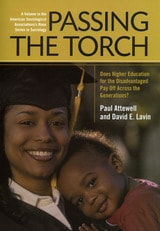
Passing the Torch
Does Higher Education for the Disadvantaged Pay Off Across the Generations?Paul Attewell
Russell Sage Foundation, 2007
The steady expansion of college enrollment rates over the last generation has been heralded as a major step toward reducing chronic economic disparities. But many of the policies that broadened access to higher education—including affirmative action, open admissions, and need-based financial aid—have come under attack in recent years by critics alleging that schools are admitting unqualified students who are unlikely to benefit from a college education. In Passing the Torch, Paul Attewell, David Lavin, Thurston Domina, and Tania Levey follow students admitted under the City University of New York’s “open admissions” policy, tracking its effects on them and their children, to find out whether widening college access can accelerate social mobility across generations.
Unlike previous research into the benefits of higher education, Passing the Torch follows the educational achievements of three generations over thirty years. The book focuses on a cohort of women who entered CUNY between 1970 and 1972, when the university began accepting all graduates of New York City high schools and increasing its representation of poor and minority students. The authors survey these women in order to identify how the opportunity to pursue higher education affected not only their long-term educational attainments and family well-being, but also how it affected their children’s educational achievements. Comparing the record of the CUNY alumnae to peers nationwide, the authors find that when women from underprivileged backgrounds go to college, their children are more likely to succeed in school and earn college degrees themselves. Mothers with a college degree are more likely to expect their children to go to college, to have extensive discussions with their children, and to be involved in their children’s schools. All of these parenting behaviors appear to foster higher test scores and college enrollment rates among their children. In addition, college-educated women are more likely to raise their children in stable two-parent households and to earn higher incomes; both factors have been demonstrated to increase children’s educational success.
The evidence marshaled in this important book reaffirms the American ideal of upward mobility through education. As the first study to indicate that increasing access to college among today’s disadvantaged students can reduce educational gaps in the next generation, Passing the Torch makes a powerful argument in favor of college for all.

Penetration & Protest in Tanzania
Impact Of World Economy On The Pare, 1860-1960Isaria N. Kimambo
Ohio University Press, 1990
The originality of this study of rural transformation stems from the way in which Professor Kimambo has used the oral tradition to reveal the history of the impact of the world economy in northeastern Tanzania. First under the pressures of commodity trade, and later under German and British imperialism, the peasant producers of this region were forced into participation in capitalist production.
These partial changes destroyed the Pare’s balanced subsistence structure. But throughout the colonial period they were frustrated in their efforts to transform themselves fully into capitalist producers. These struggles finally led to open revolt in 1947 and it was three years before the protest ended. Between 1947 and 1960 the colonial government tried to reverse the effects of the revolt without providing the kind of transformation desired by the peasants.
This study illustrates vividly the difference between the intentions of capital and those of the colonized peasantry. The intentions of the two sides seemed to be incompatible. While imperialism would allow for the limited participation that would maximize profits for metropolitan capital, the peasants were struggling for freedom to transform themselves into capitalist producers.
People of Plenty
Economic Abundance and the American CharacterDavid M. Potter
University of Chicago Press, 1954
America has long been famous as a land of plenty, but we seldom realize how much the American people are a people of plenty—a people whose distinctive character has been shaped by economic abundance. In this important book, David M. Potter breaks new ground both in the study of this phenomenon and in his approach to the question of national character. He brings a fresh historical perspective to bear on the vital work done in this field by anthropologists, social psychologists, and psychoanalysts.

Performing the Greek Crisis
Navigating National Identity in the Age of AusterityNatalie Zervou
University of Michigan Press, 2024
Winner of the 2025 Dance Studies Association de la Torre Bueno Book Prize
Performing the Greek Crisis explores the impact of the Greek financial crisis (2009–19) on the performing arts sector in Greece, and especially on contemporary concert dance. When Greece became the first European Union member to be threatened with default, the resulting budget cuts pushed dance to develop in unprecedented directions. The book examines the repercussions that the crisis had on artists’ daily lives and experiences, weaving the personal with the political to humanize a phenomenon that, to date, had been examined chiefly through economic and statistical lenses. Informed by the author’s experience of growing up in Greece and including interviews and rich descriptions of performances, the book offers a glimpse into a pivotal moment in Greek history.
In Greece, dance (and, by extension, the body) has historically held a central role in the process of national identity construction. When the crisis broke out, artists had to navigate through a precariously fluctuating landscape, with their bodies as their only stable referent. By centering the analysis of the Greek crisis on the dancing bodies, Performing the Greek Crisis is able to examine the various ways that artists reconceptualized their history and reframed ideas of national belonging, race, citizenship, and immigration.
Peripheral Visions
Politics, Society, and the Challenges of Modernity in YucatanEdward D. Terry
University of Alabama Press, 2010
The essays in this collection illuminate both the processes of change and the negative reactions that they frequently elicited
Yucatan has been called “a world apart”—cut off from the rest of Mexico by geography and culture. Yet, despite its peripheral location, the region experienced substantial change in the decades after independence. As elsewhere in Mexico, apostles of modernization introduced policies intended to remold Yucatan in the image of the advanced nations of the day. Indeed, modernizing change began in the late colonial era and continued throughout the 19th century as traditional patterns of land tenure were altered and efforts were made to divest the Catholic Church of its wealth and political and intellectual influence. Some changes, however, produced fierce resistance from both elites and humbler Yucatecans and modernizers were frequently forced to retreat or at least reach accommodation with their foes.
Covering topics from the early 19th century to the late 20th century, the essays in this collection illuminate both the processes of change and the negative reactions that they frequently elicited. The diversity of disciplines covered by this volume—history, anthropology, sociology, economics—illuminates at least three overriding challenges for study of the peninsula today. One is politics after the decline of the Institutional Revolutionary Party: What are the important institutions, practices, and discourses of politics in a post-postrevolutionary era? A second trend is the scholarly demystification of the Maya: Anthropologists have shown the difficulties of applying monolithic terms like Maya in a society where ethnic relations are often situational and ethnic boundaries are fluid. And a third consideration: researchers are only now beginning to grapple with the region’s transition to a post-henequen economy based on tourism, migration, and the assembly plants known as maquiladoras. Challenges from agribusiness and industry will no doubt continue to affect the peninsula’s fragile Karst topography and unique environments.
Contributors: Eric N. Baklanoff, Helen Delpar, Paul K. Eiss, Ben W. Fallaw, Gilbert M. Joseph, Marie Lapointe, Othón Baños Ramírez, Hernán Menéndez Rodríguez, Lynda S. Morrison, Terry Rugeley, Stephanie J. Smith
Persistent Callings
Seasons of Work and Identity on the Oregon CoastJoseph E. Taylor
Oregon State University Press, 2019
The Nestucca Valley is a small watershed, tucked away in one corner of a county in far western Oregon. There are no incorporated towns, and cows outnumber humans. It has long been a place without a written history, yet its past offers many surprising twists on received wisdom about rural economies. In crisp prose and succinct chapters, Persistent Callings carries readers from aboriginal times to the present, illustrating the wisdom of seasonal labor, the complex relationships between work and identity, and the resilience of rural economics across more than a century of almost continual change.
Life in this watershed, known to locals as “South County,” has always been demanding. Farming, fishing, and logging were difficult occupations, but work had deeper meanings. Challenges arrived in many forms, including climate shifts, market crashes, regulatory changes, and industry consolidations. Residents’ ability to innovate was their greatest resource, and their persistence helps us to recognize the callings they pursued.
During the late twentieth and early twenty-first centuries, disruptions came more quickly, and they coincided with infusions of capital that dramatically altered the structure of employment, with devastating results for the valley’s hardest working residents. Unemployment and poverty skyrocketed while health and life expectancy dropped to alarming levels. Moreover, the arrival of retirees and rise of environmental amenities actually exacerbated some ecological problems. Little in this history plays out as expected, and much of it will make readers reconsider how they think about the social, economic, and environmental contours of rural life in the American West.
Persistent Progressives
The Rocky Mountain Farmers UnionJohn F. Freeman
University Press of Colorado, 2015
Using data spanning decades, author John Freeman covers the founding of the RMFU in 1907 until the present, demonstrating how members continually sought to control the means of production and marketing by forming cooperatives, providing consumer services, and engaging in politics. Powering this evolution was a group of “practical idealists”—the Farmers Union leaders and titular persistent progressives who shaped the organization’s growth and expansion. Initiated by Jim Patton, who brought the organization out of its oppositional roots and into its cooperative advocacy, the RMFU passed to John Stencel and then David Carter, joining hands with agricultural conservationists and small organic producers along the way to carry the torch for progressive agrarianism in today’s urbanized world. Shaken but undeterred by some notable failures, its leadership remains convinced of the efficacy of cooperatives as a means to achieve justice for all.
Discussing the broader social, economic, political, and environmental issues related to farming, ranching, and urbanization, Persistent Progressives seamlessly blends regional history with ongoing issues of agricultural and economic development.
Perspectives on the Economics of Aging
Edited by David A. Wise
University of Chicago Press, 2004
Examining the changes in savings behavior and investment priorities in the United States over the past few decades, contributors to the volume point to a dramatic shift from employer-managed, defined benefit pensions to employee-controlled retirement savings plans. Further, the legislative reforms of the 1980s and the booming stock market of the 1990s did their share to influence individual wealth accumulation patterns of Americans.
These studies also explore the relationship between health status and economic status. Considering issues like pension income and health, mortality, and medical care, contributors present evidence from the United States, Britain, South Africa, and Russia. The volume culminates with wide-ranging discussions on a number of key topics in the field including the innovations that have contributed to a decline in mortality rates; the various medical advances that have benefited populations over time; and the determinants of expenditures on health. The findings with regard to cross-sectional differences in health outcomes and health care utilization also pose troubling questions for policymakers seeking to democratize health care across regions and races.
Peruvian Street Lives
Culture, Power, and Economy among Market Women of CuzcoLinda J. Seligmann
University of Illinois Press, 2004
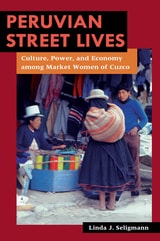
In Peruvian Street Lives, Seligmann argues that the sometimes invisible and informal economic, social, and political networks market women establish may appear disorderly and chaotic, but in fact often keep dysfunctional economies and corrupt bureaucracies from utterly destroying the ability of citizens to survive from day to day. Seligmann asks why the constructive efforts of market women to make a living provoke such negative social perceptions from some members of Peruvian society, who see them as symbols and actual catalysts of social disorder. At the same time, Seligmann shows how market women eke out a living, combat discrimination, and transgress racial and gender ideologies within the rich and expressive cultural traditions they have developed.
Philadelphia
Neighborhoods, Division, and Conflict in a Post-Industrial CityCarolyn Adams
Temple University Press, 1993

Phoenix
The History of a Southwestern MetropolisBradford Luckingham
University of Arizona Press, 1989

Pigs That Ate the Garden
A Human Ecology from Papua New GuineaPeter D. Dwyer
University of Michigan Press, 1990
Places of Their Own
African American Suburbanization in the Twentieth CenturyAndrew Wiese
University of Chicago Press, 2005
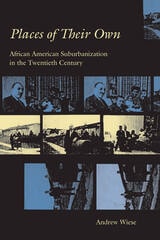
For most people, this cozy image of suburbia does not immediately evoke images of African Americans. But as this pioneering work demonstrates, the suburbs have provided a home to black residents in increasing numbers for the past hundred years—in the last two decades alone, the numbers have nearly doubled to just under twelve million. Places of Their Own begins a hundred years ago, painting an austere portrait of the conditions that early black residents found in isolated, poor suburbs. Andrew Wiese insists, however, that they moved there by choice, withstanding racism and poverty through efforts to shape the landscape to their own needs. Turning then to the 1950s, Wiese illuminates key differences between black suburbanization in the North and South. He considers how African Americans in the South bargained for separate areas where they could develop their own neighborhoods, while many of their northern counterparts transgressed racial boundaries, settling in historically white communities. Ultimately, Wiese explores how the civil rights movement emboldened black families to purchase homes in the suburbs with increased vigor, and how the passage of civil rights legislation helped pave the way for today's black middle class.
Tracing the precise contours of black migration to the suburbs over the course of the whole last century and across the entire United States, Places of Their Own will be a foundational book for anyone interested in the African American experience or the role of race and class in the making of America's suburbs.
Winner of the 2005 John G. Cawelti Book Award from the American Culture
Association.
Winner of the 2005 Award for Best Book in North American Urban
History from the Urban History Association.

Political Economy of the Urban Ghetto
Daniel R. Fusfeld and Timothy Bates
Southern Illinois University Press, 1984
The income of blacks in most northern industrial states today is lower relative to the income of whites than in 1949.Fusfeld and Bates examine the forces that have led to this state of affairs and find that these economic relationships are the product of a complex pattern of historical development and change in which black-white economic relationships play a major part, along with patterns of industrial, agricultural, and technological change and urban development. They argue that today’s urban racial ghettos are the result of the same forces that created modern America and that one of the by-products of American affluence is a ghettoized racial underclass.
These two themes, they state, are essential for an understanding of the problem and for the formulation of policy. Poverty is not simply the result of poor education, skills, and work habits but one outcome of the structure and functioning of the economy. Solutions require more than policies that seek to change people: they await a recognition that basic economic relationships must be changed.
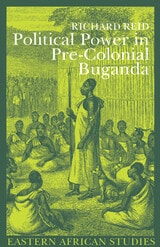
Political Power in Pre-Colonial Buganda
Economy, Society, and Warfare in the Nineteenth CenturyRichard Reid
Ohio University Press, 2002
Blessed with fertile and well-watered soil, East Africa’s kingdom of Buganda supported a relatively dense population and became a major regional power by the mid-nineteenth century. This complex and fascinating state has also long been in need of a thorough study that cuts through the image of autocracy and military might.
Political Power in Pre-Colonial Buganda explores the material basis of Ganda political power, gives us a new understanding of what Ganda power meant in real terms, and relates the story of how the kingdom used the resources at its disposal to meet the challenges that confronted it. Reid further explains how these same challenges ultimately limited Buganda’s dominance of the East African great lakes region.
Populus
Living and Dying in Ancient RomeGuy de la Bédoyère
University of Chicago Press, 2024
Frenzied crowds, talking ravens, the stench of the Tiber River: life in ancient Rome was stimulating, dynamic, and often downright dangerous. The Romans relaxed and gossiped in baths, stole precious water from aqueducts, and partied and dined to excess. Everyone from senators to the enslaved crowded into theaters and circuses to watch their favorite singers, pantomime, and comedies and scream their approval at charioteers. The lucky celebrated their accomplishments with elaborate tombs. Amid pervasive inequality and brutality, beauty also flourished through architecture, poetry, and art.
From the smells of fragrant cookshops and religious sacrifices to the cries of public executions and murderous electoral mobs, Guy de la Bédoyère’s Populus draws on a host of historical and literary sources to transport us into the intensity of daily life at the height of ancient Rome.
Portraits of Persistence
Inequality and Hope in Latin AmericaJavier Auyero
University of Texas Press, 2024
Profiles of triumph and hardship amid massive inequality in Latin America.
Each chapter of Portraits of Persistence, a project of the University of Texas Urban Ethnography Lab, offers an intimate portrait of one or two individual lives. The subjects are a diverse group of individuals from across the continent: grassroots activists and political brokers, private security entrepreneurs, female drug dealers, shantytown dwellers, and rural farmers, as well as migrants finding routes into and out of the region. Through these accounts, the writers explore issues that are common throughout today's world: precarious work situations, gender oppression, housing displacement, experiences navigating the bureaucracy for asylum seekers, state violence, environmental devastation, and access to good and affordable health care. Carefully situating these experiences within the sociohistorical context of their specific local regions or countries, editor Javier Auyero and his colleagues consider how people make sense of the paths their lives have taken, the triumphs and hardships they have experienced, and the aspirations they hold for the future. Ultimately, these twelve compelling profiles offer unique and personal windows into the region’s complex and multilayered reality.
Postcolonial Configurations
Dictatorship, the Racial Cold War, and Filipino AmericaJosen Masangkay Diaz
Duke University Press, 2023

Poverty and Neoliberalism
Persistence and Reproduction in the Global SouthRay Bush
Pluto Press, 2007
Why do so many people worldwide suffer hunger and poverty when there is enough food and other resources globally to prevent it? This book shows how famine and food insecurity are an essential part of modern capitalism. Although trade, debt relief and development initiatives are important, they do not alter the structure of the global economy and the poverty that is created by processes like privatisation, trade liberalisation and market reform.
Despite the rhetoric of the World Bank and the G8, high levels of poverty actually sustain western wealth and power. But there is some hope for change. Using case studies from Egypt and North Africa, Nigeria, Sudan and elsewhere in sub-Saharan Africa, Ray Bush illustrates that there is resistance to neoliberal policies, and that struggles over land, mining and resources can shape real alternatives to existing globalisation.
Poverty and Wealth in East Africa
A Conceptual HistoryRhiannon Stephens
Duke University Press, 2022
Poverty in Common
The Politics of Community Action during the American CenturyAlyosha Goldstein
Duke University Press, 2012
Poverty, Law, and Divine Justice in Persian and Hellenistic Judah
Johannes Unsok Ro
SBL Press, 2018
A view of Persian and Hellenistic Judean communities through theological and socioeconomic lenses
Johannes Unsok Ro employs philological, historical, and sociological approaches to investigate the close connections between socioeconomic structures, social inequality, and theological developments in the Judean communities in Persian- and Hellenistic-era Palestine. Ro contends that competing points of view from communities of lay returnees, priestly returnees, and communities of resident Judeans and Samaritans were juxtaposed within the Hebrew Bible, which took shape during the postexilic period. By exploring issues such as the relationship between the shaping of the canon and literacy in the Judean community, the term strangers in the biblical law codes, the socioeconomic structures of Judean communities reflected in the biblical law codes, the development of the theological concept of divine punitive justice, the piety of the poor in certain psalms, and the concept of poverty in the Dead Sea Scrolls, Ro illustrates that the communities behind each text and its redactions can be ascertained through sociological and theological lenses.
Features
- Demonstration that a theology of the poor materialized orally among the poor but found written expression among Levites
- Insight into the socioeconomic and theological concerns of the authorial groups behind various biblical law codes
- A case that biblical “poverty” sometimes refers to humility and a theologically reflected consciousness of lowliness toward God
Power and Powerlessness
Quiescence and Rebellion in an Appalachian ValleyJohn Gaventa
University of Illinois Press, 1980
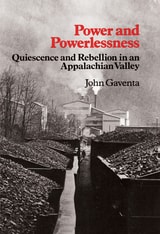
Using Clear Fork Valley in central Appalachia as an empirical example, Gaventa attempts to discern the "hidden faces of power" - those forces which shape actions and consciousness in ways not readily apparent in formal American political processes. He seeks to clarify and expand upon past theories (by such writers as Bachrach and Lukes) on the nature and maintenance of power.
The region studied here is characterized by stark incongruity - the co-existence of massive natural wealth (coal and land) with pervasive human poverty attended by high unemployment, limited education, malnutrition, and the prevalent hazards of mining coal: black lung, dismemberment, death, and ecological ruin. This has been the region's status quo under the decades of domination by a British company and its absentee owners. Despite these departure conditions and frequently violent union struggles, culminating in the 1969 murder of UMW reformist Jock Yablonski, acquiescence to this status quo has been maintained. Gaventa searches out the answers to how and why wealth and poverty continue to coexist and the powerless continue to accede to the powerful. His astute analysis poses broader questions about the politics of poverty, working-class consciousness, and corporate power in America.
Power and Society in Greater NY
David C. Hammack
Russell Sage Foundation, 1982
Power, Culture and Place
Essays on New York CityJohn H. Mollenkopf
Russell Sage Foundation, 1988
Power, Participation, and Protest in Flint, Michigan
Unpacking the Policy Paradox of Municipal TakeoversAshley E. Nickels
Temple University Press, 2019
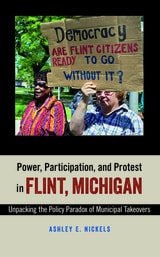
When the 2011 municipal takeover in Flint, Michigan placed the city under state control, some supported the intervention while others saw it as an affront to democracy. Still others were ambivalent about what was supposed to be a temporary disruption. However, the city’s fiscal emergency soon became a public health emergency—the Flint Water Crisis—that captured international attention.
But how did Flint’s municipal takeovers, which suspended local representational government, alter the local political system? In Power, Participation, and Protest in Flint, Michigan, Ashley Nickels addresses the ways residents, groups, and organizations were able to participate politically—or not—during the city’s municipal takeovers in 2002 and 2011. She explains how new politics were created as organizations developed, new coalitions emerged and evolved, and people’s understanding of municipal takeovers changed.
Inwalking readers through the policy history of, implementation of, and reaction to Flint’s two municipal takeovers, Nickels highlights how the ostensibly apolitical policy is, in fact, highly political.

Precarious Japan
Anne Allison
Duke University Press, 2013
Predatory Economies
The Sanema and the Socialist State in Contemporary AmazoniaAmy Penfield
University of Texas Press, 2023
2024 Honorable Mention, Fernando Coronil Prize, Latin American Studies Association, Section on Venezuelan Studies
A study of the modes of predation used by and against the Sanema people of Venezuela.
Predation is central to the cosmology and lifeways of the Sanema-speaking Indigenous people of Venezuelan Amazonia, but it also marks their experience of modernity under the socialist “Bolivarian” regime and its immense oil wealth. Yet predation is not simply violence and plunder. For Sanema people, it means a great deal more: enticement, seduction, persuasion. It suggests an imminent threat but also opportunity and even sanctuary.
Amy Penfield spent two and a half years in the field, living with and learning from Sanema communities. She discovered that while predation is what we think it is—invading enemies, incursions by gold miners, and unscrupulous state interventions—Sanema are not merely prey. Predation, or appropriation without reciprocity, is essential to their own activities. They use predatory techniques of trickery in hunting and shamanism activities, while at the same time, they employ tactics of manipulation to obtain resources from neighbors and from the state. A richly detailed ethnography, Predatory Economies looks beyond well-worn tropes of activism and resistance to tell a new story of agency from an Indigenous perspective.

Predatory Welfare
Debt, Race, and Cash TransfersErin Torkelson
Duke University Press, 2026
Preserving the Vanishing City
Historic Preservation amid Urban Decline in Cleveland, OhioStephanie Ryberg-Webster
Temple University Press, 2023
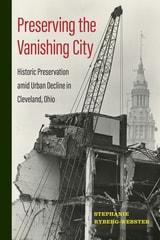
Stephanie Ryberg-Webster uncovers the motivations, strategies, and constraints driving Cleveland’s historic preservation sector, led by the public-sector Cleveland Landmarks Commission, nonprofit Cleveland Restoration Society, and a cadre of advocates. She sheds light on the ways in which preservationists confronted severe, escalating, and sustained urban decline, which plagued Cleveland, a prototypical rust-belt industrial city.
Preserving the Vanishing City chronicles the rise of the historic preservation profession in Cleveland and provides six case studies about targeted projects and neighborhood efforts, including industrial heritage, housing preservation and restoration, commercial district revitalization, securing local historic district designations, as well as grassroots organizing, coalition building, and partnerships. Ryberg-Webster also addresses the complexities of historic preservation within the context of rapid racial change in Cleveland’s neighborhoods.
A comprehensive history of preservation within the context of one city’s urban decline, Preserving the Vanishing Cityrecounts the successes, failures, and creative strategies employed to save Cleveland’s built environment.
Priceless Markets
The Political Economy of Credit in Paris, 1660-1870Philip T. Hoffman, Gilles Postel-Vinay, and Jean-Laurent Rosenthal
University of Chicago Press, 2000
The implications for historians and economists are substantial. The role of notaries operating in Paris that Priceless Markets uncovers has never before been recognized. In the wake of this pathbreaking new study, historians will also have to rethink the origins of the French Revolution. As the authors show, the crisis of 1787-88 did not simply ignite revolt; it was intimately bound up in an economic struggle that reached far back into the eighteenth century, and continued well into the 1800s.
Prismatic Metropolis
Inequality in Los AngelesLawrence D. Bobo
Russell Sage Foundation, 2000
Privileged Minorities
A History of Wealth Concentration in South AfricaMesrob Vartavarian
Ohio University Press, 2026
Explores how anticolonial movements in South Africa enabled enduring inequality through the rise of privileged minorities and exclusive economic advantages
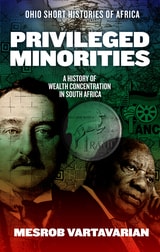
In Privileged Minorities, Mesrob Vartavarian examines a central paradox in South African history: how a nation shaped by anticolonial struggle became fertile ground for wealth concentration and enduring inequality. While these contradictions are not unique to South Africa, its historical trajectory offers broader insights into persistent disparities across African societies.
Vartavarian argues that the rise of privileged minorities—small, exclusive groups that dominate political and economic life—paralleled the development of successful anticolonial movements. These minorities secured exclusive advantages, defined as benefits and protections that enabled material accumulation. Such advantages included land seizures, racialized labor systems, access to coercive institutions, favorable regulatory environments, and targeted state expenditures. Though these mechanisms could foster overall economic growth, they disproportionately benefited select oligarchies and middle classes.
The book traces how distinct sociocultural groups in South Africa navigated and negotiated these advantages from the Dutch colonial era through the rise and decline of African National Congress rule. Rather than dismantling minority privilege, challenges from marginalized groups often served to reshape entrenched advantages by incorporating new actors into existing structures. These dynamics produced composite systems of accumulation that sustained inequality. Through this historical lens, Privileged Minorities offers a compelling framework for understanding how structural advantage persists and evolves, even in the wake of liberation.
Producing India
From Colonial Economy to National SpaceManu Goswami
University of Chicago Press, 2004
Producing India mounts a formidable challenge to the entrenched practice of methodological nationalism that has accorded an exaggerated privilege to the nation-state as a dominant unit of historical and political analysis. Manu Goswami locates the origins and contradictions of Indian nationalism in the convergence of the lived experience of colonial space, the expansive logic of capital, and interstate dynamics. Building on and critically extending subaltern and postcolonial perspectives, her study shows how nineteenth-century conceptions of India as a bounded national space and economy bequeathed an enduring tension between a universalistic political economy of nationhood and a nativist project that continues to haunt the present moment.
Elegantly conceived and judiciously argued, Producing India will be invaluable to students of history, political economy, geography, and Asian studies.

Profiting from the Peak
Landscape and Liberty in Colorado SpringsJohn Harner
University Press of Colorado, 2021
Colorado Springs, Colorado, has long profited from Pikes Peak and built an urban infrastructure to sustain that relationship. In Profiting from the Peak, geographer John Harner surveys the events and socioeconomic conditions that formed the city, analyzing the built landscape to offer insight into the origins of its urban forms and spatial layout, focusing particularly on historic downtown architecture and public spaces. He examines the cultural values that have come to define the city, showing how military and other institutions, tourism, political and economic conditions, cultural movements, key individual actors, and administrative policies have created a singular urban personality.
Capital accumulation has been a defining theme of Colorado Springs from its very beginning, with enormous profits generated from regional industrialization, railroads, land sales, water appropriation, and extraction of coal and gold. These conditions and its setting in the Rocky Mountain West formed a libertarian-oriented, limited governance philosophy.
Promise to Pay
The Politics and Power of Money in Early AmericaKatie A. Moore
University of Chicago Press, 2024
Promise to Pay follows America’s first paper money—the “bills of credit” of British North America—from its seventeenth-century origins as a means of war finance to its pivotal role in catalyzing the American Revolution. Katie A. Moore combs through treasury records, account books, and the bills themselves to tell a new story of money’s origins that challenges economic orthodoxy and mainstream histories. Promise to Pay shows how colonial governments imposed paper bills on settler communities through existing labor and kinship relations, their value secured by thousands of individual claims on the public purse—debts—and the state’s promise to take them back as payment for taxes owed. Born into a world of hierarchy and deference, early American money eroded old social ties and created new asymmetries of power, functioning simultaneously as a ticket to the world of goods, a lifeline for those on the margins, and a tool of imperial domination.
Grounded in sustained engagement with scholarship from multiple disciplines, Promise to Pay breathes new life into old debates and offers an incisive account of the centrality of money in the politics and conflicts of empire, community, and everyday life.
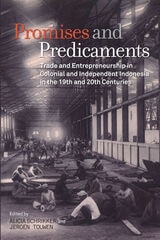
Promises and Predicaments
Trade and Entrepreneurship in Colonial and Independent Indonesia in the 19th and 20th CenturiesEdited by Alicia Schrikker and Jeroen Touwen
National University of Singapore Press, 2015
The authors deal with entrepreneurship and economic specialization within different ethnic groups, the geographical distribution of exports and resource drains from exporting regions, and connections between an export economy and mass poverty. One recurring issue is the way actors from different ethnic groups occupied complementary niches, highlighting the rich variety of roles played by Asian entrepreneurs. A study of the international sugar trade shows how regime change fostered co-operation between different ethnic groups and nationalities involved with trading networks, inter-island shipping, urban public transport, and the construction sector. A comparison of export earnings and population groups involved in trade before and after 1900 shows that unexpected agricultural and industrial transitions could underpin a fundamental shift in income growth, with improved living standards for broad sectors of the population.
Property Rules
Political Economy in Chicago, 1833-1872Robin L. Einhorn
University of Chicago Press, 1991
A Choice "Outstanding Academic Book"
"[A] masterful study of policy-making in Chicago."—Choice
"[A] major contribution to urban and political history. . . . [A]n excellent book."—Jeffrey S. Adler, American Historical Review
"[A]n enlightening trip. . . . Einhorn's foray helps make sense out of the transition from Jacksonian to Gilded Age politics on the local level. . . . [She] has staked out new ground that others would do well to explore."—Arnold R. Hirsch, American Journal of Legal History
"A well-documented and informative classic on urban politics."—Daniel W. Kwong, Law Books in Review
Prophets of Agroforestry
Guaraní Communities and Commercial GatheringBy Richard K. Reed
University of Texas Press, 1995
For almost four centuries, the indigenous Chiripá (Guaraní) people of eastern Paraguay have maintained themselves as a distinct society and culture, despite continual and often intense relations with Paraguayan society and the international economy. In this study, Richard K. Reed explores the economic and social basis for this ethnic autonomy.
Reed finds that Chiripá economic power derives from their practice of commercial agroforestry. Unlike Latin American indigenous societies that have been forced to clear land for commercial agriculture, the Chiripá continue to harvest and sell forest products, such as caffeinated yerba mate, without destroying the forests. Reed also explores the relation of this complex economy to Chiripá social organization and shows how flexible kin ties allowed the Chiripá to adapt to the pressure and opportunities of the commercial economy without adopting the authoritarian nature of rural Paraguayan society.
These findings offer important insights into the relations among indigenous groups, nation-states, and the international economy. They also provide a timely alternative model for sustainable management of subtropical forests that will be of interest in the fields of development and environmental studies.
Prosperity For All?
The Economic Boom and African AmericansRobert Cherry
Russell Sage Foundation, 2000

Prosperity without Greed
How to Save Ourselves from CapitalismSahra Wagenknecht
Campus Verlag, 2016

Protecting Heritage in the Caribbean
Peter E. Siegel
University of Alabama Press, 2011
Public Indians, Private Cherokees
Tourism and Tradition on Tribal GroundChristina Taylor Beard-Moose
University of Alabama Press, 2008
A major economic industry among American Indian tribes is the public promotion and display of aspects of their cultural heritage in a wide range of tourist venues. Few do it better than the Eastern Band of the Cherokee, whose homeland is the Qualla Boundary of North Carolina. Through extensive research into the work of other scholars dating back to the late 1800s, and interviews with a wide range of contemporary Cherokees, Beard-Moose presents the two faces of the Cherokee people. One is the public face that populates the powwows, dramatic presentations, museums, and myriad roadside craft locations. The other is the private face whose homecoming, Indian fairs, traditions, belief system, community strength, and cultural heritage are threatened by the very activities that put food on their tables. Constructing an ethnohistory of tourism and comparing the experiences of the Cherokee with the Florida Seminoles and Southwestern tribes, this work brings into sharp focus the fine line between promoting and selling Indian culture.
Puerto Rican Citizen
History and Political Identity in Twentieth-Century New York CityLorrin Thomas
University of Chicago Press, 2010
Building its incisive narrative from a wide range of archival sources, interviews, and first-person accounts of Puerto Rican life in New York, this book illuminates the rich history of a group that is still largely invisible to many scholars. At the center of Puerto Rican Citizen are Puerto Ricans’ own formulations about political identity, the responses of activists and ordinary migrants to the failed promises of American citizenship, and their expectations of how the American state should address those failures. Complicating our understanding of the discontents of modern liberalism, of race relations beyond black and white, and of the diverse conceptions of rights and identity in American life, Thomas’s book transforms the way we understand this community’s integral role in shaping our sense of citizenship in twentieth-century America.
Putting Inequality in Context
Class, Public Opinion, and Representation in the United StatesChristopher Ellis
University of Michigan Press, 2017
Christopher Ellis argues citizens’—and legislators’—views of class politics are driven by lived experience in particular communities. While some experience is formally political, on an informal basis citizens learn a great deal about their position in the broader socioeconomic spectrum and the social norms governing how class intersects with day-to-day life. These factors are important for policymakers, since most legislators do not represent “the public” at large, but specific constituencies.
Focusing on U.S. congressional districts as the contextual unit of interest, Ellis argues individuals’ political behavior cannot be separated from their environment, and shows how income’s role in political processes is affected by the contexts in which citizens and legislators interact. Political inequality exists in the aggregate, but it does not exist everywhere. It is, rather, a function of specific arrangements that depress the political influence of the poor. Identifying and understanding these factors is a crucial step in thinking about what reforms might be especially helpful in enhancing equality of political voice.