Results by title
511 books match the query 'Government policy' and 26 start with p
Pain and Shock in America
Politics, Advocacy, and the Controversial Treatment of People with DisabilitiesJan Nisbet
Brandeis University Press, 2021
For more than forty years, professionals in the field of disability studies have engaged in debates over the use of aversive interventions (such as electric shock) like the ones used at the Judge Rotenberg Center. Advocates and lawyers have filed complaints and lawsuits to both use them and ban them, scientists have written hundreds of articles for and against them, and people with disabilities have lost their lives and, some would say, lived their lives because of them. There are families who believe deeply in the need to use aversives to control their children’s behavior. There are others who believe the techniques used are torture. All of these families have children who have been excluded from numerous educational and treatment programs because of their behaviors. For most of the families, placement at the Judge Rotenberg Center is the last resort.
This book is a historical case study of the Judge Rotenberg Center, named after the judge who ruled in favor of keeping its doors open to use aversive interventions. It chronicles and analyzes the events and people involved for over forty years that contributed to the inability of the state of Massachusetts to stop the use of electric shock, and other severe forms of punishment on children and adults with disabilities. It is a long story, sad and tragic, complex, filled with intrigue and questions about society and its ability to protect and support its most vulnerable citizens.

Palestinian Refugees
The Right of ReturnEdited by Naseer Aruri
Pluto Press, 2001
With renewed conflict in the Middle East, the prospect of a peaceful resolution looks more unlikely than ever. The Palestinian right of return to their homes has been upheld in international law and through United Nations' resolutions for fifty years. Equally the right of return has been denied by Israel and deferred to a "final status" issue in the Oslo Accords. It is on this right of return that the Palestinians are united. And it is this issue which is so frequently ignored by the international media.
With major contributions from a range of international experts, including Edward W. Said, Noam Chomsky, Ilan Pappe, Alain Gresh and Norman Finkelstein, this volume examines the Palestinians’ right of return. Chapters cover the historical roots of the Palestinian refugee question; the rights of the refugees under international law; the special case of Lebanon; Israeli perceptions of the refugee question; the practical feasibility of the return; the role of the United States and the European Union and the Refugee Question; the value of the refugee property; the principles of compensation; and a programme for an Independent Rights Campaign.

Pandora's Locks
The Opening of the Great Lakes-St. Lawrence SeawayJeff Alexander
Michigan State University Press, 2009
The St. Lawrence Seaway was considered one of the world's greatest engineering achievements when it opened in 1959. The $1 billion project-a series of locks, canals, and dams that tamed the ferocious St. Lawrence River-opened the Great Lakes to the global shipping industry.
Linking ports on lakes Superior, Michigan, Huron, Erie, and Ontario to shipping hubs on the world's seven seas increased global trade in the Great Lakes region. But it came at an extraordinarily high price. Foreign species that immigrated into the lakes in ocean freighters' ballast water tanks unleashed a biological shift that reconfigured the world's largest freshwater ecosystems.
Pandora's Locks is the story of politicians and engineers who, driven by hubris and handicapped by ignorance, demanded that the Seaway be built at any cost. It is the tragic tale of government agencies that could have prevented ocean freighters from laying waste to the Great Lakes ecosystems, but failed to act until it was too late. Blending science with compelling personal accounts, this book is the first comprehensive account of how inviting transoceanic freighters into North America's freshwater seas transformed these wondrous lakes.

Paper Families
Identity, Immigration Administration, and Chinese ExclusionEstelle T. Lau
Duke University Press, 2006
Drawing on these documents as well as immigration case files, legislative materials, and transcripts of interviews and court proceedings, Lau reveals immigration as an interactive process. Chinese immigrants and their U.S. families were subject to regulation and surveillance, but they also manipulated and thwarted those regulations, forcing the U.S. government to adapt its practices and policies. Lau points out that the Exclusion Acts and the pseudo-familial structures that emerged in response have had lasting effects on Chinese American identity. She concludes with a look at exclusion’s legacy, including the Confession Program of the 1960s that coerced people into divulging the names of paper family members and efforts made by Chinese American communities to recover their lost family histories.
Patients of the State
The Politics of Waiting in ArgentinaJavier Auyero
Duke University Press, 2012
Patterns, Thinking, and Cognition
A Theory of JudgmentHoward Margolis
University of Chicago Press, 1988
Illusions of judgment—standard anomalies where people consistently misjudge or misperceive what is logically implied or really present—are often used in cognitive science to explore the workings of the cognitive process. The explanations given for these anomalous results have generally explained only the anomaly under study and nothing more. Margolis provides a provocative and systematic analysis of these illusions, which explains why such anomalies exist and recur.
Offering empirical applications of his theory, Margolis turns to historical cases to show how an individual's cognitive repertoire—the available cognitive patterns and their relation to cues—changes or resists changes over time. Here he focuses on the change in worldview occasioned by the Copernican discovery: not only how an individual might come to see things in a radically new way, but how it is possible for that new view to spread and become the dominant one. A reanalysis of the trial of Galileo focuses on social cognition and its interactions with politics.
In challenging the prevailing paradigm for understanding how the human mind works, Patterns, Thinking, and Cognition is certain to stimulate fruitful debate.

Planning the Oregon Way
A 20-Year EvaluationCarl Abbott
Oregon State University Press, 1994
Planning the Urban Region
A Comparative Study of Policies and OrganizationsPeter Self
University of Alabama Press, 1982
In tandem with an analysis of the basic purpose and rationale of urban planning, Peter Self discusses the achievements and failures of different types of planning authorities. Planning the Urban Region surveys in turn the planning of city governments, metro governments, and regional bodies as they attempt to guide the growth and character of large urban areas—within whose sprawl live roughly one-half of the populations of Western countries—with examples drawn from the United States, Great Britain, Canada, Australia, Sweden, and France.
Self argues that the urban region is at a political and organizational crossroads, as it must grapple with the problems of urban sprawl: the social effects of land use and housing, conflicts between local communities and the metro organizations, environmental issues, and the capacity of governmental systems to handle complex issues. Planning the Urban Region is a valuable contribution to the literature on the future of cities and urban regions and should materially inform the debate on the place of public planning in shaping that future.
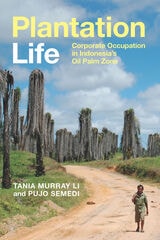
Plantation Life
Corporate Occupation in Indonesia's Oil Palm ZoneTania Murray Li and Pujo Semedi
Duke University Press, 2021

Plundering the North
A History of Settler Colonialism, Corporate Welfare, and Food InsecurityKristin Burnett
University of Manitoba Press, 2023
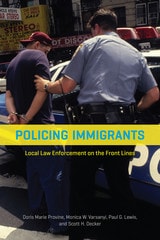
Policing Immigrants
Local Law Enforcement on the Front LinesDoris Marie Provine, Monica W. Varsanyi, Paul G. Lewis, and Scott H. Decker
University of Chicago Press, 2016
Policing Immigrants traces the transition of immigration enforcement from a traditionally federal power exercised primarily near the US borders to a patchwork system of local policing that extends throughout the country’s interior. Since federal authorities set local law enforcement to the task of bringing suspected illegal immigrants to the federal government’s attention, local responses have varied. While some localities have resisted the work, others have aggressively sought out unauthorized immigrants, often seeking to further their own objectives by putting their own stamp on immigration policing. Tellingly, how a community responds can best be predicted not by conditions like crime rates or the state of the local economy but rather by the level of conservatism among local voters. What has resulted, the authors argue, is a system that is neither just nor effective—one that threatens the core crime-fighting mission of policing by promoting racial profiling, creating fear in immigrant communities, and undermining the critical community-based function of local policing.

Politics on the Endless Frontier
Postwar Research Policy in the United StatesDaniel Lee Kleinman
Duke University Press, 1995
Although it ended up as only one among a host of federal research policymaking agencies, the National Science Foundation was originally conceived as central to the federal research policymaking system. Kleinman’s historical examination of the National Science Foundation exposes the sociological and political workings of the system, particularly the way in which a small group of elite scientists shaped the policymaking process and defined the foundation’s structure and future. Beginning with Vannevar Bush’s 1945 manifesto The Endless Frontier, Kleinman explores elite and populist visions for a postwar research policy agency and shows how the structure of the American state led to the establishment of a fragmented and uncoordinated system for federal research policymaking. His book concludes with an analysis of recent efforts to reorient research policy and to remake federal policymaking institutions in light of the current "crisis" of economic competitiveness.
A particularly timely study, Politics on the Endless Frontier will be of interest to historians and sociologists of science and technology and to science policy analysts.

Poor Relations
The Children of the State in Illinois, 1818-1990Joan Gittens
University of Illinois Press, 1994
This comprehensive history traces the care of dependent, delinquent,
and disabled children in Illinois from the early nineteenth century to
current times, focusing on the dilemmas raised by both public intervention
and the lack of it. Joan Gittens explores the inadequacies of a system
that has allowed problems in the public care of children to recur regularly
but at the same time insists that the state's own history makes it clear
that the potential for improvements exists.
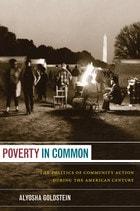
Poverty in Common
The Politics of Community Action during the American CenturyAlyosha Goldstein
Duke University Press, 2012
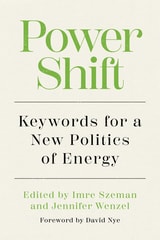
Power Shift
Keywords for a New Politics of EnergyImre Szeman
West Virginia University Press, 2025
Featuring brief essays on 101 key terms by scholars, artists, and activists from around the world and across disciplines, Power Shift offers an expansive, kaleidoscopic guide to the history of petromodernity, recent technological and social developments, and pathways to new energy futures. The book offers new insights into the emergent politics of energy, contrasting today’s environmental and climate movements with the geopolitical contests of the Cold War era. It explores the still unfolding story of energy transition by focusing on the ongoing struggles of communities and individuals against decisions made by corporations, governments, and international organizations.

Precarious Motherhood
Navigating Relationships and Support Post-Migration in the UKRachel Benchekroun
University College London, 2025
Precarious Motherhood is a deeply human investigation of the lives of racially minoritized mothers as they navigate the intersecting challenges of financial hardship and the UK’s hostile immigration policies. Based on thorough ethnographic research, Rachel Benchekroun examines how these mothers forge relationships to access support, maintain their children’s well-being, and carve out spaces of belonging in an often unwelcoming system. The book captures the resilience and the relentless precarity of motherhood in migration, where every relationship shapes social barriers and everyday survival.
Through the voices of over twenty migrant mothers, this work sheds light on the personal and political dimensions of motherhood. It provides critical insights into state policies and social infrastructures that shape migrant lives, making it a valuable resource for scholars of migration and social justice.
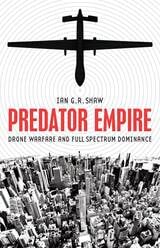
Predator Empire
Drone Warfare and Full Spectrum DominanceIan G. R. Shaw
University of Minnesota Press, 2016
What does it mean for human beings to exist in an era of dronified state violence? How can we understand the rise of robotic systems of power and domination? Focusing on U.S. drone warfare and its broader implications as no other book has to date, Predator Empire argues that we are witnessing a transition from a labor-intensive “American empire” to a machine-intensive “Predator Empire.”
Moving from the Vietnam War to the War on Terror and beyond, Ian G. R. Shaw reveals how changes in military strategy, domestic policing, and state surveillance have come together to enclose our planet in a robotic system of control. The rise of drones presents a series of “existential crises,” he suggests, that are reengineering not only spaces of violence but also the character of the modern state. Positioning drone warfare as part of a much longer project to watch and enclose the human species, he shows that for decades—centuries even—human existence has slowly but surely been brought within the artificial worlds of “technological civilization.” Instead of incarcerating us in prisons or colonizing territory directly, the Predator Empire locks us inside a worldwide system of electromagnetic enclosure—in which democratic ideals give way to a system of totalitarian control, a machinic “rule by Nobody.”
As accessibly written as it is theoretically ambitious, Predator Empire provides up-to-date information about U.S. drone warfare, as well as an in-depth history of the rise of drones.

Predatory Bureaucracy
The Extermination of Wolves and the Transformation of the WestMichael Robinson
University Press of Colorado, 2005
Robinson follows wolves' successful adaptation to the arrival of explorers, mountain men, and bounty hunters, through their disastrous century-long entanglement with the federal government. He shares the parallel story of the Biological Survey's rise, detailing the personal, social, geographic, and political forces that allowed it to thrive despite opposition from hunters, animal lovers, scientists, environmentalists, and presidents.
Federal predator control nearly eliminated wolves throughout the United States and Mexico and radically changed American lands and wildlife populations. It undercut the livelihoods of countless homestead families in order to benefit an emerging western elite of livestock owners. The extermination of predators led to problems associated with prey overpopulation, but, as Robinson reveals, extermination and control programs still continue. Predatory Bureaucracy will fascinate readers interested in wildlife, ecosystems, agriculture, and environmental politics.
Pregnant on Arrival
Making the Illegal ImmigrantEithne Luibhéid
University of Minnesota Press, 2013
“State alert as pregnant asylum seekers aim for Ireland.” “Country Being Held Hostage by Con Men, Spongers, and Those Taking Advantage of the Maternity Residency Policy.” From 1997 to 2004, headlines such as these dominated Ireland’s mainstream media as pregnant immigrants were recast as “illegals” entering the country to gain legal residency through childbirth. As immigration soared, Irish media and politicians began to equate this phenomenon with illegal immigration that threatened to destroy the country’s social, cultural, and economic fabric.
Pregnant on Arrival explores how pregnant immigrants were made into paradigmatic figures of illegal immigration, as well as the measures this characterization set into motion and the consequences for immigrants and citizens. While focusing on Ireland, Eithne Luibhéid’s analysis illuminates global struggles over the citizenship status of children born to immigrant parents in countries as diverse as the United States, Hong Kong, and elsewhere. Scholarship on the social construction of the illegal immigrant calls on histories of colonialism, global capitalism, racism, and exclusionary nation building but has been largely silent on the role of nationalist sexual regimes in determining legal status. Eithne Luibhéid turns to queer theory to understand how pregnancy, sexuality, and immigrants’ relationships to prevailing sexual norms affect their chances of being designated as legal or illegal.
Pregnant on Arrival offers unvarnished insight into how categories of immigrant legal status emerge and change, how sexual regimes figure prominently in these processes, and how efforts to prevent illegal immigration ultimately redefine nationalist sexual norms and associated racial, gender, economic, and geopolitical hierarchies.

Private Acts, Social Consequences
Bayer, Ronald
Rutgers University Press, 1991
Bayer, staff member of a policy studies center in New York State, here reviews the record of public agencies in dealing with AIDS-created biological, social and political problems, including resolution of conflicts between privacy and the public good. He notes the contradiction between Centers for Disease Control recommendations of counseling, education and broad-scale voluntary testing of all Americans at risk, and federal policies that favor mandatory testing of the military, marriage applicants, hospital workers, patients and prostitutes, among others, and quarantine of AIDS carriers advocated by some states. Bayer recommends restraint by individuals in sexual matters and drug use, accompanied by an assault on the economic and social problems that underlie the epidemic, especially as regards the newborn and teenagers. In the growing body of AIDS literature, this is a valuable fact-finding study that should interest a lay as well as professional audience.
From Library Journal
Bayer's topic is the politically charged dilemma AIDS presents to public health officials and policymakers. What steps can be taken which will not only protect society at large, but also safeguard the privacy and civil liberties of individuals? The author ably traces the political history of AIDS. He suggests a responsible but nonauthoritarian approach, combining education; health care access for IV users; promotion of anonymous, confidential screening; defense of victims' rights; appropriate contact notification programs; and moderate laws protecting society from malicious individuals. This work is well-documented and cogently argued. Highly recommended for all academic collections and larger public libraries.
Professional Autonomy in Video Relay Service Interpreting
Erica Alley
Gallaudet University Press, 2019
Alley considers the question of how VRS fits into the professional field of interpreting, and discovers that—regardless of the profit-focused mentality of VRS providers—interpreters make decisions with the goal of creating quality customer service experiences for deaf consumers, even if it means “breaking the rules.” Her findings shed light on the decision-making process of interpreters and how their actions are governed by principles of self-care, care for colleagues, and concern for the quality of services provided. Professional Autonomy in Video Relay Service Interpreting is essential reading in interpreter education courses and interpreter training programs.
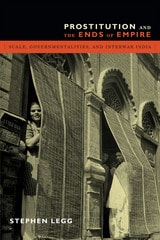
Prostitution and the Ends of Empire
Scale, Governmentalities, and Interwar IndiaStephen Legg
Duke University Press, 2014
Prudential Supervision
What Works and What Doesn'tEdited by Frederic S. Mishkin
University of Chicago Press, 2001
The contributors to this thoughtful volume examine the current state of prudential supervision, focusing on fundamental issues and key pragmatic concerns. Why is prudential supervision so important? What kinds of excess must it guard against? What particular forms does it take? Which of these are the most effective deterrents against mismanagement and system overload in today's rapidly shifting financial climate? The contributors foresee a continued movement beyond simple regulatory rules in banking and toward a more active evaluation and supervision of a bank's risk management practices.
Public Policies and Household Saving
Edited by James M. Poterba
University of Chicago Press, 1994
Each of the seven chapters focuses on one country and addresses a core set of topics: types of accumulated household savings and debt; tax policies toward capital income; saving in the form of public and private pensions, including Social Security and similar programs; saving programs that receive special tax treatment; and saving through insurance.
This detailed summary of the saving incentives of the G-7 nations will be an invaluable reference for policymakers and academics interested in personal saving behavior.
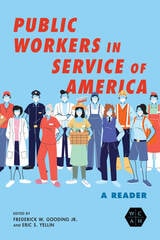
Public Workers in Service of America
A ReaderEdited by Frederick W. Gooding Jr. and Eric S. Yellin
University of Illinois Press, 2023
From white-collar executives to mail carriers, public workers meet the needs of the entire nation. Frederick W. Gooding Jr. and Eric S. Yellin edit a collection of new research on this understudied workforce. Part One begins in the late nineteenth- and early twentieth century to explore how questions of race, class, and gender shaped public workers, their workplaces, and their place in American democracy. In Part Two, essayists examine race and gender discrimination while revealing the subtle contemporary forms of marginalization that keep Black men and Black and white women underpaid and overlooked for promotion. The historic labor actions detailed in Part Three illuminate how city employees organized not only for better pay and working conditions but to seek recognition from city officials, the public, and the national labor movement. Part Four focuses on nurses and teachers to address the thorny question of whether certain groups deserve premium pay for their irreplaceable work and sacrifices or if serving the greater good is a reward unto itself.
Contributors: Eileen Boris, Cathleen D. Cahill, Frederick W. Gooding Jr., William P. Jones, Francis Ryan, Jon Shelton, Joseph E. Slater, Katherine Turk, Eric S. Yellin, and Amy Zanoni
Punishment and Political Order
Keally McBride
University of Michigan Press, 2007
Most of us think of punishment as an ugly display of power. But punishment also tells us something about the ideals and aspirations of a people and their government. How a state punishes reveals whether or not it is confident in its own legitimacy and sovereignty. Punishment and Political Order examines the questions raised by the state’s exercise of punitive power—from what it is about human psychology that desires sanction and order to how the state can administer pain while calling for justice. Keally McBride's book demonstrates punishment's place at the core of political administration and the stated ideals of the polity.
"From start to finish this is a terrific, engaging book. McBride offers a fascinating perspective on punishment, calling attention to its utility in understanding political regimes and their ideals. She succeeds in reminding us of the centrality of punishment in political theory and, at the same time, in providing a framework for understanding contemporary events. I know of no other book that does as much to make the subject of punishment so compelling."
—Austin Sarat, Amherst College
"Punishment and Political Order will be welcome reading for anyone interested in understanding law in society, punishment and political spectacle, or governing through crime control. This is a clear, accessible, and persuasive examination of punishment—as rhetoric and reality. Arguing that punishment is a complex product of the social contract, this book demonstrates the ways in which understanding the symbolic power and violence of the law provides analytical tools for examining the ideological function of prison labor today, as well as the crosscutting and contingent connections between language and identity, legitimation and violence, sovereignty and agency more generally."
—Bill Lyons, Director, Center for Conflict Management, University of Akron
"Philosophical explorations of punishment have often stopped with a theory of responsibility. McBride's book moves well beyond this. It shows that the problem of punishment is a central issue for any coherent theory of the state, and thus that punishment is at the heart of political theory. This is a stunning achievement."
—Malcolm M. Feeley, University of California at Berkeley
Keally McBride is Assistant Professor of Politics at the University of San Francisco.