Results by title
5448 books match the query 'History and criticism' and 305 start with p
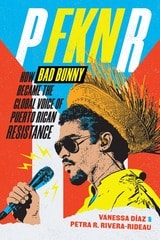
P FKN R
How Bad Bunny Became the Global Voice of Puerto Rican ResistanceVanessa Díaz and Petra R. Rivera-Rideau
Duke University Press, 2026
Global superstar Bad Bunny, born Benito Antonio Martínez Ocasio, like many other Puerto Ricans, has lived a life marked by public crises—blackouts, hurricanes, political corruption and oppression, among others—that have exposed the ongoing impacts of colonialism in Puerto Rico. Offering a portrait of the past and future of Puerto Rican resistance through one of its loudest and proudest voices, P FKN R draws on interviews with musicians, politicians, and journalists as well as ethnographic research to set Bad Bunny and Puerto Rican resistance in a historical, political, and cultural context. Authors Vanessa Díaz and Petra Rivera-Rideau—creators of the “Bad Bunny Syllabus”—demonstrate Bad Bunny’s place in a long tradition of infusing both joy and protest into music and honor the many evolving forms of daily resistance to oppression and colonialism that are part of Puerto Rican life.
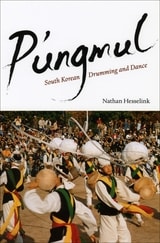
P'ungmul
South Korean Drumming and DanceNathan Hesselink
University of Chicago Press, 2006
The first book to introduce Korean drumming and dance to the English-speaking world, Nathan Hesselink’s P’ungmul offers detailed descriptions of its instrumentation, dance formations, costuming, actors, teaching lineages, and the complexities of training. Hesselink also evaluates how this tradition has taken on new roles and meanings in the twentieth and early-twenty-first centuries, investigating the interrelated yet contested spheres of history, memory, government policy, grassroots politics, opportunities for musical transmission, and performance practices and aesthetics.
P’ungmul offers those interested in ethnomusicology, world music, anthropology, sociology, and Asian studies a special glimpse into the inner workings of a historically rich, artistically complex, and aesthetically and aurally beautiful Korean musical and dance tradition.
PLOTS OF OPPORTUNITY
REPRESENTING CONSPIRACY IN VICTORIAN ENGLANDAlbert D. Pionke
The Ohio State University Press, 2004
The working classes, colonial subjects, European nationalists, and Roman Catholics—these groups generated intense anxiety for Victorian England’s elite public, which often responded by accusing them of being dangerous conspirators. Bringing together a wide range of literary and historical evidence, Albert D. Pionke argues that the pejorative meanings attached to such opportunistic accusations of conspiracy were undermined by the many valorized versions of secrecy in Victorian society.
After surveying England’s evolving theories of representative politics and individual and collective secretive practices, Pionke traces the intersection of democracy and secrecy through a series of case histories. Using works by Thomas Carlyle, Wilkie Collins, Charles Dickens, Benjamin Disraeli, John Henry Newman, and others, along with periodicals, histories, and parliamentary documents of the period, he shows the rhetorical prominence of groups such as the Freemasons, the Thugs, the Carbonari, the Fenians, and the Jesuits in Victorian democratic discourse.
By highlighting the centrality of representations of conspiracy in every case, Plots of Opportunity shows for the first time the markedly similar strategies of repression, resistance, and concealment used by competing agents in the democracy debate.

POINTS OF RESISTANCE
Lauren Rabinovitz
University of Illinois Press, 2003
POINTS OF RESISTANCE
Lauren Rabinovitz
University of Illinois Press, 2003
At a time when there were few women directors in commercial films, the postwar avant-garde movement offered an opportunity. Rabinovitz argues that avant-garde cinema, open to women because of its marginal status in the art world, included women as filmmakers, organizers, and critics.
Focusing on Maya Deren, Shirley Clarke, and Joyce Wieland, Rabinovitz illustrates how women used bold physical images to enhance their work and how each provided entrée to her subversive art while remaining culturally acceptable. She combines archival materials with her own interviews to show how the women’s labor and films, even their identities as women filmmakers, were produced, disseminated, and understood. With a new preface and an updated bibliography, Points of Resistance simultaneously demonstrates the avant-garde’s importance as an organizational network for women filmmakers and the processes by which women remained marginal figures within that network.
PRESCRIPTION FOR ADVERSITY
THE MORAL ART OF AMBROSE BIERCELAWRENCE BERKOVE
The Ohio State University Press, 2002
A Prescription for Adversity makes the revolutionary case that Ambrose Bierce, far from being a bitter misanthrope, was instead both a compassionate and moral author. Berkove, focusing on Bierce's short fiction, establishes the necessity of recognizing the pattern of his intellectual and literary development over the course of his career. The author shows that Bierce, probably the American author with the most extensive experience of the Civil War, turned to classical Stoicism and English and French Enlightenment literature in his postwar search for meaning. Bierce's fiction arose from his ultimately unsatisfying encounters with the philosophies those sources offered, but the moral commitment as well as the literary techniques of heir authors, particularly Jonathan Swift, inspired him. Dating Bierce's fiction, and introducing uncollected journalism, correspondence, and important new literary history and biographical information, Berkove brings new insights to a number of stories, including "A Son of the Gods" and "A Horseman in the Sky," but especially "An Occurrence at Owl Creek Bridge," and presents compelling readings of the Parenticide Club tales and "Moxon's Master." A Prescription for Adversity substantiates how Bierce at his best is one of the few American authors who rises to the level of Mark Twain, and the only one who touches Jonathan Swift.
A work of both biography and literary criticism, this book rescues Ambrose Bierce and his literature from the neglect to which it has been assigned by "ill-founded, obtuse and unproductive approaches based on skewed notions of his personality and forced or facile readings of individual stories."
PRESENCE OF THE PRESENT
TOPICS OF THE DAY IN THE VICTORIAN NOVELRichard D. Altick
The Ohio State University Press, 1991
PROBLEM NOVELS
VICTORIAN FICTION THEORIZES THE SENSATIONAL SELFAnna Maria Jones
The Ohio State University Press, 2007
Pacific Possessions
The Pursuit of Authenticity in Nineteenth-Century Oceanian Travel AccountsChris J. Thomas
University of Alabama Press, 2021
Reimagining Oceania through the travel narratives that shaped the meaning of authenticity.
In Pacific Possessions: The Pursuit of Authenticity in Nineteenth-Century Oceanian Travel Accounts, Chris J. Thomas expands the literary canon on Polynesia and Melanesia beyond the giants, such as Herman Melville and Jack London, to include travel narratives by British and American visitors. These accounts were widely read and reviewed when they first appeared but have largely been ignored by scholars. For the first time, Thomas defines these writings as a significant literary genre.
Recovering these works allows us to reconceive of nineteenth-century Oceania as a vibrant hub of cultural interchange. Pacific Possessions recaptures the polyphony of voices that enlivened this space through the writing of these travelers, while also paying attention to their Oceanian interlocutors. Each chapter centers on a Pacific cultural marker, what Thomas refers to as each writer’s “possession”: the Tongan tattoo, the Hawaiian hula, the Fijian cannibal fork, and Robert Louis Stevenson’s cache of South Seas photographs.
Thomas analyzes how westerners formed narratives around these objects and what those objects meant within nineteenth-century Oceanian cultures. He argues that the accounts served to shape a version of Oceanian authenticity that persists today. The profiled traveler-writers had complex experiences, at times promoting exoticized exaggerations of so-called authentic Polynesian and Melanesian cultures and at other times genuinely engaging in cultural exchange. However, their views were ultimately compromised by a western lens. In Thomas’s words, “the authenticity is at once celebrated and written over.”
Page to Stage
The Craft of AdaptationVincent Murphy
University of Michigan Press, 2013
At last, for those who adapt literature into scripts, a how-to book that illuminates the process of creating a stageworthy play. Page to Stage describes the essential steps for constructing adaptations for any theatrical venue, from the college classroom to a professionally produced production. Acclaimed director Vincent Murphy offers students in theater, literary studies, and creative writing a clear and easy-to-use guidebook on adaptation. Its step-by-step process will be valuable to professional theater artists as well, and for script writers in any medium. Murphy defines six essential building blocks and strategies for a successful adaptation, including theme, dialogue, character, imagery, storyline, and action. Exercises at the end of each chapter lead readers through the transformation process, from choosing their material to creating their own adaptations. The book provides case studies of successful adaptations, including The Grapes of Wrath (adaptation by Frank Galati) and the author's own adaptations of stories by Samuel Beckett and John Barth. Also included is practical information on building collaborative relationships, acquiring rights, and getting your adaptation produced.
Paging New Jersey
A Literary Guide to the Garden StateBroderick, James F
Rutgers University Press, 2003
For 300 years, New Jersey writers, books, and historical events have helped shape the cultural landscape of the nation, and yet the state is rarely credited for its numerous contributions to American letters and folklore. Paging New Jersey is just the book for those interested in uncovering a treasure trove of information about the Garden State’s key role in the creation of U.S. literary and popular culture. New Jersey writers from Stephen Crane to Toni Morrison are included as well as longtime Camden resident Walt Whitman and Newark native Philip Roth.
James F. Broderick’s unique look at the state’s literary and cultural history answers intriguing Jersey-related questions such as: how author Peter Benchley got the idea for Jaws; where Aaron Burr shot Alexander Hamilton; why the Hindenberg exploded over Lakehurst in 1937; and where to find help in locating Captain Kidd’s buried treasure along the Jersey Shore. Most people know that television’s fictional Tony Soprano lives in New Jersey, but what about the state’s other mobsters— The real “goombahs?” Who are they and what have these particular Jersey devils written?
Full of commentary, biographical information, and history—along with suggested reading lists— Paging New Jersey is a crash course in Jerseyana. For those who live in the state, expatriots, and yes, even those who think all New Jersey has to offer is the Turnpike, Broderick’s engaging yet learned book provides an entertaining look at the Garden State’s rich cultural heritage.
Palace of Books
Roger Grenier
University of Chicago Press, 2014
With Palace of Books, he invites us to explore the domain of literature, its sweeping vistas and hidden recesses. Engaging such fundamental questions as why people feel the need to write, or what is involved in putting one’s self on the page, or how a writer knows she’s written her last sentence, Grenier marshals apposite passages from his favorite writers: Chekhov, Baudelaire, Proust, James, Kafka, Mansfield and many others. Those writers mingle companionably with tales from Grenier’s half-century as an editor and friend to countless legendary figures, including Albert Camus, Romain Gary, Milan Kundera, and Brassai,.
Grenier offers here a series of observations and quotations that feel as spontaneous as good conversation, yet carry the lasting insights of a lifetime of reading and thinking. Palace of Books is rich with pleasures and surprises, the perfect accompaniment to old literary favorites, and the perfect introduction to new ones.

Palestinian Arab Music
A Maqam Tradition in PracticeDalia Cohen and Ruth Katz
University of Chicago Press, 2005
Working initially with their own 1957 invention, the Cohen-Katz Melograph, and later with computers, Dalia Cohen and Ruth Katz recorded and digitized several hundred Palestinian music performances. The authors analyzed the musical tradition in light of its main variables. These include musical parameters, modal frameworks, the form and structure of the music, its poetic texts, and aspects of the social functions of the tradition. As a result of their study, the vexed aspect of intonation in practice is revealed to exist in a special relationship with the scale systems or maqamat, which are in turn of great importance to organizing the music and determining its modal systems.
Palimpsest
Editorial Theory in the HumanitiesGeorge Bornstein and Ralph G. Williams, Editors
University of Michigan Press, 1993
Pandora's Senses
The Feminine Character of the Ancient TextVered Lev Kenaan
University of Wisconsin Press, 2010
In this compelling study, Vered Lev Kenaan offers a radical revision of the Greek myth of the first woman. She argues that Pandora leaves a decisive mark on ancient poetics and shows that we can unravel the profound impact of Pandora’s image once we recognize that Pandora embodies the very idea of the ancient literary text. Locating the myth of the first woman right at the heart of feminist interrogation of gender and textuality, Pandora’s Senses moves beyond a feminist critique of masculine hegemony by challenging the reading of Pandora as a one-dimensional embodiment of the misogynist vision of the feminine. Uncovering Pandora as a textual principle operating outside of the feminine, Lev Kenaan shows the centrality of this iconic figure among the poetics of such central genres as the cosmological and didactic epic, the Platonic dialogue, the love elegy, and the ancient novel. Pandora’s Senses innovates our understanding of gender as a critical lens through which to view ancient literature.
Panic Fiction
Women and Antebellum Economic CrisisMary Templin
University of Alabama Press, 2014
Between the mid-1830s and the late 1850s, authors such as Hannah Lee, Catharine Sedgwick, Eliza Follen, Maria McIntosh, and Maria Cummins wrote dozens of novels and stories depicting the effects of financial panic on the home and proposing solutions to economic instability. This unique body of antebellum American women’s writing, which integrated economic discourse with the language and conventions of domestic fiction, is what critic Mary Templin terms “panic fiction.”
In Panic Fiction: Antebellum Women Writers and Economic Crisis, Templin draws in part from the methods of New Historicism and cultural studies, situating these authors and their texts within the historical and cultural contexts of their time. She explores events surrounding the panics of 1837 and 1857, prevalent attitudes toward speculation and failure as seen in newspapers and other contemporaneous texts, women’s relationships to the marketplace, and the connections between domestic ideology and middle-class formation.
Although largely unknown today, the phenomena of “panic fiction” was extremely popular in its time and had an enormous influence on nineteenth-century popular conceptions of speculation, failure, and the need for marketplace reform, providing a distinct counterpoint to the analysis of panic found in newspapers, public speeches, and male-authored literary texts of the time.
Panthers, Hulks and Ironhearts
Marvel, Diversity and the 21st Century SuperheroJeffrey A. Brown
Rutgers University Press, 2021
Panthers, Hulks, and Ironhearts offers the first comprehensive study of how Marvel has reimagined what a superhero might look like in the twenty-first century. It examines how they have revitalized older characters like Black Panther and Luke Cage, while creating new ones like Latina superhero Miss America. Furthermore, it considers the mixed fan responses to Marvel’s recasting of certain “legacy heroes,” including a Pakistani-American Ms. Marvel, a Korean-American Hulk, and a whole rainbow of multiverse Spidermen.
If the superhero comic is a quintessentially American creation, then how might the increasing diversification of Marvel’s superhero lineup reveal a fundamental shift in our understanding of American identity? This timely study answers those questions and considers what Marvel’s comics, TV series, and films might teach us about stereotyping, Orientalism, repatriation, whitewashing, and identification.
Pan–African American Literature
Signifyin(g) Immigrants in the Twenty-First CenturyLi, Stephanie
Rutgers University Press, 2018
The twenty-first century is witnessing a dynamic broadening of how blackness signifies both in the U.S. and abroad. Literary writers of the new African diaspora are at the forefront of exploring these exciting approaches to what black subjectivity means. Pan-African American Literature is dedicated to charting the contours of literature by African born or identified authors centered around life in the United States. The texts examined here deliberately signify on the African American literary canon to encompass new experiences of immigration, assimilation and identification that challenge how blackness has been previously conceived. Though race often alienates and frustrates immigrants who are accustomed to living in all-black environments, Stephanie Li holds that it can also be a powerful form of community and political mobilization.
Paper Electronic Literature
An Archaeology of Born-Digital MaterialsRichard Hughes Gibson
University of Massachusetts Press, 2021
Paper Electronic Literature attests that digital literature's old media elements have much to teach us about the cultural and physical conditions in which we compute; the creativity that new media artists have shown in their dealings with old media; and the distinctively electronic issues that confront digital artists. Moving between avant-garde works and popular ones, fiction writing and poetry generation, Richard Hughes Gibson reveals the diverse ways in which paper has served as a component within electronic literature, particularly in facilitating interactive experiences for users. This important study develops a new critical paradigm for appreciating the multifaceted material innovation that has long marked digital literature.
Paper Money Men
Commerce, Manhood, and the Sensational Public Sphere in Antebellum AmericaDavid Anthony
The Ohio State University Press, 2009
Paper, Ink, and Achievement
Gabriel Hornstein and the Revival of Eighteenth-Century ScholarshipKevin L. Cope
Bucknell University Press, 2021
Published by Bucknell University Press. Distributed worldwide by Rutgers University Press.
Parables of Coercion
Conversion and Knowledge at the End of Islamic SpainSeth Kimmel
University of Chicago Press, 2015
In its careful examination of how Spanish authors transformed the history of scholarship through debate about forced religious conversion, Parables of Coercion makes us rethink what we mean by tolerance and intolerance, and shows that debates about forced conversion and assimilation were also disputes over the methods and practices that demarcated one scholarly discipline from another.
Paradigms of Paranoia
The Culture of Conspiracy in Contemporary American FictionSamuel Chase Coale
University of Alabama Press, 2005
Tracing paranoia as a defining pattern of modern American literature.
The recent popularity of The DaVinci Code and The Matrix trilogy exemplifies the fascination Americans have with conspiracy-driven subjects. Though scholars have suggested that in modern times the JFK assassination initiated an industry of conspiracy (i.e., Vietnam and the Pentagon Papers, Area 51, Iran-Contra Affair), Samuel Chase Coale reminds us in this book that conspiracy is foundational in American culture—from the apocalyptic Biblical narratives in early Calvinist households to the fear of Mormon, Catholic, Jewish, and immigrant populations in the 19th century.
Coale argues that contemporary culture—a landscape characterized by doubt, ambiguity, fragmentation, information overload, and mistrust—has fostered a radical skepticism so pervasive that the tendency to envision or construct conspiracies often provides the best explanation for the chaos that surrounds us.
Conspiracy as embodied in narrative form provides a fertile field for explorations of the anxiety lying at the heart of the postmodern experience. Thomas Pynchon's The Crying of Lot 49, Don DeLillo's Underworld, Toni Morrison's Jazz and Paradise, Joan Didion's Democracy, Tim O'Brien's In the Lake of the Woods, and Paul Auster's New York City Trilogy are some of the texts Coale examines for their representations of isolated individuals at the center of massive, anonymous master plots that lay beyond their control. These narratives remind us that our historical sense of national identity has often been based on the demonizing of others and that American fiction arose and still flourishes with apocalyptic visions.
Paradise and Method
Poetry and PraxisBruce Andrews
Northwestern University Press, 1996
Addressing poetics from a poet's perspective, Andrews focuses on the ways in which meaning is produced and challenged. His essays aim "to map out opportunities for making sense (or making noise)--both in reading and writing contemporary literature. At the center has been a desire to explore language, as up close as possible, as a material and social medium for restagings of meaning and power." Andrews analyzes poetics and the production of meaning; alternative traditions and canons; and innovative contemporary poetry, particularly its break with many of the premises and constraints of even the most forward-looking modernisms.
Parallel Worlds
Genre, Discourse, and Poetics in Contemporary, Colonial, and Classic Maya LiteratureKerry M. Hull
University Press of Colorado, 2012
In this volume, contributions from leading scholars in Maya literary studies examine Maya discourse from Classic period hieroglyphic inscriptions to contemporary spoken narratives, focusing on parallelism to unite the literature historically. Contributors take an ethnopoetic approach, examining literary and verbal arts from a historical perspective, acknowledging that poetic form is as important as narrative content in deciphering what these writings reveal about ancient and contemporary worldviews.
Encompassing a variety of literary motifs, including humor, folklore, incantation, mythology, and more specific forms of parallelism such as couplets, chiasms, kennings, and hyperbatons, Parallel Worlds is a rich journey through Maya culture and pre-Columbian literature that will be of interest to students and scholars of anthropology, ethnography, Latin American history, epigraphy, comparative literature, language studies, indigenous studies, and mythology.

Paranoia, the Bomb, and 1950s Science Fiction Films
Cyndy Hendershot
University of Wisconsin Press, 1999
Parascientific Revolutions
The Science and Culture of the ParanormalDerek Lee
University of Minnesota Press, 2025
Unraveling the hidden influence of the paranormal on science, literature, and belief
Telepathy, clairvoyance, precognition, and telekinesis: these attributes of the paranormal mind are widely dismissed as nonsense, but what can an exploration of such pseudoscientific phenomena tell us about accepted scientific and cultural thought? In Parascientific Revolutions, Derek Lee traces the evolution of psi epistemologies across the twentieth and twenty-first centuries to uncover how these ideas have migrated into scientific fields such as quantum physics and neurology, as well as diverse literary genres including science fiction, ethnic literature, and even government training manuals.
Lee introduces the groundbreaking concept of “parascience,” a dynamic cultural space where ideas rejected by the scientific establishment blend with alternative strains of literary, mythic, and philosophical thought to regenerate and return to mainstream discourse. From early modernist works by James Joyce to postwar speculative fiction by Philip K. Dick to ethnofuturist narratives by Ruth Ozeki, Parascientific Revolutions demonstrates how cultural and intellectual currents reshape paranormal ideas over time. Examining psychic surveillance programs like Project Stargate and bizarre particles of extrasensory perception such as the psitron, Lee illustrates the ways paranormal concepts persist and evolve to influence culture.
Presenting pseudoscience as an inevitable by-product of the scientific process, Parascientific Revolutions offers fresh insight into how the paranormal mind continually challenges our understanding of knowledge and belief. It invites readers to reconsider the boundaries between science and the unknown, revealing a world where speculative thought and empirical investigation are deeply intertwined.
Retail e-book files for this title are screen-reader friendly with images accompanied by short alt text and/or extended descriptions.
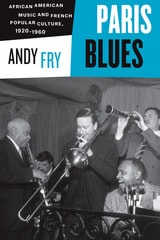
Paris Blues
African American Music and French Popular Culture, 1920-1960Andy Fry
University of Chicago Press, 2014
In Paris Blues, Andy Fry provides an alternative history of African American music and musicians in France, one that looks beyond familiar personalities and well-rehearsed stories. He pinpoints key issues of race and nation in France’s complicated jazz history from the 1920s through the 1950s. While he deals with many of the traditional icons—such as Josephine Baker, Django Reinhardt, and Sidney Bechet, among others—what he asks is how they came to be so iconic, and what their stories hide as well as what they preserve. Fry focuses throughout on early jazz and swing but includes its re-creation—reinvention—in the 1950s. Along the way, he pays tribute to forgotten traditions such as black musical theater, white show bands, and French wartime swing. Paris Blues provides a nuanced account of the French reception of African Americans and their music and contributes greatly to a growing literature on jazz, race, and nation in France.
Parody in the Middle Ages
The Latin TraditionMartha Bayless
University of Michigan Press, 1996
Bayless' study shows with great clarity that parody was a significant and vibrant literary form in the Middle Ages. In addition, her research sheds new light on clerical culture. The clerics who composed these parodies were far from meddling guardians of somber piety; rather, they appeared to see no contradiction between merriment and devotion. The wide dissemination and long life of these drolleries--some circulated for a thousand years--indicate a taste for clerical amusement that challenges conventional views of medieval solemnity.
Parody in the Middle Ages surveys in detail five of the most common traditions of parody. It provides a complete list of all known medieval Latin parodies, and also provides twenty complete texts in an appendix in the original Latin, with English translations. These texts have been collated from over a hundred manuscripts, many previously unknown. The study brings to light both a form and many texts that have remained obscure and inaccessible until now.
Parody in the Middle Ages appeals to the modern audience not only for its cultural value but also for the same reason the parodies appealed to the medieval audience: they are simply very funny. This welcome new volume will be of particular interest to students of medieval satire and literary culture, to medieval Latinists, and to those who want to explore the breadth of medieval culture.
Martha Bayless is Assistant Professor of English, University of Oregon.
Passamaquoddy Ceremonial Songs
Aesthetics and SurvivalAnn Morrison Spinney
University of Massachusetts Press, 2010
Passing and Pedagogy
THE DYNAMICS OF RESPONSIBILITYPamela L. Caughie
University of Illinois Press, 1999
Caughie's discussion of passing illuminates a recent phenomenon in academic writing and popular culture that revolves around identities and the ways in which they are deployed, both in the arts and in lived experience. Through a wide variety of texts—novels, memoirs, film, drama, theory, museum exhibits, legal cases—she demonstrates the dynamics of passing, presenting it not as the assumption of a fraudulent identity but as the recognition that the assumption of any identity, including for the purposes of teaching, is a form of passing.
Astutely addressing the relevance of passing for pedagogy, Caughie presents the possibility of a dynamic ethics responsive to the often polarizing difficulties inherent in today's culture. Challenging and thought-provoking, Passing and Pedagogy offers insight and inspiration for teachers and scholars as they seek to be responsible and effective in a complex, rapidly changing intellectual and cultural environment.
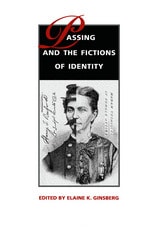
Passing and the Fictions of Identity
Elaine K. Ginsberg
Duke University Press, 1996
These essays consider a wide range of texts and moments from colonial times to the present that raise significant questions about the political motivations inherent in the origins and maintenance of identity categories and boundaries. Through discussions of such literary works as Running a Thousand Miles for Freedom, The Autobiography of an Ex–Coloured Man, Uncle Tom’s Cabin, The Hidden Hand, Black Like Me, and Giovanni’s Room, the authors examine issues of power and privilege and ways in which passing might challenge the often rigid structures of identity politics. Their interrogation of the semiotics of behavior, dress, language, and the body itself contributes significantly to an understanding of national, racial, gender, and sexual identity in American literature and culture.
Contextualizing and building on the theoretical work of such scholars as Judith Butler, Diana Fuss, Marjorie Garber, and Henry Louis Gates Jr., Passing and the Fictions of Identity will be of value to students and scholars working in the areas of race, gender, and identity theory, as well as U.S. history and literature.
Contributors. Martha Cutter, Katharine Nicholson Ings, Samira Kawash, Adrian Piper, Valerie Rohy, Marion Rust, Julia Stern, Gayle Wald, Ellen M. Weinauer, Elizabeth Young
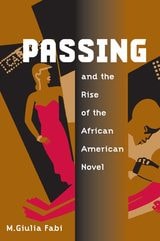
Passing and the Rise of the African American Novel
M. Giulia Fabi
University of Illinois Press, 2001
Focusing on the trope of passing--black characters lightskinned enough to pass for white--M. Giulia Fabi shows how early African American authors such as William Wells Brown, Frank J. Webb, Charles W. Chesnutt, Sutton E. Griggs, Frances E. W. Harper, Edward A. Johnson, and James Weldon Johnson transformed traditional representations of blackness and moved beyond the tragic mulatto motif. Challenging the myths of racial purity and the color line, these authors used passing to celebrate a distinctive, African American history, culture, and worldview.
Fabi examines how early black writers adapted existing literary forms, including the sentimental romance, the domestic novel, and the utopian novel, to express their convictions and concerns about slavery, segregation, and racism. Chesnutt used passing as both a structural and a thematic element, while James Weldon Johnson innovated by parodying the earlier novels of passing and presenting the decision to pass as the result, rather than the cause, of cultural alienation. Fabi also gives a historical overview of the canon-making enterprises of African American critics from the 1850s to the 1990s and considers how their concerns about promoting the canonization of African American literature affected their perceptions of nineteenth-century black fiction.
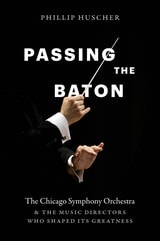
Passing the Baton
The Chicago Symphony Orchestra and the Music Directors Who Shaped Its GreatnessPhillip Huscher
University of Chicago Press, 2026
The untold story of how the Chicago Symphony Orchestra forged its place among the world’s foremost performing arts institutions through 135 years of change.
The Chicago Symphony Orchestra boasts a tradition and staying power that few cultural institutions can rival—a legacy that is tested each time one music director passes the conductor’s baton to another. In this first narrative account of the orchestra’s 135-year history, music critic and historian Phillip Huscher delivers a passionate description of how an upstart ensemble rose to international prominence and established itself as the premier symphony orchestra in the United States.
With a scholar’s care for detail and a novelist’s attention to drama, Huscher invites us into the tangled machinations behind the success or failure of each chapter in the orchestra’s storied past. We see how legendary directors such as Fritz Reiner, Sir Georg Solti, and Riccardo Muti carried the orchestra to new heights of technical perfection and sonic brilliance, but also how others provoked public outcry, caved to insider hostility, or fell to cruel press. The result is a vivid portrait of an orchestra fighting to sustain its identity amid the constant contest between past and present, supporters and critics, and artistic and financial vision.
Woven into this saga are personal stories drawn from newly uncovered documents and interviews with players, conductors, and policymakers about the burden of inheritance, the price of ambition, and the yearning to forge a legacy. Taken together, this is a tale about the power of music—how it can help us navigate our lives and leave a lasting impact on the world around us.
Passion and Craft
CONVERSATIONS WITH NOTABLE WRITERSEdited by Bonnie Lyons and Bill Oliver
University of Illinois Press, 1998
Craft go beyond the merely autobiographical, revealing that, despite
their differences, they share passionate devotion and discipline for their
craft.
Included are Richard Ford, winner in 1995 of both the Pulitzer Prize
and the PEN/Faulkner Award; Gina Berriault, 1997 winner of the National
Book Critics Circle Award; Bobbie Ann Mason; T. Coraghessan Boyle; Rick
Bass; Leonard Michaels; Christopher Tilghman; Thom Jones; Julia Alvarez;
Andre Dubus; Jayne Anne Phillips; and Tobias Wolff.
Their comments will interest readers devoted to their novels and stories,
other writers, and aspiring writers.
Passionate Doubts
Interpretation In FictionPatrick O'Donnell
University of Iowa Press, 1986
In an introductory dialogue and a closing chapter on the reader in contemporary fiction, O'Donnell shows that the formation of the reader's self, like character, plot, or any other element in fiction, is also part of the experience of the text, requiring a distinctive conception of interpretation. Calling upon a wide assemblage of modern theorists including Foucault, Derrida, Serres, Binswanger, Geertz, and Gadamer, O'Donnell elicits a broad range of interpretive possibilities—philosophical, psychological, archaeological, and linguistic—which speak to each novel's central concern with the act of reading as a form of signification.
While Passionate Doubts is broadly a hermeneutic study of contemporary fiction, the heart of this intriguing work resides in the close scrutiny of six modern novels which so richly evoke the very elements from which theories derive: language, form, and impulse. It is this specific application of theory that sets Passionate Doubts apart from other works in the field, yielding a series of important insights on the subject of language, sign, and the self in modern literature.
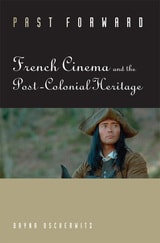
Past Forward
French Cinema and the Post-Colonial HeritageDayna Oscherwitz
Southern Illinois University Press, 2010
In Past Forward: French Cinema and the Post-Colonial Heritage, author Dayna Oscherwitz focuses on the world of French films with a new lens. Drawing upon a wealth of research and the examination of popular French movies, Oscherwitz offers fresh perspectives not only on the unique importance of motion pictures and their indelible influence on French character, but on current debates regarding individual and collective memory.
Past Forward traces the development and ascension of the French heritage film—those historical and costume dramas focusing on prestigious French subjects, events, and settings. These motion pictures, preeminent during a period of globalization and fear over the affects of immigration in 1980s France, quickly came to embody a specific version of French national and collective identity: one that idealized the past, condemned the present, and created an institutional form of memory. Oscherwitz presents the intriguing notion that French heritage films are not exclusively expressions of nationalism and nostalgia as has commonly been asserted. On the contrary, although these movies were born out of a perceived loss of French culture, their ambivalence toward traditional hallmarks of nationalism opens them up to new interpretation. Also in contrast to typical conceptions, the author suggests that these heritage films are far from cinematic bastions of multicultural backlash; instead, she argues, popular culture has in its own fashion reinserted the history of colonialism and immigration into the national past, thus reimagining heritage itself.
Against this backdrop, Oscherwitz goes on to investigate the multicultural worlds of beur and banlieue movies—cinema seemingly in direct contrast with the heritage film—offering the theory that these films serve as a “countermemory” to an institutionalized one and provide alternative models of collective memory and identity. Through careful analysis of several examples, Oscherwitz demonstrates how these two seemingly different realms—heritage and multicultural cinema—are far from mutually exclusive in the construction of French identity.
Throughout the volume, numerous well-known French movies are reexamined, inviting new interpretations of and challenging old views through investigations of familiar cinematic works. Past Forward is arevolutionary volume that boldly reimagines our ideas about French film and its role in communicating history and memory.
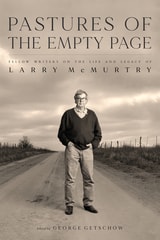
Pastures of the Empty Page
Fellow Writers on the Life and Legacy of Larry McMurtryGeorge Getschow, editor
University of Texas Press, 2023
A collection of essays that offers an intimate view of Larry McMurtry, America’s preeminent western novelist, through the eyes of a pantheon of writers he helped shape through his work over the course of his unparalleled literary life.
When he died in 2021, Larry McMurtry was one of America’s most revered writers. The author of treasured novels such as Lonesome Dove and The Last Picture Show, and coauthor of the screenplays for Brokeback Mountain and Streets of Laredo, McMurtry created unforgettable characters and landscapes largely drawn from his life growing up on the family’s hardscrabble ranch outside his hometown of Archer City, Texas. Pastures of the Empty Page brings together fellow writers to honor the man and his impact on American letters.
Paulette Jiles, Stephen Harrigan, Stephanie Elizondo Griest, and Lawrence Wright take up McMurtry’s piercing and poetic vision—an elegiac literature of place that demolished old myths of cowboy culture and created new ones. Screenwriting partner Diana Ossana reflects on their thirty-year book and screenwriting partnership; other contributors explore McMurtry’s reading habits and his passion for bookselling. And brother Charlie McMurtry shares memories of their childhood on the ranch. In contrast to his curmudgeonly persona, Larry McMurtry emerges as a trustworthy friend and supportive mentor. McMurtry was famously self-deprecating, but as his admirers attest, this self-described “minor regional writer” was an artist for the ages.
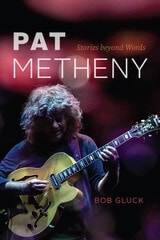
Pat Metheny
Stories beyond WordsBob Gluck
University of Chicago Press, 2024
Guitarist and composer Pat Metheny, among the most acclaimed, visionary musicians of our time, has for five decades toured with his many creative musical projects, most prominently the Pat Metheny Group, while collaborating with celebrated artists, including Charlie Haden, Ron Carter, Herbie Hancock, Ornette Coleman, and Steve Reich.
Bob Gluck, whose perspective as pianist, composer, and educator has illuminated the music of Herbie Hancock and Miles Davis in his two previous books, now focuses his lens on the music of Metheny. Neither a biography nor chronological record of Metheny’s musical output, Pat Metheny: Stories beyond Words instead captures Metheny’s self-conception as a musician and the threads that unite and distinguish his creative process. Drawing upon a wealth of new interviews and close readings of musical examples, Gluck offers a bird’s-eye view of Metheny’s musical ideas. Among these are the metaphor of storytelling, the complementarity of simplicity and complexity, and the integrated roles of composer, performer, and band leader. Much like Metheny’s signature style, this book is accessible to a wide range of readers, presenting new clarity, musical insight, and historical perspective about the legacy of Metheny’s groundbreaking music.
Patristic Exegesis in Context
Exploring the Genres of Early Christian Biblical InterpretationMiriam De Cock
Catholic University of America Press, 2023
Patterns of Epiphany
From Wordsworth to Tolstoy, Pater, and Barrett BrowningMartin Bidney
Southern Illinois University Press, 1997
After explaining his new methodology, Bidney identifies and discusses epiphanies in the works of William Wordsworth, Samuel Taylor Coleridge, Matthew Arnold, Alfred Lord Tennyson, Walter Pater, Thomas Carlyle, Leo Tolstoy, and Elizabeth Barrett Browning. Taking his cue from the French philosopher Gaston Bachelard, Bidney postulates that any writer’s epiphany pattern usually shows characteristic elements (earth, air, fire, water), patterns of motion (pendular, eruptive, trembling), and/or geometric shapes. Bachelard’s analytic approach involves studying patterns of perceived experience—phenomenology—but unlike most phenomenologists, Bidney does not speculate on internal processes of consciousness. Instead, he concentrates on literary epiphanies as objects on the printed page, as things with structures that can be detected and analyzed for their implications.
Bidney, then, first identifies each author’s paradigm epiphany, finding that both the Romantics and the Victorians often label such a paradigm as a vision or dream, thereby indicating its exceptional intensity, mystery, and expansiveness. Once he identifies the paradigm and shows how it is structured, he traces occurrences of each writer’s epiphany pattern, thus providing an inclusive epiphanic portrait that enables him to identify epiphanies in each writer’s other works. Finally, he explores the implications of his analysis for other literary approaches: psychoanalytical, feminist, influence-oriented or intertextual, and New Historical.
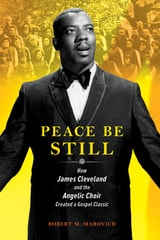
Peace Be Still
How James Cleveland and the Angelic Choir Created a Gospel ClassicRobert M. Marovich
University of Illinois Press, 2021
In September of 1963, Reverend Lawrence Roberts and the Angelic Choir of the First Baptist Church of Nutley, New Jersey, teamed with rising gospel star James Cleveland to record Peace Be Still. The LP and its haunting title track became a phenomenon. Robert M. Marovich draws on extensive oral interviews and archival research to chart the history of Peace Be Still and the people who created it. Emerging from an established gospel music milieu, Peace Be Still spent several years as the bestselling gospel album of all time. As such, it forged a template for live recordings of services that transformed the gospel music business and Black worship. Marovich also delves into the music's connection to fans and churchgoers, its enormous popularity then and now, and the influence of the Civil Rights Movement on the music's message and reception.
The first in-depth history of a foundational recording, Peace Be Still shines a spotlight on the people and times that created a gospel music touchstone.
Pearl from the Dragon’s Mouth
Evocation of Scene and Feeling in Chinese PoetryCecile C. C. Sun
University of Michigan Press, 1995
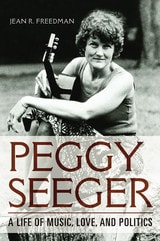
Peggy Seeger
A Life of Music, Love, and PoliticsJean R. Freedman
University of Illinois Press, 2020
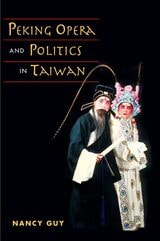
Peking Opera and Politics in Taiwan
Nancy Guy
University of Illinois Press, 2005
When Chiang Kai-shek's Nationalist government and military retreated to Taiwan in 1949, they brought along numerous Peking opera performers. Expecting that this symbolically important art would strengthen regime legitimacy and authority, they generously supported Peking opera's perpetuation in exile. Valuing mainland Chinese culture above Taiwanese culture, the Nationalists generously supported Peking opera to the virtual exclusion of local performing traditions, despite their wider popularity. Later, as Taiwan turned toward democracy, the island's own "indigenous" products became more highly valued and Peking opera found itself on a tenuous footing. Finally, in 1995, all of its opera troupes and schools (formerly supported by the Ministry of Defense) were dismantled.
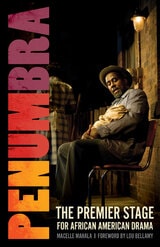
Penumbra
The Premier Stage for African American DramaMacelle Mahala
University of Minnesota Press, 2013
Penumbra Theatre Company was founded in 1976 by Lou Bellamy as a venue for African American voices within the Twin Cities theatre scene and has stood for more than thirty-five years at the intersection of art, culture, politics, and local community engagement. It has helped launch the careers of many internationally respected theatre artists and has been repeatedly recognized for its artistic excellence as the nation’s foremost African American theatre.
Penumbra is the first-ever history of this barrier-breaking institution. Based on extensive interviews with actors, directors, playwrights, producers, funders, and critics, Macelle Mahala’s book offers a multifaceted view of the theatre and its evolution. Penumbra follows the company’s emergence from the influential Black Arts and settlement house movements; the pivotal role Penumbra played in the development of August Wilson’s career and, in turn, how Wilson became an avid supporter and advocate throughout his life; the annual production of Black Nativity as a community-building performance; and the difficult economics of African American theatre production and how Penumbra has faced these challenges for nearly four decades.
Penumbra is a testament to how a theatre can respond to and thrive within changing political and cultural realities while contributing on a national scale to the African American presence on the American stage. It is a celebration of theatre as a means of social and cultural involvement—both local and national—and ultimately, of Penumbra’s continuing legacy of theatre that is vibrant, diverse, and vital.
Peony Pavilion Onstage
Four Centuries in the Career of a Chinese DramaCatherine C. Swatek
University of Michigan Press, 2012
People Get Ready
The Future of Jazz Is Now!Ajay Heble and Rob Wallace, eds.
Duke University Press, 2013
Contributors. Tamar Barzel, John Brackett, Douglas Ewart, Ajay Heble, Vijay Iyer, Thomas King, Tracy McMullen, Paul D. Miller/DJ Spooky, Nicole Mitchell, Roscoe Mitchell, Famoudou Don Moye, Aldon Lynn Nielsen, Eric Porter, Marc Ribot, Matana Roberts, Jaribu Shahid, Julie Dawn Smith, Wadada Leo Smith, Alan Stanbridge, John Szwed, Greg Tate, Scott Thomson, Rob Wallace, Ellen Waterman, Corey Wilkes
Percussion
Drumming, Beating, StrikingJohn Mowitt
Duke University Press, 2002
For Mowitt, percussion is both an experience of embodiment—making contact in and on the skin—and a provocation for critical theory itself. In delimiting the percussive field, he plays drumming off against the musicological account of the beat, the sociological account of shock and the psychoanalytical account of fantasy. In the process he touches on such topics as the separation of slaves and drums in the era of the slave trade, the migration of rural blacks to urban centers of the North, the practice and politics of "rough music," the links between interpellation and possession, the general strike, beating fantasies, and the concept of the "skin ego."
Percussion makes a fresh and provocative contribution to cultural studies, new musicology, the history of the body and critical race theory. It will be of interest to students of cultural studies and critical theory as well as readers with a serious interest in the history of music, rock-and-roll and drumming.
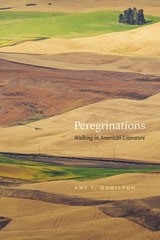
Peregrinations
Walking in American LiteratureAmy T Hamilton
University of Nevada Press, 2018
The land of the United States is defined by vast distances encouraging human movement and migration on a grand scale. Consequently, American stories are filled with descriptions of human bodies walking through the land.
In Peregrinations, Amy T. Hamilton examines stories told by and about Indigenous American, Euroamerican, and Mexican walkers. Walking as a central experience that ties these texts together—never simply a metaphor or allegory—offers storytellers and authors an elastic figure through which to engage diverse cultural practices and beliefs including Puritan and Catholic teachings, Diné and Anishinaabe oral traditions, Chicanx histories, and European literary traditions.
Hamilton argues that walking bodies alert readers to the ways the physical world—more-than-human animals, trees, rocks, wind, sunlight, and human bodies—has a hand in creating experience and meaning. Through material ecocriticism, a reading practice attentive to historical and ongoing oppressions, exclusions, and displacements, she reveals complex layerings of narrative and materiality in stories of walking human bodies.
This powerful and pioneering methodology for understanding place and identity, clarifies the wide variety of American stories about human relationships with the land and the ethical implications of the embeddedness of humans in the more-than-human world.