Results by title
593 books match the query 'Jews' and 28 start with p
Palestine between Politics and Terror, 1945–1947
Motti Golani
Brandeis University Press, 2013
Parables of Coercion
Conversion and Knowledge at the End of Islamic SpainSeth Kimmel
University of Chicago Press, 2015
In its careful examination of how Spanish authors transformed the history of scholarship through debate about forced religious conversion, Parables of Coercion makes us rethink what we mean by tolerance and intolerance, and shows that debates about forced conversion and assimilation were also disputes over the methods and practices that demarcated one scholarly discipline from another.
Paradise, New York
A NovelEileen Pollack
Temple University Press, 2000
In the course of that season, Lucy comes to realize her love for the hotel's black handyman, Mr. Jefferson -- and the difficulties she faces in overcoming the barriers between them. She battles her grandmother's not-so-subtle attempts to sabotage her success, her parents' superstitious fear of anything that attracts attention to the Jews, and her brother's contention that what Lucy is doing is more a matter of ego than authentic religious feeling.
On top of all this, Lucy must contend with the Hasid who buys the chicken farm next door, a cell of ancient Jewish Communist who foment a strike among Eden's overworked young staff, and a gay chef and a gay baker who want to prove to the world that kosher cuisine can satisfy the most sophisticated gourmet.
Among the novel's characters are Shirley and Nat Feidel, who barely survived the Holocaust but refuse to allow bitterness to rule their lives; Mami Goshgarian, the Eden's tumeler; and Jimmy Kilcoin, and Irish Catholic insurance adjustor who has earned a reputation as "the Don Juan of the Catskills" and is determined to seduce Lucy before summer's end.
Passing Illusions
Jewish Visibility in Weimar GermanyKerry Wallach
University of Michigan Press, 2017

Passion of Israel
Jacques Maritain, Catholic Conscience, and the HolocaustRichard Francis Crane
University of Scranton Press, 2010
In his lifetime, French philosopher Jacques Maritain (1882–1973) achieved a reputation as both a leading Catholic intellectual and as an outspoken critic of antisemitism. Here historian Richard Francis Crane traces the development of Maritain’s opposition toward antisemitism and analyzes the Catholic appreciation of Judaism that animated his stance. Crane probes the writings and teachings of Maritain—from before, during, and after the Holocaust—and illuminates how his ideas altered Christian perceptions of Jews and Judaism during his lifetime and continue to do so today.
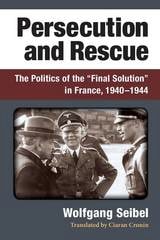
Persecution and Rescue
The Politics of the “Final Solution” in France, 1940-1944Wolfgang Seibel
University of Michigan Press, 2016
Drawing on German and French sources, Wolfgang Seibel traces the twisted process of political decision-making that shaped the fate of the Jews in German-occupied France during World War II. By analyzing the German-French negotiations, he reveals the underlying logic as well as the actual course of the bargaining process as both the Vichy Regime and the Germans sought a stable relationship. Yet that relationship was continually reshaped by the progress of the war, Germany’s deteriorating prospects, France’s economic and geopolitical position, and the Vichy government’s quest for domestic political support. The Jews’ suffering intensified when the Germans had the upper hand; but when the French felt empowered, the Vichy Regime stopped collaborating in the completion of the “final solution.” Persecution and Rescue: The Politics of the “Final Solution” in France, 1940–1944 demonstrates the ways in which political circumstances can mitigate—or foster—mass crime.
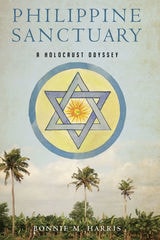
Philippine Sanctuary
A Holocaust OdysseyBonnie M. Harris
University of Wisconsin Press, 2022
This untold history is brought to life by focusing on the incredible journey of synagogue cantor Joseph Cysner. Drawing from oral histories, memoirs, and personal papers, Harris documents Cysner's harrowing escape from the Nazis and his heroic rescue by the American-led Jewish community of the Philippines in 1939. Moving and rich in historical detail, Philippine Sanctuary reveals new insights for an overlooked period in our recent history, and emphasizes the continued importance of humanitarian efforts to aid those being persecuted.
Pioneers, Peddlers, and Tsadikim
The Story of Jews in ColoradoIda Libert Uchill
University Press of Colorado, 2000

Pluralism and Progressives
Hull House and the New Immigrants, 1890-1919Rivka Shpak Lissak
University of Chicago Press, 1989
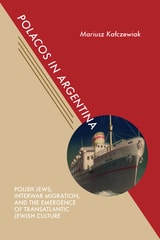
Polacos in Argentina
Polish Jews, Interwar Migration, and the Emergence of Transatlantic Jewish CultureMariusz Kalczewiak
University of Alabama Press, 2020
An examination of the social and cultural repercussions of Jewish emigration from Poland to Argentina in the 1920s and 1930s
Between the 1890s and 1930s, Argentina, following the United States and Palestine, became the main destination for Eastern European Ashkenazi Jews seeking safety, civil rights, and better economic prospects. In the period between 1918 and 1939, sixty thousand Polish Jews established new homes in Argentina. They formed a strong ethnic community that quickly embraced Argentine culture while still maintaining their unique Jewish-Polish character. This mass migration caused the transformation of cultural, social, and political milieus in both Poland and Argentina, forever shaping the cultural landscape of both lands.
In Polacos in Argentina: Polish Jews, Interwar Migration, and the Emergence of Transatlantic Jewish Culture, Mariusz Kałczewiak has constructed a multifaceted and in-depth narrative that sheds light on marginalized aspects of Jewish migration and enriches the dialogue between Latin American Jewish studies and Polish Jewish Studies. Based on archival research, Yiddish travelogues on Argentina, and the Yiddish and Spanish-language press, this study recreates a mosaic of entanglements that Jewish migration wove between Poland and Argentina.
Most studies on mass migration fail to acknowledge the role of the country of origin, but this innovative work approaches Jewish migration to Argentina as a continuous process that took place on both sides of the Atlantic. Taken as a whole, Polacos in Argentina enlightens the heterogeneous and complex issue of immigrant commitments, belongings, and expectations. Jewish emigration from Poland to Argentina serves as a case study of how ethnicity evolves among migrants and their children, and the dynamics that emerge between putting down roots in a new country and maintaining commitments to the country of origin.
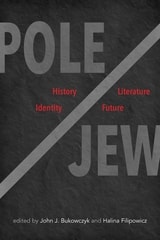
Pole/Jew
History, Literature, Identity, FutureJohn J. Bukowczyk and Halina Filipowicz
Ohio University Press, 0
Pole/Jew brings together a group of scholars—about half of them Jewish, about half of them ethnic Poles—from the United States, Poland, the United Kingdom, and Canada and enlists their diverse methodological and generational perspectives to push debates over Polish-Jewish relations beyond entrenched and reductive positions. At the core of the volume are the following questions:
–What impact has the Holocaust had on Polish history and Polish literature?
–How has the Holocaust affected Polish-Jewish—and Polish—identity?
–What future is there for relations between Poland’s small Jewish minority and the country’s overwhelming ethnic Polish majority? Between Poland and Israel? Between Jews of the diaspora and ethnic Poles abroad?
–Which research areas have yet to be addressed or revisited and reexamined?
–Are there ways to move beyond the reductive notion of 1989 (i.e., the fall of the communist regime in Poland) as wall and fulcrum?
By addressing these compelling questions, this volume offers fresh perspectives and encourages a nuanced understanding of Polish-Jewish relations.
Contributors:
M. B. B. Biskupski
Robert Blobaum
John J. Bukowczyk
Patrice M. Dabrowski
Halina Filipowicz
Agnieszka Jezyk
Bozena Karwowska
Kamil Kijek
Kate Korycki
Elzbieta Kossewska
Grazyna J. Kozaczka
Stanislaw Krajewski
Adam Lipszyc
Wiktor Marzec
Alina Molisak
Stanislaw Obirek
Benjamin Paloff
Antony Polonsky
Brian Porter-Szucs
Piotr Puchalski
Roma Sendyka
Dariusz Stola
Katarzyna Zechenter
Joshua D. Zimmerman
Geneviève Zubrzycki
Slawomir Zurek
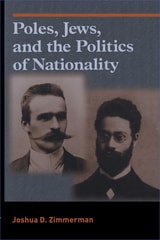
Poles, Jews, and the Politics of Nationality
The Bund and the Polish Socialist Party in Late Tsarist Russia, 1892–1914Joshua D. Zimmerman
University of Wisconsin Press, 2004
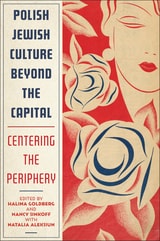
Polish Jewish Culture Beyond the Capital
Centering the PeripheryHalina Goldberg
Rutgers University Press, 2023
PIASA's 2024 Anna M. Cienciala Award for Best-Edited Multi-Authored Scholarly Volume
Polish Jewish Culture beyond the Capital: Centering the Periphery is a path-breaking exploration of the diversity and vitality of urban Jewish identity and culture in Polish lands from the second half of the nineteenth century to the outbreak of the Second World War (1899–1939). In this multidisciplinary essay collection, a cohort of international scholars provides an integrated history of the arts and humanities in Poland by illuminating the complex roles Jews in urban centers other than Warsaw played in the creation of Polish and Polish Jewish culture.
Each essay presents readers with the extraordinary production and consumption of culture by Polish Jews in literature, film, cabaret, theater, the visual arts, architecture, and music. They show how this process was defined by a reciprocal cultural exchange that flourished between cities at the periphery—from Lwów and Wilno to Kraków and Łódź—and international centers like Warsaw, thereby illuminating the place of Polish Jews within urban European cultures.
Companion website (https://polishjewishmusic.iu.edu)
Polish-Jewish Relations During the Second World War
Emmanuel Ringelblum
Northwestern University Press, 1992
This book represents Ringelbaum's attempt to answer the questions he knew history would ask about the Polish people: what did the Poles do while millions of Jews were being led to the stake? What did the Polish underground do? What did the Government-in-Exile do? Was it inevitable that the Jews, looking their last on this world, should have to see indifference or even gladness on the faces of their neighbors? These questions have haunted Polish-Jewish relations for the last fifty years. Behind them are forces that have haunted Polish-Jewish relations for a thousand years.
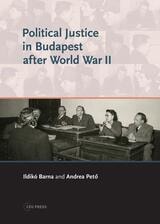
Political Justice in Budapest after World War II
Andrea Peto
Central European University Press, 2015
In Hungary, which fell under Soviet influence at the end of World War II, those who had participated in the wartime atrocities were tried by so called people’s courts. This book analyses this process in an objective, quantitative way, contributing to the present timely discussion on the Hungarian war guilt. The authors apply a special focus on the gender aspect of the trials.
Political justice had a specific nature in Hungary. War criminals began to be brought to trial while fighting was still underway in the western part of the country, well before the Nuremberg trials. Not only crimes committed during the war were tried in the same frame but also post-war ones. As far as the post-war period is concerned, legal proceedings regarding these crimes were most often launched on the basis of Act VII of 1946. This act of law concerned “the criminal law protection of the democratic constitutional order and the republic” and its basic aim was to facilitate the creation of a communist dictatorship and to deal with perceived or real enemies of the regime.
Politics, Faith, and the Making of American Judaism
Peter Adams
University of Michigan Press, 2014
In 1862, in the only instance of a Jewish expulsion in America, General Ulysses S. Grant banished Jewish citizens from the region under his military command. Although the order was quickly revoked by President Lincoln, it represented growing anti-Semitism in America. Convinced that assimilation was their best defense, Jews sought to Americanize by shedding distinctive dress, occupations, and religious rituals.
American Jews recognized the benefit and urgency of bridging the divide between Reform and Orthodox Judaism to create a stronger alliance to face the challenges ahead. With Grant’s 1868 presidential campaign, they also realized they could no longer remain aloof from partisan politics. As they became a growing influence in American politics, both political parties courted the new Jewish vote.
Once in office, Grant took notice of the persecution of Jews in Romania and Russia, and he appointed more Jews to office than any president before him. Indeed, Simon Wolf, a Washington lawyer who became one of Grant’s closest advisers, was part of a new generation of Jewish leaders to emerge in the post–Civil War era—thoroughly Americanized, politically mature, and committed to the modernized Judaism of the Reform movement.
In Politics, Faith, and the Making of American Judaism, Peter Adams recounts the history of the American Jewish Community’s assimilation efforts, organization, and political mobilization in the late 19th century, as political and cultural imperatives crafted a new, American brand of Judaism.
Poverty, Law, and Divine Justice in Persian and Hellenistic Judah
Johannes Unsok Ro
SBL Press, 2018
A view of Persian and Hellenistic Judean communities through theological and socioeconomic lenses
Johannes Unsok Ro employs philological, historical, and sociological approaches to investigate the close connections between socioeconomic structures, social inequality, and theological developments in the Judean communities in Persian- and Hellenistic-era Palestine. Ro contends that competing points of view from communities of lay returnees, priestly returnees, and communities of resident Judeans and Samaritans were juxtaposed within the Hebrew Bible, which took shape during the postexilic period. By exploring issues such as the relationship between the shaping of the canon and literacy in the Judean community, the term strangers in the biblical law codes, the socioeconomic structures of Judean communities reflected in the biblical law codes, the development of the theological concept of divine punitive justice, the piety of the poor in certain psalms, and the concept of poverty in the Dead Sea Scrolls, Ro illustrates that the communities behind each text and its redactions can be ascertained through sociological and theological lenses.
Features
- Demonstration that a theology of the poor materialized orally among the poor but found written expression among Levites
- Insight into the socioeconomic and theological concerns of the authorial groups behind various biblical law codes
- A case that biblical “poverty” sometimes refers to humility and a theologically reflected consciousness of lowliness toward God
Power, Protest, and the Public Schools
Jewish and African American Struggles in New York CityMelissa F. Weiner
Rutgers University Press, 2012
Prayers and the Construction of Israelite Identity
Susanne Gillmayr-Bucher
SBL Press, 2019
Substantial insights into various identity discourses reflected in the biblical prayers
This collection of essays from an international group of scholars focuses on how biblical prayers of the Persian and early Hellenistic periods shaped identity, evoked a sense of belonging to specific groups, and added emotional significance to this affiliation. Contributors draw examples from different biblical texts, including Genesis, Samuel, Kings, Chronicles, Ezra and Nehemiah, Psalms, Jonah, and Daniel.
Features
- Thorough study of prayers that play a key role for a biblical book’s (re)construction of the people’s history and identity
- An examination of ways biblical figures are remodeled by their prayers by introducing other, sometimes even contradictory, discourses on identity
- An exploration of different ways in which psalms from postexilic times shaped, reflected, and modified identity discourses
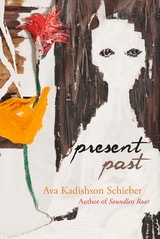
Present Past
Ava Kadishson Schieber
Northwestern University Press, 2016
The focus of Present Past is her life after the Shoah. Rejecting stereotypes of survivors as traumatized or broken, Schieber is stark yet exuberant, formidable yet nuanced. The woman who emerges in Schieber’s Present Past is a multifaceted, heterogeneous figure—poet, artist, and survivor. In it, she plays the passionate observer who dispassionately curates the kaleidoscopic memories of her tumultuous personal and professional life in Belgrade, Prague, Tel Aviv, New York, and Chicago.
Organized into thirteen chapters, each a blend of images, poems, and narrative, this moving new work offers myriad points of entry to readers of these genres, those fascinated in the relationship between the Holocaust and art, as well as readers interested in memory and survivorship.
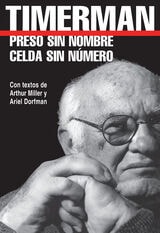
Preso sin Nombre, Celda sin Numero
Jacobo Timerman; Con textos de Arthur Miller y Ariel Dorfman
University of Wisconsin Press, 2004
Wisconsin edition is for sale only in North America.
Primacies
Experience, Expression, and the Jewish ImaginationMichael Fishbane
University of Chicago Press, 2025
Primacies begins with the assertion that our earliest preverbal experiences are accompanied by a primary language—a universal expression of tears, cries, and laughter offered long before we learn our distinctive, ordinary languages. For Michael Fishbane, these “primacies” release the raw feelings of our existential condition and catalyze our most powerful literary expressions of sorrow, joy, and fulfillment.
In this book, Fishbane explores how ancient, medieval, and modern literature and poetry express and transform these primal sensations. Building on his theological project begun in Sacred Attunement and Fragile Finitude, Fishbane offers here a radically new lived hermeneutics that seeks to do nothing less than redefine the relationship between experience and language.
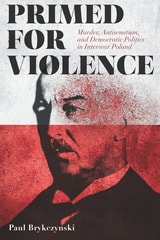
Primed for Violence
Murder, Antisemitism, and Democratic Politics in Interwar PolandPaul Brykczynski
University of Wisconsin Press, 2017
As Paul Brykczynski tells this gripping story, he explores the complex role of antisemitism, nationalism, and violence in Polish politics between the two World Wars. Though focusing on Poland, the book sheds light on the rise of the antisemitic right in Europe and beyond, and on the impact of violence on political culture and discourse.
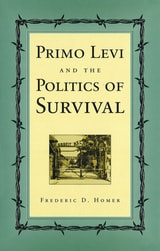
Primo Levi and the Politics of Survival
Frederic D. Homer
University of Missouri Press, 2001
At the age of twenty-five, Primo Levi was sent to Hell. Levi, an Italian chemist from Turin, was one of many swept up in the Holocaust of World War II and sent to die in the German concentration camp in Auschwitz. Of the 650 people transported to the camp in his group, only 15 men and 9 women survived. After Soviet liberation of the camp in 1945, Levi wrote books, essays, short stories, poetry, and a novel, in which he painstakingly described the horrors of his experience at Auschwitz. He also spent the rest of his life struggling with the fact that he was not among those who were killed.
In Primo Levi and the Politics of Survival, Frederic D. Homer looks at Primo Levi's life but, more important, shows him to be a significant political philosopher. In the course of his writings, Levi asked and answered his most haunting question: can someone be brutalized by a terrifying experience and, upon return to "ordinary life," recover from the physical and moral destruction he has suffered? Levi used this question to develop a philosophy positing that although man is no match for life, he can become better prepared to contend with the tragedies in life.
According to Levi, the horrors of the world occur because of the strength of human tendencies, which make relationships between human beings exceedingly fragile. He believed that we are ill-constituted beings who have tendencies toward violence and domination, dividing ourselves into Us and Them, with very shallow loyalties. He also maintained that our only refuge is in education and responsibility, which may counter these tendencies. Homer calls Levi's philosophy "optimistic pessimism."
As Homer demonstrates, Levi took his past experiences into account to determine that goodwill and democratic institutions do not come easily to people. Liberal society is to be earned through discipline and responsibility toward our weaknesses. Levi's answer is "civilized liberalism." To achieve this we must counter some of our most stubborn tendencies.
Homer also explores the impact of Levi's death, an apparent suicide, on the way in which his work and theories have been perceived. While several critics discount Levi's work because of the nature of his death, Homer argues that his death is consistent with his philosophy. A book rich in brutally honest philosophy, Primo Levi and the Politics of Survival compels one to look at serious questions about life, tragedy, optimism, solidarity, violence, and human nature.
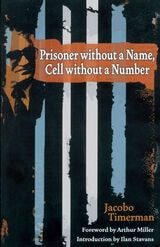
Prisoner Without a Name, Cell Without a Number
Jacobo Timerman
University of Wisconsin Press, 2002
"It ranks with Hannah Arendt's Eichmann in Jerusalem in its examination of the totalitarian mind, the role of anti-Semitism, the silence."—Eliot Fremont-Smith, Village Voice
"It is impossible to read this proud and piercing account of [Timerman's] suffering and his battles without wanting to be counted as one of Timerman's friends."—Michael Walzer, New York Review of Books
"Timerman was a living reminder that real prophets are irritants and not messengers of reassurance. He told it like it is, whether in Argentina, Israel, Europe, or the United States."—Arthur Miller
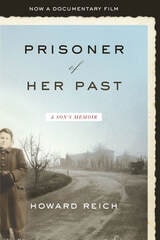
Prisoner of Her Past
A Son's MemoirHoward Reich
Northwestern University Press, 2011
Until February 15, 2001, Howard Reich’s mother, Sonia, had managed to keep almost everything about her experience of the Holocaust from her son. That night, she packed some clothes and fled her house in Skokie, Illinois, convinced that someone was trying to kill her. This was the first indication that she was suffering from late-onset post traumatic stress disorder, a little-known condition that can emerge decades after the initial trauma. For Howard, it was also the opening of a window onto his mother’s past.
In Prisoner of Her Past, Howard Reich has written a moving memoir about growing up as the child of Holocaust survivors and finding refuge from silence and fear in the world of jazz. It is only when Sonia’s memories overwhelm her and Howard begins to piece together her story that he comes to understand how his parents’ lives shaped his own. The paperback edition includes an epilogue by the author that relates developments since the publication of the cloth edition.
Promised Lands
Edited by Derek Rubin
Brandeis University Press, 2010
Propaganda and Persecution
Renée Poznanski
University of Wisconsin Press, 2024
Poznanski argues that Jews in France suffered a double persecution: one led by the Vichy government, the other imposed by the Nazis. Marginalization and exclusion soon led to internment and deportation to terrifying places. Meanwhile, a propaganda war developed between the Resistance and the official voice of Vichy. Poznanski draws on a breathtaking array of sources, especially clandestine publications and French-language BBC transmissions, to show how the Resistance both fought and accommodated the deeply entrenched antisemitism within French society. Her close readings of propaganda texts against public opinions probe ambiguities and silences in Resistance writing about the persecution of the Jews and, in parallel, the numerous and detailed denunciations that could be read in the Jewish clandestine press. This extensive synthesis extends to the post-Liberation period, during which the ongoing persecution of Jews in Europe and North Africa would be portrayed as secondary to the suffering of the nation.
The winner of the 2009 Henri Hertz Prize by the Chancellerie des Universités de Paris, Sorbonne, Propaganda and Persecution makes major contributions to the study of the Resistance and of antisemitism. Lenn J. Schramm’s English translation brings Poznanski’s dynamic prose to life.