Results by title
1787 books match the query 'Literary Collections' and 53 start with p
Pacific Apostle
The 1920-21 Diary of David O. McKay in the Latter-day Saint Island MissionsDavid O. McKay, Edited by Reid L. Neilson and Carson V. Teuscher
University of Illinois Press, 2020

Pacific Northwest Women, 1815-1925
Lives, Memories, and WritingsJean M. Ward
Oregon State University Press, 1995
Pacific Tremors
Richard Stern
Northwestern University Press, 2001
Pacific Tremors
Richard Stern
Northwestern University Press, 2007
Paging New Jersey
A Literary Guide to the Garden StateBroderick, James F
Rutgers University Press, 2003
For 300 years, New Jersey writers, books, and historical events have helped shape the cultural landscape of the nation, and yet the state is rarely credited for its numerous contributions to American letters and folklore. Paging New Jersey is just the book for those interested in uncovering a treasure trove of information about the Garden State’s key role in the creation of U.S. literary and popular culture. New Jersey writers from Stephen Crane to Toni Morrison are included as well as longtime Camden resident Walt Whitman and Newark native Philip Roth.
James F. Broderick’s unique look at the state’s literary and cultural history answers intriguing Jersey-related questions such as: how author Peter Benchley got the idea for Jaws; where Aaron Burr shot Alexander Hamilton; why the Hindenberg exploded over Lakehurst in 1937; and where to find help in locating Captain Kidd’s buried treasure along the Jersey Shore. Most people know that television’s fictional Tony Soprano lives in New Jersey, but what about the state’s other mobsters— The real “goombahs?” Who are they and what have these particular Jersey devils written?
Full of commentary, biographical information, and history—along with suggested reading lists— Paging New Jersey is a crash course in Jerseyana. For those who live in the state, expatriots, and yes, even those who think all New Jersey has to offer is the Turnpike, Broderick’s engaging yet learned book provides an entertaining look at the Garden State’s rich cultural heritage.
Paper Sons and Daughters
Growing up Chinese in South AfricaUfrieda Ho
Ohio University Press, 2011
Papers of the Michigan Academy of Science, Arts and Letters
containing papers submitted at the annual meeting in 1931Edited by Eugene S. McCartney and Peter Okkelberg
University of Michigan Press, 1932
Papers of the Michigan Academy of Science, Arts and Letters
containing papers submitted at the annual meeting in 1931Edited by Eugene S. McCartney and Peter Okkelberg
University of Michigan Press, 1932
Paradise and Method
Poetry and PraxisBruce Andrews
Northwestern University Press, 1996
Addressing poetics from a poet's perspective, Andrews focuses on the ways in which meaning is produced and challenged. His essays aim "to map out opportunities for making sense (or making noise)--both in reading and writing contemporary literature. At the center has been a desire to explore language, as up close as possible, as a material and social medium for restagings of meaning and power." Andrews analyzes poetics and the production of meaning; alternative traditions and canons; and innovative contemporary poetry, particularly its break with many of the premises and constraints of even the most forward-looking modernisms.
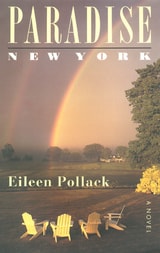
Paradise, New York
A NovelEileen Pollack
Temple University Press, 2000
In the course of that season, Lucy comes to realize her love for the hotel's black handyman, Mr. Jefferson -- and the difficulties she faces in overcoming the barriers between them. She battles her grandmother's not-so-subtle attempts to sabotage her success, her parents' superstitious fear of anything that attracts attention to the Jews, and her brother's contention that what Lucy is doing is more a matter of ego than authentic religious feeling.
On top of all this, Lucy must contend with the Hasid who buys the chicken farm next door, a cell of ancient Jewish Communist who foment a strike among Eden's overworked young staff, and a gay chef and a gay baker who want to prove to the world that kosher cuisine can satisfy the most sophisticated gourmet.
Among the novel's characters are Shirley and Nat Feidel, who barely survived the Holocaust but refuse to allow bitterness to rule their lives; Mami Goshgarian, the Eden's tumeler; and Jimmy Kilcoin, and Irish Catholic insurance adjustor who has earned a reputation as "the Don Juan of the Catskills" and is determined to seduce Lucy before summer's end.
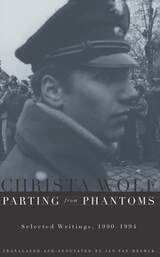
Parting from Phantoms
Selected Writings, 1990-1994Christa Wolf
University of Chicago Press, 1997
"The works in this book constitute an essential document of the history of reunified Germany, and this alone recommends it to scholars and those interested in current European events."— Publishers Weekly
"Christa Wolf was arguably the most influential writer of a nation that no longer exists. . . . Parting from Phantoms traces the fever chart of her anguish. . . . In some ways, the rawness of the present volume is its greatest contribution, and its bona fides—testifying to the human cost of deception and self-deception."—Todd Gitlin, Nation
"A thrilling display of ideological soul-searching."—Ilan Stavans, Newsday, Favorite Books of 1997
Passage of Tears
Abdourahman A. Waberi
Seagull Books, 2011
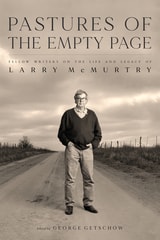
Pastures of the Empty Page
Fellow Writers on the Life and Legacy of Larry McMurtryGeorge Getschow, editor
University of Texas Press, 2023
A collection of essays that offers an intimate view of Larry McMurtry, America’s preeminent western novelist, through the eyes of a pantheon of writers he helped shape through his work over the course of his unparalleled literary life.
When he died in 2021, Larry McMurtry was one of America’s most revered writers. The author of treasured novels such as Lonesome Dove and The Last Picture Show, and coauthor of the screenplays for Brokeback Mountain and Streets of Laredo, McMurtry created unforgettable characters and landscapes largely drawn from his life growing up on the family’s hardscrabble ranch outside his hometown of Archer City, Texas. Pastures of the Empty Page brings together fellow writers to honor the man and his impact on American letters.
Paulette Jiles, Stephen Harrigan, Stephanie Elizondo Griest, and Lawrence Wright take up McMurtry’s piercing and poetic vision—an elegiac literature of place that demolished old myths of cowboy culture and created new ones. Screenwriting partner Diana Ossana reflects on their thirty-year book and screenwriting partnership; other contributors explore McMurtry’s reading habits and his passion for bookselling. And brother Charlie McMurtry shares memories of their childhood on the ranch. In contrast to his curmudgeonly persona, Larry McMurtry emerges as a trustworthy friend and supportive mentor. McMurtry was famously self-deprecating, but as his admirers attest, this self-described “minor regional writer” was an artist for the ages.

Pearls, Peaches, and Peddlers
Short Essays on Arkansas’s Amazing HistoryTom Dillard
University of Arkansas Press, 2027
In Pearls, Peaches, and Peddlers: Short Essays on Arkansas’s Amazing History, Tom Dillard offers a lively portrait of Arkansas that reveals how the state was shaped by ordinary people, unexpected industries, and moments of upheaval both grand and small.
The seventy-four essays collected here draw upon Dillard’s career as a historian, archivist, educator, and preservationist to challenge familiar myths, reveal overlooked stories, and demonstrate how the history of one state can illuminate the larger American experience.
Pennsylvania Stories--Well Told
William Ecenbarger
Temple University Press, 2017
A former journalist for the Philadelphia Inquirer Magazine, and author of the bestseller Kids for Cash, Ecenbarger has collected a dozen of his fascinating articles showcasing the Keystone State in Pennsylvania Stories—Well Told. He provides a history of the pencil, and considers why the first day of Pennsylvania’s deer hunting season—the world’s largest participatory sporting event—is an unofficial state holiday, closing schools and state offices. Ecenbarger also profiles George “Boom Boom” Zambelli, the internationally renowned pyrotechnic king, and goes driving with Pennsylvania native John Updike in rural Berks County, PA.
Other fascinating tales unfold in Pennsylvania Stories, from an inspiring tale of Governor Bob Casey’s double organ transplant, to darker essays on the electric chair and the Ku Klux Klan, to a mile-by-mile appreciation of the Pennsylvania Turnpike.
In these weird and wonderful stories, Ecenbarger highlights just what makes Pennsylvania both eccentric and great. His book is a delightfully intriguing read for natives and curious outsiders alike.
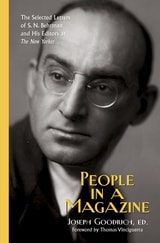
People in a Magazine
The Selected Letters of S. N. Behrman and His Editors at "The New Yorker"Joseph Goodrich
University of Massachusetts Press, 2018
Playwright, biographer, screenwriter, and critic S. N. Behrman (1893–1973) characterized the years he spent writing for The New Yorker as a time defined by “feverish contact with great theatre stars, rich people and social people at posh hotels, at parties, in mansions and great estates.” While he hobnobbed with the likes of Mary McCarthy, Elia Kazan, and Greta Garbo and was one of Broadway's leading luminaries, Behrman would later admit that the friendships he built with the magazine's legendary editors Harold Ross, William Shawn, and Katharine S. White were the “one unalloyed felicity” of his life.
People in a Magazine collects Behrman's correspondence with his editors along with telegrams, interoffice memos, and editorial notes drawn from the magazine's archives—offering an unparalleled view of mid-twentieth-century literary life and the formative years of The New Yorker, from the time of Behrman's first contributions to the magazine in 1929 until his death.
Peter of Cornwall’s Book of Revelations
Peter of Cornwall
Bodleian Library Publishing, 2013
Phantoms of a Blood-Stained Period
The Complete Civil War Writings of Ambrose BierceJames Russell Duncan
University of Massachusetts Press, 2002
Philip Sparrow Tells All
Lost Essays by Samuel Steward, Writer, Professor, Tattoo ArtistSamuel Steward
University of Chicago Press, 2015
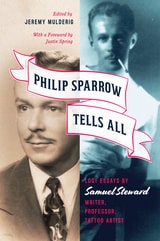
In Philip Sparrow Tells All, Jeremy Mulderig has collected thirty of these engaging but forgotten columns, prefacing them with revealing introductions that relate the essays to people and events in Steward’s life and to the intellectual and cultural contexts in which he wrote during the 1940s. In these essays we encounter such famous friends of Steward as Gertrude Stein, André Gide, and Thornton Wilder. We hear of his stint as a holiday sales clerk at Marshall Field’s (where he met and seduced fellow employee Rock Hudson), of his roles as an opera and ballet extra in hilariously shoddy costumes, of his hoarding tendencies, his disappointment with the drabness of men’s fashions, and his dread of turning forty. We go along with him to a bodybuilding competition and a pet cemetery, and together we wander the boulevards of Paris and the alleys of Algiers. Throughout, Mulderig’s entertaining annotations explain the essays’ wide-ranging allusions and also highlight their gay subtext, which constituted a kind of private game that Steward played with his mostly oblivious audience of Midwestern dentists.
The first collection of any of Samuel Steward’s writings to be republished since his death in 1993, Philip Sparrow Tells All makes these lost essays available to a broad readership that Steward imagined but never actually enjoyed when he wrote them. In doing so, it takes a major step toward documenting his important place in twentieth-century gay literature and history.
Philodemus, On Anger
David Armstrong
SBL Press, 2020
The first English translation of On Anger
This latest volume in the Writings from the Greco-Roman World series provides a translation of a newly edited Greek text of Philodemus’s On Anger, now supplemented with the help of multispectral imaging. As our sole evidence for the Epicurean view of what constitutes natural and praiseworthy anger as distinguished from unnatural pleasure in vengeance and cruelty for their own sake, this text is crucial to the study of ancient thought about the emotions. Its critique of contemporary Stoic and Peripatetic theories of anger offers crucial new information for the history of philosophy in the last two centuries BCE. The introduction and commentary also make use of newly revised texts and readings from several other ancient treatises on anger.
Features
- An apparatus representing work on the text since the papyrus was opened in 1805
- A full explication of the Epicurean theory of natural anger as an emotion without pleasure
- One of the Herculaneum papyri that survived the eruption of Vesuvius in 79 CE
Photographic Memories
Selected Essays, Playlets, and StoriesWilly Conley
Gallaudet University Press, 2023
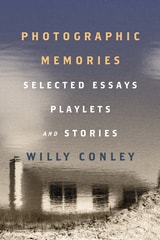
Original photographs taken by the author accompany his writings and invite the reader to contemplate the often-blurred lines between reality and memory.
Phyllis Shand Allfrey
A Caribbean LifeParavisini-Gebert, Lizabeth
Rutgers University Press, 1996
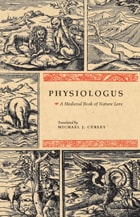
Physiologus
A Medieval Book of Nature LoreTranslated by Michael J. Curley
University of Chicago Press, 2009
One of the most popular and widely read books of the Middle Ages, Physiologus contains allegories of beasts, stones, and trees both real and imaginary, infused by their anonymous author with the spirit of Christian moral and mystical teaching. Accompanied by an introduction that explains the origins, history, and literary value of this curious text, this volume also reproduces twenty woodcuts from the 1587 version. Originally composed in the fourth century in Greek, and translated into dozens of versions through the centuries, Physiologus will delight readers with its ancient tales of ant-lions, centaurs, and hedgehogs—and their allegorical significance.
“An elegant little book . . . still diverting to look at today. . . . The woodcuts reproduced from the 1587 Rome edition are alone worth the price of the book.”—Raymond A. Sokolov, New York Times Book Review
Pivotal Voices, Era of Transition
Toward a 21st Century PoeticsRigoberto González
University of Michigan Press, 2017
This book fills a glaring gap in existing poetry scholarship by focusing exclusively on writers of color, and particularly on Latino poetry. González makes important observations about the relevance, urgency, and exquisite craft of the work coming from writers who represent marginalized communities. His insightful connections between the Latino, African American, Asian American, and Native American literatures persuasively position them as a collective movement critiquing, challenging, and reorienting the direction of American poetry with their nuanced and politicized verse. González’s inclusive vision covers a wide landscape of writers, opening literary doors for sexual and ethnic minorities.

Pixel
Krisztina Tóth
Seagull Books, 2018
Like stars in the sky, pixels may seem like tiny, individual points. But, when viewed from a distance, they can create elaborate images. Each pixel contributes to this array, but no individual point can create the whole. The thirty stories that comprise Krisztina Tóth’s book similarly produce an interconnected web. While each tale of love, loss, and failed self-determination narrates the sensuousness of an individual’s life, together, the thirty stories tell a more complicated tale of relationships. Circumstances that appear unrelated may converge in harmony or heartbreak, just as the events that loom largest may fail to produce a longed-for outcome. These threads often determine the course of lives in unpredictable ways—sometimes comic, sometimes tragic, but rarely in the ways we originally anticipated.
Place Envy
Essays in Search of OrientationMichael Lowenthal
The Ohio State University Press, 2026
Growing up in places where his family had no past, and met mostly by silence from his Holocaust-refugee grandparents, Michael Lowenthal longed to be from somewhere. Then he realized he was gay and felt displaced from his own displaced family. Place Envy—his first book of essays after five acclaimed books of fiction—chronicles his quest for orientation in the world: as an agnostic Jew, as a queer traveler and lover, and as a writer who can tell or twist the truth. Yearning for a queer lineage, he obsesses about an uncle who perished at Bergen-Belsen but then finds, in his grandmother’s German hometown, a more surprising legacy. He lives with a Pennsylvania Amish family; accompanies blind gay men on a Mexican cruise; plays jazz with Sun Ra, the Afrofuturist who claimed to hail from Saturn; and pursues a clarifying love affair in Brazil. Collectively, these essays recount Lowenthal’s many journeys of dislocation and relocation: to foreign countries and subcultures and to the riskiest shores of family and self.
Playing in Time
Essays, Profiles, and Other True StoriesCarlo Rotella
University of Chicago Press, 2012
Rotella is best known for his writings on boxing, and his essays here do not disappoint. It’s a topic that he turns to for its colorful characters, compelling settings, and formidable life lessons both in and out of the ring. He gives us tales of an older boxer who keeps unretiring and a welterweight who is “about as rich and famous as a 147-pound fighter can get these days,” and a hilarious rumination on why Muhammad Ali’s phrase “I am the greatest” began appearing (in the mouth of Epeus) in translations of The Iliad around 1987. His essays on blues, crime and science fiction writers, and urban spaces are equally and deftly engaging, combining an artist’s eye for detail with a scholar’s sense of research, whether taking us to visit detective writer George Pelecanos or to dance with the proprietress of the Baby Doll Polka Club next to Midway Airport in Chicago.
Rotella’s essays are always smart, frequently funny, and consistently surprising. This collection will be welcomed by his many fans and will bring his inimitable style and approach to an even wider audience.
Poe Abroad
Influence Reputation AffinitiesLois Davis Vines
University of Iowa Press, 1999
In Poe Abroad, Lois Vines has brought together a collection of essays that document the American writer's influence on the diverse literatures—and writers—of the world. Over twenty scholars demonstrate how and why Poe has significantly influenced many of the major literary figures of the last 150 years.
Part One includes studies of Poe's popularity among general readers, his influence on literary movements, and his reputation as a poet, fiction writer, and literary critic. Part Two presents analyses of the role Poe played in the literary development of specific writers representing many different cultures.
Poe Abroad commemorates the 150th anniversary of Poe's death and celebrates his worldwide impact, beginning with the first literal translation of Poe into a foreign language, “The Gold-Bug”into French in 1845. Charles Baudelaire translated another Poe tale in 1848 and four years later wrote an essay that would make Poe a well-known author in Europe even before he achieved recognition in America.
Poe died knowing only that some of his stories had been translated into French. He probably never would have imagined that his work would be admired and imitated as far away as Japan, China, and India or would have a lasting influence on writers such as Baudelaire, August Strindberg, Franz Kafka, Jorge Luis Borges, Julio Cortázar, and Tanizaki Junichiro.
As we approach the sesquicentennial of his death, Poe Abroad brings together a timely one-volume assessment of Poe's influence throughout the world.
Poems and Fancies with The Animal Parliament
Margaret Cavendish, Duchess of Newcastle
Iter Press, 2018
The Other Voice in Early Modern Europe. The Toronto Series: Volume 64
Poems and Selected Letters
Veronica Franco
University of Chicago Press, 1998
As an "honored courtesan", Franco made her living by arranging to have sexual relations, for a high fee, with the elite of Venice and the many travelers—merchants, ambassadors, even kings—who passed through the city. Courtesans needed to be beautiful, sophisticated in their dress and manners, and elegant, cultivated conversationalists. Exempt from many of the social and educational restrictions placed on women of the Venetian patrician class, Franco used her position to recast "virtue" as "intellectual integrity," offering wit and refinement in return for patronage and a place in public life.
Franco became a writer by allying herself with distinguished men at the center of her city's culture, particularly in the informal meetings of a literary salon at the home of Domenico Venier, the oldest member of a noble family and a former Venetian senator. Through Venier's protection and her own determination, Franco published work in which she defended her fellow courtesans, speaking out against their mistreatment by men and criticizing the subordination of women in general. Venier also provided literary counsel when she responded to insulting attacks written by the male Venetian poet Maffio Venier.
Franco's insight into the power conflicts between men and women and her awareness of the threat she posed to her male contemporaries make her life and work pertinent today.
Poems by a Sixteenth-Century Gentlewoman, Maid, and Servant
Isabella Whitney
Iter Press, 2023
Isabella Whitney (c. 1547–after 1624) was the first English woman to publish original secular poetry under her own name. She published two poetic miscellanies of poems: The Copy of a Letter (1567) and A Sweet Nosegay (1573), which include her own work as well as a total of six poems by five different male authors. This edition of her writings prints modernized texts of the complete miscellanies and adds to them six poems attributed to Whitney by largely twentieth-century critics. These poems provide a rich portrait of sixteenth-century female courtship and its dangers, a unique view of class and gender in Whitney’s lifetime, and a portrait of London as a burgeoning market of practical goods and luxury items from foodstuffs to imported silk.
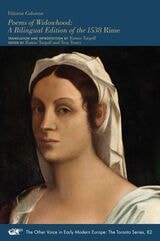
Poems of Widowhood
A Bilingual Edition of the 1538 "Rime"Vittoria Colonna
Iter Press, 2021
This volume presents the first complete English translation of the 1538 Rime and restores the original Italian texts from the blemished Parma printing and later composite editions, a boon to readers of both languages.
Poetic License
Essays on Modernist and Postmodernist LyricMarjorie Perloff
Northwestern University Press, 1990
Poetic Relations
Intimacy and Faith in the English ReformationConstance M. Furey
University of Chicago Press, 2017
As Furey demonstrates, John Donne, George Herbert, Anne Bradstreet, and others describe inner lives that are surprisingly crowded, teeming with human as well as divine companions. The same early modern writers who bequeathed to us the modern distinction between self and society reveal here a different way of thinking about selfhood altogether. For them, she argues, the self is neither alone nor universally connected, but is forever interactive and dynamically constituted by specific relationships. By means of an analysis equally attentive to theological ideas, social conventions, and poetic form, Furey reveals how poets who understand introspection as a relational act, and poetry itself as a form ideally suited to crafting a relational self, offer us new ways of thinking about selfhood today—and a resource for reimagining both secular and religious ways of being in the world.
Poetry On and Off the Page
Essays for Emergent OccasionsMarjorie Perloff
Northwestern University Press, 1998
Poets as Public Scholars
Contemporary Poetics in an Age of Social MediaC. R. Grimmer
University of Michigan Press, 2026
Poets as Public Scholars is a multimedia project that interrogates how poet-scholars use digital platforms to expand access and visibility for underrepresented voices, but also to critique the commodification, extraction, and erasure practices embedded in neoliberal literary circulation. Framed by two core questions—how poets teach public scholarship through networked media, and how to support underrepresented poets without reinforcing market-driven erasure—the collection offers videos for student and public engagement, essays for scholarly audiences, and discussion questions for classroom use.
Structured around seven video dialogues and seven critical essays, the book features contributions from poet-scholars including Camea Davis, A.D. Carson, Tyrone Williams, Patrick Milian, Stevi Costa, Cameron Awkward-Rich, and Woogee Bae. Each chapter examines the material and affective economies that shape poetic production and reception, while proposing alternative, community-rooted infrastructures for literary and cultural labor. Designed for layered audiences, the video interviews model public-facing discourse, while the companion essays situate the work within critical conversations in literature, cultural theory, and media studies. With included discussion questions by Dr. Molly Ubbesen (University of Minnesota Rochester) and open access availability, Poets as Public Scholars functions as both a teaching tool and a theoretical intervention for scholars and educators seeking to integrate anti-racist, anti-capitalist approaches to literary and digital humanities pedagogy.
Points of the Compass
StoriesSahar Tawfiq
University of Arkansas Press, 1995
Political Writings
Jean-Francois Lyotard
University of Minnesota Press, 1993
Political Writings
Edited by Jude Davies
University of Illinois Press, 2011
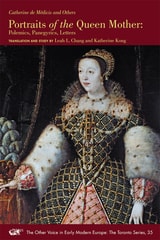
Portraits of the Queen Mother
Polemics, Panegyrics, LettersCatherine de Médicis and Others
Iter Press, 2014
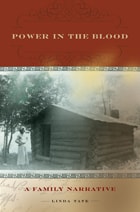
Power in the Blood
A Family NarrativeLinda Tate
Ohio University Press, 2009
Power in the Blood: A Family Narrative traces Linda Tate’s journey to rediscover the Cherokee-Appalachian branch of her family and provides an unflinching examination of the poverty, discrimination, and family violence that marked their lives. In her search for the truth of her own past, Tate scoured archives, libraries, and courthouses throughout Kentucky, Tennessee, Alabama, Illinois, and Missouri, visited numerous cemeteries, and combed through census records, marriage records, court cases, local histories, old maps, and photographs. As she began to locate distant relatives — fifth, sixth, seventh cousins, all descended from her great-greatgrandmother Louisiana — they gathered in kitchens and living rooms, held family reunions, and swapped stories. A past that had long been buried slowly came to light as family members shared the pieces of the family’s tale that had been passed along to them.
Power in the Blood is a dramatic family history that reads like a novel, as Tate’s compelling narrative reveals one mystery after another. Innovative and groundbreaking in its approach to research and storytelling, Power in the Blood shows that exploring a family story can enhance understanding of history, life, and culture and that honest examination of the past can lead to healing and liberation in the present.
Precision and Soul
Essays and AddressesRobert Musil
University of Chicago Press, 1990
Best known as author of the novel The Man without Qualities, Robert Musil wrote these essays in Vienna and Berlin between 1911 and 1937. Offering a perspective on modern society and intellectual life, they are concerned with the crisis of modern culture as it manifests itself in science and mathematics, capitalism and nationalism, the changing roles of women and writers, and more. Writing to find his way in a world where moral systems everywhere were seemingly in decay, Musil strives to reconcile the ongoing conflict between functional relativism and the passionate search for ethical values.
Robert Musil was born in 1880 and died in 1942. His first novel, Young Törless, is available in English. A new two-volume translation by Burton Pike and Sophie Wilkins of The Man without Qualities is forthcoming from Alfred A. Knopf.
"Now we have these thirty-one invaluable and entertaining pieces, from an article on 'The Obscene and Pathological in Art' to the equally provocative talk 'On Stupidity,' which, with a new translation of The Man without Qualities forthcoming . . . amount to a literary event for the reader of English comparable to Constance Garnett's massive translation of Chekhov's stories."—Joseph Coates, Chicago Tribune
"Musil is one of the few great moderns, one of the handful who ventured to confront the issues that shape and define our time. . . . He has a range and a striking capacity every bit as great as that of Mann, Joyce, or Beckett."—Boston Review
"These essays are crucial in understanding a writer and critic whose lifelong task was an attempt to resolve the dichotomy between the precision of scientific form and the soul—the matter of life and art."—Choice
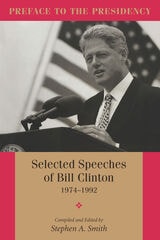
Preface to the Presidency
Selected Speeches of Bill Clinton 1974-1992Stephen Smith
University of Arkansas Press, 1996
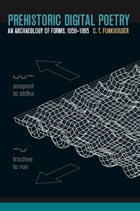
Prehistoric Digital Poetry
An Archaeology of Forms, 1959-1995C.T. Funkhouser, with a foreword by Sandy Baldwin
University of Alabama Press, 2007
Tracing the Origins of Digital Poetry Before the Web Revolution
For the last five decades, poets have had a vibrant relationship with computers and digital technology. This book is a documentary study and analytic history of digital poetry that highlights its major practitioners and the ways that they have used technology to foster a new aesthetic. Focusing primarily on programs and experiments produced before the emergence of the World Wide Web in the mid-1990s, C. T. Funkhouser analyzes numerous landmark works of digital poetry to illustrate that the foundations of today’s most advanced works are rooted in the rudimentary generative, visual, and interlinked productions of the genre’s prehistoric period.
Since 1959, computers have been used to produce several types of poetic output, including randomly generated writings, graphical works (static, animated, and video formats), and hypertext and hypermedia. Funkhouser demonstrates how hardware, programming, and software have been used to compose a range of new digital poetic forms. Several dozen historical examples, drawn from all of the predominant approaches to digital poetry, are discussed, highlighting the transformational and multi-faceted aspects of poetic composition now available to authors. This account includes many works, in English and other languages, which have never before been presented in an English-language publication.
In exploring pioneering works of digital poetry, Funkhouser demonstrates how technological constraints that would seemingly limit the aesthetics of poetry have instead extended and enriched poetic discourse. As a history of early digital poetry and a record of an era that has passed, this study aspires both to influence poets working today and to highlight what the future of digital poetry may hold.
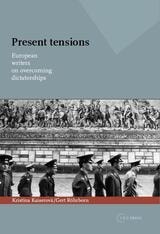
Present Tensions
European Writers on Overcoming DictatorshipsKristina Kaiserová
Central European University Press, 2009
Prior to Meaning
The Protosemantic and PoeticsSteve McCaffery
Northwestern University Press, 2000
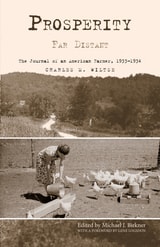
Prosperity Far Distant
The Journal of an American Farmer, 1933–1934Charles M. Wiltse
Ohio University Press, 2012
Fresh from receiving a doctorate from Cornell University in 1933, but unable to find work, Charles M. Wiltse joined his parents on the small farm they had recently purchased in southern Ohio. There, the Wiltses scratched out a living selling eggs, corn, and other farm goods at prices that were barely enough to keep the farm intact.
In wry and often affecting prose, Wiltse recorded a year in the life of this quintessentially American place during the Great Depression. He describes the family’s daily routine, occasional light moments, and their ongoing frustrations, small and large—from a neighbor’s hog that continually broke into the cornfields to the ongoing struggle with their finances. Franklin Roosevelt’s New Deal had little to offer small farmers, and despite repeated requests, the family could not secure loans from local banks to help them through the hard economic times. Wiltse spoke the bitter truth when he told his diary, “We are not a lucky family.” In this he represented millions of others caught in the maw of a national disaster.
The diary is introduced and edited by Michael J. Birkner, Wiltse’s former colleague at the Papers of Daniel Webster Project at Dartmouth College, and coeditor, with Wiltse, of the final volume of Webster’s correspondence.
Proverbs
An Eclectic Edition with Introduction and Textual CommentaryMichael V. Fox
SBL Press, 2015
A new critical text for Proverbs drawing from many manuscripts
This first volume of The Hebrew Bible: A Critical Edition series, features a critical text of Proverbs with extensive text-critical introductions and commentaries. This and future HBCE volumes bring together a scholar’s critical decisions into a single text. construct an eclectic text, drawing from many manuscripts or placing entirely variant texts side by side. A common approach for critical editions of other ancient books, including the New Testament, the eclectic approach and scope used in the HBCE is a first of its kind for the Hebrew Bible.
Features:
- Emendations set in context rather than singly and marginally
- Introduction that sets out the method and purpose of the volume
- Extensive list of abbreviations and sigla
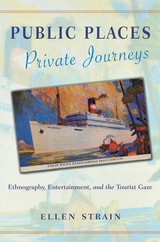
Public Places, Private Journeys
Ethnography, Entertainment, and the Tourist GazeStrain, Ellen
Rutgers University Press, 2003
In this globally interconnected planet, we are increasingly able to access exotic locales without ever actually seeing these places firsthand. Instead, what we perceive to be fresh cultural experiences are actually second-hand moments, filtered through mediums such as television, film, the internet, CD-Roms, and various other media.
Ellen Strain posits that the images in film and popular culture not only fill in the gaps of a person’s first-hand—or rather, lack of first-hand—experience with other cultural situations, but also predisposes the “tourist gaze” to view particular locales in a predetermined way. She theorizes the idea of a touristic way of understanding the world in general. How, she asks, are our cross-cultural perceptions of places and peoples created in the first place? Can a set of images—such as postcards—mediate our vision of distant geographies? Are there culturally constructed strategies set up to mediate our cross-cultural perceptions of the exotic? Strain includes the works of Jules Verne, E. M. Forster, and Michael Crichton, as well as film, CD-Rom travel games and virtual reality in her own authorial gaze.
Public Places, Private Journeys is a unique postmodern exploration of how individuals see across cultural differences in an era of increasingly commercialized and globalized culture.
Published Essays, 1940-1952 (CW10)
Eric Voegelin & Edited & Intro by Ellis Sandoz.
University of Missouri Press, 2000
Published Essays, 1940-1952, includes some of Eric Voegelin's most provocative and interesting essays. Containing his first publications after he fled Vienna and settled in the United States following Hitler's annexation of Austria, this volume provides eyewitness commentary on the rise of National Socialism from the first days of World War II onward. A major study entitled "Growth of the Race Idea" presents a masterful summary of the two volumes on that subject Voegelin first published in 1933. A related essay of wide interest is entitled "Nietzsche, the Crisis, and the War."
Another facet of Voegelin's thought incorporated within this volume of the Essays is his extraordinary analysis of the diplomatic correspondence conducted between the Western powers, the papacy, and the Great Khans, whose breathtaking expansion of the Mongol Empire for a time threatened to extinguish Western civilization itself and resulted in a two-century domination of Russia. Another major study is "The Origins of Scientism," an illuminating analysis of the grounds of much of modern philosophy and of all modern political ideologies.
There are also surveys of the state of political theory in the late forties, penetrating studies of utopian thought with essays on Thomas More and Goethe, and a concluding essay that explores the intricacies of "Gnostic Politics"—a familiar theme from Voegelin's contemporaneous New Science of Politics. This volume of published essays shows Eric Voegelin at his most accessible best.