Results by title
941 books match the query 'Military' and 35 start with p
PCE 1604 Series, Frigate Panter
Henk Visser
Amsterdam University Press, 2023

Pacific Airman
The World War II Journal of a B-24 Liberator NavigatorEdward S. Goode, edited by Robert A. Taylor
University of Alabama Press, 2026
A World War II bomber navigator’s diary, documenting perilous missions, survival, sacrifice, and the legendary 90th Bomb Group
Pacific Airman: The World War II Journal of a B-24 Liberator Navigator presents the hand-written pocket diary of US Army Air Forces bomber navigator Edward S. Goode of West Virginia. Goode was a member of the 400th Bomber Squadron (the “Black Pirates”), part of the legendary 90th Bomb Group the “Jolly Rogers.” With approximately seventy-four combat missions to his credit and an Air Medal with six Oak Leaf clusters, Goode experienced the war close-up, with group losses and the horror of grisly deaths in and out of combat.
The journal details costly bombing raids against Japanese targets, as well as the dangers of the Southwest Pacific area with its wild and unpredictable weather and terrain. Editor Robert A. Taylor also documents Goode’s failed postwar attempt to receive the Distinguished Flying Cross for heroism for the Peleliu bombing mission in 1944.
Taylor offers detailed historical and other context to the journal. Three appendixes comprise a guide for B-24 navigators’ duties and responsibilities, Goode’s own record of 90th Bomb Group losses for 1944–1945, and a hometown newspaper clipping announcing his return home. This book will appeal to readers interested in World War II history, military aviation, the Pacific theater, and firsthand wartime narratives.
Partisans, Guerillas, and Irregulars
Historical Archaeology of Asymmetric WarfareEdited by Steven D. Smith and Clarence R. Geier
University of Alabama Press, 2019
Essays that explore the growing field of conflict archaeology
Within the last twenty years, the archaeology of conflict has emerged as a valuable subdiscipline within anthropology, contributing greatly to our knowledge and understanding of human conflict on a global scale. Although archaeologists have clearly demonstrated their utility in the study of large-scale battles and sites of conventional warfare, such as camps and forts, conflicts involving asymmetric, guerilla, or irregular warfare are largely missing from the historical record.
Partisans, Guerillas, and Irregulars: Historical Archaeology of Asymmetric Warfare presents recent examples of how historical archaeology can contribute to a better understanding of asymmetric warfare. The volume introduces readers to this growing study and to its historic importance. Contributors illustrate how the wide range of traditional and new methods and techniques of historiography and archaeology can be applied to expose critical actions, sacrifices, and accomplishments of competing groups representing opposing philosophies and ways of life, which are otherwise lost in time.
The case studies offered cover significant events in American and world history, including the French and Indian War, the American Revolution, Indian wars in the Southeast and Southwest, the Civil War, Reconstruction, Prohibition, and World War II. All such examples used here took place at a local or regional level, and several were singular events within a much larger and more complex historic movement. While retained in local memory or tradition, and despite their potential importance, they are poorly, and incompletely addressed in the historic record. Furthermore, these conflicts took place between groups of significantly different cultural and military traditions and capabilities, most taking on a “David vs. Goliath” character, further shaping the definition of asymmetric warfare.
Patton's Shadow
The Making of a Hero in Modern MemoryNathan C. Jones
University of Alabama Press, 2024
An engrossing account of the myth and legend of George S. Patton and what his reputation illuminates about American culture and hero worship
Patton’s Shadow by Nathan C. Jones, a leading authority on George S. Patton, offers a definitive account of the creation of the Patton legend and what it illuminates about American culture and the worship of heroes. Jones traces how the persona of Patton, a brash and brilliant general in the European theater of World War II, transcended the individual man and became a cultural icon and byword for triumphal American might.
Patton was a hero lionized and celebrated in his own time. Patton as well as the US Army cultivated his persona during and after the war. His image was used to promote patriotism, commercial goods, and military recruitment. The 1970 Academy Award–winning film starring George C. Scott cemented his iconic image for millions of Americans, further embellishing Patton’s persona and introducing him to entirely new generations of young Americans.
Patton’s Shadow is an intellectually omnivorous tour de force that draws on ideas about heroes from sources as timeless as ancient mythology and as contemporary as Abraham Maslow, Max Weber, and Carl Jung. Jones artfully locates the honored altar that heroes occupy in the human heart and then answers insightful questions about what America’s embrace of Patton in particular as a military hero illuminates about the United States, about Patton’s generation, and about our own.
Jones’s engrossing work will fascinate readers interested in American history, military history, and the psychology of heroism.
Patton's War
An American General's Combat Leadership Volume 3: January 1-December 21, 1945Kevin M. Hymel
University of Missouri Press, 2026
As with his previous volume, Hymel relies on Patton’s original diaries (not the transcribed, embellished versions historians have relied on for many years) and personal letters to tell the general’s story. Hymel also mined various archives to explain Patton’s encounters with soldiers, government officials, civilians, and reporters to expand on his narrative.
Throughout this three-volume work, Patton emerges not as a larger-than-life myth, but as a human being, one held back by the personal prejudices and antisemitism that ultimately proved to be his demise. Despite these personal failings, Patton was, above all, as Hymel reveals, a commander bent on winning, or, as the general himself might have put it, getting the enemy to dance to his tune.
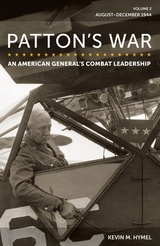
Patton's War
An American General's Combat Leadership, Volume 2: August–December 1944Kevin M. Hymel
University of Missouri Press, 2023
Finalist for the 2023 Gilder Lehrman Military History Prize
This second of three volumes of Patton’s War picks up where the first one left off, examining General George S. Patton’s leadership of the U.S. Third Army. The book follows Patton’s contributions to both the Normandy and Brittany campaigns—the closing of the Falaise Pocket in Normandy, and racing to the port cities in Brittany. It ends with Patton and his corps rescuing the besieged town of Bastogne in the Battle of the Bulge.
As he did in the preceding volume, Hymel relies not only on Patton’s diaries and letters, but countless veteran interviews, surveys, and memoirs. He also provides a unique insight missed by previous Patton scholars. Instead of using Patton’s transcribed diaries, which were heavily edited and embellished, he consults Patton’s original, hand-written diaries to uncover previously unknown information about the general.
This second volume of Hymel’s groundbreaking work shows Patton at the height of his generalship, successfully leading his army without the mistakes and caustic behavior that almost got him sent home earlier—even if we also see a Patton still guided at times by racism and antisemitism.
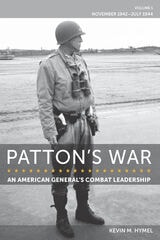
Patton's War
An American General's Combat Leadership, Volume I: November 1942–July 1944Kevin M. Hymel
University of Missouri Press, 2021
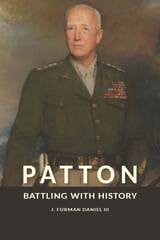
Patton
Battling with HistoryJ. Furman Daniel
University of Missouri Press, 2025
Patton deliberately cultivated the image of himself as a warrior from ages past; the more interesting truth is that he was an exceptionally dedicated student of history. He was a hard worker and voracious reader who gave a great deal of thought to how military history might inform his endeavors. Most scholars have overlooked this element of Patton’s character, which Daniel argues is essential to understanding the man’s genius.
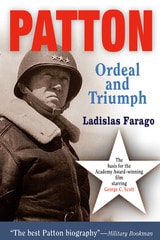
Patton
Ordeal and TriumphLadislas Farago
Westholme Publishing, 2005
"The best Patton biography."—Military Bookman
He is America's most famous general. He represents toughness, focus, determination, and the ideal of achievement in the face of overwhelming odds. He was the most feared and respected adversary to his enemies and an object of envy, admiration, and sometimes, scorn to his professional peers. An early proponent of tank warfare, George S. Patton moved from being a foresighted lieutenant in the First World War to commanding the Third Army in the next, leading armored divisions in the Allied offensive that broke the back of Nazi Germany. Patton was an enigmatic figure. His image among his troops and much of the press achieved legendary status through his bold and colorful comments and combat leadership, yet these same qualities nearly jeopardized his career and forced him out of the battle on several occasions. Victory was impossible without Patton, and returning to the field, his army was responsible for one of the most crushing advances in the history of warfare.
In Ladislas Farago's masterpiece, Patton: Ordeal and Triumph, the complete story of this fascinating personality is revealed. Born into an aristocratic California family, Patton rose in military rank quickly and was tapped to lead the Allied landings in North Africa in 1942. Under Patton's direction, American troops cut their teeth against Rommel's Afrikakorps, advanced further and more quickly than British General Montgomery's army in the conquest of Sicily, and ultimately continued their exploits by punching into Germany and checking the Russian westward advance at the end of World War II. A sweeping, absorbing biography and critically hailed, Patton: Ordeal and Triumph provides unique insights into Patton's life and leadership style and is military history at its finest.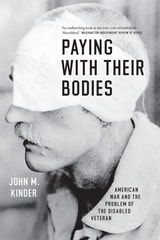
Paying with Their Bodies
American War and the Problem of the Disabled VeteranJohn M. Kinder
University of Chicago Press, 2015
America has grappled with the questions posed by injured veterans since its founding, and with particular force since the early twentieth century: What are the nation’s obligations to those who fight in its name? And when does war’s legacy of disability outweigh the nation’s interests at home and abroad? In Paying with Their Bodies, John M. Kinder traces the complicated, intertwined histories of war and disability in modern America. Focusing in particular on the decades surrounding World War I, he argues that disabled veterans have long been at the center of two competing visions of American war: one that highlights the relative safety of US military intervention overseas; the other indelibly associating American war with injury, mutilation, and suffering. Kinder brings disabled veterans to the center of the American war story and shows that when we do so, the history of American war over the last century begins to look very different. War can no longer be seen as a discrete experience, easily left behind; rather, its human legacies are felt for decades.
The first book to examine the history of American warfare through the lens of its troubled legacy of injury and disability, Paying with Their Bodies will force us to think anew about war and its painful costs.
Peacekeeping on the Plains
Army Operations in Bleeding KansasTony R. Mullis
University of Missouri Press, 2004
Pen and Sword
American War Correspondents, 1898-1975Mary S. Mander
University of Illinois Press, 2010
Pennsylvania
A Military HistoryWilliam A. Pencak
Westholme Publishing, 2016
Westholme State Military History Series
Each state in the United States of America has a unique military history. The volumes in this series seek to provide a portrait of the richness of each state’s military experience, primarily defined by its borders, as well as the important contributions the state has made to the nation’s military history. Written by historians for the general reader, the volumes trace the history of conflict from the original native populations to today. The volumes are well illustrated and include specially commissioned maps, extensive bibliographies, lists of national and state historical sites, and a detailed index.
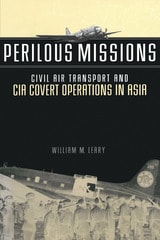
Perilous Missions
Civil Air Transport and CIA Covert Operations in AsiaWilliam M. Leary
University of Alabama Press, 2005
Civil Air Transport (CAT), founded in China after World War II by Claire Chennault and Whiting Willauer, was initially a commercial carrier specializing in air freight. Its role quickly changed as CAT became first a paramilitary adjunct of the Nationalist Chinese Air Force, then the CIA's secret "air force" in Korea, then "the most shot-at airline in the world" in French Indochina, and eventually becoming reorganized as Air America at the height of the Vietnam War. William M. Leary's detailed operational history of CAT sets the story in the perspective of Asian and Cold War geopolitics and shows how CAT allowed the CIA to operate with a level of flexibility and secrecy that it would not have attained through normal military or commercial air transportation.
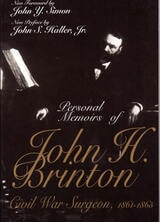
Personal Memoirs of John H. Brinton
Civil War Surgeon, 1861-1865John H. Brinton. Preface by John S. Haller, Jr. Foreword by John Y. Simon
Southern Illinois University Press, 1996
John Hill Brinton (1832–1907) met, observed, and commented on practically the entire hierarchy of the Union army; serving as medical director for Ulysses S. Grant, he came into contact with Philip H. Sheridan, John C. Frémont, Henry W. Halleck, William A. Hammond, D. C. Buell, John A. Rawlins, James Birdseye McPherson, C. F. Smith, John A. McClernand, William S. Rosecrans, and his first cousin George Brinton McClellan. John Y. Simon points out in his foreword that Brinton was one of the first to write about a relatively obscure Grant early in the war:
"Brinton found a quiet and unassuming man smoking a pipe—he could not yet afford cigars— and soon recognized a commander with mysterious strength of intellect and character."
Positioned perfectly to observe the luminaries of the military, Brinton also occupied a unique perspective from which to comment on the wretched state of health and medicine in the Union army and on the questionable quality of medical training he found among surgeons. With both A.B. and A.M. degrees from the University of Pennsylvania and postgraduate training in Paris and Vienna at a time when most medical schools required only a grammar school education, Brinton was exceptional among Civil War doctors. He found, as John S. Haller, Jr., notes in his preface, "the quality of candidates for surgeon’s appointments was meager at best." As president of the Medical Examining Board, Brinton had to lower his standards at the insistence of Secretary of War Edwin Stanton. Haller points out that one "self-educated candidate for an appointment as brigade surgeon explained to the board that he could do ‘almost anything, from scalping an Indian, up and down.’" Brinton assigned this singular candidate to duty in Kansas "where Brinton hoped he would do the least amount of damage." Throughout the war, the dearth of qualified surgeons created problems.
Brinton’s memoirs reveal a remarkable Civil War surgeon, a witness to conditions in Cairo, the Battle of Belmont, and the Siege of Fort Donelson who encountered almost every Union military leader of note.
Brinton wrote his memoirs for the edification of his family, not for public consumption. Yet he was, as Haller notes, a "keen observer of character." And with the exception of Brinton’s acceptance of late nineteenth-century gossip favorable to his cousin General McClellan, Simon finds the memoirs "remarkable for accuracy and frankness." His portrait of Grant is vivid, and his comments on the state of medicine during the war help explain, in Haller’s terms, why the "Civil War was such a medical and human tragedy."
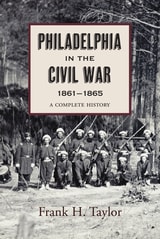
Philadelphia in the Civil War, 1861–1865
Frank H. Taylor
Westholme Publishing, 2014
First published one hundred years ago, Philadelphia in the Civil War presents the complete story of the city during America’s greatest conflict. Richly illustrated with rare images, the book describes every detail of the region’s response to the war, ranging from accounts of each of the military units that served, medicine and medical staffs, and the city’s defense measures to lists of information, such as regiments losing fifty or more men, officers who gained the rank of general, recruiting stations, and famous songs.

Pilgram Marpeck
His Life and Social TheologyStephen B. Boyd
Duke University Press, 1992
Drawing on extensive archival data documenting Marpeck’s professional life, as well as on his numerous published and unpublished writings on theology and religious reform, Stephen B. Boyd traces Marpeck’s unconventional transition from mining magistrate to Anabaptist leader, establishes his connections with various radical social and religious groups, and articulates aspects of his social theology. Marpeck’s distinctive and eclectic theology, Boyd demonstrates, focused on the need for personal, uncoerced conversion, rejected state interference in the affairs of the church, denied the need for a monastic withdrawal from the secular world, and called for the Christian’s active pursuit of justice before God and among human beings.
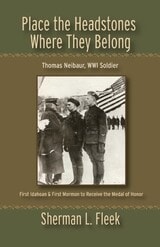
Place the Headstones Where They Belong
Thomas Neibaur, World War 1 SoldierSherman L. Fleek
Utah State University Press, 2008
young Thomas Neibaur found himself in the core of the American Expeditionary Force’s most important offensive.
After becoming separated in advance of his unit, he, despite serious wounds, single-handedly stopped a German
counterattack at a critical hill known as Côte de Châtillon. For this remarkable feat of valor, he received the Medal of
Honor and other awards, becoming the first Idaho and first Mormon recipient of the nation’s highest combat award.
But after a heroic return and brief celebrity, his life followed a tragic downward arc, culminating in his attempt to return
his medal because, as he put it, it could not feed his family.
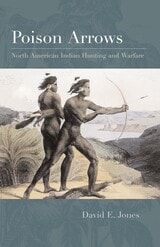
Poison Arrows
North American Indian Hunting and WarfareBy David E. Jones
University of Texas Press, 2007
Biological warfare is a menacing twenty-first-century issue, but its origins extend to antiquity. While the recorded use of toxins in warfare in some ancient populations is rarely disputed (the use of arsenical smoke in China, which dates to at least 1000 BC, for example) the use of "poison arrows" and other deadly substances by Native American groups has been fraught with contradiction. At last revealing clear documentation to support these theories, anthropologist David Jones transforms the realm of ethnobotany in Poison Arrows.
Examining evidence within the few extant descriptive accounts of Native American warfare, along with grooved arrowheads and clues from botanical knowledge, Jones builds a solid case to indicate widespread and very effective use of many types of toxins. He argues that various groups applied them to not only warfare but also to hunting, and even as an early form of insect extermination. Culling extensive ethnological, historical, and archaeological data, Jones provides a thoroughly comprehensive survey of the use of ethnobotanical and entomological compounds applied in wide-ranging ways, including homicide and suicide. Although many narratives from the contact period in North America deny such uses, Jones now offers conclusive documentation to prove otherwise.
A groundbreaking study of a subject that has been long overlooked, Poison Arrows imparts an extraordinary new perspective to the history of warfare, weaponry, and deadly human ingenuity.

Polonium in the Playhouse
The Manhattan Project's Secret Chemistry Work in Dayton, OhioLinda Carrick Thomas
The Ohio State University Press, 2017
Seized by the War Department in 1944 for the bomb project, the Runnymede Playhouse was transformed into a polonium processing facility, providing a critical radioactive ingredient for the bomb initiator—the mechanism that triggered a chain reaction. With the help of a Soviet spy working undercover at the site, it was also key to the Soviet Union’s atomic bomb program.
The work was directed by industrial chemist Charles Allen Thomas who had been chosen by J. Robert Oppenheimer and General Leslie Groves to coordinate Manhattan Project chemistry and metallurgy. As one of the nation’s first science administrators, Thomas was responsible for choreographing the plutonium work at Los Alamos and the Project’s key laboratories. The elegant glass-roofed building belonged to his wife’s family.
Weaving Manhattan Project history with the life and work of the scientist, industrial leader and singing-showman Thomas, Polonium in the Playhouse offers a fascinating look at the vast and complicated program that changed world history and introduces the men and women who raced against time to build the initiator for the bomb.
Postfeminist War
Women in the Media-Military-Industrial ComplexMary Douglas Vavrus
Rutgers University Press, 2019
Power at Sea, Volume 1
The Age of Navalism, 1890-1918Lisle A. Rose
University of Missouri Press, 2006
Power at Sea, Volume 2
The Breaking Storm, 1919-1945Lisle A. Rose
University of Missouri Press, 2006
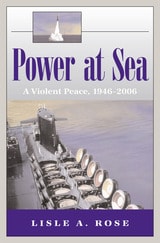
Power at Sea, Volume 3
A Violent Peace, 1946-2006Lisle A. Rose
University of Missouri Press, 2006
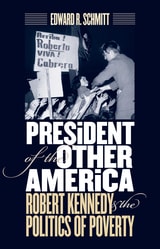
President of the Other America
Robert Kennedy and the Politics of PovertyEdward R. Schmitt
University of Massachusetts Press, 2010
Robert Kennedy's abbreviated run for the presidency in 1968 has assumed almost mythical proportions in American memory. His campaign has been romanticized because of its tragic end, but also because of the foreign and domestic crises that surrounded it. Yet while most media coverage initially focused on Kennedy's opposition to the Vietnam War as the catalyst of his candidacy, another issue commanded just as much of his attention. That issue was poverty. Stumping across the country, he repeated the same antipoverty themes before college students in Kansas and Indiana, loggers and women factory workers in Oregon, farmers in Nebraska, and business groups in New York. Although his calls to action sometimes met with apathy, he refused to modify his message. “If they don't care,” he told one aide, “the hell with them.”
As Edward R. Schmitt demonstrates, Kennedy's concern with the problem of poverty was not new. Although critics at the time accused him of opportunistically veering left in order to outflank an unpopular president, a closer look at the historical record reveals a steady evolution rather than a dramatic shift in his politics.
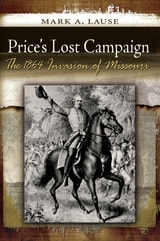
Price's Lost Campaign
The 1864 Invasion of MissouriMark A. Lause
University of Missouri Press, 2013
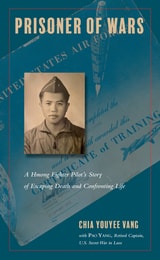
Prisoner of Wars
A Hmong Fighter Pilot's Story of Escaping Death and Confronting LifeChia Youyee Vang
Temple University Press, 2021
Retired Captain Pao Yang was a Hmong airman trained by the U.S. Air Force and CIA to fly T-28D aircraft for the U.S. Secret War in Laos. However, his plane was shot down during a mission in June 1972. Yang survived, but enemy forces captured him and sent him to a POW camp in northeastern Laos. He remained imprisoned for four years after the United States withdrew from Vietnam because he fought on the American side of the war.
Prisoner of Wars shows the impact the U.S Secret War in Laos had on Hmong combatants and their families. Chia Vang uses oral histories thatpoignantly recount Yang’s story and the deeply personal struggles his loved ones—who feared he had died—experienced in both Southeast Asia and the United States. As Yang eventually rebuilt his life in America, he grappled with issues of freedom and trauma.
Yang’s life provides a unique lens through which to better understand the lasting impact of the wars in Southeast Asia and the diverse journeys that migrants from Asia made over the last two centuries. Prisoner of Wars makes visible an aspect of the collateral damage that has been left out of dominant Vietnam War narratives.
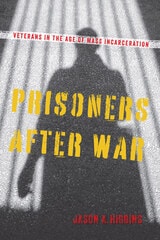
Prisoners after War
Veterans in the Age of Mass IncarcerationJason A. Higgins
University of Massachusetts Press, 2024
Winner of the 2025 Oral History Association Book Award • Winner of Virginia Tech's Albert Lee Sturm Award for Faculty Excellence • Finalist for the 2026 Veterans Studies Association Distinguished Book Award • Honorable Mention, National Council on Public History Book Award
The United States has both the largest, most expensive, and most powerful military and the largest, most expensive, and most punitive carceral system in the history of the world. Since the American War in Vietnam, hundreds of thousands of veterans have been incarcerated after their military service.
Identifying the previously unrecognized connections between American wars and mass incarceration, Prisoners after War reaches across lines of race, class, and gender to record the untold history of incarcerated veterans over the past six decades. Having conducted dozens of oral history interviews, Jason A. Higgins traces the lifelong effects of war, inequality, disability, and mental illness, and explores why hundreds of thousands of veterans, from Vietnam to Afghanistan, were caught up in the carceral system. This original study tells an intergenerational history of state-sanctioned violence, punishment, and inequality, but its pages also resonate with stories of survival and redemption, revealing future possibilities for reform and reparative justice.
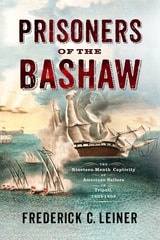
Prisoners of the Bashaw
The Nineteen-Month Captivity of American Sailors in Tripoli, 1803–1805Frederick C. Leiner
Westholme Publishing, 2025
America’s first crisis with the Islamic world: the diplomatic and military mission to free more than three hundred enslaved sailors
On October 31, 1803, the frigate USS Philadelphia ran aground on a reef a few miles outside the harbor of Tripoli. Since April 1801, the United States had been at war with Tripoli, one of the Barbary “pirate” regimes, over the payment of annual tribute—bribes so that American merchant ships would not be seized and their crews held hostage. After hours under fire, the Philadelphia, aground and defenseless, surrendered, and 307 American sailors and marines were captured. Manhandled and stripped of their clothes and personal belongings, the men of the Philadelphia were paraded before the Bashaw of Tripoli, Yusuf Karamanali. The bashaw ordered the crew moved into an old warehouse, and the officers were eventually moved to a dungeon beneath the Bashaw’s castle. While the officers were treated as “gentlemen,” although imprisoned, the sailors worked as enslaved laborers. Regularly beaten and given a meager diet, several died in captivity; escape attempts failed, while a few ended up converting to Islam and joined their captors. President Thomas Jefferson, Congress, U.S. diplomats, and Commodore Edward Preble, commander of the naval squadron off Tripoli, grappled with how to safely free the American captives. The crew of the Philadelphia remained prisoners for nineteen months, until the Tripolitan War ended in June 1805.
The Philadelphia captives became the key to negotiations to end the war; the possibility existed that if threatened too much, the Bashaw would kill the captives. Ultimately, the United States paid $60,000 to get them back—about $200 per man—a sum less than the Bashaw’s initial demands for compensation. In June 1805, the Americans began their journey home. Combining stirring naval warfare, intricate diplomatic negotiations, the saga of surviving imprisonment, and based on extensive primary source research, Prisoners of the Bashaw: The Nineteen-Month Captivity of American Sailors in Tripoli, 1803-1805 by Frederick C. Leiner tells the complete story of America’s first great hostage crisis.
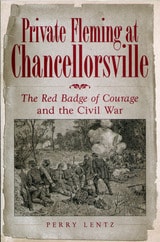
Private Fleming at Chancellorsville
The Red Badge of Courage and the Civil WarPerry Lentz
University of Missouri Press, 2006
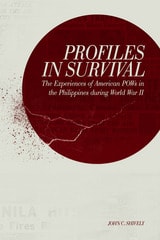
Profiles in Survival
The Experiences of American POWs in the Philippines during World War IIJohn C. Shively
Indiana Historical Society Press, 2012
Project 9
The Birth of the Air Commandos in World War IIDennis R. Okerstrom
University of Missouri Press, 2026
Protected cruiser Gelderland
Jantinus Mulder
Amsterdam University Press, 2023
Protecting the Empire’s Frontier
Officers of the 18th (Royal Irish) Regiment of Foot during Its North American Service, 1767–1776Steven M. Baule
Ohio University Press, 2013
Protecting the Empire’s Frontier tells stories of the roughly eighty officers who served in the 18th (Royal Irish) Regiment of Foot, which served British interests in America during the crucial period from 1767 through 1776. The Royal Irish was one of the most wide-ranging regiments in America, with companies serving on the Illinois frontier, at Fort Pitt, and in Boston, New York, and Philadelphia, with some companies taken as far afield as Florida, Spanish Louisiana, and present-day Maine. When the regiment was returned to England in 1776, some of the officers remained in America on staff assignments. Others joined provincial regiments, and a few joined the American revolutionary army, taking up arms against their king and former colleagues.
Using a wide range of archival resources previously untapped by scholars, the text goes beyond just these officers’ service in the regiment and tells the story of the men who included governors, a college president, land speculators, physicians, and officers in many other British regular and provincial regiments. Included in these ranks were an Irishman who would serve in the U.S. Congress and as an American general at Yorktown; a landed aristocrat who represented Bath as a member of Parliament; and a naval surgeon on the ship transporting Benjamin Franklin to France. This is the history of the American Revolutionary period from a most gripping and everyday perspective.
An epilogue covers the Royal Irish’s history after returning to England and its part in defending against both the Franco-Spanish invasion attempt and the Gordon Rioters. With an essay on sources and a complete bibliography, this is a treat for professional and amateur historians alike.
Public Debate in the Civil War Era
A Rhetorical History of the United States, Volume IVDavid Zarefsky
Michigan State University Press, 2023