Results by title
1148 books match the query 'Political Ideologies' and 59 start with p
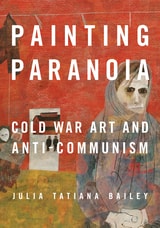
Painting Paranoia
Cold War Art and Anti-CommunismJulia Tatiana Bailey
University of Illinois Press, 2026
Based on extensive archival research conducted in the United States and Russia, this manuscript contributes to the political history of twentieth-century American art and the revisionist history of cultural diplomacy in the Cold War by charting the politicization of myths of Soviet art. It reveals how those with control over the reception of art in the United States built and sustained a strategy of othering towards Socialist Realism, presents the rhetoric of Soviet artistic otherness in the context of debates surrounding the concept of American art, and reclaims the post-war history of American Social Realism.

Palestinians in Israel
Segregation, Discrimination and DemocracyBen White
Pluto Press, 2012
Palestinians in Israel considers a key issue ignored by the official 'peace process' and most mainstream commentators: that of the growing Palestinian minority within Israel itself.
What the Israeli right-wing calls 'the demographic problem' Ben White identifies as 'the democratic problem' which goes to the heart of the conflict. Israel defines itself not as a state of its citizens, but as a Jewish state, despite the substantial and increasing Palestinian population. White demonstrates how the consistent emphasis on privileging one ethno-religious group over another cannot be seen as compatible with democratic values and that, unless addressed, will undermine any attempts to find a lasting peace.
Individual case studies are used to complement this deeply informed study into the great, unspoken contradiction of Israeli democracy. It is a pioneering contribution which will spark debate amongst all those concerned with a resolution to the Israel/Palestine conflict.
Pandemic Power
The Covid Response and the Erosion of Democracy - A Liberal CritiqueMuriel Blaive
Central European University Press, 2025
Paramilitarism and Neoliberalism
Violent Systems of Capital Accumulation in Colombia and BeyondJasmin Hristov
Pluto Press, 2016
The people of Colombia have, for the last fifty years, been subject to a specific form of violence: paramilitarism. An embodiment of the underbelly of global capitalist accumulation, this form of pervasive violence expresses the exacerbation of social inequalities and class formation under capitalism. In Paramilitarism and Neoliberalism, Jasmin Hristov theorises this extreme expression in light of forced displacement, labour repression, subjugation of social movements, decentralisation of violence, drug trafficking and the emergence of a variety of para-institutional armed actors across Latin America.
The activities of paramilitary groups in the postdemobilisation era, their involvement in human rights violations, and their multilevel support networks inside major state institutions are documented, with a particular emphasis on violent dispossession and illegal land appropriation that has benefited agroindustries and mining enterprises. Hristov engages in a Marxist political economy approach, combined with a global sociological perspective, allowing for an expansive and deep-reaching understanding of paramilitarism as a phenomenon with many faces, ultimately illustrating how it is increasingly becoming the coercive counterpart of global capital.
Parties and Prejudice
The Normalization of Antiminority Rhetoric in US PoliticsManeesh Arora
University of Chicago Press, 2025
An essential guide to how the interactions between social norms, party politics, and expressions of prejudice are driving contemporary politics.
Antiminority rhetoric in American politics has grown more overt. What were once fringe comments on Stormfront have now become typical campaign appeals from many mainstream politicians. If there was ever a doubt, this is a poignant reminder that the boundaries of what is “acceptable” and “unacceptable” to say and do are fluid and socially enforced.
In Parties and Prejudice, Maneesh Arora offers a broad framework for understanding this new political terrain. Arora argues that the interaction between social norms and party politics determines what the political consequence of prejudicial speech will be. He illuminates this nuanced relationship by showing that norms vary based on the targeted minority group and the intended audience.
Drawing on experiments, survey data, news coverage, and real-world examples, Parties and Prejudice examines the distinctive ways that egalitarian/inegalitarian norms have developed—within each party—for Black, Muslim, and LGBTQ+ Americans. It is essential reading for understanding Donald Trump’s rise to power, the modern conservative agenda (including opposition to critical race theory and transgender rights), and threats to the development of a multiracial democracy.
Partisan Gerrymandering and the Construction of American Democracy
Erik J. Engstrom
University of Michigan Press, 2016
Erik J. Engstrom offers a historical perspective on the effects of gerrymandering on elections and party control of the U.S. national legislature. Aside from the requirements that districts be continuous and, after 1842, that each select only one representative, there were few restrictions on congressional districting. Unrestrained, state legislators drew and redrew districts to suit their own partisan agendas. With the rise of the “one-person, one-vote” doctrine and the implementation of the Voting Rights Act of 1965, however, redistricting became subject to court oversight.
Engstrom evaluates the abundant cross-sectional and temporal variation in redistricting plans and their electoral results from all the states, from 1789 through the 1960s, to identify the causes and consequences of partisan redistricting. His analysis reveals that districting practices across states and over time systematically affected the competitiveness of congressional elections, shaped the partisan composition of congressional delegations, and, on occasion, determined party control of the House of Representatives.
Partisan Hostility and American Democracy
Explaining Political Divisions and When They MatterJames N. Druckman, Samara Klar, Yanna Krupnikov, Matthew Levendusky, and John Barry Ryan
University of Chicago Press, 2024
An unflinching examination of the effects and boundaries of partisan animosity.
For generations, experts argued that American politics needed cohesive parties to function effectively. Now many fear that strong partisan views, particularly hostility to the opposing party, are damaging democracy. Is partisanship as dangerous as we fear it is?
To provide an answer, this book offers a nuanced evaluation of when and how partisan animosity matters in today’s highly charged, dynamic political environment, drawing on panel data from some of the most tumultuous years in recent American history, 2019 through 2021. The authors show that partisanship powerfully shapes political behaviors, but its effects are conditional, not constant. Instead, it is most powerful when politicians send clear signals and when an issue is unlikely to bring direct personal consequences. In the absence of these conditions, other factors often dominate decision-making.
The authors argue that while partisan hostility has degraded US politics—for example, politicizing previously non-political issues and undermining compromise—it is not in itself an existential threat. As their research shows, the future of American democracy depends on how politicians, more than ordinary voters, behave.
Partisan Nation
The Dangerous New Logic of American Politics in a Nationalized EraPaul Pierson and Eric Schickler
University of Chicago Press, 2024
A provocative exploration of how America’s democratic crisis is rooted in a dangerous mismatch between our Constitution and today’s nationalized, partisan politics.
The ground beneath American political institutions has moved, with national politics subsuming and transforming the local. As a result, American democracy is in trouble.
In this paradigm-shifting book, political scientists Paul Pierson and Eric Schickler bring a sharp new perspective to today’s challenges. Attentive to the different coalitions, interests, and incentives that define the Democratic and Republican parties, they show how contemporary polarization emerged in a rapidly nationalizing country and how it differs from polarization in past eras. In earlier periods, three key features of the political landscape—state parties, interest groups, and media—varied locally and reinforced the nation’s stark regional diversity. But this began to change in the 1960s as the two parties assumed clearer ideological identities and the power of the national government expanded, raising the stakes of conflict. Together with technological and economic change, these developments have reconfigured state parties, interest groups, and media in self-reinforcing ways. The result is that today’s polarization is self-perpetuating—and intensifying.
Partisan Nation offers a powerful caution. As a result of this polarization, America’s political system is distinctly and acutely vulnerable to an authoritarian movement emerging in the contemporary Republican Party, which has both the motive and the means to exploit America’s unusual Constitutional design. Combining the precision and acuity characteristic of their earlier work, Pierson and Schickler explain what these developments mean for American governance and democracy.
Partisan Ruptures
Self-Management, Market Reform and the Spectre of Socialist YugoslaviaGal Kirn
Pluto Press, 2019
Partisans and Partners
The Politics of the Post-Keynesian SocietyJosh Pacewicz
University of Chicago Press, 2016
Wheels-down in Iowa—that most important of primary states—Pacewicz looks to two cities, one traditionally Democratic, the other traditionally Republican, and finds that younger voters are rejecting older-timers’ strict political affiliations. A paradox is emerging—as the dividing lines between America’s political parties have sharpened, Americans are at the same time growing distrustful of traditional party politics in favor of becoming apolitical or embracing outside-the-beltway candidates. Pacewicz sees this change coming not from politicians and voters, but from the fundamental reorganization of the community institutions in which political parties have traditionally been rooted. Weaving together major themes in American political history—including globalization, the decline of organized labor, loss of locally owned industries, uneven economic development, and the emergence of grassroots populist movements—Partisans and Partners is a timely and comprehensive analysis of American politics as it happens on the ground.
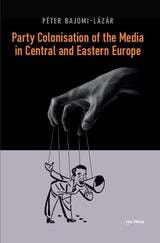
Party Colonisation of the Media in Central and Eastern Europe
Péter Bajomi-Lázár
Central European University Press, 2014
Passions and Constraint
On the Theory of Liberal DemocracyStephen Holmes
University of Chicago Press, 1995
According to Holmes, three elements of classical liberal theory are commonly used to attack contemporary liberalism as antagonistic to genuine democracy and the welfare state: constitutional constraints on majority rule, the identification of individual freedom with an absence of government involvement, and a strong emphasis on the principle of self-interest. Through insightful essays on Hobbes's analysis of the English Civil War in Behemoth, Bodin's writings on the benefits of limited government, and Mill's views on science and politics, Holmes shows that these basic principles provide, to the contrary, a necessary foundation for the development of democratic, regulatory, and redistributionist politics in the modern era.
Holmes argues that the aspirations of liberal democracy—including individual liberty, the equal dignity of citizens, and a tolerance for diversity—are best understood in relation to two central themes of classical liberal theory: the psychological motivations of individuals and the necessary constraint on individual passions provided by institutions. Paradoxically, Holmes argues that such institutional restraints serve to enable, rather than limit, effective democracy.
In explorations of subjects ranging from self-interest to majoritarianism to "gag rules," Holmes shows that limited government can be more powerful than unlimited government—indeed, that liberalism is one of the most effective philosophies of state building ever contrived. By restricting the arbitrary powers of government officials, Holmes states, a liberal constitution can increase the state's capacity to focus on specific problems and mobilize collective resources for common purposes.
Passions and Constraint is an assessment of what that tradition has meant and what it can mean today.
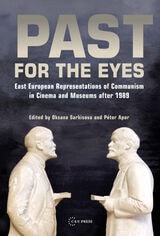
Past for the Eyes
East European Representations of Communism in Cinema and Museums After 1989Oksana Sarkisova
Central European University Press, 2008
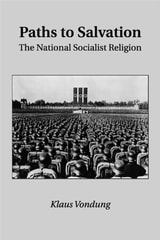
Paths to Salvation
The National Socialist ReligionKlaus Vondung
St. Augustine's Press, 2017
In order to understand National Socialism one must recognize its religious nature. Many Germans were attracted to the party by its pledge to re-establish a true community of the people, a goal that was celebrated as “holy”.
Not only did Hitler promise to solve political, social, and economic problems, he also responded to a widely felt need for salvation. The prospect of salvation elevated politics into the realm of religion and lent meaning to the lives of those who embraced it.
In this work Klaus Vondung explores the various forms in which the elevation of politics into the sphere of religion was expressed in the Third Reich: in the faith of committed National Socialists, in the party’s cult events which celebrated the “community of the people” as a “community of faith” and the Fuhrer as “savior”, and in the persecution of the Jews that was ‘justified’ in religious terms by demonizing Jews as the “evil enemies of humanity” responsible for the world’s ills. This apocalyptic worldview was the extreme manifestation of the religious nature of National Socialism and, in the final analysis, the only plausible explanation for the intention of exterminating the Jews that led to the holocaust.
Paths toward the Nation
Islam, Community, and Early Nationalist Mobilization in Eritrea, 1941–1961Joseph L. Venosa
Ohio University Press, 2014
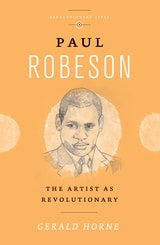
Paul Robeson
The Artist as RevolutionaryGerald Horne
Pluto Press, 2015
“A fine, taut analysis of the great African American athlete, singer, actor, and political activist.”
—Choice, Highly Recommended
Paul Robeson should be remembered today as the forerunner of Malcolm X, Dr. Martin Luther King, Jr. and Muhammad Ali. He sacrificed his fame and fortune a performer and athlete in order to fight for the rights of African Americans during the time of Jim Crow and U.S. Apartheid.
A world-famous singer and actor, a trained lawyer, an early star of American professional football and a polyglot who spoke over a dozen languages: these could be the crowning achievements of a life well-lived. Yet for Paul Robeson the higher calling of social justice led him to abandon both the NFL and Hollywood and become one of the most important political activists of his generation, a crusader for freedom and equality who battled both Jim Crow and US Senator Joseph McCarthy during the communist witch hunt of the 1950s.
In Paul Robeson: The Artist as Revolutionary, Gerald Horne discovers within Robeson's remarkable and revolutionary life the story of the twentieth century's great political struggles: against racism, against colonialism, against poverty—and for international socialism. Chapters include:
*”The Best Known American in the World"
*Rising Revolutionary
*From Moscow to Madrid
*"Black Stalin"?
*Robeson: Primary Victim of the "Blacklist"
*Triumph—and Tragedy
*Death of a Revolutionary
In the Introduction, Horne writes: “Paul Robeson—activist, artist, athlete—experienced a dramatic rise and fall, perhaps unparalleled in U.S. history. From mingling with the elite of London society and Hollywood in the 1930s, by the time he died in 1976, he was a virtual recluse in a plain abode in a working-class neighborhood of Philadelphia. What helps to explicate this tragic art of his life is a fateful decision he made when fascism was rising: he threw in his lot with those battling for socialism and decide to sacrifice his thriving artistic career on behalf of the struggle against Jim Crow—or U.S. apartheid.”
This critical and searching biography provides an opportunity for readers to comprehend the triumphs and tragedies of the revolutionary progressive movement of which Paul Robeson was not just a part, but perhaps its most resonant symbol.

Percy Bysshe Shelley
Poet and RevolutionaryJaqueline Mulhallen
Pluto Press, 2015
An engaging look at one of English history and literature’s most compelling, complicated, and talented figures, Percy Bysshe Shelley will be a valuable contribution to our understanding of the man and his work.

Persecution and Rescue
The Politics of the “Final Solution” in France, 1940-1944Wolfgang Seibel
University of Michigan Press, 2016
Drawing on German and French sources, Wolfgang Seibel traces the twisted process of political decision-making that shaped the fate of the Jews in German-occupied France during World War II. By analyzing the German-French negotiations, he reveals the underlying logic as well as the actual course of the bargaining process as both the Vichy Regime and the Germans sought a stable relationship. Yet that relationship was continually reshaped by the progress of the war, Germany’s deteriorating prospects, France’s economic and geopolitical position, and the Vichy government’s quest for domestic political support. The Jews’ suffering intensified when the Germans had the upper hand; but when the French felt empowered, the Vichy Regime stopped collaborating in the completion of the “final solution.” Persecution and Rescue: The Politics of the “Final Solution” in France, 1940–1944 demonstrates the ways in which political circumstances can mitigate—or foster—mass crime.
Philanthropy, Conflict Management and International Law
The 1914 Carnegie Report on the Balkan Wars of 1912/13Stefan Troebst
Central European University Press, 2022
This book centers on the Report of the International Commission to Inquire into the Causes and Conduct of the Balkan Wars, published in Washington in the early summer of 1914 by the Carnegie Endowment for International Peace. The volume was born from the conviction that the full assessment of the significance of the Carnegie Report—one of the first international non-governmental fact-finding missions with the intention to promote peace—requires a deeper exploration of the context of its birth.
The authors examine how the countries involved in the wars handled the inquires of the Carnegie Commission and the role of the report in the remembrance of the wars in the respective states. Although the report considered both the Ottoman Empire and the Balkan nation-states insufficiently civilized to wage wars within the limits of the codes of conduct of international law, this orientalist conclusion can in part be explained by the liberal internationalist strategy of the Carnegie Endowment, and of the commission members’ professional, political, and ethnic background. Overshadowed by the outbreak of World War I, the Carnegie Report’s direct impact on international arbitration or international criminal law was limited, yet—in the authors’ opinion—it ultimately contributed to the further juridification of international relations
Philosophizing the Everyday
Revolutionary Praxis and the Fate of Cultural TheoryJohn Roberts
Pluto Press, 2006
John Roberts argues that this understanding of the everyday downgrades its revolutionary meaning and philosophical implications. Bringing radical political theory back to the centre of the discussion, he shows how notions of cultural democratization have been oversimplified. Asserting that the everyday should not be narrowly identified with the popular, Roberts critiques the way in which the concept is now overly associated with consumption and 'ordinariness'.
Engaging with the work of key thinkers including, Lukács, Arvatov, Benjamin, Lefebvre, Gramsci, Barthes, Vaneigem, and de Certeau, Roberts shows how the concept of the everyday continues to be central to debates on ideology, revolution and praxis. He offers a lucid account of different approaches that developed over the course of the twentieth century, making this an ideal book for anyone looking for a politicised approach to cultural theory.
John Roberts is a Senior Research Fellow in Fine Art at the University of Wolverhampton. He is the author of The Art of Interruption: Realism, Photography and the Everyday (Manchester University Press, 1997) and The Philistine Controversy (Verso, with Dave Beech, 2002), plus other books and numerous articles, in Radical Philosophy and elsewhere.
Pierre Bourdieu
A Critical IntroductionJeremy F. Lane
Pluto Press, 2000
Pink Revolutions
Globalization, Hindutva, and Queer Triangles in Contemporary IndiaNishant Shahani
Northwestern University Press, 2021
Eschewing structures of absolute complicity or abject alterity, Pink Revolutions pays attention to the logics of triangulation in various contexts: gay tourism, university campus politics, diasporic cultural productions, and AIDS activism. The book articulates a framework through which queer politics can challenge rather than participate in neoliberal imperatives, an approach that will interest scholars engaged with queer studies and postcolonial scholarship, as well as activists and academics wrestling with global capitalism and right-wing regimes around the world.

Playing Patriot
Inside Florida’s Alt-RightAlexander Lowie
Rutgers University Press, 2027
What draws ordinary Americans into extremist political movements, and why do they stay? Playing Patriot takes readers inside the contemporary Patriot Movement through immersive ethnographic fieldwork conducted with members of the Patriot Movement in Central Florida (including those active in the Proud Boys and Three-Percenters) following January 6. Over months of participant observation, conversations, and firsthand experiences, anthropologist Alexander Lowie explores how humor, play, alternative media, conspiracy narratives, and performances of masculinity shape political belonging. Rather than portraying these organizations as collections of abstract beliefs alone, the book reveals them as communities built through everyday relationships, shared rituals, and stories about national decline and renewal. Written as a first-person narrative ethnography, Playing Patriot offers an accessible, deeply human account of political extremism while providing fresh insight into the emotional and cultural forces shaping contemporary American populism.
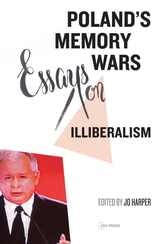
Poland's Memory Wars
Essays on IlliberalismJo Harper
Central European University Press, 2018
This volume of essays and interviews by Polish, British, and American academics and journalists provides an overview of current Polish politics for both informed and non-specialist readers. The essays consider why and how PiS, Law and Justice, the party of Jarosław Kaczynski, returned to power, and the why and how of its policies while in power. They help to make sense of how “history” plays a key role in Polish public life and politics.
The descriptions of PiS in Western media tend to rework old stereotypes about Eastern Europe that had lain dormant for some time. The book addresses the underlying question whether PiS was simply successful in understanding its electorate, and just helped Poland to revert to its normal state. This new Normal seems quite similar to the old one: insular, conservative, xenophobic, and statist.
The book looks at the current struggle between one ‘Poland’ and another; between a Western-looking Poland and an inward-looking Poland, the former more interested in opening to the world, competing in open markets, and working within the EU, and the latter more concerned with holding onto tradition.
The question of illiberalism has gone from an ‘Eastern’ problem (Russia, Turkey, Hungary, etc.) to a global one (Brexit and the U.S. elections). This makes the very specific analysis of Poland’s illiberalism applicable on a broader scale.
Polarization and Democracy in Latin America
Legacies of the Left TurnSantiago Anria and Kenneth M. Roberts
University of Chicago Press, 2026
An insightful examination of Latin America’s contemporary democratic landscape and how it is marked by patterns of polarization and volatility.
Although Latin American democracies have shown considerable resilience, today they face new forms of political polarization and instability. These challenges are closely connected to the legacies of the region’s “left turn,” which sought to transform entrenched inequalities and social hierarchies in the early twenty-first century. Unprecedented in its scope and duration, the left turn reflected an underlying realignment of political contestation in a highly unequal region. Yet despite notable achievements in addressing social needs, leftist parties struggled to deepen democracy by empowering popular majorities, and they faced powerful elite backlashes.
Through a comparative analysis of seven South American countries, Santiago Anria and Kenneth M. Roberts trace the different origins and trajectories in power of the populist and social democratic currents that emerged within the left turn. Anria and Roberts argue that today’s democratic orders face intensifying polarization and institutional fragility, even where social democratic parties made explicit efforts to build broad coalitions and temper political conflict. They show how activist networks and social movements on the left and the right triggered latent political conflicts and are now reshaping democratic competition and the terms of social inclusion in South American politics.
Poles Together?
The Emergence and Development of Political Parties in Postcommunist PolandAleks Szczerbiak
Central European University Press, 2001
This book fills a gap in the existing literature on how parties and party systems are developing in the new democracies of post-communist Central and Eastern Europe. It provides the first detailed, empirically based examination from a structural and organizational perspective of the new parties and political groupings that have emerged in Poland since the collapse of communism in 1989.
The author develops his argument on the basis of an analysis of five key structural and organizational variables: the internal distribution of power and modes of representation within the parties; the role of the party bureaucracy; the relationship between parties and their electorates; the development of parties as membership organizations; and the relationship between parties and the state.
As the first in-depth, empirically grounded single-country study of party structure and organization in post-communist Eastern Europe, the book provides an opportunity to draw broader conclusions about the process of Central and East European party development and will contribute significantly towards the development of a post-communist political party model. Szczerbiak sheds light on an important aspect of the more general process of post-communist democratization in the region and provides a major contribution to one of the least-explored areas of transition.
Police in Transition
Essays on the Police Forces in Transition CountriesAndrás Kádár
Central European University Press, 2001
The police forces of the transition countries in Central and Eastern Europe have to undergo profound reform to be able to respond to the needs of society; to serve the public and not just the government, and to prove that they can effectively combat crime. This volume is the result of a survey by the Hungarian Helsinki Committee concerning the mode and extent of changes police forces of the post-communist countries have undergone since 1989 – 1990. Information is provided about the relevant tasks, organization, personnel, accountability, and international relations of the national police forces and about the coercive measures they are entitled to use.
Written by internationally acknowledged experts of policing and representatives of human-rights organizations, Police in Transition deals with the questions of transition, European trends in the governance of the police, the relationship between police and criminality, the role of the police in the constitutional framework, the limits of policing, police brutality, civilian oversight of the police and the possibilities of a democratic reform of police forces in Central and Eastern Europe.
Polish Liberal Thought Before 1918
Maciej Janowski
Central European University Press, 2004

Political Attitudes over the Life Span
The Bennington Women after Fifty YearsDuane F. Alwin
University of Wisconsin Press, 1992
The culmination of one of the most famous long-term studies in American sociology, this examination of political attitudes among women who attended Bennington College in the 1930s and 1940s now spans five decades, from late adolescence to old age. Theodore Newcomb’s 1930s interviews at Bennington, where the faculty held progressive views that contrasted with those of the conservative families of the students, showed that political orientations are still quite malleable in early adulthood. The studies in 1959-60 and 1984 show the persistence of political attitudes over the adult life span: the Bennington women, raised in conservative homes, were liberalized in their college years and have remained politically involved and liberal in their views, even in their sixties and seventies.
Here the authors analyze the earlier studies and then introduce the 1984 data. Using data from National Election Studies for comparison, they show that the Bennington group is more liberal and hold its opinions more intensely than both older and younger Americans, with the exception of the generation that achieved political maturity in the 1960s. The authors point out that the majority of the Bennington women’s children are of this 1945–54 generation and suggest that this factor played an important role in the stability of the women’s political views. Within their own generation, the Bennington women also appear to hold stronger political views than other college-educated women.
Innovative in its methodology and extremely rich in its data, this work will contribute to developmental and social psychology, sociology, political science, women’s studies, and gerontology.
Political Corruption in Transition
A Sceptic's HandbookAndrás Sajó
Central European University Press, 2002
Based on two international conferences at Princeton University and the Central European University, this is a handy guide to the problem of corruption in transition countries, with an important comparative content. Political Corruption in Transition is distinguished from similar publications by at least two features: by the quality of the carefully selected and edited essays ans by its original treatment. Instead of the usual preaching and excommunications, this Skeptic`s Handbook represents down-to-earth realism.
Combines general issues with case studies and original research. The geographic coverage is wide, though it is ideas rather than a geography that drive the volume`s organization.
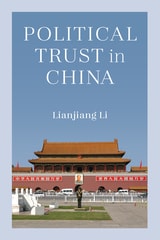
Political Trust in China
Lianjiang Li
University of Michigan Press, 2025
Political Visions of Ukraine
Models of a Common FutureBogdan Kolesnyk
Central European University Press, 2026
Drawing on intellectual discourses from 2013 onwards, this book maps those collisions, reconstructing Ukraine’s “noumenal parliament” — the constellation of voices that have vied to define the nation’s future. Bogdan Kolesnyk explains why Ukraine’s is not a single story but a composite of many, why neither liberal consolidation nor national stories alone provide a sufficient answer, and suggests how justice, reason and republican institutions might be the anchors for plural polity to endure.
In attempting to understand Ukrainian socio-political reality on its own terms from beyond its borders, this book urgently enquires what kind of future is worth fighting for?
Politics and Policies in Post-Communist Transition
Primary and Secondary Privatisation in Central Europe and the Former Soviet UnionKároly Attila Soós
Central European University Press, 2011

Politics for People
Finding a Responsible Public VoiceDavid Mathews
University of Illinois Press, 1999
Politics of James Connolly
Kieran Allen
Pluto Press, 1990
Kieran Allen breaks this mould, assessing the founder of the Irish Marxist movement ideas from a revolutionary socialist perspective. Allen considers the strengths and weaknesses of Connolly’s revolutionary strategy, the effect of his commitment to international socialism on his nationalist loyalties and arguing that, ultimately, Connolly's enduring relevance derives from his anti-imperialism. Any socialist movement today ignores this book at its peril.
Politics of Legitimacy
State-Society Relations and Patterns of Chinese PoliticsDingxin Zhao
University of Chicago Press, 2026
The Chinese communist state has survived massive social changes, including the introduction of capitalist markets, an ongoing explosion of technological innovation, and an unprecedented jump in wealth and education, accompanied by a major cultural transformation. How has China managed to maintain its power even as the ground has so profoundly shifted? In Politics of Legitimacy, Dingxin Zhao argues that state power can be legitimized in three ideal-typical ways: a set of values upheld by the state (ideological legitimacy), recognized political processes such as regular competitive elections (procedural legitimacy), and the state’s capacity to provide public goods (performance legitimacy).
Building on this theoretical framework, Zhao analyzes different aspects of Chinese politics, including the tragic ending of the 1989 pro-democracy movement, the weak development of mass-based nationalism in post-Mao China, the reasons behind China’s economic success, the anti-establishment tendency of the Chinese mass media and social media, and the sources of political tension in China, despite a superb economy. Moreover, Zhao’s innovative framework is widely applicable beyond China, shifting our attention from regime-type categories to the tools and relationships that determine their survival or collapse, and illuminating the current global emergence of conservatism and religious nationalism.
Politics without a Past
The Absence of History in Postcommunist NationalismShari J. Cohen
Duke University Press, 1999
common characterizations of postcommunist politics as either a resurgence of
aggressive nationalism or an evolution toward Western-style democracy. Cohen
draws upon extensive field research to paint a picture of postcommunist
political life in which ideological labels are meaningless and exchangeable
at will, political parties appear and disappear regularly, and citizens
remain unengaged in the political process.
In contrast to the conventional wisdom, which locates the roots of widespread intranational strife in deeply rooted national identities from the past, Cohen argues that a profound ideological vacuum has fueled destructive tension throughout postcommunist Europe and the former Soviet Union. She uses Slovakia as a case study to reveal that communist regimes bequeathed an insidious form of historical amnesia to the majority of the political elite and the societies they govern. Slovakia was particularly vulnerable to communist intervention since its precommunist national consciousness was so weak and its only period of statehood prior to 1993 was as a Nazi puppet-state. To demonstrate her argument, Cohen focuses on Slovakia’s failure to forge a collective memory of the World War II experience. She shows how communist socialization prevented Slovaks from tying their individual family stories—of the Jewish deportations, of the anti-Nazi resistance, or of serving in the wartime government—to a larger historical narrative shared with others, leaving them bereft of historical or moral bearings.
Politics without a Past develops an analytical framework that will be important for future research in Eastern Europe, the former Soviet Union, and beyond. Scholars in political science, history, East European and post-Soviet studies will find Cohen’s methodology and conclusions enlightening. For policymakers, diplomats, and journalists who deal with the region, she offers valuable insights into the elusive nature of postcommunist societies.
Populism in Latin America
Second EditionMichael L. Conniff
University of Alabama Press, 2012
A scholarly analysis of the origins, evolution, and enduring impact of populism in Latin American political life.
This updated edition of Populism in Latin America discusses new developments in populism as a political phenomenon and the emergence of new populist political figures in Mexico, Argentina, and Venezuela in particular.
For more than one hundred years—from the beginning of the twentieth to the early twenty-first century—Latin American populists proved amazingly successful at gaining high office, holding on to power, maintaining their followings, and renewing their careers. They raised more campaign money, got more voters to the polls,and held followers’ allegiances far better than traditional politicians. Certainly some populist leaders were corrupt, others manipulated their followers, and still others disgraced themselves. Nevertheless, populist leaders were extraordinarily effective in reaching masses of voters, and some left positive legacies for future generations.
Populism in Latin America examines the notion of populism in the political and social culture of Latin American societies as expressed through the populist leaders of several Latin American countries including Argentina, Brazil, Mexico, Chile, Ecuador, Panama, Peru, and Venezuela. This second edition also includes a new preface by Kenneth M. Roberts, professor of comparative and Latin American politics and the Robert S. Harrison Director of the Institute for the Social Sciences at Cornell University.
Contributors
Jorge Basurto / Michael L. Conniff / Paul W. Drake / Steve Ellner / Joel Horowitz /
Kenneth M. Roberts / W. Frank Robinson /Ximena Sosa / Steve Stein / Kurt Weyland
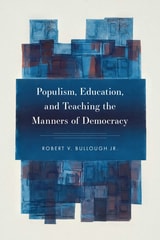
Populism, Education, and Teaching the Manners of Democracy
Robert V Bullough Jr.
Rutgers University Press, 2027
In an era of intense polarization, misinformation, and challenges to democratic norms, American citizens have become disenchanted with democracy and instead embraced populism and grievance. In Populism, Education, and Teaching the Manners of Democracy Robert V. Bullough Jr. offers readers a range of concepts useful for re-imagining the practice of democratic citizenship, both in the classroom as well as for themselves as citizens. Structured around five democratic manners that Bullough argues teachers, students, and citizens should cultivate, hospitality, attuned listening, voice, reflectivity, and evidential discernment, he argues that democracy is a peculiar and demanding way of life that shares with education the goal of human flourishing. By embracing these five manners, we can counter the current grievance culture and instead promote personal and social growth, reorienting education toward democratic living.
Post-Anarchism
A ReaderEdited by Duane Rousselle and Sureyyya Evren
Pluto Press, 2011
Post-anarchism has been of considerable importance in the discussions of radical intellectuals across the globe in the last decade. In its most popular form, it demonstrates a desire to blend the most promising aspects of traditional anarchist theory with developments in post-structuralist and post-modernist thought. Post-Anarchism: A Reader includes the most comprehensive collection of essays about this emergent body of thought, making it an essential and accessible resource for academics, intellectuals, activists and anarchists interested in radical philosophy.
Many of the chapters have been formative to the development of a distinctly 'post-anarchist' approach to politics, aesthetics, and philosophy. Others respond to the so-called 'post-anarchist turn' with caution and scepticism. The book also includes original contributions from several of today's 'post-anarchists', inviting further debate and new ways of conceiving post-anarchism across a number of disciplines.
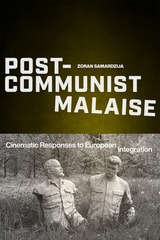
Post-Communist Malaise
Cinematic Responses to European IntegrationZoran Samardzija
Rutgers University Press, 2020
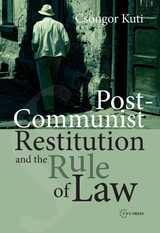
Post-Communist Restitution and the Rule of Law
Csongor Kuti
Central European University Press, 2009
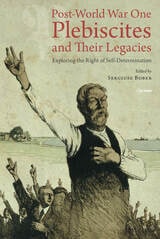
Post-World War One Plebiscites and Their Legacies
Exploring the Right of Self-DeterminationSergiusz Bober
Central European University Press, 2024
Plebiscites, or referendums, are epitomes of direct democracy and the right of self-determination. While direct democracy has always been a key subject in the theory and practice of western liberal democracies, the issue of self-determination has been propelled to the fore by the hegemonistic moves of Russia. By providing a historical analysis of the post-World War One plebiscites, this book deals with enduring, painfully contemporary, and in in any case fundamental, concepts.
The contributors to this edited volume approach the referendums comparatively. After grounding the analysis theoretically, the authors look at detailed aspects of individual cases, with the two plebiscites held in the Danish-German border region of Schleswig in the winter of 1920 as points of departure. They then extend the exploration through the inter-war period and address the effects of border delimitations on everyday life or gender roles in the context of ethnic mobilization. Finally, the book places the post-World War One plebiscites in a long-term perspective. The concluding essays assess, among others, the applicability of plebiscitary solutions to contemporary conflicts, taking into consideration issues of borders, religion, language, identity, and minority rights.
Postmodernism and the Other
New Imperialism of Western CultureZiauddin Sardar
Pluto Press, 1997
Postsocialism and Cultural Politics
China in the Last Decade of the Twentieth CenturyXudong Zhang
Duke University Press, 2008
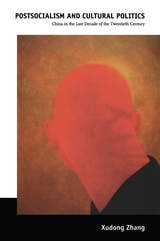
Zhang examines the reactions of intellectuals, authors, and filmmakers to the cultural and political conflicts in China during the 1990s. He offers a nuanced assessment of the changing divisions and allegiances within the intellectual landscape, and he analyzes the postsocialist realism of the era through readings of Mo Yan’s fiction and the films of Zhang Yimou. With Postsocialism and Cultural Politics, Zhang applies the same keen insight to China’s long 1990s that he brought to bear on the 1980s in Chinese Modernism in the Era of Reforms.
Power and Knowledge Under Communism
A Political History of Economic and Sociological Research in HungaryGyorgy Peteri
Central European University Press, 2026
Practical Anarchism
A Guide for Daily LifeScott Branson
Pluto Press, 2022
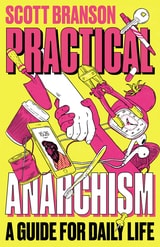
You may not realise it, but you are probably already practicing anarchism in your daily life. From relationships to school, work, art, even the way you organise your time, anarchism can help you find fulfilment, empathy and liberation in the everyday.
From the small questions such as 'Why should I steal?' to the big ones like 'how do I love?', Scott Branson shows that anarchism isn’t only something we do when we react to the news, protest or even riot. With practical examples enriched by history and theory, these tips will empower you to break free from the consumerist trappings of our world.
Anarchism is not just for white men, but for everyone. In reading this book, you can detach from patriarchal masculinity, norms of family, gender, sexuality, racialisation, individual responsibility and the destruction of our planet, and replace them with ideas of sustainable living, with ties of mutual aid, and the horizon of collective liberation.
Practical Politics
Five Principles for a Community That WorksMichael K. Briand
University of Illinois Press, 1999
Pre-Election Polling
Sources of Accuracy and ErrorIrving Crespi
Russell Sage Foundation, 1988

Present Tensions
European Writers on Overcoming DictatorshipsKristina Kaiserová
Central European University Press, 2009