Results by title
704 books match the query 'Political Process' and 80 start with p
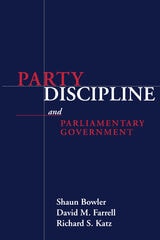
PARTY DISCIPLINE AND PARLIAMENTARY GOVERNMENT
SHAUN BOWLER
The Ohio State University Press, 1999
Parliamentary government is generally taken to mean party government. Party cohesion and discipline are usually seen as central to the maintenance of parliamentary democracy. This overlap, between disciplined parties on the one hand and parliamentary government on the other, is often seen as so complete and so automatic that the question of party discipline is pushed to the sidelines and rarely studied. Yet, if individual legislators remain an undisciplined mob, parliaments could easily become unruly and anarchical.
How and why party discipline arises and is maintained are thus central questions of importance in legislative, and especially parliamentary, studies. Our knowledge of these topics, however, suffers from substantial gaps, especially with regard to the practice of party cohesion outside the relatively familiar Anglo-American setting.
This book marks a step toward filling some of those gaps. The collection of essays presented here provides theoretical background and comparative studies of legislatures in a wide range of settings. Well-developed democracies such as Britain, Finland, Ireland, Italy, The Netherlands, Norway, and Switzerland are covered, as are the more recent democracies of Spain and Hungary, and the unique case of the transnational European Parliament.
POLITICAL CONSULTANTS IN US CONGRESS ELECTIONS
STEPHEN K. MEDVIC
The Ohio State University Press, 2001
Political Consultants in U.S. Congressional Elections answers two simple questions: What do professional political consultants do? and How successful are they? Medvic analyzes the way consultants shape political dialogue and uses empirical data to show the benefits—and limits—of a consultant's involvement in a campaign. He focuses on issues as diverse as vote shares, outcomes, and fundraising. Finally, the author demonstrates how the adversarial nature of campaigns fosters the kind of electioneering advocated by most political consultants and argues that this process may not be as harmful for the country as is often suggested.

Pachakutik and the Rise and Decline of the Ecuadorian Indigenous Movement
Kenneth J. Mijeski
Ohio University Press, 2011
The mobilization of militant indigenous politics is one of the most important stories in Latin American studies today. In this critical work, Kenneth J. Mijeski and Scott H. Beck examine the rise and decline of Ecuador’s leading indigenous party, Pachakutik, as it tried to transform the state into a participative democracy.
Using in-depth interviews with political activists, as well as a powerful statistical analysis of election results, the authors show that the political election game failed to advance the causes of Ecuador’s poor or the movement’s own indigenous supporters. Pachakutik and the Rise and Decline of the Ecuadorian Indigenous Movement is an extraordinarily valuable case study of Ecuador’s indigenous movement and the challenges it still faces.
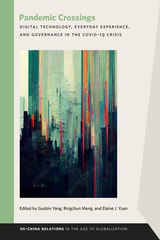
Pandemic Crossings
Digital Technology, Everyday Experience, and Governance in the COVID-19 CrisisGuobin Yang
Michigan State University Press, 2024
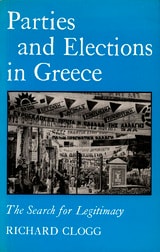
Parties and Elections in Greece
The Search for LegitimacyRichard Clogg
Duke University Press, 1987
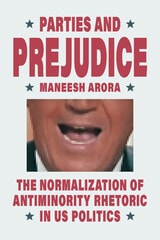
Parties and Prejudice
The Normalization of Antiminority Rhetoric in US PoliticsManeesh Arora
University of Chicago Press, 2025
An essential guide to how the interactions between social norms, party politics, and expressions of prejudice are driving contemporary politics.
Antiminority rhetoric in American politics has grown more overt. What were once fringe comments on Stormfront have now become typical campaign appeals from many mainstream politicians. If there was ever a doubt, this is a poignant reminder that the boundaries of what is “acceptable” and “unacceptable” to say and do are fluid and socially enforced.
In Parties and Prejudice, Maneesh Arora offers a broad framework for understanding this new political terrain. Arora argues that the interaction between social norms and party politics determines what the political consequence of prejudicial speech will be. He illuminates this nuanced relationship by showing that norms vary based on the targeted minority group and the intended audience.
Drawing on experiments, survey data, news coverage, and real-world examples, Parties and Prejudice examines the distinctive ways that egalitarian/inegalitarian norms have developed—within each party—for Black, Muslim, and LGBTQ+ Americans. It is essential reading for understanding Donald Trump’s rise to power, the modern conservative agenda (including opposition to critical race theory and transgender rights), and threats to the development of a multiracial democracy.
Parties in Transition
Warren Miller
Russell Sage Foundation, 1986
Parties on the Ground
A Study of Nominations for the House of RepresentativesKathleen Bawn, Knox Brown, Angela X. Ocampo, Shawn Patterson Jr., John L. Ray, and John Zaller
University of Chicago Press, 2026
A close-up examination of the roots of congressional politics in nominations for the House of Representatives.
With most House seats all but guaranteed for one party in general elections, primary elections for party nominees often decide who goes to Congress. Yet primaries are notoriously difficult to study, due in part to both the variety of rules that govern them and the differences in the influence of local leaders. Based on wide-ranging evidence from field interviews to fundraising data to exit polls, Parties on the Ground overcomes these challenges to take readers under the hood for an in-depth look at the nomination process.
Although progressive reformers sought the adoption of primaries to empower voters’ control over nominations, Parties on the Ground finds that most voters pay too little attention to make use of the opportunity. Instead, the most important actors are intense policy demanders—such as interest groups and activist organizations—who supply campaign resources to some candidates and deny them to others. These groups care most about securing an agent for their own interests and values; to this end, they put serious effort into vetting candidates and often coordinate among themselves or with local parties in support of their choices. At the same time, competition between establishment and insurgent groups can be high, especially in the Republican Party. Developing a nuanced account of House nominations in today’s parties, Parties on the Ground offers a host of new insights into this understudied but significant piece of the puzzle of American politics.
Parties under Pressure
The Politics of Factions and Party AdaptationMatthias Dilling
University of Chicago Press, 2024
An illuminating investigation into why some parties evolve with their times while others fall behind.
Around the world, established political parties face mounting pressures: insurgents on the Left and Right, altered media environments, new policy challenges, and the erosion of traditional strongholds, to name just a few. Yet parties have differed enormously in their ability to move with the times and update their offers to voters. This variation matters. While adaptation does not guarantee a party’s electoral success, the failure to modernize can spell its decline, even collapse, and create openings for radical and populist parties that may threaten the future of liberal democracy.
Parties under Pressure examines why some parties adapt meaningfully to social, economic, and political transformations while others flounder, focusing especially on the fate of Western Europe’s Christian democratic parties. Matthias Dilling reveals the under-appreciated importance of party factions. While very high levels of factionalism are counter-productive and create paralysis, more moderate levels of factionalism help parties to adapt by giving visibility to fresh groups and ideas. Dilling draws on extensive archival research in Germany, Italy, and Austria, as well as evidence from France, Japan, and beyond. Taking a comparative-historical approach, Parties under Pressure sheds new light on parties’ varying records of adaptive reforms over more than seventy-five years.
Partisan Gerrymandering and the Construction of American Democracy
Erik J. Engstrom
University of Michigan Press, 2016
Erik J. Engstrom offers a historical perspective on the effects of gerrymandering on elections and party control of the U.S. national legislature. Aside from the requirements that districts be continuous and, after 1842, that each select only one representative, there were few restrictions on congressional districting. Unrestrained, state legislators drew and redrew districts to suit their own partisan agendas. With the rise of the “one-person, one-vote” doctrine and the implementation of the Voting Rights Act of 1965, however, redistricting became subject to court oversight.
Engstrom evaluates the abundant cross-sectional and temporal variation in redistricting plans and their electoral results from all the states, from 1789 through the 1960s, to identify the causes and consequences of partisan redistricting. His analysis reveals that districting practices across states and over time systematically affected the competitiveness of congressional elections, shaped the partisan composition of congressional delegations, and, on occasion, determined party control of the House of Representatives.
Partisan Hostility and American Democracy
Explaining Political Divisions and When They MatterJames N. Druckman, Samara Klar, Yanna Krupnikov, Matthew Levendusky, and John Barry Ryan
University of Chicago Press, 2024
An unflinching examination of the effects and boundaries of partisan animosity.
For generations, experts argued that American politics needed cohesive parties to function effectively. Now many fear that strong partisan views, particularly hostility to the opposing party, are damaging democracy. Is partisanship as dangerous as we fear it is?
To provide an answer, this book offers a nuanced evaluation of when and how partisan animosity matters in today’s highly charged, dynamic political environment, drawing on panel data from some of the most tumultuous years in recent American history, 2019 through 2021. The authors show that partisanship powerfully shapes political behaviors, but its effects are conditional, not constant. Instead, it is most powerful when politicians send clear signals and when an issue is unlikely to bring direct personal consequences. In the absence of these conditions, other factors often dominate decision-making.
The authors argue that while partisan hostility has degraded US politics—for example, politicizing previously non-political issues and undermining compromise—it is not in itself an existential threat. As their research shows, the future of American democracy depends on how politicians, more than ordinary voters, behave.
Partisan Nation
The Dangerous New Logic of American Politics in a Nationalized EraPaul Pierson and Eric Schickler
University of Chicago Press, 2024
A provocative exploration of how America’s democratic crisis is rooted in a dangerous mismatch between our Constitution and today’s nationalized, partisan politics.
The ground beneath American political institutions has moved, with national politics subsuming and transforming the local. As a result, American democracy is in trouble.
In this paradigm-shifting book, political scientists Paul Pierson and Eric Schickler bring a sharp new perspective to today’s challenges. Attentive to the different coalitions, interests, and incentives that define the Democratic and Republican parties, they show how contemporary polarization emerged in a rapidly nationalizing country and how it differs from polarization in past eras. In earlier periods, three key features of the political landscape—state parties, interest groups, and media—varied locally and reinforced the nation’s stark regional diversity. But this began to change in the 1960s as the two parties assumed clearer ideological identities and the power of the national government expanded, raising the stakes of conflict. Together with technological and economic change, these developments have reconfigured state parties, interest groups, and media in self-reinforcing ways. The result is that today’s polarization is self-perpetuating—and intensifying.
Partisan Nation offers a powerful caution. As a result of this polarization, America’s political system is distinctly and acutely vulnerable to an authoritarian movement emerging in the contemporary Republican Party, which has both the motive and the means to exploit America’s unusual Constitutional design. Combining the precision and acuity characteristic of their earlier work, Pierson and Schickler explain what these developments mean for American governance and democracy.
Partisans and Partners
The Politics of the Post-Keynesian SocietyJosh Pacewicz
University of Chicago Press, 2016
Wheels-down in Iowa—that most important of primary states—Pacewicz looks to two cities, one traditionally Democratic, the other traditionally Republican, and finds that younger voters are rejecting older-timers’ strict political affiliations. A paradox is emerging—as the dividing lines between America’s political parties have sharpened, Americans are at the same time growing distrustful of traditional party politics in favor of becoming apolitical or embracing outside-the-beltway candidates. Pacewicz sees this change coming not from politicians and voters, but from the fundamental reorganization of the community institutions in which political parties have traditionally been rooted. Weaving together major themes in American political history—including globalization, the decline of organized labor, loss of locally owned industries, uneven economic development, and the emergence of grassroots populist movements—Partisans and Partners is a timely and comprehensive analysis of American politics as it happens on the ground.

Partnering with Extremists
Coalitions between Mainstream and Far-Right Parties in Western EuropeKimberly A. Twist
University of Michigan Press, 2019
As long as far-right parties—known chiefly for their vehement opposition to immigration—have competed in contemporary Western Europe, many have worried about these parties’ acceptability to democratic voters and mainstream parties. Yet, rather than treating the far right as pariahs, major mainstream-right parties have included the far right in 15 governing coalitions from 1994 to 2017. Parties do not care equally about all issues at any given time, and Kimberly Twist demonstrates that far-right parties will agree to support the mainstream right’s goals more readily than many other parties, making them appealing partners.
Partnering with Extremists builds on existing work on coalition formation and party goals to propose a theory of coalition formation that works across countries and over time. The evidence comes from 19 case studies of coalition formation in Austria and the Netherlands, countries where far-right parties have been excluded when they could have been included and included when the mainstream right had other options. The argument is then extended to countries where coalitions are less common, France and the United Kingdom, and to cases of mainstream-right adoption of far-right themes. Twist incorporates both office and policy considerations in her argument and reimagines “policy” to be a two-dimensional factor; it matters not just where parties are located on an issue but how firmly they hold those positions.
Party Competition and Responsible Party Government
A Theory of Spatial Competition Based Upon Insights from Behavioral Voting ResearchJames Adams
University of Michigan Press, 2001
Party Discipline in the U.S. House of Representatives
Kathryn Pearson
University of Michigan Press, 2015
Party Mandates and Democracy
Making, Breaking, and Keeping Election Pledges in Twelve CountriesElin Naurin, Terry J. Royed, and Robert Thomson, Editors
University of Michigan Press, 2019
The fulfillment of parties’ election pledges is an essential part of the democratic process. This book is the first major, genuinely comparative study of promises across a broad range of countries and elections, including the United States, Canada, nine Western European countries, and Bulgaria. The book thus adds to the body of literature on the variety of outcomes stemming from alternative democratic institutions.
Party Organization and Activism in the American South
Robert P. Steed
University of Alabama Press, 1998
Maps the ways political parties remain vital components in the American political system, especially in the eleven states in the South
As Tocqueville noted more than 100 years ago, “No countries need associations more . . . than those with a democratic social state.” Although some contemporary observers see a decline in associations, especially in the political sphere, the contributors in this volume argue not only that political parties remain an essential component of the American political system but also that grassroots political groups have revitalized the political process, especially in the South.
Using data gathered from local party officials in the eleven southern states, the authors examine such key issues as: Who becomes involved in local party organizations and why? How do parties recruit and retain workers? What are the ideological and issue orientations of these activists? How does intraparty factionalism affect local party organizations? What is the connection between the party organization and its external environment?
The large regional database provides these contributors with the opportunity to extend the study of local party organization and activists, thus addressing some of the significant gaps in previous research. The additional data enable them to clarify the nature of local party organizations and, in a larger sense, the role of the parties in the contemporary American political system.

Party and Factional Division in Texas
By James R. Soukup, Clifton McCleskey, and Harry Holloway
University of Texas Press, 1964
Here is the first attempt by scholars to make a comprehensive analysis of voting patterns in Texas. Examining the results of fourteen elections from 1946 through 1962 and organizing a vast fund of statistics relative to Texas political parties and voters, the authors have laid a solid groundwork for further studies in this field.
The previously ineffectual Texas Republican Party made great strides in the twentieth century and became a competitor in state as well as national races. Specifically, the authors maintain that Texas in the 1960s was a “one and two-thirds party state.” Within the Democratic Party, factions analogous to warring camps immensely complicated the political struggle. Although the conservative elements within the Democratic Party still had a slight edge, growing liberal strength forced them to moderate their policies and tactics.
The authors also contend that there were significant changes in the nature of the issues and the modes of political operation. Though some of the old motivations and tactics lingered on in less significant rural areas, friendship-oriented campaigns appealing to regional and family-like sentiments were being quickly replaced by an organized politics in which political activists made strong ideological appeals to economic and social interests.
The Republicans, the conservative Democrats, and the liberal Democrats are each analyzed in relation to regionalism, demography, ethnic elements, and the economic system in Texas; and the history, present status, and future prospects of these factions are discussed in detail. Of special interest are the last two chapters, which analyze the 1962 elections and their bearings on evolving patterns of competition. The developments within the Republican Party and its challenge to the traditional Democratic Party are seen in the perspectives of the growing importance of minority groups and the impact of urbanization.
All those interested in Texas politics and the history of the rise of the Republican Party in the state will find this study indispensable for an intelligent appraisal of historical developments.

Passionate Politics
Emotions and Social MovementsEdited by Jeff Goodwin, James M. Jasper, and Francesca Polletta
University of Chicago Press, 2001
With this new collection of essays, Jeff Goodwin, James M. Jasper, and Francesca Polletta reverse this trend, reincorporating emotions such as anger, indignation, fear, disgust, joy, and love into research on politics and social protest. The tools of cultural analysis are especially useful for probing the role of emotions in politics, the editors and contributors to Passionate Politics argue. Moral outrage, the shame of spoiled collective identities, or the joy of imagining a new and better society, are not automatic responses to events. Rather, they are related to moral institutions, felt obligations and rights, and information about expected effects, all of which are culturally and historically variable.
With its look at the history of emotions in social thought, examination of the internal dynamics of protest groups, and exploration of the emotional dynamics that arise from interactions and conflicts among political factions and individuals, Passionate Politics will lead the way toward an overdue reconsideration of the role of emotions in social movements and politics generally.
Contributors:
Rebecca Anne Allahyari
Edwin Amenta
Collin Barker
Mabel Berezin
Craig Calhoun
Randall Collins
Frank Dobbin
Jeff Goodwin
Deborah B. Gould
Julian McAllister Groves
James M. Jasper
Anne Kane
Theodore D. Kemper
Sharon Erickson Nepstad
Steven Pfaff
Francesca Polletta
Christian Smith
Arlene Stein
Nancy Whittier
Elisabeth Jean Wood
Michael P. Young
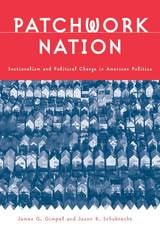
Patchwork Nation
Sectionalism and Political Change in American PoliticsJames G. Gimpel and Jason E. Schuknecht
University of Michigan Press, 2004

Patrick J. Lucey
A Lasting LegacyDennis L. Dresang
Wisconsin Historical Society Press, 2020
Preceding his service as governor, Lucey played a key role in rebuilding the Democratic Party in Wisconsin, returning a state that had been dominated by Republicans to a more moderate two-party system. As party chairman, he built coalitions between World War II veterans, remnants of the defunct Progressive Party, urban socialists, and activists in rural communities throughout the state.
Through exclusive interviews and unprecedented access to archival materials, Dennis L. Dresang shares the story of this pivotal figure in Wisconsin history, from his small-town rural roots to his wide-ranging influence.
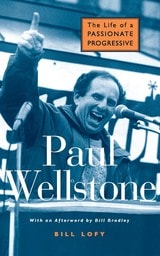
Paul Wellstone
The Life of a Passionate ProgressiveBill Lofy
University of Michigan Press, 2005
---Arianna Huffington, columnist and editor of HuffingtonPost.com
"This book captures the vibrant spirit of my friend Paul Wellstone---the fierce commitment to justice that defined his life, and that shapes his enduring legacy."
---U.S. Senator Russ Feingold
"Paul Wellstone was a great leader because he fused progressive idealism with a stubbornly pragmatic politics. Bill Lofy's book captures that dual commitment in his story of Wellstone's life, and also shows us the extraordinary human appeal that Wellstone emanated in his relationships with people in all walks of life. This book is an engaging read that also tells us a lot about the political practice to which we should aspire."
---Frances Fox Piven, author of The War at Home
"This vividly written book captures the life and personal qualities of the late Senator Paul Wellstone. In so doing it provides an illuminating gloss on Max Weber's seminal exposition of the political vocation. It is a jewel of a book."
-Fred Greenstein, Princeton University
Bill Lofy's fast-paced and readable biography tells the inspirational story of one of the most compelling figures in the history of American politics---Senator Paul Wellstone.
Yet Lofy's book is more than just the chronicle of Wellstone's life and political career; it's also an indispensable guide to what ails political life today. Readers politically inclined or not will find in its pages a handbook to the uncertain and often treacherous business of politics and a stirring example for living a courageous and honest life---whether as public servant or private individual.
Paying for the Party
How Fundraising Demands Lead to Less Productive and Less Representative LegislaturesMichael R. Kistner
University of Chicago Press, 2026
A revealing, data-rich exploration of how American legislators transformed from active policymakers into party fundraisers.
Lawmakers in Congress and state legislatures across the United States spend enormous amounts of time and effort fundraising, not just for their own seats but for the party. Whether dialing for dollars or hosting high-priced fundraising events, the pursuit of campaign funds is now a massive part of the American legislator’s job description. What explains this transformation, and what are the consequences for public policy?
In Paying for the Party, Michael Kistner uses new theory and new data to answer these questions. He shows that state legislative party organizations—Democratic and Republican caucuses in capitols across the country—are responsible for turning their members into single-minded seekers of money. Parties reward legislators who contribute the most with powerful leadership and committee positions. Consequently, the members who now hold these agenda-setting positions are increasingly neither the most productive nor knowledgeable lawmakers, but rather those who can raise the most money. And when legislators are asked to raise more money, they skip committee hearings for fundraising events, enacting fewer substantive policies as a result. Paying for the Party shows that parties in contemporary American legislatures have hollowed out the policymaking capacity of their institutions and empowered a decidedly non-representative set of legislators.
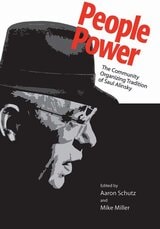
People Power
The Community Organizing Tradition of Saul AlinskyAaron Schutz
Vanderbilt University Press, 2015
--Fred Ross, Cesar Chavez, Dolores Huerta, and the Community Service Organization and National Farm Workers Association
--Nicholas von Hoffman and the Woodlawn Organization
--Tom Gaudette and the Northwest Community Organization
--Ed Chambers, Richard Harmon, and the Industrial Areas Foundation
--Shel Trapp, Gale Cincotta, and National People's Action
--Heather Booth, Midwest Academy, and Citizen Action
--Wade Rathke and ACORN
Weaving classic texts with interviews and their own context-setting commentaries, the editors of People Power provide the first comprehensive history of Alinsky-based organizing in the tumultuous period from 1955 to 1980, when the key organizing groups in the United States took form. Many of these selections--previously available only on untranscribed audiotapes or in difficult-to-read mimeograph or Xerox formats--appear in print here for the first time.

People Power
Unarmed Resistance and Global SolidarityHoward Clark
Pluto Press, 2009
Across the world, nonviolent movements are at the forefront of resistance against repression, imperial aggression and corporate abuse. However, it is often difficult for activists in other countries to know how best to assist such movements.
The contributors to People Power place nonviolent struggles in an international context where solidarity can play a crucial role. Yet they also warn that good intentions are not enough, solidarity has to listen to local movements.
Examining movements from Zimbabwe to Burma and Palestine, the contributors assess various forms of solidarity, arguing that a central role of solidarity is to strengthen the counter-power of those resisting domination and oppression.

Phantom Politics
Bots, Humans, AI, and Social MediaMina Momeni
Rutgers University Press, 2027
Phantom Politics develops a new framework for understanding how humans, bots, and AI systems interact on social media platforms and structure political communication. Focusing primarily on X (formerly Twitter), it analyzes three cases: the 2017 Women’s March, the 2019 “Build the Wall” discourse, and U.S. federal election discourse in 2024, to demonstrate how X functions not only as a mirror of political trends but also as a driver of change in the digital public sphere. The book shows how political participation is shaped by both authentic political expression and bot-driven narratives. It introduces new concepts to explain how AI-generated political speech can appear human while remaining detached from a human speaker, raising urgent questions about agency, accountability, and political voice. At a time when AI technologies are becoming increasingly integrated into public life, the book examines how emerging forms of automation are reshaping democratic discourse, challenging traditional understandings of participation, and transforming the ways political ideas circulate, gain visibility, and influence public debate.

Piecemeal Protest
Animal Rights in the Age of NonprofitsCorey Lee Wrenn
University of Michigan Press, 2019
Given their tendency to splinter over tactics and goals, social movements are rarely unified. Following the modern Western animal rights movement over thirty years, Corey Lee Wrennapplies the sociological theory of Bourdieu, Goffman, Weber, and contemporary social movement researchers to examine structural conditions in the animal rights movement, facilitating factionalism in today’s era of professionalized advocacy.
Modern social movements are dominated by bureaucratically oriented nonprofits, a special arrangement that creates tension between activists and movement elites who compete for success in a corporate political arena. Piecemeal Protest examines the impact of nonprofitization on factionalism and a movement’s ability to mobilize, resonate, and succeed. Wrenn’sexhaustive analysis of archival movement literature and exclusive interviews with movement leaders illustrate how entities with greater symbolic capital are positioned to monopolize claims-making, disempower competitors, and replicate hegemonic power, eroding democratic access to dialogue and decision-making essential for movement health.
Piecemeal Protest examines social movement behavior shaped by capitalist ideologies and state interests. As power concentrates to the disadvantage of marginalized factions in the modern social movement arena, Piecemeal Protest shines light on processes of factionalism and considers how, in the age of nonprofits, intra-movement inequality could stifle social progress.
Pivotal Politics
A Theory of U.S. LawmakingKeith Krehbiel
University of Chicago Press, 1998
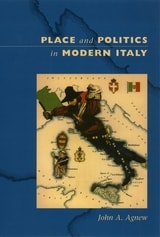
Place and Politics in Modern Italy
John A. Agnew
University of Chicago Press, 2002
For Agnew, place is not just a static backdrop against which events occur, but a dynamic component of social, economic, and political processes. He shows, for instance, how the lack of a common "landscape ideal" or physical image of Italy delayed the development of a sense of nationhood among Italians after unification. And Agnew uses the post-1992 victory of the Northern League over the Christian Democrats in many parts of northern Italy to explore how parties are replaced geographically during periods of intense political change.
Providing a fresh new approach to studying the role of space and place in social change, Place and Politics in Modern Italy will interest geographers, political scientists, and social theorists.

Platform Socialism
How to Reclaim our Digital Future from Big TechJames Muldoon
Pluto Press, 2022
Powerful tech companies now own the digital infrastructure of twenty-first century social life. Masquerading as global community builders, these companies have developed sophisticated new techniques for extracting wealth from their users.
James Muldoon shows how grassroots communities and transnational social movements can take back control from Big Tech. He reframes the technology debate and proposes a host of new ideas, from the local to the international, for how we can reclaim the emancipatory possibilities of digital platforms. Drawing on sources from forgotten histories to contemporary prototypes, he proposes an alternative system and charts a roadmap for how we can get there.
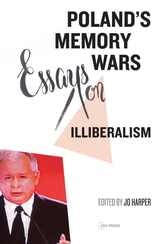
Poland's Memory Wars
Essays on IlliberalismJo Harper
Central European University Press, 2018
This volume of essays and interviews by Polish, British, and American academics and journalists provides an overview of current Polish politics for both informed and non-specialist readers. The essays consider why and how PiS, Law and Justice, the party of Jarosław Kaczynski, returned to power, and the why and how of its policies while in power. They help to make sense of how “history” plays a key role in Polish public life and politics.
The descriptions of PiS in Western media tend to rework old stereotypes about Eastern Europe that had lain dormant for some time. The book addresses the underlying question whether PiS was simply successful in understanding its electorate, and just helped Poland to revert to its normal state. This new Normal seems quite similar to the old one: insular, conservative, xenophobic, and statist.
The book looks at the current struggle between one ‘Poland’ and another; between a Western-looking Poland and an inward-looking Poland, the former more interested in opening to the world, competing in open markets, and working within the EU, and the latter more concerned with holding onto tradition.
The question of illiberalism has gone from an ‘Eastern’ problem (Russia, Turkey, Hungary, etc.) to a global one (Brexit and the U.S. elections). This makes the very specific analysis of Poland’s illiberalism applicable on a broader scale.
Poles Together?
The Emergence and Development of Political Parties in Postcommunist PolandAleks Szczerbiak
Central European University Press, 2001
This book fills a gap in the existing literature on how parties and party systems are developing in the new democracies of post-communist Central and Eastern Europe. It provides the first detailed, empirically based examination from a structural and organizational perspective of the new parties and political groupings that have emerged in Poland since the collapse of communism in 1989.
The author develops his argument on the basis of an analysis of five key structural and organizational variables: the internal distribution of power and modes of representation within the parties; the role of the party bureaucracy; the relationship between parties and their electorates; the development of parties as membership organizations; and the relationship between parties and the state.
As the first in-depth, empirically grounded single-country study of party structure and organization in post-communist Eastern Europe, the book provides an opportunity to draw broader conclusions about the process of Central and East European party development and will contribute significantly towards the development of a post-communist political party model. Szczerbiak sheds light on an important aspect of the more general process of post-communist democratization in the region and provides a major contribution to one of the least-explored areas of transition.
Policy & Politics Japan
T. Pempel
Temple University Press, 1982
Politic Parties in the American Mold
Leon D. Epstein
University of Wisconsin Press, 1989
Political Aspects of Social Indicators
Implications for ResearchPeter J. Henriot
Russell Sage Foundation, 1972
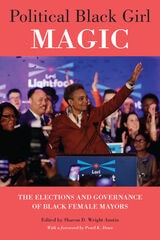
Political Black Girl Magic
The Elections and Governance of Black Female MayorsEdited by Sharon D. Wright Austin
Temple University Press, 2023
Case studies in this interdisciplinary volume include female mayors in Atlanta, Baltimore, Charlotte, Chicago, Compton, and Washington, DC, among other cities, along with discussion of each official’s political context. Covering mayors from the 1960s to the present, Political Black Girl Magic identifies the most significant obstacles black women have faced as mayors and mayoral candidates, and seeks to understand how race, gender, or the combination of both affected them.
Contributors: Andrea Benjamin, Nadia E. Brown, Pearl K. Dowe, Christina Greer, Precious Hall, Valerie C. Johnson, Yolanda Jones, Lauren King, Angela K. Lewis-Maddox, Minion K.C. Morrison, Marcella Mulholland, Stephanie A. Pink-Harper, Kelly Briana Richardson, Emmitt Y. Riley, III, Ashley Robertson Preston, Taisha Saintil, Jamil Scott, Fatemeh Shafiei, James Lance Taylor, LaRaven Temoney, Linda Trautman, and the editor
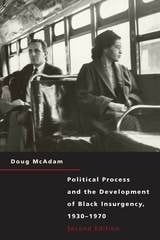
Political Process and the Development of Black Insurgency, 1930-1970
Doug McAdam
University of Chicago Press, 1999
"[A] first-rate analytical demonstration that the civil rights movement was the culmination of a long process of building institutions in the black community."—Raymond Wolters, Journal of American History
"A fresh, rich, and dynamic model to explain the rise and decline of the black insurgency movement in the United States."—James W. Lamare, Annals of the American Academy of Political and Social Science

Political Style
The Artistry of PowerRobert Hariman
University of Chicago Press, 1995
In critical studies of classic texts, Hariman identifies four dominant political styles. The realist style, as found in Machiavelli's The Prince, creates a world of sheer power, constant calculation, and emotional control; this style is the common sense of modern political science. The courtly style, depicted in Kapuscinski's The Emperor, is characterized by high decorousness, hierarchies, and fixation on the body of the sovereign; this style infuses mass media coverage of the American presidency. The republican style, reflected in Cicero's letters to Atticus, promotes the art of oratory, consensus, and civility; it informs our ideal of democratic conversation. The bureaucratic style, as captured in Kafka's The Castle, emphasizes institutional procedures, official character, and the priority of writing; this style structures everday life.
Hariman looks at effective political artistry in figures from antiquity to modern politicians such as Vaclav Havel, Ronald Reagan, and Bill Clinton. He discusses the crises to which each style is susceptible, as well as the social and moral consequences of each style's success.

Political Support in Canada
The Crisis YearsAllan Kornberg and Harold D. Clarke, editors
Duke University Press, 1983
The nature of popular support is first considered in broad, theoretical terms, then from the standpoint of those agents most responsible for maintaining support in Canadian democracy, then as influenced by particular issues and policies, and finally as it affects and is affected by the separatist movement in Quebec.
Political Survival of Small Parties in Europe
Jae-Jae Spoon
University of Michigan Press, 2015
It is often thought that small party survival or failure is a result of institutional constraints, the behavior of large parties, and the choices of individual politicians. Jae-Jae Spoon, in contrast, argues that the decisions made by small parties themselves determine their ability to balance the dual goals of remaining true to their ideals while maximizing their vote and seat shares, thereby enabling them to survive even in adverse electoral systems.
Spoon employs a mixed-methods approach in order to explore the policy, electoral, and communication strategies of West European Green Parties from 1980 to the present. She combines cross-national data on these parties with in-depth comparative case studies of two New Politics parties, the French and British Green Parties, that have survived in similar national-level plurality electoral systems. Both of these parties have developed as organizations which run candidates in elections at the local, national, and European levels in their respective countries. The parties’ survival, Spoon asserts, results from their ability to balance their competing electoral, policy, and communication goals.
Politicians Don't Pander
Political Manipulation and the Loss of Democratic ResponsivenessLawrence R. Jacobs and Robert Y. Shapiro
University of Chicago Press, 2000
In this provocative and engagingly written book, the authors argue that the reality is quite the opposite. In fact, when not facing election, contemporary presidents and members of Congress routinely ignore the public's policy preferences and follow their own political philosophies, as well as those of their party's activists, their contributors, and their interest group allies. Politicians devote substantial time, effort, and money to tracking public opinion, not for the purposes of policymaking, but to change public opinion—to determine how to craft their public statements and actions to win support for the policies they and their supporters want.
Taking two recent, dramatic episodes—President Clinton's failed health care reform campaign, and Newt Gingrich's "Contract with America"—as examples, the authors show how both used public opinion research and the media to change the public's mind. Such orchestrated displays help explain the media's preoccupation with political conflict and strategy and, the authors argue, have propelled levels of public distrust and fear of government to record highs.
Revisiting the fundamental premises of representative democracy, this accessible book asks us to reexamine whether our government really responds to the broad public or to the narrower interests and values of certain groups. And with the 2000 campaign season heating up, Politicians Don't Pander could not be more timely.
"'Polling has turned leaders into followers,' laments columnist Marueen Dowd of The New York Times. Well, that's news definitely not fit to print say two academics who have examined the polls and the legislative records of recent presidents to see just how responsive chief executives are to the polls. Their conclusion: not much. . . . In fact, their review and analyses found that public opinion polls on policy appear to have increasingly less, not more, influence on government policies."—Richard Morin, The Washington Post
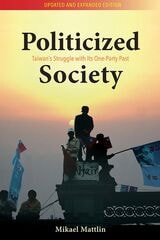
Politicized Society (2nd ed.)
The Long Shadow of Taiwan's One-party LegacyMikael Mattlin
National University of Singapore Press, 2011
Politicking Online
The Transformation of Election Campaign CommunicationsPanagopoulos, Costas
Rutgers University Press, 2009
While the Internet may have transformed the landscape of modern political campaigns throughout the world, Costas Panagopoulos reminds readers that officials and campaign workers need to adapt to changing circumstances, know the limits of their methods, and combine new technologies with more traditional techniques to achieve an overall balance.
Politics Over Process
Partisan Conflict and Post-Passage Processes in the U.S. CongressHong Min Park, Steven S. Smith, and Ryan J. Vander Wielen
University of Michigan Press, 2018

Politics as Development
The Emergence of Political Parties in Nineteenth-Century SerbiaGale Stokes
Duke University Press, 1990
Politics by Formula
How Congressional Policymaking Creates DisparitiesLeah Rosenstiel
University of Chicago Press, 2026
A clear-eyed study that reveals how politics shapes and often distorts important federal programs, driving inequalities across states.
From Medicaid to Section 8 Housing Choice Vouchers, a large percentage of the annual US federal budget (approximately $1 trillion) is distributed through grants-in-aid, a policy tool that allocates aid to state and local governments rather than to individual Americans. When members of Congress use grants-in-aid to fund healthcare, housing, and other forms of support, they are not solely determining how much assistance one person receives. Instead, they can allot certain localities larger grants, which carry big implications for the quality of public services available to citizens living in different states.
Many reasonably assume that these assistance programs distribute funding to states impartially because they use statistical formulas based on population levels, poverty, and other characteristics that, ostensibly, measure need. However, in Politics by Formula, Leah Rosenstiel shows how this seemingly technocratic aspect of federal policymaking is deeply affected by both the structure of political institutions and the motivations of elected officials. Key congressional committees—and especially their leaders—design formulas to benefit their constituencies. Superficially neutral formulas can shield these political decisions from scrutiny, but formulas also constrain congressmembers. Drawing on formal modeling and quantitative and qualitative evidence, Rosenstiel elucidates how these dynamics shape whose and what needs are met and where.
Politics in Manitoba
Parties, Leaders, and VotersChristopher Adams
University of Manitoba Press, 2008
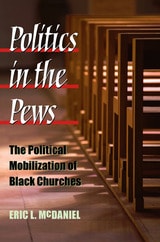
Politics in the Pews
The Political Mobilization of Black ChurchesEric L. McDaniel
University of Michigan Press, 2008
"Politics in the Pews probes the internal dynamics of political decision making within the Black church."
---William E. Nelson, Jr., Research Professor, Department of African American and African Studies, Ohio State University
As Eric McDaniel demonstrates in his study of Black congregations in the U.S., a church's activism results from complex negotiations between the pastor and the congregation. The church's traditions, its institutional organization, and its cultural traditions influence the choice to make politics part of the church's mission. The needs of the local community and opportunities to vote, lobby, campaign, or protest are also significant factors.
By probing the dynamics of churches as social groups, McDaniel opens new perspectives on civil rights history and the evangelical politics of the twenty-first century. Politics in the Pews contributes to a clearer understanding of the forces that motivate any organization, religious or otherwise, to engage in politics.
Eric L. McDaniel is Assistant Professor in the Department of Government at the University of Texas at Austin.
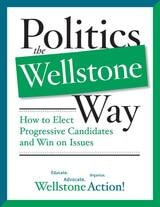
Politics the Wellstone Way
How to Elect Progressive Candidates and Win on IssuesWellstone Action Wellstone Action Wellstone Action
University of Minnesota Press, 2005
Wellstone Action is a nonprofit organization dedicated to continuing Paul and Sheila Wellstone’s fight for progressive change and economic justice by teaching effective political action skills to people across the country. Politics the Wellstone Way is a workshop in book form, providing the detailed framework needed to jump-start a new generation of activists plus plenty of helpful tools for old pros, including articulating a strong message, base building, field organizing, budgeting, fundraising, scheduling, getting out the vote, and grassroots advocacy and lobbying, illustrated by practical and inspirational examples.
From the school board all the way to the White House, Politics the Wellstone Way instructs people on becoming better organizers, candidates, campaign workers, and citizen activists, empowering them to make their voices heard.
Wellstone Action was established by the Wellstones’ two surviving sons, David and Mark. The main vehicle for this ongoing work is Camp Wellstone, a weekend training program that Wellstone Action leads regularly in locations across the country. Jeff Blodgett, Paul Wellstone’s longtime campaign manager, is the executive director of Wellstone Action. For more information visit www.wellstoneaction.org.