137 books match the query 'Poverty' and 25 start with p
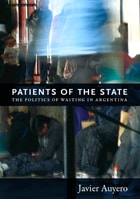
cover of Patients of the State: The Politics of Waiting in Argentina

Patients of the State

The Politics of Waiting in Argentina

Javier Auyero

Duke University Press, 2012
Patients of the State is a sociological account of the extended waiting that poor people seeking state social and administrative services must endure. It is based on ethnographic research in the waiting area of the main welfare office in Buenos Aires, in the line leading into the Argentine registration office where legal aliens apply for identification cards, and among people who live in a polluted shantytown on the capital’s outskirts, while waiting to be allocated better housing. Scrutinizing the mundane interactions between the poor and the state, as well as underprivileged people’s confusion and uncertainty about the administrative processes that affect them, Javier Auyero argues that while waiting, the poor learn the opposite of citizenship. They learn to be patients of the state. They absorb the message that they should be patient and keep waiting, because there is nothing else that they can do. Drawing attention to a significant everyday dynamic that has received little scholarly attention until now, Auyero considers not only how the poor experience these lengthy waits but also how making poor people wait works as a strategy of state control.
[more]
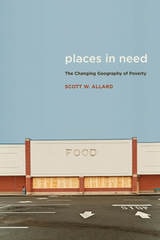
cover of Places in Need: The Changing Geography of Poverty

Places in Need

The Changing Geography of Poverty

Scott W. Allard

Russell Sage Foundation, 2017

Americans think of suburbs as prosperous areas that are relatively free from poverty and unemployment. Yet, today more poor people live in the suburbs than in cities themselves. In Places in Need, social policy expert Scott W. Allard tracks how the number of poor people living in suburbs has more than doubled over the last 25 years, with little attention from either academics or policymakers. Rising suburban poverty has not coincided with a decrease in urban poverty, meaning that solutions for reducing poverty must work in both cities and suburbs. Allard notes that because the suburban social safety net is less-developed than the urban safety net, a better understanding of suburban communities is critical for understanding and alleviating poverty in metropolitan areas.
 
Using census data, administrative data from safety net programs, and interviews with nonprofit leaders in the Chicago, Los Angeles, and Washington, D.C. metropolitan areas, Allard shows that poor suburban households resemble their urban counterparts in terms of labor force participation, family structure, and educational attainment. In the last few decades, suburbs have seen increases in single-parent households, decreases in the number of college graduates, and higher unemployment rates. As a result, suburban demand for safety net assistance has increased. Concerning is evidence suburban social service providers­—which serve clients spread out over large geographical areas, and often lack the political and philanthropic support that urban nonprofit organizations can command—do not have sufficient resources to meet the demand.
 
To strengthen local safety nets, Allard argues for expanding funding and eligibility to federal programs such as SNAP and the Earned Income Tax Credit, which have proven effective in urban and suburban communities alike.  He also proposes to increase the capabilities of community-based service providers through a mix of new funding and capacity-building efforts.
 
Places in Need demonstrates why researchers, policymakers, and nonprofit leaders should focus more on the shared fate of poor urban and suburban communities. This account of suburban vulnerability amidst persistent urban poverty provides a valuable foundation for developing more effective antipoverty strategies.
 
[more]
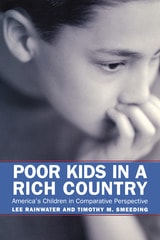
cover of Poor Kids in a Rich Country: America's Children in Comparative Perspective

Poor Kids in a Rich Country

America's Children in Comparative Perspective

Lee Rainwater

Russell Sage Foundation, 2003
In Poor Kids in a Rich Country, Lee Rainwater and Timothy Smeeding ask what it means to be poor in a prosperous nation - especially for any country's most vulnerable citizens, its children. In comparing the situation of American children in low-income families with their counterparts in fourteen other countries—including Western Europe, Australia, and Canada—they provide a powerful perspective on the dynamics of child poverty in the United States. Based on the rich data available from the transnational Luxembourg Income Study (LIS), Poor Kids in a Rich Country puts child poverty in the United States in an international context. Rainwater and Smeeding find that while the child poverty rate in most countries has been relatively stable over the past 30 years, child poverty has increased markedly in the United States and Britain—two of the world's wealthiest countries. The book delves into the underlying reasons for this difference, examining the mix of earnings and government transfers, such as child allowances, sickness and maternity benefits, unemployment insurance, and other social assistance programs that go into the income packages available to both single- and dual-parent families in each country. Rainwater and Smeeding call for policies to make it easier for working parents to earn a decent living while raising their children—policies such as parental leave, childcare support, increased income supports for working poor families, and a more socially oriented education policy. They make a convincing argument that our definition of poverty should not be based solely on the official poverty line—that is, the minimum income needed to provide a certain level of consumption—but on the social and economic resources necessary for full participation in society. Combining a wealth of empirical data on international poverty levels with a thoughtful new analysis of how best to use that data, Poor Kids in a Rich Country will provide an essential tool for researchers and policymakers who make decisions about child and family policy.
[more]
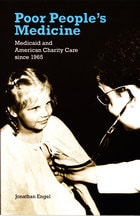
cover of Poor People's Medicine: Medicaid and American Charity Care since 1965

Poor People's Medicine

Medicaid and American Charity Care since 1965

Jonathan Engel

Duke University Press, 2006

Poor People’s Medicine is a detailed history of Medicaid since its beginning in 1965. Federally aided and state-operated, Medicaid is the single most important source of medical care for the poorest citizens of the United States. From acute hospitalization to long-term nursing-home care, the nation’s Medicaid programs pay virtually the entire cost of physician treatment, medical equipment, and prescription pharmaceuticals for the millions of Americans who fall within government-mandated eligibility guidelines. The product of four decades of contention over the role of government in the provision of health care, some of today’s Medicaid programs are equal to private health plans in offering coordinated, high-quality medical care, while others offer little more than bare-bones coverage to their impoverished beneficiaries.

Starting with a brief overview of the history of charity medical care, Jonathan Engel presents the debates surrounding Medicaid’s creation and the compromises struck to allow federal funding of the nascent programs. He traces the development of Medicaid through the decades, as various states attempted to both enlarge the programs and more finely tailor them to their intended targets. At the same time, he describes how these new programs affected existing institutions and initiatives such as public hospitals, community clinics, and private pro bono clinical efforts. Along the way, Engel recounts the many political battles waged over Medicaid, particularly in relation to larger discussions about comprehensive health care and social welfare reform. Poor People’s Medicine is an invaluable resource for understanding the evolution and present state of programs to deliver health care to America’s poor.
[more]
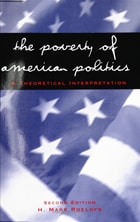
cover of Poverty Of Amer Pol 2Nd Ed

Poverty Of Amer Pol 2Nd Ed

H. Mark Roelofs

Temple University Press, 1998

Maintaining that the American political system is not working well enough to inspire confidence that it can meet the challenges o four time, H. Mark Roelofs attributes that failure, not to its practitioners, but to its very design. He sees that system as split between its legitimizing self-image, social democracy, and its operational element, liberal democracy.

Based on his novel understanding of the American political system, Roelofs presents a devastating and closely reasoned critique that traces our nation's political ills to fundamental flaws in the very design of its founding principles, the character of its major institutions, and the basic pattern of its processes. Dissecting our political and societal problems, he explains the  limitations and basic contributions arising from the social democratic/liberal democratic dichotomy that result in our current political poverty.

While Roelofs's analysis remains the same as in the earlier edition, in this revised edition he has sharpened and extended the argument and expanded and updated his illustrative materials. Improved bibliographical citations and new diagrams make the book an even more useful teaching tool.
[more]
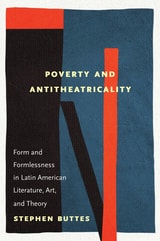
cover of Poverty and Antitheatricality: Form and Formlessness in Latin American Literature, Art, and Theory

Poverty and Antitheatricality

Form and Formlessness in Latin American Literature, Art, and Theory

Stephen Buttes

Rutgers University Press, 2025
Poverty and Antitheatricality argues that many major analytical approaches today misunderstand the problem of poverty by emphasizing its status as an experience. These experiential models transform poverty from a specific socioeconomic status lived in a particular historical sequence into a transhistorical presence of marginality that is not only inevitable but necessary. Embedded in capitalist, socialist, and populist forms of socioeconomic organization, these models paradoxically suggest that if we want to have a world free of poverty, we must always have the poor and their experience of formlessness. Taking up the paired terms—form and formlessness—Stephen Buttes demonstrates how they sustain not only debates about poverty and its political role within modernity but also the idea of the work of art within the history of modernism. Offering critiques of critical theory alongside new readings of both canonical and little-studied Latin American authors and artists, Poverty and Antitheatricality makes a compelling case that understanding the kind of problem the work of art is opens up overlooked but essential pathways to understanding poverty and the kind of problem it is.
[more]
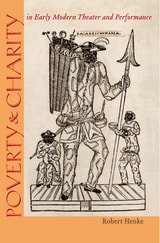
cover of Poverty and Charity in Early Modern Theater and Performance

Poverty and Charity in Early Modern Theater and Performance

Robert Henke

University of Iowa Press, 2015

Whereas previous studies of poverty and early modern theatre have concentrated on England and the criminal rogue, Poverty and Charity in Early Modern Theatre and Performance takes a transnational approach, which reveals a greater range of attitudes and charitable practices regarding the poor than state poor laws and rogue books suggest. Close study of German and Latin beggar catalogues, popular songs performed in Italian piazzas, the Paduan actor-playwright Ruzante, the commedia dell’arte in both Italy and France, and Shakespeare demonstrate how early modern theatre and performance could reveal the gap between official policy and actual practices regarding the poor.

The actor-based theatre and performance traditions examined in this study, which persistently explore felt connections between the itinerant actor and the vagabond beggar, evoke the poor through complex and variegated forms of imagination, thought, and feeling. Early modern theatre does not simply reflect the social ills of hunger, poverty, and degradation, but works them through the forms of poverty, involving displacement, condensation, exaggeration, projection, fictionalization, and marginalization. As the critical mass of medieval charity was put into question, the beggar-almsgiver encounter became more like a performance. But it was not a performance whose script was prewritten as the inevitable exposure of the dissembling beggar. Just as people’s attitudes toward the poor could rapidly change from skepticism to sympathy during famines and times of acute need, fictions of performance such as Edgar’s dazzling impersonation of a mad beggar in Shakespeare’s King Lear could prompt responses of sympathy and even radical calls for economic redistribution.
[more]
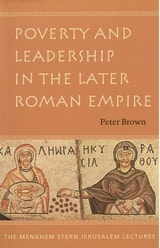
cover of Poverty and Leadership in the Later Roman Empire

Poverty and Leadership in the Later Roman Empire

Peter Brown

Brandeis University Press, 2001

In three magisterial essays, Peter Brown, one of the world's foremost scholars of the society and culture of late antiquity, explores the emergence in late Roman society of "the poor" as a distinct social class, one for which the Christian church claimed a special responsibility. It is the story of how a society came to see itself as responsible for the care of a particular class of people -- a class that had not previously been cared for -- and of who benefited from that shift in interests. In his characteristically elegant and lucid prose, Brown seeks to recover the pre-Christian status of poor people, the actual nature of the relations between the Christian church and the poor, and the true motivations -- sometimes sincere, sometimes self-serving -- behind Christian rhetoric of love for the poor. He draws not only on the standard Greek and Latin sources for the later Roman Empire, but also on Jewish sources to document the interactions between Middle Eastern provincial societies and classical Roman traditions. Brown gracefully illuminates a crucial transition from classical to Christian culture: the emergence of a new understanding of what society -- and the Church -- owes to the poor that continues to resonate.
[more]
cover of Poverty and Neoliberalism: Persistence and Reproduction in the Global South

Poverty and Neoliberalism

Persistence and Reproduction in the Global South

Ray Bush

Pluto Press, 2007

Why do so many people worldwide suffer hunger and poverty when there is enough food and other resources globally to prevent it? This book shows how famine and food insecurity are an essential part of modern capitalism. Although trade, debt relief and development initiatives are important, they do not alter the structure of the global economy and the poverty that is created by processes like privatisation, trade liberalisation and market reform.

Despite the rhetoric of the World Bank and the G8, high levels of poverty actually sustain western wealth and power. But there is some hope for change. Using case studies from Egypt and North Africa, Nigeria, Sudan and elsewhere in sub-Saharan Africa, Ray Bush illustrates that there is resistance to neoliberal policies, and that struggles over land, mining and resources can shape real alternatives to existing globalisation.
[more]
cover of Poverty and Place: Ghettos, Barrios, and the American City

Poverty and Place

Ghettos, Barrios, and the American City

Paul A. Jargowsky

Russell Sage Foundation, 1997
"[An] alarming report, a rigorous study packed with charts, tables, 1990 census data and [Jargowsky's] own extensive field work.... His careful analysis of enterprise zones, job-creation strategies, local economic development schemes and housing and tax policies rounds out an essential handbook for policy makers, a major contribution to public debate over ways to reverse indigence." —Publishers Weekly "A data-rich description and a conceptually innovative explanation of the spread of neighborhood poverty in the United States between 1970 and 1990. Urban scholars and policymakers alike should find Jargowsky's compelling arguments thought-provoking. "—Library Journal "A powerful book that allows us to really understand how ghettos have been changing over time and the forces behind these changes. It should be required reading of anyone who cares about urban poverty." —David Ellwood, Malcolm Wiener Professor of Public Policy, John F. Kennedy School of Government, Harvard University Poverty and Place documents the geographic spread of the nation's ghettos and shows how economic shifts have had a particularly devastating impact on certain regions, particularly in the rust-belt states of the Midwest. Author Paul Jargowsky's thoughtful analysis of the causes of ghetto formation clarifies the importance of widespread urban trends, particularly those changes in the labor and housing markets that have fostered income inequality and segregated the rich from the poor. Jargowsky also examines the sources of employment that do exist for ghetto dwellers, and describes how education and family structure further limit their prospects. Poverty and Place shows how the spread of high poverty neighborhoods has particularly trapped members of poor minorities, who account for nearly four out of five ghetto residents. Poverty and Place sets forth the facts necessary to inform the public understanding of the growth of concentrated poverty, and confronts essential questions about how the spiral of urban decay in our nation's cities can be reversed.
[more]
cover of Poverty and Problem-Solving under Military Rule: The Urban Poor in Lima, Peru

Poverty and Problem-Solving under Military Rule

The Urban Poor in Lima, Peru

By Henry A. Dietz

University of Texas Press, 1980

Many countries in Latin America have experienced both rapid urbanization and military involvement in politics. Yet few studies examine how military regimes react to the political pressures that wide-spread urban poverty creates or how the poor operate under authoritative rule. Henry Dietz investigates Lima’s poor during the “revolution” of General Juan Velasco (1968–1975). His study examines both the structural conditions promoting poverty and the individual consequences of being poor. The poor join together in several ways to resolve politicized communal needs; Dietz’s data indicate that the local neighborhood plays a crucial role in determining modes of involvement. Considerable attention is given to government attempts to encourage and control political activities by the poor. Dietz analyzes the failure of SINAMOS, the regime’s mobilization agency, and in so doing raises general questions about corporatist solutions to social problems. The wide range of original survey, informant, and ethnographic data provides much new information on elite-mass relationships in contemporary Latin America. Dietz’s research illuminates much that is of concern to scholars and planners dealing with urbanization, poverty, and social policy formation.
[more]
cover of Poverty and Society: The Growth of the American Welfare State in International Comparison

Poverty and Society

The Growth of the American Welfare State in International Comparison

Levine, Daniel

Rutgers University Press, 1988
.
[more]
cover of Poverty and Wealth in East Africa: A Conceptual History

Poverty and Wealth in East Africa

A Conceptual History

Rhiannon Stephens

Duke University Press, 2022
In Poverty and Wealth in East Africa Rhiannon Stephens offers a conceptual history of how people living in eastern Uganda have sustained and changed their ways of thinking about wealth and poverty over the past two thousand years. This history serves as a powerful reminder that colonialism and capitalism did not introduce economic thought to this region and demonstrates that even in contexts of relative material equality between households, people invested intellectual energy in creating new ways to talk about the poor and the rich. Stephens uses an interdisciplinary approach to write this history for societies without written records before the nineteenth century. She reconstructs the words people spoke in different eras using the methods of comparative historical linguistics, overlaid with evidence from archaeology, climate science, oral traditions, and ethnography. Demonstrating the dynamism of people’s thinking about poverty and wealth in East Africa long before colonial conquest, Stephens challenges much of the received wisdom about the nature and existence of economic and social inequality in the region’s deeper past.
[more]
cover of Poverty and the Quest for Life: Spiritual and Material Striving in Rural India

Poverty and the Quest for Life

Spiritual and Material Striving in Rural India

Bhrigupati Singh

University of Chicago Press, 2015

The Indian subdistrict of Shahabad, located in the dwindling forests of the southeastern tip of Rajasthan, is an area of extreme poverty. Beset by droughts and food shortages in recent years, it is the home of the Sahariyas, former bonded laborers, officially classified as Rajasthan’s only “primitive tribe.” From afar, we might consider this the bleakest of the bleak, but in Poverty and the Quest for Life, Bhrigupati Singh asks us to reconsider just what quality of life means. He shows how the Sahariyas conceive of aspiration, advancement, and vitality in both material and spiritual terms, and how such bridging can engender new possibilities of life.

Singh organizes his study around two themes: power and ethics, through which he explores a complex terrain of material and spiritual forces. Authority remains contested, whether in divine or human forms; the state is both despised and desired; high and low castes negotiate new ways of living together, in conflict but also cooperation; new gods move across rival social groups; animals and plants leave their tracks on human subjectivity and religiosity; and the potential for vitality persists even as natural resources steadily disappear. Studying this milieu, Singh offers new ways of thinking beyond the religion-secularism and nature-culture dichotomies, juxtaposing questions about quality of life with political theologies of sovereignty, neighborliness, and ethics, in the process painting a rich portrait of perseverance and fragility in contemporary rural India. 
[more]
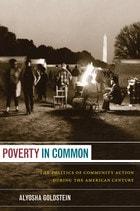
cover of Poverty in Common: The Politics of Community Action during the American Century

Poverty in Common

The Politics of Community Action during the American Century

Alyosha Goldstein

Duke University Press, 2012
After the Second World War, the idea that local community action was indispensable for the alleviation of poverty was broadly embraced by US policymakers, social scientists, international development specialists, and grassroots activists. Governmental efforts to mobilize community action in the name of democracy served as a volatile condition of possibility for poor people and dispossessed groups negotiating the tension between calls for self-help and demands for self-determination in the era of the Cold War and global decolonization. In Poverty in Common, Alyosha Goldstein suggests new ways to think about the relationship among liberalism, government, and inequality in the United States. He does so by analyzing historical dynamics including Progressive-era reform as a precursor to community development during the Cold War, the ways that the language of "underdevelopment" articulated ideas about poverty and foreignness, the use of poverty as a crucible of interest group politics, and radical groups' critical reframing of community action in anticolonial terms. During the mid-twentieth century, approaches to poverty in the United States were linked to the racialized and gendered negotiation of boundaries—between the foreign and the domestic, empire and nation, violence and order, and dependency and autonomy.
[more]
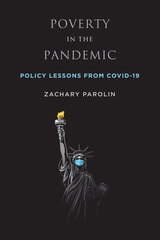
cover of Poverty in the Pandemic: Policy Lessons from COVID-19

Poverty in the Pandemic

Policy Lessons from COVID-19

Zachary Parolin

Russell Sage Foundation, 2023

At the close of 2019, the United States saw a record-low poverty rate. At the start of 2020, the COVID-19 pandemic threatened to upend that trend and plunge millions of Americans into poverty. However, despite the highest unemployment rate since the Great Depression, the poverty rate declined to the lowest in modern U.S. history. In Poverty in the Pandemic social policy scholar Zachary Parolin provides a data-driven account of how poverty influenced the economic, social, and health consequences of the COVID-19 pandemic in the U.S., as well as how the country’s policy response led to historically low poverty rates.
 
Drawing on dozens of data sources ranging from debit and credit card spending, the first national databases of school and childcare center closures in the U.S., and bi-weekly Census-run surveys on well-being, Parolin finds that entering the pandemic in poverty substantially increased a person’s likelihood of experiencing negative health outcomes due to the pandemic, such as contracting and dying from COVID, as well as losing their job. Additionally, he found that students from poor families suffered the greatest learning losses as a result of school closures and the shift to distance learning during the pandemic. 
 
However, unprecedented legislative action by the U.S. government, including the passage of the Families First Coronavirus Response Act (FFCRA), the Coronavirus Aid, Relief, and Economic Security (CARES) Act, and the American Rescue Plan (ARP) helped mitigate the economic consequences of the pandemic and lifted around 18 million Americans out of poverty. Based on the success of these policies, Parolin concludes with policy suggestions that the U.S. can implement in more ‘normal’ times to improve the living conditions of low-income households after the pandemic subsides, including expanding access to Unemployment Insurance, permanently expanding the Child Tax Credit, promoting greater access to affordable, high-quality healthcare coverage, and investing more resources into the Census Bureau’s data-collection capabilities. He also details a method of producing a monthly measurement of poverty, to be used in conjunction with the traditional annual measurement, in order to better understand the intra-year volatility of poverty that many Americans experience.
 
Poverty in the Pandemic provides the most complete account to date of the unique challenges that low-income households in the U.S. faced during the COVID-19 pandemic.

 
 
[more]
cover of Poverty of the Imagination: Nineteenth-Century Russian Literature about the Po

Poverty of the Imagination

Nineteenth-Century Russian Literature about the Po

David Herman

Northwestern University Press, 2001
The primal scene of all nineteenth-century western thought might involve an observer gazing at someone poor, most commonly on the streets of a great metropolis, and wondering what the spectacle meant in human, moral, political, and metaphysical terms. For Russia, most of whose people hovered near the poverty line throughout history, the scene is one of special significance, presenting a plethora of questions and possibilities for writers who wished to depict the spiritual and material reality of Russian life. How these writers responded, and what their portrayal of poverty reveals and articulates about core values of Russian culture, is the subject of this book, which offers a compelling look into the peculiar convergence in nineteenth-century Russian literature of ideas about the poor and about the processes of art.
[more]
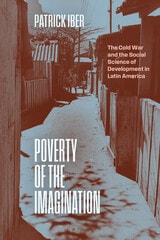
cover of Poverty of the Imagination: The Cold War and the Social Science of Development in Latin America

Poverty of the Imagination

The Cold War and the Social Science of Development in Latin America

Patrick Iber

University of Chicago Press, 2026

Explores the history of the “science of development” during the Cold War and how experts across the social sciences tried to create the tools to address the problem of poverty across Latin America.

In the mid-twentieth century, Latin America had the world’s starkest internal inequality. In Brazil in 1960, for example, the top 10 percent took upward of 60 percent of the country’s total income, while its entire bottom half took only 10 percent. As Patrick Iber shows in Poverty of the Imagination, this problem of poverty and social inequality focused the attention of social scientists on the task of articulating a “science of development.” In the context of the Cold War, this project drew the attention of the US government and the Ford Foundation, which hoped that peaceful development would prevent revolutions.

This book examines the five central frameworks that emerged to explain poverty: from dependency theory on the Marxist left; to theories of modernization, the culture of poverty, and marginality in the center; to neoliberalism on the right. Iber shows how each rose (and fell) by connecting them to political projects such as the War on Poverty in the United States and the dictatorship of Augusto Pinochet in Chile. Through vivid portraits of key thinkers, he shows how each was shaped by the environment of the Cold War and the presence of the Ford Foundation. It is a story with surprising turns: What began for Ford as a Cold War project to support university “modernization” changed as dictatorships took control of much of the region. Then, Ford took the side of the dissidents, supporting an antipoverty agenda for the restoration of democracy. A guide to some of the most important ideas in global development and Latin American studies alike, this book also shows how scholars and institutions faced down authoritarian threats—and won.
[more]
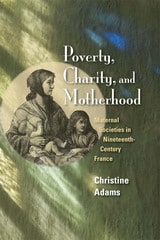
cover of Poverty, Charity, and Motherhood: Maternal Societies in Nineteenth-Century France

Poverty, Charity, and Motherhood

Maternal Societies in Nineteenth-Century France

Christine Adams

University of Illinois Press, 2010
This far-reaching study of maternal societies in post-revolutionary France focuses on the philanthropic work of the Society for Maternal Charity, the most prominent organization of its kind. Administered by middle-class and elite women and financed by powerful families and the government, the Society offered support to poor mothers, helping them to nurse and encouraging them not to abandon their children. In Poverty, Charity, and Motherhood, Christine Adams traces the Society's key role in shaping notions of maternity and in shifting the care of poor families from the hands of charitable volunteers with religious-tinged social visions to paid welfare workers with secular goals such as population growth and patriotism.
 
Adams plumbs the origin and ideology of the Society and its branches, showing how elite women in Paris, Lyon, Bordeaux, Rouen, Marseille, Dijon, and Limoges tried to influence the maternal behavior of women and families with lesser financial means and social status. A deft analysis of the philosophy and goals of the Society details the members' own notions of good mothering, family solidarity, and legitimate marriages that structured official, elite, and popular attitudes concerning gender and poverty in France. These personal attitudes, Adams argues, greatly influenced public policy and shaped the country's burgeoning social welfare system.
[more]
cover of Poverty, Inequality, and the Future of Social Policy: Western States in the New World Order

Poverty, Inequality, and the Future of Social Policy

Western States in the New World Order

Katherine McFate

Russell Sage Foundation, 1995
"Extremely coherent and useful, this much needed volume is concerned with the current status of the poor in Western industrial states. Its closely linked essays allow comparisons between case studies and are often themselves cross-national comparisons....The essays also comment on the meaning of globalization for social policy." —Choice "Excellent and tightly integrated articles by a group of prominent international scholars....A timely and important book, which will surely become the basic reference point for all future research on inequality and social policy." —Contemporary Sociology The social safety net is under strain in all Western nations, as social and economic change has created problems that traditional welfare systems were not designed to handle. Poverty, Inequality, and the Future of Social Policy provides a definitive analysis of the conditions that are fraying the social fabric and the reasons why some countries have been more successful than others in addressing these trends. In the United States, where the poverty rate in the 1980s was twice that of any advanced nation in Europe, the social protection system—and public support for it—has eroded alarmingly. In Europe, the welfare system more effectively buffered the disadvantaged, but social expenditures have been indicted by many as the principal cause of high unemployment. Concluding chapters review the progress and goals of social welfare programs, assess their viability in the face of creeping economic, racial, and social fragmentation, and define the challenges that face those concerned with social cohesion and economic prosperity in the new global economy. This volume illuminates the disparate effects of government intervention on the incidence and duration of poverty in Western countries. Poverty, Inequality, and the Future of Social Policy is full of lessons for anyone who would look beyond the limitations of the welfare debate in the United States.
[more]
cover of Poverty, Law, and Divine Justice in Persian and Hellenistic Judah

Poverty, Law, and Divine Justice in Persian and Hellenistic Judah

Johannes Unsok Ro

SBL Press, 2018

A view of Persian and Hellenistic Judean communities through theological and socioeconomic lenses

Johannes Unsok Ro employs philological, historical, and sociological approaches to investigate the close connections between socioeconomic structures, social inequality, and theological developments in the Judean communities in Persian- and Hellenistic-era Palestine. Ro contends that competing points of view from communities of lay returnees, priestly returnees, and communities of resident Judeans and Samaritans were juxtaposed within the Hebrew Bible, which took shape during the postexilic period. By exploring issues such as the relationship between the shaping of the canon and literacy in the Judean community, the term strangers in the biblical law codes, the socioeconomic structures of Judean communities reflected in the biblical law codes, the development of the theological concept of divine punitive justice, the piety of the poor in certain psalms, and the concept of poverty in the Dead Sea Scrolls, Ro illustrates that the communities behind each text and its redactions can be ascertained through sociological and theological lenses.

Features

  • Demonstration that a theology of the poor materialized orally among the poor but found written expression among Levites
  • Insight into the socioeconomic and theological concerns of the authorial groups behind various biblical law codes
  • A case that biblical “poverty” sometimes refers to humility and a theologically reflected consciousness of lowliness toward God
[more]
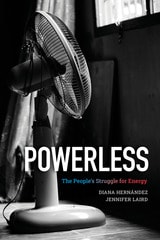
cover of Powerless: The People's Struggle for Energy

Powerless

The People's Struggle for Energy

Diana Hernández

Russell Sage Foundation, 2025

Energy serves as the lifeblood of our daily experiences. It permeates virtually every aspect of our existence, facilitating nourishment, safety, and productivity. When affordability threatens energy’s availability, a family’s living situation can become untenable—too cold, too hot, too dark, and too often, unhealthy and unsafe. In Powerless, sociologists Diana Hernández and Jennifer Laird reveal the hidden hardship of “energy insecurity” – the inability to adequately meet household energy needs.

Approximately one in ten households in the U.S. are energy insecure and four in ten are at risk for energy insecurity. These statistics alone do not convey the acute pain of utility shutoffs, or the relentless toll of chronic energy hardships marked by difficult choices and harsh living conditions. Drawing on survey data and interviews with one hundred energy-insecure individuals and families, Hernández and Laird detail the experience of energy insecurity. Individuals and families suffering from energy insecurity endure economic hardships, such as difficulty paying utility bills, utility debt, and disconnection from utility services. They also struggle with physical challenges, such as poor housing conditions and poor or dysfunctional heating and cooling systems. They are often forced to make difficult choices about what bills to pay. These decisions are sometimes referred to as “heat or eat?” choices, as families cannot afford to pay for heating and food at the same time. Energy insecure individuals and families employ a variety of strategies to keep energy costs down to avoid having to make these hard choices. This includes deliberate underconsumption of energy, enduring physical discomfort, and using dangerous alternatives such as open flames, ovens, or space heaters to try to maintain a comfortable temperature in their home. To be energy insecure is to suffer. Despite the heavy toll of energy insecurity, most people confront these difficulties behind closed doors, believing it is a private matter. Thus, the enormous social crisis of energy insecurity goes unnoticed.

Hernández and Laird argue that household energy is a basic human right and detail policies and practices that would expand access to consistent, safe, clean, and affordable energy. Their proposals include improving the current energy safety net, which is limited and often does not serve the most energy insecure due to stringent program requirements and administrative burdens. They also suggest redesigning rates to accommodate income, promoting enrollment and expansion of discount programs, reforming utility disconnection policies, improving energy literacy, and ensuring an equitable shift to renewable energy resources.

Powerless creates a comprehensive picture of the complex social and environmental issue of energy insecurity and shows how energy equity is not just an aspiration but an achievable reality.
[more]
cover of President Johnson's War On Poverty: Rhetoric and History

President Johnson's War On Poverty

Rhetoric and History

David Zarefsky

University of Alabama Press, 1986

How words waged war—and shaped the fate of a nation’s boldest social crusade.

In January 1964, in his first State of the Union address, President Lyndon Johnson announced a declaration of “unconditional war” on poverty. By the end of the year the Economic Opportunity Act became law.

War on Poverty illustrates the interweaving of rhetorical and historical forces in shaping public policy. Zarefsky suggests that an important problem lay in its discourse. He assumes that language plays a central role in the formulation of social policy by shaping the context within which people view the social world. By terming the anti-poverty effort a war, President Johnson imparted significant symbolism to the effort: it called for total victory and gave confidence that the “war” was winnable. It influenced the definition of the enemy as an intergenerational cycle of poverty, rather than the shortcomings of the individual; and it led to the choice of community action, manpower programs, and prudent management as weapons and tactics. Each of these implications involves a choice of language and symbols, a decision about how to characterize and discuss the world. Zarefsky contends that each of these rhetorical choices was helpful to the Johnson administration in obtaining passage of the Economic Opportunity Ac of 1964, but that each choice invited redefinition or reinterpretation of a symbol in a way that threatened the program.

[more]
cover of Prisons of Poverty

Prisons of Poverty

Loïc Wacquant

University of Minnesota Press, 2009

An international best seller dissects the globalization of penal policies “made in U.S.A.” as part of the spread of neoliberalism

In the early 1990s, Mayor Rudolph Giuliani launched a zero-tolerance campaign aimed at street disorders and petty offenders, incarnated in the infamous “squeegee man.” New York City soon became a planetary showcase for an aggressive approach to law enforcement that, despite its extravagant costs and the absence of connection to the crime drop, came to be admired and imitated by other cities in the United States, Western Europe, and Latin America.

In Prisons of Poverty, Loïc Wacquant tracks the incubation and internationalization of the slogans, theories, and measures composing this new punitive “common sense,” fashioned to curb mounting urban inequality and marginality in the metropolis. He finds that a network of Reagan-era conservative think tanks (led by the Manhattan Institute) forged them as weapons in their crusade to dismantle the welfare state and, in effect, to criminalize poverty. He traces their import and export through the agency of the media and the pro-market policy institutes that have mushroomed across the European Union, particularly in Tony Blair’s Britain. And he shows how academics helped smuggle U.S. techniques of penalization into their countries by dressing them up in scholarly garb.Now available in English for the first time in an expanded edition, Prisons of Poverty reveals how the Washington consensus on economic deregulation and welfare retrenchment was extended to encompass punitive crime control because the invisible hand of the market necessitates and calls forth the iron fist of the penal state.
[more]
cover of Public Policy and the Income Distribution

Public Policy and the Income Distribution

Alan J. Auerbach

Russell Sage Foundation, 2006

Over the last forty years, rising national income has helped reduce poverty rates, but this has been accompanied by an increase in economic inequality. While these trends are largely attributed to technological change and demographic shifts, such as changing birth rates, labor force patterns, and immigration, public policies have also exerted a profound affect on the welfare of Americans. In Public Policy and the Income Distribution, editors Alan Auerbach, David Card, and John Quigley assemble a distinguished roster of policy analysts to confront the key questions about the role of government policy in altering the level and distribution of economic well being. Public Policy and the Income Distribution tackles many of the most difficult and intriguing questions about how government intervention—or lack thereof—has affected the incomes of everyday Americans. Rebecca Blank analyzes welfare reform, and presents systematic research on income, poverty rates, and welfare and labor force participation of single mothers. She finds that single mothers worked more and were less dependent on public assistance following welfare reform, and that low-skilled single mothers had no greater difficulty finding work than others. Timothy Smeeding compares poverty reduction programs in the United States with policies in other developed countries. Poverty and inequality are higher in the United States than in other advanced economies, but Smeeding argues that this is largely a result of policy choices. Poverty rates based on market incomes alone are actually lower in the United States than elsewhere, but government interventions in the United States were less than half as effective at reducing poverty as were programs in the other countries. The most dramatic poverty reduction story of twentieth century America was seen among the elderly, who went from being the age group most likely to live in poverty in the 1960s to the group least likely to be poor at the end of the century. Gary Englehardt and Jonathan Gruber examine the role of policy in alleviating old-age poverty by estimating the impact of Social Security benefits on the income of the elderly poor. They find that the growth in Social Security almost completely explains the large decline in elderly poverty in the United States The twentieth century was remarkable in the extent to which advances in public policy helped improve the economic well being of Americans. Synthesizing existing knowledge on the effectiveness of public policy and contributing valuable new research, Public Policy and the Income Distribution examines public policy's successes, and points out the areas in which progress remains to be made.
[more]