Results by title
424 books match the query 'Russian & Soviet' and 24 start with p
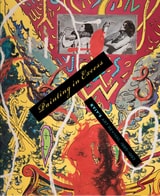
Painting in Excess
Kyiv's Art Revival, 1985-1993Olena Martynyuk
Rutgers University Press, 2022
Paradise from behind the Iron Curtain
Reading, Translating and Staging Milton in Communist HungaryMiklós Péti
University College London, 2022
This book provides a detailed survey of the key responses to Milton’s work in Hungarian state socialism. The four decades between 1948 and 1989 saw a radical revision of previous critical and artistic positions and resulted in the emergence of some characteristically Eastern European responses to Milton’s works. Appraisals of Milton’s works in the communist era proved more controversial than receptions of other major Western authors: on the one hand, Milton’s participation in the Civil War earned him the title of a “revolutionary hero,” on the other hand, religious aspects of his works were often disregarded and sometimes proactively suppressed. This book highlights these diverging responses and places them in the wider context of socialist cultural policy. In addition, it presents the full Hungarian script of the 1970 theatrical performance of Milton’s Paradise Lost, the first of its kind since the work’s publication, alongside a parallel English translation, enabling a deeper reflection on Milton’s original theodicy and its possible interpretations in communist Hungary.

Pasternak's "Dr. Zhivago"
A Critical CompanionEdith W. Clowes
Northwestern University Press, 1995
Pelevin and Unfreedom
Poetics, Politics, MetaphysicsSofya Khagi
Northwestern University Press, 2021
Sofya Khagi’s Pelevin and Unfreedom: Poetics, Politics, Metaphysics is the first book-length English-language study of Victor Pelevin, one of the most significant and popular Russian authors of the post-Soviet era. The text explores Pelevin’s sustained Dostoevskian reflections on the philosophical question of freedom and his complex oeuvre and worldview, shaped by the idea that contemporary social conditions pervert that very notion.
Khagi shows that Pelevin uses provocative and imaginative prose to model different systems of unfreedom, vividly illustrating how the present world deploys hyper-commodification and technological manipulation to promote human degradation and social deadlock. Rather than rehearse Cold War–era platitudes about totalitarianism, Pelevin holds up a mirror to show how social control (now covert, yet far more efficient) masquerades as freedom and how eagerly we accept, even welcome, control under the techno-consumer system. He reflects on how commonplace discursive markers of freedom (like the free market) are in fact misleading and disempowering. Under this comfortably self-occluding bondage, the subject loses all power of self-determination, free will, and ethical judgment. In his work, Pelevin highlights the unprecedented subversion of human society by the techno-consumer machine. Yet, Khagi argues, however circumscribed and ironically qualified, he holds onto the emancipatory potential of ethics and even an emancipatory humanism.

Performing Refuge and Risk
Precarious Theatre in East Central EuropeRachel Merrill Moss
University of Iowa Press, 2027
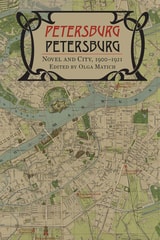
Petersburg/Petersburg
Novel and City, 1900–1921Olga Matich
University of Wisconsin Press, 2010
Since its founding three hundred years ago, the city of Saint Petersburg has captured the imaginations of the most celebrated Russian writers, whose characters map the city by navigating its streets from the aristocratic center to the gritty outskirts. While Tsar Peter the Great planned the streetscapes of Russia’s northern capital as a contrast to the muddy and crooked streets of Moscow, Andrei Bely’s novel Petersburg (1916), a cornerstone of Russian modernism and the culmination of the “Petersburg myth” in Russian culture, takes issue with the city’s premeditated and supposedly rational character in the early twentieth century.
“Petersburg”/Petersburg studies the book and the city against and through each other. It begins with new readings of the novel—as a detective story inspired by bomb-throwing terrorists, as a representation of the aversive emotion of disgust, and as a painterly avant-garde text—stressing the novel’s phantasmagoric and apocalyptic vision of the city. Taking a cue from Petersburg’s narrator, the rest of this volume (and the companion Web site, stpetersburg.berkeley.edu/) explores the city from vantage points that have not been considered before—from its streetcars and iconic art-nouveau office buildings to the slaughterhouse on the city fringes. From poetry and terrorist memoirs, photographs and artwork, maps and guidebooks of that period, the city emerges as a living organism, a dreamworld in flux, and a junction of modernity and modernism.
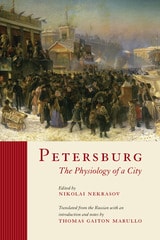
Petersburg
The Physiology of a CityThomas Gaiton Marullo
Northwestern University Press, 2009
Pleasures in Socialism
Leisure and Luxury in the Eastern BlocDavid Crowley
Northwestern University Press, 2012
Much has been written about the workings of communist governments in the USSR and the Soviet bloc, yet there is still a great deal to explore regarding their relationship to the everyday lives of the citizens living under them. This third volume builds on the editors’ Style and Socialism and Socialist Spaces, showing how the rise of consumer culture took a unique form in these countries.
Essays from top scholars address topics ranging from fashion and game shows to smoking and camping. The authors of the essays in this collection investigate the ways in which pleasurable activities, like many other facets of daily life, were both a space in which these communist governments tried to insinuate themselves and thereby further expand the reach of their authority,
and also an opportunity for people to assert their individuality.
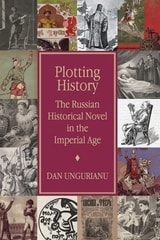
Plotting History
The Russian Historical Novel in the Imperial AgeDan Ungurianu
University of Wisconsin Press, 2007
Balanced precariously between fact and fiction, the historical novel is often viewed with suspicion. Some have attacked it as a mongrel form, a “bastard son” born of “history’s flagrant adultery with imagination.” Yet it includes some of the most celebrated achievements of Russian literature, with Alexander Pushkin, Nikolai Gogol, Leo Tolstoy, and scores of other writers contributing to this tradition.
Dan Ungurianu’s Plotting History traces the development of the Russian historical novel from its inception in the romantic era to the emergence of Modernism on the eve of the Revolution. Organized historically and thematically, the study is focused on the cultural paradigms that shaped the evolution of the genre and are reflected in masterpieces such as The Captain’s Daughter and War and Peace. Ungurianu examines the variety of approaches by which Russian writers combined fact with fiction and explores the range of subjects that inspired the Russian historical imagination.
Outstanding Academic Title, Choice Magazine
“Ungurianu has produced a most valuable work for literary scholars.”—Andrew M. Drozd, Slavic and East European Journal
“[Ungurianu’s] overwhelming knowledge, impeccable documentation, erudite notes, and valuable addenda make for a treasure house of information and keen analysis. . . . Essential.”—Choice
Poetry in Exile
Czech Poets during the Cold War and the Western Poetic TraditionJosef Hrdlicka
Karolinum Press, 2021
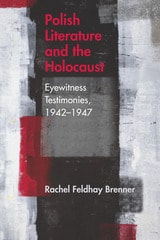
Polish Literature and the Holocaust
Eyewitness Testimonies, 1942–1947Rachel Feldhay Brenner
Northwestern University Press, 2019
Polish Literature and the Holocaust: Eyewitness Testimonies,1942–1947 is a particularly timely book in view of the continuing debate about the attitudes of Poles toward the Jews during the war. The literary voices from the past that Brenner examines posit questions that are as pertinent now as they were then. And so, while this book speaks to readers who are interested in literary responses to the Holocaust, it also illuminates the universal issue of the responsibility of witnesses toward the victims of any atrocity.
Positive Hero in Russian Literature
Rufus W. Mathewson, Jr.
Northwestern University Press, 2000
Poverty of the Imagination
Nineteenth-Century Russian Literature about the PoDavid Herman
Northwestern University Press, 2001
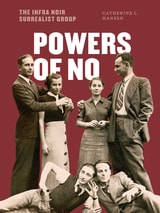
Powers of No
The Infra Noir Surrealist GroupCatherine L. Hansen
University of Minnesota Press, 2026
How five dissident poets applied Surrealism to everyday life under totalitarian rule
A collective biography of the Surrealist group Infra Noir, Powers of No reveals an important chapter in the history of the postwar European avant-garde. Detailing the group’s innovative program for cultivating community and political resistance, Catherine L. Hansen examines how its five members reimagined Surrealism as a means to endure life under totalitarianism and war.
Encompassing the careers and friendships of Gherasim Luca, Gellu Naum, Trost, Paul Păun, and Virgil Teodorescu, Powers of No is the first English-language book about this Francophone Romanian group active between 1941 and 1947. The members of Infra Noir created radical art and publications that attracted the attention of André Breton and other central figures in the wider Surrealist movement. Charting their course from the Bucharest avant-garde amid the rising tide of fascism through the turbulent intellectual and political scene of postwar France and Stalinist repression, Hansen unpacks the concepts this group developed, which envisioned new possibilities for emancipatory thought and praxis.
Grounded in a wealth of archival materials and original translations, Powers of No situates the unique legacy of Infra Noir’s revolutionary project among the various intellectual currents of a tumultuous era. Establishing Infra Noir as more than an obscure clique of dissident poets and artists, this book presents their work as a repertoire of lessons for resisting authoritarian oppression and avoiding despair even under the harshest political conditions.
Retail e-book files for this title are screen-reader friendly with images accompanied by short alt text and/or extended descriptions.
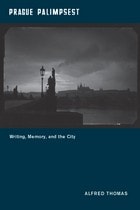
Prague Palimpsest
Writing, Memory, and the CityAlfred Thomas
University of Chicago Press, 2010
A city of immense literary mystique, Prague has inspired writers across the centuries with its beauty, cosmopolitanism, and tragic history. Envisioning the ancient city in central Europe as a multilayered text, or palimpsest, that has been constantly revised and rewritten—from the medieval and Renaissance chroniclers who legitimized the city’s foundational origins to the modernists of the early twentieth century who established its reputation as the new capital of the avant-garde—Alfred Thomas argues that Prague has become a paradoxical site of inscription and effacement, of memory and forgetting, a utopian link to the prewar and pre-Holocaust European past and a dystopia of totalitarian amnesia.
Considering a wide range of writers, including the city’s most famous son, Franz Kafka, Prague Palimpsest reassesses the work of poets and novelists such as Bohumil Hrabal, Milan Kundera, Gustav Meyrink, Jan Neruda, Vítĕzslav Nezval, and Rainer Maria Rilke and engages with other famous authors who “wrote” Prague, including Guillaume Apollinaire, Ingeborg Bachmann, Albert Camus, Paul Celan, and W. G. Sebald. The result is a comparative, interdisciplinary study that helps to explain why Prague—more than any other major European city—has haunted the cultural and political imagination of the West.
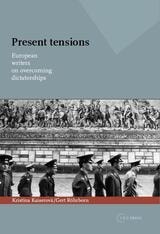
Present Tensions
European Writers on Overcoming DictatorshipsKristina Kaiserová
Central European University Press, 2009
Problems of Dostoevsky’s Poetics
Mikhail Bakhtin
University of Minnesota Press, 1984
Prodigal Son
Vasilii Shuksin in Soviet Russian CultureJohn Givens
Northwestern University Press, 2000
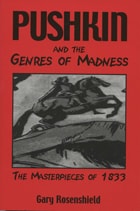
Pushkin and the Genres of Madness
The Masterpieces of 1833Gary Rosenshield
University of Wisconsin Press, 2003
In 1833 Alexander Pushkin began to explore the topic of madness, a subject little explored in Russian literature before his time. The works he produced on the theme are three of his greatest masterpieces: the prose novella The Queen of Spades, the narrative poem The Bronze Horseman, and the lyric "God Grant That I Not Lose My Mind." Gary Rosenshield presents a new interpretation of Pushkin’s genius through an examination of his various representations of madness.
Pushkin brilliantly explored both the destructive and creative sides of madness, a strange fusion of violence and insight. In this study, Rosenshield illustrates the surprising valorization of madness in The Queen of Spades and "God Grant That I Not Lose My Mind" and analyzes The Bronze Horseman’s confrontation with the legacy of Peter the Great, a cornerstone figure of Russian history. Drawing on themes of madness in western literature, Rosenshield situates Pushkin in a greater framework with such luminaries as Shakespeare, Sophocles, Cervantes, and Dostoevsky providing an insightful and absorbing study of Russia’s greatest writer.
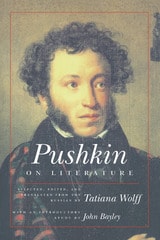
Pushkin on Literature
Tatiana Wolff
Northwestern University Press, 1998

Pushkin's Button
Serena Vitale
University of Chicago Press, 2000
"Pushkin's Button will keep all constituencies of reader fastened to their seats, as they watch Petersburg's lofty denizens leave no moment of the hurtling Pushkin scandal unrecorded or not speculated on."—Monika Greenleaf,Los Angeles Times
"[A] deliciously entertaining whydunit, a book in which every page seduces with a riddle. . . . Vivacious, seductive, original."—Michael Dirda, Washington Post
"A delightful combination of retrograde pleasures (court balls, the demise of a doomed genius) and primary sources. . . . Illuminating."—Richard Lamb, New York Times Book Review
"A book almost impossible to put down."—George Steiner, New Yorker
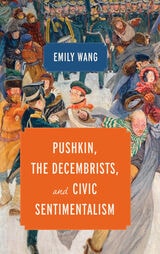
Pushkin, the Decembrists, and Civic Sentimentalism
Emily Wang
University of Wisconsin Press, 2023
Through careful readings of the literature of Pushkin and others active in the northern branch of the Decembrist movement, such as Kondraty Ryleev, Wilhelm Küchelbecker, and Fyodor Glinka, Wang traces the development of “emotional communities” among the members and adjacent writers. This book illuminates what Wang terms “civic sentimentalism”: the belief that cultivating noble sentiments on an individual level was the key to liberal progress for Russian society, a core part of Decembrist ideology that constituted a key difference from their thought and Pushkin’s. The emotional program for Decembrist community members was, in other ways, a civic program for Russia as a whole, one that they strove to enact by any means necessary.
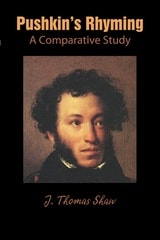
Pushkin’s Rhyming
A Comparative StudyJ. Thomas Shaw
University of Wisconsin Press, 2011
The culmination of four decades of work by J. Thomas Shaw, this fully searchable e-book carefully analyzes, both chronologically and by genre, Alexander Pushkin’s use of rhyme to show how meaning shifts in tandem with formal changes. Comparing Pushkin’s poetry with that of Konstantin Nikolaevich Batiushkov (1787–1855) and Evgeny Abramovich Baratynsky (1800–1844), Shaw considers, among other topics, what is exact and inexact in “exact” rhyme, how the grammatical characteristics of rhymewords affect the reader’s percepetion of the poem and its rhyme, and how the repetition of a rhyming word can also change meaning.
Each of the five chapters analyzes in detail a distinct aspect of rhyme and provides rich resources for future scholars in the accompanying tables of data. The extensive back matter in the book includes a glossary, abbreviations list, bibliography, and indexes of poems cited, names, and rhyme types and analyses.
Pushkin’s Tatiana
Olga Hasty
University of Wisconsin Press, 1999