Results by title
527 books match the query 'Translations into English' and 28 start with p
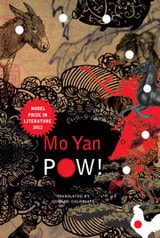
POW!
Mo Yan
Seagull Books, 2012
In this novel by the 2012 Nobel Laureate in Literature, Mo Yan, a benign old monk listens to a prospective novice’s tale of depravity, violence, and carnivorous excess while a nice little family drama—in which nearly everyone dies—unfurls. But in this tale of sharp hatchets, bad water, and a rusty WWII mortar, we can’t help but laugh. Reminiscent of the novels of dark masters of European absurdism like Günter Grass, Witold Gombrowicz, or Jakov Lind, Mo Yan’s POW! is a comic masterpiece.
In this bizarre romp through the Chinese countryside, the author treats us to a cornucopia of cooked animal flesh—ostrich, camel, donkey, dog, as well as the more common varieties. As his dual narratives merge and feather into one another, each informing and illuminating the other, Mo Yan probes the character and lifestyle of modern China. Displaying his many talents, as fabulist, storyteller, scatologist, master of allusion and cliché, and more, POW! carries the reader along quickly, hungrily, and giddily, up until its surprising dénouement.
Mo Yan has been called one of the great novelists of modern Chinese literature and the New York Times Book Review has hailed his work as harsh and gritty, raunchy and funny. He writes big, sometimes mystifying, sometimes infuriating, but always entertaining novels—and POW! is no exception.
Partenia, A Pastoral Play
A Bilingual EditionBarbara Torelli Benedetti
Iter Press, 2013
Peltse and Pentameron
Volodymyr Dibrova
Northwestern University Press, 1996
Peltse portrays the formation of an average apparatchik. Both funny and alarming, it provides a psychological portrait of an individual trapped in a system he simultaneously dislikes and depends upon for survival. Pentameron tells the story of one day in the life of five colleagues at a Soviet research institute. Each is dissatisfied, yet all are trapped in and by a system that has taken away their ability to act decisively.
Philodemus, On Death
W. Benjamin Henry
SBL Press, 2009
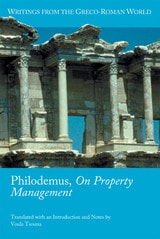
Philodemus, On Property Management
Voula Tsouna
SBL Press, 2013
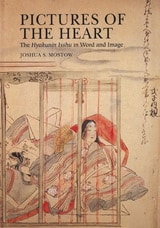
Pictures of the Heart
The <em>Hyakunin Isshu</em> in Word and ImageJoshua S. Mostow
University of Michigan Press, 2015
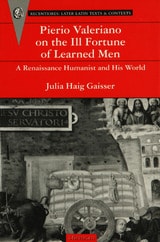
Pierio Valeriano on the Ill Fortune of Learned Men
A Renaissance Humanist and His WorldJulia Haig Gaisser
University of Michigan Press, 1999
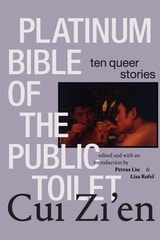
Platinum Bible of the Public Toilet
Ten Queer StoriesCui Zi'en. Edited and with an introduction by Petrus Liu and Lisa Rofel
Duke University Press, 2024
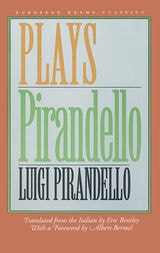
Plays
Luigi Pirandello
Northwestern University Press, 1998
“How has the art of theater managed to survive at all into the era of modernism and the era of what is currently, however ineptly, called postmodernism?” asks preeminent theater scholar Eric Bentley. “Through the work of [Luigi] Pirandello, I should think, more than any other single individual.”
Bentley’s English versions of four of Pirandello’s most celebrated plays—collected here for the first time—capture the playwright’s voice with remarkable perception. He has provided texts that are the standard for American productions, sensitive both to what is uniquely “Sicilian” in Pirandello’s language and to the rigors of the American stage.
Along with Pirandello’s better-known works, Six Characters in Search of an Author, Emperor Henry, and Right You Are, this edition includes the widely performed The Man with the Flower in His Mouth, unavailable in any other collection.
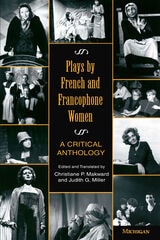
Plays by French and Francophone Women
A Critical AnthologyChristiane P. Makward and Judith G. Miller, Editors
University of Michigan Press, 1994
Plays by French and Francophone Women presents eight recent plays by contemporary French and francophone women writers. The plays vary in style and form from the satirical to the poetic, from the comedic one-woman show to the potential multi-media esoteric production, and have been written by French, Qué becois, Acadian, and Caribbean francophone writers. The editors have provided informative headnotes to introduce each play, then faithful translations rendered with an ear toward production in English. A general introduction to the volume situates each work within the broader context of contemporary French-language theater by women. The volume also includes an annotated bibliography by Cynthia Running-Johnson of thirty-one additional plays by women in French.
Featured plays and playwrights are The Scent of Sulphur by S. Corinna Bille; When Fairies Thirst by Denise Boucher; Island Memories by Ina Césaire; Warmth: A Bloodsong by Chantal Chawaf; The Goddess Lar or Centuries of Women by Andrée Chedid; The Name of Oedipus: Song of the Forbidden Body by Hélène Cixous; The Table: Womenspeak by Michèle Foucher; and The Rabble by Antonine Maillet.
Plotinus Ennead I.5
On Whether Well-Being Increases with Time: Translation with an Introduction and CommentaryDanielle A. Layne
Parmenides Publishing, 2023
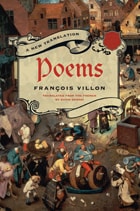
Poems
François Villon
Northwestern University Press, 2012
One of the most original and influential European poets of the Middle Ages, François Villon took his inspiration from the streets, taverns, and jails of Paris. Villon was a subversive voice speaking from the margins of society. He wrote about love and sex, money trouble, "the thieving rich," and the consolations of good food and wine. His work is striking in its directness, wit, and gritty urban realism. Villon’s writing spurred the development of the psychologically complex first-person voice in lyric poetry. He has influenced generations of avant-garde poets and artists. Arthur Rimbaud and Paul Verlaine have emulated Villon’s poetry. Claude Debussy set it to music, and Bertolt Brecht adapted it for the stage. Ezra Pound championed Villon’s poetry and became largely responsible for its impact on modern verse. With David Georgi’s ingenious translation, English-speaking audiences finally have a text that captures the riotous energy and wordplay of the original. With a newly revised French text that reflects the latest scholarship, this bilingual edition also features inviting and informative notes that illuminate the nuances of Villon’s poems and the world of medieval Paris.
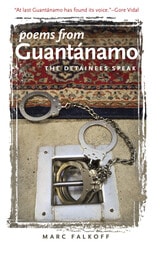
Poems from Guantanamo
The Detainees SpeakMarc Falkoff
University of Iowa Press, 2007
Since 2002, at least 775 men have been held in the U.S. detention center at Guantánamo Bay, Cuba. According to Department of Defense data, fewer than half of them are accused of committing any hostile act against the United States or its allies. In hundreds of cases, even the circumstances of their initial detainment are questionable.
This collection gives voice to the men held at Guantánamo. Available only because of the tireless efforts of pro bono attorneys who submitted each line to Pentagon scrutiny, Poems from Guantánamo brings together twenty-two poems by seventeen detainees, most still at Guantánamo, in legal limbo.
If, in the words of Audre Lorde, poetry “forms the quality of light within which we predicate our hopes and dreams toward survival and change,” these verses—some originally written in toothpaste, others scratched onto foam drinking cups with pebbles and furtively handed to attorneys—are the most basic form of the art.
Poems from the Greek Anthology
Expanded EditionTranslated, with a Foreword, by Kenneth Rexroth
University of Michigan Press, 1999
Friend to the Beats, organizer of the Six Gallery poetry reading in 1955, and iconoclastic poet extraordinare, Kenneth Rexroth here turns his imagination to a selection of verses from the Greek Anthology. In his lively style he successfully captures the spirit of the originals by such poets as Sappho, Anyte, Glykon, Antipatros, Leonidas, Askelpiades, and Ammianos. Students of the classics as well as poets and translators will welcome this collection for the insight and dexterity of its unconventional editor.
Kenneth Rexroth (1905-1982), poet, critic, and translator, is also noted for his translations from the Chinese and Japanese. Widely prolific, he helped usher in the Beat movement in the 1950s and is widely considered to have invented the idea of San Francisco as a center of literary innovation. David Mulroy is Associate Professor in the Department of Foreign Languages and Linguistics, University of Wisconsin, Milwaukee. He is the translator of Early Greek Lyric Poetry and Horace's Odes and Epodes.
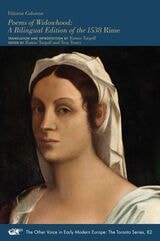
Poems of Widowhood
A Bilingual Edition of the 1538 "Rime"Vittoria Colonna
Iter Press, 2021
This volume presents the first complete English translation of the 1538 Rime and restores the original Italian texts from the blemished Parma printing and later composite editions, a boon to readers of both languages.
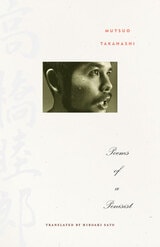
Poems of a Penisist
Mutsuo Takahashi
University of Minnesota Press, 2012
“In the name of / Man, member, / and the holy fluid, / Amen,” begins Mutsuo Takahashi’s epic one-thousand-line erotic fantasy poem, “Ode,” the centerpiece of his groundbreaking collection of queer poetry, Poems of a Penisist. Takahashi’s work, reminiscent of Walt Whitman’s, is a celebration of the male body, treating homosexual desire as something sacred. Stunningly beautiful and passionate, Poems of a Penisist is one of the most important compilations of homoerotic poetry written in the twentieth century.
Poems of the Five Mountains
An Introduction to the Literature of the Zen MonasteriesMarian Ury
University of Michigan Press, 1992
Poetic Justice
An Anthology of Contemporary Moroccan PoetryBy Deborah Kapchan
University of Texas Press, 2019
Poetic Justice is the first anthology of contemporary Moroccan poetry in English. The work is primarily composed of poets who began writing after Moroccan independence in 1956 and includes work written in Moroccan Arabic (darija), classical Arabic, French, and Tamazight.
Why Poetic Justice? Moroccan poetry (and especially zajal, oral poetry now written in Moroccan Arabic) is often published in newspapers and journals and is thus a vibrant form of social commentary; what’s more, there is a law, a justice, in the aesthetic act that speaks back to the law of the land. Poetic Justice because literature has the power to shape the cultural and moral imagination in profound and just ways.
Reading this oeuvre from independence until the new millennium and beyond, it is clear that what poet Driss Mesnaoui calls the “letters of time” have long been in the hands of Moroccan poets, as they write their ethics, their aesthetics, as well as their gendered and political lives into poetic being.
Poetics & Polemics
1980-2005Jerome Rothenberg
University of Alabama Press, 2008
Poetics & Polemics, 1980-2005 brings together in one volume a wide-ranging selection of essays and commentaries by one of the most significant poets, critics, and translators working with American and international poetry today.
Jerome Rothenberg’s work spans a period of over forty years and nearly one hundred books, and though perhaps best known as a poet, his critical and theoretical contributions to the fields of innovative, experimental poetry have become equally important facets of his work. Rothenberg’s earliest critical writings concerned themselves with ethnopoetics and the poetics of performance. In the last twenty years his critical thinking has evolved to encompass more explicitly issues of modernism, postmodernism, and the avant-garde, as well as meditations on the nature of the book and writing. This volume extends and elaborates all of those interests, allowing for the first time a comprehensive glimpse of the full trajectory of his thinking.
In the first section, “Poetics and Polemics,” Rothenberg’s essays address a range of issues with which he’s become closely associated, among them the anthology as a critical and polemical tool; the intersection of poetry with art, performance, and politics, in both contemporary and traditional practice; the poetics of Jewish mysticism as a traditional form of conceptual and language poetry; and the universality of poetic discourse, particularly as seen in tribal poetry or in poetic traditions long separated from the Western literary mainstream. In “A Gallery of Poets” is Rothenberg’s lively explorations of the work of other poets, as they relate to his own work, to avant-garde poetry in general, and to the poetic traditions that concern him the most. Finally, in “Dialogues and Interviews” are Rothenberg’s unbridled meditations and musings on what he calls “the life of poetry” outside the bounds of book and binding, class and category, a dynamic force at the center of all that we call human.
Points of the Compass
StoriesSahar Tawfiq
University of Arkansas Press, 1995
Polish Poetry of the Last Two Decades of Communist Rule
Spoiling Cannibals FunStanislaw Baranczak and Clare Cavanagh
Northwestern University Press, 1991
Politicizing Magic
An Anthology of Russian and Soviet Fairy TalesBalina/Goscilo/Lipovetsky
Northwestern University Press, 2005
We were born to make fairy tales come true. As one of Stalinism's more memorable slogans, this one suggests that the fairy tale figured in Soviet culture as far more than a category of children's literature. How much more-and how cannily Russian fairy tales reflect and interpret Soviet culture, especially in its utopian ambitions-becomes clear for the first time in Politicizing Magic, a compendium of folkloric, literary, and critical texts that demonstrate the degree to which ancient fairy-tale fantasies acquired political and historical meanings during the catastrophic twentieth century.
Introducing Western readers to the most representative texts of Russian folkloric and literary tales, this book documents a rich exploration of this colorful genre through all periods of Soviet literary production (1920-1985) by authors with varied political and aesthetic allegiances. Here are traditional Russian folkloric tales and transformations of these tales that, adopting the didacticism of Soviet ideology, proved significant for the official discourse of Socialist Realism. Here, too, are narratives produced during the same era that use the fairy-tale paradigm as a deconstructive device aimed at the very underpinnings of the Soviet system. The editors' introductory essays acquaint readers with the fairy-tale paradigm and the permutations it underwent within the utopian dream of Soviet culture, deftly placing each-from traditional folklore to fairy tales of Socialist Realism, to real-life events recast as fairy tales for ironic effect-in its literary, historical, and political context.
Preaching in the Age of Chaucer
Selected Sermons in Translation (Medieval Texts in Translation Series)Siegfried Wenzel
Catholic University of America Press, 2008
Precision and Soul
Essays and AddressesRobert Musil
University of Chicago Press, 1990
Best known as author of the novel The Man without Qualities, Robert Musil wrote these essays in Vienna and Berlin between 1911 and 1937. Offering a perspective on modern society and intellectual life, they are concerned with the crisis of modern culture as it manifests itself in science and mathematics, capitalism and nationalism, the changing roles of women and writers, and more. Writing to find his way in a world where moral systems everywhere were seemingly in decay, Musil strives to reconcile the ongoing conflict between functional relativism and the passionate search for ethical values.
Robert Musil was born in 1880 and died in 1942. His first novel, Young Törless, is available in English. A new two-volume translation by Burton Pike and Sophie Wilkins of The Man without Qualities is forthcoming from Alfred A. Knopf.
"Now we have these thirty-one invaluable and entertaining pieces, from an article on 'The Obscene and Pathological in Art' to the equally provocative talk 'On Stupidity,' which, with a new translation of The Man without Qualities forthcoming . . . amount to a literary event for the reader of English comparable to Constance Garnett's massive translation of Chekhov's stories."—Joseph Coates, Chicago Tribune
"Musil is one of the few great moderns, one of the handful who ventured to confront the issues that shape and define our time. . . . He has a range and a striking capacity every bit as great as that of Mann, Joyce, or Beckett."—Boston Review
"These essays are crucial in understanding a writer and critic whose lifelong task was an attempt to resolve the dichotomy between the precision of scientific form and the soul—the matter of life and art."—Choice
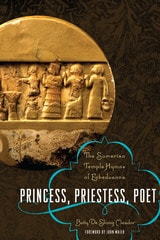
Princess, Priestess, Poet
The Sumerian Temple Hymns of EnheduannaBy Betty De Shong Meador
University of Texas Press, 2009
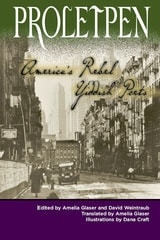
Proletpen
America’s Rebel Yiddish PoetsEdited by Amelia Glaser and David Weintraub
University of Wisconsin Press, 2005
This anthology presents a rich but little-known body of American Yiddish poetry from the 1920s to the early 1950s by thirty-nine poets who wrote from the perspective of the proletarian left. Presented on facing pages in Yiddish and English translation, these one hundred poems are organized thematically under such headings as Songs of the Shop, United in Struggle, Matters of the Heart, The Poet on Poetry, and Wars to End All Wars. One section is devoted to verse depicting the struggles of African Americans, including several poems prompted by the infamous Scottsboro trial of nine African American men falsely accused of rape. Home to many of the writers, New York City is the subject of a varied array of poems. The volume includes an extensive introduction by Dovid Katz, a biographical note about each poet, a bibliography, and a timeline of political, social, and literary events that provide context for the poetry.
Winner of the Fenia and Yaakov Leviant Memorial Prize in Yiddish Studies for Outstanding Translation
A Choice Outstanding Academic Title
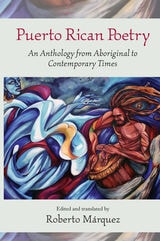
Puerto Rican Poetry
An Anthology from Aboriginal to Contemporary TimesRoberto Marquez
University of Massachusetts Press, 2007
This volume offers the most wide-ranging and comprehensive collection of Puerto Rican poetry available in English. It includes the work of sixty-four poets, as well as many previously inaccessible selections from Puerto Rico's tradition of popular verse forms—coplas, décimas, bombas—produced by anonymous writers. All are presented in English, contextualized and individually introduced by Roberto Márquez, a distinguished translator and literary scholar.
Book I, “Before Columbus and After, 1400–1820,” focuses on the foundational origins of Puerto Rican poetry and the clash of competing visions embodied in the rich and heterogeneous corpus of anonymous popular verse forms. Book II, “The Creole Matrix: Notions of Nation, 1821–1950s,” concentrates on the period in which a distinctively Puerto Rican consciousness emerged and the island's subsequent experience as a U. S. colony in the decades after the Spanish-Cuban-American War up to formal establishment of Commonwealth status. Books III and IV are devoted, respectively, to the era of insular “Critique, Revolt, and Renewal” in the mid-twentieth century, and to the “New Creoles, New Definitions” that developed in the late twentieth century, including the distinct and parallel growth of Puerto Rican poetry in the mainland United States.
In addition to a general introduction and concise biographical profiles of each poet, Márquez provides a detailed “Chronology” of the history of the island that has shaped the poets and informed their work. The resulting volume is a major contribution to our understanding and appreciation of Puerto Rican literature and the heterogeneous society in which it has been produced.
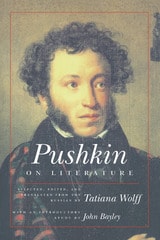
Pushkin on Literature
Tatiana Wolff
Northwestern University Press, 1998