Results by title
2284 books match the query 'Women' and 75 start with p
Paid to Party
Working Time and Emotion in Direct Home SalesMullaney, Jamie L
Rutgers University Press, 2012
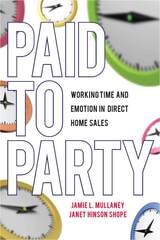
On any given night in living rooms across America, women gather for a fun girls’ night out to eat, drink, and purchase the latest products—from Amway to Mary Kay cosmetics. Beneath the party atmosphere lies a billion-dollar industry, Direct Home Sales (DHS), which is currently changing how women navigate work and family.
Drawing from numerous interviews with consultants and observations at company-sponsored events, Paid to Party takes a closer look at how DHS promises to change the way we think and feel about the struggles of balancing work and family. Offering a new approach to a flexible work model, DHS companies tell women they can, in fact, have it all and not feel guilty. In DHS, work time is not measured by the hands of the clock, but by the emotional fulfillment and fun it brings.
Panaceia's Daughters
Noblewomen as Healers in Early Modern GermanyAlisha Rankin
University of Chicago Press, 2013
Panic Fiction
Women and Antebellum Economic CrisisMary Templin
University of Alabama Press, 2014
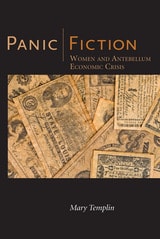
Between the mid-1830s and the late 1850s, authors such as Hannah Lee, Catharine Sedgwick, Eliza Follen, Maria McIntosh, and Maria Cummins wrote dozens of novels and stories depicting the effects of financial panic on the home and proposing solutions to economic instability. This unique body of antebellum American women’s writing, which integrated economic discourse with the language and conventions of domestic fiction, is what critic Mary Templin terms “panic fiction.”
In Panic Fiction: Antebellum Women Writers and Economic Crisis, Templin draws in part from the methods of New Historicism and cultural studies, situating these authors and their texts within the historical and cultural contexts of their time. She explores events surrounding the panics of 1837 and 1857, prevalent attitudes toward speculation and failure as seen in newspapers and other contemporaneous texts, women’s relationships to the marketplace, and the connections between domestic ideology and middle-class formation.
Although largely unknown today, the phenomena of “panic fiction” was extremely popular in its time and had an enormous influence on nineteenth-century popular conceptions of speculation, failure, and the need for marketplace reform, providing a distinct counterpoint to the analysis of panic found in newspapers, public speeches, and male-authored literary texts of the time.
Pankhurst
Jad Adams
Haus Publishing, 2003
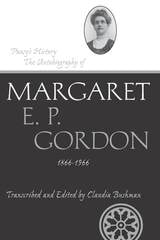
Pansy's History
The Autobiography of Margaret E. P. Gordon, 1866-1966Claudia L. Bushman
Utah State University Press, 2011
Margaret "Pansy" Gordon's life covered a remarkable span of years and territory. She lived one century, and the years took her from England to residences in British Columbia, Salt Lake City, and an Ojibway village on Georgian Bay; back to Utah and then Canada to homes at the shore of Bear Lake, on an Alberta farm, and in a prairie town; and to Los Angeles for the last decades of her life. She had gone to British Columbia as the daughter of an Anglican missionary to the Tsimshian Indians. She lived in Los Angeles as a Mormon missionary assigned to work as a genealogist. Her personal journey through repeated frontier adventures, religious service, and economic challenges is as worth noting as where she went, but it would be far less engaging if she did not write about it so well. Her memory for detail and her felicity in putting it to paper will reward those who delve into her "Family History," as she titled her memoir. Claudia L. Bushman, descendant of Pansy Gordon, author of numerous books, taught American studies at Columbia University for many years and taught Mormon studies at Claremont Graduate University from 2008 to 2011. She has included letters and other documents that complement this memoir.
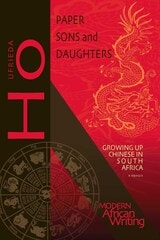
Paper Sons and Daughters
Growing up Chinese in South AfricaUfrieda Ho
Ohio University Press, 2011
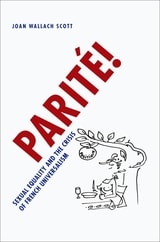
Parité!
Sexual Equality and the Crisis of French UniversalismJoan Wallach Scott
University of Chicago Press, 2005
During the 1990s, le mouvement pour la parité successfully campaigned for women's inclusion in elective office with an argument that is unprecedented in the annals of feminism. The paritaristes insisted that if the abstract individual were thought of as sexed, then sexual difference would no longer be a relevant consideration in politics. Scott insists that this argument was neither essentialist nor separatist; it was not about women's special qualities or interests. Instead, parité was rigorously universalist—and for that reason was both misunderstood and a source of heated debate.
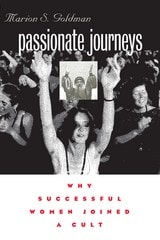
Passionate Journeys
Why Successful Women Joined a CultMarion S. Goldman
University of Michigan Press, 2001
Passionate Journeys explores the fascinating stories behind the Bhagwan Rajneesh phenomenon of the 1970s and 1980s, focusing on women who left families, careers, and identities to join the community of Rajneeshpuram. Rajneesh was a spiritual leader for thousands of young Americans, and in rural Oregon his devotees established a thriving community. Marion S. Goldman's extensive interviews with women who participated at Rajneeshpuram provide a fascinating picture of the cultural and social climate that motivated successful, established women to join such a movement.
Passionate Journeys will appeal to specialists in feminist theory and women's studies, sociology, religious studies, American studies, and the history of the Northwest.
Marion S. Goldman is Professor of Sociology, University of Oregon. She is also the author of Gold Diggers and Silver Miners: Prostitution and Social Life on the Comstock Lode.

Paternal Tyranny
Arcangela Tarabotti
University of Chicago Press, 2004
Paternal Tyranny, the first of these works, is a fiery but carefully argued manifesto against the oppression of women by the Venetian patriarchy. Denouncing key misogynist texts of the era, Tarabotti shows how despicable it was for Venice, a republic that prided itself on its political liberties, to deprive its women of rights accorded even to foreigners. She accuses parents of treating convents as dumping grounds for disabled, illegitimate, or otherwise unwanted daughters. Finally, through compelling feminist readings of the Bible and other religious works, Tarabotti demonstrates that women are clearly men's equals in God's eyes.
An avenging angel who dared to speak out for the rights of women nearly four centuries ago, Arcangela Tarabotti can now finally be heard.
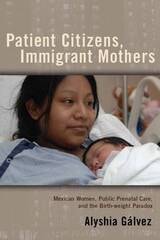
Patient Citizens, Immigrant Mothers
Mexican Women, Public Prenatal Care, and the Birth Weight ParadoxGalvez, Alyshia
Rutgers University Press, 2011
According to the Latina health paradox, Mexican immigrant women have less complicated pregnancies and more favorable birth outcomes than many other groups, in spite of socioeconomic disadvantage. Alyshia Gálvez provides an ethnographic examination of this paradox. What are the ways that Mexican immigrant women care for themselves during their pregnancies? How do they decide to leave behind some of the practices they bring with them on their pathways of migration in favor of biomedical approaches to pregnancy and childbirth?
This book takes us from inside the halls of a busy metropolitan hospital’s public prenatal clinic to the Oaxaca and Puebla states in Mexico to look at the ways Mexican women manage their pregnancies. The mystery of the paradox lies perhaps not in the recipes Mexican-born women have for good perinatal health, but in the prenatal encounter in the United States. Patient Citizens, Immigrant Mothers is a migration story and a look at the ways that immigrants are received by our medical institutions and by our society

Patterns of Persistence
Utah Women Legislators, 1993–2026Tiffany Greene and Marie Cornwall
University of Utah Press, 2027
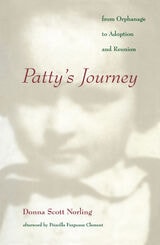
Patty’s Journey
From Orphanage To Adoption And ReunionDonna Scott Norling
University of Minnesota Press, 1998
The award-winning memoir of one woman’s struggles and triumphs to reclaim an identity she had lost.
This inspirational story of one girl’s search for a home is an engaging first-person narrative of life during the Great Depression and World War II. Readers and critics alike offer lavish praise for Norling’s graceful, simple prose and the heartbreaking, ultimately redemptive tale she shares.
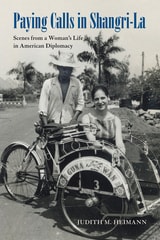
Paying Calls in Shangri-La
Scenes from a Woman’s Life in American DiplomacyJudith M. Heimann
Ohio University Press, 2016
Judith M. Heimann entered the diplomatic life in 1958 to join her husband, John, in Jakarta, Indonesia, at his American Embassy post. This, her first time out of the United States, would set her on a path across the continents as she mastered the fine points of diplomatic culture. She did so first as a spouse, then as a diplomat herself, thus becoming part of one of the Foreign Service’s first tandem couples.
Heimann’s lively recollections of her life in Africa, Asia, and Europe show us that when it comes to reconciling our government’s requirements with the other government’s wants, shuttle diplomacy, Skype, and email cannot match on-the-ground interaction. The ability to gauge and finesse gesture, tone of voice, and unspoken assumptions became her stock-in-trade as she navigated, time and again, remarkably delicate situations.
This insightful and witty memoir gives us a behind-the-scenes look at a rarely explored experience: that of one of the very first married female diplomats, who played an unsung but significant role in some of the important international events of the past fifty years. To those who know something of today’s world of diplomacy, Paying Calls in Shangri-La will be an enlightening tour through the way it used to be—and for aspiring Foreign Service officers and students, it will be an inspiration.
Published in association with ADST-DACOR Diplomats and Diplomacy Series

Pedagogies of Crossing
Meditations on Feminism, Sexual Politics, Memory, and the SacredM. Jacqui Alexander
Duke University Press, 2005
In these meditations, Alexander deftly unites large, often contradictory, historical processes across time and space. She focuses on the criminalization of queer communities in both the United States and the Caribbean in ways that prompt us to rethink how modernity invents its own traditions; she juxtaposes the political organizing and consciousness of women workers in global factories in Mexico, the Caribbean, and Canada with the pressing need for those in the academic factory to teach for social justice; she reflects on the limits and failures of liberal pluralism; and she presents original and compelling arguments that show how and why transgenerational memory is an indispensable spiritual practice within differently constituted women-of-color communities as it operates as a powerful antidote to oppression. In this multifaceted, visionary book, Alexander maps the terrain of alternative histories and offers new forms of knowledge with which to mold alternative futures.

Pedagogy of Democracy
Feminism and the Cold War in the U.S. Occupation of JapanMire Koikari
Temple University Press, 2009
Pedagogy of Democracy re-interprets the U.S. occupation of Japan from 1945 to 1952 as a problematic instance of Cold War feminist mobilization rather than a successful democratization of Japanese women as previously argued. By combining three fields of research—occupation, Cold War, and postcolonial feminist studies—and examining occupation records and other archival sources, Koikari argues that postwar gender reform was one of the Cold War containment strategies that undermined rather than promoted women’s political and economic rights.
Penelope’s Bones
A New History of Homer's World through the Women Written Out of ItEmily Hauser
University of Chicago Press, 2025
Weaving together literary and archaeological evidence, Emily Hauser illuminates the rich, intriguing lives of the real women behind Homer’s Iliad and Odyssey.
Achilles. Agamemnon. Odysseus. Hector. The lives of these and many other men in the greatest epics of ancient Greece have been pored over endlessly in the past three millennia. But these are not just tales about heroic men. There are scores of women as well—complex, fascinating women whose stories have gone unexplored for far too long.
In Penelope’s Bones, award-winning classicist and historian Emily Hauser pieces together compelling evidence from archaeological excavations and scientific discoveries to unearth the richly textured lives of women in Bronze Age Greece—the era of Homer’s heroes. Here, for the first time, we come to understand the everyday lives and experiences of the real women who stand behind the legends of Helen, Briseis, Cassandra, Aphrodite, Circe, Athena, Hera, Calypso, Penelope, and more. In this captivating journey through Homer’s world, Hauser explains era-defining discoveries, such as the excavation of Troy and the decipherment of Linear B tablets that reveal thousands of captive women and their children; more recent finds like the tomb of the Griffin Warrior at Pylos, whose tomb contents challenge traditional gender attributes; DNA evidence showing that groups of warriors buried near the Black Sea with their weapons and steeds were, in fact, Amazon-like female fighters; a prehistoric dye workshop on Crete that casts fresh light on “women’s work” of dyeing, spinning, and weaving textiles; and a superbly preserved shipwreck off the coast of Turkey whose contents tell of the economic and diplomatic networks crisscrossing the Bronze Age Mediterranean.
Essential reading for fans of Madeline Miller or Natalie Haynes, this riveting new history brings to life the women of the Bronze Age Aegean as never before, offering a groundbreaking reassessment of the ancient world.
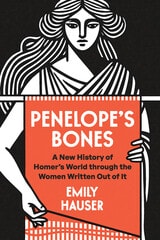
Penelope’s Bones
A New History of Homer’s World through the Women Written Out of ItEmily Hauser
University of Chicago Press, 2025
Achilles. Agamemnon. Odysseus. Hector. The lives of these and many other men in the greatest epics of ancient Greece have been pored over endlessly in the past three millennia. But these are not just tales about heroic men. There are scores of women as well—complex, fascinating women whose stories have gone unexplored for far too long.
In Penelope’s Bones, award-winning classicist and historian Emily Hauser pieces together compelling evidence from archaeological excavations and scientific discoveries to unearth the richly textured lives of women in Bronze Age Greece—the era of Homer’s heroes. Here, for the first time, we come to understand the everyday lives and experiences of the real women who stand behind the legends of Helen, Briseis, Cassandra, Aphrodite, Circe, Athena, Hera, Calypso, Penelope, and more. In this captivating journey through Homer’s world, Hauser explains era-defining discoveries, such as the excavation of Troy and the decipherment of Linear B tablets that reveal thousands of captive women and their children; more recent finds like the tomb of the Griffin Warrior at Pylos, whose tomb contents challenge traditional gender attributes; DNA evidence showing that groups of warriors buried near the Black Sea with their weapons and steeds were, in fact, Amazon-like female fighters; a prehistoric dye workshop on Crete that casts fresh light on “women’s work” of dyeing, spinning, and weaving textiles; and a superbly preserved shipwreck off the coast of Turkey whose contents tell of the economic and diplomatic networks crisscrossing the Bronze Age Mediterranean.
Essential reading for fans of Madeline Miller or Natalie Haynes, this riveting new history brings to life the women of the Bronze Age Aegean as never before, offering a groundbreaking reassessment of the ancient world.

Penny Loafers & Bobby Pins
Tales and Tips from Growing Up in the ’50s and ’60sSusan Sanvidge
Wisconsin Historical Society Press, 2010
“In the fifties, sleek Mixmasters were replacing rusty eggbeaters, and new pressure-cookers blew their tops in kitchens all over town. There were kids everywhere, and new ‘ranch-style’ houses filled vacant lots. . . . Turquoise Studebakers and dusty-rose Chevy BelAirs with flamboyant fins and lots of chrome replaced dark pre-war cars. Cameras took color snapshots instead of black-and-white. We wore red canvas tennis shoes and lemon yellow shorts, and bright blue popsicles melted down our chins.” —from the Introduction

Pentecostalism in Urban Oaxaca
Healing Patriarchy, Marriage, and MexicoMichelle Ramirez
University of Alabama Press, 2024
An ethnography focusing on a Pentecostal church community and their pursuit of healing marriages and prosperity
Pentecostalism in Urban Oaxaca is a timely feminist ethnography set in a Pentecostal church community in Oaxaca de Juarez. Based on extensive fieldwork, Michelle Ramirez skillfully melds medical anthropology with cultural analysis to reveal the Pentecostal movement’s dynamics in the contexts of faith healing, marital relations, and economic prosperity.
Ramirez takes stock of the problematic ways that Pentecostalism has played out for Mexican women today but also reminds readers of some of its successes. Within the context of Mexican patriarchy, some women parishioners in abusive relationships see the church as a way to improve their lot. Pentecostalism seeks to rupture with Mexico’s colonial heritage, and Ramirez provides novel ways for the reader to consider how Pentecostalism can provide healing for even the “endlessness of addiction.” One case study portrays a former abusive alcoholic womanizer who underwent a spiritual transformation as a result of his conversion. Through this example and more, Ramirez examines the complex relationship between gender, modernity, and Indigeneity in the context of marriage. The book also addresses the #MeToo movement as encountered in the Pentecostal church.
Finally, Ramirez investigates how Pentecostalism addresses the “curses” of illness and poverty, highlighting the paradoxical relationship between faith healing and curanderismo. The gospel of economic prosperity holds promise for a better life, breaking free from the “disease” of poverty. To this end, Ramirez profiles some parishioners’ involvement with Omnilife, a multilevel marketing company selling vitamins and natural health products that propounds ideals similar to those of Pentecostal Christianity.

Personal Writings Of Eliza Roxcy Snow
Maureen Beecher
Utah State University Press, 2000

Perspectives on Women in the 1980s
Joan Turner
University of Manitoba Press, 1983
Perspectives on Women's Archives
All rights reserved. No part of this publication may be reproduced, stored in a retrieval system, or transmitted in any form or by any means without prior permission from the publisher.
Society of American Archivists, 2013
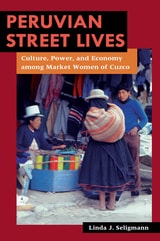
Peruvian Street Lives
Culture, Power, and Economy among Market Women of CuzcoLinda J. Seligmann
University of Illinois Press, 2004
In Peruvian Street Lives, Seligmann argues that the sometimes invisible and informal economic, social, and political networks market women establish may appear disorderly and chaotic, but in fact often keep dysfunctional economies and corrupt bureaucracies from utterly destroying the ability of citizens to survive from day to day. Seligmann asks why the constructive efforts of market women to make a living provoke such negative social perceptions from some members of Peruvian society, who see them as symbols and actual catalysts of social disorder. At the same time, Seligmann shows how market women eke out a living, combat discrimination, and transgress racial and gender ideologies within the rich and expressive cultural traditions they have developed.
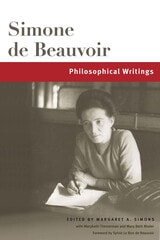
Philosophical Writings
Simone de Beauvoir; Edited by Margaret A. Simons with Marybeth Timmermann and Mary Beth Mader;Foreword by Sylvie Le Bon de Beauvoir
University of Illinois Press, 2021
Beauvoir's philosophical work suffers from a lack of English-language translation or, worse, mistranslation into heavily condensed popular versions. Philosophical Writings provides an unprecedented collection of complete, scholarly editions of philosophical texts that cover the first twenty-three years of Beauvoir's career, including a number of recently discovered works. Ranging from metaphysical literature to existentialist ethics, Philosophical Writings brings together diverse elements of Beauvoir's work while highlighting continuities in the development of her thought. Each of the translations features detailed notes and a scholarly introduction explaining its larger significance.
Revelatory and long overdue, Philosophical Writings adds to the ongoing resurgence of interest in Beauvoir's thought and to her growing influence on today's philosophical curriculum.
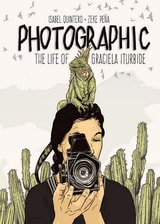
Photographic
The Life of Graciela IturbideIsabel Quintero
J. Paul Getty Trust, The, 2021
Renowned Mexican photographer Graciela Iturbide was born in Mexico City in 1942, the oldest of thirteen children. When tragedy strikes Graciela as a young mother, she turns to photography for solace and understanding.
From then on Graciela embarks on a photographic journey that takes her throughout her native Mexico, from the Sonora Desert to Juchitán to Frida Kahlo’s bathroom, and then to the United States, India, and beyond.
Photographic is a symbolic, poetic, and deeply personal graphic biography of this iconic photographer. Graciela’s journey will excite young adults and budding photographers, who will be inspired by her resolve, talent, and curiosity.
Ages twelve and up
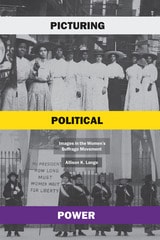
Picturing Political Power
Images in the Women’s Suffrage MovementAllison K. Lange
University of Chicago Press, 2020
For as long as women have battled for equitable political representation in America, those battles have been defined by images—whether illustrations, engravings, photographs, or colorful chromolithograph posters. Some of these pictures have been flattering, many have been condescending, and others downright incendiary. They have drawn upon prevailing cultural ideas of women’s perceived roles and abilities and often have been circulated with pointedly political objectives.
Picturing Political Power offers perhaps the most comprehensive analysis yet of the connection between images, gender, and power. In this examination of the fights that led to the ratification of the Nineteenth Amendment in 1920, Allison K. Lange explores how suffragists pioneered one of the first extensive visual campaigns in modern American history. She shows how pictures, from early engravings and photographs to colorful posters, proved central to suffragists’ efforts to change expectations for women, fighting back against the accepted norms of their times. In seeking to transform notions of womanhood and win the right to vote, white suffragists emphasized the compatibility of voting and motherhood, while Sojourner Truth and other leading suffragists of color employed pictures to secure respect and authority. Picturing Political Power demonstrates the centrality of visual politics to American women’s campaigns throughout the nineteenth and early twentieth centuries, revealing the power of images to change history.
Pillar of Salt
Gender, Memory, and the Perils of Looking BackHaaken, Janice
Rutgers University Press, 1998
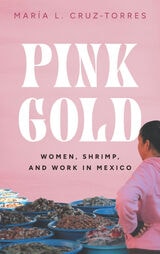
Pink Gold
Women, Shrimp, and Work in MexicoMaria L. Cruz-Torres
University of Texas Press, 2023
A rich, long-term ethnography of women seafood traders in Mexico.
The "shrimp ladies," locally known as changueras in southern Sinaloa, Mexico, sell seafood in open-air markets, forming an extralegal but key part of the economy built around this "pink gold.” Over time, they struggled to evolve from marginalized peddlers to local icons depicted in popular culture, even as they continue to work at an open-air street market.
Pink Gold documents the shrimp traders' resilience and resourcefulness, from their early conflicts with the city, state, and federal authorities and forming a union, to carving out a physical space for a seafood market, and even engaging in conflicts with the Mexican military. Drawing from her two decades of fieldwork, María L. Cruz-Torres explores the inspiring narrative of this overlooked group of women involving grassroots politics, trans-border and familial networking, debt and informal economic practices, personal sacrifices, and simple courage. She argues that, amid intense economic competition, their success relies on group solidarity that creates interlocking networks of mutual trust, or confianza, that in turn enable them to cross social and political boundaries that would typically be closed to them. Ultimately, Pink Gold offers fresh insights into issues of gender and labor, urban public space, the street economy, commodities, and globalization.

Pink Noises
Women on Electronic Music and SoundTara Rodgers
Duke University Press, 2010
Contemporary electronic music practices are illuminated through the stories of women artists of different generations and cultural backgrounds. They include the creators of ambient soundscapes, “performance novels,” sound sculptures, and custom software, as well as the developer of the Deep Listening philosophy and the founders of the Liquid Sound Lounge radio show and the monthly Basement Bhangra parties in New York. These and many other artists open up about topics such as their conflicted relationships to formal music training and mainstream media representations of women in electronic music. They discuss using sound to work creatively with structures of time and space, and voice and language; challenge distinctions of nature and culture; question norms of technological practice; and balance their needs for productive solitude with collaboration and community. Whether designing and building modular synthesizers with analog circuits or performing with a wearable apparatus that translates muscle movements into electronic sound, these artists expand notions of who and what counts in matters of invention, production, and noisemaking. Pink Noises is a powerful testimony to the presence and vitality of women in electronic music cultures, and to the relevance of sound to feminist concerns.
Interviewees: Maria Chavez, Beth Coleman (M. Singe), Antye Greie (AGF), Jeannie Hopper, Bevin Kelley (Blevin Blectum), Christina Kubisch, Le Tigre, Annea Lockwood, Giulia Loli (DJ Mutamassik), Rekha Malhotra (DJ Rekha), Riz Maslen (Neotropic), Kaffe Matthews, Susan Morabito, Ikue Mori, Pauline Oliveros, Pamela Z, Chantal Passamonte (Mira Calix), Maggi Payne, Eliane Radigue, Jessica Rylan, Carla Scaletti, Laetitia Sonami, Bev Stanton (Arthur Loves Plastic), Keiko Uenishi (o.blaat)
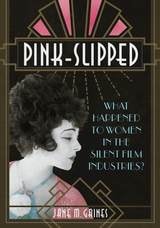
Pink-Slipped
What Happened to Women in the Silent Film Industries?Jane M Gaines
University of Illinois Press, 2018
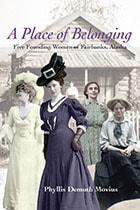
Place of Belonging
Five Founding Women of Fairbanks, AlaskaPhyllis Demuth Movius
University of Alaska Press, 2009
Alaska has always attracted people from varied backgrounds. In A Place of Belonging, Phyllis Movius introduces us to five women who settled in Fairbanks between 1903 and 1923 and who typify the disparate population that has long enriched Alaska. The women’s daily lives and personal stories are woven together in these biographical portraits, drawn from the women’s letters, memoirs, personal papers, club records, their own oral histories and published writings. Enriched by many never-before-published historical photos, Movius’s research gives us a unique inroad into life on the frontier.

Places in the Dark
Short StoriesLidmila Kábrtová
Seagull Books, 2025
Following her divorce, Tereza shuts off emotionally and flits from one faceless lover to the next, until an unexpected visitor shakes her existence to the core. Klara is a bird trapped in a golden cage slowly suffocating her. Eva has sacrificed herself for her children and family. Life is one big party for Karla—or is it? Alice is doing everything she can not to be a crybaby like her mother. Petra has finally had enough and takes drastic measures. Magdalena’s true yearnings bubble up to the surface.
The stories of these six characters may be different, but these women’s paths converge throughout Places in the Dark, weaving a vivid tapestry of interconnected lives. Czech author Lidmila Kábrtová is a master of writing stories of astonishing clarity. Echoing the brilliance of Alice Munro, Kábrtová’s words act as translucent veils, allowing the essential truths to shimmer through. Moments move about on tectonic plates somewhere beneath the surface of the everyday, and nothing will be as it used to be. Yet, in this kaleidoscope of narratives, the question lingers: Was it ever truly as it seemed?
Plaintext
EssaysNancy Mairs
University of Arizona Press, 1986
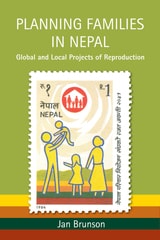
Planning Families in Nepal
Global and Local Projects of ReproductionBrunson, Jan
Rutgers University Press, 2016
Planting the Garden
An Annotated Archival Bibliography of the History of Women in ManitobaMary Kinnear
University of Manitoba Press, 1987
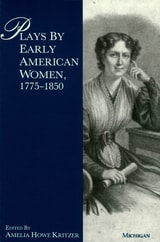
Plays by Early American Women, 1775-1850
Amelia Howe Kritzer, Editor
University of Michigan Press, 1995

Plural Wife
The Life Story of Mabel Finlayson AllredMabel Finlayson Allred, author, and Martha Sonntag Bradley, editor
Utah State University Press, 2012
Mabel Finlayson Allred was a wife of Rulon Allred, leader of the Apostolic United Brethren, one of the major groups of fundamentalist Mormons who, since about the 1930s, have practiced plural marriage as separatists from the mainstream Latter-day Saints Church.
Mabel’s autobiography maintains a mood of everyday normalcy strikingly in contrast with the stress of the ostracized life she was living. Her cheerful tone, expressive of her wish to live simply and gracefully in this world, is tempered by more somber descriptions of her personal struggle with clinical depression, of Rulon Allred’s inner struggles, of tensions with the law and with Allred’s fundamentalist colleagues, and ultimately by her forthright account of his assassination.
Emerging from this unique narrative is the portrait of a woman buoyed by faith in both her religion and her husband, a window into the interior life of a woman seeking a resilient simplicity in an uncommonly challenging life.
Plural Wife, conntextualized by Martha Bradley’s introduction, gives us insight into Mabel’s experience of history during an important period of the 20th century and advances our understanding of life ways of 20th century polygamy and the growth of the fundamentalist movement.
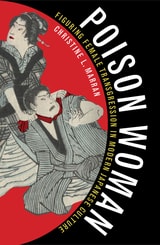
Poison Woman
Figuring Female Transgression in Modern Japanese CultureChristine L. Marran
University of Minnesota Press, 2007
Based on the lives and crimes of no less than twenty real women, dokufu (poison women) narratives emerged as a powerful presence in Japan during the 1870s. During this tumultuous time, as the nation moved from feudalism to oligarchic government, such accounts articulated the politics and position of underclass women, sexual morality, and female suffrage. Over the next century, the figure of the oversexed female criminal, usually guilty of robbery or murder, became ubiquitous in modern Japanese culture.
In Poison Woman, Christine L. Marran investigates this powerful icon, its shifting meanings, and its influence on defining women’s sexuality and place in Japan. She begins by considering Meiji gesaku literature, in which female criminality was often medically defined and marginalized as abnormal. She describes the small newspapers (koshinbun) that originally reported on poison women, establishing journalistic and legal conventions for future fiction about them. She examines zange, or confessional narratives, of female and male ex-convicts from the turn of the century, then reveals how medical and psychoanalytical literature of the 1920s and 1930s offered contradictory explanations of the female criminal as an everywoman or a historical victim of social circumstances and the press. She concludes by exploring postwar pulp fiction (kasutori), film and underground theater of the 1970s, and the feminist writer Tomioka Taeko’s take on the transgressive woman.
Persistent stories about poison women illustrate how a few violent acts by women were transformed into myriad ideological, social, and moral tales that deployed notions of female sexual desire and womanhood. Bringing together literary criticism, the history of science, media theory, and gender and sexuality studies, Poison Woman delves into genre and gender in ways that implicate both in projects of nation-building.
Christine L. Marran is associate professor of Japanese literature and cultural studies at the University of Minnesota.
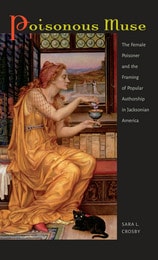
Poisonous Muse
The Female Poisoner and the Framing of Popular Authorship in Jacksonian AmericaSara L. Crosby
University of Iowa Press, 2016
This difference in outcome doesn’t mean that poisonous women didn’t preoccupy Americans. In the decades following Andrew Jackson’s first presidential bid, Americans buzzed over women who used poison to kill men. They produced and devoured reams of ephemeral newsprint, cheap trial transcripts, and sensational “true” pamphlets, as well as novels, plays, and poems. Female poisoners served as crucial elements in the literary manifestos of writers from Nathaniel Hawthorne and Edgar Allan Poe to George Lippard and the cheap pamphleteer E. E. Barclay, but these characters were given a strangely positive spin, appearing as innocent victims, avenging heroes, or engaging humbugs.
The reason for this poison predilection lies in the political logic of metaphor. Nineteenth-century Britain strove to rein in democratic and populist movements by labeling popular print “poison” and its providers “poisoners,” drawing on centuries of established metaphor that negatively associated poison, women, and popular speech or writing. Jacksonian America, by contrast, was ideologically committed to the popular—although what and who counted as such was up for serious debate. The literary gadfly John Neal called on his fellow Jacksonian writers to defy British critical standards, saying, “Let us have poison.” Poisonous Muse investigates how they answered, how they deployed the figure of the female poisoner to theorize popular authorship, to validate or undermine it, and to fight over its limits, particularly its political, gendered, and racial boundaries.
Poisonous Muse tracks the progress of this debate from approximately 1820 to 1845. Uncovering forgotten writers and restoring forgotten context to well-remembered authors, it seeks to understand Jacksonian print culture from the inside out, through its own poisonous language.
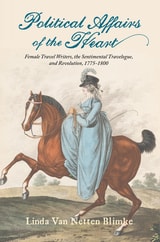
Political Affairs of the Heart
Female Travel Writers, the Sentimental Travelogue, and Revolution, 1775-1800Linda Van Netten Blimke
Bucknell University Press, 2022

Political Attitudes over the Life Span
The Bennington Women after Fifty YearsDuane F. Alwin
University of Wisconsin Press, 1992
The culmination of one of the most famous long-term studies in American sociology, this examination of political attitudes among women who attended Bennington College in the 1930s and 1940s now spans five decades, from late adolescence to old age. Theodore Newcomb’s 1930s interviews at Bennington, where the faculty held progressive views that contrasted with those of the conservative families of the students, showed that political orientations are still quite malleable in early adulthood. The studies in 1959-60 and 1984 show the persistence of political attitudes over the adult life span: the Bennington women, raised in conservative homes, were liberalized in their college years and have remained politically involved and liberal in their views, even in their sixties and seventies.
Here the authors analyze the earlier studies and then introduce the 1984 data. Using data from National Election Studies for comparison, they show that the Bennington group is more liberal and hold its opinions more intensely than both older and younger Americans, with the exception of the generation that achieved political maturity in the 1960s. The authors point out that the majority of the Bennington women’s children are of this 1945–54 generation and suggest that this factor played an important role in the stability of the women’s political views. Within their own generation, the Bennington women also appear to hold stronger political views than other college-educated women.
Innovative in its methodology and extremely rich in its data, this work will contribute to developmental and social psychology, sociology, political science, women’s studies, and gerontology.
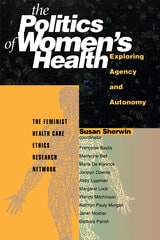
Politics Of Women's Health
Susan Sherwin
Temple University Press, 1998
Rather than focusing on types of medical interventions, The Politics of Women's Health asks what feminist health care ethics looks like if we start with women's experiences and concerns. It begins to unravel two key concepts of women's empowerment -- agency and autonomy -- that apply to all areas of concern to women.

Pope John Paul II Speaks on Women
Brooke Williams Deely
Catholic University of America Press, 2014
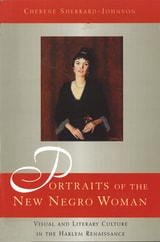
Portraits of the New Negro Woman
Visual and Literary Culture in the Harlem RenaissanceCherene M. Sherrard-Johnson
Rutgers University Press, 2007
Of all the images to arise from the Harlem Renaissance, the most thought-provoking were those of the mulatta. For some writers, artists, and filmmakers, these images provided an alternative to the stereotypes of black womanhood and a challenge to the color line. For others, they represented key aspects of modernity and race coding central to the New Negro Movement. Due to the mulatta’s frequent ability to pass for white, she represented a variety of contradictory meanings that often transcended racial, class, and gender boundaries.
In this engaging narrative, Cherene Sherrard-Johnson uses the writings of Nella Larsen and Jessie Fauset as well as the work of artists like Archibald Motley and William H. Johnson to illuminate the centrality of the mulatta by examining a variety of competing arguments about race in the Harlem Renaissance and beyond.
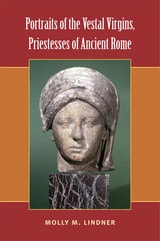
Portraits of the Vestal Virgins, Priestesses of Ancient Rome
Molly M. Lindner
University of Michigan Press, 2015
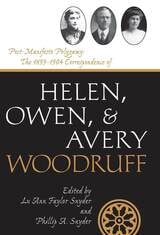
Post-Manifesto Polygamy
The 1899 to 1904 Correspondence of Helen, Owen and Avery WoodruffLu Ann Faylor Snyder and Phillip A. Snyder
Utah State University Press, 2009
These letters among two women and their husband offer a rare look into the personal dynamics of an LDS polygamous relationship. Abraham “Owen” Woodruff was a young Mormon apostle, the son of President Wilford Woodruff, remembered for the Woodruff Manifesto, which called for the divinely inspired termination of plural marriage. It eased a systematic federal judicial assault on Mormons and made Utah statehood possible. It did not end polygamy in the church. Some leaders continued to encourage and perform such marriages. Owen Woodruff himself contracted a secretive, second marriage to Avery Clark. Pressure on the LDS church revived with hearings regarding Reed Smoot’s seat in the U. S. Senate. After church president Joseph F. Smith issued the so-called Second Manifesto in 1904, polygamy and its more prominent advocates were mostly expunged from mainstream Mormonism. Owen Woodruff was not excommunicated, as a couple of his apostolic colleagues were. He and his first wife, Helen May Winters, had died suddenly that same year after contracting smallpox in Mexico. Owen Woodruff had often been “on the underground,” moving frequently, traveling under secret identities, and using code names in his letters to his wives, while still carrying out his administrative duties, which, in particular, involved supervision of the nascent Mormon colonies in the Big Horn Basin of Wyoming.

Post-Soviet Chaos
Violence and Dispossession in KazakhstanJoma Nazpary
Pluto Press, 2001

Postfeminist War
Women in the Media-Military-Industrial ComplexMary Douglas Vavrus
Rutgers University Press, 2019
Power Lines
and Other StoriesJane Bradley
University of Arkansas Press, 1989
Power and Everyday Life
The Lives of Working Women in Nineteenth-Century BrazilDias, Maria Odila Silva
Rutgers University Press, 1995
This important new work is a study of the everyday lives of the inhabitants of São Paulo in the nineteenth century. Full of vivid detail, the book concentrates on the lives of working women--black, white, Indian, mulatta, free, freed, and slaves, and their struggles to survive. Drawing on official statistics, and on the accounts of travelers and judicial records, the author paints a lively picture of the jobs, both legal and illegal, that were performed by women. Her research leads to some surprising discoveries, including the fact that many women were the main providers for their families and that their work was crucial to the running of several urban industries. This book, which is a unique record of women’s lives across social and race strata in a multicultural society, should be of interest to students and researchers in women’s studies, urban studies, historians, geographers, economists, sociologists, and anthropologists.