Results by title
28167 books match the query 'History' and 1297 start with p
Places of Public Memory
The Rhetoric of Museums and MemorialsEdited by Greg Dickinson, Carole Blair, and Brian L. Ott
University of Alabama Press, 2010
A sustained and rigorous consideration of the intersections of memory, place, and rhetoric
Though we live in a time when memory seems to be losing its hold on communities, memory remains central to personal, communal, and national identities. And although popular and public discourses from speeches to films invite a shared sense of the past, official sites of memory such as memorials, museums, and battlefields embody unique rhetorical principles.
Places of Public Memory: The Rhetoric of Museums and Memorials is a sustained and rigorous consideration of the intersections of memory, place, and rhetoric. From the mnemonic systems inscribed upon ancient architecture to the roadside accident memorials that line America’s highways, memory and place have always been deeply interconnected. This book investigates the intersections of memory and place through nine original essays written by leading memory studies scholars from the fields of rhetoric, media studies, organizational communication, history, performance studies, and English. The essays address, among other subjects, the rhetorical strategies of those vying for competing visions of a 9/11 memorial at New York City’s Ground Zero; rhetorics of resistance embedded in the plans for an expansion of the National Civil Rights Museum; representations of nuclear energy—both as power source and weapon—in Cold War and post–Cold War museums; and tours and tourism as acts of performance.
By focusing on “official” places of memory, the collection causes readers to reflect on how nations and local communities remember history and on how some voices and views are legitimated and others are minimized or erased.
Places of Quiet Beauty
Parks, Preserves, and EnvironmentalismRebecca Conard
University of Iowa Press, 1997
Resource protection and public recreation policies have always been subject to the shifting winds of management philosophy governing both national and state parks. Somewhere in the balance, however, parks and preserves have endured as unique places of mind as well as matter. Places of Quiet Beauty allows us to see parks and preserves, forests and wildlife refuges—all those special places that the term “park” conjures up—as measures of our own commitment to caring for the environment. In this broad-ranging book, historian Rebecca Conard examines the complexity of American environmentalism in the twentieth century as manifest in Iowa's state parks and preserves.
Places of Their Own
African American Suburbanization in the Twentieth CenturyAndrew Wiese
University of Chicago Press, 2005
For most people, this cozy image of suburbia does not immediately evoke images of African Americans. But as this pioneering work demonstrates, the suburbs have provided a home to black residents in increasing numbers for the past hundred years—in the last two decades alone, the numbers have nearly doubled to just under twelve million. Places of Their Own begins a hundred years ago, painting an austere portrait of the conditions that early black residents found in isolated, poor suburbs. Andrew Wiese insists, however, that they moved there by choice, withstanding racism and poverty through efforts to shape the landscape to their own needs. Turning then to the 1950s, Wiese illuminates key differences between black suburbanization in the North and South. He considers how African Americans in the South bargained for separate areas where they could develop their own neighborhoods, while many of their northern counterparts transgressed racial boundaries, settling in historically white communities. Ultimately, Wiese explores how the civil rights movement emboldened black families to purchase homes in the suburbs with increased vigor, and how the passage of civil rights legislation helped pave the way for today's black middle class.
Tracing the precise contours of black migration to the suburbs over the course of the whole last century and across the entire United States, Places of Their Own will be a foundational book for anyone interested in the African American experience or the role of race and class in the making of America's suburbs.
Winner of the 2005 John G. Cawelti Book Award from the American Culture
Association.
Winner of the 2005 Award for Best Book in North American Urban
History from the Urban History Association.
Placing Aesthetics
Reflections on the Philosophic TraditionRobert E. Wood
Ohio University Press, 2000
Examining select high points in the speculative tradition from Plato and Aristotle through the Middle Ages and German tradition to Dewey and Heidegger, Placing Aesthetics seeks to locate the aesthetic concern within the larger framework of each thinker’s philosophy.
In Professor Robert Wood’s study, aesthetics is not peripheral but rather central to the speculative tradition and to human existence as such. In Dewey’s terms, aesthetics is “experience in its integrity.” Its personal ground is in “the heart,” which is the dispositional ground formed by genetic, cultural , and personal historical factors by which we are spontaneously moved and, in turn, are inclined to move, both practically and theoretically, in certain directions.
Prepared for use by the student as well as the philosopher, Placing Aesthetics aims to recover the fullness of humanness within a sense of the fullness of encompassing Being. It attempts to overcome the splitting of thought, even in philosophy, into exclusive specializations and the fracturing of life itself into theoretical, practical, and emotive dimensions.
Placing Papers
The American Literary Archives MarketAmy Hildreth Chen
University of Massachusetts Press, 2020
The market for contemporary authors' archives began when research libraries needed to cheaply provide primary sources for the swelling number of students and faculty following World War II. Demand soon grew, and while writers and their families found new opportunities to make money, so too did book dealers and literary agents with the foresight to pivot their businesses to serve living authors. Public interest surrounding celebrity writers had exploded by the late twentieth century, and as Placing Papers illustrates, even the best funded institutions were forced to contend with the facts that acquiring contemporary literary archives had become cost prohibitive and increasingly competitive.
Placing the Enlightenment
Thinking Geographically about the Age of ReasonCharles W. J. Withers
University of Chicago Press, 2007
The Enlightenment was the age in which the world became modern, challenging tradition in favor of reason, freedom, and critical inquiry. While many aspects of the Enlightenment have been rigorously scrutinized—its origins and motivations, its principal characters and defining features, its legacy and modern relevance—the geographical dimensions of the era have until now largely been ignored. Placing the Enlightenment contends that the Age of Reason was not only a period of pioneering geographical investigation but also an age with spatial dimensions to its content and concerns.
Investigating the role space and location played in the creation and reception of Enlightenment ideas, Charles W. J. Withers draws from the fields of art, science, history, geography, politics, and religion to explore the legacies of Enlightenment national identity, navigation, discovery, and knowledge. Ultimately, geography is revealed to be the source of much of the raw material from which philosophers fashioned theories of the human condition.
Lavishly illustrated and engagingly written, Placing the Enlightenment will interest Enlightenment specialists from across the disciplines as well as any scholar curious about the role geography has played in the making of the modern world.
Plague Among the Magnolias
The 1878 Yellow Fever Epidemic in MississippiDeanne Stephens Nuwer
University of Alabama Press, 2009
Plague Writing in Early Modern England
Ernest B. Gilman
University of Chicago Press, 2009
During the seventeenth century, England was beset by three epidemics of the bubonic plague, each outbreak claiming between a quarter and a third of the population of London and other urban centers. Surveying a wide range of responses to these epidemics—sermons, medical tracts, pious exhortations, satirical pamphlets, and political commentary—Plague Writing in Early Modern England brings to life the many and complex ways Londoners made sense of such unspeakable devastation.
Ernest B. Gilman argues that the plague writing of the period attempted unsuccessfully to rationalize the catastrophic and that its failure to account for the plague as an instrument of divine justice fundamentally threatened the core of Christian belief. Gilman also trains his critical eye on the works of Jonson, Donne, Pepys, and Defoe, which, he posits, can be more fully understood when put into the context of this century-long project to “write out” the plague. Ultimately, Plague Writing in Early Modern England is more than a compendium of artifacts of a bygone era; it holds up a distant mirror to reflect our own condition in the age of AIDS, super viruses, multidrug resistant tuberculosis, and the hovering threat of a global flu pandemic.
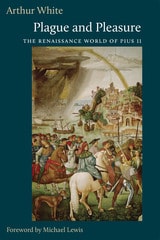
Plague and Pleasure
The Renaissance World of Pius IIArthur White
Catholic University of America Press, 2014
Plain Folk
The Life Stories of Undistinguished AmericansEdited by David M. Katzman and William M. Tuttle, Jr.
University of Illinois Press, 1982
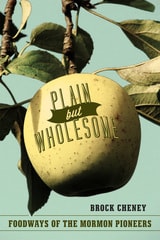
Plain but Wholesome
Foodways of the Mormon PioneersBrock Cheney
University of Utah Press, 2012
Plain But Wholesome presents a groundbreaking foray into Mormon history. Brock Cheney explores the foodways of Mormon pioneers from their trek west through the arrival of the railroad and reveals new perspectives on the fasci-nating Mormon settlement era. Relying on original diaries, newspaper accounts, and recipe books from the 1850s, Cheney draws a vivid portrait of what Mormon pioneers ate and drank. Although other authors have sketched the subject before, this portrait is the first effort that might be described as scholarly, though the lively prose will interest a broad general audience.
Presented here are the first explicit descriptions of the menus, food processes, and recipes of the Mormon pioneers. While many have supposed that earlier pioneer foodways continued to be handed down through Mormon families, Cheney has confirmed traditions going back generations and covering more than a century. The book also exposes myths and clichés about pioneer piety and hardships, as Cheney examines such pioneer extravagances as fresh “oysters on the half shell” and pioneer trends of alcohol consumption.
A perfect gift for the history buff or Dutch oven chef, Plain But Wholesome will also prove its place among scholars and historians. With its rollicking blend of historical source material and modern interpretation, this book will entertain and educate novice and expert alike.
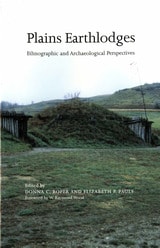
Plains Earthlodges
Ethnographic and Archaeological PerspectivesEdited by Donna C. Roper and Elizabeth P. Pauls
University of Alabama Press, 2005
A survey of Native American earthlodge research from across the Great Plains.
Early explorers initially believed the earthlodge homes of Plains village peoples were made entirely of earth. Actually, however, earthlodges are timber-frame structures, with the frame covered by successive layers of willows, grass, and earth, and with a tunnel-like entryway and a smoke hole in the center of the roof. The products of nearly a millennium of engineering development, historic period lodges were massively built. With diameters up to 60 feet across, they comprise the largest and most complex artifacts built on the Plains until the 20th century. Sheltering nuclear or extended families and their possessions—beds, stored food and clothing, weapons, sweatlodges, and even livestock—they shaped Plains villagers' lives both physically and symbolically.
This collection of papers explores current research in the ethnography and archaeology of Plains earthlodges, considering a variety of Plains tribes, including the Mandan, Hidatsa, Cheyenne, and their late prehistoric period predecessors. Acknowledged experts in the field discuss topics including lodge construction, architecture, maintenance, deterioration, and lifespan; the ritual practices performed in them; their associations with craft traditions, medicine lodges, and the Sun Dance; their gender symbolism; and their geophysical signatures.
With technological advances allowing an ever greater recognition of archaeological evidence in situ, future earthlodge research will yield even more information on their owners and residents. This volume provides a much-needed baseline for such research as well as comparative data for the occurrence of earthlodges in other sections of North America.
Contributors:
Jennifer R. Bales, Donald J. Blakeslee, Kenneth L. Kvamme, Stephen C. Lensink, Margot P. Liberty, Elizabeth P. Pauls, Donna C. Roper, Michael Scullin, W. Raymond Wood
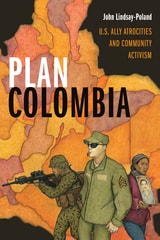
Plan Colombia
U.S. Ally Atrocities and Community ActivismJohn Lindsay-Poland
Duke University Press, 2018
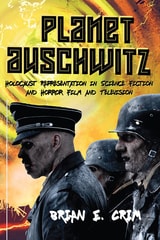
Planet Auschwitz
Holocaust Representation in Science Fiction and Horror Film and TelevisionBrian E. Crim
Rutgers University Press, 2020
Planet Auschwitz website (https://planetauschwitz.com)
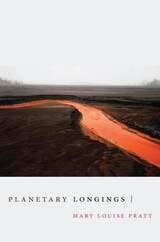
Planetary Longings
Mary Louise Pratt
Duke University Press, 2022
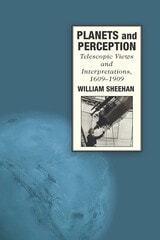
Planets and Perception
Telescopic Views and Interpretations, 1609-1909William Sheehan
University of Arizona Press, 1988
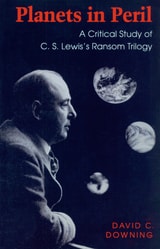
Planets in Peril
A Critical Study of C. S. Lewis's Ransom TrilogyDavid C. Downing
University of Massachusetts Press, 1992
A critical study of C.S. Lewis's “Ransom Trilogy” which analyses Lewis's methods and meanings, concentrating on this trilogy but also including relevant secondary work. Lewis's literary scholarship and display of Christian values are incorporated into this discussion.
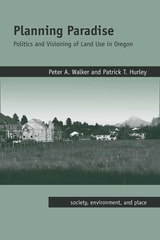
Planning Paradise
Politics and Visioning of Land Use in OregonBy Peter A. Walker and Patrick T. Hurley
University of Arizona Press, 2011
Oregon is one of the nation’s most celebrated exceptions. In the early 1970s Oregon established the nation’s first and only comprehensive statewide system of land-use planning and largely succeeded in confining residential and commercial growth to urban areas while preserving the state’s rural farmland, forests, and natural areas. Despite repeated political attacks, the state’s planning system remained essentially politically unscathed for three decades. In the early- and mid-2000s, however, the Oregon public appeared disenchanted, voting repeatedly in favor of statewide ballot initiatives that undermined the ability of the state to regulate growth. One of America’s most celebrated “success stories” in the war against sprawl appeared to crumble, inspiring property rights activists in numerous other western states to launch copycat ballot initiatives against land-use regulation.
This is the first book to tell the story of Oregon’s unique land-use planning system from its rise in the early 1970s to its near-death experience in the first decade of the 2000s. Using participant observation and extensive original interviews with key figures on both sides of the state’s land use wars past and present, this book examines the question of how and why a planning system that was once the nation’s most visible and successful example of a comprehensive regulatory approach to preventing runaway sprawl nearly collapsed.
Planning Paradise is tough love for Oregon planning. While admiring much of what the state’s planning system has accomplished, Walker and Hurley believe that scholars, professionals, activists, and citizens engaged in the battle against sprawl would be well advised to think long and deeply about the lessons that the recent struggles of one of America’s most celebrated planning systems may hold for the future of land-use planning in Oregon and beyond.
Planning White Supremacy
Civil Rights and City Planning in Montgomery, Alabama, 1920–1970Rebecca Coleen Retzlaff
University of Alabama Press, 2026
An unflinching account of how city planning was deployed to enforce white supremacy in Montgomery, Alabama—the birthplace of the Civil Rights Movement—and how Black activists fought back, block by neighborhood block.
At the heart of the Civil Rights Movement was a city meticulously designed to enforce inequality. In Planning White Supremacy: Civil Rights and City Planning in Montgomery, Alabama, 1920–1970, Rebecca Coleen Retzlaff traces how city officials used the tools of modern planning—zoning, infrastructure, housing codes, public investment, and highway construction—to suppress political power, economic opportunity, and spatial freedom for Black citizens.
As the birthplace of the Civil Rights Movement, Montgomery became a battleground where urban planning and direct-action protest collided, shaping the city’s culture in ways that still resonate today. Retzlaff’s analysis exposes the calculated use of municipal power to control land use, displace Black communities, keep schools and neighborhoods segregated, and preserve white political dominance. By placing urban planning at the center of Montgomery’s story, this groundbreaking work reframes the movement not only as a fight for voting rights and legal equality, but as a struggle for space, housing, mobility, education, and the right to live with dignity. Retzlaff also highlights the resilience and joy of the close-knit Black neighborhoods that nurtured the civil rights activists who changed history.
Retzlaff reveals how urban planning decisions systematically targeted Black neighborhoods, reinforcing racial inequality under the guise of modernization. With historical depth and critical insight, Planning White Supremacy situates Montgomery within the broader context of American urban history—offering a vital perspective on the intersection of race, space, and power. Essential for scholars of urban planning, history, and racial justice, this book also provides urgent insight into how these legacies continue to shape cities and Black socioeconomic opportunities today.

Planning a New West
The Columbia River Gorge National Scenic AreaCarl Abbott
Oregon State University Press, 1997
Planning as Persuasive Storytelling
The Rhetorical Construction of Chicago's Electric FutureJames A. Throgmorton
University of Chicago Press, 1996
Planning the City upon a Hill
Boston since 1630Lawrence W. Kennedy
University of Massachusetts Press, 1992
Planning the Home Front
Building Bombers and Communities at Willow RunSarah Jo Peterson
University of Chicago Press, 2013
Plant Evolution
An Introduction to the History of LifeKarl J. Niklas
University of Chicago Press, 2016
Tapping such wide-ranging topics as genetics, gene regulatory networks, phenotype mapping, and multicellularity, as well as paleobotany, Karl J. Niklas’s Plant Evolution offers fresh insight into these differences. Following up on his landmark book The Evolutionary Biology of Plants—in which he drew on cutting-edge computer simulations that used plants as models to illuminate key evolutionary theories—Niklas incorporates data from more than a decade of new research in the flourishing field of molecular biology, conveying not only why the study of evolution is so important, but also why the study of plants is essential to our understanding of evolutionary processes. Niklas shows us that investigating the intricacies of plant development, the diversification of early vascular land plants, and larger patterns in plant evolution is not just a botanical pursuit: it is vital to our comprehension of the history of all life on this green planet.
Plant Foods of Greece
A Culinary Journey to the Neolithic and Bronze AgesSoultana Maria Valamoti
University of Alabama Press, 2023
2024 INAUGURAL MARY BEAUDRY BOOK AWARD FOR THE ARCHAEOLOGY OF FOOD
A synthesis of culinary practices of prehistoric Greece based on plant food ingredients
In Plant Foods of Greece, Greek archaeologist Soultana Maria Valamoti takes readers on a culinary journey, reconstructing the plant foods and culinary practices of Neolithic and Bronze Age Greece. For more than thirty years, she has been analyzing a large body of archaeobotanical data that was retrieved from nearly twenty sites in mainland Greece and the Greek islands, with an additional analysis of other sites as referenced by published colleagues. Plant foods were the main ingredients of daily meals in prehistoric Greece and most likely of special dishes prepared for feasts and rituals.
Valamoti’s approach allows an exploration of culinary variability through time. The thousands of charred seeds identified from occupation debris correspond to minuscule time capsules. She is able to document changes from the cooking of the first farmers to the sophisticated cuisines of the elites who inhabited palaces in the first cities of Europe in the south of Greece during the Late Bronze Age. Along the way, she explains the complex processes for the addition of new ingredients (such as millet and olives), condiments, sweet tastes, and complex recipes. Valamoti also addresses regional variability and diversity as well as detailing experimentation and research using occasional input from ancient written sources.
Comprehensive and synthetic coverage encompasses bread/cereals, pulses, oils, fruit and nuts, fermented brews, healing foods, cooking, and identity. In addition, Valamoti offers insight into engaging in public archaeology and provides recipes that incorporate ancient plant ingredients and connect prehistory to the present in a critical way. A definitive source for a range of food scientists and scholars, it will also appeal to foodies.
Plant a Pocket of Prairie
Phyllis Root
University of Minnesota Press, 2014
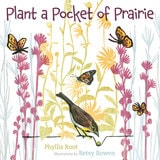
Author Phyllis Root and illustrator Betsy Bowen last explored the vast, boggy peatlands of northern Minnesota in their book Big Belching Bog. Now, in Plant a Pocket of Prairie, Root and Bowen take young readers on a trip to another of Minnesota’s important ecosystems: the prairie.
Once covering almost 40 percent of the United States, native prairie is today one of the most endangered ecosystems in the world. Plant a Pocket of Prairie teaches children how changes in one part of the system affect every other part: when prairie plants are destroyed, the animals who eat those plants and live on or around them are harmed as well. Root shows what happens when we work to restore the prairies, encouraging readers to “plant a pocket of prairie” in their own backyards.
By growing native prairie plants, children can help re-create food and habitat for the many birds, butterflies, and other animals that depend on them. “Plant cup plants,” Root suggests. “A thirsty chickadee might come to drink from a tiny leaf pool. Plant goldenrod. A Great Plains toad might flick its tongue at goldenrod soldier beetles.” An easy explanation of the history of the prairie, its endangered status, and how to go about growing prairie plants follows, as well as brief descriptions of all the plants and animals mentioned in the story.
With Betsy Bowen’s beautiful, airy illustrations capturing the feel of an open prairie and all its inhabitants, readers of all ages will be inspired to start planting seeds and watching for the many fascinating animals their plants attract. What a marvelous transformation could take place if we all planted a pocket of prairie!
Plantation Agriculture and Social Control in Northern Peru, 1875–1933
By Michael J. Gonzales
University of Texas Press, 1985
During the late nineteenth and early twentieth centuries, the social, economic, and political landscape of Peru was transformed profoundly. Within a decade of the country’s disastrous defeat by Chile during the War of the Pacific, the export economy was recovering on the strength of a variety of agricultural and mineral products. The sugar industry played a pivotal role in this process and produced wealthy and socially ambitious families who became prominent political leaders on the national level.
This study, based primarily on previously unavailable private records of sugarcane plantations, examines the external and internal dynamics of the sugar industry. It offers new insights into the process of land consolidation, the economics of sugar technology and production, the formation of the coastal elite, and the organization, recruitment, and control of labor. By focusing on the plantation Cayalti within a regional context, Gonzales presents one of the richest descriptions of the modern plantation for any region of Latin America. The book is a vivid social history of laborers from a variety of racial and ethnic backgrounds, from Chinese to Peruvians of Indian, mestizo, and black heritage.
Plantation Goods
A Material History of American SlaverySeth Rockman
University of Chicago Press, 2024
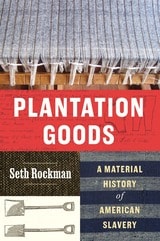
The industrializing North and the agricultural South—that’s how we have been taught to think about the United States in the early nineteenth century. But in doing so, we overlook the economic ties that held the nation together before the Civil War. We miss slavery’s long reach into small New England communities, just as we fail to see the role of Northern manufacturing in shaping the terrain of human bondage in the South. Using plantation goods—the shirts, hats, hoes, shovels, shoes, axes, and whips made in the North for use in the South—historian Seth Rockman locates the biggest stories in American history in the everyday objects that stitched together the lives and livelihoods of Americans—white and Black, male and female, enslaved and free—across an expanding nation.
By following the stories of material objects, such as shoes made by Massachusetts farm women that found their way to the feet of a Mississippi slave, Rockman reveals a national economy organized by slavery—a slavery that outsourced the production of its supplies to the North, and a North that outsourced its slavery to the South. Melding business and labor history through powerful storytelling, Plantation Goods brings northern industrialists, southern slaveholders, enslaved field hands, and paid factory laborers into the same picture. In one part of the country, entrepreneurs envisioned fortunes to be made from “planter’s hoes” and rural women spent their days weaving “negro cloth” and assembling “slave brogans.” In another, enslaved people actively consumed textiles and tools imported from the North to contest their bondage. In between, merchants, marketers, storekeepers, and debt collectors laid claim to the profits of a thriving interregional trade.
Examining producers and consumers linked in economic and moral relationships across great geographic and political distances, Plantation Goods explores how people in the nineteenth century thought about complicity with slavery while showing how slavery structured life nationwide and established a modern world of entrepreneurship and exploitation. Rockman brings together lines of American history that have for too long been told separately, as slavery and capitalism converge in something as deceptively ordinary as a humble pair of shoes.
Plantation Goods
A Material History of American SlaverySeth Rockman
University of Chicago Press, 2024
A Pulitzer Prize finalist in History, this eye-opening rethinking of nineteenth-century American history reveals the interdependence of the Northern industrial economy and Southern slave labor.
The industrializing North and the agricultural South—that’s how we have been taught to think about the United States in the early nineteenth century. But in doing so, we overlook the economic ties that held the nation together before the Civil War. We miss slavery’s long reach into small New England communities, just as we fail to see the role of Northern manufacturing in shaping the terrain of human bondage in the South. Using plantation goods—the shirts, hats, hoes, shovels, shoes, axes, and whips made in the North for use in the South—historian Seth Rockman locates the biggest stories in American history in the everyday objects that stitched together the lives and livelihoods of Americans—white and Black, male and female, enslaved and free—across an expanding nation.
By following the stories of material objects, such as shoes made by Massachusetts farm women that found their way to the feet of a Mississippi slave, Rockman reveals a national economy organized by slavery—a slavery that outsourced the production of its supplies to the North, and a North that outsourced its slavery to the South. Melding business and labor history through powerful storytelling, Plantation Goods brings northern industrialists, southern slaveholders, enslaved field hands, and paid factory laborers into the same picture. In one part of the country, entrepreneurs envisioned fortunes to be made from “planter’s hoes” and rural women spent their days weaving “negro cloth” and assembling “slave brogans.” In another, enslaved people actively consumed textiles and tools imported from the North to contest their bondage. In between, merchants, marketers, storekeepers, and debt collectors laid claim to the profits of a thriving interregional trade.
Examining producers and consumers linked in economic and moral relationships across great geographic and political distances, Plantation Goods explores how people in the nineteenth century thought about complicity with slavery while showing how slavery structured life nationwide and established a modern world of entrepreneurship and exploitation. Rockman brings together lines of American history that have for too long been told separately, as slavery and capitalism converge in something as deceptively ordinary as a humble pair of shoes.
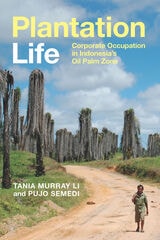
Plantation Life
Corporate Occupation in Indonesia's Oil Palm ZoneTania Murray Li and Pujo Semedi
Duke University Press, 2021
Plantation Worlds
Maan Barua
Duke University Press, 2024
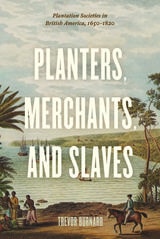
Planters, Merchants, and Slaves
Plantation Societies in British America, 1650-1820Trevor Burnard
University of Chicago Press, 2015
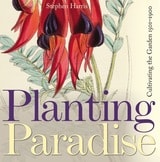
Planting Paradise
Cultivating the Garden, 1501-1900Stephen Harris
Bodleian Library Publishing, 2011
Beautifully illustrated, Planting Paradise charts the evolution of thinking about the cultivation of gardens from the sixteenth to the nineteenth centuries. In this age of discovery, when the world was being explored as never before, gardening itself took on new dimensions. The Renaissance belief in direct observation of nature offered an alternative way of thinking and inspired the scientific approach of the Enlightenment, and soon gardens were no longer just places of beauty, but also laboratories for scientific investigation.
Planting Paradise reveals how the botanic gardens of early modern Europe were largely viewed as a means of supplying surgeons with medicines but by the seventeenth and eighteenth century the interest in gardens and cultivating exotic plants had spread to all levels of society. As global exploration took Europeans all over the world, gardens became a tapestry of many diverse botanical histories—some plants were native, some were introduced from foreign lands, and others were bred in the garden. Planting Paradise shows how the garden became a symbol of human interactions within the botanical world.
A lovely gift book for garden lovers, Planting Paradise showcases the superb collection of botanical illustrations in the Plant Sciences Department and Bodleian Library, University of Oxford, and presents a handsome and fascinating look at the history of the garden from the picturesque to the practical and back again.

Planting the Garden
An Annotated Archival Bibliography of the History of Women in ManitobaMary Kinnear
University of Manitoba Press, 1987
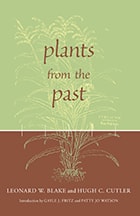
Plants from the Past
Works Of Leonard W. Blake & Hugh C. CutlerLeonard W. Blake and Hugh C. Cutler; With an Introduction by Gayle J. Fritz and Patty Jo Watson
University of Alabama Press, 2001
Plants from the Past is a fascinating, comprehensive record of the work of two dedicated plant scientists who were instrumental in the establishment of archaeobotany and paleoethnobotany as vigorous subdisciplines within American archaeology. Hugh Carson Cutler and Leonard Watson Blake worked together for many decades at the Missouri Botanical Garden in St. Louis, identifying and interpreting plant remains from archaeological sites all over North America.
Covering a period of 30 years and tracing the development of the study of plant remains from archaeological sites, the volume will give archaeologists access to previously unavailable data and interpretations. It features the much-sought-after extensive inventory "Plants from Archaeological Sites East of the Rockies," which serves as a reference to archaeobotanical collections curated at the Illinois State Museum. The chapters dealing with protohistory and early historic foodways and trade in the upper Midwest are especially relevant at this time of increasing attention to early Indian-white interactions.
The editors' introduction provides coherence and historical context for the papers and points to the book's potential as a resource for future research. Graced by Dr. Blake's brief introductions to each chapter, Plants from the Past neatly compiles the earliest research in archaeobotany by two originators of the science.
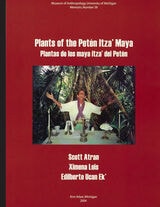
Plants of the Petén Itza’ Maya
Plantas de los maya itza’ del PeténScott Atran, Ximena Lois and Edilberto Ucan Ek'
University of Michigan Press, 2004
Plasticity in the Life Sciences
Antonine Nicoglou
University of Chicago Press, 2024
Plasticity has become an important topic in biology, with some even wondering if it has now acquired the theoretical importance in biology that the concept of the gene enjoyed at the beginning of the last century. In this historical and epistemological study, philosopher Antonine Nicoglou shows how the recurrence of the general idea of plasticity—throughout the history of the life sciences—indicates its essential role in the way we think about life processes. Although plasticity has become a key element in new evolutionary thinking, she argues, its role in contemporary biology is also not insignificant. Rather, as mobilized in contemporary biology, plasticity most often seeks to account for the specific nature of living systems.
The book is divided into two parts. The first takes up the history of plasticity from Aristotle to contemporary biology; the second part offers an original way of distinguishing between different phenomena described by “plasticity.” In the process, the author explores what has led some biologists to speak of plasticity as a way of overcoming genetic determinism.
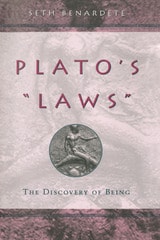
Plato's "Laws"
The Discovery of BeingSeth Benardete
University of Chicago Press, 2001
An insightful commentary on Plato’s Laws, his complex final work.
The Laws was Plato’s last work, his longest, and one of his most difficult. In contrast to the Republic, which presents an abstract ideal, the Laws appears to provide practical guidelines for the establishment and maintenance of political order in the real world. Classicist Seth Benardete offers a rich analysis of each of the twelve books of the Laws, which illuminates Plato’s major themes and arguments concerning theology, the soul, justice, and education.
Most importantly, Benardete shows how music in a broad sense, including drama, epic poetry, and even puppetry, mediates between reason and the city in Plato’s philosophy of law. Benardete also uncovers the work’s concealed ontological dimension, explaining why it is hidden and how it can be brought to light. In establishing the coherence and underlying organization of Plato’s last dialogue, Benardete makes a significant contribution to Platonic studies.

Platte River Road Narratives
A Descriptive Bibliography of Travel Over the Great Central Overland Route to Oregon, California, Utah, Colorado, Montana, and Other Western States and Territories, 1812-1866Merrill J. Mattes
University of Illinois Press, 1988
This massive annotated bibliography of all known significant eyewitness accounts of nineteenth-century central overland travel fills a conspicuous gap in historical literature, and will greatly accelerate research, writing, and collecting.
Platte River Road Narratives includes not only all identifiable overland accounts, but also a number of those identifiable in manuscript form only. Over 2,000 entries identify the author, the form of the passage, overland trip, and give Matte's authoritative commentary and evaluation, as well as identification of the repository of the source material.
Plautus' Poenulus
A Student CommentaryErin K. Moodie
University of Michigan Press, 2015
—Radd Ehrman, Kent State University
Play Me Something Quick and Devilish
Old-Time Fiddlers in MissouriHoward Wight Marshall
University of Missouri Press, 2012
Beginning with the French villages on the Mississippi River, Marshall leads us chronologically through the settlement of the state and how these communities established our cultural heritage. Other core populations include the “Old Stock Americans” (primarily Scotch-Irish from Kentucky, Tennessee, North Carolina, and Virginia), African Americans, German-speaking immigrants, people with American Indian ancestry (focusing on Cherokee families dating from the Trail of Tears in the 1830s), and Irish railroad workers in the post–Civil War period. These are the primary communities whose fiddle and dance traditions came together on the Missouri frontier to cultivate the bounty of old-time fiddling enjoyed today.
Marshall also examines regional styles in Missouri fiddling and comments on the future of this time-honored, and changing, tradition. Documentary in nature, this social history draws on various academic disciplines and oral histories recorded in Marshall’s forty-some years of research and field experience. Historians, music aficionados, and lay people interested in Missouri folk heritage—as well as fiddlers, of course—will find Play Me Something Quick and Devilish an entertaining and enlightening read.
With 39 tunes, the enclosed Voyager Records companion CD includes a historic sampler of Missouri fiddlers and styles from 1955 to 2012.

Play in the Age of Goethe
Theories, Narratives, and Practices of Play around 1800Edgar Landgraf
Bucknell University Press, 2020
Published by Bucknell University Press. Distributed worldwide by Rutgers University Press.
Playa Works
The Myth of the EmptyWilliam L. Fox
University of Nevada Press, 2024
In eight brilliant essays, Fox explores many of the major playas of the American West , examining locations as diverse as Nellis Air Force Base and Frenchman Flat, where the federal government has tested experimental aircraft and atomic weaponry; the Great Salt Lake Desert, where land-speed records have been broken; and the Black Rock Desert of Northern Nevada, site of the colorful Burning Man arts festival. He analyzes the geological and climatological conditions that created the playas and the historical role that playas played in the exploration and settlement of the West. And he offers lucid and keenly perceptive discussions of the ways that artists have responded to the playas, from the ancient makers of geoglyphs to the work of contemporary artists who have found inspiration in these enigmatic spaces, including earthworks builder Michael Heizer, photographer Richard Misrach, and painter Michael Moore. The ensemble is a compelling combination of natural history, philosophy, and art criticism, a thoughtful meditation on humankind's aversion to and fascination with the void.
Playback
By Richard "Cactus" Pryor
University of Texas Press, 1995
From the town that brought you Molly Ivins, Liz Carpenter, John Henry Faulk, and Greater Tuna, here's Cactus Pryor. For decades, Cactus' wit and wisdom have delighted radio listeners, as well as the many social, political, business, and philanthropic groups throughout the United States whose functions have been enlivened by this accomplished master of ceremonies and after-dinner speaker.
Now the University of Texas Press takes great pleasure in bringing you this quintessential Texas humorist. Playback gathers over forty of Cactus Pryor's favorite radio essays, translating "ear words into eye words," as he puts it. In these pieces, Cactus paints vivid word pictures of people and places, offering readers the same "you are there" immediacy that makes his radio broadcasts so popular. In them, you'll take a sentimental journey with Cactus and his wife to the Maui grave site of Charles Lindbergh—discover how legendary University of Texas football coach Darrell Royal faced the agony of defeat with humor—meet unsung heroes like the 104-year-old who's teaching himself to read and write—get acquainted with the notable folks Cactus has known, including Lady Bird Johnson, John Wayne, Jane Fonda, and James Michener—and, of course, share Cactus' love of family, friends, and the Texas coast.
As Bailey White's essays on National Public Radio have introduced listeners across the country to the lifeways of the Deep South, so Cactus Pryor offers a humorous, revealing look at how we Texans view ourselves, our neighbors, and the world. Read Playback now, and see what you've been missing.
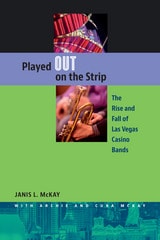
Played Out on the Strip
The Rise and Fall of Las Vegas Casino BandsJanis L. McKay
University of Nevada Press, 2016
From 1940 to 1989, nearly every hotel on the Las Vegas Strip employed a full-time band or orchestra. After the late 1980s, when control of the casinos changed hands from independent owners to corporations, almost all of these musicians found themselves unemployed. Played Out on the Strip traces this major shift in the music industry through extensive interviews with former musicians.
In 1989, these soon-to-be unemployed musicians went on strike. Janis McKay charts the factors behind this strike, which was precipitated by several corporate hotel owners moving to replace live musicians with synthesizers and taped music, a strategic decision made in order to save money. The results of this transitional period in Las Vegas history were both long-lasting and far-reaching for the entertainment industry. With its numerous oral history interviews and personal perspectives from the era, this book will appeal to readers interested in Las Vegas history, music history, and labor issues.

Players, Teams, and Stadium Ghosts
Bob Hunter on SportsBob Hunter
Ohio University Press, 2019
In Players, Teams, and Stadium Ghosts, sportswriter Bob Hunter has assembled a Hall of Fame collection of his best writing from the Columbus Dispatch. Fans will encounter some of the biggest names in sports and relive great moments from games played by amateurs and pros. They’ll encounter forgotten players and teams that struggled.
Hunter shows us LeBron James when he was a 15-year-old high school freshman, already capturing the world’s attention; 20-year-old Derek Jeter’s meteoric rise through the minors, including the Columbus Clippers; a strange encounter with Pete Rose hustling frozen pizzas; and the excitement of watching future WNBA star Katie Smith dominate a Columbus Quest championship game. The common thread is the personal touch that Hunter consistently uses to take readers beyond the final scores and the dazzle of lights. These are the people behind the athletes. They’re remembered for how they played, but Hunter reminds us who they were.
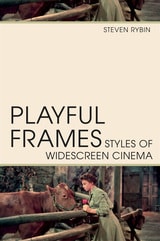
Playful Frames
Styles of Widescreen CinemaSteven Rybin
Rutgers University Press, 2024
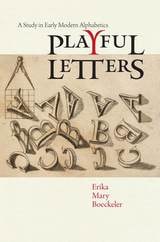
Playful Letters
A Study in Early Modern AlphabeticsErika Mary Boeckeler
University of Iowa Press, 2017
Drawing on Shakespeare, anthropomorphic typography, figured letters, and Cyrillic pedagogy and politics, this book explores the ways in which alphabetic thinking and writing inform literature and the visual arts, and it develops reading strategies for the “letterature” that underwrites such cultural production. Playful Letters begins with early modern engagements with the alphabet and the human body—an intersection where letterature emerges with startling force. The linking of letters and typography with bodies produced a new kind of literacy. In turn, educational habits that shaped letter learning and writing permeated the interrelated practices of typography, orthography, and poetry. These mutually informing processes render visible the persistent crumbling of words into letters and their reconstitution into narrative, poetry, and image.
In addition to providing a rich history of literary and artistic alphabetic interrogation in early modern Western Europe and Russia, Playful Letters contributes to the continuous story of how people use new technologies and media to reflect on older forms, including the alphabet itself.

Playgrounds to the Pros
Legends of Peoria BasketballJeff Karzen
University of Illinois Press, 2023
Howard Nathan. A. J. Guyton. Sergio McClain. Marcus Griffin. Frank Williams. Shaun Livingston. This dazzling constellation of talent helped make Peoria a prep basketball hotbed from the 1980s to the 2000s. Jeff Karzen takes readers inside the lives of the players, coaches, and others who defined an era that produced six state titles and four Illinois Mr. Basketball winners.
Drawing on dozens of in-depth interviews, Karzen tells the stories behind the on-court triumphs while providing a panorama of the entire Peoria scene--the rivalries and relationships, the families and friendships, the hopes and hard work. Karzen also follows the players into their Division 1 and NBA careers and pays special attention to the pipeline that, by connecting Peoria to Champaign-Urbana, powered one of the most successful periods in Fighting Illini basketball history.
Intense and intimate, Playgrounds to the Pros chronicles a basketball golden age in America’s quintessential blue collar town.

Playhouse to Powerhouse
Locating Black Power Women and their Movement in the Black TheatreKerry Goldmann
University of Arkansas Press, 2025
In Playhouse to Powerhouse, Kerry L. Goldmann explores the Black theatre movement through the lens of three significant women-led theatres that are still in operation today: Nora Vaughn’s Black Repertory Group in Berkeley, Barbara Ann Teer’s National Black Theatre in Harlem, and George Hawkins and Eileen Morris’s Ensemble Theatre in Houston. Goldmann concludes with a discussion of the current moment, examining contemporary obstacles such as gentrification, the co-opting of Black theatres, and the impact of COVID-19.
This remarkable work sheds light on the foundational role that Vaughn, Teer, and Morris played in the Black cultural revolution of the mid- to late twentieth century, securing theatre houses that thrived in multiple capacities as sites for revolution organizing, revenue generation for communal uplift, and unapologetic Black cultural representation.