Results by title
3576 books match the query 'American' and 162 start with p
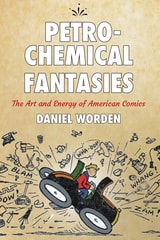
Petrochemical Fantasies
The Art and Energy of American ComicsDaniel Worden
The Ohio State University Press, 2024
Finalist, Comics Studies Society Charles Hatfield Book Prize 2025
Nominee, Eisner Award for Best Academic/Scholarly Work 2025
In Petrochemical Fantasies, Daniel Worden reveals the entwined history of comics and fossil fuels in the United States. From the 1840s to the present, comics have depicted the power, pollution, and rapid expansion of energy systems—especially the explosive growth of coal and oil. In the 1930s, some of the first comic books were the gas station giveaways Gulf Funny Weekly and Standard Oil Comics. And in recent years, comics have become one of the major sites for visualizing life after oil, a striking reversal of the medium’s early boosterism.
Surveying the work of acclaimed artists such as Nell Brinkley, George Herriman, Jack Kirby, Winsor McCay, and R. F. Outcault and recovering little-known works, Worden advances a new history of American comics in the Anthropocene. From late nineteenth- and early twentieth-century editorial cartoons and superhero comics that visualize our modern energy culture to contemporary comics grappling with climate crises, Petrochemical Fantasies places comics, environmental humanities, and energy studies in conversation with each other to unearth the crucial but overlooked history of comics’ place in US energy culture.
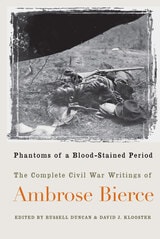
Phantoms of a Blood-Stained Period
The Complete Civil War Writings of Ambrose BierceJames Russell Duncan
University of Massachusetts Press, 2002
Philadelphia Murals & Stories They Tell
Jane Golden
Temple University Press, 2002
Philip Guston's Poor Richard
Debra Bricker Balken
University of Chicago Press, 2001
A visual narrative of Nixon's life, the drawings trace Nixon from his childhood, through his ascent to power, to his years in the White House. They incorporate Henry Kissinger (a pair of glasses), Spiro Agnew (a cone-head), and John Mitchell (a dolt smoking a pipe). They depict Nixon and his cohorts in China, plotting strategy in Key Biscayne, and shamelessly pandering to African Americans, hippies, and elderly tourists.
As Balken discusses in her accompanying essay, these drawings also reflect a dramatic transformation in Guston's work. In response to social unrest and the Vietnam War, he began to question the viability of a private art given to self-expression. His betrayal of aesthetic abstraction in favor of imagery imbued with personal and political meaning largely engendered the renewal of figuration in painting in America in the 1970s. These drawings not only represent one of the few instances of an artist in the late twentieth century engaging caricature in his work, they are also a witty, acerbic take on a corrupt figure and a scandalous political regime.
Photographing Eden
PoemsJason Gray
Ohio University Press, 2008
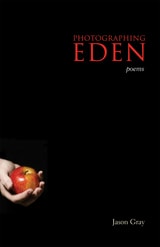
Photographing Eden presents the first full-length collection of poems by a major new talent. The work meditates on several ideas, the crux of which is Eden: spirituality, environmentalism, and the relationships between men and women. Observing, often through the lens of a camera, our state in the world, the poems try to focus sharply on what often seems a blur. The poems are always attentive to artistic mediums and the craft behind them because our struggle is to make something perfect in the imperfect world in which we live, while acknowledging the impossibility of that quest. Gray’s poems range all over, from adventures in Egyptian ruins with machine-gun-toting tourist police to the western edge of the foggy Irish coastline, and to the mythic past, where Adam and Eve visit a zoo and Eden has become a nature preserve.
Phyllis Shand Allfrey
A Caribbean LifeParavisini-Gebert, Lizabeth
Rutgers University Press, 1996
Physics Envy
American Poetry and Science in the Cold War and AfterPeter Middleton
University of Chicago Press, 2015
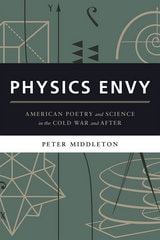
In Physics Envy, Peter Middleton examines the influence of science, particularly physics, on American poetry since World War II. He focuses on such diverse poets as Charles Olson, Muriel Rukeyser, Amiri Baraka, and Rae Armantrout, among others, revealing how the methods and language of contemporary natural and social sciences—and even the discourse of the leading popular science magazine Scientific American—shaped their work. The relationship, at times, extended in the other direction as well: leading physicists such as Robert Oppenheimer, Werner Heisenberg, and Erwin Schrödinger were interested in whether poetry might help them explain the strangeness of the new, quantum world. Physics Envy is a history of science and poetry that shows how ultimately each serves to illuminate the other in its quest for the true nature of things.
Piano in the Dark
Nancy Naomi Carlson
Seagull Books, 2023
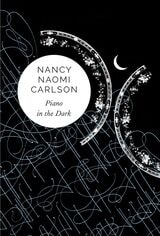
This latest book of wonders from Nancy Naomi Carlson fixes upon one of the few defenses we have to confront the body’s betrayals—our words. Though in the end, even the world’s last word “forgets its name . . . has no word for this forgetting.” At once vulnerable and open, tempered and tempted equally by the erotic and the empathic, such dualities limn these affectingly beautiful and lyrical poems. Carlson’s lines, entreating as Scheherazade, “weave chords / into tales within tales, whirlpools within seas” to save her life. Indeed, music has no need for voice or harp, as “in anechoic chambers, you become / the only instrument of your worldly sounds,” echoing Mozart’s credo “that music lies / in the silence between notes.” In a world scarred by pandemics, wars, and violent tribalism, the givens are gone—“talismans we clung to, believing / we might be spared in some way / by marking our doors / with our own sacrificial blood.” In these unflinching free and formal verse poems, Carlson seduces us with the promise of the joy yet to be had, were we to look in the right places.
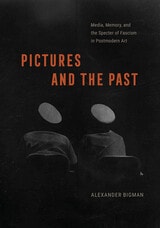
Pictures and the Past
Media, Memory, and the Specter of Fascism in Postmodern ArtAlexander Bigman
University of Chicago Press, 2024
A fresh take on the group of artists known as the Pictures Generation, reinterpreting their work as haunted by the history of fascism, the threat of its return, and the effects of its recurring representation in postwar American culture.
The artists of the Pictures Generation, converging on New York City in the late 1970s, indelibly changed the shape of American art. Rebelling against abstraction, they borrowed liberally from the aesthetics of mass media and sometimes the work of other artists. It has long been thought that the group’s main contribution was to upend received conceptions of authorial originality. In Pictures and the Past, however, art critic and historian Alexander Bigman shows that there is more to this moment than just the advent of appropriation art. He presents us with a bold new interpretation of the Pictures group’s most significant work, in particular its recurring evocations of fascist iconography.
In the wake of the original Pictures show, curated by Douglas Crimp in 1977, artists such as Sarah Charlesworth, Jack Goldstein, Troy Brauntuch, Robert Longo, and Gretchen Bender raised pressing questions about what it means to perceive the world historically in a society saturated by images. Bigman argues that their references to past cataclysms—to the violence wrought by authoritarianism and totalitarianism—represent not only a coded form of political commentary about the 1980s but also a piercing reflection on the nature of collective memory. Throughout, Bigman situates their work within a larger cultural context including parallel trends in music, fashion, cinema, and literature. Pictures and the Past probes the shifting relationships between art, popular culture, memory, and politics in the 1970s and ’80s, examining how the specter of fascism loomed for artists then—and the ways it still looms for us today.
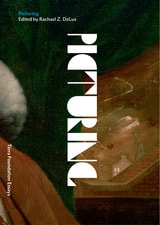
Picturing
Edited by Rachael Z. DeLue
Terra Foundation for American Art, 2016
The first volume in a new series on critical concerns in the history of American art, Picturing brings together essays by a distinguished international group of scholars who discuss the creation and consumption of images from the early modern period through the end of the twentieth century. Some of the contributions focus on art critical texts, like Gertrude Stein’s portrait of Cézanne, while others have as their point of departure particular artworks, from a portrait of Benjamin Franklin to Eadweard Muybridge’s nineteenth-century photographs of the California Coast. Works that addressed images and image making were not confined to the academy; they spilled out into poetry, literature, theater, and philosophy, and the essays’ considerations likewise range freely, from painting to natural history illustrations, travel narratives, and popular fiction. Together, the contributions demonstrate a rich deliberation that thoroughly debunks the notion that American art is merely derivative of a European tradition.
With a wealth of new research and full-color illustrations, Picturing significantly expands the terrain of scholarship on American art.
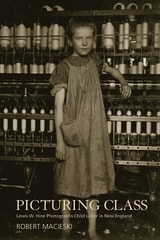
Picturing Class
Lewis W. Hine Photographs Child Labor in New EnglandRobert Macieski
University of Massachusetts Press, 2015
In this richly illustrated book, Robert Macieski examines Lewis W. Hine's art and advocacy on behalf of child laborers as part of the National Child Labor Committee (NCLC) between 1909 and 1917. A “social photographer”—as he called himself—Hine created images that documented children at work throughout New England, revealing their exploitation in the North as he had for rural working children in the South. Hine staged his images, highlighting particular types of labor in specific places: the “newsies” in Connecticut cities; sardine canners in Eastport, Maine; cranberry pickers in Cape Cod bogs; industrial homeworkers in Boston and Providence; and cotton textile workers throughout the region. His association with the NCLC connected him to a network of local and national reformers, social workers, and child welfare professionals, a broad coalition he supported in their fight to end this unethical labor practice. Macieski also chronicles Hine's efforts to mount major exhibitions that would help move public opinion against child labor.
In Picturing Class, Macieski explores the historical context of Hine's photographs and the social worlds of his subjects. He offers a detailed analysis of many of the images, unearthing the stories behind the creation of these photographs and the lives of their subjects. In telling the story of these photographs, their creation, and their reception, Macieski demonstrates how Hine worked to advance an unvarnished picture of a rapidly changing region and the young workers at the center of this important shift.
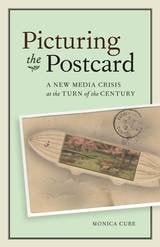
Picturing the Postcard
A New Media Crisis at the Turn of the CenturyMonica Cure
University of Minnesota Press, 2018
The first full-length study of a once revolutionary visual and linguistic medium
Literature has “died” many times—this book tells the story of its death by postcard. Picturing the Postcard looks to this unlikely source to shed light on our collective, modern-day obsession with new media. The postcard, almost unimaginably now, produced at the end of the nineteenth century the same anxieties and hopes that many people think are unique to twenty-first-century social media such as Facebook or Twitter. It promised a newly connected social world accessible to all and threatened the breakdown of authentic social relations and even of language.
Arguing that “new media” is as much a discursive object as a material one, and that it is always in dialogue with the media that came before it, Monica Cure reconstructs the postcard’s history through journals, legal documents, and sources from popular culture, analyzing the postcard’s representation in fiction by well-known writers such as E. M. Forster and Edith Wharton and by more obscure writers like Anne Sedgwick and Herbert Flowerdew. Writers deployed uproar over the new medium of the postcard by Anglo-American cultural critics to mirror anxieties about the changing nature of the literary marketplace, which included the new role of women in public life, the appeal of celebrity and the loss of privacy, an increasing dependence on new technologies, and the rise of mass media. Literature kept open the postcard’s possibilities and in the process reimagined what literature could be.
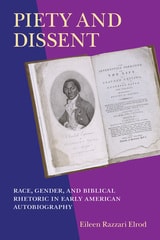
Piety and Dissent
Race, Gender, and Biblical Rhetoric in Early American AutobiographyEileen R. Elrod
University of Massachusetts Press, 2008
For pious converts to Christianity in late eighteenth- and early nineteenth-century New England, all reality was shaped by religious devotion and biblical text. It is therefore not surprising that earnest believers who found themselves marginalized by their race or sex relied on their faith to reconcile the tension between the spiritual experience of rebirth and the social ordeal of exclusion and injustice.
In Piety and Dissent, Eileen Razzari Elrod examines the religious autobiographies of six early Americans who represented various sorts of marginality: John Marrant, Olaudah Equiano, and Jarena Lee, all of African or African American heritage; Samson Occom (Mohegan) and William Apess (Pequot); and Abigail Abbott Bailey, a white woman who was subjected to extreme domestic violence. Through close readings of these personal narratives, Elrod uncovers the complex rhetorical strategies employed by pious outsiders to challenge the particular kinds of oppression each experienced. She identifies recurrent ideals and images drawn from Scripture and Protestant tradition—parables of liberation, rage, justice, and opposition to authority—that allowed them to see resistance as a religious act and, more than that, imbued them with a sense of agency.
What the life stories of these six individuals reveal, according to Elrod, is that conventional Christianity in early America was not the hegemonic force that church leaders at the time imagined, and that many people since have believed it to be. Nor was there a clear distinction between personal piety and religious, social, and political resistance. To understand fully the role of religion in the early period of American letters, we must rethink some of our most fundamental assumptions about the function of Christian faith in the context of individual lives.
Pilgrims To The Wild
John P O'Grady
University of Utah Press, 1993
Pilgrims to the Wild is a survey of American writers who have responded to their encounters with the natural world. Ranging in its treatment from Thoreau’s important but neglected essay, 'Walking,' to the exuberant letters of the young artist Everett Ruess (who disappeared in the Escalante canyonlands), this is a broadly based exploration that brings to bear Eastern and Western classical philosophy, as well as contemporary critical theory, on a distinctive tradition of American Writing—those works concerned with the human relationship to the nonhuman world.
In addition to offering a fresh interpretation of classic authors such a Thoreau and Muir, this book introduces readers to the less widely known but equally fascinating writers Clarence King and Mary Austin.
Pillars of Salt, Monuments of Grace
New England Crime Literature and the Origins of American Popular Culture, 1674-1860Daniel A. Cohen
University of Massachusetts Press, 2006
Pine
Jonathan Johnson
Carnegie Mellon University Press, 2025
To grieve is to search. In Pine, Jonathan Johnson’s poems travel across continents: through Michigan’s Upper Peninsula, the Scottish Highlands, the Greek islands, and the mountain wildernesses of the American Northwest, seeking meaning in the spaces left behind. These poems embrace the raw physicality of place, uncovering the deep textures of the natural world as both a witness and companion to loss.
Amid the perpetual elegy of everything, Pine offers moments of improbable wonder. Johnson’s voice is steady and rich with narrative, guiding us through landscapes of memory and wilderness alike. In this intimate collection, grief and grace are intertwined, and the world—against all odds—goes on.
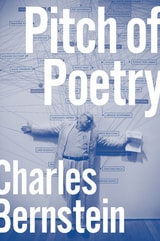
Pitch of Poetry
Charles Bernstein
University of Chicago Press, 2016
Subjects range across Holocaust representation, Occupy Wall Street, and the figurative nature of abstract art. Detailed overviews of formally inventive work include essays on—or “pitches” for—a set of key poets, from Gertrude Stein and Robert Creeley to John Ashbery, Barbara Guest, Larry Eigner, and Leslie Scalapino. Bernstein also reveals the formative ideas behind the magazine L=A=N=G=U=A=G=E. The final section, published here for the first time, is a sweeping work on the poetics of stigma, perversity, and disability that is rooted in the thinking of Edgar Allan Poe, Emily Dickinson, Ralph Waldo Emerson, and William Blake.
Pitch of Poetry makes an exhilarating case for what Bernstein calls echopoetics: a poetry of call and response, reason and imagination, disfiguration and refiguration.
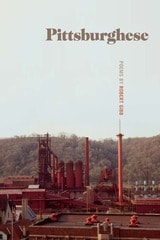
Pittsburghese
Robert Gibb
Michigan State University Press, 2024
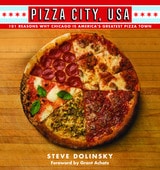
Pizza City, USA
101 Reasons Why Chicago Is America's Greatest Pizza TownSteve Dolinsky, Foreword by Grant Achatz
Northwestern University Press, 2018
There are few things that Chicagoans feel more passionately about than pizza. Most have strong opinions about whether thin crust or deep-dish takes the crown, which ingredients are essential, and who makes the best pie in town.
And in Chicago, there are as many destinations for pizza as there are individual preferences. Each of the city's seventy-seven neighborhoods is home to numerous go-to spots, featuring many styles and specialties. With so many pizzerias, it would seem impossible to determine the best of the best.
Enter renowned Chicago-based food journalist Steve Dolinsky! In Pizza City, USA: 101 Reasons Why Chicago Is America's Greatest Pizza Town, Dolinsky embarks on a pizza quest, methodically testing more than a hundred different pizzas in Chicagoland. Zestfully written and thoroughly researched, Pizza City, USA is a hunger–inducing testament to Dolinsky's passion for great, unpretentious food.
This user-friendly guide is smartly organized by location, and by the varieties served by the city's proud pizzaioli–including thin, artisan, Neapolitan, deep-dish and pan, stuffed, Sicilian, Roman, and Detroit-style, as well as by-the-slice. Pizza City also includes Dolinsky's "Top 5 Pizzas" in several categories, a glossary of Chicago pizza terms, and maps and photos to steer devoted foodies and newcomers alike.
Place in American Fiction
Excursions and ExplorationsEdited by H.L. Weatherby & George Core
University of Missouri Press, 2004
Places/Everyone
Jim Daniels
University of Wisconsin Press, 1985
Jim Daniels, in his first book of poems, draws upon his experiences in living and working in his native Detroit to present a start, realistic picture of urban, blue-collar life. Daniels, his brothers, his father, and his grandfather have all worked in the auto industry, and that background seeps into nearly all these poems.
The first of the book’s three sections sketches out this background, then moves into a neighborhood full of people whose lives are so linked to the ups and downs of the auto industry that they have to struggle to find their own lives; in "Still Lives in Detroit, #2," Daniels writes, "There’s a man in this picture. / No one can find him." The second section contains the "Digger" poems, a series on the lives of a Detroit auto worker and his family which tries to capture the effects of the work on life outside the factory. Here, we listen to Digger think, dream, wander on psychological journeys while he moves through his routines, shoveling the snow, mowing the lawn, and so forth. In section three, the poems move into the workplace, whether that be a liquor store, a hamburger joint, or a factory.
These poems, sometimes dark, sometimes humorous, concentrate on the efforts of workers to rise above the often depressing work of blue-collar or minimum-wage jobs, to salvage some pride and dignity. The poems in this book try to give a voice to those who are often shut out of poetry. They are important. These lives are important, and the poems, more than anything, say that.
Placing John Haines
James Perrin Warren
University of Alaska Press, 2017
John Haines arrived in Alaska, fresh out of the Navy, in 1947, and established a homestead seventy miles southeast of Fairbanks. He stayed there nearly twenty-five years, learning to live off the country: hunting, trapping, fishing, gathering berries, and growing vegetables. Those years formed him as a writer—the interior of Alaska, and especially its boreal forest—marking his poetry and prose and helping him find his unique voice.
Placing John Haines, the first book-length study of his work, tells the story of those years, but also of his later, itinerant life, as his success as a writer led him to hold fellowships and teach at universities across the country. James Perrin Warren draws out the contradictions inherent in that biography—that this poet so indelibly associated with place, and authentic belonging, spent decades in motion—and also sets Haines’s work in the context of contemporaries like Robert Bly, Donald Hall, and his close friend Wendell Berry. The resulting portrait shows us a poet who was regularly reinventing himself, and thereby generating creative tension that fueled his unforgettable work. A major study of a sadly neglected master, Placing John Haines puts his achievement in compelling context.
Placing Papers
The American Literary Archives MarketAmy Hildreth Chen
University of Massachusetts Press, 2020
The market for contemporary authors' archives began when research libraries needed to cheaply provide primary sources for the swelling number of students and faculty following World War II. Demand soon grew, and while writers and their families found new opportunities to make money, so too did book dealers and literary agents with the foresight to pivot their businesses to serve living authors. Public interest surrounding celebrity writers had exploded by the late twentieth century, and as Placing Papers illustrates, even the best funded institutions were forced to contend with the facts that acquiring contemporary literary archives had become cost prohibitive and increasingly competitive.
Plain and Ugly Janes
The Rise of the Ugly Woman in Contemporary American FictionWright, Charlotte M.
University of Iowa Press, 2000
“If beauty is truth, is ugliness falsehood and deception? If all art need concern itself with is beauty, what need have we to explore in our literature the nature and consequences of ugliness?” In Plain and Ugly Janes, originally published in hardcover in 2000 by Garland, Charlotte Wright defines and explores the ramifications of a new character type in twentieth-century American literature, the “ugly woman,” whose roots can be traced to the old maid/spinster character of the nineteenth century.
During the 1970s, stories began to appear in which the ugly woman is a figure of power—heroic not in the traditional old maid's way of quiet, passive acceptance but in a way more in keeping with the active, masculine definition of heroic behavior. Wright uses these stories to discuss the nature and definitions of ugliness and the effects of female ugliness on both male and female literary characters in the works of a range of American authors, including Sherwood Anderson, Russell Banks, Djuna Barnes, Peter S. Beagle, Sarah Bird, Ray Bradbury, Katherine Dunn, Louise Erdrich, William Faulkner, Tess Gallagher, Barry Hannah, Ernest Hemingway, Zora Neale Hurston, Alison Lurie, Lorrie Moore, Joyce Carol Oates, Flannery O'Connor, Katherine Anne Porter, Leon Rooke, Anne Tyler, Alice Walker, and Eudora Welty. Wright concludes that the ugly woman character allows American authors to explore the ironies and inequalities inherent in the beauty system.
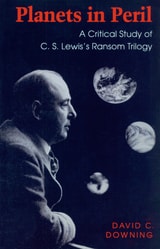
Planets in Peril
A Critical Study of C. S. Lewis's Ransom TrilogyDavid C. Downing
University of Massachusetts Press, 1992
A critical study of C.S. Lewis's “Ransom Trilogy” which analyses Lewis's methods and meanings, concentrating on this trilogy but also including relevant secondary work. Lewis's literary scholarship and display of Christian values are incorporated into this discussion.
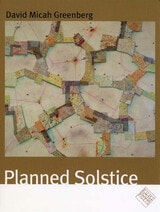
Planned Solstice
David Micah Greenberg
University of Iowa Press, 2003
These poems move from imagistic inquiry toward political coherence and a sense of divided place. The book's four-part structure also echoes seasonal change and seeks among extreme—solstice-like—experiences the hope that separate lives may speak to one another. Throughout, images of contested growth, natural and human, ask the reader to see what is both organic and structural in settings of consciousness, space, and politics—to find what is free and what is also formed by consequence. Greenberg's are not facile pronouncements; they come to us after such rigorous deliberation, such painstaking examination, that they cannot but carry a hint of the oracular about them.
The poems in Planned Solstice should be read, re-read, and re-read again, as they yield a new crop, “a decision of field,"”every time one dares to venture in
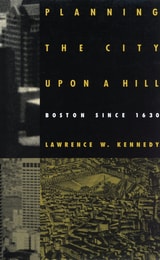
Planning the City upon a Hill
Boston since 1630Lawrence W. Kennedy
University of Massachusetts Press, 1992
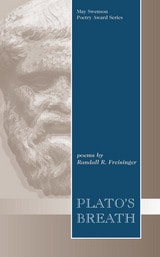
Plato's Breath
Randall R. Freisinger
Utah State University Press, 1997
Freisinger's new poetry collection is inhabited alike by bright, tangible images and thoughtful, intricate meditations. Pumpkins, poultry houses, sperm tests, a vacuum cleaner salesman, a father's damaged brain, an anatomist's tools, a baby falling from a fourth-story window-all of these come to the page distinct and palpable. At the same time, the work finds a central inspiration in theoretical work like Jeremy Rifkin's social criticism. Poetry of both the mind and the heart, Plato's Breath embraces the power of imagination to transform the ordinary into an extraordinary affirmation of life.
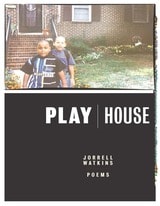
PlayHouse
PoemsJorrell Watkins
Northwestern University Press, 2024
Jorrell Watkins's debut poetry collection is a polyvocal, musically charged disruption of the United States's fixation on drug and gun culture. The poems in Play|House embody many identities, including son, brother, fugitive, bluesman, karate practitioner, and witness. Throughout, Watkins inflects a Black/trap vernacular that defamiliarizes the urban Southern landscape. Across three sections of poetry scored by hip-hop, blues, and trap, Watkins considers how music is a dwelling and wonders which histories, memories, and people haunt each home. Past figures such as John Coltrane, Billie Holiday, and the short-lived 1940s trio Day, Dawn & Dusk intermingle with Migos, the Watkins family, childhood friends, and loved ones both parted and departed. At its core, Play|House reckons with the truths and failures of masculinity for Black boys and men, all the while documenting moments of triumphant Black joy and love.
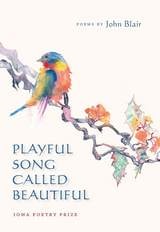
Playful Song Called Beautiful
John Blair
University of Iowa Press, 2016
From the invisible landscape of elementary particles to Johann Wolfgang Von Goethe’s love of the smell of rotten apples, Blair’s poems direct us through a “great wide world that is / ours and never ours” and somewhere among the rolling tercets, the transcendent becomes not only possible, but entirely inevitable.
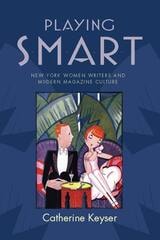
Playing Smart
New York Women Writers and Modern Magazine CultureKeyser, Catherine
Rutgers University Press, 2010
Through humor writing, this "smart set" expressed both sides of the story-promoting their urbanity and wit while using irony and caricature to challenge feminine stereotypes. Their fiction raised questions about what it meant to be a woman in the public eye, how gender roles would change because men and women were working together, and how the growth of the magazine industry would affect women's relationships to their bodies and minds. Keyser provides a refreshing and informative chronicle, saluting the value of being "smart" as incisive and innovative humor showed off the wit and talent of women writers and satirized the fantasy world created by magazines.
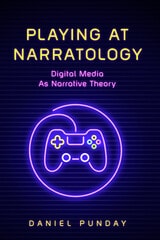
Playing at Narratology
Digital Media as Narrative TheoryDaniel Punday
The Ohio State University Press, 2019
Returning to terms such as narrator, setting, event, character, and world, Playing at Narratology reveals new ways of thinking about these basic narrative concepts—concepts that are not so basic when applied to games and web-based narratives. What are thought of as narrative innovations in these digital forms are a product of technological ability and tied to how we physically interact with a medium, creating new and complicated questions: Is the game designer the implied author or the narrator? Is the space on the screen simply the story’s setting? Playing at Narratology guides us through the evolution of narrative in new media without abandoning the field’s theoretical foundations.
Plays by Early American Women, 1775-1850
Amelia Howe Kritzer, Editor
University of Michigan Press, 1995
Please Bury Me in This
Allison Benis White
Four Way Books, 2017
Pluralist Universalism
An Asian Americanist Critique of U.S. and Chinese MulticulturalismsWen Jin
The Ohio State University Press, 2012
Pluralist Universalism: An Asian Americanist Critique of U.S. and Chinese Multiculturalisms by Wen Jin is an extended comparison of U.S. and Chinese multiculturalisms during the post–Cold War era. Her book situates itself at the intersection of Asian American literary critique and the growing field of comparative multiculturalism. Through readings of fictional narratives that address the issue of racial and ethnic difference in both national contexts simultaneously, the author models a “double critique” framework for U.S.–Chinese comparative literary studies.
Pocket Sundial
Lisa Zeidner
University of Wisconsin Press, 1988
In this, the fourth volume to win the Brittingham Prize in Poetry, Lisa Zeidner’s twenty-two poems introduce a surprising range of characters, from a cryogenically preserved caveman to a 78-year-old widow arrested for shoplifting. Some of the narratives collected here are unusually long (like “Dementia Colander,” a mock-epic about the history of an unnamed nation whose king suffers a rare disease). These poems attempt to offer not just poetic moments, glimpses of joy or loss, but a sense of self in time and history—whole lives in all of their busy-ness and disorder. Lisa Zeidner’s dark wit considers any subject, from the Holocaust to child abuse, a subject for intellectual playfulness and emotional discovery.
Despite the range of subjects, the poems in Pocket Sundial are bound by a concern for time, for how we think about time. These are poems about memory, foresight, anticipation, regret—all of chronology’s complexities.
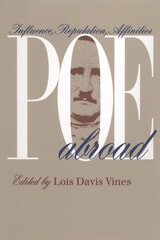
Poe Abroad
Influence Reputation AffinitiesLois Davis Vines
University of Iowa Press, 1999
In Poe Abroad, Lois Vines has brought together a collection of essays that document the American writer's influence on the diverse literatures—and writers—of the world. Over twenty scholars demonstrate how and why Poe has significantly influenced many of the major literary figures of the last 150 years.
Part One includes studies of Poe's popularity among general readers, his influence on literary movements, and his reputation as a poet, fiction writer, and literary critic. Part Two presents analyses of the role Poe played in the literary development of specific writers representing many different cultures.
Poe Abroad commemorates the 150th anniversary of Poe's death and celebrates his worldwide impact, beginning with the first literal translation of Poe into a foreign language, “The Gold-Bug”into French in 1845. Charles Baudelaire translated another Poe tale in 1848 and four years later wrote an essay that would make Poe a well-known author in Europe even before he achieved recognition in America.
Poe died knowing only that some of his stories had been translated into French. He probably never would have imagined that his work would be admired and imitated as far away as Japan, China, and India or would have a lasting influence on writers such as Baudelaire, August Strindberg, Franz Kafka, Jorge Luis Borges, Julio Cortázar, and Tanizaki Junichiro.
As we approach the sesquicentennial of his death, Poe Abroad brings together a timely one-volume assessment of Poe's influence throughout the world.
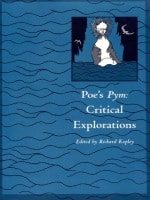
Poe's Pym
Critical ExplorationsRichard Kopley, ed.
Duke University Press, 1992
The product of a decade of research and planning, Poe's "Pym" offers a factual basis for some of the most fantastic elements in the novel and uncovers surprising connections between Poe's text and exploration literature, nautical lore, Arthurian narrative, nineteenth-century journalism, Moby Dick, and other writings. Representing a rich cross-section of current modes of literary study—from source study to psychoanalytic criticism to new historicism—these sixteen essays probe issues such as literary influence, the limits of language, racism, the holocaust, prolonged mourning, and the structure of the human mind. Poe's "Pym" will be an invaluable resource for students of both contemporary criticism and nineteenth-century American culture.
Contributors. John Barth, Susan F. Beegel, J. Lasley Dameron, Grace Farrell, Alexander Hammond, David H. Hirsch, John T. Irwin, J. Gerald Kennedy, David Ketterer, Joan Tyler Mead, Joseph J. Moldenhauer, Carol Peirce, Burton R. Pollin, Alexander G. Rose III, John Carlos Rowe, G. R. Thompson, Bruce I. Weiner
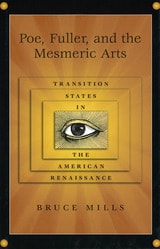
Poe, Fuller, and the Mesmeric Arts
Transition States in the American RenaissanceBruce Mills
University of Missouri Press, 2005

Poems Old & New 1918-1978
Janet Lewis
Ohio University Press, 1981
The poems in this collection range over a period of 60 years. The style is spare, direct, cutting to the core of subject. Richness of intelligence and a concern for the human has also characterized every phase of Lewis’ development.
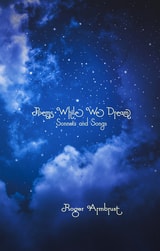
Poems While We Dream
Sonnets and SongsRoger Armbrust
Parkhurst Brothers, Inc., 2021
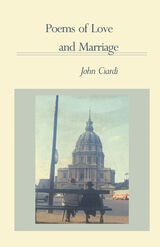
Poems of Love and Marriage
John Ciardi
University of Arkansas Press, 1989
Collected from his published and heretofore unpublished work, the love poems of John Ciardi in Poems of Love and Marriage are a rich display of gentle wit, emotion, and craft. Not merely lyrics of youthful romance, these span the course of a love affair, of a life shared from first blush to old age.
These poems never disturb the sanctity of the private moment, but transcend the specific situation and bloom into universal recognition. And in his usual way of basking in those qualities which transform the ordinary into the unique, John Ciardi finds poignancy and truth in those elements of love and living together that so often go unnoticed.
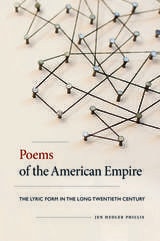
Poems of the American Empire
The Lyric Form in the Long Twentieth CenturyJen Hedler Phillis
University of Iowa Press, 2019
Poems of the American Empire argues that careful attention to a particular strain of twentieth-century lyric poetry yields a counter-history of American global power. The period that Phillis covers—from Ezra Pound’s A Draft of XXX Cantos in 1930 to Cathy Park Hong’s Engine Empire in 2012—roughly matches what some consider the ascent and decline of the American empire. The diverse poems that appear in this book are united by their use of epic forms in the lyric poem, a combination that violates a fundamental framework of both genres’ relationship to time.
This book makes a groundbreaking intervention by insisting that lyric time is key to understanding the genre. These poems demonstrate the lyric form’s ability to represent the totality of history, making American imperial power visible in its fullness. Neither strictly an empty celebration of American exceptionalism nor a catalog of atrocities, Poems of the American Empire allows us to see both.
Poetic Culture
Contemporary American Poetry between Community and InstitutionChristopher Beach
Northwestern University Press, 1999
Poetic Investigations
Singing the Holes in HistoryPaul Naylor
Northwestern University Press, 1999
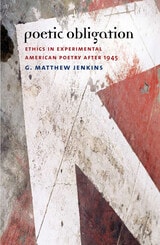
Poetic Obligation
Ethics in Experimental American Poetry after 1945Matthew G. Jenkins
University of Iowa Press, 2008
Since at least the time of Plato's Republic, the relationship between poetry and ethics has been troubled. Through the prism of what has been called the "new" ethical criticism, inspired by the work of Emmanuel Levinas, G. Matthew Jenkins considers the works of Objectivists, Black Mountain poets, and Language poets in light of their full potential to reshape this ancient relationship.
American experimental poetry is usually read in either political or moral terms. Poetic Obligation, by contrast, considers the poems of Louis Zukofsky, Charles Reznikoff, George Oppen, Edward Dorn, Robert Duncan, Susan Howe, and Lyn Hejinian in terms of the philosophical notion of ethical obligation to the Other in language. Jenkins's historical trajectory enables him to consider the full breadth of ethical topics that have driven theoretical debate since the end of World War II. This original approach establishes an ethical lineage in the works of twentieth-century experimental poets, creating a way to reconcile the breach between poetry and the issue of ethics in literature at large.
With implications for a host of social issues, including ethnicity and immigration, economic inequities, and human rights, Jenkins's imaginative reconciliation of poetry and ethics will provide stimulating reading for teachers and scholars of American literature as well as advocates and devotees of poetry in general. Poetic Obligation marshals ample evidence that poetry matters and continues to speak to the important issues of our day.
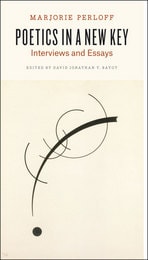
Poetics in a New Key
Interviews and EssaysMarjorie Perloff
University of Chicago Press, 2014
The fourteen interviews in Poetics in a New Key—conducted by scholars, poets, and critics from the United States, Denmark, Norway, France, and Poland, including Charles Bernstein, Hélène Aji, and Peter Nicholls—cover a broad spectrum of topics in the study of poetry: its nature as a literary genre, its current state, and its relationship to art, politics, language, theory, and technology. Also featured in the collection are three pieces by Perloff herself: an academic memoir, an exploration of poetry pedagogy, and an essay on twenty-first-century intellectuals. But across all the interviews and essays, Perloff’s distinctive personality and approach to reading and talking resound, making this new collection an inspiring resource for scholars both of poetry and writing.
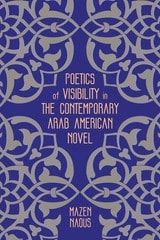
Poetics of Visibility in the Contemporary Arab American Novel
Mazen Naous
The Ohio State University Press, 2020
Naous’s book offers analyses of Diana Abu-Jaber’s Arabian Jazz and Crescent, Rabih Alameddine’s Koolaids: The Art of War, Laila Halaby’s Once in a Promised Land, and Mohja Kahf’s The Girl in the Tangerine Scarf as ways to answer this question. Naous explores how these novels negotiate queer desire, music, Western and Middle Eastern art, gender, and relationships between other minorities. These poetics enable readers to see the nuance and richness of Arab American experience. Naous ultimately argues that fiction creates crucial spaces for reimagining and redefining intercultural relationships.
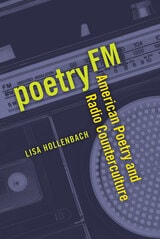
Poetry FM
American Poetry and Radio CountercultureLisa Hollenbach
University of Iowa Press, 2023
Lisa Hollenbach traces the history of Pacifica Radio—founded in 1946, the nation’s first listener-supported public radio network—through the 1970s: from the radical pacifists and poets who founded Pacifica after the war; to the San Francisco Renaissance, Beat, and New York poets who helped define the countercultural sound of Pacifica stations KPFA and WBAI in the 1950s and 1960s; to the feminist poets and activists who seized Pacifica’s frequencies in the 1970s. In the poems and recorded broadcasts of writers like Kenneth Rexroth, Jack Spicer, Allen Ginsberg, Amiri Baraka, Audre Lorde, Pat Parker, Bernadette Mayer, and Susan Howe, one finds a recurring ambivalence about the technics and poetics of reception. Through tropes of static noise, censorship, and inaudibility as well as voice, sound, and signal, these radiopoetic works suggest new ways of listening to the sounds and silences of Cold War American culture.
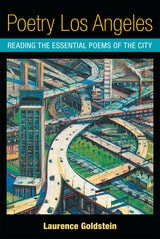
Poetry Los Angeles
Reading the Essential Poems of the CityLaurence Goldstein
University of Michigan Press, 2014
One chapter is devoted to Charles Bukowski, the celebrity face of the city’s poetry. Other chapters discuss the ways that poets explore “Interiors” and “Exteriors” throughout the cityscape. Goldstein also provides ample connections to the novels, films, art, and politics of Southern California. In clear prose, Poetry Los Angeles examines the strategies by which poets make significant places meaningful and memorable to readers of every region of the U.S. and elsewhere.