1415 books match the query 'Medical' and 94 start with p

cover of Plundered Kitchens, Empty Wombs: Threatened Reproduction and Identity in the Cameroon Grassfields

Plundered Kitchens, Empty Wombs

Threatened Reproduction and Identity in the Cameroon Grassfields

Pamela Feldman-Savelsberg

University of Michigan Press, 0
Plundered Kitchens, Empty Wombs examines the symbolic language of food, fertility, and infertility in a small, mountainous African kingdom to explore more general notions of gender, modernity, and cultural identity.
In the Cameroon grassfields, an area of high fertility, women hold a paradoxical fear of infertility. By combining symbolic, political-economic, and historical analyses, Pamela Feldman-Savelsberg traces the way reproductive threat is invoked in struggles over gender and ethnic identities. Women's fears of reproductive disorders, she finds, are an important mode of expression for their worries about much larger issues, such as rural poverty, brought about or exacerbated by political and economic changes in this century.
A lively case study of an infertile queen who flees the palace sets the stage for discussions of the ethnographic and historical setting, the symbolism of fertility and infertility, and the development and interaction of cosmopolitan and ethno-gynecologies. The book concludes with an analysis of the links between women's role in human reproduction and the divine king's role in social reproduction, both occurring in the rapidly changing context of a multiethnic African nation.
Plundered Kitchens, Empty Wombs underscores the relevance of medical anthropology to other anthropological specializations, as well as to epidemiologists, population specialists, and development planners. It should reach a broad audience in medical anthropology, public health, and women's studies.
Pamela Feldman-Savelsberg is Assistant Professor of Anthropology, Carleton College.
[more]
cover of Points of Contact: Disability, Art, and Culture

Points of Contact

Disability, Art, and Culture

Susan Crutchfield and Marcy Epstein, Editors

University of Michigan Press, 2000
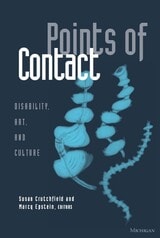
Points of Contact brings together contributions by leading writers, artists, scholars, and critics to provide a remarkably broad and consistently engaging look at the intersection of disability and the arts. The contributions include essays and memoirs by a wide range of disabled and nondisabled writers, including Bell Gale Chevigny, Sandra Gilbert, Joseph Grigely, Georgina Kleege, Victoria Ann Lewis, Carol Poore, Tobin Siebers, and Rosemarie Garland Thomson among others; poetry by Brooke Horvath, Joan Seliger Sidney, William Stafford, and others; fiction by Stephen Dixon, Michael Downs, Georgina Kleege, Dallas Wiebe, and others. The collection covers a broad range of subjects and concerns that lie at the intersection of disability and the arts, including fetal alcohol syndrome, education, and identity; representations of disability in the visual arts and the complicated position of the disabled spectator; the impact of cancer on the patient and the caregiver; the similarities between beauty pageants and freak shows; Alzheimer's disease; prosthetic devices; the mechanized disabled body; disability and performance; and profiles of Helen Keller and Annie Sullivan, Christopher Reeve, Franklin Roosevelt, and sado-masochistic performance artist Bob Flanagan. Points of Contact: Disability, Art, and Culture was originally published as a special double issue of the well regarded literary magazine, the Michigan Quarterly Review. Now available in a single, convenient paperback volume, its broad range of perspectives on disability and its entertaining and engaging selections will appeal to general readers, scholars, and students alike.
[more]
cover of Policing Desire: Pornography, AIDS and the Media

Policing Desire

Pornography, AIDS and the Media

Simon Watney

University of Minnesota Press, 1997

An updated edition of this essential work.

Since its initial publication, Policing Desire has proved to be an unparalleled analysis of “the cacophony of voices which sounds through every institution of our society on the subject of AIDS.” For the third edition Simon Watney has provided a new preface, a compelling new concluding essay, and a directory for AIDS information that includes electronic resources.

“A far-reaching analysis of images of AIDS and homosexuality in the media. . . . In Policing Desire, Simon Watney called the media on its own game, and the media actually changed its coverage of AIDS and queer issues.” Voice Literary Supplement“Simon Watney’s Policing Desire is essential reading for anyone who wants to press the question of how the media represents AIDS . . . it will stand as a great work of criticism written from the trenches.” New York Native“A landmark work in AIDS analysis because of the combination of emotional urgency and analytical insight that it manifests.” American Book ReviewWinner of the Gustavus Myers Prize for the Study of Human RightsISBN 0-8166-3024-0 Cloth $39.95xx CUSAISBN 0-8166-3025-9 Paper $16.95x CUSA000 pages 0 x 0 MarchMedia Studies/Social TheoryPolicing DesirePornography, AIDS and the MediaThird EditionSimon WatneyAn updated edition of this essential work. Since its initial publication, Policing Desire has proved to be an unparalleled analysis of “the cacophony of voices which sounds through every institution of our society on the subject of AIDS.” For the third edition Simon Watney has provided a new preface, a compelling new concluding essay, and a directory for AIDS information that includes electronic resources.“A far-reaching analysis of images of AIDS and homosexuality in the media. . . . In Policing Desire, Simon Watney called the media on its own game, and the media actually changed its coverage of AIDS and queer issues.” Voice Literary Supplement“Simon Watney’s Policing Desire is essential reading for anyone who wants to press the question of how the media represents AIDS . . . it will stand as a great work of criticism written from the trenches.” New York Native“A landmark work in AIDS analysis because of the combination of emotional urgency and analytical insight that it manifests.” American Book ReviewSimon Watney is the director of the Red Hot AIDS Charitable Trust, which distributes funds internationally for HIV/AIDS prevention and education. Watney lives in London, England.
[more]
cover of Politics Of Women's Health

Politics Of Women's Health

Susan Sherwin

Temple University Press, 1998

For four years this interdisciplinary group of scholars and practitioners, including physicians, lawyers, philosophers, and social scientists, collaborated closely on te development of these essays. The result is an examination of both the real world of women's health status and health care delivery in different countries, and the assumptions behind the dominant medical model of solving problems without regard to social conditions. The writing is also informed by some of the authors' own experiences with women's health issues: birth, menopause, major surgery, and providing care for mothers and grandmothers.

Rather than focusing on types of  medical interventions, The Politics of Women's Health asks what feminist health care ethics looks like if we start with women's experiences and concerns. It begins to unravel two key concepts of women's empowerment -- agency and autonomy -- that apply to all areas of concern to women.
[more]
cover of Poor People's Medicine: Medicaid and American Charity Care since 1965

Poor People's Medicine

Medicaid and American Charity Care since 1965

Jonathan Engel

Duke University Press, 2006

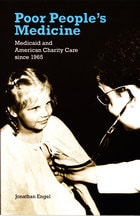
Poor People’s Medicine is a detailed history of Medicaid since its beginning in 1965. Federally aided and state-operated, Medicaid is the single most important source of medical care for the poorest citizens of the United States. From acute hospitalization to long-term nursing-home care, the nation’s Medicaid programs pay virtually the entire cost of physician treatment, medical equipment, and prescription pharmaceuticals for the millions of Americans who fall within government-mandated eligibility guidelines. The product of four decades of contention over the role of government in the provision of health care, some of today’s Medicaid programs are equal to private health plans in offering coordinated, high-quality medical care, while others offer little more than bare-bones coverage to their impoverished beneficiaries.

Starting with a brief overview of the history of charity medical care, Jonathan Engel presents the debates surrounding Medicaid’s creation and the compromises struck to allow federal funding of the nascent programs. He traces the development of Medicaid through the decades, as various states attempted to both enlarge the programs and more finely tailor them to their intended targets. At the same time, he describes how these new programs affected existing institutions and initiatives such as public hospitals, community clinics, and private pro bono clinical efforts. Along the way, Engel recounts the many political battles waged over Medicaid, particularly in relation to larger discussions about comprehensive health care and social welfare reform. Poor People’s Medicine is an invaluable resource for understanding the evolution and present state of programs to deliver health care to America’s poor.

[more]
cover of Popular Errors

Popular Errors

Laurent Joubert

University of Alabama Press, 1989

Laurent Joubert was an important figure in the medical world of the French Renaissance. Born in 1529, he became a doctor at age 29 and shortly thereafter was appointed personal physician to Catherine de Medici and later became physician to three French monarchs. Joubert was an educator as well as a physician, and he wrote several works of medical literature, including his most controversial work, Erreurs populaires. While the work focuses on popular misconceptions concerning medicine and physicians in France in the 1500s, it also represents a wealth of information on the social, economic, political, and religious worldviews that framed and thus supported the development and conduct of medical science.
Gregory de Rocher’s skill as a translator brings this highly readable and very funny book to life. Many topics central to Joubert’s thesis in the 1500s remain contemporary themes in the popular and scholarly literature of the 1980s.

[more]
cover of Postmortem: How Medical Examiners Explain Suspicious Deaths

Postmortem

How Medical Examiners Explain Suspicious Deaths

Stefan Timmermans

University of Chicago Press, 2006

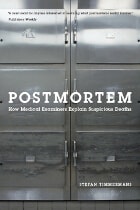
As elected coroners came to be replaced by medical examiners with scientific training, the American public became fascinated with their work. From the grisly investigations showcased on highly rated television shows like C.S.I. to the bestselling mysteries that revolve around forensic science, medical examiners have never been so visible—or compelling. They, and they alone, solve the riddle of suspicious death and the existential questions that come with it. Why did someone die? Could it have been prevented? Should someone be held accountable? What are the implications of ruling a death a suicide, a homicide, or an accident? Can medical examiners unmask the perfect crime?

Postmortem goes deep inside the world of medical examiners to uncover the intricate web of pathological, social, legal, and moral issues in which they operate. Stefan Timmermans spent years in a medical examiner’s office, following cases, interviewing examiners, and watching autopsies. While he relates fascinating cases here, he is also more broadly interested in the cultural authority and responsibilities that come with being a medical examiner. Although these professionals attempt to remain objective, medical examiners are nonetheless responsible for evaluating subtle human intentions. Consequently, they may end—or start—criminal investigations, issue public health alerts, and even cause financial gain or harm to survivors. How medical examiners speak to the living on behalf of the dead, is Timmermans’s subject, revealed here in the day-to-day lives of the examiners themselves.
[more]
cover of Practice Under Pressure: Primary Care Physicians and Their Medicine in  the Twenty-first Century

Practice Under Pressure

Primary Care Physicians and Their Medicine in the Twenty-first Century

Hoff, Timothy

Rutgers University Press, 2009

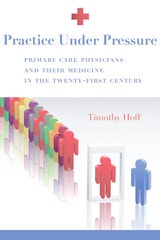
Through ninety-five in-depth interviews with primary care physicians (PCPs) working in different settings, as well as medical students and residents, Practice Under Pressure provides rich insight into the everyday lives of generalist physicians in the early twenty-first centuryùtheir work, stresses, hopes, expectations, and values. Timothy Hoff supports this dialogue with secondary data, statistics, and in-depth comparisons that capture the changing face of primary care medicineùlarger numbers of younger, female, and foreign-born physicians.
[more]
cover of Practices of Freedom: Selected Writings on HIV/AIDS

Practices of Freedom

Selected Writings on HIV/AIDS

Simon Watney

Duke University Press, 1994

Since the mid-1980s, Simon Watney has been one of the leading voices in the international field of HIV/AIDS education. His monthly column on AIDS in Britain’s Gay Times is the longest-running column of its kind in Europe, and he is actively involved in HIV/AIDS issues in the United States. His work constitutes a unique dialogue between European and American perspectives on the epidemic. Practices of Freedom brings together for the first time Watney’s pioneering writings on topics ranging from gay men’s Safer Sex education to racist coverage of AIDS in Africa in the international media, from the ethics of clinical drug trials to governmental policies concerning AIDS.
Watney’s voice—neither neutral nor detached—is that of an active and influential participant in the fight against AIDS. He offers a unique view of the ways in which gay men working in community-based organizations have attempted to provide reliable and up-to-date services and information regarding AIDS treatment and health. A leader in insisting on gay men’s entitlements to education, care, and services, Watney was among the first to challenge the "de-gaying" of AIDS service organizations in the late eighties. He also devotes his attention to HIV/AIDS prevention work, research and treatment issues, and the wider cultural politics of the disease, including the role of language, television, and cinema. His analysis of the epidemic as it has unfolded provides a history of many of the major medical and political debates that have defined the course and extent of the crisis.
Practices of Freedom demonstrates the failure of national institutions, from the government to the press, to understand and effectively fight this epidemic, and directs attention to the most urgent needs in American and international AIDS work. It will be an important primary resource, particularly in the United States, where effective community-based HIV/AIDS education tragically has often been neglected.

[more]
cover of Prayers and Rituals at a Time of Illness and Dying: The Practices of Five World Religions

Prayers and Rituals at a Time of Illness and Dying

The Practices of Five World Religions

Patricia Fosarelli

Templeton Press, 2008

In the course of caring for the ill or dying, health care professionals are sometimes the only ones available to provide spiritual comfort to their patients. In our modern pluralistic society, where patients could come from any number of religious traditions, it can often be difficult to find exactly the right words in these situations.

Prayers and Rituals at a Time of Illness and Dying: The Practices of Five World Religions by experienced physician and theologian Pat Fosarelli offers clear instructions for health care professionals on how to better understand the needs of their Buddhist, Hindu, Muslim, Christian, and Jewish patients during these difficult times. Devoting separate chapters to each tradition, Fosarelli briefly outlines the basic beliefs and then looks at the main tenets of each religion, exploring the varied approaches that they take to illness and end-of-life issues. For each tradition, she also describes practices and offers suitable prayers. Each chapter suggests modifications that may be necessary for Western hospitals, modifications for children, and specific suggestions about what not to do or say in respect to different faith traditions.

This easy-to-use, pocket-sized resource will be referenced again and again by physicians, paramedics, hospital and military chaplains, pastoral counselors, hospice providers, and other medical professionals.
[more]
cover of Preaching Prevention: Born-Again Christianity and the Moral Politics of AIDS in Uganda

Preaching Prevention

Born-Again Christianity and the Moral Politics of AIDS in Uganda

Lydia Boyd

Ohio University Press, 2015

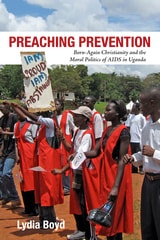
Preaching Prevention examines the controversial U.S. President’s Emergency Plan for AIDS Relief (PEPFAR) initiative to “abstain and be faithful” as a primary prevention strategy in Africa. This ethnography of the born-again Christians who led the new anti-AIDS push in Uganda provides insight into both what it means for foreign governments to “export” approaches to care and treatment and the ways communities respond to and repurpose such projects. By examining born-again Christians’ support of Uganda’s controversial 2009 Anti-Homosexuality Bill, the book’s final chapter explores the enduring tensions surrounding the message of personal accountability heralded by U.S. policy makers.

Preaching Prevention is the first to examine the cultural reception of PEPFAR in Africa. Lydia Boyd asks, What are the consequences when individual responsibility and autonomy are valorized in public health initiatives and those values are at odds with the existing cultural context? Her book investigates the cultures of the U.S. and Ugandan evangelical communities and how the flow of U.S.-directed monies influenced Ugandan discourses about sexuality and personal agency. It is a pioneering examination of a global health policy whose legacies are still unfolding.

[more]
cover of Precision Medicine Oncology: A Primer

Precision Medicine Oncology

A Primer

Lorna Rodriguez-Rodriguez

Rutgers University Press, 2019

Precision medicine is rapidly becoming the standard-of-care for the treatment of cancer patients. This is made possible, in part, by the ready availability and reasonable costs of comprehensive DNA and RNA sequencing assays. However, precision medicine is complex and incorporates entirely new types of data and treatment paradigms that are outside of the training of most oncologists in practice today.

Precision Medicine Oncology: A Primer is a concise review of the fundamental principles and applications of precision medicine, intended for clinicians, particularly those working in oncology. It provides an accessible introduction to the technological advances in DNA and RNA sequencing, gives a detailed overview of approaches to the interpretation of molecular test results and their point-of-care implementation for individual patients, and describes innovative clinical trial designs in oncology as well as characteristics of the computational infrastructures through which massive quantities of data are collected, stored, and used in precision medicine oncology.

 
[more]
cover of Precision Radiation Oncology

Precision Radiation Oncology

Haffty, Bruce G

Rutgers University Press, 2018

Precision medicine is a rapidly-evolving field in the management of cancer. The use of novel molecular or genetic signatures in local-regional management is still in its infancy. Precision Radiation Oncology demystifies this state-of-the-art research and technology. 

By describing current existing clinical and pathologic features, and focusing on the ability to improve outcomes in cancer using radiation therapy, this book discusses incorporating novel genomic- or biology-based biomarkers in the treatment of patients moving radiation oncology into precision/personalized medicine. Precision Radiation Oncology provides readers with an overview of the new developments of precision medicine in radiation oncology, further advancing the integration of new research findings into individualized radiation therapy and its clinical applications.  

 
[more]
cover of Pregnancy and Birth in Early Modern France: Treatises by Caring Physicians and Surgeons (1581–1625)

Pregnancy and Birth in Early Modern France

Treatises by Caring Physicians and Surgeons (1581–1625)

François Rousset, Jean Liebault, Jacques Guillemeau, Jacques Duval, and Louis de Serres

Iter Press, 2013

These texts were written in the vernacular for a readership of physicians and surgeons but also of midwives and lay women. So they present important evidence that, contrary to stereotypes, women were the recipients of medical texts written specifically for them. More generally, these texts demonstrate a strong interest in women’s health, indicating that early modern physicians and surgeons had a new interest in the specificity of female anatomy and women’s diseases. The texts selected and translated in this volume allow the reader to access an important group of primary sources on issues related to women’s health, including childbirth and caesarean section, sterility, miscarriage, breastfeeding, etc. The selection of texts is well organized and coherent, the translation is accurate and fluent, and the texts are adequately annotated, so the book will be easily used by scholars and students, including undergraduates. It provides evidence of a new concern and attention for women’s health needs, which, most interestingly, often went hand-in-hand with the rejection of misogynist stereotypes and the challenging of conventional views of female subordination and inferiority.
—Gianna Pomata
Professor of the History of Medicine, Johns Hopkins University
[more]
cover of Prelude to Hospice: Florence Wald, Dying People, and their Families

Prelude to Hospice

Florence Wald, Dying People, and their Families

Abel, Emily K.

Rutgers University Press, 2018

Hospices have played a critical role in transforming ideas about death and dying. Viewing death as a natural event, hospices seek to enable people approaching mortality to live as fully and painlessly as possible. Award-winning medical historian Emily K. Abel provides insight into several important issues surrounding the growth of hospice care. Using a unique set of records, Prelude to Hospice expands our understanding of the history of U.S. hospices. Compiled largely by Florence Wald, the founder of the first U.S. hospice, the records provide a detailed account of her experiences studying and caring for dying people and their families in the late 1960s and early 1970s. Although Wald never published a report of her findings, she often presented her material informally. Like many others seeking to found new institutions, she believed she could garner support only by demonstrating that her facility would be superior in every respect to what currently existed. As a result, she generated inflated expectations about what a hospice could accomplish. Wald’s records enable us to glimpse the complexities of the work of tending to dying people. 
[more]
cover of Premed Prep: Advice from a Medical School Admissions Dean

Premed Prep

Advice from a Medical School Admissions Dean

Sunny Nakae

Rutgers University Press, 2021

If you’re a student hoping to apply to medical school, you might be anxious or stressed about how best to prepare. What classes should you take? What kinds of research, clinical, and volunteer opportunities should you be pursuing? What grades and MCAT scores do you need? How can you stand out among thousands of applicants?
 
Premed Prep answers all these questions and more, with detailed case studies and insider tips that can help premed students authentically prepare and enjoy the journey from the very beginning. Sunny Nakae draws from her many years of experience as a medical school admissions dean to offer wise and compassionate advice that can help premed students of all backgrounds. She also has specific tips for students who are first-generation, minority, non-traditional, and undocumented.
 
Both forthright and supportive, Nakae’s advice is offered in a keep-it-real style that gives premed students a unique window into how admissions committees view and assess them. Premed Prep covers how to approach preparation with a focus on exploration and growth, and how to stop obsessing over med school application checklists. This book will do more than help you get a seat in medical school; it will start you on the process of becoming a successful future physician.

[more]
cover of Primary Care: More Poems by Physicians

Primary Care

More Poems by Physicians

Angela Belli

University of Iowa Press, 2006

Medicine has always been an emotionally and spiritually challenging profession. Today, confronted with the rapid progress of technology, the shifting sands of health care economics, and glaring disparities in health care and human rights, physicians experience challenges that grow constantly more demanding. As a result, many doctors attempt to build into their lives opportunities for reflection and self-awareness. It is in this context that medical poetry has blossomed.Primary Care, the second anthology of physician poems edited by Angela Belli and Jack Coulehan, proves that the poetry movement in medicine continues to flourish. Fifty-two contemporary physician poets contribute one hundred poems that explore medical practice, interpersonal relationships, and the modern world. Their poems record instances of pain and suffering, joy and grief, humor and irony. Their subjects range from caregivers, patients, trainees, and teachers to poverty, injustice, and war throughout the world.In some cases we find the poets in their professional milieu as they reveal interactions with patients and colleagues. Other poems address private worlds and family relationships. In others the poets turn outward and direct their attention to social and global concerns. Characterized by an immense and kind-hearted sympathy for and empathy with those who are suffering, the poets recognize that everyone’s life is diminished by the trauma of illness and death.
[more]
cover of Principles of Autonomic-Somatic Integrations: Physiological Basis and Psychological and Clinical Implications

Principles of Autonomic-Somatic Integrations

Physiological Basis and Psychological and Clinical Implications

Ernst Gellhorn

University of Minnesota Press, 1967

Principles of Autonomic-Somatic Integrations was first published in 1967.For a number of years Dr. Gellhorn, a professor emeritus of neurophysiology at the University of Minnesota, conducted research on various problems stemming from the need for a better understanding of the autonomic nervous system. In this book he continues his contributions on the subject, providing a significant analysis of the relationship between the autonomic and somatic systems and the implications for medicine and psychology of the principles established. The book is based on an extensive review of the international literature, of which more than 1,000 references are cited.Dr. Gellhorn points out that research in the last two decades has shown that hypothalamic and reticular mechanisms play a fundamental role in the regulation of somatic sensory and motor functions as well as visceral functions. The role of such mechanisms in functions that represent fragments of behavior has been studied in great detail, and the importance of the mechanisms in the integration of diverse systems has been emphasized. He now suggests that a few basic principles are involved in the integration of a complex maze of organs and processes and that this integration results in a coherent pattern of total behavior. In the light of these principles he provides a broad physiological interpretation of behavior and explores various clinical implications.The book will be of particular interest to physiologists, neurologists, psychiatrists, and psychologists.
[more]
cover of Principles of Corporate Renewal

Principles of Corporate Renewal

Harlan D. Platt

University of Michigan Press, 2023

Since its publication in 1998, this indispensable text has been the only systematic examination of corporate renewal, offering a rational approach for dealing with financially distressed companies. It contains the first logical and orderly discussion of a number of modern business issues including outsourcing, turnaround management, layoffs, quality management, and reengineering.
 
Now in its third edition, Harlan D. Platt has revised, updated, and expanded the text. As the first edition did, this new Principles of Corporate Renewal cuts to the heart of the patterns, procedures, and pitfalls of bringing a corporation back to life and health.

[more]
cover of Principles of Corporate Renewal, Second Edition

Principles of Corporate Renewal, Second Edition

Harlan D. Platt

University of Michigan Press, 2004

Since its publication in 1998, this indispensable text has been the only systematic examination of corporate renewal, offering a rational approach for dealing with financially distressed companies. It contains the first logical and orderly discussion of a number of modern business issues including outsourcing, turnaround management, layoffs, quality management, and reengineering.
 
Now in its second edition, Harlan D. Platt has revised, updated, and expanded the text to include a new chapter on bankruptcy law, a profile of the turnaround manager, and an overview of the typical turnaround engagement. As the first edition did, this new Principles of Corporate Renewal cuts to the heart of the patterns, procedures, and pitfalls of bringing a corporation back to life and health.

[more]
cover of Principles of Green Bioethics: Sustainability in Health Care

Principles of Green Bioethics

Sustainability in Health Care

Cristina Richie

Michigan State University Press, 2019
Health care is ubiquitous in the industrialized world. Yet, every medical development, technique, and procedure impacts the environment. Green bioethics synthesizes environmental ethics and biomedical ethics, thus creating an interdisciplinary approach to sustainable health care. Notably, green bioethics addresses not the structure of environmental sustainability in health-care institutions but the sustainability of individual health-care offerings. It parallels traditional biomedical ethics by providing four principles for ethical guidance: distributive justice, resource conservation, simplicity, and ethical economics. Through these four principles, green bioethics presents a coherent framework for evaluating the sustainability of medical developments, techniques, and procedures. The future of our world may very well depend on how effectively we halt ecological destruction and conserve our resources in all areas of life. The principles of green bioethics, outlined in this book, will advance sustainability in health care.
[more]
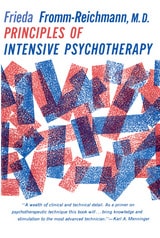
cover of Principles of Intensive Psychotherapy

Principles of Intensive Psychotherapy

Frieda Fromm-Reichmann

University of Chicago Press, 1950

"[This book has] a wealth of clinical and technical detail. As a primer on psychotherapeutic technique this book will. . .bring knowledge and stimulation to the most advanced technician"—Karl A. Menninger

"One is continuously aware that here is a truly human being at work, human in the sense of exquisite awareness, on a profoundly intuitive level, of the workings of the human totality. . . . Because of this she can bridge the vast divide that separates us from the psychotic . . . thereby gaining access to the process of recalling the patient to his lost domain."—Louise E. DeRosis, M.D., American Journal of Psychoanalysis

[more]
cover of Privacy and the Past: Research, Law, Archives, Ethics

Privacy and the Past

Research, Law, Archives, Ethics

Lawrence, Susan C

Rutgers University Press, 2016
When the new HIPAA privacy rules regarding the release of health information took effect, medical historians suddenly faced a raft of new ethical and legal challenges—even in cases where their subjects had died years, or even a century, earlier. In Privacy and the Past, medical historian Susan C. Lawrence explores the impact of these new privacy rules, offering insight into what historians should do when they research, write about, and name real people in their work.
 
Lawrence offers a wide-ranging and informative discussion of the many issues involved. She highlights the key points in research ethics that can affect historians, including their ethical obligations to their research subjects, both living and dead, and she reviews the range of federal laws that protect various kinds of information. The book discusses how the courts have dealt with privacy in contexts relevant to historians, including a case in which a historian was actually sued for a privacy violation. Lawrence also questions who gets to decide what is revealed and what is kept hidden in decades-old records, and she examines the privacy issues that archivists consider when acquiring records and allowing researchers to use them. She looks at how demands to maintain individual privacy both protect and erase the identities of people whose stories make up the historical record, discussing decisions that historians have made to conceal identities that they believed needed to be protected. Finally, she encourages historians to vigorously resist any expansion of regulatory language that extends privacy protections to the dead.
 
Engagingly written and powerfully argued, Privacy and the Past is an important first step in preventing privacy regulations from affecting the historical record and the ways that historians write history.
 
[more]
cover of Private Aid, Political Activism: American Medical Relief to Spain and China, 1936–1949

Private Aid, Political Activism

American Medical Relief to Spain and China, 1936–1949

Aelwen D. Wetherby

University of Missouri Press, 2017
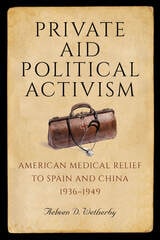
This book explores American medical relief to Spain and China in the 1930s and 1940s as responses to the Spanish Civil War and the Second Sino-Japanese War. Although serving vastly different peoples in strikingly distant landscapes, the three aid organizations focused on here illustrate a transition in how Americans responded to foreign conflict and how humanitarian aid was used as a political tool. The story of these small and relatively unknown organizations can help refine historical understanding of the development of humanitarianism and the evolution of global citizenship in the twentieth century.

[more]
cover of Private Bodies, Public Texts: Race, Gender, and a Cultural Bioethics

Private Bodies, Public Texts

Race, Gender, and a Cultural Bioethics

Karla FC Holloway

Duke University Press, 2011
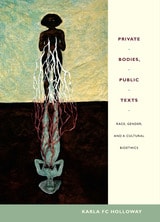
In Private Bodies, Public Texts, Karla FC Holloway examines instances where medical issues and information that would usually be seen as intimate, private matters are forced into the public sphere. As she demonstrates, the resulting social dramas often play out on the bodies of women and African Americans. Holloway discusses the spectacle of the Terri Schiavo right-to-die case and the injustice of medical researchers’ use of Henrietta Lacks’s cell line without her or her family’s knowledge or permission. She offers a provocative reading of the Tuskegee syphilis study and a haunting account of the ethical dilemmas that confronted physicians, patients, and families when a hospital became a space for dying rather than healing during Hurricane Katrina; even at that dire moment, race mattered. Private Bodies, Public Texts is a compelling call for a cultural bioethics that attends to the historical and social factors that render some populations more vulnerable than others in medical and legal contexts. Holloway proposes literature as a conceptual anchor for discussions of race, gender, bioethics, and the right to privacy. Literary narratives can accommodate thick description, multiple subjectivities, contradiction, and complexity.
[more]
cover of Private Guns, Public Health

Private Guns, Public Health

David Hemenway

University of Michigan Press, 2004

"In this small book David Hemenway has produced a masterwork. He has dissected the various aspects of the gun violence epidemic in the United States into its component parts and considered them separately. He has produced a scientifically based analysis of the data and indeed the microdata of the over 30,000 deaths and 75,000 injuries which occur each year. Consideration and adoption of the policy lessons he recommends would strengthen the Constitutional protections that all of our citizens have to life, liberty, and the pursuit of happiness."
-Richard F. Corlin, Past President, American Medical Association

"This lucid and penetrating study is essential reading for anyone who wishes to understand the tragedy of gun violence in America and-even more important-what we can do to stop it. David Hemenway cuts through the cant and rhetoric in a way that no fair-minded person can dismiss, and no sane society can afford to ignore."
-Richard North Patterson, novelist

"The rate of gun-related homicide, suicide, and accidental injury has reached epidemic proportions in American society. Diagnosing and treating the gun violence epidemic demands the development of public health solutions in conjunction with legislative and law enforcement strategies."
-Kweisi Mfume, President and CEO of NAACP

"In scholarly, sober analytic assessments, including rigorous critiques of NRA-popularized pseudoscience, David Hemenway constructs a convincing case that firearm availability is a critical and proximal cause of unparalleled carnage. By formulating such violence as a public health issue, he proposes workable policies analogous to ones that reduced injuries from tobacco, alcohol, and automobiles."
-Jerome P. Kassirer, Editor-in-Chief Emeritus, New England Journal of Medicine, and Distinguished Professor, Tufts University School of Medicine

"As a former District Attorney and Attorney General, I know the urgency of providing safe homes, schools and neighborhoods for all. This remarkable tour-de-force is a powerful study of one promising solution: a data-rich, eminently readable demonstration of why we should treat gun violence as an American epidemic."
-Scott Harshbarger, Former Attorney General of Massachusetts, President and CEO of Common Cause


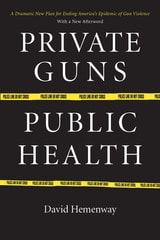
On an average day in the United States, guns are used to kill almost eighty people, and to wound nearly three hundred more. If any other consumer product had this sort of disastrous effect, the public outcry would be deafening; yet when it comes to guns such facts are accepted as a natural consequence of supposedly high American rates of violence.

Private Guns, Public Health explodes that myth and many more, revealing the advantages of treating gun violence as a consumer safety and public health problem. David Hemenway fair-mindedly and authoritatively demonstrates how a public-health approach-which emphasizes prevention over punishment, and which has been so successful in reducing the rates of injury and death from infectious disease, car accidents, and tobacco consumption-can be applied to gun violence.

Hemenway uncovers the complex connections between guns and self-defense, gun violence and schools, gun prevalence and homicide, and more. Finally, he outlines a policy course that would significantly reduce gun-related injury and death.

With its bold new public-health approach to guns, Private Guns, Public Health marks a shift in our understanding of guns that will-finally-point us toward a solution.


[more]
cover of Private Guns, Public Health, New Ed.

Private Guns, Public Health, New Ed.

David Hemenway

University of Michigan Press, 2017

On an average day in the United States, guns are used to kill over ninety people and wound about three hundred more; yet such facts are accepted as a natural consequence of supposedly high American rates of violence. Private Guns, Public Health reveals the advantages of treating gun violence as a consumer safety and public health problem—an approach that emphasizes prevention over punishment and that has successfully reduced the rates of injury and death from infectious disease, car accidents, and tobacco consumption.

Hemenway fair-mindedly and authoritatively outlines a policy course that would significantly reduce gun-related injury and death, pointing us toward a solution.



[more]
cover of Private Practices: Harry Stack Sullivan, the Science of Homosexuality, and American Liberalism

Private Practices

Harry Stack Sullivan, the Science of Homosexuality, and American Liberalism

Wake, Naoko

Rutgers University Press, 2011

Private Practices examines the relationship between science, sexuality, gender, race, and culture in the making of modern America between 1920 and 1950, when contradictions among liberal intellectuals affected the rise of U.S. conservatism. Naoko Wake focuses on neo-Freudian, gay psychiatrist Harry Stack Sullivan, founder of the interpersonal theory of mental illness. She explores medical and social scientists' conflicted approach to homosexuality, particularly the views of scientists who themselves lived closeted lives.

Wake discovers that there was a gap--often dramatic, frequently subtle--between these scientists' "public" understanding of homosexuality (as a "disease") and their personal, private perception (which questioned such a stigmatizing view). This breach revealed a modern culture in which self-awareness and open-mindedness became traits of "mature" gender and sexual identities. Scientists considered individuals of society lacking these traits to be "immature," creating an unequal relationship between practitioners and their subjects. In assessing how these dynamics--the disparity between public and private views of homosexuality and the uneven relationship between scientists and their subjects--worked to shape each other, Private Practices highlights the limits of the scientific approach to subjectivity and illuminates its strange career--sexual subjectivity in particular--in modern U.S. culture.

[more]
cover of Processed Foods and the Consumer: Additives, Labeling, Standards, and Nutrition

Processed Foods and the Consumer

Additives, Labeling, Standards, and Nutrition

Vernal S. Packard Jr.

University of Minnesota Press, 1976

Processed Foods and the Consumer was first published in 1976. Minnesota Archive Editions uses digital technology to make long-unavailable books once again accessible, and are published unaltered from the original University of Minnesota Press editions.

In this comprehensive guide, Professor Packard discusses problems and answers questions of paramount importance to the consumer concerning processed foods that are sold in the marketplace. The book is an excellent text for course use in classes in food science or technology, nutrition, dietetics, institutional food management, and related courses. It is also a valuable reference work for those in food industries and regulatory and health agencies, and for the concerned public.

[more]
cover of Professional Ethics and Primary Care Medicine: Beyond Dilemmas and Decorum

Professional Ethics and Primary Care Medicine

Beyond Dilemmas and Decorum

Harmon L. Smith and Larry R. Churchill

Duke University Press, 1986
This volume moves beyond ethics as problem-solving or ethics as etiquette to offer a look at ethics in primary care—as opposed to life-or-death—medical care. Professional Ethics and Primary Care Medicine deals with the ethics of routine, day-to-day encounters between doctors and patients. It probes beneath the hard decisions to look at the moral frameworks, habits of thought, and customs of practice that underlie choices. Harmon Smith and Larry Churchill argue that primary care, far from being merely a setting for the rendering of care, provides a new understanding of both physician and patient, and thereby offers a fresh basis for medical ethics.
[more]
cover of Prostate Cancer: Making Survival Decisions

Prostate Cancer

Making Survival Decisions

Sylvan Meyer and Seymour C. Nash, M.D., F.A.C.S.

University of Chicago Press, 1994

Written by a surviving prostate cancer patient and his urologist, Prostate Cancer: Making Survival Decisions provides not just a physician's overview of the disease, but the compassion, understanding, and frankness of a man who's lived through the experience. From the first symptoms to early diagnosis to life after treatment, journalist Sylvan Meyer details every facet of the disease from the patient's point of view. Along with a clear, complete guide to the latest treatments, techniques, and findings, Meyer outlines the tough decisions the patient will face; describes what it's like to go through all the tests, the treatment, and the recovery; and provides an understanding of how the patient himself can affect the outcome.

Thoroughly researched and imbued with great sensitivity, Prostate Cancer: Making Survival Decisions is the most informative and illuminating book about prostate cancer available. Not just an indispensable tool for those who have been diagnosed or are at risk, this is an important guide for anyone who seeks a better understanding of this enigmatic disease and the controversies surrounding it.

[more]
cover of Protecting American Health Care Consumers

Protecting American Health Care Consumers

Eleanor DeArman Kinney

Duke University Press, 2002

Despite the attention to the problem of protecting the health care interests of Americans, there is little consensus on what should be done politically or otherwise to address this problem. In Protecting American Health Care Consumers Eleanor DeArman Kinney, a nationally regarded expert on health policy and law, tackles the serious and ongoing debate among state and federal policymakers, health care providers, third-party payers, and consumers about how to provide procedural justice to patients in the present health care climate.
To promote and ensure consumer protection in an increasingly adversarial and complicated health-care culture, Kinney first analyzes the procedures by which consumer concerns are presently discerned and resolved and then explains why these systems are unsatisfactory. She also discusses problematic procedures for making coverage policy and quality standards and proposes reforms in a variety of processes that would enable all consumers, including the uninsured, to influence key policies and standards and also to raise concerns and obtain appropriate remedies.
As the first comprehensive treatment of administrative procedures in American health plans and other such institutions, Protecting American Health Care Consumers will be welcomed by state and federal policymakers, managed care executives, and lawyers charged with designing and implementing protections for consumers in public and private health plans.

[more]
cover of Prozac on the Couch: Prescribing Gender in the Era of Wonder Drugs

Prozac on the Couch

Prescribing Gender in the Era of Wonder Drugs

Jonathan Michel Metzl

Duke University Press, 2003

Pills replaced the couch; neuroscience took the place of talk therapy; and as psychoanalysis faded from the scene, so did the castrating mothers and hysteric spinsters of Freudian theory. Or so the story goes. In Prozac on the Couch, psychiatrist Jonathan Michel Metzl boldly challenges recent psychiatric history, showing that there’s a lot of Dr. Freud encapsulated in late-twentieth-century psychotropic medications. Providing a cultural history of treatments for depression, anxiety, and other mental illnesses through a look at the professional and popular reception of three “wonder drugs”—Miltown, Valium, and Prozac—Metzl explains the surprising ways Freudian gender categories and popular gender roles have shaped understandings of these drugs.

Prozac on the Couch traces the notion of “pills for everyday worries” from the 1950s to the early twenty-first century, through psychiatric and medical journals, popular magazine articles, pharmaceutical advertisements, and popular autobiographical "Prozac narratives.” Metzl shows how clinical and popular talk about these medications often reproduces all the cultural and social baggage associated with psychoanalytic paradigms—whether in a 1956 Cosmopolitan article about research into tranquilizers to “cure” frigid women; a 1970s American Journal of Psychiatry ad introducing Jan, a lesbian who “needs” Valium to find a man; or Peter Kramer’s description of how his patient “Mrs. Prozac” meets her husband after beginning treatment.

Prozac on the Couch locates the origins of psychiatry’s “biological revolution” not in the Valiumania of the 1970s but in American popular culture of the 1950s. It was in the 1950s, Metzl points out, that traditional psychoanalysis had the most sway over the American imagination. As the number of Miltown prescriptions soared (reaching 35 million, or nearly one per second, in 1957), advertisements featuring uncertain brides and unfaithful wives miraculously cured by the “new” psychiatric medicines filled popular magazines. Metzl writes without nostalgia for the bygone days of Freudian psychoanalysis and without contempt for psychotropic drugs, which he himself regularly prescribes to his patients. What he urges is an increased self-awareness within the psychiatric community of the ways that Freudian ideas about gender are entangled in Prozac and each new generation of wonder drugs. He encourages, too, an understanding of how ideas about psychotropic medications have suffused popular culture and profoundly altered the relationship between doctors and patients.
[more]
cover of Psychiatric Contours: New African Histories of Madness

Psychiatric Contours

New African Histories of Madness

Nancy Rose Hunt and Hubertus Büschel, editors

Duke University Press, 2024

Psychiatric Contours investigates new histories of psychiatry, derangement, and agitated subjectivities in colonial and decolonizing Africa. The volume lets the multivalent term madness broaden perception, well beyond the psychiatric. Many chapters detect the mad or the psychiatric in unhinged persons, frantic collectives, and distressing situations. Others investigate individuals suffering from miscategorization. A key Foucauldian word, vivacity, illuminates how madness aligns with pathology, creativity, turbulence, and psychopolitics. The archives, patient-authored or not, speak to furies and fantasies inside asylums, colonial institutions, decolonizing missions, and slave ships. The frayed edges of politicized deliria open up the senses and optics of psychiatry’s history in Africa far beyond clinical spaces and classification. The volume also proposes fresh concepts, notably the vernacular, to suggest how to work with emic clues in a granular fashion and telescope the psychiatric within histories of madness. With chapters stretching across much of ex-British and ex-French colonial Africa, Psychiatric Contours attends to the words, autobiographies, and hallucinations of the stigmatized and afflicted as well as of the powerful. Expatriate psychiatrists with cameras, prying authorities, fearful missionaries, and colonial anthropologists enter these readings beside patients, asylums, and boarding schools via research on possession “hysteria” and schizophrenia. In brief, this book demonstrates novel ways of writing not only medical history but all subaltern and global histories.

Contributors. Hubertus Büschel, Raphaël Gallien, Matthew M. Heaton, Richard Hölzl, Nancy Rose Hunt, Richard C. Keller, Sloan Mahone, Nana Osei Quarshie, Jonathan Sadowsky, Romain Tiquet
[more]
cover of Psychiatric Encounters: Madness and Modernity in Yucatan, Mexico

Psychiatric Encounters

Madness and Modernity in Yucatan, Mexico

Reyes-Foster, Beatriz M.

Rutgers University Press, 2019
Psychiatric Encounters presents an intimate portrait of a public inpatient psychiatric facility in the Southeastern state of Yucatan, Mexico. The book explores the experiences of patients and psychiatrists as they navigate the challenges of public psychiatric care in Mexico. While international reports condemning conditions in Mexican psychiatric institutions abound, Psychiatric Encounters considers the large- and small-scale obstacles to quality care encountered by doctors and patients alike as they struggle to live and act like human beings under inhumane conditions. Beatriz Mireya Reyes-Foster closely examines the impact of the Mexican state’s neoliberal health reforms on how patients access care and doctors perform their duties. Engaging with madness, modernity, and identity, Psychiatric Encounters considers the enduring role of colonialism in the context of Mexico's troubled contemporary mental health care institutions.  
[more]
cover of Psychiatry and Behavioral Science: An Introduction and Study Guide for Medical Students

Psychiatry and Behavioral Science

An Introduction and Study Guide for Medical Students

edited by David A. Baron and Ellen H. Sholevar

Temple University Press, 2008

This easy-to-read, unique format text combines introductory psychiatry content with board-style review questions written for first and second year medical students.  The book is intended to be used as the required text for pre-clinical psychiatric education.  The user-friendly split page format includes clinical vignettes, "fun facts," and relevant art work.  Each chapter contains board review questions that prepare the medical student for USMLE Step 1 and COMLEX 1. By using a clinical approach consistent with the needs of today's medical students, the authors hope to prepare first and second year medical students for their exams and clinical rotations.
[more]
cover of Psychopathology: An Empathic Representational Approach; An Integration of Phenomenology and Cognitive Neuroscience

Psychopathology

An Empathic Representational Approach; An Integration of Phenomenology and Cognitive Neuroscience

Eric Yu Hai Chen

Hong Kong University Press, 2024

Explores how the scientific concepts of information and representation can be used to understand subjective mental phenomena and integrate them in empathic clinical dialogues during interactions with patients.

Psychopathology: An Empathic Representational Approach retraces the foundations of classical phenomenological psychopathology and integrates them with modern ideas drawn from anthropology, cognitive neuroscience, computational science, and evolutionary biology to synthesize a comprehensive framework and provide fresh insights. It explores key issues in clinical psychopathology coherently and systematically, illustrates advanced topics in an accessible manner using clinical case examples, metaphors, and clarifying diagrams, and directly links advanced conceptual frameworks with pragmatic skills in the clinical dialogue process.

This volume is aimed at a broad audience of mental health professionals, researchers, and students in psychiatry, psychology, and social work. Its interdisciplinary treatment of the subject will also interest biologists, anthropologists, cognitive psychologists, neuroscientists, and philosophers.

[more]
cover of Psychosis and Schizophrenia in Hong Kong: Navigating Clinical and Cultural Crossroads

Psychosis and Schizophrenia in Hong Kong

Navigating Clinical and Cultural Crossroads

Eric Yu Hai Chen and Yvonne Treffurth

Hong Kong University Press, 2024

Fills a gap in research by focusing psychosis studies on those affected in Hong Kong.

Psychosis and Schizophrenia in Hong Kong covers some of the most serious mental health conditions that top the global disease burden and affect three percent of the general population. However, most research on psychotic disorders is undertaken in the West, and few studies have been systematically carried out in Asia despite global interest in regional differences. This work offers a unique and coherent account of these disorders and their treatment in Hong Kong over the last thirty years.

Chen and his research program’s pioneering work has ranged from the impact of early intervention on outcomes and relapse prevention to the renaming of psychosis to reduce stigma. The studies have contributed to wider international debates on the optimal management of the condition. Their investigations in semantics and cognition, as well as cognition-enhancing exercise interventions, have provided novel insights into deficits encountered in the treatment of psychotic disorders and how they might be ameliorated. The research has also explored subjective experiences of psychosis and elicited unique perspectives in patients of Asian origin.

Each topic is divided into three sections: a global background of the challenges encountered; research findings from Hong Kong; and reflections that place the data in scientific and clinical contexts and offer future directions.
[more]
cover of Public Health: The Development of a Discipline, From the Age of Hippocrates to the Progressive Era

Public Health

The Development of a Discipline, From the Age of Hippocrates to the Progressive Era

Schneider, Dona

Rutgers University Press, 2008

Public health as a discipline grew out of traditional Western medicine but expanded to include interests in social policy, hygiene, epidemiology, infectious disease, sanitation, and health education. This book, the first of a two-volume set, is a collection of important and representative historical texts that serve to trace and to illuminate the development of conceptions, policies, and treatments in public health from the dawn of Western civilization through the Progressive Era of the early twentieth century.

The editors provide annotated readings and biographical details to punctuate the historical timeline and to provide students with insights into the progression of ideas, initiatives, and reforms in the field. From Hippocrates and John Graunt in the early period, to John Snow and Florence Nightingale during the nineteenth-century sanitary reform movement, to Upton Sinclair and Margaret Sanger in the Progressive Era, readers follow the identification, evolution, and implementation of public health concepts as they came together under one discipline.

[more]
cover of Public Health: The Development of a Discipline, Twentieth-Century Challenges

Public Health

The Development of a Discipline, Twentieth-Century Challenges

Schneider, Dona

Rutgers University Press, 2011

Published in 2008, the first volume of Public Health focused on issues from the dawn of western civilization through the Progressive era. Volume 2 defines the public health challenges of the twentieth century--this important reference covers not only how the discipline addressed the problems of disease, but how it responded to economic, environmental, occupational, and social factors that impacted public health on a global scale. Major illnesses such as cancer, HIV, and tuberculosis are addressed, along with lifestyle concerns, such as tobacco and nutrition. Chapters also explore maternal-child and women's health, dental public health, health economics and ethics, and the role of philanthropy. Each chapter begins with an in-depth introduction, followed by three original articles that illustrate the problem. The volume is enhanced with a detailed chronology of public health events, as well as appendices that contain many of the original documents that ushered public health into the new millennium.
[more]
cover of Public Privates: Performing Gynecology from Both Ends of the Speculum

Public Privates

Performing Gynecology from Both Ends of the Speculum

Terri Kapsalis

Duke University Press, 1997

In Public Privates, a book about looking and being looked at, about speculums, spectacles, and spectators, about display, illumination, and reflection, Terri Kapsalis makes visible the practices and representations of gynecology. The quintessential examination of women, gynecology is not simply the study of women’s bodies, but also serves to define and constitute them. Any critical analysis of gynecology is therefore, as Kapsalis affirms, an investigation of what it means to be female. In this respect she considers the public exposure of female "privates" in the performance of the pelvic exam.
From J. Marion Sims’s surgical experiments on unanesthetized slave women in the mid-nineteenth century, to the use of cadavers and prostitutes to teach medical students gynecological techniques, Kapsalis focuses on the ways in which women and their bodies have been treated by the medical establishment. Removing gynecology from its private cover within clinic walls and medical textbook pages, she decodes the gynecological exam, seizing on its performative dimension. She considers traditional medical practices and the dynamics of "proper" patient performance; non-traditional practices such as cervical self-exam; and incarnations of the pelvic examination outside the bounds of medicine, including its appearance in David Cronenberg’s film Dead Ringers and Annie Sprinkle’s performance piece "Public Cervix Announcement."
Confounding the boundaries that separate medicine, art, and pornography, revealing the potent cultural attitudes and anxieties about women, female bodies, and female sexuality that permeate the practice of gynecology, Public Privates concludes by locating a venue from which challenging, alternative performances may be staged.
[more]
cover of Purchasing Population Health: Paying for Results

Purchasing Population Health

Paying for Results

David A. Kindig

University of Michigan Press, 1997

The fundamental assertion of this book is that population health improvement will not be achieved until appropriate financial incentives are designed for this outcome.This one sentence summarizes the message of David Kindig’s book, which directly addresses the current turbulence in health care and the lack of focus on value for all public and private investments to improve health. This proposal for a new health outcome purchasing standard is derived from Dr. Kindig’s training as a physician and his experience in public and private health care management. While intended to address the cost, quality, and access goals of the failed federal reform effort of 1994, it envisions using health outcomes as a public- and private-sector purchasing standard for medical care as well as other health-promoting sectors such as educationand the environment.In language accessible to public and corporate policymakers, Kindig summarizes the vast technical literature in the areas of health outcomes and quality measurement, the determinants of health, health economics, rationing, and vertical integration. Drawing from the literature familiar to faculty and students in the health professions and business, this book will serve to inform a lay readership concerned about health care quality and expenditures.While based on research evidence, the final two chapters, “Making It Happen” and “The Case for Action, the Price of Inertia” outline how the ideas in this book can actually be put to work for the health and benefit of all in the twenty-first century.
[more]
cover of Pushing for Midwives: Homebirth Mothers and the Reproductive Rights Movement

Pushing for Midwives

Homebirth Mothers and the Reproductive Rights Movement

Authored by Christa Craven

Temple University Press, 2010

With the increasing demand for midwives, activists are lobbying to loosen restrictions that deny legal access to homebirth options. In Pushing for Midwives, Christa Craven presents a nuanced history of women’s reproductive rights activism in the U.S. She also provides an examination of contemporary organizing strategies for reproductive rights in an era increasingly driven by “consumer rights.”

An historical and ethnographic case study of grassroots organizing, Pushing for Midwives is an in-depth look at the strategies, successes, and challenges facing midwifery activists in Virginia. Craven examines how decades-old race and class prejudices against midwives continue to impact opposition to—as well as divisions within—women’s contemporary legislative efforts for midwives. By placing the midwifery struggle within a broader reproductive rights context, Pushing for Midwives encourages activists to reconsider how certain political strategies have the potential to divide women. This reflection is crucial in the wake of neoliberal political-economic shifts that have prioritized the rights of consumers over those of citizens—particularly if activists hope to maintain their commitment to expanding reproductive rights for all women.

[more]
cover of Pyrrhic Progress: The History of Antibiotics in Anglo-American Food Production

Pyrrhic Progress

The History of Antibiotics in Anglo-American Food Production

Claas Kirchhelle

Rutgers University Press, 2020

Winner of the 2021 Joan Thirsk Memorial Prize from the British Agricultural History Society​
2020 Choice​ Outstanding Academic Title​
Winner of the 2020 Turriano Prize from ICOHTEC
Short-listed and highly commended for the Antibiotic Guardian Award from Public Health England​
Long-listed for the Michel Déon Prize from the Royal Irish Academy​

Pyrrhic Progress analyses over half a century of antibiotic use, regulation, and resistance in US and British food production. Mass-introduced after 1945, antibiotics helped revolutionize post-war agriculture. Food producers used antibiotics to prevent and treat disease, protect plants, preserve food, and promote animals’ growth. Many soon became dependent on routine antibiotic use to sustain and increase production. The resulting growth of antibiotic infrastructures came at a price. Critics blamed antibiotics for leaving dangerous residues in food, enabling bad animal welfare, and selecting for antimicrobial resistance (AMR) in bacteria, which could no longer be treated with antibiotics. Pyrrhic Progress reconstructs the complicated negotiations that accompanied this process of risk prioritization between consumers, farmers, and regulators on both sides of the Atlantic. Unsurprisingly, solutions differed: while Europeans implemented precautionary antibiotic restrictions to curb AMR, consumer concerns and cost-benefit assessments made US regulators focus on curbing drug residues in food. The result was a growing divergence of antibiotic stewardship and a rise of AMR. Kirchhelle’s comprehensive analysis of evolving non-human antibiotic use and the historical complexities of antibiotic stewardship provides important insights for current debates on the global burden of AMR. This Open Access ebook is available under a CC-BY-NC-ND license, and is supported by a generous grant from Wellcome Trust.
[more]