Results by title
2817 books match the query 'Nature' and 111 start with p
Plantation Worlds
Maan Barua
Duke University Press, 2024
Planting the Anthropocene
Rhetorics of NaturecultureJennifer Clary-Lemon
Utah State University Press, 2019
Using the results of interviews with seasonal Canadian tree planters, Jennifer Clary-Lemon interrogates the complex and messy imbrication of nature-culture through the inadequate terminology used to describe the actual circumstances of the planters’ work and lives—and offers alternative ways to conceptualize them. Although silvicultural workers do engage with the limiting rhetoric of efficiency and humanism, they also make rhetorical choices that break down the nature-culture divide and orient them on a continuum that blurs the boundaries between the given and the constructed, the human and nonhuman. Tree-planting work is approached as a site of a deep-seated materiality—a continued re-creation of the land’s “disturbance”—rather than a simplistic form of doing good that further separates humans from landscapes.
Jennifer Clary-Lemon’s view of nature and the Anthropocene through the lens of material rhetorical studies is thoroughly original and will be of great interest to students and scholars of rhetoric and composition, especially those focused on the environment.
Plants Beyond Borders
Edited by Courtney B. Ryan and Alicia Carroll
The Ohio State University Press, 2026
Centers vegetal life as a force that disrupts the borders of race, gender, sexuality, and colonial power.
Although plants are the most abundant life form on earth, the environmental humanities have paid them scant attention until recently, even as new challenges, such as the COVID-19 pandemic, climate change, war, and the global rise of the right have piqued interest in plants as signs of life that challenge the Anthropocene and the logic of extraction. In Plants Beyond Borders, Courtney B. Ryan and Alicia Carroll have marshalled a range of innovative contributions that focus on vegetal borderlands—or spaces in which plant and human life overlap—where vegetal life exceeds and uproots human borders. Containing perspectives from English, landscape architecture, Native American studies, performing arts, and more, Plants Beyond Borders foregrounds Indigenous sovereignty and plant knowledge; explores the shared transmutability of plants and trans, queer, and pregnant bodies; and investigates phytographia, or plant writing, as plants thinking beyond borders. No matter the objective, the essays in this interdisciplinary collection center vegetal life, considering how agentic plants not only rupture myths of settler colonialism, gender, and sexuality but also inscribe themselves and us in the world.
Contributors:
Cinthya Ammerman Muñoz, Alicia Carroll, Gwendolyn Cohen, Isaac Cohen, Xinyue Fu, Patrícia de Nóbrega Gomes, Katie Hogan, Kaley Makino, Melissa Parrish, MacKenzie Patterson, Courtney B. Ryan, John Charles Ryan, Saghar Safaeyan, Jeannette Schollaert, Kathryn Van Wert, Christina Welch
Plants and Animals in the Life of the Kuna
By Jorge Ventocilla, Heraclio Herrera, & Valerio Núñez
University of Texas Press, 1995
"The earth is the mother of all things"; thus begins this original and accessible book on how the Kuna of Panama relate to the natural world. An integrative project involving Kuna traditional leaders and trained scholars, and fully illustrated by a Kuna artist, this translation of Plantas y animales en la vida del pueblo Kuna focuses on Kuna plant and animal life, social life, and social change as a means of saving traditional ecological knowledge and "returning" it to the community.
The authors hope to preserve the Kuna environment not only by reviving traditional technologies but also by educating the Kuna as to what needs protection. While the Kuna have a tradition of living in harmony with the land, the intrusion of the market economy is eroding the very basis of their sustainable way of life.
As a response to this crisis, this book seeks to develop native self-awareness and provide a model for collaboration. It will appeal to Latin Americanists, anthropologists, and ethnobotanists, as well as to a general readership in environmental issues.
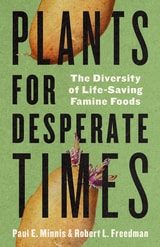
Plants for Desperate Times
The Diversity of Life-Saving Famine FoodsPaul E. Minnis and Robert L. Freedman
University of Arizona Press, 2024
Plants for Desperate Times is an introduction to the diversity of plant foods that have saved millions of lives during lethal food shortages. While not a field guide, it addresses questions about what famine foods are and why they are important. The work highlights one hundred plants. Each entry includes the common and scientific names, botanical family, distribution, use as a famine food and other uses, and nutritional information. The species come from across the botanical kingdom, demonstrating the diversity of life-saving plants and the human ingenuity of making what might seem to be inedible plants edible. Unexpectedly, important famine foods include alternative uses of important crops as well as native plants.
Beyond a study of famine foods, the authors share why keeping an inventory of plant foods of last resort is so important. They help to build an understanding of little-known and underappreciated foods that may have a greater role in provisioning humanity in the future. As much as we may hope that severe food scarcity will never occur again, history suggests otherwise, and Plants for Desperate Times provides invaluable documentation of these vital foods.
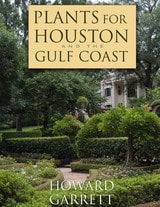
Plants for Houston and the Gulf Coast
By Howard Garrett
University of Texas Press, 2008
Whether you're a first-time homeowner, dedicated gardener, or landscape professional, if you're gardening on the Gulf Coast, you need Howard Garrett's Plants for Houston and the Gulf Coast. Garrett is one of Texas's top organic gardening experts, and gardeners rely on him for accurate, sensible advice about what to plant and how to maintain healthy yards and landscapes without synthetic fertilizers and toxic pesticides. In Plants for Houston and the Gulf Coast, Garrett presents nearly 400 plants, both native and adapted, that grow well in Southeast Texas.
Like all of Howard Garrett's books, Plants for Houston and the Gulf Coast is loaded with indispensable gardening information:
- Nearly 400 trees, shrubs, groundcovers and vines, annuals and perennials, and grasses
- 400 full-color, close-up photos of the plants
- Expert information about each plant's appearance, growing requirements, landscape uses, potential problems, and other interesting facts
- Precise, easy-to-follow instructions about how to design a garden, prepare the soil, install trees and other plants, grow grass and control weeds, and maintain the landscape and control pests
- A detailed gardening calendar for Southeast Texas that lists specific plants to plant and maintenance tasks to perform each month
No other book currently available provides such extensive and reliable information for Texas Gulf Coast gardeners.
Plants of Life, Plants of Death
Frederick J. Simoons
University of Wisconsin Press, 1998
Pythagoras, the ancient Greek mathematician, did not himself eat fava beans in any form; in fact, he banned his followers from eating them. Cultural geographer Frederick Simoons disputes the contention that Pythagoras established that ban because he recognized the danger of favism, a disease that afflicts genetically-predisposed individuals who consume fava beans. Contradicting more deterministic explanations of history, Simoons argues that ritual considerations led to the Pythagorean ban.
In his fascinating and thorough new study, Simoons examines plants associated with ritual purity, fertility, prosperity, and life, on the one hand, or with ritual impurity, sickness, ill fate, and death, on the other. Plants of Life, Plants of Death offers a wealth of detail from not only history, ethnography, religious studies, classics, and folklore, but also from ethnobotany and medicine. Simoons surveys a vast geographical region extending from Europe through the Near East to India and China. He tells the story of India's giant sacred fig trees, the pipal and the banyan, and their changing role in ritual, religion, and as objects of pilgrimage from antiquity to the present day; the history of mandrake and ginseng, “man roots” whose uses from Europe to China have been shaped by the perception that they are human in form; and the story of garlic and onions as impure foods of bad odor in that same broad region.
Simoons also identifies and discusses physical characteristics of plants that have contributed to their contrasting ritual roles, and he emphasizes the point that the ritual roles of plants are also shaped by basic human concerns—desire for good health and prosperity, hopes for fertility and offspring, fear of violence, evil and death—that were as important in antiquity as they are today.
“It dazzles as a piece of scholarship.”—Daniel W. Gade, University of Vermont
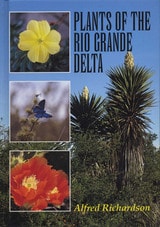
Plants of the Rio Grande Delta
By Alfred Richardson
University of Texas Press, 1995
The Rio Grande Delta is fabulously rich in wildflowers and other plant life. Lying in the geographically and environmentally diverse region common to southern Texas and northern Mexico, it supports plants that also grow in Central America and throughout Mexico, the Gulf Coastal plains, the South Texas Plains, and the Chihuahuan Desert.
Plants of the Rio Grande Delta provides an accessible and reliable identification guide to all of the plants, excluding grasses, of the region—some 823 species. In clear, nontechnical language, Alfred Richardson gives a brief description of each species, along with its range, habitat, and general blooming time. Over two hundred superb color photographs offer quick and easy field identification, while line drawings illustrate notable characteristics of the plants.
This volume expands and updates Alfred Richardson's previous book, Plants of Southernmost Texas, published in 1990 by the Gorgas Science Foundation. It will be an essential field guide for everyone interested in South Texas flora, from winter visitors and Valley residents to professional botanists.
Plants of the World
Maarten J. M. Christenhusz, Michael F. Fay, and Mark W. Chase
Royal Botanic Gardens, Kew, 2017
Plants of the World
An Illustrated Encyclopedia of Vascular PlantsMaarten J. M. Christenhusz, Michael F. Fay, and Mark W. Chase
University of Chicago Press, 2017
Platypus Matters
The Extraordinary Story of Australian MammalsJack Ashby
University of Chicago Press, 2022
Think of a platypus: They lay eggs (that hatch into so-called platypups), produce milk without nipples and venom without fangs, and can detect electricity. Or a wombat: Their teeth never stop growing, they poop cubes, and they defend themselves with reinforced rears. And what about antechinuses—tiny marsupial carnivores whose males don’t see their first birthday, as their frenzied sex lives take so much energy that their immune systems fail? Platypuses, possums, wombats, echidnas, devils, kangaroos, quolls, dibblers, dunnarts, kowaris: Australia has some truly astonishing mammals, with incredible, unfamiliar features. But how does the world regard these creatures? And what does that mean for their conservation?
In Platypus Matters, naturalist Jack Ashby shares his love for these often-misunderstood animals. Informed by his own experiences meeting living marsupials and egg-laying mammals during fieldwork in Tasmania and mainland Australia, as well as his work with thousands of zoological specimens collected for museums over the last two-hundred-plus years, Ashby’s tale not only explains historical mysteries and debunks myths (especially about the platypus), but also reveals the toll these myths can take. Ashby makes clear that calling these animals “weird” or “primitive”—or incorrectly implying that Australia is an “evolutionary backwater,” a perception that can be traced back to the country’s colonial history—has undermined conservation: Australia now has the worst mammal extinction rate of any place on Earth. Important, timely, and written with humor and wisdom by a scientist and self-described platypus nerd, this celebration of Australian wildlife will open eyes and change minds about how we contemplate and interact with the natural world—everywhere.

Playa Works
The Myth of the EmptyWilliam L. Fox
University of Nevada Press, 2024
In eight brilliant essays, Fox explores many of the major playas of the American West , examining locations as diverse as Nellis Air Force Base and Frenchman Flat, where the federal government has tested experimental aircraft and atomic weaponry; the Great Salt Lake Desert, where land-speed records have been broken; and the Black Rock Desert of Northern Nevada, site of the colorful Burning Man arts festival. He analyzes the geological and climatological conditions that created the playas and the historical role that playas played in the exploration and settlement of the West. And he offers lucid and keenly perceptive discussions of the ways that artists have responded to the playas, from the ancient makers of geoglyphs to the work of contemporary artists who have found inspiration in these enigmatic spaces, including earthworks builder Michael Heizer, photographer Richard Misrach, and painter Michael Moore. The ensemble is a compelling combination of natural history, philosophy, and art criticism, a thoughtful meditation on humankind's aversion to and fascination with the void.
Playas of the Great Plains
By Loren M. Smith
University of Texas Press, 2003
Winner, Wildlife Publications Award — Outstanding Book Category, The Wildlife Society, 2004
Texas Tech University President's Book Award, 2005
Shallow wetlands that occur primarily in semi-arid to arid environments, playas are keystone ecosystems in the western Great Plains of North America. Providing irreplaceable habitat for native plants and animals, including migratory birds, they are essential for the maintenance of biotic diversity throughout the region. Playas also serve to recharge the aquifer that supplies much of the water for the Plains states. At the same time, however, large-scale habitat changes have endangered playas across the Great Plains, making urgent the need to understand their ecology and implement effective conservation measures.
This book provides a state-of-the-art survey of all that is currently known about Great Plains playa ecology and conservation. Loren Smith synthesizes his own extensive research with other published studies to define playas and characterize their origin, development, flora, fauna, structure, function, and diversity. He also thoroughly explores the human relationship with playas from prehistoric times, when they served as campsites for the Clovis peoples, to today's threats to playa ecosystems from agricultural activities and global climate change. A blueprint for government agencies, private conservation groups, and concerned citizens to save these unique prairie ecosystems concludes this landmark study.
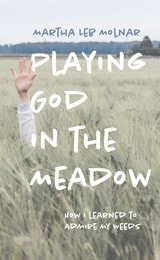
Playing God in the Meadow
How I Learned to Admire My WeedsMartha Leb Molnar
University of Massachusetts Press, 2022
After decades of fantasizing and saving, of working multiple jobs and embracing frugality in the midst of Manhattan, Martha Leb Molnar and her husband had found their parcel of land. Determined to turn an overgrown and unproductive Vermont apple orchard into a thriving and beautiful landscape, they decided to restore this patch of land to a pristine meadow and build a safe haven for their family and nearby wildlife.
Once they cleared the gnarled and dying trees away, Molnar was forced to wage war on the invasive species that had sprung up around the property. Propelled by the heated debates surrounding non-native species and her own complicated family history and migration, she was driven to research the Vermont landscape, turning to scientific literature, experts in botany and environmental science, and locals who have long tended the land in search of answers. At turns funny, thoughtful, and conversational, Playing God in the Meadow follows this big city transplant as she learns to make peace with rural life and an evolving landscape that she cannot entirely control.
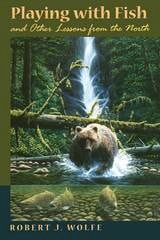
Playing with Fish and Other Lessons from the North
Robert J. Wolfe
University of Arizona Press, 2006
Plotinus Ennead I.8
On the Nature and Source of Evil: Translation with an Introduction and CommentaryAnne Sheppard
Parmenides Publishing, 2025
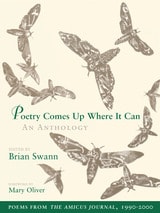
Poetry Comes Up Where It Can
Brian Swann
University of Utah Press, 2000
The poems in this anthology first appeared in The Amicus Journal, the quarterly publication of the Natural Resources Defense Council (NRDC). Selected by the journal’s poetry editor, Brian Swann, they represent a broad array of responses to the natural world—from warning to celebration—by some of the nation’s most distinguished poets. Included is work by American poets Wendell Berry, Michael Dorris, Denise Levertov, Mary Oliver, Pattiann Rogers, and William Stafford, as well as work from poets in Australia and Mexico. All grapple with issues of nature and the environment from the perspective of the final decade of the millennium.
These poems remind us that we can be dazzled both by nature and by the poetry that explores the natural world.
Poetry from Spaceship Earth
Empire and Ecology in Post-1945 American PoetrySamia Rahimtoola
University of Iowa Press, 2026
In the early decades of the postwar period, the planetary metaphor of “spaceship Earth” was everywhere in the West. It exerted its power on sites as various as Caribbean research stations, the shipping lanes of the U.S.-occupied Pacific, Palestinian refugee camps, and the internal colonies of segregated nations. At its heart was a new ideology and infrastructure of managing, administering, and rationalizing nature through which Western powers sought to maintain their grip on a decolonizing planet.
Poetry from Spaceship Earth retrieves a diverse array of postwar American poets—Robert Duncan, June Jordan, Joanne Kyger, Lorine Niedecker, and Charles Olson—who contested and cultivated alternatives to this emergent mode of environmentalism. By placing the major innovations of postwar poetry into conversation with environmental politics, Cold War science and technology studies, and postcolonial and Black studies, Samia Rahimtoola develops an original theoretical and historical account of the racial and colonial logics that underpin the supposedly neutral project of managing nature.
Poison in the Well
Radioactive Waste in the Oceans at the Dawn of the Nuclear AgeHamblin, Jacob D
Rutgers University Press, 2009
In the early 1990s, Russian President Boris Yeltsin revealed that for the previous thirty years the Soviet Union had dumped vast amounts of dangerous radioactive waste into rivers and seas in blatant violation of international agreements. The disclosure caused outrage throughout the Western world, particularly since officials from the Soviet Union had denounced environmental pollution by the United States and Britain throughout the cold war.
Poison in the Well provides a balanced look at the policy decisions, scientific conflicts, public relations strategies, and the myriad mishaps and subsequent cover-ups that were born out of the dilemma of where to house deadly nuclear materials. Why did scientists and politicians choose the sea for waste disposal? How did negotiations about the uses of the sea change the way scientists, government officials, and ultimately the lay public envisioned the oceans? Jacob Darwin Hamblin traces the development of the issue in Western countries from the end of World War II to the blossoming of the environmental movement in the early 1970s.
This is an important book for students and scholars in the history of science who want to explore a striking case study of the conflicts that so often occur at the intersection of science, politics, and international diplomacy.
Poisonous Plants and Venomous Animals of Alabama and Adjoining States
Whit Gibbons, Robert R. Haynes, and Joab L. Thomas
University of Alabama Press, 1989
The essential guide to identifying and understanding the Southeast's toxic plants and venomous wildlife.
Wisteria, mistletoe, oleander, milkweed, narcissus, yellow Jessamine, wild hydrangea, trillium, all are plants easily recognized by most people. But these and more that 200 other plants in Alabama and the Southeast can cause systemic poisoning if ingested by human beings and livestock. This book describes these poisonous plants, including various mushrooms, and discusses the toxic properties, symptoms of poisoning, habitat occurrence, and geographic distribution. One chapter describes plants that cause dermatitis or other allergic reactions-plants including poison ivy, poison sumac, ragweed, clematis, and red maple.
Other chapters of the book discuss venous animals-not only the six venomous snakes of the Southeast but also certain jellyfishes, centipedes, spiders, scorpions, stinging caterpillars, wasps, hornets, bees, catfishes, stingrays, and others- that might be encountered by people during recreation or work. The authors describe habitat occurrence, geographic distribution, and general life history and behavior for these animals. Numerous color photographs and drawings of both plants and animals are included for identification, as well as hundreds of range maps.
The authors encourage an appreciation for the protective mechanisms hat help plants and animals defend themselves against predators or other threats. Although people must be able to recognize a poisonous plant or venomous animal in order to avoid suffering unwary contact, the book reassures the reader that Alabama’s flora and fauna gives us little cause to worry on a relative scale. The information provided increases our understanding of and admiration for these species and their environments.

Policing in Natural Disasters
Stress, Resilience, and the Challenges of Emergency ManagementTerri M. Adams and Leigh R. Anderson
Temple University Press, 2019
When natural disasters and emergencies strike, the short- and long-term effects of these events on first responders—the very people society relies upon in the midst of a catastrophe—are often overlooked. Policing in Natural Disasters provides a comprehensive analysis of the major challenges faced by law enforcement officers during extreme crisis events. Terri Adams and Leigh Anderson examine the dilemmas police departments face as well as the impact of the disasters on the professional and personal lives of the officers. Case studies explore the response and recovery phases of emergencies including Hurricane Katrina, the 2010 earthquake and subsequent tsunami in Santiago, Chile, and the Superstorm Tornado Outbreak in 2011.
Policing in Natural Disasters was inspired by the personal accounts of triumph and tragedy shared by first responders. It provides an understanding of first-responder behaviors during disasters, as well as the preparedness, mitigation, response and recovery policy implications for first responders and emergency managers. As first responders must frequently cope with stress, uncertainty, and threats to their health and safety during high-consequence events, Adams and Anderson provide lessons from first-hand experiences of police officers that can lead to better management in times of crisis.
Political Ecology Across Spaces, Scales, and Social Groups
Paulson, Susan
Rutgers University Press, 2004
Environmental issues have become increasingly prominent in local struggles, national debates, and international policies. In response, scholars are paying more attention to conventional politics and to more broadly defined relations of power and difference in the interactions between human groups and their biophysical environments. Such issues are at the heart of the relatively new interdisciplinary field of political ecology, forged at the intersection of political economy and cultural ecology.
This volume provides a toolkit of vital concepts and a set of research models and analytic frameworks for researchers at all levels. The two opening chapters trace rich traditions of thought and practice that inform current approaches to political ecology. They point to the entangled relationship between humans, politics, economies, and environments at the dawn of the twenty-first century and address challenges that scholars face in navigating the blurring boundaries among relevant fields of enquiry. The twelve case studies that follow demonstrate ways that culture and politics serve to mediate human-environmental relationships in specific ecological and geographical contexts. Taken together, they describe uses of and conflicts over resources including land, water, soil, trees, biodiversity, money, knowledge, and information; they exemplify wide-ranging ecological settings including deserts, coasts, rainforests, high mountains, and modern cities; and they explore sites located around the world, from Canada to Tonga and cyberspace.
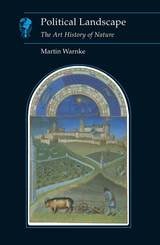
Political Landscape
The Art History of NatureMartin Warnke
Reaktion Books, 2004
The Political Landscape is underpinned with a fascinating array of examples and illustrations, many of which will be new even to experts in the art of landscape and related disciplines.
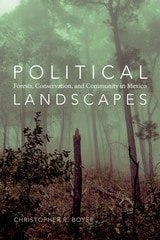
Political Landscapes
Forests, Conservation, and Community in MexicoChristopher R. Boyer
Duke University Press, 2015
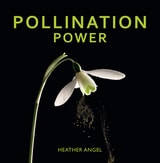
Pollination Power
Heather Angel
University of Chicago Press, 2016
In stunning full-color images, employing the latest photographic techniques, esteemed photographer Heather Angel has captures the intimate interactions of plants with their floral pollinators. The plants come not only from Angel’s Surrey backyard and the Royal Botanic Garden at Kew, but from twenty countries where Angel has travelled—from the rich floral kingdoms of the Cape of South Africa to the diversity of China and the Americas. The photos illustrate the varied techniques that flowers use to communicate with their pollinators. Some, for example, change color when the flower no longer has rewards to offer. Others control precisely when pollinators enter or leave by timing when they open and close their petals or when they emit a scent. This fascinating array of pollination repertoires crossfertilizes Angel’s photos with a descriptive text.
Featuring both common and exotic plants and temperate and tropical floral, Pollination Power will entice anyone with a passion for botanicals, from gardeners to botanists alike.
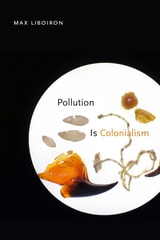
Pollution Is Colonialism
Max Liboiron
Duke University Press, 2021
Polypores and Similar Fungi of Eastern and Central North America
Alan E. Bessette, Dianna Smith, and Arleen R. Bessette
University of Texas Press, 2021
Pond and Brook
A Guide to Nature in Freshwater EnvironmentsMichael J. Caduto
University Press of New England, 1990
Ponderosa
Big Pine of the SouthwestSylvester Allred
University of Arizona Press, 2015
Ponderosa is the first of its kind to provide an introduction to the natural and human histories of the ponderosa pine forests of the Southwest that is accessible to all who wish to enjoy the forests. The book offers knowledge on elemental aspects of the forests, such as the structure of the trees, as well as theoretical perspectives on issues such as climate change. Included are discussions of biogeography, ecology, and human and natural history, illustrated by over fifty color photographs throughout.
Allred presents his observations as if he is recalling his thoughts over the course of a walk in a ponderosa pine forest. His imagery-saturated prose provides an informal and enjoyable approach to discovering the history and environment of the ponderosa pine. Using a concise, straightforward writing style, Allred invites readers to explore the forests with him.
Ponderosa includes:
- More than 50 color photos
- Learn how to estimate the age of a tree
- See the reptiles, birds, and mammals that make their home in ponderosa pine forests
- Much more!
Population Ecology of Roosevelt Elk
Conservation and Management in Redwood National and State ParksButch Weckerly
University of Nevada Press, 2017
In a study spanning more than twenty years, Weckerly made key observations and conducted various investigations under a multitude of ecological conditions. Few authors have dedicated this much time and effort into a single research area. It is a testament to perseverance that his groundbreaking study of the Roosevelt elk was so successful. He was able to document the independent dynamics of several herds of female elk, experience the extinction of one of their subpopulations, and record scientific conclusions in the context of resiliency and redundancy of the elk population.
This book will be of considerable interest to those who investigate the ecology of big game animals, including naturalists, hunters, and individuals with particular interest in Redwood State and National Parks. It is an important book that contributes substantially to the persistence and viability of Roosevelt elk in the parks and the surrounding area.
Population Viability Analysis
Edited by Steven R. Beissinger and Dale R. McCullough
University of Chicago Press, 2002
In this book, many of the world's leading conservation and population biologists evaluate what has become a key tool in estimating extinction risk and evaluating potential recovery strategies—population viability analysis, or PVA. PVA integrates data on the life history, demography, and genetics of a species with information on environmental variability, using computer models ranging from simple measures of population growth rate to complex spatial simulations, to predict whether a given population will remain viable (i.e., not go extinct) under various management options. A synthetic and objective overview of the latest theoretical and methodological advances, Population Viability Analysis will be crucial reading for conservationists, land managers, and policy makers.
Power Shift
Keywords for a New Politics of EnergyImre Szeman
West Virginia University Press, 2025
Featuring brief essays on 101 key terms by scholars, artists, and activists from around the world and across disciplines, Power Shift offers an expansive, kaleidoscopic guide to the history of petromodernity, recent technological and social developments, and pathways to new energy futures. The book offers new insights into the emergent politics of energy, contrasting today’s environmental and climate movements with the geopolitical contests of the Cold War era. It explores the still unfolding story of energy transition by focusing on the ongoing struggles of communities and individuals against decisions made by corporations, governments, and international organizations.
Power in the Wild
The Subtle and Not-So-Subtle Ways Animals Strive for Control over OthersLee Alan Dugatkin
University of Chicago Press, 2022
The quest for power in animals is so much richer, so much more nuanced than who wins what knock-down, drag-out fight. Indeed, power struggles among animals often look more like an opera than a boxing match. Tracing the path to power for over thirty different species on six continents, writer and behavioral ecologist Lee Alan Dugatkin takes us on a journey around the globe, shepherded by leading researchers who have discovered that in everything from hyenas to dolphins, bonobos to field mice, cichlid fish to cuttlefish, copperhead snakes to ravens, and meerkats to mongooses, power revolves around spying, deception, manipulation, forming and breaking up alliances, complex assessments of potential opponents, building social networks, and more. Power pervades every aspect of the social life of animals: what they eat, where they eat, where they live, whom they mate with, how many offspring they produce, whom they join forces with, and whom they work to depose. In some species, power can even change an animal’s sex. Nor are humans invulnerable to this magnificently intricate melodrama: Dugatkin’s tales of the researchers studying power in animals are full of unexpected pitfalls, twists and turns, serendipity, and the pure joy of scientific discovery.
Power of Nature
Archaeology and Human-Environmental Dynamicsedited by Monica L. Smith
University Press of Colorado, 2022
Climatic events, pathogens, and animals as nonhuman agents, ranging in size from viruses to mega-storms, have presented our species with dynamic conditions that overwhelm human capacities. In some cases, people have modified architecture to deal with a constant onslaught of storms, as in Japan or the Caribbean; in other cases, they have welcomed the occasional natural disaster as a chance to start fresh or to put into place new ideas and practices, as in the case of ancient Roman cities. Using the concept of “agency” as one in which multiple sentient and nonhuman actors interact in a landscape, and exploring locations such as the Caribbean, the Pacific, South Asia, the Andes, the Mediterranean, Mesoamerica, North America, and the Arctic, the authors provide compelling explanations of the effect of an entire realm of natural powers that beset human societies past and present—from storms, earthquakes, and fires to vegetation, domestic animals, and wild birds. Throughout, the emphasis is on the philosophical and engineering adjustments that people make to stay resilient when facing the perpetual changes of the natural world.
Using an archaeological perspective, The Power of Nature illustrates and analyzes the many
ways that people do not control their environments. It will be of interest to archaeologists, as well as scholars in science, biology, botany, forestry, urban studies, and disaster management.
Contributors: Steven Ammeran, Traci Ardren, Katelyn J. Bishop, Karen Mohr Chávez, Sergio Chávez, Stanislava Chávez, Emelie Cobb, Jago Cooper, Harper Dine, Chelsea Fisher, Jennifer Huebert, Dale L. Hutchinson, Sara L. Juengst, Kanika Kalra, François Oliva, Matthew C. Peros, Jordan Pickett, Seth Quintus, John Robb, Monica L. Smith, Jillian A. Swift, Silvia Tomášková, Kyungsoo Yoo
Practical Botany for Gardeners
Over 3,000 Botanical Terms Explained and ExploredGeoff Hodge
University of Chicago Press, 2013
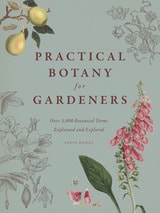
Practical Botany for Gardeners provides an elegant and accessible introduction to the world of botany. It presents the essentials that every gardener needs to know, connecting explanations of scientific facts with useful gardening tips. Flip to the roots section and you’ll not only learn how different types of roots support a plant but also find that adding fungi to soil aids growth. The pruning section both defines “lateral buds” and explains how far back on a shoot to cut in order to propagate them.
The book breaks down key areas and terminology with easy-to-navigate chapters arranged by theme, such as plant types, plant parts, inner workings, and external factors. “Great Botanists” and “Botany in Action” boxes delve deeper into the fascinating byways of plant science. This multifaceted book also includes two hundred botanical illustrations and basic diagrams that hearken to the classic roots of botany.
Part handbook, part reference, Practical Botany for Gardeners is a beautifully captivating read. It’s a must for garden lovers and backyard botanists who want to grow and nurture their own plant knowledge.
Prairie City, Iowa
Three Seasons at HomeDouglas Bauer
University of Iowa Press, 1979
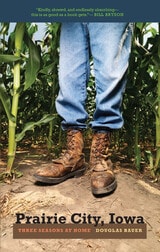
Bauer grew up "awkward with soil and with machines" in a small town east of Des Moines, As a teenager, he left the farm for college life twenty miles away and, after graduation, took a job with Better Homes and Gardens in Des Moines, writing in the junk-mail fictional persona of "Barbara Joyce,"asking millions of people to subscribe. After a few years he moved to Chicago to work as an editor and writer for Playboy and eventually as a freelance journalist. In the summer of 1975, he returned home to attend his grandmother's funeral and by autumn he moved back to Prairie City, where he stayed for the next three seasons.
Bauer's book is neither a wistful nostalgia about returning to a simpler time and place nor a patronizing look at those who never leave the town in which they were born. What emerges is an unsentimental yet loving account of life in the Midwest. Not just a portrait of Prairie City, Iowa, but of everyone's small town, everywhere.
Prairie Ghost
Pronghorn and Human Interaction in Early AmericaRichard E. McCabe
University Press of Colorado, 2010
A Wildlife Management Institute Book
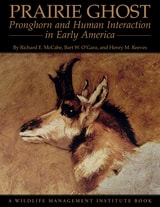
In this lavishly illustrated volume Richard E. McCabe, Bart W. O'Gara and Henry M. Reeves explore the fascinating relationship of pronghorn with people in early America, from prehistoric evidence through the Battle of Little Bighorn in 1876. The only one of fourteen pronghorn-like genera to survive the great extinction brought on by human migration into North America, the pronghorn has a long and unique history of interaction with humans on the continent, a history that until now has largely remained unwritten.With nearly 150 black-and-white photographs, 16 pages of color illustrations, plus original artwork by Daniel P. Metz, Prairie Ghost: Pronghorn and Human Interaction in Early America tells the intriguing story of humans and these elusive big game mammals in an informative and entertaining fashion that will appeal to historians, biologists, sportsmen and the general reader alike.
Winner of the Wildlife Society's Outstanding Book Award for 2005
Prairie Time
The Leopold Reserve RevisitedJohn Ross and Beth Ross
University of Wisconsin Press, 1998
In the rush of modern life, we measure our lives by the clock, the calendar, the timetable. But there are older rhythms in nature: the call of chickadees before the first hint of spring, the golden face of a compass plant in July, the first snowfall. These signs mark the passage of time in a world that Aldo Leopold knew well and eloquently described.
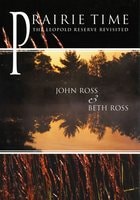
With notebook and camera in hand, John and Beth Ross revisit the Aldo Leopold Memorial Reserve in south-central Wisconsin fifty years after Leopold’s death. Thanks to the efforts of Leopold, his family, and the Leopold Foundation, this once-ruined farmland is now largely restored to a natural state. The Rosses explore the terrain of this sandy land, encounter its natural citizens, and relate life here to its physical underpinnings. Following Leopold’s own practice of phenology, they note the seasonal changes: arrivals and departures of wild geese, the blossoming of the pasque flower at the edge of melting snow, the appearance of monarch butterflies on the milkweed. And further, they seek to find in this landscape an underlying morality, a communion of understanding, a sense of place in the cosmos.
Beautifully illustrated with color photographs, the book also includes notes on the behavior, habitat, and human interactions with ninety-four species of plants, birds, and other animals found in the reserve. An extensive glossary explains terms from geology, ecology, meteorology, and related life and earth sciences.
Prairie Up
An Introduction to Natural Garden DesignBenjamin Vogt
University of Illinois Press, 2023
Landscaping with native plants has encouraged gardeners from the Midwest and beyond to embark on a profound scientific, ecological, and emotional partnership with nature. Benjamin Vogt shares his expertise with prairie plants in a richly photographed guide aimed at gardeners and homeowners, making big ideas about design approachable and actionable. Step-by-step blueprints point readers to plant communities that not only support wildlife and please the eye but that rethink traditional planting and maintenance. Additionally, Vogt provides insider information on plant sourcing, garden tools, and working with city ordinances. This book will be an invaluable reference in sustainable garden design for those wanting both beautiful and functional landscapes.
Easy to use and illustrated with over 150 color photos, Prairie Up is a practical guide to artfully reviving diversity and wildness in our communities.
Received Honorable Mention from the AHS Book Awards (American Horticultural Society)
Prairie in Your Pocket
A Guide to Plants of the Tallgrass PrairieMark Muller
University of Iowa Press, 2000
Precarious Partners
Horses and Their Humans in Nineteenth-Century FranceKari Weil
University of Chicago Press, 2020
Weil traces the evolving partnerships established between French citizens and their horses through this era. She considers the newly designed “races” of workhorses who carried men from the battlefield to the hippodrome, lugged heavy loads through the boulevards, or paraded women riders, amazones, in the parks or circus halls—as well as those unfortunate horses who found their fate on a dinner plate. Moving between literature, painting, natural philosophy, popular cartoons, sports manuals, and tracts of public hygiene, Precarious Partners traces the changing social, political, and emotional relations with these charismatic creatures who straddled conceptions of pet and livestock in nineteenth-century France.
Predatory Bureaucracy
The Extermination of Wolves and the Transformation of the WestMichael Robinson
University Press of Colorado, 2005
Robinson follows wolves' successful adaptation to the arrival of explorers, mountain men, and bounty hunters, through their disastrous century-long entanglement with the federal government. He shares the parallel story of the Biological Survey's rise, detailing the personal, social, geographic, and political forces that allowed it to thrive despite opposition from hunters, animal lovers, scientists, environmentalists, and presidents.
Federal predator control nearly eliminated wolves throughout the United States and Mexico and radically changed American lands and wildlife populations. It undercut the livelihoods of countless homestead families in order to benefit an emerging western elite of livestock owners. The extermination of predators led to problems associated with prey overpopulation, but, as Robinson reveals, extermination and control programs still continue. Predatory Bureaucracy will fascinate readers interested in wildlife, ecosystems, agriculture, and environmental politics.
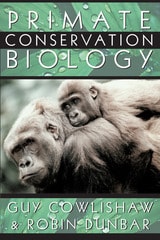
Primate Conservation Biology
Guy Cowlishaw and Robin I. M. Dunbar
University of Chicago Press, 2000
Primate Conservation Biology begins with detailed overviews of the diversity, life history, ecology, and behavior of primates and the ways these factors influence primate abundance and distribution. Cowlishaw and Dunbar then discuss the factors that put primates at the greatest risk of extinction, especially habitat disturbance and hunting. The remaining chapters present a comprehensive review of conservation strategies and management practices, highlighting the key issues that must be addressed to protect primates for the future.
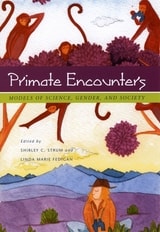
Primate Encounters
Models of Science, Gender, and SocietyEdited by Shirley C. Strum and Linda Marie Fedigan
University of Chicago Press, 2000
"[A] fascinating study . . . on how and why ideas about primate society have changed. The volume consists of dialogues among scientists from different disciplines, national traditions, scientific culture, generations, standpoints, and genders. . . . A wonderful reflection on the discipline of primatology and on science in general."—Science Books and Films
"Primate Encounters should be required reading for anyone about to embark on a career in the field. But it equally valuable for its miscellany of opinions, recollections and off-the-cuff remarks, as well as for its thoughtful observations, 'outrageous ravings' and humour (from the elders in the field). It gives us a glimpse of how scientists work together to understand their place in the world."—Deborah L. Mazolillo, Times Literary Supplement
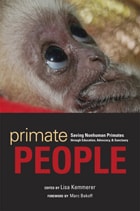
Primate People
Saving Nonhuman Primates through Education, Advocacy, and SanctuaryLisa Kemmerer
University of Utah Press, 2012
In the last 30 years the bushmeat trade has led to the slaughter of nearly 90 percent of West Africa’s bonobos, perhaps our closest relatives, and has recently driven Miss Waldron’s red colobus monkey to extinction. Earth was once rich with primates, but every species—except one—is now extinct or endangered because of one primate—Homo sapiens. How have our economic and cultural practices pushed our cousins toward destruction? Would we care more about their fate if we knew something of their individual lives and sufferings? Would we help them if we understood how our choices threaten their existence? This anthology helps to answer these questions.
The first section of Primate People introduces forces that threaten nonhuman primates, such as the entertainment and “pet” industries, the bushmeat trade, habitat destruction, and logging. The second section exposes the exploitation of primates in research facilities, including the painful memories of an undercover agent, and suggests models of more enlightened scientific methods. The final section tells the stories of those who lobby for change, educate communities, and tenderly care for our displaced cousins in sanctuaries.
Sometimes shocking and disturbing, sometimes poignant and encouraging, Primate People always draws the reader into the lives of nonhuman primates. Activists around the world reveal the antics and pleasures of monkeys, the tendencies and idiosyncrasies of chimpanzees, and the sufferings and fears of macaques. Charming, difficult, sensitive—these testimonies demonstrate that nonhuman primates and human beings are, indeed, closely related. Woven into the anthology’s lucid narratives are the stories of how we harm and create the conditions that endanger primates, and what we can and must do to prevent their ongoing suffering and fast-approaching extinction.
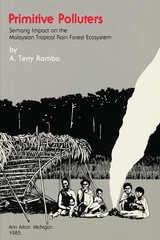
Primitive Polluters
Semang Impact on the Malaysian Tropical Rain Forest EcosystemA. Terry Rambo
University of Michigan Press, 1985

Principles of Catholic Theology, Book 1
On the Nature of TheologyThomas Joseph White, OP
Catholic University of America Press, 2023
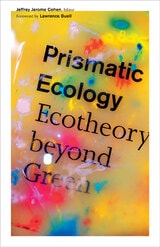
Prismatic Ecology
Ecotheory beyond GreenJeffrey Jerome Cohen
University of Minnesota Press, 2013
Emphasizing sustainability, balance, and the natural, green dominates our thinking about ecology like no other color. What about the catastrophic, the disruptive, the inaccessible, and the excessive? What of the ocean’s turbulence, the fecundity of excrement, the solitude of an iceberg, multihued contaminations? Prismatic Ecology moves beyond the accustomed green readings of ecotheory and maps a colorful world of ecological possibility.
In a series of linked essays that span place, time, and discipline, Jeffrey Jerome Cohen brings together writers who illustrate the vibrant worlds formed by colors. Organized by the structure of a prism, each chapter explores the coming into existence of nonanthropocentric ecologies. “Red” engages sites of animal violence, apocalyptic emergence, and activism; “Maroon” follows the aurora borealis to the far North and beholds in its shimmering alternative modes of world composition; “Chartreuse” is a meditation on postsustainability and possibility within sublime excess; “Grey” is the color of the undead; “Ultraviolet” is a potentially lethal force that opens vistas beyond humanly known nature.
Featuring established and emerging scholars from varying disciplines, this volume presents a collaborative imagining of what a more-than-green ecology offers. While highlighting critical approaches not yet common within ecotheory, the contributions remain diverse and cover a range of topics including materiality, the inhuman, and the agency of objects. By way of color, Cohen guides readers through a reflection of an essentially complex and disordered universe and demonstrates the spectrum as an unfinishable totality, always in excess of what a human perceives.
Contributors: Stacy Alaimo, U of Texas at Arlington; Levi R. Bryant, Collin College; Lowell Duckert, West Virginia U; Graham Harman, American U in Cairo; Bernd Herzogenrath, Goethe U of Frankfurt; Serenella Iovino, U of Turin, Italy; Eileen A. Joy; Robert McRuer, George Washington U; Tobias Menely, Miami U; Steve Mentz, St. John’s U, New York City; Timothy Morton, Rice U; Vin Nardizzi, U of British Columbia; Serpil Oppermann, Hacettepe U, Ankara; Margaret Ronda, Rutgers U; Will Stockton, Clemson U; Allan Stoekl, Penn State U; Ben Woodard; Julian Yates, U of Delaware.

Private Property and the Endangered Species Act
Saving Habitats, Protecting HomesEdited by Jason F. Shogren
University of Texas Press, 1998
Our whole nation benefits from the preservation of natural habitats and their diversity of animal and plant species—yet small groups of private landowners often bear most of the costs of setting land aside for conservation purposes. This imbalance has generated many conflicts since the passage of the Endangered Species Act in 1973 and remains one of the most controversial issues to be resolved as the ESA makes its way through Congress for reauthorization.
To provide policy makers, landowners, and other stakeholders in the ESA debates with impartial baseline information, this book offers multidisciplinary perspectives on the role that private property plays in protecting endangered species in the United States. The opening chapter traces the evolution of the ESA and set forth the parameters of the debate over regulation of private property. Four subsequent chapters explore the judicial and economic implications of ESA and suggest how issues of scale and diversity affect the implementation of the ESA on private property. The volume concludes with eight principles to help frame the ongoing ESA reauthorization debate, developed by the University of Wyoming's Institute for Environment and Natural Resources Policy Board, the sponsor of the research presented in this book.
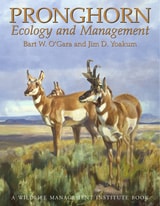
Pronghorn
Ecology & Mangemt: Ecology and ManagementBart W. O'Gara
University Press of Colorado, 2004
Full chapters are devoted to distribution, nutrition and food, diseases and parasites, ecosystem management, hunting, and much more. The principal authors—the world’s preeminent pronghorn biologists, Bart W. O’Gara and Jim D. Yoakum—conclude with a thorough discussion of the future of pronghorn and their management. With 23 chapters that include contributions by 10 other wildlife professionals and more than 850 illustrations, including original artwork by Edson Fichter and Daniel P. Metz, Pronghorn: Ecology and Management is the definitive work on the species.
A Wildlife Management Institute Book