Results by title
1668 books match the query 'Popular culture' and 90 start with p

Polpop 2
Politics and Popular Culture in America TodayJames Combs
University of Wisconsin Press, 1991
This book takes another look at politics and popular culture. The author has tried to explain the politics of popular culture as part of historical and cultural processes, helping the reader understand not only how popular culture has affected our politics, but also where it is taking us.

Pop Modernism
Noise and the Reinvention of the EverydayJuan A. Suarez
University of Illinois Press, 2007

Pop Music And The Press
Steve Jones
Temple University Press, 2002
Popular Abstracts
Ray B. Browne
University of Wisconsin Press, 1978
Popular Abstracts is a reference tool providing access to information appearing in past issues of three journals published by the Bowling Green Popular Press. Abstracts are included for each article appearing in the first ten volumes of The Journal of Popular Culture (1967–1977), the first five volumes of The Journal of Popular Film (1972–1977), and the first four volumes of Popular Music and Society (1971–1975).
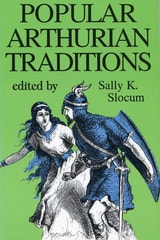
Popular Arthurian Traditions
Sally K. Slocum
University of Wisconsin Press, 1992
Popular Culture Theory and Methodology
A Basic IntroductionEdited by Harold E. Hinds, Marilyn F. Motz, and Angela M.S. Nelson
University of Wisconsin Press, 2006

Popular Culture in America
Paul Buhle, Editor
University of Minnesota Press, 1987
Popular Culture in America was first published in 1987. Minnesota Archive Editions uses digital technology to make long-unavailable books once again accessible, and are published unaltered from the original University of Minnesota Press editions.
This book collects some of the best work from the journal Cultural Correspondence (1975–83), which editor Paul Buhle calls "the first political journal of culture to assume its readers (and writers) watched television." The twenty-four contributors are part of a new generation of cultural critics and historians who are self-conscious products of the mass culture of the fifties and sixties. Their work attempts to update an elementary democratic principle - that people seek understanding and solutions, real or fanciful, through the mechanisms available to them. Although these writers condemn the manipulative qualities of commercial culture, they just as vehemently reject most of what has passed for Marxist (or liberal or conservative) orthodoxy on popular culture. Americans, they argue, have had a unique opportunity as well as a unique need to make the most of popular culture; the collective cultural experience is our only shared past. The richness and vitality of that culture is the focus of this book.
The thirty-four essays work toward an understanding of American mass culture not through abstraction but by exploring the real pleasures of ordinary people's lives. Pulp literature (utopian and horror themes, sports and nurse novels, and contemporary science fiction); radio thrillers; TV horror movies: television evangelists; sitcoms; music (polka, country-western, blues, jazz, and rock 'n roll); comic strips (Krazy Kat, Dick Tracy, Zippy); women's humor—these and other topics are given sensitive, detailed—sometimes humorous—attention. Paul Buhle's essay, "The 1960s Meet the 1980s," discusses popular culture scholarship, drawing on a wide range of theory—the Frankfort School, art history, literary criticism, and social science approaches. Buhle argues for the importance of this scholarship as a way of understanding "that missed connection between the cultural promise of a richly diverse, democratic society and the reality at hand."
Popular Culture in the Middle Ages
University of Wisconsin Press, 1986
The culture of the Middle Ages was as complex, if not as various, as our own, as the essays in this volume ably demonstrate. The essays cover a wide range of tipics, from church sculpture as "advertisement" to tricks and illusions as "homeeconomics."
Popular Culture
An Introductory TextEdited by Jack Nachbar and Kevin Lause
University of Wisconsin Press, 1992
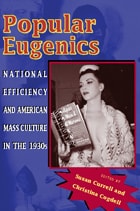
Popular Eugenics
National Efficiency and American Mass Culture in the 1930sSusan Currell
Ohio University Press, 2006
The essays in this generously illustrated collection demonstrate how, after the scientific foundations of the eugenics movement had been weakened in the 1930s, eugenic beliefs spread into the popular media, including newspapers, movies, museum exhibits, plays, and novels, and even fashion shows and comic strips.
Popular Eugenics shows that eugenic thought persisted in science and culture as well as in social policy and goes a long way toward explaining the durability of eugenic thinking and its effects on social policy in the United States. Popular Eugenics will be of interest to scholars and students in a broad range of disciplines, especially American literature and history, popular culture, media studies, and the history of science.

Popular Music Ethnographies
Practice, Place and IdentityEdited by Sarah Raine, Shane Blackman, Robert McPherson, and Iain A. Taylor
Intellect Books, 2025
This edited collection offers evocative ways into an international selection of popular music, from the Ecuadorian indie scene to Chinese rock. In exploring the experiences of musicians, fans, industry professionals, and academics, the rich complexity of popular music is brought to life through ethnography as an immersive approach to both undertaking and communicating research.
Experimenting with ethnography through the joys and tribulations of musical production, fandom, and scholarship, the contributors critically consider what it means to be a popular music ethnographer and what it means to take an ethnographic approach to studying popular music.
In addition to the critical essays, shorter vignettes are provided by musicians, venue owners, music writers, live music photographers, and fans. Altogether, the book explores the practices, places, and identities behind the music.
Popular Music Perspectives
Ideas, Themes, and Patterns in Contemporary LyricsB. Lee Cooper
University of Wisconsin Press, 1991

Popular Stories and Promised Lands
Fan Cultures and Symbolic PilgrimagesRoger C. Aden
University of Alabama Press, 2007
A conversation about who we are, where we’ve been, and where we might be going.
Popular Stories and Promised Lands enters a conversation about who we are, where we’ve been, and where we might be going by suggesting that possible answers to those questions can be found in the popular stories we encounter at the movies, on television, in popular magazines, and even on the funny pages.
As countless scholars and popular writers have noted, those of us living in the United States find ourselves at a cultural crossroads. We are increasingly aware that the stories that once permeated life in these United States, stories that tell us that social and economic progress comes from working hard, that everyone has an equal opportunity to experience such progress, do not resonate to the degree they once did. Because many Americans have traditionally defined themselves, others, and their unique sense of place through these stories, we find ourselves displaced socially, economically, politically, and/or culturally.
So, Roger Aden says, we go to places of our own making. Fans of the television series The X-Files return to the Funhouse each week for a dose of frightening fun. Fans of the weekly magazine Sports Illustrated play in the American Elysian Fields where democratic efforts at balancing work and play are valued. Fans of the movie Field of Dreams work as altruistic producers in an alternative garden spot.
Grounded in the author’s own experiences and reinforced by the voices of approximately two hundred additional fans of the four popular stories, this book offers a compelling case for understanding the alleged wasteland of popular culture as a fertile site of individually and communally created sacred places.

Popular Witchcraft
Straight from the Witch's MouthJack Fritscher
University of Wisconsin Press, 2004
Jack Fritscher sifts through legends of sorcery and the twisted history of witchcraft, including the casting of spells and incantations, with a focus on the growing role of witchcraft in popular culture and its mainstream commercialization through popular music, Broadway, Hollywood, and politics. As seriously historical as it is fun to read, there is no other book like it.
Popularizing the Past
Historians, Publishers, and Readers in Postwar AmericaNick Witham
University of Chicago Press, 2023
What’s the matter with history? For decades, critics of the discipline have argued that the historical profession is dominated by scholars unable, or perhaps even unwilling, to write for the public. In Popularizing the Past, Nick Witham challenges this interpretation by telling the stories of five historians—Richard Hofstadter, Daniel Boorstin, John Hope Franklin, Howard Zinn, and Gerda Lerner—who, in the decades after World War II, published widely read books of national history.
Witham compellingly argues that we should understand historians’ efforts to engage with the reading public as a vital part of their postwar identity and mission. He shows how the lives and writings of these five authors were fundamentally shaped by their desire to write histories that captivated both scholars and the elusive general reader. He also reveals how these authors’ efforts could not have succeeded without a publishing industry and a reading public hungry to engage with the cutting-edge ideas then emerging from American universities. As Witham’s book makes clear, before we can properly understand the heated controversies about American history so prominent in today’s political culture, we must first understand the postwar effort to popularize the past.
Popularizing the Past
Historians, Publishers, and Readers in Postwar AmericaNick Witham
University of Chicago Press, 2023
This is an auto-narrated audiobook edition of this book.
Popularizing the Past tells the stories of five postwar historians who changed the way ordinary Americans thought about their nation’s history.
What’s the matter with history? For decades, critics of the discipline have argued that the historical profession is dominated by scholars unable, or perhaps even unwilling, to write for the public. In Popularizing the Past, Nick Witham challenges this interpretation by telling the stories of five historians—Richard Hofstadter, Daniel Boorstin, John Hope Franklin, Howard Zinn, and Gerda Lerner—who, in the decades after World War II, published widely read books of national history.
Witham compellingly argues that we should understand historians’ efforts to engage with the reading public as a vital part of their postwar identity and mission. He shows how the lives and writings of these five authors were fundamentally shaped by their desire to write histories that captivated both scholars and the elusive general reader. He also reveals how these authors’ efforts could not have succeeded without a publishing industry and a reading public hungry to engage with the cutting-edge ideas then emerging from American universities. As Witham’s book makes clear, before we can properly understand the heated controversies about American history so prominent in today’s political culture, we must first understand the postwar effort to popularize the past.
Portable Postsocialisms
New Cuban Mediascapes after the End of HistoryPaloma Duong
University of Texas Press, 2024
2025 Honorable Mention, Bryce Wood Book Award, Latin American Studies Association
A study of Cuban culture and media in the twenty-first century as both a global phenomenon and a local reality, at a time when the declared death of socialism coexists in tension with emerging anticapitalist movements worldwide.
Why does Cuban socialism endure as an object of international political desire, while images of capitalist markets consume Cuba’s national imagination? This bold new study argues that Cuba’s changing media cultures are key to our understanding of the global postsocialist condition and its competing political imaginaries.
Portable Postsocialisms calls on a vast multimedia archive to offer a groundbreaking cultural interpretation of Cuban postsocialism. Paloma Duong examines songs, artworks, advertisements, memes, literature, jokes, and networks that refuse exceptionalist and exoticizing visions of Cuba. Expanding postsocialist critical theory to read this complex mediascape, Duong argues that a materialist critique of Cuba’s revolutionary legacy must account for Cubans’ everyday demands for agency and self-representation. This long overdue reassessment of Cuba’s place in Latin American and post-Marxist studies shows Cuban postsocialism to be an urgent and indispensable referent for core debates on the politics of participatory cultures in new media studies. Portable Postsocialisms performs the crucial task of redefining how we envision imaginaries of social change in Latin America and the Caribbean.
Post-Authoritarian Cultures
Spain and Latin America's Southern ConeLuis Martín-Estudillo
Vanderbilt University Press, 2008
Post-Catastrophe Film
Cinematic Visions in the Aftermath of DisasterStephen Lee Naish
Intellect Books, 2026
Focusing on the fragile, immediate aftermath of global events, before any new social order or rules for living have formed, Stephen Lee Naish’s latest book introduces an emerging subgenre: post-catastrophe film. Positioned between disaster movies, which depict humanity facing large-scale collapse, and post-apocalyptic films, where new societies and rules have already taken hold, this subgenre captures a unique threshold of survival amid change. Through lively case studies of selected popular films, Naish not only offers close readings of cinematic narratives but also explores deeper themes that emerge in the aftermath of disaster, including the role of artificial intelligence and cyborgs, cosmic survival and colonization, and the tensions between individual isolation and life with others. Ultimately, Naish shows how post-catastrophe films speak to our present reality.
In an age shaped by pandemics, climate crisis, and the uncertainties of postmodernity, cinema persists as a resilient mythmaking machine—mapping scenarios of global destruction while offering anxious viewers ways to envision alternative modes of being before a true “post-catastrophe era” arrives. Written in an engaging style and grounded in accessible examples from popular films, this book appeals to scholars, film enthusiasts, and anyone seeking to better understand our uncertain times.
Postmodernism and China
Arif Dirlik and Xudong Zhang, eds.
Duke University Press, 2000
Collectively, these essays question the implications of specific phenomena, like literature, architecture, rock music, and film, in a postsocialist society. Some essays address China’s complicity in—as well as its resistance to—the culture of global capitalism. Others evaluate the impact of efforts to redefine national culture in terms of enhanced freedoms and expressions of the imagination in everyday life. Still others discuss the general relaxation of political society in post-Mao China, the emergence of the market and its consumer mass culture, and the fashion and discourse of nostalgia. The contributors make a clear case for both the historical uniqueness of Chinese postmodernism and the need to understand its specificity in order to fully grasp the condition of postmodernity worldwide. Although the focus is on mainland China, the volume also includes important observations on social and cultural realities in Hong Kong and Taiwan, whose postmodernity has so far been confined—in both Chinese and English-speaking worlds—to their economic and consumer activities instead of their political and cultural dynamism.
First published as a special issue of boundary 2, Postmodernism and China includes seven new essays. By juxtaposing postmodernism with postsocialism and by analyzing China as a producer and not merely a consumer of the culture of the postmodern, it will contribute to critical discourses on globalism, modernity, and political economics, as well as to cultural and Asian studies.
Contributors. Evans Chan, Arif Dirlik, Dai Jinhua, Liu Kang, Anthony D. King, Jeroen de Kloet, Abidin Kusno, Wendy Larson, Chaoyang Liao, Ping-hui Liao, Sebastian Hsien-hao Liao, Sheldon Hsiao-peng Lu, Wang Ning, Xiaobing Tang, Xiaoying Wang, Chen Xiaoming, Xiaobin Yang, Zhang Yiwu, Xudong Zhang
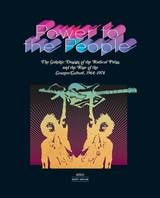
Power to the People
The Graphic Design of the Radical Press and the Rise of the Counter-Culture, 1964-1974Geoff Kaplan
University of Chicago Press, 2013
Practicing Feminisms, Reconstructing Psychology
Notes on a Liminal ScienceJill Morawski
University of Michigan Press, 1994
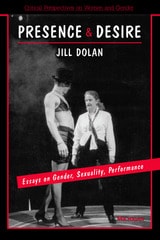
Presence and Desire
Essays on Gender, Sexuality, PerformanceJill Dolan
University of Michigan Press, 1993
This book critically bridges feminist theory and theatrical practice. Dolan examines how performance can subvert normative constructs of gender and sexuality. The collection evaluates mainstream theater, academic stages, subcultural venues, and performance in daily life. It centers sexuality as a primary analytical framework to explore queer visibility and cultural representation. It bridges contemporary feminist theory, poststructuralism, and theatrical practice and places sexuality at the center of its analytical framework to explore how theatrical representation can subvert normative constructs of gender and desire. Dolan evaluates a vast spectrum of performance spaces—ranging from mainstream professional and academic stages to subcultural venues, pornography, and everyday social interactions—to champion queer visibility and claim recognition for women's bodies. Ultimately, the volume functions as a foundational text in performance studies and LGBTQ+ cultural criticism, demonstrating how deliberate theatrical strategies can provoke American culture to actively dismantle and reimagine its traditional social relations
Presence and Resistance
Postmodernism and Cultural Politics in Contemporary American PerformancePhilip Auslander
University of Michigan Press, 1994
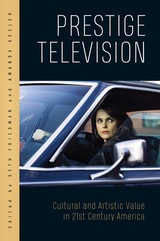
Prestige Television
Cultural and Artistic Value in Twenty-First-Century AmericaSeth Friedman
Rutgers University Press, 2023
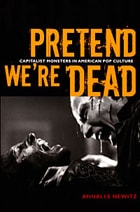
Pretend We're Dead
Capitalist Monsters in American Pop CultureAnnalee Newitz
Duke University Press, 2006
Newitz looks at representations of serial killers, mad doctors, the undead, cyborgs, and unfortunates mutated by their involvement with the mass media industry. Whether considering the serial killer who turns murder into a kind of labor by mass producing dead bodies, or the hack writers and bloodthirsty actresses trapped inside Hollywood’s profit-mad storytelling machine, she reveals that each creature has its own tale to tell about how a freewheeling market economy turns human beings into monstrosities.
Newitz tracks the monsters spawned by capitalism through b movies, Hollywood blockbusters, pulp fiction, and American literary classics, looking at their manifestations in works such as Norman Mailer’s “true life novel” The Executioner’s Song; the short stories of Isaac Asimov and H. P. Lovecraft; the cyberpunk novels of William Gibson and Marge Piercy; true-crime books about the serial killers Ted Bundy and Jeffrey Dahmer; and movies including Modern Times (1936), Donovan’s Brain (1953), Night of the Living Dead (1968), RoboCop (1987), The Silence of the Lambs (1991), and Artificial Intelligence: AI (2001). Newitz shows that as literature and film tell it, the story of American capitalism since the late nineteenth century is a tale of body-mangling, soul-crushing horror.
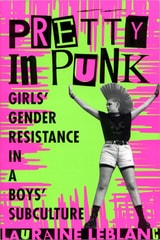
Pretty in Punk
Girl's Gender Resistance in a Boy's SubcultureLeblanc, Lauraine
Rutgers University Press, 1999
Pretty in Punk combines autobiography, interviews, and sophisticated analysis to create the first insider’s examination of the ways punk girls resist gender roles and create strong identities.
Why would an articulate, intelligent, thoughtful young women shave off most of her hair, dye the remainder green, shape it into a mohawk, and glue it onto her head? What attracts girls to male-dominated youth subcultures like the punk movement? What role does the subculture play in their perceptions of themselves, and in their self-esteem? How do girls reconcile a subcultural identity that is deliberately coded “masculine” with the demands of femininity?
Research has focused on the ways media and cultural messages victimize young women, but little attention has been paid to the ways they resist these messages. In Pretty in Punk, Lauraine Leblanc examines what happens when girls ignore these cultural messages, parody ideas of beauty, and refuse to play the games of teenage femininity. She explores the origins and development of the punk subculture, the processes by which girls decide to “go punk,” patterns of resistance to gender norms, and tactics girls use to deal with violence and harassment.
Pretty in Punk takes readers into the lives of girls living on the margins of contemporary culture. Drawing on interviews with 40 girls and women between the ages of 14-37, Leblanc examines the lives of her subjects, illuminating their forms of rebellion and survival. Pretty in Punk lets readers hear the voices of these women as they describe the ways their constructions of femininity—from black lipstick to slamdancing—allow them to reject damaging cultural messages and build strong identities. The price they pay for resisting femininity can be steep—girls tell of parental rejection, school expulsion, institutionalization, and harassment. Leblanc illuminates punk girls’ resistance to adversity, their triumphs over tough challenges, and their work to create individual identities in a masculine world.
Preview 2001+
Popular Culture Studies in the FutureRay B. Browne
University of Wisconsin Press, 1995
The essays in this collection, written by some of the leading scholars in Popular Culture Studies, turn the page on the new millennium to see what are the directions of approach and the opportunities to be gained in recognition of the compelling need for studies in everyday cultures.
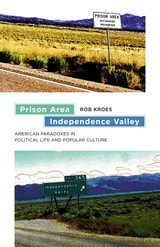
Prison Area, Independence Valley
American Paradoxes in Political Life and Popular CultureRob Kroes
Dartmouth College Press, 2015

Private Eyes
One Hundred and One Knights: A Survey of American Detective Fiction 1922–1984Robert A. Baker and Michael T. Nietzel
University of Wisconsin Press, 1985
Private Eyes is the complete map to what Raymond Bhandler called "the mean streets," the exciting world of the fictional private eye. It is intended to entertain current PI fans and to make new ones.
Probable Cause
Crime Fiction in AmericaLeRoy Lad Panek
University of Wisconsin Press, 1990
American crime fiction has developed into writing that has a commitment to democracy and the democratic way of life, a compassion and empathy and a style which has created a significant branch of American literature.
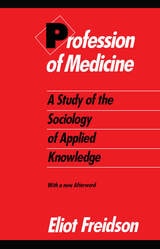
Profession of Medicine
A Study of the Sociology of Applied KnowledgeEliot Freidson
University of Chicago Press, 1988
"Profession of Medicine is a challenging monograph; the ideas presented are stimulating and thought provoking. . . . Given the expanding domain of what illness is and the contentions of physicians about their rights as professionals, Freidson wonders aloud whether expertise is becoming a mask for privilege and power. . . . Profession of Medicine is a landmark in the sociological analysis of the professions in modern society."—Ron Miller, Sociological Quarterly
"This is the first book that I know of to go to the root of the matter by laying open to view the fundamental nature of the professional claim, and the structure of professional institutions."—Everett C. Hughes, Science
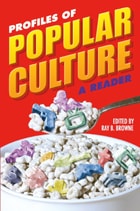
Profiles of Popular Culture
A ReaderEdited by Ray B. Browne
University of Wisconsin Press, 2005
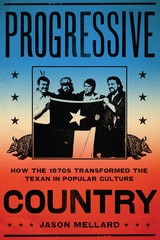
Progressive Country
How the 1970s Transformed the Texan in Popular CultureBy Jason Mellard
University of Texas Press, 2013
Winner, Coral Horton Tullis Memorial Prize, Texas State Historical Association, 2014
During the early 1970s, the nation’s turbulence was keenly reflected in Austin’s kaleidoscopic cultural movements, particularly in the city’s progressive country music scene. Capturing a pivotal chapter in American social history, Progressive Country maps the conflicted iconography of “the Texan” during the ’70s and its impact on the cultural politics of subsequent decades.
This richly textured tour spans the notion of the “cosmic cowboy,” the intellectual history of University of Texas folklore and historiography programs, and the complicated political history of late-twentieth-century Texas. Jason Mellard analyzes the complex relationship between Anglo-Texan masculinity and regional and national identities, drawing on cultural studies, American studies, and political science to trace the implications and representations of the multi-faceted personas that shaped the face of powerful social justice movements. From the death of Lyndon Johnson to Willie Nelson’s picnics, from the United Farm Workers’ marches on Austin to the spectacle of Texas Chic on the streets of New York City, Texas mattered in these years not simply as a place, but as a repository of longstanding American myths and symbols at a historic moment in which that mythology was being deeply contested.
Delivering a fresh take on the meaning and power of “the Texan” and its repercussions for American history, this detail-rich exploration reframes the implications of a populist moment that continues to inspire progressive change.

Projecting History
German Nonfiction Cinema, 1967-2000Nora M. Alter
University of Michigan Press, 2002
Between 1967 and 2000, film production in Germany underwent a number of significant transformations, including the birth and death of New German Cinema as well as the emergence of a new transnational cinematic practice. In Projecting History, Nora M. Alter explores the relationship between German cinematic practice and the student protests in both East and West Germany against the backdrop of the U.S. war in Vietnam in the sixties, the outbreak of terrorism in West Germany in the seventies, West Germany's rise as a significant global power in the eighties, and German reunification in the nineties.
Although a central tendency of New German Cinema in the 1970s was to reduce the nation's history to the product of individuals, the films addressed in Projecting History focus not on individual protagonists, but on complex socioeconomic structures. The films, by Rainer Werner Fassbinder, Harun Farocki, Alexander Kluge, Ulrike Ottinger, Wim Wenders and others, address basic problems of German history, including its overall "peculiarity" within the European context, and, in particular, the specific ways in which the National Socialist legacy continues to haunt Germans.
Nora M. Alter is Associate Professor of German, Film and Media Studies, and Women and Gender Studies at the University of Florida. A specialist in twentieth-century film, comparative literature, and cultural studies, Alter has been the recipient of a National Endowment for the Humanities Fellowship and a Howard Foundation Fellowship. She is also the author of Vietnam Protest Theatre: The Television War on Stage.
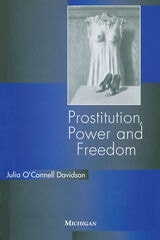
Prostitution, Power and Freedom
Julia O'Connell Davidson
University of Michigan Press, 1998
The author has conducted an impressive amount of research in nine countries, including conversations with male and female sex tourists, adult and child prostitutes, procurers, and clients. Through her research, O'Connell Davidson demonstrates the complexity of prostitution, arguing that it is not simply an effect of male oppression and violence or insatiable sexual needs, nor is it an unproblematic economic encounter. The book provides a sophisticated explanation of the economic and political inequalities underlying prostitution, but also shows that while prostitution necessarily implies certain freedoms for the clients, the amount of freedom experienced by individual prostititutes varies greatly.
This highly accessible book will be of great interest to those in gender and women's studies, sexuality and cultural studies, the sociology of work and organizations, and social policy. General readers will also appreciate having new ways of thinking about this age-old social phenomenon.
Julia O'Connell Davidson is Lecturer in Sociology, University of Leicester.

Psychobilly
Subcultural SurvivalKimberly Kattari
Temple University Press, 2020
“I got 1-2-3-4 psychobilly DNA”—Norm and the Nightmarez
Call it punk rockabilly with science-fiction horror lyrics. The outsider musical genre known as psychobilly, which began in 1980s Britain, fuses punk, heavy metal, new wave, and shock rock with carnivalesque elements. The participants in this underground scene sport coffin tattoos and 1950s fashions. Bands such as The Meteors, Nekromantix, and Demented Are Go play with a wild energy and a fast tempo. Sometimes fake blood runs down a performer’s mouth.
Psychobilly is ethnomusicologist Kimberly Kattari’s fascinating, decade-long study of this little-known anti-mainstream genre. She provides a history and introduces readers to the core aspects of the music as she interviews passionate performers and fans. Kattari seeks to understand how psychobilly so strongly affects—and reflects—its participants’ lives and identities so strongly. She observes that it provides not only a sense of belonging but a response to feelings and experiences of socio-economic marginalization and stigmatization.
Psychobilly shows how this subculture organized around music furnishes an outlet for members to resist normative expectations and survive; they adhere to their own rules by having a good time while going through a hard time.

Publishing
Tariq Goddard
Duke University Press, 2027
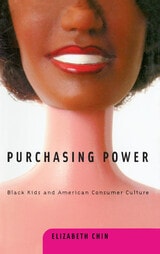
Purchasing Power
Black Kids and American Consumer CultureElizabeth Chin
University of Minnesota Press, 2001
An exposé of the realities facing poor black children in our consumer society.
What does it mean to be young, poor, and black in our consumer culture? Are black children “brand-crazed consumer addicts” willing to kill each other over a pair of the latest Nike Air Jordans or Barbie backpack? In this first in-depth account of the consumer lives of poor and working-class black children, Elizabeth Chin enters the world of children living in hardship in order to understand the ways they learn to manage living poor in a wealthy society.
To move beyond the stereotypical images of black children obsessed with status symbols, Chin spent two years interviewing poor children in New Haven, Connecticut, about where and how they spend their money. An alternate image of the children emerges, one that puts practicality ahead of status in their purchasing decisions. On a twenty-dollar shopping spree with Chin, one boy has to choose between a walkie-talkie set and an X-Men figure. In one of the most painful moments of her research, Chin watches as Davy struggles with his decision. He finally takes the walkie-talkie set, a toy that might be shared with his younger brother.Through personal anecdotes and compelling stories ranging from topics such as Christmas and birthday gifts, shopping malls, Toys-R-Us, neighborhood convenience shops, school lunches, ethnically correct toys, and school supplies, Chin critically examines consumption as a medium through which social inequalities-most notably of race, class, and gender-are formed, experienced, imposed, and resisted. Along the way she acknowledges the profound constraints under which the poor and working class must struggle in their daily lives.Pure Beauty
Judging Race in Japanese American Beauty PageantsRebecca Chiyoko King-O’Riain
University of Minnesota Press, 2006