Results by title
28167 books match the query 'History' and 1297 start with p
Power of Material - Politics of Materiality
Edited by Susanne Witzgall and Kerstin Stakemeier
Diaphanes, 2014
In the last years a new focus on material phenomena has become increasingly oberservable in the arts and sciences. Most diverse disciplines are stressing the momentum and the agency of matter, material and things and underline their status as agents within the web of relationships of culture and nature. The book "Power of Material / Politics of Materiality“ deepens this current discourse and for the time brings materialist tendencies within the arts, design and architecture into a direct dialogue with a range of scientific approaches from a "New Materialism“ within the humanities and social sciences.
This publication is the result of the first year of program at the newly established cx centre for interdisciplinary studies at the Academy of Fine Arts Munich.
Power of Petitioning in Early Modern Britain
Edited by Brodie Waddell and Jason Peacey
University College London, 2024
The humble petition was ubiquitous in early modern society and featured prominently in crucial moments such as the outbreak of civil wars and in everyday local negotiations about taxation, welfare, and litigation. People at all levels of society, from noblemen to paupers, used petitions to make their voices heard, and these are valuable sources for mapping the structures of authority and agency that framed early modern society.
The Power of Petitioning in Early Modern Britain offers a holistic study of this crucial topic in early modern British history. The contributors to this volume survey a vast range of sources, showing the myriad ways people petitioned the authorities from the sixteenth to the eighteenth centuries. They cross the jurisdictional, sub-disciplinary, and chronological boundaries that have otherwise constrained the current scholarly literature on petitioning and popular political engagement. Teasing out broad conclusions from innumerable smaller interventions in public life, they not only address the aims, attitudes, and strategies of those involved but also assess the significance of the processes they used. This volume makes it possible to rethink the power of petitioning and to re-evaluate broad trends regarding political culture, institutional change, and state formation.

Power of the Weak
STUDIES ON MEDIEVAL WOMENEdited by Jennifer Carpenter and Sally-Beth MacLean
University of Illinois Press, 1996
sixteenth centuries, these essays suggest that influence and power may
have paradoxically been available to women despite, and sometimes precisely
because of, their subordinate position in society. Striking for its range
of scholarship, this collection explores the power and independence, relationships
and influence of medieval queens, holy women, mothers, widows, Jewish
conversas, and others. Latin and Anglo-Norman hagiography, confessors'
manuals, coronation rituals, responsa literature, and legal theory
are represented.
"An intriguing exploration
of a basic paradox of medieval society, and an excellent blend of theory
and gender studies with detailed work relevant for social and political
history." -- Joel Rosenthal, author of Patriarchy and Families
of Privilege in Fifteenth-Century England
JENNIFER CARPENTER
is a lecturer in history at the University of Otago, Dunedin, New Zealand.
Power over Property
The Political Economy of Communist Land Reform in ChinaMatthew Noellert
University of Michigan Press, 2020
Power Over Property argues that in practice, however, the opposite occurred: the redistribution of political power led to a more equal distribution of property. China’s land reform was accomplished not only through the state’s power to define the distribution of resources, but also through village communities prioritizing political entitlements above property rights. Through the systematic analysis of never-before studied micro-level data on practices of land reform in over five hundred villages, Power Over Property demonstrates how land reform primarily involved the removal of former power holders, the mobilization of mass political participation, and the creation of a new social-political hierarchy. Only after accomplishing all of this was it possible to redistribute land. This redistribution, moreover, was determined by political relations to a new structure of power, not just economic relations to the means of production.
The experience of China’s land reform complicates our understanding of the relations between economic, social, and political equality. On the one hand, social equality in China was achieved through political, not economic means. On the other hand, the fundamental solution was a more effective hierarchy of fair entitlements, not equal rights. This book ultimately suggests that focusing on economic equality alone may obscure more important social and political dynamics in the development of the modern world.
Power to Hurt
THE VIRTUES OF ALIENATIONWilliam Monroe
University of Illinois Press, 1998
Chosen as a Choice Magazine's Outstanding Academic Book for 1999.
Power to the People
The Graphic Design of the Radical Press and the Rise of the Counter-Culture, 1964-1974Geoff Kaplan
University of Chicago Press, 2013
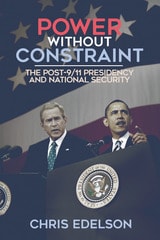
Power without Constraint
The Post-9/11 Presidency and National SecurityChris Edelson
University of Wisconsin Press, 2016
In a thorough comparison of the Bush and Obama administrations’ national security policies, Chris Edelson demonstrates that President Obama and his officials have used softer rhetoric and toned-down legal arguments, but in key areas—military action, surveillance, and state secrets—they have simply found new ways to assert power without meaningful constitutional or statutory constraints.
Edelson contends that this legacy of the two immediately post-9/11 presidencies raises crucial questions for future presidents, Congress, the courts, and American citizens. Where is the political will to restore a balance of powers among branches of government and adherence to the rule of law? What are the limits of authority regarding presidential national security power? Have national security concerns created a permanent shift to unconstrained presidential power?
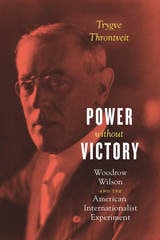
Power without Victory
Woodrow Wilson and the American Internationalist ExperimentTrygve Throntveit
University of Chicago Press, 2017
In Power without Victory, Trygve Throntveit argues that there is more to the story of Wilson than these sad truths. Throntveit makes the case that Wilson was not a “Wilsonian,” as that term has come to be understood, but a principled pragmatist in the tradition of William James. He did not seek to stamp American-style democracy on other peoples, but to enable the gradual development of a genuinely global system of governance that would maintain justice and facilitate peaceful change—a goal that, contrary to historical tradition, the American people embraced. In this brilliant intellectual, cultural, and political history, Throntveit gives us a new vision of Wilson, as well as a model of how to think about the complex relationship between the world of ideas and the worlds of policy and diplomacy.
Power, Institutions, and Leadership in War and Peace
Lessons from Peru and Ecuador, 1995–1998By David R. Mares and David Scott Palmer
University of Texas Press, 2012
In January 1995, fighting broke out between Ecuadorian and Peruvian military forces in a remote section of the Amazon. It took more than three years and the interplay of multiple actors and factors to achieve a definitive peace agreement, thus ending what had been the region's oldest unresolved border dispute. This conflict and its resolution provide insights about other unresolved and/or disputed land and sea boundaries which involve almost every country in the Western Hemisphere.
Drawing on extensive field research at the time of the dispute and during its aftermath, including interviews with high-ranking diplomats and military officials, Power, Institutions, and Leadership in War and Peace is the first book-length study to relate this complex border dispute and its resolution to broader theories of conflict. The findings emphasize an emerging leadership approach in which individuals are not mere captives of power and institutions. In addition, the authors illuminate an overlap in national and international arenas in shaping effective articulation, perception, and selection of policy.
In the “new” democratic Latin America that emerged in the late 1970s through the early 1990s, historical memory remains influential in shaping the context of disputes, in spite of presumed U.S. post–Cold War influence. This study offers important, broader perspectives on a hemisphere still rife with boundary disputes as a rising number of people and products (including arms) pass through these borderlands.
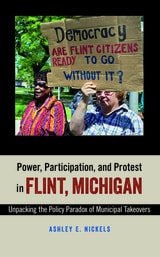
Power, Participation, and Protest in Flint, Michigan
Unpacking the Policy Paradox of Municipal TakeoversAshley E. Nickels
Temple University Press, 2019
When the 2011 municipal takeover in Flint, Michigan placed the city under state control, some supported the intervention while others saw it as an affront to democracy. Still others were ambivalent about what was supposed to be a temporary disruption. However, the city’s fiscal emergency soon became a public health emergency—the Flint Water Crisis—that captured international attention.
But how did Flint’s municipal takeovers, which suspended local representational government, alter the local political system? In Power, Participation, and Protest in Flint, Michigan, Ashley Nickels addresses the ways residents, groups, and organizations were able to participate politically—or not—during the city’s municipal takeovers in 2002 and 2011. She explains how new politics were created as organizations developed, new coalitions emerged and evolved, and people’s understanding of municipal takeovers changed.
Inwalking readers through the policy history of, implementation of, and reaction to Flint’s two municipal takeovers, Nickels highlights how the ostensibly apolitical policy is, in fact, highly political.
Power, Prayers, and Protection
A Cultural History of the Utah San Juan River NavajoRobert S. McPherson
University Press of Colorado, 2022
Navajo oral tradition is rich in stories and themes that form the basis for ceremonial performance. Everything that is physical, emotional, or spiritual has been placed in this world by the holy people at the time of creation, a process recognized in these accounts and teachings. Each chapter references sacred narratives that provide power through prayers that bring protection and a path for believers to follow. Topics include life on the river before and during the introduction of the white man, efficacy of the chantways, teachings of medicine people, childhood memories, arrival of trading posts, encounters with the automobile and other technology, livestock reduction and its aftermath, and the development of the Aneth oilfield with its ensuing protests. This is the Navajo elders’ story as seen through their eyes and told in their voice.

Power, Profit and Prestige
A History of American Imperial ExpansionPhilip S. Golub
Pluto Press, 2010
Power, Profit and Prestige applies incisive historical and sociological analysis to make sense of the United States’ post-Cold War imperial behaviour.
Philip Golub studies imperial identity formation and shows how an embedded culture of force and expansion has shaped American foreign policy. He argues that the US logic of world power and deeply rooted assumptions about American primacy inhibits democratic transformation at domestic and international levels. This resistance to change may lead the US empire into a crisis of its own making.
This enlightening book will be particularly useful to students of history and international relations as they explore a world where America is no longer able to set the global agenda.
Power, Protest, and the Public Schools
Jewish and African American Struggles in New York CityMelissa F. Weiner
Rutgers University Press, 2012
Power, Resistance, Ideology and the State
Charles Tripp and the Comparative Politics of the Middle EastEdited by Daniel Neep, Toby Dodge, and Ali M. Ansari
Gingko, 2025
Power, Resistance, Ideology and the State: Charles Tripp and the Comparative Politics of the Middle East seeks to present a new understanding of a region of unprecedented volatility, where postcolonial projects of state-driven development have now expired, old ruling elites have been delegitimized, and political Islam discredited. The work of Charles Tripp, professor at the School of Oriental and African Studies (SOAS) for over three decades, has shaped a distinct approach to the study of Middle East politics with an analytical sensibility that is empirically rich, theoretically insightful, and historically sensitive. This volume brings together contributions from ten political scientists and historians from across Europe, the United States, and the Middle East, each of which takes Tripp’s work as an intellectual point of departure for studying Middle East politics.
Against this background, the contributors explore the contemporary developments that have emerged to fill the intellectual and material shortcomings created by the systemic failures of economics and politics in the region.
The contributions focus on four themes that are central to an understanding of Middle East politics—power, resistance, ideology, and the state—to examine political trends in cases ranging from Iran and Iraq to Jordan, Lebanon, and Syria. Each chapter combines extensive field research and a knowledge of regional politics with methodological and philosophical reflexivity to produce a collection of papers at the cutting edge of contemporary Middle East Studies.
Powerful Frequencies
Radio, State Power, and the Cold War in Angola, 1931–2002Marissa J. Moorman
Ohio University Press, 2019
Powerful Frequencies details the central role that radio technology and broadcasting played in the formation of colonial Portuguese Southern Africa and the postcolonial nation-state, Angola. In Intonations, Marissa J. Moorman examined the crucial relationship between music and Angolan independence during the 1960s and ’70s. Now, Moorman turns to the history of Angolan radio as an instrument for Portuguese settlers, the colonial state, African nationalists, and the postcolonial state. They all used radio to project power, while the latter employed it to challenge empire.
From the 1930s introduction of radio by settlers, to the clandestine broadcasts of guerrilla groups, to radio’s use in the Portuguese counterinsurgency strategy during the Cold War era and in developing the independent state’s national and regional voice, Powerful Frequencies narrates a history of canny listeners, committed professionals, and dissenting political movements. All of these employed radio’s peculiarities—invisibility, ephemerality, and its material effects—to transgress social, political, “physical,” and intellectual borders. Powerful Frequencies follows radio’s traces in film, literature, and music to illustrate how the technology’s sonic power—even when it made some listeners anxious and frightened—created and transformed the late colonial and independent Angolan soundscape.
Powers of Distinction
On Religion and ModernityNancy Levene
University of Chicago Press, 2017
In readings from Abraham to the present, Levene recovers this richer dualism in its difference from the alternatives—other dualisms, nondualism, multiplication. From Abraham we get the biblical call to give up tribal belonging for a promised land of covenantal relation. Yet modernity, inclusive of this call, is also the principle that critiques the promise when it divides self from other, us from them.
Drawing on a long tradition of thinkers and scholars even as she breaks new ground, Levene offers here nothing less than a new way of understanding modernity as an ethical claim about our world, a philosophy of the powers of distinction to include rather than to divide.
Powers of the Mind
The Reinvention of Liberal Learning in AmericaDonald N. Levine
University of Chicago Press, 2006
It is one thing to lament the financial pressures put on universities, quite another to face up to the poverty of resources for thinking about what universities should do when they purport to offer a liberal education. In Powers of the Mind, former University of Chicago dean Donald N. Levine enriches those resources by proposing fresh ways to think about liberal learning with ideas more suited to our times.
He does so by defining basic values of modernity and then considering curricular principles pertinent to them. The principles he favors are powers of the mind—disciplines understood as fields of study defined not by subject matter but by their embodiment of distinct intellectual capacities. To illustrate, Levine draws on his own lifetime of teaching and educational leadership, while providing a marvelous summary of exemplary educational thinkers at the University of Chicago who continue to inspire. Out of this vital tradition, Powers of the Mind constructs a paradigm for liberal arts today, inclusive of all perspectives and applicable to all settings in the modern world.

Pox, Empire, Shackles, and Hides
The Townsend Site, 1670-1715Jon Bernard Marcoux
University of Alabama Press, 2010
Marcoux studies the material remains of daily life in order to identify the strategies that households enacted while adapting to the social, political, and economic disruptions associated with European contact. The author focuses on households as the basic units of analysis because these represent the most fundamental and pervasive unit of economic and social production in the archaeological record. His investigations show how the daily lives of Cherokee households changed dramatically as they coped with the shifting social, political, and economic currents of the times. He demonstrates that the community excavated at the Townsend site was formed by immigrant households who came together from geographically disparate and ethnically distinct Cherokee settlements as a way to ameliorate population losses. He also explores changes in community and household patterning, showing how the spatial organization of the Townsend community became less formal and how households became more transient compared to communities predating contact with Europeans. From this evidence, Marcoux concludes that these changes reflect a broader strategic shift to a more flexible lifestyle that would have aided Cherokee households in negotiating the social, political, and economic uncertainty of the period.
Practical Cues and Social Spectacle in the Chester Plays
Matthew Sergi
University of Chicago Press, 2020
Carefully combing through the plays, Sergi seeks out cues in the dialogues that reveal information about the original staging, design, and acting. These “practical cues,” as he calls them, have gone largely unnoticed by drama scholars, who have focused on the ideology and historical contexts of these plays, rather than the methods, mechanics, and structures of the actual performances. Drawing on his experience as an actor and director, he combines close readings of these texts with fragments of records, revealing a new way to understand how the Chester plays brought biblical narratives to spectators in the noisy streets. For Sergi, plays that once appeared only as dry religious dramas come to life as raucous participatory spectacles filled with humor, camp, and devotion.
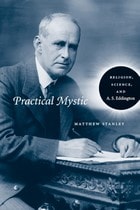
Practical Mystic
Religion, Science, and A. S. EddingtonMatthew Stanley
University of Chicago Press, 2007
Eddington was a world-class scientist who not only maintained his religious belief throughout his scientific career but also defended the interrelation of science and religion while drawing inspiration from both for his practices. For instance, at a time when a strict adherence to deductive principles of physics had proved fruitless for understanding the nature of stars, insights from Quaker mysticism led Eddington to argue that an outlook less concerned with certainty and more concerned with further exploration was necessary to overcome the obstacles of incomplete and uncertain knowledge.
By examining this intersection between liberal religion and astrophysics, Practical Mystic questions many common assumptions about the relationship between science and spirituality. Matthew Stanley’s analysis of Eddington’s personal convictions also reveals much about the practice, production, and dissemination of scientific knowledge at the beginning of the twentieth century.

Practical Reason, Aristotle, and Weakness of the Will
Norman O. Dahl
University of Minnesota Press, 1984
Practical Reason, Aristotle, and Weakness of the Will was first published in 1984. Minnesota Archive Editions uses digital technology to make long-unavailable books once again accessible, and are published unaltered from the original University of Minnesota Press editions.
One of the central problems in recent moral philosophy is the apparent tension between the "practical" or "action-guiding" side of moral judgments and their objectivity. That tension would not exist if practical reason existed (if reason played a substantial role in producing motivation) and if recognition of obligation were one of the areas in which practical reason operated. In Practical Reason, Aristotle, and the Weakness of the Will,Norman Dahl argies that, despite widespread opinion to the contrary, Aristotle held a position on practical reason that both provides an objective basis for ethics and satisfies an important criterion of adequacy—that it acknowledges genuine cases of weakness of the will. In arguing for this, Dahl distinguishes Aristotle's position from that of David Hume, who denied the existence of practical reason. An important part of his argument is an account of the role that Aristotle allowed the faculty nous to play in the acquisition of general ends. Relying both on this argument and on an examination of passages from Aristotle's ethics and psychology, Dahl argues that Aristotle recognized that a genuine conflict of motives can occur in weakness of the will. This provides him with the basis for an interpretation that finds Aristotle acknowledging genuine cases of weakness of the will.
Dahl's arguments have both a philosophical and a historical point. He argues that Aristotle's position on practical reason deserves to be taken seriously, a conclusion he reinforces by comparing that position with more recent attempts, by Kant, Nagel, and Rawls, to base ethics on practical reason.
Practices of Coexistence
Constructions of the Other in Early Modern PerceptionsMarianna D. Birnbaum
Central European University Press, 2017
Practicing Classics
A MemoirLee T. Pearcy
University of Michigan Press, 2026
Practicing Classics is a memoir about education in America between the end of WWII and the early 21st century. Not only does it consider memory, its truths, and its deceptions, but it also unravels the complexities of class, race, gender, and social positioning in education. Lee Pearcy’s story begins with the 1957 desegregation crisis at Little Rock Central High School and its aftermath, describing how growing up in this environment shaped his academic and personal life.
As he came to study Latin and then Classics, Pearcy’s education intersected with the student disturbances at Columbia University in 1968 and a feminist revolution that brought significant numbers of women into the classical professoriate. He gives a first-hand account of a scandalous episode in the toxic administrative culture that characterized the classics department at the University of Texas in the 1980s. Against the background of these events, he unfolds his own education as a classicist and his development from apprentice to journeyman to confident teacher of Latin and Greek. Practicing Classics will engage readers who care about American education, classical studies, or the ways that choices, chances, and contingencies shaped one man’s life.
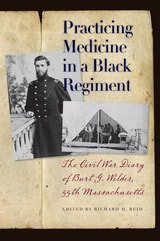
Practicing Medicine in a Black Regiment
The Civil War Diary of Burt G. Wilder, 55th MassachusettsRichard M. Reid
University of Massachusetts Press, 2010
Burt Green Wilder, a Boston-born, Harvard-educated doctor-in-training, was among the first white officers commissioned to staff the 55th Massachusetts. Like other officers serving in the state's African American units, Wilder was selected for his military experience, his "firm Anti-Slavery principles," and his faith in the value of black troops. From the time he joined the 55th in May 1863 until the regiment was discharged in September 1865, Wilder recorded his experiences and observations. He described the day-to-day activities of a Civil War surgeon, the indignities suffered by black enlisted men at the hands of a War Department that denied them the same treatment offered to white troops, and the role of the regiment in the campaign around Charleston and in Florida.
Service in the southern states also allowed Wilder to indulge a passion for natural science and comparative anatomy, including the collection of unusual species, one of which—the spider known as Nephila wilderi—still bears his name. After the war he completed his medical studies at Harvard and joined the faculty of Cornell University, where he became a distinguished professor of zoology as well as an outspoken advocate of racial equality.
In his introduction to the volume, Richard M. Reid analyzes Burt Wilder's diary and places it within the context of the war, the experience of African American troops, and Wilder's life and career.
Practicing New Historicism
Catherine Gallagher and Stephen Greenblatt
University of Chicago Press, 2000
In lucid and jargon-free prose, Catherine Gallagher and Stephen Greenblatt focus on five central aspects of new historicism: recurrent use of anecdotes, preoccupation with the nature of representations, fascination with the history of the body, sharp focus on neglected details, and skeptical analysis of ideology. Arguing that new historicism has always been more a passionately engaged practice of questioning and analysis than an abstract theory, Gallagher and Greenblatt demonstrate this practice in a series of characteristically dazzling readings of works ranging from paintings by Joos van Gent and Paolo Uccello to Hamlet and Great Expectations.
By juxtaposing analyses of Renaissance and nineteenth-century topics, the authors uncover a number of unexpected contrasts and connections between the two periods. Are aspects of the dispute over the Roman Catholic doctrine of the Eucharist detectable in British political economists' hostility to the potato? How does Pip's isolation in Great Expectations shed light on Hamlet's doubt?
Offering not only an insider's view of new historicism, but also a lively dialogue between a Renaissance scholar and a Victorianist, Practicing the New Historicism is an illuminating and unpredictable performance by two of America's most respected literary scholars.
"Gallagher and Greenblatt offer a brilliant introduction to new historicism. In their hands, difficult ideas become coherent and accessible."—Choice
"A tour de force of new literary criticism. . . . Gallagher and Greenblatt's virtuoso readings of paintings, potatoes (yes, spuds), religious ritual, and novels—all 'texts'—as well as essays on criticism and the significance of anecdotes, are likely to take their place as model examples of the qualities of the new critical school that they lead. . . . A zesty work for those already initiated into the incestuous world of contemporary literary criticism-and for those who might like to see what all the fuss is about."—Kirkus Reviews, starred review
Practicing Transnationalism
American Studies in the Middle EastEdited Eileen T. Lundy and Edward J. Lundy
University of Texas Press, 2016
Practicing Transnationalism explores the challenges of teaching American studies in the Middle East during a time of tension and conflict between the United States and the region.
In the first decade of the twenty-first century, American studies programs began to spread in the Middle East. During a time of rising anti-American sentiment, ten major programs were established in the region. What impulses propelled universities in the Middle East to establish these centers and programs? What motivated students to take courses and pursue degrees in American studies? In part, American studies programs developed as a way to “know the enemy,” to better understand America’s ubiquitous influence in foreign relations, technology, and culture; however, some programs grew because residents admired the ideals set forth as American, including democracy and free speech.
Practicing Transnationalism investigates these issues and others, using the experiences and research of the editors and contributors, who worked either directly in these programs or as adjunct to them. These scholars seek to understand what American power means to people in the Middle East. They examine the challenge of developing American studies programs in a transnational paradigm, striving to build programs that are separate from and critical of American imperialism without simply becoming anti-American. In the essays, the contributors provide context for how the field of American studies has grown and developed, and they offer views of cultural interactions and classroom situations, demonstrating the problems instructors faced and how they worked to address them.
Practicing Utopia
An Intellectual History of the New Town MovementRosemary Wakeman
University of Chicago Press, 2016
In Practicing Utopia, Rosemary Wakeman gives us a sweeping view of the new town movement as a global phenomenon. From Tapiola in Finland to Islamabad in Pakistan, Cergy-Pontoise in France to Irvine in California, Wakeman unspools a masterly account of the golden age of new towns, exploring their utopian qualities and investigating what these towns can tell us about contemporary modernization and urban planning. She presents the new town movement as something truly global, defying a Cold War East-West dichotomy or the north-south polarization of rich and poor countries. Wherever these new towns were located, whatever their size, whether famous or forgotten, they shared a utopian lineage and conception that, in each case, reveals how residents and planners imagined their ideal urban future.

Practising Ethics
A poethic infrastructure for architectural and urban researchersEdited by Jane Rendell, David Roberts, and Yael Padan
University College London, 2026
This book presents a conceptual framework that introduces architectural and urban researchers and practitioners to core ethical concepts and principles.
Grappling with ethics can disorient and disturb your peace of mind in the small hours of the night. Practising Ethics transforms ethics from an obstacle to an opportunity by offering a poethic infrastructure to guide the development of ethical practice in architectural and urban research.
Practising Ethics bridges the gap between research volume and textbook. The book’s two-part structure creates a dialogue between ethical concepts derived from decolonial, ecological, feminist, and queer theory and lived ethical experiences that are explored through specific situations. A series of opening essays present hotspots, touchstones, keystones, blindspots, moonshots, and milestones as different ethical orientations in a six-point methodology. This is followed by six case studies in which practitioners and researchers navigate these orientations through narrative figurations that describe ethical deliberations arising from social science, humanities, practice-led and participatory art, and architectural design research in El Salvador, India, Nigeria, Peru, and the United Kingdom.
The book acts as a companion to an award-winning online toolkit and is illustrated by Judit Ferencz, who offers creative exercises for readers to develop their own poethic infrastructures.
Prague Palimpsest
Writing, Memory, and the CityAlfred Thomas
University of Chicago Press, 2010
A city of immense literary mystique, Prague has inspired writers across the centuries with its beauty, cosmopolitanism, and tragic history. Envisioning the ancient city in central Europe as a multilayered text, or palimpsest, that has been constantly revised and rewritten—from the medieval and Renaissance chroniclers who legitimized the city’s foundational origins to the modernists of the early twentieth century who established its reputation as the new capital of the avant-garde—Alfred Thomas argues that Prague has become a paradoxical site of inscription and effacement, of memory and forgetting, a utopian link to the prewar and pre-Holocaust European past and a dystopia of totalitarian amnesia.
Considering a wide range of writers, including the city’s most famous son, Franz Kafka, Prague Palimpsest reassesses the work of poets and novelists such as Bohumil Hrabal, Milan Kundera, Gustav Meyrink, Jan Neruda, Vítĕzslav Nezval, and Rainer Maria Rilke and engages with other famous authors who “wrote” Prague, including Guillaume Apollinaire, Ingeborg Bachmann, Albert Camus, Paul Celan, and W. G. Sebald. The result is a comparative, interdisciplinary study that helps to explain why Prague—more than any other major European city—has haunted the cultural and political imagination of the West.
Prague, Jan Hus and Prague University
Martin Nodl
Karolinum Press, 2024
The Czech Reformation offered a radical solution to the spiritual and institutional crisis of the late medieval church at the end of the fourteenth century. The beginnings of this reform are distinctly connected with Prague University, which drew many educated people to Prague from across Europe. Through John Hus—a former Prague University student who became its rector in 1402—the Czech Reformation gave rise to a new, radical ecclesiology. Not only did Hus challenge the hierarchical system of the church, but under his influence, the Czech Reformation acquired a specific national shape, and elements of Czech messianism emerged with the university.
Prague, John Hus and Prague University explores that sentiment within Prague University, as well as its limits and restrictive consequences for the Czech Reformation and Czech medieval society. Emphasis is placed on showing how Prague and the university became a world that existed outside the Christian ecumenism of the time.
Prairie Albion
An English Settlement in Pioneer IllinoisCharles Boewe
Southern Illinois University Press, 1999
Originally published in 1962, this story of the English Settlement in pioneer Illinois is compiled from the eyewitness accounts of the participants. The founders, Morris Birkbeck and George Flower, as well as their associates and the many visitors to their prairie settlement, wrote mainly for immediate and sometimes controversial ends. Charles Boewe has selected excerpts from letters, descriptions, diaries, histories, and periodicals within a chronological framework to emphasize the implicit drama of the settlers' deeds as they searched for a suitable site, founded their colony, and augmented their forces with new arrivals from England. No less dramatic is the subsequent estrangement of the two founders, the disillusionment of many of the English settlers, the untimely death of Birkbeck, and the financial ruin of Flower.

Prairie City, Iowa
Three Seasons at HomeDouglas Bauer
University of Iowa Press, 1979
Bauer grew up "awkward with soil and with machines" in a small town east of Des Moines, As a teenager, he left the farm for college life twenty miles away and, after graduation, took a job with Better Homes and Gardens in Des Moines, writing in the junk-mail fictional persona of "Barbara Joyce,"asking millions of people to subscribe. After a few years he moved to Chicago to work as an editor and writer for Playboy and eventually as a freelance journalist. In the summer of 1975, he returned home to attend his grandmother's funeral and by autumn he moved back to Prairie City, where he stayed for the next three seasons.
Bauer's book is neither a wistful nostalgia about returning to a simpler time and place nor a patronizing look at those who never leave the town in which they were born. What emerges is an unsentimental yet loving account of life in the Midwest. Not just a portrait of Prairie City, Iowa, but of everyone's small town, everywhere.
Prairie Defender
The Murder Trials of Abraham LincolnGeorge R. Dekle, Sr.
Southern Illinois University Press, 2017
2018 ISHS Annual Award Winner for a Scholarly Publication
According to conventional wisdom, Abraham Lincoln spent most of his law career collecting debt and representing railroads, and this focus made him inept at defending clients in homicide cases. In this unprecedented study of Lincoln’s criminal cases, George Dekle disproves these popular notions, showing that Lincoln was first and foremost a trial lawyer. Through careful examination of Lincoln’s homicide cases and evaluation of his legal skills, Dekle demonstrates that criminal law was an important part of Lincoln's practice, and that he was quite capable of defending people accused of murder, trying approximately one such case per year.
Dekle begins by presenting the viewpoints of not only those who see Lincoln as a perfect lawyer whose only flaw was his inability to represent the wrong side of a case but also those who believe Lincoln was a less-than-honest legal hack. The author invites readers to compare these wildly different stereotypes with the flesh-and-blood Lincoln revealed in each case described in the book, including an axe murder suit in which Lincoln assisted the prosecution, a poisoning case he refused to prosecute for $200 but defended for $75, and a case he won by proving that a supposed murder victim was actually still alive.
For each case Dekle covers, he first tells the stories of the feuds, arguments, and insults that led to murder and other criminal activity, giving a gripping view of the seamy side of life in nineteenth-century Illinois. Then he traces the course of the pretrial litigation, describes the trials and the various tactics employed in the prosecution and defense, and critiques the performance of both Lincoln and his adversaries.
Dekle concludes that Lincoln was a competent, diligent criminal trial lawyer who knew the law, could argue it effectively to both judge and jury, and would use all lawful means to defend clients whether he believed them to be innocent or guilty. His trial record shows Lincoln to have been a formidable defense lawyer who won many seemingly hopeless cases through his skill as a courtroom tactician, cross-examiner, and orator. Criminal defendants who could retain Lincoln as a defense attorney were well represented, and criminal defense attorneys who sought him as co-counsel were well served. Providing insight into both Lincoln’s legal career and the culture in which he practiced law, Prairie Defender resolves a major misconception concerning one of our most important historical figures.
Prairie Ghost
Pronghorn and Human Interaction in Early AmericaRichard E. McCabe
University Press of Colorado, 2010
A Wildlife Management Institute Book
In this lavishly illustrated volume Richard E. McCabe, Bart W. O'Gara and Henry M. Reeves explore the fascinating relationship of pronghorn with people in early America, from prehistoric evidence through the Battle of Little Bighorn in 1876. The only one of fourteen pronghorn-like genera to survive the great extinction brought on by human migration into North America, the pronghorn has a long and unique history of interaction with humans on the continent, a history that until now has largely remained unwritten.With nearly 150 black-and-white photographs, 16 pages of color illustrations, plus original artwork by Daniel P. Metz, Prairie Ghost: Pronghorn and Human Interaction in Early America tells the intriguing story of humans and these elusive big game mammals in an informative and entertaining fashion that will appeal to historians, biologists, sportsmen and the general reader alike.
Winner of the Wildlife Society's Outstanding Book Award for 2005
Prairie Grass Roots
An Iowa Small Town in the Early Twentieth CenturyThomas J. Morain
University of Iowa Press, 1998
Prairie Justice
A History of Illinois Courts under French, English, and American LawRoger L. Severns. Edited by John A. Lupton
Southern Illinois University Press, 2015
Winner, ISHS Superior Achievement Award for a Scholarly Publication, 2016
A concise legal history of Illinois through the end of the nineteenth century, Prairie Justice covers the region’s progression from French to British to early American legal systems, which culminated in a unique body of Illinois law that has influenced other jurisdictions. Written by Roger L. Severns in the 1950s and published in serial form in the 1960s, Prairie Justice is available now for the first time as a book, thanks to the work of editor John A. Lupton, an Illinois and legal historian who also contributed an introduction.
Illinois’ legal development demonstrates the tension between two completely different European legal systems, between river communities and prairie towns, and between agrarian and urban interests. Severns uses several rulings—including a reconstitution of the Supreme Court in 1824, slavery-related cases, and the impeachment of a Supreme Court justice—to examine political movements in Illinois and their impact on the local judiciary. Through legal decisions, the Illinois judiciary became an independent, co-equal branch of state government. By the mid-nineteenth century, Illinois had established itself as a leading judicial authority, influencing not only the growing western frontier but also the industrialized and farming regions of the country. With a close eye for detail, Severns reviews the status of the legal profession during the 1850s by looking new members of the Court, the nostalgia of circuit riding, and how a young lawyer named Abraham Lincoln rose to prominence.
Illinois has a rich judicial history, but that history has not been adequately documented until now. With the publication of Prairie Justice, those interested in Illinois legal history finally have a book that covers the development of the state’s judiciary in its formative years.
Prairie Metropolis
New Essays on Winnipeg Social HistoryEsyllt W. Jones
University of Manitoba Press, 2009
Prairie Power
Voices of 1960s Midwestern Student ProtestRobbie Lieberman
University of Missouri Press, 2019

Prairie Spirit
Perspectives on the Heritage of the United Church of Canada in the WestDennis L. Butcher
University of Manitoba Press, 1985
Praise of Folly
Desiderius Erasmus; Translated by John Wilson
University of Michigan Press, 1958
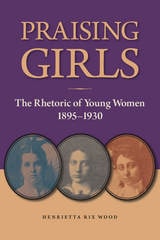
Praising Girls
The Rhetoric of Young Women, 1895-1930Henrietta Rix Wood
Southern Illinois University Press, 2016
The site of the study—Kansas City, Missouri—reflects the diverse rhetorical experiences of girls in cities across the United States at the beginning of the last century. Four case studies examine the writing of privileged white girls at a college preparatory school, Native American girls at an off-reservation boarding school, African American girls at a segregated high school, and working- and middle-class girls at a large whites-only public high school. Wood’s analysis reveals a contemporary concept of epideictic rhetoric that accounts for issues of gender, race, class, and age.

Prayer and Power
George Herbert and Renaissance CourtshipMichael C. Schoenfeldt
University of Chicago Press, 1991
Before entering the priesthood, Herbert nourished contacts in court, was elected University Orator at Cambridge, and served in Parliament. In turning to God, Schoenfeldt argues, Herbert did not simply turn away from the secular world but also turned its language, particularly the language of courtesy, into the medium for his lyric worship of God. The confluence of courtesy and spirituality in Herbert's poetry provides a fascinating insight into a society searching for an appropriate discourse of reverence in a time of baffling change. The first five chapters investigate the manifold ways in which Herbert's life and works exemplify the interdependence of social and religious behavior in the English Renaissance. The sixth and final chapter extends this investigation into the nervous eroticism of Herbert's poems.
Considering The Temple as well as Herbert's letters, speeches, Latin poems, collections of foreign proverbs, translations, The Country Parson, and less familiar lyrics, Schoenfeldt offers a thorough and detailed reading of Herbert's rich and conflicted corpus. Prayer and Power is not only a bold redefinition of the accomplishment of one of the finest poets of the English Renaissance but also the first sustained study to advance a cultural poetics of the religious lyric.
Prayers for Dark People
W.E.B. Du Bois
University of Massachusetts Press, 1980
A collection of prayers written by Du Bois for students at Atlanta University, thoughtfully compiled and introduced by Herbert Aptheker. These prayers are deeply committed to paying attention to and caring for the inner lives of Black Americans. Biblical familiarity and agnosticity are both present in these autobiographical writings, uplifting the hopes and practices of W. E. B. Du Bois's life, while meditating on the still relevant question of how to make “a good life for all.”
Praying in the Pine Straw
The Camp-Meeting Experience in AlabamaRobert C. Morgan
University of Alabama Press, 2025
Step into the South’s brush arbors and piney woods where faith runs deep, stories run wild, and the old-time camp meeting was anything but quiet.
Praying in Pine Straw immerses readers in the raw, rollicking, and deeply human world of Alabama’s camp meetings—a Southern tradition where fire-and-brimstone preaching echoed through pine forests and where faith was often accompanied by contradiction. From “treeing the Devil” to “holy laughter,” these revivals blended heartfelt worship with all the complications of human nature. Mule-drawn wagons brought the faithful to rustic camps, where gospel fervor mingled with whiskey traders, local politicians, and opportunists of every kind. Preachers thundered against sin—even as they sometimes flirted with it themselves.
Robert C. Morgan offers a textured portrait of camp meetings as both spiritual experience and cultural spectacle, reviving a Southern tradition that flourished from the late nineteenth to mid-twentieth centuries. With a blend of humor and keen insight, Praying in the Pine Straw unveils the enduring contradictions of “old-time religion” and its significant influence on Southern culture and faith—a legacy that is both treasured and complex.
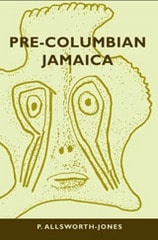
Pre-Columbian Jamaica
Phillip Allsworth-Jones
University of Alabama Press, 2008
Pre-Gay L.A.
A Social History of the Movement for Homosexual RightsC. Todd White
University of Illinois Press, 2008
Pre-Hispanic Occupance in the Valley of Sonora, Mexico
Archaeological Confirmations of Early Spanish ReportsWilliam E. Doolittle
University of Arizona Press, 1988
Pre-Modern Philosophy Defended
Josef Kleutgen
St. Augustine's Press, 2014
“Pre-modern philosophy” means the line of reflection that started with Plato andvAristotle, passed through Augustine and Boethius, and reached its acme in Aquinas, Scotus, and Suarez. The whole line was harshly judged by Descartes, then mocked by the empiricsts of the 18th Century. Why, then, did Pope Leo XII make a determined effort to revive it? And, more importantly, why was the revival a stunning success by the middle of the 20th Century?
The answers to both questions are found in a famous German book, Philosophie der Vorzeit by Josef Kleutgen, now available for the first time in English. Pre-ModernPhilosophy Defended shaped and strengthened Pope Leo’s resolve. It showed how inaccurate the harsh judgments had been and how sadly inferior the modern replacements from Descartes to Hegel had turned out to be in many respects.
Not in all. Kleutgen was no knee-jerk reactionary. He made no bones about the obsolete status of pre-Newtonian physics and cosmology. Rather, he focused on the central boast of “modern” thought, namely, that it had turned at least to the “subject” and had provided a long-needed thing called a “critique of knowledge.”
This book is must reading for intellectual historians and for philosophers working today in epistemology. But most of all, it is essential reading for laity and clergy concerned about revivals of modernism in the church. What was modernism, after all, but an attempt to make the Church revise her theology in the “light” of Kant or Hegel? This is why every Modernist knew Kleutgen’s name and hated this book.
Here is the first English translation (from the German) of the master work of Josef Kleutgen, the nineteenth century social philosopher whose thought lies at, or near, the heart of Catholic Social Thought. Kleutgen is widely and rightly seen as the shadow author of the social encyclicals of Leo XII. Leo’s Rerum Novarum remains the origin and constant reference point of all Catholic Social Teaching. And Popes since have dated their own social encyclicals from Rerum Novarum – hence, Quadragesimo anno and Centesimus annus. —Gerard V. Bradley, University of Notre Dame
Pre-Modern Philosophy Defended is must reading for intellectual historians and for philosophers working today in epistemology. And it is essential reading for laity and clergy concerned about revivals of modernism in the church. What was modernism, after all, but an attempt to make the Church revise her theology in the ‘light’ of Kant or Hegel? This is why every Modernist knew Kleutgen's name and hated Philosophie der Vorzeit (Pre-Modern Philosophy Defended).

Preaching and the Rise of the American Novel
Dawn Coleman
The Ohio State University Press, 2013
Precarious Democracy
Ethnographies of Hope, Despair, and Resistance in BrazilBenjamin Junge
Rutgers University Press, 2021