Results by title
22279 books match the query 'Social Science' and 1104 start with p
Professionalism, the Third Logic
On the Practice of KnowledgeEliot Freidson
University of Chicago Press, 2021
Freidson then appraises the present status of professionalism, exploring how traditional and national variations in state policy and organization are influencing the power and practice of such professions as medicine and law. Widespread attacks by neoclassical economists and populists, he contends, are obscuring the social value of credentialism and monopolies. The institutions that sustain professionalism in our world are simply too useful to both capital and state to dismiss.
Professions And The State
Expertise and Autonomy in the Soviet Union and Eastern Europeedited by Anthony Jones
Temple University Press, 1991
Unlike autonomous professionals in Western industrialized democracies, professionals in a socialist, bureaucratic setting operate as employees of the state. The change in environment has important Implications not only for the practice of professions but also for the concept of professionalism itself. This collection of nine essays is the first to survey the major professions In the USSR, Czechoslovakia, and Poland. The contributors investigate the implications of professional experience in a socialist economy as well as relating changes in professional organization and power to reform movements in general and perestroika in particular.
In the series Labor and Social Change, edited by Paula Rayman and Carmen Sirianni.

Professor Superstar
Fandom and Anti-Fandom of AcademiaMel Stanfill
University of Michigan Press, 2026
Profiles and Plotlines
Data Surveillance in Twenty-first Century LiteratureKatherine D. Johnston
University of Iowa Press, 2023
In Profiles and Plotlines, Katherine Johnston engages this energetic reformation of contemporary literature to account for a society and economy of frenetic counting. Fiction and poetry are capable of addressing precisely that for which algorithms cannot or do not account: the effects of profile culture; the ideologies and supposed truth-power of data; the gendered and racialized dynamics of watching and being watched; and the politics of who counts and what gets counted. Johnston analyzes prescient work by contemporary authors such as Jennifer Egan, Claudia Rankine, Mohsin Hamid, and William Gibson to probe how the claims of data surveillance serve to make lives seem legible, intelligible, and sometimes even expendable.
Profiles in Cultural Evolution
Papers from a Conference in Honor of Elman R. ServiceEdited by A. Terry Rambo and Kathleen Gillogly
University of Michigan Press, 1991
Profiles in Diversity
Women in the New South AfricaPatricia Romero
Michigan State University Press, 1998
A revealing oral history collection, Profiles in Diversity contains in-depth interviews of twenty-six women in South Africa from different racial, class, and age backgrounds. Conducted in Johannesburg, Pretoria, Bloemfontein, Vryburg, Cape Town, Port Elizabeth, Grahamstown, Durban, and a rural section of Kwa-Zulu Natal, these life histories encompass diverse experiences ranging from a squatter in a township outside Cape Town to an ANC activist in Port Elizabeth, who lost three sons to the struggle for democracy and who herself was imprisoned several times during what many in South Africa now refer to as the "civil war."
Nearly all of these women describe their formative years spent growing up in South Africa's segregated society. Three young black students discuss the hardships they experienced in an unequal educational system as well as aspects of segregation in their childhood. They are joined in their memories and hopes for the future by two mature women—one now a high court judge in Durban and the other a linguist at the University of South Africa in Pretoria—both of whom studied at Harvard in the United States. Nancy Charton, the first woman ordained as an Anglican priest in South Africa, speaks about her past and what led her, in her early seventies, to a vocation in the church.
Three Afrikaner women, including one in her late twenties, speak about growing up in South Africa and articulate their concerns for a future that, in some respects, differs from the predictions of their English-speaking or black sisters. Two now-deceased members of the South African Communist Party provide disparate accounts of what led them to lives of active opposition to the discrimination that marked the lives of people of color, long before apartheid became embedded in South Africa's legal system. Also included is an account by Dr. Goonam, an Indian woman who grew up in relative comfort in the then province of Natal, while Ray Alexander discusses how she witnessed the tyranny visited on the Jews of her native Latvia before immigrating to the Cape.
Profiles of Popular Culture
A ReaderEdited by Ray B. Browne
University of Wisconsin Press, 2005
Profiles of Social Research
The Scientific Study of Human InteractionMorton M. Hunt
Russell Sage Foundation, 1985

Profiting from the Peak
Landscape and Liberty in Colorado SpringsJohn Harner
University Press of Colorado, 2021
Colorado Springs, Colorado, has long profited from Pikes Peak and built an urban infrastructure to sustain that relationship. In Profiting from the Peak, geographer John Harner surveys the events and socioeconomic conditions that formed the city, analyzing the built landscape to offer insight into the origins of its urban forms and spatial layout, focusing particularly on historic downtown architecture and public spaces. He examines the cultural values that have come to define the city, showing how military and other institutions, tourism, political and economic conditions, cultural movements, key individual actors, and administrative policies have created a singular urban personality.
Capital accumulation has been a defining theme of Colorado Springs from its very beginning, with enormous profits generated from regional industrialization, railroads, land sales, water appropriation, and extraction of coal and gold. These conditions and its setting in the Rocky Mountain West formed a libertarian-oriented, limited governance philosophy.
Programmed Viewership
Japanese Tele-Mediality, Seriality, and Film as a Social MediumRea Amit
University of Michigan Press, 2027
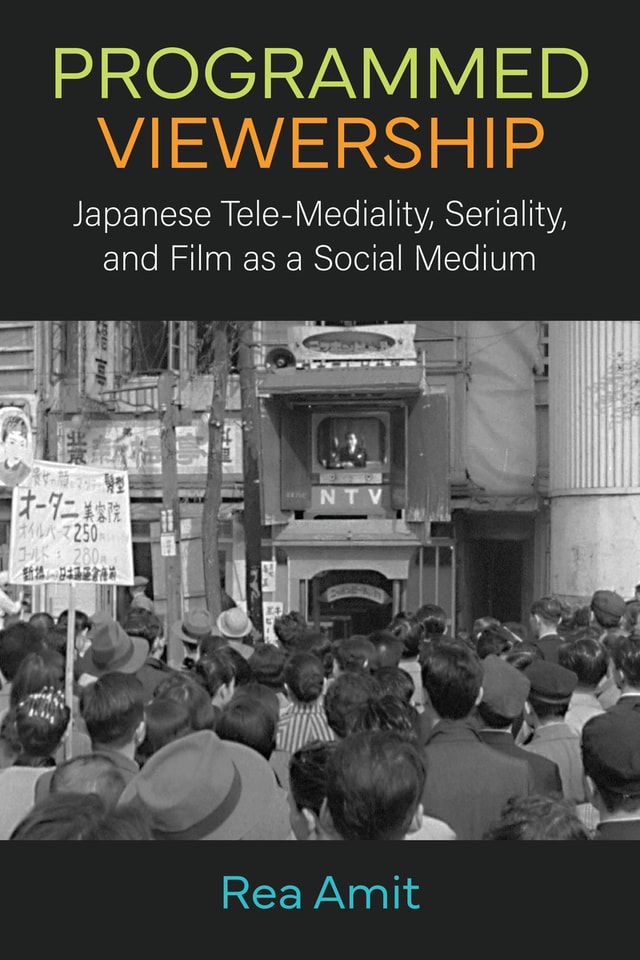
Programmed Viewership examines the concept of “program” in Japanese cinema as an organizing framework that links marketing and promotion, exhibition and distribution, and viewing practices in public and domestic spaces. Rea Amit defines “program” as the ideological infrastructure or platform that perpetuates habitual and ritualistic patterns in film production and reception. Amit takes a holistic approach to understanding more than a century of Japanese cinema through the analysis of material film ephemera, cinema theatre, film content, and viewership. This framework positions programming, rather than provenance, as the decisive factor that confers a film’s cultural and institutional identity. While earlier scholarship has gestured toward loosening the tie between cinematic identity and its nation of origin, Programmed Viewership extends this insight by emphasizing that production constitutes only one dimension of a broader programmatic system.
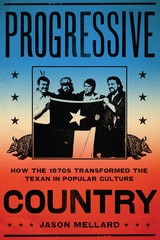
Progressive Country
How the 1970s Transformed the Texan in Popular CultureBy Jason Mellard
University of Texas Press, 2013
Winner, Coral Horton Tullis Memorial Prize, Texas State Historical Association, 2014
During the early 1970s, the nation’s turbulence was keenly reflected in Austin’s kaleidoscopic cultural movements, particularly in the city’s progressive country music scene. Capturing a pivotal chapter in American social history, Progressive Country maps the conflicted iconography of “the Texan” during the ’70s and its impact on the cultural politics of subsequent decades.
This richly textured tour spans the notion of the “cosmic cowboy,” the intellectual history of University of Texas folklore and historiography programs, and the complicated political history of late-twentieth-century Texas. Jason Mellard analyzes the complex relationship between Anglo-Texan masculinity and regional and national identities, drawing on cultural studies, American studies, and political science to trace the implications and representations of the multi-faceted personas that shaped the face of powerful social justice movements. From the death of Lyndon Johnson to Willie Nelson’s picnics, from the United Farm Workers’ marches on Austin to the spectacle of Texas Chic on the streets of New York City, Texas mattered in these years not simply as a place, but as a repository of longstanding American myths and symbols at a historic moment in which that mythology was being deeply contested.
Delivering a fresh take on the meaning and power of “the Texan” and its repercussions for American history, this detail-rich exploration reframes the implications of a populist moment that continues to inspire progressive change.
Progressive Dystopia
Abolition, Antiblackness, and Schooling in San FranciscoSavannah Shange
Duke University Press, 2019

Prohibition Gangsters
The Rise and Fall of a Bad GenerationMappen, Marc
Rutgers University Press, 2013
On January 16, 1920, the Eighteenth Amendment to the Constitution went into effect in the United States, “outlawing the manufacture, sale, or transportation of intoxicating liquors.” A group of young criminals from immigrant backgrounds in cities around the nation stepped forward to disobey the law of the land in order to provide alcohol to thirsty Americans.
Today the names of these young men—Al Capone, Lucky Luciano, Dutch Schultz, Legs Diamond, Nucky Johnson—are more familiar than ever, thanks in part to such cable programs as Boardwalk Empire. Here, Mappen strips way the many myths and legends from television and movies to describe the lives these gangsters lived and the battles they fought. Placing their criminal activities within the context of the issues facing the nation, from the Great Depression, government crackdowns, and politics to sexual morality, immigration, and ethnicity, he also recounts what befell this villainous group as the decades unwound.
Making use of FBI and other government files, trial transcripts, and the latest scholarship, the book provides a lively narrative of shootouts, car chases, courtroom clashes, wire tapping, and rub-outs in the roaring 1920s, the Depression of the 1930s, and beyond. Mappen asserts that Prohibition changed organized crime in America. Although their activities were mercenary and violent, and they often sought to kill one another, the Prohibition generation built partnerships, assigned territories, and negotiated treaties, however short lived. They were able to transform the loosely associated gangs of the pre-Prohibition era into sophisticated, complex syndicates. In doing so, they inspired an enduring icon—the gangster—in American popular culture and demonstrated the nation’s ideals of innovation and initiative.
View a three minute video of Marc Mappen speaking about Prohibition Gangsters.
Project Evaluation
Collected PapersArnold C. Harberger
University of Chicago Press, 1976
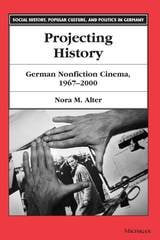
Projecting History
German Nonfiction Cinema, 1967-2000Nora M. Alter
University of Michigan Press, 2002
Between 1967 and 2000, film production in Germany underwent a number of significant transformations, including the birth and death of New German Cinema as well as the emergence of a new transnational cinematic practice. In Projecting History, Nora M. Alter explores the relationship between German cinematic practice and the student protests in both East and West Germany against the backdrop of the U.S. war in Vietnam in the sixties, the outbreak of terrorism in West Germany in the seventies, West Germany's rise as a significant global power in the eighties, and German reunification in the nineties.
Although a central tendency of New German Cinema in the 1970s was to reduce the nation's history to the product of individuals, the films addressed in Projecting History focus not on individual protagonists, but on complex socioeconomic structures. The films, by Rainer Werner Fassbinder, Harun Farocki, Alexander Kluge, Ulrike Ottinger, Wim Wenders and others, address basic problems of German history, including its overall "peculiarity" within the European context, and, in particular, the specific ways in which the National Socialist legacy continues to haunt Germans.
Nora M. Alter is Associate Professor of German, Film and Media Studies, and Women and Gender Studies at the University of Florida. A specialist in twentieth-century film, comparative literature, and cultural studies, Alter has been the recipient of a National Endowment for the Humanities Fellowship and a Howard Foundation Fellowship. She is also the author of Vietnam Protest Theatre: The Television War on Stage.
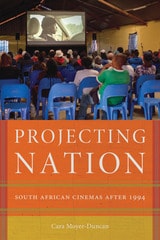
Projecting Nation
South African Cinemas after 1994Cara Moyer-Duncan
Michigan State University Press, 2020

Projecting the Nation
History and Ideology on the Israeli ScreenEran Kaplan
Rutgers University Press, 2020
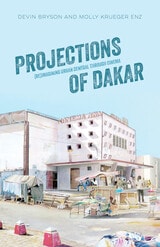
Projections of Dakar
(Re)Imagining Urban Senegal through CinemaDevin Bryson and Molly Krueger Enz
Ohio University Press, 2024
Like contemporary Senegalese cinema, African urban centers are often perceived as sites of despair and social decay. In each chapter of this book, Devin Bryson and Molly Krueger Enz focus on a particular urban issue and analyze how Senegalese filmmakers document and reimagine it from diverse perspectives and contexts. The authors draw from interviews and ethnographic observations to center filmmakers’ practices and conceptualizations of contemporary cinema in Dakar. Bryson and Enz trace developments in production, distribution, viewership, and audience response since 2012 to study how these films and their production both reveal and contribute to how people live in the city, relate to one another, build their lives, advocate for change, find joy and meaning, and build community. They also document and articulate more equitable and inclusive forms of these activities. Ultimately, the book illustrates how Senegalese filmmakers reimagine Africa as a place that will lead to a better future for its inhabitants.
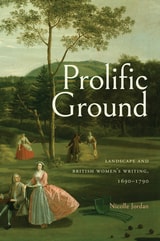
Prolific Ground
Landscape and British Women's Writing, 1690–1790Nicolle Jordan
Bucknell University Press, 2025
Promise of Justice
Essays on Brown v. Board of EducationMac A. Stewart
The Ohio State University Press, 2008
Promised Lands
Edited by Derek Rubin
Brandeis University Press, 2010
Promises Beyond Memory
Archives, Art, and the Afterlives of Violence in Latin AmericaVikki Bell
Duke University Press, 2026
Promoting Positive Transition Outcomes
Effective Planning for Deaf and Hard of Hearing Young AdultsPamela Luft
Gallaudet University Press, 2016
Promoting Positive Transition Outcomes is the most comprehensive discussion of transition planning and results for DHH students now available. Luft begins with an overview of the historical and current challenges to DHH students and their academic and vocational potential. She explores the importance of forming an identity and building foundational social and problem-solving skills. She then reviews the history of rehabilitation and workforce legislation, which now mandates that every student with an individualized education plan (IEP) have a transition plan in place by the age of 16. Most schools, however, are not equipped to meet the needs of a population as diverse as DHH students. She examines the services that are currently available in high schools and offers recommendations for strengthening transition team planning by reaching out to external experts. The volume concludes with suggestions for creating a framework to address the challenges of transition planning for deaf and hard of hearing students and offers guidance on building effective plans.
Pronouncing and Persevering
Gender and the Discourses of Disputing in an African Islamic CourtSusan F. Hirsch
University of Chicago Press, 1998
Pronouncing and Persevering focuses closely on the language used in disputes, particularly how men and women narrate their claims and how their speech shapes and is shaped by gender hierarchy in postcolonial Swahili society. Based on field research and court testimony, Hirsch's book debunks the conventional view that women are powerless under Islamic law and challenges the dichotomies through which Islam and gender relations are currently understood.

Propaganda Blitz
How the Corporate Media Distort RealityDavid Edwards and David Cromwell
Pluto Press, 2018
Propaganda Blitz shows that the corporate media does not just 'spin' the news - it fundamentally distorts everything it touches, hiding the real issues from public view, and often completely reversing the truth. This book uncovers a storm of top-down campaigns behind war reporting from Iraq, Syria and Palestine, as well as the destruction of the credibility of figures on the left, including Jeremy Corbyn and Hugo Chavez.
Exposing propagandists at the top levels of the BBC, as well as their reporting on the Scottish independence referendum, the dismantling of the NHS and looming climate chaos, Propaganda Blitz explains the real meaning of 'objective' journalism, exposes the fake news about 'fake news' and outlines a model for anti-business media activism.
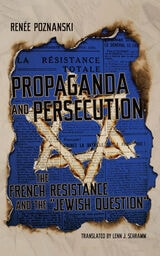
Propaganda and Persecution
Renée Poznanski
University of Wisconsin Press, 2024
Poznanski argues that Jews in France suffered a double persecution: one led by the Vichy government, the other imposed by the Nazis. Marginalization and exclusion soon led to internment and deportation to terrifying places. Meanwhile, a propaganda war developed between the Resistance and the official voice of Vichy. Poznanski draws on a breathtaking array of sources, especially clandestine publications and French-language BBC transmissions, to show how the Resistance both fought and accommodated the deeply entrenched antisemitism within French society. Her close readings of propaganda texts against public opinions probe ambiguities and silences in Resistance writing about the persecution of the Jews and, in parallel, the numerous and detailed denunciations that could be read in the Jewish clandestine press. This extensive synthesis extends to the post-Liberation period, during which the ongoing persecution of Jews in Europe and North Africa would be portrayed as secondary to the suffering of the nation.
The winner of the 2009 Henri Hertz Prize by the Chancellerie des Universités de Paris, Sorbonne, Propaganda and Persecution makes major contributions to the study of the Resistance and of antisemitism. Lenn J. Schramm’s English translation brings Poznanski’s dynamic prose to life.
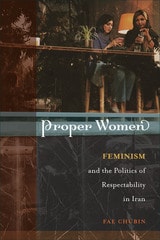
Proper Women
Feminism and the Politics of Respectability in IranFae Chubin
Temple University Press, 2024
Chubin brings attention to the varying class, ethnic, religious, and national identities of NGO staff and clients that shaped their differing understandings of oppression and justice. Her examination of the tensions within the organization reveals why the efforts of the NGO workers failed to gain purchase among the intended beneficiaries.
Proper Women concludes by encouraging feminist activists to not only examine the role of local politics and transnational connections in shaping their definitions of empowerment, but also consider the advantages of a justice-enhancing practice as opposed to justice monism for their target populations.
Property Control and Social Strategies in Settlers in a Middle Eastern Plain
Barbara C. Aswad
University of Michigan Press, 1971

Property, Substance, and Effect
Anthropological Essays on Persons and ThingsMarilyn Strathern
HAU, 2022
Property, Substance, and Effect draws on Marilyn Strathern’s longstanding interest in the reification of social relations. If the world is shrinking in terms of resources and access to them, it is expanding in terms of new candidates for proprietorship. How new relations are brought into being is among the many questions about property, ownership, and knowledge that these essays bring together.
Twenty years have not diminished the interest in the book’s opening challenge: if one were inventing a method of enquiry by which to configure the complexity of social life, one might wish to invent something like the anthropologist’s ethnographic practice. A wide range of studies deliberately brings into conversation claims people make on one another through relations imagined in the form of body-substance along with the increasing visibility of conceptual or intellectual work as property. Whether one lives in Papua New Guinea or Great Britain, categories of knowledge are being dissolved and reformed at a tempo that calls for reflection—and for the kind of lateral reflection afforded through the “ethnographic effect.”
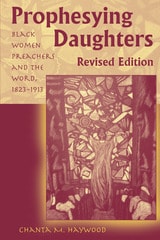
Prophesying Daughters
Black Women Preachers and the Word, 1823-1913Chanta M. Haywood
University of Missouri Press, 2003
In nineteenth-century America, many black women left their homes, their husbands, and their children to spread the Word of God. Descendants of slaves or former “slave girls” themselves, they traveled all over the country, even abroad, preaching to audiences composed of various races, denominations, sexes, and classes, offering their own interpretations of the Bible. When they were denied the pulpit because of their sex, they preached in tents, bush clearings, meeting halls, private homes, and other spaces. They dealt with domestic ideologies that positioned them as subservient in the home, and with racist ideologies that positioned them as naturally inferior to whites. They also faced legalities restricting blacks socially and physically and the socioeconomic reality of often being part of a large body of unskilled laborers.
Jarena Lee, Julia Foote, Maria Stewart, and Frances Gaudet were four women preachers who endured such hardships because of their religious convictions. Often quoting from the scripture, they insisted that they were indeed prophesying daughters whom God called upon to preach. Significantly, many of these women preachers wrote autobiographies in which they present images of assertive, progressive, pious women—steadfast and unmovable in their religious beliefs and bold in voicing their concerns about the moral standing of their race and society at large.
Chanta M. Haywood examines these autobiographies to provide new insight into the nature of prophesying, offering an alternative approach to literature with strong religious imagery. She analyzes how these four women employed rhetorical and political devices in their narratives, using religious discourse to deconstruct race, class, and gender issues of the nineteenth century.
By exploring how religious beliefs become an avenue for creating alternative ideologies, Prophesying Daughters will appeal to students and scholars of African American literature, women’s studies, and religious studies.

Prophet, Pariah, and Pioneer
Walter W. Taylor and Dissension in American ArchaeologyAllan Maca
University Press of Colorado, 2026
In his 1948 work A Study of Archeology, recently minted Harvard Ph.D. Walter W. Taylor delivered the strongest and most substantial critique of American archaeology ever published. He created many enemies with his dissection of the research programs of America's leading scholars, who took it as a personal affront. Taylor subsequently saw his ideas co-opted, his research pushed to the margins, and his students punished. Publicly humiliated at the 1985 Society for American Archaeology meeting, he suffered ridicule until his death in 1997.
Nearly everyone in the archaeological community read Taylor's book at the time, and despite the negative reaction, many were influenced by it. Few young scholars dared to directly engage and build on his "conjunctive approach," yet his suggested methods nevertheless began to be adopted and countless present-day authors highlight his impact on the 1960s formation of the "New Archaeology."
In Prophet, Pariah, and Pioneer, peers, colleagues, and former students offer a critical consideration of Taylor's influence and legacy. Neither a festschrift nor a mere analysis of his work, the book presents an array of voices exploring Taylor and his influence, sociologically and intellectually, as well as the culture of American archaeology in the second half of the twentieth century.
Prophets of Agroforestry
Guaraní Communities and Commercial GatheringBy Richard K. Reed
University of Texas Press, 1995
For almost four centuries, the indigenous Chiripá (Guaraní) people of eastern Paraguay have maintained themselves as a distinct society and culture, despite continual and often intense relations with Paraguayan society and the international economy. In this study, Richard K. Reed explores the economic and social basis for this ethnic autonomy.
Reed finds that Chiripá economic power derives from their practice of commercial agroforestry. Unlike Latin American indigenous societies that have been forced to clear land for commercial agriculture, the Chiripá continue to harvest and sell forest products, such as caffeinated yerba mate, without destroying the forests. Reed also explores the relation of this complex economy to Chiripá social organization and shows how flexible kin ties allowed the Chiripá to adapt to the pressure and opportunities of the commercial economy without adopting the authoritarian nature of rural Paraguayan society.
These findings offer important insights into the relations among indigenous groups, nation-states, and the international economy. They also provide a timely alternative model for sustainable management of subtropical forests that will be of interest in the fields of development and environmental studies.
Proposals for a Caring Economy
Matthew J. Wolf-Meyer
University of Minnesota Press, 2025
Offering models of care beyond capitalist constraints
For too long, questions of care provision and inclusion have been shaped by economic justifications. This has led to the deprivation of care to individuals and communities based on capitalist assumptions about what and who can be cared for. Proposals for a Caring Economy takes these assumptions to task. Moving between examples focused on immigration and agriculture, patients and art audiences, green energy transitions and unhoused people, prison abolitionists and clients of domestic violence services, the contributors here argue that we need new ways to conceptualize care and its applications.
Proposals for a Caring Economy articulates an economy that situates care at the forefront; sees the preservation of individual, community, and environmental wellbeing as the primary good; and focuses attention on building a sustainable economy of caring that will radically transform social connections and possibilities.
Contributors: Chelsey R. Carter, Yale U; David McDermott Hughes, Rutgers U; Stephanie Delise Jones, U of California, Riverside; Sameena Mulla, Emory U; Katy Overstreet, Saxo Institute, U of Copenhagen; Michelle Parsons, Northern Arizona U; Adair Rounthwaite, U of Washington; Damien M. Sojoyner, U of California, Irvine; Emily Yates-Doerr, Oregon State U.
Proprietors for a Democratic City
Space and Political Voice in ItalyRobin M. LeBlanc
University of Minnesota Press, 2026
Lessons from Bologna on how ordinary people take charge of urban spaces and make their cities more democratic
Proprietors for a Democratic City examines how nonelite individuals politically engage with urban spaces—even when they do not formally own them. Drawing on more than a decade of fieldwork throughout Bologna, Italy, Robin M. LeBlanc presents valuable models of democratic community-making through imaginative occupation, curation, and coalition-building projects, with critical implications for the study of cities and democracy.
Once a standard-bearer of progressive governance, contemporary Bologna now faces globally emergent challenges to its democratic functioning, from a lack of affordable housing to the rise of an authoritarian and xenophobic Far Right. But amid this precarity, everyday citizens employ the spaces around them to influence the political life of the city. Through interviews with a wide range of Bolognese, from urban planners and real estate developers to housing office staff, retirees in public gardening plots, and members of immigrant and youth squatter collectives, LeBlanc illuminates the humble origins of coalitional work that can meaningfully address today’s urban economic, environmental, and demographic crises.
Challenging both capitalistic and Marxist conventional wisdom, Proprietors for a Democratic City is a vivid portrait of the urban landscape and an inspiring call to empower regular people to create vibrant democratic spaces.
Retail e-book files for this title are screen-reader friendly with images accompanied by short alt text and/or extended descriptions.
Prospect Of Cities
John Friedmann
University of Minnesota Press, 2002
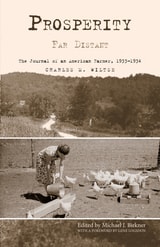
Prosperity Far Distant
The Journal of an American Farmer, 1933–1934Charles M. Wiltse
Ohio University Press, 2012
Fresh from receiving a doctorate from Cornell University in 1933, but unable to find work, Charles M. Wiltse joined his parents on the small farm they had recently purchased in southern Ohio. There, the Wiltses scratched out a living selling eggs, corn, and other farm goods at prices that were barely enough to keep the farm intact.
In wry and often affecting prose, Wiltse recorded a year in the life of this quintessentially American place during the Great Depression. He describes the family’s daily routine, occasional light moments, and their ongoing frustrations, small and large—from a neighbor’s hog that continually broke into the cornfields to the ongoing struggle with their finances. Franklin Roosevelt’s New Deal had little to offer small farmers, and despite repeated requests, the family could not secure loans from local banks to help them through the hard economic times. Wiltse spoke the bitter truth when he told his diary, “We are not a lucky family.” In this he represented millions of others caught in the maw of a national disaster.
The diary is introduced and edited by Michael J. Birkner, Wiltse’s former colleague at the Papers of Daniel Webster Project at Dartmouth College, and coeditor, with Wiltse, of the final volume of Webster’s correspondence.
Prosperity For All?
The Economic Boom and African AmericansRobert Cherry
Russell Sage Foundation, 2000
Prospero and Caliban
The Psychology of ColonizationO. Mannoni
University of Michigan Press, 1990
Noted anthropologist Maurice Bloch has written a powerful and critical new foreword to the English translation, which allows the reader to view Mannoni’s unique work in its historical and intellectual context.

Prosthetic Immortalities
Biology, Transhumanism, and the Search for Indefinite LifeAdam R Rosenthal
University of Minnesota Press, 2024
Examining the links between today’s ideas of radical life extension and age-old notions of immortality
From Plato’s notion of generation to Derrida’s concept of survival to such modern phenomena as anti-aging treatments, cryogenics, cloning, and whole-brain uploads, Adam Rosenthal’s Prosthetic Immortalities shows how the dream of indefinite life has always been a technological one: a matter of prosthesis. He argues that every biological instance of perpetual life, from one-celled organisms to rejuvenating jellyfish to Henrietta Lacks’s “immortal” cancer cells, always results in the transformation of the original being. There can, therefore, be no certainty of immortality. Yet, because finite mortal life is already marked by difference, division, and change, as Rosenthal concludes: “the problem of immortality will not cease to haunt us.”
Prosthetic Immortalities examines the persistence of humans’ aspirations of deathlessness, showing that the link between immortalization and prostheticization is not unique to a single period but is, rather, a ubiquitous element of the discourse of immortality, encompassing both modern technoscientific efforts and religious discourses of an afterlife. Rosenthal asks to what extent the emergence of a virtual, posited, immortal presence follows from the tenets of empirical science—and not simply from the discourse of biology but also, and more radically still, from biological organization itself.
Rosenthal ultimately argues that the discovery of biological immortals—lifeforms that naturally have indefinitely long lifespans, such as cancer cells and bacteria—present novel conceptual difficulties for traditional philosophical approaches to mortality and selfhood, asking whether it is life itself that first births immortalizing prostheses.
Prosthetic Memories
Postcolonial Feminisms in a More-Than-Human WorldHyaesin Yoon
Duke University Press, 2025
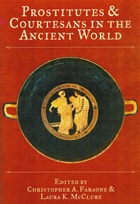
Prostitutes and Courtesans in the Ancient World
Edited by Christopher A. Faraone and Laura K. McClure
University of Wisconsin Press, 2006
Prostitutes and Courtesans in the Ancient World explores the implications of sex-for-pay across a broad span of time, from ancient Mesopotamia to the early Christian period. In ancient times, although they were socially marginal, prostitutes connected with almost every aspect of daily life. They sat in brothels and walked the streets; they paid taxes and set up dedications in religious sanctuaries; they appeared as characters—sometimes admirable, sometimes despicable—on the comic stage and in the law courts; they lived lavishly, consorting with famous poets and politicians; and they participated in otherwise all-male banquets and drinking parties, where they aroused jealousy among their anxious lovers.
The chapters in this volume examine a wide variety of genres and sources, from legal and religious tracts to the genres of lyric poetry, love elegy, and comic drama to the graffiti scrawled on the walls of ancient Pompeii. These essays reflect the variety and vitality of the debates engendered by the last three decades of research by confronting the ambiguous terms for prostitution in ancient languages, the difficulty of distinguishing the prostitute from the woman who is merely promiscuous or adulterous, the question of whether sacred or temple prostitution actually existed in the ancient Near East and Greece, and the political and social implications of literary representations of prostitutes and courtesans.
Prostitution and the Ends of Empire
Scale, Governmentalities, and Interwar IndiaStephen Legg
Duke University Press, 2014
Prostitution in Medieval Society
The History of an Urban Institution in LanguedocLeah Lydia Otis
University of Chicago Press, 1985
– Catharine R. Stimpson
Prostitution, Polygamy, and Power
Salt Lake City, 1847-1918Jeffrey Nichols
University of Illinois Press, 2002
Jeffrey Nichols examines how prostitution became a focal point in the moral contest between Mormons and gentiles and aided in the construction of gender systems, moral standards, and the city's physical and economic landscapes. Gentiles likened polygamy to prostitution and accused polygamous Mormons of violating Christian norms of family structure and sexual behavior. Defending their church and its ideals, Mormons blamed gentiles for introducing the sinful business of prostitution into their honorable city. Nichols traces the interplay of prostitution and reform from the 1890s, when the Church of Jesus Christ of Latter-day Saints began to move away from polygamy, to World War I, when Mormon and gentile moral codes converged at the expense of prostitutes. He also considers how the conflict over polygamy distinguished Salt Lake City from other cities struggling to abolish prostitution in the Progressive Era.
Prostitution, Power and Freedom
Julia O'Connell Davidson
University of Michigan Press, 1998
The author has conducted an impressive amount of research in nine countries, including conversations with male and female sex tourists, adult and child prostitutes, procurers, and clients. Through her research, O'Connell Davidson demonstrates the complexity of prostitution, arguing that it is not simply an effect of male oppression and violence or insatiable sexual needs, nor is it an unproblematic economic encounter. The book provides a sophisticated explanation of the economic and political inequalities underlying prostitution, but also shows that while prostitution necessarily implies certain freedoms for the clients, the amount of freedom experienced by individual prostititutes varies greatly.
This highly accessible book will be of great interest to those in gender and women's studies, sexuality and cultural studies, the sociology of work and organizations, and social policy. General readers will also appreciate having new ways of thinking about this age-old social phenomenon.
Julia O'Connell Davidson is Lecturer in Sociology, University of Leicester.
Protected Children, Regulated Mothers
Gender and the "Gypsy Question" in State Care in Postwar Hungary, 1949–1956Eszter Varsa
Central European University Press, 2021
Protected Children, Regulated Mothers examines child protection in Stalinist Hungary as a part of twentieth-century East Central, Eastern, and Southeastern European history. Across the communist bloc, the prewar foster care system was increasingly replaced after 1945 by institutionalization in residential homes. This shift was often interpreted as a further attempt to establish totalitarian control. However, this study—based on hundreds of children's case files and interviews with institution leaders, teachers, and people formerly in state care—provides a new perspective. Rather than being merely a tool of political repression, state care in postwar Hungary was often shaped by the efforts of policy actors and educators to address the myriad of problems engendered by the social and economic transformations that emerged after World War II. This response built on, rather than broke with, earlier models of reform and reformatory education. Yet child protection went beyond safeguarding and educating children; it also focused on parents, particularly lone mothers, regulating not only their entrance to paid work but also their sexuality. In so doing, children's homes both reinforced and changed existing cultural and social patterns, whether about gendered division of work or the assimilation of minorities. Indeed, a major finding of the book is that state socialist child protection continued a centuries-long national project of seeking a “solution to the Gypsy question,” rooted in efforts to eliminate the perceived “workshyness” of Roma.

Protecting Heritage in the Caribbean
Peter E. Siegel
University of Alabama Press, 2011

Protecting Home
Class, Race, and Masculinity in Boys' BaseballGrasmuck, Sherri
Rutgers University Press, 2005
What can neighborhood baseball tell us about class and gender cultures, urban change, and the ways that communities value public space? Through a close exploration of a boys’ baseball league in a gentrifying neighborhood of Philadelphia, sociologist Sherri Grasmuck reveals the accommodations and tensions that characterize multicultural encounters in contemporary American public life. Based on years of ethnographic observation and interviews with children, parents, and coaches, Protecting Home offers an analysis of the factors that account for racial accommodation in a space that was previously known for racial conflict and exclusion. Grasmuck argues that the institutional arrangements and social characteristics of children’s baseball create a cooperative environment for the negotiation of social, cultural, and class differences.
Chapters explore coaching styles, parental involvement, institutional politics, parent-child relations, and children’s experiences. Grasmuck identifies differences in the ways that the mostly white, working-class “old-timers” and the racially diverse, professional newcomers relate to the neighborhood. These distinctions reflect a competing sense of cultural values related to individual responsibility toward public space, group solidarity, appropriate masculine identities, and how best to promote children’s interests—a contrast between “hierarchical communalism” and “child-centered individualism.”
Through an innovative combination of narrative approaches, this book succeeds both in capturing the immediacy of boys’ interaction at the playing field and in contributing to sophisticated theoretical debates in urban studies, the sociology of childhood, and masculinity studies.

Protecting Women
Labor Legislation in Europe, the United States, and Australia, 1880-1920Edited by Ulla Wikander, Alice Kessler-Harris, and Jane Lewis
University of Illinois Press, 1995
Protecting the Spanish Woman
Gender Identity and Empowerment in María de Zayas's WorksXabier Granja Ibarreche
University of Nevada Press, 2023
María de Zayas is unique in the seventeenth century as the only Spanish woman to write a collection of exemplary novels whose quality is often compared to Miguel de Cervantes’ masterful works. Her two main collections of short stories, Novelas amorosas y ejemplares and Desengaños amorosos, encompass a social critique based on literary fiction that exposes flaws in the idealized archetypes of masculine identity in early modern Spain. Zayas’s stories redefine women’s patriarchal disadvantage as a tool to expose the ways in which early modern Spanish women could be empowered to counteract men’s discursive and political authority, which they use to unfairly maintain their own social privilege.
Xabier Granja Ibarreche explores how Zayas defies Spanish hegemony by manipulating and transforming the ideals of courtly masculinity that had been popularized by conduct manuals and the traits they specified for appropriate noble comportment. In doing so, Zayas elaborates a nonofficial discourse throughout plots that subvert patriarchal hierarchies: she rearticulates the existing ideological order to empower women who are no longer willing to remain silent and oppressed by masculine domination after centuries of failing to attain a sufficiently self-sufficient political position to ascend in the social hierarchy. By inverting the male gaze that assumes masculinity as a preeminent identity, Zayas subverts the patriarchal subject/masculine, object/feminine order and destabilizes manly superiority as a basic universal reality, thereby empowering and unshackling Spanish women to liberate Iberian culture from the repressive and pernicious future she forebodes.