Results by title
28167 books match the query 'History' and 1297 start with p
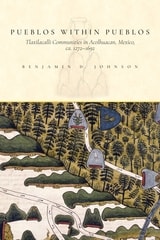
Pueblos within Pueblos
Tlaxilacalli Communities in Acolhuacan, Mexico, ca. 1272-1692Benjamin Johnson
University Press of Colorado, 2017
Focusing on the specific case of Acolhuacan in the eastern Basin of Mexico, Pueblos within Pueblos is the first book to systematically analyze tlaxilacalli history over nearly four centuries, beginning with their rise at the dawn of the Aztec empire through their transformation into the “pueblos” of mid-colonial New Spain. Even before the rise of the Aztecs, commoners in pre-Hispanic central Mexico set the groundwork for a new style of imperial expansion. Breaking free of earlier centralizing patterns of settlement, they spread out across onetime hinterlands and founded new and surprisingly autonomous local communities called, almost interchangeably, tlaxilacalli or calpolli.
Tlaxilacalli were commoner-administered communities that coevolved with the Acolhua empire and structured its articulation and basic functioning. They later formed the administrative backbone of both the Aztec and Spanish empires in northern Mesoamerica and often grew into full and functioning existence before their affiliated altepetl, or sovereign local polities. Tlaxilacalli resembled other central Mexican communities but expressed a local Acolhua administrative culture in their exacting patterns of hierarchy. As semiautonomous units, they could rearrange according to geopolitical shifts and even catalyze changes, as during the rapid additive growth of both the Aztec Triple Alliance and Hispanic New Spain. They were more successful than almost any other central Mexican institution in metabolizing external disruptions (new gods, new economies, demographic emergencies), and they fostered a surprising level of local allegiance, despite their structural inequality. Indeed, by 1692 they were declaring their local administrative independence from the once-sovereign altepetl. Administration through community, and community through administration—this was the primal two-step of the long-lived Acolhua tlaxilacalli, at once colonial and colonialist.
Pueblos within Pueblos examines a woefully neglected aspect of pre-Hispanic and early colonial Mexican historiography and is the first book to fully demonstrate the structuring role tlaxilacalli played in regional and imperial politics in central Mexico. It will be of interest to students and scholars of Latin American ethnohistory, history, and anthropology.
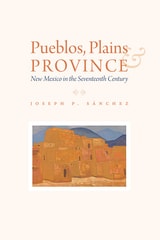
Pueblos, Plains, and Province
New Mexico in the Seventeenth CenturyJoseph P. Sánchez
University Press of Colorado, 2024
In Pueblos, Plains, and Province Joseph P. Sánchez offers an in-depth examination of sociopolitical conflict in seventeenth-century New Mexico, detailing the effects of Spanish colonial policies on settlers’, missionaries’, and Indigenous peoples’ struggle for economic and cultural control of the region. Sánchez explores the rich archival documentation that provides cultural, linguistic, and legal perspectives of the values of the period.
Spanish dual Indian policies for Pueblo and Plains tribes challenged Indigenous political and social systems to conform to the imperial structure for pacification purposes. Meanwhile, missionary efforts to supplant Indigenous religious beliefs with a Christian worldview resulted, in part, in a syncretism of the two worlds. Indigenous resentment of these policies reflected the contentious disagreements between Spanish clergymen and civil authorities, who feuded over Indigenous labor and encroachment on tribal sovereignties with demands for sworn loyalty to Spanish governance. The little-studied “starvation period” adversely affected Spanish-Pueblo relationships for the remainder of the century and contributed significantly to the battle at Acoma, the Jumano War, and the Pueblo Revolt of 1680.
Pueblos, Plains, and Province shows how history, culture, and tradition in New Mexico shaped the heritage shared by Spain, Mexico, the United States, and Native American tribes and will be of interest to scholars and students of Indigenous, colonial, and borderlands history.
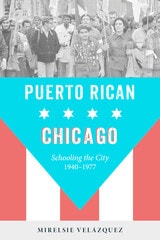
Puerto Rican Chicago
Schooling the City, 1940-1977Mirelsie Velázquez
University of Illinois Press, 2022
Winner of the Critics’ Choice Book awards of the American Educational Studies Association (AESA-CCBA)
The postwar migration of Puerto Rican men and women to Chicago brought thousands of their children into city schools. These children's classroom experience continued the colonial project begun in their homeland, where American ideologies had dominated Puerto Rican education since the island became a US territory. Mirelsie Velázquez tells how Chicago's Puerto Ricans pursued their educational needs in a society that constantly reminded them of their status as second-class citizens. Communities organized a media culture that addressed their concerns while creating and affirming Puerto Rican identities. Education also offered women the only venue to exercise power, and they parlayed their positions to take lead roles in activist and political circles. In time, a politicized Puerto Rican community gave voice to a previously silenced group--and highlighted that colonialism does not end when immigrants live among their colonizers.
A perceptive look at big-city community building, Puerto Rican Chicago reveals the links between justice in education and a people's claim to space in their new home.
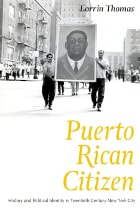
Puerto Rican Citizen
History and Political Identity in Twentieth-Century New York CityLorrin Thomas
University of Chicago Press, 2010
Building its incisive narrative from a wide range of archival sources, interviews, and first-person accounts of Puerto Rican life in New York, this book illuminates the rich history of a group that is still largely invisible to many scholars. At the center of Puerto Rican Citizen are Puerto Ricans’ own formulations about political identity, the responses of activists and ordinary migrants to the failed promises of American citizenship, and their expectations of how the American state should address those failures. Complicating our understanding of the discontents of modern liberalism, of race relations beyond black and white, and of the diverse conceptions of rights and identity in American life, Thomas’s book transforms the way we understand this community’s integral role in shaping our sense of citizenship in twentieth-century America.
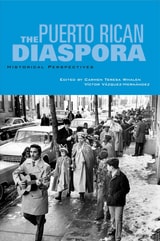
Puerto Rican Diaspora
Historical PerspectivesCarmen Teresa Whalen
Temple University Press, 2005
Puerto Rican Jam
Rethinking Colonialism and NationalismNegron-Muntaner, Frances
University of Minnesota Press, 1997
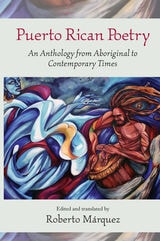
Puerto Rican Poetry
An Anthology from Aboriginal to Contemporary TimesRoberto Marquez
University of Massachusetts Press, 2007
This volume offers the most wide-ranging and comprehensive collection of Puerto Rican poetry available in English. It includes the work of sixty-four poets, as well as many previously inaccessible selections from Puerto Rico's tradition of popular verse forms—coplas, décimas, bombas—produced by anonymous writers. All are presented in English, contextualized and individually introduced by Roberto Márquez, a distinguished translator and literary scholar.
Book I, “Before Columbus and After, 1400–1820,” focuses on the foundational origins of Puerto Rican poetry and the clash of competing visions embodied in the rich and heterogeneous corpus of anonymous popular verse forms. Book II, “The Creole Matrix: Notions of Nation, 1821–1950s,” concentrates on the period in which a distinctively Puerto Rican consciousness emerged and the island's subsequent experience as a U. S. colony in the decades after the Spanish-Cuban-American War up to formal establishment of Commonwealth status. Books III and IV are devoted, respectively, to the era of insular “Critique, Revolt, and Renewal” in the mid-twentieth century, and to the “New Creoles, New Definitions” that developed in the late twentieth century, including the distinct and parallel growth of Puerto Rican poetry in the mainland United States.
In addition to a general introduction and concise biographical profiles of each poet, Márquez provides a detailed “Chronology” of the history of the island that has shaped the poets and informed their work. The resulting volume is a major contribution to our understanding and appreciation of Puerto Rican literature and the heterogeneous society in which it has been produced.
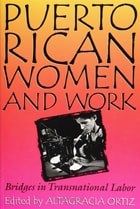
Puerto Rican Women and Work
Bridges in Transnational Laboredited by Altagracia Ortiz
Temple University Press, 1996
Puerto Rican Women and Work: Bridges in Transnational Labor is the only comprehensive study of the role of Puerto Rican women workers in the evolution of a transnational labor force in the twentieth century.
This book examines Puerto Rican women workers, both in Puerto Rico and on the U.S. mainland. It contains a range of information--historical, ethnographic, and statistical. The contributors provide insights into the effects of migration and unionization on women's work, taking into account U.S. colonialism and globalization of capitalism throughout the century as well as the impact of Operation Bootstrap. The essays are arranged in chronological order to reveal the evolutionary nature of women's work and the fluctuations in migration, technology, and the economy. This one-of-a-kind collection will be a valuable resource for those interested in women's studies, ethnic studies, and Puerto Rican and Latino studies, as well as labor studies.
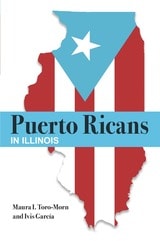
Puerto Ricans in Illinois
Maura I. Toro-Morn and Ivis Garcia
Southern Illinois University Press, 2024
As the first book to document the experiences of Puerto Ricans in the state of Illinois, this inviting book maps the pedacito de patria (little piece of home) that many Puerto Ricans have carved from the bitter hardships faced in Illinois. Authors Maura Toro-Morn and Ivis García illustrate the multiple paradoxes underlying the experience of Puerto Ricans in Illinois: an island people in a heartland state, native-born citizens living an immigrant’s experience, climate refugees in the Midwest. They live a vaivén (coming and going). This volume partially exposes these paradoxes through a narrative of common survival and achievement. Along the proud Paseo Boricua (Puerto Rican Promenade) in Chicago and in smaller cities around the state, Puerto Ricans find and create the means to keep their national identity while contributing to the health and wealth of their adopted state.
From the voices of the people, the authors offer readers an opportunity to learn about the history of Puerto Rico, the migration of Puerto Ricans to Illinois, and the cultural, economic, and political contributions of the Puerto Rican women, men, and families that call Illinois home. In Chicago and across the heartland, Puerto Ricans have negotiated the gap between home and country, mobilized state-wide against the federal government’s virtual abandonment in the aftermath of Hurricane Maria. A compelling weave of scholarship summary, archival research, and extensive sociological study including interviews conducted across the state, the book documents just how much many fail to know about a growing and transforming community in Illinois. The stories of Puerto Ricans are here.
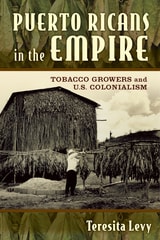
Puerto Ricans in the Empire
Tobacco Growers and U.S. ColonialismTeresita A. Levy
Rutgers University Press, 2015
Pulitzer's Gold
Behind the Prize for Public Service JournalismRoy J. Harris, Jr.
University of Missouri Press, 2008
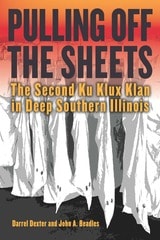
Pulling off the Sheets
The Second Ku Klux Klan in Deep Southern IllinoisDarrel Dexter and John A. Beadles
Southern Illinois University Press, 2024
WINNER, Certificate of Excellence in “Scholarly Publications” from the Illinois State Historical Society’s 2025 Best of Illinois History Awards!
Unmasking old-time racism in southern Illinois
Pulling off the Sheets tells the previously obscured history of the Second Ku Klux Klan which formed in deep southern Illinois in the early 1920s. Through meticulous research into both public and private records, Darrel Dexter and John A. Beadles recount the Klan’s mythical origins, reemergence, and swift disappearance. This important historical account sets out to expose the lasting impact of the Klan on race relations today.
The ideation of the Klan as a savior of the white race and protector of white womanhood was perpetuated by books, plays, and local news sources of the time. The very real but misplaced fear of Black violence on whites created an environment in which the Second Klan thrived, and recruitment ran rampant in communities such as the Protestant church. Events like the murder of Daisy Wilson intensified the climate of racial segregation and white supremacy in the region, and despite attempts at bringing justice to the perpetrators, most failed. The Second Klan’s presence may have been short-lived, but the violence and fear it inflicted continues to linger.
This disturbing historical account challenges readers to “pull back the sheet” and confront the darkest corners of their past. Dexter and Beadles emphasize the importance of acknowledging the damage that white supremacy and racism cause and how we can move toward healing.
Pulltrouser Swamp
Ancient Maya Habitat, Agriculture, and Settlement in Northern BelizeEdited by B. L. Turner and Peter D. Harrison
University of Texas Press, 1983
Among Mesoamericanists, the agricultural basis of the ancient Maya civilization of the Yucatan Peninsula has been an important topic of research—and controversy. Interest in the agricultural system of the Maya greatly increased as new discoveries showed that the lowland Maya were not limited to slash-and-burn technology, as had been previously believed, but used a variety of more sophisticated agricultural techniques and practices, including terracing, raised fields, and, perhaps, irrigation. Because of the nature of the data and because this form of agricultural technology had been key to explanations of state formation elsewhere in Mesoamerica, raised-field agriculture became a particular focus of investigation.
Pulltrouser Swamp conclusively demonstrates the existence of hydraulic, raised-field agriculture in the Maya lowlands between 150 B.C. and A.D. 850. It presents the findings of the University of Oklahoma's Pulltrouser SwampProject, an NSF-supported interdisciplinary study that combined the talents of archaeologists, anthropologists, geographers, paleobotanists, biologists, and zoologists to investigate the remains of the Maya agricultural system in the swampy region of northern Belize.
By examining soils, fossil pollen and other plant remains, gastropods, relic settlements, ceramics, lithics, and other important evidence, the Pulltrouser Swamp team has clearly demonstrated that the features under investigation are relics of Maya-made raised and channelized fields and associated canals. Other data suggest the nature of the swamps in which the fields were constructed, the tools used for construction and cultivation, the possible crops cultivated, and at least one type of settlement near the fields, with its chronology. This verification of raised fields provides dramatic evidence of a large and probably organized workforce engaged in sophisticated and complex agricultural technology. As record of this evidence, Pulltrouser Swamp is a work of seminal importance for all students and scholars of New World prehistory.
Pulp Empire
The Secret History of Comic Book ImperialismPaul S. Hirsch
University of Chicago Press, 2021
In the 1940s and ’50s, comic books were some of the most popular—and most unfiltered—entertainment in the United States. Publishers sold hundreds of millions of copies a year of violent, racist, and luridly sexual comics to Americans of all ages until a 1954 Senate investigation led to a censorship code that nearly destroyed the industry. But this was far from the first time the US government actively involved itself with comics—it was simply the most dramatic manifestation of a long, strange relationship between high-level policy makers and a medium that even artists and writers often dismissed as a creative sewer. In Pulp Empire, Paul S. Hirsch uncovers the gripping untold story of how the US government both attacked and appropriated comic books to help wage World War II and the Cold War, promote official—and clandestine—foreign policy and deflect global critiques of American racism.
As Hirsch details, during World War II—and the concurrent golden age of comic books—government agencies worked directly with comic book publishers to stoke hatred for the Axis powers while simultaneously attempting to dispel racial tensions at home. Later, as the Cold War defense industry ballooned—and as comic book sales reached historic heights—the government again turned to the medium, this time trying to win hearts and minds in the decolonizing world through cartoon propaganda.
Hirsch’s groundbreaking research weaves together a wealth of previously classified material, including secret wartime records, official legislative documents, and caches of personal papers. His book explores the uneasy contradiction of how comics were both vital expressions of American freedom and unsettling glimpses into the national id—scourged and repressed on the one hand and deployed as official propaganda on the other. Pulp Empire is a riveting illumination of underexplored chapters in the histories of comic books, foreign policy, and race.
Pulpits of the Lost Cause
The Faith and Politics of Former Confederate Chaplains during ReconstructionSteve Longenecker
University of Alabama Press, 2023
A comparison of the faith and politics of former Confederate chaplains with intriguing insights about the evolution of their postwar beliefs and the Lost Cause
Pulpits of the Lost Cause: The Faith and Politics of Former Confederate Chaplains during Reconstruction is the first in-depth study of former chaplains that juxtaposes their religion and politics, thereby revealing important insights about the Lost Cause movement. Steve Longenecker demonstrates that while some former chaplains vigorously defended the Lost Cause and were predictably conservative in the pulpit, embracing orthodoxy and resisting religious innovation, others were unexpectedly progressive and advocated on behalf of evolution, theological liberalism, and modern biblical criticism.
Former Confederate chaplains embodied both the distinctive white, Southern, regional identity and the variation within it. Most were theologically conservative and Lost Cause racists. But as with the larger South, variation abounded. The Lost Cause, which Longenecker interprets as a broad popular movement with numerous versions, meant different things to different chaplains. It ranged from diehard-ism to tempered sectional forgiveness to full reconciliation to a harmless once-a-year Decoration Day ritual.
This volume probes the careers of ten former chaplains, including their childhoods, wartime experiences, Lost Cause personas, and theologies, making use of manuscripts and published sermons as well as newspapers, diaries, memoirs, denominational periodicals, letters, and the books they themselves produced. In theology, many former chaplains were predictably conservative, while others were unexpectedly broad-minded and advocated evolution, theological liberalism, and modern Biblical criticism. One former chaplain became a social-climbing Harvard progressive. Another wrote innovative, liberal theology read by European scholars. Yet another espoused racial equality, at least in theory if not full practice. Additionally, former chaplains often exhibited the fundamental human trait of compartmentalization, most notably by extolling the past as they celebrated the Lost Cause while simultaneously looking to the future as religious progressives or New South boosters. The stereotypical preacher of the Lost Cause—a gray-clad Bible thumper—existed sufficiently to create the image but hardly enough to be universally accurate.
Punishment and Death
The Need for Radical Analysis, Volume 2006Ethan Blue and Patrick Timmons, eds.
Duke University Press, 0
The issue’s contributors—comprising both academics and activists—examine the practices of punishment and death imposed upon citizens, particularly through penal systems. One contributor exposes how the indignation and outrage many Americans expressed toward the military torture at Abu Ghraib do not extend to similar instances of torture (beatings, “shower-baths,” sexual abuse, etc.) against inmates of color within the U.S. prison system. Another contributor reflects on the unexpected but effective alliance between antiprison activists and the environmental justice movement in California, which worked to stop the massive prison-building boom of the late twentieth and early twenty-first centuries. Bringing a longer sweep of Western colonialism into view, another essay reveals the racial prejudices within disciplinary processes of Puerto Rico that lingered even after the island’s emancipation from the Spanish American empire, leading to unequal distribution of punishment on both colonial and domestic subject populations.
Contributors. Ethan Blue, Rose Braz, Helena Cobban, Craig Gilmore, Alan Eladio Gómez, R. J. Lambrose, Heather Jane McCarty, Dylan Rodríguez, Kelvin Santiago-Valles, Carolyn Strange, Patrick Timmons
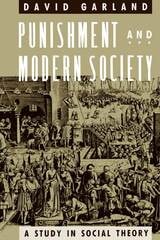
Punishment and Modern Society
A Study in Social TheoryDavid Garland
University of Chicago Press, 1990
"Punishment and Modern Society is an outstanding delineation of the sociology of punishment. At last the process that is surely the heart and soul of criminology, and perhaps of sociology as well—punishment—has been rescued from the fringes of these 'disciplines'. . . . This book is a first-class piece of scholarship."—Graeme Newman, Contemporary Sociology
"Garland's treatment of the theorists he draws upon is erudite, faithful and constructive. . . . Punishment and Modern Society is a magnificent example of working social theory."—John R. Sutton, American Journal of Sociology
"Punishment and Modern Society lifts contemporary penal issues from the mundane and narrow contours within which they are so often discussed and relocates them at the forefront of public policy. . . . This book will become a landmark study."—Andrew Rutherford, Legal Studies
"This is a superbly intelligent study. Its comprehensive coverage makes it a genuine review of the field. Its scholarship and incisiveness of judgment will make it a constant reference work for the initiated, and its concluding theoretical synthesis will make it a challenge and inspiration for those undertaking research and writing on the subject. As a state-of-the-art account it is unlikely to be bettered for many a year."—Rod Morgan, British Journal of Criminology
Winner of both the Outstanding Scholarship Award of the Crime and Delinquency Division of the Society for the Study of Social Problems and the Distinguished Scholar Award from the American Sociological Association's Crime, Law, and Deviance Section
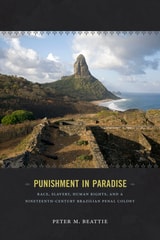
Punishment in Paradise
Race, Slavery, Human Rights, and a Nineteenth-Century Brazilian Penal ColonyPeter M. Beattie
Duke University Press, 2015
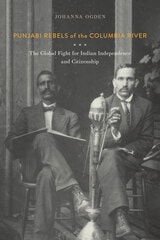
Punjabi Rebels of the Columbia River
The Global Fight for Indian Independence and CitizenshipJohanna Ogden
Oregon State University Press, 2024
Oregon is commonly perceived to have little, let alone notable, South Asian history. Yet in the early 1900s Oregon was at the center of two entwined quests for Indian independence and civic belonging that rocked the world.
Punjabi Rebels of the Columbia River traces the stories of the radical Indian independence organization known as Ghadar and Bhagat Singh Thind’s era-defining US Supreme Court citizenship case. Ghadar sought the overthrow of India’s British colonizers while Thind utilized sanctioned legal channels to do so. Despite widely differing strategies, both the movement and the man were targeted, often in coordination, by the highest levels of the US and British governments. The empires’ united message: India would not be an independent country and Indians could not be citizens. In the decades that followed, it was a verdict Indians refused to abide.
Johanna Ogden’s detailed history of migrants’ experience expands the time frame, geographic boundaries, and knowledge of the conditions and contributions of Indians in North America. It is the story of a people’s awakening amid a rich community of international workers in an age of nationalist uprisings. To understand why one of the smallest western Indian settlements became a resistance center, Punjabi Rebels mines the colonial underpinnings of labor, race, and place-making and their regional and global connections, rendering a history of whiteness and labor as much as of Indian-ness and migration. The first work to rejoin the lived experience of Thind and Ghadar activists, Punjabi Rebels complicates our understanding not just of the global fight for Indian political rights but of multi-racial democracy.
Punk and Revolution
Seven More Interpretations of Peruvian RealityShane Greene
Duke University Press, 2016
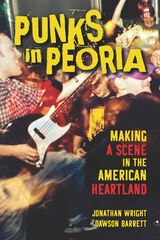
Punks in Peoria
Making a Scene in the American HeartlandJonathan Wright and Dawson Barrett
University of Illinois Press, 2021
Synonymous with American mediocrity, Peoria was fertile ground for the boredom- and anger-fueled fury of punk rock. Jonathan Wright and Dawson Barrett explore the do-it-yourself scene built by Peoria punks, performers, and scenesters in the 1980s and 1990s. From fanzines to indie record shops to renting the VFW hall for an all-ages show, Peoria's punk culture reflected the movement elsewhere, but the city's conservatism and industrial decline offered a richer-than-usual target environment for rebellion. Eyewitness accounts take readers into hangouts and long-lost venues, while interviews with the people who were there trace the ever-changing scene and varied fortunes of local legends like Caustic Defiance, Dollface, and Planes Mistaken for Stars. What emerges is a sympathetic portrait of a youth culture in search of entertainment but just as hungry for community—the shared sense of otherness that, even for one night only, could unite outsiders and discontents under the banner of music.
A raucous look at a small-city underground, Punks in Peoria takes readers off the beaten track to reveal the punk rock life as lived in Anytown, U.S.A.
Puppet
An Essay on Uncanny LifeKenneth Gross
University of Chicago Press, 2011
The puppet creates delight and fear. It may evoke the innocent play of childhood, or become a tool of ritual magic, able to negotiate with ghosts and gods. Puppets can be creepy things, secretive, inanimate while also full of spirit, alive with gesture and voice. In this eloquent book, Kenneth Gross contemplates the fascination of these unsettling objects—objects that are also actors and images of life.
The poetry of the puppet is central here, whether in its blunt grotesquery or symbolic simplicity, and always in its talent for metamorphosis. On a meditative journey to seek the idiosyncratic shapes of puppets on stage, Gross looks at the anarchic Punch and Judy show, the sacred shadow theater of Bali, and experimental theaters in Europe and the United States, where puppets enact everything from Baroque opera and Shakespearean tragedy to Beckettian farce. Throughout, he interweaves accounts of the myriad faces of the puppet in literature—Collodi’s cruel, wooden Pinocchio, puppetlike characters in Kafka and Dickens, Rilke’s puppet-angels, the dark puppeteering of Philip Roth’s Micky Sabbath—as well as in the work of artists Joseph Cornell and Paul Klee. The puppet emerges here as a hungry creature, seducer and destroyer, demon and clown. It is a test of our experience of things, of the human and inhuman. A book about reseeing what we know, or what we think we know, Puppet evokes the startling power of puppets as mirrors of the uncanny in life and art.
Pure Adulteration
Cheating on Nature in the Age of Manufactured FoodBenjamin R. Cohen
University of Chicago Press, 2019
In the latter nineteenth century, extraordinary changes in food and agriculture gave rise to new tensions in the ways people understood, obtained, trusted, and ate their food. This was the Era of Adulteration, and its concerns have carried forward to today: How could you tell the food you bought was the food you thought you bought? Could something manufactured still be pure? Is it okay to manipulate nature far enough to produce new foods but not so far that you question its safety and health? How do you know where the line is? And who decides?
In Pure Adulteration, Benjamin R. Cohen uses the pure food crusades to provide a captivating window onto the origins of manufactured foods and the perceived problems they wrought. Cohen follows farmers, manufacturers, grocers, hucksters, housewives, politicians, and scientific analysts as they struggled to demarcate and patrol the ever-contingent, always contested border between purity and adulteration, and as, at the end of the nineteenth century, the very notion of a pure food changed.
In the end, there is (and was) no natural, prehuman distinction between pure and adulterated to uncover and enforce; we have to decide. Today’s world is different from that of our nineteenth-century forebears in many ways, but the challenge of policing the difference between acceptable and unacceptable practices remains central to daily decisions about the foods we eat, how we produce them, and what choices we make when buying them.
Pure Intelligence
The Life of William Hyde WollastonMelvyn C. Usselman
University of Chicago Press, 2015
Pure Intelligence is the first book-length study of Wollaston, his science, and the environment in which he thrived. Drawing on previously-unstudied laboratory records as well as historical reconstructions of chemical experiments and discoveries, and written in a highly accessible style, Pure Intelligence will help to reinstate Wollaston in the history of science, and the pantheon of its great innovators.
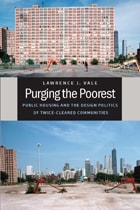
Purging the Poorest
Public Housing and the Design Politics of Twice-Cleared CommunitiesLawrence J. Vale
University of Chicago Press, 2013
Puritan Spirits in the Abolitionist Imagination
Kenyon Gradert
University of Chicago Press, 2020
Puritan Spirits in the Abolitionist Imagination reveals how the leaders of the nineteenth-century abolitionist movement—from landmark figures like Ralph Waldo Emerson to scores of lesser-known writers and orators—drew upon the Puritan tradition to shape their politics and personae. In a striking instance of selective memory, reimagined aspects of Puritan history proved to be potent catalysts for abolitionist minds. Black writers lauded slave rebels as new Puritan soldiers, female antislavery militias in Kansas were cast as modern Pilgrims, and a direct lineage of radical democracy was traced from these early New Englanders through the American and French Revolutions to the abolitionist movement, deemed a “Second Reformation” by some. Kenyon Gradert recovers a striking influence on abolitionism and recasts our understanding of puritanism, often seen as a strictly conservative ideology, averse to the worldly rebellion demanded by abolitionists.
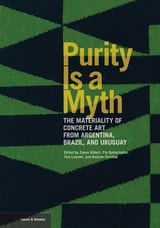
Purity Is a Myth
The Materiality of Concrete Art from Argentina, Brazil, and UruguayZanna Gilbert
J. Paul Getty Trust, The, 2021
Purity Is a Myth presents new scholarship on Concrete art in Argentina, Brazil, and Uruguay from the 1940s to the 1960s. Originally coined by the Dutch artist Theo van Doesburg in 1930, the term concrete denotes abstract painting with no reference to external reality. Van Doesburg argued that there was nothing more real than a line, color, or plane. Artists such as Willys de Castro, Lygia Clark, Waldemar Cordeiro, Hermelindo Fiaminghi, Judith Lauand, Raúl Lozza, Tomás Maldonado, Hélio Oiticica, and Rhod Rothfuss would reinvent this concept in postwar Latin America.
Drawing on research conducted by Getty and international partners, the essays in this volume address a variety of topics, including the general history, emergence, and reception of Concrete art; processes and color; scientific analysis of works; illustrated chronologies of the paint industry in Brazil and Argentina; and Concrete design on paper. An innovative technical study of the Concrete art movement in Latin America, this volume will be indispensable to scholars, practitioners, and students of Latin American art.
Purity and Exile
Violence, Memory, and National Cosmology among Hutu Refugees in TanzaniaLiisa H. Malkki
University of Chicago Press, 1995
Through extensive fieldwork in two refugee communities, Malkki finds that the refugees' current circumstances significantly influence these constructions. Those living in organized camps created an elaborate "mythico-history" of the Hutu people, which gave significance to exile, and envisioned a collective return to the homeland of Burundi. Other refugees, who had assimilated in a more urban setting, crafted identities in response to the practical circumstances of their day to day lives. Malkki reveals how such things as national identity, historical consciousness, and the social imagination of "enemies" get constructed in the process of everyday life. The book closes with an epilogue looking at the recent violence between Hutu and Tutsi in Rwanda and Burundi, and showing how the movement of large refugee populations across national borders has shaped patterns of violence in the region.
Purity in Print
Book Censorship in America from the Gilded Age to the Computer AgePaul S. Boyer
University of Wisconsin Press, 2002
The first edition of Purity in Print documented book censorship in America from the 1870s to the 1930s, embedding it within the larger social and cultural history of the time. In this second edition, Boyer adds two new chapters carrying his history forward to the beginning of the twenty-first century.
Purple Passages
Pound, Eliot, Zukofsky, Olson, Creeley, and the Ends of Patriarchal PoetryRachel Blau DuPlessis
University of Iowa Press, 2012
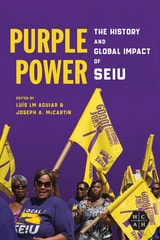
Purple Power
The History and Global Impact of SEIUEdited by Luís LM Aguiar and Joseph A. McCartin
University of Illinois Press, 2023
Luís LM Aguiar and Joseph A. McCartin edit essays on one of contemporary labor’s bedrock organizations. The contributors explore key episodes, themes, and features in the union’s recent history and evaluate SEIU as a union with global aspirations and impact. The first section traces the SEIU’s growth in the last and current centuries. The second section offers in-depth studies of key campaigns in the United States, including the Justice for Janitors and Fight for $15 movements. The third section focuses on the SEIU’s work representing low-wage workers in Canada, Australia, Europe, and Brazil. An interview with Justice for Janitors architect Stephen Lerner rounds out the volume.
Contributors: Luís LM Aguiar, Adrienne E. Eaton, Janice Fine, Euan Gibb, Laurence Hamel-Roy, Tashlin Lakhani, Joseph A. McCartin, Yanick Noiseux, Benjamin L. Peterson, Allison Porter, Alyssa May Kuchinski, Maite Tapia, Veronica Terriquez, and Kyoung-Hee Yu
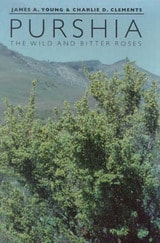
Purshia
The Wild And Bitter RosesJames A. Young
University of Nevada Press, 2002
A useful and complete summary of all the scientific information available on one of the most significant plant species in the western and intermountain regions. Among the plant species of the great Basin rangeland, the Purshia—ancient members of the rose family evolved to survive the aridity and temperature extremes of this harsh region—are one of the most important. This book-length study of this key plant species provides a comprehensive examination of the biology and ecology of the species and region.
Pushing Boundaries in Southwestern Archaeology
Chronometry, Collections, and ContextsStephen E. Nash
University Press of Colorado, 2022
The first of the volume’s four sections examines the status, history, and prospects of Bears Ears National Monument, the broader regulatory and political boundaries that complicate the nature and integrity of the archaeological record, and the cultural contexts and legal stakes of archaeological inquiry. The second section focuses on chronological “big data” in the context of pre-Columbian history and the potential and limits of what can be empirically derived from chronometric analysis of the past. The chapters in the third section advocate for advancing collections-based research, focusing on the vast and often untapped research potential of archives, previously excavated museum collections, and legacy data. The final section examines the permeable boundaries involved in Plains-Pueblo interactions, obvious in the archaeological record but long in need of analysis, interpretation, and explanation.
Contributors: James R. Allison, Erin Baxter, Benjamin A. Bellorado, Katelyn J. Bishop, Eric Blinman, J. Royce Cox, J. Andrew Darling, Kaitlyn E. Davis, William H. Doelle, B. Sunday Eiselt, Leigh Anne Ellison, Josh Ewing, Samantha G. Fladd, Gary M. Feinman, Jeffrey R. Ferguson, Severin Fowles, Willie Grayeyes, Matthew Guebard, Saul L. Hedquist, Greg Hodgins, Lucas Hoedl, John W. Ives, Nicholas Kessler, Terry Knight, Michael W. Lindeman, Hannah V. Mattson, Myles R. Miller, Lindsay Montgomery, Stephen E. Nash, Sarah Oas, Jill Onken, Scott G. Ortman, Danielle J. Riebe, John Ruple, Will G. Russell, Octavius Seowtewa, Deni J. Seymour, James M. Vint, Adam S. Watson
Pushing Cool
Big Tobacco, Racial Marketing, and the Untold Story of the Menthol CigaretteKeith Wailoo
University of Chicago Press, 2021
Police put Eric Garner in a fatal chokehold for selling cigarettes on a New York City street corner. George Floyd was killed by police outside a store in Minneapolis known as “the best place to buy menthols.” Black smokers overwhelmingly prefer menthol brands such as Kool, Salem, and Newport. All of this is no coincidence. The disproportionate Black deaths and cries of “I can’t breathe” that ring out in our era—because of police violence, COVID-19, or menthol smoking—are intimately connected to a post-1960s history of race and exploitation.
In Pushing Cool, Keith Wailoo tells the intricate and poignant story of menthol cigarettes for the first time. He pulls back the curtain to reveal the hidden persuaders who shaped menthol buying habits and racial markets across America: the world of tobacco marketers, consultants, psychologists, and social scientists, as well as Black lawmakers and civic groups including the NAACP. Today most Black smokers buy menthols, and calls to prohibit their circulation hinge on a history of the industry’s targeted racial marketing. In 2009, when Congress banned flavored cigarettes as criminal enticements to encourage youth smoking, menthol cigarettes were also slated to be banned. Through a detailed study of internal tobacco industry documents, Wailoo exposes why they weren’t and how they remain so popular with Black smokers.
Pushing in Silence
Modernizing Puerto Rico and the Medicalization of ChildbirthBy Isabel M. Córdova
University of Texas Press, 2017
As Puerto Rico rapidly industrialized from the late 1940s until the 1970s, the social, political, and economic landscape changed profoundly. In the realm of heath care, the development of medical education, new medical technologies, and a new faith in science radically redefined childbirth and its practice. What had traditionally been a home-based, family-oriented process, assisted by women and midwives and “accomplished” by mothers, became a medicalized, hospital-based procedure, “accomplished” and directed by biomedical, predominantly male, practitioners, and, ultimately reconfigured, after the 1980s, into a technocratic model of childbirth, driven by doctors’ fears of malpractice suits and hospitals’ corporate concerns.
Pushing in Silence charts the medicalization of childbirth in Puerto Rico and demonstrates how biomedicine is culturally constructed within regional and historical contexts. Prior to 1950, registered midwives on the island outnumbered registered doctors by two to one, and they attended well over half of all deliveries. Isabel M. Córdova traces how, over the next quarter-century, midwifery almost completely disappeared as state programs led by scientifically trained experts and organized by bureaucratic institutions restructured and formalized birthing practices. Only after cesarean rates skyrocketed in the 1980s and 1990s did midwifery make a modest return through the practices of five newly trained midwives. This history, which mirrors similar patterns in the United States and elsewhere, adds an important new chapter to the development of medicine and technology in Latin America.
Pushing the Envelope
The American Aircraft IndustryDonald M. Pattillo
University of Michigan Press, 2001
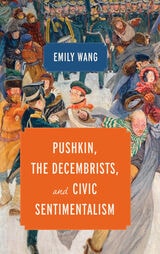
Pushkin, the Decembrists, and Civic Sentimentalism
Emily Wang
University of Wisconsin Press, 2023
Through careful readings of the literature of Pushkin and others active in the northern branch of the Decembrist movement, such as Kondraty Ryleev, Wilhelm Küchelbecker, and Fyodor Glinka, Wang traces the development of “emotional communities” among the members and adjacent writers. This book illuminates what Wang terms “civic sentimentalism”: the belief that cultivating noble sentiments on an individual level was the key to liberal progress for Russian society, a core part of Decembrist ideology that constituted a key difference from their thought and Pushkin’s. The emotional program for Decembrist community members was, in other ways, a civic program for Russia as a whole, one that they strove to enact by any means necessary.
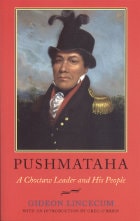
Pushmataha
A Choctaw Leader and His PeopleGideon Lincecum, with an introdution by Greg O'Brien
University of Alabama Press, 2004
Comprises two valuable, original, and difficult-to-find pieces on Choctaw history and culture that originally appeared in the 1904 and 1906 volumes of Publications of the Mississippi Historical Society
This important book comprises two articles that appeared in the 1904 and 1906 volumes of Publications of the Mississippi Historical Society. In “Life of Apushimataha,” Gideon Lincecum tells the story of Choctaw chief Pushmataha, who was born in Mississippi in 1764. A fearless warrior, his name literally means “one whose tomahawk is fatal in war or hunting.” As a charismatic leader, his foresight in making an alliance with General Andrew Jackson brought the Choctaws into war with the Creek Nation and into the War of 1812 but served to their benefit for many years with the United States government. In 1824, Pushmataha traveled to Washington, DC, to negotiate the Treaty of Doak’s Stand as pressure grew for Choctaw removal to Oklahoma Territory, but he fell ill and died there. He was buried with full military honors in the Congressional Cemetery at Arlington.
In “Choctaw Traditions about Their Settlement in Mississippi and the Origin of Their Mounds,” Lincecum translates a portion of the Skukhaanumpula—the traditional history of the tribe, which was related to him verbally by Chata Immataha, “the oldest man in the world, a man that knew everything.” It explains how and why the sacred Nanih Waya mound was erected and how the Choctaws formed new towns, and it describes the structure of leadership roles in their society.
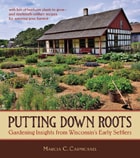
Putting Down Roots
Gardening Insights from Wisconsin’s Early SettlersMarcia C. Carmichael
Wisconsin Historical Society Press, 2013
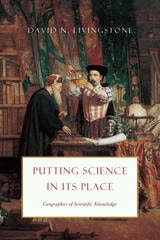
Putting Science in Its Place
Geographies of Scientific KnowledgeDavid N. Livingstone
University of Chicago Press, 2003
Putting Science in Its Place establishes the fundamental importance of geography in both the generation and the consumption of scientific knowledge, using historical examples of the many places where science has been practiced. Livingstone first turns his attention to some of the specific sites where science has been made—the laboratory, museum, and botanical garden, to name some of the more conventional locales, but also places like the coffeehouse and cathedral, ship's deck and asylum, even the human body itself. In each case, he reveals just how the space of inquiry has conditioned the investigations carried out there. He then describes how, on a regional scale, provincial cultures have shaped scientific endeavor and how, in turn, scientific practices have been instrumental in forming local identities. Widening his inquiry, Livingstone points gently to the fundamental instability of scientific meaning, based on case studies of how scientific theories have been received in different locales. Putting Science in Its Place powerfully concludes by examining the remarkable mobility of science and the seemingly effortless way it moves around the globe.
From the reception of Darwin in the land of the Maori to the giraffe that walked from Marseilles to Paris, Livingstone shows that place does matter, even in the world of science.
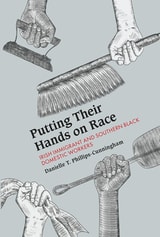
Putting Their Hands on Race
Irish Immigrant and Southern Black Domestic WorkersDanielle T. Phillips-Cunningham
Rutgers University Press, 2020
Putting Their Hands on Race offers an important labor history of 19th and early 20th century Irish immigrant and US southern Black migrant domestic workers. Drawing on a range of archival sources, this intersectional study explores how these women were significant to the racial labor and citizenship politics of their time. Their migrations to northeastern cities challenged racial hierarchies and formations. Southern Black migrant women resisted the gendered racism of domestic service, and Irish immigrant women strove to expand whiteness to position themselves as deserving of labor rights. On the racially fractious terrain of labor, Black women and Irish immigrant women, including Victoria Earle Matthews, the “Irish Rambler”, Leonora Barry, and Anna Julia Cooper, gathered data, wrote letters and speeches, marched, protested, engaged in private acts of resistance in the workplace, and created women’s institutions and organizations to assert domestic workers’ right to living wages and protection.
Putting on Christ
Augustine's Early Theology of Salvation and the SacramentsTy Paul Monroe
Catholic University of America Press, 2022
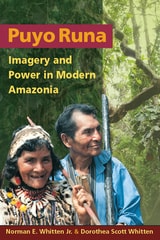
Puyo Runa
Imagery and Power in Modern AmazoniaNorman E. Whitten Jr. and Dorothea Scott Whitten
University of Illinois Press, 2007
The Andean nation of Ecuador derives much of its revenue from petroleum that is extracted from its vast Upper Amazonian rain forest, which is home to ten indigenous nationalities. Norman E. Whitten Jr. and Dorothea Scott Whitten have lived among and studied one such people, the Canelos Quichua, for nearly forty years. In Puyo Runa, they present a trenchant ethnography of history, ecology, imagery, and cosmology to focus on shamans, ceramic artists, myth, ritual, and political engagements. Canelos Quichua are active participants in national politics, including large-scale movements for social justice for Andean and Amazonian people. Puyo Runa offers readers exceptional insight into this cultural world, revealing its intricacies and embedded humanisms.

Puzzles
A Seminar on the ‘Benefit of Christ’Carlo Ginzburg and Adriano Prosperi
Seagull Books, 2025
Patience Games: A Seminar on the 'Benefit of Christ' invites readers into the unpredictable world of scholarly discovery, where interpretation is not a straight path but a labyrinth of dialogue revision. At the heart of this book is a seminar held forty years ago at the University of Bologna, where students wrestled with The Beneficio di Cristo, the incendiary sixteenth-century text that questioned Church authority and championed salvation through grace alone. This is not a neatly packaged historical study, however—it is an unfiltered look at the errors and insights that emerge in the collective process of reading and debating a text.
Through shifting hypotheses and the sheer unpredictability of research, Patience Games dismantles the illusion of scholarship as a sterile pursuit, revealing instead a messy, deeply human endeavor. Blending sharp analysis with wit and self-irony, the book makes a compelling case for the continued importance of slow reading—even in an age where knowledge is just a click away.
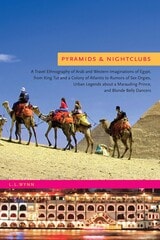
Pyramids and Nightclubs
A Travel Ethnography of Arab and Western Imaginations of Egypt, from King Tut and a Colony of Atlantis to Rumors of Sex Orgies, Urban Legends about a Marauding Prince, and Blonde Belly DancersBy L. L. Wynn
University of Texas Press, 2007
2008 — Leeds Honor Book in Urban Anthropology – Society for Urban, National, and Transnational/Global Anthropology
Living in Egypt at the turn of the millennium, cultural anthropologist L. L. Wynn was struck by the juxtapositions of Western, Gulf Arab, and Egyptian viewpoints she encountered. For some, Egypt is the land of mummies and pharaohs. For others, it is a vortex of decadence, where nightlife promises a chance to salivate over belly dancers and maybe even glimpse a movie star. Offering a new approach to ethnography, Pyramids and Nightclubs examines cross-cultural encounters to bring to light the counterintuitive ways in which Egypt is defined.
Guiding readers on an armchair journey that introduces us to Russian and Australian belly dancers on Nile cruise ships, Egyptian rumors about an Arab prince and his royal entourage, Saudi girls looking for a less restrictive dating scene, and other visitors to this "antique" land, Wynn uses the lens of travel and tourism to depict a fascinating and often surprising version of Egypt, while exploring the concept of stereotype itself. Tracing the history of Western and Arab fascination with Egypt through spurious hunts for lost civilizations and the new economic disparities brought about by the oil industry, Pyramids and Nightclubs ultimately describes the ways in which moments of cultural contact, driven by tourism and labor migration, become eye-opening opportunities for defining self and other.
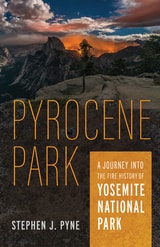
Pyrocene Park
A Journey into the Fire History of Yosemite National ParkStephen J. Pyne
University of Arizona Press, 2023
In the last decade, fire has blasted into public attention. California’s blazes have captured national and global media interest with their drama and urgency. Expand the realm of fire to include the burning of fossil fuels, and the fire story also subsumes climate change. Renowned fire historian Stephen J. Pyne argues that the relationship between fire and humans has become a defining feature of our epoch, and he reveals how Yosemite offers a cameo of how we have replaced an ice age with a fire age: the Pyrocene.
Organized around a backcountry trek to a 50-year experiment in restoring fire, Pyrocene Park describes the 150-year history of fire suppression and management that has led us, in part, to where the park is today. But there is more. Yosemite’s fire story is America’s, and the Earth’s, as it shifts from an ice-informed world to a fire-informed one. Pyrocene Park distills that epic story into a sharp miniature.
Flush with people, ideas, fires, and controversy, Pyrocene Park is a compelling and accessible window into the American fire scene and the future it promises.
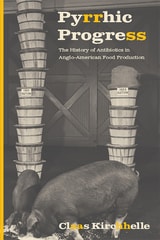
Pyrrhic Progress
The History of Antibiotics in Anglo-American Food ProductionClaas Kirchhelle
Rutgers University Press, 2020
2020 Choice Outstanding Academic Title
Winner of the 2020 Turriano Prize from ICOHTEC
Short-listed and highly commended for the Antibiotic Guardian Award from Public Health England
Long-listed for the Michel Déon Prize from the Royal Irish Academy
Pyrrhic Progress analyses over half a century of antibiotic use, regulation, and resistance in US and British food production. Mass-introduced after 1945, antibiotics helped revolutionize post-war agriculture. Food producers used antibiotics to prevent and treat disease, protect plants, preserve food, and promote animals’ growth. Many soon became dependent on routine antibiotic use to sustain and increase production. The resulting growth of antibiotic infrastructures came at a price. Critics blamed antibiotics for leaving dangerous residues in food, enabling bad animal welfare, and selecting for antimicrobial resistance (AMR) in bacteria, which could no longer be treated with antibiotics. Pyrrhic Progress reconstructs the complicated negotiations that accompanied this process of risk prioritization between consumers, farmers, and regulators on both sides of the Atlantic. Unsurprisingly, solutions differed: while Europeans implemented precautionary antibiotic restrictions to curb AMR, consumer concerns and cost-benefit assessments made US regulators focus on curbing drug residues in food. The result was a growing divergence of antibiotic stewardship and a rise of AMR. Kirchhelle’s comprehensive analysis of evolving non-human antibiotic use and the historical complexities of antibiotic stewardship provides important insights for current debates on the global burden of AMR. This Open Access ebook is available under a CC-BY-NC-ND license, and is supported by a generous grant from Wellcome Trust.