Results by title
4531 books match the query 'Cultural & Ethnic Studies' and 188 start with p
Prisons and Patriots
Japanese American Wartime Citizenship, Civil Disobedience, and Historical MemoryCherstin Lyon
Temple University Press, 2011
Prisons and Patriots provides a detailed account of forty-one Nisei (second-generation Japanese Americans), known as the Tucsonians, who were imprisoned for resisting the draft during WWII. Cherstin Lyon parallels their courage as resisters with that of civil rights hero Gordon Hirabayashi, well known for his legal battle against curfew and internment, who also resisted the draft. These dual stories highlight the intrinsic relationship between the rights and the obligations of citizenship, particularly salient in times of war.
Lyon considers how wartime civil disobedience has been remembered through history—how soldiers have been celebrated for their valor while resisters have been demonized as unpatriotic. Using archival research and interviews, she presents a complex picture of loyalty and conflict among first-generation Issei and Nisei. Lyon contends that the success of the redress movement has made room for a narrative that neither reduces the wartime confinement to a source of shame nor proffers an uncritical account of heroic individuals.
Private Bodies, Public Texts
Race, Gender, and a Cultural BioethicsKarla FC Holloway
Duke University Press, 2011
Private Lives, Proper Relations
Regulating Black IntimacyCandice M. Jenkins
University of Minnesota Press, 2007
Private Lives, Proper Relations begins with the question of why contemporary African American literature—particularly that produced by black women—is continually concerned with issues of respectability and propriety. Candice M. Jenkins argues that this preoccupation has its origins in recurrent ideologies about African American sexuality, and that it expresses a fundamental aspect of the racial self—an often unarticulated link between the intimate and the political in black culture.
In a counterpoint to her paradigmatic reading of Nella Larsen’s Passing, Jenkins’s analysis of black women’s narratives—including Ann Petry’s The Street, Toni Morrison’s Sula and Paradise, Alice Walker’s The Color Purple, and Gayl Jones’s Eva’s Man—offers a theory of black subjectivity. Here Jenkins describes middle-class attempts to rescue the black community from accusations of sexual and domestic deviance by embracing bourgeois respectability, and asserts that behind those efforts there is the “doubled vulnerability” of the black intimate subject. Rather than reflecting a DuBoisian tension between race and nation, to Jenkins this vulnerability signifies for the African American an opposition between two poles of potential exposure: racial scrutiny and the proximity of human intimacy.
Scholars of African American culture acknowledge that intimacy and sexuality are taboo subjects among African Americans precisely because black intimate character has been pathologized. Private Lives, Proper Relations is a powerful contribution to the crucial effort to end the distortion still surrounding black intimacy in the United States.
Candice M. Jenkins is associate professor of English at Hunter College, City University o
Private Subjects
Family Photography in South Africa and the Right to OpacityJohn Peffer
Duke University Press, 2026
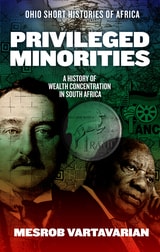
Privileged Minorities
A History of Wealth Concentration in South AfricaMesrob Vartavarian
Ohio University Press, 2026
Explores how anticolonial movements in South Africa enabled enduring inequality through the rise of privileged minorities and exclusive economic advantages
In Privileged Minorities, Mesrob Vartavarian examines a central paradox in South African history: how a nation shaped by anticolonial struggle became fertile ground for wealth concentration and enduring inequality. While these contradictions are not unique to South Africa, its historical trajectory offers broader insights into persistent disparities across African societies.
Vartavarian argues that the rise of privileged minorities—small, exclusive groups that dominate political and economic life—paralleled the development of successful anticolonial movements. These minorities secured exclusive advantages, defined as benefits and protections that enabled material accumulation. Such advantages included land seizures, racialized labor systems, access to coercive institutions, favorable regulatory environments, and targeted state expenditures. Though these mechanisms could foster overall economic growth, they disproportionately benefited select oligarchies and middle classes.
The book traces how distinct sociocultural groups in South Africa navigated and negotiated these advantages from the Dutch colonial era through the rise and decline of African National Congress rule. Rather than dismantling minority privilege, challenges from marginalized groups often served to reshape entrenched advantages by incorporating new actors into existing structures. These dynamics produced composite systems of accumulation that sustained inequality. Through this historical lens, Privileged Minorities offers a compelling framework for understanding how structural advantage persists and evolves, even in the wake of liberation.
Privileged Spectatorship
Theatrical Interventions in White SupremacyDani Snyder-Young
Northwestern University Press, 2021
Many professional theater artists attempt to use live performances in formal theater spaces to disrupt racism and create a more equitable society. Privileged Spectatorship: Theatrical Interventions in White Supremacy examines the impact of such projects, looking at how and why they do and do not intervene in white supremacy. In this incisive study, Dani Snyder-Young examines audience responses to a range of theatrical events that focus on race‑related conflict or racial identity in the contemporary United States. The audiences for these performances, produced at mainstream not‑for‑profit professional theaters in major American cities in 2013–18, reflect dominant patterns of theater attendance: the majority of spectators are older, affluent, white, and describe themselves as politically progressive. Snyder-Young studies the ways these audience members consume the stories of racialized others and analyzes how different artistic, organizational, and programmatic strategies can (or cannot) mitigate white privilege.
This book is essential reading for scholars and students of theater, performance studies, and critical ethnic studies and for theater practitioners interested in equity and inclusion.
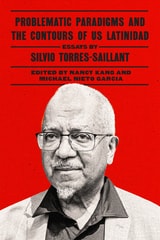
Problematic Paradigms and the Contours of US Latinidad
Essays by Silvio Torres-SaillantEdited by Nancy Kang and Michael Nieto Garcia
University of Texas Press, 2026
Silvio Torres-Saillant’s collected writings examine political contradictions within Latinx identity in the United States.
Since the 1990s Silvio Torres-Saillant’s work has questioned the notion of Latinidad, challenging presumptions of panethnic unity within the US Hispanic population and assessing dominant modes of Latinx representation. The essays in Problematic Paradigms and the Contours of US Latinidad examine the dynamics of a diverse collective of over 65 million people whose cultural heritage, ancestral origins, and belief systems arguably differ as much as they resemble one another. The volume dissects prevailing assumptions, namely the essentializing sense of homogeneity in the Latinx “community,” which mask important nuances and fascinating contradictions. Torres-Saillant also targets the role of marketing and mass communications in shaping popular perceptions of ethnic groups, thereby tracing connections between media rhetoric and the language of scholarship.
Newly revised by editors Nancy Kang and Michael Nieto Garcia, this collection curates Torres-Saillant’s core contributions to Latinx studies over the last two decades and underscores the veteran scholar’s evolving thoughts on key conversations in the field. The epilogue narrates his beginnings in Caribbean studies, acknowledges his ongoing analysis of Dominican blackness, and discourages uncritical views of cultural heritage.
Producing Dreams, Consuming Youth
Mexican Americans and Mass MediaMayer, Vicki
Rutgers University Press, 2003
Latinos are the fastest-growing ethnic group in America and the ascendance of their popular culture has become a huge phenomenon. But beyond J. Lo and Shakira, there is a deeper story to tell about culture, class, and community identities.
Producing Dreams, Consuming Youth takes us behind the scenes in San Antonio, Texas, a major market for Mexican American popular culture. Vicki Mayer brings readers the perspectives of those who produce and consume mass media—including music, television, and newspapers. Through the voices of people ranging from Spanish-language advertising agency executives to English-speaking working-class teenagers, we see how the media brings together communities of Mexican Americans as they pursue cultural dreams, identification, and empowerment. At the heart of the book is a debate about the future of Mexican American media, and thus of the youth market. How and why do media professionals imagine ethnic youths? How do young Mexican Americans accept, negotiate, and resist these images of themselves? Producing Dreams, Consuming Youth emphasizes the paradoxes of media industries that seek to include youths of color while profiting from their creative energies.
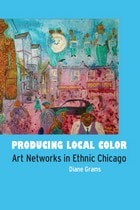
Producing Local Color
Art Networks in Ethnic ChicagoDiane Grams
University of Chicago Press, 2010
In big cities, major museums and elite galleries tend to dominate our idea of the art world. But beyond the cultural core ruled by these moneyed institutions and their patrons are vibrant, local communities of artists and art lovers operating beneath the high-culture radar. Producing Local Color is a guided tour of three such alternative worlds that thrive in the Chicago neighborhoods of Bronzeville, Pilsen, and Rogers Park.
These three neighborhoods are, respectively, historically African American, predominantly Mexican American, and proudly ethnically mixed. Drawing on her ethnographic research in each place, Diane Grams presents and analyzes the different kinds of networks of interest and support that sustain the making of art outside of the limelight. And she introduces us to the various individuals—from cutting-edge artists to collectors to municipal planners—who work together to develop their communities, honor their history, and enrich the experiences of their neighbors through art. Along with its novel insights into these little examined art worlds, Producing Local Color also provides a thought-provoking account of how urban neighborhoods change and grow.
Progressive Dystopia
Abolition, Antiblackness, and Schooling in San FranciscoSavannah Shange
Duke University Press, 2019
Projecting History
German Nonfiction Cinema, 1967-2000Nora M. Alter
University of Michigan Press, 2002
Between 1967 and 2000, film production in Germany underwent a number of significant transformations, including the birth and death of New German Cinema as well as the emergence of a new transnational cinematic practice. In Projecting History, Nora M. Alter explores the relationship between German cinematic practice and the student protests in both East and West Germany against the backdrop of the U.S. war in Vietnam in the sixties, the outbreak of terrorism in West Germany in the seventies, West Germany's rise as a significant global power in the eighties, and German reunification in the nineties.
Although a central tendency of New German Cinema in the 1970s was to reduce the nation's history to the product of individuals, the films addressed in Projecting History focus not on individual protagonists, but on complex socioeconomic structures. The films, by Rainer Werner Fassbinder, Harun Farocki, Alexander Kluge, Ulrike Ottinger, Wim Wenders and others, address basic problems of German history, including its overall "peculiarity" within the European context, and, in particular, the specific ways in which the National Socialist legacy continues to haunt Germans.
Nora M. Alter is Associate Professor of German, Film and Media Studies, and Women and Gender Studies at the University of Florida. A specialist in twentieth-century film, comparative literature, and cultural studies, Alter has been the recipient of a National Endowment for the Humanities Fellowship and a Howard Foundation Fellowship. She is also the author of Vietnam Protest Theatre: The Television War on Stage.
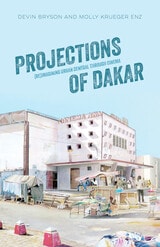
Projections of Dakar
(Re)Imagining Urban Senegal through CinemaDevin Bryson and Molly Krueger Enz
Ohio University Press, 2024
Like contemporary Senegalese cinema, African urban centers are often perceived as sites of despair and social decay. In each chapter of this book, Devin Bryson and Molly Krueger Enz focus on a particular urban issue and analyze how Senegalese filmmakers document and reimagine it from diverse perspectives and contexts. The authors draw from interviews and ethnographic observations to center filmmakers’ practices and conceptualizations of contemporary cinema in Dakar. Bryson and Enz trace developments in production, distribution, viewership, and audience response since 2012 to study how these films and their production both reveal and contribute to how people live in the city, relate to one another, build their lives, advocate for change, find joy and meaning, and build community. They also document and articulate more equitable and inclusive forms of these activities. Ultimately, the book illustrates how Senegalese filmmakers reimagine Africa as a place that will lead to a better future for its inhabitants.
Promise of Justice
Essays on Brown v. Board of EducationMac A. Stewart
The Ohio State University Press, 2008
Promises Beyond Memory
Archives, Art, and the Afterlives of Violence in Latin AmericaVikki Bell
Duke University Press, 2026
Pronouncing and Persevering
Gender and the Discourses of Disputing in an African Islamic CourtSusan F. Hirsch
University of Chicago Press, 1998
Pronouncing and Persevering focuses closely on the language used in disputes, particularly how men and women narrate their claims and how their speech shapes and is shaped by gender hierarchy in postcolonial Swahili society. Based on field research and court testimony, Hirsch's book debunks the conventional view that women are powerless under Islamic law and challenges the dichotomies through which Islam and gender relations are currently understood.
Prosthetic Memories
Postcolonial Feminisms in a More-Than-Human WorldHyaesin Yoon
Duke University Press, 2025
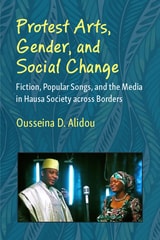
Protest Arts, Gender, and Social Change
Fiction, Popular Songs, and the Media in Hausa Society across BordersOusseina D. Alidou
University of Michigan Press, 2024
While there is an abundance of social science studies giving voice to the dominant actors of hegemonic violence in Hausa society, there is a dearth of works that center the voices of the afflicted, unprivileged, and marginalized class, among whom are women and youth. One aim of this book is to examine the ways popular songs and fiction fill up the humanistic urgency to capture the dignity of the life of those dehumanized by local, national, and international hegemonic religious and secular forces. The book focuses on the resistance narratives of one female novelist and six song composers and performers that generate alternative counterhegemonic responses to dominant patriarchal discourses produced by cultural, religious, and political elites, thus reaching out to marginalized local and national communities and global audiences. Alidou interweaves the social, political, and biomedical epidemics with the concept of “Hausa interiority” to create a unique perspective on contemporary Hausa culture and politics through the lens of artistic productions.
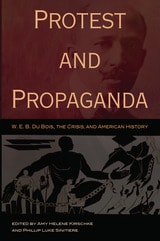
Protest and Propaganda
W. E. B. Du Bois, the CRISIS, and American HistoryEdited by Amy Helene Kirschke and Phillip Luke Sinitiere
University of Missouri Press, 2013
In looking back on his editorship of Crisis magazine, W. E. B. Du Bois said, “We condensed more news about Negroes and their problems in a month than most colored papers before this had published in a year.” Since its founding by Du Bois in 1910, Crisis has been the primary published voice of the NAACP. Born in an age of Jim Crow racism, often strapped for funds, the magazine struggled and endured, all the while providing a forum for people of color to document their inherent dignity and proclaim their definitive worth as human beings.
As the magazine’s editor from 1910 until 1934, Du Bois guided the content and the aim of Crisis with a decisive hand. He ensured that each issue argued for civil rights, economic justice, and social equality, always framing America’s intractable color line in an international perspective. Du Bois benefited from a deep pool of black literary and artistic genius, whether by commissioning the visual creativity of Harlem Renaissance artists for Crisis covers or by publishing poems and short stories from New Negro writers. From North to South, from East to West, and even reaching across the globe, Crisis circulated its ideas and marshaled its impact far and wide.
Building on the solid foundation Du Bois laid, subsequent editors and contributors covered issues vital to communities of color, such as access to resources during the New Deal era, educational opportunities related to the historic Brown decision, the realization of basic civil rights at midcentury, American aid to Africa and Caribbean nations, and the persistent economic inequalities of today’s global era.
Despite its importance, little has been written about the historical and cultural significance of this seminal magazine. By exploring how Crisis responded to critical issues, the essays in Protest and Propaganda provide the first well-rounded, in-depth look at the magazine's role and influence. The authors show how the essays, columns, and visuals published in Crisis changed conversations, perceptions, and even laws in the United States, thereby calling a fractured nation to more fully live up to its democratic creed. They explain how the magazine survived tremendous odds, document how the voices of justice rose above the clamor of injustice, and demonstrate how relevant such literary, journalistic, and artistic postures remain in a twenty-first-century world still in crisis.
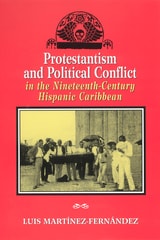
Protestantism and Political Conflict in the Ninteenth-Century Hispanic Caribbean
Martínez-Fernández, Luis
Rutgers University Press, 2001
Catholicism has long been recognized as one of the major forces shaping the Hispanic Caribbean (Cuba, Puerto Rico, and the Dominican Republic) during the nineteenth century, but the role of Protestantism has not been fully explored. Protestantism and Political Conflict in the Nineteenth-Century Hispanic Caribbean traces the emergence of Protestantism in Cuba and Puerto Rico during a crucial period of national consolidation involving both social and political struggle. Using a comparative framework, Martínez-Fernández looks at the ways in which Protestantism, though officially “illegal” for most of the century, established itself, competed with Catholicism, and took differing paths in Cuba and Puerto Rico.
One of the book’s main goals is to trace the links between religion and politics, particularly with regard to early Protestant activities. Protestants encountered a complex social, economic, and political landscape both in Cuba and in Puerto Rico and soon found that their very presence, coupled with their demands for freedom of worship and burial rights, involved them in a series of interrelated struggles in which the Catholic Church was embroiled along with the other main forces of the period—the peasantry, the agrarian bourgeoisie, the mercantile bourgeoisie, and the colonial state. While the established Catholic Church increasingly identified with the conservative, pro-slavery, and colonialist causes, newly arrived Protestants tended to be nationalistic and to pursue particular economic activities—such as cigar exportation in Cuba and the sugar industry in Puerto Rico. The author argues that the early Protestant communities reflected the socio-cultural milieus from which they emerged and were profoundly shaped by the economic activities of their congregants. This influence, in turn, shaped not only the congregations’ composition, but also their political and social orientations.

Protohistoric Yamato
Archaeology of the First Japanese StateGina Lee Barnes
University of Michigan Press, 1988
Psychedelic White
Goa Trance and the Viscosity of RaceArun Saldanha
University of Minnesota Press, 2007
A bold new approach to racial difference conceived through rave tourism
The village of Anjuna, located in the coastal Indian state of Goa, has been one of the premier destinations on the global rave scene for nearly two decades. The birthplace of Goa trance, the most psychedelic variety of electronic dance music, Anjuna first attracted adventurous Westerners in the 1970s who were drawn there by its tropical beaches, tolerant locals, and readily available drugs. Today, rave tourists travel to Goa to take part in round-the-clock dance parties and lose themselves in the crowds, the music, and the drugs. But do they really escape where they come from and who they are?
A rich and theoretically sophisticated ethnography, Psychedelic White explains how race plays out in Goa’s white counterculture and grapples with how to make sense of racism when it is not supposed to be there. Goa is a site of particularly revealing forms of interracial collision, and contrary to author Arun Saldanha’s expectations that the nature of rave would create an inclusive atmosphere, he repeatedly witnessed stark segregation between white and Indian tourists. He came to understand race in its creative dimension as a shifting and fuzzy assemblage of practices, environments, sounds, and substances—dance skills, sunlight, conversation, cannabis, and tea. In doing so, his work shows how the rave scene in Goa harbors conflicting tendencies regarding race. The complicated intersection of cultures and phenotypes, Saldanha asserts, helps to consolidate whiteness. Race emerges not through rigid boundaries but rather through what he terms viscosity, the degree to which bodies gather together for pleasure and self-transformation.
Challenging the prevailing conception of racial difference as a purely social construction and offering building on the works of Gilles Deleuze and Félix Guattari, Psychedelic White presents nothing less than a new materialist approach to race.

Public Interests
Media Advocacy and Struggles over U.S. TelevisionPerlman, Allison
Rutgers University Press, 2016
Nearly as soon as television began to enter American homes in the late 1940s, social activists recognized that it was a powerful tool for shaping the nation’s views. By targeting broadcast regulations and laws, both liberal and conservative activist groups have sought to influence what America sees on the small screen. Public Interests describes the impressive battles that these media activists fought and charts how they tried to change the face of American television.

Public Loves, Private Troubles
Migration, Technology, and Intimacy in Rural Indigenous GuatemalaMeghan Farley Webb
University of Alabama Press, 2025
Examines the role of digital technologies in the lives of Kaqchikel Maya women whose husbands work abroad.
Anthropologist Meghan Farley Webb’s ethnography, Public Loves, Private Troubles, uses the lens of cellphones and other digital technologies to unpack marriage, love, sexuality, and family issues of Kaqchikel Maya women who remain in Guatemala while their husbands are part of the transnational migration workforce. Indigenous intimacy has been underexplored in ethnographic literature, and this is among the first books to focus on information technology's impact on intimacy and family in the Maya area. Overall, Webb shows how Maya women are empowered with their more autonomous lives when the husbands are absent but also are constrained by social media monitoring of their activities.
To begin, Webb surveys the Tecpán highland setting and civil war and migration history. She discusses how neoliberal policies are manifested in the financial and emotional stress of having to leave for the United States for economic opportunities. Chapter 1 characterizes the lives of Maya women in Guatemala who “endure” while their husbands are working abroad. Webb describes how marriage, family, and even the Catholic Church shape how the women see themselves and their situations. Chapter 2 delves into the history and use of technologies, such as cellphones and WhatsApp, and how they affect communication in these transnational households. Insight is given to the family and personhood. Chapter 3 focuses on the prominent use of the Facebook platform. Men use the app to conduct extramarital affairs, but the app is also used by couples as a way to express a public performance of devotion and a happy family. Chapter 4 focuses on the surveillance, including malicious gossip, that Kaqchikel women are subjected to especially from their mothers-in-law, who live nearby or in the same household. The narrative culminates in a discussion of how many wives are happier and more empowered without the men at home, yet they still can experience uncertainty, loneliness, and depression.
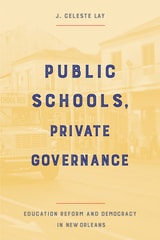
Public Schools, Private Governance
Education Reform and Democracy in New OrleansJ. Celeste Lay
Temple University Press, 2022
Two months after Hurricane Katrina, Louisiana took control of nearly all the public schools in New Orleans. Today, all of the city’s public schools are charter schools. Although many analyses mark the beginning of education reform in New Orleans with Katrina, in Public Schools, Private Governance, J. Celeste Layargues that the storm merely accelerated the timeline for reforms that had inched along incrementally over the previous decade. Both before and after Katrina, white reformers purposely excluded Black educators, community members, and parents.
Public Schools, Private Governance traces the slow, deliberate dismantling of New Orleans’ public schools, and the processes that have maintained the reforms made in Katrina’s immediate aftermath, showing how Black parents and residents were left without a voice and the officials charged with school governance, most of whom are white, with little accountability. Lay cogently explains how political minorities disrupted systems to create change and keep reforms in place, and the predictable political effects—exclusion, frustration, and resignation—on the part of those most directly affected.
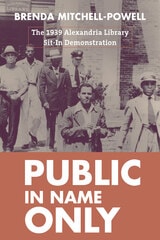
Public in Name Only
The 1939 Alexandria Library Sit-In DemonstrationBrenda Mitchell-Powell
University of Massachusetts Press, 2022
Library History Round Table Reads Selection, March 2024
Alexandria Historical Society Special Merit Award, 2023
When Alexandria, Virginia’s first public library, was constructed just a few blocks from his home, Samuel Wilbert Tucker, a young, Black attorney, was appalled to learn that he could not use the library because of his race. Inspired by the legal successes of the NAACP in discrimination cases, he organized a grassroots protest to desegregate the library that his tax dollars supported.
Public in Name Only tells the important, but largely forgotten, story of Tucker and a group of Black citizens who agitated for change in the terms and conditions of their lives. Employing the combined strategies of direct-action public protest, nonviolent civil disobedience, and municipal litigation, Tucker’s initiative dovetailed with the national priorities and tactics of larger civil rights organizations. While Tucker’s campaign did not end with the desegregation of the Alexandria Library, but instead resulted in the creation of a “separate-and-unequal” Jim Crow Black branch, the sit-in demonstration represents a momentous early struggle for racial equity waged through civil rights activism.
Publishing Latinidad
Latinx Literary and Intellectual Production, 1880–1960Jose O. Fernandez
University of Arizona Press, 2025
Publishing Latinidad brings to light the overlooked contributions of early Latinx writers and intellectuals, offering a fresh perspective on their roles in shaping American literary and cultural landscapes.
Jose O. Fernandez meticulously examines the works of notable figures like José Martí, Arturo Schomburg, Jesús Colón, José de la Luz Sáenz, Adela Sloss-Vento, and Américo Paredes, illuminating their innovative approaches to circumventing exclusionary practices in the publishing world. He demonstrates how these writers and intellectuals entered literary, cultural, and intellectual discourses through alternative modes of literary production: crónicas, translations, paratexts, bibliographies, archival practices, sketches, diaries, biographies, unpublished fiction, and scholarly monographs. Through these examples, Fernandez situates Latinx literary production in this time period within the broader context of racial and ethnic solidarity movements in the United States.
Publishing Latinidad is essential reading for anyone interested in the social and cultural underpinnings of Latinx literature and intellectual thought. It challenges traditional narratives and enriches our appreciation of the diverse voices that have long been instrumental in the fight for justice.
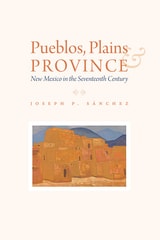
Pueblos, Plains, and Province
New Mexico in the Seventeenth CenturyJoseph P. Sánchez
University Press of Colorado, 2024
In Pueblos, Plains, and Province Joseph P. Sánchez offers an in-depth examination of sociopolitical conflict in seventeenth-century New Mexico, detailing the effects of Spanish colonial policies on settlers’, missionaries’, and Indigenous peoples’ struggle for economic and cultural control of the region. Sánchez explores the rich archival documentation that provides cultural, linguistic, and legal perspectives of the values of the period.
Spanish dual Indian policies for Pueblo and Plains tribes challenged Indigenous political and social systems to conform to the imperial structure for pacification purposes. Meanwhile, missionary efforts to supplant Indigenous religious beliefs with a Christian worldview resulted, in part, in a syncretism of the two worlds. Indigenous resentment of these policies reflected the contentious disagreements between Spanish clergymen and civil authorities, who feuded over Indigenous labor and encroachment on tribal sovereignties with demands for sworn loyalty to Spanish governance. The little-studied “starvation period” adversely affected Spanish-Pueblo relationships for the remainder of the century and contributed significantly to the battle at Acoma, the Jumano War, and the Pueblo Revolt of 1680.
Pueblos, Plains, and Province shows how history, culture, and tradition in New Mexico shaped the heritage shared by Spain, Mexico, the United States, and Native American tribes and will be of interest to scholars and students of Indigenous, colonial, and borderlands history.
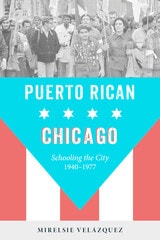
Puerto Rican Chicago
Schooling the City, 1940-1977Mirelsie Velázquez
University of Illinois Press, 2022
Winner of the Critics’ Choice Book awards of the American Educational Studies Association (AESA-CCBA)
The postwar migration of Puerto Rican men and women to Chicago brought thousands of their children into city schools. These children's classroom experience continued the colonial project begun in their homeland, where American ideologies had dominated Puerto Rican education since the island became a US territory. Mirelsie Velázquez tells how Chicago's Puerto Ricans pursued their educational needs in a society that constantly reminded them of their status as second-class citizens. Communities organized a media culture that addressed their concerns while creating and affirming Puerto Rican identities. Education also offered women the only venue to exercise power, and they parlayed their positions to take lead roles in activist and political circles. In time, a politicized Puerto Rican community gave voice to a previously silenced group--and highlighted that colonialism does not end when immigrants live among their colonizers.
A perceptive look at big-city community building, Puerto Rican Chicago reveals the links between justice in education and a people's claim to space in their new home.
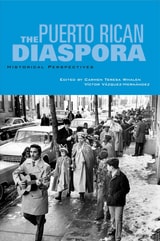
Puerto Rican Diaspora
Historical PerspectivesCarmen Teresa Whalen
Temple University Press, 2005
Puerto Rican Jam
Rethinking Colonialism and NationalismNegron-Muntaner, Frances
University of Minnesota Press, 1997
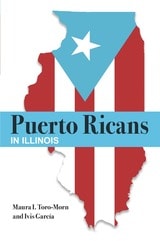
Puerto Ricans in Illinois
Maura I. Toro-Morn and Ivis Garcia
Southern Illinois University Press, 2024
As the first book to document the experiences of Puerto Ricans in the state of Illinois, this inviting book maps the pedacito de patria (little piece of home) that many Puerto Ricans have carved from the bitter hardships faced in Illinois. Authors Maura Toro-Morn and Ivis García illustrate the multiple paradoxes underlying the experience of Puerto Ricans in Illinois: an island people in a heartland state, native-born citizens living an immigrant’s experience, climate refugees in the Midwest. They live a vaivén (coming and going). This volume partially exposes these paradoxes through a narrative of common survival and achievement. Along the proud Paseo Boricua (Puerto Rican Promenade) in Chicago and in smaller cities around the state, Puerto Ricans find and create the means to keep their national identity while contributing to the health and wealth of their adopted state.
From the voices of the people, the authors offer readers an opportunity to learn about the history of Puerto Rico, the migration of Puerto Ricans to Illinois, and the cultural, economic, and political contributions of the Puerto Rican women, men, and families that call Illinois home. In Chicago and across the heartland, Puerto Ricans have negotiated the gap between home and country, mobilized state-wide against the federal government’s virtual abandonment in the aftermath of Hurricane Maria. A compelling weave of scholarship summary, archival research, and extensive sociological study including interviews conducted across the state, the book documents just how much many fail to know about a growing and transforming community in Illinois. The stories of Puerto Ricans are here.
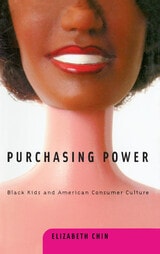
Purchasing Power
Black Kids and American Consumer CultureElizabeth Chin
University of Minnesota Press, 2001
An exposé of the realities facing poor black children in our consumer society.
What does it mean to be young, poor, and black in our consumer culture? Are black children “brand-crazed consumer addicts” willing to kill each other over a pair of the latest Nike Air Jordans or Barbie backpack? In this first in-depth account of the consumer lives of poor and working-class black children, Elizabeth Chin enters the world of children living in hardship in order to understand the ways they learn to manage living poor in a wealthy society.
To move beyond the stereotypical images of black children obsessed with status symbols, Chin spent two years interviewing poor children in New Haven, Connecticut, about where and how they spend their money. An alternate image of the children emerges, one that puts practicality ahead of status in their purchasing decisions. On a twenty-dollar shopping spree with Chin, one boy has to choose between a walkie-talkie set and an X-Men figure. In one of the most painful moments of her research, Chin watches as Davy struggles with his decision. He finally takes the walkie-talkie set, a toy that might be shared with his younger brother.Through personal anecdotes and compelling stories ranging from topics such as Christmas and birthday gifts, shopping malls, Toys-R-Us, neighborhood convenience shops, school lunches, ethnically correct toys, and school supplies, Chin critically examines consumption as a medium through which social inequalities-most notably of race, class, and gender-are formed, experienced, imposed, and resisted. Along the way she acknowledges the profound constraints under which the poor and working class must struggle in their daily lives.
Pure Beauty
Judging Race in Japanese American Beauty PageantsRebecca Chiyoko King-O’Riain
University of Minnesota Press, 2006

Push the Button
Interactive Television and Collaborative Journalism in JapanElizabeth Rodwell
Duke University Press, 2024
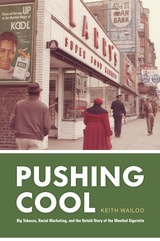
Pushing Cool
Big Tobacco, Racial Marketing, and the Untold Story of the Menthol CigaretteKeith Wailoo
University of Chicago Press, 2021
Police put Eric Garner in a fatal chokehold for selling cigarettes on a New York City street corner. George Floyd was killed by police outside a store in Minneapolis known as “the best place to buy menthols.” Black smokers overwhelmingly prefer menthol brands such as Kool, Salem, and Newport. All of this is no coincidence. The disproportionate Black deaths and cries of “I can’t breathe” that ring out in our era—because of police violence, COVID-19, or menthol smoking—are intimately connected to a post-1960s history of race and exploitation.
In Pushing Cool, Keith Wailoo tells the intricate and poignant story of menthol cigarettes for the first time. He pulls back the curtain to reveal the hidden persuaders who shaped menthol buying habits and racial markets across America: the world of tobacco marketers, consultants, psychologists, and social scientists, as well as Black lawmakers and civic groups including the NAACP. Today most Black smokers buy menthols, and calls to prohibit their circulation hinge on a history of the industry’s targeted racial marketing. In 2009, when Congress banned flavored cigarettes as criminal enticements to encourage youth smoking, menthol cigarettes were also slated to be banned. Through a detailed study of internal tobacco industry documents, Wailoo exposes why they weren’t and how they remain so popular with Black smokers.
Puta Life
Seeing Latinas, Working SexJuana María Rodríguez
Duke University Press, 2023
Puto
PlaysRicardo A. Bracho. Edited by Jennifer S. Ponce de León, Richard T. Rodríguez, and Randall Williams
Duke University Press, 2026
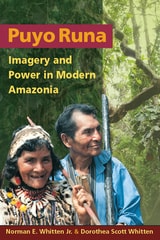
Puyo Runa
Imagery and Power in Modern AmazoniaNorman E. Whitten Jr. and Dorothea Scott Whitten
University of Illinois Press, 2007
The Andean nation of Ecuador derives much of its revenue from petroleum that is extracted from its vast Upper Amazonian rain forest, which is home to ten indigenous nationalities. Norman E. Whitten Jr. and Dorothea Scott Whitten have lived among and studied one such people, the Canelos Quichua, for nearly forty years. In Puyo Runa, they present a trenchant ethnography of history, ecology, imagery, and cosmology to focus on shamans, ceramic artists, myth, ritual, and political engagements. Canelos Quichua are active participants in national politics, including large-scale movements for social justice for Andean and Amazonian people. Puyo Runa offers readers exceptional insight into this cultural world, revealing its intricacies and embedded humanisms.