Results by title
28164 books match the query 'History' and 1297 start with p
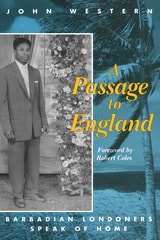
Passage To England
Barbadian Londoners Speak of HomeJohn Western
University of Minnesota Press, 1992
Since World War II London has become a significantly multiracial city. Some of the earliest agents of its transformation were young men and women recruited in the late 1950s from Barbados, then a British colony, to work in the metropolis’s nationalized public transportation system and in its hospitals. These Barbadians met, married, settled in London, and raised Londoner children. In 1987-88 John Western conducted a series of interviews with twelve such families--both parents and children. Their vivid words fill A Passage to England with insight, human, and, often, poignancy. Here is a rich perspective on thirty years or more of London social history.
Western structured the interviews to allow the Barbadians a lot of freedom to discuss whatever came to mind concerning either their own life histories and achievements, or wider themes of culture, politics, and society. Topics covered range from matters of “race” to Margaret Thatcher and the change her decade in power has wrought in Britain. One development, for example, is the strikingly entrepreneurial spirit now embraced by some of the young British blacks, veritably “Mrs. Thatcher’s Children.” Ultimately, many of the interviewees focused on the changes they see in their ancestral island in the Caribbean, to which all of them have returned for visits. For this migrant generation especially, as the prospect of retirement begins to grow increasingly important, inevitable questions regard the definitions of “home” and “belonging” must be confronted: Does one stay in London--with one’s children and grandchildren--or does one return to Barbados, which for many seems no longer the same island as the one they left a working lifetime ago? Within the context of an ever-increasing complement of geographically mobile people worldwide, Western’s study provides unique insights into the particular ambiguities a particular set of person have wrestled with at a particular moment in history...but the import of the Barbadian Londoners’ story is universal.
Passage to Dusk
By Rashid al-Daif
University of Texas Press, 2001
Passage to Dusk deals with the Lebanese civil war of the 1970s in a postmodern, poetic style. The narrative focuses on the deranged, destabilized, confused, and hyper-perceptive state of mind created by living on the scene through a lengthy war. The story is filled with details that transcend the willed narcissism of the main character, while giving clues to the culture of the time. It is excellent fiction, written in a surrealistic mode, but faithful to the characters of the people of Lebanon, their behavior during the war, and their contradictions. Issues of gender and identity are acutely portrayed against Lebanon's shifting national landscape.
The English-language reader has not been much exposed to Lebanese literature in translation, and Rashid al-Daif is one of Lebanon's leading writers. He has been translated into eight languages, including French, German, Italian, Polish, and Spanish. Translator Nirvana Tanoukhi manages to preserve Daif's unusual, moving, and at times humorous style in her English rendition.

Passage to Wonderland
Rephotographing Joseph Stimson's Views of the Cody Road to Yellowstone National Park, 1903 and 2008Michael A. Amundson
University Press of Colorado, 2012
Amundson examines the physical changes along "the most scenic fifty miles in America" and explores the cultural and natural history behind them. This careful analysis of the paired images make Passage to Wonderland more than a "then and now" photography book--it is a unique exploration of the interconnectedness between the Old West and the New West. It will be a wonderful companion for those touring the Cody Road as well as those armchair tourists who can follow the road on Google Earth using the provided GPS coordinates.
The University Press of Colorado gratefully acknowledges the generous support of the Charles Redd Center for Western Studies at Brigham Young University toward the publication of this book.
Passages and Afterworlds
Anthropological Perspectives on Death in the CaribbeanMaarit Forde and Yanique Hume, editors
Duke University Press, 2018
Contributors. Donald Cosentino, Maarit Forde, Yanique Hume, Paul Christopher Johnson, Aisha Khan, Keith E. McNeal, George Mentore, Richard Price, Karen Richman, Ineke (Wilhelmina) van Wetering, Bonno (H.U.E.) Thoden van Velzen
Passamaquoddy Ceremonial Songs
Aesthetics and SurvivalAnn Morrison Spinney
University of Massachusetts Press, 2010
Passing Illusions
Jewish Visibility in Weimar GermanyKerry Wallach
University of Michigan Press, 2017
Passing Performances
Queer Readings of Leading Players in American Theater HistoryRobert A. Schanke and Kim Marra, Editors
University of Michigan Press, 1998
The actors, directors, producers, and agents examined here include Edwin Forrest, Charlotte Cushman, and Adah Isaacs Menken, whose personal lives and careers traded on the same-sex erotics of "true love" in the antebellum period; Elisabeth Marbury, Elsie de Wolfe, Elsie Janis, Nance O'Neil, and Alla Nazimova, whose intimate female liaisons were variously interpreted around the turn of the century; the "lavender marriages" of Alfred Lunt to Lynne Fontanne and Guthrie McClintic to Katharine Cornell; the lesbian collaborations of Margaret Webster and Cheryl Crawford; the comic antics of Monty Woolley, which negotiated codified constructions of homosexual perversion in the post-Freudian interwar years; and the on- and offstage performances of Mary Martin and Joe Cino, which resisted the paranoid enforcements of heterosexual normality in the McCarthy era. Central to these investigations are the complex connections of performances of sexuality and gender and their different implications for men and women practitioners working under pervasive sexism and homophobia.
The volume also includes striking archival photographs of the performers and their performances, and an index to facilitate the cross-referencing of subjects' intersecting careers. Passing Performances will engage both general and academic readers interested in theater, gay and lesbian history, American studies, and biography.
Robert A. Schanke is Professor of Theatre and Chair of the Division of Fine Arts, Central College, Iowa. Kim Marra is Associate Professor of Theatre Arts, University of Iowa.

Passing Performances
Queer Readings of Leading Players in American Theater HistoryRobert A. Schanke and Kim Marra, Editors
University of Michigan Press, 0
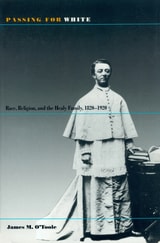
Passing for White
Race, Religion, and the Healy Family, 1820-1920James M. O'Toole
University of Massachusetts Press, 2002
Through the prism of one family's experience, this book explores questions of racial identity, religious tolerance, and black-white “passing” in America. Spanning the century from 1820 to 1920, it tells the story of Michael Morris Healy, a white Irish immigrant planter in Georgia; his African American slave Eliza Clark Healy, who was also his wife; and their nine children. Legally slaves, these brothers and sisters were smuggled north before the Civil War to be educated. In spite of the hardships imposed by American society on persons of mixed racial heritage, the Healy children achieved considerable success. Rejecting the convention that defined as black anyone with “one drop of Negro blood,” they were able to transform themselves into white Americans.
Their unlikely ally in this transition was the Catholic church, as several of them became priests or nuns. One brother served as a bishop in Maine, another as rector of the Cathedral in Boston, and a third as president of Georgetown University. Of the two sisters who became nuns, one was appointed the superior of convents in the United States and Canada. Another brother served for twenty years as a captain in the U.S. Coast Guard, enforcing law and order in the waters off Alaska. The Healy children's transition from black to white should not have been possible according to the prevailing understandings of race, but they accomplished it with apparent ease. Relying on their abilities, and in most cases choosing celibacy, which precluded mixed-race offspring, they forged a place for themselves. They also benefited from the support of people in the church and elsewhere. Even those white Americans who knew the family's background chose to overlook their African ancestry and thereby help them to “get away” with passing. By exploring the lifelong struggles of the members of the Healy family to redefine themselves in a racially polarized society, this book makes a distinctive contribution to our understanding of the enduring dilemma of race in America.
Passing the Baton
Black Women Track Stars and American IdentityCat M. Ariail
University of Illinois Press, 2020
A rare exploration of African American women athletes and national identity, Passing the Baton reveals young Black women as active agents in the remaking of what it means to be American.
Passing the Baton
The Chicago Symphony Orchestra and the Music Directors Who Shaped Its GreatnessPhillip Huscher
University of Chicago Press, 2026
The untold story of how the Chicago Symphony Orchestra forged its place among the world’s foremost performing arts institutions through 135 years of change.
The Chicago Symphony Orchestra boasts a tradition and staying power that few cultural institutions can rival—a legacy that is tested each time one music director passes the conductor’s baton to another. In this first narrative account of the orchestra’s 135-year history, music critic and historian Phillip Huscher delivers a passionate description of how an upstart ensemble rose to international prominence and established itself as the premier symphony orchestra in the United States.
With a scholar’s care for detail and a novelist’s attention to drama, Huscher invites us into the tangled machinations behind the success or failure of each chapter in the orchestra’s storied past. We see how legendary directors such as Fritz Reiner, Sir Georg Solti, and Riccardo Muti carried the orchestra to new heights of technical perfection and sonic brilliance, but also how others provoked public outcry, caved to insider hostility, or fell to cruel press. The result is a vivid portrait of an orchestra fighting to sustain its identity amid the constant contest between past and present, supporters and critics, and artistic and financial vision.
Woven into this saga are personal stories drawn from newly uncovered documents and interviews with players, conductors, and policymakers about the burden of inheritance, the price of ambition, and the yearning to forge a legacy. Taken together, this is a tale about the power of music—how it can help us navigate our lives and leave a lasting impact on the world around us.
Passion And Power
Sexuality in HistoryKathy Peiss
Temple University Press, 1989

Passion of Israel
Jacques Maritain, Catholic Conscience, and the HolocaustRichard Francis Crane
University of Scranton Press, 2010
In his lifetime, French philosopher Jacques Maritain (1882–1973) achieved a reputation as both a leading Catholic intellectual and as an outspoken critic of antisemitism. Here historian Richard Francis Crane traces the development of Maritain’s opposition toward antisemitism and analyzes the Catholic appreciation of Judaism that animated his stance. Crane probes the writings and teachings of Maritain—from before, during, and after the Holocaust—and illuminates how his ideas altered Christian perceptions of Jews and Judaism during his lifetime and continue to do so today.
Passionate Amateurs
Theatre, Communism, and LoveNicholas Ridout
University of Michigan Press, 2015
Passionate Amateurs tells a new story about modern theater: the story of a romantic attachment to theater’s potential to produce surprising experiences of human community. It begins with one of the first great plays of modern European theater—Chekhov’s Uncle Vanya in Moscow—and then crosses the 20th and 21st centuries to look at how its story plays out in Weimar Republic Berlin, in the Paris of the 1960s, and in a spectrum of contemporary performance in Europe and the United States. This is a work of historical materialist theater scholarship, which combines a materialism grounded in a socialist tradition of cultural studies with some of the insights developed in recent years by theorists of affect, and addresses some fundamental questions about the social function and political potential of theater within modern capitalism. Passionate Amateurs argues that theater in modern capitalism can help us think afresh about notions of work, time, and freedom. Its title concept is a theoretical and historical figure, someone whose work in theater is undertaken within capitalism, but motivated by a love that desires something different. In addition to its theoretical originality, it offers a significant new reading of a major Chekhov play, the most sustained scholarly engagement to date with Benjamin’s “Program for a Proletarian Children’s Theatre,” the first major consideration of Godard’s La chinoise as a “theatrical” work, and the first chapter-length discussion of the work of The Nature Theatre of Oklahoma, an American company rapidly gaining a profile in the European theater scene.
Passionate Amateurs contributes to the development of theater and performance studies in a way that moves beyond debates over the differences between theater and performance in order to tell a powerful, historically grounded story about what theater and performance are for in the modern world.
Passionate Copying in Late Medieval Bohemia
The Case of Crux de Telcz (1434–1504)Lucie Doležalová
Karolinum Press, 2021
Passionate Copying in Late Medieval Bohemia addresses a unique case in the culture of manuscript transcription and textual transmission during the late fifteenth century, a transformative period in book history. This period is marked by the widespread intrusion of an unprecedented number of scribal paratexts—tables of contents, indices, explanatory notes, etc.—into transcribed manuscripts. To explore this development, the authors dig deep into a detailed case study of the Bohemian scribe Crux of Telč (1434–1504). Unlike most medieval copyists, who were stringent in their work even when inserting paratexts, Crux of Telč is notable for the extreme liberties he took with manuscript contents. Sometimes diligent, sometimes careless, his copies are notably rife with his own inventions and additions to the text. Crux’s life story is meticulously reconstructed in this book, relying on his colophons—the personal annotations left by medieval copyists to identify themselves and their circumstances—and other personal notes. The singularity of his approach to manuscripts is reinforced by the authors’ inclusion of a study of another late medieval scribe, Johannes Sintram of Würtzburg (d. 1450), whose scrivening is compared with that of Crux of Telč.

Passionate Discontent
Creativity, Gender, and French Symbolist ArtPatricia Mathews
University of Chicago Press, 2000
Art historian Patricia Mathews traverses the artistic, social, and scientific discourses of fin-de-siècle France in order to illuminate the Symbolist construction of a feminized aesthetic that nonetheless excluded female artists from its realm. Along the way, Mathews proffers important new readings of the art of such Symbolists as Gauguin, van Gogh and Moreau, as well as that of their female contemporaries Camille Claudel and Suzanne Valadon. Passionate Discontent is an important contribution to art historical and women's studies.

Passionate Nation
The Epic History of TexasJames L. Haley
University of North Texas Press, 2006
Passionate Revolutions
The Media and the Rise and Fall of the Marcos RegimeTalitha Espiritu
Ohio University Press, 2017
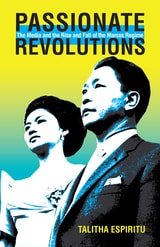
In the last three decades, the dictatorship of Ferdinand Marcos has commanded the close scrutiny of scholars. These studies have focused on the political repression, human rights abuses, debt-driven growth model, and crony capitalism that defined Marcos’ so-called Democratic Revolution in the Philippines. But the relationship between the media and the regime’s public culture remains underexplored.
In Passionate Revolutions, Talitha Espiritu evaluates the role of political emotions in the rise and fall of the Marcos government. Focusing on the sentimental narratives and melodramatic cultural politics of the press and the cinema from 1965 to 1986, she examines how aesthetics and messaging based on heightened feeling helped secure the dictator’s control while also galvanizing the popular struggles that culminated in “people power” and government overthrow in 1986.
In analyzing news articles, feature films, cultural policy documents, and propaganda films as national allegories imbued with revolutionary power, Espiritu expands the critical discussion of dictatorships in general and Marcos’s in particular by placing Filipino popular media and the regime’s public culture in dialogue. Espiritu’s interdisciplinary approach in this illuminating case study of how melodrama and sentimentality shape political action breaks new ground in media studies, affect studies, and Southeast Asian studies.
Past Disquiet
Artists, International Solidarity and Museums in ExileEdited by Kristine Khouri and Rasha Salti
Museum of Modern Art in Warsaw, 2018
Past Forward
French Cinema and the Post-Colonial HeritageDayna Oscherwitz
Southern Illinois University Press, 2010
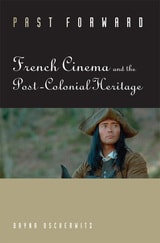
In Past Forward: French Cinema and the Post-Colonial Heritage, author Dayna Oscherwitz focuses on the world of French films with a new lens. Drawing upon a wealth of research and the examination of popular French movies, Oscherwitz offers fresh perspectives not only on the unique importance of motion pictures and their indelible influence on French character, but on current debates regarding individual and collective memory.
Past Forward traces the development and ascension of the French heritage film—those historical and costume dramas focusing on prestigious French subjects, events, and settings. These motion pictures, preeminent during a period of globalization and fear over the affects of immigration in 1980s France, quickly came to embody a specific version of French national and collective identity: one that idealized the past, condemned the present, and created an institutional form of memory. Oscherwitz presents the intriguing notion that French heritage films are not exclusively expressions of nationalism and nostalgia as has commonly been asserted. On the contrary, although these movies were born out of a perceived loss of French culture, their ambivalence toward traditional hallmarks of nationalism opens them up to new interpretation. Also in contrast to typical conceptions, the author suggests that these heritage films are far from cinematic bastions of multicultural backlash; instead, she argues, popular culture has in its own fashion reinserted the history of colonialism and immigration into the national past, thus reimagining heritage itself.
Against this backdrop, Oscherwitz goes on to investigate the multicultural worlds of beur and banlieue movies—cinema seemingly in direct contrast with the heritage film—offering the theory that these films serve as a “countermemory” to an institutionalized one and provide alternative models of collective memory and identity. Through careful analysis of several examples, Oscherwitz demonstrates how these two seemingly different realms—heritage and multicultural cinema—are far from mutually exclusive in the construction of French identity.
Throughout the volume, numerous well-known French movies are reexamined, inviting new interpretations of and challenging old views through investigations of familiar cinematic works. Past Forward is arevolutionary volume that boldly reimagines our ideas about French film and its role in communicating history and memory.
Past Imperfect
Essays on History, Libraries, and the HumanitiesLawrence W. Towner
University of Chicago Press, 1993
Towner's essays and talks cover a broad range of topics of continuing relevance to scholarship and the humanities. His writings gathered in Past Imperfect are concerned with such issues as the role of independent research libraries and the politics of funding. A section of historical essays on the common people of New England reveal his concern with neglected fields of history, a theme that guided his career as a librarian. Spanning the range of his experience and expertise, this volume expresses Towner's coherent vision of the place of humanities, libraries, and scholarship in American life.
Lawrence W. Towner (1921-92) taught history at M.I.T., the College of William and Mary, and Northwestern University. In 1962 he was appointed librarian of the Newberry Library and directed the library for the next twenty-four years.
Past Is Not Dead
Facts, Fictions, and Enduring Racial StereotypesAllan Pred
University of Minnesota Press, 2004
A study of the genealogy and perpetuation of stereotyping
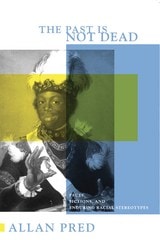
Through one figure—Badin, an eighteenth-century Afro-Caribbean slave given to the Swedish royal court—Allan Pred shows how stereotypes endure through the repeated confusion of facts and fiction, providing a highly original perspective on the perpetuation of racializing stereotypes in the West.
In the first of two interlocking montages inspired by Walter Benjamin, the book focuses on Badin, who died in Stockholm in 1822, and representations of his life that appeared from the 1840s through the 1990s. In the second montage, Pred brings the late nineteenth century and the present into play, shifting to urban sites where racialized stereotyping is on public display, including a museum that has exhibited the bodily remains of the African male.Intriguing for its insight into the workings of race and immigration on the national imagination of a European nation—but with implications and ramifications far beyond that specific example—The Past Is Not Dead is a bold inquiry into both the collective memory and the amnesia of those who stereotype versus the personal remembering and forgetting of the stereotyped.
Past Scents
Historical Perspectives on SmellJonathan Reinarz
University of Illinois Press, 2014
In this comprehensive and engaging volume, medical historian Jonathan Reinarz offers a historiography of smell from ancient to modern times. Synthesizing existing scholarship in the field, he shows how people have relied on their olfactory sense to understand and engage with both their immediate environments and wider corporal and spiritual worlds.
This broad survey demonstrates how each community or commodity possesses, or has been thought to possess, its own peculiar scent. Through the meanings associated with smells, osmologies develop--what cultural anthropologists have termed the systems that utilize smells to classify people and objects in ways that define their relations to each other and their relative values within a particular culture. European Christians, for instance, relied on their noses to differentiate Christians from heathens, whites from people of color, women from men, virgins from harlots, artisans from aristocracy, and pollution from perfume.
This reliance on smell was not limited to the global North. Around the world, Reinarz shows, people used scents to signify individual and group identity in a morally constructed universe where the good smelled pleasant and their opposites reeked.
With chapters including "Heavenly Scents," "Fragrant Lucre," and "Odorous Others," Reinarz's timely survey is a useful and entertaining look at the history of one of our most important but least-understood senses.
Past Titan Rock
Journeys into an Appalachian ValleyEllesa Clay High
West Virginia University Press, 2021
Past Titan Rock, a winner of the Appalachian Award for Literature, is available in a new edition as part of the series Sounding Appalachia, with an introduction by series editor Travis D. Stimeling.
In 1977 Ellesa Clay High thought she would spend an afternoon interviewing Lily May Ledford, best known as the lead performer of an all-female string band that began playing on the radio in the 1930s. That meeting began an unexpected journey leading into the mountains of eastern Kentucky and a hundred years into the past. Set in Red River Gorge, an area of steep ridges and box canyons, Past Titan Rock is a multigenre, multivocal re-creation of life in that region. With Ledford’s guidance, High traveled and lived in the gorge, visiting with people who could remember life there before the Works Progress Administration built roads across the ridges and into the valleys during the New Deal. What emerges through a unique combination of personal essay, oral history, and short fiction is a portrait of a mountain culture rich in custom, oral tradition, and song. Past Titan Rock demonstrates the depth of community ties in the Red River Gorge and raises important questions about how to resist destructive forces today.
Past for the Eyes
East European Representations of Communism in Cinema and Museums After 1989Oksana Sarkisova
Central European University Press, 2008
Past in the Making
Historical Revisionism in Central Europe After 1989Michal Kopecek
Central European University Press, 2008
Pastiche, Fashion, and Galanterie in Chardin’s Genre Subjects
Looking SmartPaula Radisich
University of Delaware Press, 2014
Published by University of Delaware Press. Distributed worldwide by Rutgers University Press.
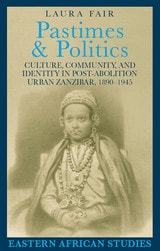
Pastimes and Politics
Culture, Community, and Identity in Post-Abolition Urban Zanzibar, 1890–1945Laura Fair
Ohio University Press, 2001
The first decades of the twentieth century were years of dramatic change in Zanzibar, a time when the social, economic, and political lives of island residents were in incredible flux, framed by the abolition of slavery, the introduction of colonialism, and a tide of urban migration. Pastimes and Politics explores the era from the perspective of the urban poor, highlighting the numerous and varied ways that recently freed slaves and other immigrants to town struggled to improve their individual and collective lives and to create a sense of community within this new environment. In this study Laura Fair explores a range of cultural and social practices that gave expression to slaves’ ideas of emancipation, as well as how such ideas and practices were gendered.
Pastimes and Politics examines the ways in which various cultural practices, including taarab music, dress, football, ethnicity, and sexuality, changed during the early twentieth century in relation to islanders’ changing social and political identities. Professor Fair argues that cultural changes were not merely reflections of social and political transformations. Rather, leisure and popular culture were critical practices through which the colonized and former slaves transformed themselves and the society in which they lived.
Methodologically innovative and clearly written, Pastimes and Politics is accessible to specialists and general readers alike. It is a book that should find wide use in courses on African history, urbanization, popular culture, gender studies, or emancipation.
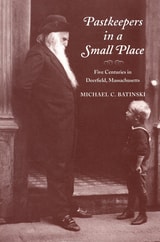
Pastkeepers in A Small Place
Five Centuries in Deerfield, MassachusettsMichael C. Batinski
University of Massachusetts Press, 2004
Like many small places in the American landscape, Batinski points out, Deerfield does not fit into the history we learn in textbooks. With the exception of the famous French and Indian raid on the town in 1704, nothing of national significance has happened there. Yet that has not diminished the interest of local inhabitants in establishing and maintaining a vital connection to the past.
Different groups, from Native Pocumtuck to Puritan settlers to the grandchildren of Polish immigrants, have told the Deerfield story in varied and sometimes conflicting ways, each drawing on the past to shape its own sense of collective identity. Together their efforts at pastkeeping reveal how people organize and explain the motion of time, why they feel it important to pass on family stories, and why they keep family heirlooms. In doing so, Batinski argues, they illustrate why the preservation of the past remains a civic concern to us all.
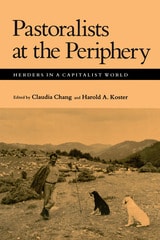
Pastoralists at the Periphery
Herders in a Capitalist WorldClaudia Chang
University of Arizona Press, 1994
The authors of this collection of essays examine the impact of capitalism on nineteenth- and early twentieth century pastoralists and discuss the historical transformations that have occurred in the lives and societies of herding peoples around the world. They argue that pastoralists were not simply passive recipients of change imposed by capitalist polities and that historical and economic factors impinging on their societies were as important as ecological ones. Collectively, these papers demonstrate that twentieth-century pastoralists and their nineteenth-century predecessors should not be seen as immutably locked in a pastoral "mode of production" but rather as actively negotiating encounters between themselves and the expanding power of capitalist states.
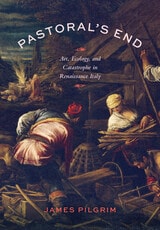
Pastoral’s End
Art, Ecology, and Catastrophe in Renaissance ItalyJames Pilgrim
University of Chicago Press, 2026
In the sixteenth century, Italian artist Jacopo Bassano painted pictures of herdsmen and animals moving through dark and muddy landscapes. But he also participated in the agricultural development of the region in which he lived, producing topographical maps of local mountains and forests, inventing new methods of drainage and irrigation, and studying the latest techniques of crop rotation and fertilization. The relationship between Bassano’s rustic art and his participation in environmental transformation has, however, never been explored.
One of the first studies of Italian Renaissance art to grapple with the connections between visual culture and the environment, Pastoral’s End explores this crucial, formative relationship. James Pilgrim looks at Bassano’s career holistically, demonstrating how his involvement in a world marked by agricultural expansion, industrialization, resource extraction, environmental degradation, social transformation, and radical philosophical development informed his paintings of country life. Introducing new archival and visual evidence of Bassano’s knowledge of hydrology, agronomy, husbandry, and architecture, Pastoral’s End argues that he transformed the more placid rustic imagery of previous Renaissance artists into visions of dangerous ecological instability.
Pastplay
Teaching and Learning History with TechnologyKevin Kee, editor
University of Michigan Press, 2014
In the field of history, the Web and other technologies have become important tools in research and teaching of the past. Yet the use of these tools is limited—many historians and history educators have resisted adopting them because they fail to see how digital tools supplement and even improve upon conventional tools (such as books). In Pastplay, a collection of essays by leading history and humanities researchers and teachers, editor Kevin Kee works to address these concerns head-on. How should we use technology? Playfully, Kee contends. Why? Because doing so helps us think about the past in new ways; through the act of creating technologies, our understanding of the past is re-imagined and developed. From the insights of numerous scholars and teachers, Pastplay argues that we should play with technology in history because doing so enables us to see the past in new ways by helping us understand how history is created; honoring the roots of research, teaching, and technology development; requiring us to model our thoughts; and then allowing us to build our own understanding.
Pat McCarran
Political Boss Of NevadaJerome E. Edwards
University of Nevada Press, 1982
Within his native state of Nevada, McCarran constructed a machine designed to dominate the state’s political and economic life. This domination, which extended to both political parties, was built on personal favors for constituents, shrewd use of patronage, rewards for friends, and inevitable punishment for those suspected of being enemies. Ironically, the Senator employed the same tactics that others had once used against him to stymie his own early political efforts.
This work discusses the Senator’s background, his rise to power, and his methods of establishing political domination. Personal correspondence, excerpts from speeches, newspaper editorials, and interviews all help bring to life a colorful account of a controversial, driven man who held the levers of political control in Nevada during the early twentieth century.
Pataphysics and Surrealism in Alabama
A Cultural HistorySteven Harris
University of Alabama Press, 2026
An exploration of the surrealist artists, musicians, and performers who forged a unique experimental arts community in Alabama
Pataphysics and Surrealism in Alabama: A Cultural History is the first book to uncover a remarkable chapter in American experimental art, music, dance and writing, tracing the activities of a creative group known as Raudelunas, the music collective Transcendprovisation, and the surrealist association initially called Glass Veal: a series of interrelated artistic and cultural movements that originated in Tuscaloosa and Birmingham, Alabama, during the 1970s. Drawing on extensive archival research and firsthand accounts, including interviews with twenty-six participants in these groups, sound recordings, publications, and other primary sources, Steven Harris traces the history of a vibrant creative community that began when three University of Alabama students started improvising music together and encouraged others to join them.
From these sessions emerged a dynamic network of performers and artists whose work challenged conventional boundaries between disciplines. Inspired by musical improvisation, surrealism, and pataphysics, participants embraced spontaneity and absurdity as they developed a positive expression of creativity that was both uniquely Southern and sharply distinctive from the dominant culture that surrounded them.
Harris situates these movements within broader histories of Alabama, Dada, pataphysics, surrealism, and improvised music and dance while charting their lasting influence on the artists who participated in them. Featuring a timeline of major events, biographies of key members, and an anthology of representative writings, Pataphysics and Surrealism in Alabama is an essential contribution to the history of American experimental culture.
Patchwork Apartheid
Private Restriction, Racial Segregation, and Urban InequalityColin Gordon
Russell Sage Foundation, 2023
Gordon also explores the role of other policies and practices in sustaining segregation. Enforcement of private racial restrictions was held unconstitutional in 1948, and such agreements were prohibited outright in 1968. But their premises and assumptions, and the segregation they had accomplished, were accommodated by local zoning and federal housing policies. Explicit racial restrictions were replaced by the deceptive business practices of real estate agents and developers, who characterized certain neighborhoods as white and desirable and others as black and undesirable, thereby hiding segregation behind the promotion of sound property investments, safe neighborhoods, and good schools. These practices were in turn replaced by local zoning, which systematically protected white neighborhoods while targeting “blighted” black neighborhoods for commercial and industrial redevelopment, and by a tangle of federal policies that reliably deferred to local and private interests with deep investments in local segregation. Private race restriction was thus a key element in the original segregation of American cities and a source of durable inequalities in housing wealth, housing opportunity, and economic mobility.
Patchwork Apartheid exhaustively documents the history of private restriction in urban settings and demonstrates its crucial role in the ideas and assumptions that have sustained racial segregation in the United States into the twenty-first century.

Patchwork
Iowa Quilts and QuiltersJacqueline Andre Schmeal
University of Iowa Press, 2003
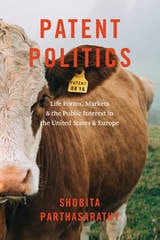
Patent Politics
Life Forms, Markets, and the Public Interest in the United States and EuropeShobita Parthasarathy
University of Chicago Press, 2017
To demonstrate this, Parthasarathy takes readers through a particularly fierce and prolonged set of controversies over patents on life forms linked to important advances in biology and agriculture and potentially life-saving medicines. Comparing battles over patents on animals, human embryonic stem cells, human genes, and plants in the United States and Europe, she shows how political culture, ideology, and history shape patent system politics. Clashes over whose voices and which values matter in the patent system, as well as what counts as knowledge and whose expertise is important, look quite different in these two places. And through these debates, the United States and Europe are developing very different approaches to patent and innovation governance. Not just the first comprehensive look at the controversies swirling around biotechnology patents, Patent Politics is also the first in-depth analysis of the political underpinnings and implications of modern patent systems, and provides a timely analysis of how we can reform these systems around the world to maximize the public interest.
Pathos and Power
Interdisciplinary Perspectives on Widowhood in Africa, Past and PresentBenjamin N. Lawrance and Joanna Davidson
Ohio University Press, 2025
The collected essays in Pathos and Power provide a critical exploration of widowhood in Africa through a series of historical and contemporary case studies. The book challenges a simplistic understanding of widowhood by highlighting how the experience varies according to age, class, race, religion, and geographic location. The contributors investigate how the category of widowhood can obscure or reveal various social dynamics while demonstrating the diversity of material, symbolic, and embodied circumstances faced by African widows. The volume considers the forces shaping the lives of widows by examining the structural and legal challenges they encounter, including discriminatory practices in social, economic, and political spheres. Through discussions of precolonial, colonial, and postcolonial contexts, it explores the intersections of custom, law, patriarchy, and feminism while delving into the potentially liberatory opportunities that widowhood sometimes presents. The book also raises broader questions about gender, personhood, marriage, autonomy, and national identity, emphasizing how widowhood informs key conceptual debates in African studies. Editors Joanna Davidson and Benjamin N. Lawrance bring together scholars across such fields as anthropology, gender studies, history, law, and political science. The authors employ a range of methodologies, including archival research, ethnography, and storytelling, to illuminate widowhood in new and innovative ways. The volume’s rich empirical studies and theoretical insights offer a valuable resource for scholars seeking to understand widowhood and its broader implications in African societies. CONTRIBUTORS Rogaia Mustafa Abusharaf Fisayo Ajala Catherine E. Bolten Abbass Braham Mariana Candido Joanna Davidson Mariana Dias Paes Ramadan El-Khouli Casey Golomski Juelma Gomes de Matos Ngãla Benjamin N. Lawrance Kenda Mutongi Richard L. Roberts Enid Schildkrout Kate Skinner Wallace Teska Benjamin Twagira Sarah J. Zimmerman
Paths in the Rainforests
Toward a History of Political Tradition in Equatorial AfricaJan M. Vansina
University of Wisconsin Press, 1990
Vansina’s scope is breathtaking: he reconstructs the history of the forest lands that cover all or part of southern Cameroon, Gabon, Equatorial Guinea, the Congo, Zaire, the Central African Republic, and Cabinda in Angola, discussing the original settlement of the forest by the western Bantu; the periods of expansion and innovation in agriculture; the development of metallurgy; the rise and fall of political forms and of power; the coming of Atlantic trade and colonialism; and the conquest of the rainforests by colonial powers and the destruction of a way of life.
“In 400 elegantly brilliant pages Vansina lays out five millennia of history for nearly 200 distinguishable regions of the forest of equatorial Africa around a new, subtly paradoxical interpretation of ‘tradition.’” —Joseph Miller, University of Virginia
“Vansina gives extended coverage . . . to the broad features of culture and the major lines of historical development across the region between 3000 B.C. and A.D. 1000. It is truly an outstanding effort, readable, subtle, and integrative in its interpretations, and comprehensive in scope. . . . It is a seminal study . . . but it is also a substantive history that will long retain its usefulness.”—Christopher Ehret, American Historical Review
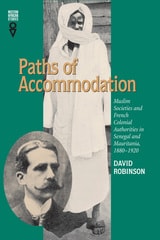
Paths of Accommodation
Muslim Societies and French Colonial Authorities in Senegal and Mauritania, 1880–1920David Robinson
Ohio University Press, 2000
Between 1880 and 1920, Muslim Sufi orders became pillars of the colonial regimes and economies of Senegal and Mauritania. In Paths of Accommodation, David Robinson examines the ways in which the leaders of the orders negotiated relations with the Federation of French West Africa in order to preserve autonomy within the religious, social, and economic realms while abandoning the political sphere to their non-Muslim rulers.
This was a striking development because the local inhabitants had a strong sense of belonging to the Dar al-Islam, the “world of Islam” in which Muslims ruled themselves.
Drawing from a wide variety of archival, oral, and Arabic sources, Robinson describes the important roles played by Muslim merchants and the mulatto community of St. Louis, Senegal. He also examines the impact of the electoral institutions established by the Third Republic, and the French effort to develop a reputation as a “Muslim power”—a European imperial nation with a capacity for ruling over Islamic subjects.
By charting the similarities and differences of the trajectories followed by leading groups within the region as they responded to the colonial regimes, Robinson provides an understanding of the relationship between knowledge and power, the concepts of civil society and hegemony, and the transferability of symbolic, economic, and social capital.
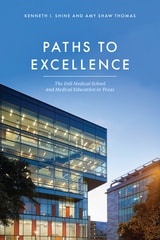
Paths to Excellence
The Dell Medical School and Medical Education in TexasKenneth I. Shine and Amy Shaw Thomas
University of Texas Press, 2021
This book tells in detail and for the first time the story of how this change came about: how dedicated administrators, alumni, business leaders, community organizers, doctors, legislators, professors, and researchers joined forces, overcame considerable resistance, and raised the funds to build a new medical school without any direct state monies. Funding was secured in large part by the unique willingness of the local community to tax itself to pay for the financial operations of the school. Kenneth I. Shine and Amy Shaw Thomas, who witnessed this process from their unique vantages as past and present vice chancellors for health affairs in the University of Texas System, offer a working model that will enable other leaders to more effectively seek solutions, avoid pitfalls, and build for the future.
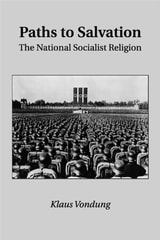
Paths to Salvation
The National Socialist ReligionKlaus Vondung
St. Augustine's Press, 2017
In order to understand National Socialism one must recognize its religious nature. Many Germans were attracted to the party by its pledge to re-establish a true community of the people, a goal that was celebrated as “holy”.
Not only did Hitler promise to solve political, social, and economic problems, he also responded to a widely felt need for salvation. The prospect of salvation elevated politics into the realm of religion and lent meaning to the lives of those who embraced it.
In this work Klaus Vondung explores the various forms in which the elevation of politics into the sphere of religion was expressed in the Third Reich: in the faith of committed National Socialists, in the party’s cult events which celebrated the “community of the people” as a “community of faith” and the Fuhrer as “savior”, and in the persecution of the Jews that was ‘justified’ in religious terms by demonizing Jews as the “evil enemies of humanity” responsible for the world’s ills. This apocalyptic worldview was the extreme manifestation of the religious nature of National Socialism and, in the final analysis, the only plausible explanation for the intention of exterminating the Jews that led to the holocaust.
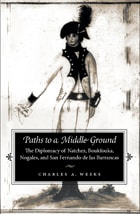
Paths to a Middle Ground
The Diplomacy of Natchez, Boukfouka, Nogales, and San Fernando de las Barrancas, 1791-1795Charles A. Weeks
University of Alabama Press, 2005
Weeks shows how diplomatic relations were established and maintained in the Gulf South between Choctaw, Chickasaw, Creek, and Cherokee chiefs and their Spanish counterparts aided by traders who had become integrated into Indian societies. He explains that despite the absence of a European state system, Indian groups had diplomatic skills that Europeans could understand: full-scale councils or congresses accompanied by elaborate protocol, interpreters, and eloquent metaphorical language.
Paths to a Middle Ground is both a narrative and primary documents. Key documents from Spanish archival sources serve as a basis for the examination of the political culture and imperial rivalry playing out in North America in the waning years of the 18th century.
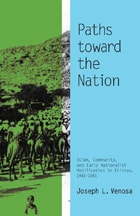
Paths toward the Nation
Islam, Community, and Early Nationalist Mobilization in Eritrea, 1941–1961Joseph L. Venosa
Ohio University Press, 2014
Pathways of Memory and Power
Ethnography and History among an Andean PeopleThomas A. Abercrombie
University of Wisconsin Press, 1998
Making clear the early and deep intermingling of practices and world views among Spaniards and Andeans, Christians and non-Christians, Abercrombie critiques both the romanticist tendency to regard Andean culture as still separate from and resistant to European influences, and the melodramatic view that all indigenous practices have been obliterated by colonial and national elites. He challenges prejudices that, from colonial days to the present, have seen Andean historical knowledge only in mythic narratives or narratives of personal experience. Bringing an ethnographer’s approach to historiography, he shows how complex Andean rituals that hybridize European and indigenous traditions—such as libation dedications and llama sacrifices held on saints’ day festivals—are in fact potent evidence of social memory in the community.
Pathways to Prohibition
Radicals, Moderates, and Social Movement OutcomesAnn-Marie E. Szymanski
Duke University Press, 2003
Combining historical research with the insights of social movement theory, Pathways to Prohibition shows how a locally based, moderate strategy allowed the early-twentieth-century prohibition crusade both to develop a potent grassroots component and to transcend the limited scope of local politics. Szymanski describes how the prohibition movement’s strategic shift toward moderate goals after 1900 reflected the devolution of state legislatures’ liquor licensing power to localities, the judiciary’s growing acceptance of these local licensing regimes, and a collective belief that local electorates, rather than state legislatures, were best situated to resolve controversial issues like the liquor question. "Local gradualism" is well suited to the porous, federal structure of the American state, Szymanski contends, and it has been effectively used by a number of social movements, including the civil rights movement and the Christian right.
Pathways to the Old Northwest
An Observance of the Bicentennial of the Northwest OrdinanceLloyd A. Hunter, et al
Indiana Historical Society Press, 1988
Patience and Salvation in Third Century North Africa
A Christian Latin ReaderSarah Wear
Catholic University of America Press, 2022
Patient Expectations
How Economics, Religion, and Malpractice Shaped Therapeutics in Early AmericaCatherine L. Thompson
University of Massachusetts Press, 2015
During the first half of the nineteenth century a major shift occurred in the medical treatment of illness in the United States, as physicians abandoned the use of “heroic” depletive therapies—the pukes and purges made famous in the 1790s by Dr. Benjamin Rush of Philadelphia—in favor of a let-nature-take-its-course approach to most diseases. Standard histories of American medicine have long attributed this shift to new theories and training methods as well as increased competition from homeopaths and botanical doctors. In this book, Catherine L. Thompson challenges that interpretation by emphasizing the role of patients as active participants in their own health care rather than passive objects of medical treatment.
Focusing on Massachusetts, then as now a center of U.S. medical education and practice, Thompson draws on data from patients' journals, medical account ledgers, physicians' daybooks, and court records to link changes in medical treatment to a gradual evolution of patient expectations across varied populations. Specifically, she identifies three developments—the increasing use of cash in medical transactions, growing religious pluralism, and the rise of malpractice suits—as key factors in transforming patients into active medical consumers unwilling to submit to doctors' advice without considering alternatives.
By showing how nineteenth-century patients shaped therapeutic practice “through the medical choices they made or didn't make,” Thompson's study alters our understanding of American medicine in the past and has implications for its present and future.
Patient Zero and the Making of the AIDS Epidemic
Richard A. McKay
University of Chicago Press, 2017
The search for a “patient zero”—popularly understood to be the first person infected in an epidemic—has been key to media coverage of major infectious disease outbreaks for more than three decades. Yet the term itself did not exist before the emergence of the HIV/AIDS epidemic in the 1980s. How did this idea so swiftly come to exert such a strong grip on the scientific, media, and popular consciousness? In Patient Zero, Richard A. McKay interprets a wealth of archival sources and interviews to demonstrate how this seemingly new concept drew upon centuries-old ideas—and fears—about contagion and social disorder.
McKay presents a carefully documented and sensitively written account of the life of Gaétan Dugas, a gay man whose skin cancer diagnosis in 1980 took on very different meanings as the HIV/AIDS epidemic developed—and who received widespread posthumous infamy when he was incorrectly identified as patient zero of the North American outbreak. McKay shows how investigators from the US Centers for Disease Control inadvertently created the term amid their early research into the emerging health crisis; how an ambitious journalist dramatically amplified the idea in his determination to reframe national debates about AIDS; and how many individuals grappled with the notion of patient zero—adopting, challenging and redirecting its powerful meanings—as they tried to make sense of and respond to the first fifteen years of an unfolding epidemic. With important insights for our interconnected age, Patient Zero untangles the complex process by which individuals and groups create meaning and allocate blame when faced with new disease threats. What McKay gives us here is myth-smashing revisionist history at its best.