Results by title
8812 books match the query 'Political Science' and 592 start with p

Plane Truth
Aviation's Real Impact on People and the EnvironmentRose Bridger
Pluto Press, 2013
As aviation charges ahead to become one of the world's fastest growing industries, with passenger numbers and cargo volumes projected to double in the next 20 years, Plane Truth sounds a highly informed note of scepticism.
Rose Bridger provides a comprehensive account of aviation's impact, including how new airports are gobbling up farmland and wildlife habitats and inflicting noise and air pollution on communities. She reveals the extraordinary level of subsidy for the industry, from government expenditure on infrastructure to tax breaks, which helps to support the industry in the face of rising oil prices and the global economic downturn.
Plane Truth demolishes industry claims that fuel-efficient aircraft and alternative fuels can enable growth without increasing climate change and reveals the symbiotic relationship between aviation and the wider socio-economic problems facing humanity.

Planetary Longings
Mary Louise Pratt
Duke University Press, 2022
Planning Families in Nepal
Global and Local Projects of ReproductionBrunson, Jan
Rutgers University Press, 2016
Planning as Persuasive Storytelling
The Rhetorical Construction of Chicago's Electric FutureJames A. Throgmorton
University of Chicago Press, 1996
Planning the City upon a Hill
Boston since 1630Lawrence W. Kennedy
University of Massachusetts Press, 1992
Planning the Portland Urban Growth Boundary
The Struggle to Transform Trend CitySy Adler
Oregon State University Press, 2022
In this companion volume to his 2012 book Oregon Plans: The Making of an Unquiet Land-Use Revolution, Sy Adler offers readers a deep analysis of planning Portland’s Urban Growth Boundary. Required by one of Oregon’s nineteen statewide planning goals, a boundary in the Portland metropolitan area was intended to separate urban land and land that would be urbanized from commercially productive farmland. After adopting the goals, approving the Portland growth boundary in 1979 was the most significant decision the Oregon Land Conservation and Development Commission has ever made, and, more broadly, is a significant milestone in American land-use planning.
Planning the Portland Urban Growth Boundary primarily covers the 1970s. Innovative regional planning institutions were established in response to concerns about sprawl, but planners working for those institutions had to confront the reality that various plans being developed and implemented by city and county governments in metro Portland would instead allow sprawl to continue. Regional planners labeled these as “Trend City” plans, and sought to transform them during the 1970s and thereafter.
Adler discusses the dynamics of these partially successful efforts and the conflicts that characterized the development of the Portland UGB during the 1970s—between different levels of government, and between public, private, and civic sector advocates. When the regional UGB is periodically reviewed, these conflicts continue, as debates about values and technical issues related to forecasting future amounts of population, economic activity, and the availability of land for urban development over a twenty-year period roil the boundary planning process.
Planning the Portland Urban Growth Boundary is an authoritative history and an indispensable resource for anyone actively involved in urban and regional planning—from neighborhood associations and elected officials to organizations working on land use and development issues throughout the state.
Planning the Urban Region
A Comparative Study of Policies and OrganizationsPeter Self
University of Alabama Press, 1982
In tandem with an analysis of the basic purpose and rationale of urban planning, Peter Self discusses the achievements and failures of different types of planning authorities. Planning the Urban Region surveys in turn the planning of city governments, metro governments, and regional bodies as they attempt to guide the growth and character of large urban areas—within whose sprawl live roughly one-half of the populations of Western countries—with examples drawn from the United States, Great Britain, Canada, Australia, Sweden, and France.
Self argues that the urban region is at a political and organizational crossroads, as it must grapple with the problems of urban sprawl: the social effects of land use and housing, conflicts between local communities and the metro organizations, environmental issues, and the capacity of governmental systems to handle complex issues. Planning the Urban Region is a valuable contribution to the literature on the future of cities and urban regions and should materially inform the debate on the place of public planning in shaping that future.
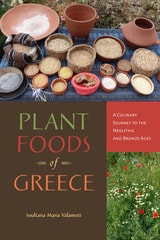
Plant Foods of Greece
A Culinary Journey to the Neolithic and Bronze AgesSoultana Maria Valamoti
University of Alabama Press, 2023
2024 INAUGURAL MARY BEAUDRY BOOK AWARD FOR THE ARCHAEOLOGY OF FOOD
A synthesis of culinary practices of prehistoric Greece based on plant food ingredients
In Plant Foods of Greece, Greek archaeologist Soultana Maria Valamoti takes readers on a culinary journey, reconstructing the plant foods and culinary practices of Neolithic and Bronze Age Greece. For more than thirty years, she has been analyzing a large body of archaeobotanical data that was retrieved from nearly twenty sites in mainland Greece and the Greek islands, with an additional analysis of other sites as referenced by published colleagues. Plant foods were the main ingredients of daily meals in prehistoric Greece and most likely of special dishes prepared for feasts and rituals.
Valamoti’s approach allows an exploration of culinary variability through time. The thousands of charred seeds identified from occupation debris correspond to minuscule time capsules. She is able to document changes from the cooking of the first farmers to the sophisticated cuisines of the elites who inhabited palaces in the first cities of Europe in the south of Greece during the Late Bronze Age. Along the way, she explains the complex processes for the addition of new ingredients (such as millet and olives), condiments, sweet tastes, and complex recipes. Valamoti also addresses regional variability and diversity as well as detailing experimentation and research using occasional input from ancient written sources.
Comprehensive and synthetic coverage encompasses bread/cereals, pulses, oils, fruit and nuts, fermented brews, healing foods, cooking, and identity. In addition, Valamoti offers insight into engaging in public archaeology and provides recipes that incorporate ancient plant ingredients and connect prehistory to the present in a critical way. A definitive source for a range of food scientists and scholars, it will also appeal to foodies.
Platform Socialism
How to Reclaim our Digital Future from Big TechJames Muldoon
Pluto Press, 2022
Powerful tech companies now own the digital infrastructure of twenty-first century social life. Masquerading as global community builders, these companies have developed sophisticated new techniques for extracting wealth from their users.
James Muldoon shows how grassroots communities and transnational social movements can take back control from Big Tech. He reframes the technology debate and proposes a host of new ideas, from the local to the international, for how we can reclaim the emancipatory possibilities of digital platforms. Drawing on sources from forgotten histories to contemporary prototypes, he proposes an alternative system and charts a roadmap for how we can get there.

Plato and Aristophanes
Comedy, Politics, and the Pursuit of a Just LifeMarina Marren
Northwestern University Press, 2022
Marren makes this case by delving into Plato’s Republic, a foundational work of political philosophy. While the Republic straightforwardly condemns the decadence and greed of a tyrant, Plato’s attack on political idealism is both solemn and comedic. In fact, Plato draws on the same comedic stock and tropes as do Aristophanes’s plays. Marren’s book strikes up an innovative conversation between three works by Aristophanes—Assembly Women, Knights, and Birds—and Plato’s philosophy, prompting important questions about individual convictions and one’s personal search for justice. These dialogic works offer critiques of tyranny that are by turns brilliant, scathing, and exuberant, making light of faults and ideals alike. Philosophical comedy exposes despotism in individuals as well as systems of government claiming to be just and good. This critique holds as much bite against contemporary injustices as it did at the time of Aristophanes and Plato.
An ingenious new work by an emerging scholar, Plato and Aristophanes shows that comedy—in tandem with philosophy and politics—is essential to self-examination. And without such examination, there is no hope for a just life.
Plato's "Laws"
The Discovery of BeingSeth Benardete
University of Chicago Press, 2001
An insightful commentary on Plato’s Laws, his complex final work.
The Laws was Plato’s last work, his longest, and one of his most difficult. In contrast to the Republic, which presents an abstract ideal, the Laws appears to provide practical guidelines for the establishment and maintenance of political order in the real world. Classicist Seth Benardete offers a rich analysis of each of the twelve books of the Laws, which illuminates Plato’s major themes and arguments concerning theology, the soul, justice, and education.
Most importantly, Benardete shows how music in a broad sense, including drama, epic poetry, and even puppetry, mediates between reason and the city in Plato’s philosophy of law. Benardete also uncovers the work’s concealed ontological dimension, explaining why it is hidden and how it can be brought to light. In establishing the coherence and underlying organization of Plato’s last dialogue, Benardete makes a significant contribution to Platonic studies.
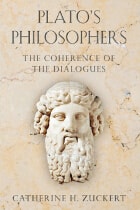
Plato's Philosophers
The Coherence of the DialoguesCatherine H. Zuckert
University of Chicago Press, 2009
Faced with the difficult task of discerning Plato’s true ideas from the contradictory voices he used to express them, scholars have never fully made sense of the many incompatibilities within and between the dialogues. In the magisterial Plato’s Philosophers, Catherine Zuckert explains for the first time how these prose dramas cohere to reveal a comprehensive Platonic understanding of philosophy.
To expose this coherence, Zuckert examines the dialogues not in their supposed order of composition but according to the dramatic order in which Plato indicates they took place. This unconventional arrangement lays bare a narrative of the rise, development, and limitations of Socratic philosophy. In the drama’s earliest dialogues, for example, non-Socratic philosophers introduce the political and philosophical problems to which Socrates tries to respond. A second dramatic group shows how Socrates develops his distinctive philosophical style. And, finally, the later dialogues feature interlocutors who reveal his philosophy’s limitations. Despite these limitations, Zuckert concludes, Plato made Socrates the dialogues’ central figure because Socrates raises the fundamental human question: what is the best way to live?
Plato’s dramatization of Socratic imperfections suggests, moreover, that he recognized the apparently unbridgeable gap between our understandings of human life and the nonhuman world. At a time when this gap continues to raise questions—about the division between sciences and the humanities and the potentially dehumanizing effects of scientific progress—Zuckert’s brilliant interpretation of the entire Platonic corpus offers genuinely new insights into worlds past and present.
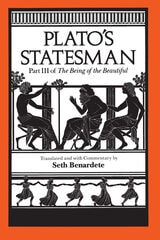
Plato's Statesman
Part III of The Being of the BeautifulPlato
University of Chicago Press, 1986
Theaetetus is the first of a trilogy of Platonic dialogues that show Socrates formulating his conception of philosophy as he prepares the defense for his trial. This translation is particularly faithful to the original Greek, and it is accompanied by an introduction, extensive notes, and comprehensive commentary that puts the dialogue in context with Plato's thought and its influence over the centuries.
Seth Benardete (1930-2001) was professor of classics at New York University.
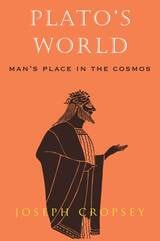
Plato's World
Man's Place in the CosmosJoseph Cropsey
University of Chicago Press, 1995
Cropsey interprets seven of Plato's dialogues—Theaetetus, Euthyphro, Sophist, Statesman, Apology, Crito, and Phaedo—in light of their dramatic consecutiveness and thus as a conceptual and dramatic whole. The cosmos depicted by Plato in these dialogues, Cropsey argues, is often unreasonable, and populated by human beings unaided by gods and dealt with equivocally by nature. Masterfully leading the reader through the seven scenes of the drama, Cropsey shows how they are, to an astonishing degree, concerned with the resources available to help us survive in such a world.
This is a world—and a Plato—quite at odds with most other portraits. Much more than a summary of Plato's thinking, this book is an eloquent, sometimes amusing, often moving guide to the paradoxes and insights of Plato's philosophy.

Playing Patriot
Inside Florida’s Alt-RightAlexander Lowie
Rutgers University Press, 2027
What draws ordinary Americans into extremist political movements, and why do they stay? Playing Patriot takes readers inside the contemporary Patriot Movement through immersive ethnographic fieldwork conducted with members of the Patriot Movement in Central Florida (including those active in the Proud Boys and Three-Percenters) following January 6. Over months of participant observation, conversations, and firsthand experiences, anthropologist Alexander Lowie explores how humor, play, alternative media, conspiracy narratives, and performances of masculinity shape political belonging. Rather than portraying these organizations as collections of abstract beliefs alone, the book reveals them as communities built through everyday relationships, shared rituals, and stories about national decline and renewal. Written as a first-person narrative ethnography, Playing Patriot offers an accessible, deeply human account of political extremism while providing fresh insight into the emotional and cultural forces shaping contemporary American populism.
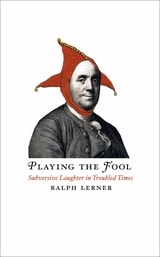
Playing the Fool
Subversive Laughter in Troubled TimesRalph Lerner
University of Chicago Press, 2009
The role of the fool is to provoke the powerful to question their convictions, preferably while avoiding a beating. Fools accomplish this not by hectoring their audience, but by broaching sensitive topics indirectly, often disguising their message in a joke or a tale. Writers and thinkers throughout history have adopted the fool’s approach, and here Ralph Lerner turns to six of them—Thomas More, Francis Bacon, Robert Burton, Pierre Bayle, Benjamin Franklin, and Edward Gibbon—to elucidate the strategies these men employed to persuade the heedless, the zealous, and the overly confident to pause and reconsider.
As Playing the Fool makes plain, all these men lived through periods marked by fanaticism, particularly with regard to religion and its relation to the state. In such a troubled context, advocating on behalf of skepticism and against tyranny could easily lead to censure, or even, as in More’s case, execution. And so, Lerner reveals, these serious thinkers relied on humor to move their readers toward a more reasoned understanding of the world and our place in it. At once erudite and entertaining, Playing the Fool is an eloquently thought-provoking look at the lives and writings of these masterly authors.
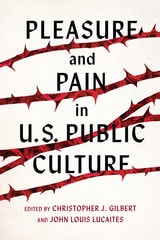
Pleasure and Pain in US Public Culture
edited by Christopher J. Gilbert and John Louis Lucaites
University of Alabama Press, 2025
A critical examination of how pleasure and pain are constructed, represented, and contested within American public culture.
Mainstream news and social media often highlight presentations of pain that invite a voyeuristic, pleasurable experience, whether the result of war, disasters, crime, accidents, or other catastrophes. This collection of essays explores pleasurable pains and painful pleasures, showing how they pervade contemporary western public culture.
Deploying methodologies drawn from psychoanalysis, rhetoric and communication, political theory, and visual culture, Pleasure and Pain in US Public Culture offers insightful criticisms and theories about how pleasure and pain function in public discourse, media, and everyday communication practices.
The contributors provide a sample of fascinating range of news reportage, television, film and cinema, stage drama, comic performances, street art, and other forms of popular culture. The media cited and analyzed include Spike Lee’s films, Afrofuturism, autoethnography, and the #MeToo movement.
The collection takes up engrossing topics such as the cathartic allure of pain, ethical dilemmas surrounding public displays of suffering, and the transformative power of narratives that confront trauma. The essays also draw connections between theory and real-world outcomes, explore the implications of enjoying traumatic comedy, and link the natural world to otherwise mundane instances of interspecies violence. Brett Kavanaugh's Supreme Court nomination hearings and what they suggest about witnessing trauma is also discussed.
Pleasure and Pain in US Public Culture will change how a reader sees the world. It imparts a startling vision of western culture permeated by pain and pleasure.
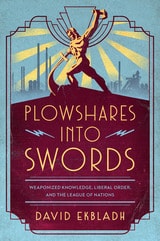
Plowshares into Swords
Weaponized Knowledge, Liberal Order, and the League of NationsDavid Ekbladh
University of Chicago Press, 2022
In Plowshares into Swords, David Ekbladh recaptures the power of knowledge and information developed between World War I and World War II by an international society of institutions and individuals committed to liberal international order and given focus by the League of Nations in Geneva. That information and analysis revolutionized critical debates in a world in crisis. In doing so, Ekbladh transforms conventional understandings of the United States’ postwar hegemony, showing that important elements of it were profoundly influenced by ideas that emerged from international exchanges. The League’s work was one part of a larger transnational movement that included the United States and which saw the emergence of concepts like national income, gross domestic product, and other attempts to define and improve the standards of living, as well as new approaches to old questions about the role of government. Forged as tools for peace these ideas were beaten into weapons as World War II threatened. Ekbladh recounts how, though the US had never been a member of the organization, vital parts of the League were rescued after the fall of France in 1940 and given asylum at the Institute for Advanced Study in Princeton. However, this presence in the US is just one reason its already well-regarded economic analyses and example were readily mobilized by influential American and international figures for an Allied “war of ideas,” plans for a postwar world, and even blueprints for the new United Nations. How did this body of information become so valuable? As Ekbladh makes clear, the answer is that information and analysis themselves became crucial currencies in global affairs: to sustain a modern, liberal global order, a steady stream of information about economics, politics, and society was, and remains, indispensable.
Plowshares into Swords
Weaponized Knowledge, Liberal Order, and the League of NationsDavid Ekbladh
University of Chicago Press, 2022
This is an Auto-narrated audiobook version of this book.
An in-depth look at how the ideas formulated by the interwar League of Nations shaped American thinking on the modern global order.
In Plowshares into Swords, David Ekbladh recaptures the power of knowledge and information developed between World War I and World War II by an international society of institutions and individuals committed to liberal international order and given focus by the League of Nations in Geneva. That information and analysis revolutionized critical debates in a world in crisis. In doing so, Ekbladh transforms conventional understandings of the United States’ postwar hegemony, showing that important elements of it were profoundly influenced by ideas that emerged from international exchanges. The League’s work was one part of a larger transnational movement that included the United States and which saw the emergence of concepts like national income, gross domestic product, and other attempts to define and improve the standards of living, as well as new approaches to old questions about the role of government. Forged as tools for peace these ideas were beaten into weapons as World War II threatened. Ekbladh recounts how, though the US had never been a member of the organization, vital parts of the League were rescued after the fall of France in 1940 and given asylum at the Institute for Advanced Study in Princeton. However, this presence in the US is just one reason its already well-regarded economic analyses and example were readily mobilized by influential American and international figures for an Allied “war of ideas,” plans for a postwar world, and even blueprints for the new United Nations. How did this body of information become so valuable? As Ekbladh makes clear, the answer is that information and analysis themselves became crucial currencies in global affairs: to sustain a modern, liberal global order, a steady stream of information about economics, politics, and society was, and remains, indispensable.
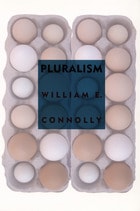
Pluralism
William E. Connolly
Duke University Press, 2005
Connolly looks at pluralism not only in light of faith but also in relation to evil, ethics, relativism, globalization, and sovereignty. In the process, he engages many writers and theorists—among them, Spinoza, William James, Henri Bergson, Marcel Proust, Gilles Deleuze, Giorgio Agamben, Talal Asad, Michael Hardt, and Antonio Negri. Pluralism is the first book in which Connolly explains the relationship between pluralism and the experience of time, and he offers readings of several films that address how time is understood, including Time Code, Far from Heaven, Waking Life, and The Maltese Falcon. In this necessary book Connolly brings a compelling, accessible philosophical critique together with his personal commitment to an inclusive political agenda to suggest how we might—and why we must—cultivate pluralism within both society and ourselves.

Pluralism and Progressives
Hull House and the New Immigrants, 1890-1919Rivka Shpak Lissak
University of Chicago Press, 1989
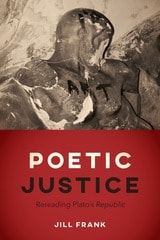
Poetic Justice
Rereading Plato's "Republic"Jill Frank
University of Chicago Press, 2018
With Poetic Justice, Jill Frank overturns the conventional view that the Republic endorses a hierarchical ascent to knowledge and the authoritarian politics associated with that philosophy. When learning to read is understood as the passive absorption of a teacher’s beliefs, this reflects the account of Platonic philosophy as authoritative knowledge wielded by philosopher kings who ruled the ideal city. When we learn to read by way of the method Socrates introduces in the Republic, Frank argues, we are offered an education in ethical and political self-governance, one that prompts citizens to challenge all claims to authority, including those of philosophy.
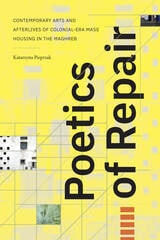
Poetics of Repair
Contemporary Arts and Afterlives of Colonial-Era Mass Housing in the MaghrebKatarzyna Pieprzak
Duke University Press, 2025
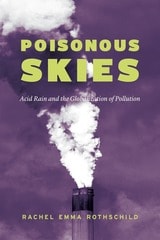
Poisonous Skies
Acid Rain and the Globalization of PollutionRachel Emma Rothschild
University of Chicago Press, 2019
The identification of acid rain in the 1960s changed scientific and popular understanding of fossil fuel pollution’s potential to cause regional—and even global—environmental harms. It showed scientists that the problem of fossil fuel pollution was one that crossed borders—it could travel across vast stretches of the earth’s atmosphere to impact ecosystems around the world. This unprecedented transnational reach prompted governments, for the first time, to confront the need to cooperate on pollution policies, transforming environmental science and diplomacy. Studies of acid rain and other pollutants brought about a reimagining of how to investigate the natural world as a complete entity, and the responses of policy makers, scientists, and the public set the stage for how societies have approached other prominent environmental dangers on a global scale, most notably climate change.
Grounded in archival research spanning eight countries and five languages, as well as interviews with leading scientists from both government and industry, Poisonous Skies is the first book to examine the history of acid rain in an international context. By delving deep into our environmental past, Rothschild hopes to inform its future, showing us how much is at stake for the natural world as well as what we risk—and have already risked—by not acting.
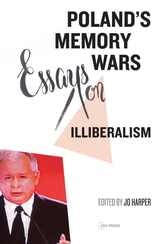
Poland's Memory Wars
Essays on IlliberalismJo Harper
Central European University Press, 2018
This volume of essays and interviews by Polish, British, and American academics and journalists provides an overview of current Polish politics for both informed and non-specialist readers. The essays consider why and how PiS, Law and Justice, the party of Jarosław Kaczynski, returned to power, and the why and how of its policies while in power. They help to make sense of how “history” plays a key role in Polish public life and politics.
The descriptions of PiS in Western media tend to rework old stereotypes about Eastern Europe that had lain dormant for some time. The book addresses the underlying question whether PiS was simply successful in understanding its electorate, and just helped Poland to revert to its normal state. This new Normal seems quite similar to the old one: insular, conservative, xenophobic, and statist.
The book looks at the current struggle between one ‘Poland’ and another; between a Western-looking Poland and an inward-looking Poland, the former more interested in opening to the world, competing in open markets, and working within the EU, and the latter more concerned with holding onto tradition.
The question of illiberalism has gone from an ‘Eastern’ problem (Russia, Turkey, Hungary, etc.) to a global one (Brexit and the U.S. elections). This makes the very specific analysis of Poland’s illiberalism applicable on a broader scale.
Poland's New Capitalism
Jane Hardy
Pluto Press, 2009
Poland was central to the historic changes that took place across Eastern Europe at the end of the Cold War. It is the largest economy in the region, and was at the forefront of opposition to communism, with the rise of Solidarity in the 1980s. This book explores the way that neoliberal policies have formed the basis of transformation, championed by both post-communist and post-Solidarity governments.
Jane Hardy provides a rigorous assessment of the impact of these policies on everyday lives and Poland's place in the European and global economy. These are firmly set in the context of the complex and dynamic political economy of the country. The role of capital in the form of transnational corporations and foreign direct investment is central to the analysis. The revival of trade unions and growth of new social movements are explored as they challenge Poland's new capitalism.
No other book studies Poland's recent history in such depth. This book will be a key text for students of political economy, international relations, social movements and labour studies.
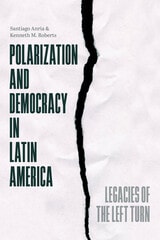
Polarization and Democracy in Latin America
Legacies of the Left TurnSantiago Anria and Kenneth M. Roberts
University of Chicago Press, 2026
An insightful examination of Latin America’s contemporary democratic landscape and how it is marked by patterns of polarization and volatility.
Although Latin American democracies have shown considerable resilience, today they face new forms of political polarization and instability. These challenges are closely connected to the legacies of the region’s “left turn,” which sought to transform entrenched inequalities and social hierarchies in the early twenty-first century. Unprecedented in its scope and duration, the left turn reflected an underlying realignment of political contestation in a highly unequal region. Yet despite notable achievements in addressing social needs, leftist parties struggled to deepen democracy by empowering popular majorities, and they faced powerful elite backlashes.
Through a comparative analysis of seven South American countries, Santiago Anria and Kenneth M. Roberts trace the different origins and trajectories in power of the populist and social democratic currents that emerged within the left turn. Anria and Roberts argue that today’s democratic orders face intensifying polarization and institutional fragility, even where social democratic parties made explicit efforts to build broad coalitions and temper political conflict. They show how activist networks and social movements on the left and the right triggered latent political conflicts and are now reshaping democratic competition and the terms of social inclusion in South American politics.
Polarizing Development
Alternatives to Neoliberalism and the CrisisEdited by Lucia Pradella and Thomas Marois
Pluto Press, 2015
The global economic crisis has exposed the limits of neoliberalism and dramatically deepened social polarization. Yet, despite increasing social resistance and opposition, neoliberalism prevails globally.
Radical alternatives, moreover, are only rarely debated. And if they are, such alternatives are reduced to new Keynesian and new developmental agendas, which fail to address existing class divisions and imperialist relations of domination.
This collection of essays polarizes the debate between radical and reformist alternatives by exploring head-on the antagonistic structure of capitalist development. The contributors ground their proposals in an international, non-Eurocentric and Marxian inspired analysis of capitalism and its crises. From Latin America to Asia, Africa to the Middle East and Europe to the US, social and labour movements have emerged as the protagonists behind creating alternatives.
This book’s new generation of scholars has written accessible yet theoretically informed and empirically rich chapters elaborating radical worldwide strategies for moving beyond neoliberalism, and beyond capitalism. The intent is to provoke critical reflection and positive action towards substantive change.
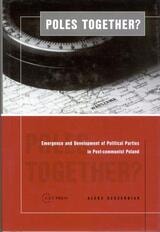
Poles Together?
The Emergence and Development of Political Parties in Postcommunist PolandAleks Szczerbiak
Central European University Press, 2001
This book fills a gap in the existing literature on how parties and party systems are developing in the new democracies of post-communist Central and Eastern Europe. It provides the first detailed, empirically based examination from a structural and organizational perspective of the new parties and political groupings that have emerged in Poland since the collapse of communism in 1989.
The author develops his argument on the basis of an analysis of five key structural and organizational variables: the internal distribution of power and modes of representation within the parties; the role of the party bureaucracy; the relationship between parties and their electorates; the development of parties as membership organizations; and the relationship between parties and the state.
As the first in-depth, empirically grounded single-country study of party structure and organization in post-communist Eastern Europe, the book provides an opportunity to draw broader conclusions about the process of Central and East European party development and will contribute significantly towards the development of a post-communist political party model. Szczerbiak sheds light on an important aspect of the more general process of post-communist democratization in the region and provides a major contribution to one of the least-explored areas of transition.
Police Interrogation and Confessions
Essays in Law and PolicyYale Kamisar
University of Michigan Press, 2025
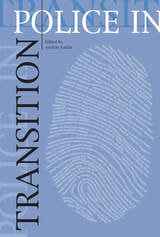
Police in Transition
Essays on the Police Forces in Transition CountriesAndrás Kádár
Central European University Press, 2001
The police forces of the transition countries in Central and Eastern Europe have to undergo profound reform to be able to respond to the needs of society; to serve the public and not just the government, and to prove that they can effectively combat crime. This volume is the result of a survey by the Hungarian Helsinki Committee concerning the mode and extent of changes police forces of the post-communist countries have undergone since 1989 – 1990. Information is provided about the relevant tasks, organization, personnel, accountability, and international relations of the national police forces and about the coercive measures they are entitled to use.
Written by internationally acknowledged experts of policing and representatives of human-rights organizations, Police in Transition deals with the questions of transition, European trends in the governance of the police, the relationship between police and criminality, the role of the police in the constitutional framework, the limits of policing, police brutality, civilian oversight of the police and the possibilities of a democratic reform of police forces in Central and Eastern Europe.
Police, Power, and the Production of Racial Boundaries
Muñiz, Ana
Rutgers University Press, 2015
Muñiz illuminates the degree to which the definitions of “gangs” and “deviants” are politically constructed labels born of public policy and court decisions, offering an innovative look at the process of criminalization and underscoring the ways in which a politically powerful coalition can define deviant behavior. As she does so, Muñiz also highlights the various grassroots challenges to such policies and the efforts to call attention to their racist effects. Muñiz describes the fight over two very different methods of policing: community policing (in which the police and the community work together) and the “broken windows” or “zero tolerance” approach (which aggressively polices minor infractions—such as loitering—to deter more serious crime). Police, Power, and the Production of Racial Boundaries also explores the history of the area to explain how Cadillac-Corning became viewed by outsiders as a “violent neighborhood” and how the city’s first gang injunction—a restraining order aimed at alleged gang members—solidified this negative image. As a result, Muñiz shows, Cadillac-Corning and other sections became a test site for repressive practices that eventually spread to the rest of the city.
Police
Streetcorner PoliticiansWilliam K. Muir Jr.
University of Chicago Press, 1979
"Other social scientists have observed policemen on patrol, or have interviewed them systematically. Professor Muir has brought the two together, and, because of the philosophical depth he brings to his commentaries, he has lifted the sociology of the police on to a new level. He has both observed the men and talked with them at length about their personal lives, their conceptions of society and of the place of criminals within it. His ambition is to define the good policeman and to explain his development, but his achievement is to illuminate the philosophical and occupational maturation of patrol officers in 'Laconia' (a pseudonym) . . . . His discussions of [the policemen's] moral development are threaded through with analytically suggestive formulations that bespeak a wisdom very rarely encountered in reports of sociological research."—Michael Banton, Times Literary Supplement
Policemen of the Tsar
Local Police in an Age of UpheavalRobert J. Abbott
Central European University Press, 2022
Founded by Peter the Great in 1718, Russia’s police were key instruments of tsarist power. In the reign of Alexander II (1855-1881), local police forces took on new importance. The liberation of 23 million serfs from landlord control, growing fear of crime, and the terrorist violence of the closing years challenged law enforcement with new tasks that made worse what was already a staggering burden. (“I am obliged to inform Your Imperial Highness that the police often fail to carry out their assignments and, when they do execute them, they do so poorly because of their moral corruption…”) This book describes the regime’s decades-long struggle to reform and strengthen the police. The author reviews the local police’s role and performance in the mid-nineteenth century and the implications of the largely unsuccessful effort to transform them. From a longer-term perspective, the study considers how the police’s systemic weaknesses undermined tsarist rule, impeded a range of liberalizing reforms, perpetuated reliance on the military to maintain law and order, and gave rise to vigilante justice.
While its primary focus is on European Russia, the analysis also covers much of the imperial periphery, discussing the police systems in the Baltic Provinces, Congress Poland, the Caucasus, Central Asia, and Siberia.
Policing America’s Empire
The United States, the Philippines, and the Rise of the Surveillance StateAlfred W. McCoy
University of Wisconsin Press, 2009
But security techniques bred in the tropical hothouse of colonial rule were not contained, McCoy shows, at this remote periphery of American power. Migrating homeward through both personnel and policies, these innovations helped shape a new federal security apparatus during World War I. Once established under the pressures of wartime mobilization, this distinctively American system of public-private surveillance persisted in various forms for the next fifty years, as an omnipresent, sub rosa matrix that honeycombed U.S. society with active informers, secretive civilian organizations, and government counterintelligence agencies. In each succeeding global crisis, this covert nexus expanded its domestic operations, producing new contraventions of civil liberties—from the harassment of labor activists and ethnic communities during World War I, to the mass incarceration of Japanese Americans during World War II, all the way to the secret blacklisting of suspected communists during the Cold War.
“With a breathtaking sweep of archival research, McCoy shows how repressive techniques developed in the colonial Philippines migrated back to the United States for use against people of color, aliens, and really any heterodox challenge to American power. This book proves Mark Twain’s adage that you cannot have an empire abroad and a republic at home.”—Bruce Cumings, University of Chicago
“This book lays the Philippine body politic on the examination table to reveal the disease that lies within—crime, clandestine policing, and political scandal. But McCoy also draws the line from Manila to Baghdad, arguing that the seeds of controversial counterinsurgency tactics used in Iraq were sown in the anti-guerrilla operations in the Philippines. His arguments are forceful.”—Sheila S. Coronel, Columbia University
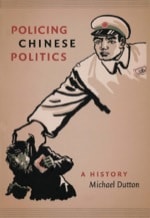
Policing Chinese Politics
A HistoryMichael Dutton
Duke University Press, 2005
The economic reform period that followed Mao Zedong’s rule contained a hint as to how the magic spell of political faith and commitment could be broken, but the cost of such disenchantment was considerable. This detailed, empirical tale of Chinese socialist policing is, therefore, more than simply a police story. It is a parable that offers a cogent analysis of Chinese politics generally while radically redrafting our understanding of what politics is all about. Breaking away from the traditional elite modes of political analysis that focus on personalities, factions, and betrayals, and from “rational” accounts of politics and government, Dutton provides a highly original understanding of the far-reaching consequences of acts of faith and commitment in the realm of politics.
Policing Contingencies
Peter K. Manning
University of Chicago Press, 2003
Manning begins by developing a model of policing as drama—a way of communicating various messages to the public in an effort to enforce moral boundaries. Unexpected outcomes, or contingencies, continually rewrite the plot of this drama, requiring officers to adjust accordingly. New information technologies, media scrutiny and representations, and community policing also play important roles, and Manning studies these influences in detail. He concludes that their impacts have been quite limited, because the basic structure of policing—officer assessments based on encounters during routine patrols—has remained unchanged. For policing to really change, Manning argues, its focus will need to shift to prevention.
Written with precision and judiciously argued, Policing Contingencies will be of value to scholars of sociology, criminology, information technology, and cultural theory.
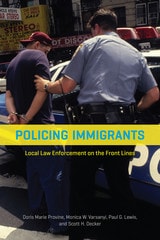
Policing Immigrants
Local Law Enforcement on the Front LinesDoris Marie Provine, Monica W. Varsanyi, Paul G. Lewis, and Scott H. Decker
University of Chicago Press, 2016
Policing Immigrants traces the transition of immigration enforcement from a traditionally federal power exercised primarily near the US borders to a patchwork system of local policing that extends throughout the country’s interior. Since federal authorities set local law enforcement to the task of bringing suspected illegal immigrants to the federal government’s attention, local responses have varied. While some localities have resisted the work, others have aggressively sought out unauthorized immigrants, often seeking to further their own objectives by putting their own stamp on immigration policing. Tellingly, how a community responds can best be predicted not by conditions like crime rates or the state of the local economy but rather by the level of conservatism among local voters. What has resulted, the authors argue, is a system that is neither just nor effective—one that threatens the core crime-fighting mission of policing by promoting racial profiling, creating fear in immigrant communities, and undermining the critical community-based function of local policing.
Policing Protest
The Control of Mass Demonstrations in Western DemocraciesDonatella della Porta Della Porta
University of Minnesota Press, 1998
The first international examination of how police respond to political protests.
The way in which police handle political demonstrations is always potentially controversial. In contemporary democracies, police departments have two different, often conflicting aims: keeping the peace and defending citizens’ right to protest. This collection, the only resource to examine police interventions cross-nationally, analyzes a wide array of policing styles. The contributors look at cultures and political power to examine the methods, the trends and cycles, and the consequences of policing protest.
Focusing on Italy, France, Germany, Great Britain, Switzerland, Spain, the United States, and South Africa, the contributors explore the various police strategies of coercion, negotiation, and information surveillance. They discuss protest policing in relation to specific countries’ governments and consider public opinion, media, and the police’s perception of reality to illustrate the reciprocal ways in which police and protest are defined. Moreover, this volume considers the profound changes from the forceful 1960s to a “softer” 1990s, including the consequences of this move.Comparative and innovative, Policing Protest highlights the crucial influences of demonstration interventions and lends greater understanding to the study of social movements and their relationship to the state. Contributors: Rocco De Biasi, U of Genoa; Olivier Fillieule, Institute of Political Science, Paris; Oscar Jaime-Jiménez, Universidad Nacional de Educación a Distancia, Madrid; Fabien Jobard, U of Rouen, France; Hanspeter Kriesi, U of Geneva; Gary T. Marx, Massachusetts Institute of Technology and U of Colorado, Boulder; John McCarthy, Catholic U of America; Clark McPhail, U of Illinois; Fernando Reinares, Universidad Nacional de Educación a Distancia, Madrid; Robert Reiner, London School of Economics; David Schweingruber; P. A. J. Waddington, U of Reading, UK; Martin Winter, U of Halle, Germany; Dominique Wisler, U of Geneva.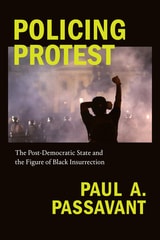
Policing Protest
The Post-Democratic State and the Figure of Black InsurrectionPaul A. Passavant
Duke University Press, 2021
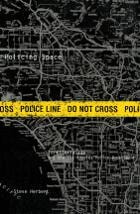
Policing Space
Territoriality and the Los Angeles Police DepartmentSteve Herbert
University of Minnesota Press, 1996
Policing Space is a fascinating firsthand account of how the Los Angeles Police Department attempts to control its vast, heterogeneous territory. As such, the book offers a rare, ground-level look at the relationship between the control of space and the exercise of power.
Author Steve Herbert spent eight months observing one patrol division of the LAPD on the job. A compelling story in itself, his fieldwork with the officers in the Wilshire Division affords readers a close view of the complex factors at play in how the police define and control territory, how they make and mark space. A remarkable ethnography of a powerful police department, underscored throughout with telling on-the-scene vignettes, this book is also an unusually intensive analysis of the exercise of territorial power-and of territoriality as a key component of police power. Unique in its application of fieldwork and theory to this complex subject, it should prove valuable to readers in urban and political geography, urban and political sociology, and criminology, as well as those who wonder about the workings of the LAPD.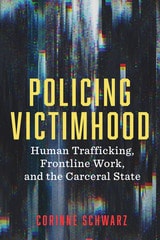
Policing Victimhood
Human Trafficking, Frontline Work, and the Carceral StateCorinne Schwarz
Rutgers University Press, 2023
In Policing Victimhood, Corinne Schwarz interviewed with service providers in the Midwestern US, a region that, though colloquially understood as “flyover country,” regularly positions itself as a leader in state-level anti-trafficking policies and collaborative networks. These frontline workers’ perceptions and narratives are informed by their interpersonal, day-to-day encounters with exploited or trafficked persons. Their insights underscore how anti-trafficking policies are put into practice and influenced by specific ideologies and stereotypes. Extending the reach of street-level bureaucracy theory to anti-trafficking initiatives, Schwarz demonstrates how frontline workers are uniquely positioned to perpetuate or radically counter punitive anti-trafficking efforts.
Taking a cue from anti-carceral feminist critiques and critical trafficking studies, Schwarz argues that ongoing anti-trafficking efforts in the US expand the punitive arm of the state without addressing the role of systemic oppression in perpetuating violence. The violence inherent to the carceral state—and required for its continued expansion—is the same violence that perpetuates the exploitation of human trafficking. In order to solve the “problem” of human trafficking, advocates, activists, and scholars must divest from systems that center punishment and radically reinvest their efforts in dismantling the structural violence that perpetuates social exclusion and vulnerability, what she calls the “-isms” and “-phobias” that harm some at the expense of others’ empowerment. Policing Victimhood encourages readers to imagine a world without carceral violence in any of its forms.
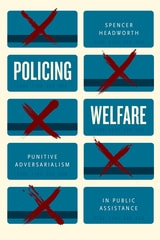
Policing Welfare
Punitive Adversarialism in Public AssistanceSpencer Headworth
University of Chicago Press, 2021

Policing in Natural Disasters
Stress, Resilience, and the Challenges of Emergency ManagementTerri M. Adams and Leigh R. Anderson
Temple University Press, 2019
When natural disasters and emergencies strike, the short- and long-term effects of these events on first responders—the very people society relies upon in the midst of a catastrophe—are often overlooked. Policing in Natural Disasters provides a comprehensive analysis of the major challenges faced by law enforcement officers during extreme crisis events. Terri Adams and Leigh Anderson examine the dilemmas police departments face as well as the impact of the disasters on the professional and personal lives of the officers. Case studies explore the response and recovery phases of emergencies including Hurricane Katrina, the 2010 earthquake and subsequent tsunami in Santiago, Chile, and the Superstorm Tornado Outbreak in 2011.
Policing in Natural Disasters was inspired by the personal accounts of triumph and tragedy shared by first responders. It provides an understanding of first-responder behaviors during disasters, as well as the preparedness, mitigation, response and recovery policy implications for first responders and emergency managers. As first responders must frequently cope with stress, uncertainty, and threats to their health and safety during high-consequence events, Adams and Anderson provide lessons from first-hand experiences of police officers that can lead to better management in times of crisis.
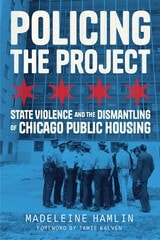
Policing the Project
State Violence and the Dismantling of Chicago Public HousingMadeleine Hamlin
University of Chicago Press, 2027
Shows how policing shaped the trajectory of public housing in Chicago and paved the way for its eradication and privatization.
Public housing should be a great public good, providing an essential basic need for people with lower incomes. Unfortunately, in the United States, policymakers turned their backs on public housing early on. Intended to be a utopia for the working poor, public housing in many cities became characterized by racial isolation, extreme poverty, and infrastructural breakdown, all of which left residents vulnerable to crime. State abandonment had one major exception, however: policing. In Policing the Project, geographer Madeleine Hamlin details how police played an important role in Chicago’s public housing from its origins in 1937 to the eve of its demolition at the turn of the millennium.
Based on archival data as well as extensive interviews with former residents and police officers, Hamlin describes the progressive institutional entanglement of public housing and policing as it unfurled over the course of the twentieth century. Policing the Project transcends mere description of how policing impacted everyday life for public housing residents, instead considering how policing shaped the institution of public housing as a whole. Hamlin argues that policing conditioned public housing’s downfall: draining housing budgets while exacerbating rather than mitigating crime and violence. Thus, policing played an important role in shaping the dramatic transformation of Chicago’s housing landscape, which entailed widespread privatization and the displacement of tens of thousands of Black Chicagoans.
Policy & Politics Japan
T. Pempel
Temple University Press, 1982
Policy Challenges in Modern Health Care
Edited by David Mechanic, Lynn B. Rogut, David Colby, and James R. Knickman
Rutgers University Press, 2005
Health care delivery in the United States is an enormously complex enterprise, and its $1.6 trillion annual expenditures involve a host of competing interests. While arguably the nation offers among the most technologically advanced medical care in the world, the American system consistently under performs relative to its resources. Gaps in financing and service delivery pose major barriers to improving health, reducing disparities, achieving universal insurance coverage, enhancing quality, controlling costs, and meeting the needs of patients and families.
Bringing together twenty-five of the nation’s leading experts in health care policy and public health, this book provides a much-needed perspective on how our health care system evolved, why we face the challenges that we do, and why reform is so difficult to achieve. The essays tackle tough issues including: socioeconomic disadvantage, tobacco, obesity, gun violence, insurance gaps, the rationing of services, the power of special interests, medical errors, and the nursing shortage.
Linking the nation’s health problems to larger political, cultural, and philosophical contexts, Policy Challenges in Modern Health Care offers a compelling look at where we stand and where we need to be headed.
Policy Debates as Dynamic Networks
German Pension Politics and Privatization DiscoursePhilip Leifeld
Campus Verlag, 2016
Policy Debates on Reprogenetics
The Problematisation of New Research in Great Britain and GermanySvea Luise Herrmann
Campus Verlag, 2009
Policy Debates on Reprogenetics takes an in-depth look at recent public policy debates over stem cell research and therapeutic cloning in Great Britain and Germany in order to determine the effect of such debates on the progress of scientific knowledge. Svea Luise Herrmann argues that debates about government policy do not tend to lead to more societal and political control over scientific research; rather, the discussions, when framed as questions of ethics, allow societies to air anxieties without retarding or challenging scientific progress. As our understanding of genetics continues to grow, this volume will be a useful resource for scientists and policy makers alike.
Policy Dynamics
Edited by Frank R. Baumgartner and Bryan D. Jones
University of Chicago Press, 2002
To investigate these questions, Policy Dynamics draws on the most extensive data set yet compiled for public policy issues in the United States. Spanning the past half-century, these data make it possible to trace policies and legislation, public and media attention to them, and governmental decisions over time and across institutions. Some chapters analyze particular policy areas, such as health care, national security, and immigration, while others focus on institutional questions such as congressional procedures and agendas and the differing responses by Congress and the Supreme Court to new issues.
Policy Dynamics presents a radical vision of how the federal government evolves in response to new challenges-and the research tools that others may use to critique or extend that vision.