Results by title
4127 books match the query 'Science' and 223 start with p
Possibilities for Over One Hundredfold More Spiritual Information
The Humble Approach in Theology and ScienceSir John Templeton
Templeton Press, 2000

Post-Specimen Encounters Between Art, Science and Curating
Rethinking Art Practice and Objecthood through Scientific Collections.Edited by Edward Juler and Alistair Robinson
Intellect Books, 2020
Post-Specimen Encounters in Art, Science and Curating examines the ways in which scientific objects held within museums and other collections act as inspiration to contemporary art practices, curating strategies, and their histories. With cross-disciplinary contributions from art historians, artists, poets, anthropologists, critics, and curators, this volume looks at how artistic encounters in museums, ranging from anatomy museums to contemporary cabinets of curiosity, can provoke new modes of thinking.
In particular, this volume draws upon the concept of the specimen—a paradigmatic object in science—as a way of critically investigating these hybrid art–science practices and a means of innovating the practice of art writing itself. Edward Juler and Alistair Robinson bring together a variety of interdisciplinary perspectives from leading specialists in the visual arts that inspire new understandings of the relationships between art, science, and curating.
Postcolonial Air and Atmospheres
Elemental life and environmental crisisEdited by Sarah Nuttall and Isabel Hofmeyr
University College London, 2026
Postgenomics
Perspectives on Biology after the GenomeSarah S. Richardson and Hallam Stevens, editors
Duke University Press, 2015
Contributors. Russ Altman, Rachel A. Ankeny, Catherine Bliss, John Dupré, Michael Fortun, Evelyn Fox Keller, Sabina Leonelli, Adrian Mackenzie, Margot Moinester, Aaron Panofsky, Sarah S. Richardson, Sara Shostak, Hallam Stevens

Poultry Science, Chicken Culture
A Partial AlphabetSquier, Susan M
Rutgers University Press, 2010
Spanning fascinating and diverse fields, Susan Merrill Squier assesses the chicken as the focus of film, photography, and visual art in many media; details some of the roles played by chickens and eggs in the development of embryology, biology, and regenerative medicine; traces the iconic figure of the chicken (and the chicken thief) in political discourse during the 2008 presidential election; demonstrates the types of knowledge that have been lost as food production moved from small-scale farming to industrial agriculture; investigates the connection between women and chickens; analyzes the fears and risks behind the panic around avian flu; and scrutinizes the role of chicken farming in international development. A combination of personal passion and surprising scholarly information, Poultry Science, Chicken Culture will change forever the way you think about chickens.
Power Shift
Keywords for a New Politics of EnergyImre Szeman
West Virginia University Press, 2025
Featuring brief essays on 101 key terms by scholars, artists, and activists from around the world and across disciplines, Power Shift offers an expansive, kaleidoscopic guide to the history of petromodernity, recent technological and social developments, and pathways to new energy futures. The book offers new insights into the emergent politics of energy, contrasting today’s environmental and climate movements with the geopolitical contests of the Cold War era. It explores the still unfolding story of energy transition by focusing on the ongoing struggles of communities and individuals against decisions made by corporations, governments, and international organizations.
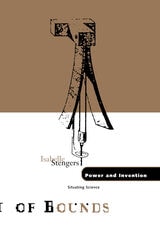
Power and Invention
Situating ScienceIsabelle Stengers
University of Minnesota Press, 1997
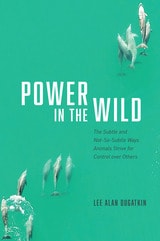
Power in the Wild
The Subtle and Not-So-Subtle Ways Animals Strive for Control over OthersLee Alan Dugatkin
University of Chicago Press, 2022
The quest for power in animals is so much richer, so much more nuanced than who wins what knock-down, drag-out fight. Indeed, power struggles among animals often look more like an opera than a boxing match. Tracing the path to power for over thirty different species on six continents, writer and behavioral ecologist Lee Alan Dugatkin takes us on a journey around the globe, shepherded by leading researchers who have discovered that in everything from hyenas to dolphins, bonobos to field mice, cichlid fish to cuttlefish, copperhead snakes to ravens, and meerkats to mongooses, power revolves around spying, deception, manipulation, forming and breaking up alliances, complex assessments of potential opponents, building social networks, and more. Power pervades every aspect of the social life of animals: what they eat, where they eat, where they live, whom they mate with, how many offspring they produce, whom they join forces with, and whom they work to depose. In some species, power can even change an animal’s sex. Nor are humans invulnerable to this magnificently intricate melodrama: Dugatkin’s tales of the researchers studying power in animals are full of unexpected pitfalls, twists and turns, serendipity, and the pure joy of scientific discovery.
Power of Material - Politics of Materiality
Edited by Susanne Witzgall and Kerstin Stakemeier
Diaphanes, 2014
In the last years a new focus on material phenomena has become increasingly oberservable in the arts and sciences. Most diverse disciplines are stressing the momentum and the agency of matter, material and things and underline their status as agents within the web of relationships of culture and nature. The book "Power of Material / Politics of Materiality“ deepens this current discourse and for the time brings materialist tendencies within the arts, design and architecture into a direct dialogue with a range of scientific approaches from a "New Materialism“ within the humanities and social sciences.
This publication is the result of the first year of program at the newly established cx centre for interdisciplinary studies at the Academy of Fine Arts Munich.

Practical Botany for Gardeners
Over 3,000 Botanical Terms Explained and ExploredGeoff Hodge
University of Chicago Press, 2013
Practical Botany for Gardeners provides an elegant and accessible introduction to the world of botany. It presents the essentials that every gardener needs to know, connecting explanations of scientific facts with useful gardening tips. Flip to the roots section and you’ll not only learn how different types of roots support a plant but also find that adding fungi to soil aids growth. The pruning section both defines “lateral buds” and explains how far back on a shoot to cut in order to propagate them.
The book breaks down key areas and terminology with easy-to-navigate chapters arranged by theme, such as plant types, plant parts, inner workings, and external factors. “Great Botanists” and “Botany in Action” boxes delve deeper into the fascinating byways of plant science. This multifaceted book also includes two hundred botanical illustrations and basic diagrams that hearken to the classic roots of botany.
Part handbook, part reference, Practical Botany for Gardeners is a beautifully captivating read. It’s a must for garden lovers and backyard botanists who want to grow and nurture their own plant knowledge.

Practical Healthcare Epidemiology
Third EditionEdited by Ebbing Lautenbach, Keith F. Woeltje, and Preeti N. Malani
University of Chicago Press, 2010
In recent years, issues of infection prevention and control, patient safety, and quality-of-care have become increasingly prominent in healthcare facilities. Practical Healthcare Epidemiology takes a practical, hands-on approach to these issues, addressing all aspects of infection surveillance and prevention in clear, straightforward terms. This fully revised third edition brings together the expertise of more than fifty leaders in healthcare epidemiology who provide clear, sound guidance on infection prevention and control for the full range of patients in all types of healthcare facilities, including those in settings with limited resources. A powerful resource for practitioners in any branch of medicine or public health who are involved in infection prevention and control, whether they are experienced in healthcare epidemiology or new to the field.
“A handy desk reference and an up-to-date primer for trainees and experts alike” —The Journal of the American Medical Association
“An essential for anyone in the field.”—Thomas R. Talbot, Chief Hospital Epidemiologist, Vanderbilt University Medical Center

Practical Mystic
Religion, Science, and A. S. EddingtonMatthew Stanley
University of Chicago Press, 2007
Eddington was a world-class scientist who not only maintained his religious belief throughout his scientific career but also defended the interrelation of science and religion while drawing inspiration from both for his practices. For instance, at a time when a strict adherence to deductive principles of physics had proved fruitless for understanding the nature of stars, insights from Quaker mysticism led Eddington to argue that an outlook less concerned with certainty and more concerned with further exploration was necessary to overcome the obstacles of incomplete and uncertain knowledge.
By examining this intersection between liberal religion and astrophysics, Practical Mystic questions many common assumptions about the relationship between science and spirituality. Matthew Stanley’s analysis of Eddington’s personal convictions also reveals much about the practice, production, and dissemination of scientific knowledge at the beginning of the twentieth century.
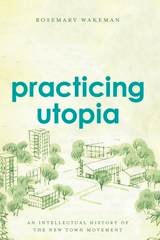
Practicing Utopia
An Intellectual History of the New Town MovementRosemary Wakeman
University of Chicago Press, 2016
In Practicing Utopia, Rosemary Wakeman gives us a sweeping view of the new town movement as a global phenomenon. From Tapiola in Finland to Islamabad in Pakistan, Cergy-Pontoise in France to Irvine in California, Wakeman unspools a masterly account of the golden age of new towns, exploring their utopian qualities and investigating what these towns can tell us about contemporary modernization and urban planning. She presents the new town movement as something truly global, defying a Cold War East-West dichotomy or the north-south polarization of rich and poor countries. Wherever these new towns were located, whatever their size, whether famous or forgotten, they shared a utopian lineage and conception that, in each case, reveals how residents and planners imagined their ideal urban future.
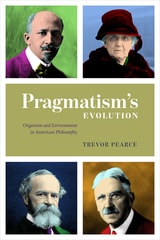
Pragmatism's Evolution
Organism and Environment in American PhilosophyTrevor Pearce
University of Chicago Press, 2020
Although the various thinkers associated with pragmatism—from Charles Sanders Peirce to Jane Addams and beyond—were towering figures in American intellectual life, few realize the full extent of their engagement with the life sciences. In his analysis, Pearce focuses on a series of debates in biology from 1860 to 1910—from the instincts of honeybees to the inheritance of acquired characteristics—in which the pragmatists were active participants. If we want to understand the pragmatists and their influence, Pearce argues, we need to understand the relationship between pragmatism and biology.

Prairies Forests And Wetlands
Natural Landscape CommunitiesJanette R. Thompson
University of Iowa Press, 1992
Before Euro-American settlement, graceful prairies and prairie-wetland complexes dominated Iowa's rolling landscape, with forest communities hugging rivers and streams and savannas or forests covering the southern and eastern portions of the state. During the last 150 years these original natural communities have nearly been eliminated by conversion of over 95 percent of the land to agricultural and urban uses.
This timely, practical book combines a nontechnical natural history of each native community with a how-to manual for lay restorationists dedicated to reconstructing prairies, forests, and wetlands. Thompson intelligently presents the collective experience of professionals active in restoring the splendid natural areas of Iowa and the greater Midwest—discussing site selection, site preparation, plant species, planting techniques, costs, and maintenance of restoration areas. She includes a useful list of sources for plant materials in and near Iowa as well as information on the birds and mammals, reptiles and amphibians of these landscapes. Prairies, Forests, and Wetlands will help individual landowners, farmers, landscape architects, D.O.T. engineers, teachers, botanists, county conservation boards, and wildlife area managers in their private and professional campaigns to reclaim Iowa's land.
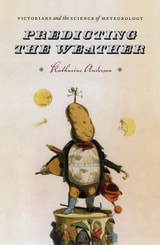
Predicting the Weather
Victorians and the Science of MeteorologyKatharine Anderson
University of Chicago Press, 2005
Studying meteorology as a means to examine the historical identity of prediction, Katharine Anderson offers here an engrossing account of forecasting that analyzes scientific practice and ideas about evidence, the organization of science in public life, and the articulation of scientific values in Victorian culture. In Predicting the Weather, Anderson grapples with fundamental questions about the function, intelligibility, and boundaries of scientific work while exposing the public expectations that shaped the practice of science during this period.
A cogent analysis of the remarkable history of weather forecasting in Victorian Britain, Predicting the Weather will be essential reading for scholars interested in the public dimensions of science.
Preliminary Discourse to the Encyclopedia of Diderot
Jean Le Rond d'Alembert
University of Chicago Press, 1995
Preliminary List of the Compositae in Northeastern Brazil
D. J. Nicholas Hind and Elaine B. Miranda
Royal Botanic Gardens, Kew, 2000
Preliminary List of the Cyperaceae in Northeastern Brazil
A. C. Araujo, E. César, and D. Simpson
Royal Botanic Gardens, Kew, 2000

Preliminary List of the Leguminosae in Northeastern Brazil
Edgley A. César, Fabricio S. Juchum, and Gwilym Lewis
Royal Botanic Gardens, Kew, 2006
For the purposes of this checklist, the second in the series, 9,066 specimens were examined and 869 species are recorded in 135 genera.

Prepared
The Environmental Politics of the End of the WorldAllison Ford
University of Chicago Press, 0
Shares deep insights into the world of “prepping” and reveals how prepping functions as an environmental practice expressed through right-wing ideology.
Sensationalized in TV shows like Doomsday Preppers, ordinary people who prepare for the end of the world are a subject of fascination. While beginners might keep a few days’ worth of food and water on hand in case of a weather emergency, others truly push themselves to acquire the materials, skills, and knowledge they would need to survive complete societal collapse. Though we might think of them as on the fringe, some estimate that there are as many as 20 million preppers worldwide.
Sociologist Allison Ford’s Prepared: The Environmental Politics of the End of the World shares a behind-the-scenes look at preppers. Ford’s ethnography finds that prepping is a response to environmental risk that originates in right-wing political ideology. Instead of turning to collective action to find a solution, however, preppers approach emergency preparedness as an individual responsibility. Preparedness reasserts and confirms preppers’ self-identification as people who protect their families and maintain self-control, without depending upon others. She argues that preppers adopt the strategies that they do because they are culturally attached to their worldviews, specifically their commitments to liberalism and its unspoken gendered, racial, and class hierarchies, which are being challenged by the failures of modernity that preppers observe. Ultimately, Prepared gives critical insight into how people who do not necessarily identify as environmentalists respond to and deal with environmental risk.
Preprints
Their Evolving Role in Science CommunicationIratxe Puebla
Against the Grain, LLC, 2022
Presidential Management of Science and Technology
The Johnson PresidencyBy W. Henry Lambright
University of Texas Press, 1985
How do science and technology issues become important to a particular presidency? Which issues gain priority? How? Why? What is the role of the presidency in the adoption of national policies affecting science and technology? In their implementation? How does the presidency try to curtail certain programs? Eliminate others? Or rescue programs Congress might seek to terminate? How does implementation vary between a president's own program and one that is inherited?
Such are the questions raised in this book, one of the first to address the relationship between scientists, few of whom have political backgrounds, and presidents, few of whom are knowledgeable in matters of science and technology. Drawing on extensive research performed at the Lyndon B. Johnson Library in Austin, Texas, and the National Archives in Washington, as well as on secondary sources and interviews, W. Henry Lambright describes, discusses, and analyzes this relationship and shows how one presidency set its agenda, adopted, implemented, and curtailed or eliminated science and technology programs.
Twenty-four case studies of specific decision processes occurring in the era of Lyndon Johnson anchor the book in the world of real events. Some programs adopted under Johnson are now all but forgotten, such as the Manned Orbiting Laboratory, nuclear desalting, and electronic barrier. The effects of many more, initiated, maintained, or enlarged under LBJ, lasted far beyond his administration. These include environmental pollution control, Project Apollo, and the application of Agent Orange in Vietnam. Finally, there are those that were redirected, placed on hold, or terminated under Johnson, such as the supersonic transport, antiballistic missile, and Project Mohole.
In this important book, Lambright has provided a framework for analyzing how the presidency as an institution deals with such issues, and he has established a strong foundation on which all future students of presidential policy management can build.
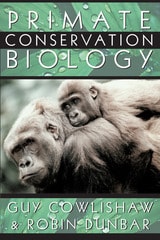
Primate Conservation Biology
Guy Cowlishaw and Robin I. M. Dunbar
University of Chicago Press, 2000
Primate Conservation Biology begins with detailed overviews of the diversity, life history, ecology, and behavior of primates and the ways these factors influence primate abundance and distribution. Cowlishaw and Dunbar then discuss the factors that put primates at the greatest risk of extinction, especially habitat disturbance and hunting. The remaining chapters present a comprehensive review of conservation strategies and management practices, highlighting the key issues that must be addressed to protect primates for the future.
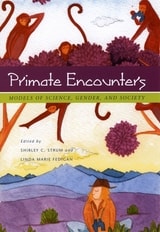
Primate Encounters
Models of Science, Gender, and SocietyEdited by Shirley C. Strum and Linda Marie Fedigan
University of Chicago Press, 2000
"[A] fascinating study . . . on how and why ideas about primate society have changed. The volume consists of dialogues among scientists from different disciplines, national traditions, scientific culture, generations, standpoints, and genders. . . . A wonderful reflection on the discipline of primatology and on science in general."—Science Books and Films
"Primate Encounters should be required reading for anyone about to embark on a career in the field. But it equally valuable for its miscellany of opinions, recollections and off-the-cuff remarks, as well as for its thoughtful observations, 'outrageous ravings' and humour (from the elders in the field). It gives us a glimpse of how scientists work together to understand their place in the world."—Deborah L. Mazolillo, Times Literary Supplement

Primate Life Histories and Socioecology
Edited by Peter M. Kappeler and Michael E. Pereira
University of Chicago Press, 2003
Exploring these issues and many others, the contributors to Primate Life Histories and Socioecology provide the first systematic attempt to understand relationships among primate life histories, ecology, and social behavior conjointly. Topics covered include how primate life histories interact with rates of evolution, predator pressure, and diverse social structures; how the slow maturation of primates affects the behavior of both young and adult caregivers; and reciprocal relationships between large brains and increased social and behavioral complexity. The first collection of its kind, this book will interest a wide range of researchers, from anthropologists and evolutionary biologists to psychologists and ecologists.
Contributors:
Paul-Michael Agapow, Susan C. Alberts, Jeanne Altmann, Robert A. Barton, Nicholas G. Blurton Jones, Robert O. Deaner, Robin I. M. Dunbar, Jörg U. Ganzhorn, Laurie R. Godfrey, Kristen Hawkes, Nick J. B. Isaac, Charles H. Janson, Kate E. Jones, William L. Jungers, Peter M. Kappeler, Susanne Klaus, Phyllis C. Lee, Steven R. Leigh, Robert D. Martin, James F. O'Connell, Sylvia Ortmann, Michael E. Pereira, Andy Purvis, Caroline Ross, Karen E. Samonds, Jutta Schmid, Stephen C. Stearns, Michael R. Sutherland, Carel P. van Schaik, and Andrea J. Webster.

Primate Paradigms
Sex Roles and Social BondsLinda Marie Fedigan
University of Chicago Press, 1992
"A book that properly illuminates in rich detail not only developmental and socioecological aspects of primate behavior but also how and why certain questions are asked. In addition, the book frequently focuses on insufficiently answered questions, especially those concerned with the evolution of primate sex differences. Fedigan's book is unique . . . because it places primate adaptations and our explanation of those patterns in a larger intellectual framework that is easily and appropriately connected to many lines of research in different fields (sociology, psychology, anthropology, neurobiology, endocrinology, and biology)—and not in inconsequential ways, either."—James McKenna, American Journal of Primatology
"This is the feminist critique of theories of primate and human evolution."—John H. Cook, Nature
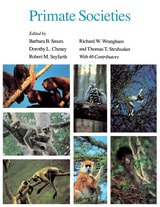
Primate Societies
Edited by Barbara B. Smuts, Dorothy L. Cheney, Robert M. Seyfarth, Richard W. Wr
University of Chicago Press, 1986
information on primate socioecology and its theoretical and
empirical significance, spanning the disciplines of behavioral
biology, ecology, anthropology, and psychology. It is a very rich
source of ideas about other taxa.
"A superb synthesis of knowledge about the social lives of
non-human primates."—Alan Dixson, Nature

Primitive Classification
Emile Durkheim and Marcel Mauss
University of Chicago Press, 1967
"[Primitive Classification] will impress the reader with its quiet elegance, its direct, logical form, its clarity of style, its spirit of careful, yet bold, exploration."—Harry Alpert, American Journal of Sociology
"Particularly instructive for anyone who wonders what social anthropology is: how, if at all, it differs from sociology and whether it has any unifying theoretical problem."—F. K. Lehman, American Sociological Review
Principles of Animal Behavior, 4th Edition
Lee Alan Dugatkin
University of Chicago Press, 2020
As Principles of Animal Behavior makes clear, the tapestry of animal behavior is created from weaving all of these components into a beautiful whole. With Dugatkin’s exquisitely illustrated, comprehensive, and up-to-date fourth edition, we are able to admire that beauty anew.
Principles of Animal Behavior, 5th Edition
Lee Alan Dugatkin
University of Chicago Press, 2025
So much has happened in the field of animal behavior since the last edition of this definitive textbook was published in 2020. In this fifth edition, Lee Alan Dugatkin continues to draw on cutting-edge new research not only to update and expand on the studies presented but also to reinforce the previous editions’ focus on ultimate and proximate causation as well as the book’s unique emphasis on natural selection, learning, and cultural transmission in nonhuman animals. The result is an essential update to the leading textbook on animal behavior that explains underlying concepts accessibly and with scientific rigor.
Completely new features include:
- Anthropogenic Connection Boxes. Humans are changing the planet. We are clearing forests, polluting the oceans, irrigating deserts, poisoning the soils, and driving a dramatic increase in global temperatures. All of these changes alter both the habitats where animals live and the species themselves as they evolve in response to our impact on their surroundings. Students will dig deep into how anthropogenic evolution affects animal behavior.
- Social Network Connection Boxes. Researchers have discovered that social networks play a critical role in almost every aspect of animal life: what they eat, how they protect themselves, who they mate with, the dynamics of parent-offspring relations, aggression, navigation, communication, play, cooperation, culture, and more. Students will discover how social network studies enrich our understanding of the wondrous complexity of animal behavior.

Principles of Geology, Volume 1
Charles Lyell
University of Chicago Press, 1990
Martin J. S. Rudwick's new Introduction, summarizing the origins of the Principles, guides the reader through the structure of the entire three-volume first edition and considers the legacy of Lyell's great work.

Principles of Geology, Volume 2
Charles Lyell
University of Chicago Press, 1991

Principles of Geology, Volume 3
Charles Lyell
University of Chicago Press, 1991
Martin J. S. Rudwick has compiled a bibliography giving full references for the sources Lyell cites in all three volumes of the Principles.
Principles of Green Bioethics
Sustainability in Health CareCristina Richie
Michigan State University Press, 2019
Principles of Soundscape Ecology
Discovering Our Sonic WorldBryan C. Pijanowski
University of Chicago Press, 2024
What do the sounds of a chorus of tropical birds and frogs, a clap of thunder, and a cacophony of urban traffic have in common? They are all components of a soundscape, acoustic environments that have been identified by scientists as a combination of the biophony, geophony, and anthrophony, respectively, of all of Earth’s sound sources. As sound is a ubiquitous occurrence in nature, it is actively sensed by most animals and is an important way for them to understand how their environment is changing. For humans, environmental sound is a major factor in creating a psychological sense of place, and many forms of sonic expression by people embed knowledge and culture. In this book, soundscape ecology pioneer Bryan C. Pijanowski presents the definitive text for both students and practitioners who are seeking to engage with this thrilling new field. Principles of Soundscape Ecology clearly outlines soundscape ecology’s critical foundations, key concepts, methods, and applications. Fundamentals include concise and valuable descriptions of the physics of sound as well as a thorough elucidation of all sounds that occur on Earth. Pijanowski also presents a rich overview of the ecological, sociocultural, and technical theories that support this new science, illustrating the breadth of this amazingly transdisciplinary field. In methods, he describes the principles of data mining, signal processing, and mixed methods approaches used to study soundscapes in ecological, social, or socio-ecological contexts. The final section focuses on terrestrial, aquatic, urban, and music applications, demonstrating soundscape ecology’s utility in nearly all spaces.

Principles of Stellar Evolution and Nucleosynthesis
Donald D. Clayton
University of Chicago Press, 1984

Privacy and the Past
Research, Law, Archives, EthicsLawrence, Susan C
Rutgers University Press, 2016

Private Practices
Harry Stack Sullivan, the Science of Homosexuality, and American LiberalismWake, Naoko
Rutgers University Press, 2011
Private Practices examines the relationship between science, sexuality, gender, race, and culture in the making of modern America between 1920 and 1950, when contradictions among liberal intellectuals affected the rise of U.S. conservatism. Naoko Wake focuses on neo-Freudian, gay psychiatrist Harry Stack Sullivan, founder of the interpersonal theory of mental illness. She explores medical and social scientists' conflicted approach to homosexuality, particularly the views of scientists who themselves lived closeted lives.
Wake discovers that there was a gap--often dramatic, frequently subtle--between these scientists' "public" understanding of homosexuality (as a "disease") and their personal, private perception (which questioned such a stigmatizing view). This breach revealed a modern culture in which self-awareness and open-mindedness became traits of "mature" gender and sexual identities. Scientists considered individuals of society lacking these traits to be "immature," creating an unequal relationship between practitioners and their subjects. In assessing how these dynamics--the disparity between public and private views of homosexuality and the uneven relationship between scientists and their subjects--worked to shape each other, Private Practices highlights the limits of the scientific approach to subjectivity and illuminates its strange career--sexual subjectivity in particular--in modern U.S. culture.
Probing the Sky with Radio Waves
From Wireless Technology to the Development of Atmospheric ScienceChen-Pang Yeang
University of Chicago Press, 2013

Proceedings of the Third Midwestern Conference on Solid Mechanics
Held at the University of Michigan April 1 and 2, 1957The University of Michigan Press published for The Engineering Research Institute
University of Michigan Press, 1957
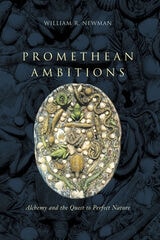
Promethean Ambitions
Alchemy and the Quest to Perfect NatureWilliam R. Newman
University of Chicago Press, 2004
In Promethean Ambitions, William R. Newman ambitiously uses alchemy to investigate the thinning boundary between the natural and the artificial. Focusing primarily on the period between 1200 and 1700, Newman examines the labors of pioneering alchemists and the impassioned—and often negative—responses to their efforts. By the thirteenth century, Newman argues, alchemy had become a benchmark for determining the abilities of both men and demons, representing the epitome of creative power in the natural world. Newman frames the art-nature debate by contrasting the supposed transmutational power of alchemy with the merely representational abilities of the pictorial and plastic arts—a dispute which found artists such as Leonardo da Vinci and Bernard Palissy attacking alchemy as an irreligious fraud. The later assertion by the Paracelsian school that one could make an artificial human being—the homunculus—led to further disparagement of alchemy, but as Newman shows, the immense power over nature promised by the field contributed directly to the technological apologetics of Francis Bacon and his followers. By the mid-seventeenth century, the famous "father of modern chemistry," Robert Boyle, was employing the arguments of medieval alchemists to support the identity of naturally occurring substances with those manufactured by "chymical" means.
In using history to highlight the art-nature debate, Newman here shows that alchemy was not an unformed and capricious precursor to chemistry; it was an art founded on coherent philosophical and empirical principles, with vocal supporters and even louder critics, that attracted individuals of first-rate intellect. The historical relationship that Newman charts between human creation and nature has innumerable implications today, and he ably links contemporary issues to alchemical debates on the natural versus the artificial.
Prometheus Bedeviled
Science and the Contradictions of Contemporary CultureLevitt, Norman
Rutgers University Press, 1999
In this lucid critique, Norman Levitt examines the strained relations between science and contemporary society. For the most part, Levitt states, we idolize musicians and cheer on athletes, yet we view scientists with a mixture of awe and unease. Significantly, too, we are unsure how scientific discovery actually fits into the broader schemes of politics, and policy. Even beyond pragmatic questions, we remain anxious about the implications of science for our basic understanding of human values and purpose.
One result of this uncertainty about scientific work is an ill-informed crusade to “democratize” science. It has become fashionable lately, Levitt states, for non-scientists to attempt to intervene in science policy, which often results in methodologically unsound decisions. The embrace of "alternative medicine" is a particularly ominous example.
Levitt suggests that science, by virtue of its accuracy and reliability, deserves to be at the top of the hierarchy of knowledge, and that our social institutions ought to take this fact strongly into account. Levitt hopes that Americans will become aware of the limitations of unchecked populism and will be willing to yield a bit of “democratic” control over certain questions in order to minimize the danger that sound science will be ignored or overridden. However, this trust in scientific methodology must be part of a broader understanding. Science must not only act responsibly toward our democratic institutions; it must also concede that our society has the right to decide what kinds of research are most consistent with larger goals and therefore deserve the most support.

Prometheus Reimagined
Technology, Environment, and Law in the Twenty-first CenturyAlbert C. Lin
University of Michigan Press, 2013
Technologies such as synthetic biology, nanotechnology, artificial intelligence, and geoengineering promise to address many of our most serious problems, yet they also bring environmental and health-related risks and uncertainties. Moreover, they can come to dominate global production systems and markets with very little public input or awareness. Existing governance institutions and processes do not adequately address the risks of new technologies, nor do they give much consideration to the concerns of persons affected by them.
Instead of treating technology, health, and the environment as discrete issues, Albert C. Lin argues that laws must acknowledge their fundamental relationship, anticipating both future technological developments and their potential adverse effects. Laws should encourage international cooperation and the development of common global standards, while allowing for flexibility and reassessment.
Pronghorn
Ecology & Mangemt: Ecology and ManagementBart W. O'Gara
University Press of Colorado, 2004
Full chapters are devoted to distribution, nutrition and food, diseases and parasites, ecosystem management, hunting, and much more. The principal authors—the world’s preeminent pronghorn biologists, Bart W. O’Gara and Jim D. Yoakum—conclude with a thorough discussion of the future of pronghorn and their management. With 23 chapters that include contributions by 10 other wildlife professionals and more than 850 illustrations, including original artwork by Edson Fichter and Daniel P. Metz, Pronghorn: Ecology and Management is the definitive work on the species.
A Wildlife Management Institute Book

Propagation, Scattering and Diffraction of Electromagnetic Waves
A.S. Ilyinski
The Institution of Engineering and Technology, 1993

Properties of Plastics
A Guide for ConservatorsThea B. van Oosten
J. Paul Getty Trust, The, 2022
Almost every museum in the world is confronted with plastics in their collections. Research initiatives and knowledge concerning the conservation of heritage objects made of plastics have proliferated over the last twenty-five years, necessitating this up-to-date, comprehensive resource. Intended as a highly practical guide for the conservation community, this authoritative book offers information essential to understanding plastics, polymers, and rubber/elastomers and their behaviors in the cultural heritage context. Numerous graphs, diagrams, and illustrations allow readers to compare the mechanical, physical, thermal, and optical properties of these substances during conservation. Aimed at the hands-on museum practitioner, this book will assist professionals in choosing the appropriate methods and materials for preserving and treating plastic objects.
Complementing the main chapters, fifty-six illustrated “fact sheets” summarize, at a glance, the properties of those plastics most commonly found in museum collections. Six informative case studies present real-world examples of current conservation approaches to works of art and design made of plastics and rubber/elastomers. Under the expert authorship of Thea B. van Oosten, conservation scientist, educator, and internationally regarded authority on the behavior and properties of plastics, this instructive volume is destined to become an invaluable resource for the field.
Prophets Facing Backward
Postmodern Critiques of Science and Hindu Nationalism in IndiaNanda, Meera
Rutgers University Press, 2003
The leading voices in science studies have argued that modern science reflects dominant social interests of Western society. Following this logic, postmodern scholars have urged postcolonial societies to develop their own “alternative sciences” as a step towards “mental decolonization”. These ideas have found a warm welcome among Hindu nationalists who came to power in India in the early 1990s. In this passionate and highly original study, Indian-born author Meera Nanda reveals how these well-meaning but ultimately misguided ideas are enabling Hindu ideologues to propagate religious myths in the guise of science and secularism.
At the heart of Hindu supremacist ideology, Nanda argues, lies a postmodernist assumption: that each society has its own norms of reasonableness, logic, rules of evidence, and conception of truth, and that there is no non-arbitrary, culture-independent way to choose among these alternatives. What is being celebrated as “difference” by postmodernists, however, has more often than not been the source of mental bondage and authoritarianism in non-Western cultures. The “Vedic sciences” currently endorsed in Indian schools, colleges, and the mass media promotes the same elements of orthodox Hinduism that have for centuries deprived the vast majority of Indian people of their full humanity.
By denouncing science and secularization, the left was unwittingly contributing to what Nanda calls “reactionary modernism.” In contrast, Nanda points to the Dalit, or untouchable, movement as a true example of an “alternative science” that has embraced reason and modern science to challenge traditional notions of hierarchy.

Prosthetic Immortalities
Biology, Transhumanism, and the Search for Indefinite LifeAdam R Rosenthal
University of Minnesota Press, 2024
Examining the links between today’s ideas of radical life extension and age-old notions of immortality
From Plato’s notion of generation to Derrida’s concept of survival to such modern phenomena as anti-aging treatments, cryogenics, cloning, and whole-brain uploads, Adam Rosenthal’s Prosthetic Immortalities shows how the dream of indefinite life has always been a technological one: a matter of prosthesis. He argues that every biological instance of perpetual life, from one-celled organisms to rejuvenating jellyfish to Henrietta Lacks’s “immortal” cancer cells, always results in the transformation of the original being. There can, therefore, be no certainty of immortality. Yet, because finite mortal life is already marked by difference, division, and change, as Rosenthal concludes: “the problem of immortality will not cease to haunt us.”
Prosthetic Immortalities examines the persistence of humans’ aspirations of deathlessness, showing that the link between immortalization and prostheticization is not unique to a single period but is, rather, a ubiquitous element of the discourse of immortality, encompassing both modern technoscientific efforts and religious discourses of an afterlife. Rosenthal asks to what extent the emergence of a virtual, posited, immortal presence follows from the tenets of empirical science—and not simply from the discourse of biology but also, and more radically still, from biological organization itself.
Rosenthal ultimately argues that the discovery of biological immortals—lifeforms that naturally have indefinitely long lifespans, such as cancer cells and bacteria—present novel conceptual difficulties for traditional philosophical approaches to mortality and selfhood, asking whether it is life itself that first births immortalizing prostheses.

Protection of Global Biodiversity
Converging StrategiesLakshman D. Guruswamy and Jeffrey A. McNeely, eds.
Duke University Press, 1998
Although the global community has recently adopted a Convention of Biological Diversity, the agreement sets forth only abstract goals. Contributors to this volume advance the Convention’s initial steps by providing workable solutions that can be implemented regionally, nationally, and locally. The contributors—including natural, social, and political scientists; economists; lawyers; and environmentalists; and decisionmakers in business, agriculture, and government—have united to create a common discourse and to evaluate and propose strategies for halting this alarming loss of biodiversity. In recognizing the diverse aspects of this task—scientific, economic, institutional, moral, and legal—this book presents a new picture of emerging action.
Contributors. S. James Anaya, Gregory Benford, Graciela Chichilnisky, S. Todd Crider, Yvonne Cripps, Robert T. Fraley, Anil K. Gupta, Lakshman D. Guruswamy, G. M. Heal, Brent Hendricks, Robert B. Horsch, Laura L. Jackson, Annie Lovejoy, Ariel E. Lugo, Jeffrey A. McNeely, Brian G. Norton, Elinor Ostrom, Peter H. Raven, John W. Reid, Walter V. Reid, Mark Sagoff, Roger A. Sedgo, R. David Simpson, Ana Sittenfeld, Christopher D. Stone, Gary H. Toenniessen