Results by title
8812 books match the query 'Political Science' and 592 start with p
Policy Politics Canada
Carolyn J. Tuohy
Temple University Press, 1992
At a time when Canadian political institutions are being fundamentally questioned, this book provides a comparative perspective on the distinctive features of the Canadian policy process hich have enabled conflict to be resolved in the past. In comparison with other Western industrial nations, Canada's policies in some arenas appear as models of workable compromise; in others, they stand out as marked by continuing irresolution. In this first book-length treatment of Canadian public policy in comparative perspective, Carolyn Tuohy focuses on constitutional change, health care delivery, industrial relations and labor market policy, economic development and adjustment, oil and gas policy, and minority language rights.
What distinguishes Canada's characteristic policy process is its quintessential ambivalence: ambivalence about the appropriate role of the state, about definitions of political community, and about individual and collective values and conceptions of rights. Embedded in the country's political institutions, it has deep roots in Canada's relationship to the United States, its history of English-French tensions, and its regional diversity.
Examining in particular the delicate federal-provincial division of power and the legislative-judicial relationship, Tuohy discusses how the constitutional debates of the 1980s and 1990s are testing Canada's institutions to resolve conflict.
In the series Policy and Politics in Industrial States, edited by Douglas E. Ashford, Peter J. Katzenstein, and T.J. Pempel.
Policy Responses to Tax Competition
Edited by David R. Agrawal, James M. Poterba, and Owen M. Zidar
University of Chicago Press, 2025
A critical examination of the effects of tax competition.
Policy Responses to Tax Competition provides an in-depth exploration of how jurisdictions design taxes on mobile economic factors. Tax competition between jurisdictions that seek to attract businesses and residents presents both opportunities and challenges. It can foster government efficiency and provide a counterweight to lobbying for increased spending, but it can also result in inefficiently low tax rates and revenue shortfalls as jurisdictions vie for tax bases. This volume examines the economic drivers and consequences of tax competition and presents empirical evidence on its effects.
Divided into three parts, the book first reviews existing research on the determinants and consequences of tax competition and related policy initiatives such as development incentives. The second section focuses on specific policies, such as the Kansas-Missouri noncompete pact and international measures like the OECD’s Base Erosion and Profit Shifting initiative, that are designed to limit tax competition. It also considers the economic responses to these policies, the distributional impact of competition-reducing policies, and potential strategic reactions of other governments. The final section presents case studies of the effects of various policies, including inter-municipal cooperation in France and corporate tax equalization in Switzerland.
Altogether, this volume provides new insights into the nature of inter-jurisdictional tax competition and the range of potential responses available to jurisdictions at various levels in federal systems.
Policy and Opinion in the Gulf War
John Mueller
University of Chicago Press, 1994
Mueller analyzes key issues: the actual shallowness of public support for war; the effect of public opinion on the media (rather than the other way around); the use and misuse of polls by policy makers; the American popular focus on Hussein's ouster as a central purpose of the War; and the War's short-lived impact on voting. Of particular interest is Mueller's conclusion that Bush succeeded in leading the country to war by increasingly convincing the public that it was inevitable, rather than right or wise.
Throughout, Mueller, author of War, Presidents, and Public Opinion, an analysis of public opinion during the Korean and Vietnam wars, places this analysis of the Gulf crisis in a broad political and military context, making comparisons to wars in Panama, Vietnam, Korea, and the Falklands, as well as to World War II and even the War of 1812. The book also collects nearly 300 tables charting public opinion through the Gulf crisis, making Policy and Opinion in the Gulf War an essential reference for anyone interested in recent American politics, foreign policy, public opinion, and survey research.
Policymaking for Realists
A Playbook for Policy Progress Despite Political DecayMatt Grossmann
University of Chicago Press, 0
How to make durable policy change in a seemingly broken system.
American politics is likely to remain a closely divided, highly polarized two-party system for the foreseeable future. Rather than pine for an impossible constitutional overhaul, Matt Grossmann lays out how we can still achieve policy wins despite the system’s many constraints. He offers a practical guide for governing when neither side can rely on sustaining power on their own. From the energy transition to building housing to criminal justice reform, the most durable changes in American life are not coming from noisy partisan revolutions. Rather, they are the fruit of bipartisan agreements and careful implementation, often occurring behind-the-scenes.
An astute observer of US politics, Grossmann is also at the forefront of translating academic research for broad audiences. In Policymaking for Realists, he draws on numerous examples across policy areas in state and federal government, as well as the newest research, to distill key lessons for policymakers, business and advocacy group leaders, activists, and concerned citizens. This book is essential reading for those interested in creating change within the country that we actually have.
Polish Cities of Migration
The Migration Transition in Kalisz, Pila and PlockAnne White
University College London, 2024
Polish Cities of Migration analyzes Poland’s transition to become a “country of immigration.” Incorporating in-depth interviews with thirty-seven Polish returned migrants, seventy Ukrainians, and seventeen foreigners living in Kalisz, Plock, and Pila, the book explores two interconnected puzzles: how Poland’s migration transition is influenced by its current status as an emigration country, and why migrants are spreading out beyond the metropolises. It argues that migrants’ feelings of comfort in such locations are explained by network and lifestyle considerations, as well as the social acceptance of migration by former migrant Poles.
Polish Liberal Thought Before 1918
Maciej Janowski
Central European University Press, 2004

Polish-American Politics in Chicago, 1880-1940
Edward R. Kantowicz
University of Chicago Press, 1975
Kantowicz examines such questions as why Chicago, with the largest Polish population of any city outside of Poland, has never elected a Polish mayor. The author also examines the origins of the heavily Democratic allegiance of Polish voters. Kantowicz demonstrates that Chicago Poles were voting Democratic long before Al Smith, Franklin Roosevelt, or the New Deal.
Kantowicz has made extensive use of registration lists and voting records to construct a statistical picture of Polish-American voting behavior in Chicago. He draws on church records and census records to provide a detailed description of Chicago's many Polish neighborhoods. He also has studied the city's Polish-language press as well as the few manuscript collections left by Polish-American politicians. These collections, together with data gleaned from interviews with individuals who were acquainted with these figures, are used to sketch profiles of the political leaders of Polonia's capital.
Kantowicz focuses on the goals which the Polish-American community pursued in politics, the issues they deemed important, and the functions which politics served for them. He links this analysis to observations on the homeland and the reasons for which the Poles emigrated. In this context he is able to draw conclusions about the nature of the ethnic politics in general. His work will appeal to a variety of readers: urban and twentieth-century historians, political scientists, and sociologists.
Politic Parties in the American Mold
Leon D. Epstein
University of Wisconsin Press, 1989

Political Action
Key To Understanding PoliticsDick Simpson
Ohio University Press, 1984
Politics and the study of politics are at a watershed. They are deficient because they fail to respond to fundamental crises in our society, fail to incorporate new knowledge from other fields of study, and fail to allow citizens to function as mature human beings shaping their own destiny. Political Action demonstrates the need for a new political science which, in turn, may lead to a new politics more adequate to the problems of this era.
Modern political science, as currently studied and practiced, is irrelevant for both public officials and citizens because it fails to focus on political action. Simpson and Beam provide a methodology for the study of political action and demonstrate how the study of political action using these methods provides a better understanding of politics and how these methods aid in identifying effective strategies for building a better America.
Without a new focus on political action, political science will remain sterile and without a more humane politics, citizens will remain misinformed, apathetic, and helpless. Political Action is controversial because it challenges the profession of political science. It provides a “paradigm shift” in the field which is important for allied social science disciplines as well. For political strategists, it provides the methodological tool of political action propositions which allow a careful calculation of the effects of alternative strategies.
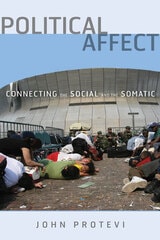
Political Affect
Connecting the Social and the SomaticJohn Protevi
University of Minnesota Press, 2010
For many philosophers, the rational cognitive (Cartesian) subject defines the human, or at least defines what humans should be. Yet some recent cognitive science, as well as the philosophy of Deleuze and Guattari, has called into question such individuality and rationality and emphasized social and emotional subjectivity. Understanding such embodied and embedded subjectivity, John Protevi argues, demands the notion of bodies politic.
In Political Affect, Protevi investigates the relationship between the social and the somatic: how our bodies, minds, and social settings are intricately and intimately linked. Bringing together concepts from science, philosophy, and politics, he develops a perspective he calls political physiology to indicate that subjectivity is socially conditioned and sometimes bypassed in favor of a direct connection of the social and the somatic, as with the politically triggered basic emotions of rage and panic. Protevi's treatment of affective cognition in social context breaks new theoretical ground, insisting that subjectivity be studied both in its embodied expression and in terms of the distribution of affective cognitive responses in a population.
Moving beyond the theoretical, Protevi applies his concept of political affect to show how unconscious emotional valuing shaped three recent, emotionally charged events: the cold rage of the Columbine High School slayings, the racialized panic that delayed rescue efforts in Hurricane Katrina, and the twists and turns of empathy occasioned by the Terry Schiavo case. These powerful individual and collective political events require new philosophical understanding.
Political Arithmetic
Simon Kuznets and the Empirical Tradition in EconomicsRobert William Fogel, Enid M. Fogel, Mark Guglielmo, and Nathaniel Grotte
University of Chicago Press, 2013
With Political Arithmetic, Nobel Prize–winning economist Robert Fogel and his collaborators tell the story of economist Simon Kuznets, the founding of the National Bureau of Economic Research, and the creation of the concept of GNP, which for the first time enabled us to measure the performance of entire economies. The book weaves together the many strands of political and economic thought and historical pressures that together created the demand for more detailed economic thinking—Progressive-era hopes for activist government, the production demands of World War I, Herbert Hoover’s interest in business cycles as President Harding’s commerce secretary, and the catastrophic economic failures of the Great Depression—and shows how, through trial and error, measurement and analysis, economists such as Kuznets rose to the occasion and in the process built a discipline whose knowledge could be put to practical use in everyday decision-making.
The product of a lifetime of studying the workings of economies and skillfully employing the tools of economics, Political Arithmetic is simultaneously a history of a key period of economic thought and a testament to the power of applied ideas.
Political Aspects of Social Indicators
Implications for ResearchPeter J. Henriot
Russell Sage Foundation, 1972
Political Attitudes in Venezuela
Societal Cleavages and Political OpinionBy Enrique A. Baloyra and John D. Martz
University of Texas Press, 1979
Here is a benchmark study of voter attitudes in a Latin American country. This volume is based on extensive survey research conducted during the Venezuelan elections of 1973. The methods employed by Baloyra and Martz to poll an "unpollable" society successfully challenge previously established paradigms.
The authors interviewed a representative sample of over 1,500 voters to determine relationships between class, status, community, context, religion, ideology, and partisanship on the one hand and political attitudes and preferences on the other. They found that the Venezuelan electorate is defined by a series of contradictory tendencies, and they place their conclusions in the context of contemporary political science literature regarding class and party, ideology and party, and inequality and participation.
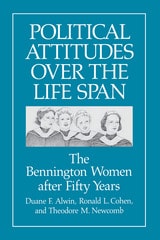
Political Attitudes over the Life Span
The Bennington Women after Fifty YearsDuane F. Alwin
University of Wisconsin Press, 1992
The culmination of one of the most famous long-term studies in American sociology, this examination of political attitudes among women who attended Bennington College in the 1930s and 1940s now spans five decades, from late adolescence to old age. Theodore Newcomb’s 1930s interviews at Bennington, where the faculty held progressive views that contrasted with those of the conservative families of the students, showed that political orientations are still quite malleable in early adulthood. The studies in 1959-60 and 1984 show the persistence of political attitudes over the adult life span: the Bennington women, raised in conservative homes, were liberalized in their college years and have remained politically involved and liberal in their views, even in their sixties and seventies.
Here the authors analyze the earlier studies and then introduce the 1984 data. Using data from National Election Studies for comparison, they show that the Bennington group is more liberal and hold its opinions more intensely than both older and younger Americans, with the exception of the generation that achieved political maturity in the 1960s. The authors point out that the majority of the Bennington women’s children are of this 1945–54 generation and suggest that this factor played an important role in the stability of the women’s political views. Within their own generation, the Bennington women also appear to hold stronger political views than other college-educated women.
Innovative in its methodology and extremely rich in its data, this work will contribute to developmental and social psychology, sociology, political science, women’s studies, and gerontology.
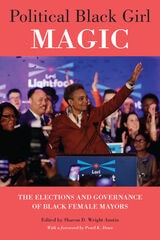
Political Black Girl Magic
The Elections and Governance of Black Female MayorsEdited by Sharon D. Wright Austin
Temple University Press, 2023
Case studies in this interdisciplinary volume include female mayors in Atlanta, Baltimore, Charlotte, Chicago, Compton, and Washington, DC, among other cities, along with discussion of each official’s political context. Covering mayors from the 1960s to the present, Political Black Girl Magic identifies the most significant obstacles black women have faced as mayors and mayoral candidates, and seeks to understand how race, gender, or the combination of both affected them.
Contributors: Andrea Benjamin, Nadia E. Brown, Pearl K. Dowe, Christina Greer, Precious Hall, Valerie C. Johnson, Yolanda Jones, Lauren King, Angela K. Lewis-Maddox, Minion K.C. Morrison, Marcella Mulholland, Stephanie A. Pink-Harper, Kelly Briana Richardson, Emmitt Y. Riley, III, Ashley Robertson Preston, Taisha Saintil, Jamil Scott, Fatemeh Shafiei, James Lance Taylor, LaRaven Temoney, Linda Trautman, and the editor
Political Change and Underdevelopment
A Critical Introduction to Third World PoliticsVicky Randall and Robin Theobald
Duke University Press, 1998
This second edition has been expanded to include discussions of the international debt crisis, the impact of globalization on the postcolonial world, the rise of newly industrialized countries, and the upsurge in religion-based conflict in the post–Cold War era. Describing the strengths and weaknesses of the existing interpretive approaches to these issues, the authors explore the often difficult relationship between political change and economic development. At the same time they provide a comprehensive view into the turbulent politics of the Third World and suggest how future analysis can build on present approaches to reflect political reality more fully.
An essential text for students of political science and Third World societies, this volume will also interest anyone seeking a clearer understanding of the current issues underlying the politics of these countries.
Political Complexity
Nonlinear Models of PoliticsDiana Richards, Editor
University of Michigan Press, 2000
Political Corruption in Transition
A Sceptic's HandbookAndrás Sajó
Central European University Press, 2002
Based on two international conferences at Princeton University and the Central European University, this is a handy guide to the problem of corruption in transition countries, with an important comparative content. Political Corruption in Transition is distinguished from similar publications by at least two features: by the quality of the carefully selected and edited essays ans by its original treatment. Instead of the usual preaching and excommunications, this Skeptic`s Handbook represents down-to-earth realism.
Combines general issues with case studies and original research. The geographic coverage is wide, though it is ideas rather than a geography that drive the volume`s organization.
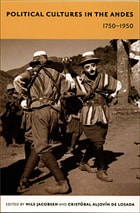
Political Cultures in the Andes, 1750-1950
Nils Jacobsen and Cristóbal Aljovín de Losada, eds.
Duke University Press, 2005
The contributors foreground the struggles over democracy and citizens’ rights as well as notions of race, ethnicity, gender, and class that have been at the forefront of political debates and social movements in the Andes since the waning days of the colonial regime some two hundred years ago. Among the many topics they consider are the significance of the Bourbon reform era to subsequent state-formation projects, the role of race and nation in the work of early-twentieth-century Bolivian intellectuals, the fiscal decentralization campaign in Peru following the devastating War of the Pacific in the late nineteenth century, and the negotiation of the rights of “free men of all colors” in Colombia’s Atlantic coast region during the late colonial period. Political Cultures in the Andes includes an essay by the noted Mexicanist Alan Knight in which he considers the value and limits of the concept of political culture and a response to Knight’s essay by the volume’s editors, Nils Jacobsen and Cristóbal Aljovín de Losada. This important collection exemplifies the rich potential of a pragmatic political culture approach to deciphering the processes involved in the formation of historical polities.
Contributors. Cristóbal Aljovín de Losada, Carlos Contreras, Margarita Garrido, Laura Gotkowitz, Aline Helg, Nils Jacobsen, Alan Knight, Brooke Larson, Mary Roldan, Sergio Serulnikov, Charles F. Walker, Derek Williams
Political Descent
Malthus, Mutualism, and the Politics of Evolution in Victorian EnglandPiers J. Hale
University of Chicago Press, 2014
These two traditions, Hale shows, developed in a context of mutual hostility, debate, and refutation. Participants disagreed not only about evolutionary processes but also on broader questions regarding the kind of creature our evolution had made us and in what kind of society we ought therefore to live. Significantly, and in spite of Darwin’s acknowledgement that natural selection was “the doctrine of Malthus, applied to the whole animal and vegetable kingdoms,” both sides of the debate claimed to be the more correctly “Darwinian.” By exploring the full spectrum of scientific and political issues at stake, Political Descent offers a novel approach to the relationship between evolution and political thought in the Victorian and Edwardian eras.
Political Discourse in Exile
Karl Marx and the Jewish QuestionDennis Fischman
University of Massachusetts Press, 1991
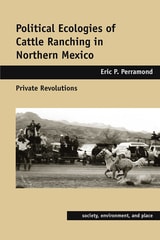
Political Ecologies of Cattle Ranching in Northern Mexico
Private RevolutionsEric P. Perramond
University of Arizona Press, 2010
In this study of the Río Sonora region of northern Mexico, where ranchers own anywhere from several hundred to tens of thousands of acres, Eric Perramond evaluates management techniques, labor expenditures, gender roles, and decision-making on private ranches of varying size. By examining the economic and ecological dimensions of daily decisions made on and off the ranch he shows that, contrary to prevailing notions, ranchers rarely collude as a class unless land titles are at issue, and that their decision-making is as varied as the landscapes they oversee.
Through first-hand observation, field measurements, and intimate ethnographies, Perramond sheds light on a complex set of decisions made, avoided, and confronted by these land managers and their families. He particularly shows that ranching has endured because of its extended kinship network, its reliance on all household members, and its close ties to local politics.
Perramond follows ranchers caught between debt, drought, and declining returns to demonstrate the novel approaches they have developed to adapt to changing economies and ecologies alike—such as strategically marketing the ranches for wild-game hunting or establishing small businesses that subsidize their lifestyles and livelihoods. Even more importantly, he reveals the false dichotomy between private and communal ranching. Political Ecologies of Cattle Ranching in Northern Mexico is essential reading for anyone interested in the future of ranching in western North America.

Political Economy of Environmental Protection
Analysis and EvidenceRoger D. Congleton, Editor
University of Michigan Press, 1996
Political Economy of U.S. - Taiwan Trade
Robert Baldwin, Tain-Jy Chen, and Douglas Nelson, Editors
University of Michigan Press, 1995

Political Economy of the Urban Ghetto
Daniel R. Fusfeld and Timothy Bates
Southern Illinois University Press, 1984
The income of blacks in most northern industrial states today is lower relative to the income of whites than in 1949.Fusfeld and Bates examine the forces that have led to this state of affairs and find that these economic relationships are the product of a complex pattern of historical development and change in which black-white economic relationships play a major part, along with patterns of industrial, agricultural, and technological change and urban development. They argue that today’s urban racial ghettos are the result of the same forces that created modern America and that one of the by-products of American affluence is a ghettoized racial underclass.
These two themes, they state, are essential for an understanding of the problem and for the formulation of policy. Poverty is not simply the result of poor education, skills, and work habits but one outcome of the structure and functioning of the economy. Solutions require more than policies that seek to change people: they await a recognition that basic economic relationships must be changed.

Political Economy, Rebooted
Old Concepts for a New AgeGreta Krippner, Marion Fourcade, and Sarah Quinn, editors
Duke University Press, 2027
Political Elites in Modern Societies
Empirical Research and Democratic TheorySamuel J. Eldersveld
University of Michigan Press, 1989
Political Epistemics
The Secret Police, the Opposition, and the End of East German SocialismAndreas Glaeser
University of Chicago Press, 2011
What does the durability of political institutions have to do with how actors form knowledge about them? Andreas Glaeser investigates this question in the context of a fascinating historical case: socialist East Germany’s unexpected self-dissolution in 1989. His analysis builds on extensive in-depth interviews with former secret police officers and the dissidents they tried to control as well as research into the documents both groups produced. In particular, Glaeser analyzes how these two opposing factions’ understanding of the socialist project came to change in response to countless everyday experiences. These investigations culminate in answers to two questions: why did the officers not defend socialism by force? And how was the formation of dissident understandings possible in a state that monopolized mass communication and group formation? He also explores why the Stasi, although always well informed about dissident activities, never developed a realistic understanding of the phenomenon of dissidence.
Out of this ambitious study, Glaeser extracts two distinct lines of thought. On the one hand he offers an epistemic account of socialism’s failure that differs markedly from existing explanations. On the other hand he develops a theory—a sociology of understanding—that shows us how knowledge can appear validated while it is at the same time completely misleading.
Political Ethnography
What Immersion Contributes to the Study of PowerEdited by Edward Schatz
University of Chicago Press, 2009
Scholars of politics have sought in recent years to make the discipline more hospitable to qualitative methods of research. Lauding the results of this effort and highlighting its potential for the future, Political Ethnography makes a compelling case for one such method in particular. Ethnography, the contributors amply demonstrate in a wide range of original essays, is uniquely suited for illuminating the study of politics.
Situating these pieces within the context of developments in political science, Edward Schatz provides an overarching introduction and substantive prefaces to each of the volume’s four sections. The first of these parts addresses the central ontological and epistemological issues raised by ethnographic work, while the second grapples with the reality that all research is conducted from a first-person perspective. The third section goes on to explore how ethnographic research can provide fresh perspectives on such perennial topics as opinion, causality, and power. Concluding that political ethnography can and should play a central role in the field as a whole, the final chapters illuminate the many ways in which ethnographic approaches can enhance, improve, and, in some areas, transform the study of politics.
Political Fictions
Jean-Paul Sartre
Seagull Books, 2021
Iconic French novelist, playwright, and essayist Jean-Paul Sartre is widely recognized as one of the most important philosophers of the twentieth century, and his work has remained relevant and thought-provoking through the decades. The Seagull Sartre Library now presents some of his most incisive philosophical, cultural, and literary critical essays in twelve newly designed and affordable editions.
Political Fictions includes Sartre’s long foreword to André Gorz’s The Traitor, which has often been called the most intimate and profound book to emerge from the existentialist movement. Sartre also presents a detailed portrait of his friend and fellow writer Paul Nizan (1905–1940), once a committed communist, who died fighting the Nazis at the Battle of Dunkirk. Also featured here is Sartre’s famous foreword to Nizan’s novel The Conspiracy, which made the novel famous on its republication in the 1960s, when it was adopted as an iconic text during the events of May ’68.
Political Groups in Chile
The Dialogue between Order and ChangeBy Ben G. Burnett
University of Texas Press, 1970
Before the Pinochet coup in 1973, Chile had a lengthy history of constitutionalism. Early in the republican era the aristocracy established order in the political system; a century later the emergent middle sectors infused politics with wider democratic practices and, relative to most of Latin America, a level of pluralism came to characterize group politics.
Despite the distinctive advantages that embellished Chile’s political system, however, certain unfulfilled promises still marred the actual picture in the early 1960s. As the lower economic strata of society were continually passed over by most of the social reforms and economic advances that bettered the general outlook of the nation, their frustrations were brought out into the open and their votes were appealed to by reformist and radical political parties anxious to break the political hegemony of moderates and conservatives.
Thus, the 1960s stood out as a high-water mark in the confrontation between, on the one side, those desirous of maintaining the status quo, or at most admitting to prescriptive change, and, on the other, progressive elements demanding deep structural alterations in the entire social fabric. This study seeks to analyze the sources of alienation, the styles and objectives of the participants in the confrontation, and the relative ability of groups to gain satisfaction of their claims upon the political system. Ben G. Burnett delineates this dialogue between order and change as it inexorably pushed toward a showdown in the presidential elections of 1964 and the congressional elections of 1965.
Political Judgment
Structure and ProcessMilton Lodge and Kathleen M. McGraw, Editors
University of Michigan Press, 1995

Political Justice in Budapest after World War II
Andrea Peto
Central European University Press, 2015
In Hungary, which fell under Soviet influence at the end of World War II, those who had participated in the wartime atrocities were tried by so called people’s courts. This book analyses this process in an objective, quantitative way, contributing to the present timely discussion on the Hungarian war guilt. The authors apply a special focus on the gender aspect of the trials.
Political justice had a specific nature in Hungary. War criminals began to be brought to trial while fighting was still underway in the western part of the country, well before the Nuremberg trials. Not only crimes committed during the war were tried in the same frame but also post-war ones. As far as the post-war period is concerned, legal proceedings regarding these crimes were most often launched on the basis of Act VII of 1946. This act of law concerned “the criminal law protection of the democratic constitutional order and the republic” and its basic aim was to facilitate the creation of a communist dictatorship and to deal with perceived or real enemies of the regime.
Political Leadership in Contemporary Japan
Terry Edward MacDougall, Editor
University of Michigan Press, 1982

Political Learning in Adulthood
A Sourcebook of Theory and ResearchEdited by Roberta S. Sigel
University of Chicago Press, 1989
In Political Learning in Adulthood, social scientists for the first time examine the changes in political outlook and behavior that take place during the adult years, providing an invaluable overview of the problems, theories, and methodological approaches that characterize the field of political socialization. They consider which political values remain constant and which are subject to change, and they explore the ways in which both ordinary and extraordinary life events affect adults' political worldviews. Among specific topics considered are the effects of age and aging, the relation between participation in the work force and the development and expression of political views, continuity and change in the wake of revolutionary social and political movements, and the effects of such traumatic and life-threatening situations as war and terrorist activity.
Political Matter
Technoscience, Democracy, and Public LifeBruce Braun
University of Minnesota Press, 2010
Exploring the frictions that come from linking the work of scholars in science and technology studies and political theory, these essays spark new ways of understanding the matter of politics.
Contributors: Andrew Barry, U of Oxford; Jane Bennett, Johns Hopkins U; Stephen J. Collier, New School; William E. Connolly, Johns Hopkins U; Rosalyn Diprose, U of New South Wales; Lisa Disch, U of Michigan; Gay Hawkins, U of New South Wales; Andrew Lakoff, UC San Diego; Noortje Marres, U of London; Isabelle Stengers, U Libre de Bruxelles; Nigel Thrift, U of Warwick.
Political Monopolies in American Cities
The Rise and Fall of Bosses and ReformersJessica Trounstine
University of Chicago Press, 2008
Situating her in-depth studies of Chicago and San Jose in the broad context of data drawn from more than 240 cities over the course of a century, she finds that the answer—a resounding yes—illuminates the nature of political power. Both political machines and reform governments, she reveals, bias the system in favor of incumbents, effectively establishing monopolies that free governing coalitions from dependence on the support of their broader communities. Ironically, Trounstine goes on to show, the resulting loss of democratic responsiveness eventually mobilizes residents to vote monopolistic regimes out of office. Envisioning an alternative future for American cities, Trounstine concludes by suggesting solutions designed to free urban politics from this damaging cycle.
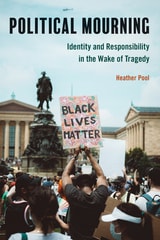
Political Mourning
Identity and Responsibility in the Wake of TragedyHeather Pool
Temple University Press, 2021
What leads us to respond politically to the deaths of some citizens and not others? This is one of the critical questions Heather Pool asks in Political Mourning. Born out of her personal experiences with the trauma of 9/11, Pool’s astute book looks at how death becomes political, and how it can mobilize everyday citizens to argue for political change.
Pool examines four tragedies in American history—the Triangle Shirtwaist Factory Fire, the lynching of Emmett Till, the September 11 attacks, and the Black Lives Matter movement—that offered opportunities to tilt toward justice and democratic inclusion. Some of these opportunities were taken, some were not. However, these watershed moments show, historically, how political identity and political responsibility intersect and how racial identity shapes who is mourned. Political Mourning helps explain why Americans recognize the names of Trayvon Martin and Sandra Bland; activists took those cases public while many similar victims have been ignored by the news media.
Concluding with an afterword on the coronavirus, Pool emphasizes the importance of collective responsibility for justice and why we ought to respond to tragedy in ways that are more politically inclusive.
Political Myth
On the Use and Abuse of Biblical ThemesRoland Boer
Duke University Press, 2009
Boer elaborates a theory of political myth in dialogue with Ernst Bloch, Theodor Adorno, Alain Badiou, Jacques Lacan, and Slavoj Žižek. Through close readings of well-known biblical stories he then scrutinizes the nature of political myth in light of feminism, psychoanalysis, and Marxism. Turning to contemporary politics, he examines the statements of prominent American and Australian politicians to show how the stories of Creation, conquest, Paradise, and the Promised Land have been distorted into a fantasy of Israel as a perpetual state in the making and a land in need of protection. Boer explains how this fantasy of Israel shapes U.S. and Australian foreign and domestic policies, and he highlights the links between it and the fantasy of unfettered global capitalism. Contending that political myths have repressed dimensions which if exposed undermine the myths’ authority, Boer urges the Left to expose the weakness in the Right’s mythos. He suggests that the Left make clear what the world would look like were the dream of unconstrained capitalism to be realized.
Political Participation and Government Regulation
Sam Peltzman
University of Chicago Press, 1998
This collection reflects Peltzman's long career studying the interface between the private economy and the public sector. It will be essential to anyone who wishes to study government activity and voting behavior from an economic perspective.
Political Parties and the Winning of Office
Joseph A. Schlesinger
University of Michigan Press, 1994
Political Peoplehood
The Roles of Values, Interests, and IdentitiesRogers M. Smith
University of Chicago Press, 2015
This book gathers Smith’s most important writings on peoplehood to build a coherent theoretical and historical account of what peoplehood has meant in American political life, informed by frequent comparisons to other political societies. From the revolutionary-era adoption of individual rights rhetoric to today’s battles over the place of immigrants in a rapidly diversifying American society, Smith shows how modern America’s growing embrace of overlapping identities is in tension with the providentialism and exceptionalism that continue to make up so much of what many believe it means to be an American.
A major work that brings a lifetime of thought to bear on questions that are as urgent now as they have ever been, Political Peoplehood will be essential reading for social scientists, political philosophers, policy analysts, and historians alike.
Political Persuasion and Attitude Change
Diana C. Mutz, Richard A. Brody, and Paul M. Sniderman, Editors
University of Michigan Press, 1996
Each chapter synopsizes a major area of political persuasion and provides an update on the latest findings as well as overviews of past research in each area. Whole sections of the book center on the three major agents involved in the political persuasion process: the mass media, political elites, and individual citizens themselves.
Political Persuasion and Attitude Change boldly contradicts the received wisdom on the extent of mass media's influence on political attitudes and argues that the media's effects are indeed massive, rather than limited. It explores the impact of political elites on the persuasion process, and focuses on individual control over the persuasion process.
This volume is unique in that chapters address theoretical as well as methodological issues, simultaneously combining reviews of literature with the latest research findings. It will appeal to scholars and students interested in the study of political persuasion in contemporary politics across the disciplines of political science, psychology, sociology, and communications.
Part I. Mass Media and Political Persuasion. Contributors are Steven Ansolabehere and Shanto Iyengar; Joanne M. Miller and Jon A. Krosnick; and John Zaller.
Part II. Persuasion by Political Elites. Contributors are James H. Kuklinski and Norman L. Hurley; Kathleen M. McGraw and Clark Hubbard; Lee Sigelman and Alan Rosenblatt.
Part III. Individual Control of the Political Persuasion Process. Contributors are Steven H. Chaffee and Rajiv Rimal; Dennis Chong; Gregory Andrade Diamond and Michael D. Cobb; Jeffrey Mondak, Diana C. Mutz, and Robert Huckfeldt.
Diana C. Mutz is Associate Professor of Political Science and Mass Communications, University of Wisconsin, Madison. Paul M. Sniderman is Professor of Political Science, Stanford University. Richard A. Brody is Professor Emeritus of Political Science and Communications, Stanford University.
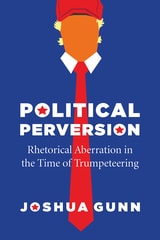
Political Perversion
Rhetorical Aberration in the Time of TrumpeteeringJoshua Gunn
University of Chicago Press, 2020
Drawing on insights from critical theory, media ecology, and psychoanalysis, Gunn argues that perverse rhetorics dominate not only the political sphere but also our daily interactions with others, in person and online. From sexting to campaign rhetoric, Gunn advances a new way to interpret our contemporary political context that explains why so many of us have difficulty deciphering the appeal of aberrant public figures. In this book, Trump is only the tip of a sinister, rapidly growing iceberg, one to which we ourselves unwittingly contribute on a daily basis.
Political Philosophy 1
Rights--The New Quarrel between the Ancients and the ModernsLuc Ferry
University of Chicago Press, 1990
In this first of four volumes that aim to revitalize the fundamental values of modern political thought, one of the leading figures in the contemporary revival of liberalism in France responds to these critics and offers a philosophically cogent defense of a humanistic modernity. Luc Ferry reexamines the philosopical basis of the contemporary retreat from the Enlightenment and then suggests his own alternative, which defends the ideals of modernity while giving due consideration to the objections of the critics.
Political Philosophy 3
From the Rights of Man to the Republican IdeaLuc Ferry and Alain Renaut
University of Chicago Press, 1992
Several French theorists have recently attempted a new account of rights, one that would replace the discredited Marxist view of rights as mere formalities concealing the realities of class domination. In this final volume of Political Philosophy, Luc Ferry and Alain Renaut summarize these efforts and put forward their own set of arguments.
Political Philosophy and Revelation
James V. Schall, SJ
Catholic University of America Press, 2013
Political Philosophy and the Challenge of Revealed Religion
Heinrich Meier
University of Chicago Press, 2017
In the first of three chapters, Meier determines four intertwined moments constituting the concept of political philosophy as an articulated and internally dynamic whole. The following two chapters develop the concept through the interpretation of two masterpieces of political philosophy that have occupied Meier’s attention for more than thirty years: Leo Strauss’s Thoughts on Machiavelli and Jean-Jacques Rousseau’s Social Contract. Meier provides a detailed investigation of Thoughts on Machiavelli, with an appendix containing Strauss’s original manuscript headings for each of his paragraphs. Linking the problem of Socrates (the origin of political philosophy) with the problem of Machiavelli (the beginning of modern political philosophy), while placing between them the political and theological claims opposed to philosophy, Strauss’s most complex and controversial book proves to be, as Meier shows, the most astonishing treatise on the challenge of revealed religion. The final chapter, which offers a new interpretation of the Social Contract, demonstrates that Rousseau’s most famous work can be adequately understood only as a coherent political-philosophic response to theocracy in all its forms.

Political Philosophy
From Plato to MaoMartin Cohen
Pluto Press, 2008
Guiding the reader through the key arguments of the classic figures of Western political philosophy, from Plato through to the modern era, this revised edition includes new essays on Aristotle's 'Politics', Confucianism, Islamic social philosophy and Nazism, as well as additional material on 'Roman Law', Anarchism and 'anti-capitalism'.
Cohen moves chronologically through the development of political philosophy. He presents key texts in their own terms, before offering short, precise analyses of their strengths, weaknesses and influence. The book finishes with a discussion of modern liberalism and conservatism.
Providing both a broad overview and precise summaries of key ideas, this is an invaluable guide for all students of political thought.
Political Policing
The United States and Latin AmericaMartha K. Huggins
Duke University Press, 1998
After a historical review of policing in the United States and Europe over the past century, Huggins reveals how the United States, in order to protect and strengthen its position in the world system, has used police assistance to establish intelligence and other social control infrastructures in foreign countries. The U.S.-encouraged centralization of Latin American internal security systems, Huggins claims, has led to the militarization of the police and, in turn, to an increase in state-sanctioned violence. Furthermore, Political Policing shows how a domestic police force—when trained by another government—can lose its power over legitimate crime as it becomes a tool for the international interests of the nation that trains it.
Pointing to U.S. responsibility for violations of human rights by foreign security forces, Political Policing will provoke discussion among those interested in international relations, criminal justice, human rights, and the sociology of policing.