Results by title
8113 books match the query 'Literary Criticism' and 405 start with p

Portraits of Violence
War and the Aesthetics of DisfigurementSuzannah Biernoff
University of Michigan Press, 2017
Suzannah Biernoff draws on a wide variety of sources mainly from WWI but also contemporary photography and computer games. Each chapter revolves around particular images: Marine Wedding is discussed alongside Stuart Griffiths’ portraits of British veterans; Henry Tonks’ drawings of WWI facial casualties are compared to the medical photographs in the Gillies Archives; the production of portrait masks for the severely disfigured is approached through the lens of documentary film and photography; and finally the haunting image of one of Tonks’s patients reappears in BioShock, a highly successful computer game. The book simultaneously addresses a neglected area in disability studies; puts disfigurement on the agenda for art history and visual studies; and makes a timely and provocative contribution to the literature on the First World War.
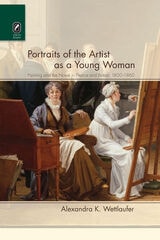
Portraits of the Artist as a Young Woman
Painting and the Novel in France and Britain, 1800–1860Alexandra K. Wettlaufer
The Ohio State University Press, 2011
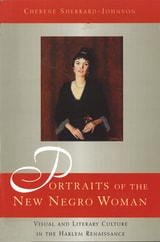
Portraits of the New Negro Woman
Visual and Literary Culture in the Harlem RenaissanceCherene M. Sherrard-Johnson
Rutgers University Press, 2007
Of all the images to arise from the Harlem Renaissance, the most thought-provoking were those of the mulatta. For some writers, artists, and filmmakers, these images provided an alternative to the stereotypes of black womanhood and a challenge to the color line. For others, they represented key aspects of modernity and race coding central to the New Negro Movement. Due to the mulatta’s frequent ability to pass for white, she represented a variety of contradictory meanings that often transcended racial, class, and gender boundaries.
In this engaging narrative, Cherene Sherrard-Johnson uses the writings of Nella Larsen and Jessie Fauset as well as the work of artists like Archibald Motley and William H. Johnson to illuminate the centrality of the mulatta by examining a variety of competing arguments about race in the Harlem Renaissance and beyond.
Positive Hero in Russian Literature
Rufus W. Mathewson, Jr.
Northwestern University Press, 2000
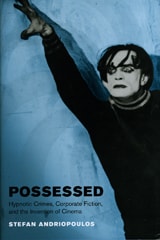
Possessed
Hypnotic Crimes, Corporate Fiction, and the Invention of CinemaStefan Andriopoulos
University of Chicago Press, 2008
Tracing this preoccupation through the period’s films—as well as its legal, medical, and literary texts—Andriopoulos pays particular attention to the terrifying notion of murder committed against one’s will. He returns us to a time when medical researchers described the hypnotized subject as a medium who could be compelled to carry out violent crimes, and when films like The Cabinet of Dr. Caligari and Dr. Mabuse, the Gambler famously portrayed the hypnotist’s seemingly unlimited power on the movie screen. Juxtaposing these medicolegal and cinematic scenarios with modernist fiction, Andriopoulos also develops an innovative reading of Kafka’s novels, which center on the merging of human and corporate bodies.
Blending theoretical sophistication with scrupulous archival research and insightful film analysis, Possessed adds a new dimension to our understanding of today’s anxieties about the onslaught of visual media and the expanding reach of vast corporations that seem to absorb our own identities.
Possible Worlds
Jorge Luis Borges's (Pseudo-) Translations of Virginia Woolf and Franz KafkaRebecca DeWald
University of London Press, 2020
Post-Authoritarian Cultures
Spain and Latin America's Southern ConeLuis Martín-Estudillo
Vanderbilt University Press, 2008
Post-Borderlandia
Chicana Literature and Gender Variant CritiqueCuevas, T. Jackie
Rutgers University Press, 2018
2019 Lambda Literary Awards Finalist
Bringing Chicana/o studies into conversation with queer theory and transgender studies, Post-Borderlandia examines why gender variance is such a core theme in contemporary Chicana and Chicanx narratives. It considers how Chicana butch lesbians and Chicanx trans people are not only challenging heteropatriarchal norms, but also departing from mainstream conceptions of queerness and gender identification.
Expanding on Gloria Anzaldúa’s classic formulation of the Chicana as transformer of the “borderlands,” Jackie Cuevas explores how a new generation of Chicanx writers, performers, and filmmakers are imagining a “post-borderlands” subjectivity, where shifting national, racial, class, sexual, and gender identifications produce complex power dynamics. In addition, Cuevas offers fresh archival analysis of the Chicana feminist canon to reveal how queer gender variance has always been crucial to this literary tradition.
Post-Fascist Fantasies
Psychoanalysis, History, and the Literature of East GermanyJulia Hell
Duke University Press, 1997
By focusing on the unconscious fantasies about post-fascist body and post-fascist voice that suffuse the texts of Wolf and others, Hell radically reconceptualizes the notion of the author’s subjective authenticity. Since this notion occupies a key position in previous literary-historical accounts of East German culture, Hell’s psychoanalytic approach problematizes the established literary model of an "authentic feminine voice" that gradually liberates itself from the GDR’s dominant ideological narrative. Far from operating solely on a narrowly political level, the novels of Wolf and others were intricate family sagas portraying psychic structures linked in complex ways to the GDR’s social dynamics. Hell traces this link through East German literatrure’s dominant narrative, a paternal narrative organized around the figure of the Communist father as antifascist hero.
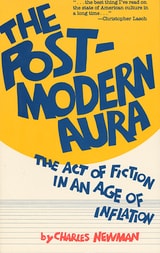
Post-Modern Aura
The Act of Fiction in an Age of InflationCharles Newman
Northwestern University Press, 1985
In the twenty-first century as an interest in Marxist thought again coincides with the specter of financial inflation, The Post-Modern Aura is timely again.
Post-Personal Romanticism
Democratic Terror, Prosthetic Poetics, and the Comedy of Modern Ethical LifeBo Earle
The Ohio State University Press, 2017
Tracing this insight to Hegel’s suggestion that modern subjectivity is in some sense post-individual or even posthumous, Earle argues that signature Romantic lyrics offer a way forward that avoids postmodernism’s wholesale rejection of autonomous selfhood. With chapters on Wordsworth, Blake, Byron, Shelley, and Keats, Earle traces how Romantic lyrics mine this interminability to recover figurative emblems or masks of selfhood from experiences of its inevitable normative failure. This model is of particularly urgent value today when the costs of modern narcissism, economic exploitation, and political imperialism have come to include the normalization of torture, signature drone strikes, and climate change.
Post-Postmodernist Fiction and the Rise of Digital Epitexts
Virginia Pignagnoli
The Ohio State University Press, 2023
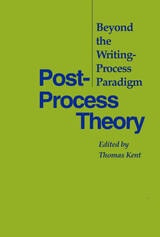
Post-Process Theory
Beyond the Writing-Process ParadigmEdited by Thomas Kent
Southern Illinois University Press, 1999
Breaking with the still-dominant process tradition in composition studies, post-process theory—or at least the different incarnations of post-process theory discussed by the contributors represented in this collection of original essays—endorses the fundamental idea that no codifiable or generalizable writing process exists or could exist. Post-process theorists hold that the practice of writing cannot be captured by a generalized process or a "big" theory.
Most post-process theorists hold three assumptions about the act of writing: writing is public; writing is interpretive; and writing is situated. The first assumption is the commonsensical claim that writing constitutes a public interchange. By "interpretive act," post-process theorists generally mean something as broad as "making sense of" and not exclusively the ability to move from one code to another. To interpret means more than merely to paraphrase; it means to enter into a relationship of understanding with other language users. And finally, because writing is a public act that requires interpretive interaction with others, writers always write from some position or some place. Writers are never nowhere; they are "situated."
Leading theorists and widely published scholars in the field, contributors are Nancy Blyler, John Clifford, Barbara Couture, Nancy C. DeJoy, Sidney I. Dobrin, Elizabeth Ervin, Helen Ewald, David Foster, Debra Journet, Thomas Kent, Gary A. Olson, Joseph Petraglia, George Pullman, David Russell, and John Schilb.
Post-Totalitarian Spanish Fiction
Robert C. Spires
University of Missouri Press, 1996
Focusing on post-Franco Spanish fiction from 1975 to 1989, Robert C. Spires applies the concepts of episteme and discursive field to the ways in which language from multiple sources determines how reality is defined at a given moment and how it influences ideas, attitudes, and feelings. Spires identifies bonds connecting disparate academic disciplines and sociopolitical events by exploring how the world of fiction serves as a register of the nonfictional world.
In 1989 the Soviet bloc, along with other totalitarian regimes in South America and Africa, disappeared from the global geopolitical map. Spain set the precedent for this decentralizing revolution when, in 1975, its longtime dictator, Francisco Franco, died; democratic elections followed two years later. This study records an epistemic shift away from logocentric and totalizing approaches to reality by analyzing the links between the novelistic strategies used by Spanish writers from 1975 to 1989 and recent international events and theoretical trends in science, mathematics, communication studies, and art. Highlighting worldwide processes of fragmentation, decentralization, and pluralism, Spires foregrounds ways in which literary and scientific approaches to and concepts of reality coincide, with fiction serving as one more register of how reality is conceived at a particular point in time.
Post-Totalitarian Spanish Fiction makes a major contribution in the field of Spanish literature and will enhance the esteem that contemporary Spanish literature is beginning to achieve internationally. In addition, this "epistemocritical" project will serve as a model for literary critics who wish to accommodate the increasingly popular approach labeled "cultural studies" without surrendering the primacy of the literary text.
Post/Revolutionary Conditions
Renewed Visions of the Iranian Freedom StruggleAlborz Ghandehari
Northwestern University Press, 2025
An exploration of how the Iranian people have renewed their longtime struggle for freedom
The Woman, Life, Freedom uprising is only the latest manifestation of a century-long struggle for liberation in Iran. This ongoing movement for justice has encompassed two revolutions against domestic dictatorship and foreign imperialism, as well as a series of uprisings since the 1979 Iranian Revolution, which was followed by a new era of repression. Post/Revolutionary Conditions: Renewed Visions of the Iranian Freedom Struggle offers an intersectional analysis of how progressive and radical movement builders have reenvisioned liberation in the post-’79 era, despite new forms of oppression under the Islamic Republic and from US and other foreign imperial powers. Bringing together a diverse array of sources, including oral histories with Iranian labor, student, and gender justice organizers, as well as resistance literature and art, Alborz Ghandehari challenges narratives that treat working-class, feminist, queer, and oppressed ethnic minorities’ movements as separate from one another. Post/Revolutionary Conditions demonstrates how such potent reimaginings of collective liberation and a radically democratic future have been shaped by multiple generations of protest and kindred struggles globally.
Postclassical Narratology
Approaches and AnalysesJan Alber
The Ohio State University Press, 2010
In this volume, an international group of contributors presents new perspectives on narrative. Using David Herman’s 1999 definition of "postclassical narratology" from Narratologies: New Perspectives on Narrative Analysis (OSUP) as their launching point, these eleven essayists explore the various ways in which new approaches overlap and interrelate to form new ways of understanding narrative texts.
Postclassical narratology has reached a new phase of consolidation but also continued diversification. This collection therefore discriminates between what one could call a critical but frame-abiding and a more radical frame-transcending or frame-shattering handling of the structuralist paradigm. Postclassical Narratology: Approaches and Analyses discusses a large variety of different aspects of narrative, such as extensions of classical narratology, new generic applications (autobiography, oral narratives, poetry, painting, and film), the history of narratology, the issue of fictionality, the role of cognition, and questions of authorship and authority, as well as thematic matters related to ethics, gender, and queering. Additionally, it uses a wide spectrum of critical approaches, including feminism, psychoanalysis, media studies, the rhetorical theory of narrative, unnatural narratology, and cognitive studies. In this manner the essays manage to produce new insights into many key issues in narratology.The contributors also demonstrate that narratologists nowadays see the object of their research as more variegated than was the case twenty years ago: they resort to a number of different methods in combination when approaching a problem, and they tend to ground their analyses in a rich contextual framework.
Postclassicisms
The Postclassicisms Collective
University of Chicago Press, 2020
Structured around three primary concepts—value, time, and responsibility—and nine additional concepts, Postclassicisms asks scholars to reflect upon why they choose to work in classics, to examine how proximity to and distance from antiquity has been—and continues to be—figured, and to consider what they seek to accomplish within their own scholarly practices. Together, the authors argue that a stronger critical self-awareness, an enhanced sense of the intellectual history of the methods of classics, and a greater understanding of the ethical and political implications of the decisions that the discipline makes will lead to a more engaged intellectual life, both for classicists and, ultimately, for society. A timely intervention into the present and future of the discipline, Postclassicisms will be required reading for professional classicists and students alike and a model for collaborative disciplinary intervention by scholars in other fields.
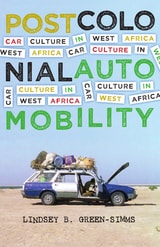
Postcolonial Automobility
Car Culture in West AfricaLindsey B. Green-Simms
University of Minnesota Press, 2015
For more than a century cars have symbolized autonomous, unfettered mobility and an increasingly global experience. And yet, they are often used differently outside the centers of global capitalism. This pioneering book considers how, through the lens of the automobile, we can assess the pleasures, dangers, and limits of global modernity in West Africa. Through new and provocative readings of famous plays, novels, and films, as well as recent popular videos, Postcolonial Automobility reveals the surprising ways in which automobility in the region is, at once, an everyday practice, an ethos, a fantasy of autonomy, and an affective activity intimately tied to modern social life.
Lindsey B. Green-Simms begins with the history of motorization in West Africa from the colonial era to the decolonizing decades after World War II, and addresses the tragedy of car accidents through a close reading of Wole Soyinka’s 1965 postindependence play The Road. Shifting to screen media, she discusses Ousmane Sembene’s Xala and Jean-Pierre Bekolo’s Quartier Mozart and reviews popular, low-budget Nollywood films. Finally, Green-Simms considers how feminist texts rewrite and work in dialogue with the male-centered films and novels where the car stands in for patriarchal power and capitalist achievement.
Providing a unique perspective on technology in Africa—one refusing to be confined to narratives of either underdevelopment or inevitable progress—and covering a broad range of interdisciplinary material, Postcolonial Automobility will appeal not only to scholars and students of African literature and cinema but also to those in postcolonial and globalization studies.
Postcolonial Biology
Psyche and Flesh after EmpireDeepika Bahri
University of Minnesota Press, 2017
Although the body has been a vast subject for postcolonial studies, few theorists have attempted to go beyond the simple mixing of races in examining the impact of colonialism on the colonized body. However, as Deepika Bahri argues, it is essential to see the postcolonial body in a variety of forms: as capable of transformation not only in psyche and outward behavior but also in flesh and blood.
European colonizers brought new ways of seeing the body in matters as basic as how to eat, speak, sit, shit, or spit. As nations decolonized, these imperialistic ideas remained, becoming part of the global economy of the body. In Postcolonial Biology, Bahri argues that the political challenges of the twenty-first century require that we deconstruct these imperial notions of the body, as they are fundamental to power structures governing today’s globalized world.
Postcolonial Biology investigates how minds and bodies have been shaped by colonial contact, to create deeply embedded hierarchies among the colonized. Moving beyond “North/South” thinking, Bahri reframes the questions of postcolonial bodies to address all societies, whether developed or developing. Engaging in innovative, highly original readings of major thinkers such as Adorno, Horkheimer, Derrida, and Fanon, this book brings an important new focus to the field of postcolonial studies—one that is essential to understanding the ideas and conflicts that currently dominate the global order.
Postcolonial Disaster
Narrating Catastrophe in the Twenty-First CenturyPallavi Rastogi
Northwestern University Press, 2020
Rastogi creates a narratology for postcolonial disaster fiction and brings concepts from Disaster Studies into the realm of literary analysis.
Postcolonial Grief
The Afterlives of the Pacific Wars in the AmericasJinah Kim
Duke University Press, 2019
Postcolonial Hauntings
Play and Transnational FeminismSushmita Chatterjee
University of Illinois Press, 2024
Often examined separately, play and hauntings in fact act together to frame postcolonial issues. Sushmita Chatterjee showcases their braided workings in social and political fabrics. Drawing on this intertwined idea of play and hauntings, Chatterjee goes to the heart of conundrums within transnational postcolonial feminisms by examining the impossible echoes of translations, differing renditions of queer, and the possibilities of solidarity beyond the fraternal friendships that cement nation-states. Meaning-plays, or slippages through language systems as we move from one language to another, play a pivotal role in a global world. As Chatterjee shows, an attentiveness to meaning-plays discerns the past and present, here and there, and moves us toward responsive ethics in our theories and activisms.
Insightful and stimulating, Postcolonial Hauntings centers the inextricable work of play and hauntings as a braided ethics for postcolonial transnational struggles.
Postcolonial Paris
Fictions of Intimacy in the City of LightLaila Amine
University of Wisconsin Press, 2021
Spanning the decades from the post–World War II era to the present day, Amine demonstrates that the postcolonial other is both peripheral to and intimately entangled with all the ideals so famously evoked by the French capital—romance, modernity, equality, and liberty. In their work, postcolonial writers and artists have juxtaposed these ideals with colonial tropes of intimacy (the interracial couple, the harem, the Arab queer) to expose their hidden violence. Amine highlights the intrusion of race in everyday life in a nation where, officially, it does not exist.
Postcolonial Subjects
Francophone Women WritersMary Green
University of Minnesota Press, 1996
Explores French-language writing by women outside France.
This groundbreaking volume highlights the work of contemporary women writing in French whose cultural links, ethnic identities, and historical roots lie outside France. The writings of these women emanate from the cultures of Africa and the Indian Ocean, the Middle East, the Caribbean, Southeast Asia, and Quebec and other French-speaking regions of Canada.
By writing in French, the writers discussed in Postcolonial Subjects both acknowledge and write against the cultural heritage of France. In doing so, they participate in the subversion of European literary traditions and take part in various forms of cultural and linguistic blending, generating new artistic currents. Each of these essays articulates contemporary debates about the politics and cultural effects of sexism, homophobia, racism, and essentialism, as well as pointing out connections and points of resistance among such diverse strains as feminism, nationalism, and ethnicity. Contributors: Eloise A. Brière, U of Albany; Miriam Cooke, Duke U; Irène Assiba d’Almeida, U of Arizona; Joan Dayan, U of Arizona; John D. Erickson, U of Kentucky; Françoise Lionnet, Northwestern U; Christiane Makward, Pennsylvania State U; Kitzie McKinney, Bentley College; Christopher L. Miller, Yale U; Mary-Kay Miller, Vanderbilt U; Jane Moss, Colby College; Elisabeth Mudimbe-Boyi, Stanford U; Lori Saint-Martin, U du Québec à Montréal; Ronnie Scharfman, Purchase College, SUNY.
Postcolonialisms
An Anthology of Cultural Theory and CriticismDesai, Gaurav
Rutgers University Press, 2005
Bringing together thirty-seven essays that have helped define the study of colonial and postcolonial cultures, this expansive and thoughtfully organized anthology offers an up-to-date and in-depth overview of this rapidly developing field.
Canonical articles, most unexcerpted, explore postcolonialism’s key themes—power and knowledge—while articles by contemporary scholars expand the discipline to include discussions of the discovery of the New World, Native American and indigenous identities in Latin America and the Pacific, settler colonies in Africa and Australia, English colonialism in Ireland, and feminism in Nigeria and Egypt. The inclusion of a broad sampling of histories and theories attests to multiple, even competing postcolonialisms, while the skillful organization of the volume provides a useful map of the field in terms of recognizable patterns, shared family resemblances, and common genealogies.
The book is divided into nine sections: Ideologies of Imperialism, The Critique of Colonial Discourse, The Politics of Language and Literary Studies, Nationalisms and Nativisms, Hybrid Identities, Gender and Sexualities, Reading the Subaltern, Comparative (Post)colonialisms, and Globalization and Postcoloniality. Detailed introductions to each section serve to develop key themes, encourage debate, and contextualize the wide-ranging voices that contribute to the topic.
The most cogent and teachable collection of postcolonial texts yet compiled, this anthology is equally suitable for undergraduate students and seasoned scholars.
Posterity
Inventing Tradition from Petrarch to GramsciRocco Rubini
University of Chicago Press, 2022
Rocco Rubini studies the motives and literary forms in the making of a “tradition,” not understood narrowly, as the conservative, stubborn preservation of received conventions, values, and institutions, but instead as the deliberate effort on the part of writers to transmit a reformulated past across generations. Leveraging Italian thinkers from Petrarch to Gramsci, with stops at prominent humanists in between—including Giambattista Vico, Carlo Goldoni, Francesco De Sanctis, and Benedetto Croce—Rubini gives us an innovative lens through which to view an Italian intellectual tradition that is at once premodern and modern, a legacy that does not depend on a date or a single masterpiece, but instead requires the reader to parse an expanse of writings to uncover deeper transhistorical continuities that span six hundred years. Whether reading work from the fourteenth century, or from the 1930s, Rubini elucidates the interplay of creation and the reception underlying the enactment of tradition, the practice of retrieving and conserving, and the revivification of shared themes and intentions that connect thinkers across time. Building on his award-winning book, The Other Renaissance, this will prove a valuable contribution for intellectual historians, literary scholars, and those invested in the continuing humanist legacy.
Postethnic Narrative Criticism
Magicorealism in Oscar "Zeta" Acosta, Ana Castillo, Julie Dash, Hanif Kureishi, and Salman RushdieBy Frederick Luis Aldama
University of Texas Press, 2003
Magical realism has become almost synonymous with Latin American fiction, but this way of representing the layered and often contradictory reality of the topsy-turvy, late-capitalist, globalizing world finds equally vivid expression in U.S. multiethnic and British postcolonial literature and film. Writers and filmmakers such as Oscar "Zeta" Acosta, Ana Castillo, Julie Dash, Hanif Kureishi, and Salman Rushdie have made brilliant use of magical realism to articulate the trauma of dislocation and the legacies of colonialism that people of color experience in the postcolonial, multiethnic world.
This book seeks to redeem and refine the theory of magical realism in U.S. multiethnic and British postcolonial literature and film. Frederick Aldama engages in theoretically sophisticated readings of Ana Castillo's So Far from God, Oscar "Zeta" Acosta's Autobiography of a Brown Buffalo, Salman Rushdie's Midnight's Children, Shame, The Satanic Verses, and The Moor's Last Sigh, Julie Dash's Daughters of the Dust, and Stephen Frears and Hanif Kureishi's Sammy and Rosie Get Laid. Coining the term "magicorealism" to characterize these works, Aldama not only creates a postethnic critical methodology for enlarging the contact zone between the genres of novel, film, and autobiography, but also shatters the interpretive lens that traditionally confuses the transcription of the real world, where truth and falsity apply, with narrative modes governed by other criteria.
Posthumous Love
Eros and the Afterlife in Renaissance EnglandRamie Targoff
University of Chicago Press, 2014
Targoff shows that medieval notions of the somewhat flexible boundaries between love in this world and in the next were hardened by Protestant reformers, who envisioned a total break between the two. Tracing the narrative of this rupture, she focuses on central episodes in poetic history in which poets developed rich and compelling compensations for the lack of posthumous love—from Thomas Wyatt’s translations of Petrarch’s love sonnets and the Elizabethan sonnet series of Shakespeare and Spencer to the carpe diem poems of the seventeenth century. Targoff’s centerpiece is Romeo and Juliet, where she considers how Shakespeare’s reworking of the Italian story stripped away any expectation that the doomed teenagers would reunite in heaven. Casting new light on these familiar works of poetry and drama, this book ultimately demonstrates that the negation of posthumous love brought forth a new mode of poetics that derived its emotional and aesthetic power from its insistence upon love’s mortal limits.
Postindian Aesthetics
Affirming Indigenous Literary SovereigntyEdited by Debra K. S. Barker and Connie A. Jacobs
University of Arizona Press, 2022
The works featured are inventive and current, and the writers covered are visionaries who are boldly redefining Indigenous literary aesthetics. The artists covered include Orlando White, LeAnne Howe, Stephen Graham Jones, Deborah Miranda, Heid E. Erdrich, Sherwin Bitsui, and many others.
Postindian Aesthetics is expansive and comprehensive with essays by many of today’s leading Indigenous studies scholars. Organized thematically into four sections, the topics in this book include working-class and labor politics, queer embodiment, national and tribal narratives, and new directions in Indigenous literatures. By urging readers to think beyond the more popularized Indigenous literary canon, the essays in this book open up a new world of possibilities for understanding the contemporary Indigenous experience.
The volume showcases thought-provoking scholarship about literature written by important contemporary Indigenous authors who are inspiring critical acclaim and offers new ways to think about the Indigenous literary canon and encourages instructors to broaden the scope of works taught in literature courses more broadly.
ContributorsEric Gary Anderson
Ellen L. Arnold
Debra K. S. Barker
Laura J. Beard
Esther G. Belin
Jeff Berglund
Sherwin Bitsui
Frank Buffalo Hyde
Jeremy M. Carnes
Gabriel S. Estrada
Stephanie Fitzgerald
Jane Haladay
Connie A. Jacobs
Daniel Heath Justice
Virginia Kennedy
Denise Low
Molly McGlennen
Dean Rader
Kenneth M. Roemer
Susan Scarberry-García
Siobhan Senier
Kirstin L. Squint
Robert Warrior
Postliterary America
From Bagel Shop Jazz to MicropoetriesMaria Damon
University of Iowa Press, 2011
Postmodern Pooh
Frederick Crews
Northwestern University Press, 2006
Postmodern Spiritual Practices
The Construction of the Subject and the Reception of Plato in Lacan, Derrida, and FoucaultPaul Allen Miller
The Ohio State University Press, 2007
On the other hand, blindness to the merits of postmodern thought is also due to Anglo-American philology’s own parochial instincts. Ensconced within a nineteenth-century model of Alterumswissenschaft, only a minority of classicists have made forays into philosophical, psychoanalytic, and other speculative modes of inquiry. The result has been that postmodern French thought has largely been the province of scholars of modern languages.
A situation thus emerges in which most classicists do not know theory, and so cannot appreciate the scope of these thinkers’ contribution to our understanding of the genealogy of Western thought, while most theorists do not know the Platonic texts and their contexts that ground them. This book bridges this gap, offering detailed and theoretically informed readings of French postmodernism’s chief thinkers’ debts to Plato and the ancient world.
Postmodern Theatric(k)s
Monologue in Contemporary American DramaDeborah Geis
University of Michigan Press, 1993
Postmodern/Postwar and After
Rethinking American LiteratureJason Gladstone, Andrew Hoberek, and Daniel Worden
University of Iowa Press, 2016
The first section of essays returns to the category of the “post-modern” and argues for the usefulness of key concepts and themes from postmodernism to the study of contemporary literature, or reevaluates postmodernism in light of recent developments in the field and historical and economic changes in the late twentieth and early twenty-first centuries. These essays take the contemporary abandonments of postmodernism as an occasion to assess the current states of postmodernity. After that, the essays move to address the critical shift away from postmodernism as a description of the present, and toward a new sense of postmodernism as just one category among many that scholars can use to describe the recent past. The final section looks forward and explores the question of what comes after the postwar/postmodern.
Taken together, these essays from leading and emerging scholars on the state of twenty-first-century literary studies provide a number of frameworks for approaching contemporary literature as influenced by, yet distinct from, postmodernism. The result is an indispensable guide that seeks to represent and understand the major overhauling of postwar American literary studies that is currently underway.
Postmodernism and Japan
Masao Miyoshi and H. D. Harootunian, eds.
Duke University Press, 1989
Postmodernism and Politics
Jonathon Arac
University of Minnesota Press, 1986
In eight essays, the contributors reach out to explore cinema and photography, psychology and ethics, social theory and economic reform. Taken together, the essays provide fresh perspectives on the problem of representation in many areas, from the constitution of the individual subject, through the status of the image, to the formation and transmission of social and moral knowledge.
The contributors: Paul A. Bove, Mary Louise Pratt, Dana Polan, Andrew Parker, Rainer Nagele, John Higgins, Cornel West, and Bruce Robbins.
Postmodernism, or, The Cultural Logic of Late Capitalism
Fredric Jameson
Duke University Press, 1992
Postmodernity in Latin America
The Argentine ParadigmSantiago Colás
Duke University Press, 1994
Focusing on literature, Colás uses Julio Cortázar’s Hopscotch to characterize modernity for Latin America as a whole, Manuel Puig’s Kiss of the Spider Woman to identify the transition to a more localized postmodernity, and Ricardo Piglia’s Artificial Respiration to exemplify the cultural coordinates of postmodernity in Argentina. Informed by the cycle of political transformation beginning with the Cuban Revolution, including its effects on Peronism, to the period of dictatorship, and finally to redemocratization, Colás’s examination of this literary progression leads to the reconstruction of three significant moments in the history of Argentina. His analysis provokes both a revised understanding of that history and the recognition that multiple meanings of postmodernity must be understood in ways that incorporate the complexity of regional differences.
Offering a new voice in the debate over postmodernity, one that challenges that debate’s leading thinkers, Postmodernity in Latin America will be of particular interest to students of Latin American literature and to scholars in all disciplines concerned with theories of the postmodern.
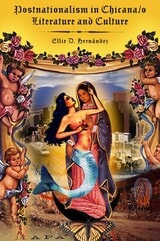
Postnationalism in Chicana/o Literature and Culture
By Ellie D. Hernández
University of Texas Press, 2009
In recent decades, Chicana/o literary and cultural productions have dramatically shifted from a nationalist movement that emphasized unity to one that openly celebrates diverse experiences. Charting this transformation, Postnationalism in Chicana/o Literature and Culture looks to the late 1970s, during a resurgence of global culture, as a crucial turning point whose reverberations in twenty-first-century late capitalism have been profound.
Arguing for a postnationalism that documents the radical politics and aesthetic processes of the past while embracing contemporary cultural and sociopolitical expressions among Chicana/o peoples, Hernández links the multiple forces at play in these interactions. Reconfiguring text-based analysis, she looks at the comparative development of movements within women's rights and LGBTQI activist circles. Incorporating economic influences, this unique trajectory leads to a new conception of border studies as well, rethinking the effects of a restructured masculinity as a symbol of national cultural transformation. Ultimately positing that globalization has enhanced the emergence of new Chicana/o identities, Hernández cultivates important new understandings of borderlands identities and postnationalism itself.
Postsecular Benjamin
Agency and TraditionBrian Britt
Northwestern University Press, 2016
Postsocialism and Cultural Politics
China in the Last Decade of the Twentieth CenturyXudong Zhang
Duke University Press, 2008
Zhang examines the reactions of intellectuals, authors, and filmmakers to the cultural and political conflicts in China during the 1990s. He offers a nuanced assessment of the changing divisions and allegiances within the intellectual landscape, and he analyzes the postsocialist realism of the era through readings of Mo Yan’s fiction and the films of Zhang Yimou. With Postsocialism and Cultural Politics, Zhang applies the same keen insight to China’s long 1990s that he brought to bear on the 1980s in Chinese Modernism in the Era of Reforms.
Pound in Purgatory
From Economic Radicalism to Anti-SemitismLeon Surette
University of Illinois Press, 1999
From 1931 to 1945 Pound's poetry took a back seat to his activities as an economic reformer and propagandist for the corporate state. Pound believed he had a simple and practical solution for the economic woes of the world brought on by the Great Depression, and he became increasingly preoccupied with capturing political power for the economic reform he envisioned.
As the world spiraled toward war, Pound's program of economic reform foundered and he gradually succumbed to a paranoid belief in a Jewish conspiracy. Through an incisive analysis of Pound's correspondence and writings, much of it previously unexamined, Surette shows how this belief fostered the virulent anti-Semitism that pervades his work-–both poetry and prose-–from this time forward.
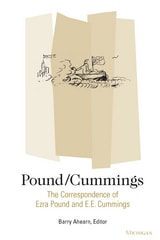
Pound/Cummings
The Correspondence of Ezra Pound and E.E. CummingsBarry Ahearn, Editor
University of Michigan Press, 1996
Throughout the correspondence both poets reveal themselves and their beliefs to a remarkable degree. Pound entrusted to Cummings details of his political outlook in the 1930s and 1940s, including his opinions about Mussolini's Italy. The letters to Cummings also shed new light on the question of Pound's sanity after World War II. Although he was diagnosed as mentally unfit, the letters generally show no evidence of paranoia, only of his characteristic eccentricity.
Similarly, these letters should provoke a reevaluation of Cummings. Critics have treated Cummings's political views as either strictly private matters or merely incidental to his art. The letters, however, show that Cummings's radically conservative political opinions are wholly consistent with his poetics, and raise the question of the relation between Cummings's political principles and his enthusiasm for particular forms (and particular stars) of mass entertainment.
In addition to their political revelations, the letters are steeped in the literary climate--and literary gossip--of the times. Pound comments often and candidly on Cummings's poetry and prose; both Pound and Cummings send light verse to each other. And the poets exchange anecdotes about such figures as Henry James, Wyndham Lewis, T. S. Eliot, Edmund Grosse, Max Eastman, and Aldous Huxley, among other writers.
There is much here to interest and delight both fans and foes of Pound and Cummings. The book will be of primary importance to students and scholars of modern poetry, especially those who emphasize the intersection of literary works and political history.
Barry Ahearn is Associate Professor of English, Tulane University.
Poverty and Antitheatricality
Form and Formlessness in Latin American Literature, Art, and TheoryStephen Buttes
Rutgers University Press, 2025
Poverty of the Imagination
Nineteenth-Century Russian Literature about the PoDavid Herman
Northwestern University Press, 2001
Power Of Blackness
Hawthorne, Poe, MelvilleHarry Levin
Ohio University Press, 1980

Power and Elusiveness in Shelley
Oscar W. Firkins
University of Minnesota Press, 1937
Power and Elusiveness in Shelley was first published in 1937. Minnesota Archive Editions uses digital technology to make long-unavailable books once again accessible, and are published unaltered from the original University of Minnesota Press editions.
This is a discussion in measured prose of the strange yet frequent union of various abstract elements in Shelley's poetry. The study contains an interesting analysis of the thesis that Shelley's "love of abstraction is only one form—probably the most obvious and the most significant form—of a larger and more general tendency." The object of this essay, in the author's words, "is to collect and combine the manifestations of this larger tendency."
The two great "abstractions" that Firkins selects as the touchstones in his study he generalizes as "power" and "elusiveness," and he shows how these seemingly antithetical qualities are united in both the structure and the style of all Shelley's chief poems.
Power and Possibility
Essays, Reviews, and InterviewsElizabeth Alexander
University of Michigan Press, 2007
A volume in the Poets on Poetry series, which collects critical works by contemporary poets, gathering together the articles, interviews, and book reviews by which they have articulated the poetics of a new generation.
Elizabeth Alexander is considered one of the country's most gifted contemporary poets, and the publication of her essays in The Black Interior in 2004 established her as an astute critic and cultural commentator as well. Arnold Rampersad has called Alexander "one of the brightest stars in our literary sky . . . a superb, invaluable commentator on the American scene." In this new collection of her essays, reviews, and interviews, Alexander again focuses on African American artistic production, particularly poetry, and the cultural contexts in which it is created and experienced.
The book's first section, "Black Arts 101," takes up the poetry of Paul Laurence Dunbar, Sterling Brown, Lucille Clifton, Gwendolyn Brooks, and Rita Dove (among others); artist Romare Bearden; dancer Bill T. Jones; and dramatist August Wilson. A second section, "Black Feminist Thinking," provides engaging meditations ranging from "My Grandmother's Hair" and "A Very Short History of Black Women and Food" to essays on the legacies of Toni Cade, Audre Lorde, and June Jordan. The collection's final section, "Talking," includes interviews, a commencement address---"Black Graduation"---and the essay "Africa and the World."
Elizabeth Alexander received a B.A. from Yale University, an M.A. from Boston University, and a Ph.D. in English from the University of Pennsylvania. She has published four books of poems: The Venus Hottentot (1990); Body of Life (1996); Antebellum Dream Book (2001); and, most recently, American Sublime (2005), which was one of three finalists for the Pulitzer Prize. Her play, Diva Studies, was produced at the Yale School of Drama. She is presently Professor of American and African American Studies at Yale University.

Power to Hurt
THE VIRTUES OF ALIENATIONWilliam Monroe
University of Illinois Press, 1998
Chosen as a Choice Magazine's Outstanding Academic Book for 1999.
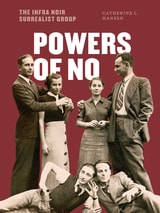
Powers of No
The Infra Noir Surrealist GroupCatherine L. Hansen
University of Minnesota Press, 2026
How five dissident poets applied Surrealism to everyday life under totalitarian rule
A collective biography of the Surrealist group Infra Noir, Powers of No reveals an important chapter in the history of the postwar European avant-garde. Detailing the group’s innovative program for cultivating community and political resistance, Catherine L. Hansen examines how its five members reimagined Surrealism as a means to endure life under totalitarianism and war.
Encompassing the careers and friendships of Gherasim Luca, Gellu Naum, Trost, Paul Păun, and Virgil Teodorescu, Powers of No is the first English-language book about this Francophone Romanian group active between 1941 and 1947. The members of Infra Noir created radical art and publications that attracted the attention of André Breton and other central figures in the wider Surrealist movement. Charting their course from the Bucharest avant-garde amid the rising tide of fascism through the turbulent intellectual and political scene of postwar France and Stalinist repression, Hansen unpacks the concepts this group developed, which envisioned new possibilities for emancipatory thought and praxis.
Grounded in a wealth of archival materials and original translations, Powers of No situates the unique legacy of Infra Noir’s revolutionary project among the various intellectual currents of a tumultuous era. Establishing Infra Noir as more than an obscure clique of dissident poets and artists, this book presents their work as a repertoire of lessons for resisting authoritarian oppression and avoiding despair even under the harshest political conditions.
Retail e-book files for this title are screen-reader friendly with images accompanied by short alt text and/or extended descriptions.