Results by title
8113 books match the query 'Literary Criticism' and 405 start with p
Practical Cues and Social Spectacle in the Chester Plays
Matthew Sergi
University of Chicago Press, 2020
Carefully combing through the plays, Sergi seeks out cues in the dialogues that reveal information about the original staging, design, and acting. These “practical cues,” as he calls them, have gone largely unnoticed by drama scholars, who have focused on the ideology and historical contexts of these plays, rather than the methods, mechanics, and structures of the actual performances. Drawing on his experience as an actor and director, he combines close readings of these texts with fragments of records, revealing a new way to understand how the Chester plays brought biblical narratives to spectators in the noisy streets. For Sergi, plays that once appeared only as dry religious dramas come to life as raucous participatory spectacles filled with humor, camp, and devotion.
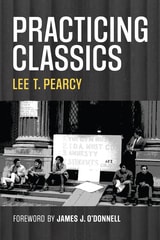
Practicing Classics
A MemoirLee T. Pearcy
University of Michigan Press, 2026
Practicing Classics is a memoir about education in America between the end of WWII and the early 21st century. Not only does it consider memory, its truths, and its deceptions, but it also unravels the complexities of class, race, gender, and social positioning in education. Lee Pearcy’s story begins with the 1957 desegregation crisis at Little Rock Central High School and its aftermath, describing how growing up in this environment shaped his academic and personal life.
As he came to study Latin and then Classics, Pearcy’s education intersected with the student disturbances at Columbia University in 1968 and a feminist revolution that brought significant numbers of women into the classical professoriate. He gives a first-hand account of a scandalous episode in the toxic administrative culture that characterized the classics department at the University of Texas in the 1980s. Against the background of these events, he unfolds his own education as a classicist and his development from apprentice to journeyman to confident teacher of Latin and Greek. Practicing Classics will engage readers who care about American education, classical studies, or the ways that choices, chances, and contingencies shaped one man’s life.
Practicing Literary Theory in the Middle Ages
Ethics and the Mixed Form in Chaucer, Gower, Usk, and HoccleveEleanor Johnson
University of Chicago Press, 2013
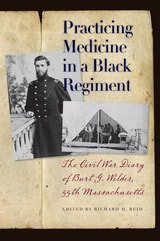
Practicing Medicine in a Black Regiment
The Civil War Diary of Burt G. Wilder, 55th MassachusettsRichard M. Reid
University of Massachusetts Press, 2010
Burt Green Wilder, a Boston-born, Harvard-educated doctor-in-training, was among the first white officers commissioned to staff the 55th Massachusetts. Like other officers serving in the state's African American units, Wilder was selected for his military experience, his "firm Anti-Slavery principles," and his faith in the value of black troops. From the time he joined the 55th in May 1863 until the regiment was discharged in September 1865, Wilder recorded his experiences and observations. He described the day-to-day activities of a Civil War surgeon, the indignities suffered by black enlisted men at the hands of a War Department that denied them the same treatment offered to white troops, and the role of the regiment in the campaign around Charleston and in Florida.
Service in the southern states also allowed Wilder to indulge a passion for natural science and comparative anatomy, including the collection of unusual species, one of which—the spider known as Nephila wilderi—still bears his name. After the war he completed his medical studies at Harvard and joined the faculty of Cornell University, where he became a distinguished professor of zoology as well as an outspoken advocate of racial equality.
In his introduction to the volume, Richard M. Reid analyzes Burt Wilder's diary and places it within the context of the war, the experience of African American troops, and Wilder's life and career.
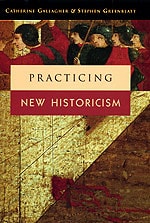
Practicing New Historicism
Catherine Gallagher and Stephen Greenblatt
University of Chicago Press, 2000
In lucid and jargon-free prose, Catherine Gallagher and Stephen Greenblatt focus on five central aspects of new historicism: recurrent use of anecdotes, preoccupation with the nature of representations, fascination with the history of the body, sharp focus on neglected details, and skeptical analysis of ideology. Arguing that new historicism has always been more a passionately engaged practice of questioning and analysis than an abstract theory, Gallagher and Greenblatt demonstrate this practice in a series of characteristically dazzling readings of works ranging from paintings by Joos van Gent and Paolo Uccello to Hamlet and Great Expectations.
By juxtaposing analyses of Renaissance and nineteenth-century topics, the authors uncover a number of unexpected contrasts and connections between the two periods. Are aspects of the dispute over the Roman Catholic doctrine of the Eucharist detectable in British political economists' hostility to the potato? How does Pip's isolation in Great Expectations shed light on Hamlet's doubt?
Offering not only an insider's view of new historicism, but also a lively dialogue between a Renaissance scholar and a Victorianist, Practicing the New Historicism is an illuminating and unpredictable performance by two of America's most respected literary scholars.
"Gallagher and Greenblatt offer a brilliant introduction to new historicism. In their hands, difficult ideas become coherent and accessible."—Choice
"A tour de force of new literary criticism. . . . Gallagher and Greenblatt's virtuoso readings of paintings, potatoes (yes, spuds), religious ritual, and novels—all 'texts'—as well as essays on criticism and the significance of anecdotes, are likely to take their place as model examples of the qualities of the new critical school that they lead. . . . A zesty work for those already initiated into the incestuous world of contemporary literary criticism-and for those who might like to see what all the fuss is about."—Kirkus Reviews, starred review
Pragmatic Liberation and the Politics of Puerto Rican Diasporic Drama
Jon D. Rossini
University of Michigan Press, 2024
2025 ATHE Outstanding Book Award Finalist
- 2025 ATDS John W. Frick Book Award Finalist
- 2025 MLA Prize in U.S. Latina and Latino and Chicana and Chicano Literary and Cultural Studies Honorable Mention
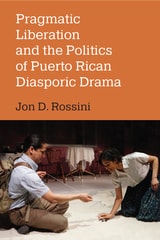
Pragmatic Liberation and the Politics of Puerto Rican Diasporic Drama explores the work of a unique group of playwrights—Puerto Rican dramatists writing in the United States—who offer a model of political engagement. As members of the Puerto Rican diaspora, they have a heightened awareness of the systematic discrimination and the colonial citizenship created by Puerto Rico’s territorial status. Pragmatic Liberation analyzes the work of established playwrights as well as work that has previously received little attention in the world of theater studies, including René Marqués’s Palm Sunday. The book demonstrates the strategies these playwrights use to model a nuanced way of moving toward liberation while being sensitive to the potential impact these actions might have on those closest to us. This is a crucially important model that needs more attention in our currently polarized political moment.
Pragmatics of Democracy
A Political Theory of African American Literature Before EmancipationDouglas A. Jones
University of Chicago Press, 2025
Douglas A. Jones’s Pragmatics of Democracy reads African American literature, from its beginnings through the mid-nineteenth century, to theorize how we have come to regard democracy as the most excellent form of political life. Jones notes that the aims of democracy, especially consent of the governed and equality under the law, can seem like tenets of governance that humans desire instinctively. But human nature does not correlate absolutely to politics. Jones argues that political selfhood is formed by “bodily events.” He proposes a typology of such experiences that dispose persons toward democratic subjectivity: ecstasy, impersonality, violence, respectability, and care.
African American literature before Emancipation reveals the democratic features of these categories that conventional political philosophy ignores or obscures. Given their lives as enslaved persons or the descendants of enslaved persons, early black writers crafted narratives about achieving democratic subjectivity that were missing in other Anglo-American canons. Pragmatics of Democracy discusses the works of well-known figures such as Phillis Wheatley, Harriet E. Wilson, and Frederick Douglass as well as those of more neglected writers such as Richard Allen, Peter Paul Simmons, James McCune Smith, and Frank J. Webb.

Prague English Studies and the Transformation of Philologies
Edited by Martin Procházka and Ondrej Pilný
Karolinum Press, 2012
Prague Palimpsest
Writing, Memory, and the CityAlfred Thomas
University of Chicago Press, 2010
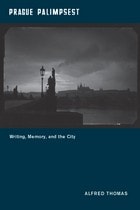
A city of immense literary mystique, Prague has inspired writers across the centuries with its beauty, cosmopolitanism, and tragic history. Envisioning the ancient city in central Europe as a multilayered text, or palimpsest, that has been constantly revised and rewritten—from the medieval and Renaissance chroniclers who legitimized the city’s foundational origins to the modernists of the early twentieth century who established its reputation as the new capital of the avant-garde—Alfred Thomas argues that Prague has become a paradoxical site of inscription and effacement, of memory and forgetting, a utopian link to the prewar and pre-Holocaust European past and a dystopia of totalitarian amnesia.
Considering a wide range of writers, including the city’s most famous son, Franz Kafka, Prague Palimpsest reassesses the work of poets and novelists such as Bohumil Hrabal, Milan Kundera, Gustav Meyrink, Jan Neruda, Vítĕzslav Nezval, and Rainer Maria Rilke and engages with other famous authors who “wrote” Prague, including Guillaume Apollinaire, Ingeborg Bachmann, Albert Camus, Paul Celan, and W. G. Sebald. The result is a comparative, interdisciplinary study that helps to explain why Prague—more than any other major European city—has haunted the cultural and political imagination of the West.
Praising It New
The Best of the New CriticismGarrick Davis
Ohio University Press, 2008
Praising It New is the first anthology of New Criticism to be printed in fifty years. It includes important essays by such influential poets and critics as T. S. Eliot, Ezra Pound, John Crowe Ransom, Allen Tate, Yvor Winters, Cleanth Brooks, R. P. Blackmur, W. K. Wimsatt, and Robert Penn Warren. Together, these authors ushered in the modernist age of poetry and criticism and transformed the teaching of literature in the schools. As the American poet and critic Randall Jarrell once noted: “I do not believe there has been another age in which so much extraordinarily good criticism of poetry has been written.”
This anthology now makes much of the best American poetry criticism available again, and includes short biographies and selected bibliographies of its chief figures. Praising It New is the perfect introduction for students to the best American poetry criticism of the twentieth century.
Prayers for Dark People
W.E.B. Du Bois
University of Massachusetts Press, 1980
A collection of prayers written by Du Bois for students at Atlanta University, thoughtfully compiled and introduced by Herbert Aptheker. These prayers are deeply committed to paying attention to and caring for the inner lives of Black Americans. Biblical familiarity and agnosticity are both present in these autobiographical writings, uplifting the hopes and practices of W. E. B. Du Bois's life, while meditating on the still relevant question of how to make “a good life for all.”

Preaching and the Rise of the American Novel
Dawn Coleman
The Ohio State University Press, 2013
Precarious Crossings
Immigration, Neoliberalism, and the AtlanticAlexandra Perisic
The Ohio State University Press, 2019
Perisic argues that in traveling beyond the postcolonial route that connects former colonizer and former colonized, these authors also shift their focus from cultural difference and national belonging to precarity—a condition characterized by a lack of economic and social stability and protection—as a shared characteristic under global neoliberalization. She demonstrates how contemporary Atlantic narratives reveal the contradictions inherent in neoliberalism as an ideology—thereby showing how they further participate in Atlantic literary and cultural dialogues and push against literary conventions of various genre as they explore the complexities of a globalized Atlantic.
Precarious Eating
Narrating Environmental Harm in the Global SouthBen Jamieson Stanley
University of Minnesota Press, 2024
The role of food and hunger in contemporary South African and Indian environmental writing
From GMOs to vegetarianism and veganism, questions of what we should (and shouldn’t) eat can be frequent sources of debate and disagreement. In Precarious Eating, Ben Jamieson Stanley asks how recentering global South representations of food might shift understandings of environmental precarity.
Precarious Eating follows the lead of writers and thinkers in South Africa and India who are tracing the production and consumption of food, exploring ways to reconnect our narratives about climate change, global capitalism, and social justice. Taking up a diverse range of novels, films, scholar/activist writings, intellectual histories, and cookbooks, Stanley connects the ethics of eating to histories of empire and apartheid, uneven globalization, gender and sexuality, and global South experiences of climate change. They shift the lens of environmental humanities from climate-focused paradigms developed in the global North to food-focused environmental culture and activism in the South, addressing topics that range from foraging and farmer suicides to disordered eating and queer intimacy.
By highlighting authors, activists, and environments of the global South, Precarious Eating joins with scholarship from postcolonial, decolonial, Indigenous, and Black studies to underscore how capitalism and empire shape our planetary environmental crisis.
Retail e-book files for this title are screen-reader friendly with images accompanied by short alt text and/or extended descriptions.
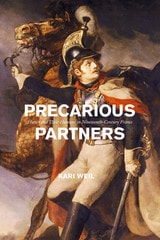
Precarious Partners
Horses and Their Humans in Nineteenth-Century FranceKari Weil
University of Chicago Press, 2020
Weil traces the evolving partnerships established between French citizens and their horses through this era. She considers the newly designed “races” of workhorses who carried men from the battlefield to the hippodrome, lugged heavy loads through the boulevards, or paraded women riders, amazones, in the parks or circus halls—as well as those unfortunate horses who found their fate on a dinner plate. Moving between literature, painting, natural philosophy, popular cartoons, sports manuals, and tracts of public hygiene, Precarious Partners traces the changing social, political, and emotional relations with these charismatic creatures who straddled conceptions of pet and livestock in nineteenth-century France.
Precarity and Belonging
Labor, Migration, and NoncitizenshipCatherine S. Ramírez
Rutgers University Press, 2021
Precious Bane
Collins and the Miltonic LegacyBy Paul S. Sherwin
University of Texas Press, 1977
During his brief and sorrowful career William Collins wrote a handful of enduring poems, the most powerful and innovative verse of the Age of Sensibility. This study traces Collins' struggle to assimilate or transcend rather than to be overwhelmed by the influence of his Sublime precursor Milton. Collins' achievement is remarkably diverse, his restless experimentation a manifestation of the quest for imaginative autonomy which is the dominant impulse of all his writing. Authoritatively and eloquently, Sherwin interprets Collins' major works including the "Ode to Evening," the poem in which Milton's presence is most enriching, the "Ode on the Poetical Character," "The Passions," "Popular Superstitions Ode," and the "Ode to Fear," Collins' most haunting and painfully burdened poem.
Although Harold Bloom and other prominent theorists of literary influence have recognized that Milton is the chief "daemonic" precursor of the Sensibility poets and the Romantics, Precious Bane represents the first extensive analysis of Milton's power both to daunt and emancipate an aspirant to the Sublime tradition. Bloom writes:
"Paul Sherwin's Precious Bane is at once the definitive study of the poetry of William Collins and also the best informed, most critically acute book yet written upon the Miltonic influence on subsequent poetry. Sherwin's deep learning and original insights illuminate Milton and Keats quite as much as they do Collins and the other tragic poets of Sensibility.
"Readers who seek rich speculation and advanced knowledge on such associated critical and historical problems as Romanticism, the Sublime mode, the agonies of poetic incarnation, and the relation of psychoanalysis to literature, will find abundant recompense in Sherwin's pages. No one in the future will teach, read or write about Collins, or the burdens of Miltonic influence, without starting from Sherwin's achievement."
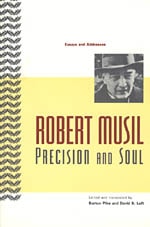
Precision and Soul
Essays and AddressesRobert Musil
University of Chicago Press, 1990
Best known as author of the novel The Man without Qualities, Robert Musil wrote these essays in Vienna and Berlin between 1911 and 1937. Offering a perspective on modern society and intellectual life, they are concerned with the crisis of modern culture as it manifests itself in science and mathematics, capitalism and nationalism, the changing roles of women and writers, and more. Writing to find his way in a world where moral systems everywhere were seemingly in decay, Musil strives to reconcile the ongoing conflict between functional relativism and the passionate search for ethical values.
Robert Musil was born in 1880 and died in 1942. His first novel, Young Törless, is available in English. A new two-volume translation by Burton Pike and Sophie Wilkins of The Man without Qualities is forthcoming from Alfred A. Knopf.
"Now we have these thirty-one invaluable and entertaining pieces, from an article on 'The Obscene and Pathological in Art' to the equally provocative talk 'On Stupidity,' which, with a new translation of The Man without Qualities forthcoming . . . amount to a literary event for the reader of English comparable to Constance Garnett's massive translation of Chekhov's stories."—Joseph Coates, Chicago Tribune
"Musil is one of the few great moderns, one of the handful who ventured to confront the issues that shape and define our time. . . . He has a range and a striking capacity every bit as great as that of Mann, Joyce, or Beckett."—Boston Review
"These essays are crucial in understanding a writer and critic whose lifelong task was an attempt to resolve the dichotomy between the precision of scientific form and the soul—the matter of life and art."—Choice
Preface to Modernism
Art Berman
University of Illinois Press, 1994
literature through empiricism, idealism, and romanticism. Berman demonstrates how
modern social, political, and scientific developments -- including capitalism, socialism,
humanism, psychoanalysis, fascism, and modernism itself -- have altered attitudes toward
time, space, self, creativity, the natural world, and community. "Deserves careful study."
-- Choice
Pregnancy in the Victorian Novel
Livia Arndal Woods
The Ohio State University Press, 2023
In Pregnancy in the Victorian Novel—the first book-length study of the topic—Livia Arndal Woods traces the connections between literary treatments of pregnancy and the medicalization of pregnancy and childbirth occurring over the long nineteenth century. Woods uses the problem of pregnancy in the Victorian novel (in which pregnancy is treated modestly as a rule and only rarely as an embodied experience) to advocate for “somatic reading,” a practice attuned to impressions of the body on the page and in our own messy lived experiences.
Examining works by Emily Brontë, Charlotte Mary Yonge, Anthony Trollope, George Eliot, Thomas Hardy and others, Woods considers instances of pregnancy that are tied to representations of immodesty, poverty, and medical diagnosis. These representations, Woods argues, should be understood in the arc of Anglo-American modernity and its aftershocks, connecting backward to early modern witch trials and forward to the criminalization of women for pregnancy outcomes in twenty-first-century America. Ultimately, she makes the case that by clearing space for the personal and anecdotal in scholarship, somatic reading helps us analyze with uncertainty rather than against it and allows for richer and more relevant textual interpretation.

Pregnant on Arrival
Making the Illegal ImmigrantEithne Luibhéid
University of Minnesota Press, 2013
“State alert as pregnant asylum seekers aim for Ireland.” “Country Being Held Hostage by Con Men, Spongers, and Those Taking Advantage of the Maternity Residency Policy.” From 1997 to 2004, headlines such as these dominated Ireland’s mainstream media as pregnant immigrants were recast as “illegals” entering the country to gain legal residency through childbirth. As immigration soared, Irish media and politicians began to equate this phenomenon with illegal immigration that threatened to destroy the country’s social, cultural, and economic fabric.
Pregnant on Arrival explores how pregnant immigrants were made into paradigmatic figures of illegal immigration, as well as the measures this characterization set into motion and the consequences for immigrants and citizens. While focusing on Ireland, Eithne Luibhéid’s analysis illuminates global struggles over the citizenship status of children born to immigrant parents in countries as diverse as the United States, Hong Kong, and elsewhere. Scholarship on the social construction of the illegal immigrant calls on histories of colonialism, global capitalism, racism, and exclusionary nation building but has been largely silent on the role of nationalist sexual regimes in determining legal status. Eithne Luibhéid turns to queer theory to understand how pregnancy, sexuality, and immigrants’ relationships to prevailing sexual norms affect their chances of being designated as legal or illegal.
Pregnant on Arrival offers unvarnished insight into how categories of immigrant legal status emerge and change, how sexual regimes figure prominently in these processes, and how efforts to prevent illegal immigration ultimately redefine nationalist sexual norms and associated racial, gender, economic, and geopolitical hierarchies.
Prehistoric Digital Poetry
An Archaeology of Forms, 1959-1995C.T. Funkhouser, with a foreword by Sandy Baldwin
University of Alabama Press, 2007
Tracing the Origins of Digital Poetry Before the Web Revolution
For the last five decades, poets have had a vibrant relationship with computers and digital technology. This book is a documentary study and analytic history of digital poetry that highlights its major practitioners and the ways that they have used technology to foster a new aesthetic. Focusing primarily on programs and experiments produced before the emergence of the World Wide Web in the mid-1990s, C. T. Funkhouser analyzes numerous landmark works of digital poetry to illustrate that the foundations of today’s most advanced works are rooted in the rudimentary generative, visual, and interlinked productions of the genre’s prehistoric period.
Since 1959, computers have been used to produce several types of poetic output, including randomly generated writings, graphical works (static, animated, and video formats), and hypertext and hypermedia. Funkhouser demonstrates how hardware, programming, and software have been used to compose a range of new digital poetic forms. Several dozen historical examples, drawn from all of the predominant approaches to digital poetry, are discussed, highlighting the transformational and multi-faceted aspects of poetic composition now available to authors. This account includes many works, in English and other languages, which have never before been presented in an English-language publication.
In exploring pioneering works of digital poetry, Funkhouser demonstrates how technological constraints that would seemingly limit the aesthetics of poetry have instead extended and enriched poetic discourse. As a history of early digital poetry and a record of an era that has passed, this study aspires both to influence poets working today and to highlight what the future of digital poetry may hold.
Presence and Resistance
Postmodernism and Cultural Politics in Contemporary American PerformancePhilip Auslander
University of Michigan Press, 1994
Preserving the Self in the South Seas, 1680-1840
Jonathan Lamb
University of Chicago Press, 2001
Lamb contends that European exploration of the South Seas was less confident and mindful than we have assumed. It was, instead, conducted in moods of distraction and infatuation that were hard to make sense of and difficult to narrate, and it prompted reactions among indigenous peoples that were equally passionate and irregular. Preserving the Self in the South Seas also examines these common crises of exploration in the context of a metropolitan audience that eagerly consumed narratives of the Pacific while doubting their truth. Lamb considers why these halting and incredible journals were so popular with the reading public, and suggests that they dramatized anxieties and bafflements rankling at the heart of commercial society.
Preserving the Spell
Basile's "The Tale of Tales" and Its Afterlife in the Fairy-Tale TraditionArmando Maggi
University of Chicago Press, 2015
If we want to rediscover the power of fairy tales—as Armando Maggi thinks we should—we need to discover a new mythic lens, a new way of approaching and understanding, and thus re-creating, the transformative potential of these stories. In Preserving the Spell, Maggi argues that the first step is to understand the history of the various traditions of oral and written narrative that together created the fairy tales we know today. He begins his exploration with the ur-text of European fairy tales, Giambattista Basile’s The Tale of Tales, then traces its path through later Italian, French, English, and German traditions, with particular emphasis on the Grimm Brothers’ adaptations of the tales, which are included in the first-ever English translation in an appendix. Carrying his story into the twentieth century, Maggi mounts a powerful argument for freeing fairy tales from their bland contemporary forms, and reinvigorating our belief that we still can find new, powerfully transformative ways of telling these stories.
Pressing the Fight
Print, Propaganda, and the Cold WarGreg Barnhisel
University of Massachusetts Press, 2010
In this volume, scholars from a variety of disciplines explore the myriad ways print was used in the Cold War. Looking at materials ranging from textbooks and cookbooks to art catalogs, newspaper comics, and travel guides, they analyze not only the content of printed matter but also the material circumstances of its production, the people and institutions that disseminated it, and the audiences that consumed it. Among the topics discussed are the infiltration of book publishing by propagandists East and West; the distribution of pro-American printed matter in postwar Japan through libraries, schools, and consulates; and the collaboration of foundations, academia, and the government in the promotion of high culture as evidence of the superiority of Western values.
At the same time, many of the qualities that made print the preferred medium of official propaganda also made it an effective instrument for challenging Cold War orthodoxies at home and abroad. Because printed materials were relatively easy to transport, to copy, and to share, they could just as well be used to bridge differences among people and cultures as to exploit them. They also provided a vehicle for disseminating satire and other expressions of dissent.
In addition to the volume editors, contributors include Ed Brunner, Russell Cobb, Laura Jane Gifford, Patricia Hills, Christian Kanig, Scott Laderman, Amanda Laugesen, Martin Manning, Kristin Matthews, Hiromi Ochi, Amy Reddinger, and James Smith. Together their essays move beyond traditional Cold War narratives to gauge the role of a crucial cultural medium in the ideological battle between the superpowers and their surrogates.
Pretexts for Writing
German Romantic Prefaces, Literature, and PhilosophyWilliams, Seán M
Bucknell University Press, 2019
Published by Bucknell University Press. Distributed worldwide by Rutgers University Press.
Primacies
Experience, Expression, and the Jewish ImaginationMichael Fishbane
University of Chicago Press, 2025
Primacies begins with the assertion that our earliest preverbal experiences are accompanied by a primary language—a universal expression of tears, cries, and laughter offered long before we learn our distinctive, ordinary languages. For Michael Fishbane, these “primacies” release the raw feelings of our existential condition and catalyze our most powerful literary expressions of sorrow, joy, and fulfillment.
In this book, Fishbane explores how ancient, medieval, and modern literature and poetry express and transform these primal sensations. Building on his theological project begun in Sacred Attunement and Fragile Finitude, Fishbane offers here a radically new lived hermeneutics that seeks to do nothing less than redefine the relationship between experience and language.
Primitive Minds
Evolution and Spiritual Experience in the Victorian NovelAnna Neill
The Ohio State University Press, 2013
Primitivism and Identity in Latin America
Essays on Art, Literature, and CultureErik Camayd-Freixas
University of Arizona Press, 2000
Although primitivism has received renewed attention in recent years, studies linking it with Latin America have been rare. This volume examines primitivism and its implications for contemporary debates on Latin American culture, literature, and arts, showing how Latin American subjects employ a Western construct to "return the gaze" of the outside world and redefine themselves in relation to modernity.
Examining such subjects as Julio Cortázar and Frida Kahlo and such topics as folk art and cinema, the volume brings together for the first time the views of scholars who are currently engaging the task of cultural studies from the standpoint of primitivism. These varied contributions include analyses of Latin American art in relation to social issues, popular culture, and official cultural policy; essays in cultural criticism touching on ethnic identity, racial politics, women's issues, and conflictive modernity; and analytical studies of primitivism's impact on narrative theory and practice, film, theater, and poetry.
This collection contributes offers a new perspective on a variety of significant debates in Latin American cultural studies and shows that the term primitive does not apply to these cultures as much as to our understanding of them.
CONTENTSParadise Subverted: The Invention of the Mexican Character / Roger Bartra
Between Sade and the Savage: Octavio Paz’s Aztecs / Amaryll Chanady
Under the Shadow of God: Roots of Primitivism in Early Colonial Mexico / Delia Annunziata Cosentino
Of Alebrijes and Ocumichos: Some Myths about Folk Art and Mexican Identity / Eli Bartra
Primitive Borders: Cultural Identity and Ethnic Cleansing in the Dominican Republic / Fernando Valerio-Holguín
Dialectics of Archaism and Modernity: Technique and Primitivism in Angel Rama’s Transculturación narrativa en América Latina / José Eduardo González
Narrative Primitivism: Theory and Practice in Latin America / Erik Camayd-Freixas
Narrating the Other: Julio Cortázar’s "Axolotl" as Ethnographic Allegory / R. Lane Kauffmann
Jungle Fever: Primitivism in Environmentalism; Rómulo Gallegos’s Canaima and the Romance of the Jungle / Jorge Marcone
Primitivism and Cultural Production: Future’s Memory; Native Peoples’ Voices in Latin American Society / Ivete Lara Camargos Walty
Primitive Bodies in Latin American Cinema: Nicolás Echevarría’s Cabeza de Vaca / Luis Fernando Restrepo
Subliminal Body: Shamanism, Ancient Theater, and Ethnodrama / Gabriel Weisz
Primitivist Construction of Identity in the Work of Frida Kahlo / Wendy B. Faris
Mi andina y dulce Rita: Women, Indigenism, and the Avant-Garde in César Vallejo / Tace Megan Hedrick
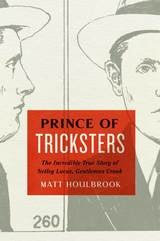
Prince of Tricksters
The Incredible True Story of Netley Lucas, Gentleman CrookMatt Houlbrook
University of Chicago Press, 2016
The lives of Netley Lucas are as flamboyant as they are unlikely. In Prince of Tricksters, Matt Houlbrook picks up the threads of Lucas’s colorful lies and lives. Interweaving crime writing and court records, letters and life-writing, Houlbrook tells Lucas’s fascinating story and, in the process, provides a panoramic view of the 1920s and ’30s. In the restless times after the Great War, the gentlemanly trickster was an exemplary figure, whose tall tales and bogus biographies exposed the everyday difficulties of knowing who and what to trust. Tracing how Lucas both evoked and unsettled the world through which he moved, Houlbrook shows how he prompted a pervasive crisis of confidence that encompassed British society, culture, and politics.
Taking readers on a romp through Britain, North America, and eventually into Africa, Houlbrook confronts readers with the limits of our knowledge of the past and challenges us to think anew about what history is and how it might be made differently.

Princes, Peasants, and Other Polish Selves
Ethnicity in American LiteratureThomas Gladsky
University of Massachusetts Press, 0
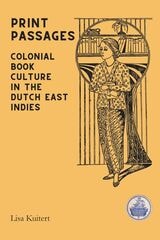
Print Passages
Colonial Book Culture in the Dutch East IndiesLisa Kuitert
National University of Singapore Press, 2026
Although printed material has become intertwined with everyday life in the twenty-first century, book culture has not always been ubiquitous. Print Passages researches the history of the arrival of the printed book in Indonesia, and the consequences this new technology brought with it. The introduction of the printing press during the Dutch occupation of the archipelago (then the Dutch East Indies) laid the foundation for a flourishing cultural and intellectual life centered on books and printed materials, especially after 1816. Though printed matter was used to colonize and control the land, it also gave the resistance a voice.
Through an exploration of selected themes, author Lisa Kuitert answers practical questions such as how Dutch language researchers and printers found their way to and within Indonesia, while also diving into the parallel printing culture that was entirely run by Indonesians, often with a Chinese background.
Print, Manuscript, and Performance
THE CHANGING RELATIONS OF THE MEDIA IN EARLY MODERN ENGLANDArthur F. Marotti and Michael D. Bristol
The Ohio State University Press, 2000
Although canonical literary writers such as Shakespeare, Jonson, and Rochester are discussed, the field of writing examined is a broad one, embracing political speeches, coterie manuscript poetry, popular pamphlets, parochially targeted martyrdom accounts, and news reports. Setting writers, audiences, and texts in their specific historical context, the contributors focus on a period in early modern England, from the late sixteenth through the late seventeenth century, when the shift from orality and manuscript communication to print was part of large-scale cultural change. Arthur F. Marotti’s and Michael D. Bristol’s introduction analyzes some of the sociocultural issues implicit in the collection and relates the essays to contemporary work in textual studies, bibliography, and publication history.
Printed Writings by George W. Russell
A BibliographyGeorge W. Russell; Compiled by Alan Denson
Northwestern University Press, 2019
Prior to Meaning
The Protosemantic and PoeticsSteve McCaffery
Northwestern University Press, 2000
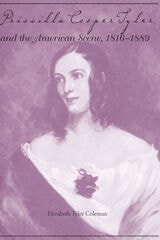
Priscilla Cooper Tyler and the American Scene, 1816-1889
Elizabeth Tyler Coleman
University of Alabama Press, 2006
A study illuminating the cultural intersections of gender, performance, and national identity in nineteenth-century America.
Priscilla Cooper Tyler and the American Scene, 1816–1889 by Elizabeth T. Coleman is a historical and cultural study that brings renewed attention to a remarkable yet often overlooked figure in nineteenth-century American life. The daughter of renowned actor Thomas Cooper, Priscilla Tyler occupied a unique position at the intersection of theatrical culture, literary expression, and political society during a period of profound national transformation.
Tracing Tyler’s life from her early involvement in the stage to her later roles within influential social and political circles, Coleman situates her subject within the broader cultural landscapes of antebellum America, the Civil War, and Reconstruction. Through letters, performances, and social connections, Tyler emerges as an astute observer and participant in the evolving American scene, offering insight into the roles women played in shaping artistic, intellectual, and public life.
The book explores themes of identity, performance, gender, and cultural change, revealing how Tyler’s experiences illuminate the complex interplay between private life and public history. Coleman’s study not only reconstructs the biography of a significant historical figure but also contributes to a deeper understanding of nineteenth-century American theater, literature, and society.
This volume is an important resource for scholars and readers interested in American studies, women’s history, and the cultural history of the nineteenth century.
Prisoner Without a Name, Cell Without a Number
Jacobo Timerman
University of Wisconsin Press, 2002
"It ranks with Hannah Arendt's Eichmann in Jerusalem in its examination of the totalitarian mind, the role of anti-Semitism, the silence."—Eliot Fremont-Smith, Village Voice
"It is impossible to read this proud and piercing account of [Timerman's] suffering and his battles without wanting to be counted as one of Timerman's friends."—Michael Walzer, New York Review of Books
"Timerman was a living reminder that real prophets are irritants and not messengers of reassurance. He told it like it is, whether in Argentina, Israel, Europe, or the United States."—Arthur Miller
Prisons, Race, and Masculinity in Twentieth-Century U.S. Literature and Film
Peter Caster
The Ohio State University Press, 2008
In Prisons, Race, and Masculinity, Peter Caster demonstrates the centrality of imprisonment in American culture, illustrating how incarceration, an institution inseparable from race, has shaped and continues to shape U.S. history and literature in the starkest expression of what W. E. B. DuBois famously termed “the problem of the color line.”
A prison official in 1888 declared that it was the freeing of slaves that actually created prisons: “we had to establish means for their control. Hence came the penitentiary.” Such rampant racism co ntributed to the criminalization of black masculinity in the cultural imagination, shaping not only the identity of prisoners (collectively and individually) but also America’s national character. Caster analyzes the representations of imprisonment in books, films, and performances, alternating between history and fiction to describe how racism influenced imprisonment during the decline of lynching in the 1930s, the political radicalism in the late 1960s, and the unprecedented prison expansion through the 1980s and 1990s. Offering new interpretations of familiar works by William Faulkner, Eldridge Cleaver, and Norman Mailer, Caster also engages recent films such as American History X, The Hurricane, and The Farm: Life Inside Angola Prison alongside prison history chronicled in the transcripts of the American Correctional Association. This book offers a compelling account of how imprisonment has functioned as racial containment, a matter critical to U.S. history and literary study.
Privacy
Concealing the Eighteenth-Century SelfPatricia Meyer Spacks
University of Chicago Press, 2003
In Privacy, Patricia Meyer Spacks explores eighteenth-century concerns about privacy and the strategies people developed to avoid public scrutiny and social pressure. She examines, for instance, the way people hid behind common rules of etiquette to mask their innermost feelings and how, in fact, people were taught to employ such devices. She considers the erotic overtones that privacy aroused in its suppression of deeper desires. And perhaps most important, she explores the idea of privacy as a societal threat—one that bred pretense and hypocrisy in its practitioners. Through inspired readings of novels by Defoe, Richardson, Fielding, and Sterne, along with a penetrating glimpse into diaries, autobiographies, poems, and works of pornography written during the period, Spacks ultimately shows how writers charted the imaginative possibilities of privacy and its social repercussions.
Finely nuanced and elegantly conceived, Spacks's new work will fascinate anyone who has relished concealment or mourned its recent demise.
Private Anarchy
Impossible Community and the Outsider’s Monologue in German Experimental FictionPaul Buchholz
Northwestern University Press, 2018
Buchholz suggests that in their experimental prose Gustav Landauer, Franz Kafka, Thomas Bernhard, and Wolfgang Hilbig each considered how the "void" of mass society could be the precondition for a new, anarchic form of community that would rest not on any assumptions of shared origins or organic unity but on an experience of extreme emptiness that blurs the boundaries of the self and enables intimacy between total strangers. This community, Buchholz argues, is created through the verbal form most closely associated with alienation and isolation: the monologue.
By showing how these authors engaged with the idea of community and by relating these contributions to an extended intellectual genealogy of nihilism, Private Anarchy illustrates the distinct philosophical and sociopolitical stakes of German experimental writing in the twentieth century.
Private Lives, Proper Relations
Regulating Black IntimacyCandice M. Jenkins
University of Minnesota Press, 2007
Private Lives, Proper Relations begins with the question of why contemporary African American literature—particularly that produced by black women—is continually concerned with issues of respectability and propriety. Candice M. Jenkins argues that this preoccupation has its origins in recurrent ideologies about African American sexuality, and that it expresses a fundamental aspect of the racial self—an often unarticulated link between the intimate and the political in black culture.
In a counterpoint to her paradigmatic reading of Nella Larsen’s Passing, Jenkins’s analysis of black women’s narratives—including Ann Petry’s The Street, Toni Morrison’s Sula and Paradise, Alice Walker’s The Color Purple, and Gayl Jones’s Eva’s Man—offers a theory of black subjectivity. Here Jenkins describes middle-class attempts to rescue the black community from accusations of sexual and domestic deviance by embracing bourgeois respectability, and asserts that behind those efforts there is the “doubled vulnerability” of the black intimate subject. Rather than reflecting a DuBoisian tension between race and nation, to Jenkins this vulnerability signifies for the African American an opposition between two poles of potential exposure: racial scrutiny and the proximity of human intimacy.
Scholars of African American culture acknowledge that intimacy and sexuality are taboo subjects among African Americans precisely because black intimate character has been pathologized. Private Lives, Proper Relations is a powerful contribution to the crucial effort to end the distortion still surrounding black intimacy in the United States.
Candice M. Jenkins is associate professor of English at Hunter College, City University o
Privately Empowered
Expressing Feminism in Islam in Northern Nigerian FictionShirin Edwin
Northwestern University Press, 2016
Problems of Dostoevsky’s Poetics
Mikhail Bakhtin
University of Minnesota Press, 1984
Prodigal Son
Vasilii Shuksin in Soviet Russian CultureJohn Givens
Northwestern University Press, 2000
Producing American Races
Henry James, William Faulkner, Toni MorrisonPatricia McKee
Duke University Press, 1999
McKee provides close readings of six novels—James’s The Wings of the Dove and The Golden Bowl, Faulkner’s The Sound and the Fury and Light in August, and Morrison’s Sula and Jazz—interspersed with excursions into Lacanian and Freudian theory, critical race theory, epistemology, and theories of visuality. In James and Faulkner, she finds, race is represented visually through media that highlight ways of seeing and being seen. Written in the early twentieth century, the novels of James and Faulkner reveal how whiteness depended on visual culture even before film and television became its predominant media. In Morrison, the culture is aural and oral—and often about the absence of the visual. Because Morrison’s African American communities produce identity in nonvisual, even anti-visual terms, McKee argues, they refute not just white representations of black persons as objects but also visual orders of representation that have constructed whites as subjects and blacks as objects.
With a theoretical approach that both complements and transcends current scholarship about race—and especially whiteness—Producing American Races will engage scholars in American literature, critical race theory, African American studies, and cultural studies. It will also be of value to those interested in the novel as a political and aesthetic form.
Producing Children
Critical Studies in Childhood CreativityPeter C. Kunze
Rutgers University Press, 2025
Producing Mass Entertainment
The Serial Life of the Yellow KidChristina Meyer
The Ohio State University Press, 2019
Producing Mass Entertainment: The Serial Life of the Yellow Kid offers a new take on the emergence of the Yellow Kid comic figure, looking closely at the mass appeal and proliferation of the Yellow Kid across different media. Christina Meyer identifies the aesthetic principles of newspaper comics and examines the social agents—advertising agencies, toy manufacturers, actors, retailers, and more—responsible for the Yellow Kid’s successful career. In unraveling the history of comic characters in capitalist consumer culture, Meyer offers new insights into the creation and dissemination of cultural products, reflecting on modern artistic and merchandising phenomena.
Professing Criticism
Essays on the Organization of Literary StudyJohn Guillory
University of Chicago Press, 2022
As the humanities in higher education struggle with a labor crisis and with declining enrollments, the travails of literary study are especially profound. No scholar has analyzed the discipline’s contradictions as authoritatively as John Guillory. In this much-anticipated new book, Guillory shows how the study of literature has been organized, both historically and in the modern era, both before and after its professionalization. The traces of this volatile history, he reveals, have solidified into permanent features of the university. Literary study continues to be troubled by the relation between discipline and profession, both in its ambivalence about the literary object and in its anxious embrace of a professionalism that betrays the discipline’s relation to its amateur precursor: criticism.
In a series of timely essays, Professing Criticism offers an incisive explanation for the perennial churn in literary study, the constant revolutionizing of its methods and objects, and the permanent crisis of its professional identification. It closes with a robust outline of five key rationales for literary study, offering a credible account of the aims of the discipline and a reminder to the professoriate of what they already do, and often do well.

Professing Literature
An Institutional HistoryGerald Graff
University of Chicago Press, 1987