Results by title
8113 books match the query 'Literary Criticism' and 405 start with p
Professing Literature
An Institutional History, Twentieth Anniversary EditionGerald Graff
University of Chicago Press, 2007
Updated with a new preface by the author that addresses many of the provocative arguments raised by its initial publication, Professing Literature remains an essential history of literary pedagogy and a critical classic.
“Graff’s history. . . is a pathbreaking investigation showing how our institutions shape literary thought and proposing how they might be changed.”— The Norton Anthology of Theory and Criticism
Professing Poetry
Seamus Heaney’s PoeticsMichael Cavanagh
Catholic University of America Press, 2009
Profiles and Plotlines
Data Surveillance in Twenty-first Century LiteratureKatherine D. Johnston
University of Iowa Press, 2023
In Profiles and Plotlines, Katherine Johnston engages this energetic reformation of contemporary literature to account for a society and economy of frenetic counting. Fiction and poetry are capable of addressing precisely that for which algorithms cannot or do not account: the effects of profile culture; the ideologies and supposed truth-power of data; the gendered and racialized dynamics of watching and being watched; and the politics of who counts and what gets counted. Johnston analyzes prescient work by contemporary authors such as Jennifer Egan, Claudia Rankine, Mohsin Hamid, and William Gibson to probe how the claims of data surveillance serve to make lives seem legible, intelligible, and sometimes even expendable.
Proletpen
America’s Rebel Yiddish PoetsEdited by Amelia Glaser and David Weintraub
University of Wisconsin Press, 2005
This anthology presents a rich but little-known body of American Yiddish poetry from the 1920s to the early 1950s by thirty-nine poets who wrote from the perspective of the proletarian left. Presented on facing pages in Yiddish and English translation, these one hundred poems are organized thematically under such headings as Songs of the Shop, United in Struggle, Matters of the Heart, The Poet on Poetry, and Wars to End All Wars. One section is devoted to verse depicting the struggles of African Americans, including several poems prompted by the infamous Scottsboro trial of nine African American men falsely accused of rape. Home to many of the writers, New York City is the subject of a varied array of poems. The volume includes an extensive introduction by Dovid Katz, a biographical note about each poet, a bibliography, and a timeline of political, social, and literary events that provide context for the poetry.
Winner of the Fenia and Yaakov Leviant Memorial Prize in Yiddish Studies for Outstanding Translation
A Choice Outstanding Academic Title
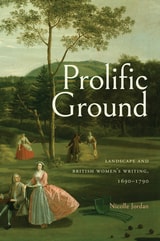
Prolific Ground
Landscape and British Women's Writing, 1690–1790Nicolle Jordan
Bucknell University Press, 2025
Prologues and Epilogues of Restoration Theater
Gender and Comedy, Performance and PrintDiana Solomon
University of Delaware Press, 2013
Published by University of Delaware Press. Distributed worldwide by Rutgers University Press.
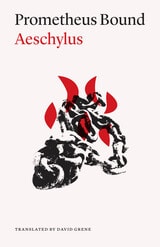
Prometheus Bound
Aeschylus
University of Chicago Press, 2013
A stand-alone edition of Aeschylus’s Prometheus Bound taken from Chicago’s renowned translations of the Greek tragedies.
In the wake of the Olympian gods’ clash with the Titans, Zeus punishes his former ally and fellow deity, Prometheus, for having dared to bring knowledge to humankind. In this sole surviving play of Aeschylus’s Prometheus trilogy, we find Prometheus chained in a desolate landscape, suffering great cruelty at the hands of his fellow gods.
Drawn from the authoritative third edition of the University of Chicago Press’s Complete Greek Tragedies series, David Grene’s searing translation of Prometheus Bound is presented here in a stand-alone edition. An introduction by Glenn W. Most and Mark Griffith provides essential information about the play’s first production, plot, and reception in antiquity.
Promissory Notes
On the Literary Conditions of DebtRobin Truth Goodman
Lever Press, 2018
Proofs of Genius
Collected Editions from the American Revolution to the Digital AgeAmanda Gailey
University of Michigan Press, 2015
Propaganda and Aesthetics
The Literary Politics of Afro-American Magazines in the Twentieth CenturyAbby Arthur Johnson
University of Massachusetts Press, 1979
Little work has been done on individual Afro-American periodicals and nothing, up to this point, has been published on twentieth-century black journals as a group. Studies of magazines in general are relatively rare, with only The Little Magazine, by Frederick Hoffman, Charles Allen, and Carolyn P. Ulrich, attempting a survey of small journals in this century. This book fills a considerable gap in literary history by detailing the development of Afro-American magazines in this century.
Properties of Modernity
Romantic Spain, Modern Europe, and the Legacies of EmpireMichael Iarocci
Vanderbilt University Press, 2006
Through a close study of Cadalso, Saavedra, and Larra, Iarocci argues that Spanish writers were intensely concerned with the same issues taken up by more famous Romantics and that the ways in which they address these issues provides us with a richer notion, not only of Spain, but of all of Europe.
Prophet in the Wilderness
The Works of Ezequiel Martínez EstradaBy Peter G. Earle
University of Texas Press, 1971
A universal test of great writers is the quality of their response to the human dilemma. Prophet in the Wilderness traces the development of that response in the works of the Argentine writer Ezequiel Martínez Estrada, from the first ambitious poems to its definitive expression in the essays and short stories.
His theme is progressive disillusionment, in history and in personal experience, both of which are interpreted in his work as accumulations of error. Modern civilization, he believes, has created many more problems than it has solved. Like Schopenhauer, Freud, and Spengler, the three thinkers who influenced him most, Martínez Estrada found in real events and circumstances all the symbols of disenchantment. Many today have begun to share this disenchantment, for since the publication of X-Ray of the Pampa in 1933 the real world has become more and more like his symbolic world.
Prophet in the Wilderness examines Martínez Estrada's foremost concern: the world as a complex reality to be discovered behind the image of one's own most intimate community. For him, the community assumed many forms: Buenos Aires, the enigmatic metropolis; the cathedral in his story "The Deluge"; the innumerable family of Marta Riquelme; Argentina itself in his masterpiece, X-Ray of the Pampa.
Martínez Estrada is the great solitary of Hispanic American literature, independent of all fashions and trends. With Borges, he had become by 1950 one of the two most discussed writers in Argentina.
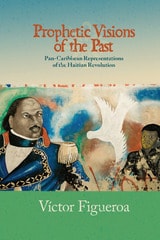
Prophetic Visions of the Past
Pan-Caribbean Representations of the Haitian RevolutionVíctor Figueroa
The Ohio State University Press, 2015
Prophetic Visions of the Past includes chapters on literary texts from a wide array of languages, histories, and perspectives. Figueroa addresses work by Alejo Carpentier (Cuba), C. L. R. James (Trinidad), Luis Palés Matos (Puerto Rico), Aimé Césaire (Martinique), Derek Walcott (Saint Lucia), Edouard Glissant (Martinique), and Manuel Zapata Olivella (Colombia). While underscoring each writer’s unique position, Figueroa also addresses their shared geographical, historical, and sociopolitical preoccupations, which are closely linked to the region’s prolonged experience of colonial interventions. Ultimately, these analyses probe how, for the larger Caribbean region, the Haitian Revolution continues to reflect the tension between inspiring revolutionary hopes and an awareness of ongoing colonial objectification and exploitation.
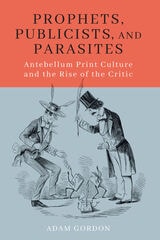
Prophets, Publicists, and Parasites
Antebellum Print Culture and the Rise of the CriticAdam Gordon
University of Massachusetts Press, 2020
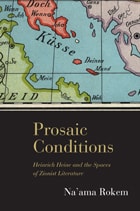
Prosaic Conditions
Heinrich Heine and the Spaces of Zionist LiteratureNa'ama Rokem
Northwestern University Press, 2013
Prose Fiction of the Cuban Revolution
By Seymour Menton
University of Texas Press, 1975
Recipient of the Hubert Herring Memorial Award from the Pacific Coast Council on Latin American Studies for the best unpublished manuscript of 1973, Prose Fiction of the Cuban Revolution is an in-depth study of works by Cubans, Cuban exiles, and other Latin American writers. Combining historical and critical approaches, Seymour Menton classifies and analyzes over two hundred novels and volumes of short stories, revealing the extent to which Cuban literature reflects the reality of the Revolution.
Menton establishes four periods—1959–1960, 1961–1965,1966–1970, and 1971–1973—that reflect the changing policies of the revolutionary government toward the arts. Using these periods as a chronological guideline, he defines four distinct literary generations, records the facts about their works, establishes coordinates, and formulates a system of literary and historical classification. He then makes an aesthetic analysis of the best of Cuban fiction, emphasizing the novels of major writers, including Alejo Carpentier's El siglo de las luces, and José Lezama Lima's Paradiso. He also discusses the works of a large number of lesser-known writers, which must be considered in arriving at an accurate historical tableau.
Menton's exploration of the short story combines a thematic and stylistic analysis of nineteen anthologies with a close study of six authors: Guillermo Cabrera Infante, Calvert Casey, Humberto Arenal, Antonio Benítez, Jesús Díaz Rodríguez, and Norberto Fuentes. Several chapters are devoted to the increasing number of novels and short stories written by Cuban exiles as well as to the eighteen novels and one short story written about the Revolution by non-Cubans, such as Julio Cortázar, Carlos Martínez Moreno, Luisa Josefina Hernández, and Pedro Juan Soto.
In studying literary works to reveal the intrinsic consciousness of a historical period, Menton presents not only his own views but also those of Cuban literary critics. In addition, he clarifies the various changes in the official attitude toward literature and the arts in Cuba, using the revolutionary processes of several other countries as comparative examples.
Prospero's Daughter
The Prose of Rosario CastellanosBy Joanna O'Connell
University of Texas Press, 1995
A member of Mexico's privileged upper class, yet still subordinated because of her gender, Rosario Castellanos became one of Latin America's most influential feminist social critics. Joanna O'Connell here offers the first book-length study of all Castellanos' prose writings, focusing specifically on how Castellanos' experiences as a Mexican woman led her to an ethic of solidarity with the oppressed peoples of her home state of Chiapas.
O'Connell provides an original and detailed analysis of Castellanos' first venture into feminist cultural analysis in her essay Sobre cultura feminina (1950) and traces her moral and intellectual trajectory as feminist and social critic. An overview of Mexican indigenismo establishes the context for individual chapters on Castellanos' narratives of ethnic conflict (the novels Balún Canán and Oficio de tinieblas and the short stories of Ciudad Real). In further chapters O'Connell reads Los convidados de agosto,Album de familia, and Castellanos' four collections of essays as developments of her feminist social analysis.
Prospero's Son
Life, Books, Love, and TheaterSeth Lerer
University of Chicago Press, 2013
Protecting the Spanish Woman
Gender Identity and Empowerment in María de Zayas's WorksXabier Granja Ibarreche
University of Nevada Press, 2023
María de Zayas is unique in the seventeenth century as the only Spanish woman to write a collection of exemplary novels whose quality is often compared to Miguel de Cervantes’ masterful works. Her two main collections of short stories, Novelas amorosas y ejemplares and Desengaños amorosos, encompass a social critique based on literary fiction that exposes flaws in the idealized archetypes of masculine identity in early modern Spain. Zayas’s stories redefine women’s patriarchal disadvantage as a tool to expose the ways in which early modern Spanish women could be empowered to counteract men’s discursive and political authority, which they use to unfairly maintain their own social privilege.
Xabier Granja Ibarreche explores how Zayas defies Spanish hegemony by manipulating and transforming the ideals of courtly masculinity that had been popularized by conduct manuals and the traits they specified for appropriate noble comportment. In doing so, Zayas elaborates a nonofficial discourse throughout plots that subvert patriarchal hierarchies: she rearticulates the existing ideological order to empower women who are no longer willing to remain silent and oppressed by masculine domination after centuries of failing to attain a sufficiently self-sufficient political position to ascend in the social hierarchy. By inverting the male gaze that assumes masculinity as a preeminent identity, Zayas subverts the patriarchal subject/masculine, object/feminine order and destabilizes manly superiority as a basic universal reality, thereby empowering and unshackling Spanish women to liberate Iberian culture from the repressive and pernicious future she forebodes.
Protocols of Liberty
Communication Innovation and the American RevolutionWilliam B. Warner
University of Chicago Press, 2013
Proust among the Nations
From Dreyfus to the Middle EastJacqueline Rose
University of Chicago Press, 2011
Known for her far-reaching examinations of psychoanalysis, literature, and politics, Jacqueline Rose has in recent years turned her attention to the Israel-Palestine conflict, one of the most enduring and apparently intractable conflicts of our time. In Proust among the Nations, she takes the development of her thought on this crisis a stage further, revealing it as a distinctly Western problem.
Proust in Perspective
VISIONS AND REVISIONSEdited by Armine Kotin Mortimer and Katherine Kolb
University of Illinois Press, 2002
In nineteen original essays, a foreword by Jean–Yves Tadié, and an introduction by editors Armine Kotin Mortimer and Katherine Kolb, this volume guides readers through the dense weave of Proust's fiction and correspondence. The essays take us into the realm of Proustian language–-as quotation, metaphor, and memory–-and into art history and musical ideology, connecting the art of words with the words of art. They explore the interface of history and fiction, the mysteries of the text's evolution, and the dilemmas of its publication. They present the revelations of genetic criticism and the surprises of gender analysis.
Taken together, these essays conjure a multifaceted profile of Proust–-his work, life, character, and influence–-and of new directions in Proust scholarship today. With compelling rigor and infectious enthusiasm, Proust in Perspective conveys the magnitude of Proust's continuing appeal.
Proust's Deadline
Christine M. Cano
University of Illinois Press, 2006
Marcel Proust’s multivolume masterpiece, À la recherche du temps perdu, began to appear in 1913. Over the next fifty years, it gained a reputation as one of the greatest literary works of the twentieth century. But the novel’s classic image as a completed work was later shattered by the discovery of unpublished drafts, and the “war of the Prousts” has kept scholars arguing over its definitive form ever since.
Christine M. Cano’s Proust’s Deadline presents a concise history of the publishing and reception of À la recherche du temps perdu, and sorts out the most important issues that have arisen from the ensuing debates about the text. She ultimately shows how this quintessential “book about time” tells another story about time’s passage: the story of Proust’s mortal confrontation with the temporality of writing, publishing, and reading.
Proust, Mann, Joyce in the Modernist Context, Second Edition
Gerald Gillespie
Catholic University of America Press, 2010
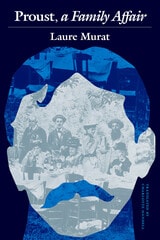
Proust, a Family Affair
Laure Murat
University of Chicago Press, 0
A personal take on Proust’s In Search of Lost Time, written by a woman born into the aristocratic world it describes.
Proust’s In Search of Lost Time is many things: a staggering literary achievement, an evocation of an elite milieu, a complex reckoning with memory. For Laure Murat, it was also a map of the world into which she was born—the world of the French Aristocracy. Descended from French nobility on both sides, Murat saw the châteaux and balls of In Search of Lost Time as the backdrop to her own family story, understood anew through Proust’s eyes.
In this beautiful book, Murat explores both the oppressive constraints of the aristocratic life and the fluidity and linguistic virtuosity of Proust’s astonishing seven-volume novel, which shifts focus from codes of behavior to the experience of living. In Proust, a Family Affair, Murat celebrates the emancipating power of literature and the rewards of paying close attention to a text that may, in turn, provoke a close and loving attendance to the self.
Originally published in French, Proust, a Family Affair has won the Prix Médicis and was shortlisted for France’s most coveted literary award, the Prix Goncourt. This readable, moving translation into English by Charlotte Mandell will appeal to lovers of Proust and to all readers who appreciate personal explorations of literary masterpieces.

Provinces of the Mind
The Modern Novel on Provincial TimeVictoria Baena
University of Chicago Press, 2027
How the provinces, rather than cities or capitals, became the key setting dramatized in—but also transformed by—modern novels in English and French.
To be provincial is to mistake one’s narrow milieu for the world: it is to fall prey to an error of scale. But it is also to feel behind, belated, and excluded from the possibilities of the modern world. In this elegant study of the novel “on provincial time,” Victoria Baena argues that the literary geography of “the provinces” played a key role in forging European narratives of modernity.
In the wake of French revolutionaries’ suppression of older provincial identities and as Britain expanded its imperial reach, the provinces were reinvented on various scales: from countryside to small town, from domestic region to faraway colony. Baena brings together Marxist and feminist spatial theory with a close attention to the politics of narrative form in order to show how the remarkably mobile concept of the provinces developed across social and cultural frameworks from 1800 to 1933. Offering new interpretations of novels of the realist tradition—by Honoré de Balzac, George Eliot, Emily Brontë, George Sand, Thomas Hardy, Marcel Proust, Alain-Fournier, James Joyce, and Claude McKay—she shows how the question of representing the provinces transformed the modern novel.
Provinces of the Mind illuminates some of the more pernicious fictions of provincialism. But it also describes, often movingly, the desire no longer to be provincial, along with the ambivalence and alienation that can entail. Ultimately, the book shows how literary critics can use the provinces to translate questions of literary geography across borders. By interrogating the provincialisms of our own time and place, Baena suggests, critics might make a better case for those worth retaining, as well as a better grasp of those to be left behind.
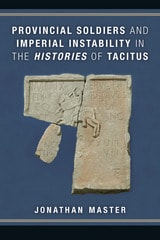
Provincial Soldiers and Imperial Instability in the Histories of Tacitus
Jonathan Master
University of Michigan Press, 2016
Master draws on scholarship in political theory, Latin historiography, Roman history, and ethnic identity to demonstrate how Tacitus presented to his contemporary audience in Trajanic Rome the dangerous consequences of the city’s failure to reward and incorporate its provincial subjects. Master argues that Tacitus’ presentation of the Vitellian and Flavian armies, and especially the Batavian auxiliary soldiers, reflects a central lesson of the Histories: the Empire’s exploitation of provincial manpower (increasingly the majority of all soldiers under Roman banners) while offering little in return, set the stage for civil wars and ultimately the separatist Batavian revolt.
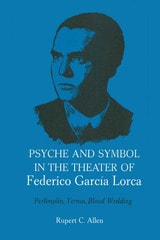
Psyche and Symbol in the Theater of Federico Garcia Lorca
Perlimplin, Yerma, Blood WeddingBy Rupert C. Allen
University of Texas Press, 1974
Symbol and psyche are twin concepts in contemporary symbological studies, where the symbol is considered to be a "statement" by the psyche. The psyche is a manifold of conscious and unconscious contents, and the symbol is their mediator. Because Lorca's dramatic characters are psychic entities made up of both conscious and unconscious elements, they unfold, grow, and meet their fate in a dense realm of shifting symbols.
In Psyche and Symbol in the Theater of Federico García Lorca, Rupert Allen analyzes symbologically three dramatic works of Lorca. He has found Perlimplín to be a good deal more complex in both psyche and symbol than it has been admitted to be. Yerma involves psychological complications that have not been considered in the light of modern critical analysis, and the symbolic reaches ofBlood Wedding have until this book remained largely unexplored.
Lorca was no stranger to the "agony of creation," and this struggle sometimes appears symbolically in the form of his dramatic characters. Both Yerma and Blood Wedding reflect specific problems underlying the creative act, for they are "translations" into the realm of sexuality of the creative turmoil experienced by Lorca the poet. Perlimplín portrays the paradoxical suicide as a self-murder born out of the futile attempt to create not a poem, but a self.
Previous criticism of these three plays has been dominated by critical assumptions that are transcended by Lorca's own twentieth-century mentality. Allen's analysis provides a new view of Lorca as a dramatist and presents new material to students of symbology.

Psycho Paths
Tracking the Serial Killer Through Contemporary American Film and FictionPhilip L. Simpson
Southern Illinois University Press, 2000
Philip L. Simpson provides an original and broad overview of the evolving serial killer genre in the two media most responsible for its popularity: literature and cinema of the 1980s and 1990s.
The fictional serial killer, with a motiveless, highly individualized modus operandi, is the latest manifestation of the multiple murderers and homicidal maniacs that haunt American literature and, particularly, visual media such as cinema and television. Simpson theorizes that the serial killer genre results from a combination of earlier genre depictions of multiple murderers, inherited Gothic storytelling conventions, and threatening folkloric figures reworked over the years into a contemporary mythology of violence. Updated and repackaged for mass consumption, the Gothic villains, the monsters, the vampires, and the werewolves of the past have evolved into the fictional serial killer, who clearly reflects American cultural anxieties at the start of the twenty-first century.
Citing numerous sources, Simpson argues that serial killers’ recent popularity as genre monsters owes much to their pliability to any number of authorial ideological agendas from both the left and the right ends of the political spectrum. Serial killers in fiction are a kind of debased and traumatized visionary, whose murders privately and publicly re-empower them with a pseudo-divine aura in the contemporary political moment. The current fascination with serial killer narratives can thus be explained as the latest manifestation of the ongoing human fascination with tales of gruesome murders and mythic villains finding a receptive audience in a nation galvanized by the increasingly apocalyptic tension between the extremist philosophies of both the New Right and the anti-New Right.
Faced with a blizzard of works of varying quality dealing with the serial killer, Simpson has ruled out the catalog approach in this study in favor of in-depth an analysis of the best American work in the genre. He has chosen novels and films that have at least some degree of public name-recognition or notoriety, including Red Dragon and The Silence of the Lambs by Thomas Harris, Manhunter directed by Michael Mann, Henry: Portrait of a Serial Killer directed by John McNaughton, Seven directed by David Fincher, Natural Born Killers directed by Oliver Stone, Zombie by Joyce Carol Oates, and American Psycho by Bret Easton Ellis.
Psychoanalysis and Social Theory
The Limits of SociologyIan Craib
University of Massachusetts Press, 1989
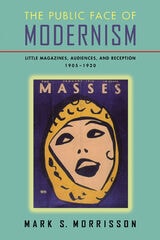
Public Face Of Modernism
Little Magazines, Audiences, And Reception, 1905-1920Mark S. Morrisson
University of Wisconsin Press, 2000
The phenomenal successes of new advertising agencies and mass market publishers did elicit what Morrisson calls a "crisis of publicity" for some modernists and for many concerned citizens in both countries. But, as Morrisson demonstrates, the vast influence of these industries on consumers also had a profound and largely overlooked effect upon many modernist authors, artists, and others. By exploring the publicity and audience reception of several of the most important modernist magazines of the period, The Public Face of Modernism shows how modernists, far from lamenting the destruction of meaningful art and public culture by the new mass market, actually displayed optimism about the power of mass-market technologies and strategies to transform and rejuvenate contemporary culture—and, above all, to restore a public function to art.
This reconstruction of the "public face of modernism" offers surprising new perceptions about the class, gender, racial, and even generational tensions within the public culture of the early part of the century, and provides a rare insight into the actual audiences for modernist magazines of the period. Moreover, in new readings of works by James Joyce, George Bernard Shaw, Wyndham Lewis, Ford Madox Ford, T. S. Eliot, William Carlos Williams, and many others, Morrisson shows that these contexts also had an impact on the techniques and concerns of the literature itself.
Public History, Private Stories
Italian Women’s AutobiographyGraziella Parati
University of Minnesota Press, 1996
Explores the way Italian women writers craft identities through writing.
In this important volume, Graziella Parati examines the ways in which Italian women writers articulate their identities through autobiography—a public act that is also the creation of a private life. Considering autobiographical writings by five women writers from the seventeenth century to the present, Parati draws important connections between self-writing and the debate over women’s roles, both traditional and transgressive.
Parati considers the first prose autobiography written by an Italian woman -Camilla Faà Gonzaga’s 1622 memoir—as her beginning point, citing it as a central “pre-text.” In her memoir, Gonzaga makes explicit her conflict over the public silence imposed on her, yet succeeds in writing herself into history through self-narrative. Parati then examines Enif Robert’s autobiography, in which Robert strives to enter the public sphere of the post-World War I futurist movement by writing about her fight to overcome cancer of the uterus. Next, Parati considers Fausta Cialente’s life story, an account of her family's life in Trieste from World War I through the fascist era, as well as the narrative in which Rita Levi Montalcini describes her life as a woman, a Nobel-Prize winning scientist, and a Jew who lived under fascism in the thirties and forties. Finally, Parati analyzes Luisa Passerini's look back on her involvement with the student movement of 1968. Through her discussion of these women’s writings, Parati demonstrates the complex negotiations over identity contained within them, negotiations that challenge dichotomies between male and female, maternal and paternal, and private and public. Public History, Private Stories is a compelling exploration of the disparate identities created by these women through the act of writing autobiography.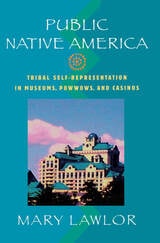
Public Native America
Tribal Self-Representations in Museums, Powwows, and CasinosLawlor, Mary
Rutgers University Press, 2006
The Native American casino and gaming industry has attracted unprecedented American public attention to life on reservations. Other tribal public venues, such as museums and powwows, have also gained in popularity among non-Native audiences and become sites of education and performance.
In PublicNative America, Mary Lawlor explores the process of tribal self-definition that the communities in her study make available to off-reservation audiences. Focusing on architectural and interior designs as well as performance styles, she reveals how a complex and often surprising cultural dynamic is created when Native Americans create lavish displays for the public’s participation and consumption.
Drawing on postcolonial and cultural studies, Lawlor argues that these venues serve as a stage where indigenous communities play out delicate negotiations—on the one hand retaining traditional beliefs and rituals, while on the other, using what they have learned about U.S. politics, corporate culture, tourism, and public relations to advance their economic positions.
Public Negotiations
Gender and Journalism in Contemporary US Latina/o LiteratureAriana E. Vigil
The Ohio State University Press, 2019
Vigil also reveals how these conversations inevitably engage with gender concerns, showing how the role of gender in this relationship is neither static nor consistent over time. Examining how these works represent such things as gendered Latina/o counter publics, how Central American–American communities are gendered in relation to other US Latina/o communities, how and why gendered expressions of Latinidad are produced and marketed, and how print media provides an important space for dissemination of diverse ideas, Public Negotiations considers the way in which gender functions in terms of both the construction and reception of a Latina/o public in a transnational space. Through thorough examination and with deep insight, Vigil shows how literature can invaluably reflect current and historical issues surrounding media and the public sphere and help us imagine new, hopefully better, possibilities.
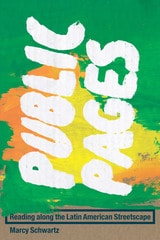
Public Pages
Reading Along the Latin American StreetscapeBy Marcy Schwartz
University of Texas Press, 2018
Public reading programs are flourishing in many Latin American cities in the new millennium. They defy the conception of reading as solitary and private by literally taking literature to the streets to create new communities of readers. From institutional and official to informal and spontaneous, the reading programs all use public space, distribute creative writing to a mass public, foster collective rather than individual reading, and provide access to literature in unconventional arenas.
The first international study of contemporary print culture in the Americas, Public Pages reveals how recent cultural policy and collective literary reading intervene in public space to promote social integration in cities in Colombia, Argentina, Brazil, Mexico, and Chile. Marcy Schwartz looks at broad institutional programs such as UNESCO World Book Capital campaigns and the distribution of free books on public transportation, as well as local initiatives that produce handmade books out of recycled materials (known as cartoneras) and display banned books at former military detention centers. She maps the connection between literary reading and the development of cultural citizenship in Latin America, with municipalities, cultural centers, and groups of ordinary citizens harnessing reading as an activity both social and literary. Along with other strategies for reclaiming democracy after decades of authoritarian regimes and political violence, as well as responding to neoliberal economic policies, these acts of reading collectively in public settings invite civic participation and affirm local belonging.
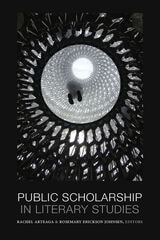
Public Scholarship in Literary Studies
Rachel Arteaga
Amherst College Press, 2021
"There are books of literary criticism that attempt to reach crossover audiences but none that take this particular public-humanities-focused-on-literary criticism perspective."—Kathryn Temple, Georgetown University
Contributions by Rachel Arteaga, Christine Chaney, Jim Cocola, Daniel Coleman, Christopher Douglas, Gary Handwerk, Cynthia L. Haven, Rosemary Erickson Johnsen, Anu Taranath, Carmaletta M. Williams, and Lorraine York.

Public and Private
Gender, Class, and the British Novel (1764-1878)Patricia McKee
University of Minnesota Press, 1997
Public and Private was first published in 1997. Minnesota Archive Editions uses digital technology to make long-unavailable books once again accessible, and are published unaltered from the original University of Minnesota Press editions.
This groundbreaking work examines the emergent and fluctuating relationship between the public and private social spheres of the late eighteenth and nineteenth centuries. By assessing novels such as Mary Shelley's Frankenstein and Jane Austen's Emma through the lens of the social theories of Jürgen Habermas and Michel Foucault, Patricia McKee presents a fresh and highly original contribution to literary studies.
McKee explores the themes of production and consumption as they relate to gender and class throughout the works of many of the most influential novels of the age including Tobias Smollett's Humphry Clinker, Horace Walpole's The Castle of Otranto, Emma, Frankenstein, Anthony Trollope's Barchester Towers, Charles Dickens's Little Dorrit and The Old Curiosity Shop, Mrs. Henry Wood's East Lynne, and Thomas Hardy's The Return of the Native.
McKee analyzes portrayals of a society in which abstract idealism belonged to knowledgeable, productive men and the realm of ignorance was left to emotional, consuming women and the uneducated. She traces the various ways British literature of the eighteenth and nineteenth centuries worked to reform this social experience. Topics include Dickens's attack on the bureaucratic use of knowledge to maintain the status quo; the function of antiprogressive depictions of knowledge in Trollope, Shelley, and Hardy; and Austen's characterization of the protagonist Emma as an exception in a society that denied women's productive use of knowledge.
Offering a sharp challenge to theorists who have charted a linear division of public and private experience, McKee highlights the unexpected configurations of the emergence of the public and private spheres and the effect of knowledge distribution across class and gender lines.
Patricia McKee is professor of English at Dartmouth College. She is the author of Heroic Commitment in Richardson, Eliot, and James (1986).

Publishing
Tariq Goddard
Duke University Press, 2027
Publishing Blackness
Textual Constructions of Race Since 1850George Hutchinson and John K. Young, Editors
University of Michigan Press, 2013
From the white editorial authentication of slave narratives, to the cultural hybridity of the Harlem Renaissance, to the overtly independent publications of the Black Arts Movement, to the commercial power of Oprah's Book Club, African American textuality has been uniquely shaped by the contests for cultural power inherent in literary production and distribution. Always haunted by the commodification of blackness, African American literary production interfaces with the processes of publication and distribution in particularly charged ways. An energetic exploration of the struggles and complexities of African American print culture, this collection ranges across the history of African American literature, and the authors have much to contribute on such issues as editorial and archival preservation, canonization, and the "packaging" and repackaging of black-authored texts. Publishing Blackness aims to project African Americanist scholarship into the discourse of textual scholarship, provoking further work in a vital area of literary study.
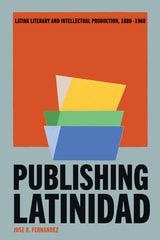
Publishing Latinidad
Latinx Literary and Intellectual Production, 1880–1960Jose O. Fernandez
University of Arizona Press, 2025
Publishing Latinidad brings to light the overlooked contributions of early Latinx writers and intellectuals, offering a fresh perspective on their roles in shaping American literary and cultural landscapes.
Jose O. Fernandez meticulously examines the works of notable figures like José Martí, Arturo Schomburg, Jesús Colón, José de la Luz Sáenz, Adela Sloss-Vento, and Américo Paredes, illuminating their innovative approaches to circumventing exclusionary practices in the publishing world. He demonstrates how these writers and intellectuals entered literary, cultural, and intellectual discourses through alternative modes of literary production: crónicas, translations, paratexts, bibliographies, archival practices, sketches, diaries, biographies, unpublished fiction, and scholarly monographs. Through these examples, Fernandez situates Latinx literary production in this time period within the broader context of racial and ethnic solidarity movements in the United States.
Publishing Latinidad is essential reading for anyone interested in the social and cultural underpinnings of Latinx literature and intellectual thought. It challenges traditional narratives and enriches our appreciation of the diverse voices that have long been instrumental in the fight for justice.
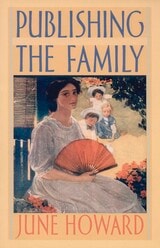
Publishing the Family
June Howard
Duke University Press, 2001
Publishing the Family describes the sources and controversial outcome of a fascinating literary experiment. Howard embeds the story of The Whole Family in the story of Harper & Brothers’ powerful and pervasive presence in American cultural life, treating the publisher, in effect, as an author.
Each chapter of Publishing the Family casts light on some aspect of life in the United States at a moment that arguably marked the beginning of our own era. Howard revises common views of the turn-of-the-century literary marketplace and discusses the perceived crisis in the family as well as the popular and expert discourses that emerged to remedy it. She also demonstrates how creative women like Bazar editor Elizabeth Jordan blended their own ideas about the “New Woman” with traditional values. Howard places these analyses in the framework of far-reaching historical changes, such as the transformation of the public meaning of emotion and “sentimentality.” Taken together, the chapters in Publishing the Family show how profoundly the modern mapping of social life relies on boundaries between family and business, culture and commerce, which The Whole Family and Publishing the Family constantly unsettle.
Publishing the Family will interest students and scholars of American history, literature, and culture, as well as those studying gender, sexuality, and the family.
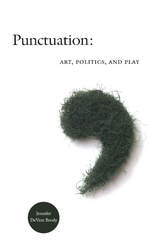
Punctuation
Art, Politics, and PlayJennifer DeVere Brody
Duke University Press, 2008
Brody provides a playful, erudite meditation on punctuation’s power to direct discourse and, consequently, to shape human subjectivity. Her analysis ranges from a consideration of typography as a mode for representing black subjectivity in Ralph Ellison’s Invisible Man to a reflection on hyphenation and identity politics in light of Strunk and White’s prediction that the hyphen would disappear from written English. Ultimately, Brody takes punctuation off the “stage of the page” to examine visual and performance artists’ experimentation with non-grammatical punctuation. She looks at different ways that punctuation performs as gesture in dances choreographed by Bill T. Jones, in the hybrid sculpture of Richard Artschwager, in the multimedia works of the Japanese artist Yayoi Kusama, and in Miranda July’s film Me and You and Everyone We Know. Brody concludes with a reflection on the future of punctuation in the digital era.
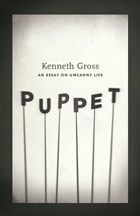
Puppet
An Essay on Uncanny LifeKenneth Gross
University of Chicago Press, 2011
The puppet creates delight and fear. It may evoke the innocent play of childhood, or become a tool of ritual magic, able to negotiate with ghosts and gods. Puppets can be creepy things, secretive, inanimate while also full of spirit, alive with gesture and voice. In this eloquent book, Kenneth Gross contemplates the fascination of these unsettling objects—objects that are also actors and images of life.
The poetry of the puppet is central here, whether in its blunt grotesquery or symbolic simplicity, and always in its talent for metamorphosis. On a meditative journey to seek the idiosyncratic shapes of puppets on stage, Gross looks at the anarchic Punch and Judy show, the sacred shadow theater of Bali, and experimental theaters in Europe and the United States, where puppets enact everything from Baroque opera and Shakespearean tragedy to Beckettian farce. Throughout, he interweaves accounts of the myriad faces of the puppet in literature—Collodi’s cruel, wooden Pinocchio, puppetlike characters in Kafka and Dickens, Rilke’s puppet-angels, the dark puppeteering of Philip Roth’s Micky Sabbath—as well as in the work of artists Joseph Cornell and Paul Klee. The puppet emerges here as a hungry creature, seducer and destroyer, demon and clown. It is a test of our experience of things, of the human and inhuman. A book about reseeing what we know, or what we think we know, Puppet evokes the startling power of puppets as mirrors of the uncanny in life and art.
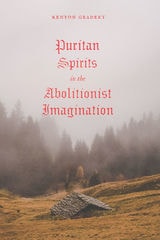
Puritan Spirits in the Abolitionist Imagination
Kenyon Gradert
University of Chicago Press, 2020
Puritan Spirits in the Abolitionist Imagination reveals how the leaders of the nineteenth-century abolitionist movement—from landmark figures like Ralph Waldo Emerson to scores of lesser-known writers and orators—drew upon the Puritan tradition to shape their politics and personae. In a striking instance of selective memory, reimagined aspects of Puritan history proved to be potent catalysts for abolitionist minds. Black writers lauded slave rebels as new Puritan soldiers, female antislavery militias in Kansas were cast as modern Pilgrims, and a direct lineage of radical democracy was traced from these early New Englanders through the American and French Revolutions to the abolitionist movement, deemed a “Second Reformation” by some. Kenyon Gradert recovers a striking influence on abolitionism and recasts our understanding of puritanism, often seen as a strictly conservative ideology, averse to the worldly rebellion demanded by abolitionists.
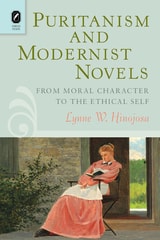
Puritanism and Modernist Novels
From Moral Character to the Ethical SelfLynne W. Hinojosa
The Ohio State University Press, 2015
Puritanism and Modernist Novels offers new formal and contextual readings of early modernist novels by Oscar Wilde, E. M. Forster, James Joyce, and Ford Madox Ford. Hinojosa demonstrates that, while they long for escape, these authors still question the value of the novelistic narrative of confinement and escape. Bridging modernist and novel studies, Puritanism and Modernist Novels contributes to conversations about secularization and religion in both fields, highlighting the limitations created by the secularization narrative of modernity.
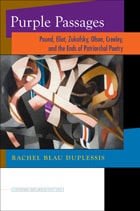
Purple Passages
Pound, Eliot, Zukofsky, Olson, Creeley, and the Ends of Patriarchal PoetryRachel Blau DuPlessis
University of Iowa Press, 2012
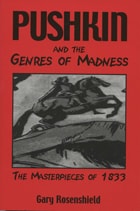
Pushkin and the Genres of Madness
The Masterpieces of 1833Gary Rosenshield
University of Wisconsin Press, 2003
In 1833 Alexander Pushkin began to explore the topic of madness, a subject little explored in Russian literature before his time. The works he produced on the theme are three of his greatest masterpieces: the prose novella The Queen of Spades, the narrative poem The Bronze Horseman, and the lyric "God Grant That I Not Lose My Mind." Gary Rosenshield presents a new interpretation of Pushkin’s genius through an examination of his various representations of madness.
Pushkin brilliantly explored both the destructive and creative sides of madness, a strange fusion of violence and insight. In this study, Rosenshield illustrates the surprising valorization of madness in The Queen of Spades and "God Grant That I Not Lose My Mind" and analyzes The Bronze Horseman’s confrontation with the legacy of Peter the Great, a cornerstone figure of Russian history. Drawing on themes of madness in western literature, Rosenshield situates Pushkin in a greater framework with such luminaries as Shakespeare, Sophocles, Cervantes, and Dostoevsky providing an insightful and absorbing study of Russia’s greatest writer.
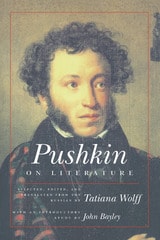
Pushkin on Literature
Tatiana Wolff
Northwestern University Press, 1998
Pushkin's Button
Serena Vitale
University of Chicago Press, 2000
"Pushkin's Button will keep all constituencies of reader fastened to their seats, as they watch Petersburg's lofty denizens leave no moment of the hurtling Pushkin scandal unrecorded or not speculated on."—Monika Greenleaf,Los Angeles Times
"[A] deliciously entertaining whydunit, a book in which every page seduces with a riddle. . . . Vivacious, seductive, original."—Michael Dirda, Washington Post
"A delightful combination of retrograde pleasures (court balls, the demise of a doomed genius) and primary sources. . . . Illuminating."—Richard Lamb, New York Times Book Review
"A book almost impossible to put down."—George Steiner, New Yorker
Pushkin, the Decembrists, and Civic Sentimentalism
Emily Wang
University of Wisconsin Press, 2023
Through careful readings of the literature of Pushkin and others active in the northern branch of the Decembrist movement, such as Kondraty Ryleev, Wilhelm Küchelbecker, and Fyodor Glinka, Wang traces the development of “emotional communities” among the members and adjacent writers. This book illuminates what Wang terms “civic sentimentalism”: the belief that cultivating noble sentiments on an individual level was the key to liberal progress for Russian society, a core part of Decembrist ideology that constituted a key difference from their thought and Pushkin’s. The emotional program for Decembrist community members was, in other ways, a civic program for Russia as a whole, one that they strove to enact by any means necessary.