Results by title
18284 books match the query 'United States' and 850 start with p
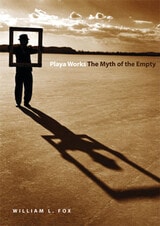
Playa Works
The Myth of the EmptyWilliam L. Fox
University of Nevada Press, 2024
In eight brilliant essays, Fox explores many of the major playas of the American West , examining locations as diverse as Nellis Air Force Base and Frenchman Flat, where the federal government has tested experimental aircraft and atomic weaponry; the Great Salt Lake Desert, where land-speed records have been broken; and the Black Rock Desert of Northern Nevada, site of the colorful Burning Man arts festival. He analyzes the geological and climatological conditions that created the playas and the historical role that playas played in the exploration and settlement of the West. And he offers lucid and keenly perceptive discussions of the ways that artists have responded to the playas, from the ancient makers of geoglyphs to the work of contemporary artists who have found inspiration in these enigmatic spaces, including earthworks builder Michael Heizer, photographer Richard Misrach, and painter Michael Moore. The ensemble is a compelling combination of natural history, philosophy, and art criticism, a thoughtful meditation on humankind's aversion to and fascination with the void.
Playback
By Richard "Cactus" Pryor
University of Texas Press, 1995
From the town that brought you Molly Ivins, Liz Carpenter, John Henry Faulk, and Greater Tuna, here's Cactus Pryor. For decades, Cactus' wit and wisdom have delighted radio listeners, as well as the many social, political, business, and philanthropic groups throughout the United States whose functions have been enlivened by this accomplished master of ceremonies and after-dinner speaker.
Now the University of Texas Press takes great pleasure in bringing you this quintessential Texas humorist. Playback gathers over forty of Cactus Pryor's favorite radio essays, translating "ear words into eye words," as he puts it. In these pieces, Cactus paints vivid word pictures of people and places, offering readers the same "you are there" immediacy that makes his radio broadcasts so popular. In them, you'll take a sentimental journey with Cactus and his wife to the Maui grave site of Charles Lindbergh—discover how legendary University of Texas football coach Darrell Royal faced the agony of defeat with humor—meet unsung heroes like the 104-year-old who's teaching himself to read and write—get acquainted with the notable folks Cactus has known, including Lady Bird Johnson, John Wayne, Jane Fonda, and James Michener—and, of course, share Cactus' love of family, friends, and the Texas coast.
As Bailey White's essays on National Public Radio have introduced listeners across the country to the lifeways of the Deep South, so Cactus Pryor offers a humorous, revealing look at how we Texans view ourselves, our neighbors, and the world. Read Playback now, and see what you've been missing.
Played Out on the Strip
The Rise and Fall of Las Vegas Casino BandsJanis L. McKay
University of Nevada Press, 2016
From 1940 to 1989, nearly every hotel on the Las Vegas Strip employed a full-time band or orchestra. After the late 1980s, when control of the casinos changed hands from independent owners to corporations, almost all of these musicians found themselves unemployed. Played Out on the Strip traces this major shift in the music industry through extensive interviews with former musicians.
In 1989, these soon-to-be unemployed musicians went on strike. Janis McKay charts the factors behind this strike, which was precipitated by several corporate hotel owners moving to replace live musicians with synthesizers and taped music, a strategic decision made in order to save money. The results of this transitional period in Las Vegas history were both long-lasting and far-reaching for the entertainment industry. With its numerous oral history interviews and personal perspectives from the era, this book will appeal to readers interested in Las Vegas history, music history, and labor issues.
Playful Frames
Styles of Widescreen CinemaSteven Rybin
Rutgers University Press, 2024
Playful Protest
The Political Work of Joy in Latinx MediaKristie Soares
University of Illinois Press, 2023
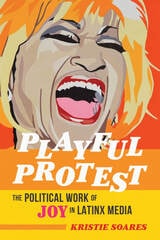
Joy is a politicized form of pleasure that goes beyond gratification to challenge norms of gender, sexuality, race, and class. Kristie Soares focuses on the diasporic media of Puerto Rico and Cuba to examine how music, public activist demonstrations, social media, sitcoms, and other areas of culture resist the dominant stories told about Latinx joy. As she shows, Latinx creators compose versions of joy central to social and political struggle and at odds with colonialist and imperialist narratives that equate joy with political docility and a lack of intelligence. Soares builds her analysis around chapters that delve into gozando in salsa music, precise joy among the New Young Lords Party, choteo in the comedy ¿Qué Pasa U.S.A.?, azúcar in the life and death of Celia Cruz, dale as Pitbull’s signature affect, and Alexandria Ocasio-Cortez’s use of silliness to take seriously political violence.
Daring and original, Playful Protest examines how Latinx creators resist the idea that joy only exists outside politics and activist struggle.

Playgrounds to the Pros
Legends of Peoria BasketballJeff Karzen
University of Illinois Press, 2023
Howard Nathan. A. J. Guyton. Sergio McClain. Marcus Griffin. Frank Williams. Shaun Livingston. This dazzling constellation of talent helped make Peoria a prep basketball hotbed from the 1980s to the 2000s. Jeff Karzen takes readers inside the lives of the players, coaches, and others who defined an era that produced six state titles and four Illinois Mr. Basketball winners.
Drawing on dozens of in-depth interviews, Karzen tells the stories behind the on-court triumphs while providing a panorama of the entire Peoria scene--the rivalries and relationships, the families and friendships, the hopes and hard work. Karzen also follows the players into their Division 1 and NBA careers and pays special attention to the pipeline that, by connecting Peoria to Champaign-Urbana, powered one of the most successful periods in Fighting Illini basketball history.
Intense and intimate, Playgrounds to the Pros chronicles a basketball golden age in America’s quintessential blue collar town.
Playhouse to Powerhouse
Locating Black Power Women and their Movement in the Black TheatreKerry Goldmann
University of Arkansas Press, 2025
In Playhouse to Powerhouse, Kerry L. Goldmann explores the Black theatre movement through the lens of three significant women-led theatres that are still in operation today: Nora Vaughn’s Black Repertory Group in Berkeley, Barbara Ann Teer’s National Black Theatre in Harlem, and George Hawkins and Eileen Morris’s Ensemble Theatre in Houston. Goldmann concludes with a discussion of the current moment, examining contemporary obstacles such as gentrification, the co-opting of Black theatres, and the impact of COVID-19.
This remarkable work sheds light on the foundational role that Vaughn, Teer, and Morris played in the Black cultural revolution of the mid- to late twentieth century, securing theatre houses that thrived in multiple capacities as sites for revolution organizing, revenue generation for communal uplift, and unapologetic Black cultural representation.
Playhouses and Privilege
The Architecture of Elite ChildhoodAbigail A. Van Slyck
University of Minnesota Press, 2025
Examining playhouses of the super-rich to understand how architecture contributed to the construction of elite identity and modern childhood
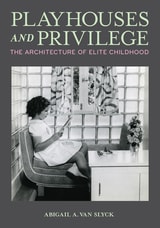
Playhouses and Privilege explores children’s playhouses built on British and American estates between the 1850s and the mid-1930s. Different from the prefabricated buildings that later populated suburban backyards, these playhouses were often fully functional cottages designed by well-known architects for British royalty, American industrialists, and Hollywood stars. As Abigail A. Van Slyck shows, these buildings were more than extravagant spaces to cultivate children’s imaginations and fantasy lives.
Reviewing a rich archive that includes extant buildings, site plans, family photographs, baby books, and intimate household correspondence, Van Slyck demonstrates that these structures were tools of social reproduction shaped by elite parents’ attitudes toward child-rearing, education, and class privilege. Recognizing playhouses as stages for the purposeful performance of upper-class identity, she illuminates their importance in influencing children to internalize gendered codes of conduct as they enacted rituals of hospitality and learned how to supervise servants.
From Queen Victoria and Prince Albert’s Swiss Cottage, built on their Osborne estate in 1853, to the children’s cottage constructed on the grounds of Cornelius Vanderbilt’s Newport mansion in 1886, and from the miniature bungalow commissioned in 1926 for the Dodge Brothers Motor Company heiress to the corporate-sponsored glass-block playhouse given to Shirley Temple in 1936, Van Slyck surveys a variety of playhouses and their milieus to trace the evolution of elite childhood and the broader social practices of wealth. Playhouses and Privilege makes clear that, far from being frivolous, playhouses were carefully planned architectural manifestations of adult concerns, integral to the reproduction of class privilege.

Playing Doctor
Television, Storytelling, and Medical PowerJoseph Turow
University of Michigan Press, 2010
Playing House in the American West
Western Women's Life Narratives, 1839–1987Cathryn Halverson
University of Alabama Press, 2013
How domestic life shaped identity, gender, and power in the American West
The controlling metaphor Cathryn Halverson uses in her engrossing study is “playing house.” From Caroline Kirkland and Laura Ingalls Wilder to Willa Cather and Marilynne Robinson, from the mid-nineteenth to the late-twentieth centuries, western authors have persistently embraced wayward or eccentric housekeeping to prove a woman’s difference from western neighbors and eastern readers alike.
The readings in Playing House investigate the surprising textual ends to which westerners turn the familiar terrain of the home: evaluating community; arguing for different conceptions of race and class; and perhaps most especially, resisting traditional gender roles. Western women writers, Halverson argues, render the home as a stage for autonomy, resistance, and imagination rather than as a site of sacrifice and obligation.
The western women examined in Playing House in the American West are promoted and read as representatives of a region, as insiders offering views of distant and intriguing ways of life, even as they conceive of themselves as outsiders. By playing with domestic conventions, they recast the region they describe, portraying the West as a place that fosters female agency, individuality, and subjectivity.
Playing Smart
New York Women Writers and Modern Magazine CultureKeyser, Catherine
Rutgers University Press, 2010
Through humor writing, this "smart set" expressed both sides of the story-promoting their urbanity and wit while using irony and caricature to challenge feminine stereotypes. Their fiction raised questions about what it meant to be a woman in the public eye, how gender roles would change because men and women were working together, and how the growth of the magazine industry would affect women's relationships to their bodies and minds. Keyser provides a refreshing and informative chronicle, saluting the value of being "smart" as incisive and innovative humor showed off the wit and talent of women writers and satirized the fantasy world created by magazines.
Playing for Power
Black Resistance in Amateur Basketball and Football in Jim Crow VirginiaMarvin T. Chiles
University of Alabama Press, 2025
Reveals the role of amateur Black football and basketball in Virginia before integration as a form of resistance to white supremacy
In Playing for Power, Marvin T. Chiles offers a fascinating account of amateur sports in Jim Crow Virginia, revealing how, in addition to churches, workspaces, and civil rights organizations, sports were also a key arena for Black resistance to white supremacy. Drawing from a rich trove of primary sources, Chiles recounts the development of Black football and basketball culture at the high school and college levels in Virginia from the 1890s to the early 1970s. Looking beyond their role as leisure pastimes, Chiles demonstrates how amateur sports strengthened education, neutralized class divisions, shaped Black masculinity, mentored Black male leadership, cultivated race pride, and reflected Black desires for urban modernity.
Illuminating the ways Black athletes created a world that pushed for racial progress through objective, meritocratic achievement anchored by masculine leadership and institutional success, Playing for Power traces how amateur sports coalesced into a key cultural institution that fostered Black Virginians’ collective sense of community, achievement, and purpose during segregation, cornerstones of later advances in the Civil Rights Movement. Playing for Power also contributes to a larger understanding of sports history and how amateur sports became favorite American spectacles and markers of Southern identity. Chiles’s groundbreaking work will interest historians, scholars, and individuals interested in the intersection of sports and civil rights and the history of Black sports during the Jim Crow era.
Playing the Percentages
How Film Distribution Made the Hollywood Studio SystemDerek Long
University of Texas Press, 2024
A history of film distribution in the United States from the 1910s to the 1930s, concentrating on booking, circuiting, and packaging marketing practices.
Told not as a “golden age” narrative of films, stars, or individual studios but as an economic history of the industry’s film distribution practices, Playing the Percentages is the story of how Hollywood’s vertically integrated studio system came to be. Studying the history of distribution during the growth of Hollywood, Derek Long makes a case for the domination of the studio system as the result of struggles over distribution practices.
Through a combination of archival research, critical surveys of the film industry trade press, and economic analysis, Long uncovers a complex and ever-shifting system of wrangling between distributors and exhibitors. Challenging the overemphasis within scholarship on “block booking” as a monolithic distribution mode, and attending to distribution practices beyond simple circulation, Long highlights the crucial changes in film distribution brought about by live theater, the rise of features, and the transition to sound. Playing the Percentages is a comprehensive history of film distribution in the United States during the silent era that illustrates the importance of power struggles between distributors and exhibitors over booking, pricing, and playing time.
Playing with Dynamite
Sharon Harrigan
University of Wisconsin Press, 2017
Playing with Dynamite is about the family secrets that can distance us from each other and the honesty that can bring us closer. It’s about a daughter who goes looking for her father but finds her mother instead. It’s about memory and truth, grieving and growing, and what it means to go home again.
Playing with History
American Identities and Children’s Consumer CultureMolly Rosner
Rutgers University Press, 2021
Plays by Early American Women, 1775-1850
Amelia Howe Kritzer, Editor
University of Michigan Press, 1995
Plea Bargaining
The Experiences of Prosecutors, Judges, and Defense AttorneysMilton Heumann
University of Chicago Press, 1978
Pleas and Petitions
Hispano Culture and Legislative Conflict in Territorial ColoradoVirginia Sánchez
University Press of Colorado, 2021
Sánchez highlights the struggles experienced by Hispano territorial assemblymen trying to create opportunity and a better life in the face of cultural conflict and the institutional racism used to effectively shut them out of the process of establishing new laws and social order. For example, the federal and Colorado territorial governments did not provide an interpreter for the Hispano assemblymen or translations of the laws passed by the legislature, and they taxed Hispano constituents without representation and denied them due process in court.
The first in-depth history of Hispano sociopolitical life during Colorado’s territorial period, Pleas and Petitions provides fundamental insight into Hispano settlers’ interactions with their Anglo neighbors, acknowledges the struggles and efforts of those Hispano assemblymen who represented southern Colorado during the territorial period, and augments the growing historical record of Hispanos who have influenced the course of Colorado’s history.
Please Pass the Biscuits, Pappy
Pictures of Governor W. Lee "Pappy" O'DanielBy Bill Crawford
University of Texas Press, 2004
Long before movie stars Ronald Reagan and Arnold Schwarzenegger became governors of California, a popular radio personality with no previous political experience—who wasn't even registered to vote—swept into the governor's office of Texas. W. Lee "Pappy" O'Daniel was a 1930s businessman who discovered the power of radio to sell flour. His musical shows with the Light Crust Doughboys (which launched the career of Bob Wills) and his radio homilies extolling family and Christian values found a vast, enthusiastic audience in Depression-era Texas. When Pappy decided to run for governor in 1938 as a way to sell more flour—a fact he proudly proclaimed throughout the campaign—the people of Texas voted for him in record numbers. And despite the ineptitude for politics he displayed once in office, Texans returned him to the governorship in 1940 and then elected him to the U.S. Senate in 1941 in a special election in which he defeated Lyndon Johnson, as well as to a full term as senator in 1942.
While the hit film O Brother, Where Art Thou? celebrated a fictional "Please Pass the Biscuits, Pappy" O'Daniel, this book captures the essence of the real man through photographs taken by employees of the Texas Department of Public Safety, most of which are previously unpublished. Reminiscent of the work of WPA photographers such as Russell Lee and Dorothea Lange, these photos record the last unscripted era of politics when a charismatic candidate could still address a crowd from an unpainted front porch or a mobile bandstand in the back of a truck. They strikingly confirm that Pappy O'Daniel's ability to connect with people was as great in person as on the radio.
To set the photos in context, Bill Crawford has written an entertaining text that discusses the political landscape in Texas and the United States in the 1930s, as well as the rise of radio as mass medium for advertising and entertainment. He also provides extensive captions for each picture. John Anderson, Photo Archivist of the Texas State Archives, discusses the work of Joel Tisdale and the other DPS photographers who left this extraordinary record of the greatest vote-getter in Texas history, who became one of America's first celebrities to cross the line from entertainment to political office.
Please Touch
A History of the First Four Children's Museums in the United States (1899–1965)Jessie Swigger
University of Massachusetts Press, 2026
When it opened in 1899, the Brooklyn Children’s Museum greeted visitors with a new experience. Rather than carefully ensconcing artifacts and curios behind protective glass, the staff took the unusual step of moving the objects out of their cases and into the hands of the children, inviting them to “please touch.” Born out of the reformist spirit of the Progressive Era, the museum represented a new kind of institution, one whose primary purpose was not to collect, preserve, and display objects but rather to educate a specific audience. Over the next twenty-five years, three other children’s museums opened with a similar mission and approach: the Boston Children’s Museum (1913), the Detroit Children’s Museum (1917), and The Children’s Museum of Indianapolis (1925).
At a time when most museums were led by men, women played a critical role in overseeing this first wave of children’s museums. As the number of children’s museums grew, women rose to prominence in the museum profession at large, advocating for new ways for institutions to interact with and serve their audiences. By 1965, the children’s museum movement had succeeded in demonstrating rich rewards and had influenced all types of museums and continues to do so to this day.
Drawing on archival materials, newspaper accounts, and the writings of museum workers and professionals, Please Touch carefully chronicles the early histories of these four seminal children’s museums. Jessie Swigger provides thorough institutional histories of each and connects them to broader currents in education, such as the Progressive education movement, and to key events in early- to mid-twentieth-century US history, including immigration, the Great Depression, World Wars I and II, and the Cold War. She also demonstrates how these institutions were fundamentally shaped by women’s leadership, and how they challenged and expanded the definition of museums and pressed museum practices in new directions.
Pleasure Grounds of Death
The Rural Cemetery in Nineteenth-Century AmericaJoy M. Giguere
University of Michigan Press, 2024
Pleasure Grounds of Death considers the history of the rural cemetery in the United States throughout the duration of the nineteenth century as not only a critical cultural institution embedded in the formation of community and national identities, but also as major sites of contest over matters of burial reform, taste and respectability, and public behavior; issues concerning race, class, and gender; conflicts over the burial of the Civil War dead and formation of postwar memory; and what constituted the most appropriate ways to structure the landscape of the dead in a modern and progressive society. As cultural landscapes that served the needs of the living as well as the dead, rural cemeteries offer a mirror for the transformations and conflicts taking place throughout the nineteenth century in American society.
Pleasure and Pain in US Public Culture
edited by Christopher J. Gilbert and John Louis Lucaites
University of Alabama Press, 2025
A critical examination of how pleasure and pain are constructed, represented, and contested within American public culture.
Mainstream news and social media often highlight presentations of pain that invite a voyeuristic, pleasurable experience, whether the result of war, disasters, crime, accidents, or other catastrophes. This collection of essays explores pleasurable pains and painful pleasures, showing how they pervade contemporary western public culture.
Deploying methodologies drawn from psychoanalysis, rhetoric and communication, political theory, and visual culture, Pleasure and Pain in US Public Culture offers insightful criticisms and theories about how pleasure and pain function in public discourse, media, and everyday communication practices.
The contributors provide a sample of fascinating range of news reportage, television, film and cinema, stage drama, comic performances, street art, and other forms of popular culture. The media cited and analyzed include Spike Lee’s films, Afrofuturism, autoethnography, and the #MeToo movement.
The collection takes up engrossing topics such as the cathartic allure of pain, ethical dilemmas surrounding public displays of suffering, and the transformative power of narratives that confront trauma. The essays also draw connections between theory and real-world outcomes, explore the implications of enjoying traumatic comedy, and link the natural world to otherwise mundane instances of interspecies violence. Brett Kavanaugh's Supreme Court nomination hearings and what they suggest about witnessing trauma is also discussed.
Pleasure and Pain in US Public Culture will change how a reader sees the world. It imparts a startling vision of western culture permeated by pain and pleasure.
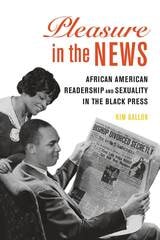
Pleasure in the News
African American Readership and Sexuality in the Black PressKim T. Gallon
University of Illinois Press, 2020
Gallon discusses how journalists and editors created black sexual publics that offered everyday African Americans opportunities to discuss sexual topics that exposed class and gender tensions. While black churches and black schools often encouraged sexual restraint, the black press printed stories that complicated notions about respectability. Sensational coverage also expanded African American women’s sexual consciousness and demonstrated the tenuous position of female impersonators, black gay men, and black lesbians in early twentieth African American urban communities.
Informative and empowering, Pleasure in the News redefines the significance of the black press in African American history and advancement while shedding light on the important cultural and social role that sexuality played in the power of the black press.
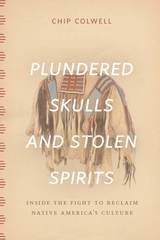
Plundered Skulls and Stolen Spirits
Inside the Fight to Reclaim Native America's CultureChip Colwell
University of Chicago Press, 2017
Five decades ago, Native American leaders launched a crusade to force museums to return their sacred objects and allow them to rebury their kin. Today, hundreds of tribes use the Native American Graves Protection and Repatriation Act to help them recover their looted heritage from museums across the country. As senior curator of anthropology at the Denver Museum of Nature & Science, Chip Colwell has navigated firsthand the questions of how to weigh the religious freedom of Native Americans against the academic freedom of scientists and whether the emptying of museum shelves elevates human rights or destroys a common heritage. This book offers his personal account of the process of repatriation, following the trail of four objects as they were created, collected, and ultimately returned to their sources: a sculpture that is a living god, the scalp of a massacre victim, a ceremonial blanket, and a skeleton from a tribe considered by some to be extinct. These specific stories reveal a dramatic process that involves not merely obeying the law, but negotiating the blurry lines between identity and morality, spirituality and politics.
Things, like people, have biographies. Repatriation, Colwell argues, is a difficult but vitally important way for museums and tribes to acknowledge that fact—and heal the wounds of the past while creating a respectful approach to caring for these rich artifacts of history.
Pluralism
William E. Connolly
Duke University Press, 2005
Connolly looks at pluralism not only in light of faith but also in relation to evil, ethics, relativism, globalization, and sovereignty. In the process, he engages many writers and theorists—among them, Spinoza, William James, Henri Bergson, Marcel Proust, Gilles Deleuze, Giorgio Agamben, Talal Asad, Michael Hardt, and Antonio Negri. Pluralism is the first book in which Connolly explains the relationship between pluralism and the experience of time, and he offers readings of several films that address how time is understood, including Time Code, Far from Heaven, Waking Life, and The Maltese Falcon. In this necessary book Connolly brings a compelling, accessible philosophical critique together with his personal commitment to an inclusive political agenda to suggest how we might—and why we must—cultivate pluralism within both society and ourselves.

Pluralism and Progressives
Hull House and the New Immigrants, 1890-1919Rivka Shpak Lissak
University of Chicago Press, 1989
Pluralist Universalism
An Asian Americanist Critique of U.S. and Chinese MulticulturalismsWen Jin
The Ohio State University Press, 2012
Pluralist Universalism: An Asian Americanist Critique of U.S. and Chinese Multiculturalisms by Wen Jin is an extended comparison of U.S. and Chinese multiculturalisms during the post–Cold War era. Her book situates itself at the intersection of Asian American literary critique and the growing field of comparative multiculturalism. Through readings of fictional narratives that address the issue of racial and ethnic difference in both national contexts simultaneously, the author models a “double critique” framework for U.S.–Chinese comparative literary studies.
Pobre Raza!
Violence, Justice, and Mobilization among México Lindo Immigrants, 1900-1936By F. Arturo Rosales
University of Texas Press, 1999
Fleeing the social and political turmoil spawned by the Mexican Revolution, massive numbers of Mexican immigrants entered the southwestern United States in the early decades of the twentieth century. But instead of finding refuge, many encountered harsh, anti-Mexican attitudes and violence from an Anglo population frightened by the influx of foreigners and angered by anti-American sentiments in Mexico.
This book examines the response of Mexican immigrants to Anglo American prejudice and violence early in the twentieth century. Drawing on archival sources from both sides of the border, Arturo Rosales traces the rise of "México Lindo" nationalism and the efforts of Mexican consuls to help poor Mexican immigrants defend themselves against abuses and flagrant civil rights violations by Anglo citizens, police, and the U.S. judicial system. This research illuminates a dark era in which civilian and police brutality, prejudice in the courtroom, and disproportionate arrest, conviction, and capital punishment rates too often characterized justice for Mexican Americans.
Poe, Fuller, and the Mesmeric Arts
Transition States in the American RenaissanceBruce Mills
University of Missouri Press, 2005
Poems of the American Empire
The Lyric Form in the Long Twentieth CenturyJen Hedler Phillis
University of Iowa Press, 2019
Poems of the American Empire argues that careful attention to a particular strain of twentieth-century lyric poetry yields a counter-history of American global power. The period that Phillis covers—from Ezra Pound’s A Draft of XXX Cantos in 1930 to Cathy Park Hong’s Engine Empire in 2012—roughly matches what some consider the ascent and decline of the American empire. The diverse poems that appear in this book are united by their use of epic forms in the lyric poem, a combination that violates a fundamental framework of both genres’ relationship to time.
This book makes a groundbreaking intervention by insisting that lyric time is key to understanding the genre. These poems demonstrate the lyric form’s ability to represent the totality of history, making American imperial power visible in its fullness. Neither strictly an empty celebration of American exceptionalism nor a catalog of atrocities, Poems of the American Empire allows us to see both.
Poetics of Emergence
Affect and History in Postwar Experimental PoetryBenjamin Lee
University of Iowa Press, 2020
Experimental poetry responded to historical change in the decades after World War II, with an attitude of such casual and reckless originality that its insights have often been overlooked. However, as Benjamin Lee argues, to ignore the scenes of self and the historical occasions captured by experimental poets during the 1950s and 1960s is to overlook a rich and instructive resource for our own complicated transition into the twenty-first century.
Frank O’Hara and fellow experimental poets like Amiri Baraka, Diane di Prima, and Allen Ginsberg offer us a set of perceptive responses to Cold War culture, lyric meditations on consequential changes in U.S. social life and politics, including the decline of the Old Left, the rise of white-collar workers, and the emergence of vernacular practices like hipsterism and camp. At the same time, they offer us opportunities to anatomize our own desire for historical significance and belonging, a desire we may well see reflected and reconfigured in the work of these poets.
Poetry FM
American Poetry and Radio CountercultureLisa Hollenbach
University of Iowa Press, 2023
Lisa Hollenbach traces the history of Pacifica Radio—founded in 1946, the nation’s first listener-supported public radio network—through the 1970s: from the radical pacifists and poets who founded Pacifica after the war; to the San Francisco Renaissance, Beat, and New York poets who helped define the countercultural sound of Pacifica stations KPFA and WBAI in the 1950s and 1960s; to the feminist poets and activists who seized Pacifica’s frequencies in the 1970s. In the poems and recorded broadcasts of writers like Kenneth Rexroth, Jack Spicer, Allen Ginsberg, Amiri Baraka, Audre Lorde, Pat Parker, Bernadette Mayer, and Susan Howe, one finds a recurring ambivalence about the technics and poetics of reception. Through tropes of static noise, censorship, and inaudibility as well as voice, sound, and signal, these radiopoetic works suggest new ways of listening to the sounds and silences of Cold War American culture.
Poetry Matters
Neoliberalism, Affect, and the Posthuman in Twenty-First Century North American Feminist PoeticsHeather Milne
University of Iowa Press, 2018
Poetry Matters explores poetry written by women from the United States and Canada, which documents the social and political turmoil of the early twenty-first century and places this poetry in dialogue with recent currents of feminist theory including new materialism, affect theory, posthumanism, and feminist engagements with neoliberalism and capitalism. Central to this project is the conviction that a poetics that explores the political dimensions of affect; demonstrates an understanding of subjectivity as posthuman and transcorporeal; critically reflects on the impact of capitalism on queer, racialized, and female bodies; and develops an ethical vocabulary for reimagining the nation state and critically engaging with issues of democracy and citizenship is now more urgent than ever before.
Milne focuses on poetry published after 2001 by writers who mostly began writing after the feminist writing movements of the 1980s, but who have inherited and built upon their political and aesthetic legacies. The poets discussed in this book—including Jennifer Scappettone, Margaret Christakos, Larissa Lai, Rita Wong, Nikki Reimer, Rachel Zolf, Yedda Morrison, Marcella Durand, Evelyn Reilly, Juliana Spahr, Claudia Rankine, Dionne Brand, Jena Osman, and Jen Benka—bring a sense of political agency to poetry. These voices seek new vocabularies and dissenting critical and aesthetic frameworks for thinking across issues of gender, materiality, capitalism, the toxic convergences of nationalism and racism, and the decline of democratic institutions. This is poetry that matters—both in its political urgency and in its attentiveness to the world as “matter”—as a material entity under siege. It could not be more timely or more relevant.
Poetry On and Off the Page
Essays for Emergent OccasionsMarjorie Perloff
Northwestern University Press, 1998
Poetry as Re-Reading
American Avant-Garde Poetry and the Poetics of Counter-MethodMing-Qian Ma
Northwestern University Press, 2008
Rereading and rewriting our understanding of the poetics of modernism and postmodernism, this truly revisionary work identifies a significant counter-tradition in twentieth-century poetry. Postmodernism, Ming-Qian Ma argues, does not so much follow from modernism as coexist with it, with postmodernists employing the anarchic poetics introduced by Gertrude Stein in countering the rationalist method of high modernists such as T. S. Eliot and Ezra Pound.
Grounded in a detailed and compelling account of the philosophy guiding such a project, Ma’s book traces a continuity of thought and practice through the very different poetic work of objectivists Louis Zukofsky, George Oppen, Carl Rakosi, and John Cage and language poets Susan Howe, Lyn Hejinian, Bruce Andrews, and Charles Bernstein. His deft individual readings provide an opening into this notoriously difficult work, even as his larger critique reveals a new and clarifying perspective on American modernist and post-modernist avant-garde poetics. Ma shows how we cannot understand these poets according to the usual way of reading but must see how they deliberately use redundancy, unpredictability, and irrationality to undermine the meaning-oriented foundations of American modernism--and to force a new and different kind of reading.
With its unusually clear explanation of the philosophy informing postmodern practice, and its unique insights into some of the more interesting and vexing poets of our time, this book points to a reading of an important strain of postmodern American poetry that is likely to develop well into the twenty-first century.
Poetry in the Museums of Modernism
Yeats, Pound, Moore, SteinCatherine Paul
University of Michigan Press, 2002
Although critics have attested to the importance of the visual arts to literary modernists and have begun to explore the relationships between literary production and social institutions, before now no one has examined the particular institutions in which modernist poets found the artworks, specimens, and other artifacts that inspired their literary innovations. Catherine Paul's book offers the reader a fresh encounter with modernism that will interest literary and art historians, literary theorists, critics, and scholars in cultural studies and museum studies.
Catherine Paul is Associate Professor of English, Clemson University.
Poetry of the People
Poems to the President, 1929–1945Donald W. Whisenhunt
University of Wisconsin Press, 1996
The poets of the era voiced their opinions on virtually every subject. They wrote about New Deal agencies, they praised and condemned Hoover and Roosevelt. They expressed their views about the Supreme Court, the third term, and the approaching war in Europe. The resulting study, arranged topically rather than chronologically, provides a unique perspective on American popular culture and American politics.
Poetry of the Possible
Spontaneity, Modernism, and the MultitudeJoel Nickels
University of Minnesota Press, 2012
The Poetry of the Possible challenges the conventional image of modernism as a socially phobic formation, arguing that modernism’s abstractions and difficulties are ways of imagining unrealized powers of collective self-organization. Establishing a conceptual continuum between modernism and contemporary theorists such as Paulo Virno, Michael Hardt, Antonio Negri, and Alain Badiou, Joel Nickels rediscovers modernism’s attempts to document the creative potenza of the multitude.
By examining scenes of collective life in works by William Carlos Williams, Wyndham Lewis, Laura Riding, and Wallace Stevens, Nickels resurrects modernism’s obsession with constituent power: the raw, indeterminate capacity for reciprocal counsel that continually constitutes and reconstitutes established political regimes. In doing so, he reminds us that our own attempts to imagine leaderless networks of collective initiative are not so much breaks with modernist forms of knowledge as restagings of some of modernism’s most radical moments of political speculation.
Setting modernism’s individual and collective models of spontaneity in dialogue with theorists of political spontaneity such as Antonio Gramsci, Herbert Marcuse, and Theodor Adorno, Nickels retells the story of modernism as the struggle to represent powers of collective self-organization that lie outside established regimes of political representation.
Poetry's Afterlife
Verse in the Digital AgeKevin Stein
University of Michigan Press, 2010
"The great pleasure of this book is the writing itself. Not only is it free of academic and ‘lit-crit' jargon, it is lively prose, often deliciously witty or humorous, and utterly contemporary. Poetry's Afterlife has terrific classroom potential, from elementary school teachers seeking to inspire creativity in their students, to graduate students in MFA programs, to working poets who struggle with the aesthetic dilemmas Stein elucidates, and to teachers of poetry on any level."
--- Beckian Fritz Goldberg, Arizona State University
"Kevin Stein is the most astute poet-critic of his generation, and this is a crucial book, confronting the most vexing issues which poetry faces in a new century."
---David Wojahn, Virginia Commonwealth University
At a time when most commentators fixate on American poetry's supposed "death," Kevin Stein's Poetry's Afterlife instead proposes the vitality of its aesthetic hereafter. The essays of Poetry's Afterlife blend memoir, scholarship, and personal essay to survey the current poetry scene, trace how we arrived here, and suggest where poetry is headed in our increasingly digital culture. The result is a book both fetchingly insightful and accessible. Poetry's spirited afterlife has come despite, or perhaps because of, two decades of commentary diagnosing American poetry as moribund if not already deceased. With his 2003 appointment as Illinois Poet Laureate and his forays into public libraries and schools, Stein has discovered that poetry has not given up its literary ghost. For a fated art supposedly pushing up aesthetic daisies, poetry these days is up and about in the streets, schools, and universities, and online in new and compelling digital forms. It flourishes among the people in a lively if curious underground existence largely overlooked by national media. It's this second life, or better, Poetry's Afterlife, that his book examines and celebrates.
Kevin Stein is Caterpillar Professor of English and Director of the Creative Writing Program at Bradley University and has served as Illinois Poet Laureate since 2003, having assumed the position formerly held by Gwendolyn Brooks and Carl Sandburg. He is the author of numerous books of poetry and criticism.
digitalculturebooksis an imprint of the University of Michigan Press and the Scholarly Publishing Office of the University of Michigan Library dedicated to publishing innovative and accessible work exploring new media and their impact on society, culture, and scholarly communication. Visit the website at www.digitalculture.org.

Poets Beyond the Barricade
Rhetoric, Citizenship, and Dissent after 1960Dale M. Smith
University of Alabama Press, 2012
Poets On Place
W. T. Pfefferle
Utah State University Press, 2005
Out to see America and satisfy his travel bug, W. T. Pfefferle resigned from his position as director of the writing program at Johns Hopkins University and hit the road to interview sixty-two poets about the significance of place in their work. The lively conversations that resulted may surprise with the potential meanings of a seemingly simple concept. This gathering of voices and ideas is illustrated with photo and word portraits from the road and represented with suitable poems.
The poets are James Harms, David Citino, Martha Collins, Linda Gregerson, Richard Tillinghast, Orlando Ricardo Menes, Mark Strand, Karen Volkman, Lisa Samuels, Marvin Bell, Michael Dennis Browne, David Allan Evans, David Romtvedt, Sandra Alcosser, Robert Wrigley, Nance Van Winckel, Christopher Howell, Mark Halperin, Jana Harris, Sam Hamill, Barbara Drake, Floyd Skloot, Ralph Angel, Carol Muske-Dukes, David St. John, Sharon Bryan, Donald Revell, Claudia Keelan, Alberto Rios, Richard Shelton, Jane Miller, William Wenthe, Naomi Shihab Nye, Peter Cooley, Miller Williams, Beth Ann Fennelly, Natasha Trethewey, Denise Duhamel, Campbell McGrath, Terrance Hayes, Alan Shapiro, Nikki Giovanni, Charles Wright, Rita Dove, Henry Taylor, Dave Smith, Nicole Cooley, David Lehman, Lucie Brock-Broido, Michael S. Harper, C. D. Wright, Mark Wunderlich, James Cummins, Frederick Smock, Mark Jarman, Carl Phillips, Scott Cairns, Elizabeth Dodd, Jonathan Holden, Bin Ramke, Kenneth Brewer, and Paisley Rekdal.

Poindexter of Washington
A Study in Progressive PoliticsHoward W Allen
Southern Illinois University Press, 1981
In this study of Miles Poindexter, Insurgent Republican turned conservative, Howard W. Allen reaches beyond the traditional bounds of biography to present a history of the United States Congress during the Progressive era and the early years after World War I.
A congressman (1909–13)and a senator (1913–23), Miles Poindexter of Washington State was an outspoken, progressive reformer before World War I. He struggled to protect “the people” from “special interests,” particularly defending the interest of his section against eastern “colonialism.” A man with a penchant for absolute positions, Poindexter became caught up in the emotionalism of the Insurgent Republican revolt. At one time or another he championed Socialists, the IWW, the striking textile workers in Lawrence, Massachusetts—all unlikely causes for a middle-class lawyer from Spokane.
Regarding foreign policy, Poindexter was an uncompromising nationalist who, with Theodore Roosevelt, declared himself a member of the Progressive party in 1912.
After 1917 Poindexter actively tried to suppress opponents of the war. Following the war his targets were “Bolshevists” and other radicals. He also developed intense hostility toward Socialists, the IWW, and organized labor, fearing radicalism and labor. Reversing his former position, he allied himself with the eastern businessmen and regular Republicans in the Senate. Campaigning for the presidency in 1920, he appealed without success to the most conservative members of the party. He was defeated b a progressive Democrat in his 1922 bid for reelection to the Senate.
Allen examines the traditional sources—archival collections, newspaper files, and congressional reports. When he combines this material with a quantitative analysis of roll-call votes throughout Senator Poindexter’s years in Congress, he creates a remarkably useful method never before attempted in political biography.
Point of Reckoning
The Fight for Racial Justice at Duke UniversityTheodore D. Segal
Duke University Press, 2021
Points on the Dial
Golden Age Radio beyond the NetworksAlexander Russo
Duke University Press, 2010
Poison in the Ivy
Race Relations and the Reproduction of Inequality on Elite College CampusesByrd, W. Carson
Rutgers University Press, 2017
Poison in the Ivy challenges popular beliefs about the importance of cross-racial interactions as an antidote to racism in the increasingly diverse United States. He shows that it is the context and framing of such interactions on college campuses that plays an important role in shaping students’ beliefs about race and inequality in everyday life for the future political and professional leaders of the nation. Poison in the Ivy is an eye-opening look at race on elite college campuses, and offers lessons for anyone involved in modern American higher education.
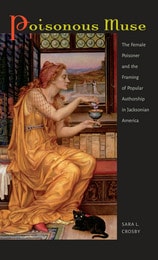
Poisonous Muse
The Female Poisoner and the Framing of Popular Authorship in Jacksonian AmericaSara L. Crosby
University of Iowa Press, 2016
This difference in outcome doesn’t mean that poisonous women didn’t preoccupy Americans. In the decades following Andrew Jackson’s first presidential bid, Americans buzzed over women who used poison to kill men. They produced and devoured reams of ephemeral newsprint, cheap trial transcripts, and sensational “true” pamphlets, as well as novels, plays, and poems. Female poisoners served as crucial elements in the literary manifestos of writers from Nathaniel Hawthorne and Edgar Allan Poe to George Lippard and the cheap pamphleteer E. E. Barclay, but these characters were given a strangely positive spin, appearing as innocent victims, avenging heroes, or engaging humbugs.
The reason for this poison predilection lies in the political logic of metaphor. Nineteenth-century Britain strove to rein in democratic and populist movements by labeling popular print “poison” and its providers “poisoners,” drawing on centuries of established metaphor that negatively associated poison, women, and popular speech or writing. Jacksonian America, by contrast, was ideologically committed to the popular—although what and who counted as such was up for serious debate. The literary gadfly John Neal called on his fellow Jacksonian writers to defy British critical standards, saying, “Let us have poison.” Poisonous Muse investigates how they answered, how they deployed the figure of the female poisoner to theorize popular authorship, to validate or undermine it, and to fight over its limits, particularly its political, gendered, and racial boundaries.
Poisonous Muse tracks the progress of this debate from approximately 1820 to 1845. Uncovering forgotten writers and restoring forgotten context to well-remembered authors, it seeks to understand Jacksonian print culture from the inside out, through its own poisonous language.
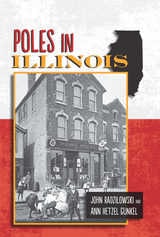
Poles in Illinois
John Radzilowski and Ann Hetzel Gunkel
Southern Illinois University Press, 2020
Authors John Radzilowski and Ann Hetzel Gunkel look at family life among Polish immigrants, their role in the economic development of the state, the working conditions they experienced, and the development of their labor activism. Close-knit Polish American communities were often centered on parish churches but also focused on fraternal and social groups and cultural organizations. Polish Americans, including waves of political refugees during World War II and the Cold War, helped shape the history and culture of not only Chicago, the “capital” of Polish America, but also the rest of Illinois with their music, theater, literature, food.
With forty-seven photographs and an ample number of extensive excerpts from first-person accounts and Polish newspaper articles, this captivating, highly readable book illustrates important and often overlooked stories of this ethnic group in Illinois and the changing nature of Polish ethnicity in the state over the past two hundred years. Illinoisans and Midwesterners celebrating their connections to Poland will treasure this rich and important part of the state’s history.
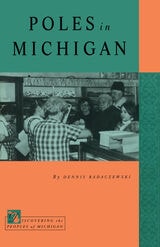
Poles in Michigan
Dennis Badaczewski
Michigan State University Press, 2002
One of the most vibrant and influential ethnic groups in Michigan, Poles have a long history of migration and settlement in the Great Lakes State. From Michigan’s earliest Polish marriage (in 1762) to the most recent post-Cold War migrations, each successive wave of settlement has enriched and enlivened Michigan culture. Yet, Paczki Day and Polish festivals represent a relatively small portion of the Polish experience. Commitments both to religious and ethnic identity, and a belief in the American vision of landownership and success, have combined to create a mainstream ethnic community abundant in ethnic pride. Poles’ success in Michigan continues to attract Polish immigrants from Europe, just as Polonia continues to make its mark on Michigan’s culture.
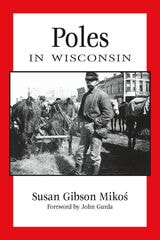
Poles in Wisconsin
Susan Gibson Mikos
Wisconsin Historical Society Press, 2012
In this all-new addition to the People of Wisconsin series, author Susan Mikos traces the history of Polish immigrants as they settled in America’s northern heartland. The second largest immigrant population after Germans, Poles put down roots in all corners of the state, from the industrial center of Milwaukee to the farmland around Stevens Point, in the Cutover, and beyond. In each locale, they brought with them a hunger to own land, a willingness to work hard, and a passion for building churches.
Included is a first person memoir from Polish immigrant Maciej Wojda, translated for the first time into English, and historical photographs of Polish settlements around our state.

Poletown
COMMUNITY BETRAYEDJeanie Wylie
University of Illinois Press, 1989
"This book is about the ramifications of raw corporate power going unchecked." -- John Conyers, Michigan congressman
"Racial class is a fundamental problem in America. But Poletown demonstrates that economic class is even more fundamental." -- Rev. Jesse Jackson