Results by title
22279 books match the query 'Social Science' and 128 start with q
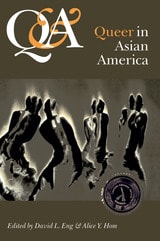
Q & A Queer And Asian
Queer & Asian In AmericaAlvin Eng
Temple University Press, 1998
Q & A approaches matters of identity from a variety of points of view and academic disciplines in order to explore the multiple crossings of race and ethnicity with sexuality and gender. Drawing together the work of visual artists, fiction writers, community organizers, scholars, and participants in roundtable discussions, the collection gathers an array of voices and experiences that represent the emerging communities of a queer Asian America. Collectively, these contributors contend that Asian American studies needs to be more attentive to issues of sexuality and that queer studies needs to be more attentive to other aspects of difference, especially race and ethnicity. Vigorously rejecting the notion that a symmetrical relationship between race and homosexuality would weaken lesbian/gay and queer movements, the editors refuse to "believe that a desirably queer world is one in which we remain perpetual aliens -- queer houseguests -- in a queer nation."
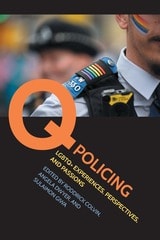
Q Policing
LGBTQ+ Experiences, Perspectives, and PassionsEdited by Roddrick Colvin, Angela Dwyer, and Sulaimon Giwa
Southern Illinois University Press, 2024
Global perspectives on policing within LGBTQ+ communities
Relationships between law enforcement and lesbian, gay, bisexual, transgender, and queer (LGBTQ+) communities have always been varied and complex. On one hand, history is filled with incidents of police harassment: raids that sparked famous uprisings and rebellions; shoddy police investigations into the murders of LGBTQ+ community members; a corrosive organizational culture marked by heteronormativity and misogyny. Yet positive changes are being made, such as the creation of LGBTQ+ police associations, participation by police officers in Pride Parades around the world, and formal apologies for past actions. To some LGBTQ+ community members, police are the physical manifestations of state-sanctioned oppression and abuse. To others, they are guardians who have become partners in public safety.
Q Policing features eighteen contributors from around the world who explore the nature of the relationship between LGBTQ+ communities and the police. Part 1 of the book offers insights on policing and racial and ethnic constructions, including efforts to build collaborative models of community-building within groups and with law enforcement. Part 2 highlights the experiences of individuals who may be marginalized due to various social constructions such as transgender, unhoused, southern, or kink-involved. Finally, Part 3 shares perspectives of queer folks inside policing.
The contributors—scholars, social workers, police officers, and other community leaders—cover diverse topics, including queer experiences of policing in southern India, clinical implications for mental health professionals working with Latinx LGBTQ+ people, transgender and nonbinary peoples’ presentation management during encounters with law enforcement, discriminatory policies in place in the southern United States, the pathologization of kink, and more. Essays analyze interviews with the “Pride Defenders” in Hamilton, Canada, as well as British and American police officers transitioning while in uniform. They explore the experiences of gay, lesbian, and genderqueer police officers, map principal findings and central concerns that structure extant scholarship on gay police officers in the UK, use queer theory to explore the effectiveness of LGBTQ+ liaisons, and more.
The volume editors adopt an inclusive global perspective to account for contextually located experiences of queer people within and outside of the United States. The book incorporates a variety of voices, data sources, and methodologies, but contributors share an intentional focus on race, age, sex, gender, and other identities that helps explain and contextualize queer people’s experiences around and in policing. The diverse, international group of contributors—whose voices are not often heard in traditional outlets and mainstream media—demonstrates that despite discrimination, harassment, and violence, LGBTQ+ communities continue to thrive.

Q&A
Voices from Queer Asian North AmericaEdited by Martin F. Manalansan IV, Alice Y. Hom, and Kale Bantigue Fajardo
Temple University Press, 2021
First published in 1998, Q & A: Queer in Asian America, edited by David L. Eng and Alice Y. Hom, became a canonical work in Asian American studies and queer studies. This new edition of Q & A is neither a sequel nor an update, but an entirely new work borne out of the progressive political and cultural advances of the queer experiences of Asian North American communities.
The artists, activists, community organizers, creative writers, poets, scholars, and visual artists that contribute to this exciting new volume make visible the complicated intertwining of sexuality with race, class, gender, and ethnicity. Sections address activism, radicalism, and social justice; transformations in the meaning of Asian-ness and queerness in various mass media issues of queerness in relation to settler colonialism and diaspora; and issues of bodies, health, disability, gender transitions, death, healing, and resilience.
The visual art, autobiographical writings, poetry, scholarly essays, meditations, and analyses of histories and popular culture in the new Q & Agesture to enduring everyday racial-gender-sexual experiences of mis-recognition, micro-aggressions, loss, and trauma when racialized Asian bodies are questioned, pathologized, marginalized, or violated. This anthology seeks to expand the idea of Asian and American in LGBTQ studies.
Contributors: Marsha Aizumi, Kimberly Alidio, Paul Michael (Mike) Leonardo Atienza, Long T. Bui, John Paul (JP) Catungal, Ching-In Chen, Jih-Fei Cheng, Kim Compoc, Sony Coráñez Bolton, D’Lo, Patti Duncan, Chris A. Eng, May Farrales, Joyce Gabiola, C. Winter Han, Douglas S. Ishii, traci kato-kiriyama, Jennifer Lynn Kelly, Mimi Khúc, Anthony Yooshin Kim, Việt Lê, Danni Lin, Glenn D. Magpantay, Leslie Mah, Casey Mecija, Maiana Minahal, Sung Won Park, Thea Quiray Tagle, Emily Raymundo, Vanita Reddy, Eric Estuar Reyes, Margaret Rhee, Thomas Xavier Sarmiento, Pahole Sookkasikon, Amy Sueyoshi, Karen Tongson, Kim Tran, Kay Ulanday Barrett, Reid Uratani, Eric C. Wat, Sasha Wijeyeratne, Syd Yang, Xine Yao, and the editors

Qal'at Jabar Pottery
A Study of a Syrian Fortified Site in the Late 11th–14th CenturiesCristina Tonghini
Council for British Research in the Levant, 1999

Qanemcit Amllertut/Many Stories to Tell
Tales of Humans and Animals from Southwest AlaskaEdited by Ann Fienup-Riordan
University of Alaska Press, 2017
This is the first region-wide collection of traditional Yup’ik tales and stories from Southwest Alaska. The elders and translators who contributed to this collection embrace the great irony of oral traditions: that the best way to keep these stories is to give them away. By retelling these stories, they hope to create a future in which the Yup’ik view of the world will be both recognized and valued.

Qing Colonial Enterprise
Ethnography and Cartography in Early Modern ChinaLaura Hostetler
University of Chicago Press, 2001
Although mapping in China is almost as old as Chinese civilization itself, the Qing insistence on accurate, to-scale maps of their territory was a new response to the difficulties of administering a vast and growing empire. Likewise, direct observation became increasingly important to Qing ethnographic writings, such as the illustrated manuscripts known as "Miao albums" (from which twenty color paintings are reproduced in this book). These were intended to educate Qing officials about various non-Han peoples so that they could govern these groups more effectively.Hostetler's groundbreaking account will interest anyone studying the history of the early modern period and colonialism.
Quakers and Abolition
Edited by Brycchan Carey and Geoffrey Plank
University of Illinois Press, 2014
This collection of fifteen insightful essays examines the complexity and diversity of Quaker antislavery attitudes across three centuries, from 1658 to 1890. Contributors from a range of disciplines, nations, and faith backgrounds show Quaker's beliefs to be far from monolithic. They often disagreed with one another and the larger antislavery movement about the morality of slaveholding and the best approach to abolition.
Not surprisingly, contributors explain, this complicated and evolving antislavery sensibility left behind an equally complicated legacy. While Quaker antislavery was a powerful contemporary influence in both the United States and Europe, present-day scholars pay little substantive attention to the subject. This volume faithfully seeks to correct that oversight, offering accessible yet provocative new insights on a key chapter of religious, political, and cultural history.
Contributors include Dee E. Andrews, Kristen Block, Brycchan Carey, Christopher Densmore, Andrew Diemer, J. William Frost, Thomas D. Hamm, Nancy A. Hewitt, Maurice Jackson, Anna Vaughan Kett, Emma Jones Lapsansky-Werner, Gary B. Nash, Geoffrey Plank, Ellen M. Ross, Marie-Jeanne Rossignol, James Emmett Ryan, and James Walvin.

Quakers and Abolition
Brycchan Carey
University of Illinois Press, 2018
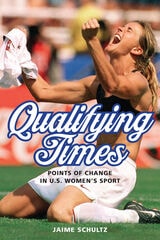
Qualifying Times
Points of Change in U.S. Women's SportJaime Schultz
University of Illinois Press, 2014
Beginning with the seemingly innocent ponytail, the subject of the Introduction, scholar Jaime Schultz challenges the reader to look at the historical and sociological significance of now-common items such as sports bras and tampons and ideas such as sex testing and competitive cheerleading. Tennis wear, tampons, and sports bras all facilitated women’s participation in physical culture, while physical educators, the aesthetic fitness movement, and Title IX encouraged women to challenge (or confront) policy, financial, and cultural obstacles.
While some of these points of change increased women's physical freedom and sporting participation, they also posed challenges. Tampons encouraged menstrual shame, sex testing (a tool never used with male athletes) perpetuated narrowly-defined cultural norms of femininity, and the late-twentieth-century aesthetic fitness movement fed into an unrealistic beauty ideal.
Ultimately, Schultz finds that U.S. women's sport has progressed significantly but ambivalently. Although participation in sports is no longer uncommon for girls and women, Schultz argues that these "points of change" have contributed to a complex matrix of gender differentiation that marks the female athletic body as different than--as less than--the male body, despite the advantages it may confer.
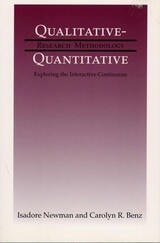
Qualitative-Quantitative Research Methodology
Exploring the Interactive ContinuumIsadore Newman and Carolyn R. Benz
Southern Illinois University Press, 1998
Rejecting the artificial dichotomy between qualitative and quantitative research strategies in the social and behavioral sciences, Isadore Newman and Carolyn R. Benz argue that the two approaches are neither mutually exclusive nor interchangeable; rather, the actual relationship between the two paradigms is one of isolated events on a continuum of scientific inquiry.
Through graphic and narrative descriptions, Newman and Benz show research to be a holistic endeavor in the world of inquiry. To clarify their argument, they provide a diagram of the "qualitative-quantitative interactive continuum" showing that qualitative analysis with its feedback loops can easily modify the types of research questions asked in quantitative research and that the quantitative results and its feedback can change what will be asked qualitatively.
In their model for research—an "interactive continuum"—Newman and Benz emphasize four major points: the research question dictates the selection of research methods; consistency between question and design can lead to a method of critiquing research studies in professional journals; the interactive continuum model is built around the place of theory; and the assurance of "validity" of research is central to all studies.
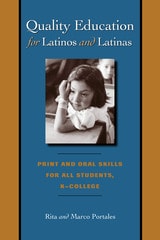
Quality Education for Latinos and Latinas
Print and Oral Skills for All Students, K–CollegeBy Rita and Marco Portales
University of Texas Press, 2005
As educators and legislators across the country debate how to improve public schools, the most vital factor often disappears from the equation—the relationship between the teacher and the student. According to veteran educators Rita and Marco Portales, this relationship is the central issue in the education of students, especially Latino/a students who often face serious barriers to school success because of the legacy of racism, insufficient English-language skills, and cultural differences with the educational establishment.
To break down these barriers and help Latino/a students acquire a quality education, the Portaleses focus attention on the teacher-student relationship and offer a proven method that teachers can use to strengthen the print and oral skills of their students. They begin by analyzing the reasons why schools too often fail to educate Latino/a students, using eloquent comments from young Latinos/as and their parents to confirm how important the teacher-student relationship is to the student's success. Then they show how all educational stakeholders—teachers, administrators, state education agencies, legislators, and parents—can work together to facilitate the teacher-student relationship and improve student education. By demonstrating how teachers can improve students' reading, critical thinking, writing, and oral communication skills across the curriculum, they argue that learning can be made more relevant for students, keeping their interest levels high while preparing them for academically competitive colleges.

Quantum Anthropologies
Life at LargeVicki Kirby
Duke University Press, 2011
Quantum Anthropology
Man, Cultures, and Groups in a Quantum PerspectiveRadek Trnka and Radmila Lorencová
Karolinum Press, 2017
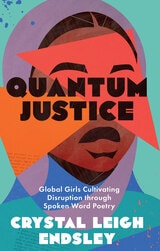
Quantum Justice
Global Girls Cultivating Disruption through Spoken Word PoetryCrystal Leigh Endsley
University of Texas Press, 2023
How girls of color from eight global communities strategize on questions of identity, social issues, and political policy through spoken word poetry.
Around the world, girls know how to perform. Grounded in her experience of “putting a mic in the margins” by facilitating workshops for girls in Ethiopia, South Africa, Tanzania, and the United States, scholar/advocate/artist Crystal Leigh Endsley highlights how girls use spoken word poetry to narrate their experiences, dreams, and strategies for surviving and thriving. By centering the process of creating and performing spoken word poetry, this book examines how girls forecast what is possible for their collective lives.
In this book, Endsley combines poetry, discourse analysis, photovoice, and more to forge the feminist theory of “quantum justice,” which forefronts girls’ relationships with their global counterparts. Using quantum justice theory, Endsley examines how these collaborative efforts produce powerful networks and ultimately map trajectories of social change at the micro level. By inviting transnational dialogue through spoken word poetry, Quantum Justice emphasizes how the imaginative energy in hip-hop culture can mobilize girls to connect and motivate each other through spoken word performance and thereby disrupt the status quo.

Quare Joyce
Joseph Valente, Editor
University of Michigan Press, 2000
Quasi Rational Economics
Richard H. Thaler
Russell Sage Foundation, 1991
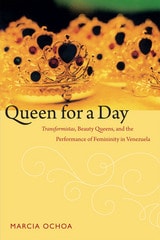
Queen for a Day
Transformistas, Beauty Queens, and the Performance of Femininity in VenezuelaMarcia Ochoa
Duke University Press, 2014
Beauty pageants play an outsized role in Venezuela. The country has won more international beauty contests than any other. The femininity performed by Venezuelan women in high-profile, widely viewed pageants defines a kind of national femininity. Ochoa argues that as transformistas and misses work to achieve the bodies, clothing and makeup styles, and postures and gestures of this national femininity, they come to embody Venezuelan modernity.
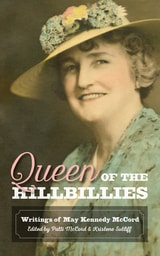
Queen of the Hillbillies
The Writings of May Kennedy McCordPatti McCord
University of Arkansas Press, 2022
May Kennedy McCord, lovingly nicknamed “First Lady of the Ozarks” and “Queen of the Hillbillies,” spent half a century sharing the history, songs, and stories of her native Ozarks through newspaper columns, radio programs, and music festivals. Though her work made her one of the twentieth century’s preeminent folklorists, McCord was first and foremost an entertainer—at one time nearly as renowned as the hills she loved.
Despite the encouragement of her contemporaries, McCord never published a collection of her work. In 1956, Vance Randolph wrote to her, “If you didn’t have such a mental block against writing books, I could show you how to make a book out of extracts from your columns. It would be very little work, and sell like hotcakes. . . . I could write a solemn little introduction, telling the citizens what a fine gal you are! The hell of it is, most of the readers know all about you.” In Queen of the Hillbillies, editors Patti McCord and Kristene Sutliff at last bring together the best of McCord’s published and previously unpublished writings to share her knowledge, humor, and inimitable spirit with a new generation of readers.
Queequeg's Coffin
Indigenous Literacies and Early American LiteratureBirgit Brander Rasmussen
Duke University Press, 2012
By recovering the literatures and textual practices that were indigenous to the Americas, Birgit Brander Rasmussen reimagines the colonial conflict as one organized by alternative but equally rich forms of literacy. From central Mexico to the northeastern shores of North America, in the Andes and across the American continents, indigenous peoples and European newcomers engaged each other in dialogues about ways of writing and recording knowledge. In Queequeg's Coffin, such exchanges become the foundation for a new kind of early American literary studies.

Queer Activism in India
A Story in the Anthropology of EthicsNaisargi Dave
Duke University Press, 2012
Dave argues that activism is an ethical practice comprised of critique, invention, and relational practice. Her analysis investigates the relationship between the ethics of activism and the existing social norms and conditions from which activism emerges. Through her study of different networks and institutions, Dave documents how activism oscillates between the potential for new social arrangements and the questions that arise once the activists' goals have been accomplished. Dave's book addresses a relevant and timely phenomenon and makes an important contribution to the anthropology of queer communities, social movements, affect, and ethics.
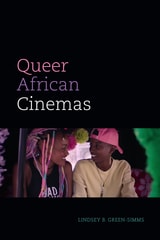
Queer African Cinemas
Lindsey B. Green-Simms
Duke University Press, 2022
Queer Bangkok
21st Century Markets, Media, and RightsEdited by Peter A. Jackson
Hong Kong University Press, 2011
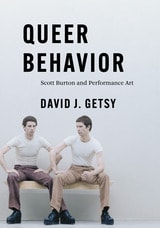
Queer Behavior
Scott Burton and Performance ArtDavid J. Getsy
University of Chicago Press, 2022
Scott Burton (1939–89) created performance art and sculpture that drew on queer experience and the sexual cultures that flourished in New York City in the 1970s. David J. Getsy argues that Burton looked to body language and queer behavior in public space—most importantly, street cruising—as foundations for rethinking the audiences and possibilities of art. This first book on the artist examines Burton’s underacknowledged contributions to performance art and how he made queer life central in them. Extending his performances about cruising, sexual signaling, and power dynamics throughout the decade, Burton also came to create functional sculptures that covertly signaled queerness by hiding in plain sight as furniture waiting to be used.
With research drawing from multiple archives and numerous interviews, Getsy charts Burton’s deep engagements with postminimalism, performance, feminism, behavioral psychology, design history, and queer culture. A restless and expansive artist, Burton transformed his commitment to gay liberation into a unique practice of performance, sculpture, and public art that aspired to be antielitist, embracing of differences, and open to all. Filled with stories of Burton’s life in New York’s art communities, Queer Behavior makes a case for Burton as one of the most significant out queer artists to emerge in the wake of the Stonewall uprising and offers rich accounts of queer art and performance art in the 1970s.

Queer Beirut
By Sofian Merabet
University of Texas Press, 2014
Gender and sexual identity formation is an ongoing anthropological conversation in both Middle Eastern studies and urban studies, but the story of gay and lesbian identity in the Middle East is only just beginning to be told. Queer Beirut is the first ethnographic study of queer lives in the Arab Middle East. Drawing on anthropology, urban studies, gender studies, queer studies, and sociocultural theory, Sofian Merabet’s compelling ethnography suggests a critical theory of gender and religious identity formations that will disrupt conventional anthropological premises about the contingent role that society and particular urban spaces have in facilitating the emergence of various subcultures within the city.
From 1995 to 2014, Merabet made a series of ethnographic journeys to Lebanon, during which he interviewed numerous gay men in Beirut. Through their life stories, Merabet crafts moving ethnographic narratives and explores how Lebanese gays inhabit and perform their gender as they formulate their sense of identity. He also examines the notion of “queer space” in Beirut and the role that this city, its class and sectarian structure, its colonial history, and religion have played in these people’s discovery and exploration of their sexualities. In using Beirut as a microcosm for the complexities of homosexual relationships in contemporary Lebanon, Queer Beirut provides a critical standpoint from which to deepen our understandings of gender rights and citizenship in the structuring of social inequality within the larger context of the Middle East.
Queer Bergman
Sexuality, Gender, and the European Art CinemaBy Daniel Humphrey
University of Texas Press, 2013
One of the twentieth century’s most important filmmakers—indeed one of its most important and influential artists—Ingmar Bergman and his films have been examined from almost every possible perspective, including their remarkable portrayals of women and their searing dramatizations of gender dynamics. Curiously however, especially considering the Swedish filmmaker’s numerous and intriguing comments on the subject, no study has focused on the undeniably queer characteristics present throughout this nominally straight auteur’s body of work; indeed, they have barely been noted.
Queer Bergman makes a bold and convincing argument that Ingmar Bergman’s work can best be thought of as profoundly queer in nature. Using persuasive historical evidence, including Bergman’s own on-the-record (though stubbornly ignored) remarks alluding to his own homosexual identifications, as well as the discourse of queer theory, Daniel Humphrey brings into focus the director’s radical denunciation of heteronormative values, his savage and darkly humorous deconstructions of gender roles, and his work’s trenchant, if also deeply conflicted, attacks on homophobically constructed forms of patriarchic authority. Adding an important chapter to the current discourse on GLBT/queer historiography, Humphrey also explores the unaddressed historical connections between post–World War II American queer culture and a concurrently vibrant European art cinema, proving that particular interrelationship to be as profound as the better documented associations between gay men and Hollywood musicals, queer spectators and the horror film, lesbians and gothic fiction, and others.

Queer Bonds, Volume 17
Joshua Joanou Weiner
Duke University Press, 0
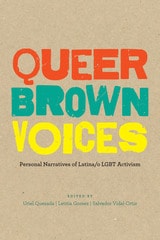
Queer Brown Voices
Personal Narratives of Latina/o LGBT ActivismEdited by Uriel Quesada, Letitia Gomez, and Salvador Vidal-Ortiz
University of Texas Press, 2015
In the last three decades of the twentieth century, LGBT Latinas/os faced several forms of discrimination. The greater Latino community did not often accept sexual minorities, and the mainstream LGBT movement expected everyone, regardless of their ethnic and racial background, to adhere to a specific set of priorities so as to accommodate a “unified” agenda. To disrupt the cycle of sexism, racism, and homophobia that they experienced, LGBT Latinas/os organized themselves on local, state, and national levels, forming communities in which they could fight for equal rights while simultaneously staying true to both their ethnic and sexual identities. Yet histories of LGBT activism in the 1970s, 1980s, and 1990s often reduce the role that Latinas/os played, resulting in misinformation, or ignore their work entirely, erasing them from history.
Queer Brown Voices is the first book published to counter this trend, documenting the efforts of some of these LGBT Latina/o activists. Comprising essays and oral history interviews that present the experiences of fourteen activists across the United States and in Puerto Rico, the book offers a new perspective on the history of LGBT mobilization and activism. The activists discuss subjects that shed light not only on the organizations they helped to create and operate, but also on their broad-ranging experiences of being racialized and discriminated against, fighting for access to health care during the HIV/AIDS epidemic, and struggling for awareness.

Queer Budapest, 1873–1961
Anita Kurimay
University of Chicago Press, 2020
Kurimay explores how and why a series of illiberal Hungarian regimes came to regulate but also tolerate and protect queer life. She also explains how the precarious coexistence between the illiberal state and queer community ended abruptly at the close of World War II. A stunning reappraisal of sexuality’s political implications, Queer Budapest recuperates queer communities as an integral part of Hungary’s—and Europe’s—modern incarnation.
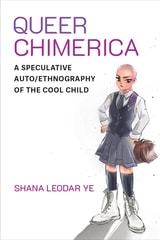
Queer Chimerica
A Speculative Auto/Ethnography of the Cool ChildShana Ye
University of Michigan Press, 2024
Blending archival work, ethnography, and cultural analysis with memoir, graphic arts, and science fiction, Queer Chimerica unpacks the ways in which the transnational circulation of queer culture, politics, and institutions are structured through the antagonist interdependence of China and the United States. By examining the intersecting timelines of the rise of queer theory and the rise of China in the late Cold War era, Shana Ye explores the relationship between the discourse of queer fluidity and capital’s demands for labor flexibility.
Drawing on rare archival material and oral historical accounts of queer life from the 1950s to the late 2010s, the author shows how these accounts make sense of the variegated landscapes of desires, transformations, and conundrums in postsocialist China. The author illustrates party cadres in the Cultural Revolution, tongzhi activism mediated by the explosive politics of Tiananmen upheaval, HIV/AIDS community outreach workers, feminist artists and digital activists, leftist queer theorists, and fictional bio-engineers, layering these vivid depictions to reveal the poetic messiness of queer world-making. Queer Chimerica offers insight into the governmentality of LGBT rights, the rules of legibility and recognition, the geo- and bio-politics of identity, and the class-ridden appropriation of queer history and community. Thus understanding the production of queerness unveils the uneven distributions of capital, knowledge, affect, and opportunity that reproduce queer precarity and agency.
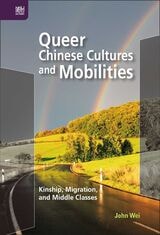
Queer Chinese Cultures and Mobilities
Kinship, Migration, and Middle ClassesJohn Wei
Hong Kong University Press, 2020
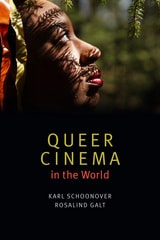
Queer Cinema in the World
Karl Schoonover and Rosalind Galt
Duke University Press, 2016
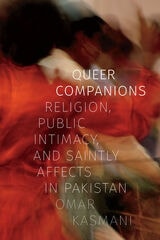
Queer Companions
Religion, Public Intimacy, and Saintly Affects in PakistanOmar Kasmani
Duke University Press, 2022
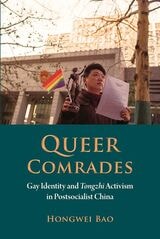
Queer Comrades
Gay Identity and Tongzhi Activism in Postcolonial ChinaHongwei Bao
National University of Singapore Press, 2018
Queer Contiguities of Nigerian Literature
Kerry Manzo
Michigan State University Press, 2026
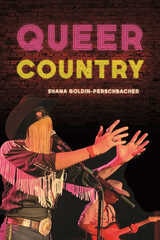
Queer Country
Shana Goldin-Perschbacher
University of Illinois Press, 2022
- A Variety Best Music Book of 2022
- A No Depression Most Memorable Music Book of 2022
- A Library Journal Best Arts and Humanities Book of 2022
- A Pitchfork Best Music Book of 2022
- A Boot Best Music Book of 2022
- A Ticketmaster Best Music Book of 2022
- A Happy Magazine Best Music Book of 2022
- Woody Guthrie First Book Award winner
- Awarded a Certificate of Merit in the 2023 ARSC Awards for Excellence in Historical Recorded Sound Research in the category Best Historical Research in Country, Folk, Roots, or World Music.
Though frequently ignored by the music mainstream, queer and transgender country and Americana artists have made essential contributions as musicians, performers, songwriters, and producers. Queer Country blends ethnographic research with analysis and history to provide the first in-depth study of these artists and their work. Shana Goldin-Perschbacher delves into the careers of well-known lesbian artists like k.d. lang and Amy Ray and examines the unlikely success of singer-songwriter Patrick Haggerty, who found fame forty years after releasing the first out gay country album. She also focuses on later figures like nonbinary transgender musician Rae Spoon and renowned drag queen country artist Trixie Mattel; and on recent breakthrough artists like Orville Peck, Amythyst Kiah, and chart-topping Grammy-winning phenomenon Lil Nas X. Many of these musicians place gender and sexuality front and center even as it complicates their careers. But their ongoing efforts have widened the circle of country/Americana by cultivating new audiences eager to connect with the artists’ expansive music and personal identities.
Detailed and one-of-a-kind, Queer Country reinterprets country and Americana music through the lives and work of artists forced to the margins of the genre's history.
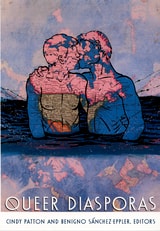
Queer Diasporas
Cindy Patton and Benigno Sánchez-Eppler, editors
Duke University Press, 2000
Incorporating literary analysis, ethnographic research, and theories of diaspora, migration, and transnationalism, the essays in this volume address an impressive range of topics, from the divergent medical and epidemiological understandings of the AIDS pandemic to 1950s lesbian pulp fiction. While one chapter focuses on the appropriation of religious ceremony by gay Filipino immigrants in New York City, another investigates the implicit connection between Jewishness and homosexuality in the work of Freud. The gendering of domestic roles in food preparation and consumption in Japanese society gives way to a discussion of Cuban and Jamaican homoeroticism as seen in the works of Reinaldo Arenas and Claude McKay. Chilean author D’Halmar’s orientalization of Spain as queer space and the hybrid nature of queer ‘zine culture in Quebec are the subject of others. The collection concludes with a monologue by “Walid,” a young gay Arab living in the occupied territory, whose sexual and national identities change according to his sexual and social needs.
Illuminating the complex nature of queerness in the postmodern world, Queer Diasporas contributes to the advancement of gay and lesbian studies. It will be important to those working in cultural, literary, and postcolonial studies.
Contributors. Michele Aina Barale, Daniel Boyarin, Sandra Buckley, Rhonda Cobham, Amir Sumaka’i Fink, Marcie Frank, Martin F. Manalansan IV, Sylvia Molloy, Cindy Patton, Jacob Press, Jennifer Robertson, Benigno Sánchez-Eppler
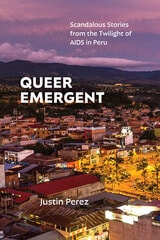
Queer Emergent
Scandalous Stories from the Twilight of AIDS in PeruJustin Perez
Duke University Press, 2025

Queer Encounters with Communist Power
Non-Heterosexual Lives and the State in Czechoslovakia, 1948-1989Vera Sokolová
Karolinum Press, 2019
Contrary to expectations, the book reveals that despite the Czechoslovak Communist regime’s brutality in many areas of life, the state did not carry out a hateful or seditious campaign against homosexual and non-heterosexual people. Rather, the official state sexology offices functioned from the late 1970s onward as essentially the first gay clubs in socialist Czechoslovakia. Interweaving the memories of non-heterosexual Czech women born between 1929 and 1952, Věra Sokolová’s study both enriches and challenges existing scholarship on lesbian and gay history during this era, promising to radically change the way we view gender, sexuality, and everyday life during East European socialism.
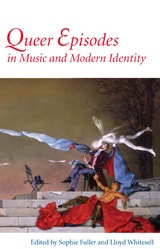
Queer Episodes in Music and Modern Identity
Edited by Sophie Fuller and Lloyd Whitesell
University of Illinois Press, 2001
Exploring the relationship between queer sexuality and music in the late nineteenth and early twentieth century
Queer Episodes in Music and Modern Identity approaches modern sexuality by way of music. Through the hidden or lost stories of composers, scholars, patrons, performers, audiences, repertoires, venues, and specific works, this intriguing volume explores points of intersection between music and queerness in Europe and the United States in the years 1870 to 1950--a period when dramatic changes in musical expression and in the expression of individual sexual identity played similar roles in washing away the certainties of the past. Pursuing the shadowy, obscured tracks of queerness, contributors unravel connections among dissident identities and concrete aspects of musical style, gestures, and personae.
Contributors are Byron Adams, Philip Brett, Malcolm Hamrick Brown, Sophie Fuller, Mitchell Morris, Jann Pasler, Ivan Raykoff, Fiona Richards, Eva Rieger, Gillian Rodger, Sherrie Tucker, and Lloyd Whitesell.
Queer Family Values
Valerie Lehr
Temple University Press, 1999
The flaw in the fight for gay and lesbian marriage rights, argues Lehr in Queer Family Values, lies in its failure to call into question the forms of oppression -- gender, racial, and economic -- that lead society to privilege the nuclear family. Lehr calls for activists to counter conservative discourses that see the nuclear family -- what Lehr considers a socially defined institution that works to maintain, in various ways, inequalities among people -- as the only responsible and mature family alternative. She asks for an approach to family issues and individual liberty that challenges power rather than demands access to privilege. She advocates social policies that enhance the freedom of all people, not simply those gay and lesbian adults seeking to be part of the dominant vision of family in our society.
Analyzing recent works on family, gender, race, and class, Lehr shapes a theory of rights, freedom, and democracy that can liberate us from the strictures of conservative hegemony. She also provides practical examples of how activists can work for a more compassionate and caring society. She devotes a chapter, for example, to the responsibilities activists have to lesbian and gay youths, who -- unlike other children, who might find refuge from social injustice at home -- most often find in the traditional American home homophobia and isolation. Asserting that family care should be seen as a community function, Queer Family Values offers an alternative political strategy focused not on gaining rights, but on enhancing democracy and equality in private life.
Queer Frontiers
Millennial Geographies, Genders, and GenerationsEdited by Joseph A. Boone, et.al.
University of Wisconsin Press, 2000
From the history of gay and lesbian studies to the emergence of video bars, from an interview with playwright Cherrie Moraga to a photo record of 1950s gay Los Angeles, these original essays tackle the past, present, and future of queer sexuality from all directions. Queer Frontiers brings together the most vital and energetic voices around; whether promising young scholar or veteran of gay activism, each contributor is helping to move the debate into uncharted territory.

Queer Futures, Volume 2008
Kevin P. Murphy, Jason Ruiz, and David Serlin, eds.
Duke University Press, 0
Distinguished by its historical approach, “Queer Futures” examines homonormativity as a phenomenon that emerged in the United States after World War II and gained traction in the 1960s and 1970s. One essay compares Anita Bryant’s antigay campaigns in the late 1970s with those of current same-sex marriage proponents to show how both focus on the abstract figure of the “endangered child.” Another essay explores how the Gay and Lesbian Alliance Against Defamation’s organizational amnesia has shaped its often conservative agenda. Other essays include a Marxist reading of the transsexual body, an examination of reactionary politics at the core of the movement to repeal the U.S. military’s “don’t ask, don’t tell” policy, and a history of how “safe streets” patrols in the 1970s and 1980s became opportunities for urban gentrification and community exploitation.
Contributors. Anna M. Agathangelou, Daniel Bassichis, Aaron Belkin, Nan Alamilla Boyd, Maxime Cervulle, Vincent Doyle, Roderick A. Ferguson, Christina Hanhardt, Dan Irving, Regina Kunzel, Patrick McCreery, Kevin P. Murphy, Tavia Nyong’o, Jason Ruiz, David Serlin, Tamara L. Spira, Susan Stryker, Margot D. Weiss
Queer Game Studies
Bonnie Ruberg
University of Minnesota Press, 2017
Video games have developed into a rich, growing field at many top universities, but they have rarely been considered from a queer perspective. Immersion in new worlds, video games seem to offer the perfect opportunity to explore the alterity that queer culture longs for, but often sexism and discrimination in gamer culture steal the spotlight. Queer Game Studies provides a welcome corrective, revealing the capacious albeit underappreciated communities that are making, playing, and studying queer games.
These in-depth, diverse, and accessible essays use queerness to challenge the ideas that have dominated gaming discussions. Demonstrating the centrality of LGBTQ issues to the gamer world, they establish an alternative lens for examining this increasingly important culture. Queer Game Studies covers important subjects such as the representation of queer bodies, the casual misogyny prevalent in video games, the need for greater diversity in gamer culture, and reading popular games like Bayonetta, Mass Effect, and Metal Gear Solid from a queer perspective.
Perfect for both everyday readers and instructors looking to add diversity to their courses, Queer Game Studies is the ideal introduction to the vast and vibrant realm of queer gaming.
Contributors: Leigh Alexander; Gregory L. Bagnall, U of Rhode Island; Hanna Brady; Mattie Brice; Derek Burrill, U of California, Riverside; Edmond Y. Chang, U of Oregon; Naomi M. Clark; Katherine Cross, CUNY; Kim d’Amazing, Royal Melbourne Institute of Technology; Aubrey Gabel, U of California, Berkeley; Christopher Goetz, U of Iowa; Jack Halberstam, U of Southern California; Todd Harper, U of Baltimore; Larissa Hjorth, Royal Melbourne Institute of Technology; Chelsea Howe; Jesper Juul, Royal Danish Academy of Fine Arts; merritt kopas; Colleen Macklin, Parsons School of Design; Amanda Phillips, Georgetown U; Gabriela T. Richard, Pennsylvania State U; Toni Rocca; Sarah Schoemann, Georgia Institute of Technology; Kathryn Bond Stockton, U of Utah; Zoya Street, U of Lancaster; Peter Wonica; Robert Yang, Parsons School of Design; Jordan Youngblood, Eastern Connecticut State U.
Queer Iberia
Sexualities, Cultures, and Crossings from the Middle Ages to the RenaissanceJosiah Blackmore and Gregory S. Hutcheson, eds.
Duke University Press, 1999
To show how sexual otherness is most evident at points of cultural conflict, the contributors use a variety of methodologies and perspectives and consider source materials that originated in Castilian, Latin, Arabic, Catalan, and Galician-Portuguese. Covering topics from the martydom of Pelagius to the exploits of the transgendered Catalina de Erauso, this volume is the first to provide a comprehensive historical examination of the relations among race, gender, sexuality, nation-building, colonialism, and imperial expansion in medieval and early modern Iberia. Some essays consider archival evidence of sexual otherness or evaluate the use of “deviance” as a marker for cultural and racial difference, while others explore both male and female homoeroticism as literary-aesthetic discourse or attempt to open up canonical texts to alternative readings.
Positing a queerness intrinsic to Iberia’s historical process and cultural identity, Queer Iberia will challenge the field of Iberian studies while appealing to scholars of medieval, cultural, Hispanic, gender, and gay and lesbian studies.
Contributors. Josiah Blackmore, Linde M. Brocato, Catherine Brown, Israel Burshatin, Daniel Eisenberg, E. Michael Gerli, Roberto J. González-Casanovas, Gregory S. Hutcheson, Mark D. Jordan, Sara Lipton, Benjamin Liu, Mary Elizabeth Perry, Michael Solomon, Louise O. Vasvári, Barbara Weissberger
Queer Indigenous Cinemas
Sovereign Genders from Seven DirectionsGabriel S. Estrada
University of Arizona Press, 2026
The seven Indigenous directions—east, south, west, north, down, up, and center—provide a map of understanding gender in media history.
In Queer Indigenous Cinemas, scholar Gabriel S. Estrada offers an analysis of queer Indigenous media from the Americas, the Pacific, and the Caribbean. This groundbreaking work uses Indigenous directional space and sovereign mapping methods to uncover the emotional, spiritual, and cultural dimensions of queer Indigenous lives. The book’s seven chapters—each one of the directions—look closely at media such as cinema and streaming videos that draw on Indigenous concepts from diverse nations such as Diné, Caxcan, Kanaka Maoli, and Nehiyawak. Estrada discusses how the cinema brings into focus the ways that many Indigenous genders do not conform with the male/female binary, genders and sexualities that may or may not overlap with contemporary constructions of gay, lesbian, bisexual, transgender, intersex, and two-spirit (LGBTQI2+) identities.
Highlighting the struggles and resistances of two-spirit peoples, Estrada’s analysis engages with films that represent the diverse and sovereign identities of queer Indigenous peoples. Estrada provides a framework for understanding how queer Indigenous media producers confront colonial trauma and reclaims space for the spiritual and bodily sovereignty of LGBTQI2+ peoples.
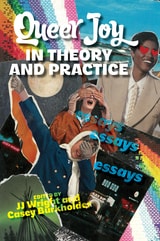
Queer Joy in Theory and Practice
EssaysJJ Wright
Rutgers University Press, 2027
Queer Joy in Theory and Practice: Essays on Resistance, Thriving, and Liberation centers queer joy as a radical method of resistance and world-building in the face of rising homophobia, transphobia, and systemic violence. Rather than framing queer and trans lives solely through trauma, this groundbreaking collection explores how joy functions as a site of possibility, solidarity, and social change. This book bridges theory, research, and practice to examine queer joy across classrooms, communities, art, public spaces, and activism. With chapters on education, abolitionist politics, drag, parenting, street art, and festivals, this timely and interdisciplinary volume illuminates joy as a transformative force—one that refuses despair and instead imagines liberatory, life-affirming futures for queer and trans communities worldwide.
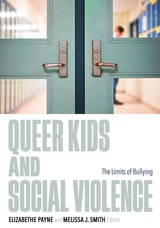
Queer Kids and Social Violence
The Limits of BullyingElizabethe Payne
University of Minnesota Press, 2025
Challenging the myths about LGBTQ+ kids and bullying: what it means to protect queer kids in schools
Conversations around LGBTQ+ kids in school have become dominated by the subject of bullying. Although this may be due to good-faith efforts to protect vulnerable students, Queer Kids and Social Violence demonstrates that a focus on bullying as acts of individual peer aggression fails to address the social norms that perpetuate the violence. Considering the broader contexts of bullying, this volume offers ways to engage with queer youth that are both more humanizing and more likely to create sustainable change.
Essays by leading international scholars analyze how bullying discourse shapes policy and practice, using in-depth case studies, research findings, and examinations of political policy to guide readers through the various forms of violence, identity regulation, and identity erasure in schools. Offering conversation-shifting interventions to respond to a difficult and frightening political moment for LGBTQ+ youth, Queer Kids and Social Violence is a rounded, empathetic picture that does queer youth justice and points the way toward safer schools for all.
Contributors: Ana María Amigo-Ventureira, Durell M. Callier, Cristyn Davies, Renée DePalma, Tania Ferfolja, Jessica Fields, Elliot Fonarev, Jen Gilbert, Tristan Gleason, Dominique C. Hill, Angela Ingram, Laurie Gutmann Kahn, Cris Mayo, Mollie McQuillan, Aoife Neary, C.J. Pascoe, Victoria Rawlings, EJ Renold, Jessica Ringrose, Kerry H. Robinson, Dorte Marie Søndergaard, Cris Townley, Jacqueline Ullman, Boni Wozolek.
Retail e-book files for this title are screen-reader friendly with images accompanied by short alt text and/or extended descriptions.

Queer Kinship and Family Change in Taiwan
Brainer, Amy
Rutgers University Press, 2019
Interweaving the narratives of multiple family members, including parents and siblings of her queer and trans informants, Amy Brainer analyzes the strategies that families use to navigate their internal differences. In Queer Kinship and Family Change in Taiwan, Brainer looks across generational cohorts for clues about how larger social, cultural, and political shifts have materialized in people’s everyday lives. Her findings bring light to new parenting and family discourses and enduring inequalities that shape the experiences of queer and heterosexual kin alike.
Brainer’s research takes her from political marches and support group meetings to family dinner tables in cities and small towns across Taiwan. She speaks with parents and siblings who vary in whether and to what extent they have made peace with having a queer or transgender family member, and queer and trans people who vary in what they hope for and expect from their families of origin. Across these diverse life stories, Brainer uses a feminist materialist framework to illuminate struggles for personal and sexual autonomy in the intimate context of family and home.

Queer Kinship
Race, Sex, Belonging, FormTeagan Bradway and Elizabeth Freeman, editors
Duke University Press, 2022
Contributors. Aqdas Aftab, Leah Claire Allen, Teagan Bradway, Juliana Demartini Brito, Judith Butler, Dilara Çalışkan, Christopher Chamberlin, Aobo Dong, Brigitte Fielder, Elizabeth Freeman, John S. Garrison, Nat Hurley, Joseph M. Pierce, Mark Rifkin, Poulomi Saha, Kath Weston
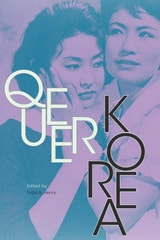
Queer Korea
Todd A. Henry, editor
Duke University Press, 2020
Contributors. Pei Jean Chen, John (Song Pae) Cho, Chung-kang Kim, Todd A. Henry, Merose Hwang, Ruin, Layoung Shin, Shin-ae Ha, John Whittier Treat