Results by title
336 books match the query 'Age' and 18 start with r
Radical Artifice
Writing Poetry in the Age of MediaMarjorie Perloff
University of Chicago Press, 1992
Radical Endurance
Growing Old in an Age of Longevitygil
University of Minnesota Press, 2024
A personal guide to the transformations, hard truths, profound pleasures, and infinite possibilities of aging
One May morning shortly before her seventy-fifth birthday, Andrea Gilats awoke to a startling, sudden spike in consciousness that she was about to leap from older to old. Radical Endurance is the story of the reckoning that followed, a candid, clear-eyed journey of discovery through the pitfalls and possibilities of aging. Facing the realities of her age, Gilats explores her fears of failing health and loss of independence while navigating the terrain of an ageist culture. But among such troubling uncertainties, she also encounters the singular pleasures of “growing up again,” of finding fresh and unexpected ways of understanding herself and making meaning during this new era of her life.
Reflecting on moments in midlife, from the painful adjustments of widowhood to life-altering medical diagnoses, Gilats arrives at a valuable insight: the journey toward old age begins sooner and lasts longer than we might imagine. Yet from any moment in this process, old age is the future, brimming with potential. In her account, Gilats combines personal and professional experience, offering firsthand knowledge of a stage of life that we each meet in our own time, in our own way. She also contributes the learning and wisdom of her heroes and mentors, including feminist author Barbara Ehrenreich, poet May Sarton, singer and activist Joan Baez, psychiatrist Gene Cohen, archaeologist Arthur C. Parker, physician Jane Hodgson, and Nobel literature laureate Isaac Bashevis Singer.
Enlightening and deeply moving, alive to the sadness and joy of time passing, Radical Endurance is a guide and a companion through the experience of growing old as well as an unconventional coming-of-age story, celebrating a new stage of life when we need it most.
Retail e-book files for this title are screen-reader friendly.
Recasting America
Culture and Politics in the Age of Cold WarEdited by Lary May
University of Chicago Press, 1989
Recycled Stars
Female Film Stardom in the Age of Television and VideoMary R. Desjardins
Duke University Press, 2015
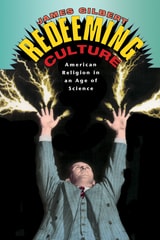
Redeeming Culture
American Religion in an Age of ScienceJames Gilbert
University of Chicago Press, 1997
"Anyone seriously interested in the history of current controversies involving religion and science will find Gilbert's book invaluable."—Peter J. Causton, Boston Book Review
"Redeeming Culture provides some fascinating background for understanding the interactions of science and religion in the United States. . . . Intriguing pictures of some of the highlights in this cultural exchange."—George Marsden, Nature
"A solid and entertaining account of the obstacles to mutual understanding that science and religion are now warily overcoming."—Catholic News Service
"[An] always fascinating look at the conversation between religion and science in America."—Publishers Weekly
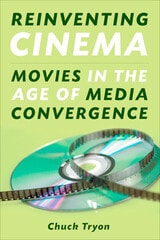
Reinventing Cinema
Movies in the Age of Media ConvergenceTryon, Chuck
Rutgers University Press, 2009
Reinventing Cinema examines film culture at the turn of this century, at the precise moment when digital media are altering our historical relationship with the movies. Spanning multiple disciplines, Chuck Tryon addresses the interaction between production, distribution, and reception of films, television, and other new and emerging media.Through close readings of trade publications, DVD extras, public lectures by new media leaders, movie blogs, and YouTube videos, Tryon navigates the shift to digital cinema and examines how it is altering film and popular culture.

Reinventing Reference
How Public, Academic, and School Libraries Deliver Value in the Age of GoogleVibiana Bowman Cvetkovic
American Library Association, 2014
Remaking America
Democracy and Public Policy in an Age of InequalityJoe Soss
Russell Sage Foundation, 2007
Remembering and Forgetting in the Age of Technology
Teaching, Learning, and the Science of Memory in a Wired WorldMichelle D Miller
West Virginia University Press, 2022
Human minds are made of memories, and today those memories have competition. Biological memory capacities are being supplanted, or at least supplemented, by digital ones, as we rely on recording—phone cameras, digital video, speech-to-text—to capture information we’ll need in the future and then rely on those stored recordings to know what happened in the past. Search engines have taken over not only traditional reference materials but also the knowledge base that used to be encoded in our own brains. Google remembers, so we don’t have to. And when we don’t have to, we no longer can. Or can we?
Remembering and Forgetting in the Age of Technology offers concise, nontechnical explanations of major principles of memory and attention—concepts that all teachers should know and that can inform how technology is used in their classes. Teachers will come away with a new appreciation of the importance of memory for learning, useful ideas for handling and discussing technology with their students, and an understanding of how memory is changing in our technology-saturated world.
Rereading Marx in the Age of Digital Capitalism
Christian Fuchs
Pluto Press, 2019
Revolution as Reformation
Protestant Faith in the Age of Revolutions, 1688–1832Edited by Peter C. Messer and William Harrison Taylor
University of Alabama Press, 2021
Essays that explore how Protestants responded to the opportunities and perils of revolution in the transatlantic age
Revolution as Reformation: Protestant Faith in the Age of Revolutions, 1688–1832 highlights the role that Protestantism played in shaping both individual and collective responses to revolution. These essays explore the various ways that the Protestant tradition, rooted in a perpetual process of recalibration and reformulation, provided the lens through which Protestants experienced and understood social and political change in the Age of Revolutions. In particular, they call attention to how Protestants used those changes to continue or accelerate the Protestant imperative of refining their faith toward an improved vision of reformed religion.
The editors and contributors define faith broadly: they incorporate individuals as well as specific sects and denominations, and as much of “life experience” as possible, not just life within a given church. In this way, the volume reveals how believers combined the practical demands of secular society with their personal faith and how, in turn, their attempts to reform religion shaped secular society.
The wide-ranging essays highlight the exchange of Protestant thinkers, traditions, and ideas across the Atlantic during this period. These perspectives reveal similarities between revolutionary movements across and around the Atlantic. The essays also emphasize the foundational role that religion played in people’s attempts to make sense of their world, and the importance they placed on harmonizing their ideas about religion and politics. These efforts produced novel theories of government, encouraged both revolution and counterrevolution, and refined both personal and collective understandings of faith and its relationship to society.
Revolution in the Andes
The Age of Túpac AmaruSergio Serulnikov
Duke University Press, 2013

Rights or Self-Government?
Recovering the Meaning of Citizenship in an Age of RightsThomas E. Schneider
St. Augustine's Press, 2026
Risk Criticism
Precautionary Reading in an Age of Environmental UncertaintyMolly Wallace
University of Michigan Press, 2016
Taking inspiration from the questions raised by the Bulletin’s synecdochical “nuclear,” Risk Criticism aims to generate a hybrid form of critical practice that brings “nuclear criticism” into conversation with ecocriticism. Through readings of novels, films, theater, poetry, visual art, websites, news reports, and essays, Risk Criticism tracks the diverse ways in which environmental risks are understood and represented today.
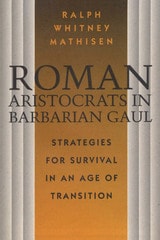
Roman Aristocrats in Barbarian Gaul
Strategies for Survival in an Age of TransitionBy Ralph W. Mathisen
University of Texas Press, 1992
Skin-clad barbarians ransacking Rome remains a popular image of the "decline and fall" of the Roman Empire, but why, when, and how the Empire actually fell are still matters of debate among students of classical history. In this pioneering study, Ralph W. Mathisen examines the "fall" in one part of the western Empire, Gaul, to better understand the shift from Roman to Germanic power that occurred in the region during the fifth century AD.
Mathisen uncovers two apparently contradictory trends. First, he finds that barbarian settlement did provoke significant changes in Gaul, including the disappearance of most secular offices under the Roman imperial administration, the appropriation of land and social influence by the barbarians, and a rise in the overall level of violence. Yet he also shows that the Roman aristocrats proved remarkably adept at retaining their rank and status. How did the aristocracy hold on?
Mathisen rejects traditional explanations and demonstrates that rather than simply opposing the barbarians, or passively accepting them, the Roman aristocrats directly responded to them in various ways. Some left Gaul. Others tried to ignore the changes wrought by the newcomers. Still others directly collaborated with the barbarians, looking to them as patrons and holding office in barbarian governments. Most significantly, however, many were willing to change the criteria that determined membership in the aristocracy. Two new characteristics of the Roman aristocracy in fifth-century Gaul were careers in the church and greater emphasis on classical literary culture.
These findings shed new light on an age in transition. Mathisen's theory that barbarian integration into Roman society was a collaborative process rather than a conquest is sure to provoke much thought and debate. All historians who study the process of power transfer from native to alien elites will want to consult this work.
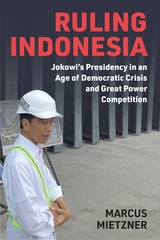
Ruling Indonesia
Jokowi's Presidency in an Age of Democratic Crisis and Great Power CompetitionMarcus Mietzner
University of Michigan Press, 2026
Joko Widodo—popularly called Jokowi—ruled Indonesia for a decade, from 2014 to 2024. The world’s fourth-largest nation and third-largest democracy, Indonesia had embarked on a messy democratic transition in the late 1990s, with the country’s ethnic and religious heterogeneity posing significant challenges to governance. Initially seen as a reformer who might challenge oligarchic structures, Jokowi was slowly but steadily seen as himself being a threat to democracy. By the time Jokowi wrapped up his presidency, he had achieved the highest approval ratings among Indonesia’s post-authoritarian presidents—and became the president with the tightest grip over Indonesia’s political elite.
Based on exclusive interviews with Jokowi and many of Indonesia’s top leaders, Ruling Indonesia shows Jokowi as a president obsessively preoccupied with his economic development agenda, subordinating all other aspects of governance to this goal. His focused approach delivered economic successes and unprecedented popularity, but also seriously undermined the health of Indonesia’s democratic institutions. Offering a holistic appraisal of his decade in office, Marcus Mietzner analyzes Jokowi’s domestic record in the context of his attempts to position Indonesia more favorably in the international competition for power and resources. Crucially, his obsession to push Indonesia closer to industrialized status while neglecting democratic development represented the ambitions and trials of many Global South leaders who are trying to juggle economic development, growing Sino-American tensions around the world, and concerns for democratic rights. As such, this book provides valuable insights into how the great power rivalry of the 21st century and the global recession of democracy are playing out in central arenas of the Global South.
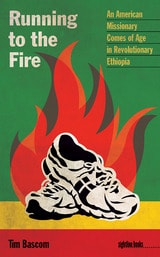
Running to the Fire
An American Missionary Comes of Age in Revolutionary EthiopiaTim Bascom
University of Iowa Press, 2015
Running to the Fire focuses on the turbulent year the Bascom family experienced upon traveling into revolutionary Ethiopia. The teenage Bascom finds a paradoxical exhilaration in living so close to constant danger. At boarding school in Addis Ababa, where dorm parents demand morning devotions and forbid dancing, Bascom bonds with other youth due to a shared sense of threat. He falls in love for the first time, but the young couple is soon separated by the politics that affect all their lives. Across the country, missionaries are being held under house arrest while communist cadres seize their hospitals and schools. A friend’s father is imprisoned as a suspected CIA agent; another is killed by raiding Somalis.
Throughout, the teenaged Bascom struggles with his faith and his role within the conflict as a white American Christian missionary’s child. Reflecting back as an adult, he explores the historical, cultural, and religious contexts that led to this conflict, even though in doing so he is forced to ask himself questions that are easier left alone. Why, he wonders, did he find such strange fulfillment in being young and idealistic in the middle of what was essentially a kind of holy war?
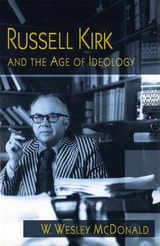
Russell Kirk and the Age of Ideology
W. Wesley McDonald
University of Missouri Press, 2004