Results by title
61 books match the query 'American West' and 8 start with r

Race, Religion, Region
Landscapes of Encounter in the American WestEdited by Fay Botham and Sara M. Patterson
University of Arizona Press, 2006
This book moves beyond familiar stereotypes to achieve a more nuanced understanding of race while also showing how ethnicity formed in conjunction with religious and regional identity. The chapters demonstrate how religion shaped cultural encounters, contributed to the construction of racial identities, and served as a motivating factor in the lives of historical actors. The opening chapters document how religion fostered community in Los Angeles in the first half of the twentieth century. The second section examines how physical encounters—such as those involving Chinese immigrants, Hermanos Penitentes, and Pueblo dancers—shaped religious and racial encounters in the West. The final essays investigate racial and religious identity among the Latter-day Saints and southern California Muslims. As these contributions clearly show, race, religion, and region are as critical as gender, sexuality, and class in understanding the melting pot that is the West. By depicting the West as a unique site for understanding race and religion, they open a new window on how we view all of America.
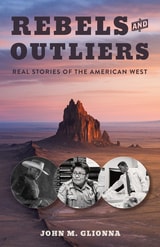
Rebels and Outliers
Real Stories of the American WestJohn M Glionna
University of Nevada Press, 2025
This vibrant collection invites readers to journey through the rugged landscapes and tight-knit communities that define the American West. Along the way, you’ll meet individuals whose grit, resilience, and pioneering spirit embody the heart of this region’s legacy.
A captivating follow-up to Glionna’s 2022 book, Outback Nevada: Real Stories of the Silver State, Rebels and Outliers is a testament to the untamed, enduring character of the people who call the West home.
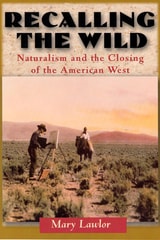
Recalling the Wild
Naturalism and the Closing of the American WestLawlor, Mary
Rutgers University Press, 2000
Ever since the first interactions between Europeans and Native Americans, the “West” has served as a site of complex geographical, social and cultural transformation. American literature is defined, in part, by the central symbols derived from these points of contact. By the end of the nineteenth century, the Western frontier was declared “closed,” a demise solidified by Frederick Jackson Turner’s influential essay “The Significance of the Frontier in American History (1893). At the same time, “naturalism” was popularized by the writings of Frank Norris, Stephen Crane, Jack London, Willa Cather, and the photographs of Edward Curtis. Though very different artists, they were united by their common attraction to the mythic American West.
As she investigates the interactions of representations of the West, Lawlor effortlessly melds literary studies, American studies, and history. She traces the cultural conception of the American West through its incarnations in the “westernism” of Daniel Boone and James Fenimore Cooper and the romanticism of the expansive frontier they helped formulate. Simultaneously, however, the influence of evolutionism and the styles of French naturalism began to challenge this romantic idiom. This naturalistic discourse constructed the West as a strictly material place, picturing a limited and often limiting geography that portrayed regional identity as the product of material “forces” rather than of individualistic enterprise.
With subtle, probing language, Lawlor explains how literary and artistic devices helped shape the idea of the American West and the changing landscape of the continent at the turn of the last century.

Reckoning
The American West on EdgeWalter R. Borneman
University of Utah Press, 2027

Rehab on the Range
A History of Addiction and Incarceration in the American WestHolly M. Karibo
University of Texas Press, 2024
2026 Texas Christian University (TCU) Texas Book Award Winner
2025 Coral Horton Tullis Memorial Prize, Texas State Historical Association
2025 Outstanding Academic Title, CHOICE
The first study of the Fort Worth Narcotic Farm, an institution that played a critical role in fusing the War on Drugs, mass incarceration, and public health in the American West.
In 1929, the United States government approved two ground-breaking and controversial drug addiction treatment programs. At a time when fears about a supposed rise in drug use reached a fevered pitch, the emergence of the nation’s first “narcotic farms” in Fort Worth, Texas, and Lexington, Kentucky, marked a watershed moment in the treatment of addiction. Rehab on the Range is the first in-depth history of the Fort Worth Narcotic Farm and its impacts on the American West. Throughout its operation from the 1930s to the 1970s, the institution was the only federally funded drug treatment center west of the Mississippi River. Designed to blend psychiatric treatment, physical rehabilitation, and vocational training, the Narcotic Farm, its proponents argued, would transform American treatment policies for the better. The reality was decidedly more complicated.
Holly M. Karibo tells the story of how this institution—once framed as revolutionary for addiction care—ultimately contributed to the turn towards incarceration as the solution to the nation’s drug problem. Blending an intellectual history of addiction and imprisonment with a social history of addicts’ experiences, Rehab on the Range provides a nuanced picture of the Narcotic Farm and its cultural impacts. In doing so, it offers crucial historical context that can help us better understand our current debates over addiction, drug policy, and the rise of mass incarceration.
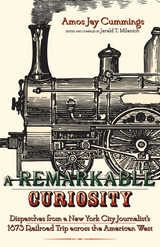
Remarkable Curiosity
Dispatches from a New York City Journalist's 1873 Railroad Trip across the American WestJerald T. Milanich
University Press of Colorado, 2008
Although today he is virtually unknown, during his lifetime Cummings was one of the most famous newspapermen in the United States, in part because of stories like these. Complete with a biographical sketch and historical introduction, A Remarkable Curiosity is an enjoyable read for anybody interested in the American West in the latter half of the nineteenth century.
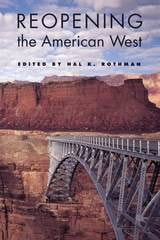
Reopening the American West
Edited by Hal K. Rothman
University of Arizona Press, 1998
In this book Mike Davis, Stephen Pyne, William deBuys, Donald Worster, Dan Flores, and others re-examine the relationship between people and the environment in the American West over five hundred years, from the legacy of Coronado's search for the Cities of Gold to the social costs of tourism and gaming inflicted by modern adventurers. By exploring places in the West, aspects of the region's past, and ways of understanding some of its pressing issues, the authors foster a better understanding of how people interact and perceive land.
Reopening the American West takes a fresh approach to the history of the region, examining the premises of earlier scholars as well as those who have redefined the study of the West over the past two decades. It combines provocative essays with insightful analyses to address issues that are representative of the West in the twentieth century—multiculturalism, water issues, resource exploitation—and to reopen the West for all readers interested in new ways of looking at its wide-open spaces.
Contents:
Places
Dreams of Earth, William deBuys
Environmentalism and Multiculturalism, Dan L. Flores
Pyre on the Mountain, Stephen J. Pyne
Las Vegas Versus Nature, Mike Davis
Pasts
The Legacy of John Wesley Powell, Donald Worster
Pokey’s Paradox: Tourism and Transformation on the Western Navajo Reservation, Hal K. Rothman
Negotiating National Identity: Western Tourism and "See American First," Marguerite Schaffer
Understanding
Place Humanists at the Headgates, Helen Ingram
Tapping the Rockies: Resource Exploitation and Conservation in the Intermountain West, Char Miller
The Meaning of Place: Reimagining Community in a Changing West, Robert Gottlieb
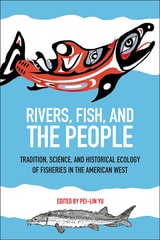
Rivers, Fish, and the People
Tradition, Science, and Historical Ecology of Fisheries in the American WestPei-Lin Yu
University of Utah Press, 2015
America’s western rivers are under assault from development, pollution, invasive species, and climate change. Returning these eco- systems to the time of European contact is often the stated goal for restoration efforts, yet neither the influence of indigenous societ- ies on rivers at the time of contact nor the deeper evolutionary relationships are yet understood by the scientific world. This volume presents a unique synthesis of scientific discoveries and traditional knowledge about the ecology of iconic river species in the American West.
Building from a foundation in fisheries biology and life history data about key species, the book reveals ancient human relationships with those species and describes time-tested Native resource management techniques, drawing from the archaeological record and original ethnographic sources. It evaluates current research trends, summarizes the conceptual foundations for the cultural and evolutionary significance of sustainable use of fish, and seeks pathways for future research. Geographic areas described include the Columbia Plateau, Idaho’s Snake River Plain, the Sacramento River Delta, and the mid-Fraser River of British Columbia. Previously unpublished information is included with the express permission and approval of tribal communities. This approach broadens and deepens the available body of data and establishes a basis for future collaboration between scientists and Native stakeholders toward mutual goals of river ecosystem health.