Results by title
244 books match the query 'Arkansas' and 14 start with r
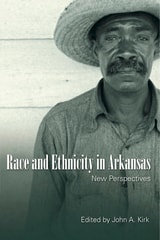
Race and Ethnicity in Arkansas
New PerspectivesJohn A. Kirk
University of Arkansas Press, 2014
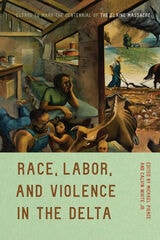
Race, Labor, and Violence in the Delta
Essays to Mark the Centennial of the Elaine MassacreMichael Pierce
University of Arkansas Press, 2022
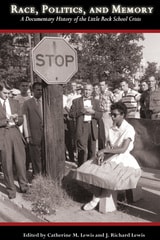
Race, Politics, and Memory
A Documentary History of the Little Rock School CrisisCatherine M. Lewis
University of Arkansas Press, 2007
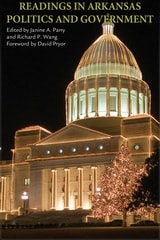
Readings in Arkansas Politics and Government
Janine A. Parry
University of Arkansas Press, 2009
Readings in Arkansas Politics and Government
Kim U. Hoffman
University of Arkansas Press, 2020
Rebellion and Realignment
Arkansas's Road to SecessionJames M. Woods
University of Arkansas Press, 1987
Arkansas, the Old South’s last frontier, was forced, after the election of Lincoln, to face the issue of secession. A decade earlier, the state had spurned all efforts from within to withdraw from the Union, but the following ten years drew Arkansas deeper into the economic and cultural community that bound it to the other slaveholding states. Now rumblings of secession were heard even before the president-elect assumed office on March 4, 1861. The question was asked on street corners, in offices, barbershops and living rooms: Would Arkansas leave the Union?
Answers to that question caused a fundamental realignment of politics in Arkansas during the winter of 1860–61. The former political coalition of Democrat and Whig fell away in a geographical split between the uplands and the lowlands. In this important and exciting book, the first to tell the story of Arkansas’s road to secession, James Woods examines the differences between uplanders, whose mountain regions offered little useful farmland for any crop, and lowlanders, whose vast deltas were ideally suited for cotton farming. The southern portion of the state began to rely increasingly upon slavery as it became linked to the economy of cotton and Southern antebellum values, but the northern region of the state did not. Woods focuses upon the resulting social, economic, and geographic divisions that grew within Arkansas before and during the secession crisis. He captures the political struggles of the state as it tore away from the nation, and as it threatened, in so doing, to tear itself apart.
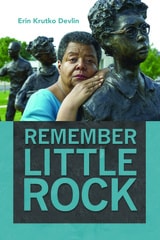
Remember Little Rock
Erin Krutko Devlin
University of Massachusetts Press, 2017
In Remember Little Rock Erin Krutko Devlin explores public memories surrounding the iconic Arkansas school desegregation crisis of 1957 and shows how these memories were vigorously contested and sometimes deployed against the cause. Delving into a wide variety of sources, from memoirs to televised docudramas, commemoration ceremonies, and the creation of Little Rock High museums, Devlin reveals how many white moderates proclaimed Little Rock a victory for civil rights and educational equality even as segregation persisted. At the same time, African American activists, students, and their families asserted their own stories in the ongoing fight for racial justice.
Devlin also demonstrates that public memory directly bears on law and policy. She argues that the triumphal narrative of civil rights has been used to stall school desegregation, support tokenism, and to roll back federal court oversight of school desegregation, voter registration, and efforts to promote diversity in public institutions. Remember Little Rock examines the chasm between the rhetoric of the “post–civil rights” era and the reality of enduring racial inequality.
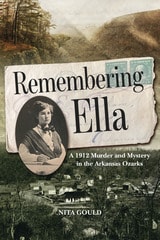
Remembering Ella
A 1912 Murder and Mystery in the Arkansas OzarksNita Gould
Butler Center for Arkansas Studies, 2018
This examination of the murder of Ella Barham and the trial of her alleged killer opens a window into the meaning of community and due process during a time when politicians and judges sought to professionalize justice, moving from local hangings to state-run executions. Davidson’s appeal has been cited as a precedent in numerous court cases and his brief was reviewed by the lawyers in Georgia who prepared Leo Frank’s appeal to the U.S. Supreme Court in 1915.
Author Nita Gould is a descendant of the Barhams of Boone County and Ella Barham’s cousin. Her tenacious pursuit to create an authoritative account of the community, the crime, and the subsequent legal battle spanned nearly fifteen years. Gould weaves local history and short biographies into her narrative and also draws on the official case files, hundreds of newspaper accounts, and personal Barham family documents. Remembering Ella reveals the truth behind an event that has been a staple of local folklore for more than a century and still intrigues people from around the country.
Remembrances in Black
Personal Perspectives of the African American Experience at the University of Arkansas, 1940s–2000sCharles F. Robinson II
University of Arkansas Press, 2015
Reminiscences of a Private
William E. Bevens of the First Arkansas Infantry C.S.A.Daniel E. Sutherland
University of Arkansas Press, 1999
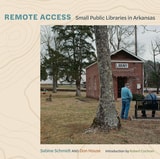
Remote Access
Small Public Libraries in ArkansasSabine Schmidt
University of Arkansas Press, 2021
Winner, 2024 Arkansiana Book Award, Arkansas Library Association
With their cameras and notebooks in hand, photographers Sabine Schmidt and Don House embarked on an ambitious project to document the libraries committed to serving Arkansas’s smallest communities. Remote Access is the culmination of this fascinating three-year effort, which took the artists to every region of their home state.
Schmidt’s carefully constructed color images of libraries and the communities they serve and House’s rich black-and-white portraits of library patrons and staff shine alongside the authors’ personal essays about their experiences. The pages here come alive with a deep connection to Arkansas’s history and culture as we accompany the authors on visits to a section of the Trail of Tears near Parkin, to the site of the tragic 1959 fire at the Arkansas Negro Boys Industrial School in Wrightsville, and to Maya Angelou’s childhood home in Stamps, among many other significant destinations.
Through this testament to the essential role of libraries in the twenty-first century, Schmidt and House have created a clear-eyed portrait of contemporary rural life, delving into issues of race, politics, gender, and isolation as they document the remarkable hard work and generosity put forth in community efforts to sustain local libraries.
Reporting for Arkansas
The Documentary Films of Jack HillDale Carpenter
University of Arkansas Press, 2022
Jack Hill was a pioneering Arkansas documentary filmmaker dedicated to sharing his state’s history with a wider public. Following a decade as an award-winning investigative journalist and news anchor at KAIT in Jonesboro, Hill was pushed out by new management for his controversial reporting on corruption in a local sheriff’s office. What seemed like a major career setback turned out to be an opportunity: he founded the production company TeleVision for Arkansas, through which he produced dozens of original films. Although Hill brought an abiding interest in education and public health to this work from the beginning, he found his true calling in topics based in Arkansas history. Convinced that a greater acquaintance with the state’s most significant historical events would nurture a greater sense of homegrown pride, Hill tirelessly crisscrossed the state to capture the voices of hundreds of Arkansans recalling significant chapters in the state’s history, such as the oil boom in El Dorado and Smackover, the crucial contributions of the Arkansas Ordnance Plant in Jacksonville during World War II, and the role of Rosenwald Schools in expanding educational opportunities.
In Reporting for Arkansas, Dale Carpenter and Robert Cochran present a biography of Hill alongside an annotated selected filmography designed to accompany sixteen of his best films on subjects related to Arkansas history—all newly hosted online by the Center for Arkansas and Regional Studies at the University of Arkansas.
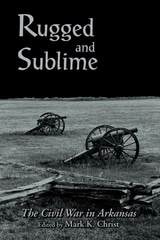
Rugged and Sublime
The Civil War in ArkansasMark Christ
University of Arkansas Press, 1994
When one thinks of the American Civil War, such names as Vicksburg, Gettysburg, and Chancellorsville come immediately to mind. Few recall the battles in the Trans-Mississippi theater.
Rugged and Sublime goes a long way toward filling regrettable blanks in our memory of Arkansas’s role in Civil War. It explore the major clashes and locales of the war, including the state secession convention, seizure of the Little Rock Arsenal, the Battle of Wilson’s Creek, the Pea Ridge campaign, Marmaduke’s invasion of Missouri, the Battle of Helena, and the fall of Little Rock, as well as other actions. Rounding out this new and very readable account are studies of the devolution of Arkansas society when bands of guerillas and jayhawkers menaced the state, the surrender of the Confederate armies, and an assessment of losses.
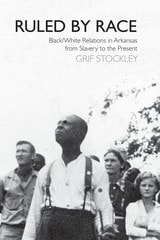
Ruled by Race
Black/White Relations in Arkansas From Slavery to the PresentGrif Stockley
University of Arkansas Press, 2008
Winner of the 2010 Booker Worthen Literary Prize, and the 2009 Ragsdale Award.
From the Civil War to Reconstruction, the Redeemer period, Jim Crow, and the modern civil rights era to the present, Ruled by Race describes the ways that race has been at the center of much of the state’s formation and image since its founding. Grif Stockley uses the work of published and unpublished historians and exhaustive primary source materials along with stories from authors as diverse as Maya Angelou and E. Lynn Harris to bring to life the voices of those who have both studied and lived the racial experience in Arkansas.
Topics range from the well-known Little Rock Central High Crisis of 1957 to lesser-known events such as the Elaine Race Massacres of 1919 and the shocking yet sadly commonplace attitudes found in newspaper reports and speeches. Through the words of the most powerful Arkansans such as racist Arkansas Govenor Jeff Davis (1901–1906) to the least powerful, including an unflinching look at the narratives of former slaves, readers will come away with increased awareness of the ways that race continues to affect where Arkansans live, send their children to school, work, travel, shop, spend leisure time, worship, and choose their friends and life partners.