Results by title
975 books match the query 'Case studies' and 38 start with r
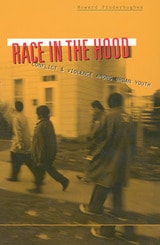
Race In The Hood
Conflict and Violence among Urban YouthHoward Pinderhughes
University of Minnesota Press, 1997
A compelling study of the origins of racial conflict and violence in America.
“We’ll just be hanging out, partying. And somebody will say, ‘Hey, let’s go on a mission.’ That’s when you go looking for people who don’t belong in the neighborhood, and you beat ’em up. Sometimes we go out lookin’ for blacks to jump. Sometimes we look for anybody who ain’t supposed to be there.” —Sal, Avenue T Boys
Why are racial conflict and violence among the most enduring problems in American society? Why do some youths express racism violently while others develop tolerance and respect for those who are different? What can we as a society do to foster open-mindedness among children and teenagers? Seeking answers to these questions, Howard Pinderhughes spent two years talking to and studying three groups of New York City adolescents: the predominantly Italian American Avenue T Boys from the Bensonhurst section of Brooklyn; a group of African American teenagers from Schomberg Plaza in East Harlem; and a group of Albanian American youth from Pelham Park in the Bronx. Through the voices of these young people, Pinderhughes examines how racial attitudes and identities develop in communities and are then expressed as either tolerance, resulting in territorial cooperation, or hatred, resulting in racial conflict. Race in the Hood draws a picture of young people who grew up in similar class circumstances, facing remarkably similar problems and issues, with one significant difference in their lives-their race or ethnicity. Pinderhughes argues that the key to success in developing racial tolerance lies in the transformation of racialized grassroots ideologies through community and school-based multicultural education. A sophisticated and nuanced study of race relations in New York City, Race in the Hood points to areas of concern and directions for change in all of our communities.
Race Talk in a Mexican Cantina
Tatcho Mindiola
Michigan State University Press, 2021
Race and Authority in Urban Politics
David J. Greenstone
Russell Sage Foundation, 1974
Race and Authority in Urban Politics
Community Relations and the War on PovertyDavid Greenstone and Paul E. Peterson
University of Chicago Press, 1976
In a series of lively chapters, Greenstone and Peterson show how the coalitions that formed around the community action question developed not out of electoral or organizational interests alone but were strongly influenced by prevailing conceptions of the nature of authority in America. The book stresses the way in which both machine and reform structures affected the ability of minority groups to organize effectively and to form alliances in urban politics. It considers the wide-ranging critiques made of the Community Action Program by conservative, liberal, and radical analysts and finds that all of them fail to appreciate the significance and intensity of the racial cleavage in American politics.

Race and Class Matters at an Elite College
Elizabeth Aries
Temple University Press, 2008
In Race and Class Matters at an Elite College, Elizabeth Aries provides a rare glimpse into the challenges faced by black and white college students from widely different class backgrounds as they come to live together as freshmen. Based on an intensive study Aries conducted with 58 students at Amherst College during the 2005-2006 academic year, this book offers a uniquely personal look at the day-to-day thoughts and feelings of students as they experience racial and economic diversity firsthand, some for the first time.
Through online questionnaires and face-to-face interviews, Aries followed four groups of students throughout their first year of college: affluent whites, affluent blacks, less financially advantaged whites from families with more limited education, and less financially advantaged blacks from the same background. Drawing heavily on the voices of these freshmen, Aries chronicles what they learned from racial and class diversity—and what colleges might do to help their students learn more.
Race and Class on Campus
Conversations with Ricardo’s DaughterJay M. Rochlin
University of Arizona Press, 1997
Here are some insights into the hot issues sparking debate over equal opportunity and American education. In these pages, through the use of a fictional character, author Jay Rochlin presents more than forty very real African American and Mexican American men and women who struggled to earn degrees at a large, nationally recognized university in the west. Their goals, their gains, and their disappointments echo the experiences of millions of others around the country during much of the twentieth century. Perhaps most important, their true stories will provide inspiration to the many young people who wonder whether pursuing the dream of a college education is possible for them.
Readers will warm to the words of Carlos Vélez-Ibáñez, learning as a toddler from his father that the university represented toda la sabiduría del mundo,"all the wisdom in the world." Their hearts will go out to young Laura Banks, barred as a black woman from a "whites only" pool and the swimming class required for her degree in physical education. In the face of open hostility and closed doors, these students and many others persevered. When they were shunned by Anglo social clubs, they created their own. When they were assigned "back of the room" seating because of discrimination, they rose above it. And when their ultimate goal--graduation--was threatened by racism, they fought it.
Looking back, many in the book remember coming from poor families who nonetheless considered themselves middle class and, as such, simply expected their children to go to college. This family support--bolstered by the students' own drive, ambition, and sense of responsibility--seemed to be pivotal to their success. Thus the book comes out strongly on the side of critical race theorists, who emphasize individual effort as a means of combating racism and personal narratives as a way of analyzing the complex issue.
These pages are filled with the voices of everyday men and women. Their language is straightforward and from the heart. Their message is timely, in the midst of current debates over race, class, and affirmative action. And their words--for American education and for the country as a whole--carry force and meaning guaranteed to reach far into the future.
Racism
A Critical AnalysisMike Cole
Pluto Press, 2015
Mike Cole tackles three countries in-depth: the United Kingdom, the United States and Australia. In the United Kingdom, he focuses on the effects of colonialism as well as looking at non-colour-coded racism, such as anti-Gipsy, Roma, and Traveller racism and xeno-racism directed at Eastern Europeans. Turning to the United States, Cole charts the dual legacies of indigenous genocide and slavery, as well as exploring anti-Latina/o and anti-Asian racism. Finally, in Australia, he interrogates the idea of "Terra Nullius" and its ongoing impact on the indigenous peoples, as well as other forms of racism, such as that experienced by South Sea Islanders, anti-Asian racism, and that which targets migrants. The Pauline Hanson phenomenon is also addressed. Islamophobia, antisemitism and anti-Irish racism are also dealt with in the book, as is that aimed at asylum-seekers.
Cole demonstrates that racism is both endemic and multifaceted. This book will undoubtedly establish itself as required reading for students and other critical readers looking for a comprehensive, critical overview of the study of racism in Anglophone countries.
Re-Forming the State
The Politics of Privatization in Latin America and EuropeHector E. Schamis
University of Michigan Press, 2002
The experience of privatization shows that the public and the private are neither contradictory nor mutually exclusive spheres, and that power relations between them are not necessarily zero-sum. To stress the point, the author borrows from the literature on state formation, which has extensively examined the historical processes of key private groups. The evidence presented shows why and how, by restructuring coalitional and institutional arenas, the state uses marketization to generate political order and to distribute political power. Thus, the author specifies the conditions under which political change is conceived in terms of and channeled through economic policy; in other words, how the state is "re-formed" through privatization. Re-forming the State thus highlights how privatization is simultaneously a movement from public to private, but also a movement from non-state to state, as the reduction of state assets leads to institutional changes that increase state capacities for defining and enforcing property rights, extracting revenue, and centralizing administrative and political resources.
Hector E. Schamis is Assistant Professor of Government, Cornell University.
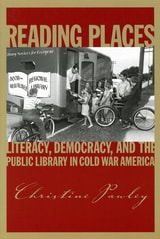
Reading Places
Literacy, Democracy, and the Public Library in Cold War AmericaChristine Pawley
University of Massachusetts Press, 2010
Central to the experiment were well-stocked bookmobiles that brought books to rural districts and the one-room schools that dotted the region. Three years after the project began, state officials and local librarians judged it an overwhelming success. Library circulation figures soared to two-and-a-half times their previous level. Over 90 percent of grade-school children in the rural schools used the bookmobile service, and their reading scores improved beyond expectation.
Despite these successes, however, local communities displayed deeply divided reactions. Some welcomed the book-mobiles and new library services wholeheartedly, valuing print and reading as essential to the exercise of democracy, and keen to widen educational opportunities for children growing up on hardscrabble farms where books and magazines were rare. Others feared the intrusion of govern- ment into their homes and communities, resented the tax increases that library services entailed, and complained about the subversive or immoral nature of some books.
Analyzing the history of tensions between various community groups, Pawley delineates the long-standing antagonisms arising from class, gender, and ethnic differences which contributed to a suspicion of official projects to expand education. Relating a seemingly small story of library policy, she teases out the complex interaction of reading, locality, and cultural difference. In so doing, she illuminates broader questions regarding libraries, literacy, and citizenship, reaching back to the nineteenth century and forward to the present day.
Reading Randomised Controlled Trials
Opening the BookRobert Savage, Amy Fox, Anneka Dawson, Helen Gray, and Clare Huxley
University College London, 2025
Reading Randomised Controlled Trials presents an illuminating exploration of how large-scale educational trials unfold in real-world settings, displaying the often-overlooked human decisions that shape their outcomes. Using the Flexible Phonics trial—an ambitious study involving nearly 3,000 children in 118 schools across England—as a case study, the authors examine the practical and ethical problems with conducting randomized controlled trials (RCTs) in education. Unlike pharmaceutical trials, educational RCTs operate in dynamic environments where factors such as teacher decision-making and school culture play a crucial role.
This book depicts the inner workings of education research and also underlines its broader significance, particularly in the wake of school closures during the COVID-19 pandemic. By focusing on early childhood literacy and the long-term impact of evidence-based interventions, Reading Randomised Controlled Trials provides important insights for educators and researchers seeking to bridge the gap between rigorous research and meaningful classroom practice. A must-read for those invested in improving educational outcomes, this book contests assumptions about what works in education—and why.
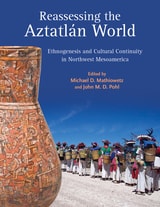
Reassessing the Aztatlán World
Ethnogenesis and Cultural Continuity in Northwest MesoamericaEdited by Michael D. Mathiowetz and John M. D. Pohl
University of Utah Press, 2024
Volume contributors show how those responsible for the Aztatlán tradition were direct ancestors of diverse Indigenous peoples such as the Náayeri (Cora), Wixárika (Huichol), O’dam (Tepehuan), Caz’ Ahmo (Caxcan), Yoeme (Yaqui), Yoreme (Mayo), and others who continue to reside across the former Aztatlán region and its frontiers. The prosperity of the Aztatlán tradition was achieved through long-distance networks that fostered the development of new ritual economies and integrated peoples in Greater Mesoamerica with those in the U.S. Southwest/Mexican Northwest.
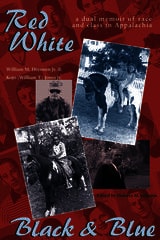
Red, White, Black, and Blue
A Dual Memoir of Race and Class in AppalachiaWilliam M. Drennen Jr., Kojo (William T.) Jones Jr.
Ohio University Press, 2004
Redefining the Political
Black Feminism and the Politics of Everyday LifeAlex J. Moffett-Bateau
Temple University Press, 2024
Moffett-Bateau uses radical Black feminist political theory and develops a framework called the political possible-self, which argues that belonging to a community and developing political imagination foment change. These women employ grassroots efforts to subvert oppressive power structures by protesting institutions within their communities, addressing the benign neglect of their housing development, organizing community art shows and meals, volunteering at local public schools, and holding meetings to increase the political confidence of public-housing tenants by educating them on navigating government bureaucracies.
Ultimately, Redefining the Political shows how political engagement at both the individual and community levels can be fruitful for nontraditional political contributions.
Reforming Intelligence
Obstacles to Democratic Control and EffectivenessEdited by Thomas C. Bruneau and Steven C. Boraz
University of Texas Press, 2007
These days, it's rare to pick up a newspaper and not see a story related to intelligence. From the investigations of the 9/11 commission, to accusations of illegal wiretapping, to debates on whether it's acceptable to torture prisoners for information, intelligence—both accurate and not—is driving domestic and foreign policy. And yet, in part because of its inherently secretive nature, intelligence has received very little scholarly study. Into this void comes Reforming Intelligence, a timely collection of case studies written by intelligence experts, and sponsored by the Center for Civil-Military Relations (CCMR) at the Naval Postgraduate School, that collectively outline the best practices for intelligence services in the United States and other democratic states.
Reforming Intelligence suggests that intelligence is best conceptualized as a subfield of civil-military relations, and is best compared through institutions. The authors examine intelligence practices in the United States, United Kingdom, and France, as well as such developing democracies as Brazil, Taiwan, Argentina, and Russia. While there is much more data related to established democracies, there are lessons to be learned from states that have created (or re-created) intelligence institutions in the contemporary political climate. In the end, reading about the successes of Brazil and Taiwan, the failures of Argentina and Russia, and the ongoing reforms in the United States yields a handful of hard truths. In the murky world of intelligence, that's an unqualified achievement.
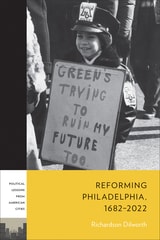
Reforming Philadelphia, 1682–2022
Richardson Dilworth
Temple University Press, 2023
Reforming Philadelphia examines the cyclical efforts of insurgents to change the city’s government over nearly 350 years. Political scientist Richardson Dilworth tracks reformers as they create a new purpose for the city or reshape the government to reflect emerging ideas. Some wish to thwart the “corrupt machine,” while others seek to gain control of the government via elections. These actors formed coalitions and organizations that disrupted the status quo in the hope of transforming the city (and perhaps also enriching themselves).
Dilworth addresses Philadelphia’s early development through the present day, including momentous changes from its new city charter in 1885 and the Republican machine that emerged around the same time to its transformation to a Democratic stronghold in the 1950s, when the city also experienced a racial transition. Focusing primarily on the twentieth and twenty-first centuries, Dilworth evaluates the terms of Mayors Frank Rizzo, Wilson Goode, and Ed Rendell, as well as John Street, Michael Nutter, and Jim Kenney to illustrate how power and resistance function, and how Philadelphia’s political history and reform cycles offer a conceptual model that can easily be applied to other cities.
Reforming Philadelphia provides a new framework for understanding the evolving relationship between national politics and local, city politics.
Reframing Rhetorical History
Cases, Theories, and MethodologiesEdited by Kathleen J. Turner and Jason Edward Black
University of Alabama Press, 2022
A collection of essays providing insights into new directions in rhetorical history
Kathleen J. Turner’s 1998 multicontributor volume Doing Rhetorical History: Concepts and Cases quickly became a foundational text in the field, and the studies in the book have served as an important roadmap for scholars undertaking such scholarship. In the decades since its publication, developments in rhetorical-historical research, engaged scholarship, and academic interventionism have changed the practice of rhetorical history tremendously.
To address this shift, Turner and Jason Edward Black have edited a much-anticipated follow-up volume: Reframing Rhetorical History: Cases, Theories, and Methodologies, which reassesses both history as rhetoric and rhetorical history as practice. This new book attends to a number of topics that have become not just hot-button issues in rhetorical scholarship but have entrenched themselves as anchors within the field. These include digital rhetoric, public memory, race and ethnicity, gender dynamics and sexualities, health and well-being, transnationalism and globalization, social justice, archival methods and politics, and colonialism and decoloniality.
The sixteen essays are divided into four major parts: “Digital Humanities and Culture” introduces methods and cases using twenty-first century technologies; “Identities, Cultures, and Archives” addresses race and gender within the contexts of critical race theory, gendered health rhetoric, race-based public memory, and class/sectionalism; “Approaches to Nationalism and Transnationalism” explores ideologies related to US and international cultures; and “Metahistories and Pedagogies” explores creative ways to approach the frame of metarhetorical history given what the field has learned since the publication of Doing Rhetorical History.
CONTRIBUTORS
Andrew D. Barnes / Jason Edward Black / Bryan Crable / Adrienne E. Hacker Daniels / Matthew deTar / Margaret Franz / Joe Edward Hatfield / J. Michael Hogan / Andre E. Johnson / Madison A. Krall / Melody Lehn / Lisbeth A. Lipari / Chandra A. Maldonado / Roseann M. Mandziuk / Christina L. Moss / Christopher J. Oldenburg / Sean Patrick O’Rourke / Daniel P. Overton / Shawn J. Parry-Giles / Philip Perdue / Kathleen J. Turner
Regional Perspectives on Learning by Doing
Stories from Engaged Universities around the WorldLorlene Hoyt
Michigan State University Press, 2017
Reinventing Cities
Equity Planners Tell Their StoriesNorman Krumholz and Pierre Clavel
Temple University Press, 1994
Reinventing Cities emphasizes the extraordinary accomplishments of eleven urban planners who work for the needs of low income and working class people. Through the voices of equity planners who have worked "in the trenches" of city halls, Norman Krumholz and Pierre Clavel explore the inner dimensions of social change, economic development, community organizing, and the dynamics of implementing and producing fair housing. Preceded by "snapshots" that describe the demographics, politics, and economics of each specific city or region, the editors' interviews with these leading progressive planners highlight productive strategies, disquieting failures, and the cities in which the fought for equity.
Included are conversations with Rick Cohen, former director of Jersey City's Department of Housing and Economic Development; Dale F. Bertsch, former first director of the Miami Valley Regional Planning Commission, Dayton, Ohio; Robert Mier, former commissioner of the Department of Economic Development (DED); Kari J. Moe, former deputy commissioner of Research and Development, DED'; Arturo Vazquez, former director of Mayor Washington's Office of Employment and Training, Chicago; Margaret D. Strachan, former city commissioner, Portland, Oregon; Peter Dreier, former housing director, Boston Redevelopment Authority, and policy aide to Mayor Raymond Flynn; Billie Bramhall, planning staff, Mayor Federico Pena, Denver, Colorado; Howard Stanback, city manager, Hartford, Connecticut; Derek Shearer, former Planning Commission chairman, Santa Monica, California; and Kenneth Grimes, senior planning analyst, San Diego Housing Commission.
In the series Conflicts in Urban and Regional Development, edited by John R. Logan and Todd Swanstrom.
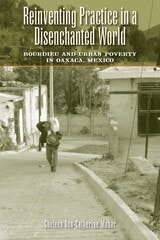
Reinventing Practice in a Disenchanted World
Bourdieu and Urban Poverty in Oaxaca, MexicoBy Cheleen Ann-Catherine Mahar
University of Texas Press, 2010
Colonia Hermosa, now considered a suburb of Oaxaca, began as a squatter settlement in the 1950s. The original residents came in search of transformation from migrants to urban citizens, struggling from rural poverty for the chance to be part of the global economy in Oaxaca.
Cheleen Ann-Catherine Mahar charts the lives of a group of residents in Colonia Hermosa over a period of thirty years, as Mexico became more closely tied into the structures of global capital, and the residents of Colonia Hermosa struggled to survive. Residents shape their discussions within a larger narrative, and their talk is the language of the heroic individual, so necessary to the ideology and the functioning of capital. However, this logic only tenuously connects to the actual material circumstances of their lives.
Mahar applies the theories of French sociologist Pierre Bourdieu to her data from Mexico in order to examine the class trajectories of migrant families over more than three decades. Through this investigation, Mahar adds an important intergenerational study to the existing body of literature on Oaxaca, particularly concerning the factors that have reshaped the lives of urban working poor families and have created a working-class fraction of globalized citizenship.
Relational Identities and Other-than-Human Agency in Archaeology
Eleanor Harrison-Buck
University Press of Colorado, 2020
Relational Identities and Other-than-Human Agency in Archaeology explores the benefits and consequences of archaeological theorizing on and interpretation of the social agency of nonhumans as relational beings capable of producing change in the world. The volume cross-examines traditional understanding of agency and personhood, presenting a globally diverse set of case studies that cover a range of cultural, geographical, and historical contexts.
Agency (the ability to act) and personhood (the reciprocal qualities of relational beings) have traditionally been strictly assigned to humans. In case studies from Ghana to Australia to the British Isles and Mesoamerica, contributors to this volume demonstrate that objects, animals, locations, and other nonhuman actors also potentially share this ontological status and are capable of instigating events and enacting change. This kind of other-than-human agency is not a one-way transaction of cause to effect but requires an appropriate form of reciprocal engagement indicative of relational personhood, which in these cases, left material traces detectable in the archaeological record.
Modern dualist ontologies separating objects from subjects and the animate from the inanimate obscure our understanding of the roles that other-than-human agents played in past societies. Relational Identities and Other-than-Human Agency in Archaeology challenges this essentialist binary perspective. Contributors in this volume show that intersubjective (inherently social) ways of being are a fundamental and indispensable condition of all personhood and move the debate in posthumanist scholarship beyond the polarizing dichotomies of relational versus bounded types of persons. In this way, the book makes a significant contribution to theory and interpretation of personhood and other-than-human agency in archaeology.
Contributors:
Susan M. Alt, Joanna Brück, Kaitlyn Chandler, Erica Hill, Meghan C. L. Howey, Andrew Meirion Jones, Matthew Looper, Ian J. McNiven, Wendi Field Murray, Timothy R. Pauketat, Ann B. Stahl, Maria Nieves Zedeño
Religion and Sexuality
The Shakers, the Mormons, and the Oneida CommunityLawrence Foster
University of Illinois Press, 2009
Winner of the Best Book Award, Mormon History Association
Religion, Empire, and Torture
The Case of Achaemenian Persia, with a Postscript on Abu GhraibBruce Lincoln
University of Chicago Press, 2007
Lincoln identifies three core components of an imperial theology that have transhistorical and contemporary relevance: dualistic ethics, a theory of divine election, and a sense of salvific mission. Beyond this, he asks, how did the Achaemenians understand their place in the cosmos and their moral status in relation to others? Why did they feel called to intervene in the struggle between good and evil? What was their sense of historic purpose, especially their desire to restore paradise lost? And how did this lead them to deal with enemies and critics as imperial power ran its course? Lincoln shows how these religious ideas shaped Achaemenian practice and brought the Persians unprecedented wealth, power, and territory, but also produced unmanageable contradictions, as in a gruesome case of torture discussed in the book’s final chapter. Close study of that episode leads Lincoln back to the present with a postscript that provides a searing and utterly novel perspective on the photographs from Abu Ghraib.
Remaking the Godly Marriage
Gender Negotiation in Evangelical FamiliesBartkowski, John
Rutgers University Press, 2001
While religious leaders often have enormous influence over their members’ beliefs and how they translate their beliefs into action in everyday life, the individual family remains the place where religious values are practiced through and ultimately transferred to the next generation. As such, the family is an extremely important, though frequently overlooked, topic of study for sociologists of religion.
In Remaking the Godly Marriage, John Bartkowski studies evangelical Protestants and their views on marriage and gender relations and how they are lived within individual families. The author compares elite evangelical prescriptions for godly family living with the day-to-day practices in conservative Protestant households. He asks: How serious are the debates over gender and the family that are manifested within contemporary evangelicalism? What are the values that underlie this debate? Have these internecine disputes been altered by the emergence of new evangelical movements such as biblical feminism and the Promise Keepers? And given the fact that leading evangelicals advance competing visions of godly family life, how do conservative religious spouses make sense of their own family relationships and gender identities?
Through in-depth interviews with evangelical married couples and an exhaustive study of evangelical family advice manuals, Bartkowski explores the disputes and ambivalence concerning traditional gender roles and patriarchal models of family life, which derive from the tension between evangelical Protestantism as a religious subculture and the broader American secular culture in which it is embedded. Bartkowski reveals how evangelical men and women jointly negotiate gender roles within their families and selectively appropriate values of the larger culture even as they attempt to cope with the conflicting messages of their own faith.
Remembering the Hacienda
Religion, Authority, and Social Change in Highland EcuadorBy Barry J. Lyons
University of Texas Press, 2006
From the colonial period through the mid-twentieth century, haciendas dominated the Latin American countryside. In the Ecuadorian Andes, Runa—Quichua-speaking indigenous people—worked on these large agrarian estates as virtual serfs. In Remembering the Hacienda: Religion, Authority, and Social Change in Highland Ecuador, Barry Lyons probes the workings of power on haciendas and explores the hacienda's contemporary legacy.
Lyons lived for three years in a Runa village and conducted in-depth interviews with elderly former hacienda laborers. He combines their wrenching accounts with archival evidence to paint an astonishing portrait of daily life on haciendas. Lyons also develops an innovative analysis of hacienda discipline and authority relations. Remembering the Hacienda explains the role of religion as well as the reshaping of Runa culture and identity under the impact of land reform and liberation theology.
This beautifully written book is a major contribution to the understanding of social control and domination. It will be valuable reading for a broad audience in anthropology, history, Latin American studies, and religious studies.
Resilience
Rebekkah Smith Aldrich
American Library Association, 2018
Responding to Rapid Change in Libraries
A User Experience ApproachLauren Stara and Callan Bignoli
American Library Association, 2020
In the face of rapid change and an ever-widening constellation of challenges, it’s crucial for library leaders to pull back to the question of “why?” Plotting a sustainable way forward depends upon recommitting ourselves to our underlying values, such as customer service and community-building, while fostering the improvements that change makes possible. With passion, patience, and fortitude, libraries can stride confidently into the future. In this book, noted speakers and consultants Bignoli and Stara speak directly to library directors, managers, administrators, and technology staff, offering concrete guidance on setting or resetting strategic priorities. Taking an interconnected and specific approach to planning for and strengthening the library environment as a whole, their book
- discusses why libraries should embrace change as a fundamental part of library life;
- explores how to harness rapid change to provide more responsive, user-centered library service;
- addresses the ways in which libraries straddle the physical and the digital, in areas such as service provision and collections, illuminating how they overlap and can be improved using similar philosophies;
- presents both a comprehensive overview of library technologies as well as related team and change management advice, all grounded in user experience principles;
- shows how the concepts of sustainability and flexibility apply to physical space planning and design, from furniture selection and arrangement to infrastructure; and
- provides sound guidance on project management, problem solving, preparing for future challenges, personal reflection and self-care, and other leadership topics.
Rethinking Racism
Emotion, Persuasion, and Literacy Education in an All-White High SchoolJennifer Seibel Trainor
Southern Illinois University Press, 2008
In Rethinking Racism: Emotion, Persuasion, and Literacy Education in an All-White High School, Jennifer Seibel Trainor proposes a new understanding of the roots of racism, one that is based on attention to the role of emotion and the dynamics of persuasion. This one-year ethnographic study argues against previous assumptions about racism, demonstrating instead how rhetoric and emotion, as well as the processes and culture of schools, are involved in the formation of racist beliefs.
Telling the story of a year spent in an all-white high school, Trainor suggests that contrary to prevailing opinion, racism often does not stem from ignorance, a lack of exposure to other cultures, or the desire to protect white privilege. Rather, the causes of racism are frequently found in the realms of emotion and language, as opposed to rational calculations of privilege or political ideologies. Trainor maintains that racist assertions often originate not from prejudiced attitudes or beliefs but from metaphorical connections between racist ideas and nonracist values. These values are reinforced, even promoted by schooling via "emotioned rules" in place in classrooms: in tacit, unexamined lessons, rituals, and practices that exert a powerful—though largely unacknowledged—persuasive force on student feelings and beliefs about race.
Through in-depth analysis of established anti-racist pedagogies, student behavior, and racial discourses, Trainor illustrates the manner in which racist ideas are subtly upheld through social and literacy education in the classroom—and are thus embedded in the infrastructures of schools themselves. It is the emotional and rhetorical framework of the classroom that lends racism its compelling power in the minds of students, even as teachers endeavor to address the issue of cultural discrimination. This effort is continually hindered by an incomplete understanding of the function of emotions in relation to antiracist persuasion and cannot be remedied until the root of the problem is addressed.
Rethinking Racism calls for a fresh approach to understanding racism and its causes, offering crucial insight into the formative role of schooling in the perpetuation of discriminatory beliefs. In addition, this highly readable narrative draws from white students' own stories about the meanings of race in their learning and their lives. It thus provides new ways of thinking about how researchers and teachers rep- resent whiteness. Blending narrative with more traditional forms of ethnographic analysis, Rethinking Racism uncovers the ways in which constructions of racism originate in literacy research and in our classrooms—and how these constructions themselves can limit the rhetorical positions students enact.
Return to the Center
Culture, Public Space, and City Building in a Global EraBy Lawrence A. Herzog
University of Texas Press, 2006
The redesign and revitalization of traditional urban centers is the cutting edge of contemporary urban planning, as evidenced by the intense public and professional attention to the rebuilding of city cores from Berlin to New York City's "Ground Zero." Spanish and Latin American cities have never received the recognition they deserve in the urban revitalization debate, yet they offer a very relevant model for this "return to the center." These cultures have consistently embraced the notion of a city whose identity is grounded in its organic public spaces: plazas, promenades, commercial streets, and parks that invite pedestrian traffic and support a rich civic life. This groundbreaking book explores Spanish, Mexican, and Mexican-American border cities to learn what these urban areas can teach us about effectively using central public spaces to foster civic interaction, neighborhood identity, and a sense of place.
Herzog weaves the book around case studies of Madrid and Barcelona, Spain; Mexico City and Querétaro, Mexico; and the Tijuana-San Diego border metropolis. He examines how each of these urban areas was formed and grew through time, with attention to the design lessons of key public spaces. The book offers original and incisive discussions that challenge current urban thinking about politics and public space, globalization, and the future of privatized communities, from gated suburbs to cyberspace. Herzog argues that well-designed, human-scaled city centers are still vitally necessary for maintaining community and civic life. Applicable to urban renewal projects around the globe, Herzog's book will be important reading for planners, architects, designers, and all citizens interested in creating more livable cities.
Revolution and Genocide
On the Origins of the Armenian Genocide and the HolocaustRobert Melson
University of Chicago Press, 1992

Rewired
Research-Writing Partnerships Within TheRandall McClure
Assoc of College & Research Libraries, 2016
Rhetorical Memory
A Study of Technical Communication and Information ManagementStewart Whittemore
University of Chicago Press, 2015
In Rhetorical Memory, Stewart Whittemore demonstrates that strategies we use to manage information—techniques often acquired through trial and error, rarely studied, and generally invisible to us—are as important to our success as the end products of our work. First, he situates information management within the larger field of rhetoric, showing that both are tied to purpose, audience, and situation. He then dives into an engaging and tightly focused workplace study, presenting three cases from a team of technical communicators making use of organizational memory during their everyday work. By examining which techniques succeed and which fail, Whittemore illuminates the challenges faced by technical communicators. He concludes with a number of practical strategies to better organize information, that will help employees, managers, and anyone else suffering from information overload.
Rhetorics of Value
Exhibition Design and Communication in Museums and BeyondCorinne A. Kratz
Duke University Press, 2025

Riders for God
The Story of a Christian Motorcycle GangRich Remsberg
University of Illinois Press, 2000
Founded by a former biker and located in southern Indiana, the Unchained Gang is a group of former outlaw bikers, ex-convicts, and recovering addicts who are now born-again Christians. Although they have given up drugs, alcohol, tobacco, and violence they have kept their motorcycles--which they consider to be anointed--and use them as tools in their witness of the word of God as they understand it. The Unchained Gang is an outreach ministry, going into prisons and jails, biker rallies, and other places where people on the fringe are often ignored by other churches and the rest of society.
Combining powerful photographic images with gang members' first-person testimonies, Rich Remsberg shows the ironic juxtaposition of tattoos, leather vests, and the iconography of the biker world with the Christian practices of Bible study, speaking in tongues, and praying at an altar. He explores the lives of men and women who have redirected the extreme nature of their former ways.
Through their own powerful stories, they explain how the addictions and uncontrollable violence that once shaped their lives have given way to dramatic worship and zealous ministry.
An afterword by Colleen McDannell situates the Unchained Gang's
interpretation of Christian living in the larger constellation of pentecostal, born-again, fundamentalist, and mainstream churches.
Riparian Ecosystem Recovery in Arid Lands
Strategies and ReferencesMark K. Briggs
University of Arizona Press, 1996
The book opens with a review of watershed characteristics and an examination of drainage systems, then proceeds to determining the causes of riparian decline. It introduces five factors that have a significant effect on the results of riparian rehabilitation--natural regeneration, water availability, channel stability, direct impacts such as livestock grazing and recreational activities, and soil salinity--and offers case studies that demonstrate how revegetation has been used both effectively and ineffectively.
It also discusses strategies other than revegetation that may be effective in improving the ecological condition of a site. Many of the strategies presented are also relevant to nonarid climates and to urban areas. By emphasizing evaluation of riparian ecosystems, so that the causes of degradation can be understood, and by offering general approaches that can be tailored to specific situations, Riparian Ecosystem Recovery in Arid Lands takes a holistic approach to riparian recovery that will enable users to better judge whether recovery expenditures are likely to produce desired results. An unprecedented work, it will substantially add to efforts across the Southwest and elsewhere to restore these unique and priceless ecosystems.
CONTENTS
1 An Overview: Background on Riparian Ecosystems / Lessons Learned from Past Riparian Recovery Efforts / An Evaluation Strategy / Defining Some Important Terms
2 Considering the Damaged Riparian Area from a Watershed Perspective: Case Study 1: Rincon Creek / Taking Advantage of Available Information / Getting to Know the Watershed / Getting to Know the Stream
3 Impacts within the Riparian Zone: Livestock / Case Study 2: Sheepshead Spring / Recreation / Competition from Nonnative Species / Wildlife
4 Natural Recovery in Riparian Ecosystems: Case Study 3: Aravaipa Creek / Factors Influencing Natural Recovery / Case Study 4: McEuen Seep / Autoecology of Selected Southwestern Riparian Tree Species / Case Study 5: Boulder Creek
5 Water Availability: Case Study 6: Box Bar / How Groundwater Decline Occurs / Evaluating Groundwater Conditions / Revegetating Riparian Ecosystems Characterized by Groundwater Decline
6 The Drainageway: Channel Instability and Riparian Ecosystems / Case Study 7: Babocomari River / Channel Dynamics / Strategies for Evaluating Channel Stability / Developing Recovery Projects along Unstable Alluvial Stream Channels
7 Soil Salinity and Riparian Ecosystems: Effects of Soil Salinity on Plant Growth / The Soil Survey / Soil Salinity and Revegetation
8 Developing the Recovery Plan: Developing Project Objectives / Selecting the Best Site / Local, State, and Federal Permit Requirements / Identifying Model Areas / Critical Components of the Recovery Plan / Community Involvement / Demonstration Sites / Postproject Evaluation and Monitoring
Risk Communication and Miscommunication
Case Studies in Science, Technology, Engineering, Government, and Community OrganizationsCarolyn Boiarsky
University Press of Colorado, 2016
Drawing from research in rhetoric, linguistics, technical communication, educational psychology, and web design, Boiarsky provides a new way to look at risk communication. She shows how failing to consider the readers’ needs or the rhetorical context in which one writes can be catastrophic and how anticipating those needs can enhance effectiveness and prevent disaster. She examines the communications and miscommunications of original e-mails, memos, and presentations about various environmental disasters, including the Columbia space shuttle explosion and the BP/Deepwater Horizon oil rig explosion, and successes, such as the Enbridge pipeline expansion and the opening of the Mississippi Spillway, and offers recommendations for effective communication.
Taking into account the growing need to communicate complex and often controversial issues across vast geographic and cultural spaces with an ever-expanding array of electronic media, Risk Communication and Miscommunication provides strategies for clear communication of data, ideas, and procedures to varied audiences to prevent or minimize damage from environmental incidents.
Rooted Resistance
Agrarian Myth in Modern AmericaNorie R. Singer
University of Arkansas Press, 2020
Through a careful examination of several case studies, Rooted Resistance traverses the ground of agrarian myth in modern America. The authors investigate key figures and movements in the history of modern agrarianism, including the World War I victory garden efforts, the postwar Country Life movement for the vindication of farmers’ rights, the Southern Agrarian critique of industrialism, and the practical and spiritual prophecy of organic farming put forth by J. I. Rodale. This critical history is then brought up to date with recent examples such as the contested South Central Farm in urban Los Angeles and the spectacular rise and fall of the Chipotle “Food with Integrity” branding campaign.
By examining a range of case studies, Singer, Grey, and Motter aim for a deeper critical understanding of the many applications of agrarian myth and reveal why it can help provide a pathway for positive systemic change in the food system.
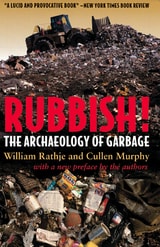
Rubbish!
The Archaeology of GarbageWilliam Rathje and Cullen Murphy
University of Arizona Press, 2001

Rural Development in China
Prospect and RetrospectHsiao-tung Fei
University of Chicago Press, 1989
Returning to Kaixian'gong in 1957 and again in the 1980s, Fei examined the changes that had occurred since his initial research. Three essays that resulted from these follow-up studies are included in this collection, providing a rare summary and analysis of developments in the village between 1936 and 1986. Also included here are four articles based on Fei's 1983-84 research in other areas of Jiangsu province. His explorations of the contrast between the wealth of southern Jiangsu and the long-standing poverty of the northern half of the province address key issues of public policy in China today. Useful to students of rural sociology as well as of Chinese history, politics, economics, and anthropology, this collection will provide an overview not only of developments in the small towns of China but also of Fei's thought.