Results by title
303 books match the query 'Church history' and 25 start with r
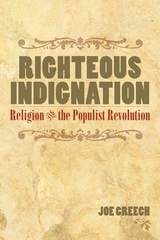
RIGHTEOUS INDIGNATION
Religion and the Populist RevolutionJoe Creech
University of Illinois Press, 2010
This illuminating study shows how Populists wove their political and economic reforms into a grand cosmic narrative pitting the forces of God and democracy against those of Satan and tyranny, and energizing their movement with a sacred sense of urgency. This book also unpacks the southern Protestants’ complicated approach to political and economic questions, as well as addressing broader issues about protest movements, race relations, and the American South.
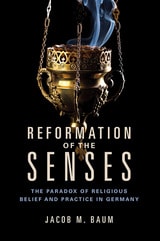
Reformation of the Senses
The Paradox of Religious Belief and Practice in GermanyJacob M. Baum
University of Illinois Press, 2018
Reformed America
The Middle and Southern States 1783-1837Fred J. Hood
University of Alabama Press, 1980
The success of the Reformed of the middle and southern states at shaping a distinctly American ideology of the relationship of religion and government was truly amazing. Unlike their New England counterparts, many of whom continued to enjoy some sort of establishment well into the nineteenth century, these Reformed entered the national experience with a backlog of experience in religious diversity and practical disestablishment, and even, in the South, as religious dissenters. They would have preferred a religious establishment that would have essentially recognized the validity of their understanding of Christianity. It was perhaps their own rigidity that caused them to fail in that attempt, especially in Virginia. But for such a rigid people, and they were rigid, they demonstrated a remarkable flexibility. When it became apparent that the American legal settlement would be one in which the state disengaged from the support of religion, the Reformed of the middle and southern states welcomed it and declared it to be the solution that would be most conducive to the spread and ultimate domination of Reformed Christianity. Unlike twentieth-century liberals, the Reformed interpreted disestablishment as the legal and official recognition of the twin Reformation doctrines of the priesthood of all believers and the absolute and unquestioned authority of the Christian Scriptures. And, to a very large degree, it was their definition, rather than the thinking of Jefferson and Madison, that captured the imagination of the American people and became the dominant popular opinion in the land.
But perhaps of even greater significance, the Reformed of the middle and southern states forged an ideology that ultimately based American national prosperity on national adherence to Reformed Christianity. Under the tutelage of John Witherspoon and Samuel Stanhope Smith, the Reformed captured the Enlightenment and brought it into the service of Reformed Christianity, altering traditional Calvinism in the process. Witherspoon and Smith, declaring that the truth of the law of nations could be devised by observation and reason alone, propounded a doctrine of natural law and political science that substantially reinforced the Calvinistic doctrine of providence in an era of skepticism and enlightenment. All history, they argued, proved beyond any reasonable doubt that those nations that adhered to the moral principles taught by Christianity had prospered and those that had taken a contrary route had fallen into ruin. The Reformed preachers of whatever denomination picked up this message and proclaimed it throughout the land. The United States, if it were to prosper, was required to be a Christian nation.
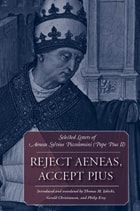
Reject Aeneas, Accept Pius
Selected Letters of Aeneas Sylvius Piccolomini (Pope Pius II)Thomas M. Pius II
Catholic University of America Press, 2006
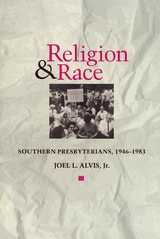
Religion and Race
Southern Presbyterians, 1946 to 1983Joel L. Alvis Jr
University of Alabama Press, 1994
Joel Alvis focuses on the relationships and tensions in the Presbyterian Church, U.S., whose ecclesiastical boundaries never expanded significantly beyond its original territory in the Confederacy and border South. By the time of the civil rights movement, the church was actively involved in ecumenical activities despite its regional isolation, and that involvement created unease in some quarters of the denomination. This concise institutional history traces how the church shaped and was shaped by its regional culture and explores the denomination's own cultural struggle to determine what role race issues would play in the definition of being Presbyterian.
Religious Competition in the Greco-Roman World
Nathaniel P. DesRosiers
SBL Press, 2016
Essays that broaden the historical scope and sharpen the parameters of competitive discourses
Scholars in the fields of late antique Christianity, neoplatonism, New Testament, art history, and rabbinics examine issues related to authority, identity, and change in religious and philosophical traditions of late antiquity. The specific focus of the volume is the examination of cultural producers and their particular viewpoints and agendas in an attempt to shed new light on the religious thinkers, texts, and material remains of late antiquity. The essays explore the major creative movements of the era, examining the strategies used to develop and designate orthodoxies and orthopraxies. This collection of essays reinterprets dialogues between individuals and groups, illuminating the mutual competition and influence among these ancient thinkers and communities.
Features:
- Essays feature competitive discourse as the central organizing theme
- Articles present unique theoretical models that are adaptable to different contexts and highly applicable to religious discourses before and after the Late Antique Period
- Scholars cover a much wider range of traditions including Judaism, Christianity, paganism, and philosophy in order to provide the most complete portrait of the religious landscape
Remaking the Godly Marriage
Gender Negotiation in Evangelical FamiliesBartkowski, John
Rutgers University Press, 2001
While religious leaders often have enormous influence over their members’ beliefs and how they translate their beliefs into action in everyday life, the individual family remains the place where religious values are practiced through and ultimately transferred to the next generation. As such, the family is an extremely important, though frequently overlooked, topic of study for sociologists of religion.
In Remaking the Godly Marriage, John Bartkowski studies evangelical Protestants and their views on marriage and gender relations and how they are lived within individual families. The author compares elite evangelical prescriptions for godly family living with the day-to-day practices in conservative Protestant households. He asks: How serious are the debates over gender and the family that are manifested within contemporary evangelicalism? What are the values that underlie this debate? Have these internecine disputes been altered by the emergence of new evangelical movements such as biblical feminism and the Promise Keepers? And given the fact that leading evangelicals advance competing visions of godly family life, how do conservative religious spouses make sense of their own family relationships and gender identities?
Through in-depth interviews with evangelical married couples and an exhaustive study of evangelical family advice manuals, Bartkowski explores the disputes and ambivalence concerning traditional gender roles and patriarchal models of family life, which derive from the tension between evangelical Protestantism as a religious subculture and the broader American secular culture in which it is embedded. Bartkowski reveals how evangelical men and women jointly negotiate gender roles within their families and selectively appropriate values of the larger culture even as they attempt to cope with the conflicting messages of their own faith.
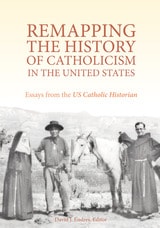
Remapping the History of Catholicism in the United States
David J. Endres
Catholic University of America Press, 2017
Timothy Matovina’s opening essay sets the theme for the volume, encouraging a remapping of U.S. Catholic history to more widely encompass its various localities and peoples, especially the significance of non-European ethnic groups and the role of Catholics in the American Southwest. Jeanne Petit explores Catholic womanhood’s strength and organizational zeal in the post-World War I era, noting the obstacles and successes of women’s attempts to be recognized fully as American citizens and members of the Church. Anne Klejment weaves together the lives of Dorothy Day and Cesar Chavez to illustrate their use of nonviolence and “weapons of the spirit” to respond to societal injustice. Amanda Bresie provides a window into the life of Mother Katharine Drexel, noting the generosity of the millionaire heiress, but also her meticulous record keeping and close supervision of her funding of educational and evangelization eorts among Native and African Americans. Kristine Ashton Gunnell analyzes the ways in which the Daughters of Charity crossed cultural boundaries to offer charitable assistance to Mexican and Japanese communities in Los Angeles. Matthew Cressler explores the intersection of Black Power and distinctive African American-inspired liturgies, arguing that the liturgy became a site of struggle as black self-determination and nationalism impacted worship and black Catholic identity. Finally, Joseph Chinnici offers an important essay on re-envisioning post-conciliar U.S. Catholicism in its global context, offering a new approach to how we consider the American Catholic narrative and write its history.
Together these path-breaking studies serve as a model for historians seeking to engage in the cartographic task of remapping the U.S. Catholic experience.
Remembering Nicaea
The Ecclesiastical History of Anonymous CyzicenusMartin Shedd
SBL Press, 2024
Rendering unto Caesar
The Catholic Church and the State in Latin AmericaAnthony Gill
University of Chicago Press, 1997
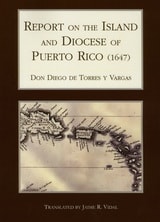
Report on the Island and Diocese of Puerto Rico (1647)
Don Diego Torres y Vargas, Translated by Jaime R. Vidal
University of Scranton Press, 2010
Composed at the request of the Royal Spanish Chronicler of the Indies, Don Diego Torres y Vargas’s Report on the Island & Diocese of Puerto Rico was the first history of Puerto Rico written by a native of the Spanish island colony. Torres y Vargas, a fourth generation Puerto Rican and descendant of Ponce de Leon, records here the history of the Catholic Church in Puerto Rico as well as the political, social, military, economic, and natural history of the island.
This translation—the first ever into English—includes three historical essays by eminent Puerto Rican and Latino Studies scholar Anthony Stevens-Arroyo and extensive translator notes to guide the reader through the realities of seventeenth-century Puerto Rican culture and society.
Republicanism, Religion, and the Soul of America
Ellis Sandoz
University of Missouri Press, 2006

Restoring the Faith
The Assemblies of God, Pentecostalism, and American CultureEdith L. Blumhofer
University of Illinois Press, 1993
Edith Blumhofer uses the Assemblies of God, the largest classical Pentecostal denomination in the world, as a lens through which to view the changing nature of Anglo Pentecostalism in the United States. She illustrates how the original mission to proclaim the end resulted in the development of Bible schools, the rise of the charismatic movement, and the popularity of such figures as Aimee Semple McPherson, Charles Fox Parham, and David Du Plessis. Blumhofer also examines the sect's use of radio and television and the creation of a parallel Christian culture
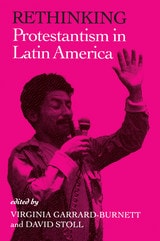
Rethinking Protestantism in Latin America
David Stoll
Temple University Press, 1993
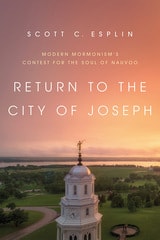
Return to the City of Joseph
Modern Mormonism's Contest for the Soul of NauvooScott C. Esplin
University of Illinois Press, 2018
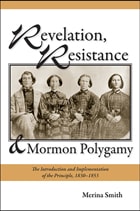
Revelation, Resistance, and Mormon Polygamy
The Introduction and Implementation of the Principle, 1830–1853Merina Smith
Utah State University Press, 2013
When Joseph Smith began to reveal and teach the doctrine of plural marriage in 1841, even stalwart members like Brigham Young were shocked and confused. In this thoughtful study, Smith argues that the secret introduction of plural marriage among the leadership coincided with an evolving public theology that provided a contextualizing religious narrative that persuaded believers to accept the principle.
This fresh interpretation draws from diaries, letters, newspapers, and other primary sources and is especially effective in its use of family narratives. It will be of great interest not only to scholars and the general public interested in Mormon history but in American history, religion, gender and sexuality, and the history of marriage and families.
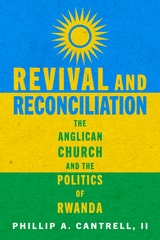
Revival and Reconciliation
The Anglican Church and the Politics of RwandaPhillip A. Cantrell II
University of Wisconsin Press, 2022
Drawing from new archival materials as well as on-the-ground field research, Revival and Reconciliation is a Rwanda-centered account of the country's ecclesiastical and national historiography. Cantrell calls attention to the harms the postgenocide church risks doing should it continue to support false narratives about Rwanda's colonial and postcolonial past—with dangerous consequences for the future.
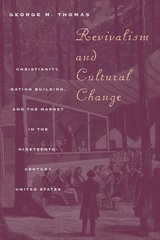
Revivalism and Cultural Change
Christianity, Nation Building, and the Market in the Nineteenth-Century United StatesGeorge M. Thomas
University of Chicago Press, 1989
"Subtle and complex. . . . Fascinating."—Randolph Roth, Pennsylvania History
"[Revivalism and Cultural Change] should be read with interest by those interested in religious movements as well as the connections among religion, economics, and politics."—Charles L. Harper, Contemporary Sociology
"Readers old and new stand to gain much from Thomas's sophisticated study of the macrosociology of religion in the United States during the nineteenth century. . . . He has given the sociology of religion its best quantitative study of revivalism since the close of the 1970s."—Journal for the Scientific Study of Religion
Revivals, Awakening and Reform
William G. McLoughlin
University of Chicago Press, 1980
"This book is sensitive, thought-provoking and stimulating. It is 'must' reading for those interested in awakenings, and even though some may not revise their views as a result of McLoughlin's suggestive outline, none can remain unmoved by the insights he has provided on the subject."—Christian Century
"This is one of the best books I have read all year. Professor McLoughlin has again given us a profound analysis of our culture in the midst of revivalistic trends."—Review and Expositor
Richmond's Priests and Prophets
Race, Religion, and Social Change in the Civil Rights EraDouglas E. Thompson
University of Alabama Press, 2017
Douglas E. Thompson’s Richmond’s Priests and Prophets: Race, Religion, and Social Change in the Civil Rights Era presents a compelling study of religious leaders’ impact on the political progression of Richmond, Virginia, during the time of desegregation. Scrutinizing this city as an entry point into white Christians’ struggles with segregation during the 1950s, Thompson analyzes the internal tensions between ministers, the members of their churches, and an evolving world.
In the mid-twentieth-century American South, white Christians were challenged repeatedly by new ideas and social criteria. Neighborhood demographics were shifting, public schools were beginning to integrate, and ministers’ influence was expanding. Although many pastors supported the transition into desegregated society, the social pressure to keep life divided along racial lines placed Richmond’s ministers on a collision course with forces inside their own congregations. Thompson reveals that, to navigate the ideals of Christianity within a complex historical setting, white religious leaders adopted priestly and prophetic roles.
Moreover, the author argues that, until now, the historiography has not viewed white Christian churches with the nuance necessary to understand their diverse reactions to desegregation. His approach reveals the ways in which desegregationists attempted to change their communities’ minds, while also demonstrating why change came so slowly—highlighting the deeply emotional and intellectual dilemma of many southerners whose worldview was fundamentally structured by race and class hierarchies.
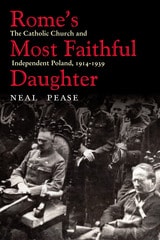
Rome’s Most Faithful Daughter
The Catholic Church and Independent Poland, 1914–1939Neal Pease
Ohio University Press, 2009
When an independent Poland reappeared on the map of Europe after World War I, it was widely regarded as the most Catholic country on the continent, as “Rome’s Most Faithful Daughter.” All the same, the relations of the Second Polish Republic with the Church—both its representatives inside the country and the Holy See itself—proved far more difficult than expected.
Based on original research in the libraries and depositories of four countries, including recently opened collections in the Vatican Secret Archives, Rome’s Most Faithful Daughter: The Catholic Church and Independent Poland, 1914–1939 presents the first scholarly history of the close but complex political relationship of Poland with the Catholic Church during the interwar period. Neal Pease addresses, for example, the centrality of Poland in the Vatican’s plans to convert the Soviet Union to Catholicism and the curious reluctance of each successive Polish government to play the role assigned to it. He also reveals the complicated story of the relations of Polish Catholicism with Jews, Freemasons, and other minorities within the country and what the response of Pope Pius XII to the Nazi German invasion of Poland in 1939 can tell us about his controversial policies during World War II.
Both authoritative and lively, Rome’s Most Faithful Daughter shows that the tensions generated by the interplay of church and state in Polish public life exerted great influence not only on the history of Poland but also on the wider Catholic world in the era between the wars.
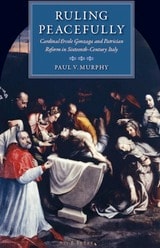
Ruling Peacefully
Cardinal Ercole Gonzaga and Patrician Reform in Sixteenth-Century ItalyPaul V. Murphy
Catholic University of America Press, 2007
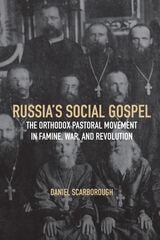
Russia's Social Gospel
The Orthodox Pastoral Movement in Famine, War, and RevolutionDaniel Scarborough
University of Wisconsin Press, 2023
This volume draws upon extensive archival research to examine the effects of the pastoral movement on Russian society and the Orthodox Church. Scarborough argues that the social work of parish clergymen shifted the focus of Orthodox practice in Russia toward cooperative social activism as a devotional activity. He furthers our understanding of Russian Orthodoxy by illuminating the difficult position of parish priests, who were charged with both spiritual and secular responsibilities but were supported by neither church nor state. His nuanced look at the pastorate shows how social and historical traumas shifted perceptions of what being religious meant, in turn affecting how the Orthodox Church organized itself, and contributed to Russia’s modernization.

Russian Orthodoxy under the Old Regime
Robert L. Nichols and Theofanis George Stavrou, Editors
University of Minnesota Press, 1978
Russian Orthodoxy under the Old Regime was first published in 1978. Minnesota Archive Editions uses digital technology to make long-unavailable books once again accessible, and are published unaltered from the original University of Minnesota Press editions.
In this book, which is especially suitable for course use, eleven scholars examine one of the most important institutions of imperial Russia, the Orthodox church in the two centuries before the Russian revolution. The material is arranged in two sections, the first devoted to Orthodoxy's role in Russian social and cultural life and the second dealing with the church's relationship to the tsarist regime.
Russian Religious Thought
Edited by Judith Deutsch Kornblatt and Richard F. Gustafson
University of Wisconsin Press, 1996
As Russia entered the modern age in the nineteenth century, many Russian intellectuals combined the study of European philosophy with a return to their own traditions, culminating in the novels of Tolstoy and Dostoevsky and in the religious philosophy of their younger contemporary, Vladimir Soloviev. This book explores central issues of modern Russian religious thought by focusing on the work of Soloviev and three religious philosophers who further developed his ideas in the early twentieth century: P. A. Florensky, Sergei Bulgakov, and S. L. Frank. The essays place these thinkers in the contexts of both Western philosophy and Eastern Orthodoxy, presenting a substantially new perspective on Russian religious thought.
The work of these four philosophers, this volume demonstrates, influenced virtually all aspects of twentieth-century Russian culture, and indeed, many aspects of Soviet culture as well, but also represents a rich philosophical tradition devoted to issues of divinity, community, and humanity that transcend national boundaries and historical eras.
Included in Russian Religious Thought is an introduction, brief biographical information on Soloviev, Florensky, Bulgakov, and Frank, and an Afterword by scholar James Scanlan, who elaborates on the volume’s aim to provide a thoughtful corrective, both to unexamined assumptions of past scholarship and to nationalist readings currently popular in post-Soviet Russia.
"Russian religious philosophy, banned under the Soviets, has been marginalized in the Western academy as well. This interdisciplinary volume helps explain why this body of thought has remained for so long at the center of Russian culture."—Caryl Emerson, Princeton University