Results by title
365 books match the query 'Correspondence' and 11 start with r

Reading Galileo's Letters
Experiments in Friendship, Knowledge, and CommunityEdited by Paula Findlen and Hannah Marcus
University of Chicago Press, 2027
Essays by many of the foremost experts on Galileo offer an interdisciplinary approach to the legendary scientist’s correspondence.
The Tuscan mathematician, physicist, and astronomer Galileo Galilei (1564–1642) is one of history’s most iconic and controversial figures. Letters form the backbone of what one early Galileo scholar called the “private Galileo,” and his correspondence is indeed a record of his family and friendships; his intellectual evolution; his professional interactions with other scientific figures; and his relations with patrons, brokers, and publishers. Last, but hardly least, his letters are a unique cultural artifact of Galileo the writer and master of vernacular prose.
Galileo’s correspondence crossed Europe in public mail pouches, through diplomatic messengers, and was written in code. Today, there are 3,272 surviving letters to or from Galileo and his many friends, family members, disciples, and rivals across Europe. This volume examines these letters as an essential aspect of Galileo’s personal and scientific career. They are what the editors call his “experiments in friendship,” which enabled, abetted, and often served as early drafts of the theories in his published works. This collaborative volume brings together different approaches, case studies, and forms of expertise—historical and literary, intellectual and material, archival and digital. It is a must-read for all Galileo enthusiasts and anyone interested in how to make the most of a rich record of correspondence.
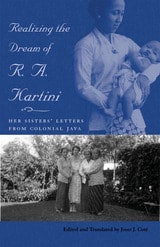
Realizing the Dream of R. A. Kartini
Her Sisters’ Letters from Colonial JavaJoost J. Coté
Ohio University Press, 2008
Realizing the Dream of R. A. Kartini: Her Sisters’ Letters from Colonial Java presents a unique collection of documents reflecting the lives, attitudes, and politics of four Javanese women in the early twentieth century. Joost J. Coté translates the correspondence between Raden Ajeng Kartini, Indonesia’s first feminist, and her sisters, revealing for the first time her sisters’ contributions in defining and carrying out her ideals. With this collection, Coté aims to situate Kartini’s sisters within the more famous Kartini narrative–and indirectly to situate Kartini herself within a broader narrative.
The letters reveal the emotional lives of these modern women and their concerns for the welfare of their husbands and the success of their children in rapidly changing times. While by no means radical nationalists, and not yet extending their horizons to the possibility of an Indonesian nation, these members of a new middle class nevertheless confidently express their belief in their own national identity.
Realizing the Dream of R. A. Kartini is essential reading for scholars of Indonesian history, providing documentary evidence of the culture of modern, urban Java in the late colonial era and an insight into the ferment of the Indonesian nationalist movement in which these women and their husbands played representative roles.
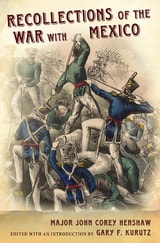
Recollections of the War with Mexico
Major John Corey Henshaw & Edited by Gary F. Kurutz
University of Missouri Press, 2008
Major John Henshaw, a dutiful regimental officer in the American invasion of Mexico, was one of only a handful of eyewitnesses to describe the two major theaters of that war from start to finish. But unlike most of his peers, he did not see himself as a conquering warrior and took pride in never having taken a life. He even wrote, “If I were alone, no earthly power could induce me to lend a helping hand in this base and infamous war.”
This book presents Henshaw’s recollections for the first time, covering all the action from the first skirmish in southern Texas to the collapse of Mexico City. As a member of the Seventh Infantry Regiment, this pugnacious line officer from New England served under both of the war’s principal generals, Zachary Taylor and Winfield Scott, and survived seven major battles. His writings constitute a virtual “minority opinion” report on the Mexican War.
Henshaw’s recollections include a rare and highly descriptive account of the siege of Fort Texas (later Fort Brown), plus rich new details of the storming of the Bishop’s Palace at Monterrey, the bombardment of Veracruz, the assault on Cerro Gordo, and the savage fighting outside the capital. His records of battles, marches, and maneuvers greatly augment what is already known about the campaign, but in addition to reporting daily occurrences and describing combat in graphic detail, Henshaw also reflected on the strategies and tactics—and what he saw as shortcomings—of officers on both sides.
Bitingly critical of those in command, of American volunteers, and of the war’s glory hounds, Henshaw admired the valor of ordinary soldiers on both sides of the fighting. And in the midst of the carnage, he also found time to describe Mexico’s cities and scenery in rhapsodic prose and express considerable empathy for its people. In addition to the “Recollections,” the volume includes vivid passages from letters Henshaw sent back to his wife, which supply additional details of the campaign. Editor Gary Kurutz provides an extensive biography of Henshaw, as well as comprehensive annotations to the text.
What Henshaw may have lacked as an unquestioning officer he more than made up for as an astute observer. Offering a decidedly different view of this war of American expansion, these writings with their balanced approach lend a fresh perspective among other primary sources and paint a startlingly honest picture of both Americans fighting abroad and those they fought.
Reject Aeneas, Accept Pius
Selected Letters of Aeneas Sylvius Piccolomini (Pope Pius II)Thomas M. Pius II
Catholic University of America Press, 2006
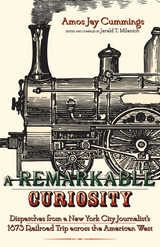
Remarkable Curiosity
Dispatches from a New York City Journalist's 1873 Railroad Trip across the American WestJerald T. Milanich
University Press of Colorado, 2008
Although today he is virtually unknown, during his lifetime Cummings was one of the most famous newspapermen in the United States, in part because of stories like these. Complete with a biographical sketch and historical introduction, A Remarkable Curiosity is an enjoyable read for anybody interested in the American West in the latter half of the nineteenth century.

Reporting the Chinese Revolution
The Letters of Rayna ProhmeGregor Benton and Arthur J. Knodel
Pluto Press, 2007
The book consists of letters Prohme wrote to her closest friend and her husband in the period immediately before, during and after the Wuhan interlude. Her reporting brought her into contact with many major political figures including Madam Sun Yat-sen (a prominent figure in the opposition to Chiang Kai-shek) and Mikhail Borodin (a chief Soviet advisor in China).
This book provides an unusual and often moving insight into a fascinating period in modern Chinese history.
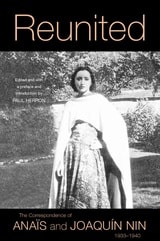
Reunited
The Correspondence of Anaïs and Joaquín Nin, 1933–1940Anaïs Nin
Ohio University Press, 2020
The incestuous affair between the writer Anaïs Nin and her father, the pianist-composer Joaquín Nin, is well documented in the volume of her unexpurgated diary published under the title Incest. What has been missing from that account is Joaquín’s point of view. Reunited: The Correspondence of Anaïs and Joaquín Nin, 1933–1940 presents more than one hundred intimate communications between these two artistic geniuses, revealing not only the dynamics of their complex relationship but also why Anaïs spent her life in a never-ending battle to feel loved, appreciated, and understood.
Reunited collects the correspondence between Anaïs and Joaquín just before, during, and after the affair, which commenced in 1933, twenty years after he had abandoned his ten-year-old daughter and the rest of his family. These letters were long believed to have been destroyed and lost to history. In 2006, however, a folder containing Joaquín’s original letters to his daughter was discovered in Anaïs’s Los Angeles home, along with a second folder of her letters to him. Together, these letters tell the story of an absent father’s attempt to reconnect with his adult daughter and how that rapprochement quickly turned into an illicit sexual relationship.
Rimbaud
Complete Works, Selected Letters, a Bilingual EditionJean Nicholas Arthur Rimbaud
University of Chicago Press, 2005
The first translation of the poet's complete works when it was published in 1966, Rimbaud: Complete Works, Selected Letters introduced a new generation of Americans to the alienated genius—among them the Doors's lead singer Jim Morrison, who wrote to translator Wallace Fowlie to thank him for rendering the poems accessible to those who "don't read French that easily." Forty years later, the book remains the only side-by-side bilingual edition of Rimbaud's complete poetic works.
Thoroughly revising Fowlie's edition, Seth Whidden has made changes on virtually every page, correcting errors, reordering poems, adding previously omitted versions of poems and some letters, and updating the text to reflect current scholarship; left in place are Fowlie's literal and respectful translations of Rimbaud's complex and nontraditional verse. Whidden also provides a foreword that considers the heritage of Fowlie's edition and adds a bibliography that acknowledges relevant books that have appeared since the original publication. On its fortieth anniversary, Rimbaud remains the most authoritative—and now, completely up-to-date—edition of the young master's entire poetic ouvre.
Robert B. Heilman and Eric Voegelin
A Friendship in Letters, 1944-1984Edited & Intro by Charles R. Embry & Foreword by Champlin B. Heilman
University of Missouri Press, 2004
Heilman and Voegelin first became acquainted around 1941, when Voegelin delivered a guest lecture for the political science department at Louisiana State University. At that time, Heilman was teaching in the English department at LSU along with Robert Penn Warren and Cleanth Brooks. What began as simple exchanges after Voegelin moved to LSU soon grew into full-fledged correspondence—beginning with an eight-page letter by Voegelin commenting on Heilman’s manuscripton Shakespeare’s King Lear. Their correspondence lasted until four months before Voegelin’s death in January 1985.
These letters represent Voegelin’s most prolonged correspondence with a native-born American scholar and provide readers with an insight into Voegelin as a literary critic. While Voegelin’s analysis of Henry James’s The Turn of the Screw is well known, these letters reveal the context from which the analysis grew. Additional comments by Voegelin on Mann, Eliot, Shakespeare, Homer, Proust, Flaubert, and other significant writers are uncovered throughout his exchanges with Heilman.
Readers will appreciate not only Heilman’s elegant style but also his efforts to clarify for himself the meaning and implications of Voegelin’s developing philosophy. Heilman’s questions are often ones that readers of Voegelin continue to ask today. In his queries, as well as in the exposition of his theories of tragedy and melodrama, human nature, and expressionist drama, Heilman displays a canny perception of the philosophical issues and problems of modernity that sustained their interdisciplinary discussion. The letters exchanged by Robert B. Heilman and Eric Voegelin demonstrate the warm friendship these two scholars shared and illuminate many of the turns and transformations in their work as they developed as thinkers.

Robert of Arbrissel
A Medieval Religious LifeBruce L. Venarde
Catholic University of America Press, 2003
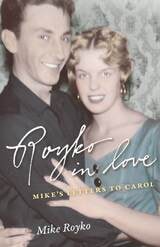
Royko in Love
Mike's Letters to CarolMike Royko
University of Chicago Press, 2010
Street-smart, wickedly funny, piercingly perceptive, and eloquent enough to win a Pulitzer Prize, Mike Royko continues to have legions of devoted fans who still wonder “what Royko would have said” about some outrageous piece of news. One thing he hardly ever wrote or talked about, though, was his private life, especially the time he shared with his first wife, Carol. She was the love of his life, and her premature death at the age of forty-four shook him to his soul. Mike’s unforgettable public tribute to Carol was a heart-wrenching column written on what would have been her forty-fifth birthday, “November Farewell.” His most famous and requested piece, it was the end of an untold story.
Royko in Love offers that story’s moving and utterly beguiling beginning in letters that “Mick” Royko, then a young airman, wrote to his childhood sweetheart, Carol Duckman. He had been in love with her since they were kids on Chicago’s northwest side, but she was a beauty and he was, well, anything but. Before leaving for Korea, he was crushed to hear she was getting married, but after returning to Blaine Air Force Base in Washington, he learned she was getting a divorce. Mick soon began to woo Carol in a stream of letters that are as fervent as they are funny. Collected here for the first time, Royko’s letters to Carol are a mixture of sweet seduction, sarcastic observations on military life, a Chicago kid’s wry view of rural folk, the pain of self-doubt, and the fear of losing what is finally so close, but literally so far. His only weapons against Carol’s many suitors were his pen, his ardor, and his brilliance. And they won her heart.