Results by title
358 books match the query 'Labor & Industrial Relations' and 13 start with r
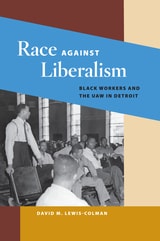
Race against Liberalism
Black Workers and the UAW in DetroitDavid M. Lewis-Colman
University of Illinois Press, 2007
Race against Liberalism examines how black worker activism in Detroit shaped the racial politics of the labor movement and the white working class. David M. Lewis-Colman traces the substantive, long-standing disagreements between liberals and the black workers who embraced autonomous race-based action. As he shows, black autoworkers placed themselves at the center of Detroit's working-class politics and sought to forge a kind of working class unity that accommodated their interests as African Americans. The book covers the independent caucuses in the 1940s and the Trade Union Leadership Council in the 1950s; the black power movement and Revolutionary Union Movements of the mid-1960s; and the independent race-based activism of the 1970s that resulted in Coleman Young's 1973 election as the city's first black mayor.
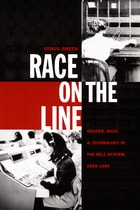
Race on the Line
Gender, Labor, and Technology in the Bell System, 1880–1980Venus Green
Duke University Press, 2001
More than a simple story of the impact of technology, Race on the Line combines oral history, personal experience, and archival research to weave a complicated history of how skill is constructed and how its meanings change within a rapidly expanding industry. Green discusses how women faced an environment where male union leaders displayed economic as well as gender biases and where racism served as a persistent system of division. Separated into chronological sections, the study moves from the early years when the Bell company gave both male and female workers opportunities to advance; to the era of the “white lady” image of the company, when African American women were excluded from the industry and feminist working-class consciousness among white women was consequently inhibited; to the computer era, a time when black women had waged a successful struggle to integrate the telephone operating system but faced technological displacement and unrewarding work.
An important study of working-class American women during the twentieth century, this book will appeal to a wide audience, particularly students and scholars with interest in women’s history, labor history, African American history, the history of technology, and business history.
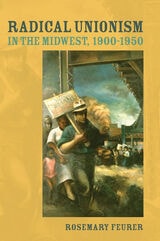
Radical Unionism in the Midwest, 1900-1950
Rosemary Feurer
University of Illinois Press, 2006
Rosemary Feurer examines the fierce battles between these Midwestern electrical workers and the bitterly anti-union electrical and metal industry, Exploring the role of radicals in local movement formation, Feurer reveals a "civic" unionism that could connect community and union concerns to build solidarity and contest the political economy. District 8's spirited unionism included plant occupations in St. Louis and Iowa; campaigns to democratize economic planning; and strategies for national bargaining that elected officials inevitably branded as part of a communist conspiracy. Though destroyed by reactionaries and an anticommunist backlash, District 8 molded a story that tells another side of the labor movement's formation in the 1930s and 1940s, and can inform current struggles against corporate power in the modern global economy.

Ramparts of Resistance
Why Workers Lost Their Power, and How to Get It BackSheila Cohen
Pluto Press, 2006
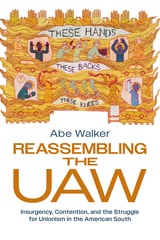
Reassembling the UAW
Insurgency, Contention, and the Struggle for Unionism in the American SouthAbe Walker
Temple University Press, 2026
Abe Walker chronicles the organizing campaign from its origin in 2014 to the union’s breakthrough victory in 2024, illustrating what went wrong—and what went right—along the way. Walker provides a systematic analysis of the strategic challenges and tactical shifts, showing the patterns that persisted across three election cycles while highlighting their differences, from global-level alliances to local labor issues.
Reassembling the UAW also demonstrates how rebel rank-and-file workers ousted the old-guard leadership and transformed the UAW into a militant union to achieve results. Ultimately, Walker offers valuable lessons for organizational strategy, the power of collective action, and the future of the labor movement.
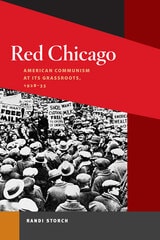
Red Chicago
American Communism at Its Grassroots, 1928-35Randi Storch
University of Illinois Press, 2007
Red Chicago is a social history of American Communism set within the context of Chicago's neighborhoods, industries, and radical traditions. Using local party records, oral histories, union records, party newspapers, and government documents, Randi Storch fills the gap between Leninist principles and the day-to-day activities of Chicago's rank-and-file Communists.
Uncovering rich new evidence from Moscow's former party archive, Storch argues that although the American Communist Party was an international organization strongly influenced by the Soviet Union, at the city level it was a more vibrant and flexible organization responsible to local needs and concerns. Thus, while working for a better welfare system, fairer unions, and racial equality, Chicago's Communists created a movement that at times departed from international party leaders' intentions. By focusing on the experience of Chicago's Communists, who included a large working-class, African American, and ethnic population, this study reexamines party members' actions as an integral part of the communities and industries in which they lived and worked.
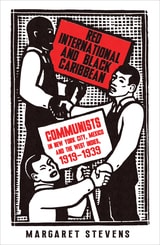
Red International and Black Caribbean
Communists in New York City, Mexico and the West Indies, 1919-1939Margaret Stevens
Pluto Press, 2017
Challenging dominant accounts, Red International and Black Caribbean debunks the “great men” narrative, emphasizes the role of women in their capacity as laborers, and paints the true struggles of black peasants and workers in Communist parties.
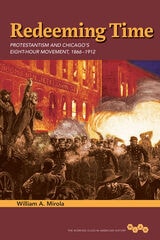
Redeeming Time
Protestantism and Chicago's Eight-Hour Movement, 1866-1912William A. Mirola
University of Illinois Press, 2015
William A. Mirola explores how the city's eight-hour movement intersected with a Protestant religious culture that supported long hours to keep workers from idleness, intemperance, and secular leisure activities. Analyzing how both workers and clergy rewove working-class religious cultures and ideologies into strategic and rhetorical frames, Mirola shows how every faith-based appeal contested whose religious meanings would define labor conditions and conflicts. As he notes, the ongoing worker-employer tension transformed both how clergy spoke about the eight-hour movement and what they were willing to do, until intensified worker protest and employer intransigence spurred Protestant clergy to support the eight-hour movement even as political and economic arguments eclipsed religious framing.
A revealing study of an era and a movement, Redeeming Time illustrates the potential--and the limitations--of religious culture and religious leaders as forces in industrial reform.
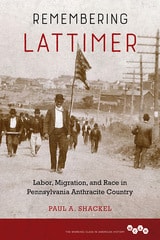
Remembering Lattimer
Labor, Migration, and Race in Pennsylvania Anthracite CountryPaul A. Shackel
University of Illinois Press, 2018
Paul A. Shackel confronts the legacies and lessons of the Lattimer event. Beginning with a dramatic retelling of the incident, Shackel traces how the violence, and the acquittal of the deputies who perpetrated it, spurred membership in the United Mine Workers. By blending archival and archaeological research with interviews, he weighs how the people living in the region remember--and forget--what happened. Now in positions of power, the descendants of the slain miners have themselves become rabidly anti-union and anti-immigrant as Dominicans and other Latinos change the community. Shackel shows how the social, economic, and political circumstances surrounding historic Lattimer connect in profound ways to the riven communities of today.
Compelling and timely, Remembering Lattimer restores an American tragedy to our public memory.
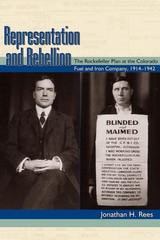
Representation and Rebellion
The Rockefeller Plan at the Colorado Fuel and Iron Company, 1914-1942Jonathan H. Rees
University Press of Colorado, 2010

Rights and Wrongs of Children's Work
Bourdillon, Michael
Rutgers University Press, 2010
This groundbreaking book considers international policies governing children's work and the complexity of assessing the various effects of their work. The authors question current child labor policies and interventions, which, even though pursued with the best intentions, too often fail to protect children against harm or promote their access to education and other opportunities for decent futures. They argue for the need to re-think the assumptions that underlie current policies on the basis of empirical evidence, and they recommend new approaches to advance working children's well-being and guarantee their human rights.
Rights and Wrongs of Children's Work condemns the exploitation and abuse of child workers and supports the right of all children to the best quality, free education that society can afford. At the same time, the authors recognize the value, and sometimes the necessity, of work in growing up, and the reality that a "workless" childhood, without responsibilities, is not good preparation for adult life in any environment.
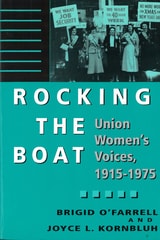
Rocking the Boat
Union Women's Voices, 1915-1975O'Farrell, Brigid
Rutgers University Press, 1996
Rocking the Boat is a celebration of strong, committed women who helped to build the American labor movement. Through the stories of eleven women from a wide range of backgrounds, we experience the turmoil, hardships, and accomplishments of thousands of other union women activists through the period spanning the Great Depression, the New Deal, World War II, the McCarthy era, the civil rights movement, and the women's movement. These women tell powerful stories that highlight and detail women's many roles as workers, trade unionists, and family members. They all faced difficulties in their personal lives, overcame challenges in their unions, and individually and collectively helped improve women's everyday working lives.
Maida Springer-Kemp came from New York City's Harlem, Local 22 of the International Ladies' Garment Workers' Union, to represent the AFL-CIO in Africa. In Chicago, Alice Peurala fought for her job in the steel mill and her place in the steel workers' union. Jessie De La Cruz organized farm workers in California. Esther Peterson, organizer, educator, and lobbyist, became an advisor to four U.S. presidents. In chapters based on oral history interviews, these women and others provide new perspectives and practical advice for today's working women. They share an idealistic and practical commitment to the labor movement. As Dorothy Haener of the United Auto Workers and a founding member of the National Organization of Women said, "You have to take a look at how to rock the boat. You don't want to spill yourself out if you can avoid it, but sometimes you have to rock the boat." From these women we, too, learn how to rock the boat.
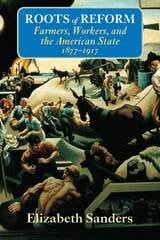
Roots of Reform
Farmers, Workers, and the American State, 1877-1917Elizabeth Sanders
University of Chicago Press, 1999
Based on new evidence from legislative records and other sources, Sanders shows that this tenuous alliance of "producers versus plutocrats" shaped early regulatory legislation, remained powerful through the populist and progressive eras, and developed a characteristic method of democratic state expansion with continued relevance for subsequent reform movements.
Roots of Reform is essential reading for anyone interested in this crucial period of American political development.