Results by title
1917 books match the query 'Law' and 81 start with r
RSF
The Russell Sage Foundation Journal of the Social Sciences: Asian Americans and the Immigrant Integration AgendaJennifer Lee
Russell Sage Foundation, 2021
Rather than treating Asian Americans as a monolithic group, the contributors use the 2016 National Asian American Survey to pinpoint areas of convergence and divergence within the U.S. Asian population. Despite their diversity, Asian Americans share many attitudes, behavior, and experiences in ways that exceed expectations based on socioeconomic status alone— what Lee and Ramakrishnan refer to as the “diversity-convergence paradox.” This paradox — of convergence despite divergence in national origins and socioeconomic status — is the animating question of this issue of RSF.
Contributors Janelle Wong and Sono Shah find strong political consensus within the Asian American population, particularly with regard to a robust government role in setting public policies ranging from environmental protection to gun control to higher taxation and social service provision, and even affirmative action. Wong and Shah posit that political differences within the Asian American community are between progressives and those who are even more progressive. Analyzing where policy opinions converge and diverge, Sunmin Kim finds that while many Asian Americans support government interventions in health care, education, and racial justice, some diverge sharply with regard to Muslim immigration. Lucas G. Drouhot and Filiz Garip construct a novel typology of five subgroups of Asian immigrants spanning class, gender, region, and immigrant generation to examine varied experiences of immigrant inclusion. They show how different subgroups contend with the effects of racialized othering and inclusion simultaneously at play. Van C. Tran and Natasha Warikoo analyze both interracial and intra-Asian attitudes toward immigration and find diversity among Asians’ views by national origin: As labor migrants, Filipinos support Congress increasing the number of annual work visas; as economic migrants, Chinese and Indians support an increase in annual family visas; and as refugees, Vietnamese are least supportive of pro-immigration policies.
Placing Asian Americans at the center of their analyses, the contributors illuminate how such a broadly diverse population shares similar attitudes and experiences in often surprising ways. By turning a lens on the richly diverse U.S. Asian population, this issue of RSF unveils comprehensive, compelling narratives about Asian Americans and advances our understanding of race and immigrant integration in the 21st century.
RSF
The Russell Sage Foundation Journal of the Social Sciences: Plessy v. Ferguson and the Legacy of "Separate but Equal" After 125 yearsjohn a. powell
Russell Sage Foundation, 2021
The contributors grapple with a central overarching question: How is it that a court decision from 125 years ago still has such an enduring impact on racial disparities? john a. powell provides a nuanced overview of the legal context of the case to show that segregation was not only about separating people by race but was primarily about preserving White supremacy. The wide latitude for judicial interpretation granted to judges means that who decides matters, and today, just as much as in 1896, the justices sitting on the Supreme Court matter. If the views of Justice Harlan – the lone dissenter in Plessy – had prevailed, U.S. jurisprudence would look very different today.
Thomas J. Davis discusses how control over personal identity lay at the heart of Plessy, and how its denial of basic human rights and fundamental freedoms reverberates today. From sex and marriage to adoption, gender recognition, employment, and voting, persistent discrimination turns in various degrees on state authority to define, categorize, and deny freedom of personal identity. To ensure personal autonomy in such domains requires the continual reevaluation of U.S. law to recognize the freedom of individuals to define and express their own identities.
Looking at enduring educational impact of “Separate but Equal,” which was not entirely rectified by the 1954 decision outlawing school segregation in Brown v. Board of Education, Dania V. Francis and William A. Darity, Jr., link today’s ongoing within-school segregation to the legacy of racialized tracking born from White resistance to desegregation. They demonstrate how a short-term, concerted effort to increase the number of Black high school students taking advanced courses could lead to long-term benefits in closing the educational achievement gap and eliminating institutionalized segregation within our schools.
Plessy rightfully stands as one of the continuing stains on the history of our country in its ambivalence and unwillingness to address White dominance. This issue of RSF both corrects and expands the narrative around the Plessy decision, and provides important lessons for addressing the nation’s continuing racial travails. It is ideal for use by scholars, community leaders, and policy makers alike.
RSF
The Russell Sage Foundation Journal of the Social Sciences: Special Issue: Racial Bias in Law Enforcement, Criminal Justice, and IncarcerationSuzanne Nichols
Russell Sage Foundation, 2025
RSF
The Russell Sage Foundation Journal of the Social Sciences: The Criminal Justuce System as a Labor Market InsitutionSandra Susan Smith
Russell Sage Foundation, 2020
Inmate labor fuels prisons. The incarcerated work in prison industries that collaborate with private corporations. Fair labor laws do not apply to prisons, where it is common for inmates to earn less than one dollar per hour. But involvement with the criminal justice system continues to shape and hinder the future employment and earnings of the formerly incarcerated long after they have been released. In this issue of RSF, edited by sociologist Sandra Susan Smith and legal scholar Jonathan Simon, an interdisciplinary group of scholars analyze how the criminal justice system acts as a de facto labor market institution by compelling or coercing labor from the justice-involved.
The social and economic effects of criminal justice involvement are widespread, with almost seven million people under some form of direct supervision. The contributors to this issue examine how the criminal justice system affects the livelihood and families of both the incarcerated and formerly incarcerated. Cody Warner, Joshua Kaiser, and Jason Houle explore how “hidden sentences” --restricted access to voting rights, public housing, and professional licensing--negatively impact labor market outcomes for young adults with criminal records. Michele Cadigan and Garbriela Kirk look at the burden of court fees and fines, or legal financial obligations, that place a strain on the work commitments and resources of low-income people. Joe LaBriola sheds new light on how employment affects recidivism; he shows that parolees who find high-quality jobs, such as in the manufacturing industry, are less likely to return to prison than those employed in low-quality jobs. Noah Zatz and Michael Stoll demonstrate how the threat of imprisonment for nonpayment of child support coerces labor among noncustodial fathers, particularly African-American men. Allison Dwyer Emory and her coauthors show that previously incarcerated fathers are less likely to pay either formal or informal cash child support or offer in-kind assistance to their children’s mothers.
This issue of RSF is a timely contribution to the field of scholarly literature that illuminates the far and often destructive reach that the criminal justice system has on those whose lives it touches. It advances our understanding of how the system functions as a labor market institution and the price it extracts from those involved with it.
RSF
The Russell Sage Foundation Journal of the Social Sciences: The Legal Landscape of U.S. Immigration in the Twenty-First CenturyKatharine M. Donato
Russell Sage Foundation, 2020
Donato and Amuedo-Dorantes outline American immigration policies from 1880 to the present and consider the impact of the COVID-19 pandemic on immigration. They underscore the fact that many recent immigration policies have been a result of presidential executive orders rather than legislative acts, making families and workers who enter the country without proper documentation especially vulnerable. They also examine how and why these orders are often racist and xenophobic, privileging some racial and ethnic groups and excluding others.
Contributors to the issue investigate the various ways in which immigrants secure visas, working permits, and citizenship in the United States, including through employment and family ties, as well as special statuses for military veterans, refugees, asylum seekers, and unaccompanied minors. Daniel Costa writes about how temporary migrant workers’ precarious immigration status makes them particularly likely to experience workplace abuse because they fear losing their jobs and being deported if they complain about unfair labor practices. Pia Orrenius and Madeline Zavodny consider the substantial increase in employer demand for temporary work visas, demonstrating how improved economic conditions have led to this surge, creating a viable alternative to hiring unauthorized workers. Julia Gelatt uses employment and economic data analysis to compare multiple classes of legal immigrants. Her research demonstrates that employer-sponsored immigrants are better educated, exhibit higher English proficiency, and work in more highly skilled jobs than other types of immigrants (including family-sponsored, humanitarian, and diversity visa immigrants).
Other contributors examine the experiences of immigrants with special statuses, including veterans. Cara Wong and Jonathan Bonaguro find that Americans are more likely to support a path to citizenship via military service for immigrants who entered the country with the appropriate documentation, and that many Americans believe that undocumented migrants should be barred from the military, Peace Corps, AmeriCorps and firefighting. Van C. Tran and Francisco Lara-García find little variation in early socioeconomic outcomes between refugee groups from various countries. They show that schooling and employment, along with strategic financial, community building, and other support services, are critical factors in the successful integration and improved socioeconomic outcomes of refugees. Luis Edward Tenorio finds that the patchwork of legal systems, including family, immigration, and federal courts that adjudicate the laws for children with special immigrant juvenile status, make for the uneasy and uneven integration of unaccompanied minors into key social institutions.
This issue of RSF is a timely contribution that will invigorate the field of scholarly work on the American legal immigration system.
RSF
The Russell Sage Foundation Journal of the Social Sciences: The Underground Gun Market: Implications for Regulation and EnforcementPhilip J. Cook
Russell Sage Foundation, 2017
Cook and Pollack initiate the discussion with a comprehensive introduction that includes an original framework for understanding the legality of transactions that arm dangerous offenders. Several contributors review trends in gun ownership across the nation and investigate how guns enter the underground market. Deborah Azrael and coauthors conduct a comprehensive survey of gun owners and find 270 million guns in private circulation. They estimate that 70 million firearms changed hands during a recent five-year period. Most of those transactions were sales by licensed dealers; Garen Wintemute reports on a survey of dealers that assesses the wide disparities among them as sources of guns to offenders. Charles Wellford and coauthors use trace data and prison interviews to study how criminals obtain their guns in three jurisdictions that differ widely with respect to gun regulations and culture.
Other contributors explore the effects of gun regulations and legislation on illegal supply chains. Daniel Webster and coauthors study the effects of Maryland’s 2013 Firearm Safety Act, which required all handgun purchasers to obtain a license. They find that 41 percent of surveyed parolees reported that it was more difficult to obtain a handgun after the law passed due to increased cost, lack of trusted sources, or people being less willing to buy handguns on their behalf. Analyzing over three decades of data on handguns recovered in Boston, Anthony Braga shows that fewer guns are illegally obtained from states that adopt legislation restricting buyers to one gun per month. George Tita and coauthors report the results of an inmate survey in Los Angeles in which they explored respondents’ knowledge of gun laws. These findings suggest that laws aimed at legal gun transactions may also decrease the entry of guns into the underground market.
The rate of gun violence in the U.S. surpasses that of any other advanced nation. This issue of RSF offers new empirical research on the underground market that arms dangerous criminals and provides a rich foundation for policies designed to curb gun violence.
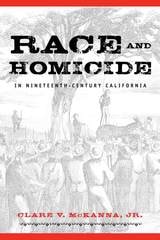
Race And Homicide In Nineteenth-Century California
Clare V. McKanna
University of Nevada Press, 2007
Nineteenth-century California was a society in turmoil, with a rapidly growing population, booming mining camps, insufficient or nonexistent law-enforcement personnel, and a large number of ethnic groups with differing attitudes toward law and personal honor. Violence, including murder, was common, and legal responses varied broadly. Available now for the first time in paperback, Race and Homicide in Nineteenth-Century California examines coroners’ inquest reports, court case files, prison registers, and other primary and printed sources to analyze patterns of homicide and the state’s embryonic justice system. Author Clare V. McKanna discovers that the nature of crimes varied with the ethnicity of perpetrators and victims, as did the conduct and results of trials and sentencing patterns. He presents specific case studies and a vivid portrait of an unruly society in flux. Enhanced with testimony from contemporary sources and illustrated with period photographs, this study richly portrays a frontier society where the law was neither omnipotent nor impartial.
Race and the Law in South Carolina
From Slavery to Jim CrowJohn W. Wertheimer
Amherst College Press, 2023
“Recent arguments in African American History have emphasized the theme of continuity. . . . Race and Law in South Carolina recovers the theme of change over time by showing just how things have changed, and it does so through patient, thick description.” —H. Robert Baker, Georgia State University
“This book and its concomitant student project is an exciting endeavor. . . . The cases are captivating and accessibly written, making this a possible college classroom read.” —Vanessa Blanck, Rowan University

Race, Class, and Affirmative Action
Sigal Alon is an associate professor in the Department of Sociology and Anthropology at Tel-Aviv University.
Russell Sage Foundation, 2015
Alon finds that affirmative action at elite institutions in both countries is a key vehicle of mobility for disenfranchised students, whether they are racial and ethnic minorities or socioeconomically disadvantaged. Affirmative action improves their academic success and graduation rates and leads to better labor market outcomes. The beneficiaries of affirmative action in both countries thrive at elite colleges and in selective fields of study. As Alon demonstrates, they would not be better off attending less selective colleges instead.
Alon finds that Israel’s class-based affirmative action programs have provided much-needed entry slots at the elite universities to students from the geographic periphery, from high-poverty high schools, and from poor families. However, this approach has not generated as much ethnic diversity as a race-based policy would. By contrast, affirmative action policies in the United States have fostered racial and ethnic diversity at a level that cannot be matched with class-based policies. Yet, class-based policies would do a better job at boosting the socioeconomic diversity at these bastions of privilege. The findings from both countries suggest that neither race-based nor class-based models by themselves can generate broad diversity. According to Alon, the best route for promoting both racial and socioeconomic diversity is to embed the consideration of race within class-based affirmative action. Such a hybrid model would maximize the mobility benefits for both socioeconomically disadvantaged and minority students.
Race, Class, and Affirmative Action moves past political talking points to offer an innovative, evidence-based perspective on the merits and feasibility of different designs of affirmative action.
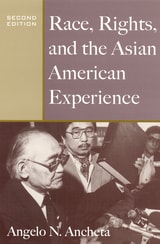
Race, Rights, and the Asian American Experience
Ancheta, Angelo N
Rutgers University Press, 2006
Ancheta examines legal and social theories of racial discrimination, ethnic differences in the Asian American population, nativism, citizenship, language, school desegregation, and affirmative action. In the revised edition of this influential book, Ancheta also covers post-9/11 anti-Asian sentiment and racial profiling. He analyzes recent legal cases involving political empowerment, language rights, human trafficking, immigrant rights, and affirmative action in higher education-many of which move the country farther away from the ideals of racial justice. On a more positive note, he reports on the progress Asian Americans have made in the corporate sector, politics, the military, entertainment, and academia.
A skillful mixture of legal theories, court cases, historical events, and personal insights, this revised edition brings fresh insights to U.S. civil rights from an Asian American perspective.
Racial Union
Law, Intimacy, and the White State in Alabama, 1865-1954Julie Novkov
University of Michigan Press, 2008
In November 2001, the state of Alabama opened a referendum on its long-standing constitutional prohibition against interracial marriage. A bill on the state ballot offered the opportunity to relegate the state's antimiscegenation law to the dustbin of history. The measure passed, but the margin was alarmingly slim: more than half a million voters, 40 percent of those who went to the polls, voted to retain a racist and constitutionally untenable law.
Julie Novkov's Racial Union explains how and why, nearly forty years after the height of the civil rights movement, Alabama struggled to repeal its prohibition against interracial marriage---the last state in the Union to do so. Novkov's compelling history of Alabama's battle over miscegenation shows how the fight shaped the meanings of race and state over ninety years. Novkov's work tells us much about the sometimes parallel, sometimes convergent evolution of our concepts of race and state in the nation as a whole.
"A remarkably nuanced account of interlocked struggles over race, gender, class and state power. Novkov's site is Alabama, but her insights are for all America."
---Rogers M. Smith, Christopher H. Browne Distinguished Professor of Political Science, University of Pennsylvania
"Hannah Arendt shocked Americans in the 1950s by suggesting that interracial intimacy was the true measure of a society's racial order. Julie Novkov's careful, illuminating, powerful book confirms Arendt's judgment. By ruling on who may be sexually linked with whom, Alabama's courts and legislators created a racial order and even a broad political order; Novkov shows us just how it worked in all of its painful, humiliating power."
---Jennifer L. Hochschild, Henry LaBarre Jayne Professor of Government, Professor of African and African American Studies, and Harvard College Professor
Radical Enfranchisement in the Jury Room and Public Life
Sonali Chakravarti
University of Chicago Press, 2019
With Radical Enfranchisement in the Jury Room and Public Life, Sonali Chakravarti offers a full-throated defense of juries as a democratic institution. She argues that juries provide an important site for democratic action by citizens and that their use should be revived. The jury, Chakravarti argues, could be a forward-looking institution that nurtures the best democratic instincts of citizens, but this requires a change in civic education regarding the skills that should be cultivated in jurors before and through the process of a trial. Being a juror, perhaps counterintuitively, can guide citizens in how to be thoughtful rule-breakers by changing their relationship to their own perceptions and biases and by making options for collective action salient, but they must be better prepared and instructed along the way.
Radical Enfranchisement in the Jury Room and Public Life
Sonali Chakravarti
University of Chicago Press, 2019
This is an auto-narrated audiobook edition of this book.
With Radical Enfranchisement in the Jury Room and Public Life, Sonali Chakravarti offers a full-throated defense of juries as a democratic institution. She argues that juries provide an important site for democratic action by citizens and that their use should be revived. The jury, Chakravarti argues, could be a forward-looking institution that nurtures the best democratic instincts of citizens, but this requires a change in civic education regarding the skills that should be cultivated in jurors before and through the process of a trial. Being a juror, perhaps counterintuitively, can guide citizens in how to be thoughtful rule-breakers by changing their relationship to their own perceptions and biases and by making options for collective action salient, but they must be better prepared and instructed along the way.
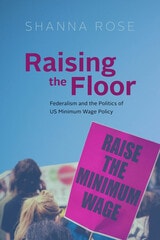
Raising the Floor
Federalism and the Politics of US Minimum Wage PolicyShanna Rose
University of Chicago Press, 2026
A rich history of the development of American minimum wage policy with lessons for today.
Despite broad popular support for robust minimum wage policy, the federal minimum wage is now worth less—in real, inflation-adjusted terms—than at any time since 1949. While some state and local governments have stepped in to fill this void, others have declined to set any minimum wage standard at all. Traversing more than 100 years of history, Raising the Floor examines how interest groups have navigated the highly decentralized American political system to shape the development of federal, state, and local minimum wage laws.
In her analysis, Shanna Rose highlights the importance of American federalism. She argues that because federalism creates multiple arenas for policy change, interest groups have sought out the sites most conducive to their goals, shifting their lobbying efforts as new obstacles and opportunities emerge. Federalism has facilitated minimum wage policymaking by fostering policy experimentation, learning, and diffusion across states and by allowing state and local governments to overcome gridlock and status-quo biases at the national level. Yet, federalism has also been an instrument for containment, enabling those opposed to minimum wage increases to litigate and preempt local-level laws.
With rich historical chapters that illuminate different phases in the development of today’s patchwork of wage standards, Raising the Floor is a deep examination of the past, present, and future of American minimum wage law.
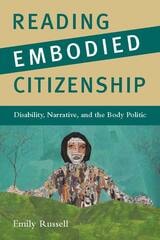
Reading Embodied Citizenship
Disability, Narrative, and the Body PoliticRussell, Emily
Rutgers University Press, 2011
Liberal individualism, a foundational concept of American politics, assumes an essentially homogeneous population of independent citizens. When confronted with physical disability and the contradiction of seemingly unruly bodies, however, the public searches for a story that can make sense of the difference. The narrative that ensues makes "abnormality" an important part of the dialogue about what a genuine citizen is, though its role is concealed as an exception to the rule of individuality rather than a defining difference. Reading Embodied Citizenship brings disability to the forefront, illuminating its role in constituting what counts as U.S. citizenship.
Drawing from major figures in American literature, including Mark Twain, Flannery O'Connor, Carson McCullers, and David Foster Wallace, as well as introducing texts from the emerging canon of disability studies, Emily Russell demonstrates the place of disability at the core of American ideals. The narratives prompted by the encounter between physical difference and the body politic require a new understanding of embodiment as a necessary conjunction of physical, textual, and social bodies. Russell examines literature to explore and unsettle long-held assumptions about American citizenship.
Readings in Public Choice Economics
Jac C. Heckelman, Editor
University of Michigan Press, 2004
Public choice analysis applies the methodology of economics to issues in political science and the policy process. The readings in this anthology cover topics in both institutional political economy and social choice theory and are comprehensible to nonspecialists and advanced undergraduates with a background in basic economic theory. Readings are taken from academic journals and book chapters and are reproduced in their entirety. They are selected to ensure they contain a minimal amount of notation and are free of advanced econometrics.
The anthology contains two to three readings each to explore the areas of rent seeking, collective action, bureaucracy, elections and the economy, choosing decision rules, majority rule, alternative voting procedures, and the calculus of voting. Each part contains a brief introduction to the general theme, and questions are presented as a guide to each reading. Additional suggested readings are provided to develop these concepts further.
Jac C. Heckelman is Associate Professor of Economics, Wake Forest University.
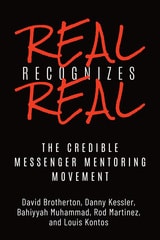
Real Recognizes Real
The Credible Messenger Mentoring MovementDavid C. Brotherton, Danny Kessler, Bahiyyah M. Muhammad, Rodrigo Martinez, and Louis Kontos
Temple University Press, 2027
The Credible Messenger Mentoring Initiative (CMMI), launched in New York City in 2012, is a transformative program where adults who had been in the justice system serve as mentors, role models, and life coaches for 16- to 24-year-olds. The program socializes and empowers these at-risk and formerly incarcerated youth offenders, diverting them from juvenile justice institutions and rehabilitation centers. It aims to build trust, deepen their ties to their community and family, and help them become peacemakers and role models for other youths.
Real Recognizes Real is the first in-depth study of the CMMI, focusing on the Washington, DC branch of the program, which is becoming a model for a new movement of anti-violent interventions. It shows the advantages of the CMMI being built on the love that members of a community have for one another rather than on outside intervention. The authors also explain how this state-run, non-profit program reduced recidivism rates and helped its participants, youth and mentors alike, develop more meaningful and lasting relationships.
Featuring interviews with youths and their mentors, Real Recognizes Real evaluates the successes, challenges, failures, and lessons of the CMMI, while emphasizing its value in the campaign for juvenile justice reform.
In the series Studies in Transgression
Realizing Educational Rights
Advancing School Reform through Courts and CommunitiesAnne Newman
University of Chicago Press, 2013
Newman argues that an adequate K–12 education is the right of all citizens, as a matter of equality, and emphasizes that this right must be shielded from the sway of partisan and majoritarian policy making far more than it currently is. She then examines how educational rights are realized in our current democratic structure, offering two case studies of leading types of rights-based activism: school finance litigation on the state level and the mobilization of citizens through community-based organizations. Bringing these case studies together with rich philosophical analysis, Realizing Educational Rights advances understanding of the relationships among moral and legal rights, education reform, and democratic politics.
Reason in Law, Tenth Edition
Lief H. Carter, Thomas F. Burke and Jessica Silbey
University of Chicago Press, 2026
An indispensable introduction to legal reasoning, updated for today’s political and legal environment.
Since it was first published nearly five decades ago, Reason in Law has become the starting point for understanding legal reasoning, a critical component of the rule of law. The editors show how judges can integrate all the elements of a case to persuasively explain their rulings—and, even more importantly, why they sometimes fail to do so. Drawing on cases old and new, Reason in Law enables readers to become sophisticated “judges of judging.”
Now in its tenth edition, Reason in Law includes a new chapter on the increasingly contentious and politically consequential field of administrative law and addresses recent developments in the American legal landscape, including growing conservatism in the federal judiciary and the flood of lawsuits brought against the second Trump administration. It also analyzes new cases on the First Amendment rights of high schoolers, transgender civil rights, the responsibilities universities have for student safety, Donald Trump’s sweeping claims of executive power, and historic Supreme Court decisions expanding the rights of gun owners and allowing states to criminalize abortion. As always, Reason in Law connects legal theory with empirical research on the American judicial system, showing how trustworthy legal reasoning helps preserve social peace and the rule of law.
Reason in Law
Eighth EditionLief H. Carter and Thomas F. Burke
University of Chicago Press, 2009
Reason in Law
Ninth EditionLief H. Carter and Thomas F. Burke
University of Chicago Press, 2016
Rebels in Law
Voices in History of Black Women LawyersJ. Clay Smith, Jr., Editor
University of Michigan Press, 2000
The essays demonstrate the involvement of black women lawyers in important public issues of our time and show them addressing the sensitive subjects of race, equality, justice and freedom. Drawing together many writings that have never been published or have been published in obscure journals or newspapers, Rebels in Law is a groundbreaking study. In addition, it offers historical background information on each writer and on the history of black women lawyers. Providing an opportunity to study the origins of black women as professionals, community leaders, wives, mothers, and feminists, it will be of interest to scholars in the fields of law, history, political science, sociology, black studies and women's studies.
J. Clay Smith, Jr., is Professor of Law, Howard University Law School. He was formerly a member of the United States Equal Employment Opportunity Commission, Dean of Howard University Law School, and President of the Washington Bar Association. He is the author of Emancipation: The Making of the Black Lawyer, 1844-1944 and numerous articles.

Recharting the Caribbean
Land, Law, and Citizenship in the British Virgin IslandsBill Maurer
University of Michigan Press, 2000
Reckless Legislation
How Legislators Ignore the ConsitutionBamberger, Michael A.
Rutgers University Press, 1999
Article 6 of the U.S. Constitution requires that every U.S. Senator and Representative, as well as all members of any state legislature, take an oath or affirmation to support the Constitution. Legislators, after all, must accept the basic principles embodied in the Constitution and Bill of Rights when interpreting questions of law. The only way to change these principles is through amendments to the Constitution. But in an increasing number of cases, contends Michael A, Bamberger, our legislators are knowingly abdicating their responsibility to uphold the Constitution. Instead of considering the constitutionality of legislation, they vote for what is politically expedient and popular, leaving it to the courts to determine the legality of their actions. Bamberger argues that legislators have a duty to consider constitutionality and not “pass the buck” to the judiciary regardless of political pressures or even well-meaning intentions to achieve desirable policy objectives.
Reckless Legislation examines legislative consideration and avoidance of issues of constitutionality through a number of examples: the regulation of the Internet by Congress and two state legislatures; the reliance by legislatures of Minneapolis, Indianapolis, and Tennessee on “experts” to justify passage of unconstitutional laws; the repeated passage of unconstitutional laws in New York and Missouri relating, respectively, to religion and abortion to wear down the courts and the opposition; and the efforts by Congress to reverse Supreme Court decisions believed by it to be incorrect or harmful.
Bamberger urges legislators to avoid the political motives that lead to “reckless legislation,” recommending that they “make full use of the full panoply of available support services . . . for a better and deeper knowledge of the issues raised.”
Reclaiming Accountability
Transparency, Executive Power, and the U.S. ConstitutionHeidi Kitrosser
University of Chicago Press, 2014
In Reclaiming Accountability, Kitrosser traces presidentialism from its start as part of a decades-old legal movement through its appearance during the Bush and Obama administrations, demonstrating its effects on secrecy throughout. Taking readers through the key presidentialist arguments—including “supremacy” and “unitary executive theory”—she explains how these arguments misread the Constitution in a way that is profoundly at odds with democratic principles. Kitrosser’s own reading offers a powerful corrective, showing how the Constitution provides myriad tools, including the power of Congress and the courts to enforce checks on presidential power, through which we could reclaim government accountability.
Reclaiming Fair Use
How to Put Balance Back in CopyrightPatricia Aufderheide and Peter Jaszi
University of Chicago Press, 2011
Reclaiming Fair Use
How to Put Balance Back in Copyright, Second EditionPatricia Aufderheide and Peter Jaszi
University of Chicago Press, 2018
Originally published in 2011, Reclaiming Fair Use challenged the widely held notion that copyright law is obsolete in an age of digital technologies. Beginning with a survey of the contemporary landscape of copyright law, Aufderheide and Jaszi drew on their years of experience advising documentary filmmakers, English teachers, performing arts scholars, and other creative professionals to lay out in detail how the principles of fair-use can be employed to avoid copyright violation. Taking stock of the vibrant remix culture that has only burgeoned since the book’s original publication, this new edition addresses the expanded reach of fair use—tracking the Twitter hashtag #WTFU (where’s the fair use?), the maturing of the transformativeness measure in legal disputes, the ongoing fight against automatic detection software, and the progress and delays of digitization initiatives around the country.
Full of no-nonsense advice and practical examples, Reclaiming Fair Use remains essential reading for anyone interested in law, creativity, and the ever-broadening realm of new media.

Recollections of Life on the Prison Ship Jersey
Thomas Dring
Westholme Publishing, 2010
“Among the many events which took place during the Revolutionary War from its commencement to its termination [are] the cruelties inflicted upon that unfortunate class of men who had the misfortune to be numbered among the prisoners [of the British] and more particularly those whom the dreadful chance of war had placed on board their prison ships at New York.” So begins the remarkable narrative of Thomas Dring. In 1824, Dring was an aging man of 65, retired in his native state of Rhode Island. Forty-two years before, he, like thousands of other young men, had been caught up in the American cause. In 1782, he had been captured by the British and sentenced to the infamous prison ship Jersey, a demasted hulk anchored in the East River off New York City. It is estimated that more than 11,000 men perished on the British prison ships over the course of the war, and their bones regularly washed up on the shore long after hostilities ceased. Dring survived to tell the tale, and in 1824, he decided to do just that. He was motivated partly because the fate of the prisoners was beginning to be doubted, that their hardships were thought to have been grossly exaggerated, and even that the entire experience had never occurred.
This book publishes for the first time the complete text of Dring’s handwritten manuscript, a major primary-source document, in which he describes the horrible conditions, treatment by guards, and experiences that he and others endured during captivity. Recollections of Life on the Prison Ship Jersey is a plea not to forget but instead to remember the inhumanity of the captors and the sacrifices of the captives—a message that continues to resonate today. Editor David Swain has provided an introductory essay and extensive notes that contain background information and historical documentation to accompany and illuminate the original manuscript.
Reconstituting Authority
American Fiction in the Province of the Law, 1880-1920William E. Moddelmog
University of Iowa Press, 2000
The second half of the book turns from the rule of law to the issue of property, specifically the Lockean version of the self that tied identity to legal conceptions of property and economic value. In separate discussions of Charles Chesnutt, Edith Wharton, and Theodore Dreiser, Reconstituting Authority reveals authors as closely engaged with those changing perspectives on property and identity, in ways that challenged the racial, gendered, and economic consequences of America's possessive individualism.
Reconstructing Justice
An Agenda for Trial ReformFranklin Strier
University of Chicago Press, 1996
Franklin Strier brings this critical look at trial reform up to date with a new preface in which he discusses how the inordinate amount of public attention of the O. J. Simpson trial, and the power the attorneys had over the court in that case, shed new light on the trial system's weaknesses and inequities.
"Anyone with an interest in courtroom trials will be fascinated by Strier's analysis of the game of law and suggestions for reforming the trail system to provide justice in a greater number of cases. . . . Highly recommended."—Choice
Reconstructing Reconstruction
The Supreme Court and the Production of Historical TruthPamela Brandwein
Duke University Press, 1999
Delving into the circumstances, assumptions, and rhetoric that shaped the “official” story of Reconstruction, Brandwein describes precisely how a dominant interpretation of events ultimately emerged and what its implications have been for twentieth-century judicial decisions, particularly for Supreme Court rulings on civil rights. While analyzing interpretive disputes about slavery, Brandwein offers a detailed rescoring of post–Civil War legislative and constitutional history, including analysis of the original understanding of the Fourteenth Amendment. She identifies the perspectives on Reconstruction that were endorsed or rejected by the Supreme Court. Explaining what it meant—theoretically and practically—to resolve Reconstruction debates with a particular definition of slavery, Brandwein recounts how the Northern Democratic definition of “ending” slavery was not the only definition, just the one that prevailed. Using a familiar historical moment to do new interpretive work, she outlines a sociology of constitutional law, showing how subjective narrative construction can solidify into opaque institutional memory.
Reconstructing the National Bank Controversy
Politics and Law in the Early American RepublicEric Lomazoff
University of Chicago Press, 2018
With Reconstructing the National Bank Controversy, Eric Lomazoff offers a far more robust account of the constitutional politics of national banking between 1791 and 1832. During that time, three forces—changes within the Bank itself, growing tension over federal power within the Republican coalition, and the endurance of monetary turmoil beyond the War of 1812 —drove the development of our first major debate over the scope of federal power at least as much as the formal dimensions of the Constitution or the absence of a shared legal definition for the word “necessary.” These three forces—sometimes alone, sometimes in combination—repeatedly reshaped the terms on which the Bank’s constitutionality was contested. Lomazoff documents how these three dimensions of the polity changed over time and traces the manner in which they periodically led federal officials to adjust their claims about the Bank’s constitutionality. This includes the emergence of the Coinage Clause—which gives Congress power to “coin money, regulate the value thereof”—as a novel justification for the institution. He concludes the book by explaining why a more robust account of the national bank controversy can help us understand the constitutional basis for modern American monetary politics.
Recovering Self-Evident Truths
Catholic Perspectives on American LawMichael A. Scaperlanda
Catholic University of America Press, 2007
Recovering Subversion
Feminist Politics beyond the LawNivedita Menon
University of Illinois Press, 2004
Is the language of rights enough to foster real social and political change? Nivedita Menon explores the relationship between law and feminist politics by examining the contemporary Indian women's movement with comparisons to France and the United States. She argues that the intersection of feminist politics, law, and the state often paradoxically and severely distorts important ethical and emancipatory impulses of feminism.
Menon reviews historical challenges to the liberal notion of rights from Marxist, feminist, postcolonial, and critical legal scholars, and analyzes current Indian debates on topics including abortion, sexual violence, and Parliamentary quotas for women. Far from being a call to withdraw from the arena of law, Recovering Subversion instead urges feminists everywhere to recognize the limits of "rights discourse" and pleads for a politics that goes beyond its boundaries.

Recycling Land
Understanding the Legal Landscape of Brownfield DevelopmentElizabeth Glass Geltman
University of Michigan Press, 2000

Red Eagle's Children
Weatherford vs. Weatherford et al.Edited by J. Anthony Paredes and Judith Knight
University of Alabama Press, 2012
Tracing identity, law, and legacy in an inheritance dispute that reveals the intersection of two cultural and legal systems: Creek Indian and Euro-American.
In 1846, in the Chancery Court of Mobile, Alabama, William “Red Eagle” Weatherford’s son, by the Indian woman Supalamy, sued his half siblings fathered by Weatherford with two other Creek women, Polly Moniac and Mary Stiggins, for a greater share of Weatherford’s estate. While the court recognized William Jr. as the son of William Sr., he nevertheless lost his petition for inheritance due to the lack of legal evidence concerning the marriage of his biological mother to William Sr. The case, which went to the Alabama Supreme Court in 1851, provides a record of an attempt to interrelate and, perhaps, manipulate differences in cultures as they played out within the ritualized, arcane world of antebellum Alabama jurisprudence.
Although the case has value in the classic mold of salvage ethnography of Creek Indian culture, Red Eagle’s Children, edited by J. Anthony Paredes and Judith Knight, shows that its more enduring value lies in being a source for historical ethnography—that is, for anthropological analyses of cultural dynamics of the past events that complement the narratives of professional historians.
CONTRIBUTORS: David I. Durham / Robbie Ethridge / Judith Knight / J. Anthony Paredes / Paul M. Pruitt Jr. / Nina Gail Thrower / Robert Thrower / Gregory A. Waselkov
Refining Child Pornography Law
Crime, Language, and Social ConsequencesEdited by Carissa Byrne Hessick
University of Michigan Press, 2016
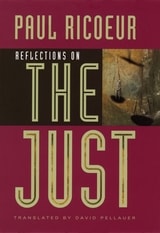
Reflections on the Just
Paul Ricoeur
University of Chicago Press, 2007
Now in paperback, the definitive English translation of Ricoeur's second collection of essays (after The Just) about justice and law.
At the time of his death in 2005, French philosopher Paul Ricoeur was regarded as one of the great thinkers of his generation. In more than half a century of writing about the essential questions of human life, Ricoeur’s thought encompassed a vast range of wisdom and experience, and he made landmark contributions that would go on to influence later scholars in such areas as phenomenology, hermeneutics, structuralism, and theology.
Toward the end of his life, Ricoeur began to focus directly on ethical questions that he feared had been overshadowed by his other work; the result was a two-volume collection of essays on justice and the law. The University of Chicago Press published the English translation of the first volume, The Just, to great acclaim in 2000. Now this translation of the second volume, Reflections on the Just, completes the set and makes available to readers the whole of Ricoeur’s meditations on the concept.
Consisting of fifteen thematically organized essays, Reflections on the Just continues and expands on the work Ricoeur began with his “little ethics” in Oneself as Another and The Just. In the preface, he considers what revisions he would make were he to start over and how that is reflected in these essays. The opening part brings phenomenology to bear on ethics; the second group of essays comprises shorter, occasional pieces considering the concept of justice in the works of other philosophers, including Max Weber and Charles Taylor. The final part turns to the specific domains of medicine and the law, examining how concepts of right and justice operate in those realms.
Cogent, deeply considered, and fully engaged with the realities of the contemporary world, Reflections on the Just is an essential work for understanding the development of Ricoeur’s thought in his final years.
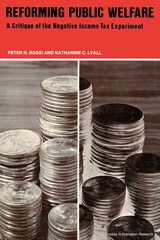
Reforming Public Welfare
A Critique of the Negative Income Tax ExperimentPeter H. Rossi
Russell Sage Foundation, 1976
Refusing Care
Forced Treatment and the Rights of the Mentally IllElyn R. Saks
University of Chicago Press, 2002
Focusing on overinterventionist approaches, Refusing Care explores when, if ever, the mentally ill should be treated against their will. Basing her analysis on case and empirical studies, Elyn R. Saks explores dilemmas raised by forced treatment in three contexts—civil commitment (forced hospitalization for noncriminals), medication, and seclusion and restraints. Saks argues that the best way to solve each of these dilemmas is, paradoxically, to be both more protective of individual autonomy and more paternalistic than current law calls for. For instance, while Saks advocates relaxing the standards for first commitment after a psychotic episode, she also would prohibit extreme mechanical restraints (such as tying someone spread-eagled to a bed). Finally, because of the often extreme prejudice against the mentally ill in American society, Saks proposes standards that, as much as possible, should apply equally to non-mentally ill and mentally ill people alike.
Mental health professionals, lawyers, disability rights activists, and anyone who wants to learn more about the way the mentally ill are treated—and ought to be treated—in the United States should read Refusing Care.
Regulating Content on Social Media
Copyright, Terms of Service and Technological FeaturesCorinne Tan
University College London, 2018
The first book to look at how social media platforms affect users’ compliance with copyright laws, Regulating Content on Social Media is a timely addition to the current media landscape.

Regulating Digital Media in Africa
Politics, Law and GovernanceEdited by Vincent Obia, Sulayman Bah, Yemisi Akinbobola, and Oliver Carter
Intellect Books, 2026
As one of the few books focused exclusively on the governance of new media across the African continent, Regulating Digital Media in Africa offers a timely and critical engagement with the legal and policy frameworks shaping broadcasting, social media, and the broader digital ecosystem. Drawing on in-depth case studies from African scholars who cover a wide range of African countries and political systems and interviews with professionals involved in shaping or contesting regulatory outcomes, the book reveals key trends, contradictions, and policy dilemmas in new media regulation. It highlights how governments are responding to challenges such as internet shutdowns, online harms, data governance, and digital legislation.
This book provides a strong conceptual and empirical foundation for scholars, policymakers, and practitioners interested in digital governance in Africa. With its Global South perspective, it offers valuable contributions to broader debates on media regulation, sovereignty, and internet governance.

Regulating Football
Commodification, Consumption and the LawSteve Greenfield and Guy Osborn
Pluto Press, 2001
Regulation versus Litigation
Perspectives from Economics and LawEdited by Daniel P. Kessler
University of Chicago Press, 2010
Regulatory Barriers and the Principle of Non-discrimination in World Trade Law
Past, Present, and FutureThomas Cottier and Petros C. Mavroidis, Editors
University of Michigan Press, 2000
Regulatory Justice
Implementing a Wage-Price FreezeRobert A. Kagan
Russell Sage Foundation, 1978
Regulatory Rights
Supreme Court Activism, the Public Interest, and the Making of Constitutional LawLarry Yackle
University of Chicago Press, 2007
Traversing a wide range of Supreme Court decisions that established crucial precedents about racial discrimination, the death penalty, and sexual freedom, Yackle contends that the rights we enjoy are neither more nor less than what the justices choose to make of them. Regulatory Rights is a bracing read that will be heatedly debated by all those interested in constitutional law and the judiciary.
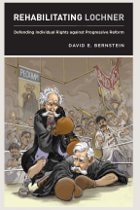
Rehabilitating Lochner
Defending Individual Rights against Progressive ReformDavid E. Bernstein
University of Chicago Press, 2011
In this timely reevaluation of an infamous Supreme Court decision, David E. Bernstein provides a compelling survey of the history and background of Lochner v. New York. This 1905 decision invalidated state laws limiting work hours and became the leading case contending that novel economic regulations were unconstitutional. Sure to be controversial, Rehabilitating Lochner argues that the decision was well grounded in precedent—and that modern constitutional jurisprudence owes at least as much to the limited-government ideas of Lochner proponents as to the more expansive vision of its Progressive opponents.
Tracing the influence of this decision through subsequent battles over segregation laws, sex discrimination, civil liberties, and more, Rehabilitating Lochner argues not only that the court acted reasonably in Lochner, but that Lochner and like-minded cases have been widely misunderstood and unfairly maligned ever since.
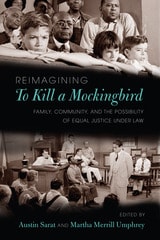
Reimagining "To Kill a Mockingbird"
Family, Community, and the Possibility of Equal Justice under LawAustin Sarat
University of Massachusetts Press, 2013
The readings in this volume peel back the film's visual representation of the many-layered social world of Maycomb, Alabama, offering sometimes counterintuitive insights through the prism of a number of provocative contemporary theoretical and interpretive questions. What, they ask, is the relationship between the subversion of social norms and the doing of justice or injustice? Through what narrative and visual devices are some social hierarchies destabilized while others remain hegemonic? How should we understand the sacrifices characters make in the name of justice, and comprehend their failures in achieving it?
Asking such questions casts light on the film's eccentricities and internal contradictions and suggests the possibility of new interpretations of a culturally iconic text. The book examines the context that gave meaning to the film's representation of race and how debates about family, community, and race are played out and reframed in law.
Contributors include Colin Dayan, Thomas L. Dumm, Susan Sage Heinzelman, Linda Ross Meyer, Naomi Mezey, Imani Perry, and Ravit Reichman.
Reimagining Courts
A Design for the Twenty-First CenturyVictor E Flango
Temple University Press, 2017
Reimagining Courts recommends a triage process based upon case characteristics, litigant goals, and resolution processes. Courts must fundamentally reorganize their business processes around the concept of the litigant as a customer. Each adjudication process that the authors propose requires a different case management process and different amounts of judicial, staff, and facility resources.
Reimagining Courts should spark much-needed debate. This book will be of significant interest to lawyers, judges, and professionals in the court system as well as to scholars in public administration and political science.