Results by title
279 books match the query 'Management' and 16 start with r

Race to Zero
How Companies Can Lead the Way to Climate NeutralityMarian Krüger and Benedict Probst
Campus Verlag, 2025
Race to Zero is an essential guide for businesses navigating the complex path to sustainability. While cutting emissions is essential, complete carbon dioxide neutrality remains an elusive goal for many industries. Conventional carbon offsetting is not enough—what’s needed are groundbreaking technologies that actively remove greenhouse gases from the atmosphere.
In this book, Marian Krüger and Benedict Probst discuss promising carbon removal solutions available today, from direct air capture to regenerative practices, and offer clear, actionable strategies for companies committed to meaningful climate action. With a focus on innovation and feasibility, Race to Zero provides business leaders with the tools to integrate these technologies into their operations and take a leadership role in the fight against climate change.
A blueprint for executives and policymakers, this book unites climate ambition and real-world implementation, showing how businesses can drive the transition to a truly climate-neutral economy.

Radio Spectrum Management
Management of the spectrum and regulation of radio servicesDavid Withers
The Institution of Engineering and Technology, 1999
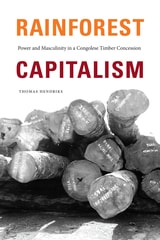
Rainforest Capitalism
Power and Masculinity in a Congolese Timber ConcessionThomas Hendriks
Duke University Press, 2022
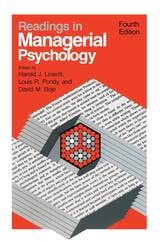
Readings in Managerial Psychology
Edited by Harold J. Leavitt, Louis R. Pondy, and David M. Boje
University of Chicago Press, 1988
Readings in Managerial Psychology is designed for managers in business and industry, students of management, public and university administrators, and executives in other organizations. The collection can be used independently or as a companion volume to Harold J. Leavitt and Homa Bahrami's Managerial Psychology: Managing Behavior in Organizations (5th edition, 1988), also published by the University of Chicago Press.
Recommendations for Energy-efficient Exterior Lighting Systems
The Institution of Engineering and Technology
The Institution of Engineering and Technology, 2015
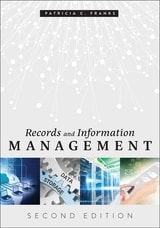
Records and Information Management
Patricia C. Franks
American Library Association, 2018
As Information Management put it, "On the strength of its currency and coverage alone, Franks' book is poised to take over as the recommended go-to reference for both students and RIM professionals for many years to come.” The new second edition cements this work’s status as an up-to-date classic, its content updated and expanded to address emerging technologies, most notably blockchain, and evolving standards and practices. Inside, Franks presents complete coverage of the records and information lifecycle model, encompassing paper, electronic (databases, office suites, email), and new media records (blogs, chat messages, and software as a service). Informed by an advisory board of experts in the field and with contributions by noted authorities, the text addresses such key topics as
- the origins and development of records and information;
- the discipline of information governance and developing a strategic records management plan;
- creation/capture and classification;
- retention strategies, inactive records management, archives, and long-term preservation;
- access, storage, and retrieval;
- electronic records and electronic records management systems;
- the latest on rapidly evolving technologies such as web records, social media, and mobile devices;
- vital records, disaster preparedness and recovery, and business continuity;
- monitoring, auditing, and risk management; and
- education and training.
This book’s authoritative blend of theory and practice makes it a matchless resource for everyone in the archives and records management field. Instructor/trainer extras include a set of ready-to-go, customizable PowerPoint slides to accompany the text.

Records and Information Management
Patricia C. Franks
American Library Association, 2013
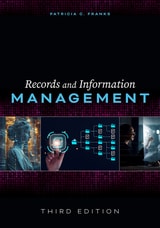
Records and Information Management
Third EditionPatricia C. Franks
American Library Association, 2025
Widely acknowledged as the benchmark text for both students and RIM professionals ("extremely comprehensive and accessible," raves Archival Issues) the new third edition updates its authoritative blend of theory and practice to reflect the field’s dynamically evolving environment, including the rapid rise of applications powered by AI/ML. Franks presents complete coverage of the records and information lifecycle model, encompassing paper, electronic (databases, office suites such as Microsoft 365, and email), and new media records (blogs, chat messages, and software as a service), while acknowledging the influence of emerging and developing technologies and encouraging new ways of meeting the resulting challenges. In this book, enhanced with supplemental contributions from a wide range of thought leaders and practitioners, readers will explore such keys topics as
- the latest advances in disruptive technologies, including blockchain, Web3, the metaverse, and evolving digital communication tools such as enterprise social media;
- an overview of the origins and development of records and information management;
- the discipline of information governance and the steps to develop a strategic records and information management plan;
- a completely new chapter that demystifies data governance, automation, and AI;
- strategies for the creation/capture and classification of records and information;
- approaches to retention strategies, inactive records management, archives, and long-term digital preservation;
- methods for access, storage, and retrieval of records and information;
- insight into electronic records and electronic records management systems;
- practices for safeguarding essential records, including disaster preparedness, recovery, and business continuity;
- approaches to monitoring, auditing, privacy, security, and risk management;
- fresh discussion of the leadership and management skills required of RIM professionals; and
- expert guidance on trendspotting, education, and training.
Reengineering the Library
Issues in Electronic Resources ManagementGeorge Stachokas
American Library Association, 2022
Regreening the National Parks
Michael Frome
University of Arizona Press, 1992
Overcrowding and commercialization are commonplace, and with the increase in visitation has come not only congestion but crime. Yet visitor enjoyment seems to be a higher priority of those who manage the parks than the protection and perpetuation of natural systems. How could this have happened? Michael Frome, one of the most outspoken and highly regarded observers of our national parks, here shows how the original mission of the National Park Service has been undermined by politicization and bureaucratization.
Regreening the National Parks tells how the Park Service has been transformed from a professional to a political agency and in the process has betrayed its own values by emphasizing recreation and "short-order wilderness served like fast food" rather than the preservation of the nation's natural heritage. Frome has drawn on both official documents and personal interviews to examine the policies--and personalities--behind the scenes at the National Park Service. He cites instances of personnel being forbidden to criticize public policy in which they found a conflict with conservation principles, and contends that, as the Park Service has become more bureaucratic, those for whom the environment deeply matters scarcely rise within its ranks. In considering the environmental abuse rampant today, Frome sees national parks as models of respect for nature and concludes his book with a ten-point program toward realizing that ideal.
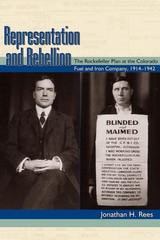
Representation and Rebellion
The Rockefeller Plan at the Colorado Fuel and Iron Company, 1914-1942Jonathan H. Rees
University Press of Colorado, 2010
Responsive Democracy
Increasing State Accountability in East AsiaJeeyang Rhee Baum
University of Michigan Press, 2011
"Responsive Democracy is a pioneering contribution to the political analysis of administrative law in East Asia. Both political scientists and legal academics will greatly benefit from the author's in-depth analysis of the intersection between presidential power and administrative law in the contrasting cases of South Korea, Taiwan, and the Philippines."
---Susan Rose-Ackerman, Yale University Law School
"Baum's book is a very significant contribution because it focuses on a part of the world that has often been neglected in studies of democratization. It focuses attention on the nuts and bolts of what we mean by democratic consolidation and responsiveness. Indeed, if more political science were written with this clarity, we would all enjoy reading the literature much more!"
---Joseph Fewsmith, Boston University
Under what conditions is a newly democratic government likely to increase transparency, accountability, and responsiveness to its citizens? What incentives might there be for bureaucrats, including those appointed by a previously authoritarian government, to carry out the wishes of an emerging democratic regime? Responsive Democracy addresses an important problem in democratic transition and consolidation: the ability of the chief executive to control the state bureaucracy.
Using three well-chosen case studies---the Philippines, South Korea, and Taiwan---Jeeyang Rhee Baum explores the causes and consequences of codifying rules and procedures in a newly democratic government. In the Philippines, a president facing opposition has the option of appointing and dismissing officials at will and, therefore, has no need for administrative procedure acts. However, in South Korea and Taiwan, presidents employ such legislation to rein in recalcitrant government agencies, and, as a consequence, increase transparency, accountability, and responsiveness. Moreover, as Baum demonstrates by drawing upon surveys conducted both before and after implementation, administrative procedural reforms in South Korea and Taiwan improved public confidence in and attitudes toward democratic institutions.
Jeeyang Rhee Baum is a Research Fellow at the Ash Center for Democratic Governance and Innovation, John F. Kennedy School of Government, Harvard University.
Revising State Theory
Essays in Politics and PostindustrialismFred Block
Temple University Press, 1987

Risk and Risk Management in the Agricultural Economy
Edited by Tatyana Deryugina and Barry K. Goodwin
University of Chicago Press, 0
A wide-ranging examination of the risks agricultural producers face and how risk management policies respond to an uncertain economy.
Agricultural producers face greater risk and uncertainty than those in many other sectors of the economy. Sources of risk include weather shocks, disease, and volatile prices that can upend a season's returns. A wide array of federal policies, including crop and livestock insurance programs, are designed to help producers manage these risks, often at substantial cost to taxpayers. This volume examines how producers respond to and manage various risks across multiple dimensions. Contributors investigate the potential for "subsidy harvesting" in livestock insurance markets, the effects of climate change on insurance participation and crop choice, the relationship between the structure of insurance contracts and diversification incentives, and the role of conservation practices in risk mitigation. The research studies present new evidence on the design and consequences of agricultural risk management policies.
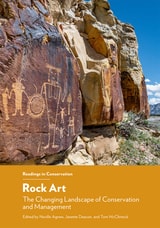
Rock Art
The Changing Landscape of Conservation and ManagementNeville Agnew
J. Paul Getty Trust, The, 2026
Painted and engraved marks and images on rock surfaces represent the oldest and most widespread form of human expression. Found globally in its original landscapes, with some images dating back fifty thousand years or more, the world’s rock art constitutes the most important body of latent knowledge about our deep past. Today, however, mass tourism, vandalism, theft, land development, and climate change are posing increasingly dire threats to this irreplaceable heritage.
This richly illustrated volume is the first interdisciplinary anthology to focus on the conservation and management of rock art sites. Its 133 readings survey the arc of published writings on the subject, ranging from early academic theories and oral narratives of Traditional peoples to an abundant selection of recent scholarship covering current best practices and advances in portable instrumentation that can be used in the field. Initial sections probe the origins and significance of these often-enigmatic forms, then survey scientific and technological methods of dating, monitoring, and documenting them. Subsequent readings discuss rock art’s physical characteristics and weathering, its importance to Indigenous communities, the decolonization of site management, the role of governments, the value of public outreach, and climate change. The volume closes with a selection of case studies drawn from major sites worldwide.
Rules, Games, and Common-Pool Resources
Elinor Ostrom, Roy Gardner, and James Walker
University of Michigan Press, 1994
Explores ways that the tragedy of the commons can be avoided by people who use common-property resources