Results by title
376 books match the query 'Racism' and 43 start with r
Race
Gregory, Steven
Rutgers University Press, 1994
“What unites these essays is a common focus on the ‘social construction’ of racial categories and a desire to expose the exercise of racism and its intersection with other forms of social domination such as class, gender, and ethnicity . . . Fascinating.”––Multicultural Review
“The coming together of theoretical, multiethnic, and ‘on-the-ground’ perspectives makes this book a particularly valuable contribution to the discourse on race.”––Paula Giddings
“Timely and thoughtful. . . contributes to our understanding of how race operates as a social process and in the contextualization of power and status.”––Contemporary Sociology
“A treasure chest full of gems. Virtually every article is fascinating and important, and as a collection, its impact is tremendous. Neo-conservative myths and fantasies fall like nine-pins before its well-researched and tightly argued papers.”––Martin Bernal, author of Black Athena
“A timely antidote to that reaction tome, The Bell Curve.”––Daily News (New York)
“Let’s be clear from the start what this book is about,” writes Roger Sanjek. “Race is the framework of ranked categories, segmenting the human population, that was developed by Western Europeans following their global expansion.”To contemporary social scientists, this ranking is baseless, though it has had all-too-real effects.
Drawing on anthropology, history, sociology, ethnic studies, and women's studies, this volume explores the role of race in a variety of cultural and historical contexts. The contributors show how racial ideologies intersect with gender, class, nation and sexuality in the formation of complex social identities and hierarchies. The essays address such topics as race and Egyptian nationalism, the construction of “whiteness” in the United States, and the transformation of racial categories in post-colonial Haiti. They demonstrate how social elites and members of subordinated groups construct and rework racial meanings and identities within the context of global political, economic, and cultural change. Race provides a comprehensive and empirically grounded survey of contemporary theoretical approaches to studying the complex interplay of race, power, and identity.
Race Becomes Tomorrow
North Carolina and the Shadow of Civil RightsGerald M. Sider
Duke University Press, 2015
Race Course Against White Supremacy
Against White SupremacyBill Ayers
Northwestern University Press, 2009

Race Talk in a Mexican Cantina
Tatcho Mindiola
Michigan State University Press, 2021
Race against Liberalism
Black Workers and the UAW in DetroitDavid M. Lewis-Colman
University of Illinois Press, 2007
Race against Liberalism examines how black worker activism in Detroit shaped the racial politics of the labor movement and the white working class. David M. Lewis-Colman traces the substantive, long-standing disagreements between liberals and the black workers who embraced autonomous race-based action. As he shows, black autoworkers placed themselves at the center of Detroit's working-class politics and sought to forge a kind of working class unity that accommodated their interests as African Americans. The book covers the independent caucuses in the 1940s and the Trade Union Leadership Council in the 1950s; the black power movement and Revolutionary Union Movements of the mid-1960s; and the independent race-based activism of the 1970s that resulted in Coleman Young's 1973 election as the city's first black mayor.
Race and Human Rights
Curtis Stokes
Michigan State University Press, 2008
The terrorist attacks against U.S. targets on September 11, 2001, and the subsequent wars in Afghanistan and Iraq, sparked an intense debate about "human rights." According to contributors to this provocative book, the discussion of human rights to date has been far too narrow. They argue that any conversation about human rights in the United States must include equal rights for all residents.
Essays examine the historical and intellectual context for the modern debate about human rights, the racial implications of the war on terrorism, the intersection of racial oppression, and the national security state. Others look at the Pinkerton detective agency as a forerunner of the Federal Bureau of Investigation, the role of Africa in post–World War II American attempts at empire-building, and the role of immigration as a human rights issue.
Race and Mixed Race
Naomi Zack
Temple University Press, 1994
Race and Science
Scientific Challenges to Racism in Modern AmericaPaul Farber
Oregon State University Press, 2009

Race and Sex in Latin America
Peter Wade
Pluto Press, 2009
The intersection of race and sex in Latin America is a subject touched upon by many disciplines but this is the first book to deal solely with these issues.
Interracial sexual relations are often a key mythic basis for Latin American national identities, but the importance of this has been underexplored. Peter Wade provides a pioneering overview of the growing literature on race and sex in the region, covering historical aspects and contemporary debates. He includes both black and indigenous people in the frame, as well as mixed and white people, avoiding the implication that "race" means "black-white" relations.
Challenging but accessible, this book will appeal across the humanities and social sciences, particularly to students of anthropology, gender studies, history and Latin American studies.

Race and the Education of Desire
Foucault's History of Sexuality and the Colonial Order of ThingsAnn Laura Stoler
Duke University Press, 1995
Drawing on Foucault’s little-known 1976 College de France lectures, Stoler addresses his treatment of the relationship between biopower, bourgeois sexuality, and what he identified as “racisms of the state.” In this critical and historically grounded analysis based on cultural theory and her own extensive research in Dutch and French colonial archives, Stoler suggests how Foucault’s insights have in the past constrained—and in the future may help shape—the ways we trace the genealogies of race.
Race and the Education of Desire will revise current notions of the connections between European and colonial historiography and between the European bourgeois order and the colonial treatment of sexuality. Arguing that a history of European nineteenth-century sexuality must also be a history of race, it will change the way we think about Foucault.
Race and the Foundations of Knowledge
Cultural Amnesia in the AcademyEdited by Joseph Young and Jana Evans Braziel
University of Illinois Press, 2006
Race and the Politics of Welfare Reform
Sanford F. Schram, Joe Soss, and Richard C. Fording, Editors
University of Michigan Press, 2003
Race in America
The Struggle for EqualityHerbert Hill
University of Wisconsin Press, 1993
Race in America is a multidisciplinary analysis of race and injustice by some of the nation’s foremost scholar-activists who helped shape the course of the struggle for civil rights during the recent past. These essays provide a historical retrospective, an assessment of where we are now, and an outline of possibilities for the future.
The major controversial issues in race relations, in the past and in the present, such as affirmative action, educational segregation, racial practices of labor unions, legal strategies for protest movements, the persistence of racism in American institutions, and the sources of resistance to change are discussed at length by major authorities in their respective fields.
Many of the most important events in recent American history come alive in these pages as the strategies and programs, the victories and defeats of the civil rights movement are rigorously examined. A unique aspect of the book is that the human experience of active participants in this rich history is evoked through personal and often poignant accounts, such as those of Kenneth B. Clark, who in a memorable autobiographical essay describes a long life devoted to the pursuit of racial justice, and Patricia J. Williams, who relates the contemporary struggles of African American women to the historical context of slavery and its aftermath.
As no other book can, this collection provides the basis for the critical insights and historical perspectives that are essential for an understanding of the central issue still confronting American society: race and racism.
Race in the Multiethnic Literature Classroom
Edited by Cristina Stanciu and Gary Totten
University of Illinois Press, 2024
The contemporary rethinking and relearning of history and racism has sparked creative approaches for teaching the histories and representations of marginalized communities. Cristina Stanciu and Gary Totten edit a collection that illuminates these ideas for a variety of fields, areas of education, and institutional contexts.
The authors draw on their own racial and ethnic backgrounds to examine race and racism in the context of addressing necessary and often difficult classroom conversations about race, histories of exclusion, and racism. Case studies, reflections, and personal experiences provide guidance for addressing race and racism in the classroom. In-depth analysis looks at attacks on teaching Critical Race Theory and other practices for studying marginalized histories and voices. Throughout, the contributors shine a light on how a critical framework focused on race advances an understanding of contemporary and historical US multiethnic literatures for students around the world and in all fields of study.
Contributors: Kristen Brown, Nancy Carranza, Luis Cortes, Marilyn Edelstein, Naomi Edwards, Joanne Lipson Freed, Yadira Gamez, Lauren J. Gantz, Jennifer Ho, Shermaine M. Jones, Norell Martinez, Sarah Minslow, Crystal R. Pérez, Kevin Pyon, Emily Ruth Rutter, Ariel Santos, and C. Anneke Snyder
Race, Liberalism, and Economics
David Colander, Robert E. Prasch, and Falguni A. Sheth, Editors
University of Michigan Press, 2009
The contributors show how the evolution of racist ideas has been a subtle process that is woven into larger movements in the development of scientific thought; economic thinking is embedded in a larger social milieu. Previous discussions of policies toward race have been constrained by that social milieu, and, since World War II, have largely focused on ending legislated and state-sanctioned discrimination. In the past decade, the broader policy debate has moved on to questions about the existence and relative importance of intangible sources of inequality, including market structure, information asymmetries, cumulative processes, and cultural and/or social capital. This book is a product of, and a contribution to, this modern discussion. It is uniquely transdisciplinary, with contributions by and discussions among economists, philosophers, anthropologists, and literature scholars.
The volume first examines the early history of work on race by economists and social scientists more generally. It continues by surveying American economists on race and featuring contributions that embody more modern approaches to race within economics. Finally it explores several important policy issues that follow from the discussion.
". . . adds new insights that contribute significantly to the debate on racial economic inequality in the U.S. The differing opinions of the contributors provide the broad perspective needed to examine this extremely complex issue."
--James Peoples, University of Wisconsin-Milwaukee
"There is an immense economic literature on racial discrimination, employing a variety of models and decomposition methods. This volume makes a unique contribution by focusing on the philosophical assumptions at the root of this analysis and by presenting many sides of the very vigorous debate surrounding these controversial issues."
--Thomas Maloney, University of Utah
"By focusing upon the progress of analytical technique, historians of economic thought have grossly neglected the symbiotic relation of economics to public policy and ideology. This collection of essays offers a most welcome breach of disciplinary apartheid. Seizing upon recent research in the almost forgotten writings about race of Classical economists and their contemporaries, it relates nineteenth-century ideas to current debates about economic discrimination and other manifestations of racism. As the writing is both learned and lively, the book should appeal both to the generally educated reader and to teachers of courses in multiculturalism."
--Melvin Reder, Isidore Brown and Gladys J. Brown Professor Emeritus of Urban and Labor Economics, University of Chicago
Race, Racism, and Science
Social Impact and InteractionJackson, John P
Rutgers University Press, 2005
Since the eighteenth century when natural historians created the idea of distinct racial categories, scientific findings on race have been a double-edged sword. For some antiracists, science holds the promise of one day providing indisputable evidence to help eradicate racism. On the other hand, science has been enlisted to promote racist beliefs ranging from a justification of slavery in the eighteenth century to the infamous twentieth-century book, The Bell Curve,whose authors argued that racial differences in intelligence resulted in lower test scores for African Americans.
This well-organized, readable textbook takes the reader through a chronological account of how and why racial categories were created and how the study of “race” evolved in multiple academic disciplines, including genetics, psychology, sociology, and anthropology. In a bibliographic essay at the conclusion of each of the book’s seven sections, the authors recommend primary texts that will further the reader’s understanding of each topic. Heavily illustrated and enlivened with sidebar biographies, this text is ideal for classroom use.
Race, Rights, and Rifles
The Origins of the NRA and Contemporary Gun CultureAlexandra Filindra
University of Chicago Press, 2023
An eye-opening examination of the ties between American gun culture and white male supremacy from the American Revolution to today.
One-third of American adults—approximately 86 million people—own firearms. This is not just for protection or hunting. Although many associate gun-centric ideology with individualist and libertarian traditions in American political culture, Race, Rights, and Rifles shows that it rests on an equally old but different foundation. Instead, Alexandra Filindra shows that American gun culture can be traced back to the American Revolution when republican notions of civic duty were fused with a belief in white male supremacy and a commitment to maintaining racial and gender hierarchies.
Drawing on wide-ranging historical and contemporary evidence, Race, Rights, and Rifles traces how this ideology emerged during the Revolution and became embedded in America’s institutions, from state militias to the National Rifle Association (NRA). Utilizing original survey data, Filindra reveals how many White Americans —including those outside of the NRA’s direct orbit—embrace these beliefs, and as a result, they are more likely than other Americans to value gun rights over voting rights, embrace antidemocratic norms, and justify political violence.
Racial Blackness and the Discontinuity of Western Modernity
Edited by Justin A. Joyce, Dwight A. McBride, and John Carlos Rowe
University of Illinois Press, 2013
Racial Stasis
The Millennial Generation and the Stagnation of Racial Attitudes in American PoliticsChristopher D. DeSante and Candis Watts Smith
University of Chicago Press, 2020
With Racial Stasis, Christopher D. DeSante and Candis Watts Smith argue persuasively that this is because millennials, a generational cohort far removed from Jim Crow and the Civil Rights era, lack sufficient understanding of the structural nature of racial inequalities in the United States and therefore also the contextual and historical knowledge to be actively anti-racist. While these younger whites may be open to the idea of interracial marriage or living next to a family of a different race, they often do not understand why policies like affirmative action still need to exist and are weary about supporting these kinds of policies. In short, although millennials’ language and rationale around race, racism, and racial inequalities are different from previous generations’, the end result is the same.
Racialized Politics
The Debate about Racism in AmericaEdited by David O. Sears, James Sidanius, and Lawrence Bobo
University of Chicago Press, 1999
In Racialized Politics, political scientists, sociologists, and psychologists explore the current debate surrounding the sources of racism in America. Published here for the first time, the essays represent three major approaches to the topic. The social psychological approach maintains that prejudice socialized early in life feeds racial stereotypes, while the social structural viewpoint argues that behavior is shaped by whites' fear of losing their privileged status. The third perspective looks to non-racially inspired ideology, including attitudes about the size and role of government, as the reason for opposition to policies such as affirmative action. Timely and important, this collection provides a state-of-the-field assessment of the current issues and findings on the role of racism in mass politics and public opinion.
Contributors are Lawrence Bobo, Gretchen C. Crosby, Michael C. Dawson, Christopher Federico, P. J. Henry, John J. Hetts, Jennifer L. Hochschild, William G. Howell, Michael Hughes, Donald R. Kinder, Rick Kosterman, Tali Mendelberg, Thomas F. Pettigrew, Howard Schuman, David O. Sears, James Sidanius, Pam Singh, Paul M. Sniderman, Marylee C. Taylor, and Steven A. Tuch.
Racially Writing the Republic
Racists, Race Rebels, and Transformations of American IdentityBruce Baum and Duchess Harris, eds.
Duke University Press, 2009
The contributors analyze Thomas Jefferson’s legacy in light of his sexual relationship with his slave, Sally Hemings; the way that Samuel Gompers, the first president of the American Federation of Labor, rallied his organization against Chinese immigrant workers; and the eugenicist origins of the early-twentieth-century birth-control movement led by Margaret Sanger. They draw attention to the writing of Sarah Winnemucca, a Northern Piute and one of the first published Native American authors; the anti-lynching activist Ida B. Wells-Barnett; the Filipino American writer Carlos Bulosan; and the playwright Lorraine Hansberry, who linked civil rights struggles in the United States to anticolonial efforts abroad. Other figures considered include Alexis de Tocqueville and his traveling companion Gustave de Beaumont, Juan Nepomuceno Cortina (who fought against Anglo American expansion in what is now Texas), Abraham Lincoln, Theodore Roosevelt, and W. E. B. Du Bois. In the afterword, George Lipsitz reflects on U.S. racial politics since 1965.
Contributors. Bruce Baum, Cari M. Carpenter, Gary Gerstle, Duchess Harris, Catherine A. Holland, Allan Punzalan Isaac, Laura Janara, Ben Keppel, George Lipsitz, Gwendolyn Mink, Joel Olson, Dorothy Roberts, Patricia A. Schechter, John Kuo Wei Tchen, Jerry Thompson
Racism
Albert Memmi
University of Minnesota Press, 1999
Racism: It is social, not “natural”; it is general, not “personal”; and it is tragically effective. In a remarkable meditation on a subject at the troubled center of American life, Albert Memmi investigates racism as social pathology-a cultural disease that prevails because it allows one segment of society to empower itself at the expense of another. By turns historical, sociological, and autobiographical, Racism moves beyond individual prejudice and taste to engage the broader questions of collective behavior and social responsibility.
The book comprises three sections-“Description,” “Definition,” and “Treatment”-in which Memmi delineates racism’s causes and hidden workings, examines its close affinity to colonialism, and considers its everyday manifestations over a period of centuries throughout the West.
For Memmi, the structure of racism has four “moments”: the insistence on difference; the negative valuation imposed on those who differ; the generalizing of this negative valuation to an entire group; and the use of generalization to legitimize hostility. Memmi shows how it is not racism’s content-which can change at will-but its form that gives it such power and tenacity.
Born in a poor section of Tunis, Tunisia, a Jew among Muslims, an Arab among Europeans, Memmi brings his own experience of the complex contours of prejudice to his analysis of a problem that divides societies the world over. Writing in the tradition of Frantz Fanon, Memmi redirects debates about racism-and offers a rare chance for progress against social prejudice.
Racism And Anti-Racism In Europe
Alana Lentin
Pluto Press, 2004

Racism Postrace
Roopali Mukherjee, Sarah Banet-Weiser, and Herman Gray, editors
Duke University Press, 2019
Contributors. Inna Arzumanova, Sarah Banet-Weiser, Aymer Jean Christian, Kevin Fellezs, Roderick A. Ferguson, Herman Gray, Eva C. Hageman, Daniel Martinez HoSang, Victoria E. Johnson, Joseph Lowndes, Roopali Mukherjee, Safiya Umoja Noble, Radhika Parameswaran, Sarah T. Roberts, Catherine R. Squires, Brandi Thompson Summers, Karen Tongson, Cynthia A. Young
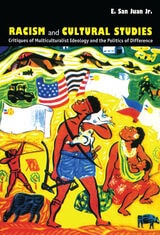
Racism and Cultural Studies
Critiques of Multiculturalist Ideology and the Politics of DifferenceE. San Juan Jr.
Duke University Press, 2002
Individual chapters engage the themes of ethnicity versus racism, gender inequality, sexuality, and the politics of identity configured with the discourse of postcoloniality and postmodernism. Questions of institutional racism, social justice, democratization, and international power relations between the center and the periphery are explored and analyzed. San Juan fashions a critique of dominant disciplinary approaches in the humanities and social sciences and contends that “the racism question” functions as a catalyst and point of departure for cultural critiques based on a radical democratic vision. He also asks urgent questions regarding globalization and the future of socialist transformation of “third world” peoples and others who face oppression.
As one of the most notable cultural theorists in the United States today, San Juan presents a provocative challenge to the academy and other disciplinary institutions. His intervention will surely compel the attention of all engaged in intellectual exchanges where race/ethnicity serves as an urgent focus of concern.
Racism in College Athletics
Fourth EditionDana Brooks
FiT Publishing, 2020
Intercollegiate sport has historically been a source of frustration for and discrimination against African American athletes, coaches, and athletic administrators, and yet is a place of courage and achievement for those who have been given the opportunity to play, coach, and administer college sports. However, for full opportunity and equality to be achieved for African Americans in college sports, a number of issues must still be resolved.
In the fourth edition of Racism in College Athletics, editors Dana Brooks and Ronald Althouse, along with a collection of expert chapter authors, add to the conversation on topics of race, gender, identity, culture, social class, and support services. This updated edition explores historical and contemporary issues and predicts a future direction for African American student-athletes that includes strategies for addressing social injustices not just in college sports, but of student-athlete development in all phases of life, including outcomes and post-collegiate career opportunities.
Racism in a Racial Democracy
The Maintenance of White Supremacy in BrazilTwine, Francine Winddance
Rutgers University Press, 1997
In Racism in a Racial Democracy, France Winddance Twine asks why Brazilians, particularly Afro-Brazilians, continue to have faith in Brazil's "racial democracy" in the face of pervasive racism in all spheres of Brazilian life. Through a detailed ethnography, Twine provides a cultural analysis of the everyday discursive and material practices that sustain and naturalize white supremacy.
This is the first ethnographic study of racism in southeastern Brazil to place the practices of upwardly mobile Afro-Brazilians at the center of analysis. Based on extensive field research and more than fifty life histories with Afro- and Euro-Brazilians, this book analyzes how Brazilians conceptualize and respond to racial disparities. Twine illuminates the obstacles Brazilian activists face when attempting to generate grassroots support for an antiracist movement among the majority of working class Brazilians. Anyone interested in racism and antiracism in Latin America will find this book compelling.
"Twine offers one of the most sophisticated analyses to date of the intransigence of Brazilian racism. Her nuanced account of the complex interplay of gender, race, and class is particularly exciting. This book will have a powerful impact not only on the field of Brazilian racial studies, but on the whole burgeoning literature on the African Diaspora." -- Howard Winant, author of Racial Conditions: Politics, Theory, Comparisons
"A revealing and sharply observed dissection of how racism works 'on the ground' in Brazil." -- George Reid Andrews, author of Blacks and Whites in Sao Paulo, Brazil, 1888-1988
Racism in the Irish Experience
Steve Garner
Pluto Press, 2003
This book is a unique analysis of the racialisation of Irish identities. The author examines key phases in the historical development of an Irish 'racial' consciousness, including 16th century colonisation and 19th century immigration to America and Great Britain. He then examines the legacy of this relationship, both in terms of the new migration into Ireland and relations with indigenous minorities -- travellers and Irish Jews.
Garner explores the problematic links between nationalist ideologies and racism. He assesses the economic, social and political factors framing the experience of minorities in contemporary Ireland, and places these in a broader European context.
Racism
A Critical AnalysisMike Cole
Pluto Press, 2015
Mike Cole tackles three countries in-depth: the United Kingdom, the United States and Australia. In the United Kingdom, he focuses on the effects of colonialism as well as looking at non-colour-coded racism, such as anti-Gipsy, Roma, and Traveller racism and xeno-racism directed at Eastern Europeans. Turning to the United States, Cole charts the dual legacies of indigenous genocide and slavery, as well as exploring anti-Latina/o and anti-Asian racism. Finally, in Australia, he interrogates the idea of "Terra Nullius" and its ongoing impact on the indigenous peoples, as well as other forms of racism, such as that experienced by South Sea Islanders, anti-Asian racism, and that which targets migrants. The Pauline Hanson phenomenon is also addressed. Islamophobia, antisemitism and anti-Irish racism are also dealt with in the book, as is that aimed at asylum-seekers.
Cole demonstrates that racism is both endemic and multifaceted. This book will undoubtedly establish itself as required reading for students and other critical readers looking for a comprehensive, critical overview of the study of racism in Anglophone countries.
Racist Love
Asian Abstraction and the Pleasures of FantasyLeslie Bow
Duke University Press, 2022
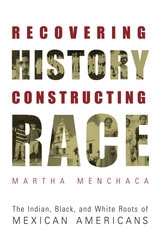
Recovering History, Constructing Race
The Indian, Black, and White Roots of Mexican AmericansBy Martha Menchaca
University of Texas Press, 2002
A CHOICE Outstanding Academic Book, 2002
The history of Mexican Americans is a history of the intermingling of races—Indian, White, and Black. This racial history underlies a legacy of racial discrimination against Mexican Americans and their Mexican ancestors that stretches from the Spanish conquest to current battles over ending affirmative action and other assistance programs for ethnic minorities. Asserting the centrality of race in Mexican American history, Martha Menchaca here offers the first interpretive racial history of Mexican Americans, focusing on racial foundations and race relations from prehispanic times to the present.
Menchaca uses the concept of racialization to describe the process through which Spanish, Mexican, and U.S. authorities constructed racial status hierarchies that marginalized Mexicans of color and restricted their rights of land ownership. She traces this process from the Spanish colonial period and the introduction of slavery through racial laws affecting Mexican Americans into the late twentieth-century. This re-viewing of familiar history through the lens of race recovers Blacks as important historical actors, links Indians and the mission system in the Southwest to the Mexican American present, and reveals the legal and illegal means by which Mexican Americans lost their land grants.
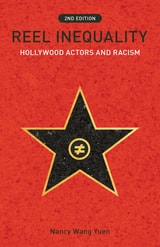
Reel Inequality, Second Edition
Hollywood Actors and RacismNancy Wang Yuen
Rutgers University Press, 2027
Reel Inequality was the first book to systematically document how Hollywood's institutional racism shapes the lives and careers of actors of color. In this updated edition, Nancy Wang Yuen again translates academic research on structural racism into an engaging, accessible narrative for general readers. Connecting personal stories from actors of color, industry data and practices, and historical patterns, she reveals how racism operates both behind the scenes and on the screen. She also examines Hollywood’s retreat from diversity efforts amid the broader backlash against DEI.
Yuen draws on newly released industry data and recently published interviews with actors of color, showing how racism continues to shape who gets cast, who gets hired, and who gets to tell their own story. She looks closely at the pressures actors of color face, including typecasting, financial precarity, and racial burdens, even as many push back and forge their own paths. She also uses the lens of Hollywood to explore broader issues of race, inequality, and representation.
Reel Inequality
Hollywood Actors and RacismNancy Wang Yuen
Rutgers University Press, 2016

Refiguring Race and Risk
Counternarratives of Care in the US Security StateRoberta Wolfson
The Ohio State University Press, 2024
Reflections
Conversations, Essays, and Other WritingsThomas Hauser
University of Arkansas Press, 2014

Represent and Destroy
Rationalizing Violence in the New Racial CapitalismJodi Melamed
University of Minnesota Press, 2011
In the global convulsions in the aftermath of World War II, one dominant world racial order broke apart and a new one emerged. This is the story Jodi Melamed tells in Represent and Destroy, portraying the postwar racial break as a transition from white supremacist modernity to a formally antiracist liberal capitalist modernity in which racial violence works normatively by policing representations of difference.
Following the institutionalization of literature as a privileged domain for Americans to get to know difference—to describe, teach, and situate themselves with respect to race—Melamed focuses on literary studies as a cultural technology for transmitting liberal racial orders. She examines official antiracism in the United States and finds that these were key to ratifying the country’s global ascendancy. She shows how racial liberalism, liberal multiculturalism, and neoliberal multiculturalism made racism appear to be disappearing, even as they incorporated the assumptions of global capitalism into accepted notions of racial equality.
Yet Represent and Destroy also recovers an anticapitalist “race radical” tradition that provides a materialist opposition to official antiracisms in the postwar United States—a literature that sounds out the violence of liberal racial orders, relinks racial inequality to material conditions, and compels desire for something better than U.S. multiculturalism.
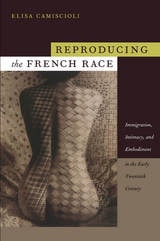
Reproducing the French Race
Immigration, Intimacy, and Embodiment in the Early Twentieth CenturyElisa Camiscioli
Duke University Press, 2009
By focusing on telling aspects of the immigration debate, Camiscioli reveals how racial hierarchies were constructed, how gender figured in their creation, and how only white Europeans were cast as assimilable. Delving into pronatalist politics, she describes how potential immigrants were ranked according to their imagined capacity to adapt to the workplace and family life in France. She traces the links between racialized categories and concerns about industrial skills and output, and she examines medico-hygienic texts on interracial sex, connecting those to the crusade against prostitution and the related campaign to abolish “white slavery,” the alleged entrapment of (white) women for sale into prostitution abroad. Camiscioli also explores the debate surrounding the 1927 law that first made it possible for French women who married foreigners to keep their French nationality. She concludes by linking the Third Republic’s impulse to create racial hierarchies to the emergence of the Vichy regime.

Resisting State Violence
Radicalism, Gender, and Race in U.S. CultureJoy James
University of Minnesota Press, 1996
An incendiary critique of contemporary American society that also offers concrete solutions for the dilemmas facing progressive politics.
As the political climate of the United States moves rightward, effective and visionary voices from the left become both rarer and more essential. In Resisting State Violence, African American scholar-activist Joy James provides such a voice. Taking the convergence of race, gender, and class as fundamental trajectories, James offers a stimulating and iconoclastic account of a world in which the United States functions as the political-police center.
At its core, Resisting State Violence is about the many ways the current structure of American government and society is inimical to human rights. James examines the prevalence of racist violence in U.S. policies, making provocative connections between seemingly disparate themes and events, and always, insistently, linking global and U.S. domestic politics. She creates a picture of a nation that consistently uses dehumanization to normalize and rationalize violence in foreign policy, all the while creating a domestic climate that pathologizes blackness and sexuality, portraying those most vulnerable to violence as its carriers. In the systematic and ubiquitous nature of state violence, however, James sees a possibility of hope in the building of coalitions across race, class, gender, and national divides. She argues that the very commonality that makes the system seem so overpowering can serve as the basis for resistance-that the elements that hold together a web of oppression and misuse of power also mark its vulnerabilities, especially when confronted with an equally systematic resistance. James offers concrete solutions for the dilemmas facing progressive politics and the individuals who work to achieve social justice. Resisting State Violence is a clear-sighted and uncompromising guidebook for those who want to understand the forces that hinder social change, and to effectively move beyond them.
Rhetorical Economies of Whiteness
Exploring the Intersections of Power, Privilege, and RaceEdited by Robert Asen and Casey Ryan Kelly
The Ohio State University Press, 2024
Contributors:
Godfried Asante, Robert Asen, Charles Athanasopoulos, Paulami Banerjee, Anne Bonds, Linsay M. Cramer, Derek G. Handley, V. Jo Hsu, Kelly Jensen, Casey Ryan Kelly, Kyle R. Larson, George (Guy) F. McHendry Jr., Thomas K. Nakayama, Adedoyin Ogunfeyimi, Rico Self, Stacey K. Sowards, Corinne Mitsuye Sugino
Richmond's Priests and Prophets
Race, Religion, and Social Change in the Civil Rights EraDouglas E. Thompson
University of Alabama Press, 2017
Douglas E. Thompson’s Richmond’s Priests and Prophets: Race, Religion, and Social Change in the Civil Rights Era presents a compelling study of religious leaders’ impact on the political progression of Richmond, Virginia, during the time of desegregation. Scrutinizing this city as an entry point into white Christians’ struggles with segregation during the 1950s, Thompson analyzes the internal tensions between ministers, the members of their churches, and an evolving world.
In the mid-twentieth-century American South, white Christians were challenged repeatedly by new ideas and social criteria. Neighborhood demographics were shifting, public schools were beginning to integrate, and ministers’ influence was expanding. Although many pastors supported the transition into desegregated society, the social pressure to keep life divided along racial lines placed Richmond’s ministers on a collision course with forces inside their own congregations. Thompson reveals that, to navigate the ideals of Christianity within a complex historical setting, white religious leaders adopted priestly and prophetic roles.
Moreover, the author argues that, until now, the historiography has not viewed white Christian churches with the nuance necessary to understand their diverse reactions to desegregation. His approach reveals the ways in which desegregationists attempted to change their communities’ minds, while also demonstrating why change came so slowly—highlighting the deeply emotional and intellectual dilemma of many southerners whose worldview was fundamentally structured by race and class hierarchies.

Ripe
EssaysNegesti Kaudo
The Ohio State University Press, 2022
A LitHub Most Anticipated Book of 2022
“Emotional range without consequence,” Negesti Kaudo writes in her debut collection, Ripe, is a privilege of whiteness. In these essays, she fights back, exhorting readers to follow her through fury, grief, love, and hope as she confronts what it means to own her Blackness and her body in contemporary America. A scathing and nuanced cultural critic, she disentangles intersections of race, class, pop culture, size, sexuality, and more in spaces where she always seems to be either too Black or not Black enough. From attending private school as a poor Black student to the evolution of her hair routine to being fat and sexual when society says she should be neither, Kaudo overlooks nothing as she names the ways that white America simultaneously denigrates and steals Black culture. Most of all, she writes against the idea that a Black woman’s anger makes her an “angry Black woman,” claiming full emotional range as her birthright and as a tool against injustice on her quest to find herself no matter how uncomfortable the journey.

Rock | Water | Life
Ecology and Humanities for a Decolonial South AfricaLesley Green
Duke University Press, 2020
Rule Of Racialization
Class, Identity, GovernanceSteve Martinot
Temple University Press, 2002