Results by title
3027 books match the query 'Sociology' and 157 start with r
RSF
The Russell Sage Foundation Journal of the Social SciencesJennifer Lee
Russell Sage Foundation, 2026
Stereotyped as “model minorities” who excel in the classroom, Asian Americans are more highly educated than all other U.S. groups. Once in the labor market, they outearn White Americans. Some believe this is evidence that White privilege, racial bias, and gender discrimination are fictitious narratives of a liberal “woke” agenda. Others use it as proof that confirms their stereotypes that Asian Americans are inherently smarter and harder working than other groups. While much attention has focused on Asian Americans’ academic achievement, far less research considers whether their later careers mirror their early success. In this issue of RSF, sociologists Jennifer Lee, Kimberly Goyette, Xi Song, and Yu Xie, management scholar Jackson G. Lu, and an interdisciplinary group of contributors examine how Asian Americans fare in the workplace.
The ten articles in this issue examine the ways in which Asian Americans, due to geographic clustering, are advantaged at a national level but disadvantaged at the regional level, how gender, family, and marriage impact Asian Americans in the workplace, and the different ways Asian Americans strategically adapt to the labor market. Robert Manduca and Jane Furey reveal that while, on average, Asian Americans outearn White Americans at a national level, when compared to Whites living in the same metropolitan area, Asians earn only 88 percent as much. Sharon Sassler and Gabrielle Sorresso find that among computer science professionals, Indian women have a larger gender wage gap than White and Chinese women and experience larger marriage and parenthood penalties in earnings. Sojung Lim and Wonjeong Jeong show that Asian women are more likely to live with extended family than White women, leading to higher rates of employment among Asian women with children. Angelina Grigoryeva finds that while Asian Americans are more likely to receive stock-based compensation than White Americans, this is because they are more likely to work in jobs where stock options are provided. Asians and Whites working in the same types of jobs are equally likely to receive stock-based compensation and in similar amounts. Shih-Chun Chien and colleagues find that despite being the fastest-growing racial minority group entering the legal profession, Asian Americans are underrepresented in leadership positions. They find this pattern is attributed, in part, to employers’ pervasive stereotypes that Asian Americans lack traits typically associated with leadership, such as creativity and assertiveness.
This issue of RSF reveals that the perception of the Asian American advantage in the workplace is illusory and sheds light on the lived experiences of the “model minority” when they go to work.
RSF
The Russell Sage Foundation Journal of the Social Sciences: Anti-poverty Policy Initiatives for the United StatesLawrence M. Berger
Russell Sage Foundation, 2018
Over 40 million Americans live in poverty with limited opportunities for upward mobility. With an economy characterized by large numbers of unstable and low-wage jobs, a fraying social safety net, and stagnant wages, what public policy reforms might increase the number of low-income families and individuals escaping poverty? This special double issue of RSF, edited by poverty researchers Lawrence M. Berger, Maria Cancian, and Katherine A. Magnuson, includes many innovative, evidence-based anti-poverty policy proposals crafted by leading social science researchers and policy analysts.
The first issue highlights initiatives that restructure tax and transfer programs to extend greater support to low-income families, regardless of work status. H. Luke Shaefer and colleagues would replace the current child tax credit and child tax exemption in the federal income tax with an unconditional universal child allowance. They estimate that this would reduce child poverty by about 40 percent. Maria Cancian and Daniel Meyer propose a new child support initiative that institutes a guaranteed minimum monthly support payment for every child living with a single parent, using public funds to bridge the gap when that amount exceeds what the noncustodial parent can reasonably pay. Sara Kimberlin and colleagues propose a renter’s tax credit in the federal income tax for poor households facing increasing rental costs that would benefit 70 percent of renters struggling with high rents.
The second issue analyzes policies that would reduce the extent of low-wage work by boosting education, training, and access to better jobs. Teresa Eckrich Sommer and colleagues propose expanding the Head Start program to combine parental education, job training, and employment opportunities along with existing early childhood education programs to better serve the needs of both parents and children. Mark Paul and colleagues propose a federal jobs guarantee of full-time employment, at a living wage and with benefits, for all adults seeking work. Diana Strumbos and colleagues propose a national community college program, based on a successful model used by the City University of New York, to provide disadvantaged students who enroll full-time with advising, academic, career, and financial supports.
Together, the policies proposed in this double issue provide an evidence-based blueprint for anti-poverty reforms that would benefit millions of people in need.
RSF
The Russell Sage Foundation Journal of the Social Sciences: Asian Americans and the Immigrant Integration AgendaJennifer Lee
Russell Sage Foundation, 2021
Rather than treating Asian Americans as a monolithic group, the contributors use the 2016 National Asian American Survey to pinpoint areas of convergence and divergence within the U.S. Asian population. Despite their diversity, Asian Americans share many attitudes, behavior, and experiences in ways that exceed expectations based on socioeconomic status alone— what Lee and Ramakrishnan refer to as the “diversity-convergence paradox.” This paradox — of convergence despite divergence in national origins and socioeconomic status — is the animating question of this issue of RSF.
Contributors Janelle Wong and Sono Shah find strong political consensus within the Asian American population, particularly with regard to a robust government role in setting public policies ranging from environmental protection to gun control to higher taxation and social service provision, and even affirmative action. Wong and Shah posit that political differences within the Asian American community are between progressives and those who are even more progressive. Analyzing where policy opinions converge and diverge, Sunmin Kim finds that while many Asian Americans support government interventions in health care, education, and racial justice, some diverge sharply with regard to Muslim immigration. Lucas G. Drouhot and Filiz Garip construct a novel typology of five subgroups of Asian immigrants spanning class, gender, region, and immigrant generation to examine varied experiences of immigrant inclusion. They show how different subgroups contend with the effects of racialized othering and inclusion simultaneously at play. Van C. Tran and Natasha Warikoo analyze both interracial and intra-Asian attitudes toward immigration and find diversity among Asians’ views by national origin: As labor migrants, Filipinos support Congress increasing the number of annual work visas; as economic migrants, Chinese and Indians support an increase in annual family visas; and as refugees, Vietnamese are least supportive of pro-immigration policies.
Placing Asian Americans at the center of their analyses, the contributors illuminate how such a broadly diverse population shares similar attitudes and experiences in often surprising ways. By turning a lens on the richly diverse U.S. Asian population, this issue of RSF unveils comprehensive, compelling narratives about Asian Americans and advances our understanding of race and immigrant integration in the 21st century.
RSF
The Russell Sage Foundation Journal of the Social Sciences: Biosocial Pathways of Well-Being Accross the Life CourseThomas W. McDade
Russell Sage Foundation, 2018
Several articles explore the effects of disadvantage and discrimination on individuals’ health. Douglas Massey and colleagues find that residential segregation and concentrated poverty—which disproportionately affects African Americans—contribute to more rapid cellular aging, a condition associated with a higher risk of disorders such as diabetes and heart disease. Bridget Goosby and colleagues track the sleep patterns of adolescents and find that compared to their white peers, African American and biracial youth who report experiencing frequent discrimination have worse sleep, which is associated with longer-term negative physical and mental health outcomes.
Other contributors explore the extent to which social and family environments influence biological processes. Yang Qu and colleagues study the cognitive development of Mexican American youth, focusing on the hippocampus, a region of the brain that produces improved memory and learning. They find that teens who were able to navigate between the cultural values of their parents and fitting in with their peers had different hippocampus volume and higher academic achievement. Other researchers explore the relationship between individuals’ genes and their environments. Melinda Mills and colleagues examine the role of genes in reproductive behavior. They find that while social and behavioral factors are strongly associated with when mothers first give birth and how many children they have, genetic factors are related to other fertility traits, such as childlessness and menopause.
The findings in this issue demonstrate the value of integrating the social and biological sciences for understanding how biological mechanisms influence, and are influenced by, socioeconomic conditions and lay the foundation for further advances in biosocial scholarship.
RSF
The Russell Sage Foundation Journal of the Social Sciences: Criminal Justice Contact and InequalityKristin Turney
Russell Sage Foundation, 2019
Several articles explore the ramifications of ongoing surveillance. Amanda Geller and Jeffrey Fagan survey adolescents who come into contact with law enforcement and find that intrusive police stops contribute to heightened cynicism toward the legal system, suggesting that aggressive policing weakens youths’ deference to law and legal authorities. Robert Vargas and coauthors study police-dispatcher radio communications and show that data breaches where the dispatcher reveals confidential identifying information about individuals reporting criminal activity are more common in predominantly black and Latino neighborhoods. Because police scanners are accessible by the public, these breaches make residents more vulnerable to criminals, gangs, or predatory businesses. Other contributors explore the effects of criminal justice contact on family life. Frank Edwards examines how families’ interactions with the child welfare system differ by race and shows that black and Native American families living in counties with high arrest rates are more likely to be investigated for child abuse and neglect than similar families in counties with low arrest rates. For whites, by contrast, poverty—rather than arrests—is the strongest predictor for contact with the child welfare system. In an ethnographic study of bail bond agents, Joshua Page and coauthors find that this industry uses predatory methods to extract bail from the female relatives and partners of incarcerated individuals, increasing financial hardship particularly among low-income women of color.
The criminal justice system is an institution of social stratification in the United States. By documenting how regimes of punishment and surveillance extend far beyond prison, this issue advances our understanding of how social inequalities are perpetuated by a supposedly impartial system.
RSF
The Russell Sage Foundation Journal of the Social Sciences: Disparate Effects of Disruptive Events on ChildrenJennie E. Brand
Russell Sage Foundation, 2023
Drawing on accumulated insights of empirical work from several social science disciplines, including sociology, psychology, and economics, the editors provide a nuanced consideration of theoretical approaches and methodological challenges in identifying unequal impacts. They argue that variation in the effects of disruptive events depends on different, and sometimes offsetting, mechanisms. For example, Martha Bailey and colleagues find that more disadvantaged male youth were less negatively impacted by the macroeconomic shock of the Great Depression than more advantaged youth. Black youth, however, were more negatively impacted. Anna Baranowska-Rataj and colleagues find little evidence that parental job loss leads to worse birth outcomes or that effects vary across regions with different unemployment levels in Sweden, a nation with a relatively generous safety net and universal health care. Regarding the household disruption of parental incarceration, Kristin Turney and colleagues find that some children seamlessly step into new responsibilities, while others, especially older children who had witnessed their fathers’ frequent entanglements with the criminal legal system, consciously step away from these responsibilities. Stefanie DeLuca and colleagues argue that as youth grow accustomed to disruptive events, these exposures become less remarkable and impactful on their life outcomes. Looking at the disruption to education caused by the COVID-19 pandemic, Douglas Harris and colleagues find that \high school graduation has remained remarkably steady since the onset of the pandemic, but entry into two-year colleges was hard hit, especially for colleges serving more people of color and those from low-income families. Finally, considering environmental disruptions, Nazar Khalid and colleagues show that severe floods in India have a stronger impact on the educational outcomes of children from marginalized communities.
Through its systematic examination of the variation in the consequences of disruption, especially in early life, this volume of RSF provides an insightful and practical resource for both researchers and policymakers.
RSF
The Russell Sage Foundation Journal of the Social Sciences: Immigration and Changing IdentitiesKay Deaux
Russell Sage Foundation, 2018
Several articles explore how immigrants negotiate their positions in the racial hierarchy and how they perceive themselves in relation to native-born groups. Michael Jones-Correa and coauthors find that while Mexican immigrants are more likely to identify as Americans the more they report positive interactions with both native-born whites and blacks, Indian immigrants’ identification with being American is largely shaped by positive interactions just with whites. Prema Kurien shows that in response to the wave of hate crimes after 9/11, Sikh Americans sought to be recognized as an American religious minority, as well as an ethnic group distinct from Indian Americans. In their study of the children of immigrants in middle adulthood, Cynthia Feliciano and Rubén G. Rumbaut find that some second-generation immigrants retain a strong attachment to an ethnic identity into their late thirties, but that ethnic identification for others wanes as their social identities as parents, workers, or spouses become more important.
Other contributors investigate the extent to which longer-established Americans respond to increased immigration. Maureen Craig and Jennifer Richeson show that whites living in areas with large or increasing racial minority populations are more likely to believe that anti-white discrimination is on the rise. Deborah Schildkraut and Satia Morotta similarly find that when millennials—particularly those who identify as white and Republican—are exposed to information on the changing racial makeup of the U.S., they express more conservative political views.
At a time when questions of immigration and national identity are at the forefront of our political and public discourse, understanding how immigrants and their offspring influence—and are influenced by—conceptions of race and identity is critical for social scientists. This issue provides key insights into the challenges of a rapidly changing population.
RSF
The Russell Sage Foundation Journal of the Social Sciences: Low-Income Families in the Twenty-first Century: Effective Public Policy ResponsesMarcy Carlson
Russell Sage Foundation, 2021
The nine articles in this issue examine various aspects of contemporary work and family life for low-income families, the challenges they face, and whether current policies help to mitigate these challenges. Sigird Luhr and colleagues find that unpredictable work schedules were associated with increased difficulty arranging childcare, work-life conflict, and missed work for working mothers. Elizabeth O. Ananat and colleagues show that Emeryville, California's Fair Workweek Ordinance decreased working parents' schedule unpredictability, and improved their well-being without reducing worker hours. Pamela Joshi and colleagues find that less than a quarter of low-income, full-time working families earn enough to cover a basic family budget, compared to two-thirds of all full-time working families. Katherine M. Michelmore and Natasha V. Pilkauskas reveal that nearly 60% of children in lower-income families reside in households with a complex family structure that may result in difficulty filing for important tax credits like the Earned Income Tax Credit (EITC) that can help increase their incomes. Jennifer Randles shows that income and public aid are insufficient for many mothers to cover the cost of one of children’s basic needs - diapers - and suggests policies to help bridge this gap in the face of widespread economic insecurity.
This volume of RSF illuminates the many obstacles faced by lower-income families due to changes in the labor market and family patterns as well as the ways in which public policy can better respond to alleviate these obstacles.
RSF
The Russell Sage Foundation Journal of the Social Sciences: New Immigrant Labor Market NichesSusan Eckstein
Russell Sage Foundation, 2018
Several articles survey the history of immigrant labor market niches and how they have affected local economies. Siobhan O’Keefe and Sarah Quincy investigate a labor niche—farming—created by Russian Jews in rural New Jersey in the nineteenth century that revitalized local markets and reduced the outmigration of natives from the area. Zai Liang and Bo Zhou study the occupational niches held by Chinese immigrants from the turn of the century to present day. They show that restaurants have historically provided, and continue to provide, a major source of employment for low-skilled Chinese immigrants and that these immigrants tend to use new job-finding services such as employment agencies and internet advertising. These services have also allowed Chinese-owned restaurants to expand into new geographical locations.
Other contributors analyze the divisions between high and low-skill labor market niches. In his ethnographic study of restaurants in Los Angeles, Eli Wilson finds that Mexican immigrants primarily work “back of the house” jobs performing low-wage manual labor with few opportunities for advancement, while English-speaking whites hold higher-paid “front of the house” jobs interacting with customers. However, bilingual second-generation Latinos are often able to bridge these two roles, increasing their chances for promotions and greater job responsibilities. Yasmin Ortiga explores the effects of programs designed to recruit middle-skill nurses from the Philippines. She finds that because the United States only accepts a certain number of nurses, these programs have contributed to an oversupply of trained nurses in the Philippines and increased joblessness and underemployment there.
Together, the studies in this issue contribute to a deeper understanding of how and why new immigrants gravitate to specific lines of work. They also reveal how these labor niches influence markets both within the United States and abroad.
RSF
The Russell Sage Foundation Journal of the Social Sciences: Plessy v. Ferguson and the Legacy of "Separate but Equal" After 125 yearsjohn a. powell
Russell Sage Foundation, 2021
The contributors grapple with a central overarching question: How is it that a court decision from 125 years ago still has such an enduring impact on racial disparities? john a. powell provides a nuanced overview of the legal context of the case to show that segregation was not only about separating people by race but was primarily about preserving White supremacy. The wide latitude for judicial interpretation granted to judges means that who decides matters, and today, just as much as in 1896, the justices sitting on the Supreme Court matter. If the views of Justice Harlan – the lone dissenter in Plessy – had prevailed, U.S. jurisprudence would look very different today.
Thomas J. Davis discusses how control over personal identity lay at the heart of Plessy, and how its denial of basic human rights and fundamental freedoms reverberates today. From sex and marriage to adoption, gender recognition, employment, and voting, persistent discrimination turns in various degrees on state authority to define, categorize, and deny freedom of personal identity. To ensure personal autonomy in such domains requires the continual reevaluation of U.S. law to recognize the freedom of individuals to define and express their own identities.
Looking at enduring educational impact of “Separate but Equal,” which was not entirely rectified by the 1954 decision outlawing school segregation in Brown v. Board of Education, Dania V. Francis and William A. Darity, Jr., link today’s ongoing within-school segregation to the legacy of racialized tracking born from White resistance to desegregation. They demonstrate how a short-term, concerted effort to increase the number of Black high school students taking advanced courses could lead to long-term benefits in closing the educational achievement gap and eliminating institutionalized segregation within our schools.
Plessy rightfully stands as one of the continuing stains on the history of our country in its ambivalence and unwillingness to address White dominance. This issue of RSF both corrects and expands the narrative around the Plessy decision, and provides important lessons for addressing the nation’s continuing racial travails. It is ideal for use by scholars, community leaders, and policy makers alike.
RSF
The Russell Sage Foundation Journal of the Social Sciences: Spatial Foundations of InequalityGeorge Galster
Russell Sage Foundation, 2017
Articles in this issue explore the scale and dimensions of spatial inequality. Sean Reardon and coauthors develop a novel method of describing the joint distribution of race and income among neighborhoods. They demonstrate how blacks and Hispanics at all income levels typically live in substantially poorer neighborhoods than whites and Asians of the same income. Ann Owens investigates the relationship between residential segregation and school boundaries and finds that because parents often decide where to live based on school districts, school-age children live in more segregated neighborhoods than adults on the whole. John Hipp and Charis Kubrin examine how changes in the racial, ethnic, and economic composition of the areas that surround a given neighborhood affect it, and find that when inequality rises in a neighborhood’s surrounding areas, crime tends to increase in that neighborhood.
Other contributors study how space serves to maintain or reproduce inequalities. Anna Maria Santiago and coauthors find that neighborhood conditions—including racial and socioeconomic makeup and levels of violent crime—affect the chances that black and Latino youths will engage in risky behaviors, such as running away and using marijuana. For instance, low-income African American youths who live in neighborhoods inhabited by higher status residents are less likely to run away from home. Christopher Browning and coauthors examine the extent to which people of different socioeconomic status share space in their day-to-day lives, including working, shopping, and spending leisure time. They find that families of higher socioeconomic status are less likely to share common spaces with neighbors of any class, in part because they have more choice and control over where they go.
As the articles in this issue show, space is a core dimension of social stratification and is fundamental to understanding social and economic inequality.
RSF
The Russell Sage Foundation Journal of the Social Sciences: State Monetary Sanctions and the Costs of the Criminal Legal System: How the System of Monetary Sanctions OperatesAlexes Harris
Russell Sage Foundation, 2022
RSF
The Russell Sage Foundation Journal of the Social Sciences: State Monetary Sanctions and the Costs of the Criminal Legal System: The Consequences of Monetary SanctionsAlexes Harris
Russell Sage Foundation, 2022
RSF
The Russell Sage Foundation Journal of the Social Sciences: Status: What Is It and Why It Matters for InequalityCecilia L. Ridgeway
Russell Sage Foundation, 2022
Note the copy pertains to two issues of RSF:
Status – a form of inequality based on esteem, respect, and honor – affects how people are treated in all aspects of their lives, including in schools, workplaces, politics, and even the family. It shapes people’s access to valued outcomes in life, such as income, education, and health. However, status is poorly understood and its significance in the construction of inequality is often underestimated. In this special double issue of RSF, sociologist Cecilia L. Ridgeway, social psychologist Hazel Rose Markus, and an interdisciplinary group of contributors examine how status functions in society and its role in inequality.
Issue 1 demonstrates that status is fundamental to inequality and shows that it is different from other forms of inequality. Tali Mendelberg presents a theory of how status functions in politics and differentiates the potent symbolic value of achieving greater esteem from status-seeking as a means to obtain resources, such as income, assets, or property. Biko Koeing finds that Trump voters were motivated not only by a perceived loss of status, but by the belief that this loss was unjust. Fabien Accominotti and colleagues assess the characteristics of status hierarchies and find that those with greater clarity, rigidity, and order have greater inequality between high and low status members.
Issue 2 examines how status is created and reinforced through cultural norms and in our relationships with one another. Hilary Holbrow finds that the gender pay gap is nearly three times greater in companies where low-status support roles are held primarily by females. Natasha Quadlin finds that college graduates who are perceived to be wealthy are also perceived to be more intelligent than they would be if they were perceived to be members of a lower socioeconomic group. Annette Lareau finds that married women often behave in ways – such as disengagement from financial matters or downplaying their own financial knowledge – that sustain their husband’s status as economic expert of the family. Bianca Manago and colleagues find that prior contact and group interaction between Whites, Blacks, and Mexican Americans decreases Whites’ anxiety about working with Blacks and Mexican Americans, but does not increase Whites’ perceptions of Blacks’ and Mexican Americans’ competence. Status interventions during interaction, however, do increase Whites’ perceptions of Mexican Americans’ competence and their influence in the group. Lehn Benjamin finds that staff at nonprofit organizations who share control and establish common ground with their clients reduce status hierarchies between staff and clients.
This volume of RSF sheds light on status as a powerful social force which pervades our lives, and demonstrates its role in creating and preserving inequality.
RSF
The Russell Sage Foundation Journal of the Social Sciences: Status: What It Is and Why It Matters for InequalityCecilia L. Ridgeway
Russell Sage Foundation, 2002
Note the copy pertains to two issues of RSF:
Status – a form of inequality based on esteem, respect, and honor – affects how people are treated in all aspects of their lives, including in schools, workplaces, politics, and even the family. It shapes people’s access to valued outcomes in life, such as income, education, and health. However, status is poorly understood and its significance in the construction of inequality is often underestimated. In this special double issue of RSF, sociologist Cecilia L. Ridgeway, social psychologist Hazel Rose Markus, and an interdisciplinary group of contributors examine how status functions in society and its role in inequality.
Issue 1 demonstrates that status is fundamental to inequality and shows that it is different from other forms of inequality. Tali Mendelberg presents a theory of how status functions in politics and differentiates the potent symbolic value of achieving greater esteem from status-seeking as a means to obtain resources, such as income, assets, or property. Biko Koeing finds that Trump voters were motivated not only by a perceived loss of status, but by the belief that this loss was unjust. Fabien Accominotti and colleagues assess the characteristics of status hierarchies and find that those with greater clarity, rigidity, and order have greater inequality between high and low status members.
Issue 2 examines how status is created and reinforced through cultural norms and in our relationships with one another. Hilary Holbrow finds that the gender pay gap is nearly three times greater in companies where low-status support roles are held primarily by females. Natasha Quadlin finds that college graduates who are perceived to be wealthy are also perceived to be more intelligent than they would be if they were perceived to be members of a lower socioeconomic group. Annette Lareau finds that married women often behave in ways – such as disengagement from financial matters or downplaying their own financial knowledge – that sustain their husband’s status as economic expert of the family. Bianca Manago and colleagues find that prior contact and group interaction between Whites, Blacks, and Mexican Americans decreases Whites’ anxiety about working with Blacks and Mexican Americans, but does not increase Whites’ perceptions of Blacks’ and Mexican Americans’ competence. Status interventions during interaction, however, do increase Whites’ perceptions of Mexican Americans’ competence and their influence in the group. Lehn Benjamin finds that staff at nonprofit organizations who share control and establish common ground with their clients reduce status hierarchies between staff and clients.
This volume of RSF sheds light on status as a powerful social force which pervades our lives, and demonstrates its role in creating and preserving inequality.
RSF
The Russell Sage Foundation Journal of the Social Sciences: The Criminal Justuce System as a Labor Market InsitutionSandra Susan Smith
Russell Sage Foundation, 2020
Inmate labor fuels prisons. The incarcerated work in prison industries that collaborate with private corporations. Fair labor laws do not apply to prisons, where it is common for inmates to earn less than one dollar per hour. But involvement with the criminal justice system continues to shape and hinder the future employment and earnings of the formerly incarcerated long after they have been released. In this issue of RSF, edited by sociologist Sandra Susan Smith and legal scholar Jonathan Simon, an interdisciplinary group of scholars analyze how the criminal justice system acts as a de facto labor market institution by compelling or coercing labor from the justice-involved.
The social and economic effects of criminal justice involvement are widespread, with almost seven million people under some form of direct supervision. The contributors to this issue examine how the criminal justice system affects the livelihood and families of both the incarcerated and formerly incarcerated. Cody Warner, Joshua Kaiser, and Jason Houle explore how “hidden sentences” --restricted access to voting rights, public housing, and professional licensing--negatively impact labor market outcomes for young adults with criminal records. Michele Cadigan and Garbriela Kirk look at the burden of court fees and fines, or legal financial obligations, that place a strain on the work commitments and resources of low-income people. Joe LaBriola sheds new light on how employment affects recidivism; he shows that parolees who find high-quality jobs, such as in the manufacturing industry, are less likely to return to prison than those employed in low-quality jobs. Noah Zatz and Michael Stoll demonstrate how the threat of imprisonment for nonpayment of child support coerces labor among noncustodial fathers, particularly African-American men. Allison Dwyer Emory and her coauthors show that previously incarcerated fathers are less likely to pay either formal or informal cash child support or offer in-kind assistance to their children’s mothers.
This issue of RSF is a timely contribution to the field of scholarly literature that illuminates the far and often destructive reach that the criminal justice system has on those whose lives it touches. It advances our understanding of how the system functions as a labor market institution and the price it extracts from those involved with it.
RSF
The Russell Sage Foundation Journal of the Social Sciences: The Legal Landscape of U.S. Immigration in the Twenty-First CenturyKatharine M. Donato
Russell Sage Foundation, 2020
Donato and Amuedo-Dorantes outline American immigration policies from 1880 to the present and consider the impact of the COVID-19 pandemic on immigration. They underscore the fact that many recent immigration policies have been a result of presidential executive orders rather than legislative acts, making families and workers who enter the country without proper documentation especially vulnerable. They also examine how and why these orders are often racist and xenophobic, privileging some racial and ethnic groups and excluding others.
Contributors to the issue investigate the various ways in which immigrants secure visas, working permits, and citizenship in the United States, including through employment and family ties, as well as special statuses for military veterans, refugees, asylum seekers, and unaccompanied minors. Daniel Costa writes about how temporary migrant workers’ precarious immigration status makes them particularly likely to experience workplace abuse because they fear losing their jobs and being deported if they complain about unfair labor practices. Pia Orrenius and Madeline Zavodny consider the substantial increase in employer demand for temporary work visas, demonstrating how improved economic conditions have led to this surge, creating a viable alternative to hiring unauthorized workers. Julia Gelatt uses employment and economic data analysis to compare multiple classes of legal immigrants. Her research demonstrates that employer-sponsored immigrants are better educated, exhibit higher English proficiency, and work in more highly skilled jobs than other types of immigrants (including family-sponsored, humanitarian, and diversity visa immigrants).
Other contributors examine the experiences of immigrants with special statuses, including veterans. Cara Wong and Jonathan Bonaguro find that Americans are more likely to support a path to citizenship via military service for immigrants who entered the country with the appropriate documentation, and that many Americans believe that undocumented migrants should be barred from the military, Peace Corps, AmeriCorps and firefighting. Van C. Tran and Francisco Lara-García find little variation in early socioeconomic outcomes between refugee groups from various countries. They show that schooling and employment, along with strategic financial, community building, and other support services, are critical factors in the successful integration and improved socioeconomic outcomes of refugees. Luis Edward Tenorio finds that the patchwork of legal systems, including family, immigration, and federal courts that adjudicate the laws for children with special immigrant juvenile status, make for the uneasy and uneven integration of unaccompanied minors into key social institutions.
This issue of RSF is a timely contribution that will invigorate the field of scholarly work on the American legal immigration system.
RSF
The Russell Sage Foundation Journal of the Social Sciences: The Social and Political Impact of the Covid-19 PandemicBeth Redbird
Russell Sage Foundation, 2022
The 11 articles in this issue examine how information about the pandemic was disseminated, the disparate impacts of COVID-19 on different groups, and the government’s response to the pandemic. Courtney Page-Tan and colleagues find that people who relied on information from close social networks and trusted formal institutions, such as the CDC, were more likely to engage in behavior aimed at curbing the spread of COVID-19, such as staying home and avoiding crowded areas. Laura E. Evans and colleagues find that while Native Americans were disproportionately impacted by COVID-19, states in which Native Americans had greater representation and political power in state politics saw fewer COVID-19 cases on tribal lands. They also find that there were fewer COVID-19 cases on tribal lands with strong networks of community-based and tribally controlled health facilities. Claire Kamp Dush and colleagues find that individuals who identify as non-White or non-heterosexual experienced higher levels of COVID-19 stress and racial trauma stress, both of which are associated with poorer mental health outcomes. Sarah James and colleagues find that state variation in the collection and publication of COVID-19 data reflected state capacity. Yet the main driver of variation in state policy response and implementation of mitigation measures was primarily partisanship. Elizabeth Suhay and colleagues find that trust in federal, state, and local government all fell during the first year of the pandemic. However, individuals with more trust in state government and local health officials were more likely to engage in protective health behaviors, while those with higher trust in the federal government were less likely to engage in such behaviors.
While the impacts of the COVID-19 pandemic will continue for years to come, this volume of RSF begins the investigation into how the pandemic has altered social, cultural, and political dynamics in American society.
RSF
The Russell Sage Foundation Journal of the Social Sciences: The Socioeconomic Impacts of the COVID-19 PandemicSchneider, Daniel
Russell Sage Foundation, 2023
The 11 articles in this issue examine the impacts of the COVID-19 pandemic and federal and local responses to the crisis on social safety net usage, unemployment insurance (UI) recipiency, parenting and gender disparities, housing, and experiences with the criminal justice system. Marianne P. Bitler and colleagues find that during the pandemic, participation in the Supplemental Nutrition Assistance Program (SNAP) increased more in counties that experienced larger employment shocks, however, the SNAP pandemic benefit increases were less generous to Black and Hispanic SNAP participants as compared to White participants. Alex Bell and colleagues show while the UI recipiency rate increased substantially across the U.S. during the pandemic, wealthier states had higher recipiency rates and states with higher shares of Black residents had lower recipiency rates. Liana Christin Landivar and colleagues reveal that remote schooling was associated with reduced employment among mothers compared to fathers and women without children, with Black mothers experiencing the largest reduction in employment. Vincent J. Reina and Yeonhwa Lee find that low-income renters who received emergency rental assistance during the pandemic had lower arrears, a lower likelihood of having rent-related debt, and a lower likelihood of experiencing debilitating anxiety. Samantha Plummer and colleagues show that individuals leaving jail or who had criminal cases during the early phase of the pandemic suffered high levels of housing and food insecurity as well as joblessness, but those with co-occurring mental illness and substance abuse problems experienced the highest levels of material hardship.
This issue of RSF sheds light on how the pandemic and the corresponding government response have both reinforced and reshaped socioeconomic inequality in the United States.
RSF
The Russell Sage Foundation Journal of the Social Sciences: The Underground Gun Market: Implications for Regulation and EnforcementPhilip J. Cook
Russell Sage Foundation, 2017
Cook and Pollack initiate the discussion with a comprehensive introduction that includes an original framework for understanding the legality of transactions that arm dangerous offenders. Several contributors review trends in gun ownership across the nation and investigate how guns enter the underground market. Deborah Azrael and coauthors conduct a comprehensive survey of gun owners and find 270 million guns in private circulation. They estimate that 70 million firearms changed hands during a recent five-year period. Most of those transactions were sales by licensed dealers; Garen Wintemute reports on a survey of dealers that assesses the wide disparities among them as sources of guns to offenders. Charles Wellford and coauthors use trace data and prison interviews to study how criminals obtain their guns in three jurisdictions that differ widely with respect to gun regulations and culture.
Other contributors explore the effects of gun regulations and legislation on illegal supply chains. Daniel Webster and coauthors study the effects of Maryland’s 2013 Firearm Safety Act, which required all handgun purchasers to obtain a license. They find that 41 percent of surveyed parolees reported that it was more difficult to obtain a handgun after the law passed due to increased cost, lack of trusted sources, or people being less willing to buy handguns on their behalf. Analyzing over three decades of data on handguns recovered in Boston, Anthony Braga shows that fewer guns are illegally obtained from states that adopt legislation restricting buyers to one gun per month. George Tita and coauthors report the results of an inmate survey in Los Angeles in which they explored respondents’ knowledge of gun laws. These findings suggest that laws aimed at legal gun transactions may also decrease the entry of guns into the underground market.
The rate of gun violence in the U.S. surpasses that of any other advanced nation. This issue of RSF offers new empirical research on the underground market that arms dangerous criminals and provides a rich foundation for policies designed to curb gun violence.
RSF
The Russell Sage Foundation Journal of the Social Sciences: Three Decades Since 'Making Ends Meet': What We Know about How Single Mothers Survive TodayElizabeth O. Ananat
Russell Sage Foundation, 2026
In their seminal 1995 book Making Ends Meet: How Low-Income Single Mothers Survive Welfare and Low-Wage Employment, Kathryn Edin and Laura Lein laid bare the strategies and challenges of low-income single mothers who were struggling to provide for their families. Even in an era when cash welfare was a federal entitlement, these women struggled to get by. In the thirty years since the book’s publication, many single parents wrestle with volatility and precarious resources from work, informal and formal supports. In this double issue of RSF, economist Elizabeth O. Ananat, political scientist and public policy scholar Carolyn Y. Barnes, sociologists Sandra K. Danziger and Kathryn Edin, and an interdisciplinary group of contributors examine how the policy landscape has changed since welfare reform and how it impacts low-income single mothers’ ability to make ends meet today.
Issue 1 has 8 articles that examine how the traditional safety net has evolved and new supports that have been developed since Making Ends Meet. For example, Sarah K. Bruch and colleagues assess changes to the social safety net since welfare reform in the 1990s and find that benefits have become more exclusive, have more constraints, and are less generous. Kelley Fong and Nora McCarthy reveal that, in an attempt to decrease child maltreatment, the child welfare system increasingly provides material resources to system-involved parents, including in-kind donations and assistance accessing childcare. However, parents often avoid obtaining resources through the system because it opens them up to increased state surveillance. Heather D. Hill and colleagues show that access to paid family and medical leave (PFML) varies greatly for single mothers, with two-thirds of single mothers living in states without PMFL. For those who live in states with PFML, the accessibility and generosity of benefits vary greatly.
Issue 2 has 5 articles that look at lessons that can be learned from COVID Era policies, how single mothers currently try to make ends meet, and men’s contributions to families. For example, Natasha V. Pilkauskas and Kevin Bruey find that low-income single mothers, with and without employment, utilize a variety of public and private resources to make ends meet. Despite this, both groups face high levels of material hardship, including food and housing insecurity. Hope Harvey examines how members of doubled up households understand their economic and social relationships and reveals that there are often disagreements about shared resources, such as money and food. However, it is not just the precise contributions that cause conflict, but how the exchanges are interpreted within the context of household members’ relationships. Allison Dwyer Emory and colleagues show that nonresident fathers often have trouble making ends meet themselves and are unable to make up for the loss of cash support post-welfare reform.
This double issue of RSF showcases the persistence of precarity that low-income families face since Making Ends Meet.
Note: This copy refers to both issues of the journal double issue.
RSF
The Russell Sage Foundation Journal of the Social Sciences: Three Decades Since 'Making Ends Meet': What We Know about How Single Mothers Survive TodayElizabeth O. Ananat
Russell Sage Foundation, 2026
In their seminal 1995 book Making Ends Meet: How Low-Income Single Mothers Survive Welfare and Low-Wage Employment, Kathryn Edin and Laura Lein laid bare the strategies and challenges of low-income single mothers who were struggling to provide for their families. Even in an era when cash welfare was a federal entitlement, these women struggled to get by. In the thirty years since the book’s publication, many single parents wrestle with volatility and precarious resources from work, informal and formal supports. In this double issue of RSF, economist Elizabeth O. Ananat, political scientist and public policy scholar Carolyn Y. Barnes, sociologists Sandra K. Danziger and Kathryn Edin, and an interdisciplinary group of contributors examine how the policy landscape has changed since welfare reform and how it impacts low-income single mothers’ ability to make ends meet today.
Issue 1 has 8 articles that examine how the traditional safety net has evolved and new supports that have been developed since Making Ends Meet. For example, Sarah K. Bruch and colleagues assess changes to the social safety net since welfare reform in the 1990s and find that benefits have become more exclusive, have more constraints, and are less generous. Kelley Fong and Nora McCarthy reveal that, in an attempt to decrease child maltreatment, the child welfare system increasingly provides material resources to system-involved parents, including in-kind donations and assistance accessing childcare. However, parents often avoid obtaining resources through the system because it opens them up to increased state surveillance. Heather D. Hill and colleagues show that access to paid family and medical leave (PFML) varies greatly for single mothers, with two-thirds of single mothers living in states without PMFL. For those who live in states with PFML, the accessibility and generosity of benefits vary greatly.
Issue 2 has 5 articles that look at lessons that can be learned from COVID Era policies, how single mothers currently try to make ends meet, and men’s contributions to families. For example, Natasha V. Pilkauskas and Kevin Bruey find that low-income single mothers, with and without employment, utilize a variety of public and private resources to make ends meet. Despite this, both groups face high levels of material hardship, including food and housing insecurity. Hope Harvey examines how members of doubled up households understand their economic and social relationships and reveals that there are often disagreements about shared resources, such as money and food. However, it is not just the precise contributions that cause conflict, but how the exchanges are interpreted within the context of household members’ relationships. Allison Dwyer Emory and colleagues show that nonresident fathers often have trouble making ends meet themselves and are unable to make up for the loss of cash support post-welfare reform.
This double issue of RSF showcases the persistence of precarity that low-income families face since Making Ends Meet.
Note: This copy refers to both issues of the journal double issue.
RSF
The Russell Sage Foundation Journal of the Social Sciences: Using Administrative Data for Science and PolicyAndrew M. Penner
Russell Sage Foundation, 2019
In the twenty-first century, administrative data collected by the government, schools, hospitals, and other institutions are essential for effectively managing and evaluating public programs. Yet the U. S. lags behind many other countries when it comes to organizing these data and making linkages across different domains, such as education, health, and the labor market. This double issue of RSF, edited by sociologist Andrew Penner and developmental psychologist Kenneth Dodge, illustrates the tremendous potential of administrative data and provides guidance for the researchers and policymakers. Contributors across multiple disciplines demonstrate how linking disparate sources of administrative data can help us better understand the challenges faced by people in need, thereby improving the reach and efficiency of policy solutions.
Several contributors show how databases tracking educational attainment yield new insights into the role of schools in either ameliorating or perpetuating socioeconomic inequalities. Sean Reardon analyzes standardized test scores of roughly 45 million K-12 students nationwide to explore how educational opportunity varies by school districts over time. He finds that while affluent districts typically provide high levels of early childhood learning opportunities, there are some schools in high-poverty districts that do have increased average test scores between third and eighth grade. However, this growth still does not close the large achievement gap between low-and high-socioeconomic-status students. Megan Austin and coauthors, using student-level longitudinal data from Indiana, analyze the effects of school voucher programs on academic achievement and find that students who switch from a public to a private school with a voucher experience significant declines in achievement, particularly in math.
Other articles demonstrate how the analysis of administrative data can further our understanding of racial and gender inequality. Janelle Downing and Tim Bruckner link housing foreclosure records and birth records to show that foreclosures and related stresses during the Great Recession contributed to premature births and lower birth weights, particularly for Hispanic mothers and their children. Roberto Fernandez and Brian Rubineau investigate hiring data to explore how network recruitment, or recruitment through employer referrals, affects the “glass ceiling” in the workplace. They show that network recruitment increases women’s representation strongly at lower job levels, and to a lesser extent at higher levels.
Researchers now have unprecedented access to administrative data. As this issue shows, finding innovative ways to combine multiple data sets can facilitate partnerships between social scientists, administrators, and policymakers and extend our understanding of pressing social issues.
RSF
The Russell Sage Foundation Journal of the Social Sciences: Using Administrative Data for Science and PolicyAndrew M. Penner
Russell Sage Foundation, 2019
In the twenty-first century, administrative data collected by the government, schools, hospitals, and other institutions are essential for effectively managing and evaluating public programs. Yet the U. S. lags behind many other countries when it comes to organizing these data and making linkages across different domains, such as education, health, and the labor market. This double issue of RSF, edited by sociologist Andrew Penner and developmental psychologist Kenneth Dodge, illustrates the tremendous potential of administrative data and provides guidance for the researchers and policymakers. Contributors across multiple disciplines demonstrate how linking disparate sources of administrative data can help us better understand the challenges faced by people in need, thereby improving the reach and efficiency of policy solutions.
Several contributors show how databases tracking educational attainment yield new insights into the role of schools in either ameliorating or perpetuating socioeconomic inequalities. Sean Reardon analyzes standardized test scores of roughly 45 million K-12 students nationwide to explore how educational opportunity varies by school districts over time. He finds that while affluent districts typically provide high levels of early childhood learning opportunities, there are some schools in high-poverty districts that do have increased average test scores between third and eighth grade. However, this growth still does not close the large achievement gap between low-and high-socioeconomic-status students. Megan Austin and coauthors, using student-level longitudinal data from Indiana, analyze the effects of school voucher programs on academic achievement and find that students who switch from a public to a private school with a voucher experience significant declines in achievement, particularly in math.
Other articles demonstrate how the analysis of administrative data can further our understanding of racial and gender inequality. Janelle Downing and Tim Bruckner link housing foreclosure records and birth records to show that foreclosures and related stresses during the Great Recession contributed to premature births and lower birth weights, particularly for Hispanic mothers and their children. Roberto Fernandez and Brian Rubineau investigate hiring data to explore how network recruitment, or recruitment through employer referrals, affects the “glass ceiling” in the workplace. They show that network recruitment increases women’s representation strongly at lower job levels, and to a lesser extent at higher levels.
Researchers now have unprecedented access to administrative data. As this issue shows, finding innovative ways to combine multiple data sets can facilitate partnerships between social scientists, administrators, and policymakers and extend our understanding of pressing social issues.
RSF
The Russell Sage Foundation Journal of the Social Sciences: Wealth Inequality and Child Development: Implications for Policy and PracticeChristina Gibson-Davis
Russell Sage Foundation, 2021
Contributors Fabian Pfeffer and Nora Waitkus find that child wealth inequality is far worse in the U.S. than in other industrialized countries. Editors Gibson-Davis and Hill show that a relatively small group of American parents—mostly White—control the lion’s share of wealth, with Black and Hispanic parents having only pennies on the dollar for every dollar of White parental wealth. Nina Bandelj and Angelina Grigoryeva show how White parents with above median wealth are more likely than other parents to practice “financially intensive parenting,” saving and borrowing in ways that promote child achievement. After controlling for other measures of family resources and socioeconomic status, Portia Miller and colleagues demonstrate that family wealth is uniquely related to both academic and behavioral development throughout childhood and adolescence and that wealth helps buffer the negative effects of low family income. Jordan Conwell and Leafia Zi Ye find equalizing wealth is not sufficient to eliminate race- and ethnic-based gaps in academic achievement: even among families with the same levels of wealth Black and Hispanic children often have significantly worse scores than Whites.
High levels of childhood wealth inequality are not inevitable; they are the consequence of laws and practices that favor wealth accumulation among few, primarily White, families. Jin Huang and coauthors look at one of the few policy models for increasing savings in low-income child households, Child Development Accounts, which have been shown to increase educational savings and improve maternal mental health, but they have yet to be adopted nationwide. Two studies in this issue, by Margot Jackson and colleagues and by Katherine Michelmore and Leonard Lopoo, find that large-scale income-support programs, the EITC and Medicaid, have positive spillovers onto asset accumulation, but policies designed to fundamentally alter the distribution of wealth among families with children will require more expansive changes to the tax code and program asset caps.
This issue of RSF expands our understanding of wealth inequality and its effects on children, and provides important insights into policies and practices that either directly or indirectly boost wealth acquisition among child households.
Race In The Hood
Conflict and Violence among Urban YouthHoward Pinderhughes
University of Minnesota Press, 1997
A compelling study of the origins of racial conflict and violence in America.
“We’ll just be hanging out, partying. And somebody will say, ‘Hey, let’s go on a mission.’ That’s when you go looking for people who don’t belong in the neighborhood, and you beat ’em up. Sometimes we go out lookin’ for blacks to jump. Sometimes we look for anybody who ain’t supposed to be there.” —Sal, Avenue T Boys
Why are racial conflict and violence among the most enduring problems in American society? Why do some youths express racism violently while others develop tolerance and respect for those who are different? What can we as a society do to foster open-mindedness among children and teenagers? Seeking answers to these questions, Howard Pinderhughes spent two years talking to and studying three groups of New York City adolescents: the predominantly Italian American Avenue T Boys from the Bensonhurst section of Brooklyn; a group of African American teenagers from Schomberg Plaza in East Harlem; and a group of Albanian American youth from Pelham Park in the Bronx. Through the voices of these young people, Pinderhughes examines how racial attitudes and identities develop in communities and are then expressed as either tolerance, resulting in territorial cooperation, or hatred, resulting in racial conflict. Race in the Hood draws a picture of young people who grew up in similar class circumstances, facing remarkably similar problems and issues, with one significant difference in their lives-their race or ethnicity. Pinderhughes argues that the key to success in developing racial tolerance lies in the transformation of racialized grassroots ideologies through community and school-based multicultural education. A sophisticated and nuanced study of race relations in New York City, Race in the Hood points to areas of concern and directions for change in all of our communities.
Race and Authority in Urban Politics
David J. Greenstone
Russell Sage Foundation, 1974
Race and Authority in Urban Politics
Community Relations and the War on PovertyDavid Greenstone and Paul E. Peterson
University of Chicago Press, 1976
In a series of lively chapters, Greenstone and Peterson show how the coalitions that formed around the community action question developed not out of electoral or organizational interests alone but were strongly influenced by prevailing conceptions of the nature of authority in America. The book stresses the way in which both machine and reform structures affected the ability of minority groups to organize effectively and to form alliances in urban politics. It considers the wide-ranging critiques made of the Community Action Program by conservative, liberal, and radical analysts and finds that all of them fail to appreciate the significance and intensity of the racial cleavage in American politics.

Race and Ethnicity in Latin America
Peter Wade
Pluto Press, 2010
For over ten years, Race and Ethnicity in Latin America has been an essential text for students studying the region. This second edition adds new material and brings the analysis up to date.
Race and ethnic identities are increasingly salient in Latin America. Peter Wade examines changing perspectives on Black and Indian populations in the region, tracing similarities and differences in the way these peoples have been seen by academics and national elites. Race and ethnicity as analytical concepts are re-examined in order to assess their usefulness.
This book should be the first port of call for anthropologists and sociologists studying identity in Latin America.
Race and Politics
Asian Americans, Latinos, and Whites in a Los Angeles SuburbLeland T. Saito. Foreword by Roger Daniels
University of Illinois Press, 1998
Located a mere fifteen minutes from Los Angeles, the San Gabriel Valley is an incubator for California's new ethnic politics. Here, Latinos and Asian Americans are the dominant groups. Politics are Latino-dominated, while a large infusion of Chinese immigrants and capital has made the San Gabriel Valley the center of the nation's largest Chinese ethnic economy. The white population, meanwhile, has dropped from an overwhelming majority in 1970 to a minority in 1990.
Leland T. Saito presents an insider's view of the political, economic, and cultural implications of this ethnic mix. He examines how diverse residents of the region have worked to overcome their initial antagonisms and develop new, more effective political alliances.
Tracing grassroots political organization along racial and ethnic lines, Race and Politics focuses on the construction of new identities in general and the panethnic affiliation "Asian American" in particular.
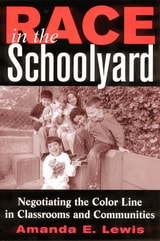
Race in the Schoolyard
Negotiating the Color Line in Classrooms and CommunitiesLewis, Amanda E
Rutgers University Press, 2003
"Race in the Schoolyard is a wonderful book for social scientists studying race, education, and childhood studies. The book showcases the talents of a gifted fieldworker whose theoretically rich work sits on the cutting edge of a growing body of scholarship examining the social worlds of children. School officials, parents, and, most especially, a new generation of teachers will benefit from these lessons on race."-American Journal of Sociology
"Instructors may recommend this book to students to whom the topic is surely vital and engrossing and for whom the text will be lively and engaging."-Contemporary Sociology
"Lewis moves beyond traditional research methods used to examine achievement gaps and differences in test scores to look closely at the realities of schooling. I highly recommend this work for every person involved in teaching and learning."-Multicultural Review
"Through eloquent case studies of three California elementary schools-a white-majority 'good' school, a mostly minority 'tough' school, and an integrated 'alternative' school-[Lewis] demonstrates that schools promote racial inequalities through their daily rituals and practices. Even the notion of a "color-blind" America-an especially popular ideal in the white school-perpetuates racism, Lewis argues, because it denies or dismisses the very real constraints that schools place on minorities. Lewis is nevertheless an optimist, insisting that schools can change ideas of race. . . . Highly recommended. Undergraduate collections and above."-Choice
"In this pioneering ethnography in elementary schools, Lewis shows brilliantly how racism is taught and learned in the small places of everyday life."-Joe Feagin, University of Florida and author of Racist America
"A wonderful and timely book. Ethnographically rich, theoretically sophisticated, and clearly written, this book addresses the ubiquitous issue of race in all its complexity."-Michèle Foster, author of Black Teachers on Teaching
"A compelling ethnography of the racial landscape of contemporary schools."-Barrie Thorne, author of Gender Play: Girls and Boys in School
Could your kids be learning a fourth R at school: reading, writing, 'rithmatic, and race?
Race in the Schoolyard takes us to a place most of us seldom get to see in action¾ our children's classrooms¾ and reveals the lessons about race that are communicated there. Amanda E. Lewis spent a year observing classes at three elementary schools, two multiracial urban and one white suburban. While race of course is not officially taught like multiplication and punctuation, she finds that it nonetheless insinuates itself into everyday life in schools.
Lewis explains how the curriculum, both expressed and hidden, conveys many racial lessons. While teachers and other school community members verbally deny the salience of race, she illustrates how it does influence the way they understand the world, interact with each other, and teach children. This eye-opening text is important reading for educators, parents, and scholars alike.

Race, Class, and Affirmative Action
Sigal Alon is an associate professor in the Department of Sociology and Anthropology at Tel-Aviv University.
Russell Sage Foundation, 2015
Alon finds that affirmative action at elite institutions in both countries is a key vehicle of mobility for disenfranchised students, whether they are racial and ethnic minorities or socioeconomically disadvantaged. Affirmative action improves their academic success and graduation rates and leads to better labor market outcomes. The beneficiaries of affirmative action in both countries thrive at elite colleges and in selective fields of study. As Alon demonstrates, they would not be better off attending less selective colleges instead.
Alon finds that Israel’s class-based affirmative action programs have provided much-needed entry slots at the elite universities to students from the geographic periphery, from high-poverty high schools, and from poor families. However, this approach has not generated as much ethnic diversity as a race-based policy would. By contrast, affirmative action policies in the United States have fostered racial and ethnic diversity at a level that cannot be matched with class-based policies. Yet, class-based policies would do a better job at boosting the socioeconomic diversity at these bastions of privilege. The findings from both countries suggest that neither race-based nor class-based models by themselves can generate broad diversity. According to Alon, the best route for promoting both racial and socioeconomic diversity is to embed the consideration of race within class-based affirmative action. Such a hybrid model would maximize the mobility benefits for both socioeconomically disadvantaged and minority students.
Race, Class, and Affirmative Action moves past political talking points to offer an innovative, evidence-based perspective on the merits and feasibility of different designs of affirmative action.
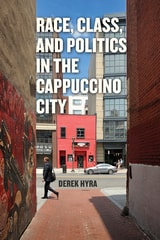
Race, Class, and Politics in the Cappuccino City
Derek S. Hyra
University of Chicago Press, 2017
Race, Class, and Politics in the Cappuccino City is an in-depth ethnography of this gilded ghetto. Derek S. Hyra captures here a quickly gentrifying space in which long-time black residents are joined, and variously displaced, by an influx of young, white, relatively wealthy, and/or gay professionals who, in part as a result of global economic forces and the recent development of central business districts, have returned to the cities earlier generations fled decades ago. As a result, America is witnessing the emergence of what Hyra calls “cappuccino cities.” A cappuccino has essentially the same ingredients as a cup of coffee with milk, but is considered upscale, and is double the price. In Hyra’s cappuccino city, the black inner-city neighborhood undergoes enormous transformations and becomes racially “lighter” and more expensive by the year.
Race, Place, and Medicine
The Idea of the Tropics in Nineteenth-Century BrazilJulyan G. Peard
Duke University Press, 1999
Peard shows how the Tropicalistas adapted Western medicine and challenged the Brazilian medical status quo in order to find new answers to the old question of whether the diseases of warm climates were distinct from those of temperate Europe. They carried out innovative research on parasitology, herpetology, and tropical disorders, providing evidence that countered European assumptions about Brazilian racial and cultural inferiority. In the face of European fatalism about health care in the tropics, the Tropicalistas forged a distinctive medicine based on their beliefs that public health would improve only if large social issues—such as slavery and abolition—were addressed and that the delivery of health care should encompass groups hitherto outside the doctors’ sphere, especially women. But the Tropicalistas’ agenda, which included biting social critiques and broad demands for the extension of health measures to all of Brazil’s people, was not sustained. Race, Place, and Medicine shows how imported models of tropical medicine—constructed by colonial nations for their own needs—downplayed the connection between socioeconomic factors and tropical disorders.
This study of a neglected episode in Latin American history will interest Brazilianists, as well as scholars of Latin American, medical, and scientific history.
Race, Real Estate and Education
Inventing Gentrification in Philadelphia, 1960-2020Edward M. Epstein
Temple University Press, 2025
Epstein outlines the citywide context for the plan to create “University City” in West Philadelphia. He recounts the attempts to correct the segregation, overcrowding, and authoritarian management that plagued Philadelphia’s public schools. As the West Philadelphia Corporation, the proxy for the universities and hospitals, initiated gentrification efforts, the local community resisted and protested, causing the project to fail. The effort was revived with spectacular success, however, with the launch of the well-funded Penn Alexander School in 2001.
Race, Real Estate, and Education shows how the pursuit of urbanist ideals sometimes deepens neighborhood injustice. Epstein’s exploration of whether Philadelphia’s overall approach was beneficial or misguided presents a cautionary tale.
In the series Urban Life, Landscape, and Policy
Races to Modernity
Metropolitan Aspirations in Eastern Europe, 1890–1940Martin Kohlrausch
Central European University Press, 2014
Rachel in the World
A MemoirJane Bernstein
University of Illinois Press, 2010
What happens when love is no longer enough? Jane Bernstein thought that learning to accept her daughter’s disabilities meant her struggles were over. But as Rachel grew up and needed more than a parent’s devotion, both mother and daughter were confronted with formidable obstacles. Rachel in the World, which begins in Rachel’s fifth year and ends when she turns twenty-two, tells of their barriers and successes with the same honesty and humor that made Loving Rachel, Bernstein’s first memoir, a classic in its field. The linked accounts in part 1 center on family issues, social services, experiences with caregivers, and Rachel herself--difficult, charming, hard to fathom, eager for her own independence. The second part of the book chronicles Bernstein’s attempt to find Rachel housing at a time when over 200,000 Americans with mental retardation were on waiting lists for residential services. As Rachel prepares to leave her mother’s constant protection, Bernstein invites the reader to share the frustrations and unexpected pleasures of finding a place for her daughter, first in her family, and then in the world.
Racial Alterity, Wixarika Youth Activism, and the Right to the Mexican City
Diana Negrín
University of Arizona Press, 2019
This book examines the legacy of the racial imaginary in Mexico with a focus on the Wixarika (Huichol) Indigenous peoples of the western Sierra Madre from the colonial period to the present. Through an examination of the politics of identity, space, and activism among Wixarika university students living and working in the western Mexican cities of Tepic and Guadalajara, geographer Diana Negrín analyzes the production of racialized urban geographies and reveals how Wixarika youth are making claims to a more heterogeneous citizenship that challenges these deep-seated discourses and practices. Through the weaving together of historical material, critical interdisciplinary scholarship, and rich ethnography, this book sheds light on the racialized history, urban transformation, and contemporary Indigenous activism of a region of Mexico that has remained at the margins of scholarship.

Racing Romance
Love, Power, and Desire among Asian American/White CouplesNemoto, Kumiko
Rutgers University Press, 2009
Similar to black/white relationships, stereotypes have long played crucial roles in Asian American/white encounters. Partners grapple with media representations of Asian women as submissive or hypersexual and Asian men are often portrayed as weak laborers or powerful martial artists. Racing Romance reveals how allegedly progressive interracial relationships remain firmly shaped by the logic of patriarchy and gender inherent to the ideal of marriage, family, and nation in America, even as this ideal is juxtaposed with discourses of multiculturalism and color blindness.
Racism in the Irish Experience
Steve Garner
Pluto Press, 2003
This book is a unique analysis of the racialisation of Irish identities. The author examines key phases in the historical development of an Irish 'racial' consciousness, including 16th century colonisation and 19th century immigration to America and Great Britain. He then examines the legacy of this relationship, both in terms of the new migration into Ireland and relations with indigenous minorities -- travellers and Irish Jews.
Garner explores the problematic links between nationalist ideologies and racism. He assesses the economic, social and political factors framing the experience of minorities in contemporary Ireland, and places these in a broader European context.
Racism
A Critical AnalysisMike Cole
Pluto Press, 2015
Mike Cole tackles three countries in-depth: the United Kingdom, the United States and Australia. In the United Kingdom, he focuses on the effects of colonialism as well as looking at non-colour-coded racism, such as anti-Gipsy, Roma, and Traveller racism and xeno-racism directed at Eastern Europeans. Turning to the United States, Cole charts the dual legacies of indigenous genocide and slavery, as well as exploring anti-Latina/o and anti-Asian racism. Finally, in Australia, he interrogates the idea of "Terra Nullius" and its ongoing impact on the indigenous peoples, as well as other forms of racism, such as that experienced by South Sea Islanders, anti-Asian racism, and that which targets migrants. The Pauline Hanson phenomenon is also addressed. Islamophobia, antisemitism and anti-Irish racism are also dealt with in the book, as is that aimed at asylum-seekers.
Cole demonstrates that racism is both endemic and multifaceted. This book will undoubtedly establish itself as required reading for students and other critical readers looking for a comprehensive, critical overview of the study of racism in Anglophone countries.
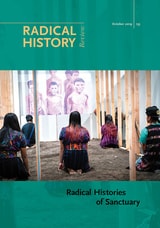
Radical Histories of Sanctuary
A. Naomi Paik, Jason Ruiz, and Rebecca Schreiber, special issue editors
Duke University Press, 2019
Contributors. Rachel Ida Buff, Caleb Duarte, Treva Ellison, Jason Ezell, Carla Hung, Kyle B. T. Lambelet, Sunaina Maira, Rachel McIntire, A. Naomi Paik, Jason Ruiz, Rebecca M. Schreiber, Aimee Villarreal, Elliot Young
Radical Sociologists
Martin Oppenheimer
Temple University Press, 1991

Radicalisms in Transition, Volume 2002
Mansour Bonakdarian and Yvonne Lassalle, eds.
Duke University Press, 0

Rage, Shame and Dread
David Lloyd
Seagull Books, 2026
A radical rethinking of dark emotion as critical responses to capitalism, colonial violence, and authoritarian power.
Rage, Shame and Dread is a bold and unsettling exploration of three emotions that resist consolation, correction, or easy political use. In this triptych of essays, David Lloyd dwells with rage, shame, and dread not as states to be managed or redeemed, but as objectless, intransitive forces that interrupt social life and expose its underlying wrongness.
Reading rage as “sheer manifestation,” shame as a catastrophic rupture of self-relation, and dread as anticipation without an object, Lloyd traces how these unpromising emotions emerge from—and register—the violences of capitalism, colonialism, racialization, and authoritarian power. Drawing on Walter Benjamin, Sigmund Freud, Jacques Derrida, Frantz Fanon, Aimé Césaire, Joseph Conrad, Oscar Wilde, and Søren Kierkegaard, the book moves between philosophy, literature, and political theory to challenge therapeutic and liberal accounts that treat these feelings as errors to be corrected or tools for socialization.
Rather than pathologizing these states, Lloyd reads them as signals of damaged social relations and as thresholds to alternative forms of life-in-common. At once philosophically rigorous and politically urgent, Rage, Shame and Dread offers a radical rethinking of feeling as a site of critique, resistance, and collective possibility.
Rational Lives
Norms and Values in Politics and SocietyDennis Chong
University of Chicago Press, 2000
Chong's book yields insights about the circumstances under which preferences, beliefs, values, norms and group identifications are formed. It offers a provocative explanation of how ingrained social norms and values can change over time despite the forces maintaining the status quo.
"Going beyond the tired polemics on both sides, [Chong] constructs a new interpretation of human behavior in which culture and individual rationality both matter. The synthesis is a more comprehensive and powerful explanatory framework than either side could have produced, and Chong's creativity should influence subsequent interpretations of our social life in fundamental ways."—Christopher H. Achen, University of Michigan
Rationalizing Capitalist Democracy
The Cold War Origins of Rational Choice LiberalismS.M. Amadae
University of Chicago Press, 2003

Rave Culture
The Alteration and Decline of a Philadelphia Music SceneTammy L. Anderson
Temple University Press, 2009
It used to be that raves were grassroots organized, anti-establishment, unlicensed all-night drug-fueled dance parties held in abandoned warehouses or an open field. These days, you pay $40 for a branded party at popular riverfront nightclubs where age and status, rather than DJ expertise and dancing, shape your experience.
In Rave Culture, sociologist Tammy Anderson explores the dance music, drug use and social deviance that are part of the pulsing dynamics of this collective. Her ethnographic study compares the Philadelphia rave scene with other rave scenes in London and Ibiza. She chronicles how generational change, commercialization, law enforcement, hedonism, and genre fragmentation fundamentally altered electronic dance music parties. Her analysis calls attention to issues of personal and collective identity in helping to explain such social change and what the decline of the rave scene means for the future of youth culture and electronic dance music.

Re-Imagining the City
Art, Globalization and Urban SpacesEdited by Elizabeth Grierson and Kristen Sharp
Intellect Books, 2013
Reading History Sideways
The Fallacy and Enduring Impact of the Developmental Paradigm on Family LifeArland Thornton
University of Chicago Press, 2005
In Reading History Sideways, leading family scholar Arland Thornton demonstrates how this approach, though long since discredited, has permeated Western ideas and values about the family. Further, its domination of social science for centuries caused the misinterpretation of Western trends in family structure, marriage, fertility, and parent-child relations. Revisiting the "developmental fallacy," Thornton here traces its central role in changes in the Western world, from marriage to gender roles to adolescent sexuality. Through public policies, aid programs, and colonialism, it continues to reshape families in non-Western societies as well.